Evaluation of the antianxiety activity of green zinc nanoparticles mediated by Boswellia thurifera in albino mice by following the plus maze and light and dark exploration tests
-
Enfu Wang
 ,
Garima Rana
,
Garima Rana

Abstract
Anxiety is a typical emotional response, however, it becomes pathological and triggers psychiatric and cardiovascular disorders when it reaches a severe level. Benzodiazepines are the most frequently prescribed allopathic drugs for treating anxiety disorders, despite their numerous systemic side effects. Boswellia thurifera extract was employed in creating green zinc nanoparticles (ZnNPs) to address anxiety in albino mice by following the light and dark exploration (LDE) as well as plus maze tests. The resulting ZnNPs were subjected to UV-Vis, EDX, XRD, and FE-SEM analyses. The synthesized nanoparticles in this study had sizes of 30–60 nm. A UV-Vis spectrophotometry analysis was conducted to quantify the absorbance of nanoparticles in the 200–800 nm range. The anxiolytic effects of ZnNPs were assessed using two established methods: LDE and elevated plus maze tests. The mice were divided into five groups, with each group containing ten mice for both models. The efficacy of ZnNPs was evaluated at three distinct doses: 50, 100, and 200 µg/kg. These doses were compared to the control group and diazepam (1 mg/kg). The evaluation took place 1 h after the drug was administered. The observed alterations in the behavior in both paradigms indicate a reduction in anxiety, a decrease in sensitivity to light, and an increase in exploratory behavior in the animal. These changes were similar to the effects produced by the standard drug diazepam, thus supporting the conclusion that ZnNPs possess anxiolytic properties. The best results were seen at a dose of 200 µg/kg nanoparticles. ZnNPs show promise for clinical use in treating anxiety disorders. It is imperative to perform additional studies on the action mechanisms of the ZnNPs, along with identifying the active substance(s) responsible for their medical effects.
1 Introduction
Anxiety, a prevalent mental health issue among the general population, impacts around 25% of people throughout their lifetime and 18% of people within a specific year [1,2,3,4]. Anxiety is widely regarded as an innate reaction to stress, equipping individuals with the capacity to navigate challenging circumstances [3,4,5]. If anxiety symptoms persist in terms of severity and duration, it could develop into a form of pathological anxiety that necessitates treatment. Conditions of this nature are commonly associated with challenging life events, particularly when these events are ongoing and emotionally distressing [6]. Research has shown that the imbalance of neurotransmitters, alterations in signaling pathways, and the brain neuronal circuit’s distortion play a role under these conditions [7]. Anxiety has been linked to the adrenal–pituitary–hypothalamic axis [8]. The anxiety system regulation is greatly influenced by the GABAergic and serotonergic systems [9]. The enhancement of the GABA receptor has been shown to alleviate anxiety disorders [8]. Anxiety disorder commonly occurs along with depression. Regrettably, existing pharmaceutical treatments for mental disorders are suboptimal, and a significant number of patients do not benefit from these therapies or experience adverse effects [5].
Nanomedicine represents an emerging phenomenon globally, focusing on the utilization of nanotechnology in the field of biomedicine for the timely detection and management of various illnesses [10,11]. Numerous studies have explored the utilization of the distinct characteristics of nanoparticles, specifically zinc nanoparticles (ZnNPs), in the management of various illnesses [10,11,12]. Zn NPs exhibit biocompatibility, bioavailability, and significant solubility [13,14,15,16]. Consequently, they possess the ability to replicate the functions of biomolecules and can accumulate in various bodily systems where biomolecules play a role in regulating the cellular cycle and preserving cellular homeostasis [13,14,15]. Zn NPs possess excellent biocompatibility, enabling their utilization for their antiviral, antifungal, antibacterial, neuroprotective, and anti-cancer properties in therapeutic applications [13,14,15,16]. Several research studies have suggested that a lack of zinc in the body may contribute to anxiety-related behaviors [13,17]. Nevertheless, the administration of certain inorganic and organic zinc supplements, including Zn methionine, conventional ZnO, and ZnSO4, has demonstrated a limited enhancement in anxiety levels among animal models [17,18]. Zinc oxide, an inorganic compound, is extensively utilized in a variety of applications, particularly in pharmaceuticals, and in cosmetic and technical products [17]. Zinc enhances the development and function of different enzymes, while also influencing multiple receptors, including GABAergic receptor, as well as calcium and NMDA voltage-dependent channel [17,18]. The aforementioned receptors play a crucial role in regulating anxiety levels. Zn is a highly significant compound in the field of drug utilization owing to its distinct properties. For instance, it serves as a vehicle for different medications, substances that promote nerve cell growth, antimicrobial substances, and its pain-relieving properties were recently demonstrated [18].
The utilization of nanoparticles as a substitute for conventional-scale particles has been experiencing a significant surge due to the swift advancements in nanotechnology [19,20,21,22]. Nanoparticles can be either organic polymers or inorganic materials. Zinc oxide nanoparticles are engineered metal oxide nanomaterials extensively manufactured and utilized in various technological applications because of their magnetic, piezoelectric, semi-conducting, catalytic, and distinct optical characteristics [22,23,24,25,26]. In recent times, biotechnologists have shown interest in Zn NPs due to their ability to be surface functionalized with various metal and semiconductor core materials. This allows for the development of beneficial properties that could have diverse therapeutic uses [22,23,24,25]. ZnNPs are consumed directly through pharmacological systems and food packaging. They are currently utilized in the packaging materials and food industry because of their antimicrobial characteristics. Additionally, they are employed as imaging agents and anti-cancer drugs [25,26,27].
The assessment of anxiety-related behaviors in mice subjected to ZnNPs, utilizing the LDE and elevated plus maze tests, was followed in this research. We formulated environmentally friendly ZnNPs by Boswellia thurifera due to its high and unique therapeutic effects. Marefati et al. indicated the neuroprotective and anti-anxiety efficacies of the Boswellia genus in the in vivo and clinical trials studies [28]. It has also been shown that Boswellia serrata treats the glioma after reducing peritumoral cerebral edema [29]. Acetyl-11-keto-β-boswellic acid (AKBA) and 11-keto-β-boswellic acid (KBA), which may specifically block 5-lipooxygenase, have been linked to the majority of B. serrata’s pharmacological characteristics [30]. According to reports, these substances inhibit topoisomerases I and IIα as well as human leukocyte elastases [31]. When administered orally in rats, boswellic acids of B. serrata have also been demonstrated to decrease the quantity of rolling and adhering leukocytes as well as the leukocyte–endothelial cell adhesive contact [32]. Furthermore, by activating caspase-8 and raising the number of death receptors, these acids caused apoptosis in aberrant cells such as glioblastoma cells, liver, and colon cancer [33]. In this study, we conducted a comprehensive investigation of Zn NPs using a range of techniques, including spectroscopy and diffraction, to obtain a deeper understanding of their structure, morphology, and dimensions. Also, we determined the efficacy of ZnNPs in managing the anxiety-related behaviors of mice in the common anxiety tests, i.e., LDE and plus maze tests. It seems that the synergistic efficacies of the reaction of ZnNPs and B. serrata leaf extract make the high and unique neuroprotective effects in anxiety tests.
2 Experimental
2.1 Chemical characterization techniques
The ZnNPs@Boswellia thurifera were characterized using a UV-Vis spectrophotometer (Cary 50) in the range of 200–800 nm. The XRD patterns were recorded by an STOE instrument with Cu-Kα radiation. The FE-SEM image and EDX analysis were obtained using a Philips XL30.
2.2 Preparation of B. thurifera extract
Field studies and experimental research on plants that involved gathering plant material were carried out in compliance with applicable institutional, national, and international regulations. The leaves of B. thurifera were meticulously rinsed three times using double-distilled water to eliminate any debris and dust particles. Following this, the cleaned leaves were dried at 25°C for 1 week until they attained a stable weight. The desiccated leaf powder was obtained utilizing a laboratory mill fitted with a hammer grinding accessory, and subsequently subjected to sieving through a 0.2 mm mesh. After adding 40 g of B. thurifera leaf powder to a round-bottom flask, 100 mL of distilled water was added, and the mixture was refluxed for 60 min at 80°C. After 2 h of heating to 80°C, the extracted material was allowed to cool at ambient temperature. The fine extract was then obtained by filtering the entire solution through Whatman filter paper. For later use, the extracted material was stored in a refrigerator at 4°C. The determination of extraction efficiency, calculated using the leaf dry weight, was elucidated using the following formula, which indicated a value of 30%:
2.3 Green synthesis of ZnNPs
The green synthesis of NPs was conducted based on the Mahdavi et al.’s work with some modifications [34e]: a mixture of the plant extract (50 mL) and zinc nitrate (20 mL, 0.25 M) at pH 9 was transferred and held for 1.5 h. The NPs were precipitated in a light brown color. The NPs were separated by centrifuging at 12,000 RPM for 8 min. ZnNPs were washed with deionized water four times, interspersed with centrifugation at intervals. The ZnNPs were finally dried at 55°C for 10 h.
2.4 Cytotoxicity efficacy of ZnNPs
Human umbilical vein endothelial cells (HUVEC) were kept at 37°C within a humidified environment consisting of 5% CO2 and 95% air. HUVECs were grown in RPMI-1640 supplemented with 10% v/v FBS, along with streptomycin and penicillin. The assessment of cytotoxicity was conducted utilizing the MTT assay. The normal cells were seeded in a culture plate using different concentrations of ZnNPs. The cultured plates were maintained in an incubator for 72 h at 37°C with 5% CO2. Since the MTT assay measures cell viability by converting MTT by active mitochondria to formazan, a 72-h incubation is frequently used for the effects of a treatment to become apparent and for the cell population to reach an appropriate level of decline or growth [34f]. After the incubation period, 0.02 mL of MTT solution in PBS was introduced to each well, achieving a final concentration of 500 µg/mL, and the wells were subsequently incubated for an additional 5 h at 37°C. The medium was subsequently discarded, and 0.1 mL of DMSO was introduced to each well to facilitate the solubilization of the formazan. The absorbance was recorded at a wavelength of 490 using an ELISA reader, and 630 nm served as a reference. A total of 3 independent examinations were conducted, with three replicates collected for each experiment. The half maximal inhibitory concentration (IC50 value), representing the ZnNPs concentration that led to a 50% decrease in cell viability, was determined using the following formula [34e]:
2.5 Animals
The study included healthy Swiss male albino mice, weighing between 38 and 40 g, and aged between 5 months. They were given unrestricted access to commercial food in standard laboratory settings with a natural dark–light cycle, at 25°C. The drug was administered 30 min before conducting the experiments. A total of 50 animals were utilized. The animal tests and experiments conducted adhered to the guidelines outlined by the Laboratory Animal Research Instruction of the University of Johannesburg. The sample size was calculated according to the following equation:
Five groups of 10 animals each were formed according to the following classification:
Untreated mice (Distilled water).
Treated mice with diazepam (1 mg/kg).
Treated mice with ZnNPs (50 µg/kg).
Treated mice with ZnNPs (100 µg/kg).
Treated mice with ZnNPs (200 µg/kg).
The nanoparticles at several doses were dissolved in distilled water and administered by gavage to mice.
According to the studies of Fang et al. [35], Jia et al. [36], and Zhang et al. [37], the nanoparticles green-formulated by the medicinal plants had significant neuroprotective effects in the range doses of 50–200 µg/kg and range sizes of 30–100 nm.
2.6 Elevated plus maze test
The structure comprises a central platform measuring 0.1 m × 0.1 m, which is linked to two exposed arms measuring 50 × 10 cm, as well as two enclosed arms with dimensions of 50 cm × 40 cm × 10 cm. This entire structure is elevated 0.5 m above the floor. The mice were administered several doses of ZnNPs and diazepam 30 min before being individually positioned in the elevated plus maze center, with their orientation toward a closed arm. The time spent in closed and open arms was documented for 300 s. The measurement of time spent was in seconds. The entries made into both the closed and open arms were tallied throughout the experiment. An entry was indicated as having all 4 paws contained within the arm [38].
2.7 LDE test
The equipment comprised two square containers divided by a wooden partition, with each container measuring 0.5 m × 0.5 m × 0.5 m. One container was dimly lit, while another was illuminated by a 7 W/12V bulb. A 6 cm × 6 cm opening was located at the wooden wall center, accessible through a transparent plexiglass sliding door that can be opened or closed, allowing animals to pass through from either side. The animals were individually positioned at the lightbox center and monitored for the subsequent 5 min. The duration spent in each box was recorded in seconds. The recorded data also included the number of crossings between the boxes. Before being placed in the light box, the mice were administered diazepam and ZnNPs 30 min in advance [38].
2.8 Statistical analysis
The experiment was carried out several times, ensuring at least three repetitions for each substance, dilution, and corresponding time interval. One-way ANOVA (post-test through Dennett’s method) was used to analyze the results (P < 0.01).
3 Results and discussion
Figure 1 exhibits the EDX analysis of ZnNPs. The method is a sufficient way for elemental investigation of nanoparticles. The zinc signals are found at an energy of 1.02 keV (ZnLα), 8.67 keV (ZnKα), and 9.62 keV (ZnKβ). The extract linkage to the NP surface is confirmed by the presence of signals at 0.28 keV (CKα) and 0.52 keV (OKα) for carbon and oxygen. The peaks for ZnNPs have been reported by other reports [39,40]. The EDX provides significant peaks of 8.9% for carbon, 12.7% for oxygen, and 78.4% for zinc, whose weight percentage peaks are similar to those previously reported for the fabrication of ZnNPs [40]. This information provides the composition of each element present in the analyte.
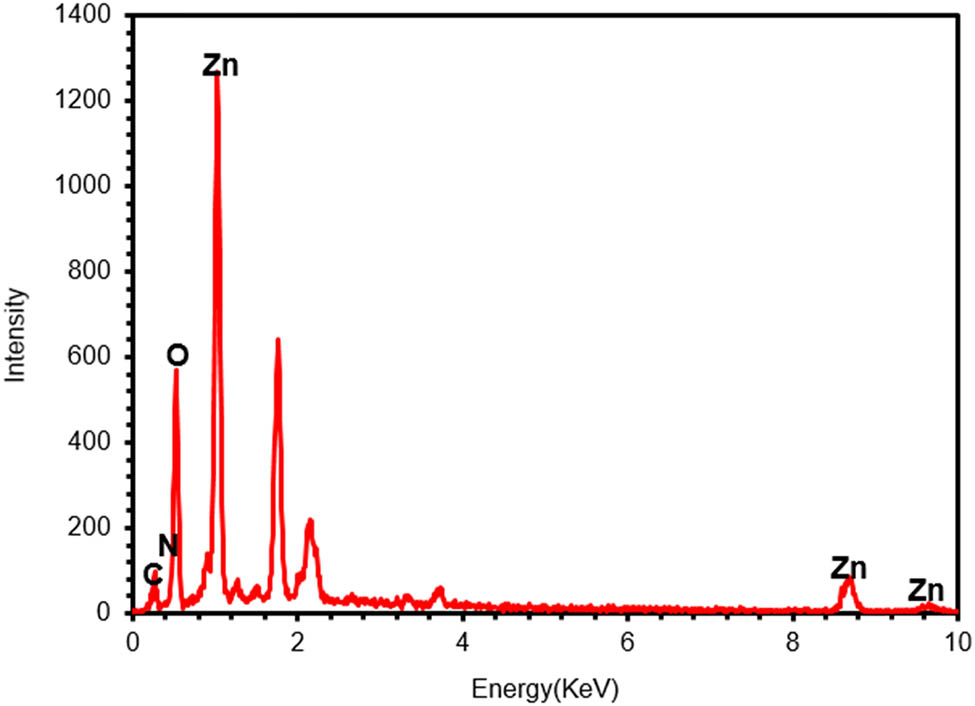
EDX diagram of Zn NPs@Boswellia thurifera.
Figure 2 shows the XRD spectrum of ZnNPs@Boswellia thurifera. The crystallinity of nanoparticles is reported by the obtained results. The data of 31.35 (100), 33.97 (002), 35.77 (101), 46.98 (102), 55.96 (110), and 67.26 (311) well match the signals of the standard PDF Card (No. 01-080-3002) for zinc oxide nanoparticles. A crystal size of 43.18 nm was computed for the NPs. The obtained size is less than those reported for ZnNPs synthesized using different plants such as Ziziphora clinopodioides, Alhagi maurorum, and rosemary [41,42].

XRD spectra of Zn NPs@Boswellia thurifera.
The SPR of the synthesized ZnNPs was recorded by a UV-Vis spectrophotometer, as shown in Figure 3. The band at 254 nm is related to ZnNPs. Similar bands have been revealed for Zn NPs previously [43]. To compare with previous reports, a blue shift is observed for the Zn NPs green synthesis. The blue shift in the UV-Vis spectrum of ZnNPs can occur due to quantum confinement effects. When nanoparticles are very small, the confinement of electrons leads to quantization of energy levels. This results in a higher energy bandgap compared to bulk material, causing an upward shift in the absorption spectrum toward shorter wavelengths, which appear blue-shifted. The effect is determined by the crucial role played by the size and shape of the nanoparticles, as smaller nanoparticles exhibit stronger quantum confinement effects and, consequently, more pronounced blue shifts in their UV-Vis absorption spectra [44].

UV-Vis spectrum of Zn NPs@Boswellia thurifera.
The structure of Zn NPs was studied by FE-SEM and TEM. Figures 4 and 5 show the morphology of ZnNPs. The results reveal a spherical structure with an aggregative tendency similar to previous reports for various metallic nanoparticles [45,46,47,48]. The image shows an average size of <50 nm for formulated Zn NPs. The size of the ZnNPs was reported to range from 20 to 90 nm [39,40].

FE-SEM image of Zn NPs@Boswellia thurifera.

TEM image of Zn NPs@Boswellia thurifera.
A recent study examined the cytotoxic efficacies of Zn NPs@Boswellia thurifera on the normal HUVEC. As shown in Figure 6, the IC50 value for the Zn NPs@Boswellia thurifera exceeds 1,000 µg/mL after 24, 48, and 72 h. Significant toxicity was not observed at concentrations below 1,000 µg/mL.

Cytotoxicity characteristics of Zn NPs@Boswellia thurifera.
The elevated plus maze test is extensively employed to assess anxiety-like behavior, making it one of the most commonly utilized tests in this field. The examination relies on rodents’ innate aversion to open and high places, along with their natural tendency to explore new environments [38]. This examination is frequently employed for therapeutic validation and screening for anti-anxiety characteristics. All open arms are equipped with high-end plates measuring 1 cm in height to ensure that the mice remain securely in the maze while exploring [38].
The findings reported in Table 1 demonstrate a notable increase in the duration spent in open arms and open arm entries for the animals treated with diazepam. Table 1 demonstrates that ZnNPs@Boswellia thurifera-treated animals experienced increased open arm entries, time spent in open arms, and rear number in the open arms. Additionally, there was a notable reduction in time spent in the closed arms. The best results were seen at a dose of 200 µg/kg nanoparticles.
Efficacy of administration of Zn NPs@Boswellia thurifera in the elevated plus maze on the animal’s behavior
| Drug groups (n = 10) | No. of rears in open arms | Time spent in closed arms (s) | Time spent in open arms (s) | No. of total arm entries | No. of open arms entries |
|---|---|---|---|---|---|
| Control | 1.9 ± 0.2 | 232 ± 15 | 39 ± 3 | 3.8 ± 0.2 | 1.6 ± 0.1 |
| Diazepam | 3.8 ± 0.3 | 145 ± 9 | 132 ± 6 | 6.3 ± 0.4 | 4 ± 0.3 |
| ZnNPs@Boswellia thurifera (50 µg/kg) | 3.4 ± 0.3 | 178 ± 7 | 97 ± 5 | 5.5 ± 0.5 | 3.6 ± 0.5 |
| ZnNPs@Boswellia thurifera (100 µg/kg) | 3.5 ± 0.1 | 156 ± 12 | 121 ± 9 | 6 ± 0.3 | 3.7 ± 0.2 |
| ZnNPs@Boswellia thurifera (200 µg/kg) | 3.9 ± 0.4 | 138 ± 10 | 146 ± 12 | 6.6 ± 0.3 | 4.3 ± 0.5 |
The light/dark box is commonly employed to evaluate anxiety-like behavior in rodents by observing their response to the aversive and anxiety-inducing environment of a brightly lit area. In anxiety models, animals spend less time in the bright chamber [30]. Conversely, animals that receive anxiolytic treatment exhibit an increase in the duration they spend in the bright area [30].
The data in Table 2 reveal that animals treated with diazepam spent more time in the light area and exhibited a significant increase in rearing behavior. Animals treated with ZnNPs@Boswellia thurifera exhibited an augmentation in the time spent in the illuminated area. Table 2 demonstrates a decrease in the duration of immobility across all three doses as well. The best results were seen at a dose of 200 µg/kg nanoparticles.
Efficacy of administration of Zn NPs@Boswellia thurifera in bright and dark apparatus on the animal’s behavior
| Drug groups (n = 10) | Duration of immobility (s) | No. of rears in the bright chamber | Time spent in the bright chamber (s) | No. of bright chamber entries |
|---|---|---|---|---|
| Control | 76 ± 5 | 2.8 ± 0.1 | 10 ± 2 | 1.7 ± 0.1 |
| Diazepam | 38 ± 6 | 5.9 ± 0.4 | 49 ± 5 | 3.6 ± 0.4 |
| ZnNPs@Boswellia thurifera (50 µg/kg) | 55 ± 4 | 4.4 ± 0.2 | 37 ± 5 | 3 ± 0.3 |
| ZnNPs@Boswellia thurifera (100 µg/kg) | 48 ± 5 | 5.6 ± 0.5 | 45 ± 6 | 3.4 ± 0.4 |
| ZnNPs@Boswellia thurifera (200 µg/kg) | 41 ± 3 | 6 ± 0.3 | 49 ± 4 | 3.8 ± 0.5 |
The utilization of Zn NPs in the control groups led to a decrease in anxiety levels and an increase in both the entry frequency into the open arms and the duration spent in the open arms. Torabi et al. (2015) found that the anxiety behavior of rats was significantly reduced when they were administered 1 mg/kg ZnO and ZnO NP. Furthermore, it was demonstrated that the anxiolytic properties of ZnO NPs surpassed those of ZnO. Hence, the anxiolytic impacts of ZnO NPs could be attributed to the distinctive chemical and physical characteristics of NPs and their diminutive dimensions, resulting in enhanced efficacy and tissue permeability. It has been verified that nanoparticles have more active sites than traditional compounds. As a result, they can have a more substantial impact in smaller quantities than their conventional counterparts. In a broader sense, it can be affirmed that Zn ions play a role in the functioning and stimulation of various enzymes within the human body. Additionally, they impact the receptors of several neurotransmitters, including NMDA, serotonin, voltage-gated calcium channels, and GABA [49]. These receptors can also have significant functions in anxiety regulation. Moreover, considering that Zn ions have a main role in the proper functioning of the brain and other organs [50], incorporating organic and inorganic supplements enriched with zinc has shown potential in alleviating anxiety in animal models [51]. Although there is limited knowledge regarding the mechanism behind the anxiolytic efficacies of zinc oxide nanoparticles, it has been proposed that releasing Zn ions from nanocomposites could potentially induce anxiolytic efficacies in animals through a minimum of two mechanisms [49]. Initially, certain research has indicated that zinc ions control glutamate signaling through the inhibition of NMDA receptors. Typically, glutamate and zinc ions are simultaneously released in the presynaptic space. Glutamate plays a crucial role as an excitatory neurotransmitter in the regulation of anxiety-related behaviors. Zn ions disrupt glutamate activity in anxiety by blocking the NMDA receptor. Furthermore, the presence of zinc ions serves as a suppressive neurotransmitter, effectively diminishing the release of glutamate from the presynaptic terminal. This leads to a reduction in glutamate signaling and ultimately prevents the onset of anxiety by enhancing the release of GABA from the presynaptic terminal [52].
4 Conclusion
B. thurifera leaf extract was used in this study to produce green ZnNPs for tackling anxiety in animal models. The Zn NPs@Boswellia thurifera obtained from this process were subjected to UV-Vis, EDX, XRD, and FE-SEM analyses. The chemical characterization data indicate that the Zn NPs@Boswellia thurifera were synthesized under the best conditions. The findings from this research indicate that ZnNPs@Boswellia thurifera demonstrate anxiolytic effects in vivo without any cytotoxicity effects against the normal or HUVECs under in vitro conditions. ZnNPs@Boswellia thurifera show promise for clinical use in treating anxiety disorders. Additional research into the herbal nanoparticles' action mechanism, along with the identification of the active substances driving its biological effects, is imperative.
-
Funding information: Zigong Key Science and Technology Plan Zigong Brain Science Research Institute Collaborative Innovation project(2024-NK01-07).
-
Author contributions: Enfu Wang: conceptualization, investigation, acquisition, formal analysis, data curation, supervision, project administration, methodology, validation, resources, writing – original draft, and writing – review and editing. Youguo Tan: conceptualization, investigation, formal analysis, data curation, supervision, software, project administration, methodology, visualization, validation, resources, writing – original draft, and writing – review and editing. Lan He: conceptualization, investigation, formal analysis, data curation, supervision, software, project administration, methodology, visualization, validation, resources, writing – original draft, and writing – review and editing. Yun Wu: conceptualization, investigation, formal analysis, data curation, supervision, software, project administration, methodology, visualization, validation, resources, writing – original draft, and writing – review and editing. Garima Rana: conceptualization, investigation, formal analysis, data curation, supervision, software, project administration, methodology, visualization, validation, resources, writing – original draft, and writing – review and editing. Mika Sillanpää: conceptualization, investigation, formal analysis, data curation, supervision, software, project administration, methodology, visualization, validation, resources, writing – original draft, and writing – review and editing.
-
Conflict of interest: The authors declare no conflict of interest.
-
Ethical approval: The experiments were performed according to the ethical guidelines of the International Association for the Study of Animals.
-
Data availability statement: The datasets generated during and/or analyzed during the current study are available from the corresponding author upon reasonable request.
References
[1] Torabi M, Kesmati M, Harooni HE, Varzi HN. Effects of nano and conventional zinc oxide on anxiety-like behavior in male rats. Indian J Pharmacol. 2013 Sep-Oct;45(5):508–12.10.4103/0253-7613.117784Search in Google Scholar PubMed PubMed Central
[2] Rafieirad M, Valipour-Chahardah-Charic S. Effect of zinc oxide nanoparticles along with vitamin C on motor activity and anxiety in adult male rat. J Basic Res Med Sci. 2019;6(3):12–8.Search in Google Scholar
[3] Ardeshiri-Lordejani F, Sharifi T, Salami M, Qazanfari A, Oheili M. Zinc/Iron oxide nanocomposites: Green synthesis, characterization, and evaluation of their effects on anxiety in rats exposed to noise stress. J Nanostruct. 2020;10(4):702–12.Search in Google Scholar
[4] Kessler RC, Chiu WT, Demler O, Walters EE. Prevalence, severity, and comorbidity of 12-month DSM-IV disorders in the National Comorbidity Survey Replication. Arch Gen Psychiatr. 2005;62:617–27.10.1001/archpsyc.62.6.617Search in Google Scholar PubMed PubMed Central
[5] Moffitt TE, Harrington H, Caspi A, Kim-Cohen J, Goldberg D, Gregory AM, et al. Depression and generalized anxiety disorder: Cumulative and sequential comorbidity in a birth cohort followed prospectively to age 32 years. Arch Gen Psychiatr. 2007;64:651–60.10.1001/archpsyc.64.6.651Search in Google Scholar PubMed
[6] Alizadeh M, Hoseini M, Shojaeizadeh D, Rahimi A, Arshinchi M, Rohani H. [Assessing anxiety, depression and psychological wellbeing status of urban elderly under represent of Tehran Metropolitan City]. Salmand Iran J Ageing. 2012;7(3):66–73.Search in Google Scholar
[7] Hajmohammadi F, Neshat Doost HT. Comparison of spirituality in women with depression, anxiety and normal people. JSRP. 2017;18(3):1–11.Search in Google Scholar
[8] Banaeipour Z, Rostami S, Zarea K, Cheraqian B. The prevalence of anxiety and its related factors among school-age children in South West of Iran. Int J Pediatr. 2016;4:2019–25.Search in Google Scholar
[9] Olivier JDA, Vinkers CH, Olivier B. The role of the serotonergic and GABA system in translational approaches in drug discovery for anxiety disorders. Front Pharmacol. 2013;11(4):74.10.3389/fphar.2013.00074Search in Google Scholar PubMed PubMed Central
[10] ALRashdi BM, Germoush MO, Sani SS, Ayub I, Bashir W, Hussain B, et al. Biosynthesis of Salvia hispanica based Silver nanoparticles and evaluation of their antibacterial activity in-vitro and rat model. Pak Vet J. 2023;43(2):283–9.10.29261/pakvetj/2023.035Search in Google Scholar
[11] Liaqat I, Noor S, Qureshi AS, Ali S, Liaqat I, Al-Arifa N, et al. Biosynthesis and evaluation of Cinnamomum zeylanicum nanomaterials for the treatment of polycystic ovary syndrome in mice. Pak Vet J. 2023;43(1):118–24.Search in Google Scholar
[12] Hassan SA, Mujahid H, Ali MM, Irshad S, Naseer R, Saeed S, et al. Synthesis, characterization and protective effect of green tea-mediated zinc oxide nanoparticles against ochratoxin A induced hepatotoxicity and nephrotoxicity in albino rats. Appl Nanosci. 2021;11(8):2281–9.10.1007/s13204-021-02006-zSearch in Google Scholar
[13] Cheraghipour K, Khalaf AK, Moradpour K, Zivdari M, Beiranvand M, Shakib P, et al. Synthesis, characterization, and antiparasitic effects of zinc oxide nanoparticles-eugenol nanosuspension against Toxoplasma gondii infection. Heliyon. 2023;9(8):e19295.10.1016/j.heliyon.2023.e19295Search in Google Scholar PubMed PubMed Central
[14] Cheraghipour K, Azarhazine M, Zivdari M, Beiranvand M, Shakib P, Rashidipour M, et al. Evaluation of scolicidal potential of salicylate coated zinc nanoparticles against Echinococcus granulosus protoscoleces. Exp Parasitol. 2023;246:108456.10.1016/j.exppara.2022.108456Search in Google Scholar PubMed
[15] Shakib P, Mirzaei SZ, Lashgarian HE, Saki R, Goudarzi G, Alsallameh S, et al. Preparation of zinc oxide nanoparticles assisted by okra mucilage and evaluation of its biological activities. Curr Drug Discov Technol. 2023;20(2):e011222211472.10.2174/1570163820666221201090006Search in Google Scholar PubMed
[16] Gilavand F, Saki R, Mirzaei SZ, Esmaeil Lashgarian H, Karkhane M, Marzban A. Green synthesis of zinc nanoparticles using aqueous extract of Magnoliae officinalis and assessment of its bioactivity potentials. Biointerface Res Appl Chem. 2020;11(1):7765–74. 2021.10.33263/BRIAC111.77657774Search in Google Scholar
[17] Takeda A, Tamano H. Insight into zinc signaling from dietary zinc deficiency. Brain Res Rev. 2009;62(1):33–44.10.1016/j.brainresrev.2009.09.003Search in Google Scholar PubMed
[18] Ansari SA, Husain Q, Qayyum S, Azam A. Designing and surface modification of zinc oxide nanoparticles for biomedical applications. Food Chem Toxicol. 2011;49(9):2107–15.10.1016/j.fct.2011.05.025Search in Google Scholar PubMed
[19] Elhabal SF, Abdelaal N, Saeed Al-Zuhairy SAK, Elrefai MFM, Elsaid Hamdan AM, Khalifa MM, et al. Green synthesis of zinc oxide nanoparticles from Althaea officinalis flower extract coated with chitosan for potential healing effects on diabetic wounds by inhibiting TNF-α and IL-6/IL-1β signaling pathways. Int J Nanomed. 2024;19:3045–70.10.2147/IJN.S455270Search in Google Scholar PubMed PubMed Central
[20] Elmehbad NY, Mohamed NA, Abd El-Ghany NA, Abdel-Aziz MM. Reinforcement of the antimicrobial activity and biofilm inhibition of novel chitosan-based hydrogels utilizing zinc oxide nanoparticles. Int J Biol Macromol. 2023;246:125582.10.1016/j.ijbiomac.2023.125582Search in Google Scholar PubMed
[21] Afrasiabi S, Bahador A, Partoazar A. Combinatorial therapy of chitosan hydrogel-based zinc oxide nanocomposite attenuates the virulence of Streptococcus mutans. BMC Microbiol. 2021;21(1):62.10.1186/s12866-021-02128-ySearch in Google Scholar PubMed PubMed Central
[22] Sumanth B, Lakshmeesha TR, Ansari MA, Alzohairy MA, Udayashankar AC, Shobha B, et al. Mycogenic synthesis of extracellular zinc oxide nanoparticles from xylaria acuta and its nanoantibiotic potential. Int J Nanomed. 2020;15:8519–36.10.2147/IJN.S271743Search in Google Scholar PubMed PubMed Central
[23] Almutairi B, Albahser G, Almeer R, Alyami NM, Almukhlafi H, Yaseen KN, et al. Investigation of cytotoxicity apoptotic and inflammatory responses of biosynthesized zinc oxide nanoparticles from Ocimum sanctum Linn in human skin keratinocyte (hacat) and human lung epithelial (A549) cells. Oxid Med Cell Longev. 2020;2020:1–9.10.1155/2020/1835475Search in Google Scholar PubMed PubMed Central
[24] Anjum S, Hashim M, Malik SA, Khan M, Lorenzo JM, Abbasi BH, et al. Recent advances in zinc oxide nanoparticles (ZnO NPs) for cancer diagnosis, target drug delivery, and treatment. Cancers (Basel). 2021 Sep;13(18):4570.10.3390/cancers13184570Search in Google Scholar PubMed PubMed Central
[25] Rahman HS, Othman HH, Abdullah R, Edin HYAS, Al-Haj NA. Beneficial and toxicological aspects of zinc oxide nanoparticles in animals. Vet Med Sci. 2022 Jul;8(4):1769–79.10.1002/vms3.814Search in Google Scholar PubMed PubMed Central
[26] Fahmy HM, Aboalasaad FA, Mohamed AS, Elhusseiny FA, Khadrawy YA, Elmekawy A. Evaluation of the therapeutic effect of curcumin-conjugated zinc oxide nanoparticles on reserpine-induced depression in Wistar rats. Biol Trace Elem Res. 2024;202:2630–44.10.1007/s12011-023-03849-zSearch in Google Scholar PubMed PubMed Central
[27] Gomaa S, Nassef M, Tabl G, Zaki S, Abdel-Ghany A. Doxorubicin and folic acid-loaded zinc oxide nanoparticles-based combined anti-tumor and anti-inflammatory approach for enhanced anti-cancer therapy. BMC Cancer. 2024;24:34.10.1186/s12885-023-11714-4Search in Google Scholar PubMed PubMed Central
[28] Marefati N, Khamse S, Mansouri S, Hosseini M, Anaeigoudari A. Effects of Boswellia serrata resin on central nervous system: a mini review. Physiol Pharmacol. 2021;25(4):288–95.10.52547/phypha.25.4.5Search in Google Scholar
[29] Winking M, Sarikaya S, Rahmanian A, Jödicke A, Böker DK. Boswellic acids inhibit glioma growth: a new treatment option? J Neurooncol. 2000;46:97–103.10.1023/A:1006387010528Search in Google Scholar
[30] Kunnumakkara AB, Nair AS, Sung B, Pandey MK, Aggarwal BB. Boswellic acid blocks signal transducers and activators of transcription 3 signaling, proliferation, and survival of multiple myeloma via the protein tyrosine phosphatase SHP-1. Mol Cancer Res. 2009;7:118–28.10.1158/1541-7786.MCR-08-0154Search in Google Scholar PubMed PubMed Central
[31] Syrovets T, Büchele B, Krauss C, Laumonnier Y, Simmet T. Acetyl-boswellic acids inhibit lipopolysaccharide-mediated TNF-α induction in monocytes by direct interaction with IκB kinases. J Immunol. 2005;174:498–506.10.4049/jimmunol.174.1.498Search in Google Scholar PubMed
[32] Krieglstein CF, Anthoni C, Rijcken EJ, Laukötter M, Spiegel HU, Boden SE, et al. Acetyl-11-keto-β-boswellic acid, a constituent of a herbal medicine from Boswellia serrata resin, attenuates experimental ileitis. Int J Colorectal Dis. 2001;16:88–95.10.1007/s003840100292Search in Google Scholar PubMed
[33] Moussaieff A, Mechoulam R. Boswellia resin: from religious ceremonies to medical uses; a review of in-vitro, in-vivo and clinical trials. J Pharm Pharmacol. 2009;61:1281–93.10.1211/jpp/61.10.0003Search in Google Scholar PubMed
[34] (a) Afaneh I, Yateem H, Al-Rimawi F. Effect of olive leaves drying on the content of oleuropein. Am J Anal Chem. 2015;6:246–52. (b) Hata S. Effect of drying temperature on the oleuropein content of olive (Olea Europea L.) leaves. Food Preserv Sci. 2004;30:191–3. (c) Zangeneh MM, Zangeneh A, Tahvilian R, Moradi R. Antidiabetic, hematoprotective and nephroprotective effects of the aqueous extract of Falcaria vulgaris in diabetic male mice. Arch Biol Sci. 2018;70:655–64. (d) Borges A, José H, Homem V, Simões M. Comparison of techniques and solvents on the antimicrobial and antioxidant potential of extracts from Acacia dealbata and Olea europaea. Antibiotics (Basel). 2020;28:48. (e) Mahdavi B, Saneei S, Qorbani M, Zhaleh M, Zangeneh A, Zangeneh MM, et al. Ziziphora clinopodioides Lam leaves aqueous extract mediated synthesis of zinc nanoparticles and their antibacterial, antifungal, cytotoxicity, antioxidant, and cutaneous wound healing properties under in vitro and in vivo conditions. Appl Organomet Chem. 2019;33:e5164. (f) Ghasemi M, Turnbull T, Sebastian S, Kempson I. The MTT assay: Utility, limitations, pitfalls, and interpretation in bulk and single-cell analysis. Int J Mol Sci. 2021 Nov;22(23):12827.Search in Google Scholar
[35] Fang C, Ma Z, Chen L, Li H, Jiang C, Zhang W. Biosynthesis of gold nanoparticles, characterization and their loading with zonisamide as a novel drug delivery system for the treatment of acute spinal cord injury. J Photochem Photobiol B: Biol. 2019 Jan;190:72–5.10.1016/j.jphotobiol.2018.11.011Search in Google Scholar PubMed
[36] Jia L, Eltantawy W, Zaki MS, Sideeg AM, Mohammed HM, El-kott AF, et al. Therapeutic effects of green-formulated gold nanoparticles by Origanum majorana on spinal cord injury in rats. Open Chem. 2023 Dec;21(1):20230172.10.1515/chem-2023-0172Search in Google Scholar
[37] Zhang Y, Feng S, Wang P. Neuroprotective properties of plant extract green-formulated silver nanoparticles on the contusive model of spinal cord injury in rats. Inorg Chem Commun. 2024 May;163:112265.10.1016/j.inoche.2024.112265Search in Google Scholar
[38] Manu G, Padmanabha ST, Chandrakantha T, Ravishankar M. Evaluation of antianxiety activity of ethanolic extract of leaves of Ocimum sanctum (tulsi) in albino mice. Natl J Physiol Pharm Pharmacol. 2017;7(8):827–30.10.5455/njppp.2017.7.0411310042017Search in Google Scholar
[39] Zhang H, Liang Z, Zhang J, Wang W-P, Zhang H, Lu Q. Zinc oxide nanoparticle synthesized from Euphorbia fischeriana root inhibits the cancer cell growth through modulation of apoptotic signaling pathways in lung cancer cells. Arab J Chem. 2020;13:6174–83.10.1016/j.arabjc.2020.05.020Search in Google Scholar
[40] Pai S, Sridevi H, Varadavenkatesan T, Vinayagam R, Selvaraj R. Photocatalytic zinc oxide nanoparticles synthesis using Peltophorum pterocarpum leaf extract and their characterization. Optik. 2019 May;185:248–55.10.1016/j.ijleo.2019.03.101Search in Google Scholar
[41] Mahdavi B, Saneei S, Qorbani M, Zhaleh M, Zangeneh A, Zangeneh MM, et al. Ziziphora clinopodioides Lam leaves aqueous extract mediated synthesis of zinc nanoparticles and their antibacterial, antifungal, cytotoxicity, antioxidant, and cutaneous wound healing properties under in vitro and in vivo conditions. Appl Organomet Chem. 2019;33:e5164.10.1002/aoc.5164Search in Google Scholar
[42] Chinnathambi A, Alahmadi TA. Zinc nanoparticles green-synthesized by Alhagi maurorum leaf aqueous extract: Chemical characterization and cytotoxicity, antioxidant, and anti-osteosarcoma effects. Arab J Chem. 2021;14:103083.10.1016/j.arabjc.2021.103083Search in Google Scholar
[43] El-Belely EF, Farag MM, Said HA, Amin AS, Azab E, Gobouri AA, et al. Green synthesis of zinc oxide nanoparticles (ZnO-NPs) using Arthrospira platensis (Class: Cyanophyceae) and evaluation of their biomedical activities. Nanomaterials. 2021;11:95.10.3390/nano11010095Search in Google Scholar PubMed PubMed Central
[44] Debanath MK, Karmakar S. Study of blueshift of optical band gap in zinc oxide (ZnO) nanoparticles prepared by low-temperature wet chemical method. Mater Lett. 2013 Nov;111:116–9.10.1016/j.matlet.2013.08.069Search in Google Scholar
[45] Mahdavi B, Paydarfard S, Rezaei‐Seresht E, Baghayeri M, Nodehi M. Green synthesis of NiONPs using Trigonella subenervis extract and its applications as a highly efficient electrochemical sensor, catalyst, and antibacterial agent. Appl Organomet Chem. 2021;35:e6264.10.1002/aoc.6264Search in Google Scholar
[46] Seydi N, Mahdavi B, Paydarfard S, Zangeneh A, Zangeneh MM, Najafi F, et al. Preparation, characterization, and assessment of cytotoxicity, antioxidant, antibacterial, antifungal, and cutaneous wound healing properties of titanium nanoparticles using aqueous extract of Ziziphora clinopodioides Lam leaves. Appl Organomet Chem. 2019;33:e5009.10.1002/aoc.5009Search in Google Scholar
[47] Baghayeri M, Mahdavi B, Hosseinpor‐Mohsen Abadi Z, Farhadi S. Green synthesis of silver nanoparticles using water extract of Salvia leriifolia: Antibacterial studies and applications as catalysts in the electrochemical detection of nitrite. Appl Organomet Chem. 2018;32:e4057.10.1002/aoc.4057Search in Google Scholar
[48] Shu M, Mahdavi B, Balčiūnaitienė A, Goorani S, Mahdavi AA. Novel green synthesis of tin nanoparticles by medicinal plant: Chemical characterization and determination of cytotoxicity, cutaneous wound healing and antioxidant properties. Micro Nano Lett. 2023;18:e12157.10.1049/mna2.12157Search in Google Scholar
[49] Takeda A, Ando M, Kanno S, Oku N. Unique response of zinc in the hippocampus to behavioral stress and attenuation of subsequent mossy fiber long-term potentiation. NeuroToxicol. 2009;30(4):712–7.10.1016/j.neuro.2009.05.009Search in Google Scholar PubMed
[50] Prasad AS. Discovery of human zinc deficiency: 50 years later. J Trace Elem Med Biol. 2012;26(2–3):66–9.10.1016/j.jtemb.2012.04.004Search in Google Scholar PubMed
[51] Sobhanirad S, Naserian AA. Effects of high dietary zinc concentration and zinc sources on hematology and biochemistry of blood serum in Holstein dairy cows. Anim Feed Sci Technol. 2012;177(3–4):242–6.10.1016/j.anifeedsci.2012.06.007Search in Google Scholar
[52] Khajehpour L, Karimi A, Kesmati M, Torabi M. Involvement of dorsal hippocampal muscarinic cholinergic receptors of CA1 area on anxiety induced by iron oxide nanoparticles in adult male rats. J Ilam Univ Med Sci. 2019;27(2):169–78.10.29252/sjimu.27.2.169Search in Google Scholar
© 2025 the author(s), published by De Gruyter
This work is licensed under the Creative Commons Attribution 4.0 International License.
Articles in the same Issue
- Research Articles
- Phytochemical investigation and evaluation of antioxidant and antidiabetic activities in aqueous extracts of Cedrus atlantica
- Influence of B4C addition on the tribological properties of bronze matrix brake pad materials
- Discovery of the bacterial HslV protease activators as lead molecules with novel mode of action
- Characterization of volatile flavor compounds of cigar with different aging conditions by headspace–gas chromatography–ion mobility spectrometry
- Effective remediation of organic pollutant using Musa acuminata peel extract-assisted iron oxide nanoparticles
- Analysis and health risk assessment of toxic elements in traditional herbal tea infusions
- Cadmium exposure in marine crabs from Jiaxing City, China: Insights into health risk assessment
- Green-synthesized silver nanoparticles of Cinnamomum zeylanicum and their biological activities
- Tetraclinis articulata (Vahl) Mast., Mentha pulegium L., and Thymus zygis L. essential oils: Chemical composition, antioxidant and antifungal properties against postharvest fungal diseases of apple, and in vitro, in vivo, and in silico investigation
- Exploration of plant alkaloids as potential inhibitors of HIV–CD4 binding: Insight into comprehensive in silico approaches
- Recovery of phenylethyl alcohol from aqueous solution by batch adsorption
- Electrochemical approach for monitoring the catalytic action of immobilized catalase
- Green synthesis of ZIF-8 for selective adsorption of dyes in water purification
- Optimization of the conditions for the preparation of povidone iodine using the response surface methodology
- A case study on the influence of soil amendment on ginger oil’s physicochemical properties, mineral contents, microbial load, and HPLC determination of its vitamin level
- Removal of antiviral favipiravir from wastewater using biochar produced from hazelnut shells
- Effect of biochar and soil amendment on bacterial community composition in the root soil and fruit of tomato under greenhouse conditions
- Bioremediation of malachite green dye using Sargassum wightii seaweed and its biological and physicochemical characterization
- Evaluation of natural compounds as folate biosynthesis inhibitors in Mycobacterium leprae using docking, ADMET analysis, and molecular dynamics simulation
- Novel insecticidal properties of bioactive zoochemicals extracted from sea urchin Salmacis virgulata
- Elevational gradients shape total phenolic content and bioactive potential of sweet marjoram (Origanum majorana L.): A comparative study across altitudinal zones
- Study on the CO2 absorption performance of deep eutectic solvents formed by superbase DBN and weak acid diethylene glycol
- Preparation and wastewater treatment performance of zeolite-modified ecological concrete
- Multifunctional chitosan nanoparticles: Zn2+ adsorption, antimicrobial activity, and promotion of aquatic health
- Comparative analysis of nutritional composition and bioactive properties of Chlorella vulgaris and Arthrospira platensis: Implications for functional foods and dietary supplements
- Growth kinetics and mechanical characterization of boride layers formed on Ti6Al4V
- Enhancement of water absorption properties of potassium polyacrylate-based hydrogels in CaCl2-rich soils using potassium di- and tri-carboxylate salts
- Electrochemical and microbiological effects of dumpsite leachates on soil and air quality
- Modeling benzene physicochemical properties using Zagreb upsilon indices
- Characterization and ecological risk assessment of toxic metals in mangrove sediments near Langen Village in Tieshan Bay of Beibu Gulf, China
- Protective effect of Helicteres isora, an efficient candidate on hepatorenal toxicity and management of diabetes in animal models
- Valorization of Juglans regia L. (Walnut) green husk from Jordan: Analysis of fatty acids, phenolics, antioxidant, and cytotoxic activities
- Molecular docking and dynamics simulations of bioactive terpenes from Catharanthus roseus essential oil targeting breast cancer
- Selection of a dam site by using AHP and VIKOR: The Sakarya Basin
- Characterization and modeling of kidney bean shell biochar as adsorbent for caffeine removal from aquatic environments
- The effects of short-term and long-term 2100 MHz radiofrequency radiation on adult rat auditory brainstem response
- Biochemical insights into the anthelmintic and anti-inflammatory potential of sea cucumber extract: In vitro and in silico approaches
- Resveratrol-derived MDM2 inhibitors: Synthesis, characterization, and biological evaluation against MDM2 and HCT-116 cells
- Phytochemical constituents, in vitro antibacterial activity, and computational studies of Sudanese Musa acuminate Colla fruit peel hydro-ethanol extract
- Chemical composition of essential oils reviewed from the height of Cajuput (Melaleuca leucadendron) plantations in Buru Island and Seram Island, Maluku, Indonesia
- Phytochemical analysis and antioxidant activity of Azadirachta indica A. Juss from the Republic of Chad: in vitro and in silico studies
- Stability studies of titanium–carboxylate complexes: A multi-method computational approach
- Efficient adsorption performance of an alginate-based dental material for uranium(vi) removal
- Synthesis and characterization of the Co(ii), Ni(ii), and Cu(ii) complexes with a 1,2,4-triazine derivative ligand
- Evaluation of the impact of music on antioxidant mechanisms and survival in salt-stressed goldfish
- Optimization and validation of UPLC method for dapagliflozin and candesartan cilexetil in an on-demand formulation: Analytical quality by design approach
- Biomass-based cellulose hydroxyapatite nanocomposites for the efficient sequestration of dyes: Kinetics, response surface methodology optimization, and reusability
- Multifunctional nitrogen and boron co-doped carbon dots: A fluorescent probe for Hg2+ and biothiol detection with bioimaging and antifungal applications
- Separation of sulphonamides on a C12-diol mixed-mode HPLC column and investigation of their retention mechanism
- Characterization and antioxidant activity of pectin from lemon peels
- Fast PFAS determination in honey by direct probe electrospray ionization tandem mass spectrometry: A health risk assessment insight
- Correlation study between GC–MS analysis of cigarette aroma compounds and sensory evaluation
- Synthesis, biological evaluation, and molecular docking studies of substituted chromone-2-carboxamide derivatives as anti-breast cancer agents
- The influence of feed space velocity and pressure on the cold flow properties of diesel fuel
- Acid etching behavior and mechanism in acid solution of iron components in basalt fibers
- Protective effect of green synthesized nanoceria on retinal oxidative stress and inflammation in streptozotocin-induced diabetic rat
- Evaluation of the antianxiety activity of green zinc nanoparticles mediated by Boswellia thurifera in albino mice by following the plus maze and light and dark exploration tests
- Yeast as an efficient and eco-friendly bifunctional porogen for biomass-derived nitrogen-doped carbon catalysts in the oxygen reduction reaction
- Novel descriptors for the prediction of molecular properties
- Synthesis and characterization of surfactants derived from phenolphthalein: In vivo and in silico studies of their antihyperlipidemic effect
- Turmeric oil-fortified nutraceutical-SNEDDS: An approach to boost therapeutic effectiveness of dapagliflozin during treatment of diabetic patients
- Analysis and study on volatile flavor compounds of three Yunnan cultivated cigars based on headspace-gas chromatography-ion mobility spectrometry
- Near-infrared IR780 dye-loaded poloxamer 407 micelles: Preparation and in vitro assessment of anticancer activity
- Study on the influence of the viscosity reducer solution on percolation capacity of thin oil in ultra-low permeability reservoir
- Detection method of Aristolochic acid I based on magnetic carrier Fe3O4 and gold nanoclusters
- Juglone’s apoptotic impact against eimeriosis-induced infection: a bioinformatics, in-silico, and in vivo approach
- Potential anticancer agents from genus Aerva based on tubulin targets: an in-silico integration of quantitative structure activity relationship (QSAR), molecular docking, simulation, drug-likeness, and density functional theory (DFT) analysis
- Hepatoprotective and PXR-modulating effects of Erodium guttatum extract in propiconazole-induced toxicity
- Studies on chemical composition of medicinal plants collected in natural locations in Ecuador
- A study of different pre-treatment methods for cigarettes and their aroma differences
- Cytotoxicity and molecular mechanisms of quercetin, gallic acid, and pinocembrin in Caco-2 cells: insights from cell viability assays, network pharmacology, and molecular docking
- Choline-based deep eutectic solvents for green extraction of oil from sour cherry seeds
- Green-synthesis of chromium (III) nanoparticles using garden fern and evaluation of its antibacterial and anticholinesterase activities
- Innovative functional mayonnaise formulations with watermelon seeds oil: evaluation of quality parameters and storage stability
- Molecular insights and biological evaluation of compounds isolated from Ferula oopoda against diabetes, advanced glycation end products and inflammation in diabetics
- Removal of cytotoxic tamoxifen from aqueous solutions using a geopolymer-based nepheline–cordierite adsorbent
- Unravelling the therapeutic effect of naturally occurring Bauhinia flavonoids against breast cancer: an integrated computational approach
- Characterization of organic arsenic residues in livestock and poultry meat and offal and consumption risks
- Synthesis and characterization of zinc sulfide nanoparticles and their genotoxic and cytotoxic effects on acute myeloid leukemia cells
- Activity of Coriandrum sativum methanolic leaf extracts against Eimeria papillata: a combined in vitro and in silico approach
- Special Issue on Advancing Sustainable Chemistry for a Greener Future
- One-pot fabrication of highly porous morphology of ferric oxide-ferric oxychloride/poly-O-chloroaniline nanocomposite seeded on poly-1H pyrrole: Photocathode for green hydrogen generation from natural and artificial seawater
- High-efficiency photocathode for green hydrogen generation from sanitation water using bismuthyl chloride/poly-o-chlorobenzeneamine nanocomposite
- Innovative synthesis of cobalt-based catalysts using ionic liquids and deep eutectic solvents: A minireview on electrocatalytic water splitting
- Special Issue on Phytochemicals, Biological and Toxicological Analysis of Plants
- Comparative analysis of fruit quality parameters and volatile compounds in commercially grown citrus cultivars
- Total phenolic, flavonoid, flavonol, and tannin contents as well as antioxidant and antiparasitic activities of aqueous methanol extract of Alhagi graecorum plant used in traditional medicine: Collected in Riyadh, Saudi Arabia
- Study on the pharmacological effects and active compounds of Apocynum venetum L.
- Chemical profile of Senna italica and Senna velutina seed and their pharmacological properties
- Essential oils from Brazilian plants: A literature analysis of anti-inflammatory and antimalarial properties and in silico validation
- Toxicological effects of green tea catechin extract on rat liver: Delineating safe and harmful doses
- Unlocking the potential of Trigonella foenum-graecum L. plant leaf extracts against diabetes-associated hypertension: A proof of concept by in silico studies
Articles in the same Issue
- Research Articles
- Phytochemical investigation and evaluation of antioxidant and antidiabetic activities in aqueous extracts of Cedrus atlantica
- Influence of B4C addition on the tribological properties of bronze matrix brake pad materials
- Discovery of the bacterial HslV protease activators as lead molecules with novel mode of action
- Characterization of volatile flavor compounds of cigar with different aging conditions by headspace–gas chromatography–ion mobility spectrometry
- Effective remediation of organic pollutant using Musa acuminata peel extract-assisted iron oxide nanoparticles
- Analysis and health risk assessment of toxic elements in traditional herbal tea infusions
- Cadmium exposure in marine crabs from Jiaxing City, China: Insights into health risk assessment
- Green-synthesized silver nanoparticles of Cinnamomum zeylanicum and their biological activities
- Tetraclinis articulata (Vahl) Mast., Mentha pulegium L., and Thymus zygis L. essential oils: Chemical composition, antioxidant and antifungal properties against postharvest fungal diseases of apple, and in vitro, in vivo, and in silico investigation
- Exploration of plant alkaloids as potential inhibitors of HIV–CD4 binding: Insight into comprehensive in silico approaches
- Recovery of phenylethyl alcohol from aqueous solution by batch adsorption
- Electrochemical approach for monitoring the catalytic action of immobilized catalase
- Green synthesis of ZIF-8 for selective adsorption of dyes in water purification
- Optimization of the conditions for the preparation of povidone iodine using the response surface methodology
- A case study on the influence of soil amendment on ginger oil’s physicochemical properties, mineral contents, microbial load, and HPLC determination of its vitamin level
- Removal of antiviral favipiravir from wastewater using biochar produced from hazelnut shells
- Effect of biochar and soil amendment on bacterial community composition in the root soil and fruit of tomato under greenhouse conditions
- Bioremediation of malachite green dye using Sargassum wightii seaweed and its biological and physicochemical characterization
- Evaluation of natural compounds as folate biosynthesis inhibitors in Mycobacterium leprae using docking, ADMET analysis, and molecular dynamics simulation
- Novel insecticidal properties of bioactive zoochemicals extracted from sea urchin Salmacis virgulata
- Elevational gradients shape total phenolic content and bioactive potential of sweet marjoram (Origanum majorana L.): A comparative study across altitudinal zones
- Study on the CO2 absorption performance of deep eutectic solvents formed by superbase DBN and weak acid diethylene glycol
- Preparation and wastewater treatment performance of zeolite-modified ecological concrete
- Multifunctional chitosan nanoparticles: Zn2+ adsorption, antimicrobial activity, and promotion of aquatic health
- Comparative analysis of nutritional composition and bioactive properties of Chlorella vulgaris and Arthrospira platensis: Implications for functional foods and dietary supplements
- Growth kinetics and mechanical characterization of boride layers formed on Ti6Al4V
- Enhancement of water absorption properties of potassium polyacrylate-based hydrogels in CaCl2-rich soils using potassium di- and tri-carboxylate salts
- Electrochemical and microbiological effects of dumpsite leachates on soil and air quality
- Modeling benzene physicochemical properties using Zagreb upsilon indices
- Characterization and ecological risk assessment of toxic metals in mangrove sediments near Langen Village in Tieshan Bay of Beibu Gulf, China
- Protective effect of Helicteres isora, an efficient candidate on hepatorenal toxicity and management of diabetes in animal models
- Valorization of Juglans regia L. (Walnut) green husk from Jordan: Analysis of fatty acids, phenolics, antioxidant, and cytotoxic activities
- Molecular docking and dynamics simulations of bioactive terpenes from Catharanthus roseus essential oil targeting breast cancer
- Selection of a dam site by using AHP and VIKOR: The Sakarya Basin
- Characterization and modeling of kidney bean shell biochar as adsorbent for caffeine removal from aquatic environments
- The effects of short-term and long-term 2100 MHz radiofrequency radiation on adult rat auditory brainstem response
- Biochemical insights into the anthelmintic and anti-inflammatory potential of sea cucumber extract: In vitro and in silico approaches
- Resveratrol-derived MDM2 inhibitors: Synthesis, characterization, and biological evaluation against MDM2 and HCT-116 cells
- Phytochemical constituents, in vitro antibacterial activity, and computational studies of Sudanese Musa acuminate Colla fruit peel hydro-ethanol extract
- Chemical composition of essential oils reviewed from the height of Cajuput (Melaleuca leucadendron) plantations in Buru Island and Seram Island, Maluku, Indonesia
- Phytochemical analysis and antioxidant activity of Azadirachta indica A. Juss from the Republic of Chad: in vitro and in silico studies
- Stability studies of titanium–carboxylate complexes: A multi-method computational approach
- Efficient adsorption performance of an alginate-based dental material for uranium(vi) removal
- Synthesis and characterization of the Co(ii), Ni(ii), and Cu(ii) complexes with a 1,2,4-triazine derivative ligand
- Evaluation of the impact of music on antioxidant mechanisms and survival in salt-stressed goldfish
- Optimization and validation of UPLC method for dapagliflozin and candesartan cilexetil in an on-demand formulation: Analytical quality by design approach
- Biomass-based cellulose hydroxyapatite nanocomposites for the efficient sequestration of dyes: Kinetics, response surface methodology optimization, and reusability
- Multifunctional nitrogen and boron co-doped carbon dots: A fluorescent probe for Hg2+ and biothiol detection with bioimaging and antifungal applications
- Separation of sulphonamides on a C12-diol mixed-mode HPLC column and investigation of their retention mechanism
- Characterization and antioxidant activity of pectin from lemon peels
- Fast PFAS determination in honey by direct probe electrospray ionization tandem mass spectrometry: A health risk assessment insight
- Correlation study between GC–MS analysis of cigarette aroma compounds and sensory evaluation
- Synthesis, biological evaluation, and molecular docking studies of substituted chromone-2-carboxamide derivatives as anti-breast cancer agents
- The influence of feed space velocity and pressure on the cold flow properties of diesel fuel
- Acid etching behavior and mechanism in acid solution of iron components in basalt fibers
- Protective effect of green synthesized nanoceria on retinal oxidative stress and inflammation in streptozotocin-induced diabetic rat
- Evaluation of the antianxiety activity of green zinc nanoparticles mediated by Boswellia thurifera in albino mice by following the plus maze and light and dark exploration tests
- Yeast as an efficient and eco-friendly bifunctional porogen for biomass-derived nitrogen-doped carbon catalysts in the oxygen reduction reaction
- Novel descriptors for the prediction of molecular properties
- Synthesis and characterization of surfactants derived from phenolphthalein: In vivo and in silico studies of their antihyperlipidemic effect
- Turmeric oil-fortified nutraceutical-SNEDDS: An approach to boost therapeutic effectiveness of dapagliflozin during treatment of diabetic patients
- Analysis and study on volatile flavor compounds of three Yunnan cultivated cigars based on headspace-gas chromatography-ion mobility spectrometry
- Near-infrared IR780 dye-loaded poloxamer 407 micelles: Preparation and in vitro assessment of anticancer activity
- Study on the influence of the viscosity reducer solution on percolation capacity of thin oil in ultra-low permeability reservoir
- Detection method of Aristolochic acid I based on magnetic carrier Fe3O4 and gold nanoclusters
- Juglone’s apoptotic impact against eimeriosis-induced infection: a bioinformatics, in-silico, and in vivo approach
- Potential anticancer agents from genus Aerva based on tubulin targets: an in-silico integration of quantitative structure activity relationship (QSAR), molecular docking, simulation, drug-likeness, and density functional theory (DFT) analysis
- Hepatoprotective and PXR-modulating effects of Erodium guttatum extract in propiconazole-induced toxicity
- Studies on chemical composition of medicinal plants collected in natural locations in Ecuador
- A study of different pre-treatment methods for cigarettes and their aroma differences
- Cytotoxicity and molecular mechanisms of quercetin, gallic acid, and pinocembrin in Caco-2 cells: insights from cell viability assays, network pharmacology, and molecular docking
- Choline-based deep eutectic solvents for green extraction of oil from sour cherry seeds
- Green-synthesis of chromium (III) nanoparticles using garden fern and evaluation of its antibacterial and anticholinesterase activities
- Innovative functional mayonnaise formulations with watermelon seeds oil: evaluation of quality parameters and storage stability
- Molecular insights and biological evaluation of compounds isolated from Ferula oopoda against diabetes, advanced glycation end products and inflammation in diabetics
- Removal of cytotoxic tamoxifen from aqueous solutions using a geopolymer-based nepheline–cordierite adsorbent
- Unravelling the therapeutic effect of naturally occurring Bauhinia flavonoids against breast cancer: an integrated computational approach
- Characterization of organic arsenic residues in livestock and poultry meat and offal and consumption risks
- Synthesis and characterization of zinc sulfide nanoparticles and their genotoxic and cytotoxic effects on acute myeloid leukemia cells
- Activity of Coriandrum sativum methanolic leaf extracts against Eimeria papillata: a combined in vitro and in silico approach
- Special Issue on Advancing Sustainable Chemistry for a Greener Future
- One-pot fabrication of highly porous morphology of ferric oxide-ferric oxychloride/poly-O-chloroaniline nanocomposite seeded on poly-1H pyrrole: Photocathode for green hydrogen generation from natural and artificial seawater
- High-efficiency photocathode for green hydrogen generation from sanitation water using bismuthyl chloride/poly-o-chlorobenzeneamine nanocomposite
- Innovative synthesis of cobalt-based catalysts using ionic liquids and deep eutectic solvents: A minireview on electrocatalytic water splitting
- Special Issue on Phytochemicals, Biological and Toxicological Analysis of Plants
- Comparative analysis of fruit quality parameters and volatile compounds in commercially grown citrus cultivars
- Total phenolic, flavonoid, flavonol, and tannin contents as well as antioxidant and antiparasitic activities of aqueous methanol extract of Alhagi graecorum plant used in traditional medicine: Collected in Riyadh, Saudi Arabia
- Study on the pharmacological effects and active compounds of Apocynum venetum L.
- Chemical profile of Senna italica and Senna velutina seed and their pharmacological properties
- Essential oils from Brazilian plants: A literature analysis of anti-inflammatory and antimalarial properties and in silico validation
- Toxicological effects of green tea catechin extract on rat liver: Delineating safe and harmful doses
- Unlocking the potential of Trigonella foenum-graecum L. plant leaf extracts against diabetes-associated hypertension: A proof of concept by in silico studies
