Chemical composition of essential oils reviewed from the height of Cajuput (Melaleuca leucadendron) plantations in Buru Island and Seram Island, Maluku, Indonesia
-
Imanuel Berly Delvis Kapelle
 ,
Fensia Analda Souhoka
,
Fensia Analda Souhoka

Abstract
Maluku, Indonesia, has essential oil (EO) producing plants, namely eucalyptus (Melaleuca leucadendron), which are spread throughout the island. This study aims to determine the effect of geographical location on EO’s yield and chemical composition. The eucalyptus oil isolation method uses steam distillation and chemical composition analysis using gas chromatography–mass spectrometry. The results showed that the yield of EO from wilted leaf samples on Buru Island for point B1 = 1.35%; B2 = 1.19; B3 = 1.52; B4 = 1.88%; B5 = 2.13% and from Seram Island for point S1 = 0.71%; S2 = 1.02%; S3 = 0.78; S4 = 0.8%; and S5 = 1.01%. The yield of EO in the lowlands is higher on Buru Island in the lowlands (23.04 masl) and on Seram Island (46 masl). The levels of 1,8-cineole in EO for both island plains ranged from 26.89 to 47.32% and α-pinene levels between 3.84 and 43.45%. Minor compounds found on both islands are d-limonene, β-pinene, and cymene. There are minor compound components that are only found on each island. The geographical conditions of eucalyptus plants affect the quality and quantity of EOs. At higher locations, temperatures tend to be lower, which affects plant metabolism and produces less oil. The eucalyptus plantation area on Seram Island has high humidity, so the yield of EO is lower.
1 Introduction
Indonesia is one of the countries producing essential oil (EO), but the quality of the EO produced has not met international market standards [1]. EO plants in Indonesia contain active compounds for the perfume and pharmaceutical industries [2]. EO has been used as an alternative antimicrobial product because of its strong and broad-spectrum activity against microorganisms, besides being environmentally friendly and safe for humans [3,4,5]. Eucalyptus is a plant that plays a vital role in the forestry industry and has ecological, social, and economic impacts [6,7]. Sustainable eucalyptus cultivation can prevent deforestation and maintain forest sustainability, but clearing new land does not support biodiversity [8]. Exploration of eucalyptus EO opens up opportunities for further research on chemical content, mechanisms of action, potential, and utilization. Analysis of the uncertainty of eucalyptus leaf biomass availability and seasonal changes affect oil content and EO price fluctuations [9]. Eucalyptus EO has various biological activities, namely antibacterial properties that are effective against Staphylococcus aureus, Streptococcus pyogenes, Listeria monocytogenes, Bacillus cereus, Acinetobacter baumannii, Pseudomonas aeruginosa, and Escherichia coli [10,11,12]. Eucalyptus EO has antiviral properties to help treat mild viral infections [13] and contains antioxidant compounds that protect body cells from damage caused by free radicals [14]. The chemical compound components contained in EO provide its biological and pharmacological activities [15]. EO comes from Melaleuca cajuputi, formerly known as Melaleuca leucadendron. This species comes from the Maluku Islands, especially Ambon Island, Buru Island, and Seram Island [16]. The potential for eucalyptus commodities on Buru Island is the largest in Indonesia [17]. Buru Island and Seram Island are areas where many eucalyptus plants grow and are community plantation areas. The soil and climate conditions make it a fertile land for the growth of eucalyptus plants. The growing locations of these two areas are different, showing the differences in EO’s quality and quantity. The EO-producing plant’s type and geographical location affect its chemical composition [18]. Other influencing factors are the harvest season, environment, soil quality, age of the plant, and oil extraction method [19,20,21]. Therefore, an exploration of eucalyptus plants from the Buru Island Mainland and the Seram Island Mainland, Maluku, Indonesia, was carried out, and the quality of EO was identified.
2 Materials and methods
2.1 Sample preparation
Eucalyptus leaf samples (M. leucadendron) were obtained from 10 locations, which are eucalyptus leaf plantation locations and eucalyptus EO production centers on Buru Island and Seram Island, Maluku. Five sample locations are in plantations in Wamlana village, Tatanggo village, Jamilu village, Sawa village, and Jikumerasa village. Sampling points for Seram Island are in Loun village, Kotania village, Wael village, Taman Jaya village, and Pelita Jaya village (Figures 1 and 2). Each sampling point took 5 kg of wet samples, and the sampling location was recorded using the global positioning system to determine the point and height. Eucalyptus leaf samples were aired for 5 days to remove their water content so that dry eucalyptus leaves (wilted) were obtained. Wilting, which is the process when leaves lose moisture and become limp, can increase EO extraction by breaking down cell walls and facilitating oil release [22,23].
![Figure 1
Map of sampling locations (maps created using ArcGIS 10.8 [https://www.esri.com/en-us/arcgis/products/arcgis-pro/] with geospatial from the BIG).](/document/doi/10.1515/chem-2025-0172/asset/graphic/j_chem-2025-0172_fig_001.jpg)
Map of sampling locations (maps created using ArcGIS 10.8 [https://www.esri.com/en-us/arcgis/products/arcgis-pro/] with geospatial from the BIG).

The samples of eucalyptus trees (M. leucadendron) are from Buru Island and Seram Island.
2.2 Isolation of EOs from eucalyptus leaves
2.5 kg of dry leaf samples (withered) were placed on the distillation kettle filter, and steam distillation was carried out for ±6 h. The results of the eucalyptus leaf distillation were collected into a separating funnel, and a distillate consisting of two layers was obtained, namely the upper layer in the form of eucalyptus oil and the lower layer in the form of water. The oil and water were separated, then anhydrous Na2SO4 was added to bind the remaining water. The oil was filtered, and water-free eucalyptus EO was obtained. Furthermore, the EO was weighed, and its yield was calculated [24].
2.3 Analysis of the chemical composition of EO
Determination of EO content using gas chromatography–mass spectrometry (GC–MS Simadzu QP-5050 A series II, Class-5000 Ver 2.2) equipped with a DBMS detector with a DB10 capillary column 30 m long and 0.25 mm in diameter, using hydrogen carrier gas (1.6 ml/min). Column temperature 60°C, injector temperature 280°C, detector temperature 300°C, interface temperature 320°C, column pressure 100 kPa. Equipment conditions are set to identify EO groups. The program time lasts for 39 min. The percentage of EO obtained is the percentage of oil injected (relative percentage). The components separated through GC analysis will exit the column, enter the MS, and then be identified based on their molecular weight. Identification of the chemical composition of EO using GC–MS produces two types of data, chromatograms from gas chromatography (GC) analysis and mass spectra from mass spectroscopy (MS) analysis. Molecular profiles in EO were obtained by comparing the chromatograms that appeared through the GC–MS digital detector with the molecular chromatograms found in the WILLEY 229, NIST62 LIB, and PESTICID.LIB library sources. The percentage of EO molecular content obtained was relative [24].
3 Results and discussion
The locations where eucalyptus leaves were sampled on Buru Island and Seram Island showed differences in geographical location, as presented in Table 1. The eucalyptus leaf samples used have the same shape, a Melaleuca leucadendra characteristic. The eucalyptus leaf sample is green with a hairy leaf surface; if the leaves are crushed or squeezed, the eucalyptus oil will be smelled [16]. The process of isolating eucalyptus leaf oil using the steam distillation method produces two layers: oil (top layer) and water (bottom layer). The histogram of eucalyptus oil yield data and the height of the sampling location are shown in Figure 3. The eucalyptus oil yield from Buru Island (B1–B5) has a value of 1.19–2.13%, and samples from Seram Island (S1–S5) have a 0.71–1.02% value. The oil yield obtained from the two islands in Maluku has a higher yield when compared to the study conducted by Alfian [25] for Eucalyptus grandis leaf EO with a yield of 0.4%. The type of eucalyptus used can affect EO yield: Eucalyptus camaldulensis leaves with a yield of 0.61%, Eucalyptus citriodora leaves with 1.16% [26]. EO yields range from 1.2–3.0% for various Eucalyptus species [27].
General conditions of sampling locations and EO yield percentage
| No | Station code | Location | Position | Altitude (masl) | Yield (%) |
|---|---|---|---|---|---|
| 1 | B1 | Wamlana village | 3°4′54″LS, 126°31′50″BT | 13 | 1.35 |
| 2 | B2 | Tatanggo village | 3°14′48″LS, 127°4′36″BT | 71 | 1.19 |
| 3 | B3 | Jamilu village | 3°16′59″LS, 127°1′24″BT | 16 | 1.52 |
| 4 | B4 | Sawa village | 3°9′16″LS, 126°58′26″BT | 16 | 1.88 |
| 5 | B5 | Jikumerasa village | 3°10′31″LS, 127°1′23″BT | 23 | 2.13 |
| 6 | S1 | Loun village | 3°03′59.36″LS, 128°08′44.18″BT | 80 | 0.71 |
| 7 | S2 | Kotania village | 3°03′47.65″LS, 128°07′59.52″BT | 46 | 1.02 |
| 8 | S3 | Wael village | 3°04′32.27″LS, 128°05′57.15″BT | 8 | 0.78 |
| 9 | S4 | Taman Jaya village | 3°05′18.64″LS, 128°03′02.03″BT | 22 | 0.8 |
| 10 | S5 | Pelita Jaya village | 3°02′18.07″LS, 128°07′26.70″BT | 32 | 1.01 |
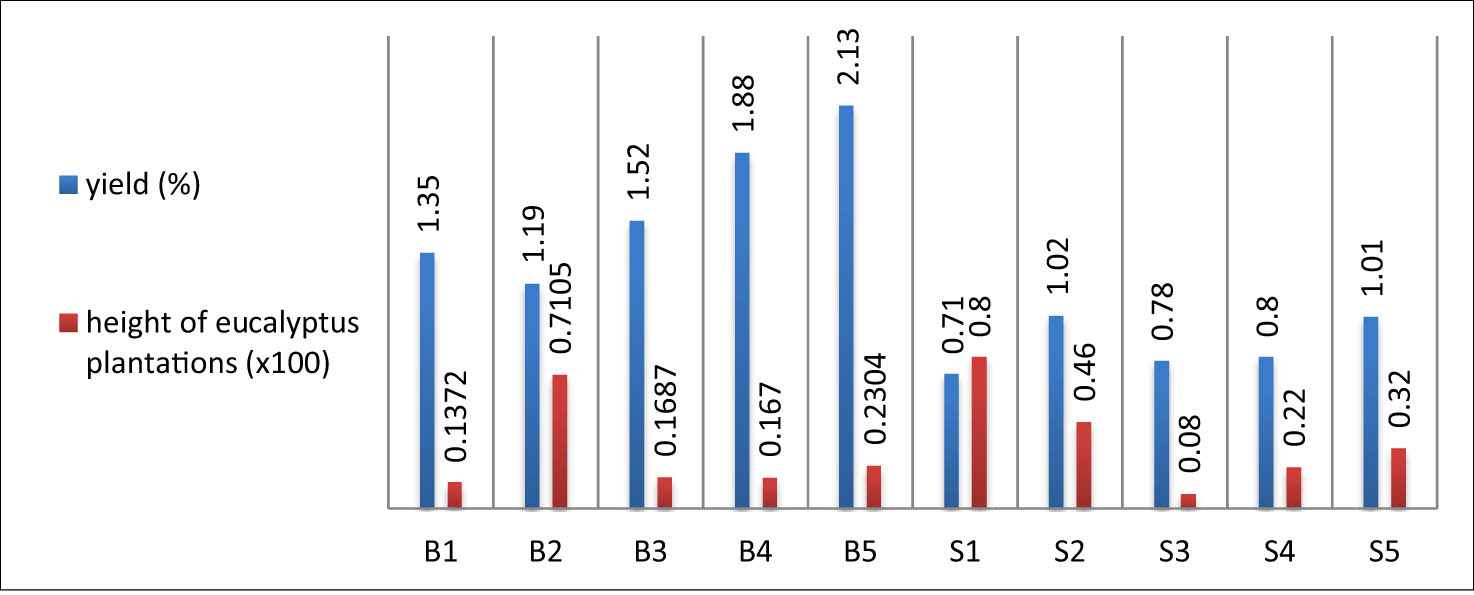
Histogram of eucalyptus oil yield and eucalyptus plantation heights.
Sample B5 produced the highest EO yield, while sample S1 produced the lowest. The histogram of samples from mainland Buru Island shows a pattern of the higher the EO yield, the lower the location of the eucalyptus plant growth. The EO yield was higher at altitudes below 23.04 masl (1.35–2.13%) compared to samples at an altitude of 71.05 masl (1.19%). The same thing happened in samples from mainland Seram Island; at altitudes below 46 masl, the EO yield was higher (0.8–1.0%) than in samples above 80 masl (0.7%). EO results can vary based on the freshness of the leaves, while dry leaves have higher results. The place where eucalyptus oil grows affects the quality of eucalyptus oil, the distinctive odor of eucalyptus oil, the color of the oil, and the specific refractive index value [28].
The height of the plant’s growth location affects the yield and quality of the EO produced. Differences in the height of the growing location can cause variations in microclimate, such as air temperature, soil temperature, air humidity, and soil water content. At higher elevations, temperatures tend to be lower, which affects plant metabolism and the secondary metabolites produced. Plants produce less oil in response to cooler conditions [29]. Higher elevations have higher light intensity, which increases photosynthesis. Water availability may be lower at higher elevations due to variable rainfall and faster drainage. Water deficits can cause plants to produce less EO [30] and affect EO components [31].
Climate has a significant effect on eucalyptus oil production. Climate change can alter the composition of secondary metabolites [32]. Temperatures that are too low or too high can inhibit plant growth and reduce EO production [33]. Soils at higher elevations have different nutrient contents than soils at lower elevations. P levels affect plant growth, while lower N levels reduce chlorophyll content, but EO yield is not affected by N and P levels. Both N and P levels affect the main components of EOs and minerals. These factors collectively can affect the amount and quality of EO plants produced [34].
The results of GC analysis of 10 samples are shown in Figure 4. Variations in sampling points from ten different locations can affect the quality of compounds in eucalyptus plants. Several factors affect the environment: leaf age, soil structure, soil temperature, leaf storage, and climate. The peak of the chromatogram and mass spectrum shows that Buru Island has 11 components and Seram Island has 19 components. The chemical compound components identified for all sampling locations include α-pinene at a retention time of 3.440 min and 1,8-cineole at a retention time of 7.118 min. The mass spectrum of 1,8-cineole is m/z = 55, 63, 71, 81, 93, 108, 125, 139, and 154 (C10H18O). The mass spectrum provides a peak of the molecular ion M+ 154, which is the molecular weight of C10H18O. The release of CH3 produces the fragment [C9H15O]+ with m/z = 139, the release of CH2 produces the fragment [C8H13O]+ with m/z = 125. Furthermore, the release of OH produces the fragment [C8H12]+ with m/z = 108, and the release of C3H2 produces the fragment [C6H9]+ with m/z = 81, which is the base peak.

Chromatogram of eucalyptus oil from Buru Island and Seram Island.
The results of the GC–MS analysis in Table 2 show the main components of eucalyptus EO from the mainland of Buru Island and the mainland of Seram Island with differences in chemical composition even though they come from the same species. The levels of 1,8-cineole in EO ranged from 26.89 to 47.32%, the highest in sample S3 and the lowest in sample B5. The levels of α-pinene ranged from 3.84 to 43.45%, the highest in sample B5 while the lowest in sample S4. In addition to 1,8-cineole and α-pinene, eucalyptus oil samples contain d-limonene (1.14–6.78%), β-pinene (1.10–5.25%), and cymene (1,184.94%). The relationship between the chemical components of EO and the secondary metabolic processes that occur in plants is influenced by the ecosystem and natural conditions, such as climate, weather, and soil conditions [34].
Main components of eucalyptus EO
| No | Chemical compound | Concentration (%) | |||||||||
|---|---|---|---|---|---|---|---|---|---|---|---|
| B1 | B2 | B3 | B4 | B5 | S1 | S2 | S3 | S4 | S5 | ||
| 1 | α-Pinene | 15.39 | 14.65 | 13.62 | 13.51 | 43.45 | 4.09 | 6.60 | 7.50 | 3.84 | 5.16 |
| 2 | β-Pinene | 1.13 | 1.11 | 1.10 | — | 1.21 | 2.75 | 4.97 | 5.25 | 1.99 | 3.58 |
| 3 | 3-Carene | 10.74 | 11.78 | 9.71 | 9.54 | 6.52 | — | — | — | — | — |
| 4 | α-Terpinolene | 4.53 | 5.16 | 1.84 | 4.81 | — | — | — | — | 7.71 | — |
| 5 | d-Limonene | 3.62 | 3.37 | 4.70 | 2.44 | 3.86 | 4.84 | 6.78 | 4.92 | 1.14 | 6.74 |
| 6 | 1,8-Cineole | 34.67 | 37.73 | 33.04 | 31.00 | 26.89 | 41.20 | 33.84 | 47.32 | 39.44 | 38.46 |
| 7 | Cymene | 1.72 | 1.75 | 2.07 | 1.25 | 2.37 | 2.13 | 1.18 | 1.71 | 4.94 | 1.91 |
| 8 | α-Terpinolene | 1.27 | 1.39 | 1.31 | 1.09 | — | — | — | — | 1.97 | 1.08 |
| 9 | Hexylene glycol | 23.87 | 20.22 | 28.89 | 32.72 | 10.76 | — | — | — | — | — |
| 10 | α-Terpynil propionate | — | 1.12 | — | 1.01 | 1.02 | — | — | — | — | — |
| 11 | γ‑Terpinene | — | 1.13 | — | — | — | 1.16 | 1.16 | 2.00 | 4.05 | 2.34 |
| 12 | Dipentene | — | — | — | — | — | 7.87 | 9.90 | 11.57 | 7.37 | 9.12 |
| 13 | Caryophillene | — | — | — | — | — | 5.89 | 8.00 | 3.55 | 5.23 | 5.35 |
| 14 | α-Caryophyllene | — | — | — | — | — | 3.22 | 4.20 | 1.74 | 2.37 | 2.81 |
| 15 | β-Fenchyl alcohol | — | — | — | — | — | 10.54 | 7.57 | 7.25 | 6.62 | 9.00 |
| 16 | β-Selinene | — | — | — | — | — | 3.32 | 2.50 | 1.46 | 2.84 | 2.67 |
| 17 | α-Selinene | — | — | — | — | — | 2.67 | 1.88 | 1.15 | 2.42 | 2.15 |
| 18 | Ledene | — | — | — | — | — | 1.63 | 1.66 | — | — | — |
| 19 | β-Myrcene | — | — | — | — | — | — | 1.21 | 1.87 | — | 1.19 |
| 20 | Champaca camphor | — | — | — | — | — | — | 1.03 | — | 1.76 | 1.25 |
| 21 | α-Eudesmol | — | — | — | — | — | — | 1.19 | — | 1.03 | — |
| 22 | β-Eudesmol | — | — | — | — | — | — | 1.37 | — | 1.20 | — |
Although the dominant components that makeup EO are the same, other components will affect the quality of EOs. All EOs contained α-pinene, 1,8-cineol, and pinocarveol-trans for all eucalyptus species [27]. The results of eucalyptus EO analysis showed 12 components, namely α-pinene (45.21%), camphene (1.38%), β-pinene (1.11%), camphogen (0.74%), 1,8-cineol (36.55%), α-campholine aldehyde (0.73%), pinocarvone (0.83%), α-terpineol (8.87%), β-caryophyllene (1.72%), spathulenol (0.84%), elemol (0.85%), and 1-nonadecenes (1.17%) [25]. 1,8-Cineol is the main compound in all eucalyptus species (49.07–83.59%) [27]. Cineole or 1,8-cineole is a natural cyclic ether and a monoterpenoid member. In this study, the eucalyptus EO sample with the highest cineole content was 43.45%, so it was classified as first-grade eucalyptus oil.
Eucalyptus EO samples from mainland Buru Island and mainland Seram Island have the same five main components: α-pinene, β-pinene, d-limonene, 1,8-cineole, and cymene (Figure 5), with varying compositions. Eucalyptus oil contains various active compounds that have important biological activities. The main component, 1,8-cineole in eucalyptus oil, has significant antimicrobial properties, especially against bacteria that cause respiratory tract infections, and functions as an expectorant that helps thin mucus and has anti-inflammatory and analgesic properties. 1,8-Cineole also has anti-inflammatory, antioxidant, and anticancer activities [35]. α-Pinene and β-pinene have antibacterial properties against Gram-positive and Gram-negative bacterial strains and are also antifungal against Candida species [36,37].

Histogram of chemical compounds found in from Buru Island and Seram Island.
Compounds 3-carane and hexylene glycol are only contained in eucalyptus EO samples from Buru Island (Figure 6) with different compositions. Compounds 3-carane and hexylene glycol in EO result from complex interactions between genetic factors, environment, and processing methods. Genetic variation in eucalyptus plants causes differences in metabolic pathways, resulting in unique chemical profiles in each plant [38]. Environmental conditions such as climate, soil, and altitude also play an important role in modulating the production of secondary metabolite compounds, including 3-carane and hexylene glycol. Hexylene glycol is a relatively rare compound found in EO. Complex biochemical factors often affect its presence in plants and may not always be present in all types of eucalyptus. 3-Carane, as one of the common monoterpenes, is more frequently found, but its amount can vary significantly.

Histogram of chemical compounds found only in samples from Buru Island.
The compounds γ-dipentene, dipentene, caryophyllene, α-caryophyllene, β-phenyl alcohol, β-selinene, and α-selinene are only contained in eucalyptus oil samples from the mainland of Seram Island (Figure 7) with varying compositions. Eucalyptus leaves harvested in the dry season tend to have higher cineole levels than those harvested in the rainy season due to differences in leaf water content and other environmental conditions. Leaf age and soil conditions have a significant effect on eucalyptus oil yields. Older leaves tend to have higher EO content than younger leaves due to the accumulation of chemical compounds in the leaves as the leaves age.

Histogram of chemical compounds that are only found in samples from Seram Island.
There are significant differences between eucalyptus plants grown in the low and highlands. Depending on environmental conditions, plants grown in the highlands have different content of certain compounds, such as higher or lower cineole levels. Plants in the lowlands tend to produce higher EO due to more optimal growing conditions. The quality of EO can vary depending on the chemical composition influenced by environmental factors in each location.
The mainland of Buru Island and the mainland of Seram Island have similar climates, namely a humid tropical climate. However, altitude, location, and topography differences can cause greater temperature, rainfall, and humidity variations. Seram Island has a wider mountainous area, so it can cause greater variations in temperature and rainfall compared to Buru Island, which is relatively flatter. The climate at the Seram Island sampling location is included in the category of a humid tropical climate. This area experiences high yearly rainfall with a relatively short dry season. The sampling location on Buru Island has a tropical climate with two seasons, namely the dry and the rainy seasons, which are influenced by the movement of the monsoon winds. So, the high humidity on the Seram Island plains affects the yield and chemical components contained in the EO. The composition of eucalyptus EO varies according to the influencing factors but only has one chemotype, with the main component being 1,8-cineole [39].
4 Conclusion
The geographical conditions of eucalyptus (M. leucadendron) plants affect the quality and quantity of EO. Eucalyptus plantation areas on the mainland of Seram Island have high humidity, which results in lower EO quality. The yield of eucalyptus EO from Buru Island is higher than that of Seram Island. Eucalyptus plants planted in the lowlands have higher EO yields. Climate affects the chemical components of EO; for humid plantation areas on Seram Island, there are minor components of terpene compounds that are not found on Buru Island, but for Buru Island, there is hexylene glycol. At higher locations, temperatures tend to be lower, which affects plant metabolism and produces less EO.
-
Funding information: This research received no external funding.
-
Author contributions: I.B.D.K., A.U.B.J., and W.P.J. – conceptualization; I.B.D.K. – methodology; F.A.S. and R. – validation; I.B.D.K. – formal analysis; F.A.S., R., A.U.B.J., and W.P.J. – writing – original draft preparation; I.B.D.K. – writing – review and editing; and V.B.S. – visualization.
-
Conflict of interest: The authors state no conflict of interest.
-
Ethical approval: Ethical approval is not applicable to this article.
-
Data availability statement: All data generated or analyzed during this study are included in this published article.
References
[1] Dante A, Eden WT, Supardi KI, Masturi, Purwinarko A. Potential development essential oil production of Central Java, Indonesia. J Phys: Conf Ser. 2017;824:012021. 10.1088/1742-6596/824/1/012021.Search in Google Scholar
[2] Guzmán E, Lucia A. Essential oils and their individual components in cosmetic products. Cosmetics. 2021;8(4):114. 10.3390/cosmetics8040114.Search in Google Scholar
[3] Lima MC, de Sousa CP, Fernandez-Prada C, Harel J, Dubreuil JD, de Souza EL. A review of the current evidence of fruit phenolic compounds as potential antimicrobials against pathogenic bacteria. Microb Pathog. 2019;130:259–70. 10.1016/j.micpath.2019.03.025.Search in Google Scholar PubMed
[4] Chukwuma IF, Uchendu NO, Asomadu RO, Ezeorba WFC, Ezeorba TPC. African and Holy Basil - A review of ethnobotany, phytochemistry, and toxicity of their essential oil: Current trends and prospects for antimicrobial/anti-parasitic pharmacology. Arab J Chem. 2023;16(7):104870. 10.1016/j.arabjc.2023.104870.Search in Google Scholar
[5] Saleh ZM, Azeiz AZ, Mehany ABM, El-Swaify ZAS. Anticancer and antimicrobial activity of Jatropha’s leaves extracts. Egypt J Bot. 2023;63(2):621–34. 10.21608/ejbo.2023.162736.2137.Search in Google Scholar
[6] Alemayehu A, Melka Y. Small scale eucalyptus cultivation and its socioeconomic impacts in Ethiopia: A review of practices and conditions. Trees For People. 2022;8:100269. 10.1016/j.tfp.2022.100269.Search in Google Scholar
[7] Daba MH. The eucalyptus dilemma: The pursuit for socio-economic benefit versus environmental impacts of eucalyptus in Ethiopia. J Nat Sci Res. 2016;6(19):127–37.Search in Google Scholar
[8] Lemessa D, Mewded B, Legesse A, Atinfau H, Alemu S, Maryo M, et al. Do eucalyptus plantation forests support biodiversity conservation? For Ecol Manag. 2022;523:120492. 10.1016/j.foreco.2022.120492.Search in Google Scholar
[9] Rajapaksha C, Greaves P, Altaner CM. Economic potential of essential oil production from New Zealand - grown Eucalyptus bosistoana. Sci Rep. 2023;13(1):14083. 10.1038/s41598-023-40632-5.Search in Google Scholar PubMed PubMed Central
[10] Elangovan S, Mudgil P. Antibacterial properties of Eucalyptus globulus essential oil against MRSA: A systematic review. Antibiotics (Basel). 2023;12(3):474. 10.3390/antibiotics12030474.Search in Google Scholar PubMed PubMed Central
[11] Khedhri S, Polito F, Caputo L, De Feo V, Khamassi M, Kochti O, et al. Chemical composition, antibacterial properties, and anti-enzymatic effects of eucalyptus essential oils sourced from Tunisia. Molecules. 2023;28(20):7211. 10.3390/molecules28207211.Search in Google Scholar PubMed PubMed Central
[12] Diloksumpun S, Wongkattiya N, Buaban K, Saleepochn T, Suttiarporn P, Luangkamin S. Variation in the antibacterial and antioxidant activities of essential oils of five new Eucalyptus urophylla S.T. Blake Clones in Thailand. Molecules. 2022;27(3):680. 10.3390/molecules27030680.Search in Google Scholar PubMed PubMed Central
[13] Asif M, Saleem M, Saadullah M, Yaseen HS, Al Zarzour R. COVID-19 and therapy with essential oils having antiviral, anti-inflammatory, and immunomodulatory properties. Inflammopharmacology. 2020;28:1153–61. 10.1007/s10787-020-00744-0.Search in Google Scholar PubMed PubMed Central
[14] Böhme K, Barros-Velázquez J, Calo-Mata P, Aubourg SP. Antimicrobial compounds: Antibacterial, antiviral and antifungal activity of essential oils: Mechanisms and applications. Berlin, Heidelberg: Springer-Verlag; 2014; p. 51–81. 10.1007/978-3-642-40444-3_3.Search in Google Scholar
[15] de Sousa DP, Damasceno ROS, Amorati R, Elshabrawy HA, de Castro RD, Bezerra DP, et al. Essential oils: Chemistry and pharmacological activities. Biomolecules. 2023;13(7):1144. 10.3390/biom13071144.Search in Google Scholar PubMed PubMed Central
[16] Rimbawanto A, Kartikawati NK, Prastyono. Essence of Indonesia. The story of cajuput oil and its importance to the community. Australia: Australian Centre for International Agricultural Research; 2022.Search in Google Scholar
[17] Ghiffari RA. Development of eucalyptus oil agro-industries in Kabupaten Buru. Procedia - Soc Behav Sci. 2016;227:815–23. 10.1016/j.sbspro.2016.06.150.Search in Google Scholar
[18] Demirbolat I, Karık U, Iscan I. Effect of cultivation and geographical location on chemical composition and enantiomeric distribution in linalool-rich Origanum dubium Boiss. essential oils obtained at different growth stages. J Essent Oil Res. 2024;37(1):88–94. 10.1080/10412905.2024.2404085.Search in Google Scholar
[19] Ngo TCQ, Tran TH, Le XT. The effects of influencing parameters on the eucalyptus globulus leaves essential oil extraction by hydrodistillation method. IOP Conf Ser: Mater Sci Eng. 2020;991:012126. 10.1088/1757-899X/991/1/012126.Search in Google Scholar
[20] Angane M, Swift S, Huang K, Butts CA, Quek SY. Essential oils and their major components: An updated review on antimicrobial activities, mechanism of action and their potential application in the food industry. Foods. 2022;11(3):464. 10.3390/foods11030464.Search in Google Scholar PubMed PubMed Central
[21] El-Hack MEA, El-Saadony MT, Saad AM, Salem HM, Ashry NM, Ghanima MMA, et al. Essential oils and their nanoemulsions as green alternatives to antibiotics in poultry nutrition: A comprehensive review. Poult Sci. 2022;101(2):101584. 10.1016/j.psj.2021.101584.Search in Google Scholar PubMed PubMed Central
[22] Setiawan, Nadhilah A, Ilhamisari RP. Effects of leaf storage and distillation time on the quality of eucalyptus (Eucalyptus grandis) essential oil. 3BIO: J Biol Sci Technol Manag. 2022;4(1):1–7, http://journals.itb.ac.id/index.php/3bio.10.5614/3bio.2022.4.1.1Search in Google Scholar
[23] Haile F, Genene D, Difabachew Y, Damtew Z, Mekonnen S. The influence of harvesting season, wilting period and leaf position on essential oil content of Eucalyptus camaldulensis leaves. World J Agric Sci. 2018;14(6):184–9. 10.5829/idosi.wjas.2018.184.189.Search in Google Scholar
[24] Kapelle IBD, Joris SN, Saleh F, Renur NM. Chemical components and antibacterial activity of Cinnamomum culilaban extract from Southeast Maluku. Eksakta: Berk Ilm Bid MIPA. 2025;26(2):163–74, 10.24036/eksakta/vol26-iss02/584.Search in Google Scholar
[25] Alfian Z, Marpaung H, Taufik M, Lenny S, Andriayani, Samosir SJ. GC-MS analysis of chemical contents and physical properties of essential oil of Eucalyptus grandis from PT. Toba Pulp Lestari. Asian J Chem. 2019;31(10):2319–22. 10.14233/ajchem.2019.21620.Search in Google Scholar
[26] Sareriya KJ, Vanzara PB, Maiti S. Optimization of eucalyptus essential oil extraction by applying response surface methodology in traditional distillation and its adaption to solar thermal process. Sustain Energy Res. 2024;11:25. 10.1186/s40807-024-00118-y.Search in Google Scholar
[27] Sebei K, Sakouhi F, Herchi W, Mohamed Larbi Khouja ML, Boukhchina S. Chemical composition and antibacterial activities of seven eucalyptus species essential oils leaves. Biol Res. 2015;48:7. 10.1186/0717-6287-48-7.Search in Google Scholar PubMed PubMed Central
[28] Dhuha M, Satriadi T, Hamidah S. Yield and quality of eucalyptus oil (Melaleuca cajuputi) based on leaf freshness and growing conditions. J Sylva Scienteae. 2022;5(5):699–704. 10.20527/jss.v5i5.6691.Search in Google Scholar
[29] Sadono R, Soeprijadi D, Wirabuana PYAP. Land suitability for eucalyptus plantation development and its implications for silviculture techniques. J Nat Resour Environ Manag. 2019;10(1):43–51. 10.29244/jpsl.10.1.43-51.Search in Google Scholar
[30] Virga G, Sabatino L, Licata M, Tuttolomondo T, Leto C, La Bella S. Effects of irrigation with different sources of water on growth, yield and essential oil compounds in Oregano. Plants. 2020;9(11):1618. 10.3390/plants9111618.Search in Google Scholar PubMed PubMed Central
[31] Petropoulos S, Dimitra D, Polissiou MG, Passam H. The effect of water deficit stress on the growth, yield and composition of essential oils of parsley. Sci Hortic. 2008;115:393–7. 10.1016/j.scienta.2007.10.008.Search in Google Scholar
[32] Dobhal P, Purohit VK, Chandra S, Rawat S, Prasad P, Bhandari U, et al. Climate-induced changes in essential oil production and terpene composition in alpine aromatic plants. Plant Stress. 2024;12:100445. 10.1016/j.stress.2024.100445.Search in Google Scholar
[33] Hasanuzzaman M, Nahar K, Alam MM, Roychowdhury R, Fujita M. Physiological, biochemical, and molecular mechanisms of heat stress tolerance in plants. Int J Mol Sci. 2013;14(5):9643–84. 10.3390/ijms14059643.Search in Google Scholar PubMed PubMed Central
[34] Chrysargyris A, Panayiotou C, Tzortzakis N. Nitrogen and phosphorus levels affected plant growth, essential oil composition and antioxidant status of lavender plant (Lavandula angustifolia Mill.). Ind Crop Prod. 2016;83:577–86. 10.1016/j.indcrop.2015.12.067.Search in Google Scholar
[35] Hoch CC, Petry J, Griesbaum L, Weiser T, Werner K, Ploch M, et al. 1,8-cineole (eucalyptol): A versatile phytochemical with therapeutic applications across multiple diseases. Biomed Pharmacother. 2023;167:115467. 10.1016/j.biopha.2023.115467.Search in Google Scholar PubMed
[36] Borges MFdA, Lacerda RdS, Correia JPdA, de Melo TR, Ferreira SB. Potential antibacterial action of α-pinene. Med Sci Forum. 2022;12(1):11. 10.3390/eca2022-12709.Search in Google Scholar
[37] Salehi B, Upadhyay S, Orhan IE, Jugran AK, Jayaweera SLD, Dias DA, et al. Therapeutic potential of α- and β-pinene: A miracle gift of nature. Biomolecules. 2019;9(11):738. 10.3390/biom9110738.Search in Google Scholar PubMed PubMed Central
[38] Chen H, Du S, Huang H, Tian L, Zhou H, Wu J, et al. Plant diversity in the understory of eucalyptus plantations on Hainan Island and its response to environmental factors. Front Ecol Evol. 2024;12:1–12. 10.3389/fevo.2024.1366094.Search in Google Scholar
[39] Brophy JJ, Craven LA, Doran JC. Melaleucas: Their botany, essential oils and uses. ACIAR Monograph No. 156. Canberra: Australian Centre for International Agricultural Research; 2013.Search in Google Scholar
© 2025 the author(s), published by De Gruyter
This work is licensed under the Creative Commons Attribution 4.0 International License.
Articles in the same Issue
- Research Articles
- Phytochemical investigation and evaluation of antioxidant and antidiabetic activities in aqueous extracts of Cedrus atlantica
- Influence of B4C addition on the tribological properties of bronze matrix brake pad materials
- Discovery of the bacterial HslV protease activators as lead molecules with novel mode of action
- Characterization of volatile flavor compounds of cigar with different aging conditions by headspace–gas chromatography–ion mobility spectrometry
- Effective remediation of organic pollutant using Musa acuminata peel extract-assisted iron oxide nanoparticles
- Analysis and health risk assessment of toxic elements in traditional herbal tea infusions
- Cadmium exposure in marine crabs from Jiaxing City, China: Insights into health risk assessment
- Green-synthesized silver nanoparticles of Cinnamomum zeylanicum and their biological activities
- Tetraclinis articulata (Vahl) Mast., Mentha pulegium L., and Thymus zygis L. essential oils: Chemical composition, antioxidant and antifungal properties against postharvest fungal diseases of apple, and in vitro, in vivo, and in silico investigation
- Exploration of plant alkaloids as potential inhibitors of HIV–CD4 binding: Insight into comprehensive in silico approaches
- Recovery of phenylethyl alcohol from aqueous solution by batch adsorption
- Electrochemical approach for monitoring the catalytic action of immobilized catalase
- Green synthesis of ZIF-8 for selective adsorption of dyes in water purification
- Optimization of the conditions for the preparation of povidone iodine using the response surface methodology
- A case study on the influence of soil amendment on ginger oil’s physicochemical properties, mineral contents, microbial load, and HPLC determination of its vitamin level
- Removal of antiviral favipiravir from wastewater using biochar produced from hazelnut shells
- Effect of biochar and soil amendment on bacterial community composition in the root soil and fruit of tomato under greenhouse conditions
- Bioremediation of malachite green dye using Sargassum wightii seaweed and its biological and physicochemical characterization
- Evaluation of natural compounds as folate biosynthesis inhibitors in Mycobacterium leprae using docking, ADMET analysis, and molecular dynamics simulation
- Novel insecticidal properties of bioactive zoochemicals extracted from sea urchin Salmacis virgulata
- Elevational gradients shape total phenolic content and bioactive potential of sweet marjoram (Origanum majorana L.): A comparative study across altitudinal zones
- Study on the CO2 absorption performance of deep eutectic solvents formed by superbase DBN and weak acid diethylene glycol
- Preparation and wastewater treatment performance of zeolite-modified ecological concrete
- Multifunctional chitosan nanoparticles: Zn2+ adsorption, antimicrobial activity, and promotion of aquatic health
- Comparative analysis of nutritional composition and bioactive properties of Chlorella vulgaris and Arthrospira platensis: Implications for functional foods and dietary supplements
- Growth kinetics and mechanical characterization of boride layers formed on Ti6Al4V
- Enhancement of water absorption properties of potassium polyacrylate-based hydrogels in CaCl2-rich soils using potassium di- and tri-carboxylate salts
- Electrochemical and microbiological effects of dumpsite leachates on soil and air quality
- Modeling benzene physicochemical properties using Zagreb upsilon indices
- Characterization and ecological risk assessment of toxic metals in mangrove sediments near Langen Village in Tieshan Bay of Beibu Gulf, China
- Protective effect of Helicteres isora, an efficient candidate on hepatorenal toxicity and management of diabetes in animal models
- Valorization of Juglans regia L. (Walnut) green husk from Jordan: Analysis of fatty acids, phenolics, antioxidant, and cytotoxic activities
- Molecular docking and dynamics simulations of bioactive terpenes from Catharanthus roseus essential oil targeting breast cancer
- Selection of a dam site by using AHP and VIKOR: The Sakarya Basin
- Characterization and modeling of kidney bean shell biochar as adsorbent for caffeine removal from aquatic environments
- The effects of short-term and long-term 2100 MHz radiofrequency radiation on adult rat auditory brainstem response
- Biochemical insights into the anthelmintic and anti-inflammatory potential of sea cucumber extract: In vitro and in silico approaches
- Resveratrol-derived MDM2 inhibitors: Synthesis, characterization, and biological evaluation against MDM2 and HCT-116 cells
- Phytochemical constituents, in vitro antibacterial activity, and computational studies of Sudanese Musa acuminate Colla fruit peel hydro-ethanol extract
- Chemical composition of essential oils reviewed from the height of Cajuput (Melaleuca leucadendron) plantations in Buru Island and Seram Island, Maluku, Indonesia
- Phytochemical analysis and antioxidant activity of Azadirachta indica A. Juss from the Republic of Chad: in vitro and in silico studies
- Stability studies of titanium–carboxylate complexes: A multi-method computational approach
- Efficient adsorption performance of an alginate-based dental material for uranium(vi) removal
- Synthesis and characterization of the Co(ii), Ni(ii), and Cu(ii) complexes with a 1,2,4-triazine derivative ligand
- Evaluation of the impact of music on antioxidant mechanisms and survival in salt-stressed goldfish
- Optimization and validation of UPLC method for dapagliflozin and candesartan cilexetil in an on-demand formulation: Analytical quality by design approach
- Biomass-based cellulose hydroxyapatite nanocomposites for the efficient sequestration of dyes: Kinetics, response surface methodology optimization, and reusability
- Multifunctional nitrogen and boron co-doped carbon dots: A fluorescent probe for Hg2+ and biothiol detection with bioimaging and antifungal applications
- Separation of sulphonamides on a C12-diol mixed-mode HPLC column and investigation of their retention mechanism
- Characterization and antioxidant activity of pectin from lemon peels
- Fast PFAS determination in honey by direct probe electrospray ionization tandem mass spectrometry: A health risk assessment insight
- Correlation study between GC–MS analysis of cigarette aroma compounds and sensory evaluation
- Synthesis, biological evaluation, and molecular docking studies of substituted chromone-2-carboxamide derivatives as anti-breast cancer agents
- The influence of feed space velocity and pressure on the cold flow properties of diesel fuel
- Acid etching behavior and mechanism in acid solution of iron components in basalt fibers
- Protective effect of green synthesized nanoceria on retinal oxidative stress and inflammation in streptozotocin-induced diabetic rat
- Evaluation of the antianxiety activity of green zinc nanoparticles mediated by Boswellia thurifera in albino mice by following the plus maze and light and dark exploration tests
- Yeast as an efficient and eco-friendly bifunctional porogen for biomass-derived nitrogen-doped carbon catalysts in the oxygen reduction reaction
- Novel descriptors for the prediction of molecular properties
- Synthesis and characterization of surfactants derived from phenolphthalein: In vivo and in silico studies of their antihyperlipidemic effect
- Turmeric oil-fortified nutraceutical-SNEDDS: An approach to boost therapeutic effectiveness of dapagliflozin during treatment of diabetic patients
- Analysis and study on volatile flavor compounds of three Yunnan cultivated cigars based on headspace-gas chromatography-ion mobility spectrometry
- Near-infrared IR780 dye-loaded poloxamer 407 micelles: Preparation and in vitro assessment of anticancer activity
- Study on the influence of the viscosity reducer solution on percolation capacity of thin oil in ultra-low permeability reservoir
- Detection method of Aristolochic acid I based on magnetic carrier Fe3O4 and gold nanoclusters
- Juglone’s apoptotic impact against eimeriosis-induced infection: a bioinformatics, in-silico, and in vivo approach
- Potential anticancer agents from genus Aerva based on tubulin targets: an in-silico integration of quantitative structure activity relationship (QSAR), molecular docking, simulation, drug-likeness, and density functional theory (DFT) analysis
- Hepatoprotective and PXR-modulating effects of Erodium guttatum extract in propiconazole-induced toxicity
- Studies on chemical composition of medicinal plants collected in natural locations in Ecuador
- A study of different pre-treatment methods for cigarettes and their aroma differences
- Cytotoxicity and molecular mechanisms of quercetin, gallic acid, and pinocembrin in Caco-2 cells: insights from cell viability assays, network pharmacology, and molecular docking
- Choline-based deep eutectic solvents for green extraction of oil from sour cherry seeds
- Green-synthesis of chromium (III) nanoparticles using garden fern and evaluation of its antibacterial and anticholinesterase activities
- Innovative functional mayonnaise formulations with watermelon seeds oil: evaluation of quality parameters and storage stability
- Molecular insights and biological evaluation of compounds isolated from Ferula oopoda against diabetes, advanced glycation end products and inflammation in diabetics
- Removal of cytotoxic tamoxifen from aqueous solutions using a geopolymer-based nepheline–cordierite adsorbent
- Unravelling the therapeutic effect of naturally occurring Bauhinia flavonoids against breast cancer: an integrated computational approach
- Characterization of organic arsenic residues in livestock and poultry meat and offal and consumption risks
- Synthesis and characterization of zinc sulfide nanoparticles and their genotoxic and cytotoxic effects on acute myeloid leukemia cells
- Activity of Coriandrum sativum methanolic leaf extracts against Eimeria papillata: a combined in vitro and in silico approach
- Special Issue on Advancing Sustainable Chemistry for a Greener Future
- One-pot fabrication of highly porous morphology of ferric oxide-ferric oxychloride/poly-O-chloroaniline nanocomposite seeded on poly-1H pyrrole: Photocathode for green hydrogen generation from natural and artificial seawater
- High-efficiency photocathode for green hydrogen generation from sanitation water using bismuthyl chloride/poly-o-chlorobenzeneamine nanocomposite
- Innovative synthesis of cobalt-based catalysts using ionic liquids and deep eutectic solvents: A minireview on electrocatalytic water splitting
- Special Issue on Phytochemicals, Biological and Toxicological Analysis of Plants
- Comparative analysis of fruit quality parameters and volatile compounds in commercially grown citrus cultivars
- Total phenolic, flavonoid, flavonol, and tannin contents as well as antioxidant and antiparasitic activities of aqueous methanol extract of Alhagi graecorum plant used in traditional medicine: Collected in Riyadh, Saudi Arabia
- Study on the pharmacological effects and active compounds of Apocynum venetum L.
- Chemical profile of Senna italica and Senna velutina seed and their pharmacological properties
- Essential oils from Brazilian plants: A literature analysis of anti-inflammatory and antimalarial properties and in silico validation
- Toxicological effects of green tea catechin extract on rat liver: Delineating safe and harmful doses
- Unlocking the potential of Trigonella foenum-graecum L. plant leaf extracts against diabetes-associated hypertension: A proof of concept by in silico studies
Articles in the same Issue
- Research Articles
- Phytochemical investigation and evaluation of antioxidant and antidiabetic activities in aqueous extracts of Cedrus atlantica
- Influence of B4C addition on the tribological properties of bronze matrix brake pad materials
- Discovery of the bacterial HslV protease activators as lead molecules with novel mode of action
- Characterization of volatile flavor compounds of cigar with different aging conditions by headspace–gas chromatography–ion mobility spectrometry
- Effective remediation of organic pollutant using Musa acuminata peel extract-assisted iron oxide nanoparticles
- Analysis and health risk assessment of toxic elements in traditional herbal tea infusions
- Cadmium exposure in marine crabs from Jiaxing City, China: Insights into health risk assessment
- Green-synthesized silver nanoparticles of Cinnamomum zeylanicum and their biological activities
- Tetraclinis articulata (Vahl) Mast., Mentha pulegium L., and Thymus zygis L. essential oils: Chemical composition, antioxidant and antifungal properties against postharvest fungal diseases of apple, and in vitro, in vivo, and in silico investigation
- Exploration of plant alkaloids as potential inhibitors of HIV–CD4 binding: Insight into comprehensive in silico approaches
- Recovery of phenylethyl alcohol from aqueous solution by batch adsorption
- Electrochemical approach for monitoring the catalytic action of immobilized catalase
- Green synthesis of ZIF-8 for selective adsorption of dyes in water purification
- Optimization of the conditions for the preparation of povidone iodine using the response surface methodology
- A case study on the influence of soil amendment on ginger oil’s physicochemical properties, mineral contents, microbial load, and HPLC determination of its vitamin level
- Removal of antiviral favipiravir from wastewater using biochar produced from hazelnut shells
- Effect of biochar and soil amendment on bacterial community composition in the root soil and fruit of tomato under greenhouse conditions
- Bioremediation of malachite green dye using Sargassum wightii seaweed and its biological and physicochemical characterization
- Evaluation of natural compounds as folate biosynthesis inhibitors in Mycobacterium leprae using docking, ADMET analysis, and molecular dynamics simulation
- Novel insecticidal properties of bioactive zoochemicals extracted from sea urchin Salmacis virgulata
- Elevational gradients shape total phenolic content and bioactive potential of sweet marjoram (Origanum majorana L.): A comparative study across altitudinal zones
- Study on the CO2 absorption performance of deep eutectic solvents formed by superbase DBN and weak acid diethylene glycol
- Preparation and wastewater treatment performance of zeolite-modified ecological concrete
- Multifunctional chitosan nanoparticles: Zn2+ adsorption, antimicrobial activity, and promotion of aquatic health
- Comparative analysis of nutritional composition and bioactive properties of Chlorella vulgaris and Arthrospira platensis: Implications for functional foods and dietary supplements
- Growth kinetics and mechanical characterization of boride layers formed on Ti6Al4V
- Enhancement of water absorption properties of potassium polyacrylate-based hydrogels in CaCl2-rich soils using potassium di- and tri-carboxylate salts
- Electrochemical and microbiological effects of dumpsite leachates on soil and air quality
- Modeling benzene physicochemical properties using Zagreb upsilon indices
- Characterization and ecological risk assessment of toxic metals in mangrove sediments near Langen Village in Tieshan Bay of Beibu Gulf, China
- Protective effect of Helicteres isora, an efficient candidate on hepatorenal toxicity and management of diabetes in animal models
- Valorization of Juglans regia L. (Walnut) green husk from Jordan: Analysis of fatty acids, phenolics, antioxidant, and cytotoxic activities
- Molecular docking and dynamics simulations of bioactive terpenes from Catharanthus roseus essential oil targeting breast cancer
- Selection of a dam site by using AHP and VIKOR: The Sakarya Basin
- Characterization and modeling of kidney bean shell biochar as adsorbent for caffeine removal from aquatic environments
- The effects of short-term and long-term 2100 MHz radiofrequency radiation on adult rat auditory brainstem response
- Biochemical insights into the anthelmintic and anti-inflammatory potential of sea cucumber extract: In vitro and in silico approaches
- Resveratrol-derived MDM2 inhibitors: Synthesis, characterization, and biological evaluation against MDM2 and HCT-116 cells
- Phytochemical constituents, in vitro antibacterial activity, and computational studies of Sudanese Musa acuminate Colla fruit peel hydro-ethanol extract
- Chemical composition of essential oils reviewed from the height of Cajuput (Melaleuca leucadendron) plantations in Buru Island and Seram Island, Maluku, Indonesia
- Phytochemical analysis and antioxidant activity of Azadirachta indica A. Juss from the Republic of Chad: in vitro and in silico studies
- Stability studies of titanium–carboxylate complexes: A multi-method computational approach
- Efficient adsorption performance of an alginate-based dental material for uranium(vi) removal
- Synthesis and characterization of the Co(ii), Ni(ii), and Cu(ii) complexes with a 1,2,4-triazine derivative ligand
- Evaluation of the impact of music on antioxidant mechanisms and survival in salt-stressed goldfish
- Optimization and validation of UPLC method for dapagliflozin and candesartan cilexetil in an on-demand formulation: Analytical quality by design approach
- Biomass-based cellulose hydroxyapatite nanocomposites for the efficient sequestration of dyes: Kinetics, response surface methodology optimization, and reusability
- Multifunctional nitrogen and boron co-doped carbon dots: A fluorescent probe for Hg2+ and biothiol detection with bioimaging and antifungal applications
- Separation of sulphonamides on a C12-diol mixed-mode HPLC column and investigation of their retention mechanism
- Characterization and antioxidant activity of pectin from lemon peels
- Fast PFAS determination in honey by direct probe electrospray ionization tandem mass spectrometry: A health risk assessment insight
- Correlation study between GC–MS analysis of cigarette aroma compounds and sensory evaluation
- Synthesis, biological evaluation, and molecular docking studies of substituted chromone-2-carboxamide derivatives as anti-breast cancer agents
- The influence of feed space velocity and pressure on the cold flow properties of diesel fuel
- Acid etching behavior and mechanism in acid solution of iron components in basalt fibers
- Protective effect of green synthesized nanoceria on retinal oxidative stress and inflammation in streptozotocin-induced diabetic rat
- Evaluation of the antianxiety activity of green zinc nanoparticles mediated by Boswellia thurifera in albino mice by following the plus maze and light and dark exploration tests
- Yeast as an efficient and eco-friendly bifunctional porogen for biomass-derived nitrogen-doped carbon catalysts in the oxygen reduction reaction
- Novel descriptors for the prediction of molecular properties
- Synthesis and characterization of surfactants derived from phenolphthalein: In vivo and in silico studies of their antihyperlipidemic effect
- Turmeric oil-fortified nutraceutical-SNEDDS: An approach to boost therapeutic effectiveness of dapagliflozin during treatment of diabetic patients
- Analysis and study on volatile flavor compounds of three Yunnan cultivated cigars based on headspace-gas chromatography-ion mobility spectrometry
- Near-infrared IR780 dye-loaded poloxamer 407 micelles: Preparation and in vitro assessment of anticancer activity
- Study on the influence of the viscosity reducer solution on percolation capacity of thin oil in ultra-low permeability reservoir
- Detection method of Aristolochic acid I based on magnetic carrier Fe3O4 and gold nanoclusters
- Juglone’s apoptotic impact against eimeriosis-induced infection: a bioinformatics, in-silico, and in vivo approach
- Potential anticancer agents from genus Aerva based on tubulin targets: an in-silico integration of quantitative structure activity relationship (QSAR), molecular docking, simulation, drug-likeness, and density functional theory (DFT) analysis
- Hepatoprotective and PXR-modulating effects of Erodium guttatum extract in propiconazole-induced toxicity
- Studies on chemical composition of medicinal plants collected in natural locations in Ecuador
- A study of different pre-treatment methods for cigarettes and their aroma differences
- Cytotoxicity and molecular mechanisms of quercetin, gallic acid, and pinocembrin in Caco-2 cells: insights from cell viability assays, network pharmacology, and molecular docking
- Choline-based deep eutectic solvents for green extraction of oil from sour cherry seeds
- Green-synthesis of chromium (III) nanoparticles using garden fern and evaluation of its antibacterial and anticholinesterase activities
- Innovative functional mayonnaise formulations with watermelon seeds oil: evaluation of quality parameters and storage stability
- Molecular insights and biological evaluation of compounds isolated from Ferula oopoda against diabetes, advanced glycation end products and inflammation in diabetics
- Removal of cytotoxic tamoxifen from aqueous solutions using a geopolymer-based nepheline–cordierite adsorbent
- Unravelling the therapeutic effect of naturally occurring Bauhinia flavonoids against breast cancer: an integrated computational approach
- Characterization of organic arsenic residues in livestock and poultry meat and offal and consumption risks
- Synthesis and characterization of zinc sulfide nanoparticles and their genotoxic and cytotoxic effects on acute myeloid leukemia cells
- Activity of Coriandrum sativum methanolic leaf extracts against Eimeria papillata: a combined in vitro and in silico approach
- Special Issue on Advancing Sustainable Chemistry for a Greener Future
- One-pot fabrication of highly porous morphology of ferric oxide-ferric oxychloride/poly-O-chloroaniline nanocomposite seeded on poly-1H pyrrole: Photocathode for green hydrogen generation from natural and artificial seawater
- High-efficiency photocathode for green hydrogen generation from sanitation water using bismuthyl chloride/poly-o-chlorobenzeneamine nanocomposite
- Innovative synthesis of cobalt-based catalysts using ionic liquids and deep eutectic solvents: A minireview on electrocatalytic water splitting
- Special Issue on Phytochemicals, Biological and Toxicological Analysis of Plants
- Comparative analysis of fruit quality parameters and volatile compounds in commercially grown citrus cultivars
- Total phenolic, flavonoid, flavonol, and tannin contents as well as antioxidant and antiparasitic activities of aqueous methanol extract of Alhagi graecorum plant used in traditional medicine: Collected in Riyadh, Saudi Arabia
- Study on the pharmacological effects and active compounds of Apocynum venetum L.
- Chemical profile of Senna italica and Senna velutina seed and their pharmacological properties
- Essential oils from Brazilian plants: A literature analysis of anti-inflammatory and antimalarial properties and in silico validation
- Toxicological effects of green tea catechin extract on rat liver: Delineating safe and harmful doses
- Unlocking the potential of Trigonella foenum-graecum L. plant leaf extracts against diabetes-associated hypertension: A proof of concept by in silico studies
