Traditional agri-food products and sustainability – A fruitful relationship for the development of rural areas in Portugal
-
Maria Lúcia Pato
 und
Ana Sofia Duque
und
Ana Sofia Duque

Abstract
The protection of agri-food regional products is taking on growing importance in a market dominated by global companies and brands, often with no personality. Thirty years ago, the European Union (EU) agricultural product quality policy introduced the protection of geographical indications (GIs) for agricultural products and foodstuffs, with the aim of highlighting the quality of products resulting from a specific origin, therefore helping their communication and positioning in the market. This is important in countries with a considerable percentage of rural regions, as is the case of Portugal. Bearing this in mind, the purpose of this study is to see what are the drivers of the spatial distribution of traditional products (protected geographical indications, protected designations of origin, and traditional speciality guaranteed) in Portugal. For this purpose, the distribution of traditional products by regions and categories in Portugal will be presented. Also, Portugal’s position will be analysed and compared to the other EU countries, regarding the number of traditional products. Results show that Portugal is the country with the fourth biggest number of traditional certified products in EU territory. In the national territory, the Northern Region of Portugal has the biggest percentage of protected products, followed by Alentejo and the Centre Region of Portugal. Also, in Portugal, looking at the type of products, from a list of ten different categories of GIs, the ranking is dominated by (1) fresh meat, (2) meat products (cooked, salted, or smoked), and (3) cheese and milk-based products. If we consider that many of the aforementioned products are produced in less favoured regions, these results constitute an opportunity for their sustainable development. This benefits not only the producers, but also consumers who increasingly seek “authentic” and more natural products.
1 Introduction
The protection of agri-food regional products is taking on growing importance in a market dominated by global companies and brands, often with no personality. Indeed, recent concerns with health and safety and the negative impacts of intensive agriculture have led some consumers to find alternatives to mass-produced and undifferentiated foods [1]. They are increasingly searching for more natural and safer products with taste, ripeness, freshness, and personality.
Bearing this in mind, almost 15 years ago the European Commission (EC) presented a document with a reflection on how to ensure a suitable policy and regulatory framework to protect and promote the quality of agricultural products, including food products that depend on the place of production and the savoir-faire of farmers. In the document called “Green Paper on Agricultural Product Quality,” quality is defined as the desires and expectations of consumers [2]. Moreover, the product qualities addressed here are the product characteristics, which depend on the specific origin and the farming methods used, contributing to the product that the consumer wants to acquire [2].
Also, the European Union (EU) agricultural product quality policy, introduced in 1992 (Council Regulation (EEC) N. 2081/92 of 14 July), on the protection of geographical indications and designations of origin schemes, and presently governed by the Council Regulation (EU) 1151/2012 of 21 November, aims precisely to highlight the quality of products resulting from a specific origin and/or its inherent natural and human factors [3]. This elementary document emphasizes the definitions of protected designations of origin (PDO), protected geographical indications (PGI), and traditional speciality guaranteed (TSG) for agricultural products and foodstuffs, here called traditional agri-food products (Table 1).
Quality certification schemes in EU quality policy
| GIs | Label |
|---|---|
| PDO |

|
| Product names registered as PDO are those that have the strongest links to the place in which they are made | |
| PGI |

|
| PGI emphasizes the relationship between the specific geographic region and the name of the product, where a particular quality, reputation, or other characteristic is essentially attributable to its geographical origin | |
| TSG |

|
| TSG highlights the traditional aspects, such as the way the product is made or its composition, without being linked to a specific geographical area. The name of a product being registered as a TSG protects it against falsification and misuse |
Source: EC [4].
As can be observed above, a strong link with territory is a condition of this type of protection. Actually, the distinctive character based on the territory and their culture creates and adds value to these products, and also gives the product recognition for its origin combined with the cultural tradition of the place. Additionally, this policy also encourages diverse agricultural production in order to improve the income of farmers and retain them in rural areas [5]. It is often observed that the regions with the greatest concentration of geographical indications (GIs) are often characterized by strong, long-standing collective producer organizations that are now using them as strategies for rural development [6].
The attention to local and regional production is also highlighted by the United Nations (UN), which in 2015 adopted the Agenda 2030 and the 17 Sustainable Development Goals (SDGs), with the aim of promoting long-term prosperity [7]. The SDGs 12 (Responsible production and consumption) and 15 (Life and land) are particularly relevant in understanding the role of traditional products in the development of rural regions, mostly in inland or mountain territories, where the symptoms of economic poverty and depopulation are more evident. Belletti and Marescotti [8] also point out the SDGs 1 (No poverty), 2 (Zero hunger), 5 (Gender equality), 8 (Decent work and economic growth), and 17 (Partnerships for the goals). The authors mention that certified products are an important tool for boosting employment, fostering economic growth, reducing poverty, preserving natural resources, and adding value to food systems and local communities [8].
Despite the importance of traditional agri-food products in the sustainable development of rural areas, with some exceptions [5,9,10] very little attention is given to the theme, particularly in Portugal.
Considering this gap in knowledge, the purpose of this study is to see what are the drivers of the spatial distribution of traditional products (PGI, PDO, and TSG) in Portugal. For this purpose, the distribution of traditional products by regions and categories in Portugal will be presented. Also, Portugal’s position will be analysed and compared to the other EU countries, regarding the number of traditional products.
Methodologically, the information presented on the list of traditional products made available on the platform eAmbrosia (consulted on 15 July) was used. This is a legal platform of the names of agricultural products and foodstuffs that are registered and protected across the 27 EU countries. This search platform offers direct access to information on all registered GIs, including the legal instruments of protection and product specifications. It also displays key dates and links for applications and publications before the GIs are registered [4].
The article is organized in five sections. After the introduction, Section 2 presents the methodology of the study, while Section 3 presents its results. Section 4 provides a discussion of the main results of the study. Finally, in the conclusion (Section 5) the study’s main conclusions are summarized, the contributions and limitations are pointed out, and possible avenues for future research are suggested.
2 Methodology
In terms of methodological procedures, the study has four interrelated phases. The first phase includes the selection of the Portuguese traditional agri-food products. Three typologies of products can be found: (i) qualified agricultural and agri-food products, (ii) qualified spirits drinks, and (iii) other traditional agricultural and agri-food products. Our choice fell on the first group (qualified agricultural and agri-food products) because these are the type of products covered by the Council Regulation (EEC) N. 2081/92 and the subsequent documents on this matter.
The second phase consisted of consulting and collecting data from the platform eAmbrosia (on 15 July) related to the position of Portugal on this matter. As mentioned above, the platform is a legal register of the names of agricultural products and foodstuffs that are registered and protected across the EU countries. It offers direct access to information on all registered GIs and TSG products, including the legal instruments of protection and product specifications [4].
All the data referring to Portugal were collected and exported to an Excel spreadsheet and a new database was created with the following fields: (i) quality certification (PDO, PGI, and TSG), (ii) region (Northern Region, Centre Region, Lisbon, Alentejo, Algarve, Madeira, and Azores), and (iii) product categories: (1) fresh meat, (2) meat products (cooked, salted, or smoked), (3) cheeses, (4) other products of animal origin, (5) oils and fats, (6) fruit, vegetables, and cereals (fresh and processed), (7) bread, pastry, and cakes, (8) salt, (9) prepared meals, and (10) fresh fish, molluscs, and crustaceans.
The third stage involved gathering information related to the other EU countries, also using the same research platform (eAmbrosia). The data collected were exported to an Excel spreadsheet and a new database was created with the distribution of traditional products (PGI, PDO, and TSG) in the EU countries.
Finally, in the fourth stage, a descriptive and exploratory analysis of the data gathered (concerning the situation of Portugal and the other EU countries) was performed.
3 Results
3.1 The evolution of traditional agri-food products by year in Portugal
The first register of agri-food products in Portugal occurred in 1996 (4 years after the appearance of the first legislation on the protection of GIs in Portugal – Council Regulation (EEC) N. 2081/92). In Figure 1 it can be seen that 62 products were registered in 1996, followed with the registration of 11 products in the year 1997. In these 2 years, more than half of the traditional products existing presently in Portugal (144) were registered. In our opinion, the justification for this lies in the fact that farmers/producers’ organizations enthusiastically took up this new possibility of valuing endogenous products of their territories (during this short period).
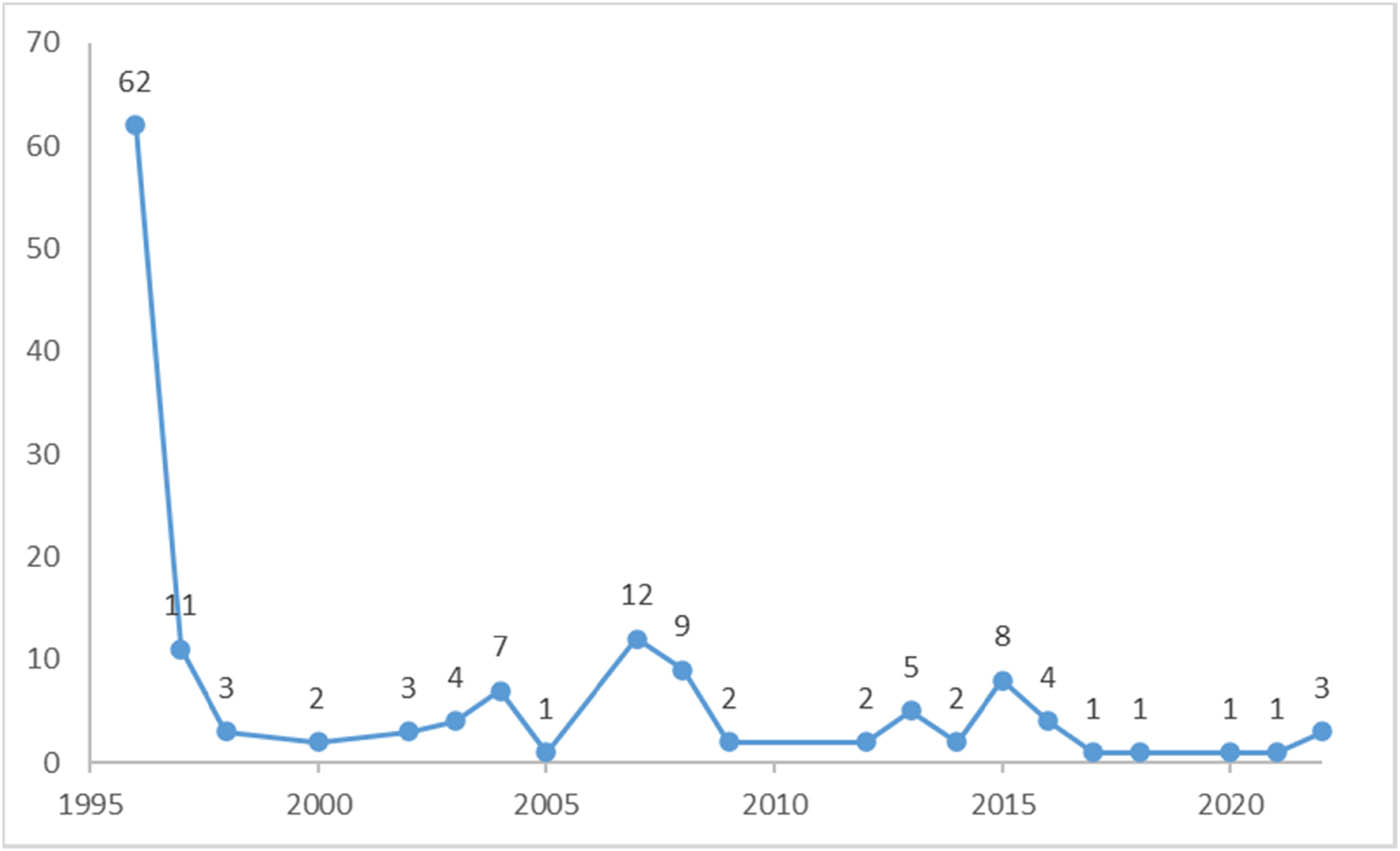
Evolution of registered agri-food products in Portugal. Source: Own computation based on data gathered from eAmbrosia (July 2022).
In the period between 1996 and 2022, there were only 6 years in which no certified product was added to the list: 1999, 2001, 2006, 2010, 2011, and 2019. Except for the first 2 years (1996 and 1997) and the year 2007, where 12 products were registered, the remaining years had less than ten entries.
3.2 Distribution of traditional agri-food products in Portugal
The Portuguese Nomenclature of Territorial Units for Statistical Purposes (NUTS) were set out by the EC in regulation N. 868/2014, and they have been in use within the European and national statistical systems since January 2015. The territorial division of Portugal into NUTS II includes seven regions: Northern Region, Centre Region, Lisbon, Alentejo, Algarve, Madeira, and Azores (Figure 2).
![Figure 2
Territorial division of Portugal in NUTS II. Source: INE [11].](/document/doi/10.1515/opag-2022-0157/asset/graphic/j_opag-2022-0157_fig_002.jpg)
Territorial division of Portugal in NUTS II. Source: INE [11].
Concerning the distribution of traditional agri-food products by region (NUTS II), in Portugal, it can be seen in Figure 3 that the Northern Region has the highest number of traditional products (51), followed by the Alentejo (43) and Centre Region (30).

Distribution of traditional products by region (number of certified products). Source: Own computation based on data gathered from eAmbrosia (July 2022).
It is mainly in these three territories that some sub-regions with symptoms of poverty and depopulation exist (mainly those in the interior). Here the protected agri-food products can play a considerable role in the development of the rural areas.
It is interesting to note, in Figure 4, that from a list of ten different typologies of product categories, the ranking is dominated by meat products (42), fresh meat (32), and fruit, vegetables, and cereals (30).

Distribution of traditional products by categories. Source: Own computation based on data gathered from eAmbrosia (July 2022).
In relation to the first category, meat products (cooked, salted, or smoked) are part of the traditional daily diet in rural Portugal, but also highly valued in major cities with an increasing demand, as stated by Marcos et al. [12]. Moreover, increasing consumer concern regarding quality, safety, traceability, and demand for traditional food products that carry a strong identification with the particular region of origin have created the space for growing the market for value-added beef [13].
3.3 Distribution of traditional products in the EU
During the present research, 1,460 certified products were identified in the 27 EU countries (634 PDO, 761 PGI, and 65 TSG) on the platform in July 2022. The top five countries were first Italy (with 319 protected traditional agri-food products), second France (with 261 traditional protected agri-food products), third Spain (with 205 protected traditional agri-food products), fourth Portugal (with 144 protected traditional agri-food products), and fifth Greece (with 114 protected traditional agri-food products) (Figure 5).

Traditional agri-food products in EU countries. Source: Own computation based on data gathered from eAmbrosia (July 2022).
All these five countries had (on the data of the empirical research) more than 100 protected agri-food products, representing around 74% of products protected at the EU level. Yet, these five countries are strong supporters of mandatory origin labelling of all foods on the EU Single Market [14].
On the other hand, countries like Estonia (1), Luxembourg (2), Latvia (6), Denmark (8), Ireland (8), Bulgaria (9), and Cyprus (9) presented the lowest number of protected agri-food products, all of them with fewer than ten certified products. Malta is the only EU country with no certified traditional agri-food products.
4 Discussion
Agri-food products with GIs are often observed as local [15–17], traditional, or produced on a small scale [1,18–20], fairly traded [21], or sustainable [22]. More and more consumers show interest in purchasing products that reflect environmental and social values, and therefore, a large proportion of producers are positioning their products to appeal to these clients [23]. Producers and marketers are seeking economic opportunities, and thus they try to differentiate their products through changes in agricultural practices, connection with a local food tradition, enhancing food safety or providing more information about the local/production to the consumers [22]. From the consumers’ point of view, certified agri-food products represent a protective tool for them, because it works as a guarantee of the production process and as a link to the territory [24]. Indeed, the promotion of local quality production has assumed a prominent role in rural development strategies (the second pillar of the Common Agricultural Policy – CAP) as it promises a means of strengthening the position of traditional and often small producers and their endogenous products [1].
The rural development potential of GIs comes precisely from their links to the territories of origin and from the specificity of the local resources used in the production process [24,25]. GIs production systems are expected to exert positive rural development effects: economic (both inside and outside the network supply chain, at the local level), social/cultural, and environmental effects – the three pillars of sustainability.
From the economic perspective, considering that products that can be protected by GIs are usually produced in rural areas (many of them in the less developed territories), this protection provides income flows to these areas by creating a number of types of employment opportunities [20], as much as the commercial circuit is organized.
From a social-cultural point of view, GI products symbolize the local characteristics of a region with a blend of environmental resources and cultural methods of production. Because of this, often, they are perceived as nostalgic and authentic products [26] and can be real tools for attracting consumers’ attention to the local and cultural identity of the territory. The reinforcement of local activities related to handicraft, gastronomy, and rural tourism can be expected in territories with a higher percentage of GIs [27], as is the case of the top five countries mentioned above – Italy, France, Spain, Portugal, and Greece.
Last but not the least, from an environmental perspective, Milano and Cazella [28] conclude that GIs are associated with different environmental attributes, such as the maintenance of landscapes, conservation of soil and water resources, promotion of more sustainable production techniques, protection against different types of pollution, provision of diverse ecosystem services, and conservation of biodiversity.
According to the present survey, the top five countries continue to be Italy, France, Spain, Portugal, and Greece. On the opposite side, countries such as Estonia, Luxembourg, Latvia, Denmark, Ireland, Bulgaria, and Cyprus present the lowest number of protected agri-food products. The northern and central EU members (with the exclusion of Luxembourg) are the early adopters of the CAP productivist model. As such, the contexts “of longstanding export-oriented agriculture” remain [5], while the southern EU-MS, particularly Portugal, Spain, Greece, and Italy (which together represent around 55% of the total number of protected brand names) are latecomers to industrial development and never fully completed their “great transition” [29]. Rather, as stated by Fonte [29], they have passed through a process of economic and social marginalization (marked by depopulation) that they are now trying to attenuate through diverse strategies of rural development in which endogenous agri-food products are valorized, as stated earlier.
In this context, it is interesting to note, as also mentioned above, that Portugal presented a considerable number of traditional agri-food products (144, around 10% of the traditional agri-food products certified in the EU territory). Summing up, the GI scheme policy has played an important role not only in recovering but particularly preventing the disappearance of a large and diverse amount of traditional agricultural products and foodstuffs in the country, through their economic and social (re)valorization [5]. Without that policy, many such products could be lost or, at least, would not travel out of their regional and national borders as ambassadors of cultural and agricultural heritage of the country.
5 Conclusion, limitations, and paths for future research
Drawing on descriptive and exploratory analysis involving traditional agri-food products in EU and Portuguese contexts, the present article makes some important contributions and reinforces some existing arguments. First, it underlines the evolution of certification across the years of traditional agri-food products in Portugal. Second, it exposes some relevant characteristics concerning the distribution of traditional agri-food products by region (NUTS II) and categories. Third, it confirms the major producers of traditional agri-food products in the EU, placing Portugal in the top five countries.
Traditional agri-food products can become the pivotal point of a specific-quality virtuous circle within a territorial approach, with their promotion as traditional products having positive effects that are reinforced over time. This thus allows preservation of the agri-food system and related social networks, which in turn contributes to economic, sociocultural, and environmental sustainability [30]. The value and benefits of these protections depend on the way that an agri-food product is exploited, policed, and marketed [31]. Moreover, it is argued that producers can only continue to produce the aforementioned quality products if they are rewarded fairly for their effort [9,31].
For instance, in the Portuguese case, despite the potential benefits of traditional agri-food products, Rodrigo et al. [5] concluded that most Portuguese PDO and PGI products are produced on a small scale, have a weak presence in the market and a low economic value and as a matter of fact, are worth only 0.56% of the volume of business generated by the national agri-food industry. Other threats were identified, such as increasing competition in high-market segments, the geographical name is imitated by intermediate and final markets, with potential negative effects on the reputation of traditional agri-food products, food regulations ban traditional practices, and the processing and/or retail segments are highly concentrated [30].
For all the aforementioned reasons, from a political point of view this study emphasizes the importance that public entities (international, national, or regional level) and local entities (such as local and rural associations) have in supporting a traditional product’s development, such as in research support, as well as providing technical assistance and promotion and marketing actions.
From a practical point of view, as Kühne et al. [32] claim, the importance of collaborations with other entities is argued to lead to a higher innovation capacity in the traditional food chain. Indeed, traders, sellers, restaurant owners, and other actors belonging to the supply chain, even if not involved directly, can play an important role in enhancing the economic power of traditional products by supporting marketing and promotion activities and helping to create new consumers and users for these product.
This study has some limitations, such as time constraints and focusing on a descriptive analysis of the data available. Nevertheless, this investigation points out the challenging paths for further research. First, it would be interesting to extend the study to the stakeholders involved in the production of agri-food traditional products and to explore their present motivations and actions to present these types of products. Second, it was noticed that the knowledge concerning traditional products is scarce on the part of consumers. It would be very interesting to extend the study to gain the consumers’ perspective and acquire information about how important is for them to consume traditional protected agri-food products and how they recognize them.
Acknowledgments
We would like to thank the CERNAS Research Centre and the Polytechnic Institute of Viseu for their support.
-
Funding information: This work is funded by National Funds through the FCT – Foundation for Science and Technology, I.P., within the scope of the project Refª UIDB/00681/2020.
-
Conflict of interest: The authors state no conflict of interest.
-
Data availability statement: The datasets generated during and/or analysed during the current study are available in the eAmbrosia repository, https://ec.europa.eu/info/food-farming-fisheries/food-safety-and-quality/certification/quality-labels/geographical-indications-register/.
References
[1] Ilbery B, Kneafsey M. Producer constructions of quality in regional speciality food production: a case study from south west England. J Rural Stud. 2000;16(2):217–30.10.1016/S0743-0167(99)00041-8Suche in Google Scholar
[2] EC. Green Paper on agricultural product quality: product standards, farming requirements and quality schemes; 2008.Suche in Google Scholar
[3] FAO. The nutrition and health potential of geographical indication foods. Rome: FAO; 2021.Suche in Google Scholar
[4] EC. eAmbrosia EU geographical indications register; [cited 2022 May 15]. https://ec.europa.eu/info/food-farming-fisheries/food-safety-and-quality/certification/quality-labels/geographical-indications-register/.Suche in Google Scholar
[5] Rodrigo I, Cristóvão A, Tibério ML, Baptista A, Maggione L, Pires M. The Portuguese agrifood traditional products: main constraints and challenges. Rev Economia Sociologia Rural. 2015;53:23–32.10.1590/1234-56781806-94790053s01002Suche in Google Scholar
[6] Bowen S, Mutersbaugh T. Local or localized? Exploring the contributions of Franco-Mediterranean agrifood theory to alternative food research. Agric Hum Values. 2014;31(2):201–13.10.1007/s10460-013-9461-7Suche in Google Scholar
[7] UN. Transforming our World: the 2030 Agenda for Sustainable Development. Report No. A/RES/70/1; 2015.Suche in Google Scholar
[8] Belletti G, Marescotti A. Evaluating geographical indications – guide to tailor evaluations for the development and improvement of geographical indications. Rome: FAO; 2021.Suche in Google Scholar
[9] Reis CML, Gallego JIR, Leitão J. La relación de los productos agroalimentarios de calidad diferenciada con el turismo en España y Portugal. Boletín Asociación Geógrafos Españoles. 2021;89:10.Suche in Google Scholar
[10] Bonadonna A, Macar L, Peira G, Giachino C. The dark side of the European quality schemes: the ambiguous life of the Traditional Specialities Guaranteed. Calitatea. 2017;18(156):102.Suche in Google Scholar
[11] INE. As Novas unidades Territoriais para fins estatísticos. Lisboa: INE; 2015.Suche in Google Scholar
[12] Marcos C, Viegas C, de Almeida AM, Guerra MM. Portuguese traditional sausages: different types, nutritional composition, and novel trends. J Ethnic Foods. 2016;3(1):51–60.10.1016/j.jef.2016.01.004Suche in Google Scholar
[13] Banović M, Barreira MM, Fraústo da Silva M, Cardoso Lemos JP, Fontes MA, Jorge R. The role of specific quality labels in rural development: lessons from the Portuguese experience. In: Tomic D, Sevarlic MM, editors. Development of agriculture and rural areas in central and eastern Europe: thematic proceedings of the 100th seminar of EAAE. Novi, Sad, Serbia: Serbian Association for Agricultural Economists; 2007. p. 439–48.Suche in Google Scholar
[14] Huysmans M. Exporting protection: EU trade agreements, geographical indications, and gastronationalism. Rev Int Polit Econ. 2022;29(3):979–1005.10.1080/09692290.2020.1844272Suche in Google Scholar
[15] DuPuis EM, Goodman D. Should we go “home” to eat? Toward a reflexive politics of localism. J Rural Stud. 2005;21(3):359–71.10.1016/j.jrurstud.2005.05.011Suche in Google Scholar
[16] Pellin V, Vieira ACP. Contributions of geographical indications for territorial strengthening in rural space: a case study in southern Brazil. Espacios. 2015;36(8):1–8.Suche in Google Scholar
[17] Scintu MF, Piredda G. Typicity and biodiversity of goat and sheep milk products. Small Rumin Res. 2007;68(1):221–31.10.1016/j.smallrumres.2006.09.005Suche in Google Scholar
[18] Dias C, Mendes L. Protected Designation of Origin (PDO), Protected Geographical Indication (PGI) and Traditional Speciality Guaranteed (TSG): a bibiliometric analysis. Food Res Int. 2018;103:492–508.10.1016/j.foodres.2017.09.059Suche in Google Scholar PubMed
[19] Grunert KG, Aachmann K. Consumer reactions to the use of EU quality labels on food products: a review of the literature. Food Control. 2016;59:178–87.10.1016/j.foodcont.2015.05.021Suche in Google Scholar
[20] Dogan B, Gokovali U. Geographical indications: the aspects of rural development and marketing through the traditional products. Procedia – Soc Behav Sci. 2012;62:761–5.10.1016/j.sbspro.2012.09.128Suche in Google Scholar
[21] Danezis GP, Tsagkaris AS, Brusic V, Georgiou CA. Food authentication: state of the art and prospects. Curr Opin Food Sci. 2016;10:22–31.10.1016/j.cofs.2016.07.003Suche in Google Scholar
[22] Warner KD. The quality of sustainability: agroecological partnerships and the geographic branding of California winegrapes. J Rural Stud. 2007;23(2):142–55.10.1016/j.jrurstud.2006.09.009Suche in Google Scholar
[23] Pato ML. Short food supply chains – a growing movement. The case study of the Viseu Dão Lafões Region. Open Agric. 2020;5(1):806–16.10.1515/opag-2020-0077Suche in Google Scholar
[24] Sgroi F, Modica F. Localized agri-food systems: the case of Pecorino Siciliano PDO a food product of the tradition of Mediterranean gastronomy. Int J Gastron Food Sci. 2022;27:100471.10.1016/j.ijgfs.2022.100471Suche in Google Scholar
[25] Belletti G, Marescotti A. Origin products, geographical indications and rural development. In: Barham E, Sylvander B, editors. Labels of origin for food: local development, global recognition. Rugfest Wallingford: CABI; 2011. p. 75–91.10.1079/9781845933524.0075Suche in Google Scholar
[26] Kastenholz E, Fernández-Ferrín P, Rodrigues A. Nostalgia, sensations and local products in rural tourism experiences in a Portuguese schist village. Eur Countrys. 2021;13(3):599–621.10.2478/euco-2021-0034Suche in Google Scholar
[27] Pamukçu H, Saraç Ö, Aytuğar S, Sandıkçı M. The effects of local food and local products with geographical indication on the development of tourism gastronomy. Sustainability. 2021;13(12):6692.10.3390/su13126692Suche in Google Scholar
[28] Milano MZ, Cazella AA. Environmental effects of geographical indications and their influential factors: a review of the empirical evidence. Curr Res Environ Sustain. 2021;3:100096.10.1016/j.crsust.2021.100096Suche in Google Scholar
[29] Fonte M. Knowledge, food and place. A way of producing, a way of knowing. Sociol Ruralis. 2008;48:200–22.10.1111/j.1467-9523.2008.00462.xSuche in Google Scholar
[30] Vandecandelaere E, Arfini F, Belletti G, Marescotti A, Allaire G, Cadilhon J, et al. Linking people, places and products. Rome: FAO; 2010.Suche in Google Scholar
[31] Katerinopoulou K, Kontogeorgos A, Salmas CE, Patakas A, Ladavos A. Geographical origin authentication of agri-food products: a review. Foods. 2020;9(4):489.10.3390/foods9040489Suche in Google Scholar PubMed PubMed Central
[32] Kühne B, Gellynck X, Weaver RD. Enhancing innovation capacity through vertical, horizontal, and third-party networks for traditional foods. Agribusiness. 2015;31(3):294–313.10.1002/agr.21408Suche in Google Scholar
© 2023 the author(s), published by De Gruyter
This work is licensed under the Creative Commons Attribution 4.0 International License.
Artikel in diesem Heft
- Regular Articles
- The impact of COVID-19 pandemic on business risks and potato commercial model
- Effects of potato (Solanum tuberosum L.)–Mucuna pruriens intercropping pattern on the agronomic performances of potato and the soil physicochemical properties of the western highlands of Cameroon
- Machine learning-based prediction of total phenolic and flavonoid in horticultural products
- Revamping agricultural sector and its implications on output and employment generation: Evidence from Nigeria
- Does product certification matter? A review of mechanism to influence customer loyalty in the poultry feed industry
- Farmer regeneration and knowledge co-creation in the sustainability of coconut agribusiness in Gorontalo, Indonesia
- Lablab purpureus: Analysis of landraces cultivation and distribution, farming systems, and some climatic trends in production areas in Tanzania
- The effects of carrot (Daucus carota L.) waste juice on the performances of native chicken in North Sulawesi, Indonesia
- Properties of potassium dihydrogen phosphate and its effects on plants and soil
- Factors influencing the role and performance of independent agricultural extension workers in supporting agricultural extension
- The fate of probiotic species applied in intensive grow-out ponds in rearing water and intestinal tracts of white shrimp, Litopenaeus vannamei
- Yield stability and agronomic performances of provitamin A maize (Zea mays L.) genotypes in South-East of DR Congo
- Diallel analysis of length and shape of rice using Hayman and Griffing method
- Physicochemical and microbiological characteristics of various stem bark extracts of Hopea beccariana Burck potential as natural preservatives of coconut sap
- Correlation between descriptive and group type traits in the system of cow’s linear classification of Ukrainian Brown dairy breed
- Meta-analysis of the influence of the substitution of maize with cassava on performance indices of broiler chickens
- Bacteriocin-like inhibitory substance (BLIS) produced by Enterococcus faecium MA115 and its potential use as a seafood biopreservative
- Meta-analysis of the benefits of dietary Saccharomyces cerevisiae intervention on milk yield and component characteristics in lactating small ruminants
- Growth promotion potential of Bacillus spp. isolates on two tomato (Solanum lycopersicum L.) varieties in the West region of Cameroon
- Prioritizing IoT adoption strategies in millennial farming: An analytical network process approach
- Soil fertility and pomelo yield influenced by soil conservation practices
- Soil macrofauna under laying hens’ grazed fields in two different agroecosystems in Portugal
- Factors affecting household carbohydrate food consumption in Central Java: Before and during the COVID-19 pandemic
- Properties of paper coated with Prunus serotina (Ehrh.) extract formulation
- Fertiliser cost prediction in European Union farms: Machine-learning approaches through artificial neural networks
- Molecular and phenotypic markers for pyramiding multiple traits in rice
- Natural product nanofibers derived from Trichoderma hamatum K01 to control citrus anthracnose caused by Colletotrichum gloeosporioides
- Role of actors in promoting sustainable peatland management in Kubu Raya Regency, West Kalimantan, Indonesia
- Small-scale coffee farmers’ perception of climate-adapted attributes in participatory coffee breeding: A case study of Gayo Highland, Aceh, Indonesia
- Optimization of extraction using surface response methodology and quantification of cannabinoids in female inflorescences of marijuana (Cannabis sativa L.) at three altitudinal floors of Peru
- Production factors, technical, and economic efficiency of soybean (Glycine max L. Merr.) farming in Indonesia
- Economic performance of smallholder soya bean production in Kwara State, Nigeria
- Indonesian rice farmers’ perceptions of different sources of information and their effect on farmer capability
- Feed preference, body condition scoring, and growth performance of Dohne Merino ram fed varying levels of fossil shell flour
- Assessing the determinant factors of risk strategy adoption to mitigate various risks: An experience from smallholder rubber farmers in West Kalimantan Province, Indonesia
- Analysis of trade potential and factors influencing chili export in Indonesia
- Grade-C kenaf fiber (poor quality) as an alternative material for textile crafts
- Technical efficiency changes of rice farming in the favorable irrigated areas of Indonesia
- Palm oil cluster resilience to enhance indigenous welfare by innovative ability to address land conflicts: Evidence of disaster hierarchy
- Factors determining cassava farmers’ accessibility to loan sources: Evidence from Lampung, Indonesia
- Tailoring business models for small-medium food enterprises in Eastern Africa can drive the commercialization and utilization of vitamin A rich orange-fleshed sweet potato puree
- Revitalizing sub-optimal drylands: Exploring the role of biofertilizers
- Effects of salt stress on growth of Quercus ilex L. seedlings
- Design and fabrication of a fish feed mixing cum pelleting machine for small-medium scale aquaculture industry
- Indicators of swamp buffalo business sustainability using partial least squares structural equation modelling
- Effect of arbuscular mycorrhizal fungi on early growth, root colonization, and chlorophyll content of North Maluku nutmeg cultivars
- How intergenerational farmers negotiate their identity in the era of Agriculture 4.0: A multiple-case study in Indonesia
- Responses of broiler chickens to incremental levels of water deprivation: Growth performance, carcass characteristics, and relative organ weights
- The improvement of horticultural villages sustainability in Central Java Province, Indonesia
- Effect of short-term grazing exclusion on herbage species composition, dry matter productivity, and chemical composition of subtropical grasslands
- Analysis of beef market integration between consumer and producer regions in Indonesia
- Analysing the sustainability of swamp buffalo (Bubalus bubalis carabauesis) farming as a protein source and germplasm
- Toxicity of Calophyllum soulattri, Piper aduncum, Sesamum indicum and their potential mixture for control Spodoptera frugiperda
- Consumption profile of organic fruits and vegetables by a Portuguese consumer’s sample
- Phenotypic characterisation of indigenous chicken in the central zone of Tanzania
- Diversity and structure of bacterial communities in saline and non-saline rice fields in Cilacap Regency, Indonesia
- Isolation and screening of lactic acid bacteria producing anti-Edwardsiella from the gastrointestinal tract of wild catfish (Clarias gariepinus) for probiotic candidates
- Effects of land use and slope position on selected soil physicochemical properties in Tekorsh Sub-Watershed, East Gojjam Zone, Ethiopia
- Design of smart farming communication and web interface using MQTT and Node.js
- Assessment of bread wheat (Triticum aestivum L.) seed quality accessed through different seed sources in northwest Ethiopia
- Estimation of water consumption and productivity for wheat using remote sensing and SEBAL model: A case study from central clay plain Ecosystem in Sudan
- Agronomic performance, seed chemical composition, and bioactive components of selected Indonesian soybean genotypes (Glycine max [L.] Merr.)
- The role of halal requirements, health-environmental factors, and domestic interest in food miles of apple fruit
- Subsidized fertilizer management in the rice production centers of South Sulawesi, Indonesia: Bridging the gap between policy and practice
- Factors affecting consumers’ loyalty and purchase decisions on honey products: An emerging market perspective
- Inclusive rice seed business: Performance and sustainability
- Design guidelines for sustainable utilization of agricultural appropriate technology: Enhancing human factors and user experience
- Effect of integrate water shortage and soil conditioners on water productivity, growth, and yield of Red Globe grapevines grown in sandy soil
- Synergic effect of Arbuscular mycorrhizal fungi and potassium fertilizer improves biomass-related characteristics of cocoa seedlings to enhance their drought resilience and field survival
- Control measure of sweet potato weevil (Cylas formicarius Fab.) (Coleoptera: Curculionidae) in endemic land of entisol type using mulch and entomopathogenic fungus Beauveria bassiana
- In vitro and in silico study for plant growth promotion potential of indigenous Ochrobactrum ciceri and Bacillus australimaris
- Effects of repeated replanting on yield, dry matter, starch, and protein content in different potato (Solanum tuberosum L.) genotypes
- Review Articles
- Nutritional and chemical composition of black velvet tamarind (Dialium guineense Willd) and its influence on animal production: A review
- Black pepper (Piper nigrum Lam) as a natural feed additive and source of beneficial nutrients and phytochemicals in chicken nutrition
- The long-crowing chickens in Indonesia: A review
- A transformative poultry feed system: The impact of insects as an alternative and transformative poultry-based diet in sub-Saharan Africa
- Short Communication
- Profiling of carbonyl compounds in fresh cabbage with chemometric analysis for the development of freshness assessment method
- Special Issue of The 4th International Conference on Food Science and Engineering (ICFSE) 2022 - Part I
- Non-destructive evaluation of soluble solid content in fruits with various skin thicknesses using visible–shortwave near-infrared spectroscopy
- Special Issue on FCEM - International Web Conference on Food Choice & Eating Motivation - Part I
- Traditional agri-food products and sustainability – A fruitful relationship for the development of rural areas in Portugal
- Consumers’ attitudes toward refrigerated ready-to-eat meat and dairy foods
- Breakfast habits and knowledge: Study involving participants from Brazil and Portugal
- Food determinants and motivation factors impact on consumer behavior in Lebanon
- Comparison of three wine routes’ realities in Central Portugal
- Special Issue on Agriculture, Climate Change, Information Technology, Food and Animal (ACIFAS 2020)
- Environmentally friendly bioameliorant to increase soil fertility and rice (Oryza sativa) production
- Enhancing the ability of rice to adapt and grow under saline stress using selected halotolerant rhizobacterial nitrogen fixer
Artikel in diesem Heft
- Regular Articles
- The impact of COVID-19 pandemic on business risks and potato commercial model
- Effects of potato (Solanum tuberosum L.)–Mucuna pruriens intercropping pattern on the agronomic performances of potato and the soil physicochemical properties of the western highlands of Cameroon
- Machine learning-based prediction of total phenolic and flavonoid in horticultural products
- Revamping agricultural sector and its implications on output and employment generation: Evidence from Nigeria
- Does product certification matter? A review of mechanism to influence customer loyalty in the poultry feed industry
- Farmer regeneration and knowledge co-creation in the sustainability of coconut agribusiness in Gorontalo, Indonesia
- Lablab purpureus: Analysis of landraces cultivation and distribution, farming systems, and some climatic trends in production areas in Tanzania
- The effects of carrot (Daucus carota L.) waste juice on the performances of native chicken in North Sulawesi, Indonesia
- Properties of potassium dihydrogen phosphate and its effects on plants and soil
- Factors influencing the role and performance of independent agricultural extension workers in supporting agricultural extension
- The fate of probiotic species applied in intensive grow-out ponds in rearing water and intestinal tracts of white shrimp, Litopenaeus vannamei
- Yield stability and agronomic performances of provitamin A maize (Zea mays L.) genotypes in South-East of DR Congo
- Diallel analysis of length and shape of rice using Hayman and Griffing method
- Physicochemical and microbiological characteristics of various stem bark extracts of Hopea beccariana Burck potential as natural preservatives of coconut sap
- Correlation between descriptive and group type traits in the system of cow’s linear classification of Ukrainian Brown dairy breed
- Meta-analysis of the influence of the substitution of maize with cassava on performance indices of broiler chickens
- Bacteriocin-like inhibitory substance (BLIS) produced by Enterococcus faecium MA115 and its potential use as a seafood biopreservative
- Meta-analysis of the benefits of dietary Saccharomyces cerevisiae intervention on milk yield and component characteristics in lactating small ruminants
- Growth promotion potential of Bacillus spp. isolates on two tomato (Solanum lycopersicum L.) varieties in the West region of Cameroon
- Prioritizing IoT adoption strategies in millennial farming: An analytical network process approach
- Soil fertility and pomelo yield influenced by soil conservation practices
- Soil macrofauna under laying hens’ grazed fields in two different agroecosystems in Portugal
- Factors affecting household carbohydrate food consumption in Central Java: Before and during the COVID-19 pandemic
- Properties of paper coated with Prunus serotina (Ehrh.) extract formulation
- Fertiliser cost prediction in European Union farms: Machine-learning approaches through artificial neural networks
- Molecular and phenotypic markers for pyramiding multiple traits in rice
- Natural product nanofibers derived from Trichoderma hamatum K01 to control citrus anthracnose caused by Colletotrichum gloeosporioides
- Role of actors in promoting sustainable peatland management in Kubu Raya Regency, West Kalimantan, Indonesia
- Small-scale coffee farmers’ perception of climate-adapted attributes in participatory coffee breeding: A case study of Gayo Highland, Aceh, Indonesia
- Optimization of extraction using surface response methodology and quantification of cannabinoids in female inflorescences of marijuana (Cannabis sativa L.) at three altitudinal floors of Peru
- Production factors, technical, and economic efficiency of soybean (Glycine max L. Merr.) farming in Indonesia
- Economic performance of smallholder soya bean production in Kwara State, Nigeria
- Indonesian rice farmers’ perceptions of different sources of information and their effect on farmer capability
- Feed preference, body condition scoring, and growth performance of Dohne Merino ram fed varying levels of fossil shell flour
- Assessing the determinant factors of risk strategy adoption to mitigate various risks: An experience from smallholder rubber farmers in West Kalimantan Province, Indonesia
- Analysis of trade potential and factors influencing chili export in Indonesia
- Grade-C kenaf fiber (poor quality) as an alternative material for textile crafts
- Technical efficiency changes of rice farming in the favorable irrigated areas of Indonesia
- Palm oil cluster resilience to enhance indigenous welfare by innovative ability to address land conflicts: Evidence of disaster hierarchy
- Factors determining cassava farmers’ accessibility to loan sources: Evidence from Lampung, Indonesia
- Tailoring business models for small-medium food enterprises in Eastern Africa can drive the commercialization and utilization of vitamin A rich orange-fleshed sweet potato puree
- Revitalizing sub-optimal drylands: Exploring the role of biofertilizers
- Effects of salt stress on growth of Quercus ilex L. seedlings
- Design and fabrication of a fish feed mixing cum pelleting machine for small-medium scale aquaculture industry
- Indicators of swamp buffalo business sustainability using partial least squares structural equation modelling
- Effect of arbuscular mycorrhizal fungi on early growth, root colonization, and chlorophyll content of North Maluku nutmeg cultivars
- How intergenerational farmers negotiate their identity in the era of Agriculture 4.0: A multiple-case study in Indonesia
- Responses of broiler chickens to incremental levels of water deprivation: Growth performance, carcass characteristics, and relative organ weights
- The improvement of horticultural villages sustainability in Central Java Province, Indonesia
- Effect of short-term grazing exclusion on herbage species composition, dry matter productivity, and chemical composition of subtropical grasslands
- Analysis of beef market integration between consumer and producer regions in Indonesia
- Analysing the sustainability of swamp buffalo (Bubalus bubalis carabauesis) farming as a protein source and germplasm
- Toxicity of Calophyllum soulattri, Piper aduncum, Sesamum indicum and their potential mixture for control Spodoptera frugiperda
- Consumption profile of organic fruits and vegetables by a Portuguese consumer’s sample
- Phenotypic characterisation of indigenous chicken in the central zone of Tanzania
- Diversity and structure of bacterial communities in saline and non-saline rice fields in Cilacap Regency, Indonesia
- Isolation and screening of lactic acid bacteria producing anti-Edwardsiella from the gastrointestinal tract of wild catfish (Clarias gariepinus) for probiotic candidates
- Effects of land use and slope position on selected soil physicochemical properties in Tekorsh Sub-Watershed, East Gojjam Zone, Ethiopia
- Design of smart farming communication and web interface using MQTT and Node.js
- Assessment of bread wheat (Triticum aestivum L.) seed quality accessed through different seed sources in northwest Ethiopia
- Estimation of water consumption and productivity for wheat using remote sensing and SEBAL model: A case study from central clay plain Ecosystem in Sudan
- Agronomic performance, seed chemical composition, and bioactive components of selected Indonesian soybean genotypes (Glycine max [L.] Merr.)
- The role of halal requirements, health-environmental factors, and domestic interest in food miles of apple fruit
- Subsidized fertilizer management in the rice production centers of South Sulawesi, Indonesia: Bridging the gap between policy and practice
- Factors affecting consumers’ loyalty and purchase decisions on honey products: An emerging market perspective
- Inclusive rice seed business: Performance and sustainability
- Design guidelines for sustainable utilization of agricultural appropriate technology: Enhancing human factors and user experience
- Effect of integrate water shortage and soil conditioners on water productivity, growth, and yield of Red Globe grapevines grown in sandy soil
- Synergic effect of Arbuscular mycorrhizal fungi and potassium fertilizer improves biomass-related characteristics of cocoa seedlings to enhance their drought resilience and field survival
- Control measure of sweet potato weevil (Cylas formicarius Fab.) (Coleoptera: Curculionidae) in endemic land of entisol type using mulch and entomopathogenic fungus Beauveria bassiana
- In vitro and in silico study for plant growth promotion potential of indigenous Ochrobactrum ciceri and Bacillus australimaris
- Effects of repeated replanting on yield, dry matter, starch, and protein content in different potato (Solanum tuberosum L.) genotypes
- Review Articles
- Nutritional and chemical composition of black velvet tamarind (Dialium guineense Willd) and its influence on animal production: A review
- Black pepper (Piper nigrum Lam) as a natural feed additive and source of beneficial nutrients and phytochemicals in chicken nutrition
- The long-crowing chickens in Indonesia: A review
- A transformative poultry feed system: The impact of insects as an alternative and transformative poultry-based diet in sub-Saharan Africa
- Short Communication
- Profiling of carbonyl compounds in fresh cabbage with chemometric analysis for the development of freshness assessment method
- Special Issue of The 4th International Conference on Food Science and Engineering (ICFSE) 2022 - Part I
- Non-destructive evaluation of soluble solid content in fruits with various skin thicknesses using visible–shortwave near-infrared spectroscopy
- Special Issue on FCEM - International Web Conference on Food Choice & Eating Motivation - Part I
- Traditional agri-food products and sustainability – A fruitful relationship for the development of rural areas in Portugal
- Consumers’ attitudes toward refrigerated ready-to-eat meat and dairy foods
- Breakfast habits and knowledge: Study involving participants from Brazil and Portugal
- Food determinants and motivation factors impact on consumer behavior in Lebanon
- Comparison of three wine routes’ realities in Central Portugal
- Special Issue on Agriculture, Climate Change, Information Technology, Food and Animal (ACIFAS 2020)
- Environmentally friendly bioameliorant to increase soil fertility and rice (Oryza sativa) production
- Enhancing the ability of rice to adapt and grow under saline stress using selected halotolerant rhizobacterial nitrogen fixer
