Mapping the scientific research on the ionizing radiation impacts on polymers (1975–2019)
-
Nina Girard-Perier
 ,
Samuel Dorey
,
Sylvain R. A. Marque
,
Samuel Dorey
,
Sylvain R. A. Marque

Abstract
A bibliometric approach allowed us to study the global research trend on the impact of ionizing irradiations on polymers from 1975 to 2019. The investigation revealed 1,015 publications with growing interest since 1990. The research is split into three main categories: polymer science, nuclear science technology, and chemistry physical. The three main ionizing irradiations studied in this research are gamma, electron beam, and X-ray irradiations. The impact of ionizing irradiations on polymers under gamma irradiation is the most commonly studied field with 578 publications among the 1,015 publications. Electron beam irradiation is the second most studied field followed by X-ray irradiation. Whatever the irradiation modalities, publications focus on material degradation and material improvement studies.
1 Introduction
Since a long time, the field of polymer degradation took a central place in polymer science and technology. Studies and research in this field have shown a high increase either in the industry or universities. Indeed, there has been increasing demand of its applications and the researchers have shown deep interest in the study of polymer degradation. There are different types of degradation such as thermal, mechanical, or chemical degradations (1). These degradations can be induced by ionizing irradiations. These ionizing irradiations can modify polymers by absorbing the radiations, breaking the polymer chain (1), and then inducing a loss of polymer properties. Ionizing irradiation is a mandatory process used to sterilize products by breaking the deoxyribonucleic acid (DNA) of microorganisms and killing it or inhibiting its reproduction ability (2). This process is also used in the polymer science field to obtain polymers with desired properties. For example, crosslinking induced by ionizing irradiation is used to improve the mechanical properties of polymers (3). Grafting is another method to improve polymer properties by adding functional side chains (4).
Regarding the sterilization process, ionizing irradiation is used in different areas such as in food or medical applications. For example, ionizing radiation has been widely accepted as an effective technique for reducing or eliminating pathogens in foods. Currently, gamma irradiation is the most common process to sterilize products. However, due to several disadvantages such as the price rising of 60Co sources, the antipathy toward the nuclear (5) and the safety issue due to nuclear power plants, two irradiation processes are emerging: electron beam irradiation and X-ray irradiation. The electron beam irradiation is a continuous process and the source of the electron beam is an accelerator that converts electricity using a medium, i.e., a tungsten filament source (2). X-rays are photons that are generated by using an electron beam accelerator. The electron beam is converted to photons by accelerating the electrons into a high density material (i.e., tungsten, steel, or tantalum) (2). Any type of ionizing radiation can affect the performance of polymers. In order to have a global view on the polymers irradiated by ionizing irradiations research, a bibliometric approach has been used. This bibliometric approach allow to analyze the knowledge and the structure of a specific scientifc research. Previously, a similar study has been conducted studying the degradation of gamma-irradiated polymers (6). The aim of this study is then to establish an overview of the research between 1975 and 2019 on the impact of the different ionizing irradiation processes on polymers. Expanding the research from gamma irradiation to ionizing irradiations, in general, is necessary as industries are tempted to adopt other ionizing irradiations. The work is led by studying the evolution of publications, the different countries involved in publications and by establishing a keyword network. Keyword networks will help us to identify the main polymers of interest and the main analytical tools.
2 Methodology
Data were obtained on 16 December 2019 from Web of Science (WOS) Core Collection databases from 1975 to 2019 as follows:
The search was limited to title only. Title refers to the title of a journal article, proceeding paper, book, or book chapter. Duplications were automatically removed.
All journals have been considered.
The search was separated in three parts (i.e., #1, #2, and #3):
#1: ethylene, polyethylene terephthalate (PET), propylene, silicon*, poly*, ethylene propylene diene monomer (EPDM), polystyrene-b-poly(ethylene-butylene)-b-polystyrene, poly styrene-butadiene-styrene, poly(terephtalate de butylene), thermoplastic elastomer, elastomer*, rubber*, polyvinyl chloride (PVC), polyamide, cellulose, poly tetrafluoroethylene (PTFE), polyetheretherketone, ethylene vinyl alcohol, acrylonitrile butadiene styrene, polyoxymethylene, perfluoroalkoxy, polychlorotrifluoroethylene, polyvinyl fluoride, polyvinylidene fluoride (PVDF), ethylene tetrafluoroethylene, fluorinated ethylene propylene, “styrenic block copolymer”
#2: “gamma irrad*,” “electron beam irrad*,” “e beam irrad*,” “x ray irrad*,” “ionizing rad*,” “ionizing irrad*”
#3: change*, degradation*, modification*, effect*
The three sets were then crossed using the connector “and.”
The asterisk allows us to consider the word with different writing.
Outputs were the authors, the journal publication, the country of universities, the institutions, and keywords.
Finally, data were exported as text file and analyzed with Mateo Analyzer software, version: 4.2 150720.
Only publications from WOS Core Collection are collected and mentioned in this article. Some organizations such as International Atomic Energy Agency have their own collection (International Nuclear System Information). Moreover, WOS has mainly publications written in English. All papers published in various journals but not recorded in WOS are not considered in this study. Existing bibliography may be delivered thought conferences (7,8) and cannot be taken into account in the present survey.
3 Findings and discussion
3.1 Evolution of the impact of ionizing irradiations on polymer research overtime
During the past 44 years, the scientific literature on the impact of ionizing irradiations on polymers has grown (Figure 1). A total of 1,015 publications have been published during this period. Two periods can be observed: the first part (1975–1990) is represented as the first period of the research by showing a constant number of papers published with an average of 11 papers per year. The second part (1991–2019) shows a growing interest with an increase of the publications every year.
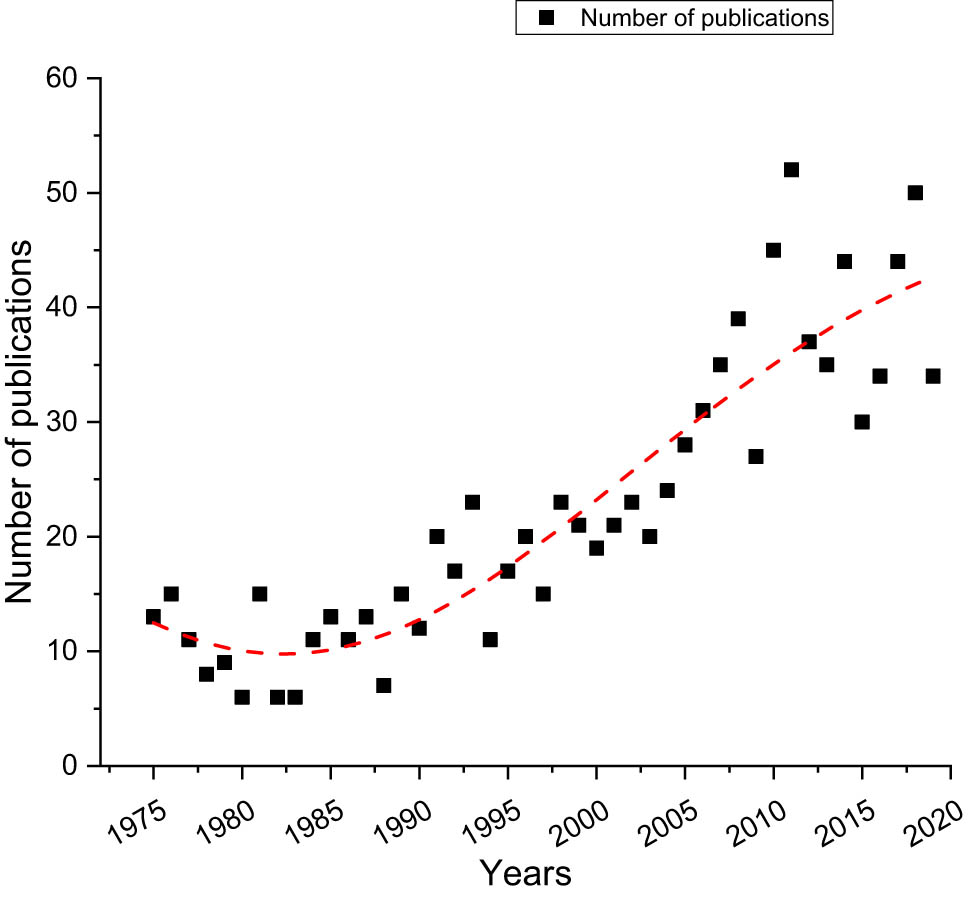
Number of publications overtime. The dashed line is given to ease the reading.
3.2 Domains of research interest about the ionizing radiation impact on polymers
All 1,015 publications are gathered in different categories. These categories are defined by WOS Core Collection and they are classified following the journal source of the publication. Figure 2 shows the first five categories. The first category is defined as “polymer science” gathering 346 articles. This category gathers articles which are published in journals such as Journal of Applied Polymer Science (with 65 papers), Polymer Degradation and Stability (with 54 papers), and Polymer (with 17 papers). These journals belong, respectively, to quartiles Q1 or Q2 in the polymer science JCR® Category (Figure 2). This category gathers articles presenting all applications of polymers and all types of polymers.
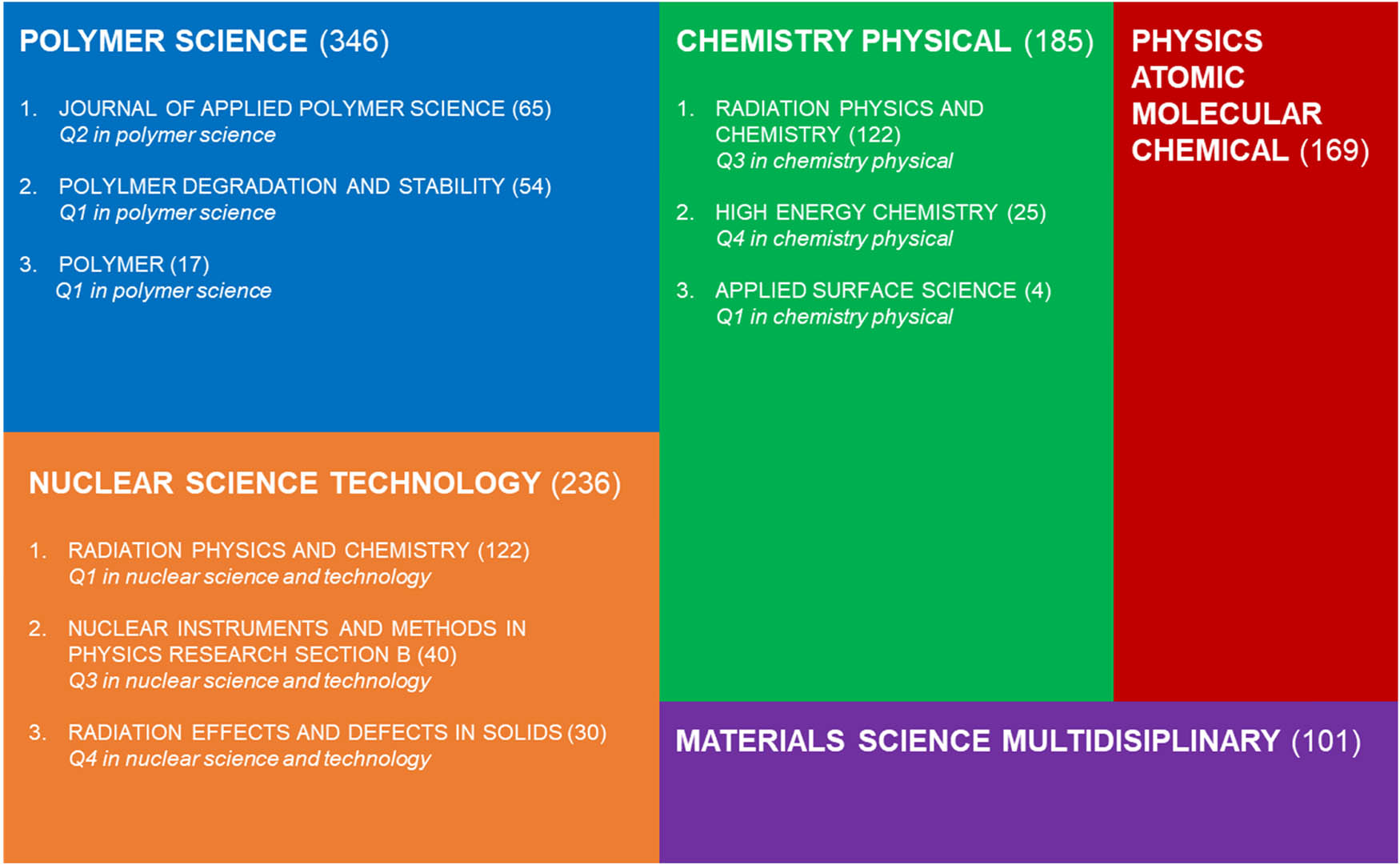
First five WOS categories of the whole research. The first three journals for each category are given.
The second category highlighted is “nuclear science technology” with 236 papers. The three main journals publishing articles in this category are Radiation Physics and Chemistry (122 papers), Nuclear Instruments and Methods in Physics Research Section B: Beam Interactions with Materials and Atoms (40 papers), and Radiation Effects and Defects in Solids (30 papers). These journals belong, respectively, to quartiles Q1, Q3, or Q4 in the nuclear science and technology JCR® Category. This category covers all aspects of the interaction of energetic beams with all types of materials.
The third category is defined by “chemistry physical” and includes 185 papers. It consists of articles published in journals such as Radiation Physics and Chemistry (122 papers), High Energy Chemistry (25 papers), and Applied Surface Science (four papers). These journals belong, respectively, to quartiles Q1, Q3, or Q4 in the chemistry physical JCR® Category. These publications refer mainly to high energy chemistry, such as the interaction of high-energy particles with matter or studies on surfaces, interfaces, nanostructures, and their applications.
It is inferred that analytical chemistry is used as a tool to investigate polymer properties only.
3.3 Worldwide research distribution of the ionizing radiation impact on polymers
Figure 3 represents the different countries involved in the research on the impact of ionizing irradiations on polymers. The country which detained the highest record of publications is Egypt with 129 papers. It is followed by United States of America (USA) with 126 papers, India with 95 papers, Japan with 81 papers, and China with 74 papers. The top ten of the countries publishing such articles are listed in Table 1.
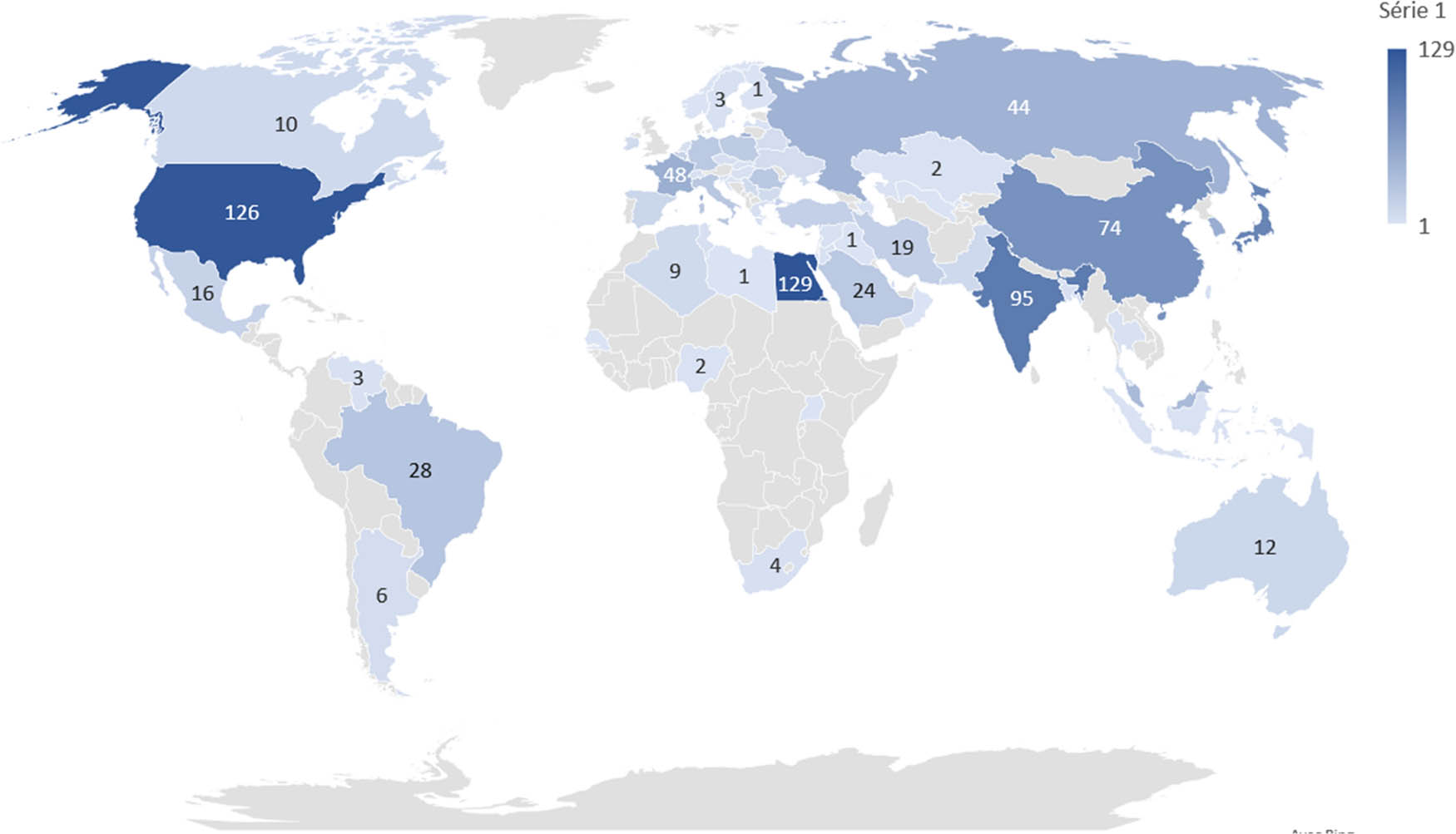
Worldwide research distribution between 1975 and 2019.
Top ten of the countries publishing in the ionizing irradiated polymer research field (1975–2019)
| Rank | Countries/territories | # Publications | % |
|---|---|---|---|
| World | 1,015 | 100 | |
| 1 | Egypt | 129 | 13 |
| 2 | USA | 126 | 12 |
| 3 | India | 95 | 9 |
| 4 | Japan | 86 | 8 |
| 5 | China | 74 | 7 |
| 6 | South Korea | 49 | 5 |
| 8 | France | 48 | 5 |
| 9 | Russia | 44 | 4 |
| 10 | England | 41 | 4 |
3.4 Focus on gamma, electron beam (e-beam), and X-ray irradiations as ionizing irradiations
To study deeply the different ionizing irradiations in the global research on the impact of ionizing irradiations on polymers, we focused on the three ionizing irradiation keywords in the initial research: gamma, electron beam, and X-ray irradiations. Figure 4 shows the number of papers published from 1975 to 2019 on X-ray, e-beam, and gamma irradiation. The publication is linked to one irradiation modality when the keyword gamma, electron beam, or X-ray appears in the title. Publications linked to the general ionizing irradiations keyword are also shown in Figure 4. These publications do not mention X-rays, e-beam, or gamma in the title but only ionizing irradiation. They can focus only on gamma, e-beam, or X-rays, or make a comparison for example.
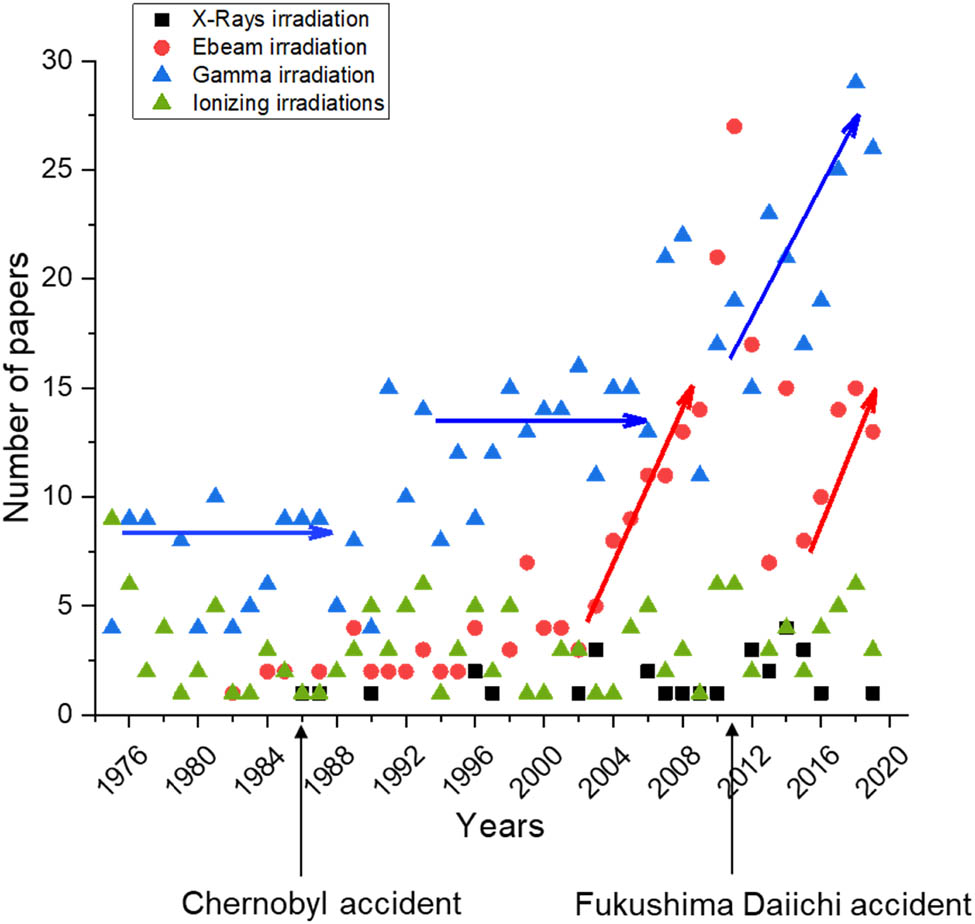
Number of papers overtime (1975–2019) referring to X-ray irradiation (black), e-beam irradiation (red), and gamma irradiation (blue). The fitting curves (dashed line) are given to ease the reading.
With a total of 578 publications, gamma irradiation (in blue) is the most common irradiation modality with the highest number of publications since 1975 and a constant increase. Chernobyl accident in 1986 and Fukushima Daiichi accident in 2011 seem to participate to the increase after 1990 and after 2011, respectively. We can observe two plateaus, the first one between 1975 and 1985 and the second one between 1990 and 2005.
Electron beam irradiation (in red) comes in second place with a total of 267 publications. On an average, two papers are published per year from 1975 to 2000. From 2000 to 2010, the curve shows an increase from 4 papers to 27 papers. The interest decreased after 2010–2013 but since 2014 the number of publications has increased. This increase could also be explained by the Fukushima Daiichi nuclear accident, which happened in 2011. This increase is smaller than the one observed at the same period with gamma irradiation. Finally, X-ray irradiation (in grey) counts the lowest number of publications with 30 publications since 1975. It is important to keep in mind that even if electron beam and X-rays seem to be less studied than gamma irradiation, in this present study only the “impact” of these ionizing radiations is considered. However, in the literature, many studies report on the X-ray and e-beam “technologies” (9,10,11).
We now focus on the keywords of publications within the search on the ionizing irradiation impact on polymers to provide an overview of the research orientation, the type of polymers investigated, the analytical techniques used, and associated purpose. Figure 5 represents a network built on a keyword analysis. All keywords shown in Figure 5 can be clustering in three columns following the three main ionizing irradiation modalities: gamma, electron beam, and X-ray irradiations. For each of these irradiations, keywords are assembled following four levels: materials, properties, features, and analytical techniques and will be reviewed presently.
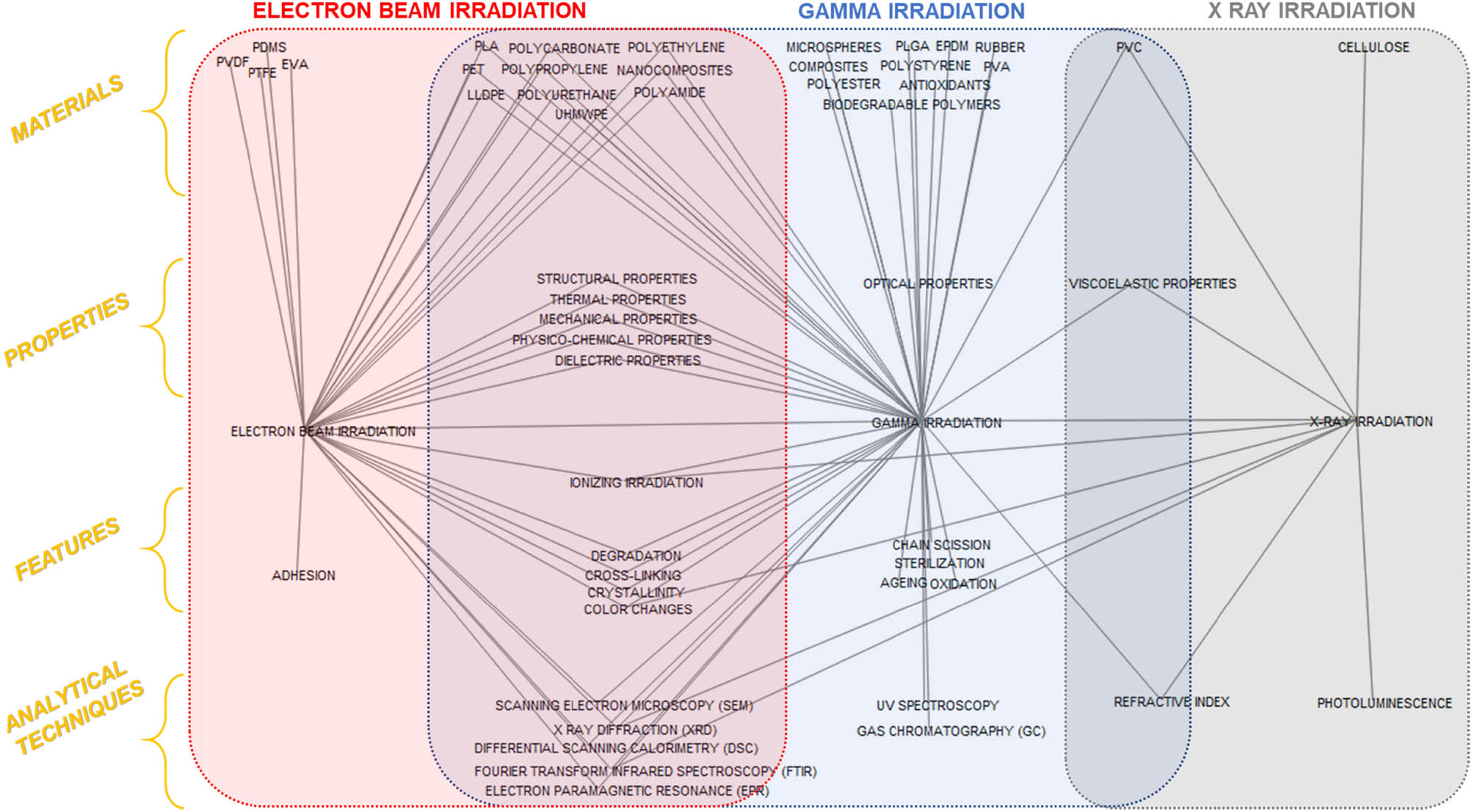
Keyword network (1975–2019) with a keyword’s frequency of minimum four for keywords linked with e-beam and gamma irradiation and two for those linked with X-ray irradiation.
The main materials investigated in gamma during this period are polyester, microspheres, polystyrene, rubber, poly lactic-co-glycolic acid (PLGA), polyvinyl alcohol (PVA), composites, biodegradable polymers, EPDM, PET, polyethylene, polypropylene, and PVC. These polymers represent mainly the packaging domain or biodegradable polymers. They are linked to the sterilization, work area largely investigated today as it is mainly used in the medical domain.
The main materials investigated in electron beam during this period are PTFE, polydimethylsiloxane (PDMS), PVDF, PET, polyethylene, and polypropylene. These polymers are historical polymers and they also have been studied under gamma irradiation in the sixties (12). These publications do not appear in this article as data are collected from 1975.
The main materials investigated in X-rays are PVC and cellulose. PVC constitutes one of the main polymers used in the blood-contacting applications and therefore the soft X-ray irradiation investigated. Other materials (not represented in Figure 5) such as polypeptides or cancer cells can be treated with X-rays in the medicine or biology domains. As it is explained before, X-ray irradiation seems to be less studied than gamma irradiation and electron beam as only the “impact” of these ionizing radiations is considered in this article. Moreover, there is only one industrial X-ray irradiator able to sterilize pallet which has been built in 2010 in Switzerland, and which could explain the lower proportion of X-ray irradiation.
Whatever the modality of irradiation, the polymer properties examined are thermal properties, physico-chemical properties, structural properties, dielectric properties, optical properties, viscoelastic properties, and mechanical properties.
To scrutinize these properties, the main analytical techniques used are Fourier transform infrared spectroscopy, X-ray diffraction, differential scanning calorimetry, electron paramagnetic resonance (EPR), and scanning electron microscopy.
We can observe that the 1,015 articles are split into two categories. The first one regroups articles which study the unwanted and uncontrolled modifications of the polymers during irradiation, whereas the second category regroups articles based on the polymer’s modification using irradiation as a tool to improve the original material.
For the first category, which regroups articles based on the degradation of the polymers under irradiation, we can find polymers such as polyethylene, polypropylene, polyester, polystyrene, PLGA, rubber, EPDM, PVC, PTFE, PVDF, and cellulose.
Miyagawa et al. studied the mechanical properties and the changes in the molecular weight distribution of low density polyethylene caused by gamma and electron beam irradiation and showed crosslinking reactions caused by irradiation (13). Other studies report on the effect of electron beam irradiation on polyethylene analyzing mechanical properties or thermal properties. Low density polyethylene low density polyethylene shows an increase in trans vinylene double bond under electron beam irradiation (14). When high density polyethylene (HDPE) is irradiated with an electron beam under 250 kGy, a crosslinking is observed in amorphous area, whereas above 250 kGy, crosslinking is observed in the crystal domain area (15). Waste polyethylene electron beam irradiated showed enhanced physicochemical properties (16). HDPE studied with positron annihilation lifetime spectroscopy under gamma and electron beam irradiations showed no change in the lifetimes (17).
Polypropylene is widely used as a material of choice in single-use medical devices (i.e., syringes). Researchers studied the impact of gamma irradiation and electron beam on the physicochemical and mechanical properties of the polypropylene syringes. Globally, they find minor polymer property degradation when syringes are sterilized with electron beam irradiation than gamma irradiation (18,19,20,21). Other study also reports less degradation when high crystalline polypropylene is irradiated with electron beam than gamma (22).
Polyester is studied under gamma irradiation. Buttafava et al. showed that chain scission is induced by irradiation for up to 100 kGy and crosslinking dominates between 100 and 300 kGy (23). Polyester such as estane was studied under electron beam and gamma irradiation. The study highlights that estane primarily undergoes rapid cross-linking and partially undergoes scission reactions (24).
Polystyrene is another material of interest in this category. Nichol et al. worked on the determination of the yields of crosslinking and scissions of polystyrene by gamma irradiation (25).
PLGA is a type of polymer mainly studied in the biomedical domain. The gamma irradiation on poly(lactic-co-glycolic) bioabsorbable microspheres shows a substantial effect on initial molecular weight distribution but no effect on mass loss (26).
Rubber is used in nuclear applications. Rivaton et al. showed chemical changes in gamma-irradiated EPDM and EPR films (27). In another study, the irradiation dose rate on commercial isobutylene–isoprene rubbers has been defined as an important parameter to control the degradation of butyl rubbers (26).
PVC is another polymer which can be used for nuclear industry. Relative humidity appeared to be a factor limiting the effects of temperature on the formation of HCl from pure gamma-irradiated PVC at high dose rates (28). PVC is also widely used in the biomedical domain as blood storage bags, tubing, or catheters. Manfredini et al. highlighted the process of oxidation taking place at the surface during soft X-ray exposure (29).
PTFE is known to have excellent chemical and physical properties. Jinglong et al. showed that the increase of irradiation dose can promote C–F and C–C scissions (30).
PVDF is widely used in industrial fields such as chemical and petrochemical process or wire and cable as it shows many outstanding properties such as high mechanical strength or excellent chemical resistance. The melting temperature increases for PVDF films irradiated at low dose (<30 kGy), whereas at higher irradiation doses (>30 kGy), it decreases with increasing irradiation dose (31). Also, electron beam irradiation increases the residual yield at high temperature of PVDF film due to the formation of crosslinked network structures (32).
Cellulose nitrate shows no significant changes when it is analyzed using energy-dispersive X-ray fluorescence spectrometry. This means that it should not show significant modifications under X-ray radiation (33).
For the second category which regroups articles based on the study of the properties improvement of original polymers using ionizing irradiation, polymers such as polyethylene, PET, PTFE, PDMS, and PVA are studied. Ultra-high molecular weight polyethylene is known to be used in biomedical domain as an implant. To improve properties, studies are undertaken by modifying the polymer using gamma irradiation (34,35) or electron beam irradiation (36). PET fibers can be grafted using electron beam irradiation with quaternary ammonium salt to improve the antibacterial activity of PET (37). PTFE and PDMS are jointly studied in the biomedical domain as they can be assembled. Indeed, it is well known that PTFE is poor radiation resistance (38). Homogeneous low voltage electron beam irradiation can be used as a useful method for quick adhesion of PDMS/PTFE without the use of heat and glue (39). Electron beam can also be used as a useful tool for quick lamination of PDMS and PTFE (40). PVA has been studied under gamma irradiation with and without crosslinker. The study shows that the addition of cross-linker led to high degrees of interaction between the cross-linker and the macromolecules of polymeric chains (41).
Depending on the type of polymers, it can be concluded that researchers show different aspects of degradation of polymers. For polymers such as polyethylene, polypropylene, polyester, polystyrene, PLGA, rubber, EPDM, PVC, PTFE, PVDF, and cellulose, whatever the irradiation modalities (i.e., gamma, electron beam, or X-rays), the topic of interest is the degradation. For polymers like polyethylene, PET, PTFE, PDMS, and PVA, the aim of the studies is to improve properties using crosslinking, chain scission, adhesion etc. under irradiation.
4 Conclusion
In this present study, the attention was focused on a bibliometric investigation from 1975 to 2019 on the impact of ionizing irradiations on polymers. Over the 1,015 publications, growing interest has been highlighted since 1990. We have shown that the research is distributed over three main categories: polymer science, nuclear science technology, and chemistry physical. Through these categories we find three main sterilization modalities: gamma, electron beam, and X-ray irradiations. The impact of ionizing irradiations on polymers under gamma irradiation is the most studied field followed by electron beam irradiation which constitutes the second interest regarding ionizing irradiation. Finally, X-ray irradiation seems to be at the beginning of the research as a hint of the recent readiness of the X-ray technology for sterilization. By analyzing keywords in publication title and making a keyword network, we showed that, whatever the irradiation modality, the degradation is one of the aspects studied with polyethylene, polypropylene, polyester, polystyrene, PLGA, rubber, EPDM, PVC, PTFE, PVDF, and cellulose. The other aspect studied is the property improvement using crosslinking, grafting, and adhesion under irradiation. The latter regroups polymers like polyethylene, PET, PTFE, PDMS, and PVA.
-
Funding information: Authors state no funding involved.
-
Author contributions: Nina Girard-Perier, Samuel Dorey, Sylvain Marque, and Nathalie Dupuy: writing – original draft and writing – review and editing.
-
Conflict of interest: Authors state no conflict of interest.
References
(1) Allen N, Edge M. Fundamentals of polymer degradation and stabilization. London and New York: Elsevier Applied Science; 1992. ISBN 1-85166-773-3.Search in Google Scholar
(2) McKeen L. Introduction to food irradiation and medical sterilization. The effect of sterilization on plastics and elastomers. 3rd edn. Wilmington, DE, USA: Elsevier; 2012. p. 1–40. ISBN 978-1-4557-2598-4.10.1016/B978-1-4557-2598-4.00001-0Search in Google Scholar
(3) Ratnam CT, Zaman K. Modification of PVC/ENR blend by electron beam irradiation: effect of crosslinking agents. Nucl Instrum Methods Phys Res Sect B Beam Interact Mater At. 1999;152:335–42. 10.1016/S0168-583X(99)00017-8.Search in Google Scholar
(4) Sakurai K, Kondo Y, Miyazaki K, Okamoto T, Irie S, Sasaki T. Ultrahigh-molecular-weight-polyethylene-fiber surface treatment by electron-beam-irradiation-induced graft polymerization and its effect on adhesion in a styrene-butadiene rubber matrix. J Polym Sci Part B Polym Phys. 2004;42:2595–603. 10.1002/polb.20139.Search in Google Scholar
(5) Cleland MR, Pageau GM. Comparisons of X-ray and gamma-ray sources for industrial irradiation processes. Nucl Instrum Methods Phys Res Sect B Beam Interact Mater At. 1987;24–25:967–72. 10.1016/S0168-583X(87)80290-2.Search in Google Scholar
(6) Girard-Perier N, Dorey S, Marque SRA, Dupuy N. Mapping the scientific research on the gamma irradiated polymers degradation (1975–2018). Radiat Phys Chem. 2020 Mar 1;168:108577.10.1016/j.radphyschem.2019.108577Search in Google Scholar
(7) Fifield L, McCoy J. Radiation master class I. Cobalt, E-beam, and X-ray effects for 6 key product polymers. Presented at the 7th Semi-annual Medical Device Sterilization Conference in San Diego, California, December 10–11, 2019.Search in Google Scholar
(8) Parker R, Murphy M. Radiation master class II. Opportunities in transitioning from ethylene oxide and gamma-ray for sterilization. Presented at the 7th Semi-annual Medical Device Sterilization Conference in San Diego, California, December 10–11, 2019.Search in Google Scholar
(9) Cleland MR, Gregoire O, Stichelbaut F, Gomola I, Galloway RA, Schlecht J. Energy determination in industrial X-ray processing facilities. Nucl Instrum Methods Phys Res Sect B: Beam Interact Mater At. 2005;241:850–3. 10.1016/j.nimb.2005.07.141.Search in Google Scholar
(10) Berejka AJ, Cleland MR, Walo M. The evolution of and challenges for industrial radiation processing – 2012. Radiat Phys Chem. 2014;94:141–6. 10.1016/j.radphyschem.2013.04.013.Search in Google Scholar
(11) Cleland MR, Galloway RA, Lisanti TF, McDaniel FD, Doyle BL. The IBA easy-E-beam™ integrated processing system. In: AIP Conference Proceedings. Edgewood, NY, United States: American Institute of Physics; 2011. p. 52–5.10.1063/1.3586055Search in Google Scholar
(12) Charlesby A. Atomic radiation and polymers. UK: Pergamon; 1960. ISBN 978-1-4832-2279-0.10.1016/B978-1-4831-9776-0.50005-XSearch in Google Scholar
(13) Miyagawa E, Kanzawa T, Tokumitsu K, Tanaka A. Mechanical properties and molecular weight distribution changes of low density polyethylene caused by gamma-ray and electron beam irradiation. Kobunshi Ronbunshu. 2009;66:202–10. 10.1295/koron.66.202.Search in Google Scholar
(14) Murray KA, Kennedy JE, McEvoy B, Vrain O, Ryan D, Higginbotham CL. The effects of high energy electron beam irradiation on the thermal and structural properties of low density polyethylene. Radiat Phys Chem. 2012;81:962–6. 10.1016/j.radphyschem.2011.09.011.Search in Google Scholar
(15) Lee SM, Choi SW, Nho YC, Song HH. Modification of microstructures and physical properties of ultra high molecular weight polyethylene by electron beam irradiation. J Polym Sci Part B Polym Phys. 2005;43:3019–29. 10.1002/polb.20578.Search in Google Scholar
(16) Satapathy S, Chattopadhyay S, Chakrabarty KK, Nag A, Tiwari KN, Tikku VK, et al. Studies on the effect of electron beam irradiation on waste polyethylene and its blends with virgin polyethylene. J Appl Polym Sci. 2006;101:715–26. 10.1002/app.23970.Search in Google Scholar
(17) Badia A, Duplâtre G. Electron beam and gamma irradiation effects on high density polyethylene studied via positron annihilation lifetime spectroscopy. Radiat Phys Chem. 1999;54:151–8. 10.1016/S0969-806X(98)00229-1.Search in Google Scholar
(18) Fintzou AT, Badeka AV, Kontominas MG, Riganakos KA. Changes in physicochemical and mechanical properties of γ-irradiated polypropylene syringes as a function of irradiation dose. Radiat Phys Chem. 2006;75:87–97. 10.1016/j.radphyschem.2005.03.014.Search in Google Scholar
(19) Fintzou AT, Kontominas MG, Badeka AV, Stahl MR, Riganakos KA. Effect of electron-beam and gamma-irradiation on physicochemical and mechanical properties of polypropylene syringes as a function of irradiation dose: Study under vacuum. Radiat Phys Chem. 2007;76:1147–55. 10.1016/j.radphyschem.2006.11.009.Search in Google Scholar
(20) Abraham AC, Czayka MA, Fisch MR. Electron beam irradiations of polypropylene syringe barrels and the resulting physical and chemical property changes. Radiat Phys Chem. 2010;79:83–92. 10.1016/j.radphyschem.2009.08.027.Search in Google Scholar
(21) Fintzou AT, Badeka AV, Kontominas MG, Stahl MR, Riganakos KA. Changes in physicochemical and mechanical properties of electron-beam irradiated polypropylene syringes as a function of irradiation dose. Radiat Phys Chem. 2007;76:841–51. 10.1016/j.radphyschem.2006.05.018.Search in Google Scholar
(22) Hassan MM, El‐kelesh NA, Dessouki AM. The effect of gamma and electron beam irradiation on the thermal and mechanical properties of injection‐moulded high crystallinity poly(propylene). Cancer. 2015 Mar 1;29:883–9. 10.1002/pc.20464.Search in Google Scholar
(23) Buttafava A, Consolati G, Mariani M, Quasso F, Ravasio U. Effects induced by gamma irradiation of different polyesters studied by viscometry, thermal analysis and positron annihilation spectroscopy. Polym Degrad Stab. 2005;89:133–9. 10.1016/j.polymdegradstab.2005.01.009.Search in Google Scholar
(24) Pierpoint S, Silverman J, Al-Sheikhly M. Effects of ionizing radiation on the aging of polyester based polyurethane binder. Nature. 2001;62:163–9. 10.1016/S0969-806X(01)00434-0.Search in Google Scholar
(25) Nichol JM, O’Donnell JH, Rahman NP, Winzor DJ. Evaluation of crosslinking and scission yields in the degradation of polystyrene by γ-irradiation in air. Cancer. 2015 Mar 1;15:2919–33. 10.1002/pol.1977.170151208.Search in Google Scholar
(26) Hausberger AG, Kenley RA, DeLuca PP. Gamma irradiation effects on molecular weight and in vitro degradation of poly(d,l-lactide-co-glycolide) microparticles. Pharm Res. 1995 Jun;12:851–6. 10.1023/A:1016256903322.Search in Google Scholar
(27) Rivaton A, Cambon S, Gardette J-L. Radiochemical ageing of EPDM elastomers. 2. Identification and quantification of chemical changes in EPDM and EPR films γ-irradiated under oxygen atmosphere. Nucl Instrum Methods Phys Res Sect B Beam Interact Mater At. 2005;227:343–56. 10.1016/j.nimb.2004.09.008.Search in Google Scholar
(28) Labed V, Obeid H, Ressayre K. Effect of relative humidity and temperature on PVC degradation under gamma irradiation: evolution of HCl production yields. Radiat Phys Chem. 2013;84:26–9. 10.1016/j.radphyschem.2012.06.052.Search in Google Scholar
(29) Manfredini M, Atzei D, Elsener B, Marchetti A, Rossi A. Degradation of plasticized PVC for biomedical disposable device under soft x-ray irradiation. Cancer. 2015 Mar 1;35:294–300. 10.1002/sia.1532.Search in Google Scholar
(30) Jinglong G, Zaochun N, Yanhui L. The investigation of the structural change and the wetting behavior of electron beam irradiated PTFE film. e-Polymers. 2016;16(2):111–5. 10.1515/epoly-2015-0223.Search in Google Scholar
(31) Tan Z, Wang X, Fu C, Chen C, Ran X. Effect of electron beam irradiation on structural and thermal properties of gamma poly (vinylidene fluoride) (γ-PVDF) films. Radiat Phys Chem. 2018;144:48–55. 10.1016/j.radphyschem.2017.10.018.Search in Google Scholar
(32) Tan Z, Fu C, Gao Y, Qian J, Li W, Wu X, et al. Modifications of gamma poly (vinylidene fluoride) (γ-PVDF) films by high-energy electron beam irradiation. Radiat Phys Chem. 2018;153:258–68. 10.1016/j.radphyschem.2018.06.051.Search in Google Scholar
(33) Ng FMF, Yu KN. X-ray irradiation induced degradation of cellulose nitrate. Mater Chem Phys. 2006;100:38–40. 10.1016/j.matchemphys.2005.12.003.Search in Google Scholar
(34) Medel FJ, García-Álvarez F, Gómez-Barrena E, Puértolas JA. Microstructure changes of extruded ultra high molecular weight polyethylene after gamma irradiation and shelf-aging. Polym Degrad Stab. 2005;88:435–43. 10.1016/j.polymdegradstab.2004.11.015.Search in Google Scholar
(35) Phil HK, Young CN. The effect of g-irradiation on ultra-high molecular weight polyethylene recrystallized under different cooling conditions. Radiat Phys Chem. 2001;60:79–87.10.1016/S0969-806X(00)00333-9Search in Google Scholar
(36) Murray KA, Kennedy JE, McEvoy B, Vrain O, Ryan D, Cowman R, et al. The effects of high energy electron beam irradiation in air on accelerated aging and on the structure property relationships of low density polyethylene. Nucl Instrum Methods Phys Res Sect B Beam Interact Mater At. 2013;297:64–74. 10.1016/j.nimb.2012.12.001.Search in Google Scholar
(37) Zhang S, Li R, Huang D, Ren X, Huang T-S. Antibacterial modification of PET with quaternary ammonium salt and silver particles via electron-beam irradiation. Mater Sci Eng C Mater Biol Appl. 2018 Apr 1;85:123–9. 10.1016/j.msec.2017.12.010.Search in Google Scholar PubMed
(38) Tavlet M, Fontaine A, Schönbacher H. Compilation of radiation damage test data. 2nd edn. Geneva: CERN; 1998. ISBN 92-9083-126-X.Search in Google Scholar
(39) Kubo C, Yagi A, Kanda M, Nishi Y. Effects of electron beam irradiation on shear strength of laminated sheet of bio-adaptable polydimethylsiloxane (PDMS) and polytetrafluoroethylene (PTFE) with fracture toughness. Mater Trans. 2015;56:529–33. 10.2320/matertrans.MBW201411.Search in Google Scholar
(40) Nishi Y, Uyama M, Kawazu H, Takei H, Iwata K, Kudoh H, et al. Effects of electron beam irradiation on adhesive force of laminated sheet of high strength polytetrafluoroethylene (PTFE) and bio-adaptable polydimethylsiloxane (PDMS). Mater Trans. 2012;53:1657–64. 10.2320/matertrans.M2012124.Search in Google Scholar
(41) El-Sawy NM, El-Arnaouty MB, Ghaffar AMA. γ-Irradiation effect on the non-cross-linked and cross-linked polyvinyl alcohol films. Polym Technol Eng. 2010;49:169–77. 10.1080/03602550903284248.Search in Google Scholar
© 2021 Nina Girard-Perier et al., published by De Gruyter
This work is licensed under the Creative Commons Attribution 4.0 International License.
Articles in the same Issue
- Research Articles
- Research on the mechanism of gel accelerator on gel transition of PAN solution by rheology and dynamic light scattering
- Gel point determination of gellan biopolymer gel from DC electrical conductivity
- Composite of polylactic acid and microcellulose from kombucha membranes
- Synthesis of highly branched water-soluble polyester and its surface sizing agent strengthening mechanism
- Fabrication and characterization of poly(3-hydroxybutyrate-co-3-hydroxyhexanoate) modified with nano-montmorillonite biocomposite
- Fabrication of N-halamine polyurethane films with excellent antibacterial properties
- Formulation and optimization of gastroretentive bilayer tablets of calcium carbonate using D-optimal mixture design
- Sustainable nanocomposite films based on SiO2 and biodegradable poly(3-hydroxybutyrate-co-3-hydroxyhexanoate) (PHBH) for food packaging
- Evaluation of physicochemical properties of film-based alginate for food packing applications
- Electrically conductive and light-weight branched polylactic acid-based carbon nanotube foams
- Structuring of hydroxy-terminated polydimethylsiloxane filled by fumed silica
- Surface functionalization of nanostructured Cu/Ag-deposited polypropylene fiber by magnetron sputtering
- Influence of composite structure design on the ablation performance of ethylene propylene diene monomer composites
- MOFs/PVA hybrid membranes with enhanced mechanical and ion-conductive properties
- Improvement of the electromechanical properties of thermoplastic polyurethane composite by ionic liquid modified multiwall carbon nanotubes
- Natural rubber latex/MXene foam with robust and multifunctional properties
- Rheological properties of two high polymers suspended in an abrasive slurry jet
- Two-step polyaniline loading in polyelectrolyte complex membranes for improved pseudo-capacitor electrodes
- Preparation and application of carbon and hollow TiO2 microspheres by microwave heating at a low temperature
- Properties of a bovine collagen type I membrane for guided bone regeneration applications
- Fabrication and characterization of thermoresponsive composite carriers: PNIPAAm-grafted glass spheres
- Effect of talc and diatomite on compatible, morphological, and mechanical behavior of PLA/PBAT blends
- Multifunctional graphene nanofiller in flame retarded polybutadiene/chloroprene/carbon black composites
- Strain-dependent wicking behavior of cotton/lycra elastic woven fabric for sportswear
- Enhanced dielectric properties and breakdown strength of polymer/carbon nanotube composites by coating an SrTiO3 layer
- Analysis of effect of modification of silica and carbon black co-filled rubber composite on mechanical properties
- Polytriazole resins toughened by an azide-terminated polyhedral oligomeric silsesquioxane (OADTP)
- Phosphine oxide for reducing flammability of ethylene-vinyl-acetate copolymer
- Study on preparation and properties of bentonite-modified epoxy sheet molding compound
- Polyhedral oligomeric silsesquioxane (POSS)-modified phenolic resin: Synthesis and anti-oxidation properties
- Study on structure and properties of natural indigo spun-dyed viscose fiber
- Biodegradable thermoplastic copolyester elastomers: Methyl branched PBAmT
- Investigations of polyethylene of raised temperature resistance service performance using autoclave test under sour medium conditions
- Investigation of corrosion and thermal behavior of PU–PDMS-coated AISI 316L
- Modification of sodium bicarbonate and its effect on foaming behavior of polypropylene
- Effect of coupling agents on the olive pomace-filled polypropylene composite
- High strength and conductive hydrogel with fully interpenetrated structure from alginate and acrylamide
- Removal of methylene blue in water by electrospun PAN/β-CD nanofibre membrane
- Theoretical and experimental studies on the fabrication of cylindrical-electrode-assisted solution blowing spinning nanofibers
- Influence of l-quebrachitol on the properties of centrifuged natural rubber
- Ultrasonic-modified montmorillonite uniting ethylene glycol diglycidyl ether to reinforce protein-based composite films
- Experimental study on the dissolution of supercritical CO2 in PS under different agitators
- Experimental research on the performance of the thermal-reflective coatings with liquid silicone rubber for pavement applications
- Study on controlling nicotine release from snus by the SIPN membranes
- Catalase biosensor based on the PAni/cMWCNT support for peroxide sensing
- Synthesis and characterization of different soybean oil-based polyols with fatty alcohol and aromatic alcohol
- Molecularly imprinted electrospun fiber membrane for colorimetric detection of hexanoic acid
- Poly(propylene carbonate) networks with excellent properties: Terpolymerization of carbon dioxide, propylene oxide, and 4,4ʹ-(hexafluoroisopropylidene) diphthalic anhydride
- Polypropylene/graphene nanoplatelets nanocomposites with high conductivity via solid-state shear mixing
- Mechanical properties of fiber-reinforced asphalt concrete: Finite element simulation and experimental study
- Applying design of experiments (DoE) on the properties of buccal film for nicotine delivery
- Preparation and characterizations of antibacterial–antioxidant film from soy protein isolate incorporated with mangosteen peel extract
- Preparation and adsorption properties of Ni(ii) ion-imprinted polymers based on synthesized novel functional monomer
- Rare-earth doped radioluminescent hydrogel as a potential phantom material for 3D gel dosimeter
- Effects of cryogenic treatment and interface modifications of basalt fibre on the mechanical properties of hybrid fibre-reinforced composites
- Stable super-hydrophobic and comfort PDMS-coated polyester fabric
- Impact of a nanomixture of carbon black and clay on the mechanical properties of a series of irradiated natural rubber/butyl rubber blend
- Preparation and characterization of a novel composite membrane of natural silk fiber/nano-hydroxyapatite/chitosan for guided bone tissue regeneration
- Study on the thermal properties and insulation resistance of epoxy resin modified by hexagonal boron nitride
- A new method for plugging the dominant seepage channel after polymer flooding and its mechanism: Fracturing–seepage–plugging
- Analysis of the rheological property and crystallization behavior of polylactic acid (Ingeo™ Biopolymer 4032D) at different process temperatures
- Hybrid green organic/inorganic filler polypropylene composites: Morphological study and mechanical performance investigations
- In situ polymerization of PEDOT:PSS films based on EMI-TFSI and the analysis of electrochromic performance
- Effect of laser irradiation on morphology and dielectric properties of quartz fiber reinforced epoxy resin composite
- The optimization of Carreau model and rheological behavior of alumina/linear low-density polyethylene composites with different alumina content and diameter
- Properties of polyurethane foam with fourth-generation blowing agent
- Hydrophobicity and corrosion resistance of waterborne fluorinated acrylate/silica nanocomposite coatings
- Investigation on in situ silica dispersed in natural rubber latex matrix combined with spray sputtering technology
- The degradable time evaluation of degradable polymer film in agriculture based on polyethylene film experiments
- Improving mechanical and water vapor barrier properties of the parylene C film by UV-curable polyurethane acrylate coating
- Thermal conductivity of silicone elastomer with a porous alumina continuum
- Copolymerization of CO2, propylene oxide, and itaconic anhydride with double metal cyanide complex catalyst to form crosslinked polypropylene carbonate
- Combining good dispersion with tailored charge trapping in nanodielectrics by hybrid functionalization of silica
- Thermosensitive hydrogel for in situ-controlled methotrexate delivery
- Analysis of the aging mechanism and life evaluation of elastomers in simulated proton exchange membrane fuel cell environments
- The crystallization and mechanical properties of poly(4-methyl-1-pentene) hard elastic film with different melt draw ratios
- Review Articles
- Aromatic polyamide nonporous membranes for gas separation application
- Optical elements from 3D printed polymers
- Evidence for bicomponent fibers: A review
- Mapping the scientific research on the ionizing radiation impacts on polymers (1975–2019)
- Recent advances in compatibility and toughness of poly(lactic acid)/poly(butylene succinate) blends
- Topical Issue: (Micro)plastics pollution - Knowns and unknows (Guest Editor: João Pinto da Costa)
- Simple pyrolysis of polystyrene into valuable chemicals
- Topical Issue: Recent advances of chitosan- and cellulose-based materials: From production to application (Guest Editor: Marc Delgado-Aguilar)
- In situ photo-crosslinking hydrogel with rapid healing, antibacterial, and hemostatic activities
- A novel CT contrast agent for intestinal-targeted imaging through rectal administration
- Properties and applications of cellulose regenerated from cellulose/imidazolium-based ionic liquid/co-solvent solutions: A short review
- Towards the use of acrylic acid graft-copolymerized plant biofiber in sustainable fortified composites: Manufacturing and characterization
Articles in the same Issue
- Research Articles
- Research on the mechanism of gel accelerator on gel transition of PAN solution by rheology and dynamic light scattering
- Gel point determination of gellan biopolymer gel from DC electrical conductivity
- Composite of polylactic acid and microcellulose from kombucha membranes
- Synthesis of highly branched water-soluble polyester and its surface sizing agent strengthening mechanism
- Fabrication and characterization of poly(3-hydroxybutyrate-co-3-hydroxyhexanoate) modified with nano-montmorillonite biocomposite
- Fabrication of N-halamine polyurethane films with excellent antibacterial properties
- Formulation and optimization of gastroretentive bilayer tablets of calcium carbonate using D-optimal mixture design
- Sustainable nanocomposite films based on SiO2 and biodegradable poly(3-hydroxybutyrate-co-3-hydroxyhexanoate) (PHBH) for food packaging
- Evaluation of physicochemical properties of film-based alginate for food packing applications
- Electrically conductive and light-weight branched polylactic acid-based carbon nanotube foams
- Structuring of hydroxy-terminated polydimethylsiloxane filled by fumed silica
- Surface functionalization of nanostructured Cu/Ag-deposited polypropylene fiber by magnetron sputtering
- Influence of composite structure design on the ablation performance of ethylene propylene diene monomer composites
- MOFs/PVA hybrid membranes with enhanced mechanical and ion-conductive properties
- Improvement of the electromechanical properties of thermoplastic polyurethane composite by ionic liquid modified multiwall carbon nanotubes
- Natural rubber latex/MXene foam with robust and multifunctional properties
- Rheological properties of two high polymers suspended in an abrasive slurry jet
- Two-step polyaniline loading in polyelectrolyte complex membranes for improved pseudo-capacitor electrodes
- Preparation and application of carbon and hollow TiO2 microspheres by microwave heating at a low temperature
- Properties of a bovine collagen type I membrane for guided bone regeneration applications
- Fabrication and characterization of thermoresponsive composite carriers: PNIPAAm-grafted glass spheres
- Effect of talc and diatomite on compatible, morphological, and mechanical behavior of PLA/PBAT blends
- Multifunctional graphene nanofiller in flame retarded polybutadiene/chloroprene/carbon black composites
- Strain-dependent wicking behavior of cotton/lycra elastic woven fabric for sportswear
- Enhanced dielectric properties and breakdown strength of polymer/carbon nanotube composites by coating an SrTiO3 layer
- Analysis of effect of modification of silica and carbon black co-filled rubber composite on mechanical properties
- Polytriazole resins toughened by an azide-terminated polyhedral oligomeric silsesquioxane (OADTP)
- Phosphine oxide for reducing flammability of ethylene-vinyl-acetate copolymer
- Study on preparation and properties of bentonite-modified epoxy sheet molding compound
- Polyhedral oligomeric silsesquioxane (POSS)-modified phenolic resin: Synthesis and anti-oxidation properties
- Study on structure and properties of natural indigo spun-dyed viscose fiber
- Biodegradable thermoplastic copolyester elastomers: Methyl branched PBAmT
- Investigations of polyethylene of raised temperature resistance service performance using autoclave test under sour medium conditions
- Investigation of corrosion and thermal behavior of PU–PDMS-coated AISI 316L
- Modification of sodium bicarbonate and its effect on foaming behavior of polypropylene
- Effect of coupling agents on the olive pomace-filled polypropylene composite
- High strength and conductive hydrogel with fully interpenetrated structure from alginate and acrylamide
- Removal of methylene blue in water by electrospun PAN/β-CD nanofibre membrane
- Theoretical and experimental studies on the fabrication of cylindrical-electrode-assisted solution blowing spinning nanofibers
- Influence of l-quebrachitol on the properties of centrifuged natural rubber
- Ultrasonic-modified montmorillonite uniting ethylene glycol diglycidyl ether to reinforce protein-based composite films
- Experimental study on the dissolution of supercritical CO2 in PS under different agitators
- Experimental research on the performance of the thermal-reflective coatings with liquid silicone rubber for pavement applications
- Study on controlling nicotine release from snus by the SIPN membranes
- Catalase biosensor based on the PAni/cMWCNT support for peroxide sensing
- Synthesis and characterization of different soybean oil-based polyols with fatty alcohol and aromatic alcohol
- Molecularly imprinted electrospun fiber membrane for colorimetric detection of hexanoic acid
- Poly(propylene carbonate) networks with excellent properties: Terpolymerization of carbon dioxide, propylene oxide, and 4,4ʹ-(hexafluoroisopropylidene) diphthalic anhydride
- Polypropylene/graphene nanoplatelets nanocomposites with high conductivity via solid-state shear mixing
- Mechanical properties of fiber-reinforced asphalt concrete: Finite element simulation and experimental study
- Applying design of experiments (DoE) on the properties of buccal film for nicotine delivery
- Preparation and characterizations of antibacterial–antioxidant film from soy protein isolate incorporated with mangosteen peel extract
- Preparation and adsorption properties of Ni(ii) ion-imprinted polymers based on synthesized novel functional monomer
- Rare-earth doped radioluminescent hydrogel as a potential phantom material for 3D gel dosimeter
- Effects of cryogenic treatment and interface modifications of basalt fibre on the mechanical properties of hybrid fibre-reinforced composites
- Stable super-hydrophobic and comfort PDMS-coated polyester fabric
- Impact of a nanomixture of carbon black and clay on the mechanical properties of a series of irradiated natural rubber/butyl rubber blend
- Preparation and characterization of a novel composite membrane of natural silk fiber/nano-hydroxyapatite/chitosan for guided bone tissue regeneration
- Study on the thermal properties and insulation resistance of epoxy resin modified by hexagonal boron nitride
- A new method for plugging the dominant seepage channel after polymer flooding and its mechanism: Fracturing–seepage–plugging
- Analysis of the rheological property and crystallization behavior of polylactic acid (Ingeo™ Biopolymer 4032D) at different process temperatures
- Hybrid green organic/inorganic filler polypropylene composites: Morphological study and mechanical performance investigations
- In situ polymerization of PEDOT:PSS films based on EMI-TFSI and the analysis of electrochromic performance
- Effect of laser irradiation on morphology and dielectric properties of quartz fiber reinforced epoxy resin composite
- The optimization of Carreau model and rheological behavior of alumina/linear low-density polyethylene composites with different alumina content and diameter
- Properties of polyurethane foam with fourth-generation blowing agent
- Hydrophobicity and corrosion resistance of waterborne fluorinated acrylate/silica nanocomposite coatings
- Investigation on in situ silica dispersed in natural rubber latex matrix combined with spray sputtering technology
- The degradable time evaluation of degradable polymer film in agriculture based on polyethylene film experiments
- Improving mechanical and water vapor barrier properties of the parylene C film by UV-curable polyurethane acrylate coating
- Thermal conductivity of silicone elastomer with a porous alumina continuum
- Copolymerization of CO2, propylene oxide, and itaconic anhydride with double metal cyanide complex catalyst to form crosslinked polypropylene carbonate
- Combining good dispersion with tailored charge trapping in nanodielectrics by hybrid functionalization of silica
- Thermosensitive hydrogel for in situ-controlled methotrexate delivery
- Analysis of the aging mechanism and life evaluation of elastomers in simulated proton exchange membrane fuel cell environments
- The crystallization and mechanical properties of poly(4-methyl-1-pentene) hard elastic film with different melt draw ratios
- Review Articles
- Aromatic polyamide nonporous membranes for gas separation application
- Optical elements from 3D printed polymers
- Evidence for bicomponent fibers: A review
- Mapping the scientific research on the ionizing radiation impacts on polymers (1975–2019)
- Recent advances in compatibility and toughness of poly(lactic acid)/poly(butylene succinate) blends
- Topical Issue: (Micro)plastics pollution - Knowns and unknows (Guest Editor: João Pinto da Costa)
- Simple pyrolysis of polystyrene into valuable chemicals
- Topical Issue: Recent advances of chitosan- and cellulose-based materials: From production to application (Guest Editor: Marc Delgado-Aguilar)
- In situ photo-crosslinking hydrogel with rapid healing, antibacterial, and hemostatic activities
- A novel CT contrast agent for intestinal-targeted imaging through rectal administration
- Properties and applications of cellulose regenerated from cellulose/imidazolium-based ionic liquid/co-solvent solutions: A short review
- Towards the use of acrylic acid graft-copolymerized plant biofiber in sustainable fortified composites: Manufacturing and characterization
