Technological and antioxidant properties of proteins obtained from waste potato juice
-
Paweł Jeżowski

 ,
Karolina Polcyn
,
Karolina Polcyn

Abstract
The article presents the technological and antioxidant properties of potato juice (PJ) protein concentrate obtained by the novel ultrafiltration method. Commercial products, obtained from waste PJ by the traditional method of acid coagulation of proteins, were studied for comparison. Functional properties such as water or oil absorption, foaming capacity, and foam stability (FS) as well as solubility at various pH were assessed. Moreover, the total phenolic compound content, antioxidant activity, and mineral composition were determined. The results showed that PJ protein concentrate obtained by ultrafiltration has good oil absorption properties (6.30 mL/g), which is more than two times higher than the commercial proteins used in the comparison (P2 = 2.33 mL/g and P3 = 2.67 mL/g). Moreover, the ability to create and stabilize foam was also higher (FS ranging from 20.0% at pH = 10 to 11.3% at pH = 2 after 60 min of testing). It had higher content of macro- and microelements and antioxidant activity compared to other samples. Therefore, it is possible to obtain interesting potato protein concentrate from the waste product of the starch production process, which may be an interesting raw material for enriching food.
1 Introduction
Factories processing raw plant materials produce a number of by-products and waste products that pose a problem related to their disposal. At the same time, they can be a potential source of ingredients that could be used in food production. Starch has been used in the production of food [1,2] for a long time, but it also has other applications [3,4]. Potato juice (PJ) is one of the more interesting by-products of starch production [5,6]. Fresh PJ contains approximately 1% of mineral compounds and 4% of organic compounds, mainly protein (2%) [7]. In addition, PJ is rich in biologically active compounds such as β-carotene, polyphenols, ascorbic acid, tocopherol, or α-lipoic acid [8,9]. Published studies show that PJ is an interesting raw material in food production due to its biological activity. PJ was used in folk medicine for a long time to treat many gastrointestinal diseases [10,11]. However, the scientific research about its safety and effectiveness as a treatment substance began only in the twenty-first century. Kujawska et al. [12] reported the anti-inflammatory effect of PJ. Until now, PJ has not been used in human nutrition, mainly due to the content of antinutritional substances – glycoalkaloids (solanine and chaconine) [13]. Despite the fact that technologies for the production of valuable metabolites by microbiological methods using PJ [14,15,16] or health-promoting food products containing PJ have been developed [17,18,19,20,21], currently the main technique for managing of PJ is the production of potato protein concentrates by the acid-thermal coagulation, and used as animal feed [22].
Protein preparations used as food ingredients should have a favorable chemical composition and high nutritional value. One of the important aspects is the functional properties responsible for creating the right structure of food enriched with protein and consequently obtain a product with the desired sensory characteristics [23,24]. For many authors, the functional properties of proteins are the key criteria for their possible use as food ingredients. However, the origin of the protein and the various methods used to isolate it can limit the precise determination of their functional properties. The main functional properties of proteins include water absorption, oil absorption, foam formation, and stabilization as well as solubility at various pH [25,26]. Protein preparations with appropriate functional properties can favorably affect the characteristics of food products, giving them the desired color, texture, and aroma.
The solubility of protein preparations affects their biological value, structure-forming capacity, and enzymatic activity [27,28]. Proteins with a relatively high electric charge and low hydrophobicity usually dissolve easily in water, while proteins with a high content of hydrophobic amino acid residues are soluble in the organic solvents [29]. Protein solubility depends on the method of preparation, temperature, protein concentration, and ionic strength [30,31]. Water absorption of proteins is defined as the ability to bind and retain water in a physicochemical or physical way, regardless of heating or gravity. It is a critical factor in assessing the functional properties of proteins because it affects the sensory properties of food products. Oil absorption of proteins, i.e., their ability to retain and absorb fat, consists in the physical entrapment of fat globules [32,33]. It basically affects the texture as well as other quality characteristics of finished products. Proteins that are not soluble in water and salt solutions as well as hydrophobic proteins are characterized by good fat-binding capacity. Oil absorption is important to emphasize the taste and appearance of food products [34]. Foam formation is determined on the basis of foam volume increase due to whipping and is expressed most often in percentage [26]. Protein solutions achieve the greatest frothiness within the isoelectric point. The ability to create foams is of great importance in the formation of desirable sensory features, e.g., texture of confectionery, bread, or whipped cream [35,36,37,38]. Foam stability (FS) expresses the ability to maintain the maximum volume over a specified period of time, and this property is very desirable in the production of confectionery. FS is responsible for the developed polypeptide chains accumulating at the water/air interface.
The aim of this work was to analyze the functional properties of PJ protein concentrate obtained by the novel ultrafiltration method. Basic features determining the technological usefulness of the protein, i.e., water absorption, oil absorption, and ability to form foam and its stabilization as well as solubility at various pH, were analyzed.
2 Materials and methods
2.1 Materials
The first potato protein was obtained from waste PJ (PPZ “Trzemeszno”, Poland) by ultrafiltration in accordance with the method previously described by Kowalczewski et al. [39], denoted in the text as P1. Briefly, the experiment was carried out in an open system in which the permeate was discharged into a separate container (concentration mode). Concentration was performed at a transmembrane pressure of 400 ± 15 kPa, a cross-flow velocity inside the membrane of 0.5 ms−1, and a temperature of 20°C. The obtained content was further directed to the spray-drying process to ensure long-term storage stability in a Mobile Minor™ 2000 Spray Dryer (GEA Co., Søborg, Denmark) using the following conditions: 170°C at the inlet to the drying chamber and 95°C at the outlet.
Moreover, two commercial protein concentrates, obtained from PJ by the traditional method of acid coagulation of proteins, were used for comparison: from Royal Avebe U.A., the Netherlands (Solanic®100; denoted as P2) and from PPZ Trzemeszno, Poland (denoted as P3).
2.2 Basic chemical characteristic
The total nitrogen content in the tested samples was determined by the Kjeldahl method according to ISO 1871 [40]. The total protein content was calculated by multiplying the percentage of nitrogen content by a factor of 6.25. The ash content was determined in accordance with ISO 763 [41]. The moisture content was made in accordance with AACCI 44-19.01 [42]. The concentrations of minerals (Ca, Cu, Fe, K, Mg, Mn, Na, and Zn) were determined using the flame atomic absorption spectroscopy (SpectrAA-800; Varian, Palo Alto, CA, USA) preceded by mineralization with nitric acid [43]. The percentage of population reference intake (PRI) and adequate intakes (AIs) was calculated according to the latest european food safety authority (EFSA) recommendations [44]. The mineral contents were expressed in g/100 g of the sample.
2.3 Antioxidant activity measurements
The extracts of polyphenols were prepared from freeze-dried samples according to the methods described by Miedzianka et al. [45], using 70% aqueous acetone (0.1% acetic acid). One gram of the sample was added to the solvent in a tube, then the mixture was homogenized using a vortex for 30 s, transferred to an ultrasound bath for 5 min, and centrifuged at 10,000 × g for 10 min at 4°C. The extracts were prepared three times, the supernatants were mixed together, and then acetone was evaporated and the remaining aqueous extract was collected.
2.4 Determination of total phenolic compounds (TPCs)
The TPC content was determined by the standard Folin–Ciocalteu colorimetric method [46]. Absorbance was measured at 765 nm. The total content of phenolics was expressed in milligrams of gallic acid per gram of product.
2.5 Free radical scavenging activity using 2,2′-azinobis[3-ethylbenzthiazoline]-6-sulfonic acid (ABTS)
The ABTS radical cation decolorization assay was determined by the method of Re et al. [47] with slight modifications. The ABTS was dissolved in distilled water to a 7 mM concentration and potassium persulfate was added to achieve a concentration of 2.45 mM. The reaction mixture was left at room temperature overnight (12–16 h) in the dark before use and then diluted with 0.01 M phosphate-buffered saline (pH 7.00) to give an absorbance value of ∼0.70 at 734 nm. The working ABTS solution of 2 mL was mixed with 0.98 mL of PBS and 0.02 mL of sample extract. The absorbance was measured spectrophotometrically 6 min after the addition of the sample. Trolox was used as the standard, and the results were expressed in milligram/gram of Trolox equivalents (Trolox equivalent antioxidant capacity [TEAC]).
2.6 Effect of pH on foaming capacity (FC) and FS
FC and FS were measured according to the method of Waniska and Kinsella [48], with some modifications. One gram of the preparation was weighed into the tube and 200 mL of distilled water was added to it. The resulting mixture was adjusted to the appropriate pH (2, 4, 6, 8, 10, and 12) using 0.5 M NaOH or 0.5 HCl. The sample was then homogenized for 2 min at 16,000 rpm (T10 basic ULTRA-TURRAX®; IKA Werke, Germany). The beaten sample was immediately transferred to a measuring cylinder where the total foam volume was determined after 0, 5, 10, 30, and 60 min. FC and FS were calculated according to the following equations:
where A denotes the volume after whipping (cm3) and B is the volume before whipping (cm3).
where B denotes the volume before whipping (cm3) and C is the volume after a certain time (cm3).
2.7 Water-binding capacity
The method of Timilsena et al. [49] was used for the determination of water-binding capacity. A sample of approximately 1 g was weighed into a test tube and 20 mL of distilled water was added to it. The resulting mixture was shaken using a laboratory shaker. After 15 min, the solution was shaken again for 60 s. Then the precipitate was separated from the supernatant using a centrifuge (4,500 g, 15 min; Rotofix 32A; Merazet, Poland). The separated solid was oven-dried. Water absorption was expressed as the amount of water (g) absorbed by 1 g of the preparation.
2.8 Oil-absorption capacity
The oil-absorption capacity was determined using the method of Wu et al. [50]. Briefly, 1 g of preparation was weighed in the test tube and 15 mL of rapeseed oil was added. The whole was shaken using a laboratory shaker. After 30 min, the resulting mixture was separated using a centrifuge (4,000 g, 10 min; Rotofix 32A). Oil absorption was expressed as the amount of oil (milliliter) absorbed by 1 g of the preparation.
2.9 Effect of pH on protein solubility
The solubility of protein was determined per the method of Achouri et al. [51] with slight modifications. For determining protein solubility at different pH, 200 mg of preparation was weighed in the tube and 15 mL of distilled water was added and then the pH adjusted (2, 4, 6, 8, 10, or 12) using either 0.5 M NaOH or 0.5 M HCl. The sample was then shaken at room temperature for 30 min and successively centrifuged at 4,500 g for 15 min.
2.10 Statistical analysis
All measurements were repeated five times. One-way analysis of variance was performed independently for each variable. Tukey’s honestly significant difference post hoc test was used to identify statistically homogeneous subsets at α = 0.05. Statistical analysis was performed using Statistica 13 software (Dell Software Inc., Round Rock, TX, USA).
3 Results and discussion
3.1 Basic chemical characteristics
The average dry matter, protein, and ash content are given in Table 1. All analyzed samples had similar dry matter content. Its highest share was obtained in P2 (93.61%) but slightly lower in P1 (92.73%) and the lowest in P3 (91.98%).
Basic chemical characteristics
| Sample | Dry matter, % | Protein content,% d.m. | Ash content,% d.m. |
|---|---|---|---|
| P1 | 92.73 ± 0.27a | 72.05 ± 0.15c | 7.29 ± 0.29a |
| P2 | 93.61 ± 0.15a | 79.36 ± 0.28b | 5.72 ± 0.09b |
| P3 | 91.98 ± 0.05b | 83.33 ± 0.86a | 2.20 ± 0.07c |
Different superscript letters in columns indicate statistically different mean values (p < 0.05); d.m. – dry matter.
Table 2 shows the mineral composition of the analyzed samples. The P1 was characterized by high content (in relation to PRI/AI) of most minerals under study, especially K, Mg, Cu, Fe, Mn, and Zn. For example, its 100 g portion realized up to 75% and 169% of daily recommendations of Mg and Fe, respectively. Such high mineral contents make P1 an attractive food additive with a wide spectrum of potential applications in different food matrices, e.g., in the formulation of gluten-free bakery products that are often poor in proteins or minerals [52]. Moreover, the elemental profile of P1 was much more preferable than those of commercial P2 and P3. P1 had a higher content of macro- and microelements compared to other samples. The highest contents were noticed for Ca (almost 3× higher than P2 and 2× higher than P3), Mg (almost 6 and 10 times higher than P2 and P3, respectively), Fe (more than 3 and 6 times higher than P2 and P3, respectively), Mn (6 and 379 times higher than P2 and P3, respectively), and Zn (3 and 86 times higher than P2 and P3, respectively). P1 had a lower content of Na and Cu minerals compared to the commercial PJs. P1 had the lowest Na content among the analyzed samples, but all samples were at the comparable level of 85–129 mg/100 g. P1 contained 1.14 mg of Cu in 100 g, while P2 and P3 possessed 0.48 and 3.40 mg, respectively.
Results of mineral composition analysis
| Mineral | P1 | P2 | P3 | |||
|---|---|---|---|---|---|---|
| mg/100 g | % PRI/AI | mg/100 g | % PRI/AI | mg/100 g | % PRI/AI | |
| Ca | 118 ± 8a | 12 | 34.0 ± 1.4c | 3 | 59.0 ± 0.9b | 6 |
| K | 4,341 ± 271a | 92 | 1,021 ± 50c | 22 | 3,536 ± 57b | 75 |
| Mg | 241 ± 9a | 75 | 41.5 ± 0.9b | 13 | 2.3 ± 1.8c | 0.7 |
| Na | 84.5 ± 4.9c | 6 | 93.0 ± 4.0b | 6 | 129 ± 3a | 9 |
| Cu | 1.14 ± 0.07b | 127 | 0.48 ± 0.03c | 53 | 3.40 ± 0.01a | 376 |
| Fe | 30.5 ± 4.2a | 169 | 12.8 ± 0.6b | 75 | 4.6 ± 0.1c | 26 |
| Mn | 3.79 ± 0.17a | 211 | 0.56 ± 0.02b | 6 | 0.01 ± 0.01c | 0.8 |
| Zn | 6.04 ± 0.11a | 76 | 1.8 ± 0.1b | 22 | 0.07 ± 0.01c | 0.9 |
Different superscript letters in rows indicate statistically different mean values (p < 0.05).
3.2 Antioxidant activity
Plants are the source of many bioactive compounds with broad antioxidant, antimicrobial, anti-inflammatory, or even anticancer activity [53,54,55,56,57]. Among the antioxidant substances, phenols are characterized by their highest antioxidant activities [58,59,60]. The published literature data point to the anti-inflammatory effects of potatoes and attribute them to the presence of antioxidants, including phenolic acids, carotenoids, or anthocyanins. The systemic anti-inflammatory effect of potato was confirmed in human cohort studies and correlated with the concentration of some potato antioxidants in blood serum [8,61,62]. The results of the analyses (Table 3) indicate that the potato protein from PJ obtained by the novel method (P1) was characterized by the highest antioxidant activity among all the protein concentrates analyzed, which is consistent with the literature data [39]. It is worth noting that the antioxidant activity of P1 is 15× higher than that of fresh PJ [63]. The highest content in P1 was also observed for the total content of polyphenolic compounds. The high content of polyphenolic compounds, higher than that in flesh-colored potatoes that are rich in anthocyanin pigments and polyphenols [64], indicates that the potato protein concentrate not only can be used as an additive in bioactive food but also reduces fat oxidation [65].
3.3 Oil-absorption and water-binding capacity
The usefulness of protein preparations as food ingredients is based on their technological properties, which closely refer to the physicochemical properties that affect the processing and behavior of proteins in food products. The main functional properties of proteins are solubility, FC, FS, water-binding capacity, and oil-absorption capacity.
Good water absorption by the protein preparations depends on several parameters such as the appropriate amount of hydrophilic groups, methods of protein precipitation, and environmental reaction [66,67,68]. The data in Table 4 show that both P2 (3.68 mL/g) and P3 (3.37 mL/g) had better water absorption than P1 (1.69 mL/g). This is probably due to the fact that P1 has a high solubility (Figure 2), while carbohydrate residues and constituents of other protein concentrates may improve water binding. The differences may also indicate that the total protein content and changes in their structure are due to the conditions of their isolation [69]. Another study about PJ protein isolates shows water absorption results at the level of 2.73 g/g [70]. Piecyk and Klepacka [71] presented that heating of protein preparations obtained from bean seeds resulted in a significant improvement in water absorption. The greater capacity of water binding in protein preparations makes them more suitable additives where hydration is required, as is the case of bread and cake.
Comparison of oil-absorption and water-binding capacities
| Sample | Water absorption, mL/g | Oil absorption, mL/g |
|---|---|---|
| P1 | 1.69 ± 0.18c | 6.30 ± 1.56a |
| P2 | 3.68 ± 0.10a | 2.33 ± 0.31b |
| P3 | 3.37 ± 0.19b | 2.67 ± 0.76b |
Different superscript letters in columns indicate statistically different mean values (p < 0.05).

The results of FC analysis.
The P1 was characterized by a very good oil-absorption capacity. One gram of this preparation absorbed 6.30 mL of oil, which gave more than a twofold higher result compared to the other two analyzed proteins (Table 4). Oil absorption is one of the most important technological properties of protein preparations, as it has a large impact on their activity during the creation and stabilization of emulsions. Protein preparations distinguished by good oil absorption could be used in the production of meat products, meat replacement products as well as fillers for pancakes or soups [66,72]. The mechanism of fat absorption has been explained in the literature as the physical entrapment of oil, and several authors have linked oil-absorption capacity to nonpolar protein side chains as well as to various conformational features of proteins [73,74].
3.4 FC and FS
The study showed that P1 has significantly better foaming properties compared to P2 and P3 (Figure 1). P1 shows several times higher FC, with the ability to form foam closely correlated with the pH of the environment. The highest values of 27.5% were observed at pH 4 and 10, and the lowest of 20% and 22.5% were found at pH 2 and 12, respectively. Many authors report that the low FC of protein preparations may be associated with low solubility and surface hydrophobicity of proteins [64,72,75]. Partsia and Kiosseoglou [76] believed that the ability of proteins to form foams is related to their molecular weight and the appropriate amount of exposed active hydrophilic groups. The lower the molecular weight of proteins in the formulation, the better the foaming activity. Lighter particles more easily penetrate and remain on the interface. PJ consists of soluble and insoluble protein fractions. Insoluble fractions constitute about 25% of proteins and in crystalline form in cell juice. However, the soluble fractions of potato proteins constitute about 75–80%, and they consist mainly of globular proteins (50–60% albumin, 25–16% globulin, 2–4% prolamin, 9% gluten, and 9% the so-called residual proteins). The mixture of albumin and globulins forms a basic group of soluble globular proteins, called tuberine (patatin), with a molecular mass of 44 kDa [77]. Proteins with high FC are desirable in many food applications and are particularly used in aeration and whipping food systems.
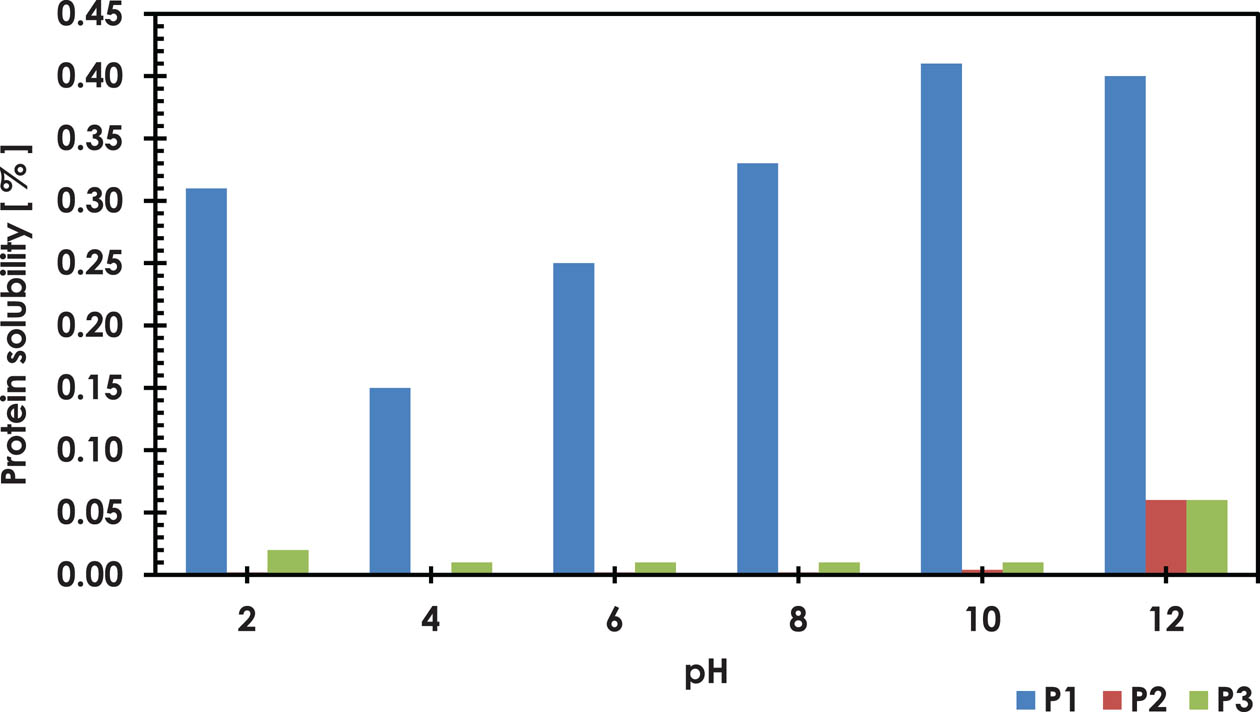
Dependence of solubility protein at different pH.
As for the FC, P1 had the best foam stabilization properties. Compared to other tested proteins, it showed several times higher stability of the obtained foam at each of the analyzed pH (Table 5). The optimal conditions for the foam formation were at pH 10. However, as time progressed, foam durability decreased. Shchekoldina and Aider [78] in their research on the foaming properties of soy and sunflower proteins observed that as the pH increases, the FC and FS increase. The low FC and FS of proteins isolated at acidic pH may indicate insufficient electrostatic repulsion and thus excessive protein–protein interactions in the form of aggregates that are harmful to foam formation. An increase in foam expansion may be due to the increased solubility, rapid development of the air–water interface, limited intermolecular cohesion, and flexibility of protein surfactant molecules.
Results of the FS analysis of proteins
| pH | FS (%) | |||||||||||
|---|---|---|---|---|---|---|---|---|---|---|---|---|
| P1 | P2 | P3 | ||||||||||
| 5 min | 10 min | 30 min | 60 min | 5 min | 10 min | 30 min | 60 min | 5 min | 10 min | 30 min | 60 min | |
| 2 | 20.0 | 17.5 | 17.5 | 11.3 | — | — | — | — | 3.8 | 3.8 | 3.0 | 2.5 |
| 4 | 25.0 | 23.1 | 21.9 | 18.8 | — | — | — | — | 5.5 | 5.3 | 2.0 | 1.3 |
| 6 | 25.0 | 20.6 | 15.9 | 12.5 | 5.0 | 5.0 | 4.0 | 3.0 | 10.0 | 10.0 | 7.5 | 7.5 |
| 8 | 20.0 | 15.0 | 13.8 | 12.5 | 6.3 | 6.3 | 6.3 | 6.3 | 5.8 | 5.8 | 5.5 | 5.5 |
| 10 | 27.5 | 27.5 | 22.5 | 20.0 | 6.3 | 6.3 | 6.3 | 6.3 | 10.0 | 6.3 | 6.3 | 6.3 |
| 12 | 22.5 | 22.5 | 20.0 | 17.5 | 11.3 | 10.0 | 8.8 | 8.8 | 12.5 | 12.5 | 12.5 | 12.5 |
3.5 Protein solubility
Proteins analyzed during the tests showed very low solubility in aqueous solutions (0.001–0.41%; Figure 2). However, after comparing the obtained results, it can be stated that P1 has much better solubility than P2 or P3. P1 obtained the highest solubility of proteins at pH 10 (0.41%) and the lowest at pH 4 (0.15%). Low solubility of proteins could be caused by the denaturing changes [79,80] and reduced interaction between proteins and water, increasing protein–protein interactions, causing their aggregation and precipitation, and hence reducing their solubility. It is believed that increased ionic strength also contributes to the reduction in protein solubility [81]. Holm and Eriksen [82] showed in their research that natural potato protein has better solubility compared to commercial soy protein. While Partsia and Kiosseoglou [76] observed the good solubility of a potato protein preparation obtained with carboxymethyl cellulose in a neutral environment.
4 Conclusion
Based on presented studies, PJ can become a raw material for obtaining protein preparations. The protein concentrate of PJ obtained with the ultrafiltration method has favorable functional properties, including good oil absorption 6.30 mL/g, which is more than two times higher than the commercial proteins used in the comparison (P2 = 2.33 mL/g and P3 = 2.67 mL/g). It showed much better FS ranging from 20.0% at pH = 10 to 11.3% at pH = 2 after 60 min of testing. For comparative reasons, potato proteins available in the market had a lower FS with a maximal value of 12.5% and the lowest one at 1.3% of the analyzed pH. During the tests, the analyzed proteins showed very low solubility; however, after comparing the obtained results, the new PJ protein concentrate solubility was the highest and ranged from 0.15% at pH = 4 to 0.41% at pH = 10, while the solubility of other analyzed proteins reached a maximal solubility of only 0.06% at pH = 12.
Conflict of interest: The authors state no conflict of interest.
Data Availability Statement: The datasets generated during and/or analyzed during the current study are available from the corresponding author on reasonable request.
References
[1] Sikora M, Krystyjan M, Dobosz A, Tomasik P, Walkowiak K, Masewicz Ł, et al. Molecular Analysis of Retrogradation of Corn Starches. Polymers. 2019;11(11):1764. 10.3390/polym11111764.Search in Google Scholar
[2] Zobel HF, Stephen AM. Starch: structure, analysis, and application. In: Stephen AM, Phillips GO, editors. Food Polysaccharides and Their Applications. Boca Raton, FL, USA: CRC Press; 2016. p. 25–85. 10.1201/9781420015164.Search in Google Scholar
[3] Jeżowski P, Kowalczewski PŁ. Starch as a green binder for the formulation of conducting glue in supercapacitors. Polymers. 2019;11(10):1648. 10.3390/polym11101648.Search in Google Scholar
[4] Kennedy HM. Starch- and dextrin-based adhesives. Adhesives from renewable resources. Washington, DC, USA: ACS Publication; 1989. p. 326–36. 10.1021/bk-1989-0385.ch023.Search in Google Scholar
[5] Miedzianka J, Pęksa A, Pokora M, Rytel E, Tajner-Czopek A, Kita A. Improving the properties of fodder potato protein concentrate by enzymatic hydrolysis. Food Chem. 2014;159:512–8. 10.1016/j.foodchem.2014.03.054.Search in Google Scholar
[6] Kot AM, Pobiega K, Piwowarek K, Kieliszek M, Błażejak S, Gniewosz M, et al. Biotechnological methods of management and utilization of potato industry waste – a review. Potato Res. January 2020. 10.1007/s11540-019-09449-6.Search in Google Scholar
[7] Zwijnenberg HJ, Kemperman AJB, Boerrigter ME, Lotz M, Dijksterhuis JF, Poulsen PE, et al. Native protein recovery from potato fruit juice by ultrafiltration. Desalination. 2002;144(1–3):331–4. 10.1016/S0011-9164(02)00338-7.Search in Google Scholar
[8] Camire ME, Kubow S, Donnelly DJ. Potatoes and human health. Crit Rev Food Sci Nutr. 2009;49(10):823–40. 10.1080/10408390903041996.Search in Google Scholar PubMed
[9] McGill CR, Kurilich AC, Davignon J. The role of potatoes and potato components in cardiometabolic health: A review. Ann Med. 2013;45(7):467–73. 10.3109/07853890.2013.813633.Search in Google Scholar PubMed
[10] Mohamed Saleem TS, Chetty CM, Ramkanth S, Alagusundaram M, Gnanaprakash K, Thiruvengada Rajan VS, et al. Solanum nigrum Linn. – a review. Phcog Rev. 2009;3(6):342–5.Search in Google Scholar
[11] Vlachojannis JE, Cameron M, Chrubasik S. Medicinal use of potato-derived products: a systematic review. Phyther Res. 2010;24(2):159–62. 10.1002/ptr.2829.Search in Google Scholar PubMed
[12] Kujawska M, Olejnik A, Lewandowicz G, Kowalczewski P, Forjasz R, Jodynis-Liebert J. Spray-dried potato juice as a potential functional food component with gastrointestinal protective effects. Nutrients. 2018;10(2):259. 10.3390/nu10020259.Search in Google Scholar PubMed PubMed Central
[13] Barceloux DG. Potatoes, tomatoes, and solanine toxicity (Solanum tuberosum L., Solanum lycopersicum L.). Disease-a-Month. 2009;55(6):391–402. 10.1016/j.disamonth.2009.03.009.Search in Google Scholar PubMed
[14] Bzducha-Wróbel A, Pobiega K, Błażejak S, Kieliszek M. The scale-up cultivation of Candida utilis in waste potato juice water with glycerol affects biomass and β(1,3)/(1,6)-glucan characteristic and yield. Appl Microbiol Biotechnol. 2018;102(21):9131–45. 10.1007/s00253-018-9357-y.Search in Google Scholar PubMed PubMed Central
[15] Bzducha-Wróbel A, Błażejak S, Kieliszek M, Pobiega K, Falana K, Janowicz M. Modification of the cell wall structure of Saccharomyces cerevisiae strains during cultivation on waste potato juice water and glycerol towards biosynthesis of functional polysaccharides. J Biotechnol. 2018;281:1–10. 10.1016/j.jbiotec.2018.06.305.Search in Google Scholar PubMed
[16] Bzducha-Wróbel A, Błażejak S, Molenda M, Reczek L. Biosynthesis of β(1,3)/(1,6)-glucans of cell wall of the yeast Candida utilis ATCC 9950 strains in the culture media supplemented with deproteinated potato juice water and glycerol. Eur Food Res Technol. 2015;240(5):1023–34. 10.1007/s00217-014-2406-6.Search in Google Scholar
[17] Kowalczewski PŁ, Lewandowicz G, Krzywdzińska-Bartkowiak M, Piątek M, Baranowska HM, Białas W, et al. Finely comminuted frankfurters fortified with potato juice – quality and structure. J Food Eng. 2015;167:183–8. 10.1016/j.jfoodeng.2015.05.016.Search in Google Scholar
[18] Kowalczewski P, Lewandowicz G, Makowska A, Knoll I, Błaszczak W, Białas W, et al. Pasta fortified with potato juice: structure, quality, and consumer acceptance. J Food Sci. 2015;80(6):S1377–82. 10.1111/1750-3841.12906.Search in Google Scholar PubMed
[19] Kowalczewski P, Różańska M, Makowska A, Jeżowski P, Kubiak P. Production of wheat bread with spray-dried potato juice: influence on dough and bread characteristics. Food Sci Technol Int. 2019;25(3):223–32. 10.1177/1082013218814605.Search in Google Scholar PubMed
[20] Baranowska HM, Masewicz Ł, Kowalczewski PŁ, Lewandowicz G, Piątek M, Kubiak P. Water properties in pâtés enriched with potato juice. Eur Food Res Technol. 2018;244(3):387–93. 10.1007/s00217-017-2965-4.Search in Google Scholar
[21] Kowalczewski PŁ, Walkowiak K, Masewicz Ł, Baranowska HM. Low field NMR studies of wheat bread enriched with potato juice during staling. Open Agric. 2019;4(1):426–30. 10.1515/opag-2019-0038.Search in Google Scholar
[22] Tuśnio A, Pastuszewska B, Święch E, Taciak M. Response of young pigs to feeding potato protein and potato fibre – nutritional, physiological and biochemical parameters. J Anim Feed Sci. 2011;20(3):361–78. 10.22358/jafs/66192/2011.Search in Google Scholar
[23] Whitson ME, Miracle RE, Drake MA. Sensory characterization of chemical components responsible for cardboard flavor in whey protein. J Sens Stud. 2010;25(4):616–36. 10.1111/j.1745-459X.2010.00289.x.Search in Google Scholar
[24] Adjonu R, Doran G, Torley P, Agboola S. Whey protein peptides as components of nanoemulsions: a review of emulsifying and biological functionalities. J Food Eng. 2014;122:15–27. 10.1016/j.jfoodeng.2013.08.034.Search in Google Scholar
[25] Soria AC, Villamiel M. Effect of ultrasound on the technological properties and bioactivity of food: a review. Trends Food Sci Technol. 2010;21(7):323–31. 10.1016/j.tifs.2010.04.003.Search in Google Scholar
[26] Mir NA, Riar CS, Singh S. Effect of pH and holding time on the characteristics of protein isolates from Chenopodium seeds and study of their amino acid profile and scoring. Food Chem. 2019;272:165–73. 10.1016/j.foodchem.2018.08.048.Search in Google Scholar PubMed
[27] Dissanayake M, Vasiljevic T. Functional properties of whey proteins affected by heat treatment and hydrodynamic high-pressure shearing. J Dairy Sci. 2009;92(4):1387–97. 10.3168/jds.2008-1791.Search in Google Scholar PubMed
[28] Miedzianka J, Pęksa A, Aniołowska M. Properties of acetylated potato protein preparations. Food Chem. 2012;133(4):1283–91. 10.1016/j.foodchem.2011.08.080.Search in Google Scholar
[29] Konieczny P. Hydrofobowość Powierzchniowa Jako Czynnik Determinujący Wybrane Właściwości Funkcjonalne Preparatów Białkowych (in Polish). Akademia Rolnicza w Poznaniu, Poland; 2001.Search in Google Scholar
[30] Ruckenstein E, Shulgin IL. Effect of salts and organic additives on the solubility of proteins in aqueous solutions. Adv Colloid Interface Sci. 2006;123–126:97–103. 10.1016/j.cis.2006.05.018.Search in Google Scholar PubMed
[31] Lee KH, Ryu HS, Rhee KC. Protein solubility characteristics of commercial soy protein products. J Am Oil Chem Soc. 2003;80(1):85–90. 10.1007/s11746-003-0656-6.Search in Google Scholar
[32] Chandi GK, Sogi DS. Functional properties of rice bran protein concentrates. J Food Eng. 2007;79(2):592–7. 10.1016/j.jfoodeng.2006.02.018.Search in Google Scholar
[33] Han JH, Krochta JM. Physical properties and oil absorption of whey-protein-coated paper. J Food Sci. 2001;66(2):294–9. 10.1111/j.1365-2621.2001.tb11335.x.Search in Google Scholar
[34] Pęksa A, Rytel E, Kita A, Lisińska G, Tajner-Czopek A. The properties of potato protein. Food. vol. 3. UK: Global Science Books Ltd.; 2009. p. 79–87.Search in Google Scholar
[35] Needs EC, Huitson A. The contribution of milk serum proteins to the development of whipped cream structure. Food Struct. 1991;10(4):9.Search in Google Scholar
[36] Sajedi M, Nasirpour A, Keramat J, Desobry S. Effect of modified whey protein concentrate on physical properties and stability of whipped cream. Food Hydrocolloids. 2014;36:93–101. 10.1016/j.foodhyd.2013.09.007.Search in Google Scholar
[37] Gani A, Broadway AA, Masoodi FA, Wani AA, Maqsood S, Ashwar BA, et al. Enzymatic hydrolysis of whey and casein protein-effect on functional, rheological, textural and sensory properties of breads. J Food Sci Technol. 2015;52(12):7697–709. 10.1007/s13197-015-1840-1.Search in Google Scholar
[38] Wilde P. Foam formation in dough and bread quality. In: Breadmaking. Elsevier; 2012. p. 370–99. 10.1533/9780857095695.2.370.Search in Google Scholar
[39] Kowalczewski PŁ, Olejnik A, Białas W, Rybicka I, Zielińska-Dawidziak M, Siger A, et al. The Nutritional value and biological activity of concentrated protein fraction of potato juice. Nutrients. 2019;11(7):1523. 10.3390/nu11071523.Search in Google Scholar
[40] ISO. ISO 1871:2009 Food and feed products – general guidelines for the determination of nitrogen by the Kjeldahl method. Geneva, Switzerland: ISO; 2009.Search in Google Scholar
[41] ISO. ISO 763:2003 Fruit and vegetable products – determination of ash insoluble in hydrochloric acid. Geneva, Switzerland: ISO; 2003.Search in Google Scholar
[42] AACC. AACCI 44-19.01 moisture – air-oven method, drying at 135 degrees. In: AACC International Approved Methods. AACC International; 2009. 10.1094/AACCIntMethod-44-19.01.Search in Google Scholar
[43] Rybicka I, Gliszczyńska-Świgło A. Minerals in grain gluten-free products. The content of calcium, potassium, magnesium, sodium, copper, iron, manganese, and zinc. J Food Compos Anal. 2017;59:61–67. 10.1016/j.jfca.2017.02.006.Search in Google Scholar
[44] European Food Safety Authority. Dietary reference values for nutrients summary report. EFSA Support Publ. 2017;14(12):e15121. 10.2903/sp.efsa.2017.e15121.Search in Google Scholar
[45] Miedzianka J, Pęksa A, Nemś A, Drzymała K, Zambrowicz A, Kowalczewski P. Trypsin inhibitor, antioxidant and antimicrobial activities as well as chemical composition of potato sprouts originating from yellow- and colored-fleshed varieties. J Environ Sci Heal B. 2020;55(1):42–51. 10.1080/03601234.2019.1657764.Search in Google Scholar
[46] Singleton VL, Orthofer R, Lamuela-Raventós RM. Analysis of total phenols and other oxidation substrates and antioxidants by means of folin-ciocalteu reagent. Methods in enzymology. vol 299. Netherlands: Elsevier; 1999. p. 152–78. 10.1016/S0076-6879(99)99017-1.Search in Google Scholar
[47] Re R, Pellegrini N, Proteggente A, Pannala A, Yang M, Rice-Evans C. Antioxidant activity applying an improved ABTS radical cation decolorization assay. Free Radic Biol Med. 1999;26(9–10):1231–7. 10.1016/S0891-5849(98)00315-3.Search in Google Scholar
[48] Waniska RD, Kinsella JE. Foaming properties of proteins: evaluation of a column aeration apparatus using ovalbumin. J Food Sci. 1979;44(5):1398–402. 10.1111/j.1365-2621.1979.tb06447.x.Search in Google Scholar
[49] Timilsena YP, Adhikari R, Barrow CJ, Adhikari B. Physicochemical and functional properties of protein isolate produced from Australian chia seeds. Food Chem. 2016;212:648–56. 10.1016/j.foodchem.2016.06.017.Search in Google Scholar PubMed
[50] Wu H, Wang Q, Ma T, Ren J. Comparative studies on the functional properties of various protein concentrate preparations of peanut protein. Food Res Int. 2009;42(3):343–8. 10.1016/j.foodres.2008.12.006.Search in Google Scholar
[51] Achouri A, Nail V, Boye JI. Sesame protein isolate: Fractionation, secondary structure and functional properties. Food Res Int. 2012;46(1):360–9. 10.1016/j.foodres.2012.01.001.Search in Google Scholar
[52] Rybicka I. The handbook of minerals on a gluten-free diet. Nutrients. 2018;10(11):1683. 10.3390/nu10111683.Search in Google Scholar PubMed PubMed Central
[53] Kowalczewski PŁ, Radzikowska D, Ivanišová E, Szwengiel A, Kačániová M, Sawinska Z. Influence of abiotic stress factors on the antioxidant properties and polyphenols profile composition of green barley (Hordeum vulgare L.). Int J Mol Sci. 2020;21(2):397. 10.3390/ijms21020397.Search in Google Scholar PubMed PubMed Central
[54] Ražná K, Sawinska Z, Ivanišová E, Vukovic N, Terentjeva M, Stričík M, et al. Properties of Ginkgo biloba L.: antioxidant characterization, antimicrobial activities, and genomic microRNA based marker fingerprints. Int J Mol Sci. 2020;21(9):3087. 10.3390/ijms21093087.Search in Google Scholar PubMed PubMed Central
[55] Rovná K, Ivanišová E, Žiarovská J, Ferus P, Terentjeva M, Kowalczewski PŁ, et al. Characterization of Rosa canina fruits collected in urban areas of Slovakia. Genome size, iPBS profiles and antioxidant and antimicrobial activities. Molecules. 2020;25(8):1888. 10.3390/molecules25081888.Search in Google Scholar PubMed PubMed Central
[56] Olejnik A, Rychlik J, Kidoń M, Czapski J, Kowalska K, Juzwa W, et al. Antioxidant effects of gastrointestinal digested purple carrot extract on the human cells of colonic mucosa. Food Chem. 2016;190:1069–77. 10.1016/j.foodchem.2015.06.080.Search in Google Scholar PubMed
[57] Li H-B, Wong C-C, Cheng K-W, Chen F. Antioxidant properties in vitro and total phenolic contents in methanol extracts from medicinal plants. LWT - Food Sci Technol. 2008;41(3):385–90. 10.1016/j.lwt.2007.03.011.Search in Google Scholar
[58] Balasundram N, Sundram K, Samman S. Phenolic compounds in plants and agri-industrial by-products: antioxidant activity, occurrence, and potential uses. Food Chem. 2006;99(1):191–203. 10.1016/j.foodchem.2005.07.042.Search in Google Scholar
[59] Wojdylo A, Oszmianski J, Czemerys R. Antioxidant activity and phenolic compounds in 32 selected herbs. Food Chem. 2007;105(3):940–9. 10.1016/j.foodchem.2007.04.038.Search in Google Scholar
[60] Cai Y, Luo Q, Sun M, Corke H. Antioxidant activity and phenolic compounds of 112 traditional Chinese medicinal plants associated with anticancer. Life Sci. 2004;74(17):2157–84. 10.1016/j.lfs.2003.09.047.Search in Google Scholar PubMed PubMed Central
[61] Kaspar KL, Park JS, Brown CR, Mathison BD, Navarre DA, Chew BP. Pigmented potato consumption alters oxidative stress and inflammatory damage in men. J Nutr. 2011;141(1):108–11. 10.3945/jn.110.128074.Search in Google Scholar PubMed
[62] Lipsky LM, Cheon K, Nansel TR, Albert PS. Candidate measures of whole plant food intake are related to biomarkers of nutrition and health in the US population (National Health and Nutrition Examination Survey 1999–2002). Nutr Res. 2012;32(4):251–9. 10.1016/j.nutres.2012.03.005.Search in Google Scholar PubMed PubMed Central
[63] Kowalczewski PŁ, Olejnik A, Białas W, Kubiak P, Siger A, Nowicki M, et al. Effect of thermal processing on antioxidant activity and cytotoxicity of waste potato juice. Open Life Sci. 2019;14(1):150–7. 10.1515/biol-2019-0017.Search in Google Scholar PubMed PubMed Central
[64] Pęksa A, Miedzianka J, Nemś A. Amino acid composition of flesh-coloured potatoes as affected by storage conditions. Food Chem. 2018;266:335–42. 10.1016/j.foodchem.2018.06.026.Search in Google Scholar PubMed
[65] Elias RJ, Kellerby SS, Decker EA. Antioxidant activity of proteins and peptides. Crit Rev Food Sci Nutr. 2008;48(5):430–41. 10.1080/10408390701425615.Search in Google Scholar PubMed
[66] Akubor P. Proximate composition and selected functional properties of African Breadfruit and sweet potato flour blends. Plant Foods Hum Nutr. 1997;51:53–60. 10.1023/A:1007948400685.Search in Google Scholar
[67] Knorr D. Effect of recovery methods on yield, quality and functional properties of potato protein concentrates. J Food Sci. 1980;45(5):1183–6. 10.1111/j.1365-2621.1980.tb06516.x.Search in Google Scholar
[68] Wojnowska I, Bednarski W, Poznański S, Werner W. Obtaining protein preparations from potato juice waters and their characteristics. Acta Aliment. 1979;5(3):227–37.Search in Google Scholar
[69] Baraniak B, Niezabitowska M, Pielecki J, Wójcik W. Evaluation of usefulness of Magnafloc M-22S flocculant in the process of obtaining protein concentrates from peas. Food Chem. 2004;85(2):251–7. 10.1016/j.foodchem.2003.06.018.Search in Google Scholar
[70] Knorr D, Kohler GO, Betschart AA. Potato protein concentrates: the influence of various methods of recovery upon yield, compositional and functional characteristics. J Food Process Preserv. 1977;1(3):235–47. 10.1111/j.1745-4549.1977.tb00326.x.Search in Google Scholar
[71] Piecyk M, Klepacka M. Functional properties of the Bean (Phaseolus Vulgaris) seed preparations obtained using the crystallization and classical isolation methods. ŻYWNOŚĆ Nauk Technol Jakość. 2004;4(41):57–68.Search in Google Scholar
[72] Deng Q, Wang L, Wei F, Xie B, Huang F, Huang W, et al. Functional properties of protein isolates, globulin and albumin extracted from Ginkgo biloba seeds. Food Chem. 2011;124(4):1458–65. 10.1016/j.foodchem.2010.07.108.Search in Google Scholar
[73] Khalid E, Babiker E, El Tinay A. Solubility and functional properties of sesame seed proteins as influenced by pH and/or salt concentration. Food Chem. 2003;82(3):361–6. 10.1016/S0308-8146(02)00555-1.Search in Google Scholar
[74] Kinsella JE. Functional properties of soy proteins. J Am Oil Chem Soc. 1979;56(3Part1):242–58. 10.1007/BF02671468.Search in Google Scholar
[75] Deak NA, Johnson LA. Functional properties of protein ingredients prepared from high-sucrose/low-stachyose soybeans. J Am Oil Chem Soc. 2006;83(9):811. 10.1007/s11746-006-5019-9.Search in Google Scholar
[76] Partsia Z, Kiosseoglou V. Foaming properties of potato proteins recovered by complexation with carboxymethylcellulose. Colloids Surf B. 2001;21(1-3):69–74. 10.1016/S0927-7765(01)00185-0.Search in Google Scholar
[77] Ralet M-C, Guéguen J. Fractionation of potato proteins: solubility, thermal coagulation and emulsifying properties. LWT - Food Sci Technol. 2000;33(5):380–7. 10.1006/fstl.2000.0672.Search in Google Scholar
[78] Shchekoldina T, Aider M. Production of low chlorogenic and caffeic acid containing sunflower meal protein isolate and its use in functional wheat bread making. J Food Sci Technol. 2014;51(10):2331–43. 10.1007/s13197-012-0780-2.Search in Google Scholar PubMed PubMed Central
[79] Jackman R, Yada R. Functional properties of whey-potato protein composite blends. Can Inst Food Sci Technol J. 1986;19(4):xxxvii. 10.1016/S0315-5463(86)71520-4.Search in Google Scholar
[80] Zayas JF. Functionality of Proteins in Food. Berlin, Heidelberg: Springer Berlin Heidelberg; 1997. 10.1007/978-3-642-59116-7.Search in Google Scholar
[81] Arogundade LA, Tshay M, Shumey D, Manazie S. Effect of ionic strength and/or pH on extractability and physico-functional characterization of broad bean (Vicia faba L.) protein concentrate. Food Hydrocoll. 2006;20(8):1124–34. 10.1016/j.foodhyd.2005.12.010.Search in Google Scholar
[82] Holm F, Eriksen S. Emulsifying properties of undenatured potato protein concentrate. Int J Food Sci Technol. 2007;15(1):71–83. 10.1111/j.1365-2621.1980.tb00920.x.Search in Google Scholar
© 2020 Paweł Jeżowski et al., published by De Gruyter
This work is licensed under the Creative Commons Attribution 4.0 International License.
Articles in the same Issue
- Plant Sciences
- Dependence of the heterosis effect on genetic distance, determined using various molecular markers
- Plant Growth Promoting Rhizobacteria (PGPR) Regulated Phyto and Microbial Beneficial Protein Interactions
- Role of strigolactones: Signalling and crosstalk with other phytohormones
- An efficient protocol for regenerating shoots from paper mulberry (Broussonetia papyrifera) leaf explants
- Functional divergence and adaptive selection of KNOX gene family in plants
- In silico identification of Capsicum type III polyketide synthase genes and expression patterns in Capsicum annuum
- In vitro induction and characterisation of tetraploid drumstick tree (Moringa oleifera Lam.)
- CRISPR/Cas9 or prime editing? – It depends on…
- Study on the optimal antagonistic effect of a bacterial complex against Monilinia fructicola in peach
- Natural variation in stress response induced by low CO2 in Arabidopsis thaliana
- The complete mitogenome sequence of the coral lily (Lilium pumilum) and the Lanzhou lily (Lilium davidii) in China
- Ecology and Environmental Sciences
- Use of phosphatase and dehydrogenase activities in the assessment of calcium peroxide and citric acid effects in soil contaminated with petrol
- Analysis of ethanol dehydration using membrane separation processes
- Activity of Vip3Aa1 against Periplaneta americana
- Thermostable cellulase biosynthesis from Paenibacillus alvei and its utilization in lactic acid production by simultaneous saccharification and fermentation
- Spatiotemporal dynamics of terrestrial invertebrate assemblages in the riparian zone of the Wewe river, Ashanti region, Ghana
- Antifungal activity of selected volatile essential oils against Penicillium sp.
- Toxic effect of three imidazole ionic liquids on two terrestrial plants
- Biosurfactant production by a Bacillus megaterium strain
- Distribution and density of Lutraria rhynchaena Jonas, 1844 relate to sediment while reproduction shows multiple peaks per year in Cat Ba-Ha Long Bay, Vietnam
- Biomedical Sciences
- Treatment of Epilepsy Associated with Common Chromosomal Developmental Diseases
- A Mouse Model for Studying Stem Cell Effects on Regeneration of Hair Follicle Outer Root Sheaths
- Morphine modulates hippocampal neurogenesis and contextual memory extinction via miR-34c/Notch1 pathway in male ICR mice
- Composition, Anticholinesterase and Antipedicular Activities of Satureja capitata L. Volatile Oil
- Weight loss may be unrelated to dietary intake in the imiquimod-induced plaque psoriasis mice model
- Construction of recombinant lentiviral vector containing human stem cell leukemia gene and its expression in interstitial cells of cajal
- Knockdown of lncRNA KCNQ1OT1 inhibits glioma progression by regulating miR-338-3p/RRM2
- Protective effect of asiaticoside on radiation-induced proliferation inhibition and DNA damage of fibroblasts and mice death
- Prevalence of dyslipidemia in Tibetan monks from Gansu Province, Northwest China
- Sevoflurane inhibits proliferation, invasion, but enhances apoptosis of lung cancer cells by Wnt/β-catenin signaling via regulating lncRNA PCAT6/ miR-326 axis
- MiR-542-3p suppresses neuroblastoma cell proliferation and invasion by downregulation of KDM1A and ZNF346
- Calcium Phosphate Cement Causes Nucleus Pulposus Cell Degeneration Through the ERK Signaling Pathway
- Human Dental Pulp Stem Cells Exhibit Osteogenic Differentiation Potential
- MiR-489-3p inhibits cell proliferation, migration, and invasion, and induces apoptosis, by targeting the BDNF-mediated PI3K/AKT pathway in glioblastoma
- Long non-coding RNA TUG1 knockdown hinders the tumorigenesis of multiple myeloma by regulating the microRNA-34a-5p/NOTCH1 signaling pathway
- Large Brunner’s gland adenoma of the duodenum for almost 10 years
- Neurotrophin-3 accelerates reendothelialization through inducing EPC mobilization and homing
- Hepatoprotective effects of chamazulene against alcohol-induced liver damage by alleviation of oxidative stress in rat models
- FXYD6 overexpression in HBV-related hepatocellular carcinoma with cirrhosis
- Risk factors for elevated serum colorectal cancer markers in patients with type 2 diabetes mellitus
- Effect of hepatic sympathetic nerve removal on energy metabolism in an animal model of cognitive impairment and its relationship to Glut2 expression
- Progress in research on the role of fibrinogen in lung cancer
- Advanced glycation end product levels were correlated with inflammation and carotid atherosclerosis in type 2 diabetes patients
- MiR-223-3p regulates cell viability, migration, invasion, and apoptosis of non-small cell lung cancer cells by targeting RHOB
- Knockdown of DDX46 inhibits trophoblast cell proliferation and migration through the PI3K/Akt/mTOR signaling pathway in preeclampsia
- Buformin suppresses osteosarcoma via targeting AMPK signaling pathway
- Effect of FibroScan test in antiviral therapy for HBV-infected patients with ALT <2 upper limit of normal
- LncRNA SNHG15 regulates osteosarcoma progression in vitro and in vivo via sponging miR-346 and regulating TRAF4 expression
- LINC00202 promotes retinoblastoma progression by regulating cell proliferation, apoptosis, and aerobic glycolysis through miR-204-5p/HMGCR axis
- Coexisting flavonoids and administration route effect on pharmacokinetics of Puerarin in MCAO rats
- GeneXpert Technology for the diagnosis of HIV-associated tuberculosis: Is scale-up worth it?
- Circ_001569 regulates FLOT2 expression to promote the proliferation, migration, invasion and EMT of osteosarcoma cells through sponging miR-185-5p
- Lnc-PICSAR contributes to cisplatin resistance by miR-485-5p/REV3L axis in cutaneous squamous cell carcinoma
- BRCA1 subcellular localization regulated by PI3K signaling pathway in triple-negative breast cancer MDA-MB-231 cells and hormone-sensitive T47D cells
- MYL6B drives the capabilities of proliferation, invasion, and migration in rectal adenocarcinoma through the EMT process
- Inhibition of lncRNA LINC00461/miR-216a/aquaporin 4 pathway suppresses cell proliferation, migration, invasion, and chemoresistance in glioma
- Upregulation of miR-150-5p alleviates LPS-induced inflammatory response and apoptosis of RAW264.7 macrophages by targeting Notch1
- Long non-coding RNA LINC00704 promotes cell proliferation, migration, and invasion in papillary thyroid carcinoma via miR-204-5p/HMGB1 axis
- Neuroanatomy of melanocortin-4 receptor pathway in the mouse brain
- Lipopolysaccharides promote pulmonary fibrosis in silicosis through the aggravation of apoptosis and inflammation in alveolar macrophages
- Influences of advanced glycosylation end products on the inner blood–retinal barrier in a co-culture cell model in vitro
- MiR-4328 inhibits proliferation, metastasis and induces apoptosis in keloid fibroblasts by targeting BCL2 expression
- Aberrant expression of microRNA-132-3p and microRNA-146a-5p in Parkinson’s disease patients
- Long non-coding RNA SNHG3 accelerates progression in glioma by modulating miR-384/HDGF axis
- Long non-coding RNA NEAT1 mediates MPTP/MPP+-induced apoptosis via regulating the miR-124/KLF4 axis in Parkinson’s disease
- PCR-detectable Candida DNA exists a short period in the blood of systemic candidiasis murine model
- CircHIPK3/miR-381-3p axis modulates proliferation, migration, and glycolysis of lung cancer cells by regulating the AKT/mTOR signaling pathway
- Reversine and herbal Xiang–Sha–Liu–Jun–Zi decoction ameliorate thioacetamide-induced hepatic injury by regulating the RelA/NF-κB/caspase signaling pathway
- Therapeutic effects of coronary granulocyte colony-stimulating factor on rats with chronic ischemic heart disease
- The effects of yam gruel on lowering fasted blood glucose in T2DM rats
- Circ_0084043 promotes cell proliferation and glycolysis but blocks cell apoptosis in melanoma via circ_0084043-miR-31-KLF3 axis
- CircSAMD4A contributes to cell doxorubicin resistance in osteosarcoma by regulating the miR-218-5p/KLF8 axis
- Relationship of FTO gene variations with NAFLD risk in Chinese men
- The prognostic and predictive value of platelet parameters in diabetic and nondiabetic patients with sudden sensorineural hearing loss
- LncRNA SNHG15 contributes to doxorubicin resistance of osteosarcoma cells through targeting the miR-381-3p/GFRA1 axis
- miR-339-3p regulated acute pancreatitis induced by caerulein through targeting TNF receptor-associated factor 3 in AR42J cells
- LncRNA RP1-85F18.6 affects osteoblast cells by regulating the cell cycle
- MiR-203-3p inhibits the oxidative stress, inflammatory responses and apoptosis of mice podocytes induced by high glucose through regulating Sema3A expression
- MiR-30c-5p/ROCK2 axis regulates cell proliferation, apoptosis and EMT via the PI3K/AKT signaling pathway in HG-induced HK-2 cells
- CTRP9 protects against MIA-induced inflammation and knee cartilage damage by deactivating the MAPK/NF-κB pathway in rats with osteoarthritis
- Relationship between hemodynamic parameters and portal venous pressure in cirrhosis patients with portal hypertension
- Long noncoding RNA FTX ameliorates hydrogen peroxide-induced cardiomyocyte injury by regulating the miR-150/KLF13 axis
- Ropivacaine inhibits proliferation, migration, and invasion while inducing apoptosis of glioma cells by regulating the SNHG16/miR-424-5p axis
- CD11b is involved in coxsackievirus B3-induced viral myocarditis in mice by inducing Th17 cells
- Decitabine shows anti-acute myeloid leukemia potential via regulating the miR-212-5p/CCNT2 axis
- Testosterone aggravates cerebral vascular injury by reducing plasma HDL levels
- Bioengineering and Biotechnology
- PL/Vancomycin/Nano-hydroxyapatite Sustained-release Material to Treat Infectious Bone Defect
- The thickness of surface grafting layer on bio-materials directly mediates the immuno-reacitivity of macrophages in vitro
- Silver nanoparticles: synthesis, characterisation and biomedical applications
- Food Science
- Bread making potential of Triticum aestivum and Triticum spelta species
- Modeling the effect of heat treatment on fatty acid composition in home-made olive oil preparations
- Effect of addition of dried potato pulp on selected quality characteristics of shortcrust pastry cookies
- Preparation of konjac oligoglucomannans with different molecular weights and their in vitro and in vivo antioxidant activities
- Animal Sciences
- Changes in the fecal microbiome of the Yangtze finless porpoise during a short-term therapeutic treatment
- Agriculture
- Influence of inoculation with Lactobacillus on fermentation, production of 1,2-propanediol and 1-propanol as well as Maize silage aerobic stability
- Application of extrusion-cooking technology in hatchery waste management
- In-field screening for host plant resistance to Delia radicum and Brevicoryne brassicae within selected rapeseed cultivars and new interspecific hybrids
- Studying of the promotion mechanism of Bacillus subtilis QM3 on wheat seed germination based on β-amylase
- Rapid visual detection of FecB gene expression in sheep
- Effects of Bacillus megaterium on growth performance, serum biochemical parameters, antioxidant capacity, and immune function in suckling calves
- Effects of center pivot sprinkler fertigation on the yield of continuously cropped soybean
- Special Issue On New Approach To Obtain Bioactive Compounds And New Metabolites From Agro-Industrial By-Products
- Technological and antioxidant properties of proteins obtained from waste potato juice
- The aspects of microbial biomass use in the utilization of selected waste from the agro-food industry
- Special Issue on Computing and Artificial Techniques for Life Science Applications - Part I
- Automatic detection and segmentation of adenomatous colorectal polyps during colonoscopy using Mask R-CNN
- The impedance analysis of small intestine fusion by pulse source
- Errata
- Erratum to “Diagnostic performance of serum CK-MB, TNF-α and hs-CRP in children with viral myocarditis”
- Erratum to “MYL6B drives the capabilities of proliferation, invasion, and migration in rectal adenocarcinoma through the EMT process”
- Erratum to “Thermostable cellulase biosynthesis from Paenibacillus alvei and its utilization in lactic acid production by simultaneous saccharification and fermentation”
Articles in the same Issue
- Plant Sciences
- Dependence of the heterosis effect on genetic distance, determined using various molecular markers
- Plant Growth Promoting Rhizobacteria (PGPR) Regulated Phyto and Microbial Beneficial Protein Interactions
- Role of strigolactones: Signalling and crosstalk with other phytohormones
- An efficient protocol for regenerating shoots from paper mulberry (Broussonetia papyrifera) leaf explants
- Functional divergence and adaptive selection of KNOX gene family in plants
- In silico identification of Capsicum type III polyketide synthase genes and expression patterns in Capsicum annuum
- In vitro induction and characterisation of tetraploid drumstick tree (Moringa oleifera Lam.)
- CRISPR/Cas9 or prime editing? – It depends on…
- Study on the optimal antagonistic effect of a bacterial complex against Monilinia fructicola in peach
- Natural variation in stress response induced by low CO2 in Arabidopsis thaliana
- The complete mitogenome sequence of the coral lily (Lilium pumilum) and the Lanzhou lily (Lilium davidii) in China
- Ecology and Environmental Sciences
- Use of phosphatase and dehydrogenase activities in the assessment of calcium peroxide and citric acid effects in soil contaminated with petrol
- Analysis of ethanol dehydration using membrane separation processes
- Activity of Vip3Aa1 against Periplaneta americana
- Thermostable cellulase biosynthesis from Paenibacillus alvei and its utilization in lactic acid production by simultaneous saccharification and fermentation
- Spatiotemporal dynamics of terrestrial invertebrate assemblages in the riparian zone of the Wewe river, Ashanti region, Ghana
- Antifungal activity of selected volatile essential oils against Penicillium sp.
- Toxic effect of three imidazole ionic liquids on two terrestrial plants
- Biosurfactant production by a Bacillus megaterium strain
- Distribution and density of Lutraria rhynchaena Jonas, 1844 relate to sediment while reproduction shows multiple peaks per year in Cat Ba-Ha Long Bay, Vietnam
- Biomedical Sciences
- Treatment of Epilepsy Associated with Common Chromosomal Developmental Diseases
- A Mouse Model for Studying Stem Cell Effects on Regeneration of Hair Follicle Outer Root Sheaths
- Morphine modulates hippocampal neurogenesis and contextual memory extinction via miR-34c/Notch1 pathway in male ICR mice
- Composition, Anticholinesterase and Antipedicular Activities of Satureja capitata L. Volatile Oil
- Weight loss may be unrelated to dietary intake in the imiquimod-induced plaque psoriasis mice model
- Construction of recombinant lentiviral vector containing human stem cell leukemia gene and its expression in interstitial cells of cajal
- Knockdown of lncRNA KCNQ1OT1 inhibits glioma progression by regulating miR-338-3p/RRM2
- Protective effect of asiaticoside on radiation-induced proliferation inhibition and DNA damage of fibroblasts and mice death
- Prevalence of dyslipidemia in Tibetan monks from Gansu Province, Northwest China
- Sevoflurane inhibits proliferation, invasion, but enhances apoptosis of lung cancer cells by Wnt/β-catenin signaling via regulating lncRNA PCAT6/ miR-326 axis
- MiR-542-3p suppresses neuroblastoma cell proliferation and invasion by downregulation of KDM1A and ZNF346
- Calcium Phosphate Cement Causes Nucleus Pulposus Cell Degeneration Through the ERK Signaling Pathway
- Human Dental Pulp Stem Cells Exhibit Osteogenic Differentiation Potential
- MiR-489-3p inhibits cell proliferation, migration, and invasion, and induces apoptosis, by targeting the BDNF-mediated PI3K/AKT pathway in glioblastoma
- Long non-coding RNA TUG1 knockdown hinders the tumorigenesis of multiple myeloma by regulating the microRNA-34a-5p/NOTCH1 signaling pathway
- Large Brunner’s gland adenoma of the duodenum for almost 10 years
- Neurotrophin-3 accelerates reendothelialization through inducing EPC mobilization and homing
- Hepatoprotective effects of chamazulene against alcohol-induced liver damage by alleviation of oxidative stress in rat models
- FXYD6 overexpression in HBV-related hepatocellular carcinoma with cirrhosis
- Risk factors for elevated serum colorectal cancer markers in patients with type 2 diabetes mellitus
- Effect of hepatic sympathetic nerve removal on energy metabolism in an animal model of cognitive impairment and its relationship to Glut2 expression
- Progress in research on the role of fibrinogen in lung cancer
- Advanced glycation end product levels were correlated with inflammation and carotid atherosclerosis in type 2 diabetes patients
- MiR-223-3p regulates cell viability, migration, invasion, and apoptosis of non-small cell lung cancer cells by targeting RHOB
- Knockdown of DDX46 inhibits trophoblast cell proliferation and migration through the PI3K/Akt/mTOR signaling pathway in preeclampsia
- Buformin suppresses osteosarcoma via targeting AMPK signaling pathway
- Effect of FibroScan test in antiviral therapy for HBV-infected patients with ALT <2 upper limit of normal
- LncRNA SNHG15 regulates osteosarcoma progression in vitro and in vivo via sponging miR-346 and regulating TRAF4 expression
- LINC00202 promotes retinoblastoma progression by regulating cell proliferation, apoptosis, and aerobic glycolysis through miR-204-5p/HMGCR axis
- Coexisting flavonoids and administration route effect on pharmacokinetics of Puerarin in MCAO rats
- GeneXpert Technology for the diagnosis of HIV-associated tuberculosis: Is scale-up worth it?
- Circ_001569 regulates FLOT2 expression to promote the proliferation, migration, invasion and EMT of osteosarcoma cells through sponging miR-185-5p
- Lnc-PICSAR contributes to cisplatin resistance by miR-485-5p/REV3L axis in cutaneous squamous cell carcinoma
- BRCA1 subcellular localization regulated by PI3K signaling pathway in triple-negative breast cancer MDA-MB-231 cells and hormone-sensitive T47D cells
- MYL6B drives the capabilities of proliferation, invasion, and migration in rectal adenocarcinoma through the EMT process
- Inhibition of lncRNA LINC00461/miR-216a/aquaporin 4 pathway suppresses cell proliferation, migration, invasion, and chemoresistance in glioma
- Upregulation of miR-150-5p alleviates LPS-induced inflammatory response and apoptosis of RAW264.7 macrophages by targeting Notch1
- Long non-coding RNA LINC00704 promotes cell proliferation, migration, and invasion in papillary thyroid carcinoma via miR-204-5p/HMGB1 axis
- Neuroanatomy of melanocortin-4 receptor pathway in the mouse brain
- Lipopolysaccharides promote pulmonary fibrosis in silicosis through the aggravation of apoptosis and inflammation in alveolar macrophages
- Influences of advanced glycosylation end products on the inner blood–retinal barrier in a co-culture cell model in vitro
- MiR-4328 inhibits proliferation, metastasis and induces apoptosis in keloid fibroblasts by targeting BCL2 expression
- Aberrant expression of microRNA-132-3p and microRNA-146a-5p in Parkinson’s disease patients
- Long non-coding RNA SNHG3 accelerates progression in glioma by modulating miR-384/HDGF axis
- Long non-coding RNA NEAT1 mediates MPTP/MPP+-induced apoptosis via regulating the miR-124/KLF4 axis in Parkinson’s disease
- PCR-detectable Candida DNA exists a short period in the blood of systemic candidiasis murine model
- CircHIPK3/miR-381-3p axis modulates proliferation, migration, and glycolysis of lung cancer cells by regulating the AKT/mTOR signaling pathway
- Reversine and herbal Xiang–Sha–Liu–Jun–Zi decoction ameliorate thioacetamide-induced hepatic injury by regulating the RelA/NF-κB/caspase signaling pathway
- Therapeutic effects of coronary granulocyte colony-stimulating factor on rats with chronic ischemic heart disease
- The effects of yam gruel on lowering fasted blood glucose in T2DM rats
- Circ_0084043 promotes cell proliferation and glycolysis but blocks cell apoptosis in melanoma via circ_0084043-miR-31-KLF3 axis
- CircSAMD4A contributes to cell doxorubicin resistance in osteosarcoma by regulating the miR-218-5p/KLF8 axis
- Relationship of FTO gene variations with NAFLD risk in Chinese men
- The prognostic and predictive value of platelet parameters in diabetic and nondiabetic patients with sudden sensorineural hearing loss
- LncRNA SNHG15 contributes to doxorubicin resistance of osteosarcoma cells through targeting the miR-381-3p/GFRA1 axis
- miR-339-3p regulated acute pancreatitis induced by caerulein through targeting TNF receptor-associated factor 3 in AR42J cells
- LncRNA RP1-85F18.6 affects osteoblast cells by regulating the cell cycle
- MiR-203-3p inhibits the oxidative stress, inflammatory responses and apoptosis of mice podocytes induced by high glucose through regulating Sema3A expression
- MiR-30c-5p/ROCK2 axis regulates cell proliferation, apoptosis and EMT via the PI3K/AKT signaling pathway in HG-induced HK-2 cells
- CTRP9 protects against MIA-induced inflammation and knee cartilage damage by deactivating the MAPK/NF-κB pathway in rats with osteoarthritis
- Relationship between hemodynamic parameters and portal venous pressure in cirrhosis patients with portal hypertension
- Long noncoding RNA FTX ameliorates hydrogen peroxide-induced cardiomyocyte injury by regulating the miR-150/KLF13 axis
- Ropivacaine inhibits proliferation, migration, and invasion while inducing apoptosis of glioma cells by regulating the SNHG16/miR-424-5p axis
- CD11b is involved in coxsackievirus B3-induced viral myocarditis in mice by inducing Th17 cells
- Decitabine shows anti-acute myeloid leukemia potential via regulating the miR-212-5p/CCNT2 axis
- Testosterone aggravates cerebral vascular injury by reducing plasma HDL levels
- Bioengineering and Biotechnology
- PL/Vancomycin/Nano-hydroxyapatite Sustained-release Material to Treat Infectious Bone Defect
- The thickness of surface grafting layer on bio-materials directly mediates the immuno-reacitivity of macrophages in vitro
- Silver nanoparticles: synthesis, characterisation and biomedical applications
- Food Science
- Bread making potential of Triticum aestivum and Triticum spelta species
- Modeling the effect of heat treatment on fatty acid composition in home-made olive oil preparations
- Effect of addition of dried potato pulp on selected quality characteristics of shortcrust pastry cookies
- Preparation of konjac oligoglucomannans with different molecular weights and their in vitro and in vivo antioxidant activities
- Animal Sciences
- Changes in the fecal microbiome of the Yangtze finless porpoise during a short-term therapeutic treatment
- Agriculture
- Influence of inoculation with Lactobacillus on fermentation, production of 1,2-propanediol and 1-propanol as well as Maize silage aerobic stability
- Application of extrusion-cooking technology in hatchery waste management
- In-field screening for host plant resistance to Delia radicum and Brevicoryne brassicae within selected rapeseed cultivars and new interspecific hybrids
- Studying of the promotion mechanism of Bacillus subtilis QM3 on wheat seed germination based on β-amylase
- Rapid visual detection of FecB gene expression in sheep
- Effects of Bacillus megaterium on growth performance, serum biochemical parameters, antioxidant capacity, and immune function in suckling calves
- Effects of center pivot sprinkler fertigation on the yield of continuously cropped soybean
- Special Issue On New Approach To Obtain Bioactive Compounds And New Metabolites From Agro-Industrial By-Products
- Technological and antioxidant properties of proteins obtained from waste potato juice
- The aspects of microbial biomass use in the utilization of selected waste from the agro-food industry
- Special Issue on Computing and Artificial Techniques for Life Science Applications - Part I
- Automatic detection and segmentation of adenomatous colorectal polyps during colonoscopy using Mask R-CNN
- The impedance analysis of small intestine fusion by pulse source
- Errata
- Erratum to “Diagnostic performance of serum CK-MB, TNF-α and hs-CRP in children with viral myocarditis”
- Erratum to “MYL6B drives the capabilities of proliferation, invasion, and migration in rectal adenocarcinoma through the EMT process”
- Erratum to “Thermostable cellulase biosynthesis from Paenibacillus alvei and its utilization in lactic acid production by simultaneous saccharification and fermentation”
