Corylus avellana leaf extract-mediated green synthesis of antifungal silver nanoparticles using microwave irradiation and assessment of their properties
-
Mahsa Eshghi


Abstract
Due to high antimicrobial activity against numerous microorganisms, silver nanoparticles (AgNPs) are being utilized in various areas. Microwave-accelerated AgNPs synthesis using Corylus avellana leaf extract was evaluated. Based on randomly central composite design, 13 mixture solutions containing different amounts of the prepared extract (0.10–0.90 mL) and 1 mM silver nitrate solution (15–25 mL) were prepared and exposed to microwave irradiation for 180 s. Response surface methodology was utilized to evaluate the effects of the two independent variables on particle size and concentration of the synthesized AgNPs, as manifested in the place of broad emission peak (λ max) and its absorbance unit, respectively. Fourier transform infrared spectroscopy analysis indicated that the two hydroxyl and carboxylic acid functional groups with reducing activity existed in the prepared extract. Dynamic light scattering and transmission electron microscopy analyses revealed that the formed spherical AgNPs using optimum amounts of C. avellana leaf extract (0.9 mL) and 1 mM silver nitrate solution (25 mL) had minimum particle size (103.5 nm) and polydispersity index (PDI) (0.209), and maximum concentration (140 ppm) and zeta potential (−21.8 mV). Results indicated that the formed AgNPs had high fungicidal effects against the spoiled fungi of Colletotrichum coccodes and Penicillium digitatum.
1 Introduction
Among the various noble metal nanoparticles (NPs), silver NPs (AgNPs) have attracted distinct attention and application in numerous industries and fields due to their unique properties, especially, their strong antimicrobial activity against various microorganisms such as bacteria and fungi strains [1,2,3]. In fact, AgNPs are known as a new generation of antibiotics. Due to the high surface-to-volume ratio of the AgNPs, these NPs can get easily attached to the microorganism’s membrane and by releasing silver ions can change the membrane permeability and respiratory enzymes’ activities, and cause cell death [4,5]. Green synthesis methods in the fabrication of metal and metal oxide NPs have several advantages compared to the synthesis techniques based on physico-chemical approaches. In fact, green or biological synthesis methods are intensified and clean, and ions reduction, NPs’ formation, and their stabilization are completed in a one-step process using bioactive compounds. Furthermore, the NPs’ biosynthesis procedures are cost effective and environmentally friendly because they do not use chemical solvents and reagents in their synthesis procedures [6,7]. In green metal NPs synthesis approach, many natural biomolecules of plants and their derivatives (i.e., steam, root, leaf, and flower) such as proteins/enzymes, amino acids, polysaccharides, alkaloids, phenolic, alcoholic compounds, and vitamins can be involved in the bioreduction, formation, and stabilization of AgNPs [8].
Hazelnut (Corylus avellana L.) belonging to the Betulaceae family contains high amount of fat which increases its nutritional value. Mono- and polyunsaturated fatty acids are the predominant fatty acids in hazelnut [9]. Several studies have indicated that the aqueous extracts of hazelnut leaf contain 3-, 4-, and 5-caffeoylquinic acids, caffeoyltartaric acid, p-coumaroyltartaric acid, myricetin 3-rhamnoside, quercetin 3-rhamnoside, kaempferol 3-rhamnoside, p-coumaric acid, and myricetin and quercetin derivatives. Most of these bioactive compounds have antibacterial and antioxidant action [10,11]. Furthermore, these components have several hydroxyl and carboxylic groups in their structure which those functional groups can easily reduce metal ions and convert those into their elements, and finally form metal NPs [12]. Leaves of C. avellana, an agro-waste, are found in abundance in Iran, and as already mentioned the C. avellana leaf extract has reducing activity which can reduce silver ions and convert them into AgNPs, which have a strong antibiotic effect on a wide range of antibiotic resistant microorganisms. However, this process needs a long time at room temperature, due to the low concentration of bioreducing agents in the extract. Microwave heating can effectively increase the collision rate of the formed silver elements and seeds, and decrease the synthesis time [2,3]. Therefore, this study focused on (1) preparation of the aqueous extract of hazelnut leaf and determination of its main functional groups; (2) synthesis of AgNPs and optimization of the amounts of hazelnut leaf extract and silver salt solution to fabricate AgNPs with minimum particle size and maximum concentration; and (3) assessment of their antifungal action against Colletotrichum coccodes and Penicillium digitatum, which cause tomato and orange spoilage.
2 Materials and method
2.1 Materials
C. avellana leaves were picked from the hazelnut trees in Tabriz, Iran. AgNO3, a silver salt, was bought from Dr Mojallali (Dr Mojallali Chemical Complex Co., Tehran, Iran). Colloidal standard AgNPs solution, with particle size and concentration of 10 nm and 1,000 ppm, respectively, was obtained from Tecnan-Nanomat (Spain). C. coccodes and P. digitatum were isolated from spoiled tomato and orange. Potato dextrose agar (PDA) was purchased from Oxoid Ltd (Hampshire, United Kingdom). Deionized double distilled water was used to prepare all aqueous solutions.
2.2 Preparation of C. avellana leaf extract and synthesis of AgNPs
The C. avellana leaves were washed, shade dried, and powdered using domestic miller (MX-GX1521, Panasonic, Tokyo, Japan). Around 1 g of the prepared powder was added into 100 mL of boiling distilled water for 5 min and after that it was cooled to room temperature and filtered using Whatman Grade 1 filter paper. The provided C. avellana leaf extract was stored in the refrigerator (at 4°C) throughout the experiment.
According to the literature studies, 1 mM silver nitrate solution (colorless) was prepared by dissolving 0.017 g of AgNO3 in 100 mL deionized double distilled water [1,2,3]. Different amount of AgNO3 solution (15–25 mL) was mixed with different amount of C. avellana leaf extract (0.1–0.9 mL) and the mixture solutions were placed in the microwave oven (MG-2312W, LG Co., South Korea), at a constant power of 800 W and microwave heating time of 180 s.
2.3 Physico-chemical assay
The main functional groups related to the bioactive compounds of C. avellana leaf extract, which play the main role in the reduction and stabilization of the AgNPs, were determined using Fourier transform infrared (FT-IR) spectroscopy (Bruker Tensor 27 FT-IR spectrometer, Germany) with KBr pellets in the 4,000–400 cm−1 region. The formation of the AgNPs using C. avellana leaf extract was confirmed by a Jenway ultraviolet-visible (UV-Vis) spectrophotometer 6705 (United Kingdom). AgNPs due to their surface plasmon resonance (SPR) have broad emission peaks (λ max) in the wavelength ranging from 380 to 450 nm. This is responsible for the striking yellow–brown color of the synthesized AgNPs in various media [8]. UV-Vis spectroscopy measurements can also be used to evaluate the concentration of the AgNPs solution by establishing a standard curve using several serial dilute solutions of AgNPs (10–1,000 ppm). In fact, the absorbance unit at the place of broad emission peak (λ max) can be correlated to the concentration of the synthesized AgNPs in the colloidal solution. Mean particle size, polydispersity index (PDI), zeta potential values, and particle size distribution (PSD) of the fabricated AgNPs were measured using a dynamic light scattering (DLS) particle size analyzer (Nanotrac Wave, Microtrac, United States) at 25°C. For morphology analysis of the fabricated AgNPs, including size and shape, transmission electron microscopy (TEM) was used. For this reason, the aliquot of the formed AgNPs solution was put on a carbon-coated copper grid and the assay was completed using the instrument (TEM, CM120, Philips, Amsterdam, Netherlands) with an acceleration voltage of 120 kV.
2.4 Antifungal assay
The inhibition in the radial mycelia growth of C. coccodes and P. digitatum on the poured and dried plates with PDA incorporated with AgNPs was measured for 7 days at a temperature of 26 ± 2°C. In this method, an agar disk (5 mm in diameter) from a pure culture of the fungus was placed in the center of the PDA plates (90 mm in diameter) as control sample and those amended with AgNPs and leaf extract, and the plates were then incubated. Daily radial measurements of mycelia growth were taken until the fungus reached the edge of the control plates. Antifungal activity of the synthesized AgNPs was expressed as inhibition of the fungal hyphae growth (mm).
2.5 Optimization of the AgNPs synthesis conditions
As can be clearly observed in Table 1, experiments were randomly designed using central composite design (CCD), and response surface methodology (RSM) was used to evaluate the effects of the selected synthesized parameter on λ max (nm) and concentration (ppm) of the fabricated AgNPs. According to our previous studies, two AgNPs synthesis parameters, namely C. avellana leaf extract (0.10–0.90 mL, X 1) and 1 mM silver salt solution (15–25 mL, X 2), were selected to be optimized for the synthesis of AgNPs with minimum particle size, as manifested in place of λ max, and maximum concentration, based on the absorbance unit of λ max and standard equation [1,2,3]. As clearly observed in Table 1, 13 experimental treatments were assigned with five different levels for each synthesis parameter [13]. In order to model the λ max (nm) and concentration (ppm) of the synthesized AgNPs to the synthesis parameters, a second order polynomial equation was selected [14]. The suitability of the generated models was studied accounting for the coefficient of determination (R 2) [15,16]. The R 2 and the p-value of the lack of fit were used to assess the fitness and accuracy of the generated models according to the obtained experimental values. The one-way analysis of variance was also used to provide the significance determinations of the resulted models in term of p-value (<0.05) [17]. In order to obtain the optimum synthesis conditions with the desired response variables, numerical multiple response and graphical optimizations were used [17]. Three additional approval tests were performed at obtained optimum synthesis conditions to verify the validity of the statistical experimental method [18]. The Minitab software (v.16 statistical package, Minitab Inc., PA, United States) was used to design experiments, statistical analysis, and optimization.
Experimental runs according to the CCD and response variables for AgNPs synthesis
| Sample no. | Amount of leaf extract (mL) | Amount of silver salt (mL) | λ max (nm) | Concentration of AgNPs (ppm) |
|---|---|---|---|---|
| 1 | 0.10 | 20.00 | 414 | 71 |
| 2 | 0.78 | 16.46 | 424 | 133 |
| 3 | 0.78 | 23.53 | 419 | 111 |
| 4 | 0.50 | 15.00 | 424 | 99 |
| 5 | 0.50 | 25.00 | 413 | 67 |
| 6 | 0.50 | 20.00 | 427 | 76 |
| 7 | 0.50 | 20.00 | 421 | 72 |
| 8 | 0.22 | 23.53 | 412 | 72 |
| 9 | 0.50 | 20.00 | 423 | 67 |
| 10 | 0.90 | 20.00 | 421 | 101 |
| 11 | 0.22 | 16.46 | 418 | 73 |
| 12 | 0.50 | 20.00 | 427 | 76 |
| 13 | 0.50 | 20.00 | 421 | 63 |
3 Results and discussion
3.1 Fabrication of AgNPs
Colloidal mixture solutions containing synthesized AgNPs indicated broad emission peaks (λ max) ranging from 380 to 450 nm due to their SPR [10]. As clearly observed in Table 1, the λ max of the synthesized AgNPs was changed from 412 to 427 nm which those values were in the mentioned λ max range for the AgNPs. This indicated that the C. avellana leaf extract successfully reduced silver ions and formed AgNPs.
Figure 1 shows the FT-IR spectrum of C. avellana leaf extract which contained four main peaks. The absorption band at 3452.90 cm−1 was related to the stretching vibrations of the hydroxyl group which is the main functional group in the chemical structure of alcohols and phenolic compounds and responsible for reducing silver ions into silver atoms [2]. The observed band at 2076.86 cm−1 was corresponded to the C═N and C═C stretching, and the band centered at 1637.92 cm−1 was related to O–H bending in carboxylic acid (COOH) groups. These functional groups were in the chemical structure of 4- and 5-caffeoylquinic acids, caffeoyltartaric acid, p-Coumaroyltartaric acid, and p-Coumaric acid, the main existed carboxylic acids, which those were found in the hazelnut leaf [10,11]. The peak centered at 675.59 cm−1 was related to the C–C ring deformation that was observed in the chemical structure of the main bioactive compounds present in the prepared hazelnut leaf extract [9]. FT-IR analysis indicated that the prepared extract had several reducing bioactive compounds with hydroxyl and carboxylic acid groups in their structures, which could effectively reduce silver ions and convert them into AgNPs [8,19].

The FT-IR spectrum of C. avellana leaf extract.
3.2 Model generation
According to the obtained experimental data for the response variables (Table 1), final models were generated for λ max (Y 1) and concentration (Y 2) of the synthesized AgNPs (Eqs. 1 and 2):
where X
i
,
3.3 Optimization of the AgNPs synthesis parameters
The aim of the optimization for AgNPs synthesis conditions is fabrication of AgNPs with minimum particle size, which could be manifested in the small values for λ max and maximum concentration. In order to indicate the optimum area for AgNPs synthesized parameters, graphical optimization using an overlaid contour plot was plotted (Figure 2). The white colored area in Figure 2 indicates the desired amounts of C. avellana leaf extract and AgNO3 solution to synthesize AgNPs with small particle size and high concentration. A numerical multiple optimization also indicated that 0.9 mL of C. avellana leaf extract and 25 mL of AgNO3 would give the most desirable NPs with the λ max of 412 nm and concentration of 140 ppm.
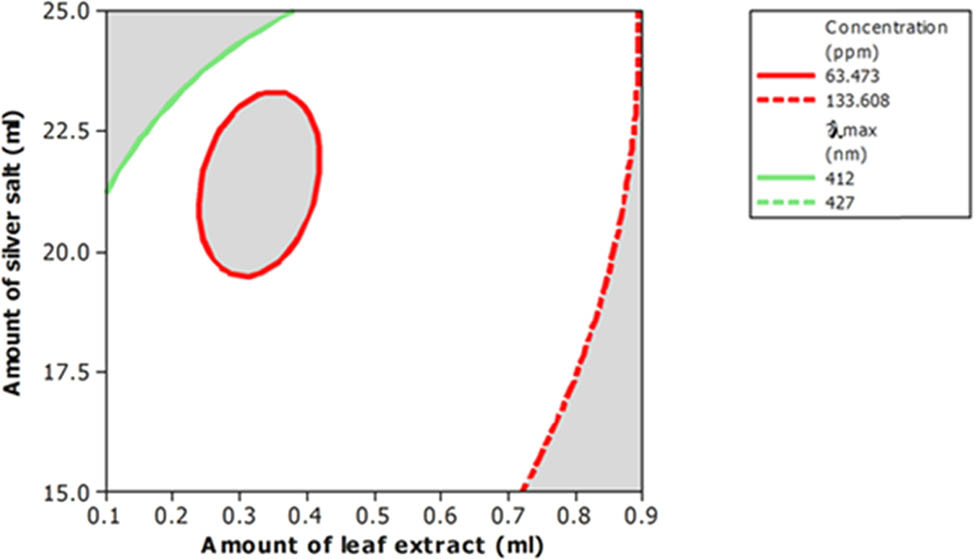
Overlaid contour plot of AgNPs λ max and concentration with acceptable levels as a function of the amount of C. avellana leaf extract and amount of AgNO3 solution.
According to the provided standard curved using several serial dilute solutions of the prepared standard AgNPs colloidal solution, the standard Eq. 3 was obtained as
where C and X are the concentration and the absorbance units at λ max, respectively. As can be clearly observed in Figure 3, the absorbance unit of the diluted solution (one time) containing synthesized AgNPs, using obtained optimum conditions, was 2.62. The obtained results revealed that using the obtained optimum conditions, AgNPs with a concentration of 140 ppm were synthesized. Ahmadi et al. also studied green synthesized AgNPs using Aloe vera leaf extract and reported that the fabricated AgNPs using obtained optimum amount of 1 mM silver salt solution (9 mL) and microwave heating time (360 s) had λ max and concentration of 410 and 64 ppm, respectively [2].
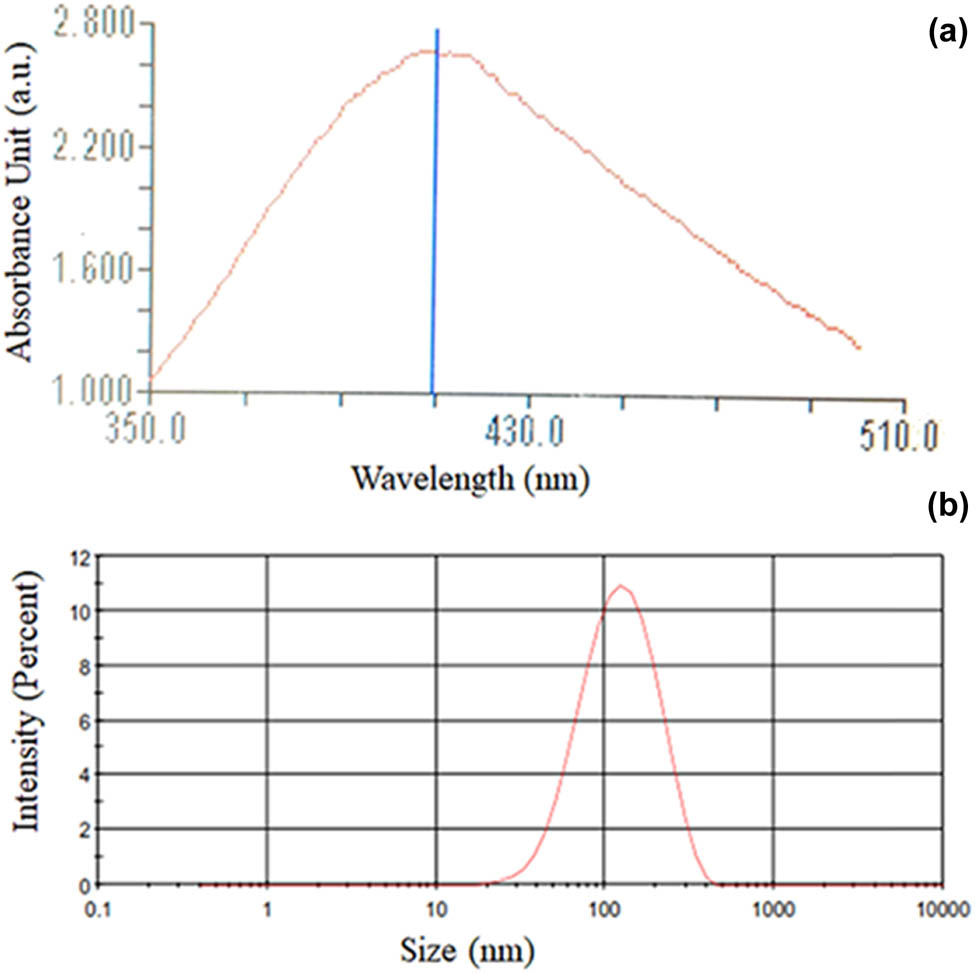
UV-Vis spectra (a) and PSD (b) of the mixture solution containing synthesized AgNPs at optimum synthesis conditions.
3.4 Characteristics of the synthesized AgNPs at obtained optimum conditions
The fabrication of AgNPs was confirmed by the observation of a broad emission peak in the UV-Vis spectra of the colloidal solution containing synthesized AgNPs using obtained optimum conditions (Figure 3a). Furthermore, DLS analysis demonstrated that these NPs had mean particle size, PDI, and zeta potential values of 103.5 nm, 0.209, and −21.8 mV, respectively. The PSDs of the produced AgNPs are shown in Figure 3b. DLS analysis of the synthesized AgNPs using A. vera leaf extract and microwave heating by Ahmadi et al. indicated that the fabricated NPs had particle size and zeta potential values of 46 nm and +15.5 mV, respectively [2]. The small particle size of the AgNPs synthesized by Ahmadi et al., compared to the particle size of the fabricated AgNPs in our study, could be explained by the fact that, by increasing the microwave heating time, the collision rate of the formed NPs increased which reduced the particle size of the AgNPs [3]. The morphology of the fabricated AgNPs at optimum synthesis conditions is presented in Figure 4. As can be observed in the TEM image, the spherical shaped AgNPs were well dispersed in the colloidal solution. The spherical shape could be related to their minimum surface energy and their wide dispersion could be correlated to their high thermodynamic stability, because of the high value of the zeta potential [1,2,3,21].
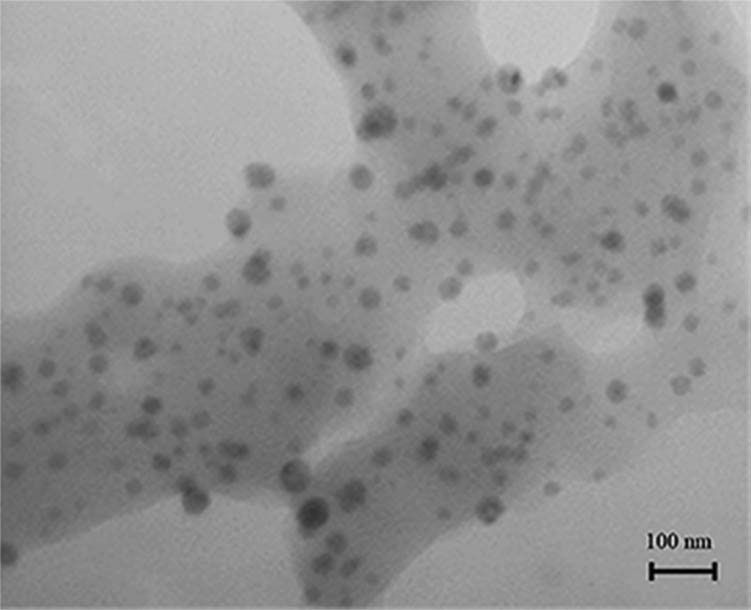
The TEM image of the synthesized AgNPs at obtained optimum synthesis conditions using the C. avellana leaf extract.
3.5 Antifungal activity of the synthesized AgNPs at obtained optimum conditions
The antifungal activity of the synthesized AgNPs using C. avellana leaf extract as manifested in the inhibition of mycelia growth of C. coccodes and P. digitatum is shown in Figure 5. As can be seen in these figures, the synthesized AgNPs using C. avellana leaf extract showed high fungicidal activity against both the selected fungi strains. As can be observed in Figure 5a, after 7 days of incubation, the diameters of the mycelia growth of C. coccodes in the control plate and the one containing PDA and the synthesized AgNPs were 42 and 33 nm, respectively. On the other hand, the diameters of the mycelia growth of P. digitatum in the control plate and the one containing PDA and the synthesized AgNPs were 39 and 16 nm, respectively (Figure 5b). The obtained results revealed that the fabricated AgNPs could effectively inhibit the mycelia growth of P. digitatum compared to that of C. coccodes. In fact, the surface of AgNPs can easily form a layer of water and thus many silver ions can be released from AgNPs into the water. On the other hand, the main composition of the fungus cell membrane is phospholipid bilayers and protein molecules having negative electricity which make the whole cell membrane negatively charged. Therefore, the silver ions with positive electricity have the ability to attach to the cell membrane quickly, which alters or damages their structures [22,23,24]. The obtained results were in line with the finding of Mohammadlou et al. [1]. They found that the synthesized AgNPs using Pelargonium leaf extract, effectively inhibited the growth of Aspergillus flavus and Aspergillus terreus. Jafarizadeh-Malmiri et al. successfully used edible coating based on carboxymethyl cellulose and AgNPs to inhibit the growth of Colletotrichum musae on banana fruit and increased its shelf life [23].
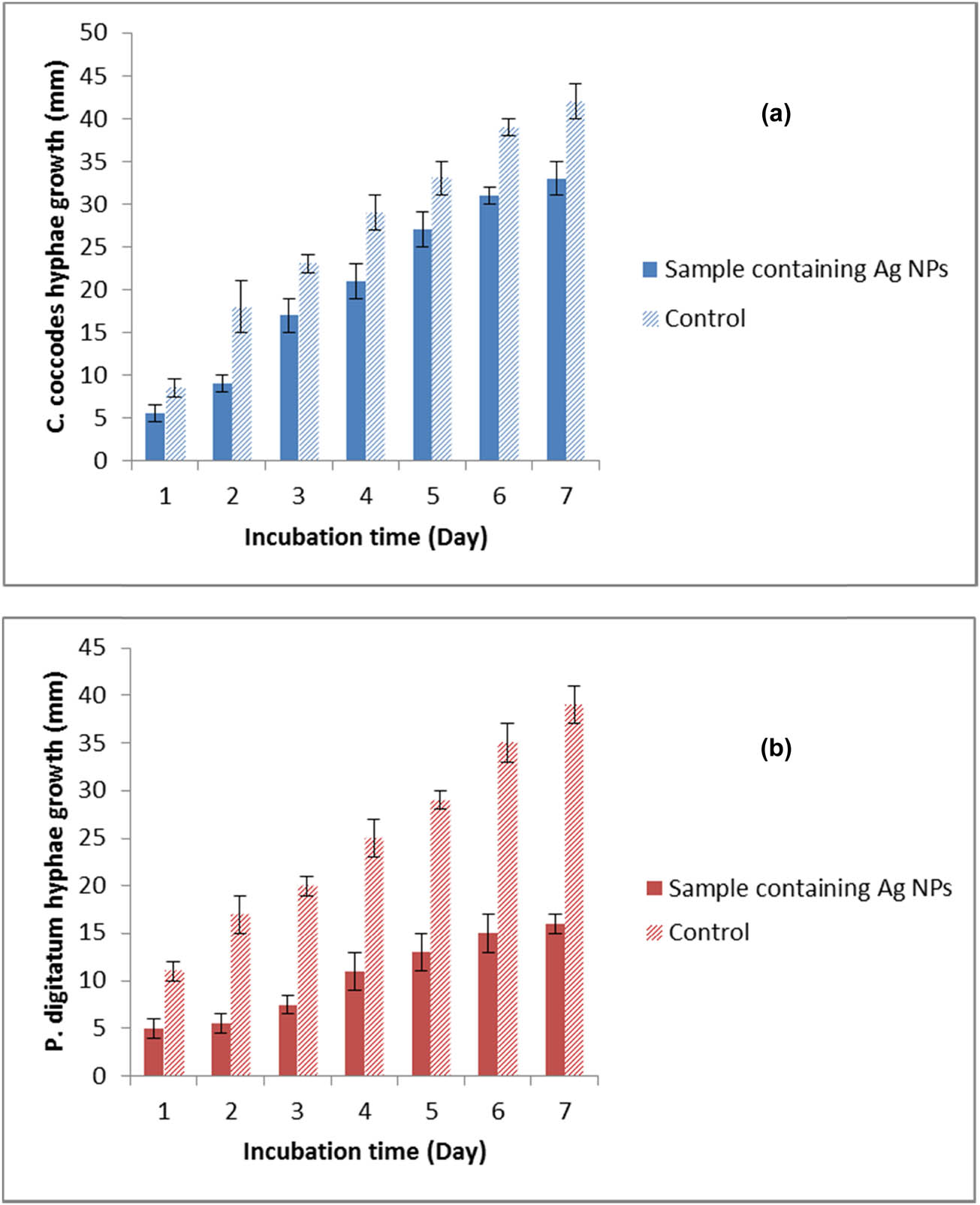
Effect of the synthesized AgNPs on inhibiting the mycelia growth of C. coccodes (a) and P. digitatum (b). Values are mean of the three replicates.
4 Conclusion
The hazelnut leaf extract indicated high reduction potential to reduce silver ions and convert them into AgNPs. Microwave heating could also accelerate the fabrication rate of AgNPs to minimize energy consumption. The obtained results indicated the usefulness of RSM for studying the effects of the synthesis conditions on response variables and their optimization to synthesize spherical AgNPs with more desirable physico-chemical characteristics and high fungicidal activity. The developed intensified synthesis process to fabricate AgNPs, based on using hazelnut leaf extract, microwave heating, and obtained optimum conditions, can be used to synthesize other novel metal and metal oxide NPs. Furthermore, the provided colloidal solutions containing synthesized AgNPs and hazelnut leaf extract can be utilized in various areas that need antimicrobial agents in their products.
Acknowledgments
This study was undertaken with material support from the Najian Herbal Group (Tabriz, Iran). The authors appreciate this support. This study received no specific grant from any funding agency in the public, commercial, or not-for-profit sectors.
-
Funding information: The authors appreciate the Sahand University of Technology and Najian Herbal Group (Tabriz, Iran) for their materials, analyses, and financial support.
-
Author contributions: Mahsa Eshghi: methodology, validation, investigation; Asa Kamali-Shojaei: resources, data curation; Hamideh Vaghari: writing – original draft, visualization; Yahya Najian: data analysis, design of experiments; Zahra Mohebian: statistical analysis; Omid Ahmadi: formal analysis; Hoda Jafarizadeh-Malmiri: writing final manuscript, review and editing, supervision, project administration.
-
Conflict of interest: Authors state no conflict of interest.
-
Data availability statement: All data generated or analyzed during this study are included in this published article.
References
[1] Mohammadlou M, Jafarizadeh-Malmiri H, Maghsoudi H. Hydrothermal green silver nanoparticles synthesis using Pelargonium/Geranium leaf extract and evaluation of their antifungal activity. Green Process Synth. 2017;6:31–42.10.1515/gps-2016-0075Search in Google Scholar
[2] Ahmadi O, Jafarizadeh-Malmiri H, Jodeiri N. Eco-friendly microwave enhanced green silver nanoparticles synthesis using Aloe vera Leaf extract and their physico-chemical and antibacterial studies. Green Process Synth. 2018;7:231–40.10.1515/gps-2017-0039Search in Google Scholar
[3] Torabfam M, Jafarizadeh-Malmiri H. Microwave – enhanced silver nanoparticles synthesis using chitosan biopolymer – optimization of the process conditions and evaluation of their characteristics. Green Process Synth. 2018;7:530–7.10.1515/gps-2017-0139Search in Google Scholar
[4] Eskandari-Nojedehi M, Jafarizadeh-Malmiri H, Rahbar-Shahrouzi J. Hydrothermal biosynthesis of gold nanoparticle using mushroom (Agaricus bisporous) extract: physico-chemical characteristics and antifungal activity studies. Green Process Synth. 2018;7:38–47.10.1515/gps-2017-0004Search in Google Scholar
[5] Eskandari-Nojedehi M, Jafarizadeh-Malmiri H, Rahbar-Shahrouzi J. Optimization of processing parameters in green synthesis of gold nanoparticles using microwave and edible mushroom (Agaricus bisporus) extract and evaluation of their antibacterial activity. Nanotechnol Rev. 2016;5:537–48.10.1515/ntrev-2016-0064Search in Google Scholar
[6] Saravanan M, Barabadi H, Ramachandran B, Venkatraman G, Ponmurugan K. Emerging plant-based anti-cancer green nanomaterials in present scenario. Compr Anal Chem. 2019;87:291–318.10.1016/bs.coac.2019.09.001Search in Google Scholar
[7] Barabadi H, Mojab F, Vahidi H, Marashi B, Talank N, Hosseini O, et al. Green synthesis, characterization, antibacterial, and biofilm inhibitory activity of silver nanoparticles compared to commercial silver nanoparticles. Inorg Chem Commun. 2021;129:108647. 10.1016/j.inoche.2021.108647.Search in Google Scholar
[8] Mohammadlou M, Jafarizadeh-Malmiri H, Maghsoudi H. A review on green silver nanoparticles based on plants: synthesis, potential applications, and eco-friendly approach. Int Food Res J. 2016;23:446–63.Search in Google Scholar
[9] Ilhami Koksal A, Artik N, Simsek A, Gunes N. Nutrient composition of hazelnut (Corylus avellana L.) varieties cultivated in Turkey. Food Chem. 2006;99:509–15.10.1016/j.foodchem.2005.08.013Search in Google Scholar
[10] Ramalhosa E, Delgado T, Estevinho L, Pereira JA. Hazelnut (Corylus avellanaL.) cultivars and antimicrobial activity. In: Preedy VR, Watson RR, Patel VB, editors. Nuts and seeds in health and disease prevention. Massachusetts, United States: Academic Press; 2011. p. 627–36.10.1016/B978-0-12-375688-6.10073-8Search in Google Scholar
[11] Contini M, Frangepane MT, Massantini R. Antioxidants in hazelnut (Corylus avellanaL.). In: Preedy VR, Watson RR, Patel VB, editors. Nuts and seeds in health and disease prevention. Massachusetts, United States: Academic Press; 2011. p. 611–25.10.1016/B978-0-12-375688-6.10072-6Search in Google Scholar
[12] Korkmaz N, Ceylan Y, Taslimi P, Karadağ A, Bülbül AS, Şen F. Biogenic nano silver: synthesis, characterization, antibacterial, antibiofilms, and enzymatic activity. Adv Powder Technol. 2020;31:2942–50.10.1016/j.apt.2020.05.020Search in Google Scholar
[13] Ahdno H, Jafarizadeh-Malmiri H. Development of a sequenced enzymatically pre-treatment and filter pre-coating process to clarify date syrup. Food Bioprod Process. 2017;101:193–204.10.1016/j.fbp.2016.11.008Search in Google Scholar
[14] Anarjan N, Jaberi N, Yeganeh-Zare S, Banafshehchin E, Rahimirad A, Jafarizadeh-Malmiri H. Optimization of mixing parameters for α-tocopherol nanodispersions prepared using solvent displacement method. J Am Oil Chem Soc. 2014;91:1397–405.10.1007/s11746-014-2482-6Search in Google Scholar
[15] Jafari N, Jafarizadeh-Malmiri H, Hamzeh-Mivehroud M, Adibpour M. Optimization of UV irradiation mutation conditions for cellulase production by mutant fungal strains of Aspergillus niger through solid state fermentation. Green Process Synth. 2017;6:333–40.10.1515/gps-2016-0145Search in Google Scholar
[16] Honary S, Barabadi H, Ebrahimi P, Naghibi F, Alizadeh A. Development and optimization of biometal nanoparticles by using mathematical methodology: a microbial approach. J Nano Res. 2015;30:106–5.10.4028/www.scientific.net/JNanoR.30.106Search in Google Scholar
[17] Eskandari-Nojedehi M, Jafarizadeh-Malmiri H, Jafarizad A. Microwave accelerated green synthesis of gold nanoparticles using gum arabic and their physico-chemical properties assessments. Z Phys Chem. 2018;232:325–43.10.1515/zpch-2017-1001Search in Google Scholar
[18] Anarjan N, Jafarizadeh-Malmiri H, Nehdi IA, Sbihi HM, Al-Resayes SI, Tan CP. Effects of homogenization process parameters on physicochemical properties of astaxanthin nanodispersions prepared using a solvent-diffusion technique. Int J Nanomed. 2015;10:1109–18.10.2147/IJN.S72835Search in Google Scholar PubMed PubMed Central
[19] Geoprincy G, Vidhya Srri B, Poonguzhali U, Nagendra Gandhi N, Renganathan S. A review on green synthesis of silver nanoparticles. Asian J Pharm Clin Res. 2012;6:8–11.Search in Google Scholar
[20] Barabadi H, Honary S, Ebrahimi P, Alizadeh A, Naghibi F, Saravanan M. Optimization of myco-synthesized silver nanoparticles by response surface methodology employing Box-Behnken design. Inorg Nano-Met Chem. 2019;49:33–43.10.1080/24701556.2019.1583251Search in Google Scholar
[21] Ghanbari S, Vaghari H, Sayyar Z, Adibpour M, Jafarizadeh-Malmiri H. Autoclave-assisted green synthesis of silver nanoparticles using A. fumigatus mycelia extract and the evaluation of their physico-chemical properties and antibacterial activity. Green Process Synth. 2018;7:217–4.10.1515/gps-2017-0062Search in Google Scholar
[22] Mahdizadeh V, Safaei N, Khelghatibana F. Evaluation of antifungal activity of silver nanoparticles against some phytopathogenic fungi and Trichoderma harzianum. J Crop Prot. 2015;4:291–300.Search in Google Scholar
[23] Jafarizadeh-Malmiri H, Osman A, Tan CP, Abdul Rahman R. Developing new antimicrobial coating formulation based on carboxymethyl cellulose-silver nanoparticles for tropical fruits and an in vitro evaluation of its antimicrobial properties. Proceed Int Postharvest Symp. 2012;2:705–10.10.17660/ActaHortic.2013.1012.94Search in Google Scholar
[24] Abbasian R, Jafarizadeh-Malmiri H. Green approach in gold, silver, and selenium nanoparticles using coffee bean extract. Open Agric. 2020;5:761–7.10.1515/opag-2020-0074Search in Google Scholar
© 2021 Mahsa Eshghi et al., published by De Gruyter
This work is licensed under the Creative Commons Attribution 4.0 International License.
Articles in the same Issue
- Research Articles
- MW irradiation and ionic liquids as green tools in hydrolyses and alcoholyses
- Effect of CaO on catalytic combustion of semi-coke
- Studies of Penicillium species associated with blue mold disease of grapes and management through plant essential oils as non-hazardous botanical fungicides
- Development of leftover rice/gelatin interpenetrating polymer network films for food packaging
- Potent antibacterial action of phycosynthesized selenium nanoparticles using Spirulina platensis extract
- Green synthesized silver and copper nanoparticles induced changes in biomass parameters, secondary metabolites production, and antioxidant activity in callus cultures of Artemisia absinthium L.
- Gold nanoparticles from Celastrus hindsii and HAuCl4: Green synthesis, characteristics, and their cytotoxic effects on HeLa cells
- Green synthesis of silver nanoparticles using Tropaeolum majus: Phytochemical screening and antibacterial studies
- One-step preparation of metal-free phthalocyanine with controllable crystal form
- In vitro and in vivo applications of Euphorbia wallichii shoot extract-mediated gold nanospheres
- Fabrication of green ZnO nanoparticles using walnut leaf extract to develop an antibacterial film based on polyethylene–starch–ZnO NPs
- Preparation of Zn-MOFs by microwave-assisted ball milling for removal of tetracycline hydrochloride and Congo red from wastewater
- Feasibility of fly ash as fluxing agent in mid- and low-grade phosphate rock carbothermal reduction and its reaction kinetics
- Three combined pretreatments for reactive gasification feedstock from wet coffee grounds waste
- Biosynthesis and antioxidation of nano-selenium using lemon juice as a reducing agent
- Combustion and gasification characteristics of low-temperature pyrolytic semi-coke prepared through atmosphere rich in CH4 and H2
- Microwave-assisted reactions: Efficient and versatile one-step synthesis of 8-substituted xanthines and substituted pyrimidopteridine-2,4,6,8-tetraones under controlled microwave heating
- New approach in process intensification based on subcritical water, as green solvent, in propolis oil in water nanoemulsion preparation
- Continuous sulfonation of hexadecylbenzene in a microreactor
- Synthesis, characterization, biological activities, and catalytic applications of alcoholic extract of saffron (Crocus sativus) flower stigma-based gold nanoparticles
- Foliar applications of plant-based titanium dioxide nanoparticles to improve agronomic and physiological attributes of wheat (Triticum aestivum L.) plants under salinity stress
- Simultaneous leaching of rare earth elements and phosphorus from a Chinese phosphate ore using H3PO4
- Silica extraction from bauxite reaction residue and synthesis water glass
- Metal–organic framework-derived nanoporous titanium dioxide–heteropoly acid composites and its application in esterification
- Highly Cr(vi)-tolerant Staphylococcus simulans assisting chromate evacuation from tannery effluent
- A green method for the preparation of phoxim based on high-boiling nitrite
- Silver nanoparticles elicited physiological, biochemical, and antioxidant modifications in rice plants to control Aspergillus flavus
- Mixed gel electrolytes: Synthesis, characterization, and gas release on PbSb electrode
- Supported on mesoporous silica nanospheres, molecularly imprinted polymer for selective adsorption of dichlorophen
- Synthesis of zeolite from fly ash and its adsorption of phosphorus in wastewater
- Development of a continuous PET depolymerization process as a basis for a back-to-monomer recycling method
- Green synthesis of ZnS nanoparticles and fabrication of ZnS–chitosan nanocomposites for the removal of Cr(vi) ion from wastewater
- Synthesis, surface modification, and characterization of Fe3O4@SiO2 core@shell nanostructure
- Antioxidant potential of bulk and nanoparticles of naringenin against cadmium-induced oxidative stress in Nile tilapia, Oreochromis niloticus
- Variability and improvement of optical and antimicrobial performances for CQDs/mesoporous SiO2/Ag NPs composites via in situ synthesis
- Green synthesis of silver nanoparticles: Characterization and its potential biomedical applications
- Green synthesis, characterization, and antimicrobial activity of silver nanoparticles prepared using Trigonella foenum-graecum L. leaves grown in Saudi Arabia
- Intensification process in thyme essential oil nanoemulsion preparation based on subcritical water as green solvent and six different emulsifiers
- Synthesis and biological activities of alcohol extract of black cumin seeds (Bunium persicum)-based gold nanoparticles and their catalytic applications
- Digera muricata (L.) Mart. mediated synthesis of antimicrobial and enzymatic inhibitory zinc oxide bionanoparticles
- Aqueous synthesis of Nb-modified SnO2 quantum dots for efficient photocatalytic degradation of polyethylene for in situ agricultural waste treatment
- Study on the effect of microwave roasting pretreatment on nickel extraction from nickel-containing residue using sulfuric acid
- Green nanotechnology synthesized silver nanoparticles: Characterization and testing its antibacterial activity
- Phyto-fabrication of selenium nanorods using extract of pomegranate rind wastes and their potentialities for inhibiting fish-borne pathogens
- Hydrophilic modification of PVDF membranes by in situ synthesis of nano-Ag with nano-ZrO2
- Paracrine study of adipose tissue-derived mesenchymal stem cells (ADMSCs) in a self-assembling nano-polypeptide hydrogel environment
- Study of the corrosion-inhibiting activity of the green materials of the Posidonia oceanica leaves’ ethanolic extract based on PVP in corrosive media (1 M of HCl)
- Callus-mediated biosynthesis of Ag and ZnO nanoparticles using aqueous callus extract of Cannabis sativa: Their cytotoxic potential and clinical potential against human pathogenic bacteria and fungi
- Ionic liquids as capping agents of silver nanoparticles. Part II: Antimicrobial and cytotoxic study
- CO2 hydrogenation to dimethyl ether over In2O3 catalysts supported on aluminosilicate halloysite nanotubes
- Corylus avellana leaf extract-mediated green synthesis of antifungal silver nanoparticles using microwave irradiation and assessment of their properties
- Novel design and combination strategy of minocycline and OECs-loaded CeO2 nanoparticles with SF for the treatment of spinal cord injury: In vitro and in vivo evaluations
- Fe3+ and Ce3+ modified nano-TiO2 for degradation of exhaust gas in tunnels
- Analysis of enzyme activity and microbial community structure changes in the anaerobic digestion process of cattle manure at sub-mesophilic temperatures
- Synthesis of greener silver nanoparticle-based chitosan nanocomposites and their potential antimicrobial activity against oral pathogens
- Baeyer–Villiger co-oxidation of cyclohexanone with Fe–Sn–O catalysts in an O2/benzaldehyde system
- Increased flexibility to improve the catalytic performance of carbon-based solid acid catalysts
- Study on titanium dioxide nanoparticles as MALDI MS matrix for the determination of lipids in the brain
- Green-synthesized silver nanoparticles with aqueous extract of green algae Chaetomorpha ligustica and its anticancer potential
- Curcumin-removed turmeric oleoresin nano-emulsion as a novel botanical fungicide to control anthracnose (Colletotrichum gloeosporioides) in litchi
- Antibacterial greener silver nanoparticles synthesized using Marsilea quadrifolia extract and their eco-friendly evaluation against Zika virus vector, Aedes aegypti
- Optimization for simultaneous removal of NH3-N and COD from coking wastewater via a three-dimensional electrode system with coal-based electrode materials by RSM method
- Effect of Cu doping on the optical property of green synthesised l-cystein-capped CdSe quantum dots
- Anticandidal potentiality of biosynthesized and decorated nanometals with fucoidan
- Biosynthesis of silver nanoparticles using leaves of Mentha pulegium, their characterization, and antifungal properties
- A study on the coordination of cyclohexanocucurbit[6]uril with copper, zinc, and magnesium ions
- Ultrasound-assisted l-cysteine whole-cell bioconversion by recombinant Escherichia coli with tryptophan synthase
- Green synthesis of silver nanoparticles using aqueous extract of Citrus sinensis peels and evaluation of their antibacterial efficacy
- Preparation and characterization of sodium alginate/acrylic acid composite hydrogels conjugated to silver nanoparticles as an antibiotic delivery system
- Synthesis of tert-amylbenzene for side-chain alkylation of cumene catalyzed by a solid superbase
- Punica granatum peel extracts mediated the green synthesis of gold nanoparticles and their detailed in vivo biological activities
- Simulation and improvement of the separation process of synthesizing vinyl acetate by acetylene gas-phase method
- Review Articles
- Carbon dots: Discovery, structure, fluorescent properties, and applications
- Potential applications of biogenic selenium nanoparticles in alleviating biotic and abiotic stresses in plants: A comprehensive insight on the mechanistic approach and future perspectives
- Review on functionalized magnetic nanoparticles for the pretreatment of organophosphorus pesticides
- Extraction and modification of hemicellulose from lignocellulosic biomass: A review
- Topical Issue: Recent advances in deep eutectic solvents: Fundamentals and applications (Guest Editors: Santiago Aparicio and Mert Atilhan)
- Delignification of unbleached pulp by ternary deep eutectic solvents
- Removal of thiophene from model oil by polyethylene glycol via forming deep eutectic solvents
- Valorization of birch bark using a low transition temperature mixture composed of choline chloride and lactic acid
- Topical Issue: Flow chemistry and microreaction technologies for circular processes (Guest Editor: Gianvito Vilé)
- Stille, Heck, and Sonogashira coupling and hydrogenation catalyzed by porous-silica-gel-supported palladium in batch and flow
- In-flow enantioselective homogeneous organic synthesis
Articles in the same Issue
- Research Articles
- MW irradiation and ionic liquids as green tools in hydrolyses and alcoholyses
- Effect of CaO on catalytic combustion of semi-coke
- Studies of Penicillium species associated with blue mold disease of grapes and management through plant essential oils as non-hazardous botanical fungicides
- Development of leftover rice/gelatin interpenetrating polymer network films for food packaging
- Potent antibacterial action of phycosynthesized selenium nanoparticles using Spirulina platensis extract
- Green synthesized silver and copper nanoparticles induced changes in biomass parameters, secondary metabolites production, and antioxidant activity in callus cultures of Artemisia absinthium L.
- Gold nanoparticles from Celastrus hindsii and HAuCl4: Green synthesis, characteristics, and their cytotoxic effects on HeLa cells
- Green synthesis of silver nanoparticles using Tropaeolum majus: Phytochemical screening and antibacterial studies
- One-step preparation of metal-free phthalocyanine with controllable crystal form
- In vitro and in vivo applications of Euphorbia wallichii shoot extract-mediated gold nanospheres
- Fabrication of green ZnO nanoparticles using walnut leaf extract to develop an antibacterial film based on polyethylene–starch–ZnO NPs
- Preparation of Zn-MOFs by microwave-assisted ball milling for removal of tetracycline hydrochloride and Congo red from wastewater
- Feasibility of fly ash as fluxing agent in mid- and low-grade phosphate rock carbothermal reduction and its reaction kinetics
- Three combined pretreatments for reactive gasification feedstock from wet coffee grounds waste
- Biosynthesis and antioxidation of nano-selenium using lemon juice as a reducing agent
- Combustion and gasification characteristics of low-temperature pyrolytic semi-coke prepared through atmosphere rich in CH4 and H2
- Microwave-assisted reactions: Efficient and versatile one-step synthesis of 8-substituted xanthines and substituted pyrimidopteridine-2,4,6,8-tetraones under controlled microwave heating
- New approach in process intensification based on subcritical water, as green solvent, in propolis oil in water nanoemulsion preparation
- Continuous sulfonation of hexadecylbenzene in a microreactor
- Synthesis, characterization, biological activities, and catalytic applications of alcoholic extract of saffron (Crocus sativus) flower stigma-based gold nanoparticles
- Foliar applications of plant-based titanium dioxide nanoparticles to improve agronomic and physiological attributes of wheat (Triticum aestivum L.) plants under salinity stress
- Simultaneous leaching of rare earth elements and phosphorus from a Chinese phosphate ore using H3PO4
- Silica extraction from bauxite reaction residue and synthesis water glass
- Metal–organic framework-derived nanoporous titanium dioxide–heteropoly acid composites and its application in esterification
- Highly Cr(vi)-tolerant Staphylococcus simulans assisting chromate evacuation from tannery effluent
- A green method for the preparation of phoxim based on high-boiling nitrite
- Silver nanoparticles elicited physiological, biochemical, and antioxidant modifications in rice plants to control Aspergillus flavus
- Mixed gel electrolytes: Synthesis, characterization, and gas release on PbSb electrode
- Supported on mesoporous silica nanospheres, molecularly imprinted polymer for selective adsorption of dichlorophen
- Synthesis of zeolite from fly ash and its adsorption of phosphorus in wastewater
- Development of a continuous PET depolymerization process as a basis for a back-to-monomer recycling method
- Green synthesis of ZnS nanoparticles and fabrication of ZnS–chitosan nanocomposites for the removal of Cr(vi) ion from wastewater
- Synthesis, surface modification, and characterization of Fe3O4@SiO2 core@shell nanostructure
- Antioxidant potential of bulk and nanoparticles of naringenin against cadmium-induced oxidative stress in Nile tilapia, Oreochromis niloticus
- Variability and improvement of optical and antimicrobial performances for CQDs/mesoporous SiO2/Ag NPs composites via in situ synthesis
- Green synthesis of silver nanoparticles: Characterization and its potential biomedical applications
- Green synthesis, characterization, and antimicrobial activity of silver nanoparticles prepared using Trigonella foenum-graecum L. leaves grown in Saudi Arabia
- Intensification process in thyme essential oil nanoemulsion preparation based on subcritical water as green solvent and six different emulsifiers
- Synthesis and biological activities of alcohol extract of black cumin seeds (Bunium persicum)-based gold nanoparticles and their catalytic applications
- Digera muricata (L.) Mart. mediated synthesis of antimicrobial and enzymatic inhibitory zinc oxide bionanoparticles
- Aqueous synthesis of Nb-modified SnO2 quantum dots for efficient photocatalytic degradation of polyethylene for in situ agricultural waste treatment
- Study on the effect of microwave roasting pretreatment on nickel extraction from nickel-containing residue using sulfuric acid
- Green nanotechnology synthesized silver nanoparticles: Characterization and testing its antibacterial activity
- Phyto-fabrication of selenium nanorods using extract of pomegranate rind wastes and their potentialities for inhibiting fish-borne pathogens
- Hydrophilic modification of PVDF membranes by in situ synthesis of nano-Ag with nano-ZrO2
- Paracrine study of adipose tissue-derived mesenchymal stem cells (ADMSCs) in a self-assembling nano-polypeptide hydrogel environment
- Study of the corrosion-inhibiting activity of the green materials of the Posidonia oceanica leaves’ ethanolic extract based on PVP in corrosive media (1 M of HCl)
- Callus-mediated biosynthesis of Ag and ZnO nanoparticles using aqueous callus extract of Cannabis sativa: Their cytotoxic potential and clinical potential against human pathogenic bacteria and fungi
- Ionic liquids as capping agents of silver nanoparticles. Part II: Antimicrobial and cytotoxic study
- CO2 hydrogenation to dimethyl ether over In2O3 catalysts supported on aluminosilicate halloysite nanotubes
- Corylus avellana leaf extract-mediated green synthesis of antifungal silver nanoparticles using microwave irradiation and assessment of their properties
- Novel design and combination strategy of minocycline and OECs-loaded CeO2 nanoparticles with SF for the treatment of spinal cord injury: In vitro and in vivo evaluations
- Fe3+ and Ce3+ modified nano-TiO2 for degradation of exhaust gas in tunnels
- Analysis of enzyme activity and microbial community structure changes in the anaerobic digestion process of cattle manure at sub-mesophilic temperatures
- Synthesis of greener silver nanoparticle-based chitosan nanocomposites and their potential antimicrobial activity against oral pathogens
- Baeyer–Villiger co-oxidation of cyclohexanone with Fe–Sn–O catalysts in an O2/benzaldehyde system
- Increased flexibility to improve the catalytic performance of carbon-based solid acid catalysts
- Study on titanium dioxide nanoparticles as MALDI MS matrix for the determination of lipids in the brain
- Green-synthesized silver nanoparticles with aqueous extract of green algae Chaetomorpha ligustica and its anticancer potential
- Curcumin-removed turmeric oleoresin nano-emulsion as a novel botanical fungicide to control anthracnose (Colletotrichum gloeosporioides) in litchi
- Antibacterial greener silver nanoparticles synthesized using Marsilea quadrifolia extract and their eco-friendly evaluation against Zika virus vector, Aedes aegypti
- Optimization for simultaneous removal of NH3-N and COD from coking wastewater via a three-dimensional electrode system with coal-based electrode materials by RSM method
- Effect of Cu doping on the optical property of green synthesised l-cystein-capped CdSe quantum dots
- Anticandidal potentiality of biosynthesized and decorated nanometals with fucoidan
- Biosynthesis of silver nanoparticles using leaves of Mentha pulegium, their characterization, and antifungal properties
- A study on the coordination of cyclohexanocucurbit[6]uril with copper, zinc, and magnesium ions
- Ultrasound-assisted l-cysteine whole-cell bioconversion by recombinant Escherichia coli with tryptophan synthase
- Green synthesis of silver nanoparticles using aqueous extract of Citrus sinensis peels and evaluation of their antibacterial efficacy
- Preparation and characterization of sodium alginate/acrylic acid composite hydrogels conjugated to silver nanoparticles as an antibiotic delivery system
- Synthesis of tert-amylbenzene for side-chain alkylation of cumene catalyzed by a solid superbase
- Punica granatum peel extracts mediated the green synthesis of gold nanoparticles and their detailed in vivo biological activities
- Simulation and improvement of the separation process of synthesizing vinyl acetate by acetylene gas-phase method
- Review Articles
- Carbon dots: Discovery, structure, fluorescent properties, and applications
- Potential applications of biogenic selenium nanoparticles in alleviating biotic and abiotic stresses in plants: A comprehensive insight on the mechanistic approach and future perspectives
- Review on functionalized magnetic nanoparticles for the pretreatment of organophosphorus pesticides
- Extraction and modification of hemicellulose from lignocellulosic biomass: A review
- Topical Issue: Recent advances in deep eutectic solvents: Fundamentals and applications (Guest Editors: Santiago Aparicio and Mert Atilhan)
- Delignification of unbleached pulp by ternary deep eutectic solvents
- Removal of thiophene from model oil by polyethylene glycol via forming deep eutectic solvents
- Valorization of birch bark using a low transition temperature mixture composed of choline chloride and lactic acid
- Topical Issue: Flow chemistry and microreaction technologies for circular processes (Guest Editor: Gianvito Vilé)
- Stille, Heck, and Sonogashira coupling and hydrogenation catalyzed by porous-silica-gel-supported palladium in batch and flow
- In-flow enantioselective homogeneous organic synthesis
