Diagnostic and therapeutic radioisotopes in nuclear medicine: Determination of gamma-ray transmission factors and safety competencies of high-dense and transparent glassy shields
-
Rabiye Uslu Erdemir
 und
Huseyin Ozan Tekin
und
Huseyin Ozan Tekin

Abstract
We present the findings of an extensive examination on newly designed CdO-rich and transparent glass shields for nuclear medicine facilities in lieu of traditional and unfavorable materials, such as lead and concrete. Gamma-ray transmission factors of newly designed glass shields are determined using a variety of diagnostic, therapeutic, and research radioisotopes, including 67Ga, 57Co, 111In, 201Tl, 99mTc, 51Cr, 131I, 58Co, 137Cs, 133Ba, and 60Co. A general-purpose Monte Carlo code MCNPX (version 2.7.0) is used to determine the attenuation parameters of different material thicknesses. Next, the findings are compared using a standard concrete shielding material. The results indicate that adding more CdO to the glass composition improves the overall gamma-ray attenuation properties. As a result, among the heavy and transparent glasses developed, the C40 sample containing 40% CdO exhibited the best gamma-ray absorption properties against all radioisotopes. Furthermore, the gamma-ray absorption characteristics of this created high-density glass were shown to be better to those of a standard and heavy concrete sample. It can be concluded that the newly developed CdO-rich and transparent glass sample may be used in medical radiation fields where the radioisotopes examined are used in daily clinical and research applications.
1 Introduction
Nuclear medicine is a field of research in which radioisotope-containing medications are used to diagnose and treat diseases [1]. It began in the 1950s with the use of 131-Iodine for thyroid cancer detection and treatment. Nuclear medicine techniques are extremely effective, reliable, and painless. They involve administering a small amount of radioisotope material or radiopharmaceuticals (inorganic compounds labeled with radioisotopes, organic compounds, peptides, proteins, monoclonal antibodies and fragments, and oligonucleotides) to the patient to examine the physiological and molecular processes occurring in the body. On the other hand, gamma-rays generated by radioisotopes administered to patients are detected in nuclear medicine using planar or tomographic technologies, such as gamma camera, single photon emission tomography (SPECT), positron emission tomography (PET), and hybrid systems (SPECT/CT, PET/CT). Diseases are diagnosed using the images generated as a consequence of processing [2,3]. In nuclear imaging, radioisotope-labeled carriers are used as noninvasive diagnostic tools to offer information on the function and structure of tissues and their surroundings [4]. All radioisotopes used in nuclear medicine are synthetic, and they are manufactured in a variety of ways, including fission in the reactor, thermal neutrons in the reactor, generator-made radioisotopes, and cyclotron-produced radioisotopes [1]. Radioisotopes are utilized in nuclear medicine for two purposes, such as therapy and diagnostics. While radioisotopes that generate electromagnetic gamma radiation are utilized for imaging, radioisotopes that are heavier, have a larger ionization energy, and decay by scattering beta- or alpha-rays with a particulate nature are employed for therapy. Meanwhile, nuclear medicine is an intentional exposure to radiation. While ionizing radiation travels through living tissue, it transfers part or all of its energy to the tissue, resulting in recognized detrimental effects on live creatures at low to high exposure levels. These are stochastic (cancer, mutations) and deterministic (tissue responses) consequences (such as dermatitis, cataract). It is critical to maintain radiation workers and the general public’s exposure to radiation below safe dosage limits to avoid undiscovered negative consequences. ALARA (as low a dose as reasonably attainable) and ALARP (as low a dose as reasonably practical) principles, as well as dosage limitations established for the profession and society by international and national atomic energy institutes, and radiation safety legislation, should be obeyed [3]. With the introduction of novel targeted radioisotopes for treatment, particularly for malignant disorders, radioisotope therapy is increasingly used in nuclear medicine clinics [4]. As a result, while building nuclear medicine units, certain objectives should be defined based on time, distance, and shielding parameters to minimize radiation exposure to both personnel and patients. These objectives include assuring the safety of radioactive sources, maximizing employee, patient, and public exposure, maintaining complete control over radioisotope/radiopharmaceutical activities, and avoiding contamination spread [5,6,7]. Therefore, the scientific community has concentrated on developing next-generation shielding materials that may provide certain advantages over conventional shielding materials in terms of avoiding those shortcomings. In this study, we presented the findings of a complete examination of newly designed CdO-rich and transparent glass shields for usage in nuclear medicine facilities in lieu of traditional and unfavorable materials, such as lead (Pb) and concrete. Gamma-ray transmission factors (TFs) of newly designed glass shields are determined using a variety of diagnostic, therapeutic, and research radioisotopes, including 67Ga, 57Co, 111In, 201Tl, 99mTc, 51Cr, 131I, 58Co, 137Cs, 133Ba, and 60Co. The study’s findings may provide key information for optimizing shielding materials used to protect personnel and patients in units, such as nuclear medicine, that utilize medical radiation sources.
2 Materials and methods
2.1 Investigated glassy shields
Cd-doped glasses were effectively fabricated using the melt-quenching process and a range of CdO compositions (x = 0, 15, 20, 30, and 40 mol%) (see Table 1). Each oxidized chemical was separately weighed using a high-precision scale. The platinum crucible containing the solution was heated to very high temperatures during the synthesis of glass shields. The high-temperature furnace was permitted to warm up to 900°C from room temperature for the first 60 min of the procedure. Mechanical stirring was performed every 15 min throughout this time period. Each glass sample was annealed for about an hour at 380–385°C and then cooled back to room temperature (Figure 1).
Glass codes, glass compositions, thickness, and density values of glasses
| Code | P2O5 (mol%) | TeO2 (mol%) | ZnO (mol%) | CdO (mol%) | Density (g/cm3) | Thickness (mm) |
|---|---|---|---|---|---|---|
| C0 | 20 | 30 | 50 | — | 4.41970 | 2.637 |
| C15 | 20 | 30 | 35 | 15 | 4.65192 | 2.678 |
| C20 | 20 | 30 | 30 | 20 | 4.72403 | 2.66 |
| C30 | 20 | 30 | 20 | 30 | 4.87138 | 2.785 |
| C40 | 20 | 30 | 10 | 40 | 5.01752 | 2.447 |
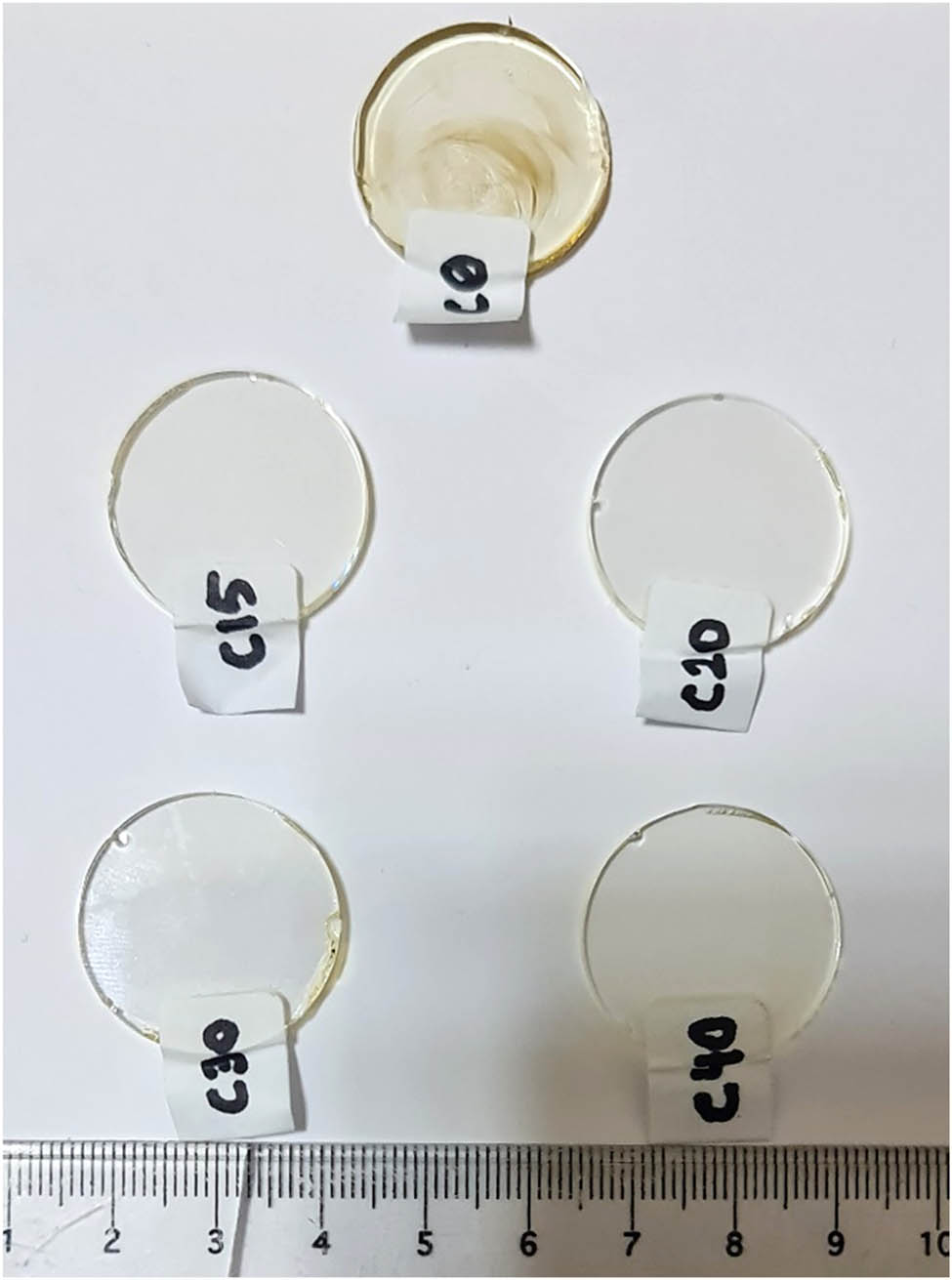
Synthesized glass series.
2.2 Calculation of gamma-ray TFs
The absorption characteristics of materials intended for use in fields containing medical radiation, such as nuclear medicine and diagnostic radiology, against gamma-rays are significant. The reason for this is the exposure that personnel working in such environments may face when dealing with the associated radiation sources, as well as the deterministic and stochastic impacts, which this exposure may have in the short and long terms [8,9,10,11,12,13,14]. The TF [15,16,17] is a critical shielding metric that is derived using the percent reduction of primary gamma-ray radiation incident on a material. It demonstrates the length dependency of the gamma-ray transmission process. Calculating TF values for a single material offers information on the degree of absorption provided by that material, while studying it for a group of materials provides critical information about the effect of changing material content on this transition factor. Thus, the direct influence of manufacturing modifications on the absorption characteristics is also well recognized. In this study, the absorption properties of CdO-based and high-density glass materials produced against some diagnostic and therapeutic radioisotopes (see Table 2) were investigated for different energies and different material thicknesses and compared with some conventional shielding materials within the framework of the same parameters. The general-purpose radiation transport code MCNPX [18] operating with the Monte Carlo simulation method was used to calculate the TF values. First, the glass structures produced were defined according to the elemental properties given in Table 1 in the INPUT file of the MCNPX code, and their respective densities were included in the INPUT file. Then, by defining two detection areas of equal size directly in front of and behind the absorber material, fluxes of primary and secondary gamma-rays were obtained. This operation is done with the F4 definition of the MCNPX code. Finally, a source with point isotropic behaviors was located at a point before the absorber glass material and the first detection area (see Figure 2). For each simulation cycle, the source description and hence the characteristic gamma-ray energy were determined. Meanwhile, 108 particle counts were generated for each simulation cycle through random event generator of MCNPX. At the end of the simulation processes, the relative error rates from the OUTPUT file were observed to be less than 1%. MCNPX simulations were performed using the D00205ALLCP03 MCNPXDATA package is included of DLC-200/MCNPDATA cross-section libs (Figure 1).
Radioisotopes and gamma-ray energies used for gamma-ray TF calculations
| Radioisotope | Gamma-ray energy (MeV) |
|---|---|
| 67Ga | 0.0086, 0.0093, 0.1840 |
| 57Co | 0.0144, 0.1221, 0.1365 |
| 111In | 0.0230, 0.1710, 0.2450 |
| 133Ba | 0.0532, 0.0796, 0.0810, 0.2764, 0.3029, 0.3560, 0.3838 |
| 201Tl | 0.0710, 0.1350, 0.1670 |
| 99mTc | 0.1405 |
| 51Cr | 0.3201 |
| 131I | 0.2843, 0.3645, 0.6370, 0.7229 |
| 58Co | 0.5110, 0.8108 |
| 137Cs | 0.6617 |
| 60Co | 1.1732, 1.3325 |
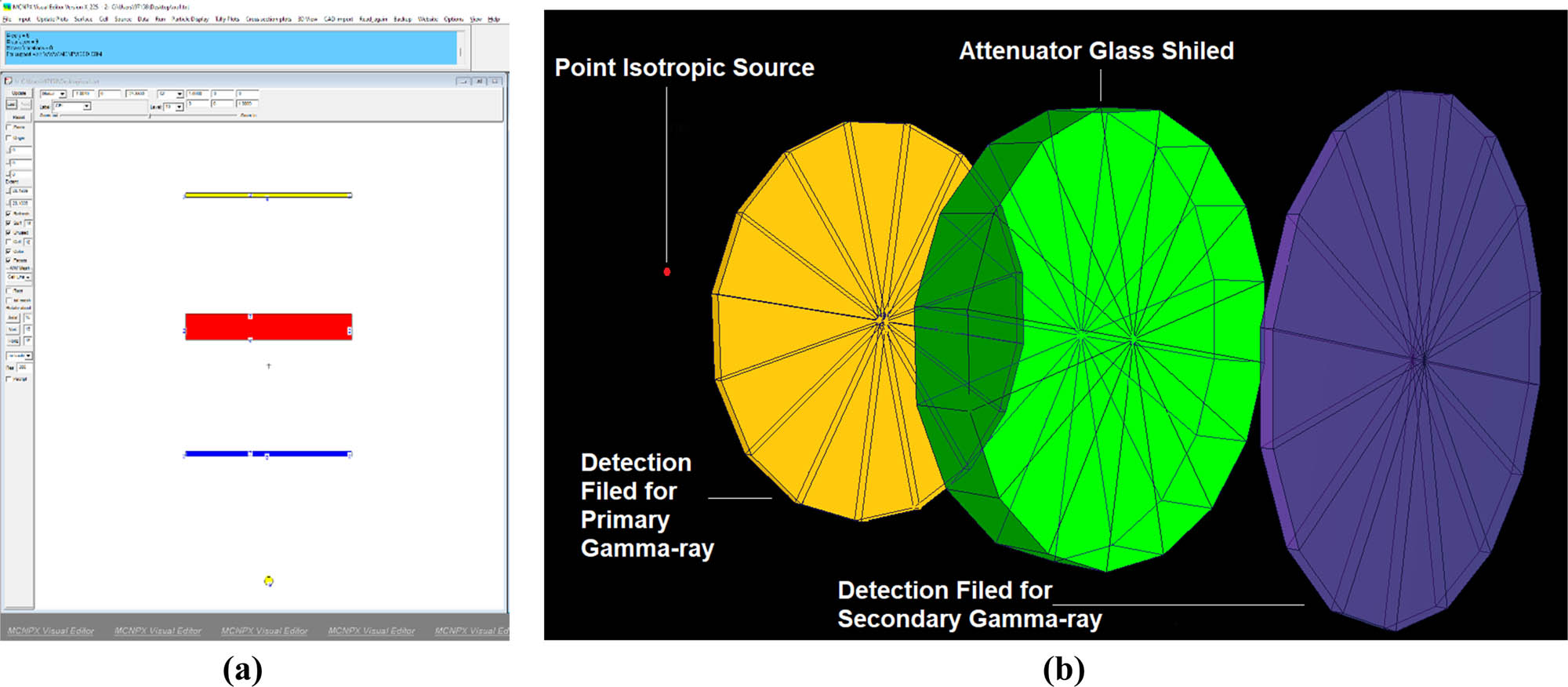
(a) 2-D view of designed MCNPX simulation setup. (b) 3-D illustration of designed MCNPX setup (2-D and 3-D views are obtained from MCNPX Visual Editor VisedX22S).
3 Results and discussions
The TF values of the fabricated glass materials were calculated for 0.5, 1.5, 2.5, and 3 cm thicknesses as a function of the gamma-ray values emitted from different radioisotopes. Figure 3 depicts the TFs of investigated glasses and steel-magnetite concrete as a function of used radioisotope energy (MeV) at different glass thicknesses. As can be seen from the figure, the amount of the transmitted gamma-rays that all for glass samples and the conventional shielding materials (i.e., reinforced concrete) increased depending on the increasing radioisotope energy at all material thicknesses. Behaviorally, the common attitudes of all materials is the low transmission rate observed at low gamma-ray energies. This is due to the limited penetrating capability of low energy gamma-rays. On the other hand, for the same energy value, a certain TF value difference was observed proportionately between the material with the lowest thickness and the material with the highest thickness. This may be explained by the fact that the primary gamma-ray that penetrates the thin material does not undergo complete energy absorption. On the other hand, obtaining the lowest TF value at 3 cm, which is the thickest value for the same energy value, can be explained by the primary gamma-ray’s first interaction and subsequent interactions in the material occurring at a sufficiently large thickness and simply left the material with minimal quantitative values. As a consequence, the TF values for the radioisotope energies utilized in the glass samples and the concrete material used as the reference material were lowest at low energies and high thicknesses. In the largest context, this situation is linked to the penetrating qualities of gamma-rays [19,20,21,22], and no abnormal behavior tendencies have been identified. As the second step of TF value assessment, the TF values of glass and concrete samples were compared for identical thickness values, and the material with the lowest TF value and hence the best absorption characteristics was determined. Figure 4 depicts the comparison of the TFs as a function of used radioisotope energy (MeV) for different glass thicknesses and concrete. Figure 4 also quantitatively depicts the particular gamma-ray TF behavior of all materials investigated and compared at the same thickness. The TF value of the C series glasses fabricated according to the data obtained in this phase of the investigation is proportional to the ratio of CdO added to the glass at a certain thickness. Among the glass samples developed, the C40 sample with the greatest CdO doping ratio and densest structure exhibited the lowest TF values throughout the thickness range. This may be attributed to the positive contribution of the maximum CdO solid’s density rise to the gamma-ray absorption qualities. Meanwhile, the C40 sample’s TF values are lower than those of the concrete with additives. This demonstrates that these next-generation materials, which outperform the absorption capabilities of currently used heavy-mixed concrete, may be employed for identical reasons. In the last comparison stage of the study, the half value layer (HVL) values of all C series glasses were compared with the reinforced concrete material. Figure 5 depicts the variations of HVL (cm) with photon energy (MeV) for all C0–C8 glasses and concrete. A material’s HVL value may be defined for a given photon energy [23]. The HVL value is the material thickness necessary to quantitatively lower the intensity of photons at the relevant energy using that material [24,25,26,27,28,29,30,31,32,33,34,35]. Thus, the fact that the HVL value is low for a given photon energy value is a significant pattern of the material’s exceptional absorption capabilities. As seen in the figure, the C40 sample had the lowest possible HVL values at all energy levels. As a result, employing C40 samples instead of traditional concrete shields may be advantageous in terms of physical space requirements and space costs.
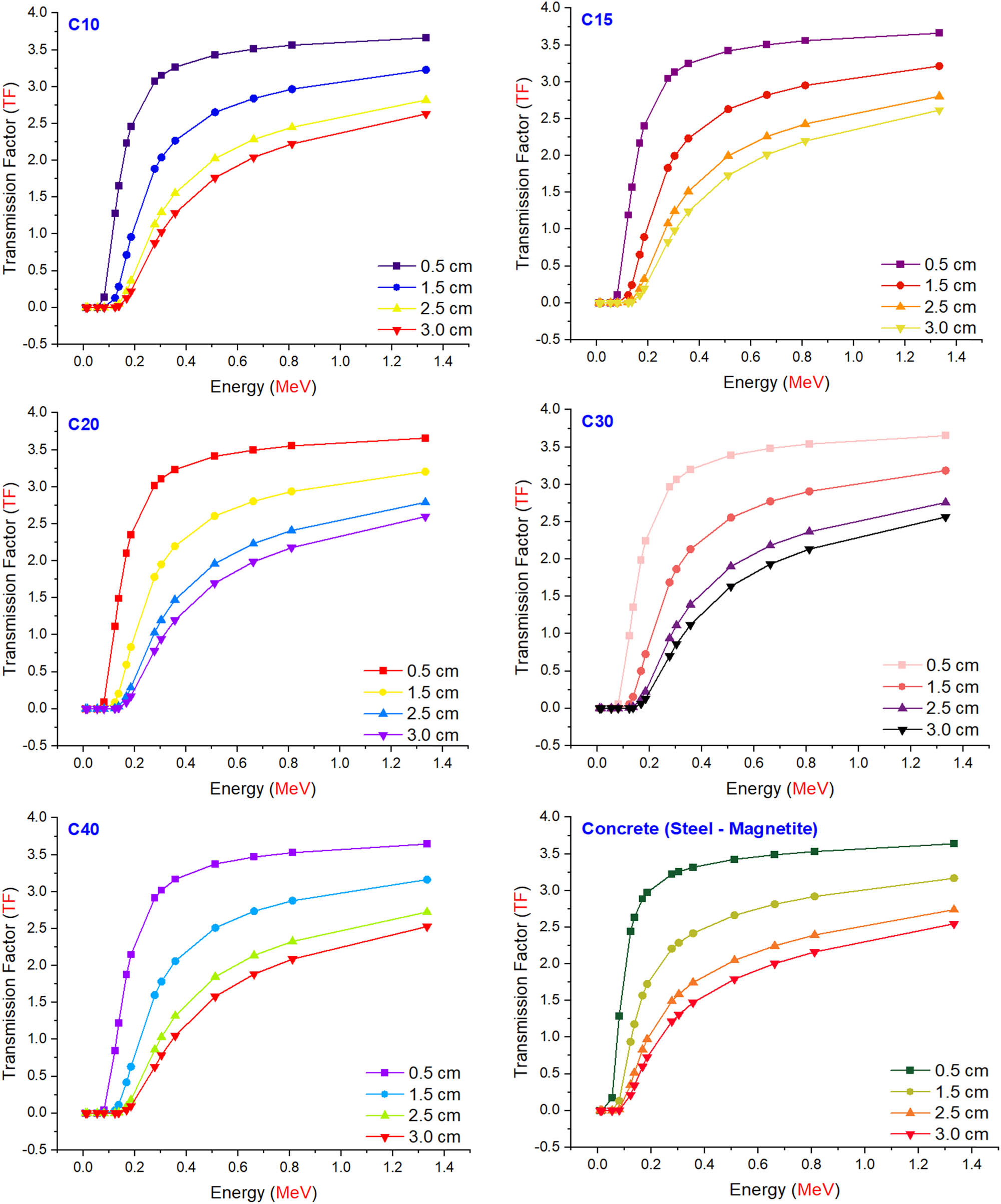
TFs of investigated glasses and steel-magnetite concrete as a function of used radioisotope energy (MeV) at different glass thicknesses.
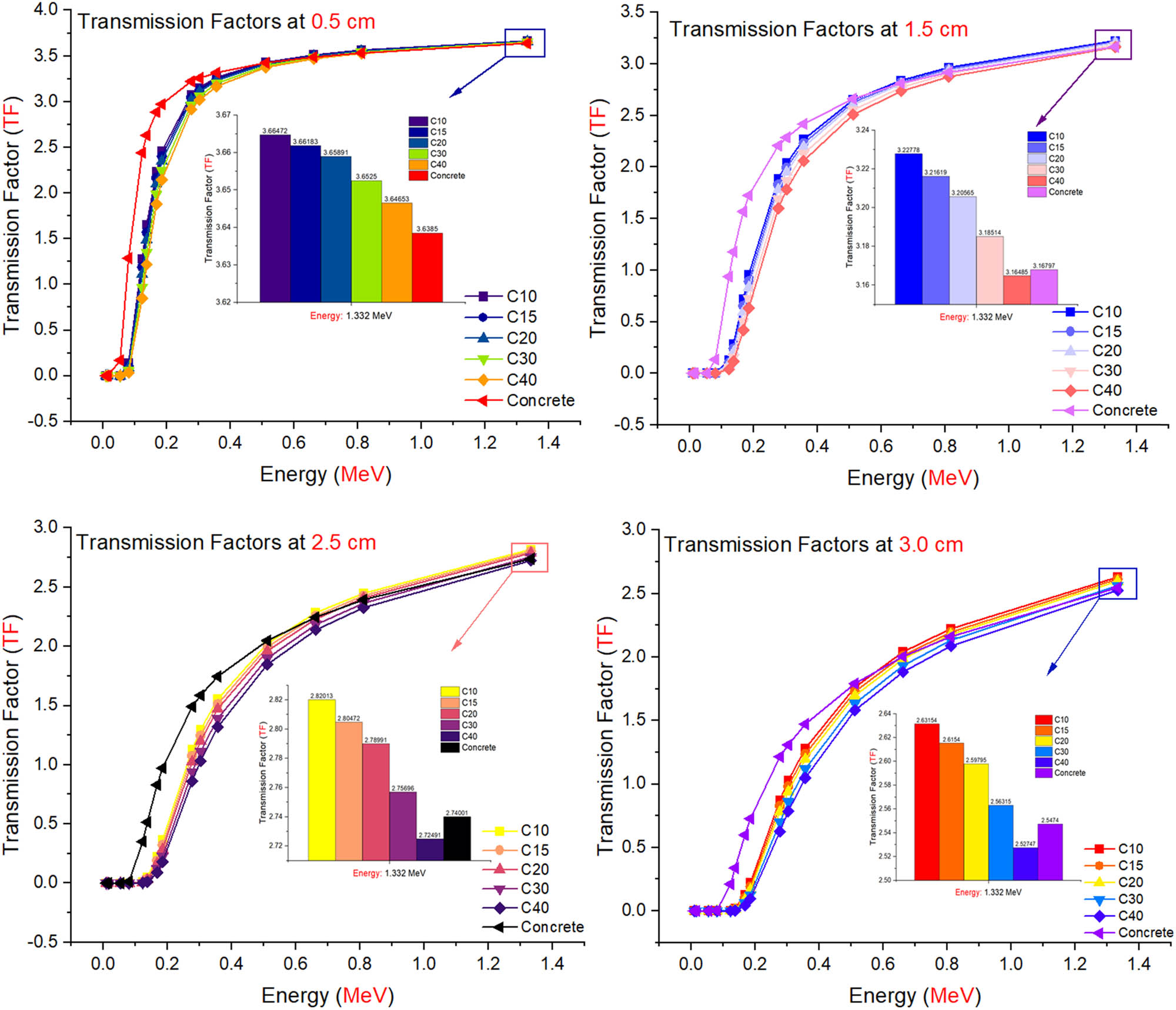
Comparison of the TFs as a function of used radioisotope energy (MeV) for different glass thicknesses and concrete.
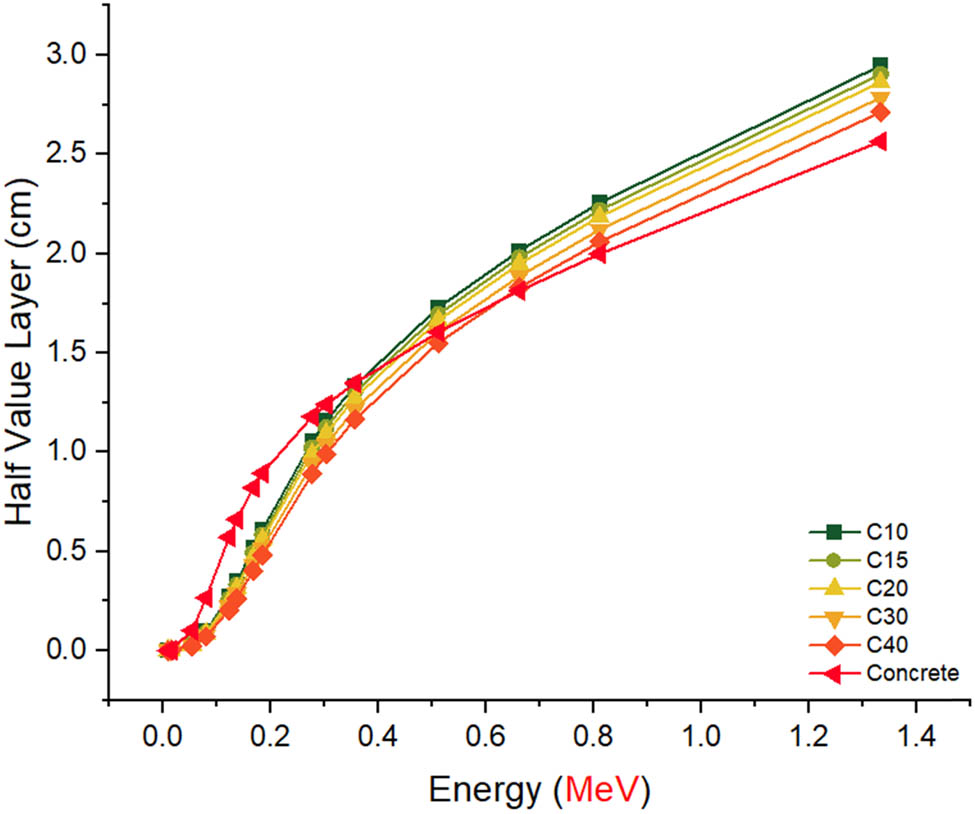
Variations of half value layer (cm) with photon energy (MeV) for all C0–C8 glasses and concrete.
4 Conclusion
One of the challenges that researchers have focused on in recent years is developing alternative, ecologically acceptable, nontoxic, and low-cost materials to substitute Pb and concrete in equipment and structural designs used in medical and industrial radiation applications. Currently, some specialized glasses are employed in a variety of configurations for a variety of purposes in nuclear and diagnostic radiology facilities. Our primary goal in this research was to observe the absorption differences across a broad radioisotope energy range caused by structural changes in the glass composition accompanied by certain chemical modifications and to investigate the relationship between these differences and the chemical modifications. The TF values of glasses synthesized utilizing the distinctive gamma-ray energies of a variety of therapeutic, diagnostic, and research radioisotopes, such as Barium, were determined for this purpose. The findings indicate that the linearly increasing CdO ratio in such a glass composition contributes positively to all gamma-ray energies. As a consequence, the C40 sample containing 40% CdO was shown to have the best absorption characteristics among the heavy and thick glasses prepared. More importantly, the gamma-ray absorption properties of this high-density glass manufactured were shown to be superior to those of conventional and heavy concrete sample. The critical point is that the transparency of the C40 sample, which exhibits superior qualities to conventional materials, allows for viewing of the radioactive source and prompt identification of any contamination that may occur, allowing required measures to be taken. Nevertheless, implementing the outcomes of this research in practice and expanding the allowable CdO additive quantity to greater levels may be a few critical future studies that may be recommended to scientific community.
Acknowledgments
This work was performed under Princess Nourah bint Abdulrahman University Researchers Supporting Project Number (PNURSP2022R149), Princess Nourah bint Abdulrahman University, Riyadh, Saudi Arabia. Authors express their sincere gratitude to Princess Nourah bint Abdulrahman University.
-
Funding information: This study was supported by Princess Nourah bint Abdulrahman University Researchers Supporting Project Number (PNURSP2022R149).
-
Author contributions: Methodology: H.O.T., R.U.E., H.M.H.Z., S.A.M.I., and G.K; software: H.O.T., G.A., H.M.H.Z., and A.E.; validation: S.A.M.I., R.U.E., and A.E.; formal analysis: G.K., D.S.B., H.M.H.Z., and R.U.E.; investigation: G.K. and H.O.T.; resources: G.K., G.A., and H.O.T.; data curation: S.A.M.I. and A.E.; writing – original draft preparation: H.O.T., G.S., G.L., Y.S.R., and G.A; writing – review and editing: H.M.H.Z., S.A.M.I., and A.E.; visualization: D.S.B. and G.K.; supervision: H.M.H.Z. and G.A.; project administration: H.O.T. and R.U.E.; funding acquisition: A.E. (The authors thank the “Dunarea de Jos” University of Galati, Romania, for the APC support.) All authors have read and agreed to the published version of the manuscript.
-
Conflict of interest: The authors declare no conflict of interest.
-
Ethical approval: The conducted research is not related to either human or animal use.
-
Data availability statement: The data presented in this study are available on request from the corresponding author.
References
[1] Fahey FH, Goodking A, Treves ST, Grant FD. Nuclear medicine and radiation protection. J Radiol Nurs. 2016;35(1):5–11.10.1016/j.jradnu.2015.12.005Suche in Google Scholar
[2] Treves ST, Fahey FH. Dose optimization in pediatric nuclear medicine. Pediatric Nuclear Medicine and Molecular Imaging. New York: Springer; 2014. pp. 683–94.10.1007/978-1-4614-9551-2_31Suche in Google Scholar
[3] Başağaoğlu I. History of cerrahpasa nuclear medicine branch. Turkish J Nucl Med. 1994;3(4):141–4.Suche in Google Scholar
[4] Cutler CS, Lewis JS, Anderson CJ. Utilization of metabolic, transport and receptor-mediated processes to deliver agents for cancer diagnosis. Adv Drug Deliv Rev. 1999 Apr;37(1–3):189–211.10.1016/S0169-409X(98)00093-3Suche in Google Scholar
[5] Radiation protection and safety of radiation sources: international basic safety standards. IAEA Gen Saf Requir. 2014;3:10–1.Suche in Google Scholar
[6] Lukoff J, Olmos J. Minimizing medical radiation exposure by incorporating a new radiation “Vital Sign” into the electronic medical record: Quality of Care and Patient Safety. Perm J. 2017;21:17-007. 10.7812/TPP/17-007.Suche in Google Scholar PubMed PubMed Central
[7] Applying radiation safety standards in nuclear medicine. Safety reports series no. 40. Vienna: IAEA; 2005.Suche in Google Scholar
[8] Relative biological effectiveness (RBE), radiation weighting factor (wR), and quality factor (Q) ICRP Publication 92 (Ann. ICRP 33 (4)); 2003.Suche in Google Scholar
[9] Abuzaid MM, Elshami W, Hasan H. Knowledge and adherence to radiation protection among healthcare workers at operation theater. Asian J Sci Res. 2018;12(1):54–9.10.3923/ajsr.2019.54.59Suche in Google Scholar
[10] Elshami W, Uslu Erdemir R, Abuzaid MM, Cavli B, Issa B, Tekin HO. Occupational radiation dose assessment for nuclear medicine workers in Turkey: A comprehensive investigation. J King Saud Univ Sci. 2002;34:102005. 10.1016/j.jksus.2022.102005.Suche in Google Scholar
[11] Adliene D, Griciene B, Skovorodko K, Laurikaitiene J, Puiso J. Occupational radiation exposure of health professionals and cancer risk assessment for Lithuanian nuclear medicine workers. Env Res. 2020 Apr;183:109144.10.1016/j.envres.2020.109144Suche in Google Scholar PubMed
[12] Al-Abdulsalam A, Brindhaban A. Occupational radiation exposure among the staff of departments of nuclear medicine and diagnostic radiology in Kuwait. Med Princ Pract. 2014;23(2):129–33.10.1159/000357123Suche in Google Scholar PubMed PubMed Central
[13] Elshami W, Abuzaid M, Piersson AD, Mira O, AbdelHamid M, Zheng X, et al. Occupational dose and radiation protection practice in uae: a retrospective cross-sectional cohort study (2002–2016). Radiat Prot Dosimetry. 2019 Dec;187(4):426–37.10.1093/rpd/ncz184Suche in Google Scholar PubMed
[14] Elshami W, Abuzaid M, Pekkarinen A, Kortesniemi M. Estimation of occupational radiation exposure for medical workers in radiology and cardiology in the United Arab Emirates: nine hospitals experience. Radiat Prot Dosimetry. 2020 Jul;189(4):466–74.10.1093/rpd/ncaa060Suche in Google Scholar PubMed
[15] Elshami W, Akudjedu TN, Abuzaid M, David LR, Tekin HO, Cavli B, et al. The radiology workforce’s response to the COVID-19 pandemic in the Middle East, North Africa and India. Radiography. 2021 May;27(2):360–8.10.1016/j.radi.2020.09.016Suche in Google Scholar PubMed PubMed Central
[16] Almatari M, Agar O, Altunsoy E, Kilicoglu O, Sayyed M, Tekin HO. Photon and neutron shielding characteristics of samarium doped lead alumino borate glasses containing barium, lithium and zinc oxides determined at medical diagnostic energies. Results Phys. 2019;12:2123–8.10.1016/j.rinp.2019.01.094Suche in Google Scholar
[17] Tekin HO, ALMisned G, Rammah YS, Susoy G, Ali FT, Baykal DS, et al. Mechanical properties, elastic moduli, transmission factors, and gamma-ray-shielding performances of Bi2O3–P2O5–B2O3–V2O5 quaternary glass system. Open Chem. 2022;20(1):314–29.10.1515/chem-2022-0145Suche in Google Scholar
[18] Computer Code Collection RS. In MCNPX’User’s Manual Version 2.4.0. In Monte Carlo N-Particle Transport Code System for Multiple and High Energy Applications; Oak Ridge National Laboratory: Oak Ridge, TN, USA; Advanced Accelerator Applications Los Alamos National Laboratory: Los Alamos, NM, USA; 2002.Suche in Google Scholar
[19] Zhukovsky M, Koubisy MS, Zakaly HM, Ali AS, Issa SA, Tekin HO. Dielectric, structural, optical and radiation shielding properties of newly synthesized CaO–SiO2–Na2O–Al2O3 glasses: experimental and theoretical investigations on impact of Tungsten (III) oxide. Appl Phys, A Mater Sci Process. 2022;128(3):205.10.1007/s00339-022-05328-zSuche in Google Scholar
[20] Tekin HO, Susoy G, Issa SA, Ene A, ALMisned G, Rammah YS, et al. Heavy Metal Oxide (HMO) glasses as an effective member of glass shield family: A comprehensive characterization on gamma ray shielding properties of various structures. J Mater Res Technol. 2022;18:231–44.10.1016/j.jmrt.2022.02.074Suche in Google Scholar
[21] Deliormanlı AM, Ensoylu M, Issa SA, Rammah YS, ALMisned G, Tekin HO. A thorough examination of gadolinium (III)‑containing silicate bioactive glasses: synthesis, physical, mechanical, elastic and radiation attenuation properties. Appl Phys, A Mater Sci Process. 2022;128(4):266.10.1007/s00339-022-05408-0Suche in Google Scholar
[22] Rammah YS, Issa SA, Tekin HO, Badawi A, Ene A, Zakaly HM. Binary contributions of Dy3 + ions on the mechanical and radiation resistance properties of oxyfluoroborotellurite Dyx-glasses. J Mater Res Technol. 2022;18:820–9.10.1016/j.jmrt.2022.03.005Suche in Google Scholar
[23] Tekin HO, ALMisned G, Issa SA, Zakaly HM. A rapid and direct method for half value layer calculations for nuclear safety studies using MCNPX Monte Carlo code. Nucl Eng Technol. (2022) In Press. 10.1016/j.net.2022.03.037.Suche in Google Scholar
[24] Lakshminarayana G, Tekin HO, Dong MG, Al-Buriahi MS, Lee DE, Yoon J, et al. Comparative assessment of fast and thermal neutrons and gamma radiation protection qualities combined with mechanical factors of different borate-based glass systems. Results Phys. 2022;37:105527.10.1016/j.rinp.2022.105527Suche in Google Scholar
[25] Akkurt I, Tekin HO. Radiological parameters for bismuth oxide glasses using phy-X/PSD Software. Emerg Mater Res. 2020:9(3):1020–102. 10.1680/jemmr.20.00209.Suche in Google Scholar
[26] Ozge Kilicoglu HO. Tekin. Bioactive glasses and direct effect of increased K2O additive for nuclear shielding performance: A comparative investigation. Ceram Int. 2020;46(2):1323–33.10.1016/j.ceramint.2019.09.095Suche in Google Scholar
[27] Lakshminarayana G, Kumar A, Tekin HO, Issa SA, Al-Buriahi MS, Dong MG, et al. Illustration of distinct nuclear radiation transmission factors combined with physical and elastic characteristics of barium boro-bismuthate glasses. Results Phys. 2021;105067:105067.10.1016/j.rinp.2021.105067Suche in Google Scholar
[28] Tekin HO, Issa SA, Mahmoud KA, El-Agawany FI, Rammah YS, Susoy G, et al. Nuclear Radiation Shielding Competences of Barium (Ba) Reinforced Borosilicate Glasses. Emerg Mater Res. 2020,4:1–12. 10.1680/jemmr.20.00185.Suche in Google Scholar
[29] Lakshminarayana G, Kumar A, Tekin HO, Issa SA, Al-Buriahi MS, Dong MG, et al. In-depth survey of nuclear radiation attenuation efficacies for high density bismuth lead borate glass system. Results Phys. 2021;23:104030.10.1016/j.rinp.2021.104030Suche in Google Scholar
[30] Hesham MH, Zakaly HA, Issa SA, Rashad M, Elazaka AI, Tekin HO, et al. Alteration of optical, structural, mechanical durability and nuclear radiation attenuation properties of barium borosilicate glasses through BaO reinforcement: experimental and numerical analyses. Ceram Int. 2021;47(4):5587–96.10.1016/j.ceramint.2020.10.143Suche in Google Scholar
[31] Kumar A, Gaikwad DK, Obaid SS, Tekin HO, Agar O, Sayyed MI. Experimental studies and Monte Carlo simulations on gamma ray shielding competence of (30 + x)PbOe10WO3e 10Na2O−10MgO – (40-x)B2O3 glasses. Prog Nucl Energy. 2019;119:103047.10.1016/j.pnucene.2019.103047Suche in Google Scholar
[32] Mahmoud IS, Issa SA, Saddek YB, Tekin HO, Kilicoglu O, Alharbi T, et al. Gamma, neutron shielding and mechanical parameters for vanadium lead vanadate glasses. Ceram Int. 2019;45:14058–72.10.1016/j.ceramint.2019.04.105Suche in Google Scholar
[33] Uosif MA, Mostafa AM, Issa SA, Tekin HO, Alrowaili ZA, Kilicoglu OJ. Structural, mechanical and radiation shielding properties of newly developed tungstenlithium borate glasses: an experimental study. J Non-Cryst Solids. 2020;532:119882.10.1016/j.jnoncrysol.2019.119882Suche in Google Scholar
[34] Tekin HO, Issa SAM, Mahmoud KA, El-Agawany FI, Rammah YS, Susoy G, et al. Nuclear radiation shielding competences of Barium (ba) reinforced borosilicate glasses. Emerg Mater Res. 2020,4:1–12. 10.1680/jemmr.20.00185.Suche in Google Scholar
[35] Kurtulus R, Kavas T, Akkurt I, Gunoglu K, Tekin HO, Kurtulus C. A comprehensive study on novel alumino-borosilicate glass reinforced with Bi2O3 for radiation shielding applications: synthesis, spectrometer, XCOM, and MCNP-X works. J Mater Sci Mater Electron. 2021;32(10):13882–96.10.1007/s10854-021-05964-wSuche in Google Scholar
© 2022 Rabiye Uslu Erdemir et al., published by De Gruyter
This work is licensed under the Creative Commons Attribution 4.0 International License.
Artikel in diesem Heft
- Regular Articles
- Photocatalytic degradation of Rhodamine B in aqueous phase by bimetallic metal-organic framework M/Fe-MOF (M = Co, Cu, and Mg)
- Assessment of using electronic portal imaging device for analysing bolus material utilised in radiation therapy
- A detailed investigation on highly dense CuZr bulk metallic glasses for shielding purposes
- Simulation of gamma-ray shielding properties for materials of medical interest
- Environmental impact assesment regulation applications and their analysis in Turkey
- Sample age effect on parameters of dynamic nuclear polarization in certain difluorobenzen isomers/MC800 asphaltene suspensions
- Passenger demand forecasting for railway systems
- Design of a Robust sliding mode controller for bioreactor cultures in overflow metabolism via an interdisciplinary approach
- Gamma, neutron, and heavy charged ion shielding properties of Er3+-doped and Sm3+-doped zinc borate glasses
- Bridging chiral de-tert-butylcalix[4]arenes: Optical resolution based on column chromatography and structural characterization
- Petrology and geochemistry of multiphase post-granitic dikes: A case study from the Gabal Serbal area, Southwestern Sinai, Egypt
- Comparison of the yield and purity of plasma exosomes extracted by ultracentrifugation, precipitation, and membrane-based approaches
- Bioactive triterpenoids from Indonesian medicinal plant Syzygium aqueum
- Investigation of the effects of machining parameters on surface integrity in micromachining
- The mesoporous aluminosilicate application as support for bifunctional catalysts for n-hexadecane hydroconversion
- Gamma-ray shielding properties of Nd2O3-added iron–boron–phosphate-based composites
- Numerical investigation on perforated sheet metals under tension loading
- Statistical analysis on the radiological assessment and geochemical studies of granite rocks in the north of Um Taghir area, Eastern Desert, Egypt
- Two new polypodane-type bicyclic triterpenoids from mastic
- Structural, physical, and mechanical properties of the TiO2 added hydroxyapatite composites
- Tribological properties and characterization of borided Co–Mg alloys
- Studies on Anemone nemorosa L. extracts; polyphenols profile, antioxidant activity, and effects on Caco-2 cells by in vitro and in silico studies
- Mechanical properties, elastic moduli, transmission factors, and gamma-ray-shielding performances of Bi2O3–P2O5–B2O3–V2O5 quaternary glass system
- Cyclic connectivity index of bipolar fuzzy incidence graph
- The role of passage numbers of donor cells in the development of Arabian Oryx – Cow interspecific somatic cell nuclear transfer embryos
- Mechanical property evaluation of tellurite–germanate glasses and comparison of their radiation-shielding characteristics using EPICS2017 to other glass systems
- Molecular screening of ionic liquids for CO2 absorption and molecular dynamic simulation
- Microwave-assisted preparation of Ag/Fe magnetic biochar from clivia leaves for adsorbing daptomycin antibiotics
- Iminodisuccinic acid enhances antioxidant and mineral element accumulation in young leaves of Ziziphus jujuba
- Cytotoxic activity of guaiane-type sesquiterpene lactone (deoxycynaropicrin) isolated from the leaves of Centaurothamnus maximus
- Effects of welding parameters on the angular distortion of welded steel plates
- Simulation of a reactor considering the Stamicarbon, Snamprogetti, and Toyo patents for obtaining urea
- Effect of different ramie (Boehmeria nivea L. Gaud) cultivars on the adsorption of heavy metal ions cadmium and lead in the remediation of contaminated farmland soils
- Impact of a live bacterial-based direct-fed microbial (DFM) postpartum and weaning system on performance, mortality, and health of Najdi lambs
- Anti-tumor effect of liposomes containing extracted Murrayafoline A against liver cancer cells in 2D and 3D cultured models
- Physicochemical properties and some mineral concentration of milk samples from different animals and altitudes
- Copper(ii) complexes supported by modified azo-based ligands: Nucleic acid binding and molecular docking studies
- Diagnostic and therapeutic radioisotopes in nuclear medicine: Determination of gamma-ray transmission factors and safety competencies of high-dense and transparent glassy shields
- Calculation of NaI(Tl) detector efficiency using 226Ra, 232Th, and 40K radioisotopes: Three-phase Monte Carlo simulation study
- Isolation and identification of unstable components from Caesalpinia sappan by high-speed counter-current chromatography combined with preparative high-performance liquid chromatography
- Quantification of biomarkers and evaluation of antioxidant, anti-inflammatory, and cytotoxicity properties of Dodonaea viscosa grown in Saudi Arabia using HPTLC technique
- Characterization of the elastic modulus of ceramic–metal composites with physical and mechanical properties by ultrasonic technique
- GC-MS analysis of Vespa velutina auraria Smith and its anti-inflammatory and antioxidant activities in vitro
- Texturing of nanocoatings for surface acoustic wave-based sensors for volatile organic compounds
- Insights into the molecular basis of some chalcone analogues as potential inhibitors of Leishmania donovani: An integrated in silico and in vitro study
- (1R,2S,5R)-5-Methyl-2-(propan-2-yl)cyclohexyl 4-amino-3-phenylbutanoate hydrochloride: Synthesis and anticonvulsant activity
- On the relative extraction rates of colour compounds and caffeine during brewing, an investigation of tea over time and temperature
- Characterization of egg shell powder-doped ceramic–metal composites
- Rapeseed oil-based hippurate amide nanocomposite coating material for anticorrosive and antibacterial applications
- Chemically modified Teucrium polium (Lamiaceae) plant act as an effective adsorbent tool for potassium permanganate (KMnO4) in wastewater remediation
- Efficiency analysis of photovoltaic systems installed in different geographical locations
- Risk prioritization model driven by success factor in the light of multicriteria decision making
- Theoretical investigations on the excited-state intramolecular proton transfer in the solvated 2-hydroxy-1-naphthaldehyde carbohydrazone
- Mechanical and gamma-ray shielding examinations of Bi2O3–PbO–CdO–B2O3 glass system
- Machine learning-based forecasting of potability of drinking water through adaptive boosting model
- The potential effect of the Rumex vesicarius water seeds extract treatment on mice before and during pregnancy on the serum enzymes and the histology of kidney and liver
- Impact of benzimidazole functional groups on the n-doping properties of benzimidazole derivatives
- Extraction of red pigment from Chinese jujube peel and the antioxidant activity of the pigment extracts
- Flexural strength and thermal properties of carbon black nanoparticle reinforced epoxy composites obtained from waste tires
- A focusing study on radioprotective and antioxidant effects of Annona muricata leaf extract in the circulation and liver tissue: Clinical and experimental studies
- Clinical comprehensive and experimental assessment of the radioprotective effect of Annona muricata leaf extract to prevent cellular damage in the ileum tissue
- Effect of WC content on ultrasonic properties, thermal and electrical conductivity of WC–Co–Ni–Cr composites
- Influence of various class cleaning agents for prosthesis on Co–Cr alloy surface
- The synthesis of nanocellulose-based nanocomposites for the effective removal of hexavalent chromium ions from aqueous solution
- Study on the influence of physical interlayers on the remaining oil production under different development modes
- Optimized linear regression control of DC motor under various disturbances
- Influence of different sample preparation strategies on hypothesis-driven shotgun proteomic analysis of human saliva
- Determination of flow distance of the fluid metal due to fluidity in ductile iron casting by artificial neural networks approach
- Investigation of mechanical activation effect on high-volume natural pozzolanic cements
- In vitro: Anti-coccidia activity of Calotropis procera leaf extract on Eimeria papillata oocysts sporulation and sporozoite
- Determination of oil composition of cowpea (Vigna unguiculata L.) seeds under influence of organic fertilizer forms
- Activated partial thromboplastin time maybe associated with the prognosis of papillary thyroid carcinoma
- Treatment of rat brain ischemia model by NSCs-polymer scaffold transplantation
- Lead and cadmium removal with native yeast from coastal wetlands
- Characterization of electroless Ni-coated Fe–Co composite using powder metallurgy
- Ferrate synthesis using NaOCl and its application for dye removal
- Antioxidant, antidiabetic, and anticholinesterase potential of Chenopodium murale L. extracts using in vitro and in vivo approaches
- Study on essential oil, antioxidant activity, anti-human prostate cancer effects, and induction of apoptosis by Equisetum arvense
- Experimental study on turning machine with permanent magnetic cutting tool
- Numerical simulation and mathematical modeling of the casting process for pearlitic spheroidal graphite cast iron
- Design, synthesis, and cytotoxicity evaluation of novel thiophene, pyrimidine, pyridazine, and pyridine: Griseofulvin heterocyclic extension derivatives
- Isolation and identification of promising antibiotic-producing bacteria
- Ultrasonic-induced reversible blood–brain barrier opening: Safety evaluation into the cellular level
- Evaluation of phytochemical and antioxidant potential of various extracts from traditionally used medicinal plants of Pakistan
- Effect of calcium lactate in standard diet on selected markers of oxidative stress and inflammation in ovariectomized rats
- Identification of crucial salivary proteins/genes and pathways involved in pathogenesis of temporomandibular disorders
- Zirconium-modified attapulgite was used for removing of Cr(vi) in aqueous solution
- The stress distribution of different types of restorative materials in primary molar
- Reducing surface heat loss in steam boilers
- Deformation behavior and formability of friction stir processed DP600 steel
- Synthesis and characterization of bismuth oxide/commercial activated carbon composite for battery anode
- Phytochemical analysis of Ziziphus jujube leaf at different foliar ages based on widely targeted metabolomics
- Effects of in ovo injection of black cumin (Nigella sativa) extract on hatching performance of broiler eggs
- Separation and evaluation of potential antioxidant, analgesic, and anti-inflammatory activities of limonene-rich essential oils from Citrus sinensis (L.)
- Bioactivity of a polyhydroxy gorgostane steroid from Xenia umbellata
- BiCAM-based automated scoring system for digital logic circuit diagrams
- Analysis of standard systems with solar monitoring systems
- Structural and spectroscopic properties of voriconazole and fluconazole – Experimental and theoretical studies
- New plant resistance inducers based on polyamines
- Experimental investigation of single-lap bolted and bolted/bonded (hybrid) joints of polymeric plates
- Investigation of inlet air pressure and evaporative cooling of four different cogeneration cycles
- Review Articles
- Comprehensive review on synthesis, physicochemical properties, and application of activated carbon from the Arecaceae plants for enhanced wastewater treatment
- Research progress on speciation analysis of arsenic in traditional Chinese medicine
- Recent modified air-assisted liquid–liquid microextraction applications for medicines and organic compounds in various samples: A review
- An insight on Vietnamese bio-waste materials as activated carbon precursors for multiple applications in environmental protection
- Antimicrobial activities of the extracts and secondary metabolites from Clausena genus – A review
- Bioremediation of organic/heavy metal contaminants by mixed cultures of microorganisms: A review
- Sonodynamic therapy for breast cancer: A literature review
- Recent progress of amino acid transporters as a novel antitumor target
- Aconitum coreanum Rapaics: Botany, traditional uses, phytochemistry, pharmacology, and toxicology
- Corrigendum
- Corrigendum to “Petrology and geochemistry of multiphase post-granitic dikes: A case study from the Gabal Serbal area, Southwestern Sinai, Egypt”
- Corrigendum to “Design of a Robust sliding mode controller for bioreactor cultures in overflow metabolism via an interdisciplinary approach”
- Corrigendum to “Statistical analysis on the radiological assessment and geochemical studies of granite rocks in the north of Um Taghir area, Eastern Desert, Egypt”
- Corrigendum to “Aroma components of tobacco powder from different producing areas based on gas chromatography ion mobility spectrometry”
- Corrigendum to “Mechanical properties, elastic moduli, transmission factors, and gamma-ray-shielding performances of Bi2O3–P2O5–B2O3–V2O5 quaternary glass system”
- Erratum
- Erratum to “Copper(ii) complexes supported by modified azo-based ligands: Nucleic acid binding and molecular docking studies”
- Special Issue on Applied Biochemistry and Biotechnology (ABB 2021)
- Study of solidification and stabilization of heavy metals by passivators in heavy metal-contaminated soil
- Human health risk assessment and distribution of VOCs in a chemical site, Weinan, China
- Preparation and characterization of Sparassis latifolia β-glucan microcapsules
- Special Issue on the Conference of Energy, Fuels, Environment 2020
- Improving the thermal performance of existing buildings in light of the requirements of the EU directive 2010/31/EU in Poland
- Special Issue on Ethnobotanical, Phytochemical and Biological Investigation of Medicinal Plants
- Study of plant resources with ethnomedicinal relevance from district Bagh, Azad Jammu and Kashmir, Pakistan
- Studies on the chemical composition of plants used in traditional medicine in Congo
- Special Issue on Applied Chemistry in Agriculture and Food Science
- Strip spraying technology for precise herbicide application in carrot fields
- Special Issue on Pharmacology and Metabolomics of Ethnobotanical and Herbal Medicine
- Phytochemical profiling, antibacterial and antioxidant properties of Crocus sativus flower: A comparison between tepals and stigmas
- Antioxidant and antimicrobial properties of polyphenolics from Withania adpressa (Coss.) Batt. against selected drug-resistant bacterial strains
- Integrating network pharmacology and molecular docking to explore the potential mechanism of Xinguan No. 3 in the treatment of COVID-19
- Chemical composition and in vitro and in vivo biological assortment of fixed oil extracted from Ficus benghalensis L.
- A review of the pharmacological activities and protective effects of Inonotus obliquus triterpenoids in kidney diseases
- Ethnopharmacological study of medicinal plants in Kastamonu province (Türkiye)
- Protective effects of asperuloside against cyclophosphamide-induced urotoxicity and hematotoxicity in rats
- Special Issue on Essential Oil, Extraction, Phytochemistry, Advances, and Application
- Identification of volatile compounds and antioxidant, antibacterial, and antifungal properties against drug-resistant microbes of essential oils from the leaves of Mentha rotundifolia var. apodysa Briq. (Lamiaceae)
- Phenolic contents, anticancer, antioxidant, and antimicrobial capacities of MeOH extract from the aerial parts of Trema orientalis plant
- Chemical composition and antimicrobial activity of essential oils from Mentha pulegium and Rosmarinus officinalis against multidrug-resistant microbes and their acute toxicity study
- Special Issue on Marine Environmental Sciences and Significance of the Multidisciplinary Approaches
- An insightful overview of the distribution pattern of polycyclic aromatic hydrocarbon in the marine sediments of the Red Sea
- Antifungal–antiproliferative norcycloartane-type triterpenes from the Red Sea green alga Tydemania expeditionis
- Solvent effect, dipole moment, and DFT studies of multi donor–acceptor type pyridine derivative
- An extensive assessment on the distribution pattern of organic contaminants in the aerosols samples in the Middle East
- Special Issue on 4th IC3PE
- Energetics of carboxylic acid–pyridine heterosynthon revisited: A computational study of intermolecular hydrogen bond domination on phenylacetic acid–nicotinamide cocrystals
- A review: Silver–zinc oxide nanoparticles – organoclay-reinforced chitosan bionanocomposites for food packaging
- Green synthesis of magnetic activated carbon from peanut shells functionalized with TiO2 photocatalyst for Batik liquid waste treatment
- Coagulation activity of liquid extraction of Leucaena leucocephala and Sesbania grandiflora on the removal of turbidity
- Hydrocracking optimization of palm oil over NiMoO4/activated carbon catalyst to produce biogasoline and kerosine
- Special Issue on Pharmacology and metabolomics of ethnobotanical and herbal medicine
- Cynarin inhibits PDGF-BB-induced proliferation and activation in hepatic stellate cells through PPARγ
- Special Issue on The 1st Malaysia International Conference on Nanotechnology & Catalysis (MICNC2021)
- Surfactant evaluation for enhanced oil recovery: Phase behavior and interfacial tension
- Topical Issue on phytochemicals, biological and toxicological analysis of aromatic medicinal plants
- Phytochemical analysis of leaves and stems of Physalis alkekengi L. (Solanaceae)
- Phytochemical and pharmacological profiling of Trewia nudiflora Linn. leaf extract deciphers therapeutic potentials against thrombosis, arthritis, helminths, and insects
- Pergularia tomentosa coupled with selenium nanoparticles salvaged lead acetate-induced redox imbalance, inflammation, apoptosis, and disruption of neurotransmission in rats’ brain
- Protective effect of Allium atroviolaceum-synthesized SeNPs on aluminum-induced brain damage in mice
- Mechanism study of Cordyceps sinensis alleviates renal ischemia–reperfusion injury
- Plant-derived bisbenzylisoquinoline alkaloid tetrandrine prevents human podocyte injury by regulating the miR-150-5p/NPHS1 axis
- Network pharmacology combined with molecular docking to explore the anti-osteoporosis mechanisms of β-ecdysone derived from medicinal plants
- Chinese medicinal plant Polygonum cuspidatum ameliorates silicosis via suppressing the Wnt/β-catenin pathway
- Special Issue on Advanced Nanomaterials for Energy, Environmental and Biological Applications - Part I
- Investigation of improved optical and conductivity properties of poly(methyl methacrylate)–MXenes (PMMA–MXenes) nanocomposite thin films for optoelectronic applications
- Special Issue on Applied Biochemistry and Biotechnology (ABB 2022)
- Model predictive control for precision irrigation of a Quinoa crop
Artikel in diesem Heft
- Regular Articles
- Photocatalytic degradation of Rhodamine B in aqueous phase by bimetallic metal-organic framework M/Fe-MOF (M = Co, Cu, and Mg)
- Assessment of using electronic portal imaging device for analysing bolus material utilised in radiation therapy
- A detailed investigation on highly dense CuZr bulk metallic glasses for shielding purposes
- Simulation of gamma-ray shielding properties for materials of medical interest
- Environmental impact assesment regulation applications and their analysis in Turkey
- Sample age effect on parameters of dynamic nuclear polarization in certain difluorobenzen isomers/MC800 asphaltene suspensions
- Passenger demand forecasting for railway systems
- Design of a Robust sliding mode controller for bioreactor cultures in overflow metabolism via an interdisciplinary approach
- Gamma, neutron, and heavy charged ion shielding properties of Er3+-doped and Sm3+-doped zinc borate glasses
- Bridging chiral de-tert-butylcalix[4]arenes: Optical resolution based on column chromatography and structural characterization
- Petrology and geochemistry of multiphase post-granitic dikes: A case study from the Gabal Serbal area, Southwestern Sinai, Egypt
- Comparison of the yield and purity of plasma exosomes extracted by ultracentrifugation, precipitation, and membrane-based approaches
- Bioactive triterpenoids from Indonesian medicinal plant Syzygium aqueum
- Investigation of the effects of machining parameters on surface integrity in micromachining
- The mesoporous aluminosilicate application as support for bifunctional catalysts for n-hexadecane hydroconversion
- Gamma-ray shielding properties of Nd2O3-added iron–boron–phosphate-based composites
- Numerical investigation on perforated sheet metals under tension loading
- Statistical analysis on the radiological assessment and geochemical studies of granite rocks in the north of Um Taghir area, Eastern Desert, Egypt
- Two new polypodane-type bicyclic triterpenoids from mastic
- Structural, physical, and mechanical properties of the TiO2 added hydroxyapatite composites
- Tribological properties and characterization of borided Co–Mg alloys
- Studies on Anemone nemorosa L. extracts; polyphenols profile, antioxidant activity, and effects on Caco-2 cells by in vitro and in silico studies
- Mechanical properties, elastic moduli, transmission factors, and gamma-ray-shielding performances of Bi2O3–P2O5–B2O3–V2O5 quaternary glass system
- Cyclic connectivity index of bipolar fuzzy incidence graph
- The role of passage numbers of donor cells in the development of Arabian Oryx – Cow interspecific somatic cell nuclear transfer embryos
- Mechanical property evaluation of tellurite–germanate glasses and comparison of their radiation-shielding characteristics using EPICS2017 to other glass systems
- Molecular screening of ionic liquids for CO2 absorption and molecular dynamic simulation
- Microwave-assisted preparation of Ag/Fe magnetic biochar from clivia leaves for adsorbing daptomycin antibiotics
- Iminodisuccinic acid enhances antioxidant and mineral element accumulation in young leaves of Ziziphus jujuba
- Cytotoxic activity of guaiane-type sesquiterpene lactone (deoxycynaropicrin) isolated from the leaves of Centaurothamnus maximus
- Effects of welding parameters on the angular distortion of welded steel plates
- Simulation of a reactor considering the Stamicarbon, Snamprogetti, and Toyo patents for obtaining urea
- Effect of different ramie (Boehmeria nivea L. Gaud) cultivars on the adsorption of heavy metal ions cadmium and lead in the remediation of contaminated farmland soils
- Impact of a live bacterial-based direct-fed microbial (DFM) postpartum and weaning system on performance, mortality, and health of Najdi lambs
- Anti-tumor effect of liposomes containing extracted Murrayafoline A against liver cancer cells in 2D and 3D cultured models
- Physicochemical properties and some mineral concentration of milk samples from different animals and altitudes
- Copper(ii) complexes supported by modified azo-based ligands: Nucleic acid binding and molecular docking studies
- Diagnostic and therapeutic radioisotopes in nuclear medicine: Determination of gamma-ray transmission factors and safety competencies of high-dense and transparent glassy shields
- Calculation of NaI(Tl) detector efficiency using 226Ra, 232Th, and 40K radioisotopes: Three-phase Monte Carlo simulation study
- Isolation and identification of unstable components from Caesalpinia sappan by high-speed counter-current chromatography combined with preparative high-performance liquid chromatography
- Quantification of biomarkers and evaluation of antioxidant, anti-inflammatory, and cytotoxicity properties of Dodonaea viscosa grown in Saudi Arabia using HPTLC technique
- Characterization of the elastic modulus of ceramic–metal composites with physical and mechanical properties by ultrasonic technique
- GC-MS analysis of Vespa velutina auraria Smith and its anti-inflammatory and antioxidant activities in vitro
- Texturing of nanocoatings for surface acoustic wave-based sensors for volatile organic compounds
- Insights into the molecular basis of some chalcone analogues as potential inhibitors of Leishmania donovani: An integrated in silico and in vitro study
- (1R,2S,5R)-5-Methyl-2-(propan-2-yl)cyclohexyl 4-amino-3-phenylbutanoate hydrochloride: Synthesis and anticonvulsant activity
- On the relative extraction rates of colour compounds and caffeine during brewing, an investigation of tea over time and temperature
- Characterization of egg shell powder-doped ceramic–metal composites
- Rapeseed oil-based hippurate amide nanocomposite coating material for anticorrosive and antibacterial applications
- Chemically modified Teucrium polium (Lamiaceae) plant act as an effective adsorbent tool for potassium permanganate (KMnO4) in wastewater remediation
- Efficiency analysis of photovoltaic systems installed in different geographical locations
- Risk prioritization model driven by success factor in the light of multicriteria decision making
- Theoretical investigations on the excited-state intramolecular proton transfer in the solvated 2-hydroxy-1-naphthaldehyde carbohydrazone
- Mechanical and gamma-ray shielding examinations of Bi2O3–PbO–CdO–B2O3 glass system
- Machine learning-based forecasting of potability of drinking water through adaptive boosting model
- The potential effect of the Rumex vesicarius water seeds extract treatment on mice before and during pregnancy on the serum enzymes and the histology of kidney and liver
- Impact of benzimidazole functional groups on the n-doping properties of benzimidazole derivatives
- Extraction of red pigment from Chinese jujube peel and the antioxidant activity of the pigment extracts
- Flexural strength and thermal properties of carbon black nanoparticle reinforced epoxy composites obtained from waste tires
- A focusing study on radioprotective and antioxidant effects of Annona muricata leaf extract in the circulation and liver tissue: Clinical and experimental studies
- Clinical comprehensive and experimental assessment of the radioprotective effect of Annona muricata leaf extract to prevent cellular damage in the ileum tissue
- Effect of WC content on ultrasonic properties, thermal and electrical conductivity of WC–Co–Ni–Cr composites
- Influence of various class cleaning agents for prosthesis on Co–Cr alloy surface
- The synthesis of nanocellulose-based nanocomposites for the effective removal of hexavalent chromium ions from aqueous solution
- Study on the influence of physical interlayers on the remaining oil production under different development modes
- Optimized linear regression control of DC motor under various disturbances
- Influence of different sample preparation strategies on hypothesis-driven shotgun proteomic analysis of human saliva
- Determination of flow distance of the fluid metal due to fluidity in ductile iron casting by artificial neural networks approach
- Investigation of mechanical activation effect on high-volume natural pozzolanic cements
- In vitro: Anti-coccidia activity of Calotropis procera leaf extract on Eimeria papillata oocysts sporulation and sporozoite
- Determination of oil composition of cowpea (Vigna unguiculata L.) seeds under influence of organic fertilizer forms
- Activated partial thromboplastin time maybe associated with the prognosis of papillary thyroid carcinoma
- Treatment of rat brain ischemia model by NSCs-polymer scaffold transplantation
- Lead and cadmium removal with native yeast from coastal wetlands
- Characterization of electroless Ni-coated Fe–Co composite using powder metallurgy
- Ferrate synthesis using NaOCl and its application for dye removal
- Antioxidant, antidiabetic, and anticholinesterase potential of Chenopodium murale L. extracts using in vitro and in vivo approaches
- Study on essential oil, antioxidant activity, anti-human prostate cancer effects, and induction of apoptosis by Equisetum arvense
- Experimental study on turning machine with permanent magnetic cutting tool
- Numerical simulation and mathematical modeling of the casting process for pearlitic spheroidal graphite cast iron
- Design, synthesis, and cytotoxicity evaluation of novel thiophene, pyrimidine, pyridazine, and pyridine: Griseofulvin heterocyclic extension derivatives
- Isolation and identification of promising antibiotic-producing bacteria
- Ultrasonic-induced reversible blood–brain barrier opening: Safety evaluation into the cellular level
- Evaluation of phytochemical and antioxidant potential of various extracts from traditionally used medicinal plants of Pakistan
- Effect of calcium lactate in standard diet on selected markers of oxidative stress and inflammation in ovariectomized rats
- Identification of crucial salivary proteins/genes and pathways involved in pathogenesis of temporomandibular disorders
- Zirconium-modified attapulgite was used for removing of Cr(vi) in aqueous solution
- The stress distribution of different types of restorative materials in primary molar
- Reducing surface heat loss in steam boilers
- Deformation behavior and formability of friction stir processed DP600 steel
- Synthesis and characterization of bismuth oxide/commercial activated carbon composite for battery anode
- Phytochemical analysis of Ziziphus jujube leaf at different foliar ages based on widely targeted metabolomics
- Effects of in ovo injection of black cumin (Nigella sativa) extract on hatching performance of broiler eggs
- Separation and evaluation of potential antioxidant, analgesic, and anti-inflammatory activities of limonene-rich essential oils from Citrus sinensis (L.)
- Bioactivity of a polyhydroxy gorgostane steroid from Xenia umbellata
- BiCAM-based automated scoring system for digital logic circuit diagrams
- Analysis of standard systems with solar monitoring systems
- Structural and spectroscopic properties of voriconazole and fluconazole – Experimental and theoretical studies
- New plant resistance inducers based on polyamines
- Experimental investigation of single-lap bolted and bolted/bonded (hybrid) joints of polymeric plates
- Investigation of inlet air pressure and evaporative cooling of four different cogeneration cycles
- Review Articles
- Comprehensive review on synthesis, physicochemical properties, and application of activated carbon from the Arecaceae plants for enhanced wastewater treatment
- Research progress on speciation analysis of arsenic in traditional Chinese medicine
- Recent modified air-assisted liquid–liquid microextraction applications for medicines and organic compounds in various samples: A review
- An insight on Vietnamese bio-waste materials as activated carbon precursors for multiple applications in environmental protection
- Antimicrobial activities of the extracts and secondary metabolites from Clausena genus – A review
- Bioremediation of organic/heavy metal contaminants by mixed cultures of microorganisms: A review
- Sonodynamic therapy for breast cancer: A literature review
- Recent progress of amino acid transporters as a novel antitumor target
- Aconitum coreanum Rapaics: Botany, traditional uses, phytochemistry, pharmacology, and toxicology
- Corrigendum
- Corrigendum to “Petrology and geochemistry of multiphase post-granitic dikes: A case study from the Gabal Serbal area, Southwestern Sinai, Egypt”
- Corrigendum to “Design of a Robust sliding mode controller for bioreactor cultures in overflow metabolism via an interdisciplinary approach”
- Corrigendum to “Statistical analysis on the radiological assessment and geochemical studies of granite rocks in the north of Um Taghir area, Eastern Desert, Egypt”
- Corrigendum to “Aroma components of tobacco powder from different producing areas based on gas chromatography ion mobility spectrometry”
- Corrigendum to “Mechanical properties, elastic moduli, transmission factors, and gamma-ray-shielding performances of Bi2O3–P2O5–B2O3–V2O5 quaternary glass system”
- Erratum
- Erratum to “Copper(ii) complexes supported by modified azo-based ligands: Nucleic acid binding and molecular docking studies”
- Special Issue on Applied Biochemistry and Biotechnology (ABB 2021)
- Study of solidification and stabilization of heavy metals by passivators in heavy metal-contaminated soil
- Human health risk assessment and distribution of VOCs in a chemical site, Weinan, China
- Preparation and characterization of Sparassis latifolia β-glucan microcapsules
- Special Issue on the Conference of Energy, Fuels, Environment 2020
- Improving the thermal performance of existing buildings in light of the requirements of the EU directive 2010/31/EU in Poland
- Special Issue on Ethnobotanical, Phytochemical and Biological Investigation of Medicinal Plants
- Study of plant resources with ethnomedicinal relevance from district Bagh, Azad Jammu and Kashmir, Pakistan
- Studies on the chemical composition of plants used in traditional medicine in Congo
- Special Issue on Applied Chemistry in Agriculture and Food Science
- Strip spraying technology for precise herbicide application in carrot fields
- Special Issue on Pharmacology and Metabolomics of Ethnobotanical and Herbal Medicine
- Phytochemical profiling, antibacterial and antioxidant properties of Crocus sativus flower: A comparison between tepals and stigmas
- Antioxidant and antimicrobial properties of polyphenolics from Withania adpressa (Coss.) Batt. against selected drug-resistant bacterial strains
- Integrating network pharmacology and molecular docking to explore the potential mechanism of Xinguan No. 3 in the treatment of COVID-19
- Chemical composition and in vitro and in vivo biological assortment of fixed oil extracted from Ficus benghalensis L.
- A review of the pharmacological activities and protective effects of Inonotus obliquus triterpenoids in kidney diseases
- Ethnopharmacological study of medicinal plants in Kastamonu province (Türkiye)
- Protective effects of asperuloside against cyclophosphamide-induced urotoxicity and hematotoxicity in rats
- Special Issue on Essential Oil, Extraction, Phytochemistry, Advances, and Application
- Identification of volatile compounds and antioxidant, antibacterial, and antifungal properties against drug-resistant microbes of essential oils from the leaves of Mentha rotundifolia var. apodysa Briq. (Lamiaceae)
- Phenolic contents, anticancer, antioxidant, and antimicrobial capacities of MeOH extract from the aerial parts of Trema orientalis plant
- Chemical composition and antimicrobial activity of essential oils from Mentha pulegium and Rosmarinus officinalis against multidrug-resistant microbes and their acute toxicity study
- Special Issue on Marine Environmental Sciences and Significance of the Multidisciplinary Approaches
- An insightful overview of the distribution pattern of polycyclic aromatic hydrocarbon in the marine sediments of the Red Sea
- Antifungal–antiproliferative norcycloartane-type triterpenes from the Red Sea green alga Tydemania expeditionis
- Solvent effect, dipole moment, and DFT studies of multi donor–acceptor type pyridine derivative
- An extensive assessment on the distribution pattern of organic contaminants in the aerosols samples in the Middle East
- Special Issue on 4th IC3PE
- Energetics of carboxylic acid–pyridine heterosynthon revisited: A computational study of intermolecular hydrogen bond domination on phenylacetic acid–nicotinamide cocrystals
- A review: Silver–zinc oxide nanoparticles – organoclay-reinforced chitosan bionanocomposites for food packaging
- Green synthesis of magnetic activated carbon from peanut shells functionalized with TiO2 photocatalyst for Batik liquid waste treatment
- Coagulation activity of liquid extraction of Leucaena leucocephala and Sesbania grandiflora on the removal of turbidity
- Hydrocracking optimization of palm oil over NiMoO4/activated carbon catalyst to produce biogasoline and kerosine
- Special Issue on Pharmacology and metabolomics of ethnobotanical and herbal medicine
- Cynarin inhibits PDGF-BB-induced proliferation and activation in hepatic stellate cells through PPARγ
- Special Issue on The 1st Malaysia International Conference on Nanotechnology & Catalysis (MICNC2021)
- Surfactant evaluation for enhanced oil recovery: Phase behavior and interfacial tension
- Topical Issue on phytochemicals, biological and toxicological analysis of aromatic medicinal plants
- Phytochemical analysis of leaves and stems of Physalis alkekengi L. (Solanaceae)
- Phytochemical and pharmacological profiling of Trewia nudiflora Linn. leaf extract deciphers therapeutic potentials against thrombosis, arthritis, helminths, and insects
- Pergularia tomentosa coupled with selenium nanoparticles salvaged lead acetate-induced redox imbalance, inflammation, apoptosis, and disruption of neurotransmission in rats’ brain
- Protective effect of Allium atroviolaceum-synthesized SeNPs on aluminum-induced brain damage in mice
- Mechanism study of Cordyceps sinensis alleviates renal ischemia–reperfusion injury
- Plant-derived bisbenzylisoquinoline alkaloid tetrandrine prevents human podocyte injury by regulating the miR-150-5p/NPHS1 axis
- Network pharmacology combined with molecular docking to explore the anti-osteoporosis mechanisms of β-ecdysone derived from medicinal plants
- Chinese medicinal plant Polygonum cuspidatum ameliorates silicosis via suppressing the Wnt/β-catenin pathway
- Special Issue on Advanced Nanomaterials for Energy, Environmental and Biological Applications - Part I
- Investigation of improved optical and conductivity properties of poly(methyl methacrylate)–MXenes (PMMA–MXenes) nanocomposite thin films for optoelectronic applications
- Special Issue on Applied Biochemistry and Biotechnology (ABB 2022)
- Model predictive control for precision irrigation of a Quinoa crop
