Sustainability and fast fashion: Understanding Turkish generation Z for developing strategy
-
Bahar Divrik


Abstract
Fast fashion, which is very popular amongst the young generation, is facing criticisms about ignoring and damaging the social and environmental aspects of sustainability recently. The aim of this research is to understand the behaviors and attitudes of Turkish Generation Z toward sustainability strategies of the fast fashion brands. Qualitative research method as an exploratory research model was used and in-depth interviews were conducted with 15 different participants. The main outcome of the research is that Gen Z is not finding fast fashion companies sincere in their sustainability approaches and although Gen Z cares about sustainability, they experience an attitude-behavior gap, which is explained by the lens of cognitive dissonance theory.
1 Introduction
Fast fashion is a term defined by Joe et al. [1] as low-price clothes that move from the catwalk to a mass market by replicating current luxury fashion trends. Generally, fast fashion is identified with a short lead time, mass production, and a low stock turnover ratio with new merchandise deliveries every 2 weeks. This unbelievable speed in managing the supply chain is the main reason for their success in the fashion industry [2]. Another important characteristic of fast fashion companies is to offer similar versions of trendy products of haute couture brands at an affordable price [2]. Although fast fashion is favored by many consumers, the main criticism directed to fast fashion is its high negative contribution to the environmental and social aspects of sustainability. Poor working conditions, high usage of water and chemicals, carbon emission rate, and breach of intellectual property rights are some of those negative contributions of the fast fashion industry [3,4,5]. Generally, the concern related to environmental concerns such as pollution of water, increase in toxic materials, and global warming has increased [6]. During the last decade, there has been an increase in the awareness against the social and environmental negative effects of fast fashion and consumers began to avoid the unethical companies in industry as they became more aware about their purchasing decisions [7]. This increasing awareness of the consumers created a movement in the fast fashion industry toward ethical fast fashion and avoiding unethical practices [8]. This movement led to the emergence of new consumption paradigms such as sustainable consumption, anti-consumerism, and ethical consumption [4,9]. Those developments made fast fashion brands develop strategies focusing on sustainability all through the supply chain. H&M is the leader in adopting sustainability in the fast fashion industry. H&M declared that all of the company’s products will be renewable or sustainable by 2030 in its conscious collection [10] and year 2022 company statement of H&M has a declaration of “… improving sustainability performance in our own value chain and demonstrating the resilience of sustainable business” [11].
Generation Z (Gen Z) are young people who were born between 1995 and 2010 and is the generation, which is raised during the digital technologies and engaged with Web 2.0 technology and social media tools where they interact with their popular brands [12,13]. They have less loyalty to retailers compared to other generations, and they expect retailers to capture and retain their attention. In addition, they have higher expectations related to experience [14]. Generally, cohort academicians declare that Gen Z is more profound to consumption of sustainable fashion products [15,16]. Nevertheless, this generation is also keen on fashion shopping [17]. There is a research gap in the literature related to how Gen Z perceives sustainability attempts of fast fashion brands and if Gen Z is satisfied with those efforts. Unfortunately, there is very limited research in that area which is strategically important for fast fashion companies. The aim of this research is to understand the behavior patterns of Turkish Gen Z for fast fashion and their attitudes toward sustainability strategies of the fast fashion brands. It is vital to understand what Gen Z consumers think about sustainability attempts of fast fashion brands as they are not only the target market but also a pivotal factor in defining the future of the fashion industry [18]. Through the findings of this research, the fast fashion brands can understand the dynamics of the Turkish market better and develop sustainable strategies for the future.
2 Literature review
2.1 Fast fashion
The phenomenon of fast fashion has shaped the textile and clothing industry during the last decade. “Fast fashion” is generally used to define the products which are mainly based on developing designs and styles of popular fashion trends [19]. Fast fashion is generally made of highly trendy product lines with a short lifespan. The main focus of fast fashion retailers is to deliver fashionable products promptly by shortening the lead time of supply chain management [20,21]. The fast fashion retailers target to reduce the classical lead time of fashion production, which is around 6 months to a few weeks from catwalk to sales point [22]. The consumers prefer fast fashion brands not only for their competitive prices but also for their runway styles [23]. The main competitive advantage of the fast fashion brands comes not only from their quick response and delivery but also from their design offerings following the haute couture brands [24]. Responding time and catching fashion trends are the main tools that formulate the strategies of fast-fashion retailers. The nature of fast fashion enabled the companies to focus on internationalization as their supply chain is very dynamic [25]. Benetton was the leader in the internationalization process of fast-fashion retailers, and it was followed by Gap which managed to lower the lead time by around 2 months. Zara of Inditex group, which was founded in 1975 which managed to shorten the lead time to 2 weeks, is accepted as the most successful fashion retailer in the world [26]. Zara and other fast-fashion retailers such as H&M expanded into international markets especially to Asian countries during the 2000s [27]. Although the fast fashion industry is a source of economic growth worldwide, the supply chain management of the fast fashion industry is mainly criticized for social and environmental sustainability problems. The main criticisms are child labor, poor labor conditions, and environmental damage caused by chemicals and overconsumption [28]. As sustainability is gaining importance, consumers are questioning the status of fast fashion sustainability. One of the striking examples related to poor working conditions is the Rana Plaza Bangladesh incident in 2013 as the 1,136 workers from the clothing industry, which is serving the international fast fashion chains lost their lives dramatically. This tragedy increased the awareness of poor working conditions and consumer’s attention to sustainable social practices in the fast fashion industry [29,30]. Becker-Olsen and Potucek [31] describe greenwashing as “the practice of falsely promoting an organization’s environmental efforts or spending more resources to promote the organization as green than are spent to actually engage in environmentally sound practices.” For the fashion industry, greenwashing is mainly related to declaring that they are sustainable by just making a small portion of their collection sustainable, focusing on material downcycling rather than investing on fiber-to-fiber recycling, or marketing take back promotions to make consumers feel less guilty for overconsumption [32].
2.2 Sustainability in fast fashion
The consumer’s awareness related to sustainability’s social and environmental aspects are increasing and has an increasing effect on consumers’ buying patterns on fast fashion during the past decade [33]. The project “Garment Worker Diaries” established in 2016 targets to improve the transparency of the international supply chains and is an effort to increase sustainability in fast fashion. Another attempt to increase sustainability is the “Fashion Transparency Index” announced annually by Fashion Revolution, which declares the fast fashion retailers’ announcement of their social and environmental activities. The above-mentioned activities promote fast-fashion brands to engage in more activities related to sustainability [22]. The research focusing on sustainability in fashion has been on an increasing trend. Generally, past research stated that consumers believe that slow fashion, which has a more emphasis on social and environmental aspects of sustainability and high-quality long lasting products, is the desired movement for the future [34,35]. The main strategy of low fashion, which is high quality and price, will make the consumers perceive the value of products and brands higher that will strengthen their will to use the items for longer periods instead of one or two seasons, which is very common in fast fashion [3]. The research by Jäel et al. [36] explored the motivators of sustainable fashion consumption, revealing that ethical values–mainly environmental friendliness, equality, and social justice–were mentioned more frequently. Mainly consumers’ fashion behaviors are toward more environmentally sustainable fashion products because of their environmental concerns [37]. Generally, an increasing number of studies indicate that consumers are getting more interested in sustainable fashion products, and they prefer green products although they have to pay more [36,37,38]. Every year, around 80,000 millions of apparel products are sold worldwide and approximately three-fifths of all clothing are completed in a year after production [39].
Around 20% of the toxins present in the world’s water are from the textile and clothing industry as those industries are heavy users of water for all kinds of production. Furthermore, the recycling options are very limited as fast fashion products are mainly not accepted by secondhand shops because of their low quality. As a conclusion, every year millions of apparel waste is released [39].
2.3 Cognitive dissonance theory
The literature clearly shows that generally consumers cannot act consistently with their attitudes in sustainable fashion consumption [40,41]. The cognitive dissonance theory (Festinger [42]) aims to explain the feelings aroused from conflict between thoughts and actions [43,44]. Based on the humans’ “innate desire” for consistency (Thøgersen [44], p. 101), the theory states that consumers will either adopt their beliefs in their actions or vice versa [40]. This theory has been applied to different consumption patterns such as smoking [45] to contexts of apparel acquisition [46]. In their study, Cairns et al. [40] stated that trends, prices, and branding, which are consumer-oriented attributes can stimulate the feelings of discrepancy. Although Aronson [47] stated that a person will be encouraged by cognitive dissonance to manage the behavior, other researchers state that emotions and attitudes need resolution [48,49]. Fashion is generally accepted as a purchase decision, which requires high involvements as a number of different variables such as trends, prices, brands, etc. affect the consumers’ decision [50]. This high involvement may cause consumers to feel regret after hedonistic consumption [51,52]. According to Bawa and Kansal [53], it is worthwhile to analyze the relationship between hedonism for fashion and interest in sustainability and the effects of this relation to future consuming patterns [40]. The collectivism, hierarchical structure, and strong conformity tendency toward conformity, which are the main characteristics of Turkish society, increase the attitude–behavior gap and increase the frequency of cognitive dissonance and those cultural traits differ how dissonance is expressed and managed.
The objective of this research is to understand the attitudes of Turkish Gen Z to fast fashion brands and their perception of fast-fashion brands strategies about sustainability. The research aims to highlight that while this consumer group possesses sustainability awareness, they often face challenges in aligning their shopping behaviors with this awareness. By addressing the “attitude-behavior gap” between their sustainability values and actions, the study seeks to provide insights into how fast-fashion brands can develop more effective and genuine sustainability strategies tailored to this demographic. The research relies on qualitative data analysis to explore Generation Z’s perceptions and behaviors in depth.
3 Methodology
The research method is exploratory qualitative research design which is mainly applied in exploratory field research. With the help of qualitative research, phenomena can be analyzed deeply in their natural context [54]. As a design of the research, case study is used and it can be described as “a qualitative approach in which the researcher collects detailed and in-depth information through multiple information sources about real life, a current limited situation, or multiple classified situations over a certain period of time, and presents a situation description or situation themes” [54]. In other words, the case study design targets to analyze and describe a limited structure in detail [55].
The typical case sampling is used in this research as it is one of the purposeful sampling methods in which the sample is composed of people, events, and situations that have characteristics related to the research subject [55]. As Creswell [54] declared, the number of interviews for qualitative research can be between 5 and 25. As a preliminary question, participants were asked whether they use fast-fashion products and secondhand products. A total of 15 participants out of 34 replied positively to this question and at the second stage, by conducting semi-structured interviews with those 15 participants, it is targeted to gain a deep understanding of the topic. In accordance with Guest et al. [56], who mentioned saturation occurs after 12 interviews, 15 interviews were selected as a cut-off point as data began to repeat. The language of the research is Turkish in order to allow participants to express themselves comfortably. During the data analysis, the interviews were translated into English and translated scripts were reviewed by a second researcher to ensure consistency in order to minimize risks related to translation. It should be underlined that there was no prior relation between the researcher and the participants in order to reduce the bias arising from the pre-existing familiarity. The 15 participants are university students (8 females and 7 males) from both public and private universities in the age group of 20–26 with a minimum spending of USD 100 for fast fashion monthly as they are a representative group for Turkish Gen Z. Table 1 shows the demographics of the participants of the research.
Demographic profile of the participants
| Participant | Age | Sex | Education | Monthly spending |
|---|---|---|---|---|
| P1 | 21 | Female | Public University | USD 200 |
| P2 | 20 | Female | Public University | USD 250 |
| P3 | 22 | Female | Private University | USD 400 |
| P4 | 20 | Female | Public University | USD 150 |
| P5 | 20 | Male | Public University | USD 100 |
| P6 | 24 | Male | Private University | USD 150 |
| P7 | 26 | Female | Private University | USD 500 |
| P8 | 20 | Male | Private University | USD 200 |
| P9 | 25 | Male | Public University | USD 100 |
| P10 | 23 | Male | Public University | USD 150 |
| P11 | 26 | Female | Private University | USD 400 |
| P12 | 20 | Male | Private University | USD 200 |
| P13 | 22 | Female | Public University | USD 150 |
| P14 | 21 | Male | Private University | USD 220 |
| P15 | 20 | Female | Private University | USD 300 |
The main criterion for selecting the participants is to be a continuous customer of fast-fashion brands and secondhand products. The design of the qualitative research was a two-step approach; at the first step, as a preliminary question, the participants were asked whether they were shopping from fast-fashion brands and secondhand products. The semi-structured interview had two themes which were fast fashion with 11 questions and secondhand consumption with 14 questions, with 25 questions in total. In order to protect confidentiality, participants were numbered P1–P15 and they were interviewed between May 1, 2024 and Nov 15, 2024. The interviews, which lasted around 30–40 min, were held online and recorded with the consent of the participants. As Creswell [54] stated, participants were informed about the purpose of the research before the interviews, the questions were adhered to throughout the interview, and emphasis was placed on being a good and courteous listener.
In qualitative research, the validity and reliability are the most criticized topic and therefore, in order to guarantee the validity of reliability of the research, the following were performed:
Detailed literature research was conducted.
All the interviews were recorded with the permission of the participants in order not to have a loss of data.
A pilot interview was performed in order to test the clarity of the questions of the interview. The results of the pre-interview are shared with an academician in order to confirm the validity of the questions.
In order to have internal consistency, a minimum of 80% of the intercoder consensus was obtained.
After reviewing the relevant literature and examining the transcripts of the interviews [54], themes and code of content analysis were created. All necessary qualitative analyses were completed by transferring the data to the Maxqda program. It was tried to reach the results by interpreting the themes in line with the codes they contain and by including quotations from the interview texts in order to support the comments. Based on the Maxqda qualitative analysis, the main themes of the research are: knowledge about fast fashion, attitudes toward fast fashion sustainability, sustainability of fast fashion and strategies of fast-fashion brands. The sub-codes of each theme are discussed in separate sections.
3.1 Knowledge about fast fashion
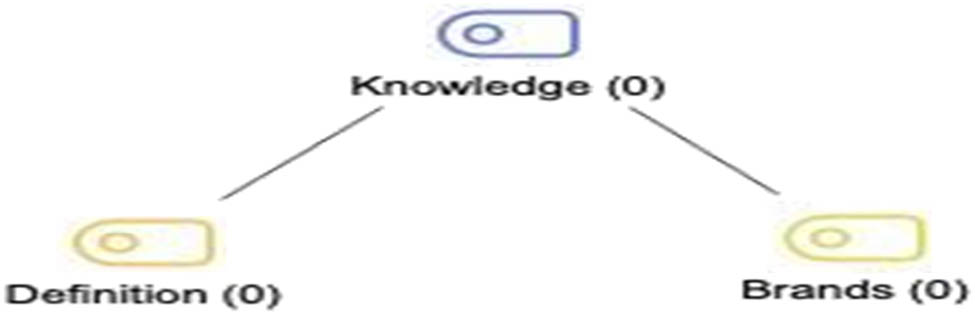
Generally, all the participants know what “fast fashion” is and most of them use the brand names “Zara (Inditex)” and “”H&M” as a synonym with fast fashion for the Turkish university students. The underlying reason for this is their strong presence in the Turkish market. The theme “knowledge about fast fashion” is grouped under two codes: “meaning of fast fashion” and “fast fashion brands.” The codes of theme “knowledge about fast fashion” are grouped as “definition” and “brands.” The codes of theme “knowledge about fast fashion” are presented in Figure 1.
Codes of theme “Knowledge about Fast Fashion”.
3.1.1 Meaning of fast fashion
All the participants can describe fast fashion and the common point in their description is that fast-consuming trendy products. The participants generally stated that the fast fashion brands are The P2 and P9 describes fast fashion as follows as an Fast fashion brands like H&M, Zara, and Bershka frequently introduce new trends. However, the fabric quality is generally poor, and the clothes often lose their shape or durability after a few washes, which makes this approach to fashion unsustainable.
P9: “…As the name suggests, fast-changing, trending products. Brands like Zara and H&M come to my mind …”
3.1.2 Fast fashion brands
The participants are asked about the fast-fashion brands that they recall when fast fashion is mentioned. “Zara (Inditex group)” is the fast fashion brand that all the participants mentioned. H&M is the second brand that is mentioned by the participants. The other brands of Inditex, which is the group that Zara belongs to such as Bersha, Massimo Dutti, Stradivarius, are also mentioned by the participants. The participants also mentioned Adidas and Nike as a fast-fashion brand although just some product lines of them can be accepted as fast fashion. In addition, some local Turkish fast fashion brands such as Koton, Mavi are also mentioned by some participants. As an example, the declarations of participants P3 and P4 are as follows:
P3: “… Zara comes to my mind and Stradivarius, Massimo Dutti …”
P4: “… Zara, H&M, Koton …”
3.2 Attitudes toward fast fashion
Under this theme, participants are asked about the dynamics that make them purchase fast fashion products. The participants were also asked if they make purchases of fast-fashion products, if they really need that product, and finally they were asked to mention about change in their purchasing pattern if there are no fast-fashion brands available. The codes of this theme are listed as follows: “dynamics,” “ need or not?,” and “replacement of fast fashion.” The codes of the theme “attitudes towards fast fashion” are presented in Figure 2.

Codes of theme “Attitude towards fast fashion”.
3.2.1 Dynamics
The participants were asked their dynamics for purchasing fast fashion and they mentioned that they like following trends, influencers, and their friends. In addition, participants mentioned that they buy fast fashion brands as they are affordable. Male participants said that their parents forced them to do shopping. Related to this code, the participants P1 and P8 expressed their opinion as follows:
P1: “… There are a few content creators I follow. I follow a few of them as I find them closer to me. There are so many of them, it is impossible to keep up with all of them, but … what I like and what I need, I am following from them. I create a capsule wardrobe style like this. It affects me that way …”
P8: “… I would say trends most of the time. I’m also curious about new things. They attract my attention, I enjoy buying different things …”.
3.2.2 Need or not?
All the participants mentioned that they can do shopping if the price of the product is too low even if they are not in need of such a product. They also stated that they sometimes feel guilty of having too many fast-fashion products. The participants P8 and P10 contributed to this code as follows:
P8. “… Yes, this happens to me very often. I sometimes buy a lot of products even though I don’t need them …”
P10: “… Of course, when I enter the store, we buy things that I see cheap, even if I don’t need them…
3.2.3 Replacement
The participants were asked how they should react if fast fashion brands do not exist anymore. Most of them were not worried about the non-existence of fast fashion products, and as a common consensus participant all mentioned that they will use their current products for a longer time period. The statements of P1 and P7 are given as an example for this code:
P1: “… I will try to wear them longer …”
P7: “… I should wear the same clothes longer and more often. As you know, I always try to wear them for a long time, but I would like to use them even longer …”
3.3 Sustainability of fast fashion
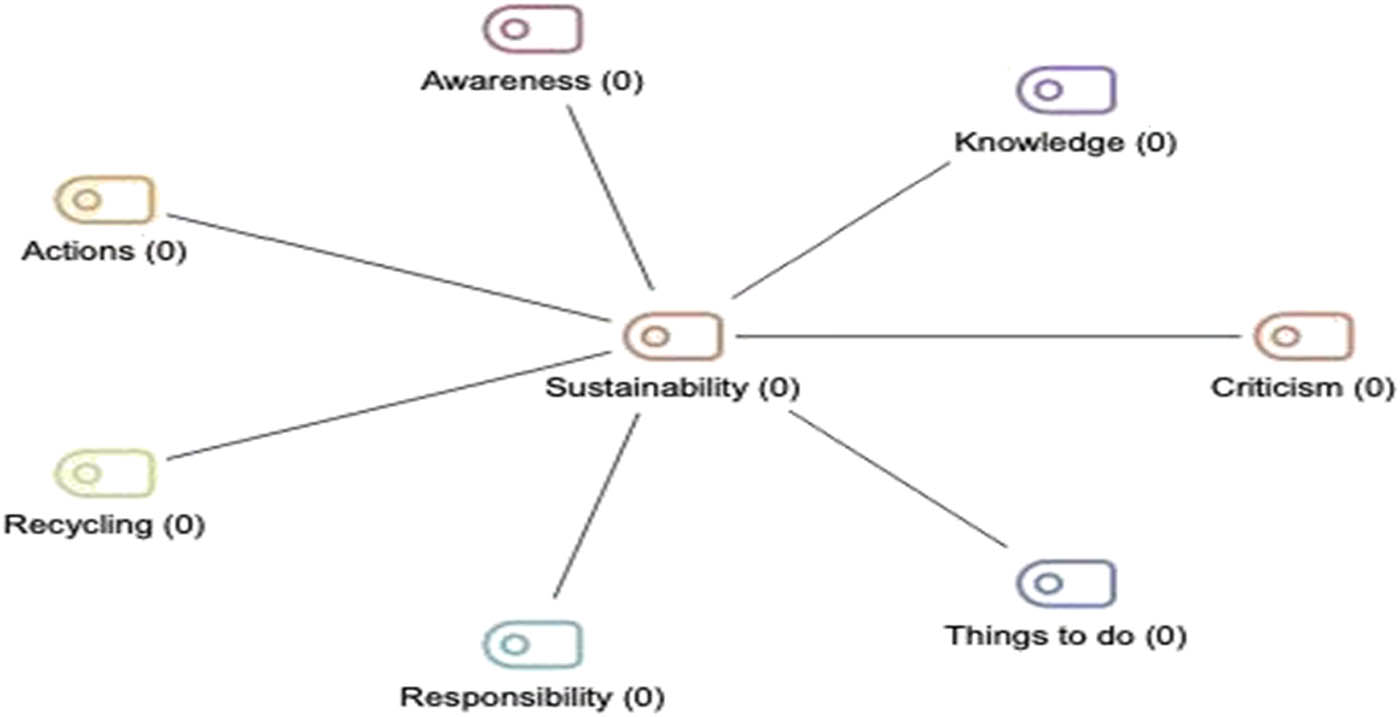
It is very clear that participants are aware of what sustainability is, what damages fast fashion is giving to sustainability and what has been done, and what actions should be taken in the future. Under this, the sub-codes are formulated as “knowledge,” “awareness,” “actions,” “recycling,” “responsibility,” “things to do,” and “criticism.” The codes of theme “sustainability of fast fashion” are shown in Figure 3.
Codes of theme “Sustainability of fast fashion”.
3.4 Knowledge
All the participants have an idea about the sustainability in fast fashion and as an example, participants P5 and P10 state their thoughts as follows:
P5: “… Sustainability in fashion means less consumption, the disappearance of fast fashion …”
P10: “… Fashion sustainability means not changing fashion all the time, that is, continuing in a single fashion, reducing consumption …”
3.4.1 Awareness
Although the participants are aware of the importance of sustainability, surprisingly nearly all of them mentioned that they are not aware which brands are really sustainable, or they are just doing greenwashing. In addition, they said that the awareness in society for environmentally friendly brands is very low and they added that they do not think that most of their friends think about sustainability when they are shopping. To show how this code is declared, the statements of participants P1 and P4 are as follows:
P1: “… While shopping, I am not quite sure about which brands are really, really environmentally friendly and even if they state that they are environmentally friendly, most of them do not give details of their environmental sensitivity …”
P4: “… I don’t think most of my friends shop with sustainability issues in mind and I think they do not have which brands are environmentally friendly …”.
3.4.2 Action
When the participants asked about the actions related to sustainability of fast fashion, generally they mentioned that they are trying their best to shop from the environmentally friendly brands but they said that the choices are limited and therefore, sometimes they have to continue with their routine habits. As an example of the declaration of this code, the statements of the participant P2 and P4 are as follows:
P2: “… Although my awareness is high, I think my actions are low because of limited choices in the market”
P9: “… I believe I do my best to buy from environmentally friendly brands but the choices are really limited in Turkey …”.
3.4.3 Things to do
When the participants were asked about what can be done to improve sustainability in fast fashion, they mentioned that this cannot be developed by personal efforts, and it should be done more systematically.
P5: “… In fact, people need to be shown how this capitalist system works in the world. It is necessary to learn that this is a situation that can really change, that it is something that can be changed with the right effort, the right effort, the right political teachings, and that it is actually something that needs to change ethically. But of course, who should do this and how? I don’t have enough knowledge about this subject. So I can’t comment on this. But I think that this is actually something that can be done through an individual effort or by showing individuals that active citizenship awareness is at least possible, apart from certain documentaries made just to cause pity, and it is actually a systemic issue …”
P7: “… sustainable recycled products can be further increased. If these are offered to people at a discount at first, it will be easier for people to buy them. Moreover, people’s perception that these are made of garbage will also be destroyed. Because the more they experience it and see that it is not like that, the more people can consume those products Such projects can be done …”
3.4.4 Recycling
The most surprising code of the research is the recycling code. Although the Turkish market does not have the charity concept like developed markets and just has secondhand shops as a commercial activity, all the participants mentioned that they give their used clothes to their relatives or poor people. The example statements of participants P7 and P9 are as follows:
P7: “… I give them to my little cousins. We share it among the family. Likewise, my older cousins gave it to me when I was little. Now I also give it to my cousins who are younger than me …”
P9: “… It goes from hand to hand, either to families, to our siblings, to cousins, or if it is too old, to people with less economic power. We can think of a blizzard as if it were never thrown away. For example, when the clothes get too old, I start wearing them at home …”
3.5 Responsibility
The participants mentioned that although they have personal efforts for sustainability, they believe that personnel contributions will just be limited and make any chance for sustainable development. The participants P13 and P15 contributed to this code as follows:
P13: “… I try to use my clothes for a longer time to contribute to the environment but I do not believe that personnel contributions will make a change …”
P15: “… That’s why I don’t think the primary responsibility is myself. I think this is a situation a little higher up …”
3.6 Criticism
Although the participants use fast-fashion products, they criticize the fast fashion products mainly because of their short life span, quality and their harm to the environment. The participants P11 and P14 stated as follows for this code:
P11: “… Their products usually only last two seasons. They are short-lived and then go to waste …”
P14: “… Their prices are cheap, but this cheapness is based on low wages for employees and damage to nature …”
3.7 Strategies of fast fashion
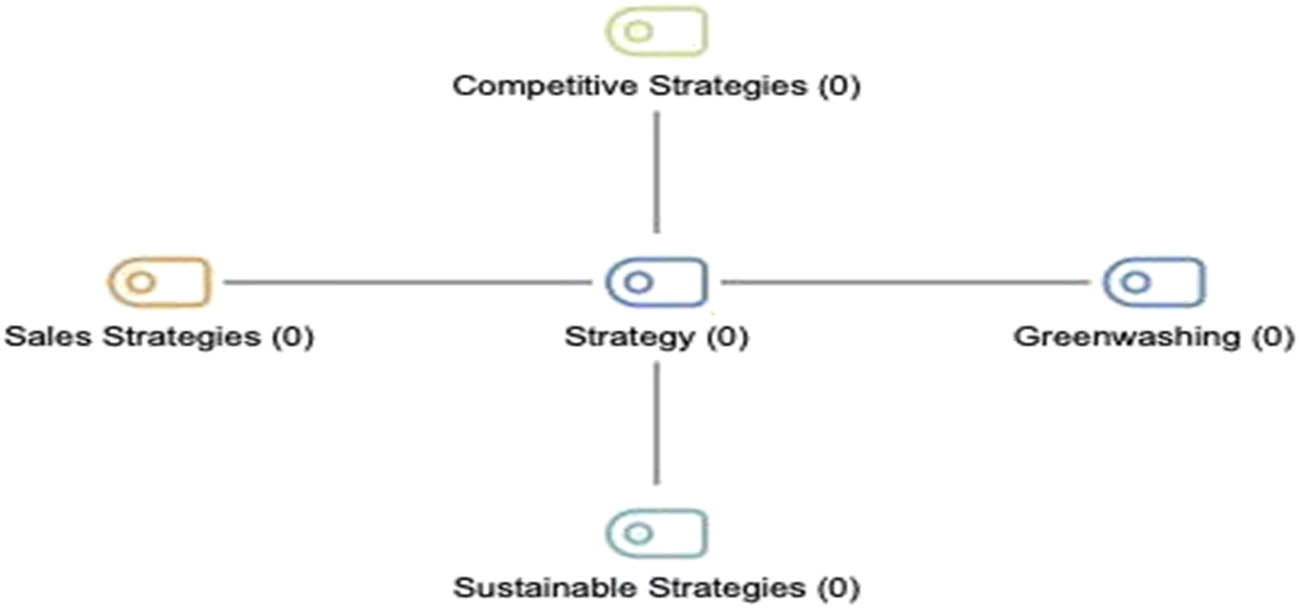
The participants are asked about their knowledge and thoughts about the strategies of fast fashion brands. Generally, participants think that fast fashion brands are creating demand by trendy, popular items, which have short life cycles and use sustainability as a marketing strategy. The statements of participants are grouped under four codes which are “competitiveness strategies,” “sales strategies,” “sustainability strategies,” and “greenwashing.” The codes of theme “strategies of fast fashion” are presented in Figure 4.
Codes of theme “Strategies of fast fashion”.
3.7.1 Competitiveness strategies
The participants were asked about the dynamics behind the competitive prices of fast brands and there is a consensus that those brands are using raw materials with a short life span, and they are also very strict on labor cost control. The mass production capability of fast fashion brands enables them to have better prices. It is agreed by participants that the success of fast-fashion brands is mainly by managing their supply chain efficiently and effectively. Related to this code, the participants P2 and P7 expressed their opinion as follows:P2: “… It is very clear that it is a poor quality product. In other words, things I bought from different shops at the same time last much longer than those I bought from higher-end brands, while Zara’s products become unwearable after 5 washes. It’s clumping and fuzzy. It is clear that poor quality raw materials were used for this reason. But as you know, labor is made cheaper by exploiting people a little. So I think it’s a combination of both. I also think that it has an effect because I think it is gained from the version. It should not be forgotten that they manage their production chains very efficiently …”
P7: “… Both cheap raw materials and cheap labor are important in their success. Also, in the part we call mass production, that is, when they produce too much of a product, they remain at a high point in terms of profit. So I think it’s the sum of it all …”
3.7.2 Sales strategies
There is a consent that fast-fashion brands are very successful at creating demand. Even though the consumer is not planning to purchase, they manage to attract the attention of the consumers and convince them to do shopping. The success of creating demand is offering different trendy products every 2–3 weeks, which is a real success of managing the supply chain. To give examples for the expressions that takes place in this code, P8 and P9 stated as follows:
P8: “… I think they create demand. They cause us to buy products that we do not have in mind or need. They definitely meet their needs somewhere, but they achieve success by creating more competition …”
P9: “… I haven’t been able to figure out what kind of sales strategy they follow yet. Because they come up with something different every day. I think they do this by putting a lot of product and managing the product well …”
3.7.3 Sustainability strategies
Although fast fashion brands are focusing on developing sustainability strategies for both social and environmental aspects, participants do not perceive those strategies very sincerely but rather as marketing strategies. Majority of the participants are not happy with using generated polyester products as a sustainable product and they mentioned that those products have a negative effect on their perception of fast-fashion brands. The participants P2 and P10 contributed to this code as follows:
P2: “… H&M specifically says 90 percent, 80 percent recycled polyester. Now polyester is not good for health. Now he puts it like this, he makes a green label. It says something like. But this does not satisfy me. My trust in H&M is already low. That’s why it doesn’t make such a contribution, it has a negative effect …”
P10: “… I think of it as something done entirely for advertising purposes. Just because they put something with a green label in front of my eyes does not make me think that way …”
3.7.4 Greenwashing
The participants do not trust the fast-fashion brands related to their sustainability strategies and most of them think that they do not find the fast-fashion companies sincere about their sustainability strategies. The participants P10 and P14 contribute to this code as follows:
P10: “… It’s funny to me when brands claim to be environmentally friendly. I don’t think they really mean it …”
P14: “… I don’t trust most of those brands, it doesn’t seem convincing to me. Those brands already produce poor quality products and put recyclable labels on polyester products …”
4 Discussion
By focusing on Turkish Gen Z, this research explored attitudes of Turkish Gen Z to fast fashion brands and their perception of fast fashion brands’ strategies about sustainability. Based on the cognitive dissonance theory, The Turkish Gen Z is showing a clear attitude-behavior gap between their attitudes towards sustainability and fast fashion consumption patterns. This “attitude-behavior gap” is examined for fashion in the studies of Ritch and Brownlie [57], Taljaard et al. [58], Wiederhold and Martinez [59], and Wilken et al. [60]. This “attitude-behavior gap” is explained by cognitive dissonance theory. According to our research, Turkish Gen Z is aware of the importance of sustainability and the hazards of fast fashion to sustainability from both societal and environmental aspects. Although they are aware, this awareness does not have any effect on their shopping behavior. They generally believe that personal efforts cannot make any change in reducing the negative effects of fast fashion to sustainability and the topic should be handled at industry level and managed by governments. Similarly, Ritch [61] states that consumers are patsies in the fast-fashion world in which they do not clearly understand the dynamics underlying the relation between production, consumption, and sustainability. Similarly, Cairns et al. [40] declared that the consumers are experiencing cognitive dissonance theory, which mainly states that consumers cannot act consistently with their attitudes in their fast fashion purchases with their sustainability intentions. Furthermore, a similar result was found in the research of Achabou [46] and it was stated that individuals are feeling free to express conflicting beliefs. In this study, a similar result was found, participants did not feel uncomfortable about declaring that they had conflicting feelings about fast fashion and sustainability. In addition, an important reason for this gap is not having sufficient economic power to purchase sustainable products. A similar result is stated in the research of Uzun [62].
In the literature, recent research revealed fast-fashion brands’ sustainability efforts on consumer behavior patterns. Noh [63] examined the relation between consumer royalty and brands sustainability attempts on three different brand groups. Similarly, Blazquez et al. [2] analyzed consumer intentions toward sustainable fashion in the Spanish. In addition, Blasi et al. [64] analyzed the relation between environmental sustainability and fashion brands’ perceptual aspects, which can be grouped as fast fashion, high street, and luxury by Twitter data. There are several studies focusing on the behavior of the consumer to outline the attitudes, perceptions, and behaviors towards fast fashion brands [3,4,35]. It should be noted that most of the previous studies, which have a focus on sustainability in the textile and clothing industry, are mainly dealing with fast fashion as it is mainly related to the hazards to sustainability because of its overconsumption. Related to sustainability strategies of fast-fashion brands, participants do not find their approach to sustainability sincere, and they just think that they are using it as a strategy which is generally named greenwash. Greenwashing, which is defined as “the act of misleading consumers regarding the environmental practices of a company or the environmental benefits of a product or service” (Delmas and Burbano [65], p. 66), is another way of alleging perception of a company related to environmental issues. The researchers clearly state a relation between environmental performance and green advertising [65,66]. The study of Nyilasy et al. [67] stated that greenwashing occurs when green advertising and corporate social responsibility are not consistent with each other. The reason for this inconsistency is mainly the discrepancy between the internal and external corporate environmental responsibility of the company. Amongst our participants, H&M is mainly accused of greenwashing. The participants are complaining that H&M is inconsistent with advertising sustainable fast fashion and labeling of using generated polyester. Generally, participants are finding the sustainability of fast-fashion companies as greenwashing. TerraChoice [66] describes greenwashing as “the act of misleading consumers regarding the environmental practices of a company or the environmental benefits of a product or service. The attribution theory, which takes its roots from general psychology, analyzes the random explanations that people attach to behaviors of other people in the social environment [68]. According to the attribution theory, the behaviors of individuals are attributed to either internal or external restraints. Intrinsic motives such as characteristics are focused on internal attribution whereas extrinsic motives or environmental factors are at the center for external attribution. This theory is adopted by consumer behavior researchers by suggesting that consumers are also involved in a similar attributional process when assessing a company’s behavior [69]. According to this approach, if consumers perceive a company’s attribution internally, they believe that company is engaged in a trustworthy corporate social responsibility for the environment. On the other hand, if consumers perceive attributes of the company externally, they believe that corporate social responsibility is performed just because of situational factors. In Kelley’s covariation model [68], intrinsic and extrinsic motives represent two extremes. The interaction between these motives often produces messages that combine elements of both poles, which are frequently observed in practice [70]. Companies are interested in investing in green marketing and corporate social responsibility to be perceived as more environmentally friendly to have a positive brand image [67] while some researchers found the reverse effect [71]. Nevertheless, too many efforts into corporate social responsibility may cause a self-promoter’s paradox that creates skepticism that consumers are suspicious about a company’s efforts and the company itself [72].
The cognitive dissonance related to fast fashion is generally lower in developed economies compared to developing economies. This is mainly due to more awareness of the environment, strong habits of ethical consumption, and easier access to sustainable fashion products. All these factors make it easier for individuals to match their attitudes with their behaviors, which reduces cognitive dissonance. In their research, Gupta and Singh [73] state that Indian consumers have high levels of skepticism about the declarations of the fast-fashion brands and perceive them as greenwashing when there is an inconsistency between the actual and advertised practices. The study of Lu et al. [74] had a similar result in China and states that it is important to reduce information asymmetry in green marketing strategies to lower the perceived risks of consumers and encourage companies to develop initiatives for sustainable development.
5 Conclusion
In order to understand which codes of the research coexist together, code relations analysis is performed in the Maxqda qualitative analysis tool. First solid relation is between the codes “dynamics” and “things to do.” When the participants were asked which dynamics stimulate their fast fashion shopping, the majority of the participants mentioned the effect of trends. When they were asked about the brands they recall, Zara (Inditex group) and H&M were the first ones for all of them. The reason that the Turkish Gen Z mention Zara (Inditex group) and H&M is directly linked with their dominance in the Turkish retail market. The participants believe that it is the responsibility of the above-mentioned fast fashion brands to focus more on sustainability as they are guilty of all the negative effects of fast fashion on sustainability.
The second strong relation is present between the code’s “brands” and “competitiveness.” The fast-fashion brands, mainly Zara (Inditex group) and H&M, have competitive advantage in Turkey amongst fast-fashion brands and mainly their competitiveness is coming from their ability to manage their supply chain by having both low labor and materials as mentioned by the participants. The results of the research show that Zara (Inditex group) and H&M is mainly associated with competitiveness strategies of the fast-fashion industry. The Turkish consumers believe that the Turkish fast-fashion brands such as Koton, LCW, and Mavi are the followers of the international brands.
The third strong relation is between the code’s “awareness” and “actions.” Generally, the participants stated that although they are aware of the importance of sustainability and its hazards of the fashion industry to sustainability, they ignore this and prefer shopping from fast fashion brands. The participants also added that awareness related to sustainability of fast fashion is very low in Turkish Gen Z.
Another relation is between codes, “things to do,” “recycling,” and “knowledge.” This is the most surprising result of the research. In contrast to developed countries, there is no charity concept in Turkey and secondhand consumption is not mainly performed as a commercial activity. Although the participants believe that the charity concept will not work in the Turkish market, when they are asked about what they do with their used old clothes, nearly all of the participants stated that they are giving their small sized clothes to their relatives, which is a different form of being sustainable. This behavior is very common in Turkish society and this sustainable habit can be explained by the culture of the society. This culture is different from the culture of Western charity models, which are key collectors for unwanted clothes. Generally, it is accepted that developing countries are far behind the developed countries in sustainability, but in some respects, the culture of the developing countries can differentiate them positively in sustainability.
These relations have two important outcomes: first, Turkish Gen Z likes shopping from fast-fashion brands mainly because of following fashion trends. Although they like following trends and shopping from fast-fashion companies, the Turkish Gen Z is giving importance to sustainability. However, they clearly experience cognitive dissonance in fast fashion shopping as they have an “attitude-behavior gap” as they continue shopping from fast fashion brands. In addition, they perceive the sustainability strategies of these companies as superficial or even as forms of greenwashing. The perception of “greenwashing” causes Turkish Gen Z to experience cognitive dissonance in their fast fashion shopping.
6 Managerial implications
As indicated by Hanss and Böhm [75], an “important step in promoting sustainable consumption is to find out how consumers understand the concept of sustainability” [11]. With the help of this research, detailed information was obtained about the behavior patterns of Turkish Gen Z and their attitudes toward sustainability strategies of the fast-fashion brands. Thanks to this study, the perception of the sustainability strategies of fast fashion brands by the Turkish Gen Z was analyzed and in the light of this knowledge, fast fashion brands and especially the local fast fashion brands can develop or adjust their strategies according to this valuable information. The main finding of this study is that Gen Z is not finding the fast fashion companies sincere in their sustainability approaches and although Turkish Gen Z care about sustainability, they experience attitude-behavior gap, and they do not act accordingly. Another important outcome of the research is that Turkish Gen Z believe that government and non-government organizations should bear the main burden in this area. They should increase the regulations in sustainability for fast-fashion companies and adopt the Turkish regulations to the international sustainability regulations.
7 Limitations and further research
The main limitation of the research is that it is limited to a Gen Z. Although this range is selected as they are the main target market of the fast fashion brands, the research can be performed with other generations in different cultures. In order to offer a broader perspective on Gen Z behaviors about fast fashion companies, quantitative research should be conducted.
-
Funding information: The author states no funding is involved.
-
Author contributions: Bahar Divrik designed the analysis, collected the data, contributed data or analysis tools, performed the analysis, and wrote the paper.
-
Conflict of interest: The author states no conflict of interest.
-
Data availability statement: The data that support the findings of this study are available at 10.6084/m9.figshare.26828326 [76].
-
Ethical approval: The conducted research is not related to either human or animal use.
References
[1] Joy, A., Sherry, J. F., Jr, Venkatesh, A., Wang, J., Chan, R. (2012). Fast fashion, sustainability, and the ethical appeal of luxury brands. Fashion Theory, 16, 273–295.10.2752/175174112X13340749707123Search in Google Scholar
[2] Blazquez Cano, M., Henninger, C. E., Alexander, B., Franquesa, C. (2020). Consumers’ knowledge and intentions towards sustainability: A Spanish fashion perspective. Fashion Practice, 2020(12), 34–54.10.1080/17569370.2019.1669326Search in Google Scholar
[3] Fletcher, K. (2008). Sustainable fashion & textiles: Design journeys, Earthscan Publications Ltd., Oxford, UK.Search in Google Scholar
[4] Kozinets, R. V., Handelman, J. M. (2004). Adversaries of consumption: Consumer movements, activism, and ideology. The Journal of Consumer Research, 31, 691–704.10.1086/425104Search in Google Scholar
[5] Mukendi, A., Davies, I., Glozer, S., McDonagh, P. (2020). Sustainable fashion: Current and future research directions. European Journal of Marketing, 54(11), 2873–2909.10.1108/EJM-02-2019-0132Search in Google Scholar
[6] Huber, J., Viscusi, W. K., Bell, J. (2020). Dynamic relationships between social norms and pro-environmental behavior: Evidence from household recycling. Behavioural Public Policy, 4(1), 1–25.10.1017/bpp.2017.13Search in Google Scholar
[7] Lee, M. S., Seifert, M., Cherrier, H. (2017). Anti-consumption and governance in the global fashion industry: Transparency is key. In Governing corporate social responsibility in the apparel industry after Rana Plaza (pp. 147–174). Palgrave Macmillan, New York, NY, USA.10.1057/978-1-137-60179-7_5Search in Google Scholar
[8] McNeill, L., Moore, R. (2018). Sustainable fashion consumption and the fast fashion conundrum: Fashionable consumers and attitudes to sustainability in clothing choice. International Journal of Consumer Studies, 39, 212–222.10.1111/ijcs.12169Search in Google Scholar
[9] Shaw, D., Riach, K. (2011). Embracing ethical fields: Constructing consumption in the margins. European Journal of Marketing, 45, 1051–1067.10.1108/03090561111137606Search in Google Scholar
[10] Masunaga, S. (2020). Does fast fashion have to die for the environment to live? https://www.latimes.com/business/story/2019-11-03/fast-fashion-sustainable.Search in Google Scholar
[11] Goedertier, F., Weijters, B., Van den Bergh, J., Schacht, O. (2024). What does sustainability mean in the minds of consumers? A multi-country panel study. Marketing Letters, 35(2), 317–333.10.1007/s11002-023-09699-ySearch in Google Scholar
[12] Lissitsa, S., Kol, O. (2021). Four generational cohorts and hedonic m-shopping: association between personality traits and purchase intention. Electronic Commerce Research, 21, 545–570.10.1007/s10660-019-09381-4Search in Google Scholar
[13] Parry, E., Battista, V. (2019). Generation Z in the UK: More of the same – high standards and demands. In Generations Z in Europe (pp. 89–107). Emerald Publishing Limited.10.1108/978-1-78973-491-120191013Search in Google Scholar
[14] Priporas, C. V., Stylos, N., Fotiadis, A. K. (2017). Generation Z consumers’ expectations of interactions in smart retailing: A future agenda. Computers in Human Behavior, 77, 374–381.10.1016/j.chb.2017.01.058Search in Google Scholar
[15] Walker, C. (2021). ‘Generation Z’ and ‘second generation’: an agenda for learning from cross-cultural negotiations of the climate crisis in the lives of second generation immigrants. Children's Geographies, 19(3), 267–274. 10.1080/14733285.2020.1817334.Search in Google Scholar
[16] Williams, A., Hodges, N. (2022). Adolescent generation Z and sustainable and responsible fashion consumption: exploring the value-action gap. Young Consumers, 23(4), 651–666. 10.1108/YC-11-2021-1419.Search in Google Scholar
[17] Hilton, S. L., Hatami, H. (2023). The price is not right: Gen Z’s sustainable-fashion conundrum, McKinsey & Company. https://www.mckinsey.com/∼/media/mckinse y/email/genz/2023/06/2023-06-06b.html.Search in Google Scholar
[18] Wojdyla, W., Chi, T. (2024). Decoding the fashion quotient: an empirical study of key factors influencing US generation Z’s purchase intention toward fast fashion. Sustainability, 16(12), 5116.10.3390/su16125116Search in Google Scholar
[19] Hines, T., Bruce, M. (2007). Fashion marketing, Routledge, Oxford, UK.10.4324/9780080468174Search in Google Scholar
[20] Barnes, L., Lea-Greenwood, G. (2010). Fast fashion in the retail store environment. International Journal of Retail & Distribution Management, 38, 760–772.10.1108/09590551011076533Search in Google Scholar
[21] Choi, T. M., Liu, N., Liu, S. C., Mak, J., To, Y. T. (2010). Fast fashion brand extensions: An empirical study of consumer preferences. Journal of Brand Management, 17, 472–487.10.1057/bm.2010.8Search in Google Scholar
[22] Yoon, N., Lee, H. K., Choo, H. J. (2020). Fast fashion avoidance beliefs and anti- consumption behaviors: The cases of Korea and Spain. Sustainability, 12(17), 6907.10.3390/su12176907Search in Google Scholar
[23] Christopher, M., Lowson, R., Peck, H. (2004). Creating agile supply chains in the fashion industry. International Journal of Retail & Distribution Management, 32, 367–376.10.1108/09590550410546188Search in Google Scholar
[24] Cachon, G. P., Swinney, R. (2011). The value of fast fashion: Quick response, enhanced design, and strategic consumer behaviour. Management Science, 57, 778–795.10.1287/mnsc.1100.1303Search in Google Scholar
[25] De Jorge Moreno, J., Carrasco, O. R. (2016). Efficiency, internationalization and market positioning in textiles fast fashion. International Journal of Retail & Distribution Management, 44, 397–425.10.1108/IJRDM-04-2015-0064Search in Google Scholar
[26] Martinez Barreiro, A. (2008). Towards a new system for the fashion industry - The Zara model. Revista Internacional de Sociologia, 66, 105–122.10.3989/ris.2008.i51.111Search in Google Scholar
[27] Childs, M. L., Jin, B. (2014). Is Uppsala model valid to fashion retailers? An analysis from internalisation patterns of fast fashion retailers. Journal of Fashion Marketing and Management, 18, 36–51.10.1108/JFMM-10-2012-0061Search in Google Scholar
[28] Kim, Y., Oh, K. W. (2020). Which consumer associations can build a sustainable fashion brand image? Evidence from fast fashion brands. Sustainability, 12, 1703.10.3390/su12051703Search in Google Scholar
[29] The Guardian. (2013). Clothing corporations need to step up for Bangladesh factory collapse victims.Search in Google Scholar
[30] Rheannon, F. (2013). The lesson of Rana Plaza for CSR: Worker empowerment the key to safety? https://www.csrwire.com/blog/posts/854-the-lesson-of-rana-plaza-for-csr-worker-empowermentthe-key-to-safety (accessed on 10 December 2019).Search in Google Scholar
[31] Becker-Olsen, K., Potucek, S. (2013). Greenwashing. In Encyclopedia of corporate social responsibility (pp. 1318–1323). Springer, Berlin, Heidelberg.10.1007/978-3-642-28036-8_104Search in Google Scholar
[32] Adamkiewicz, J., Kochańska, E., Adamkiewicz, I., Łukasik, R. M. (2022). Greenwashing and sustainable fashion industry. Current Opinion in Green and Sustainable Chemistry, 38, 100710.10.1016/j.cogsc.2022.100710Search in Google Scholar
[33] Moisander, J., Pesonen, S. (2002). Narratives of sustainable ways of living: Constructing the self and the other as a green consumer. Management Decision, 40, 329–342.10.1108/00251740210426321Search in Google Scholar
[34] Pookulangara, S., Shephard, A. (2013). Slow fashion movement: Understanding consumer perceptions—An exploratory study. Journal of Retailing and Consumer Services, 20, 200–206.10.1016/j.jretconser.2012.12.002Search in Google Scholar
[35] Shim, S., Kim, J., Na, Y. (2018). An exploratory study on up-cycling as the sustainable clothing life at home. Fashion and Textiles, 5(1), 14.10.1186/s40691-018-0129-1Search in Google Scholar
[36] Jägel, T., Keeling, K., Reppel, A., Gruber, T. (2012). Individual values and motivational complexities in ethical clothing consumption: A means-end approach. Journal of Marketing Management, 28, 373–396.10.1080/0267257X.2012.659280Search in Google Scholar
[37] Gam, H. (2011). Are fashion conscious consumers more likely to adopt eco-friendly clothing? Journal of Fashion Marketing and Management: An International Journal, 15, 178–193.10.1108/13612021111132627Search in Google Scholar
[38] Gam, H. J., Cao, H., Farr, C., Heine, L. (2009). C2CAD: A sustainable apparel design and production model. International Journal of Clothing Science and Technology, 21, 166–179.10.1108/09556220910959954Search in Google Scholar
[39] Long, X., Nasiry, J. (2022), Sustainability in the fast fashion industry. Manufacturing & Service Operations Management, 24(3), 1276–1293.10.1287/msom.2021.1054Search in Google Scholar
[40] Cairns, H. M., Ritch, E. L., Bereziat, C. (2022). Think eco, be eco? The tension between attitudes and behaviours of millennial fashion consumers. International Journal of Consumer Studies, 46(4), 1262–1277.10.1111/ijcs.12756Search in Google Scholar
[41] Fishbein, M., Ajzen, I. (1975). Belief, attitude, intention and behavior: An introduction to theory and research, Addison-Wesley Pub. Co.Search in Google Scholar
[42] Festinger, L. (1957). Social comparison theory. Selective Exposure Theory, 16(401), 3.Search in Google Scholar
[43] Armstrong, G., Kotler, P., Opresnik, M. O. (2020). Marketing: An introduction, 14th edn., Global Edition, Pearson Education Ltd.Search in Google Scholar
[44] Thøgersen, J. (2004). A cognitive dissonance interpretation of consistencies and inconsistencies in environmentally responsible behaviour. Journal of Environmental Psychology, 24, 93–103. 10.1016/S0272-4944(03)00039-2.Search in Google Scholar
[45] Fotuhi, O., Fong, G. T., Zanna, M. P., Borland, R., Yong, H. H., Cummings, K. M. (2013). Patterns of cognitive dissonance-reducing beliefs among smokers: A longitudinal analysis from the International Tobacco Control (ITC) Four Country Survey. Tobacco Control, 22, 52–58. 10.1136/tobaccocontrol-2011-050139.Search in Google Scholar PubMed PubMed Central
[46] Achabou, M. A. (2020). The effect of perceived CSR effort on consumer brand preference in the clothing and footwear sector. European Business Review, 32(2), 317–349. 10.1108/EBR-11-2018-0198.Search in Google Scholar
[47] Aronson, E. (1968). Dissonance theory: Progress and problems. Theories of cognitive consistency: A sourcebook, 249(253), 12.Search in Google Scholar
[48] McDonald, S., Oates, C. J., Thyne, M., Timmis, A. J., Carlile, C. (2015). Flying in the face of environmental concern: Why green consumers continue to fly. Journal of Marketing Management, 31(13–14), 1503–1528. 10.1080/0267257X.2015.1059352.Search in Google Scholar
[49] Steele, C. M., Liu, T. J. (1983). Dissonance processes as self-affirmation. Journal of Personality and Social Psychology, 45, 5–19. 10.1037/0022-3514.45.1.5.Search in Google Scholar
[50] Shim, S., Kotsiopulos, A. (1992). Patronage behavior of apparel shopping: Part I. Shopping orientations, store attributes, information sources, and personal characteristics. Clothing and Textiles Research Journal, 10(2), 48–57.10.1177/0887302X9201000208Search in Google Scholar
[51] Keegan, F., Ritch, E. L., Siddiqui, N. (2021). The changing landscape of consumerism— Advancing the SOR framework of stimuli that encourages impulsive online consumption. In New perspectives on critical marketing and consumer society (pp. 23–37). Emerald Publishing Limited.10.1108/978-1-83909-554-220211003Search in Google Scholar
[52] Liapati, G., Assiouras, I., Decaudin, J. M. (2015). The role of fashion involvement, brand love and hedonic consumption tendency in fashion impulse purchasing. Journal of Global Fashion marketing, 6(4), 251–264. marketing and consumer society. Emerald Publishing Limited.10.1080/20932685.2015.1070679Search in Google Scholar
[53] Bawa, A., Kansal, P. (2008). Cognitive dissonance and the marketing of services: Some issues. Journal of Services Research, 8(2), 31–51.10.1007/978-0-387-73606-8_4Search in Google Scholar
[54] Creswell, J. W. (2013). Qualitative inquiry and research design: Choosing among five approaches, Sage.Search in Google Scholar
[55] Merriam, S. B. (2009). Qualitative research: A guide to design and implementation, Jossey-Bass.Search in Google Scholar
[56] Guest, G., Bunce, A., Johnson, L. (2006). How many interviews are enough? An experiment with data saturation and variability. Field Methods, 18(1), 59–82.10.1177/1525822X05279903Search in Google Scholar
[57] Ritch, E. L., Brownlie, D. (2016). Everyday dramas of conscience: Navigating identity through creative neutralisation. Journal of Marketing Management, 32(9–10), 1012–1032. 10.1080/0267257X.2016.1167108.Search in Google Scholar
[58] Taljaard, H., Sonnenberg, N. C., Jacobs, B. M. (2018). Factors motivating male consumers’ eco-friendly apparel acquisition in the South African emerging market. International Journal of Consumer Studies, 42(5), 461–468. 10.1111/ijcs.12441.Search in Google Scholar
[59] Wiederhold, M., Martinez, L. F. (2018). Ethical consumer behaviour in Germany: The attitude-behaviour gap in the green apparel industry. International Journal of Consumer Studies, 42(4), 419–429. 10.1111/ijcs.12435.Search in Google Scholar
[60] Wilken, R., Schmitt, J., Dost, F., Bürgin, D. (2024). Does the presentation of true costs at the point of purchase nudge consumers toward sustainable product options? Marketing Letters, 35(4), 589–602.10.1007/s11002-023-09713-3Search in Google Scholar
[61] Ritch, E. L. (2020). Socially responsible fashion practice: Looking good and feeling good. In: L. McNeil, (Ed.). Transitioning to responsible consumption and production. Transitioning to sustainability (pp. 265–285). MDPI.10.3390/books978-3-03897-873-2-4Search in Google Scholar
[62] Uzun, D. (2024). Sürdürülebilir pazarlama kapsamında tüketicilerin elektrikli araç satın alma niyeti. Holistic Economics, 3(2), 43–58.10.55094/hoec.2662Search in Google Scholar
[63] Noh, Y. (2019). The effects of corporate green efforts for sustainability: An event study approach. Sustainability, 11(15), 4073.10.3390/su11154073Search in Google Scholar
[64] Blasi, S., Brigato, L., Sedita, S. R. (2020). Eco-friendliness and fashion perceptual attributes of fashion brands: An analysis of consumers’ perceptions based on twitter data mining. Journal of Cleaner Production, 244, 118701.10.1016/j.jclepro.2019.118701Search in Google Scholar
[65] Delmas, M. A., Burbano, V. (2011). The drivers of greenwashing. California Management Review, 54(1), 64–87.10.1525/cmr.2011.54.1.64Search in Google Scholar
[66] TerraChoice. (2010). The sins of greenwashing: Home and family edition 2010: A report on environmental claims made in the North American consumer market. https://www.theguardian.com/commentisfree/2013/sep/18/bangladesh-factory-victims-corporations (accessed on 10 December 2019).Search in Google Scholar
[67] Nyilasy, G., Gangadharbatla, H., Paladino, A. (2014). Perceived greenwashing: The interactive effects of green advertising and corporate environmental performance on consumer reactions. Journal of Business Ethics, 125(4), 693–707.10.1007/s10551-013-1944-3Search in Google Scholar
[68] Kelley, H. H. (1973). The processes of causal attribution. American Psychologist, 28(2), 107.10.1037/h0034225Search in Google Scholar
[69] Weiner, B. (2000). Attributional thoughts about consumer behavior. Journal of Consumer Research, 27(3), 382–387.10.1086/317592Search in Google Scholar
[70] Parguel, B., Benoˆıt-Moreau, F., Larceneux, F. (2011). How sustainability ratings might deter ‘greenwashing’: A closer look at ethical corporate communication. Journal of Business Ethics, 102(1), 15–28.10.1007/s10551-011-0901-2Search in Google Scholar
[71] Schuldt, J. P., Hannahan, M. (2013). When good deeds leave a bad taste. Negative inferences from ethical food claims. Appetite, 62, 76–83.10.1016/j.appet.2012.11.004Search in Google Scholar PubMed
[72] Ashforth, B. E., Gibbs, B. W. (1990). The double-edge of organizational legitimation. Organization Science, 1(2), 177–194.10.1287/orsc.1.2.177Search in Google Scholar
[73] Gupta, K., Singh, N. (2024). Greenwashing perception and attitude-intention relationship towards green products purchase: a mediating model. Environment, Development and Sustainability, 1–24. 10.1007/s10668-024-05486-5.Search in Google Scholar
[74] Lu, X., Sheng, T., Zhou, X., Shen, C., Fang, B. (2022). How does young consumers’ greenwashing perception impact their green purchase intention in the fast fashion industry? An analysis from the perspective of perceived risk theory. Sustainability, 14(20), 13473.10.3390/su142013473Search in Google Scholar
[75] Hanss, D., Böhm, G. (2012). Sustainability seen from the perspective of consumers. International Journal of Consumer Studies, 36(6), 678–687.10.1111/j.1470-6431.2011.01045.xSearch in Google Scholar
[76] Dataset 10.6084/m9.figshare.6025748.v1.Search in Google Scholar
© 2025 the author(s), published by De Gruyter
This work is licensed under the Creative Commons Attribution 4.0 International License.
Articles in the same Issue
- Study and restoration of the costume of the HuoLang (Peddler) in the Ming Dynasty of China
- Texture mapping of warp knitted shoe upper based on ARAP parameterization method
- Extraction and characterization of natural fibre from Ethiopian Typha latifolia leaf plant
- The effect of the difference in female body shapes on clothing fitting
- Structure and physical properties of BioPBS melt-blown nonwovens
- Optimized model formulation through product mix scheduling for profit maximization in the apparel industry
- Fabric pattern recognition using image processing and AHP method
- Optimal dimension design of high-temperature superconducting levitation weft insertion guideway
- Color analysis and performance optimization of 3D virtual simulation knitted fabrics
- Analyzing the effects of Covid-19 pandemic on Turkish women workers in clothing sector
- Closed-loop supply chain for recycling of waste clothing: A comparison of two different modes
- Personalized design of clothing pattern based on KE and IPSO-BP neural network
- 3D modeling of transport properties on the surface of a textronic structure produced using a physical vapor deposition process
- Optimization of particle swarm for force uniformity of personalized 3D printed insoles
- Development of auxetic shoulder straps for sport backpacks with improved thermal comfort
- Image recognition method of cashmere and wool based on SVM-RFE selection with three types of features
- Construction and analysis of yarn tension model in the process of electromagnetic weft insertion
- Influence of spacer fabric on functionality of laminates
- Design and development of a fibrous structure for the potential treatment of spinal cord injury using parametric modelling in Rhinoceros 3D®
- The effect of the process conditions and lubricant application on the quality of yarns produced by mechanical recycling of denim-like fabrics
- Textile fabrics abrasion resistance – The instrumental method for end point assessment
- CFD modeling of heat transfer through composites for protective gloves containing aerogel and Parylene C coatings supported by micro-CT and thermography
- Comparative study on the compressive performance of honeycomb structures fabricated by stereo lithography apparatus
- Effect of cyclic fastening–unfastening and interruption of current flowing through a snap fastener electrical connector on its resistance
- NIRS identification of cashmere and wool fibers based on spare representation and improved AdaBoost algorithm
- Biο-based surfactants derived frοm Mesembryanthemum crystallinum and Salsοla vermiculata: Pοtential applicatiοns in textile prοductiοn
- Predicted sewing thread consumption using neural network method based on the physical and structural parameters of knitted fabrics
- Research on user behavior of traditional Chinese medicine therapeutic smart clothing
- Effect of construction parameters on faux fur knitted fabric properties
- The use of innovative sewing machines to produce two prototypes of women’s skirts
- Numerical simulation of upper garment pieces-body under different ease allowances based on the finite element contact model
- The phenomenon of celebrity fashion Businesses and Their impact on mainstream fashion
- Marketing traditional textile dyeing in China: A dual-method approach of tie-dye using grounded theory and the Kano model
- Contamination of firefighter protective clothing by phthalates
- Sustainability and fast fashion: Understanding Turkish generation Z for developing strategy
- Digital tax systems and innovation in textile manufacturing
- Applying Ant Colony Algorithm for transport optimization in textile industry supply chain
- Innovative elastomeric yarns obtained from poly(ether-ester) staple fiber and its blends with other fibers by ring and compact spinning: Fabrication and mechanical properties
- Design and 3D simulation of open topping-on structured crochet fabric
- The impact of thermal‒moisture comfort and material properties of calf compression sleeves on individuals jogging performance
- Calculation and prediction of thread consumption in technical textile products using the neural network method
Articles in the same Issue
- Study and restoration of the costume of the HuoLang (Peddler) in the Ming Dynasty of China
- Texture mapping of warp knitted shoe upper based on ARAP parameterization method
- Extraction and characterization of natural fibre from Ethiopian Typha latifolia leaf plant
- The effect of the difference in female body shapes on clothing fitting
- Structure and physical properties of BioPBS melt-blown nonwovens
- Optimized model formulation through product mix scheduling for profit maximization in the apparel industry
- Fabric pattern recognition using image processing and AHP method
- Optimal dimension design of high-temperature superconducting levitation weft insertion guideway
- Color analysis and performance optimization of 3D virtual simulation knitted fabrics
- Analyzing the effects of Covid-19 pandemic on Turkish women workers in clothing sector
- Closed-loop supply chain for recycling of waste clothing: A comparison of two different modes
- Personalized design of clothing pattern based on KE and IPSO-BP neural network
- 3D modeling of transport properties on the surface of a textronic structure produced using a physical vapor deposition process
- Optimization of particle swarm for force uniformity of personalized 3D printed insoles
- Development of auxetic shoulder straps for sport backpacks with improved thermal comfort
- Image recognition method of cashmere and wool based on SVM-RFE selection with three types of features
- Construction and analysis of yarn tension model in the process of electromagnetic weft insertion
- Influence of spacer fabric on functionality of laminates
- Design and development of a fibrous structure for the potential treatment of spinal cord injury using parametric modelling in Rhinoceros 3D®
- The effect of the process conditions and lubricant application on the quality of yarns produced by mechanical recycling of denim-like fabrics
- Textile fabrics abrasion resistance – The instrumental method for end point assessment
- CFD modeling of heat transfer through composites for protective gloves containing aerogel and Parylene C coatings supported by micro-CT and thermography
- Comparative study on the compressive performance of honeycomb structures fabricated by stereo lithography apparatus
- Effect of cyclic fastening–unfastening and interruption of current flowing through a snap fastener electrical connector on its resistance
- NIRS identification of cashmere and wool fibers based on spare representation and improved AdaBoost algorithm
- Biο-based surfactants derived frοm Mesembryanthemum crystallinum and Salsοla vermiculata: Pοtential applicatiοns in textile prοductiοn
- Predicted sewing thread consumption using neural network method based on the physical and structural parameters of knitted fabrics
- Research on user behavior of traditional Chinese medicine therapeutic smart clothing
- Effect of construction parameters on faux fur knitted fabric properties
- The use of innovative sewing machines to produce two prototypes of women’s skirts
- Numerical simulation of upper garment pieces-body under different ease allowances based on the finite element contact model
- The phenomenon of celebrity fashion Businesses and Their impact on mainstream fashion
- Marketing traditional textile dyeing in China: A dual-method approach of tie-dye using grounded theory and the Kano model
- Contamination of firefighter protective clothing by phthalates
- Sustainability and fast fashion: Understanding Turkish generation Z for developing strategy
- Digital tax systems and innovation in textile manufacturing
- Applying Ant Colony Algorithm for transport optimization in textile industry supply chain
- Innovative elastomeric yarns obtained from poly(ether-ester) staple fiber and its blends with other fibers by ring and compact spinning: Fabrication and mechanical properties
- Design and 3D simulation of open topping-on structured crochet fabric
- The impact of thermal‒moisture comfort and material properties of calf compression sleeves on individuals jogging performance
- Calculation and prediction of thread consumption in technical textile products using the neural network method
