Clinical impact of post-mortem genetic testing in cardiac death and cardiomyopathy
-
Isabelle Marey


Abstract
Post-mortem genetic analyses may help to elucidate the cause of cardiac death. The added value is however unclear when a cardiac disease is already suspected or affirmed. Our aim was to study the feasibility and medical impact of post-mortem genetic analyses in suspected cardiomyopathy. We studied 35 patients with cardiac death and suspected cardiomyopathy based on autopsy or clinical data. After targeted sequencing, we identified 15 causal variants in 15 patients (yield 43%) in sarcomeric (n = 8), desmosomal (n = 3), lamin A/C (n = 3) and transthyretin (n = 1) genes. The results had various impacts on families, i.e. allowed predictive genetic testing in relatives (15 families), planned early therapeutics based on the specific underlying gene (5 families), rectified the suspected cardiomyopathy subtype (2 families), assessed the genetic origin of cardiomyopathy that usually has an acquired cause (1 family), assessed the diagnosis in a patient with uncertain borderline cardiomyopathy (1 family), reassured the siblings because of a de novo mutation (2 families) and allowed prenatal testing (1 family). Our findings suggest that post-mortem molecular testing should be included in the strategy of family care after cardiac death and suspected cardiomyopathy, since genetic findings provide additional information useful for relatives, which are beyond conventional autopsy.
1 Introduction
Cardiomyopathies are a heterogeneous group of heart muscle disorders defined by the presence of a structurally and functionally abnormal myocardium in the absence of coronary artery disease, hypertension, valvular disease and congenital heart disease sufficient to cause the observed myocardial abnormality [1,2]. The four major subtypes of cardiomyopathy are dilated cardiomyopathy (DCM), hypertrophic cardiomyopathy (HCM), restrictive cardiomyopathy (RCM) and arrhythmogenic right ventricular cardiomyopathy (ARVC) as well as unclassified cardiomyopathies such as left ventricular non-compaction (LVNC). All cardiomyopathies can be inherited [3,4,5,6], especially in an autosomal dominant mode in most cases. The underlying genes can be related to the genes encoding sarcomeric, cytoskeleton, desmosomal or other proteins, and a causal variant can usually be identified in 20–60% of patients with an obvious cardiomyopathy, depending on the subtypes and sequencing strategy [3,4,5,6,7].
Cardiomyopathies are estimated to be responsible for 10–35% of sudden cardiac deaths (SCDs) in the young population [8,9,10]. Other possible complications of cardiomyopathies include heart failure, stroke and thromboembolic complications. Because cardiac expression of inherited cardiomyopathies is frequently delayed, the disease is often clinically silent for a number of years and complications such as SCD can be the presenting feature [4,9,10,11]. Molecular genetic testing may be performed after cardiac death, especially after SCD and autopsy, and the guidelines promote the prescription of post-mortem genetic testing with a relatively high level of recommendation in the context of SCD and suspected channelopathy or cardiomyopathy [11,12,13,14]. The clinical impact is quite obvious in the context of unexplained SCD with normal autopsy since post-mortem genetic analysis may elucidate the cause of unexplained death [15], although interpretation of pathogenicity remains a challenging issue. However, the clinical impact of post-mortem genetic analyses in the context of suspected cardiomyopathy is less established. Very few publications have specifically studied post-mortem genetic analyses in suspected cardiomyopathies and they focused on the feasibility and yield of causal variant screening [16,17,18,19,20] but did not study the clinical impact of these results on the family. The level of evidence for supporting post-mortem genetic analyses in the context of cardiomyopathies is therefore low.
The goal of our study was to report our experience about the feasibility of post-mortem molecular testing in a group of structural heart diseases, cardiomyopathies, and to study the medical impact of the results on the families.
2 Materials and methods
2.1 Patients and tissue
In this retrospective study, we collected data of post-mortem genetic analyses performed at a single molecular laboratory from patients with (i) SCD or other cardiovascular cause of death (such as acute heart failure), (ii) suspected cardiomyopathy, based on either autopsy or clinical data (if cardiac examination was performed before death) and (iii) appropriate quality of DNA extraction. A cohort of 35 patients (from six hospitals in France) with such criteria was retrieved from our database from 2007 to 2014 (samples were sent during this period, just after death, to the Molecular Cardiogenetics Unit at Pitié-Salpêtrière Hospital and sequenced according to the practice of genetic diagnosis at that moment). It was before the use of high-throughput sequencing in diagnostic routine, so molecular screening was limited to focused analyses with Sanger sequencing.
Genomic DNA was extracted from autopsy of frozen tissues obtained from 17 patients (heart tissue n = 14, pulmonary artery n = 1 and liver n = 2), post-mortem frozen blood (6 patients) or post-mortem paraffin-embedded tissue (1 patient). In 11 patients, a clinical sample (blood and fibroblasts) was available from the intensive care unit. Autopsy was performed in 21 patients, highlighting the structural changes related to suspected or definitive cardiomyopathies.
The first step of forensic autopsy involved external examination of the corpse. Then it was open from the chin to the pubis and the organs were examined in situ before being removed. The heart was taken off together with both the lungs and its proceeding was done according to the “Guidelines for autopsy investigations of sudden cardiac death” [21]. Microscopic examination was done on a whole biventricular transversal section and on the walls of the pulmonary artery ejection chamber (right myocardium): at least ten myocardium samples were histologically examined for each case (hemalun–eosin–saffron staining). Additionally, myocardium and/or spleen or liver samples were frozen and stored at −20°C.
In all cases, molecular studies were performed after death. Written informed consent was obtained from the close relatives of the deceased, and molecular analyses were performed in order to improve the care of the family, in agreement with French law and French good practices documents.
The family of the deceased was advised according to our multidisciplinary management established between the departments of medical genetics, cardiology and forensic medicine. The first-degree relatives were invited for cardiological assessment, including a detailed physical examination, electrocardiogram and echocardiography. Then in the case of identification of a causal variant in the deceased, the relatives were informed especially when the result may have potential implications for the family.
3 Genetic analysis
Extraction and purification of the total DNA from frozen tissues were done after grinding using the Tissue Lyser LT and the DNeasy® Blood & Tissue kit (Qiagen, Venlo, Netherlands). For other samples (blood and fibroblasts), the extraction was performed on a QiaSymphony® (Qiagen). Sanger sequencing was done using the Big Dye Terminator v3.3 Cycle Sequencing kit and ABI3130 capillary electrophoresis system (Applied Biosystems, Waltham, USA). The extracted DNA was quantified with spectrophotometry (Nanodrop; Thermoscientific, Waltham, USA) and qualified by agarose gel migration. Sequencing targeted the genes involved in the various types of suspected cardiomyopathies: five major sarcomeric genes (MYH7, MYBPC3, TNNT2, TNNI3 and MYL2) in HCM; three desmosomal genes (PKP2, DSP, and DSG2) in ARVC; LMNA and the five major sarcomeric genes in DCM; and TTR in amyloidosis. The entire coding sequences and intronic adjacent sequences of genes were systematically analysed in all patients. Chromatographs were analysed with the SeqScape software (AB®) and the variants were numbered according to their RefSeq transcripts (details in Section 5). Alamut (Interactive Biosoftware, North Seattle, WA, USA) was used for variants’ numbering and to determine the pathogenicity of the variants via its links to prediction software.
4 Interpretation of variants
Pathogenicity of variants was determined according to the current American College of Medical Genetics (ACMG) guidelines [22], which recommend classifying variants into five categories: pathogenic (class 5), likely pathogenic (class 4), uncertain significance (class 3), likely benign (class 2) or benign (class 1). The identified variants were first checked for their allele frequency as reported in the databases about populations of the same ethnic origin (http://gnomad.broadinstitute.org/). We evaluated the putative pathogenicity of each missense variant by using our knowledge of genes and proteins (the location of the variant in the gene and its impact on the resulting corresponding protein), in silico prediction tools (Polyphen-2, SIFT and Mutation taster) and SpliceSiteFinder like®, MaxEntScan®, NNSPLICE®, GeneSplicer® and Human Splicing Finder® for putative splicing variants. We then looked at the score for pathogenicity (combined annotation-dependent depletion [CADD] score) calculated on the basis of multiple algorithms (Phred-like score). This was followed by a careful review of the literature, available published segregation analyses and functional studies. Finally, we searched our local database to check whether the variant was already found in familial forms of cardiomyopathies and/or arrhythmias and validated as pathogenic with segregation analysis.
In practice, we considered as “pathogenic” (class 5) a variant with confirmed pathogenicity criteria and already proved to be responsible for cardiomyopathies or a novel nonsense variant with a frequency below 0.01%. We considered as “likely pathogenic” (class 4) the unpublished variants with a frequency below 0.01% and unknown in our database, located in a functional domain of the protein and with pathogenicity prediction tools in favour of a strong effect with a CADD score of >24. Only variants of classes 5 and 4 (certainly pathogenic or probably pathogenic) were reported in this study and were referred to as “causal variants”. Unfortunately, except in few families, no informative segregation analyses could be done because there was no additional relative with a cardiac phenotype already expressed.
5 Results
5.1 Patients
Thirty-five patients were included in the study (mean age 25.5 years, age range: 21 days to 72 years, 18 males), with SCD (n = 28), death due to acute heart failure (n = 3), multiorgan failure (n = 2) or another vascular cause (cerebrovascular accident in 1 and pulmonary embolism in 1). Twenty-seven patients (77%) were under 40 years. Most patients were of Caucasian origin (26 of 35). Suspected cardiomyopathy was established after autopsy for 21 patients (in 17 patients the disease was also unknown within the family) and before death for 14 patients (6 with a diagnosis made in the intensive care unit and 8 with a previously known diagnosis). The suspected cardiomyopathy was HCM in 11, ARVC in 11, DCM in 6 patients, mixed HCM/DCM in 2, RCM in 2 (including cardiac amyloidosis in 1) and atypical cardiomyopathies in 3 (LVNC in 1, interstitial fibrosis without fibrofatty infiltration in 1 and biventricular cardiomyopathy in 1; Figure 1). Because of suspected cardiomyopathy, a cardiac evaluation was proposed to all first-degree relatives (in parallel to genetic molecular analyses in the deceased). In six families (20%), a systematic cardiac evaluation revealed borderline or obvious similar cardiomyopathy in at least one relative.
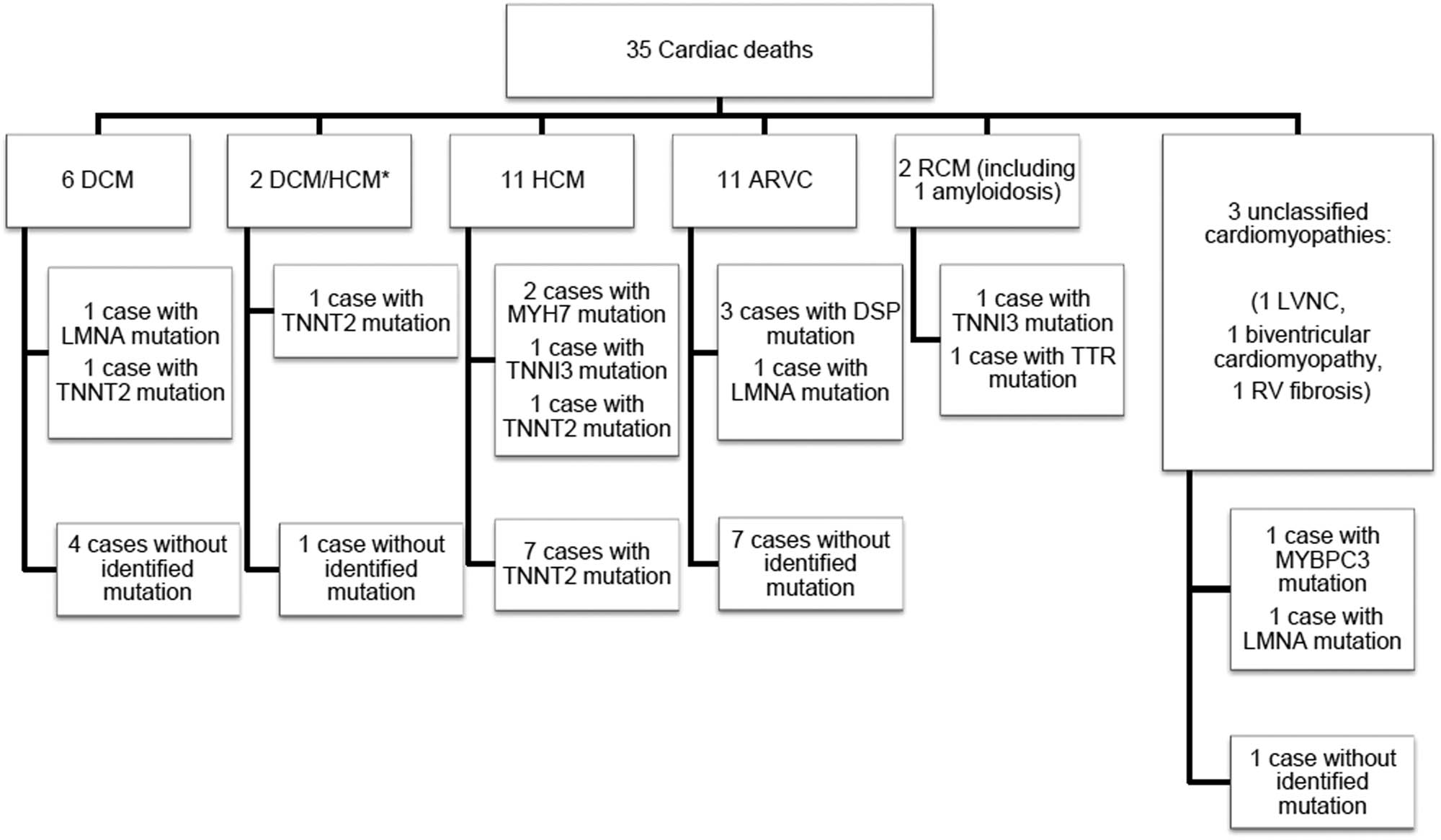
Overview of all patients according to the suspected cardiomyopathy. ARVC: arrhythmogenic right ventricular cardiomyopathy, HCM: hypertrophic cardiomyopathy, DCM: dilated cardiomyopathy, RCM: restrictive cardiomyopathy, LVNC: left ventricular non-compaction. *HCM/DCM: HCM observed in the deceased but DCM previously reported in a relative, subsequently interpreted as end-stage form of HCM.
5.2 Post-mortem genetic results
Fifteen causal variants were identified in 15 patients (43% of the cohort; clinical features in Table 1): three causal variants in the DSP gene (desmoplakin), three in LMNA (lamin A/C), three in TNNT2 (troponin T), two in TNNI3 (troponin I), two in MYH7 (beta myosin heavy chain 7), one in MYBPC3 (myosin-binding protein C) and one in TTR (transthyretin). The detailed genetic results, NM numbers and main criteria for pathogenicity are detailed in Table 2. Considering the subtype of cardiomyopathies (Figure 1), a causal variant was identified in 4 of 11 HCM patients, in 4 of 11 ARVC patients, in 2 of 6 DCM patients, in the 2 RCM patients and in 1 of 2 patients with mixed HCM/DCM. Among the four variants classified as likely pathogenic, two were nonsense and one was a frameshift. All other variants were classified as certainly pathogenic.
Clinical features of index patients with a causal variant after post-mortem analysis
| Patients | Sex | Origin | Age of death | Context of death | Autopsy | Final clinical diagnosis of the disease | Family history |
|---|---|---|---|---|---|---|---|
| 1 | M | Turkey | 35 years | Inaugural SCD | Fibrofatty replacement of right RV myocardium, HW: 430 g | ARVC | Supraventricular tachycardia in the mother |
| 2 | M | Egypt | 32 years | Inaugural SCD | Fibrofatty replacement of both ventricles, HW 510 g | ARVC | SCD in one brother without precise diagnosis of the cause |
| 3 | M | France | 33 years | Inaugural SCD | RV dilatation, fibrofatty replacement of RV, HW: 425 g | ARVC | SCD in the paternal uncle without precise diagnosis of the cause |
| 4 | F | France | 39 years | SCD. ARVC known before death, with biventricular evolution | Not performed (post-mortem genetic analysis based on another tissue) | ARVC | None |
| 5 | M | The Netherlands | 9 years | Inaugural SCD | Borderline for HCM (macroscopy: weight 230 g, septum thickness 7 mm, posterior wall 12 mm; histology: very small area with fibrosis and disarray) | HCM (suspected) | Suspected apical HCM in the mother (with peripartum heart failure) |
| 6 | F | France | 52 years | Pulmonary embolism. HCM known before death | Not performed (post-mortem genetic analysis based on another tissue) | HCM | None |
| 7 | F | France | 47 years | SCD. HCM known before death | Not performed (post-mortem genetic analysis based on another tissue) | HCM | HCM in the sister |
| 8 | M | Morocco | 66 years | SCD. HCM known before death | Not performed (post-mortem genetic analysis based on another tissue) | HCM | SCD in two children (12 and 15 years), unknown cause, no autopsy |
| 9 | F | France | 5 months | Acute heart failure/multiorgan failure and death. No clinical diagnosis before emergency management | No autopsy, but endomyocardial biopsy: subnormal histological result | LVNC | HCM in the grandmother (LV thickness 15 mm) |
| HCM in the father (septum thickness 22 mm) | |||||||
| 10 | F | Algeria | 16 years | Inaugural SCD | HCM at autopsy (LV septum thickness 28 mm, lateral wall 17 mm; microscopy: myocardial disarray) | HCM/DCM | DCM in the father (LVEF 30%, left atrium 61 mm) |
| 11 | F | France | 2 years | Massive stroke. Diagnosis of RCM during emergency management | Not performed (but endomyocardial biopsy, non-specific findings) | RCM | None |
| 12 | M | France | 44 years | Heart failure. DCM known before death | Not performed (post-mortem genetic analysis based on another tissue) | DCM | None |
| 13 | M | Morocco | 1 month | Heart failure/multiorgan failure. No clinical diagnosis before emergency management | Not performed (post-mortem genetic analysis based on another tissue) | DCM | None |
| 14 | F | USA | 74 years | Heart failure. RCM known before death. | Not performed (post-mortem genetic analysis based on another tissue) | RCM (amyloidosis) | Possible cardiac disease in brother (no detail) |
| 15 | M | France | 59 years | SCD. DCM and AVB known before death. | Not performed (post-mortem genetic analysis based on another tissue) | Biventricular cardiomyopathy | None |
ARVC: arrhythmogenic right ventricular cardiomyopathy; HCM: hypertrophic cardiomyopathy; DCM: dilated cardiomyopathy; RCM: restrictive cardiomyopathy; LVNC: left ventricular non-compaction; AVB: atrioventricular block; SCD: sudden cardiac death; LVEF: left ventricular ejection fraction; RV: right ventricle; HW: heart weight.
Molecular genetic characteristics of causal variant identified after post-mortem analysis
| Patients | Tissues for genetic tests | Gene | Variant | Variant | Frequency of variant (ALL) | Mutation taster | SIFT prediction | PolyPhen-2 | CADD score | Previously reported variant in patients (HGMD) and phenotype | ACMG classification |
|---|---|---|---|---|---|---|---|---|---|---|---|
| LRG_ | (cDNA) level | LOVD_ID#0000229861 | (GnomAD) | ||||||||
| 1 | Frozen tissue (autopsy) | DSP | c.[7027G>A] | p.(Glu2343Lys) | − | Disease-causing | Tolerated | Benign | 24.5 | Yes/ARVC | 5 |
| LRG_423 | |||||||||||
| 2 | Frozen tissue (autopsy) | DSP | c.[790G>T] | p.(Glu264*) | − | − | − | − | 39 | No | 4 |
| LRG_423 | |||||||||||
| 3 | Frozen tissue (autopsy) | DSP | c.[3367A>T] | p.(Arg1123*) | − | − | − | − | 35 | No | 4 |
| LRG_423 | |||||||||||
| 4 | Sampling before death | LMNA | c.[1517_1520dup] | p.(Ser507Argfs*46) | − | − | − | − | − | No | 4 |
| LRG_254 | |||||||||||
| 5 | Frozen tissue (autopsy) | MYH7 | c.[2105T>A] | p.(Ile702Asn) | − | Disease-causing | Deleterious | Probably damaging | 31 | Yes/HCM | 5 |
| LRG_384 | |||||||||||
| 6 | Sampling before death | MYH7 | c.[1988G>A] | p.(Arg663His) | ALL: 0.0014% | Disease-causing | Damaging | Possibly damaging | 27.8 | Yes/HCM | 5 |
| LRG_384 | |||||||||||
| 7 | Sampling before death | TNNI3 | c.[407G>A] | p.(Arg136Gln) | ALL: 0.00040% | Disease-causing | Deleterious | Possibly damaging | 28.2 | Yes/HCM | 5 |
| LRG_432 | |||||||||||
| 8 | Sampling before death | TNNT2 | c.[275G>A] | p.(Arg92Gln) | − | Disease-causing | Deleterious | Probably damaging | 35 | Yes/HCM-LVNC | 5 |
| LRG_431 | |||||||||||
| 9 | Sampling before death | MYBPC3 | c.[2864_2865del] | p.(Pro955Argfs*95) | − | − | − | − | Yes/HCM | 5 | |
| LRG_386 | + | + | + | + | + | + | + | ||||
| c.[1513_1515del] | p.(Lys505del) | ALL: 0.0011% | − | − | − | Yes/HCM | |||||
| (trans-acting variants) | |||||||||||
| 10 | Frozen tissue (autopsy) | TNNT2 | c.[275G>A] | p.(Arg92Gln) | − | Disease-causing | Deleterious | Probably damaging | 35 | Yes/HCM-LVNC | 5 |
| LRG_431 | |||||||||||
| 11 | Frozen tissue (biopsy) | TNNI3 | c.[509G>A] | p.(Arg170Gln) | − | Disease-causing | Deleterious | Possibly damaging | 35 | Yes/HCM | 5 |
| LRG_432 | |||||||||||
| 12 | Sampling before death | LMNA | c.[568C>T] | p.(Arg190Trp) | − | Disease causing | Deleterious | Probably damaging | 35 | Yes/DCM –ARVC-LVNC | 5 |
| LRG_254 | |||||||||||
| 13 | Fibroblasts collected before death | TNNT2 | c.[421C>T] | p.(Arg141Trp) | − | Disease-causing | Deleterious | Probably damaging | 33 | Yes/HCM-DCM | 5 |
| LRG_431 | |||||||||||
| 14 | Paraffin-embedded cardiac tissue | TTR | c.[118G>A] | p.(Val40Ile) | 0 | Disease-causing | Deleterious | Probably damaging | 24.8 | Yes/Amyloidosis | 5 |
| LRG_416 | |||||||||||
| 15 | Sampling before death | LMNA | c.[610C>G] | p.(Leu204Val) | − | Disease-causing | Favour damaging | Possibly damaging | 25.8 | Yes/DCM | 4 |
| LRG_254 |
PSD: pre-symptomatic diagnosis; ARVC: arrhythmogenic right ventricular cardiomyopathy; HCM: hypertrophic cardiomyopathy; DCM: dilated cardiomyopathy; RCM: restrictive cardiomyopathy; LVNC: left ventricular non-compaction; MYH7: beta myosin heavy chain 7; TNNI3: troponin I; TNNT2: troponin T; DSP: desmoplakin; LMNA: lamin A/C; MYBPC3: myosin-binding protein C; TTR: transthyretin.
NM_000257.3 for MYH7, NM_000256.3 for MYBPC3, NM_001276347.1 for TNNT2, NM_000363.4 for TNNI3 and NM_000432.3 for MYL2, NM_170707.2 for LMNA, NM_004572.3 for PKP2, NM_004415.2 for DSP, NM_001943.3 for DSG2 and NM_000371.3 for TTR.
5.3 Impact of genetic results on the management of families
The result of genetic testing was transmitted to the close relatives of the 15 deceased with a pathogenic causal variant, and various medical impacts were observed (Figure 2).
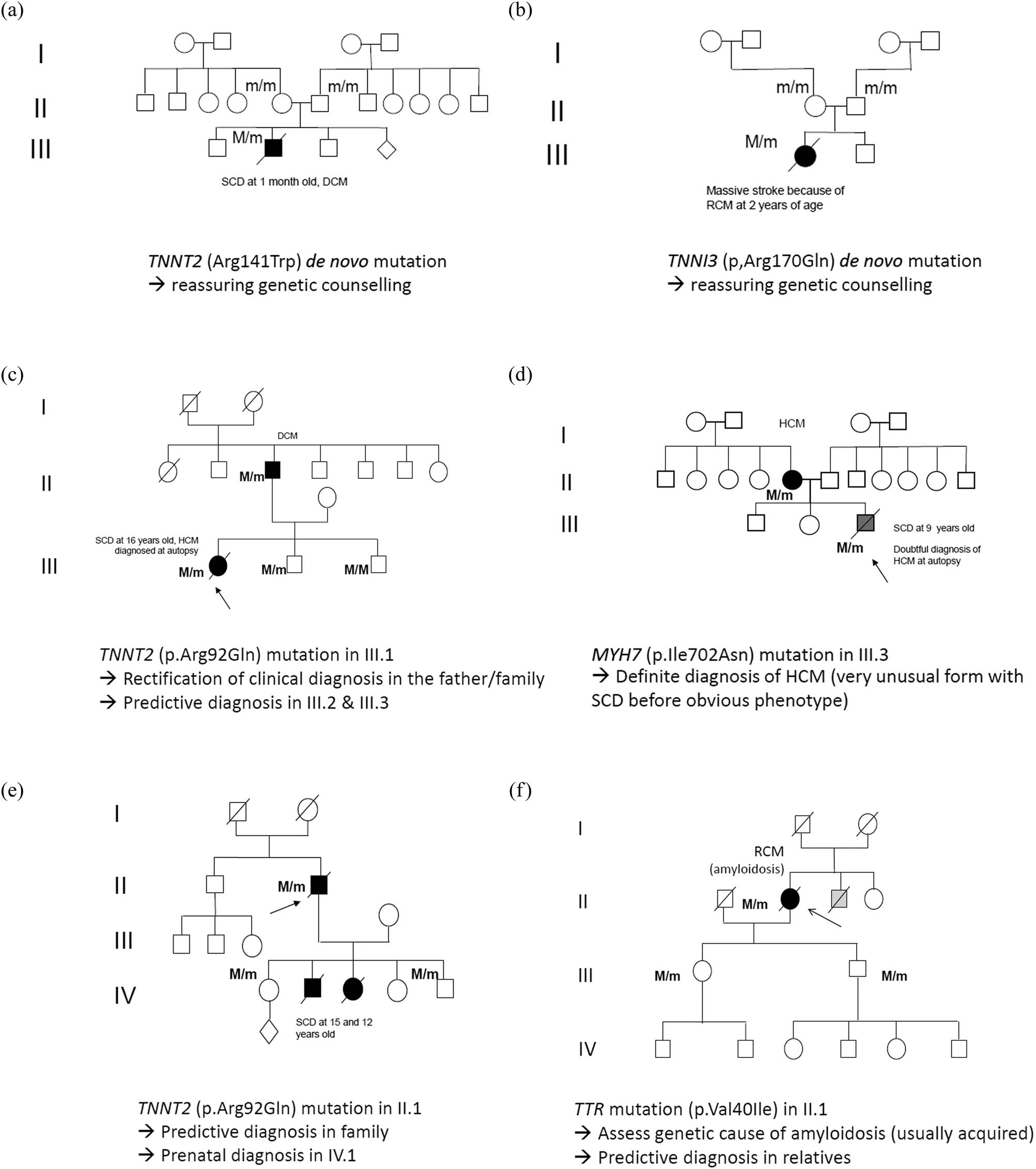
Selected pedigrees of patients with a causal variant and particular medical impact in the family.
5.3.1 Plan specific or early treatment based on precise subtype diagnosis
The identification of a given causal variant allowed in some cases the adjustment of the management of relatives. A causal variant in LMNA was identified in three patients (patient nos. 4, 12 and 15) whose relatives are therefore at higher risk of SCD (due to ventricular arrhythmia or conduction defect), and early use of a defibrillator and/or pacemaker should be considered in causal variant carriers of these families (with a lower threshold than used in patients with a similar cardiomyopathy but a different gene defect) [23]. Similarly, the TNNT2 causal variant identified in patient nos. 8 and 10 is considered malignant (previously reported as such in the literature) [24], and the threshold for defibrillator implantation is also lower in relatives who carry the causal variant.
5.3.2 De novo causal variant
In two families (patient no. 11 with massive stroke at 2 years of age revealing RCM; patient no. 13 with multiorgan failure at 1 month revealing DCM), further genetic analyses of the parents of the deceased indicated a de novo causal variant, since the variant was absent in the parents (blood leucocytes; Figures 2a and b). Therefore, molecular diagnosis in two cases allowed reassurance of the parents and siblings, since the risk of recurrence in the family was null or very low (theoretical risk of germline mosaicism).
5.3.3 Revision of the clinical diagnosis
In one family (patient no. 10; Figure 2c) with a history of DCM in the father (LVEF 30% and normal LV thickness), SCD occurred in his daughter during a volleyball session (16 years of age), with no prior symptoms or diagnosis and, surprisingly, HCM was diagnosed at autopsy (wall thickness 28 mm). Post-mortem genetic analysis of frozen heart tissue obtained from the daughter identified a heterozygous causal variant of TNNT2 gene and this variant was subsequently identified in the father. Therefore, the result of molecular testing definitely rectified the diagnosis of the cardiomyopathy subtype in the family, HCM and not DCM (the father probably exhibited an end-stage form of HCM mimicking DCM). In the case of patient no. 4 with a clinical diagnosis of ARVC, a causal variant in the LMNA gene was identified and also led to a rectification of diagnosis (biventricular cardiomyopathy or DCM due to laminopathy).
5.3.4 Assessment of the diagnosis of cardiomyopathy at a preclinical stage with SCD
SCD occurred in patient no. 5 (aged 9 years with no prior symptoms or diagnoses) with only borderline diagnosis of HCM at autopsy (with relatively normal LV wall thickness of 0.7–1.2 cm but microscopic abnormalities fibrosis and myocyte disarray). A causal variant in the MYH7 gene was identified in the child and also in the mother who exhibited apical HCM (Figure 2d). Molecular genetics was therefore able to elucidate the cause of SCD in the child and indicate a direct relation with the cardiomyopathy of the mother.
5.3.5 Prenatal diagnosis
SCD occurred at 66 years of age in a man with HCM (Figure 2e). His family history also highlighted two children with SCD (at 12 and 15 years of age). Post-mortem genetic studies in the index patient identified a causal variant in the TNNT2 gene, which was previously reported in other families with malignant HCM [7,24]. Predictive testing was proposed to relatives and the variant was present in two, including a woman who was later on pregnant and asked for prenatal diagnosis, which was agreed. Fortunately, the foetus did not carry the variant.
5.3.6 Assessment of the genetic cause of cardiomyopathy that is usually acquired
Cardiac amyloidosis was diagnosed on myocardial biopsy in a 74-year-old woman (patient no. 14; Figure 2f) with severe heart failure, who rapidly died. The most prevalent cause of amyloidosis is acquired (usually light-chain deposition) but sometimes may be genetic. Genetic analysis was performed at the request of the family on paraffin-embedded tissues. Identification of a TTR causal variant led us to affirm the genetic origin of the disease, with a 50% risk in first-degree relatives of carrying the variant. In contrast with the initial counselling of the family, cardiac screening and predictive genetic screening were therefore recommended (a daughter and a son were subsequently identified as carriers of the causal variant).
5.3.7 Predictive genetic testing and guidance of family screening and follow-up
In the usual context of delayed cardiac expression of cardiomyopathies, molecular diagnosis of deceased led to appropriate genetic counselling of relatives based on predictive testing (or pre-symptomatic testing), which was proposed to first-degree relatives in the 15 families with a causal variant. Early identification of causal variant carriers allowed close cardiac follow-up in order to deliver early and optimal treatment (including sports restriction, pharmacologic treatment and discussion about the use of a prophylactic defibrillator) and to reduce the risk of complications.
In the case of patient no. 10, the younger brother of the deceased daughter wanted to join the army. He underwent predictive testing, did not carry the causal variant and was, therefore, able to join the army and perform high-level physical activity without particular risk.
6 Discussion
We performed post-mortem genetic testing in 35 patients with SCD or other cardiovascular death and suspected cardiomyopathy. We identified a causal variant in 43% of these patients and various medical impacts of the results were observed in the families.
There is an increasing number of published reports of post-mortem genetic analyses [15,25,26,27] but usually in the context of SCD in young adults and normal autopsy [28,29,30]. Few post-mortem genetic studies have focused on autopsy in the case of suspected cardiomyopathy [16,17,18,19,20], and there has been no specific analysis of the clinical impact on the families.
Our report confirms the feasibility and significant yield of causal variant screening in this context. The technical feasibility of DNA extraction and quality control was good in our population, but this was expected since all analyses but one were performed using frozen fresh tissues (optimal for spleen or liver in our experience, slightly less for myocardium) or blood samples. This is in line with another report in the general field of post-mortem analyses [31]. Our results would have been probably worse in the case of more patients with paraffin-embedded tissues or fixed tissues, although the recent improved protocols also suggest feasibility in this situation [32]. The yield of causal variant screening was 43% in our cohort, which may be comparable to the figure of 30–60% in conventional testing in living patients with cardiomyopathy, depending on the precise subtype and sequencing technology [3,6]. In the context of post-mortem genetic analyses, a publication focused on suspected cardiomyopathies [16] obtained a yield of 22% (9 causal variants of 41 patients) with Sanger sequencing in a limited number of genes quite similar to those of the present report. In other recent publications using a large panel of genes and high-throughput sequencing technology, the yield of causal variant screening was 32–50% in a subgroup of patients with cardiomyopathy [18,19,20,26].
We observed that the medical impact of the genetic results was considerable in the families with a causal variant, with a clear added value as compared to prior suspicion of cardiomyopathy (based on autopsy or clinical data). Molecular results were used to make a diagnosis in a patient with uncertain or borderline cardiomyopathy on autopsy, illustrating a rare situation of early SCD at a preclinical stage of cardiomyopathy [4,5,33]. Molecular results rectified the cardiomyopathy subtype observed in other families, especially illustrating the difficult interpretation of the DCM phenotype, which might be the end-stage phase of another cardiomyopathy (such as HCM in one family) and lead to different cardiac follow-up and management of the relatives. In some families, molecular results led to the adjustment of treatment in relatives in the case of specific phenotype–genotype correlations, thus illustrating adjusted cardiac management (such as low threshold for prophylactic defibrillator implantation) in the presence of particular genes or causal variants responsible for a given cardiomyopathy [7,23,24]. Molecular results also led a family to ask for prenatal testing in a particular situation of a malignant causal variant and several cases of SCD. Finally, the molecular results enabled the offer of genetic counselling and predictive genetic testing to the first-degree relatives of all victims with a causal variant, which would not have been possible in most families, because there were no additional living relatives with a clear cardiomyopathy and therefore no additional index patients for primary causal variant screening. All these favourable medical issues illustrate the added value of post-mortem genetic analyses in the particular situation of suspected cardiomyopathy and show that these analyses provide further evidence for and strengthen the existing recommendations [11,12,13,34].
Our experience also underlines the complex ethical, legal and psychological issues associated with post-mortem genetic analyses [14,34,35]. To identify the referral person in the family after SCD, obtain written consent for genetic analyses and organise the information of the family about the genetic results, which was sometimes difficult and time-consuming. The legal framework for post-mortem genetic analyses may vary from country to country and could be clarified and improved in some countries, such as France. Post-traumatic stress in family members requires dedicated psychological support in most families. Close contact with forensic or medical and legal departments is required in order to provide tissues prepared in optimal conditions and then to transfer the material to the molecular genetics department.
All these various medical and nonmedical impacts or issues underline the need for close liaison between complementary expert teams and the utility of identifying multidisciplinary expert teams in that field as well as developing specific management at the national level, as recently suggested in European recommendations for the use of post-mortem genetic analyses [14].
7 Limitations
Our results may not apply to other causes of SCD, especially patients without suspected cardiomyopathy and with negative autopsy. Our results may also not apply to the use of large panels of genes with high-throughput sequencing technology, which may elucidate more causes of cardiovascular death and may improve the yield of mutation screening. Indeed, our present screening was not exhaustive since it was based on Sanger sequencing at the time of study. No further sequencing analyses on additional genes could be performed in this cohort due to insufficient sample quantity.
8 Conclusion
A causal variant was identified through post-mortem sequencing in nearly half of the patients with SCD or other cardiovascular death and suspected cardiomyopathy. The results had various medical impacts on families and enabled improved management of the families. Post-mortem molecular testing should be part of the management of family care after SCD or acute heart failure, even if cardiomyopathy is suspected at autopsy, since genetic findings provide additional important information useful for the management of relatives.
Acknowledgments
This work was supported by the PHRC (Programme hospitalier de Recherche Clinique) AGEMOS network and the PROMEX charitable foundation, with no role in the design, analysis, interpretation of data or preparation of the manuscript. Genetic screening was performed at APHP, Hôpitaux Universitaires Pitié Salpêtrière.
Conflict of interest: The authors report no potential conflict of interest in relation to the manuscript.
References
[1] Elliott P, Andersson B, Arbustini E, Bilinska Z, Cecchi F, Charron P, et al. Classification of the cardiomyopathies: a position statement from the European Society of Cardiology Working Group on Myocardial and Pericardial Diseases. Eur Heart J. 2008;29:270–6. 10.1093/eurheartj/ehm342Suche in Google Scholar PubMed
[2] Maron BJ, Towbin JA, Thiene G, Antzelevitch C, Corrado D, Arnett D, et al. Contemporary definitions and classification of the cardiomyopathies: an American Heart Association Scientific Statement from the Council on Clinical Cardiology, Heart Failure and Transplantation Committee; Quality of Care and Outcomes Research and Functional Genomics and Translational Biology Interdisciplinary Working Groups; and Council on Epidemiology and Prevention. Circulation. 2006;113:1807–16. 10.1161/circulationaha.106.174287Suche in Google Scholar
[3] Walsh R, Thomson KL, Ware JS, Funke BH, Woodley J, McGuire KJ, et al. Reassessment of Mendelian gene pathogenicity using 7,855 cardiomyopathy cases and 60,706 reference samples. Genet Med. 2017;19(2):192–203. 10.1038/gim.2016.90Suche in Google Scholar PubMed PubMed Central
[4] Burke MA, Cook SA, Seidman JG, Seidman CE. Clinical and mechanistic insights into the genetics of cardiomyopathy. J Am Coll Cardiol. 2016;68(25):2871–86. 10.1016/j.jacc.2016.08.079Suche in Google Scholar PubMed PubMed Central
[5] Marian AJ, van Rooij E, Roberts R. Genetics and genomics of single-gene cardiovascular diseases: common hereditary cardiomyopathies as prototypes of single-gene disorders. J Am Coll Cardiol. 2016;68(25):2831–49. 10.1016/j.jacc.2016.09.968Suche in Google Scholar PubMed PubMed Central
[6] Fressart V, Duthoit G, Donal E, Probst V, Deharo JC, Chevalier P, et al. Desmosomal gene analysis in arrhythmogenic right ventricular dysplasia/cardiomyopathy: spectrum of mutations and clinical impact in practice. Europace. 2010;12:861–8. 10.1093/europace/euq104Suche in Google Scholar PubMed
[7] Ho CY, Charron P, Richard P, Girolami F, Van Spaendonck-Zwarts KY, Pinto Y. Genetic advances in sarcomeric cardiomyopathies: state of the art. Cardiovasc Res. 2015;105(4):397–408. 10.1093/cvr/cvv025Suche in Google Scholar PubMed PubMed Central
[8] Bagnall RD, Weintraub RG, Ingles J, Ingles J, Duflou J, Yeates L, et al. A prospective study of sudden cardiac death among children and young adults. New Engl J Med. 2016;374(25):2441–52. 10.1056/NEJMoa1510687Suche in Google Scholar PubMed
[9] Lambiase PD, Elliott PM. Genetic aspects and investigation of sudden death in young people. Clin Med. 2008;8:607–10. 10.7861/clinmedicine.8-6-607Suche in Google Scholar PubMed PubMed Central
[10] Maron BJ, Doerer JJ, Haas TS, Tierney DM, Mueller FO. Sudden deaths in young competitive athletes: analysis of 1866 deaths in the United States, 1980–2006. Circulation. 2009;119(8):1085–92. 10.1161/circulationaha.108.804617Suche in Google Scholar PubMed
[11] Elliott PM, Anastasakis A, Borger MA, Borggrefe M, Cecchi F, Charron P, et al. ESC guidelines on diagnosis and management of hypertrophic cardiomyopathy: the Task Force for the Diagnosis and Management of Hypertrophic Cardiomyopathy of the European Society of Cardiology (ESC). Eur Heart J. 2014;35:2733–79. 10.1093/eurheartj/ehu284Suche in Google Scholar PubMed
[12] Priori SG, Blomström-Lundqvist C, Mazzanti A, Blom N, Borggrefe M, Camm J, et al. 2015 ESC Guidelines for the management of patients with ventricular arrhythmias and the prevention of sudden cardiac death; The Task Force for the Management of Patients with Ventricular Arrhythmias and the Prevention of Sudden Cardiac Death of the European Society of Cardiology (ESC). Eur Heart J. 2015;36:2793–867. 10.1093/eurheartj/ehv316Suche in Google Scholar PubMed
[13] Ackerman MJ, Priori SG, Willems S, Berul C, Brugada R, Calkins H, et al. HRS/EHRA expert consensus statement on the state of genetic testing for the channelopathies and cardiomyopathies. Heart Rhythm. 2011;8(8):1308–39. 10.1016/j.hrthm.2011.05.020Suche in Google Scholar PubMed
[14] Fellmann F, van El CG, Charron P, Michaud K, Howard HC, Boers SN, et al. European recommendations integrating genetic testing into multidisciplinary management of sudden cardiac death. Eur J Hum Genet. 2019;27(12):1763–73. 10.1038/s41431-019-0445-ySuche in Google Scholar PubMed PubMed Central
[15] Semsarian C, Ingles J, Wilde AA. Sudden cardiac death in the young: the molecular autopsy and a practical approach to surviving relatives. Eur Heart J. 2015;36(21):1290–6. 10.1093/eurheartj/ehv063Suche in Google Scholar PubMed
[16] Larsen MK, Nissen PH, Berge KE, Leren TP, Kristensen IB, Jensen HK, et al. Molecular autopsy in young sudden cardiac death victims with suspected cardiomyopathy. Forensic Sci Int. 2012;219:33–8. 10.1016/j.forsciint.2011.11.020Suche in Google Scholar PubMed
[17] Cann F, Corbett M, O'Sullivan D, Tennant S, Hailey H, Grieve JH, et al. Phenotype-driven molecular autopsy for sudden cardiac death. Clin Genet. 2017;91(1):22–9. 10.1111/cge.12778Suche in Google Scholar PubMed
[18] Alcalde M, Campuzano O, Allegue C, Torres M, Arbelo E, Partemi S, et al. Sequenom MassARRAY approach in the arrhythmogenic right ventricular cardiomyopathy post-mortem setting: clinical and forensic implications. Int J Leg Med. 2015;129:1–10. 10.1007/s00414-014-0996-ySuche in Google Scholar PubMed
[19] Hertz CL, Christiansen SL, Ferrero-Miliani L, Dahl M, Weeke PE, LuCamp, et al. Next-generation sequencing of 100 candidate genes in young victims of suspected sudden cardiac death with structural abnormalities of the heart. Int J Leg Med. 2016;130:91–102. 10.1007/s00414-015-1261-8Suche in Google Scholar PubMed
[20] Lahrouchi N, Raju H, Lodder EM, Papatheodorou S, Miles C, Ware JS, et al. The yield of postmortem genetic testing in sudden death cases with structural findings at autopsy. Eur J Hum Genet. 2020;28(1):17–22. 10.1038/s41431-019-0500-8, Epub 2019 Sep 18.Suche in Google Scholar PubMed PubMed Central
[21] Basso C, Aguilera B, Banner J, Cohle S, d’Amati G, Henriques de Gouveia R, et al. 2017 update from the association for European Cardiovascular Pathology. Virchows Arch. 2017;471(6):691–705. 10.1007/s00428-017-2221-0Suche in Google Scholar PubMed PubMed Central
[22] Richards S, Aziz N, Bale S, Bick D, Das S, Gastier-Foster J, et al. Standards and guidelines for the interpretation of sequence variants: a joint consensus recommendation of the American College of Medical Genetics and Genomics and the Association for Molecular Pathology. Genet Med. 2015;17:405–24. 10.1038/gim.2015.30Suche in Google Scholar PubMed PubMed Central
[23] van Rijsingen IA, Arbustini E, Elliott PM, Mogensen J, Hermans-van Ast JF, van der Kooi AJ, et al. Risk factors for malignant ventricular arrhythmias in lamin A/C mutation carriers a European cohort study. J Am Coll Cardiol. 2012;59(5):493–500. 10.1016/j.jacc.2011.08.078Suche in Google Scholar PubMed
[24] Watkins H, McKenna WJ, Thierfelder L, Suk HJ, Anan R, O'Donoghue A, et al. Mutations in the genes for cardiac troponin T and alpha-tropomyosin in hypertrophic cardiomyopathy. N Engl J Med. 1995;332(16):1058–64. 10.1056/NEJM199504203321603Suche in Google Scholar PubMed
[25] Torkamani A, Muse ED, Spencer EG, Rueda M, Wagner GN, Lucas JR, et al. Molecular autopsy for sudden unexpected death. JAMA. 2016;316(14):1492–4. 10.1001/jama.2016.11445Suche in Google Scholar PubMed PubMed Central
[26] Sanchez O, Campuzano O, Fernández-Falgueras A, Sarquella-Brugada G, Cesar S, Mademont I, et al. Natural and undetermined sudden death: value of post-mortem genetic investigation. PLoS One. 2016;11(12):e0167358. 10.1371/journal.pone.0167358, eCollection 2016Suche in Google Scholar PubMed PubMed Central
[27] Mellor G, Laksman ZWM, Tadros R, Roberts JD, Gerull B, Simpson CS, et al. Genetic testing in the evaluation of unexplained cardiac arrest: from the CASPER (CardiacArrest Survivors With Preserved Ejection Fraction Registry). Circ Cardiovasc Genet. 2017;10(3):e001686. 10.1161/CIRCGENETICS.116.001686Suche in Google Scholar PubMed
[28] Lahrouchi N, Raju H, Lodder EM, Papatheodorou E, Ware JS, Papadakis M, et al. Utility of post-mortem genetic testing in cases of sudden arrhythmic death syndrome. J Am Coll Cardiol. 2017;69(17):2134–45. 10.1016/j.jacc.2017.02.046Suche in Google Scholar PubMed PubMed Central
[29] Campuzano O, Sanchez-Molero O, Allegue C, Coll M, Mademont-Soler I, Selga E, et al. Post-mortem genetic analysis in juvenile cases of sudden cardiac death. Forensic Sci Int. 2014;245:30–7. 10.1016/j.forsciint.2014.10.004Suche in Google Scholar PubMed
[30] Nunn LM, Lopes LR, Syrris P, Murphy C, Plagnol V, Firman E, et al. Diagnostic yield of molecular autopsy in patients with sudden arrhythmic death syndrome using targeted exome sequencing. Europace. 2016;18(6):888–96. 10.1093/europace/euv285Suche in Google Scholar PubMed PubMed Central
[31] Carturan E, Tester DJ, Brost BC, Basso C, Thiene G, Ackerman MJ. Postmortem genetic testing for conventional autopsy-negative sudden unexplained death: an evaluation of different DNA extraction protocols and the feasibility of mutation al analysis from archival paraffin-embedded heart tissue. Am J Clin Pathol. 2008;129:391–7. 10.1309/VLA7TT9EQ05FFVN4Suche in Google Scholar PubMed PubMed Central
[32] Bagnall RD, Ingles J, Yeates L, Berkovic SF, Semsarian C. Exome sequencing-based molecular autopsy of formalin-fixed paraffin-embedded tissue after sudden death. Genet Med. 2017;19(10):1127–33. 10.1038/gim.2017.15Suche in Google Scholar PubMed
[33] Ho CY. Hypertrophic cardiomyopathy: preclinical and early phenotype. J Cardiovasc Transl Res. 2009;2(4):462–70. 10.1007/s12265-009-9124-7Suche in Google Scholar PubMed
[34] Wilhelm M, Bolliger SA, Bartsch C, Fokstuen S, Gräni C, Martos V, et al. Sudden cardiac death in forensic medicine – Swiss recommendations for a multidisciplinary approach. Swiss Med Wkly. 2015;145:w14129. 10.4414/smw.2015.14129Suche in Google Scholar PubMed
[35] Kauferstein S, Kiehne N, Jenewein T, Biel S, Kopp M, König R, et al. Genetic analysis of sudden unexplained death: a multidisciplinary approach. Forensic Sci Int. 2013;229:122–7. 10.1016/j.forsciint.2013.03.050Suche in Google Scholar PubMed
© 2020 Isabelle Marey et al., published by De Gruyter
This work is licensed under the Creative Commons Attribution 4.0 International License.
Artikel in diesem Heft
- Research Article
- MicroRNA-451b participates in coronary heart disease by targeting VEGFA
- Case Report
- A combination therapy for Kawasaki disease with severe complications: a case report
- Vitamin E for prevention of biofilm-caused Healthcare-associated infections
- Research Article
- Differential diagnosis: retroperitoneal fibrosis and oncological diseases
- Optimization of the Convolutional Neural Networks for Automatic Detection of Skin Cancer
- NEAT1 promotes LPS-induced inflammatory injury in macrophages by regulating miR-17-5p/TLR4
- Plasma matrix metalloproteinase-9 and tissue inhibitor of matrix metalloproteinase-1 as prognostic biomarkers in critically ill patients
- Effects of extracorporeal magnetic stimulation in fecal incontinence
- Case Report
- Mixed germ cell tumor of the endometrium: a case report and literature review
- Bowel perforation after ventriculoperitoneal-shunt placement: case report and review of the literature
- Research Article
- Prognostic value of lncRNA HOTAIR in colorectal cancer : a meta-analysis
- Case Report
- Treatment of insulinomas by laparoscopic radiofrequency ablation: case reports and literature review
- Research Article
- The characteristics and nomogram for primary lung papillary adenocarcinoma
- Undiagnosed pheochromocytoma presenting as a pancreatic tumor: A case report
- Bioinformatics Analysis of the Expression of ATP binding cassette subfamily C member 3 (ABCC3) in Human Glioma
- Diagnostic value of recombinant heparin-binding hemagglutinin adhesin protein in spinal tuberculosis
- Primary cutaneous DLBCL non-GCB type: challenges of a rare case
- LINC00152 knock-down suppresses esophageal cancer by EGFR signaling pathway
- Case Report
- Life-threatening anaemia in patient with hereditary haemorrhagic telangiectasia (Rendu-Osler-Weber syndrome)
- Research Article
- QTc interval predicts disturbed circadian blood pressure variation
- Shoulder ultrasound in the diagnosis of the suprascapular neuropathy in athletes
- The number of negative lymph nodes is positively associated with survival in esophageal squamous cell carcinoma patients in China
- Differentiation of pontine infarction by size
- RAF1 expression is correlated with HAF, a parameter of liver computed tomographic perfusion, and may predict the early therapeutic response to sorafenib in advanced hepatocellular carcinoma patients
- LncRNA ZEB1-AS1 regulates colorectal cancer cells by miR-205/YAP1 axis
- Tissue coagulation in laser hemorrhoidoplasty – an experimental study
- Classification of pathological types of lung cancer from CT images by deep residual neural networks with transfer learning strategy
- Enhanced Recovery after Surgery for Lung Cancer Patients
- Case Report
- Streptococcus pneumoniae-associated thrombotic microangiopathy in an immunosuppressed adult
- Research Article
- The characterization of Enterococcus genus: resistance mechanisms and inflammatory bowel disease
- Case Report
- Inflammatory fibroid polyp: an unusual cause of abdominal pain in the upper gastrointestinal tract A case report
- Research Article
- microRNA-204-5p participates in atherosclerosis via targeting MMP-9
- LncRNA LINC00152 promotes laryngeal cancer progression by sponging miR-613
- Can keratin scaffolds be used for creating three-dimensional cell cultures?
- miRNA-186 improves sepsis induced renal injury via PTEN/PI3K/AKT/P53 pathway
- Case Report
- Delayed bowel perforation after routine distal loopogram prior to ileostomy closure
- Research Article
- Diagnostic accuracy of MALDI-TOF mass spectrometry for the direct identification of clinical pathogens from urine
- The R219K polymorphism of the ATP binding cassette subfamily A member 1 gene and susceptibility to ischemic stroke in Chinese population
- miR-92 regulates the proliferation, migration, invasion and apoptosis of glioma cells by targeting neogenin
- Clinicopathological features of programmed cell death-ligand 1 expression in patients with oral squamous cell carcinoma
- NF2 inhibits proliferation and cancer stemness in breast cancer
- Body composition indices and cardiovascular risk in type 2 diabetes. CV biomarkers are not related to body composition
- S100A6 promotes proliferation and migration of HepG2 cells via increased ubiquitin-dependent degradation of p53
- Review Article
- Focus on localized laryngeal amyloidosis: management of five cases
- Research Article
- NEAT1 aggravates sepsis-induced acute kidney injury by sponging miR-22-3p
- Pericentric inversion in chromosome 1 and male infertility
- Increased atherogenic index in the general hearing loss population
- Prognostic role of SIRT6 in gastrointestinal cancers: a meta-analysis
- The complexity of molecular processes in osteoarthritis of the knee joint
- Interleukin-6 gene −572 G > C polymorphism and myocardial infarction risk
- Case Report
- Severe anaphylactic reaction to cisatracurium during anesthesia with cross-reactivity to atracurium
- Research Article
- Rehabilitation training improves nerve injuries by affecting Notch1 and SYN
- Case Report
- Myocardial amyloidosis following multiple myeloma in a 38-year-old female patient: A case report
- Research Article
- Identification of the hub genes RUNX2 and FN1 in gastric cancer
- miR-101-3p sensitizes non-small cell lung cancer cells to irradiation
- Distinct functions and prognostic values of RORs in gastric cancer
- Clinical impact of post-mortem genetic testing in cardiac death and cardiomyopathy
- Efficacy of pembrolizumab for advanced/metastatic melanoma: a meta-analysis
- Review Article
- The role of osteoprotegerin in the development, progression and management of abdominal aortic aneurysms
- Research Article
- Identification of key microRNAs of plasma extracellular vesicles and their diagnostic and prognostic significance in melanoma
- miR-30a-3p participates in the development of asthma by targeting CCR3
- microRNA-491-5p protects against atherosclerosis by targeting matrix metallopeptidase-9
- Bladder-embedded ectopic intrauterine device with calculus
- Case Report
- Mycobacterial identification on homogenised biopsy facilitates the early diagnosis and treatment of laryngeal tuberculosis
- Research Article
- The will of young minors in the terminal stage of sickness: A case report
- Extended perfusion protocol for MS lesion quantification
- Identification of four genes associated with cutaneous metastatic melanoma
- Case Report
- Thalidomide-induced serious RR interval prolongation (longest interval >5.0 s) in multiple myeloma patient with rectal cancer: A case report
- Research Article
- Voluntary exercise and cardiac remodeling in a myocardial infarction model
- Electromyography as an intraoperative test to assess the quality of nerve anastomosis – experimental study on rats
- Case Report
- CT findings of severe novel coronavirus disease (COVID-19): A case report of Heilongjiang Province, China
- Commentary
- Directed differentiation into insulin-producing cells using microRNA manipulation
- Research Article
- Culture-negative infective endocarditis (CNIE): impact on postoperative mortality
- Extracorporeal shock wave therapy for the treatment of chronic pelvic pain syndrome
- Plasma microRNAs in human left ventricular reverse remodelling
- Bevacizumab for non-small cell lung cancer patients with brain metastasis: A meta-analysis
- Risk factors for cerebral vasospasm in patients with aneurysmal subarachnoid hemorrhage
- Problems and solutions of personal protective equipment doffing in COVID-19
- Evaluation of COVID-19 based on ACE2 expression in normal and cancer patients
- Review Article
- Gastroenterological complications in kidney transplant patients
- Research Article
- CXCL13 concentration in latent syphilis patients with treatment failure
- A novel age-biomarker-clinical history prognostic index for heart failure with reduced left ventricular ejection fraction
- Case Report
- Clinicopathological analysis of composite lymphoma: A two-case report and literature review
- Trastuzumab-induced thrombocytopenia after eight cycles of trastuzumab treatment
- Research Article
- Inhibition of vitamin D analog eldecalcitol on hepatoma in vitro and in vivo
- CCTs as new biomarkers for the prognosis of head and neck squamous cancer
- Effect of glucagon-like peptide-1 receptor agonists on adipokine level of nonalcoholic fatty liver disease in rats fed high-fat diet
- 72 hour Holter monitoring, 7 day Holter monitoring, and 30 day intermittent patient-activated heart rhythm recording in detecting arrhythmias in cryptogenic stroke patients free from arrhythmia in a screening 24 h Holter
- FOXK2 downregulation suppresses EMT in hepatocellular carcinoma
- Case Report
- Total parenteral nutrition-induced Wernicke’s encephalopathy after oncologic gastrointestinal surgery
- Research Article
- Clinical prediction for outcomes of patients with acute-on-chronic liver failure associated with HBV infection: A new model establishment
- Case Report
- Combination of chest CT and clinical features for diagnosis of 2019 novel coronavirus pneumonia
- Research Article
- Clinical significance and potential mechanisms of miR-223-3p and miR-204-5p in squamous cell carcinoma of head and neck: a study based on TCGA and GEO
- Review Article
- Hemoperitoneum caused by spontaneous rupture of hepatocellular carcinoma in noncirrhotic liver. A case report and systematic review
- Research Article
- Voltage-dependent anion channels mediated apoptosis in refractory epilepsy
- Prognostic factors in stage I gastric cancer: A retrospective analysis
- Circulating irisin is linked to bone mineral density in geriatric Chinese men
- Case Report
- A family study of congenital dysfibrinogenemia caused by a novel mutation in the FGA gene: A case report
- Research Article
- CBCT for estimation of the cemento-enamel junction and crestal bone of anterior teeth
- Case Report
- Successful de-escalation antibiotic therapy using cephamycins for sepsis caused by extended-spectrum beta-lactamase-producing Enterobacteriaceae bacteremia: A sequential 25-case series
- Research Article
- Influence factors of extra-articular manifestations in rheumatoid arthritis
- Assessment of knowledge of use of electronic cigarette and its harmful effects among young adults
- Predictive factors of progression to severe COVID-19
- Procedural sedation and analgesia for percutaneous trans-hepatic biliary drainage: Randomized clinical trial for comparison of two different concepts
- Acute chemoradiotherapy toxicity in cervical cancer patients
- IGF-1 regulates the growth of fibroblasts and extracellular matrix deposition in pelvic organ prolapse
- NANOG regulates the proliferation of PCSCs via the TGF-β1/SMAD pathway
- An immune-relevant signature of nine genes as a prognostic biomarker in patients with gastric carcinoma
- Computer-aided diagnosis of skin cancer based on soft computing techniques
- MiR-1225-5p acts as tumor suppressor in glioblastoma via targeting FNDC3B
- miR-300/FA2H affects gastric cancer cell proliferation and apoptosis
- Hybrid treatment of fibroadipose vascular anomaly: A case report
- Surgical treatment for common hepatic aneurysm. Original one-step technique
- Neuropsychiatric symptoms, quality of life and caregivers’ burden in dementia
- Predictor of postoperative dyspnea for Pierre Robin Sequence infants
- Long non-coding RNA FOXD2-AS1 promotes cell proliferation, metastasis and EMT in glioma by sponging miR-506-5p
- Analysis of expression and prognosis of KLK7 in ovarian cancer
- Circular RNA circ_SETD2 represses breast cancer progression via modulating the miR-155-5p/SCUBE2 axis
- Glial cell induced neural differentiation of bone marrow stromal cells
- Case Report
- Moraxella lacunata infection accompanied by acute glomerulonephritis
- Research Article
- Diagnosis of complication in lung transplantation by TBLB + ROSE + mNGS
- Case Report
- Endometrial cancer in a renal transplant recipient: A case report
- Research Article
- Downregulation of lncRNA FGF12-AS2 suppresses the tumorigenesis of NSCLC via sponging miR-188-3p
- Case Report
- Splenic abscess caused by Streptococcus anginosus bacteremia secondary to urinary tract infection: a case report and literature review
- Research Article
- Advances in the role of miRNAs in the occurrence and development of osteosarcoma
- Rheumatoid arthritis increases the risk of pleural empyema
- Effect of miRNA-200b on the proliferation and apoptosis of cervical cancer cells by targeting RhoA
- LncRNA NEAT1 promotes gastric cancer progression via miR-1294/AKT1 axis
- Key pathways in prostate cancer with SPOP mutation identified by bioinformatic analysis
- Comparison of low-molecular-weight heparins in thromboprophylaxis of major orthopaedic surgery – randomized, prospective pilot study
- Case Report
- A case of SLE with COVID-19 and multiple infections
- Research Article
- Circular RNA hsa_circ_0007121 regulates proliferation, migration, invasion, and epithelial–mesenchymal transition of trophoblast cells by miR-182-5p/PGF axis in preeclampsia
- SRPX2 boosts pancreatic cancer chemoresistance by activating PI3K/AKT axis
- Case Report
- A case report of cervical pregnancy after in vitro fertilization complicated by tuberculosis and a literature review
- Review Article
- Serrated lesions of the colon and rectum: Emergent epidemiological data and molecular pathways
- Research Article
- Biological properties and therapeutic effects of plant-derived nanovesicles
- Case Report
- Clinical characterization of chromosome 5q21.1–21.3 microduplication: A case report
- Research Article
- Serum calcium levels correlates with coronary artery disease outcomes
- Rapunzel syndrome with cholangitis and pancreatitis – A rare case report
- Review Article
- A review of current progress in triple-negative breast cancer therapy
- Case Report
- Peritoneal-cutaneous fistula successfully treated at home: A case report and literature review
- Research Article
- Trim24 prompts tumor progression via inducing EMT in renal cell carcinoma
- Degradation of connexin 50 protein causes waterclefts in human lens
- GABRD promotes progression and predicts poor prognosis in colorectal cancer
- The lncRNA UBE2R2-AS1 suppresses cervical cancer cell growth in vitro
- LncRNA FOXD3-AS1/miR-135a-5p function in nasopharyngeal carcinoma cells
- MicroRNA-182-5p relieves murine allergic rhinitis via TLR4/NF-κB pathway
Artikel in diesem Heft
- Research Article
- MicroRNA-451b participates in coronary heart disease by targeting VEGFA
- Case Report
- A combination therapy for Kawasaki disease with severe complications: a case report
- Vitamin E for prevention of biofilm-caused Healthcare-associated infections
- Research Article
- Differential diagnosis: retroperitoneal fibrosis and oncological diseases
- Optimization of the Convolutional Neural Networks for Automatic Detection of Skin Cancer
- NEAT1 promotes LPS-induced inflammatory injury in macrophages by regulating miR-17-5p/TLR4
- Plasma matrix metalloproteinase-9 and tissue inhibitor of matrix metalloproteinase-1 as prognostic biomarkers in critically ill patients
- Effects of extracorporeal magnetic stimulation in fecal incontinence
- Case Report
- Mixed germ cell tumor of the endometrium: a case report and literature review
- Bowel perforation after ventriculoperitoneal-shunt placement: case report and review of the literature
- Research Article
- Prognostic value of lncRNA HOTAIR in colorectal cancer : a meta-analysis
- Case Report
- Treatment of insulinomas by laparoscopic radiofrequency ablation: case reports and literature review
- Research Article
- The characteristics and nomogram for primary lung papillary adenocarcinoma
- Undiagnosed pheochromocytoma presenting as a pancreatic tumor: A case report
- Bioinformatics Analysis of the Expression of ATP binding cassette subfamily C member 3 (ABCC3) in Human Glioma
- Diagnostic value of recombinant heparin-binding hemagglutinin adhesin protein in spinal tuberculosis
- Primary cutaneous DLBCL non-GCB type: challenges of a rare case
- LINC00152 knock-down suppresses esophageal cancer by EGFR signaling pathway
- Case Report
- Life-threatening anaemia in patient with hereditary haemorrhagic telangiectasia (Rendu-Osler-Weber syndrome)
- Research Article
- QTc interval predicts disturbed circadian blood pressure variation
- Shoulder ultrasound in the diagnosis of the suprascapular neuropathy in athletes
- The number of negative lymph nodes is positively associated with survival in esophageal squamous cell carcinoma patients in China
- Differentiation of pontine infarction by size
- RAF1 expression is correlated with HAF, a parameter of liver computed tomographic perfusion, and may predict the early therapeutic response to sorafenib in advanced hepatocellular carcinoma patients
- LncRNA ZEB1-AS1 regulates colorectal cancer cells by miR-205/YAP1 axis
- Tissue coagulation in laser hemorrhoidoplasty – an experimental study
- Classification of pathological types of lung cancer from CT images by deep residual neural networks with transfer learning strategy
- Enhanced Recovery after Surgery for Lung Cancer Patients
- Case Report
- Streptococcus pneumoniae-associated thrombotic microangiopathy in an immunosuppressed adult
- Research Article
- The characterization of Enterococcus genus: resistance mechanisms and inflammatory bowel disease
- Case Report
- Inflammatory fibroid polyp: an unusual cause of abdominal pain in the upper gastrointestinal tract A case report
- Research Article
- microRNA-204-5p participates in atherosclerosis via targeting MMP-9
- LncRNA LINC00152 promotes laryngeal cancer progression by sponging miR-613
- Can keratin scaffolds be used for creating three-dimensional cell cultures?
- miRNA-186 improves sepsis induced renal injury via PTEN/PI3K/AKT/P53 pathway
- Case Report
- Delayed bowel perforation after routine distal loopogram prior to ileostomy closure
- Research Article
- Diagnostic accuracy of MALDI-TOF mass spectrometry for the direct identification of clinical pathogens from urine
- The R219K polymorphism of the ATP binding cassette subfamily A member 1 gene and susceptibility to ischemic stroke in Chinese population
- miR-92 regulates the proliferation, migration, invasion and apoptosis of glioma cells by targeting neogenin
- Clinicopathological features of programmed cell death-ligand 1 expression in patients with oral squamous cell carcinoma
- NF2 inhibits proliferation and cancer stemness in breast cancer
- Body composition indices and cardiovascular risk in type 2 diabetes. CV biomarkers are not related to body composition
- S100A6 promotes proliferation and migration of HepG2 cells via increased ubiquitin-dependent degradation of p53
- Review Article
- Focus on localized laryngeal amyloidosis: management of five cases
- Research Article
- NEAT1 aggravates sepsis-induced acute kidney injury by sponging miR-22-3p
- Pericentric inversion in chromosome 1 and male infertility
- Increased atherogenic index in the general hearing loss population
- Prognostic role of SIRT6 in gastrointestinal cancers: a meta-analysis
- The complexity of molecular processes in osteoarthritis of the knee joint
- Interleukin-6 gene −572 G > C polymorphism and myocardial infarction risk
- Case Report
- Severe anaphylactic reaction to cisatracurium during anesthesia with cross-reactivity to atracurium
- Research Article
- Rehabilitation training improves nerve injuries by affecting Notch1 and SYN
- Case Report
- Myocardial amyloidosis following multiple myeloma in a 38-year-old female patient: A case report
- Research Article
- Identification of the hub genes RUNX2 and FN1 in gastric cancer
- miR-101-3p sensitizes non-small cell lung cancer cells to irradiation
- Distinct functions and prognostic values of RORs in gastric cancer
- Clinical impact of post-mortem genetic testing in cardiac death and cardiomyopathy
- Efficacy of pembrolizumab for advanced/metastatic melanoma: a meta-analysis
- Review Article
- The role of osteoprotegerin in the development, progression and management of abdominal aortic aneurysms
- Research Article
- Identification of key microRNAs of plasma extracellular vesicles and their diagnostic and prognostic significance in melanoma
- miR-30a-3p participates in the development of asthma by targeting CCR3
- microRNA-491-5p protects against atherosclerosis by targeting matrix metallopeptidase-9
- Bladder-embedded ectopic intrauterine device with calculus
- Case Report
- Mycobacterial identification on homogenised biopsy facilitates the early diagnosis and treatment of laryngeal tuberculosis
- Research Article
- The will of young minors in the terminal stage of sickness: A case report
- Extended perfusion protocol for MS lesion quantification
- Identification of four genes associated with cutaneous metastatic melanoma
- Case Report
- Thalidomide-induced serious RR interval prolongation (longest interval >5.0 s) in multiple myeloma patient with rectal cancer: A case report
- Research Article
- Voluntary exercise and cardiac remodeling in a myocardial infarction model
- Electromyography as an intraoperative test to assess the quality of nerve anastomosis – experimental study on rats
- Case Report
- CT findings of severe novel coronavirus disease (COVID-19): A case report of Heilongjiang Province, China
- Commentary
- Directed differentiation into insulin-producing cells using microRNA manipulation
- Research Article
- Culture-negative infective endocarditis (CNIE): impact on postoperative mortality
- Extracorporeal shock wave therapy for the treatment of chronic pelvic pain syndrome
- Plasma microRNAs in human left ventricular reverse remodelling
- Bevacizumab for non-small cell lung cancer patients with brain metastasis: A meta-analysis
- Risk factors for cerebral vasospasm in patients with aneurysmal subarachnoid hemorrhage
- Problems and solutions of personal protective equipment doffing in COVID-19
- Evaluation of COVID-19 based on ACE2 expression in normal and cancer patients
- Review Article
- Gastroenterological complications in kidney transplant patients
- Research Article
- CXCL13 concentration in latent syphilis patients with treatment failure
- A novel age-biomarker-clinical history prognostic index for heart failure with reduced left ventricular ejection fraction
- Case Report
- Clinicopathological analysis of composite lymphoma: A two-case report and literature review
- Trastuzumab-induced thrombocytopenia after eight cycles of trastuzumab treatment
- Research Article
- Inhibition of vitamin D analog eldecalcitol on hepatoma in vitro and in vivo
- CCTs as new biomarkers for the prognosis of head and neck squamous cancer
- Effect of glucagon-like peptide-1 receptor agonists on adipokine level of nonalcoholic fatty liver disease in rats fed high-fat diet
- 72 hour Holter monitoring, 7 day Holter monitoring, and 30 day intermittent patient-activated heart rhythm recording in detecting arrhythmias in cryptogenic stroke patients free from arrhythmia in a screening 24 h Holter
- FOXK2 downregulation suppresses EMT in hepatocellular carcinoma
- Case Report
- Total parenteral nutrition-induced Wernicke’s encephalopathy after oncologic gastrointestinal surgery
- Research Article
- Clinical prediction for outcomes of patients with acute-on-chronic liver failure associated with HBV infection: A new model establishment
- Case Report
- Combination of chest CT and clinical features for diagnosis of 2019 novel coronavirus pneumonia
- Research Article
- Clinical significance and potential mechanisms of miR-223-3p and miR-204-5p in squamous cell carcinoma of head and neck: a study based on TCGA and GEO
- Review Article
- Hemoperitoneum caused by spontaneous rupture of hepatocellular carcinoma in noncirrhotic liver. A case report and systematic review
- Research Article
- Voltage-dependent anion channels mediated apoptosis in refractory epilepsy
- Prognostic factors in stage I gastric cancer: A retrospective analysis
- Circulating irisin is linked to bone mineral density in geriatric Chinese men
- Case Report
- A family study of congenital dysfibrinogenemia caused by a novel mutation in the FGA gene: A case report
- Research Article
- CBCT for estimation of the cemento-enamel junction and crestal bone of anterior teeth
- Case Report
- Successful de-escalation antibiotic therapy using cephamycins for sepsis caused by extended-spectrum beta-lactamase-producing Enterobacteriaceae bacteremia: A sequential 25-case series
- Research Article
- Influence factors of extra-articular manifestations in rheumatoid arthritis
- Assessment of knowledge of use of electronic cigarette and its harmful effects among young adults
- Predictive factors of progression to severe COVID-19
- Procedural sedation and analgesia for percutaneous trans-hepatic biliary drainage: Randomized clinical trial for comparison of two different concepts
- Acute chemoradiotherapy toxicity in cervical cancer patients
- IGF-1 regulates the growth of fibroblasts and extracellular matrix deposition in pelvic organ prolapse
- NANOG regulates the proliferation of PCSCs via the TGF-β1/SMAD pathway
- An immune-relevant signature of nine genes as a prognostic biomarker in patients with gastric carcinoma
- Computer-aided diagnosis of skin cancer based on soft computing techniques
- MiR-1225-5p acts as tumor suppressor in glioblastoma via targeting FNDC3B
- miR-300/FA2H affects gastric cancer cell proliferation and apoptosis
- Hybrid treatment of fibroadipose vascular anomaly: A case report
- Surgical treatment for common hepatic aneurysm. Original one-step technique
- Neuropsychiatric symptoms, quality of life and caregivers’ burden in dementia
- Predictor of postoperative dyspnea for Pierre Robin Sequence infants
- Long non-coding RNA FOXD2-AS1 promotes cell proliferation, metastasis and EMT in glioma by sponging miR-506-5p
- Analysis of expression and prognosis of KLK7 in ovarian cancer
- Circular RNA circ_SETD2 represses breast cancer progression via modulating the miR-155-5p/SCUBE2 axis
- Glial cell induced neural differentiation of bone marrow stromal cells
- Case Report
- Moraxella lacunata infection accompanied by acute glomerulonephritis
- Research Article
- Diagnosis of complication in lung transplantation by TBLB + ROSE + mNGS
- Case Report
- Endometrial cancer in a renal transplant recipient: A case report
- Research Article
- Downregulation of lncRNA FGF12-AS2 suppresses the tumorigenesis of NSCLC via sponging miR-188-3p
- Case Report
- Splenic abscess caused by Streptococcus anginosus bacteremia secondary to urinary tract infection: a case report and literature review
- Research Article
- Advances in the role of miRNAs in the occurrence and development of osteosarcoma
- Rheumatoid arthritis increases the risk of pleural empyema
- Effect of miRNA-200b on the proliferation and apoptosis of cervical cancer cells by targeting RhoA
- LncRNA NEAT1 promotes gastric cancer progression via miR-1294/AKT1 axis
- Key pathways in prostate cancer with SPOP mutation identified by bioinformatic analysis
- Comparison of low-molecular-weight heparins in thromboprophylaxis of major orthopaedic surgery – randomized, prospective pilot study
- Case Report
- A case of SLE with COVID-19 and multiple infections
- Research Article
- Circular RNA hsa_circ_0007121 regulates proliferation, migration, invasion, and epithelial–mesenchymal transition of trophoblast cells by miR-182-5p/PGF axis in preeclampsia
- SRPX2 boosts pancreatic cancer chemoresistance by activating PI3K/AKT axis
- Case Report
- A case report of cervical pregnancy after in vitro fertilization complicated by tuberculosis and a literature review
- Review Article
- Serrated lesions of the colon and rectum: Emergent epidemiological data and molecular pathways
- Research Article
- Biological properties and therapeutic effects of plant-derived nanovesicles
- Case Report
- Clinical characterization of chromosome 5q21.1–21.3 microduplication: A case report
- Research Article
- Serum calcium levels correlates with coronary artery disease outcomes
- Rapunzel syndrome with cholangitis and pancreatitis – A rare case report
- Review Article
- A review of current progress in triple-negative breast cancer therapy
- Case Report
- Peritoneal-cutaneous fistula successfully treated at home: A case report and literature review
- Research Article
- Trim24 prompts tumor progression via inducing EMT in renal cell carcinoma
- Degradation of connexin 50 protein causes waterclefts in human lens
- GABRD promotes progression and predicts poor prognosis in colorectal cancer
- The lncRNA UBE2R2-AS1 suppresses cervical cancer cell growth in vitro
- LncRNA FOXD3-AS1/miR-135a-5p function in nasopharyngeal carcinoma cells
- MicroRNA-182-5p relieves murine allergic rhinitis via TLR4/NF-κB pathway
