
Cosmetic surgery and associated chronic postsurgical pain: A cross-sectional study from Norway
-
Sophia Engel

 ,
Henrik Børsting Jacobsen
,
Henrik Børsting Jacobsen

Abstract
Objectives
Chronic postsurgical pain (CPSP) is a common postoperative sequela. Despite the increasing popularity of cosmetic surgeries, there is a notable lack of research on CPSP in this context, with existing studies focusing on breast surgeries only. To address existing gaps in knowledge, the objective of the present study was to investigate the self-reported prevalence of cosmetic surgery and associated CPSP among Norwegian adults.
Methods
An online questionnaire consisting of three questions inquiring prior cosmetic surgeries, associated CPSP, and whether participants had sought for pain management was constructed and distributed among adults residing in Norway.
Results
Between November 30, 2022 and December 16, 2022, 1,746 participants were recruited. 10% of respondents, 73.3% of which were female, affirmed to have undergone cosmetic surgery. About 1 in 4 of these was aged 18–29 years. The prevalence of CPSP was 12.6%. CPSP was five times more common among male, compared to female respondents. While about two thirds of participants indicating to have experienced CPSP were aged 18–29 years, CPSP was much less common among individuals of other ages.
Conclusion
Consistent with international trends, there appears to be a young and growing population of cosmetic surgery consumers in Norway. According to our results, about 1 in 8 of these might be affected by CPSP, a condition that is notoriously hard to treat and weighting heavily on public healthcare and social welfare systems. Large-scale longitudinal studies further investigating the topic are thus urgently needed.
1 Introduction
Cosmetic surgery has become an increasingly accepted and consumed means of dealing with body dissatisfaction [1,2]. This trend is reflected in continuously growing numbers of annually performed cosmetic surgeries [3]. Also among Norwegian adults body dissatisfaction has been a widespread phenomenon [4], with 49% of surveyed women aged 18–35 indicating to be interested in cosmetic surgery already back in 2012 [5]. Such findings suggest a growing cosmetic surgery market in Norway. A paucity of recent studies [2,5,6,7], and/or a national registry governing such surgeries, however, imply a notable lack of data substantiating such claims. Importantly, as the sole aim of cosmetic surgery is to improve outer appearance, such surgeries lack a medical indication. They thus constitute a private service that falls outside of the primary and specialist healthcare services [8] and that customers need to pay for themselves. Considering that cosmetic surgery, as all surgery, carries certain risks, a more detailed overview of the severity and frequency of associated complications is highly warranted.
One risk associated with cosmetic surgery is the development of chronic postsurgical pain (CPSP), which is persistent or recurring pain that develops or intensifies after a surgery and lasts longer than three months [9]. A robust body of evidence documents that depending on the type of surgery, about 5–85% of the patients develop CPSP [10]. Studies on CPSP after cosmetic surgery, however, are scarce, outdated, and cover breast surgeries on female patients/customers only [11,12,13,14,15]. Nevertheless, available evidence indicates the prevalence of CPSP after cosmetic surgery to be comparable to that observed after oncological or general surgery [9]. CPSP rates of up to 22% and 33% are reported after reduction [11,13] and cosmetic augmentation mammaplasty [12,14], respectively. For the latter, CPSP was even found to classify as moderate or severe in 9% of the cases [12]. Such pain can have debilitating consequences. Compared to those pain-free, women suffering from CPSP after breast augmentation were found to be significantly less satisfied with the cosmetic result of the surgery and to have an inferior quality of life [12]. Moreover, it was shown that up to 14% of breast augmentation customers experience pain interfering with daily activities and 6.3% even regret the surgery due to pain [14]. According to a Norwegian population study, 3–36 months after surgery, about 40.4% of the surgical patients report pain in the operated body region, with 51.0% of these also affirming chronic pain [16]. Furthermore, chronic pain accounts for approximately 49% of the countries’ disability pension awards [17]. The extent to which cases of CPSP subsequent to cosmetic surgery contribute to such figures, however, is unknown.
Until today, data documenting the prevalence of cosmetic surgery and associated CPSP in Norway is lacking. To address this paucity, we aimed to investigate the self-reported prevalence of cosmetic surgery and subsequent CPSP among a representative sample of adult Norwegians through a brief survey. Secondary aims were to characterize demographic profiles of individuals seeking cosmetic surgery and those experiencing associated CPSP, and to explore whether those affected by CPSP had sought for pain management.
2 Methods
2.1 Questionnaire, setting, and participants
To investigate the self-reported prevalence of cosmetic surgery, associated CPSP and pain management-seeking, an online questionnaire consisting of three consecutive questions (one per outcome) was constructed and, via Ipsos, a multinational market research consulting firm, distributed among adults (≥18 years of age) living in Norway [18]. Questions were conditional; while affirmative answers led to the next one, negative ones ended the survey. Below the exact wording of the questions and associated answer possibilities, translated from Norwegian to English:
Have you ever undergone elective cosmetic surgery? If so, which type? Facial surgery/intimate surgery/breast augmentation/breast reduction/other/do not want to answer/no.
Have you been bothered by persistent or recurrent pain that you associate with the surgery and that has been present for more than three months? Yes/No.
Have you sought treatment for this pain? Yes/No.
Furthermore, information on participants’ gender, age, and region of living was collected.
During the periods of December 8–14, 2021, and January 5–11, 2022, an initial sample of 1,098 participants was recruited from Ipsos Norway’s Web Omnibus Panel. To achieve a sample representative of the adult Norwegian population, Ipsos weighted the data based on gender and age within five regions of Norway. Weighting targets were constructed based on the most recent publicly available census data from Norway [19]. Analyses of data from this sample, however, revealed some surprising results giving reason to question the validity of the data. In response to this, Ipsos decided to recruit a second sample. To improve this sample’s representativeness of the general population, diverse sources and methods were used to contact potential participants. Moreover, a minimum of 500 individuals were sampled per source, to enable meaningful comparisons between different sampling sources. The wording of the questionnaire was left unchanged. Between November 30, 2022, and December 16, 2022, a total of 1,746 participants were recruited. Of these 527 were sampled from Ipsos’ Web Omnibus (392 from the Ipsos Web Panel and 135 from the Cint Web Panel), 721 via the Ad Hoc Survey in Ipsos’ Web Panel “Norgespanelet” and 498 were drawn from a population list from Bisnode. Participants from Ipsos’ Web Omnibus received an invitation to the study via app or e-mail and were compensated with 30 Ipsos points, one point being worth approximately 0.01 Euro. Respondents from “Norgespanelet” were invited via app and those from the Bisnode population list via SMS. Respondents from either source were offered the chance to win one of three gift cards worth 1,000 NOK each.
2.2 Statistical analyses
Data were assembled, cleaned, and anonymized by Ipsos [20]. A total of 50 respondents were manually excluded due to exhibiting response patterns categorized as unengaged by Ipsos: speeding and/or straight-lining and/or unserious answers [20]. Furthermore, Ipsos used the Random Iterative Method (RIM) to weight the data based on demographics (gender, age, and region), and educational level (primary/upper secondary school vs college/university). As with the initial sample, targets were constructed based on the most recent available Norwegian census statistics [19].
Following consultation with Ipsos, the authors decided to focus the analyses of the current study solely on the second sample. Please refer to Appendix S1 for a more comprehensive discussion of this decision.
Missing value analyses indicated that the data was complete, which aligns with the survey design implemented by Ipsos. Data were analyzed with SPSS Version 28.0 (IBM, Düsseldorf, Germany [21]). All analyses conducted were purely descriptive.
2.3 Ethical considerations
Participants declared their voluntary participation and provided written informed consent prior to survey initiation. The right to withdraw from the study at any time was emphasized. Data protection and privacy policies operated by Ipsos ensure compliance with the European Union’s General Data Protection Regulation (2016/679), and relevant national privacy legislations of the country of study conduction (here: Norway) [22]. As the present study employed anonymized data only, prior ethical approval was not required [23,24].
3 Results
3.1 Descriptive statistics
For a detailed description of the sample see column one (“Total Sample”) of Table 1.
Descriptive statistics of the total sample and different subsamples: individuals who have had cosmetic surgery, individuals who developed chronic postsurgical pain (CPSP) after such surgery and those with CPSP who sought for pain management
| Descriptive variable | Total sample | Cosmetic surgery | CPSP | CPSP treatment |
|---|---|---|---|---|
| N (%) | N (%) | N (%) | N (%) | |
| % of complete sample | 1,746 (100%) | 174 (10.0%) | 22 (12.6%) | 17 (75.6%) |
| Gender | ||||
| Female | 876 (50.2%) | 128 (73.3%) | 8 (34.5%) | 3 (16.6%) |
| Male | 870 (49.8%) | 47 (26.7%) | 14 (65.5%) | 14 (83.4%) |
| Age distribution | ||||
| 18–29 years | 334 (19.1%) | 45 (25.6%) | 15 (67.3%) | 14 (82.9%) |
| 30–39 years | 304 (17.4%) | 32 (18.4%) | 2 (10.6%) | 2 (14.1%) |
| 40–49 years | 287 (16.4%) | 34 (19.4%) | 3 (14.5%) | 1 (3.0%) |
| 50–59 years | 294 (16.8%) | 28 (16.2%) | 0 (0%) | 0 (0%) |
| 60+ years | 527 (30.2%) | 36 (20.5%) | 2 (7.5%) | 0 (0%) |
| Region | ||||
| Northern Norway | 157 (9.0%) | 15 (8.4%) | 1 (4.9%) | 0 (0%) |
| Trøndelag | 171 (9.8%) | 15 (8.4%) | 2 (9.8%) | 2 (13.0%) |
| Southern Norway | 73 (4.2%) | 7 (3.7%) | 0 (0%) | 0 (0%) |
| Eastern Norway | 894 (51.2%) | 92 (53.1%) | 15 (68.2%) | 11 (67.3%) |
| Western Norway | 450 (25.8%) | 46 (26.3%) | 4 (17.1%) | 3 (19.7%) |
| Education | ||||
| Primary/upper secondary school | 1,100 (63.0%) | 105 (60.3%) | 14 (62.9%) | 11 (67.1%) |
| College/university | 642 (36.7%) | 68 (39.1%) | 8 (37.1%) | 5 (32.9%) |
Note: N’s and percentages displayed in this table are weighted. Using the Random Iterative Method (RIM), data were weighted based on gender, age, region, and educational level to achieve a sample representative of the adult Norwegian population.
3.2 Cosmetic surgery
1.2% (N = 20) of the respondents preferred not to reveal information about prior cosmetic surgeries. Overall, 10.0% (N = 174) of the participants affirmed to have undergone cosmetic surgery in the past. The majority (N = 152; 87.3%) disclosed to have had only one of the different types of cosmetic surgeries included in the survey, whereas 12.7% (N = 22) reported to have undergone multiple of these. The most common kind of cosmetic surgery was a type other than the ones listed in the questionnaire (N = 52; 29.7%). This was followed by breast augmentation (N = 39; 22.1%), facial surgery (N = 32; 18.2%), breast reduction (N = 19; 10.7%), and intimate surgery (N = 12; 6.7%). Of all participants who reported to have had cosmetic surgery 73.3% (N = 128) were female while 26.7% (N = 47) were male. In other words, 14.7% of all female, and 5.3% of all male respondents confirmed having undergone cosmetic surgery in the past. There were proportionately more men (N = 7; 16%), than women (N = 15 11.5%) who had undergone several types of such surgery. Moreover, genders differed in the types of cosmetic surgeries they had more/less commonly performed (Table 2). About one quarter (N = 45) of cosmetic surgery customers were aged 18–29 years at survey completion (Table 1). Furthermore, about 1 in 4 individuals belonging to this age group (N = 12; 26.1%) reported to have undergone several versus only one type of cosmetic surgery included in the survey. This was more than in any other age group (30–39 years: 2 [6.7%], 40–49 years: 1 [4.2%], 50–59 years: 5 [16.7%], and 60+ years: 2 [6.2%], indicating to have undergone several vs one type of cosmetic surgery).
Prevalence of the individual types of cosmetic surgery in the present sample
| Complete sample | Women with prior cosmetic surgery | Men with prior cosmetic surgery | |
|---|---|---|---|
| N (%) | N (%) | N (%) | |
| Type of cosmetic surgery | |||
| Facial surgery | 32 (1.8%) | 16 (12.6%) | 16 (33.6%) |
| Intimate surgery | 12 (0.7%) | 5 (4.1%) | 6 (13.7%) |
| Breast augmentation | 39 (2.2%) | 36 (28.1%) | 3 (5.7%) |
| Breast reduction | 19 (1.1%) | 13 (10.0%) | 6 (12.4%) |
| Other | 52 (3.0%) | 43 (33.7%) | 9 (18.5%) |
| Combination | 22 (1.3%) | 15 (11.5%) | 7 (16.0%) |
Note: N’s and percentages displayed in this table are weighted. Using the Random Iterative Method (RIM), data were weighted based on gender, age, region, and educational level to achieve a sample representative of the adult Norwegian population.
3.3 Chronic postsurgical pain
12.6% (N = 22) of the participants who had undergone cosmetic surgery in the past indicated to have experienced persistent or recurrent pain they associate with the surgery and that has been present for more than three months, i.e., CPSP [10]. CPSP was about four times more common among participants who had undergone several (N = 8/22 [37.3%]) compared to one type of cosmetic surgery (N = 14/152 [9.0%]). Among those who had undergone only one type of cosmetic surgery, CPSP was proportionately most common among those with prior intimate (N = 4/12 [35%]) or facial (N = 4/32 [13.1%]) surgery (Figure 1). Moreover, CPSP was more than five times more common among male (N = 14/47 [30.8%]) compared to female (N = 8/128 [5.9%]) respondents. While about two thirds of respondents affirming to have experienced CPSP after cosmetic surgery were aged 18–29 years (N = 15/22 [67.3%]), CPSP was proportionately much less common among the other age groups (Table 1 and Figure 1).
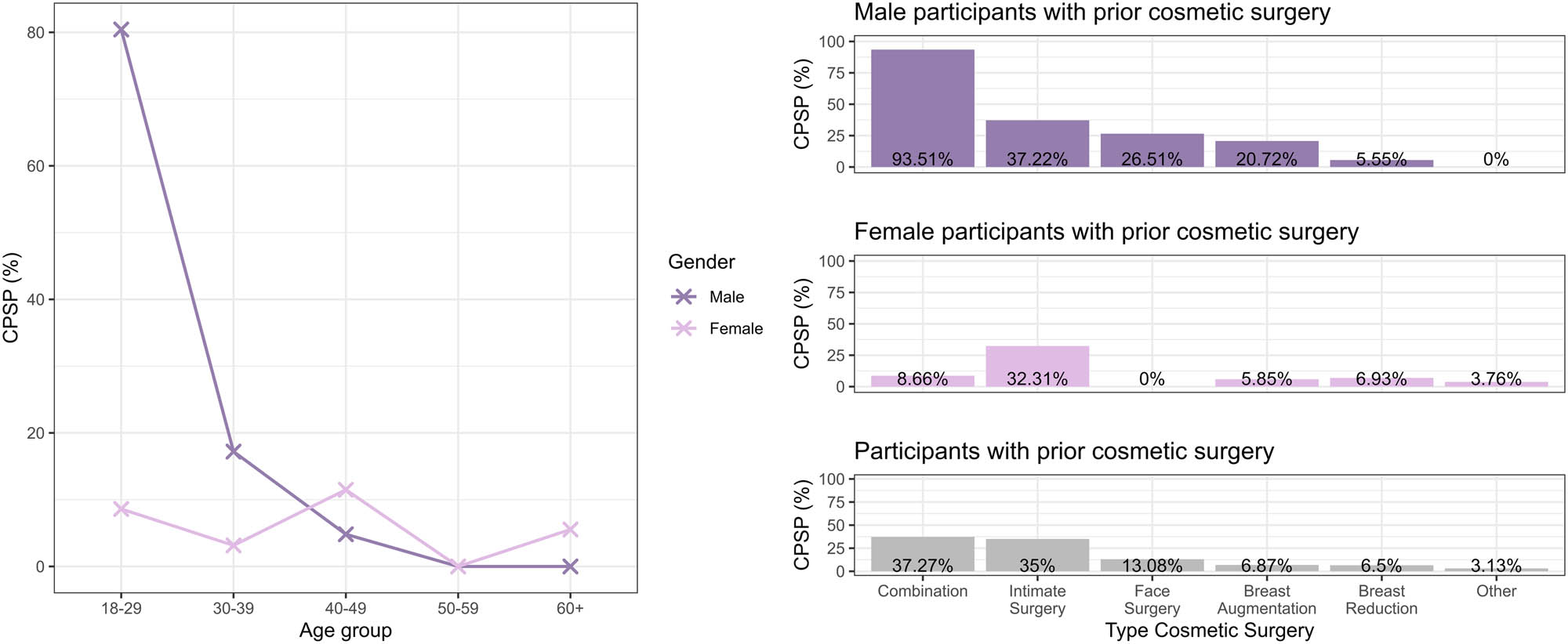
Chronic postsurgical pain (CPSP) per age group, type of surgery, and gender. Displayed are proportions of respondents having undergone cosmetic surgery and indicating to have experienced CPSP per age group (left figure), as well as per gender and surgery type (right figure).
3.4 Pain treatment
Out of individuals who reported experiencing CPSP, 75.6% (N = 17/22) confirmed that they had actively sought for pain treatment. 83.4% (N = 14/17) of these were male and 56.9% (N = 9/17) had undergone only one type of cosmetic surgery.
4 Discussion
4.1 Cosmetic surgery
Since 2008, this is the first study to investigate cosmetic surgery consumption in a large sample representative of Norway’s general adult population. 10.0% of our participants reported to have undergone one or more types of such surgery, which is twice as many as reported previously (2008: 5%) [25,26]. This result is consistent with the global trend of increasing numbers of cosmetic surgeries being performed [27,28]. Furthermore, with about seven out of ten cosmetic surgery customers in the present study being female, we find the gender ratio within this group of individuals relatively unchanged since 2008 (2008: circa 70.0% females [25,29]). Consistent with this result and notwithstanding the fact that plastic surgery has become increasingly popular among men, neither global [30,31] nor European data [32,33,34] indicate the gender ratio among cosmetic surgery customers to have changed over the past decade (usually 80–93% women vs 7–20% men). Also, the rates of types of cosmetic surgery found here (other type > breast augmentation > facial surgery > combination of types > breast reduction > intimate surgery) align well with global statistics [3]. Furthermore, in the present study, about 25% of the cosmetic surgery customers were 18–29 years of age, with 1 in 4 of these indicating to have undergone several different types of such surgery, highlighting an especially high prevalence of cosmetic surgery among young adults. Findings which are consistent with figures of the International Society of Aesthetic Plastic Surgery showing that in 2020 ≥50% of breast augmentations, liposuctions, and rhinoplasties were performed on individuals aged 19–34 years [31]. Moreover, they are also in line with studies highlighting an increased interest in and acceptance toward cosmetic surgery among youth and young adults [1,2,5]. Taken together, in line with international trends, there appears to be a young and growing population of female, as well as male, cosmetic surgery consumers in Norway.
4.2 Chronic postsurgical pain
This is the first study to investigate CPSP in a large sample of individuals having undergone different types of cosmetic surgeries. The prevalence of CPSP in our sample was 12.6%, which appears rather low compared to prior reports of CPSP after cosmetic breast surgery (22–44% [11,12,13,14,15]) or other surgery (5–85% [10,35]). Surprisingly, and contrary to prior literature on CPSP [36], CPSP was about five times more common among male respondents compared to female ones. As this is the first account of CPSP after cosmetic surgery among males, and as the group of males indicating to have had such surgery was small, this result warrants further scientific investigation. Moreover, the present findings suggest that the risk of CPSP may vary depending on the type of cosmetic surgery. In our study, the proportion of individuals with CPSP appeared to be highest for intimate surgeries among both genders. Since this is the first time CPSP following cosmetic surgery on body parts other than the breast is investigated, these results remain, however, difficult to interpret. Furthermore, we found that two thirds of individuals indicating to have suffered from CPSP due to prior cosmetic surgery were young adults (18–29 years). Young age has been highlighted as a risk factor for CPSP by prior studies on cosmetic breast surgery [12,37], as well as other surgical populations [36]. Considering the growing population of young cosmetic surgery customers these results raise concern. Equally alarming was the large proportion of individuals seeking treatment for their pain, as this implies potentially bothering and/or disabling pain. Importantly, when health-compromising complications, like for example CPSP, arise after cosmetic surgery, cosmetic surgery customers turn into patients. Further medical treatment becomes necessary and will therefore be covered by public healthcare insurances. Chronic pain is notoriously hard to treat, assumed to cost the Norwegian society about NOK 135 billion annually [38], and accounting for almost half of disability pensions awarded [17]. Against this background, it is unequivocal that CPSP after cosmetic surgery is a topic warranting further scientific scrutiny.
4.3 Strengths and limitations
A strength of the present study is its large sample which closely mirrors the adult Norwegian population in terms of age, gender, region of living, and educational level. Moreover, by asking for “self-selected” surgeries, the risk of participants mistaking reconstructive plastic surgeries as cosmetic was minimized. Finally, CPSP was inquired using the most recent definition of the International Association for the Study of Pain [9].
A limitation of the present study is that we cannot ensure that all respondents were referring to truly cosmetic surgeries. A low likelihood of such misinterpretation, however, is supported by the fact that the most popular nonsurgical cosmetic procedures of the recent years mainly cover skin rejuvenating (botulinum toxin type A, hyaluronic acid) and hair removal treatments, all of which are minimally invasive and usually do not require anesthesia [3]. Furthermore, as the survey only asked about “types” of cosmetic surgery, we can neither report on the exact number of surgeries participants have had, nor ensure that all of them were treated in Norway. Moreover, does the parsimony of the questionnaire render inferences about the degree of CPSP-related disability, or specific pain treatments sought for, impossible. Arguments for potentially bothering and/or disabling pain, however, are strengthened by the fact that the first question specifically asked for “bothersome” CPSP, as well as the large proportion of participants affirming to have sought for treatment for this pain. A final limitation is that individuals registered at Ipsos or included on the Bisnode population list might differ from Norwegians not registered at any of these sources in respects other than those controlled for by applied sampling methods.
4.4 Future research
The authors acknowledge the limited character of the survey employed in the present study but are nevertheless convinced that the results strongly encourage further research on CPSP subsequent to cosmetic surgery. Considering that the categories “other” and “facial surgery” were among the three most prevalent in the present study, we recommend future studies to employ samples large enough to allow more detailed investigations within such broad categories. Moreover, as gender identity can represent an important factor in individuals’ decision to undergo cosmetic surgery, we advise future studies to further detail participants’ gender. Future studies should also aim at investigating characteristics of CPSP related to cosmetic surgery, preferably through clinical examination, to enable conclusions about the nature, clinical relevance, and demand for treatment of such pain. Finally, it also remains to be elucidated whether the treatment of CPSP after cosmetic surgery is commonly initiated within the private and/or public healthcare sector, and whether associated costs are borne by the patients themselves or the Norwegian/individual countries’ welfare system.
5 Conclusion
The present results indicate that the Norwegian cosmetic surgery market has been growing and that customer profiles might be changing. Until today, knowledge on CPSP after cosmetic surgery is limited. Our findings hint towards the fact that as many as 1 in 8 cosmetic surgery consumers might be affected by such pain. We thus call for more attention on the topic, both on a national, as well as international level. This not just to empower cosmetic surgery costumers and surgeons in knowledge, but also to inform the public about the impact such surgeries take on the public healthcare and social welfare systems. A national registry subjected to continuous evaluation, as well as longitudinal and large-scale scientific studies would be valuable and necessary steps toward reaching these goals.
-
Research ethics: Data protection and privacy policies operated by Ipsos ensure compliance with the European Union's General Data Protection Regulation (2016/679), and relevant national privacy legislations of the country of study conduction (here: Norway) [22]. As the present study employed anonymized data only, prior ethical approval was not required [23,24].
-
Informed consent: Participants declared their voluntary participation and provided written informed consent prior to survey initiation. The right to withdraw from the study at any time was emphasized.
-
Author contributions: All authors have accepted responsibility for the entire content of this manuscript and approved its submission.
-
Competing interests: Silje E. Reme is a Section Editor of Scandinavian Journal of Pain. The author(s) declare to have no conflicts of interest.
-
Research funding: The authors did not receive any financial support for the present research, authorship, and/or publication of this article.
-
Data availability: The anonymized dataset used for the analyses of the present manuscript is publicly available at Open Science Framework (OSF) registries and can be accessed via the following link: https://osf.io/ub2kt/?view_only=246223f94ce0408c83f9a5e68a779bfc.
-
Disclosing statement: Our work has neither been publicly presented previously, nor is it under consideration for publication, posted as a preprint, or published elsewhere. All authors have read and approved the contents of this manuscript and agree with its submission to the Scandinavian Journal of Pain. Further, we declare to have no conflict of interest.
References
[1] Lunde C. Acceptance of cosmetic surgery, body appreciation, body ideal internalization, and fashion blog reading among late adolescents in Sweden. Body Image. 2013;10:632–5. 10.1016/j.bodyim.2013.06.007.Search in Google Scholar PubMed
[2] von Soest T, Kvalem IL, Skolleborg KC, Roald HE. Psychosocial factors predicting the motivation to undergo cosmetic surgery. Plast Reconstr Surg. 2006;117:51–62. 10.1097/01.prs.0000194902.89912.f1.Search in Google Scholar PubMed
[3] International Society of Aesthetic Plastic Surgery (ISAPS). Plastic surgery statistics | Global plastic surgery statistics. ISAPS; n.d. https://www.isaps.org/medical-professionals/isaps-global-statistics/(accessed October 19, 2022).Search in Google Scholar
[4] Rysst M. “Healthism”’ and looking good: Body ideals and body practices in Norway. Scand J Public Health. 2010;38:71–80. 10.1177/1403494810376561.Search in Google Scholar PubMed
[5] Javo IM, Sørlie T. Psychosocial predictors of an interest in cosmetic surgery among young Norwegian women: A population-based study. Plast Reconstr Surg. 2009;124:2142–8. 10.1097/PRS.0b013e3181bcf290.Search in Google Scholar PubMed
[6] Norwegian Board of Health Supervision. Cosmetic surgery in Norway. Helsetilsynet; 2018. https://www.helsetilsynet.no/en/publications/report-of-the-norwegian-board-of-health-supervision/2004/cosmetic-surgery-in-norway/(accessed October 19, 2022).Search in Google Scholar
[7] von Soest T, Kvalem IL, Wichstrøm L. Predictors of cosmetic surgery and its effects on psychological factors and mental health: a population-based follow-up study among Norwegian females. Psychol Med. 2012;42:617–26. 10.1017/S0033291711001267.Search in Google Scholar PubMed
[8] Helse- og omsorgsdepartementet Norge. Forskrift om tillatelse til å utføre kosmetisk kirurgiske inngrep – Lovdata. 2021. https://lovdata.no/dokument/SF/forskrift/2000-12-21-1387 (accessed November 22, 2022).Search in Google Scholar
[9] Schug SA, Lavand’homme P, Barke A, Korwisi B, Rief W, Treede R-D, et al. The IASP classification of chronic pain for ICD-11: chronic postsurgical or posttraumatic pain. Pain. 2019;160:45–52. 10.1097/j.pain.0000000000001413.Search in Google Scholar PubMed
[10] Macrae WA. Chronic post-surgical pain: 10 years on. Br J Anaesth. 2008;101:77–86. 10.1093/bja/aen099.Search in Google Scholar PubMed
[11] Wallace MS, Wallace AM, Lee J, Dobke MK. Pain after breast surgery: a survey of 282 women. Pain. 1996;66:195–205. 10.1016/0304-3959(96)03064-3.Search in Google Scholar PubMed
[12] van Elk N, Steegers MA, van der Weij L-P, Evers AW, Hartman EH, Wilder-Smith OH. Chronic pain in women after breast augmentation: Prevalence, predictive factors and quality of life. Eur J Pain. 2009;13:660–1. 10.1016/j.ejpain.2009.03.008.Search in Google Scholar PubMed
[13] von Sperling ML, Høimyr H, Finnerup K, Jensen TS, Finnerup NB. Chronic postoperative pain and sensory changes following reduction mammaplasty. Scand J Pain. 2011;2:57–61. 10.1016/j.sjpain.2011.01.002.Search in Google Scholar PubMed
[14] von Sperling ML, Høimyr H, Finnerup K, Jensen TS, Finnerup NB. Persistent pain and sensory changes following cosmetic breast augmentation. Eur J Pain. 2011;15:328–32. 10.1016/j.ejpain.2010.07.004.Search in Google Scholar PubMed
[15] Romundstad L, Breivik H, Roald H, Skolleborg K, Romundstad PR, Stubhaug A. Chronic pain and sensory changes after augmentation mammoplasty: Long term effects of preincisional administration of methylprednisolone. Pain. 2006;124:92–9. 10.1016/j.pain.2006.03.020.Search in Google Scholar PubMed
[16] Johansen A, Romundstad L, Nielsen CS, Schirmer H, Stubhaug A. Persistent postsurgical pain in a general population: Prevalence and predictors in the Tromsø study. Pain. 2012;153:1390–6. 10.1016/j.pain.2012.02.018.Search in Google Scholar PubMed
[17] Landmark T, Romundstad P, Dale O, Borchgrevink PC, Vatten L, Kaasa S. Chronic pain: One year prevalence and associated characteristics (the HUNT pain study. ). Scand J Pain. 2013;4:182–7. 10.1016/j.sjpain.2013.07.022.Search in Google Scholar PubMed
[18] Ipsos. Global market research and public opinion specialist n.d. https://www.ipsos.com/en (accessed October 19, 2022).Search in Google Scholar
[19] Statistics Norway. Population statistics. Stat Nor; 2023. https://www.ssb.no/en/befolkning/folketall/statistikk/befolkning (accessed May 7, 2023).Search in Google Scholar
[20] Ipsos. Ipsos Answers Esomar’s Questions to help online research buyers. 2023. https://www.ipsos.com/en/ipsos-answers-esomars-questions-help-online-research-buyers (accessed May 11, 2023).Search in Google Scholar
[21] SPSS Statistics. Overview. 2022. https://www.ibm.com/products/spss-statistics (accessed October 19, 2022).Search in Google Scholar
[22] Ipsos. Privacy & data protection. n.d. https://www.ipsos.com/en/privacy-data-protection (accessed November 22, 2022).Search in Google Scholar
[23] Lov om behandling av personopplysninger (personopplysningsloven) - Lovdata. LovdataNo; 2022. https://lovdata.no/dokument/NL/lov/2018-06-15-38/*#* (accessed October 2, 2023).Search in Google Scholar
[24] Regionale komiteer for medisinsk og helsefaglig forskningsetikk. Om å søke om REK. n.d. https://rekportalen.no/#hjem/s%C3%B8ke_REK (accessed October 5, 2023).Search in Google Scholar
[25] Statistics Norway. Bruk av helsetjenester (prosent), etter kjønn, landsdel, statistikkvariabel, år og type helsetjeneste. Statistikkbanken. SSB; n.d. https://www.ssb.no/(accessed October 23, 2022).Search in Google Scholar
[26] Ramm J, von Soest T. Kosmetisk kirurgi - 5 prosent har lagt seg under kniven. ssb.no; 2011. https://www.ssb.no/helse/artikler-og-publikasjoner/5-prosent-har-lagt-seg-under-kniven (accessed October 23, 2022).Search in Google Scholar
[27] International Society of Aesthetic Plastic Surgery (ISAPS). ISAPS International survey on aesthetic/cosmetic procedures performed in 2021. n.d.Search in Google Scholar
[28] International Society of Aesthetic Plastic Surgery (ISAPS) - International survey on aesthetic/cosmetic procedures performed in 2010 (Revised – January 15, 2013). n.d.Search in Google Scholar
[29] Regio AS. KommuneProfilen. Statistikk og nøkkeltall om befolkning fordelt på kvinner og menn og innbyggere etter kjønn i kommuner og regioner. 2022. https://www.kommuneprofilen.no/profil/befolkning/DinRegion/bef_kjonn_region.aspxaccessed October 23, 2022.Search in Google Scholar
[30] International society of aesthetic plastic surgery (ISAPS). International Survey on aesthetic/cosmetic procedures performed in 2014. n.d.Search in Google Scholar
[31] International society of aesthetic plastic surgery (ISAPS). ISAPS International survey on aesthetic/cosmetic procedures performed in 2020. n.d.Search in Google Scholar
[32] Deutsche Gesellschaft für Ästhetisch-Plastische Chirurgie (DGÄPC). DGÄPC-Statistik. 2021 Zahlen Fakten Trends Plastische Chirurgie 2021. https://www.dgaepc.de/aktuelles/dgaepc-statistik/dgaepc-statistik-2021/accessed July 16, 2023.Search in Google Scholar
[33] British Association of Aesthetic Plastic Surgeons (BAAPS). Analysis of BAAPS audit 2020-2021. 2021.Search in Google Scholar
[34] British Association of Aesthetic Plastic Surgeons (BAAPS). Over 36,400 surgical procedures in the UK in 2009. 2009. https://baaps.org.uk/media/press_releases/1589/over_36400_surgical_procedures_in_the_uk_in_2009/(accessed October 25, 2022).Search in Google Scholar
[35] Kehlet H, Jensen TS, Woolf CJ. Persistent postsurgical pain: risk factors and prevention. The Lancet. 2006;367:1618–25. 10.1016/S0140-6736(06)68700-X.Search in Google Scholar PubMed
[36] Katz J, Seltzer Z. Transition from acute to chronic postsurgical pain: risk factors and protective factors. Expert Rev Neurother. 2009;9:723–44. 10.1586/ern.09.20.Search in Google Scholar PubMed
[37] Urits I, Lavin C, Patel M, Maganty N, Jacobson X, Ngo AL, et al. Chronic pain following cosmetic breast surgery: A comprehensive review. Pain Ther. 2020;9:71–82. 10.1007/s40122-020-00150-y.Search in Google Scholar PubMed PubMed Central
[38] Nielsen CS, Steingrimsdottir OA, Skurtveit SO, Handal M. Chronic pain. Nor Inst Public Health; 2019. https://www.fhi.no/en/op/hin/health-disease/chronic-pain/(accessed October 27, 2022).Search in Google Scholar
© 2024 the author(s), published by De Gruyter
This work is licensed under the Creative Commons Attribution 4.0 International License.
Articles in the same Issue
- Editorial Comment
- From pain to relief: Exploring the consistency of exercise-induced hypoalgesia
- Christmas greetings 2024 from the Editor-in-Chief
- Original Articles
- The Scandinavian Society for the Study of Pain 2022 Postgraduate Course and Annual Scientific (SASP 2022) Meeting 12th to 14th October at Rigshospitalet, Copenhagen
- Comparison of ultrasound-guided continuous erector spinae plane block versus continuous paravertebral block for postoperative analgesia in patients undergoing proximal femur surgeries
- Clinical Pain Researches
- The effect of tourniquet use on postoperative opioid consumption after ankle fracture surgery – a retrospective cohort study
- Changes in pain, daily occupations, lifestyle, and health following an occupational therapy lifestyle intervention: a secondary analysis from a feasibility study in patients with chronic high-impact pain
- Tonic cuff pressure pain sensitivity in chronic pain patients and its relation to self-reported physical activity
- Reliability, construct validity, and factorial structure of a Swedish version of the medical outcomes study social support survey (MOS-SSS) in patients with chronic pain
- Hurdles and potentials when implementing internet-delivered Acceptance and commitment therapy for chronic pain: a retrospective appraisal using the Quality implementation framework
- Exploring the outcome “days with bothersome pain” and its association with pain intensity, disability, and quality of life
- Fatigue and cognitive fatigability in patients with chronic pain
- The Swedish version of the pain self-efficacy questionnaire short form, PSEQ-2SV: Cultural adaptation and psychometric evaluation in a population of patients with musculoskeletal disorders
- Pain coping and catastrophizing in youth with and without cerebral palsy
- Neuropathic pain after surgery – A clinical validation study and assessment of accuracy measures of the 5-item NeuPPS scale
- Translation, contextual adaptation, and reliability of the Danish Concept of Pain Inventory (COPI-Adult (DK)) – A self-reported outcome measure
- Cosmetic surgery and associated chronic postsurgical pain: A cross-sectional study from Norway
- The association of hemodynamic parameters and clinical demographic variables with acute postoperative pain in female oncological breast surgery patients: A retrospective cohort study
- Healthcare professionals’ experiences of interdisciplinary collaboration in pain centres – A qualitative study
- Effects of deep brain stimulation and verbal suggestions on pain in Parkinson’s disease
- Painful differences between different pain scale assessments: The outcome of assessed pain is a matter of the choices of scale and statistics
- Prevalence and characteristics of fibromyalgia according to three fibromyalgia diagnostic criteria: A secondary analysis study
- Sex moderates the association between quantitative sensory testing and acute and chronic pain after total knee/hip arthroplasty
- Tramadol-paracetamol for postoperative pain after spine surgery – A randomized, double-blind, placebo-controlled study
- Cancer-related pain experienced in daily life is difficult to communicate and to manage – for patients and for professionals
- Making sense of pain in inflammatory bowel disease (IBD): A qualitative study
- Patient-reported pain, satisfaction, adverse effects, and deviations from ambulatory surgery pain medication
- Does pain influence cognitive performance in patients with mild traumatic brain injury?
- Hypocapnia in women with fibromyalgia
- Application of ultrasound-guided thoracic paravertebral block or intercostal nerve block for acute herpes zoster and prevention of post-herpetic neuralgia: A case–control retrospective trial
- Translation and examination of construct validity of the Danish version of the Tampa Scale for Kinesiophobia
- A positive scratch collapse test in anterior cutaneous nerve entrapment syndrome indicates its neuropathic character
- ADHD-pain: Characteristics of chronic pain and association with muscular dysregulation in adults with ADHD
- The relationship between changes in pain intensity and functional disability in persistent disabling low back pain during a course of cognitive functional therapy
- Intrathecal pain treatment for severe pain in patients with terminal cancer: A retrospective analysis of treatment-related complications and side effects
- Psychometric evaluation of the Danish version of the Pain Self-Efficacy Questionnaire in patients with subacute and chronic low back pain
- Dimensionality, reliability, and validity of the Finnish version of the pain catastrophizing scale in chronic low back pain
- To speak or not to speak? A secondary data analysis to further explore the context-insensitive avoidance scale
- Pain catastrophizing levels differentiate between common diseases with pain: HIV, fibromyalgia, complex regional pain syndrome, and breast cancer survivors
- Prevalence of substance use disorder diagnoses in patients with chronic pain receiving reimbursed opioids: An epidemiological study of four Norwegian health registries
- Pain perception while listening to thrash heavy metal vs relaxing music at a heavy metal festival – the CoPainHell study – a factorial randomized non-blinded crossover trial
- Observational Studies
- Cutaneous nerve biopsy in patients with symptoms of small fiber neuropathy: a retrospective study
- The incidence of post cholecystectomy pain (PCP) syndrome at 12 months following laparoscopic cholecystectomy: a prospective evaluation in 200 patients
- Associations between psychological flexibility and daily functioning in endometriosis-related pain
- Relationship between perfectionism, overactivity, pain severity, and pain interference in individuals with chronic pain: A cross-lagged panel model analysis
- Access to psychological treatment for chronic cancer-related pain in Sweden
- Validation of the Danish version of the knowledge and attitudes survey regarding pain
- Associations between cognitive test scores and pain tolerance: The Tromsø study
- Healthcare experiences of fibromyalgia patients and their associations with satisfaction and pain relief. A patient survey
- Video interpretation in a medical spine clinic: A descriptive study of a diverse population and intervention
- Role of history of traumatic life experiences in current psychosomatic manifestations
- Social determinants of health in adults with whiplash associated disorders
- Which patients with chronic low back pain respond favorably to multidisciplinary rehabilitation? A secondary analysis of a randomized controlled trial
- A preliminary examination of the effects of childhood abuse and resilience on pain and physical functioning in patients with knee osteoarthritis
- Differences in risk factors for flare-ups in patients with lumbar radicular pain may depend on the definition of flare
- Real-world evidence evaluation on consumer experience and prescription journey of diclofenac gel in Sweden
- Patient characteristics in relation to opioid exposure in a chronic non-cancer pain population
- Topical Reviews
- Bridging the translational gap: adenosine as a modulator of neuropathic pain in preclinical models and humans
- What do we know about Indigenous Peoples with low back pain around the world? A topical review
- The “future” pain clinician: Competencies needed to provide psychologically informed care
- Systematic Reviews
- Pain management for persistent pain post radiotherapy in head and neck cancers: systematic review
- High-frequency, high-intensity transcutaneous electrical nerve stimulation compared with opioids for pain relief after gynecological surgery: a systematic review and meta-analysis
- Reliability and measurement error of exercise-induced hypoalgesia in pain-free adults and adults with musculoskeletal pain: A systematic review
- Noninvasive transcranial brain stimulation in central post-stroke pain: A systematic review
- Short Communications
- Are we missing the opioid consumption in low- and middle-income countries?
- Association between self-reported pain severity and characteristics of United States adults (age ≥50 years) who used opioids
- Could generative artificial intelligence replace fieldwork in pain research?
- Skin conductance algesimeter is unreliable during sudden perioperative temperature increases
- Original Experimental
- Confirmatory study of the usefulness of quantum molecular resonance and microdissectomy for the treatment of lumbar radiculopathy in a prospective cohort at 6 months follow-up
- Pain catastrophizing in the elderly: An experimental pain study
- Improving general practice management of patients with chronic musculoskeletal pain: Interdisciplinarity, coherence, and concerns
- Concurrent validity of dynamic bedside quantitative sensory testing paradigms in breast cancer survivors with persistent pain
- Transcranial direct current stimulation is more effective than pregabalin in controlling nociceptive and anxiety-like behaviors in a rat fibromyalgia-like model
- Paradox pain sensitivity using cuff pressure or algometer testing in patients with hemophilia
- Physical activity with person-centered guidance supported by a digital platform or with telephone follow-up for persons with chronic widespread pain: Health economic considerations along a randomized controlled trial
- Measuring pain intensity through physical interaction in an experimental model of cold-induced pain: A method comparison study
- Pharmacological treatment of pain in Swedish nursing homes: Prevalence and associations with cognitive impairment and depressive mood
- Neck and shoulder pain and inflammatory biomarkers in plasma among forklift truck operators – A case–control study
- The effect of social exclusion on pain perception and heart rate variability in healthy controls and somatoform pain patients
- Revisiting opioid toxicity: Cellular effects of six commonly used opioids
- Letter to the Editor
- Post cholecystectomy pain syndrome: Letter to Editor
- Response to the Letter by Prof Bordoni
- Response – Reliability and measurement error of exercise-induced hypoalgesia
- Is the skin conductance algesimeter index influenced by temperature?
- Skin conductance algesimeter is unreliable during sudden perioperative temperature increase
- Corrigendum
- Corrigendum to “Chronic post-thoracotomy pain after lung cancer surgery: a prospective study of preoperative risk factors”
- Obituary
- A Significant Voice in Pain Research Björn Gerdle in Memoriam (1953–2024)
Articles in the same Issue
- Editorial Comment
- From pain to relief: Exploring the consistency of exercise-induced hypoalgesia
- Christmas greetings 2024 from the Editor-in-Chief
- Original Articles
- The Scandinavian Society for the Study of Pain 2022 Postgraduate Course and Annual Scientific (SASP 2022) Meeting 12th to 14th October at Rigshospitalet, Copenhagen
- Comparison of ultrasound-guided continuous erector spinae plane block versus continuous paravertebral block for postoperative analgesia in patients undergoing proximal femur surgeries
- Clinical Pain Researches
- The effect of tourniquet use on postoperative opioid consumption after ankle fracture surgery – a retrospective cohort study
- Changes in pain, daily occupations, lifestyle, and health following an occupational therapy lifestyle intervention: a secondary analysis from a feasibility study in patients with chronic high-impact pain
- Tonic cuff pressure pain sensitivity in chronic pain patients and its relation to self-reported physical activity
- Reliability, construct validity, and factorial structure of a Swedish version of the medical outcomes study social support survey (MOS-SSS) in patients with chronic pain
- Hurdles and potentials when implementing internet-delivered Acceptance and commitment therapy for chronic pain: a retrospective appraisal using the Quality implementation framework
- Exploring the outcome “days with bothersome pain” and its association with pain intensity, disability, and quality of life
- Fatigue and cognitive fatigability in patients with chronic pain
- The Swedish version of the pain self-efficacy questionnaire short form, PSEQ-2SV: Cultural adaptation and psychometric evaluation in a population of patients with musculoskeletal disorders
- Pain coping and catastrophizing in youth with and without cerebral palsy
- Neuropathic pain after surgery – A clinical validation study and assessment of accuracy measures of the 5-item NeuPPS scale
- Translation, contextual adaptation, and reliability of the Danish Concept of Pain Inventory (COPI-Adult (DK)) – A self-reported outcome measure
- Cosmetic surgery and associated chronic postsurgical pain: A cross-sectional study from Norway
- The association of hemodynamic parameters and clinical demographic variables with acute postoperative pain in female oncological breast surgery patients: A retrospective cohort study
- Healthcare professionals’ experiences of interdisciplinary collaboration in pain centres – A qualitative study
- Effects of deep brain stimulation and verbal suggestions on pain in Parkinson’s disease
- Painful differences between different pain scale assessments: The outcome of assessed pain is a matter of the choices of scale and statistics
- Prevalence and characteristics of fibromyalgia according to three fibromyalgia diagnostic criteria: A secondary analysis study
- Sex moderates the association between quantitative sensory testing and acute and chronic pain after total knee/hip arthroplasty
- Tramadol-paracetamol for postoperative pain after spine surgery – A randomized, double-blind, placebo-controlled study
- Cancer-related pain experienced in daily life is difficult to communicate and to manage – for patients and for professionals
- Making sense of pain in inflammatory bowel disease (IBD): A qualitative study
- Patient-reported pain, satisfaction, adverse effects, and deviations from ambulatory surgery pain medication
- Does pain influence cognitive performance in patients with mild traumatic brain injury?
- Hypocapnia in women with fibromyalgia
- Application of ultrasound-guided thoracic paravertebral block or intercostal nerve block for acute herpes zoster and prevention of post-herpetic neuralgia: A case–control retrospective trial
- Translation and examination of construct validity of the Danish version of the Tampa Scale for Kinesiophobia
- A positive scratch collapse test in anterior cutaneous nerve entrapment syndrome indicates its neuropathic character
- ADHD-pain: Characteristics of chronic pain and association with muscular dysregulation in adults with ADHD
- The relationship between changes in pain intensity and functional disability in persistent disabling low back pain during a course of cognitive functional therapy
- Intrathecal pain treatment for severe pain in patients with terminal cancer: A retrospective analysis of treatment-related complications and side effects
- Psychometric evaluation of the Danish version of the Pain Self-Efficacy Questionnaire in patients with subacute and chronic low back pain
- Dimensionality, reliability, and validity of the Finnish version of the pain catastrophizing scale in chronic low back pain
- To speak or not to speak? A secondary data analysis to further explore the context-insensitive avoidance scale
- Pain catastrophizing levels differentiate between common diseases with pain: HIV, fibromyalgia, complex regional pain syndrome, and breast cancer survivors
- Prevalence of substance use disorder diagnoses in patients with chronic pain receiving reimbursed opioids: An epidemiological study of four Norwegian health registries
- Pain perception while listening to thrash heavy metal vs relaxing music at a heavy metal festival – the CoPainHell study – a factorial randomized non-blinded crossover trial
- Observational Studies
- Cutaneous nerve biopsy in patients with symptoms of small fiber neuropathy: a retrospective study
- The incidence of post cholecystectomy pain (PCP) syndrome at 12 months following laparoscopic cholecystectomy: a prospective evaluation in 200 patients
- Associations between psychological flexibility and daily functioning in endometriosis-related pain
- Relationship between perfectionism, overactivity, pain severity, and pain interference in individuals with chronic pain: A cross-lagged panel model analysis
- Access to psychological treatment for chronic cancer-related pain in Sweden
- Validation of the Danish version of the knowledge and attitudes survey regarding pain
- Associations between cognitive test scores and pain tolerance: The Tromsø study
- Healthcare experiences of fibromyalgia patients and their associations with satisfaction and pain relief. A patient survey
- Video interpretation in a medical spine clinic: A descriptive study of a diverse population and intervention
- Role of history of traumatic life experiences in current psychosomatic manifestations
- Social determinants of health in adults with whiplash associated disorders
- Which patients with chronic low back pain respond favorably to multidisciplinary rehabilitation? A secondary analysis of a randomized controlled trial
- A preliminary examination of the effects of childhood abuse and resilience on pain and physical functioning in patients with knee osteoarthritis
- Differences in risk factors for flare-ups in patients with lumbar radicular pain may depend on the definition of flare
- Real-world evidence evaluation on consumer experience and prescription journey of diclofenac gel in Sweden
- Patient characteristics in relation to opioid exposure in a chronic non-cancer pain population
- Topical Reviews
- Bridging the translational gap: adenosine as a modulator of neuropathic pain in preclinical models and humans
- What do we know about Indigenous Peoples with low back pain around the world? A topical review
- The “future” pain clinician: Competencies needed to provide psychologically informed care
- Systematic Reviews
- Pain management for persistent pain post radiotherapy in head and neck cancers: systematic review
- High-frequency, high-intensity transcutaneous electrical nerve stimulation compared with opioids for pain relief after gynecological surgery: a systematic review and meta-analysis
- Reliability and measurement error of exercise-induced hypoalgesia in pain-free adults and adults with musculoskeletal pain: A systematic review
- Noninvasive transcranial brain stimulation in central post-stroke pain: A systematic review
- Short Communications
- Are we missing the opioid consumption in low- and middle-income countries?
- Association between self-reported pain severity and characteristics of United States adults (age ≥50 years) who used opioids
- Could generative artificial intelligence replace fieldwork in pain research?
- Skin conductance algesimeter is unreliable during sudden perioperative temperature increases
- Original Experimental
- Confirmatory study of the usefulness of quantum molecular resonance and microdissectomy for the treatment of lumbar radiculopathy in a prospective cohort at 6 months follow-up
- Pain catastrophizing in the elderly: An experimental pain study
- Improving general practice management of patients with chronic musculoskeletal pain: Interdisciplinarity, coherence, and concerns
- Concurrent validity of dynamic bedside quantitative sensory testing paradigms in breast cancer survivors with persistent pain
- Transcranial direct current stimulation is more effective than pregabalin in controlling nociceptive and anxiety-like behaviors in a rat fibromyalgia-like model
- Paradox pain sensitivity using cuff pressure or algometer testing in patients with hemophilia
- Physical activity with person-centered guidance supported by a digital platform or with telephone follow-up for persons with chronic widespread pain: Health economic considerations along a randomized controlled trial
- Measuring pain intensity through physical interaction in an experimental model of cold-induced pain: A method comparison study
- Pharmacological treatment of pain in Swedish nursing homes: Prevalence and associations with cognitive impairment and depressive mood
- Neck and shoulder pain and inflammatory biomarkers in plasma among forklift truck operators – A case–control study
- The effect of social exclusion on pain perception and heart rate variability in healthy controls and somatoform pain patients
- Revisiting opioid toxicity: Cellular effects of six commonly used opioids
- Letter to the Editor
- Post cholecystectomy pain syndrome: Letter to Editor
- Response to the Letter by Prof Bordoni
- Response – Reliability and measurement error of exercise-induced hypoalgesia
- Is the skin conductance algesimeter index influenced by temperature?
- Skin conductance algesimeter is unreliable during sudden perioperative temperature increase
- Corrigendum
- Corrigendum to “Chronic post-thoracotomy pain after lung cancer surgery: a prospective study of preoperative risk factors”
- Obituary
- A Significant Voice in Pain Research Björn Gerdle in Memoriam (1953–2024)
