State and contours of research on roselle (Hibiscus sabdariffa L.) in Africa
-
Hamid El Bilali


Abstract
Roselle (Hibiscus sabdariffa L.) – also called sorrel, Bissap or Karkadeh – is believed to be native to Africa. Research is needed to set a solid foundation for the development of roselle in the continent. Therefore, this article presents an analysis of the research landscape on roselle in Africa; it covers bibliographical metrics, the geography of the research, and the topics addressed in the scholarly literature about roselle. The systematic review drew upon 119 eligible articles identified through a search carried out on the Web of Science in March 2024. The research field is not well-established; the number of publications on roselle in Africa is limited, indicating an unstable and inconsistent interest. The research field is multidisciplinary but appears to focus more on biological sciences than social sciences and economics. The research geography is not balanced, with more than half of all studies on roselle in Africa conducted in just five countries, viz. Nigeria, Egypt, Sudan, Ghana, and Senegal. The content analysis suggests that roselle holds the potential to contribute to food and nutrition security and the well-being of the populations. It can not only contribute to agricultural development but also to addressing many challenges the continent faces. Research is needed to unlock its potential. Future research should pay more attention, inter alia, to the relationships between roselle and environmental issues (e.g. climate change), social and economic aspects (e.g. livelihoods), and agronomy (cf. fertilization, pest management, irrigation). Given that roselle is grown across Africa, collaboration among African countries should also be encouraged.
1 Introduction
Neglected and underutilized species (NUS) are widely acknowledged as valuable resources for promoting sustainable development and transitioning to sustainable and resilient agri-food systems [1]. Reports indicate that the promotion of NUS significantly contributes to the conservation of agro-biodiversity [2,3] as well as food and nutrition security [3,4,5,6,7]. Additionally, NUS are recognized for their role in climate change adaptation and mitigation [4,6], environmental integrity and ecosystem health [4,8], and human health [4,8]. Furthermore, the promotion of NUS is seen as beneficial in sustaining and enhancing rural livelihoods [3,9–11]. Mabhaudhi et al. [4] argued that given reports of their potential, there is a case for promoting NUS to address challenges such as increasing drought and water scarcity, food and nutrition insecurity, environmental degradation, and unemployment under climate change. Meanwhile, Mabhaudhi et al. [12] suggested that the promotion of NUS could contribute to the achievement of the Sustainable Development Goals (SDGs), specifically SDGs 1 (No poverty), 2 (Zero hunger), 3 (Good health and wellbeing), and 15 (Life on land).
One such NUS is roselle (Hibiscus sabdariffa L.). It is a flowering herb or subshrub that can be either annual or perennial. Roselle is believed to be native to Africa, particularly West Africa; during the sixteenth and early seventeenth centuries, it was introduced to Asia and the West Indies, where it has since become naturalized in many places [13,14]. It is known as Karkadeh in Arabic [15], rosella in Australia [16], Yakuwa by the Hausa people of northern Nigeria [17], Bissap in Wolof in Senegal [18], Wegda in the Mossi area in Burkina Faso [19], Florida Cranberry or Jamaica sorrel in the United States [20], Saril or Flor de Jamaica in Central America [21], and sorrel in many parts of the English-speaking Caribbean [14,22]. China and Thailand are the world’s leading roselle producers, with Sudan, Nigeria, Mexico, Egypt, Senegal, Tanzania, Mali, and Jamaica also being significant suppliers [23]. In 2020, the global roselle market was valued at $122.8 million, and it is expected to reach $252.6 million by 2030 [24].
All parts of the roselle (leaves, calyxes, and seeds) are used in human nutrition [25]. The calyces of roselle are used in a variety of beverages and drinks, whereas the leaves are consumed as a vegetable [26]. The leaves of roselle are rich in polyphenolic compounds [27–31], such as chlorogenic acid and flavonoids [32]. The flowers contain high amounts of anthocyanins [26–28,33–36], while the dried calyces contain various flavonoids [27,37,38] such as gossypetin, hibiscetine, and sabdaretine. Roselle seeds are a significant source of lipid-soluble antioxidants [39]. Therefore, roselle-sourced compounds have been used to produce different functional foods [40].
Different parts of the plant, such as the leaves and flowers/calyces, have been utilized in a variety of ways worldwide. Indeed, roselle has been used in food, animal feed, nutraceuticals, cosmeceuticals, and pharmaceuticals. It is utilized, inter alia, in the production of several food items, including jellies, jams, juices, wine, syrups, gelatine, cakes, ice creams, and so on [24]. The plant is also an important ingredient in the cuisine of various countries, such as the Philippines [41] and Vietnam [42]. In Africa, particularly the Sahel region, roselle is commonly used to prepare a sugary herbal tea that is sold on the streets and popular in social gatherings. The renowned Sudanese Karkade is a cold drink made by soaking dried roselle calyces [43,44]. In Nigeria, roselle is used to make a refreshing drink called Zobo [45] and to produce jam [46]. In India, the plant is primarily grown to produce bast fibre from its stems, which is used in cordage and as a substitute for jute in making burlap [47–49]. The red calyces of the plant are increasingly being used to produce colourings for food [50,51] and dye for textiles [33].
Roselle is commonly used in traditional medicine [27,52]. The plant is claimed to have analgesic, anti-cancer, antihypertensive, antimicrobial, antioxidant, antitussive, choleretic, diuretic, hepatoprotective, and immunomodulatory therapeutic properties [27,32,48]. In Indian folk medicine, it has been used as a mild laxative and diuretic [53]. Brazilians believe that the roots of roselle have stomachic, emollient, and resolutive properties [54]. Roselle has been used to manage different diseases such as hypertension [55–59], hyperglycaemia/diabetes [38,55,56,60–62], cardiovascular diseases [55,59], cancer [55,63], atherosclerosis [64,65], chronic kidney disease [66], and gastric ulcers [67]. McCalla and Smith [56] argued that “Sorrel positively treated diabetes, hypertension, and a multitude of other illnesses due to its antioxidant, antibacterial, and anti-inflammatory potential, chiefly via its anthocyanins.” According to a meta-analysis conducted in 2015 [68], sour tea made from roselle has been found to reduce blood pressure. However, a more recent meta-analysis concluded that there is currently insufficient evidence to prove that roselle is effective in lowering blood pressure in people with hypertension when compared to placebo [69]. Interestingly, roselle products have even been used against various influenza viruses, including COVID-19 [70].
Roselle (H. sabdariffa L.) is a crop species that has been neglected and underutilized. There is a need for research to be conducted on roselle, but it is unclear what the current state of research on the crop in Africa is. Earlier reviews on roselle have been either outdated or only partially covered the topic from geographical and thematic perspectives (Table 1). In addition, no one has conducted a combined bibliometric and content/topical analysis for the entire African continent. This indicates a clear research gap, as there has been no recent systematic review of roselle. Therefore, this systematic review aims to provide a comprehensive overview of research on roselle in Africa. The article covers bibliographical metrics, the geography of the research strand, and the topics addressed in the scholarly literature about roselle.
Earlier reviews dealing partially with roselle in Africa
| Thematic focus | Publication date | Review type | Geographical coverage | Review |
|---|---|---|---|---|
| Physiologic effects of sorrel on biological systems (gastrointestinal, hematopoietic, integumentary, nervous, reproductive, skeletal, urinary) | January 2024 | Systematic review | Global | McCalla and Smith [56] |
| Contaminations of green leafy vegetables | April 2023 | Narrative review | Ghana | Atitsogbey et al. [71] |
| Extraction of red pigments | February 2023 | Narrative review | Global | Rizkiyah et al. [35] |
| Medicinal plants used to treat viral infections | 2023 | Systematic review | Sudan | Yagi and Yagi [70] |
| Bioactive compounds and immunomodulating potential of West African health-promoting foods | November 2022 | Narrative review | West Africa | Elegbeleye et al. [72] |
| African natural products used against gastric ulcers | October 2022 | Scoping/systematic review | Africa | Dinat et al. [67] |
| Effects of natural products on lung disorders | May 2022 | Narrative review | Global | Saadat et al. [73] |
| Medicinal plants against hypertension | June 2021 | Systematic review | Nigeria | Abdulazeez et al. [57] |
| Use in soft drink production | October 2020 | Narrative review | Global | Salami and Afolayan [74] |
| Application in Pito with functional properties | June 2020 | Narrative review | Ghana | Adadi and Kanwugu [40] |
| Pharmacological effects of organic acids from roselle | May 2020 | Narrative review | Global | Izquierdo-Vega et al. [27] |
| Pharmacology and toxicology of anti-diabetic plants | April 2018 | Narrative review | Gabon | Taika et al. [60] |
| Interactions between herbal remedies and drugs | 2017 | Narrative review | Africa | Ondieki et al. [75] |
| Commercial medicinal plants | December 2015 | Narrative review | Africa | Van Wyk [76] |
| Microbiology of fermented indigenous seeds used as condiments | May 2009 | Narrative review | Global | Parkouda et al. [77] |
| Composition and main uses | May 2009 | Narrative review | Global | Cisse et al. [26] |
2 Methods
This systematic review [78,79] draws upon a search performed on the Web of Science Core Collection on 20 March 2024. The search was performed using the following string: (“Hibiscus sabdariffa” OR “H. sabdariffa” OR roselle OR rosella OR sorrel OR bissap) AND (Africa OR Algeria OR Angola OR Benin OR Botswana OR “Burkina Faso” OR Burundi OR “Cabo Verde” OR “Cape Verde” OR Cameroon OR “Central African Republic” OR Chad OR Comoros OR Congo OR “Côte d’Ivoire” OR “Ivory Coast” OR “Democratic Republic of the Congo” OR Djibouti OR Egypt OR “Equatorial Guinea” OR Eritrea OR Ethiopia OR Eswatini OR Gabon OR Gambia OR Ghana OR “Guinea-Bissau” OR Guinea OR Kenya OR Lesotho OR Liberia OR Libya OR Madagascar OR Malawi OR Mali OR Mauritania OR Mauritius OR Morocco OR Mozambique OR Namibia OR Niger OR Nigeria OR Rwanda OR “São Tomé and Príncipe” OR Senegal OR Seychelles OR “Sierra Leone” OR Somalia OR “South Africa” OR “South Sudan” OR Sudan OR Swaziland OR Tanzania OR Togo OR Tunisia OR Uganda OR Zambia OR Zimbabwe). The search returned 196 potentially eligible documents. The selection of the eligible documents was guided by the approach employed by El Bilali [80] and El Bilali et al. [81,82].
Table 2 describes the different stages of the selection process. In particular, the process considered three specific criteria for inclusion and eligibility: geographical scope (i.e. the document deals with Africa/an African country), thematic focus (i.e. the document addresses roselle), and document type (i.e. only original research articles, chapters, or conference papers were considered, while editorial materials as well as reviews were excluded). After reviewing the titles, three documents were excluded as they do not address African countries. Additionally, 39 documents were discarded after analysing the abstracts, not meeting at least one of the eligibility/inclusion criteria: 11 documents not addressing roselle, 25 not dealing with Africa/African countries, and 3 without abstracts. As for the geographical coverage, some articles refer to Papua New Guinea (not Guinea or Guinea-Bissau in Africa), Aspergillus niger – a fungus (not Niger country), Congo red dye (not Congo country), and Guinea pig (not Guinea country). Furthermore, “Sudan” is the name of a roselle cultivar that has been used in experiments in various countries (e.g. Mexico), while “Rosella” is also the name of a wheat cultivar. Concerning the thematic focus, some articles refer to the sheep sorrel weed (Rumex acetosella), Bacidia rosella – a lichen species, or Lippia rosella (Verbenaceae), not roselle. Finally, 35 documents were excluded after reviewing their full papers, including 16 reviews.
Process of the selection of the eligible documents on roselle to be included in the systematic review
| Selection stage | Number of potentially eligible articles | Selection stage description |
|---|---|---|
| Identification of articles on the Web of Science (WoS) | 196 | No duplicates |
| Screening of articles based on titles | 196 | Three documents were excluded because they deal with countries outside Africa, viz. Jamaica, Mexico, and the USA |
| Screening of articles based on abstracts | 193 | Thirty-nine documents were excluded:
|
| Scrutiny of full-texts | 154 | Thirty-five documents excluded:
|
| Inclusion in the systematic review | 119 | — |
The systematic review included a total of 119 documents (Table 3). These documents consisted of 113 journal articles and 6 proceeding papers. The detailed list of the selected articles along with their titles is reported in Table A1.
Selected documents dealing with research on roselle in Africa
| Year | Number of documents | References |
|---|---|---|
| 2023 | 3 | Almisbah et al. [83], Kobta et al. [84], Yagi et al. [34] |
| 2022 | 9 | Abou-Sreea et al. [85], Atwaa et al. [86], Banwo et al. [61], Benkhnigue et al. [87], Hafez et al. [88], Hanafy et al. [89], Maffo Tazoho et al. [90], Mohammed et al. [91], Saha et al. [92] |
| 2021 | 6 | Bayoï et al. [93], Bourqui et al. [94], Chukwu et al. [95], Idowu-Adebayo et al. [96], Keyata et al. [97], Naangmenyele et al. [98] |
| 2020 | 11 | Aboagye et al. [99], Ali et al. [100], Ayanda et al. [101], Azeez et al. [102], Bekoe et al. [103], Bothon et al. [104], Budiman et al. [105], Elkafrawy et al. [106], Ighodaro et al. [107], Olika Keyata et al. [108], Marcel et al. [109] |
| 2019 | 12 | Abdallah Mohammed Ahmed et al. [110], Alegbe et al. [62], Bakary et al. [111], Catarino et al. [112], Diallo et al. [113], Kane et al. [114], Kubuga et al. [115,116], Misihairabgwi et al. [117], Naeem et al. [118], Raghu et al. [119], Sunmonu and Bayo Lewu [120] |
| 2018 | 4 | Ifie et al. [121], Quansah et al. [122], Rasheed et al. [38], Seck et al. [123] |
| 2017 | 4 | Bayendi Loudit et al. [124], Nwachukwu et al. [125], Peter et al. [126], Sanon et al. [127] |
| 2016 | 3 | Amadou et al. [128], Ndiaye et al. [129], Suliman et al. [130] |
| 2015 | 10 | Aworh [131], Baoua et al. [132], Dawoud and Sauerborn [133], Eghosa et al. [134], Farag et al. [135], Icard-Vernière et al. [136], Nwachukwu et al. [137], Osman et al. [138], Oulai et al. [139], Salem et al. [140] |
| 2014 | 6 | Bakasso et al. [141], Hassan et al. [142], Mugisha et al. [143], Mwasiagi et al. [144], Ogunkunle et al. [145], Peter et al. [146] |
| 2013 | 7 | Agbobatinkpo et al. [147], Aletor et al. [148], Al-Shafei and El-Gendy [149], Asiimwe et al. [150], Fadl [151], Ondo et al. [152,153] |
| 2011 | 6 | AbouZid and Mohamed [154], Atta et al. [155], Azokpota et al. [156], Brévault et al. [157], Savadogo et al. [158], Yongabi et al. [159] |
| 2010 | 6 | Abdelghany et al. [160], Fadl [161], Fadl and El Sheikh [162], Morrison and Twumasi [163], Oyewole and Mera [164], Uvere et al. [165] |
| 2009 | 6 | Agbo et al. [166], Cisse et al. [167], El Tahir et al. [168], Juliani et al. [169], Nwafor and Ikenebomeh [170], Sarr et al. [58] |
| 2008 | 4 | Brévault et al. [171], Mohamadou et al. [172], Ojokoh et al. [173], Parkouda et al. [174] |
| 2007 | 9 | Abasse et al. [175], Avallone et al. [176], Chadha et al. [177], Diouf et al. [178], Mathieu and Meissa [52], Obadina and Oyewole [179], Olaleye [180], Ouoba et al. [181], Sowemimo et al. [182] |
| 2006 | 3 | Azokpota et al. [183], Gaafar et al. [184], Omemu et al. [185] |
| 2005 | 1 | Maiga et al. [186] |
| 2004 | 3 | Amusa [187], Fadl and Gebauer [188], Palé et al. [189] |
| 2003 | 1 | Alegbejo et al. [190] |
| 2002 | 1 | Wezel and Haigis [191] |
| 2001 | 1 | Amusa et al. [192] |
| 1995 | 1 | Khristova and Tissot [193] |
| 1993 | 1 | Khristova and Vergnet [194] |
| 1991 | 1 | Elfaki et al. [195] |
The examination of the selected documents was initiated by analysing the bibliographical metrics [80,81,196] and the geographical distribution of the research field in Africa [80,81]. After that, the selected records were scrutinized for a range of topics, which included agriculture subsectors [80,81], food chain stages [80,81,196], food security and nutrition [80,196,197], climate and ecosystem resilience [196], and livelihoods and socio-economic impacts [196].
3 Results and discussion
3.1 Bibliometrics of research on roselle in Africa
Although it is widely admitted that roselle has its origin in Africa, particularly West Africa, the preliminary results suggest that Africa is marginal in the research field. Indeed, a search carried out on the same date (20 March 2024) on the WoS without specifying any geographical limitation (viz. [“Hibiscus sabdariffa” OR “H. sabdariffa” OR roselle OR rosella OR sorrel OR bissap]) returned 2,581 records. Considering that the search on roselle in Africa yielded 196 records, this implies that Africa represents only 7.59% of the global output of the research field.
Research on roselle is rather recent in Africa and the first WoS-indexed publication dates back to 1991 [195]. It started in Sudan [195] and continued to be so during the whole 90s of the last century [193,194]; the first publication focusing on another African country, namely Nigeria, dates back to 2001 [192].
The annual output of publications on roselle in Africa suggests that interest is unstable and inconsistent. Indeed, considering the period 1991–2023, the number of papers published annually ranged from nil in many years (viz. 2012, 2000, 1999, 1998, 1997, 1996, 1994, 1992) and just one in others (viz. 2005, 2003, 2002, 2001, 1995, 1993, 1991) to a peak of 12 articles in 2019. Only three articles dealing with research on roselle in Africa were published in 2023, which is quite alarming and might denote a decrease of interest in this research field. However, such a downward trend and low output in 2023 might also be due to difficult situations in some countries that have been leading research on roselle in Africa such as Sudan.
The top sources and journals (Figure 1) are the Journal of Ethnopharmacology (6 articles, 5.04%), the African Journal of Biotechnology and the Journal of Stored Products Research (4 articles, 3.36%, each), Acta Horticulturae, Food Research International, the International Journal of Food Microbiology, and the Journal of the Science of Food and Agriculture (3 articles, 2.52%, each). Nevertheless, the 119 selected publications were published in 94 sources and journals, which suggests that there is no specific publication outlet for research on roselle in Africa.
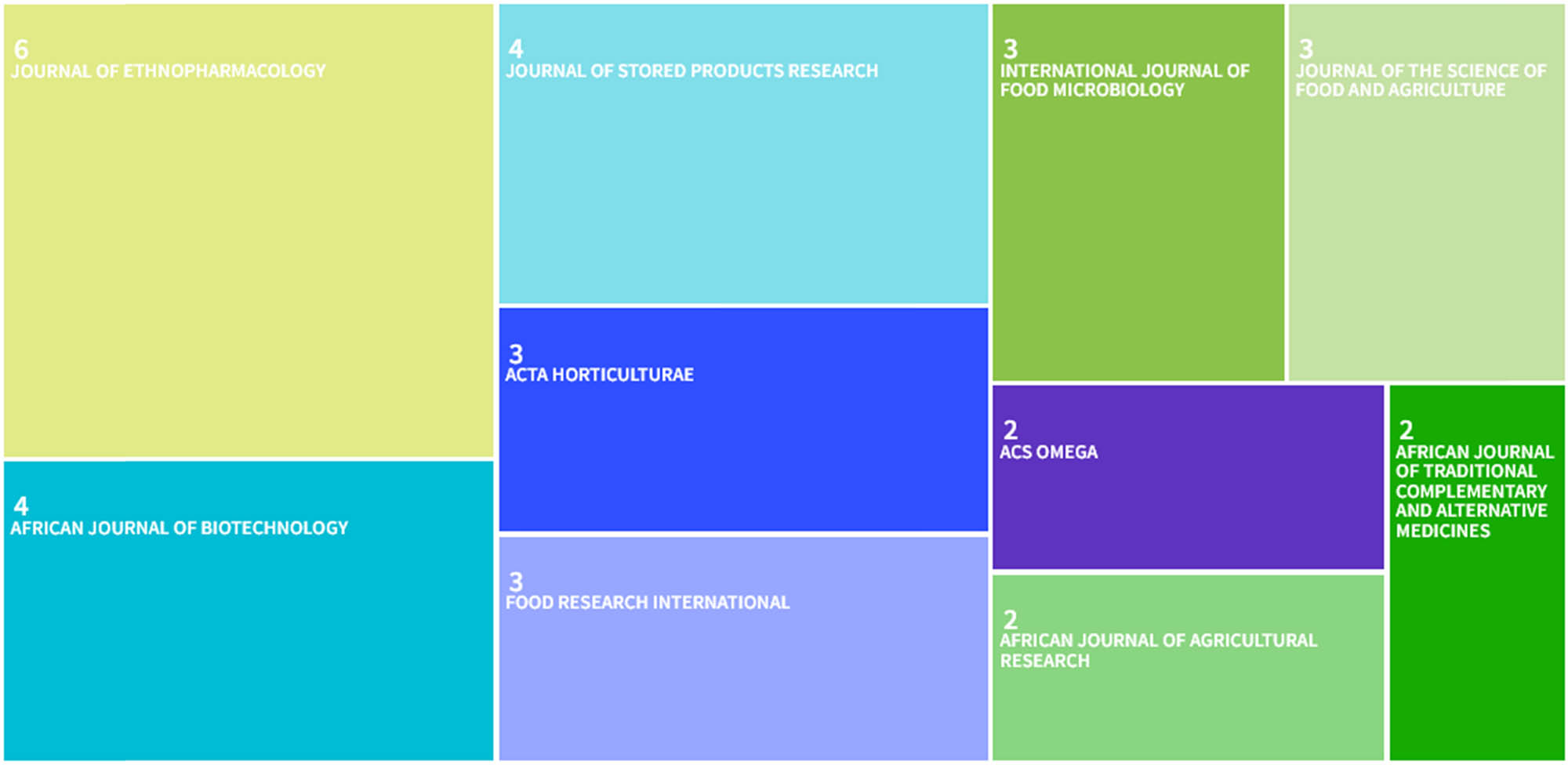
Main journals and sources. Different colours indicate different journals, with numbers above journals indicating the number of articles for each. Source: Authors’ elaboration based on data from the WoS database.
Most of the articles that are eligible are related to the research areas of Food science – Technology (35 articles, 29.41%), Agriculture (28 articles, 23.53%), Plant sciences (14 articles, 11.76%), Chemistry and Pharmacology – Pharmacy (13 articles, 10.92%, each), Biotechnology – Applied microbiology, Integrative complementary medicine, and Nutrition – Dietetics (9 articles, 7.56%, each) (Figure 2). However, it is interesting to note that the selected articles fall into 32 research areas (including Biochemistry – Molecular biology, Education – Educational research, Engineering, Entomology, Environmental sciences – Ecology, Forestry, Microbiology, Mycology, Public environmental occupational health, and Toxicology), which suggests that the research field is quite multidisciplinary. Notwithstanding, it can be postulated that the research field focuses on biological sciences (cf. agriculture, plant sciences, food science) while social sciences and economics are not adequately represented.
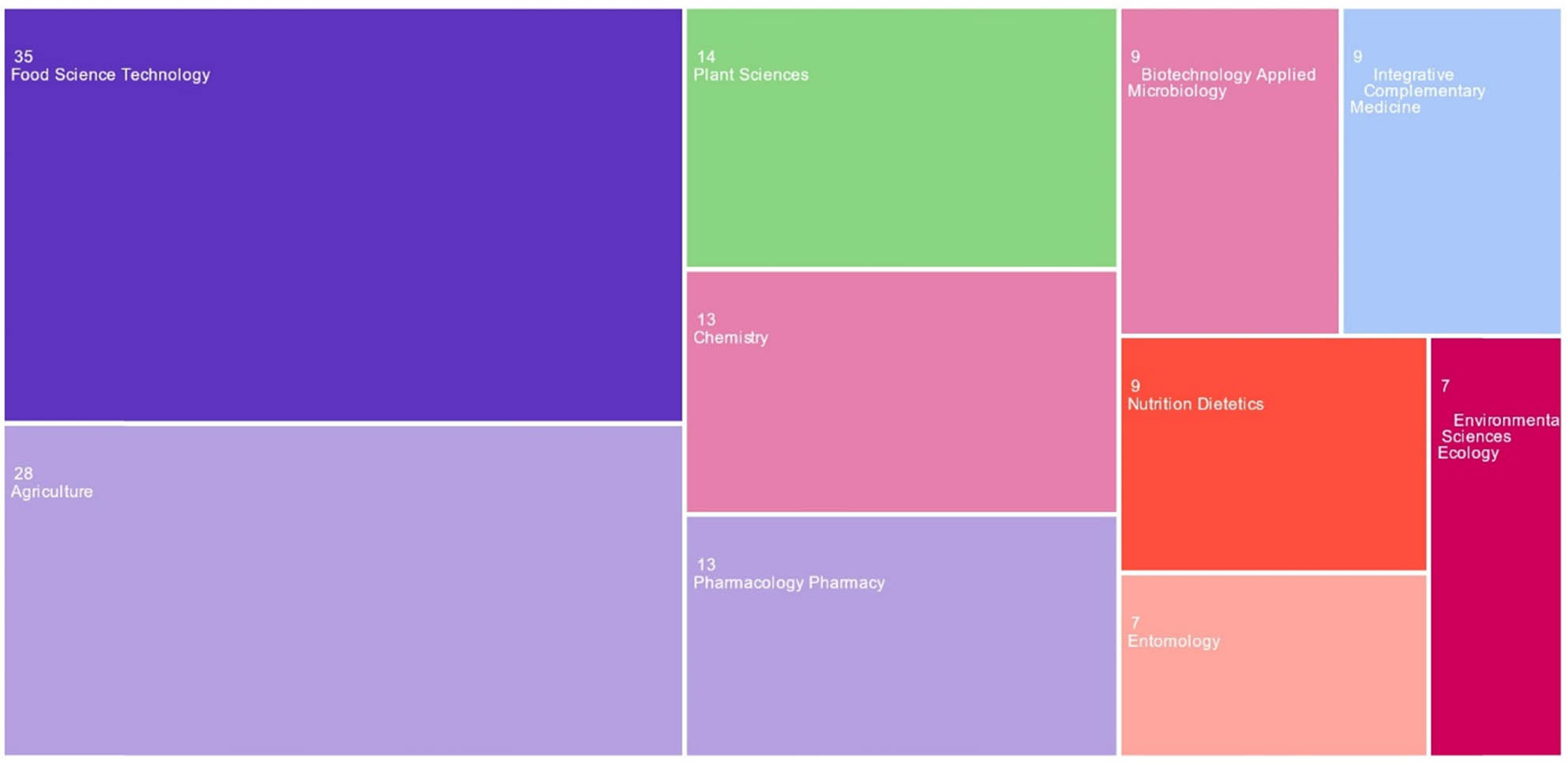
Main research areas. Source: Authors’ elaboration based on data from the WoS database.
The fact that the field of research related to roselle encompasses various sectors and disciplines is reflected in the SDGs it addresses (Figure 3). The articles selected for this study on roselle focus on 8 SDGs, with the most prominent being SDG 03 – good health and wellbeing (65 documents, 54.62%), SDG 02 – zero hunger (28 documents, 23.53%), SDG 15 – life on land (19 documents, 15.97%), SDG 13 – climate action (12 documents, 10.08%), and SDG 11 – sustainable cities and communities (8 documents, 6.72%). Further marginal SDGs include SDG 06 – clean water and sanitation (4 documents, 3.36%), SDG 05 – gender equality (3 documents, 2.521%), and SDG 01 – no poverty (2 documents, 1.681%).
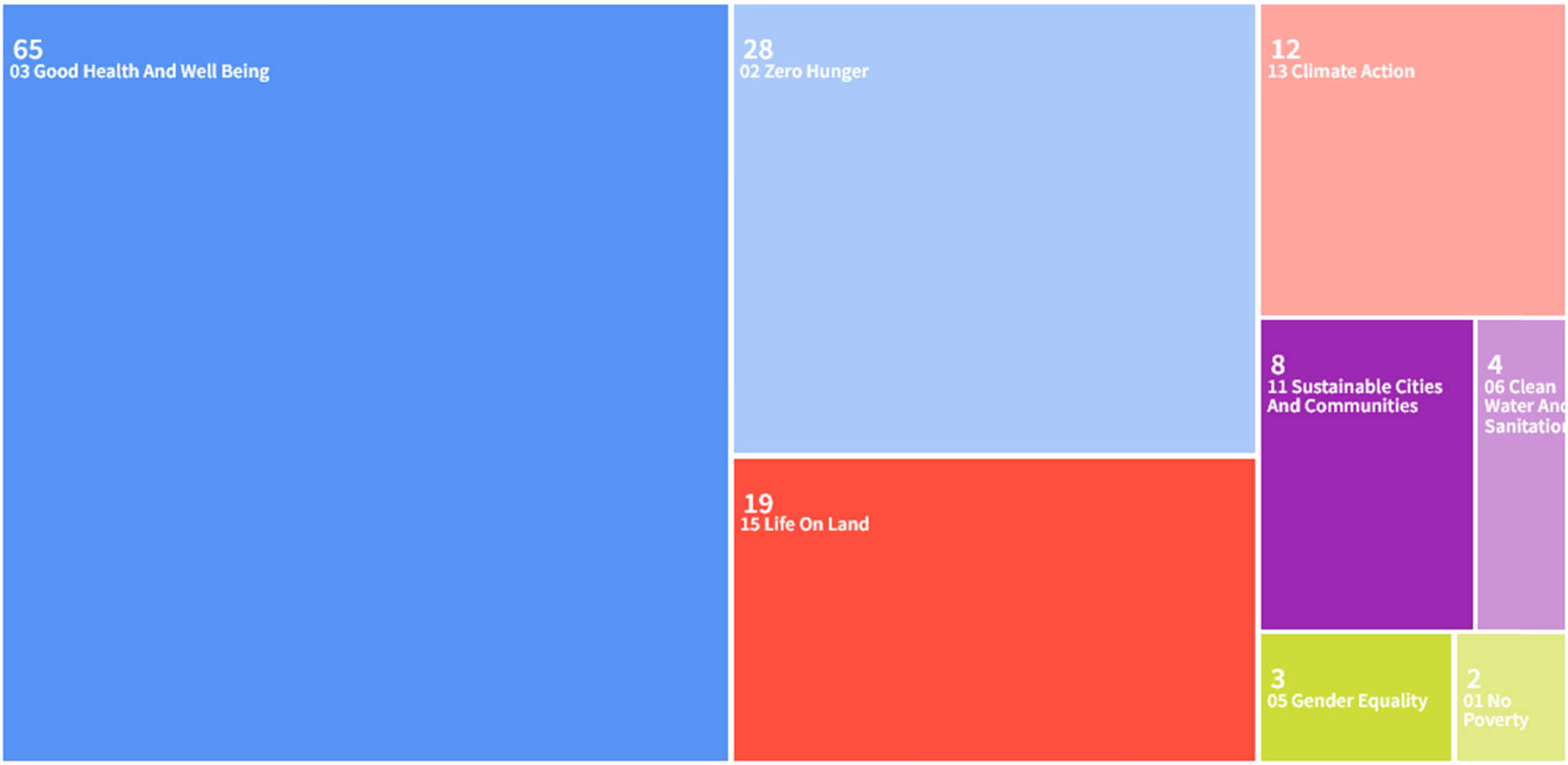
Main SDGs associated with the analysed literature. Source: Authors’ elaboration based on data from the WoS database.
The analysis of bibliometrics reveals that Kamal Eldin Mohammed Fadl (Agricultural Research Corporation, Sudan), with four articles, and Paulin Azokpota (University Abomey-Calavi, Benin), with three articles, are the most prominent and productive authors in the research field (Figure 4). However, the research field lacks consistency since many authors have only one or two articles. Indeed, 483 scholars authored the 119 selected articles, but 481 scholars (so 99.48%) have only 1 or 2 articles on roselle. This indicates that even authors who work on roselle do so sporadically rather than systematically, which may be due to the absence of structured and long-term national or regional research programs/projects on roselle.
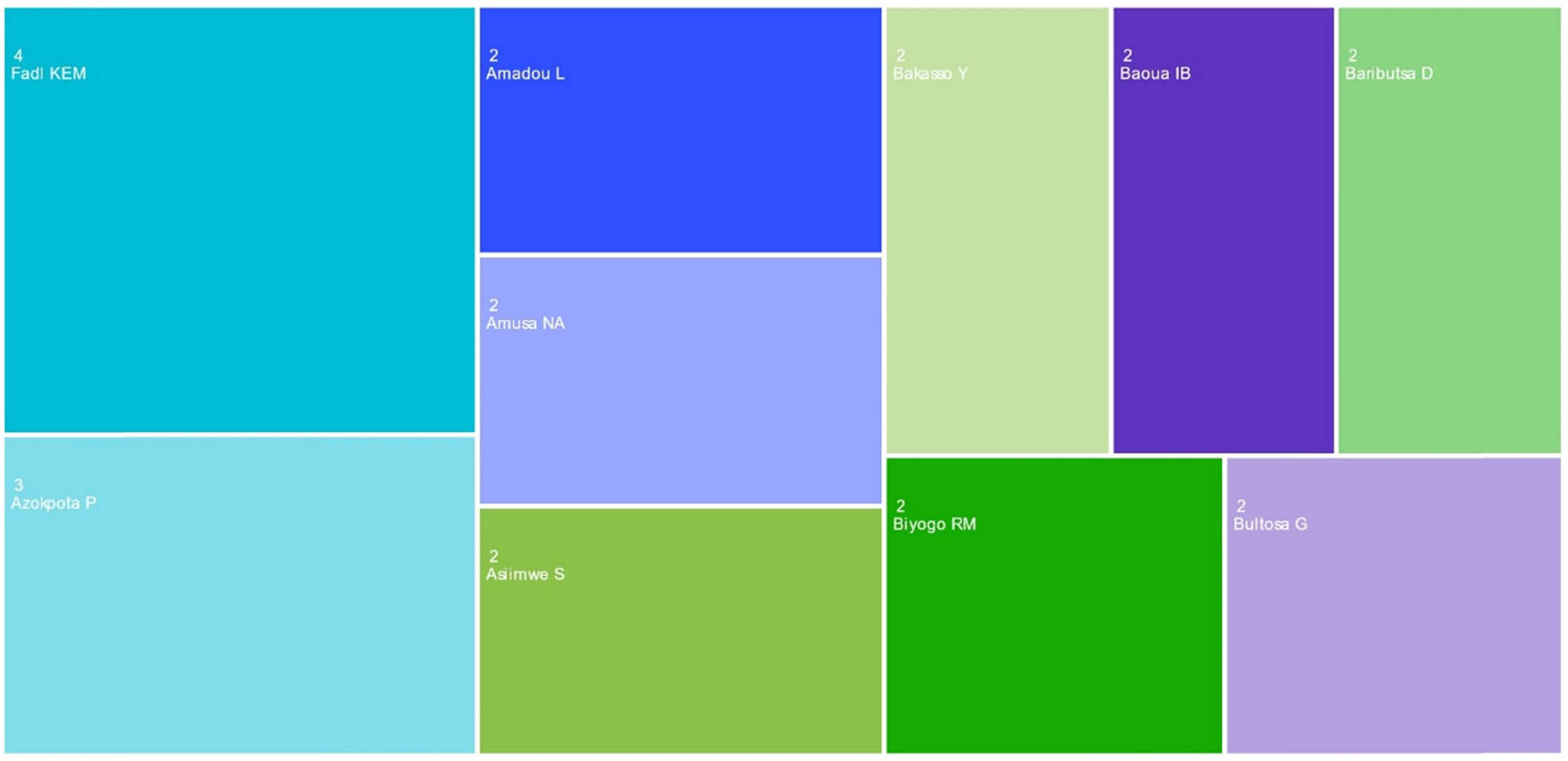
Prominent authors and scholars. Source: Authors’ elaboration based on data from the WoS database.
The examination of affiliation institutions indicates that the most active research centre in this field is the Egyptian Knowledge Bank (16 documents, 13.45%). Further prominent African institutions are located in Benin (e.g. University of Abomey Calavi), Egypt (e.g. Cairo University, Zagazig University), Ghana (e.g. University for Development Studies, University of Ghana), Niger (e.g. National Institute of Agronomic Research in Niger – INRAN, University of Maradi), Nigeria (e.g. University of Nigeria, Federal University of Technology Akure, Obafemi Awolowo University, University of Benin, University of Agriculture Abeokuta, University of Ibadan), Senegal (e.g. University Gaston Berger, University Cheikh Anta Diop Dakar), and Sudan (e.g. University of Khartoum, Agricultural Research Corporation). However, some prominent research centres are located outside Africa, especially in France (e.g. Aix Marseille Université, Centre National de la Recherche Scientifique, Agricultural Research Centre for International Development [CIRAD], Institut de Recherche pour le Développement [IRD], Université de Montpellier) and, to a lesser extent, Saudi Arabia (e.g. King Saud University). The 119 selected articles on roselle have been written by scholars who are affiliated with 202 research centres and universities (Figure 5).
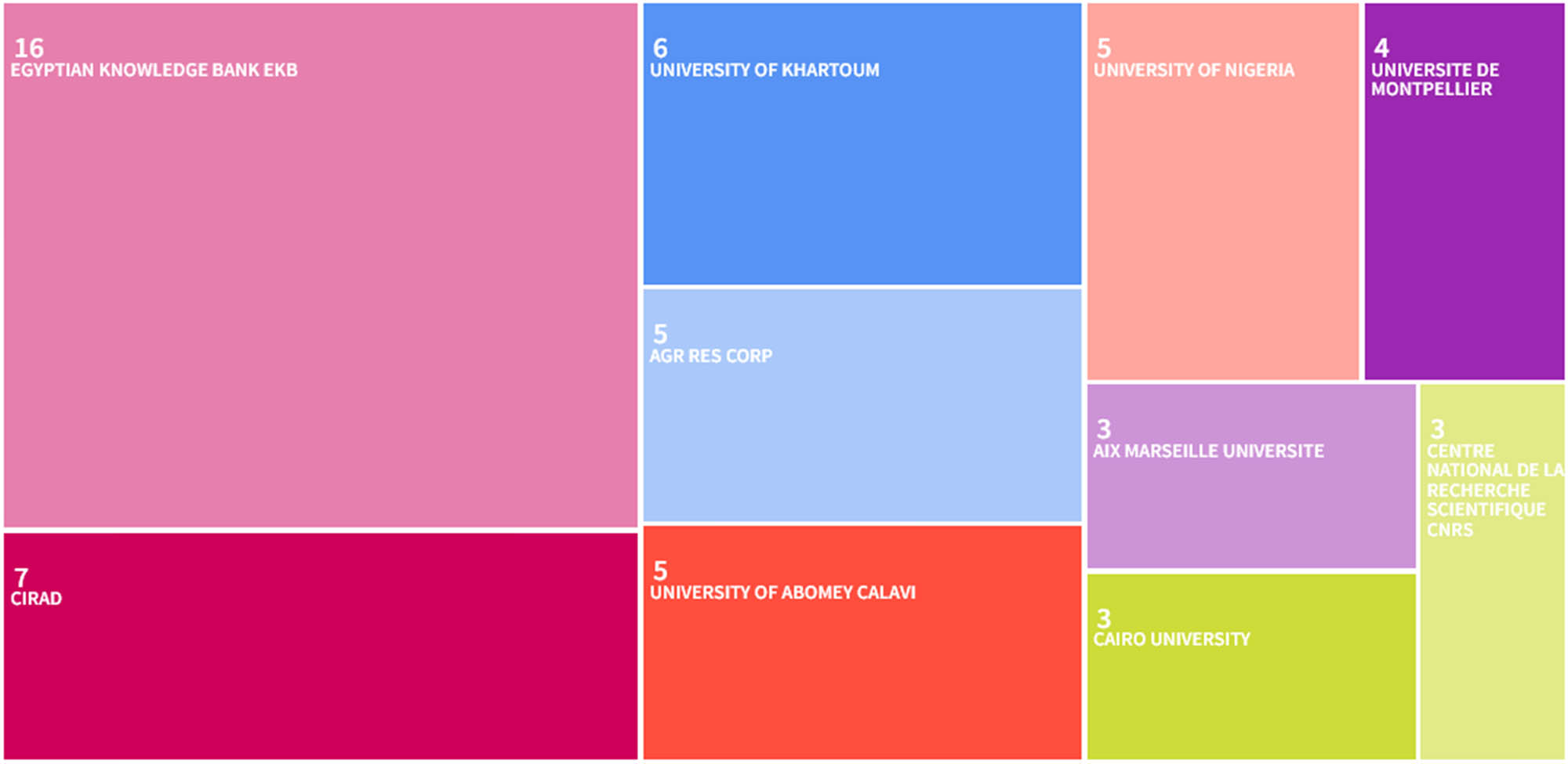
Main affiliation institutions. CIRAD: Centre de coopération internationale en recherche agronomique pour le développement (France), AGR RES CORP: Agricultural Research Corporation (Sudan). Source: Authors’ elaboration based on data from the WoS database.
The findings regarding the affiliation institutions support those concerning the affiliation countries (Figure 6). The affiliation countries list is dominated by Nigeria (25 documents, 21.01%), Egypt (16 documents, 13.44%), France (15 documents, 12.60%), and Sudan (14 documents, 11.76%). Prominent African countries include also Benin, Botswana, Burkina Faso, Cameroon, Ethiopia, Gabon, Ghana, Niger, Senegal, South Africa, Tanzania, and Uganda. However, many authors are affiliated with institutions located outside Africa in Europe (viz. Belgium, Denmark, England, Germany, Sweden, Switzerland), Asia (viz. Saudi Arabia, United Arab Emirates), and Northern America (viz. USA).
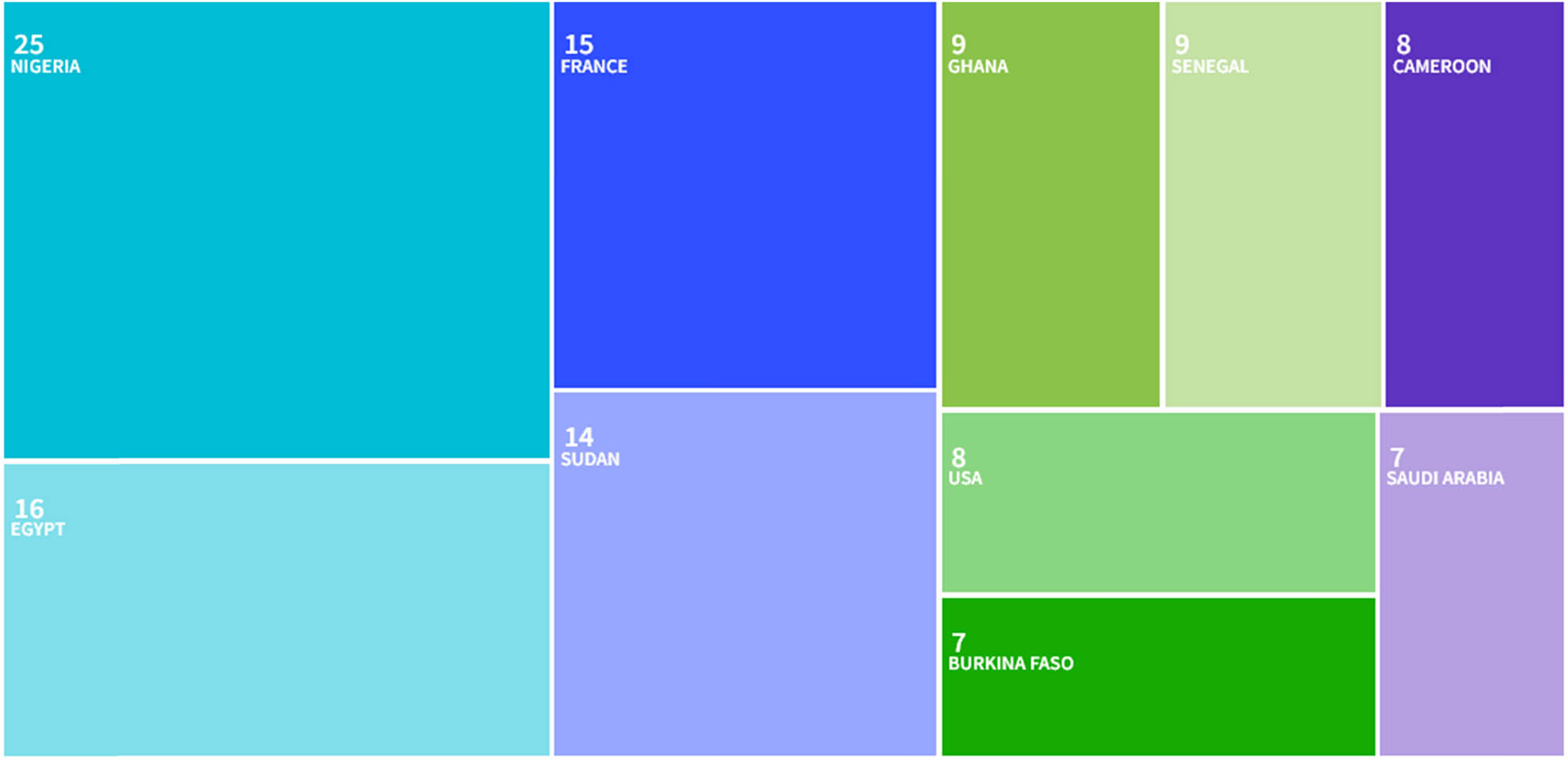
Main affiliation countries. Source: Authors’ elaboration based on data from the WoS database.
The analysis suggests that the most important funding agencies are the European Union, the United States Agency for International Development (USAID), the Grand Challenges Canada Stars in Global Health Round, the International Foundation for Science, and the Swedish Research Council. This implies that a large share of funding for research on roselle in Africa comes from abroad, especially from Europe and Northern America. This, in turn, denotes the weakness of domestic, African funding, which represents a risk and might hinder the development of long-term domestic research programs.
3.2 Geography of the research on roselle in Africa
There are significant variations among African countries in terms of research on roselle (Table 4). The majority of studies have been conducted in a few countries that dominate the list of affiliation countries, such as Nigeria, Egypt, Sudan, Ghana, and Senegal. In fact, more than half of all studies on roselle in Africa have been conducted in these five countries alone. More specifically, Nigeria has the highest number of studies on roselle (26 articles, accounting for 21.85% of the selected ones), followed by Egypt (15 articles, 12.60%), Sudan (14 articles, 11.76%), and Ghana and Senegal (9 articles, 7.56%, each). While the results for Nigeria and Egypt, which are large and populous countries, are somewhat expected, the performance of Ghana and Senegal may indicate a certain dynamism of their research systems. Meanwhile, the findings regarding Sudan might be explained by the fact that the country is a big producer of roselle (cf. Karkadeh) and the crop has a high socio-economic importance. Further prominent African countries include Burkina Faso and Cameroon (eight articles, each), Niger (six articles), and Benin (five articles). Conversely, many African countries have only been marginally or not at all covered in the research field. For instance, in several countries (viz. Guinea, Guinea-Bissau, Kenya, Mali, Morocco, Namibia, and South Africa), only one study on roselle was performed. Moreover, about two-thirds of African countries (33 out of 54 countries) – viz. Algeria, Angola, Botswana, Burundi, Cabo Verde, Central African Republic, Chad, Comoros, Congo, Democratic Republic of the Congo, Djibouti, Equatorial Guinea, Eritrea, Eswatini/Swaziland, Lesotho, Liberia, Libya, Madagascar, Malawi, Mauritania, Mauritius, Mozambique, Rwanda, São Tomé and Príncipe, Seychelles, Sierra Leone, Somalia, South Sudan, the Gambia, Togo, Tunisia, Zambia, and Zimbabwe – have not been the subject of any research related to roselle, indicating a significant lack of research in this field.
Geography of research on roselle in Africa
| Country or region (articles number) | Documents |
|---|---|
| Benin (5) | Agbobatinkpo et al. [147], Azokpota et al. [183], Azokpota et al. [156], Bothon et al. [104], Kobta et al. [84] |
| Burkina Faso (8) | Avallone et al. [176], Bakary et al. [111], Icard-Vernière et al. [136], Ouoba et al. [181], Palé et al. [189], Parkouda et al. [174], Sanon et al. [127], Savadogo et al. [158] |
| Cameroon (8) | Bayoï et al. [93], Brévault et al. [171], Brévault et al. [157], Maffo Tazoho et al. [90], Marcel et al. [109], Mohamadou et al. [172], Saha et al. [92], Yongabi et al. [159] |
| Côte d’Ivoire/Ivory Coast (2) | Agbo et al. [166], Oulai et al. [139] |
| Egypt (15) | Abou-Sreea et al. [85], Al-Shafei and El-Gendy [149], AbouZid and Mohamed [154], Abdelghany et al. [160], Atwaa et al. [86], Elkafrawy et al. [106], Farag et al. [135], Hafez et al. [88], Hanafy et al. [89], Hassan et al. [142], Mohammed et al. [91], Naeem et al. [118], Osman et al. [138], Rasheed et al. [38], Salem et al. [140] |
| Ethiopia (2) | Olika Keyata et al. [108], Keyata et al. [97] |
| Gabon (3) | Bayendi Loudit et al. [124], Ondo et al. [152,153] |
| Ghana (9) | Aboagye et al. [99], Ali et al. [100], Bekoe et al. [103], Budiman et al. [105], Kubuga et al. [115], Kubuga et al. [116], Morrison and Twumasi [163], Naangmenyele et al. [98], Quansah et al. [122] |
| Guinea (1) | Diallo et al. [113] |
| Guinea-Bissau (1) | Catarino et al. [112] |
| Kenya (1) | Mwasiagi et al. [144] |
| Mali (1) | Maiga et al. [186] |
| Morocco (1) | Benkhnigue et al. [87] |
| Namibia (1) | Misihairabgwi et al. [117] |
| Niger (6) | Abasse et al. [175], Amadou et al. [128], Atta et al. [155], Bakasso et al. [141], Baoua et al. [132], Wezel and Haigis [191] |
| Nigeria (26) | Alegbe et al. [62], Alegbejo et al. [190], Aletor et al. [148], Amusa [187], Amusa et al. [192], Aworh [131], Ayanda et al. [101], Azeez et al. [102], Banwo et al. [61], Chukwu et al. [95], Eghosa et al. [134], Idowu-Adebayo et al. [96], Ifie et al. [121], Ighodaro et al. [107], Nwachukwu et al. [125], Nwachukwu et al. [137], Nwafor and Ikenebomeh [170], Obadina and Oyewole [179], Sowemimo et al. [182], Ogunkunle et al. [145], Ojokoh et al. [173], Olaleye [180], Omemu et al. [185], Oyewole and Mera [164], Uvere et al. [165], Sunmonu and Bayo Lewu [120] |
| Senegal (9) | Bourqui et al. [94], Cisse et al. [167], Diouf et al. [178], Juliani et al. [169], Kane et al. [114], Mathieu and Meissa [52], Ndiaye et al. [129], Sarr et al. [58], Seck et al. [123] |
| South Africa (1) | Raghu et al. [119] |
| Sudan (14) | Abdallah Mohammed Ahmed et al. [110], Almisbah et al. [83], Dawoud and Sauerborn [133], El Tahir et al. [168], Elfaki et al. [195], Fadl [161], Fadl [151], Fadl and El Sheikh [162], Fadl and Gebauer [188], Khristova and Tissot [193], Gaafar et al. [184], Khristova and Vergnet [194], Suliman et al. [130], Yagi et al. [34] |
| Tanzania (2) | Peter et al. [146], Peter et al. [126] |
| Uganda (2) | Mugisha et al. [143], Asiimwe et al. [150] |
| Africa (1) | Chadha et al. [177] |
In general, there is a lack of studies on roselle that cover the whole African continent or different African countries, with a few exceptions. For instance, Chadha et al. [177] analysed the impacts of the promotion of various indigenous vegetables (IVs) (including roselle but also amaranth, African eggplant, okra, Bambara groundnut, moringa, and cowpea) on food and nutrition security, health and income generation in Africa. Notwithstanding, this suggests a lack of collaboration among African countries on roselle.
3.3 Agriculture subsectors and food chain stages
Concerning agriculture subsectors, as anticipated, since H. sabdariffa is a crop/plant, almost all the selected articles deal with crop production. Indeed, there is only one exception; Suliman et al. [130] analysed the effect of a roselle seed-based diet on carcass characteristics and the chemical composition and quality of the meat of Baggara bulls in Sudan. This finding might suggest that roselle is not widely used in animal feeding or simply and merely that there is a gap in research on this topic.
Consumption is by far the most addressed stage of the food chain followed by processing and then production while the intermediate stages, such as marketing and distribution, are often neglected in the scholarly literature (Table 5). Interestingly, there are several studies on the processing of roselle. For instance, Parkouda et al. [174] described the production process Bikalga (based on alkaline fermented seeds of roselle) in Burkina Faso. Furthermore, many studies refer to different processed products of H. sabdariffa, including juices in Nigeria – Zobo [95,96,170,179,185], Senegal – Bissap [129], and Ghana – Sobolo [99]. Additionally, there are studies that investigate the use of roselle as an ingredient in various processed foods such as tomato paste [86], plantain powder [109], Babenda – Burkina Faso [111], Yanyanku – Benin [156], Bikalga – Burkina Faso [174,181], Mbuja – Cameroon [172], and Furundu – Sudan [195]. Keyata et al. [97] suggested that “calyces of Karkade can be used as a candidate to substitute synthetic antioxidants and food colorant in food, beverage and pharmaceutical industries because of their high antioxidant capacity, desired color and as a good source of phytochemicals.” Roselle has some antimicrobial characteristics that make it a potential food preservative [86]. Products from roselle go beyond food and include some industrial ones such as the production of bast fibre [144] and papermaking pulp [193]. Meanwhile, there are only a few papers that focus on the marketing of roselle and its products. In terms of consumption, roselle is used both as a food and a medicine/drug. The majority of articles in this category discuss the use of roselle in traditional, folk medicine to treat a variety of diseases and ailments. Some authors take a more holistic approach and examine different stages of the food chain. For instance, Catarino et al. [112] analysed the marketing and consumption of various leafy vegetables (viz. baobab, Bombax costatum, black sesame/vegetable sesame, amaranth, and roselle) in Guinea-Bissau. Cisse et al. [167] cast light on the production, processing/transformation, and consumption of Bissap/roselle in Senegal. Diouf et al. [178] map the commodity systems (cf. food chains) of four indigenous leafy vegetables (ILVs) (viz. roselle, cowpea, amaranth, and moringa) in Senegal, thus covering production, marketing, and consumption. Alegbejo et al. [190] explore the current status and future potential of the production and utilization/consumption of roselle in Nigeria.
Food chain stages
| Food chain stage* | Documents |
|---|---|
| Production | Abou-Sreea et al. [85], Amusa [187], Amusa et al. [192], Atta et al. [155], Aworh [131], Azeez et al. [102], Bayendi Loudit et al. [124], Budiman et al. [105], Chadha et al. [177], Cisse et al. [167], Dawoud and Sauerborn [133], Diouf et al. [178], El Tahir et al. [168], Fadl [151,161], Fadl and El Sheikh [162], Fadl and Gebauer [188], Alegbejo et al. [190], Gaafar et al. [184], Hanafy et al. [89], Hassan et al. [142], Ifie et al. [121], Juliani et al. [169], Kubuga et al. [115], Mohammed et al. [91], Ondo et al. [152,153], Wezel and Haigis [191] |
| Processing (including post-harvest storage) | Abdelghany et al. [160], Aboagye et al. [99], Agbobatinkpo et al. [147], Aletor et al. [148], Amadou et al. [128], Atwaa et al. [86], Aworh [131], Azokpota et al. [183], Azokpota et al. [156], Banwo et al. [61], Baoua et al. [132], Bayoï et al. [93], Bothon et al. [104], Cisse et al. [167], Idowu-Adebayo et al. [96], Juliani et al. [169], Khristova and Vergnet [194], Elfaki et al. [195], Khristova and Tissot [193], Maffo Tazoho et al. [90], Marcel et al. [109], Mohamadou et al. [172], Mwasiagi et al. [144], Naeem et al. [118], Ndiaye et al. [129], Nwafor and Ikenebomeh [170], Obadina and Oyewole [179], Avallone et al. [176], Ojokoh et al. [173], Omemu et al. [185], Oulai et al. [139], Ouoba et al. [181], Parkouda et al. [174], Sanon et al. [127], Savadogo et al. [158], Uvere et al. [165] |
| Marketing and distribution | Abasse et al. [175], Catarino et al. [112], Diouf et al. [178] |
| Consumption | Abasse et al. [175], Abdallah Mohammed Ahmed et al. [110], Aboagye et al. [99], AbouZid and Mohamed [154], Morrison and Twumasi [163], Agbo et al. [166], Agbobatinkpo et al. [147], Alegbe et al. [62], Alegbejo et al. [190], Aletor et al. [148], Ali et al. [100], Al-Shafei and El-Gendy [149], Asiimwe et al. [150], Avallone et al. [176], Ayanda et al. [101], Bakary et al. [111], Banwo et al. [61], Bayoï et al. [93], Bekoe et al. [103], Benkhnigue et al. [87], Bourqui et al. [94], Catarino et al. [112], Chadha et al. [177], Chukwu et al. [95], Cisse et al. [167], Diallo et al. [113], Diouf et al. [178], Eghosa et al. [134], Elkafrawy et al. [106], Icard-Vernière et al. [136], Idowu-Adebayo et al. [96], Ighodaro et al. [107], Kobta et al. [84], Kubuga et al. [115], Kubuga et al. [116], Maiga et al. [186], Mathieu and Meissa [52], Misihairabgwi et al. [117], Mugisha et al. [143], Naangmenyele et al. [98], Nwachukwu et al. [125,137], Ogunkunle et al. [145], Olaleye [180], Ondo et al. [153], Osman et al. [138], Oulai et al. [139], Peter et al. [126,146], Quansah et al. [122], Raghu et al. [119], Rasheed et al. [38], Saha et al. [92], Sarr et al. [58], Seck et al. [123], Sowemimo et al. [182], Yagi et al. [34] |
*Several documents address various stages of the food chain.
Roselle has been cultivated in different agricultural systems, which include horticulture [124], such as monocropping or intercropping, and agroforestry. Roselle has been used in intercropping with Acacia senegal in Sudan [151,161,168,184,188], cluster bean in Egypt [91], and millet in Niger [191]. Meanwhile, roselle has been the subject of research in agroforestry, especially in Sudan [151,161,162,168,184,188]. It has even been successfully used in container gardening in northern Ghana to combat micronutrient deficiencies in young children and mothers during the lean season [115]. This suggests that the crop is versatile and can easily adapt to various environments and agricultural systems.
In terms of production, only a few studies deal with fertilization and pest management, while irrigation seems completely overlooked. The studies analysing pest management deal with various issues such as bruchids on roselle seeds in Burkina Faso [127] and Niger [128,132], root rot and vascular wilt diseases in Egypt [142], and foliar blight in Nigeria [187,192]. Bayendi Loudit et al. [124] shed light on the practices of farmers in peri-urban gardening in Gabon (Libreville and Owendo); they found that the most important pests are aphids and beetles. While some studies focus on managing roselle pests and diseases, others explore the use of roselle-based products to control various plant pests. In Africa, extracts from different parts of the roselle plant have been utilized to manage diverse pests and diseases. Notable pests and diseases studied include sugar beet crown gall (caused by Agrobacterium tumefaciens bacterium) in Egypt [88]. Dawoud and Sauerborn [133] used roselle to induce the suicidal germination of the parasitic Striga weed. Only a few articles deal with the fertilization of roselle and soil fertility management in relation to the crop. For instance, Oyewole and Mera [164] analysed the response of roselle to different rates of inorganic and farmyard fertilizers in Nigeria. Wezel and Haigis [191] analysed fallow cultivation systems and their impacts on soil fertility in Niger; they refer to intercropping where roselle is used by some farmers. Foliar applications can be used for fertilization but also to mitigate some abiotic stresses such as salinity [85] and heat [89]. For instance, Abou-Sreea et al. [85] found that the foliar application of potassium silicate (KSi) and the extract of Aloe saponaria (Ae) reduces the stressful salinity impacts on the development, yield, and biochemical features of roselle plants in Egypt. Hanafy et al. [89] found that the treatment with salicylic acid and blue-green algae extract mitigates heat stress and decreases the negative effects of high temperatures on the growth of roselle in Siwa Oasis (Egypt).
The selected studies address different parts of roselle including flowers/calyces, leaves, and seeds (Table A2). The focus of the studies determines which part is studied. Leaves are mainly considered in studies dealing with roselle as a leafy vegetable. Meanwhile, studies dealing with the production of juices and the analyses of their features and characteristics focus on flowers and calyces. Seeds are mainly used in condiments. Meanwhile, both leaves and calyces are used in traditional medicine. However, some articles consider the whole roselle plant without distinguishing between its different parts when dealing with agronomic aspects. A few studies simultaneously examine different parts of roselle. For instance, Benkhnigue et al. [87] argued that both leafy stems and seeds of roselle are used against anaemia in Morocco. Keyata et al. [97] investigated the phytochemical contents, functional properties, and antioxidant activity of calyces and seeds of Karkade/roselle in Ethiopia.
3.4 Climate and ecosystem resilience
Only a very few articles deal with the potential that roselle has to contribute towards resolving numerous environmental issues and challenges that Africa faces, including climate change, land degradation, desertification, and water and soil pollution.
Climate change and variability are marginal topics in the scholarly literature on roselle in Africa. The production of biofuel/biodiesel from roselle demonstrates that the plant can contribute to the efforts to mitigate climate change. Bothon et al. [104] analysed the biodiesel potential of oils from the seeds of red and green phenotypes of roselle in Benin and concluded that both oils, which are in line with the US and European Union’s standards, could be used as fuel oil after their transesterification. Meanwhile, the use of usher wood and stems of roselle for the production of charcoal in Sudan [194] might represent a way to valorize the crop and its by-products, and promote recycling, but it does not help in mitigating the greenhouse gas emissions, so climate change.
Also, the role of roselle in addressing land degradation and desertification is a marginal topic in the existing literature. However, its use in agroforestry systems [151,161,162,168,184,188] might be useful in many African countries. Roselle has the potential to be a valuable asset in marginal agroecosystems. Treatments tested on roselle to mitigate the effects of salinity [85] and heat [89] raise hope about the possibility of cultivating roselle in marginal, harsh environments such as saline soils and hot arid areas.
A dearth of studies deals with the effectiveness of roselle in addressing water and soil pollution. Almisbah et al. [83] suggested that phytochemicals contained in the extract of roselle have the potential of reducing and capping copper (Cu), thus being useful in a procedure for the treatment of wastewater that was tested in the Soba sewage treatment plant (Sudan). Moreover, the fact that roselle can absorb/adsorb high concentrations of heavy metals [98,102] calls for caution regarding food safety but might make it a good candidate plant for the remediation of polluted soils (cf. phytoremediation) [102]. However, it is important to pay attention to the toxicity of heavy metals to plants such as roselle that seem not to tolerate high concentrations of heavy metals [102]. As for water treatment, Yongabi et al. [159] found that methanol extracts from seeds of moringa (Moringa oleifera), Jatropha curcas, and the calyces of roselle drastically reduced water turbidity in Cameroon and concluded that “Plant materials can be used as phytocoagulants and phytodisinfectants in treating turbid water and can be applied in wastewater treatment” (p. 628).
3.5 Food and nutrition security
The scholarly literature suggests that roselle has the potential to play an important role in ensuring food and nutrition security in Africa by increasing food availability, improving food access, enhancing food utilization, and ensuring stability.
Concerning food availability, the topic is marginal in the literature on roselle in Africa. However, the few available studies suggest that roselle is becoming an increasingly crucial source of food for households in Africa. Indeed, some studies show that the cultivation and use of roselle are increasing across Africa such as in Nigeria [190], Senegal [167,178], and Guinea-Bissau [112]. Referring to different leafy vegetables (including roselle), Catarino et al. [112] argued that “Although price and availability vary among the leafy vegetables analysed, these traditional foods appear to be a good dietary component that can contribute to food security in Guinea-Bissau and in other West African countries, as these species are widely distributed in this region.” The availability of roselle and its products depends on yield. In this respect, following their study of the variability of roselle yield in Niamey (Niger), Atta et al. [155] concluded that “Ecotypes with higher calyx yield had lower hundred seed weight and shorter plants” (p. 1371) while highlighting the potential to increase calyx yield through selection and breeding programs.
Research on roselle in Africa has paid little attention to food access, but studies indicate that households that have access to roselle have improved food and nutrition security. This is particularly true for the poor; indeed, referring to IVs, Chadha et al. [177] point out that “poor and rural households rely on IVs as a source of micronutrients” (p. 253). The easiness of cultivating roselle, even in containers [115], makes it a valuable asset in improving access of the poor to healthy and nutritious foods. This is confirmed by the fact that roselle has been produced in urban and peri-urban areas of some countries such as Gabon [124,152], Niger [175], and Ghana [122], thus allowing urban populations to have easy physical access to fresh (leafy) vegetables.
Most of the articles selected to discuss food security in relation to roselle deal with its role in nutrition, thus focusing on food utilization. Roselle is a leafy vegetable that plays an important role in the diet of numerous households in different African countries such as Niger [175], Guinea-Bissau [112], Burkina Faso [136], Ghana [122], and Ivory Coast [166]. Roselle is a valuable source of minerals, vitamins, and bioactive compounds, which makes it very nutritious. It represents a valuable source of micronutrients such as iron [92,110,115,116,126,136,153,165], zinc [136,153,165], vitamin A [136], and iodine [115], making it a valuable alley to combat micronutrient deficiencies [115,116,136,165,176]. Referring to the use of Folere (H. sabdariffa), M. oleifera, Solanum aethiopicum (eggplant) to enrich porridges based on local foods (e.g. maize) in Cameroun, Saha et al. [92] concluded that “moringa, folere, and eggplant leaves can be used in functional foods to alleviate iron deficiency among children aged 6–23 months.” However, the nutritional value of roselle leaves and calyces can be affected by various factors such as varieties/cultivars [34,135], genotypes [110], environmental conditions [110], season [121,169], and processing and preparation method [38,173].
The use of roselle in fortification and supplementation programs in many African countries is due to its interesting nutritional profile [34,97,108,110,121,169]. Across Africa, roselle-based products have been tested and/or used for the enrichment of nutrients in various products. It has also been used as a food supplement in different food products, including porridges made from various cereals such as maize [92], snacks based on maize (Kokoro) or groundnut (Kulikuli) [148], maize-Bambara groundnut foods [165], and condiments (Afitin, Iru, and Sonru, based on African locust bean, Parkia biglobosa) [183]. Meanwhile, further studies also show the opportunity of enriching roselle-based products to improve their nutritional value and health-supportive features, e.g. Zobo drink with turmeric (Curcuma longa) in Nigeria [96].
Ensuring food safety is crucial for making optimal use of food. Some scholars have highlighted that the leaves and calyces of roselle, as well as its products (e.g. juices), may contain heavy metals [84,98,101–103,111,152,153,186], microbial contaminants [99,103,117,122,129], including mycotoxins [117], and pesticides [84,111], such as pyrethroids and glyphosate, which could pose a potential threat to human health and well-being. Studies highlighting such health risks have been carried out in Benin [84], Ghana [98,99,122], Nigeria [101], Burkina Faso [111], Namibia [117], Senegal [129], and Gabon [153]. However, after investigating a polyherbal formulation (mainly composed of roselle and Aloe barbadensis) commonly used in Ibadan (Nigeria), Ighodaro et al. [107] underline the “high safety for the investigated polyherbal mixture and thus supports its usage in folklore medicine” (p. 1393). Peter et al. [126], while confirming the safety of the aqueous extract of roselle for human consumption, found that the extract did not significantly improve the iron status in anaemic adults in Mkuranga district, a malaria endemic region in Tanzania. Anyway, the accumulation of some elements in plants might not always be negative and can even result beneficial; in this respect, following their analysis of the accumulation of soil-borne trace metals (viz. aluminium – Al, iron, manganese – Mn, and zinc – Zn) in plants cultivated in Moanda region (Gabon), Ondo et al. [153] concluded that “Al and Mn accumulation in food crops cultivated in the Moanda area of Gabon may represent a health hazard. However, the high levels of Zn in vegetables could be a pathway for Zn supplementation in human nutrition to reduce Zn deficiency in developing countries” (p. 2549). Similarly, in their investigation of the impact of urban gardening on metal transfer to vegetables (including roselle) in Libreville (Gabon), Ondo et al. [152] argued that “Amaranth and Roselle were vegetables that preferentially concentrated metals in their leaves and could, therefore, be used for metal supplementation in the food chain” (p. 1045). Access to clean water is crucial for food safety, since water is used in food preparation and cooking. Roselle has shown potential in water purification in countries such as Cameroon [159].
The articles selected discuss various claims of health benefits of roselle. These benefits are related to numerous diseases such as anaemia, cancer, cardiovascular diseases, diabetes, hypertension, and kidney disease (Table 6). However, most studies focus on hypertension, anaemia, and diabetes. Alegbe et al. [62] argued that the consumption of roselle-based Zobo drink “could improve diabetes, hypertension, dyslipidaemia, metabolic syndrome, and liver disease.” The results of the study of Olaleye [180] support the use of roselle “in the treatment of diseases like abscesses, bilious conditions, cancer and coughs in traditional medicine and also … the possibility of isolating antibacterial and anticancer agents from Hibiscus sabdariffa” (p. 9). Some studies suggest that roselle has been used to manage opportunistic infections and diseases connected to HIV/AIDS in western Uganda [143,150]. Roselle is also included as an ingredient in many herbal formulations, e.g. antimalarial and haematinic ones in Ogbomoso (Nigeria) [145]. The health benefits of roselle are due, among others, to its antioxidant activity [34,61,97,120,121,163,189]. The health-protective properties of roselle (cf. phenolic compounds with high antioxidant functions) can be exploited in the design of functional foods and nutraceuticals [61]. Interestingly, some studies suggest that roselle products can also affect reproductive development [95] and seem to have beneficial effects during pregnancy [134] and breastfeeding [100]. However, caution is advised because the pharmacological applications of various bioactive phytochemicals from roselle have largely been based on anecdotes (cf. ethnobotanical and ethnopharmacological surveys), and the mechanistic details governing their activities have been rather elusive. Therefore, further studies (especially randomized clinical trials) are necessary to provide the necessary strong and robust evidence supporting the use of roselle and its products in medicine.
Claims of health benefits related to roselle
| Document | Country | Concerned disease(s) | Source of data |
|---|---|---|---|
| Benkhnigue et al. [87] | Morocco | Anaemia | Ethnobotanical and ethnopharmacological survey |
| Banwo et al. [61] | Nigeria | Diabetes | In vitro assays |
| Bourqui et al. [94] | Senegal | Hypertension | Clinical trial |
| Elkafrawy et al. [106] | Egypt | Hypertension | Clinical trial |
| Alegbe et al. [62] | Nigeria | Diabetes | Laboratory test |
| Sunmonu and Bayo Lewu [120] | Nigeria | Diabetes | Laboratory test |
| Diallo et al. [113] | Guinea | Hypertension | Ethnobotanical survey |
| Seck et al. [123] | Senegal | Hypertension | Clinical trial |
| Peter et al. [126] | Tanzania | Anaemia | Clinical trial |
| Nwachukwu et al. [125] | Nigeria | Renal function (in subjects with hypertension) | Clinical trial |
| Osman et al. [138] | Egypt | Kidney disease | Cross-sectional survey |
| Nwachukwu et al. [137] | Nigeria | Hypertension | Clinical trial |
| Peter et al. [146] | Tanzania | Anaemia | Ethno-medicinal survey |
| Al-Shafei and El-Gendy [149] | Egypt | Hypertension | Clinical trial |
| AbouZid and Mohamed [154] | Egypt | Hypertension | Ethnobotanical survey |
| Cardiovascular diseases | |||
| Sarr et al. [58] | Senegal | Hypertension | Laboratory test |
| Cardiovascular diseases | |||
| Sowemimo et al. [182] | Nigeria | Cancer | Laboratory test |
| Olaleye [180] | Nigeria | Various diseases (e.g. cancer) | Laboratory test |
No article specifically addresses the stability dimension of food security. However, it is worth mentioning the important role that roselle plays in feeding the population during the lean season [115]. In addition to this, the use of roselle in agroforestry systems [151,161,162,168,184,188] can help maintain food production stability in the face of climate change.
3.6 Socio-economic impacts and livelihoods
The analysis suggests that social and economic aspects are marginal in the literature on roselle in Africa. Considering the results of the bibliometric analysis, this was somehow expected. Indeed, the analysis of the research areas showed that the research field focuses on biological and environmental sciences while social sciences and economics are not adequately covered. Similarly, the scrutiny of the SDGs related to the scholarly literature on roselle in Africa has shown that SDGs dealing with socio-economic aspects (e.g. SDG 01 – No poverty and SDG 05 – Gender equality) are marginal. Some studies indicate that roselle can be beneficial for small-scale farmers in terms of income generation and rural livelihoods. However, these studies are only a few and are limited in scope.
Roselle is considered an essential source of income and livelihood strategy in several African countries. Indeed, some scholars refer to roselle as an economically important crop in different African countries such as Niger [141,155,175] and Senegal [178]. Chadha et al. [177] suggested that promoting IVs, including roselle, is beneficial not only for food security and health but also for generating income in Africa. Abasse et al. [175] point out that ILVs, including roselle, play an important role in the daily diets of populations and the economies of rural and urban areas in Niger in general and Maradi, Dosso, and Tillabery regions in particular. ILVs also represent an important source of income for farmers in Niger; the authors argued that “In Maradi and Dosso farmers involved in ILVs production obtain 20–30% of their annual income from the sales of ILVs. In Tillabery this value is higher than 50%” (p. 35). Furthermore, roselle might offer some opportunities for the diversification of income-generating activities through processing such as the production of charcoal [194].
The usefulness of roselle for low-income, poor individuals is notable. It provides a source of income [177,178] and can help compensate for the inadequate level of services, such as healthcare [150]. IVs, such as roselle, are a good source of income for African small-scale farmers [177]. The crop is widely grown by smallholders and resource-poor farmers in Nigeria [190]. The plant’s significance and versatility make it a fitting component of developmental programs promoting gardening [115].
According to certain research, roselle may have a role in promoting gender empowerment. Cisse et al. [167] reported that the production of roselle, as well as its transformation (cf. production of Bissap drink) in Senegal, is mainly managed by women and their groups and associations. Roselle has particular importance for women. It is among the herbs utilized to improve breastmilk production [100] and also improves iron status among women in childbearing age and prevents stunting in their toddlers [116].
The creation of roselle value chains can be a valuable tool to tackle various challenges and promote sustainable rural development in Africa. Aworh [131] argued that the value-added processing of underutilized IVs (such as roselle) can enhance small-scale farmers’ income, promote food security, and contribute to sustainable rural development in Nigeria.
4 Conclusions
This seems the first all-encompassing and methodical review of research on roselle in Africa. It presents a summary of both the bibliometric indicators and the subjects explored in the academic literature.
The research field on roselle is not well-established in Africa. There is limited interest, and the research field lacks consistency. Authors mostly come from institutions outside Africa, with funding mainly from Europe and North America. Most studies are concentrated in a few countries, while 33 out of 54 African countries have not been studied, indicating a significant research gap and lack of collaboration among African countries. The selected articles mainly focus on crop production, and consumption and processing stages. Roselle is used for both food and medicinal purposes. It is adapted to different agricultural systems and environments, but there’s limited agronomic research on fertilization, pest management, and irrigation. Some articles discuss how roselle could help with environmental issues in Africa, including climate change, land degradation, and water and soil pollution. It could also contribute to food and nutrition security. However, most articles only focus on its nutritional benefits and overlook its role in food availability, access, and stability. Roselle is a popular leafy vegetable in African households and is a good source of micronutrients. It is used in fortification and supplementation programs but may contain contaminants. Health claims about roselle include benefits for diseases like anaemia, cancer, cardiovascular diseases, diabetes, and hypertension. The literature on roselle in Africa tends to overlook social and economic aspects, but some studies suggest it could benefit small-scale farmers in terms of income generation, rural livelihoods, and gender empowerment.
The article shows the potential of roselle but also suggests that the current state of research on the crop is unsatisfactory, and there are several research gaps. Therefore, future research should pay more attention to the relationships between roselle and environmental issues such as climate change, land degradation, desertification, and water and soil pollution. Furthermore, there is a need to further elucidate the contribution of roselle to food and nutrition security with particular attention to availability, access and stability dimensions. Another domain that deserves more attention is that related to social and economic aspects and a deeper and more articulated investigation on the contribution of roselle to livelihoods and poverty reduction is needed. The latter can also provide strong evidence to invest in cooperation and development projects and programs aiming at the development of roselle and its value chain. Moreover, further studies (especially randomized clinical trials) are necessary to provide the necessary strong and robust evidence supporting the use of roselle and its products in medicine. This can open up new opportunities for the valorization of roselle and its products in functional foods, nutraceuticals, food supplements, and drugs. However, one of the most important priorities in the research field remains agronomy, as the review suggests a gap in research in agronomic practices (cf. fertilization, pest management, irrigation) regarding roselle. Given that roselle is grown across Africa, also collaboration and exchange of knowledge and expertise between African countries, south-south cooperation with Asia, and south-north research projects should be encouraged to strengthen the agricultural knowledge and innovation system (AKIS) in Africa, especially Western Africa.
Acknowledgments
This work was carried out within the project SUSTLIVES (SUSTaining and improving local crop patrimony in Burkina Faso and Niger for better LIVes and EcoSystems – https://www.sustlives.eu).
-
Funding information: This research was funded by the DeSIRA initiative (Development Smart Innovation through Research in Agriculture) of the European Union (contribution agreement FOOD/2021/422-681).
-
Author contributions: The author confirms the sole responsibility for the conception of the study, presented results and manuscript preparation. Conceptualization, HEB; methodology, HEB; software, HEB; validation, HEB; formal analysis, HEB; investigation, HEB; resources, HEB; data curation, HEB; writing – original draft preparation, HEB; writing – review and editing, HEB; visualization, HEB; project administration, HEB; funding acquisition, HEB.
-
Conflict of interest: The author states no conflict of interest.
-
Data availability statement: All data generated or analysed during this study are included in this published article.
Appendix
List of selected articles with their titles
| Article | Title |
|---|---|
| Yagi et al. [34] | Comparative study on the chemical profile, antioxidant activity, and enzyme inhibition capacity of red and white Hibiscus sabdariffa variety calyces |
| Almisbah et al. [83] | Green synthesis of CuO nanoparticles using Hibiscus sabdariffa L. extract to treat wastewater in Soba Sewage Treatment Plant, Sudan |
| Kobta et al. [84] | Evaluation of the contamination of edible leaves in the cotton-growing zone of Kerou and Pehunco (Benin) by metallic trace elements, pyrethroids and glyphosate |
| Saha et al. [92] | Nutritional quality of three iron-rich porridges blended with Moringa oleifera, Hibiscus sabdariffa, and Solanum aethiopicum to combat iron deficiency anemia among children |
| Atwaa et al. [86] | Antimicrobial activity of some plant extracts and their applications in homemade tomato paste and pasteurized cow milk as natural preservatives |
| Mohammed et al. [91] | Maximizing land utilization efficiency and competitive indices of roselle and cluster bean plants by intercropping pattern and foliar spray with lithovit |
| Maffo Tazoho et al. [90] | Survey on roselle juice (Hibiscus sabdariffa L.) preparation in the West Region of Cameroon: An evaluation of the effect of different formulations of this juice on some biological properties in rats |
| Benkhnigue et al. [87] | Ethnobotanical and ethnopharmacological study of medicinal plants used in the treatment of anemia in the region of Haouz-Rehamna (Morocco) |
| Abou-Sreea et al. [85] | Improvement of selected morphological, physiological, and biochemical parameters of roselle (Hibiscus sabdariffa L.) grown under different salinity levels using potassium silicate and Aloe saponaria extract |
| Banwo et al. [61] | Phenolics-linked antioxidant and anti-hyperglycemic properties of edible roselle (Hibiscus sabdariffa Linn.) calyces targeting type 2 diabetes nutraceutical benefits in vitro |
| Hafez et al. [88] | Molecular identification of new races of Agrobacterium spp using genomic sequencing-based on 16S Primers: Screening of biological agents and nano-silver which mitigated the microbe in vitro |
| Hanafy et al. [89] | Using of blue green algae extract and salicylic acid to mitigate heat stress on roselle (Hibiscus sabdariffa L.) plant under Siwa Oasis conditions |
| Bayoï et al. [93] | In vitro bioactive properties of the tamarind (Tamarindus indica) leaf extracts and its application for preservation at room temperature of an indigenous roselle (Hibiscus sabdariffa)-based drink |
| Chukwu et al. [95] | Effect of perinatal administration of flavonoid-rich extract from Hibiscus sabdariffa to feed-restricted rats, on offspring postnatal growth and reproductive development |
| Naangmenyele et al. [98] | Levels and potential health risk of elements in two IVs from Golinga irrigation farms in the Northern Region of Ghana |
| Idowu-Adebayo et al. [96] | Enriching street-vended zobo (Hibiscus sabdariffa) drink with turmeric (C. longa) to increase its health-supporting properties |
| Keyata et al. [97] | Phytochemical contents, antioxidant activity and functional properties of Raphanus sativus L., Eruca sativa L. and Hibiscus sabdariffa L. growing in Ethiopia |
| Ayanda et al. [101] | Trace metal toxicity in some food items in three major markets in Ado-Odo/Ota LGA, Ogun State, Nigeria and associated health implications |
| Ali et al. [100] | Special foods and local herbs used to enhance breastmilk production in Ghana: rate of use and beliefs of efficacy |
| Olika Keyata et al. [108] | Proximate, mineral, and anti-nutrient compositions of underutilized plants of Ethiopia: Figl (Raphanus sativus L.), Girgir (Eruca sativa L.) and Karkade (Hibiscus sabdariffa): Implications for in-vitro mineral bioavailability |
| Marcel et al. [109] | Enhancing the quality of overripe plantain powder by adding superfine fractions of Adansonia digitata L. pulp and Hibiscus sabdariffa L. calyces: characterization and antioxidant activity assessment |
| Bothon et al. [104] | Physicochemical variability and biodiesel potential of seed oils of two Hibiscus sabdariffa L. phenotypes |
| Bourqui et al. [94] | Hypertension treatment with Combretum micranthum or Hibiscus sabdariffa, as decoction or tablet: A randomized clinical trial |
| Elkafrawy et al. [106] | Antihypertensive efficacy and safety of a standardized herbal medicinal product of Hibiscus sabdariffa and Olea europaea extracts (NWRoselle): Aphase-II, randomized, double-blind, captopril-controlled clinical trial |
| Aboagye et al. [99] | Microbial evaluation and some proposed good manufacturing practices of locally prepared malted corn drink (“asana”) and Hibiscus sabdarifa calyxes extract (“sobolo”) beverages sold at a university cafeteria in Ghana |
| Bekoe et al. [103] | Pharmacognostic characteristics of Hibiscus sabdariffa L. as a means of monitoring quality |
| Budiman et al. [105] | Soil-climate contribution to DNDC model uncertainty in simulating biomass accumulation under urban vegetable production on a Petroplinthic Cambisol in Tamale, Ghana |
| Azeez et al. [102] | Evaluation of soil metal sorption characteristics and heavy metal extractive ability of indigenous plant species in Abeokuta, Nigeria |
| Ighodaro et al. [107] | Toxicity and gas chromatography-mass spectrometry analyses of a polyherbal formulation commonly used in Ibadan metropolis, Nigeria |
| Kubuga et al. [115] | Container gardening to combat micronutrients deficiencies in mothers and young children during dry/lean season in northern Ghana |
| Catarino et al. [112] | Edible leafy vegetables from West Africa (Guinea-Bissau): Consumption, trade and food potential |
| Naeem et al. [118] | Evaluation of green extraction methods on the chemical and nutritional aspects of roselle seed (Hibiscus sabdariffa L.) oil |
| Alegbe et al. [62] | Antidiabetic activity-guided isolation of gallic and protocatechuic acids from Hibiscus sabdariffa calyxes |
| Kane et al. [114] | Identification of roselle varieties through simple discriminating physicochemical characteristics using multivariate analysis |
| Sunmonu and Bayo Lewu [120] | Phytochemical analysis, in vitro antioxidant activity and inhibition of key diabetic enzymes by selected Nigerian medicinal plants with antidiabetic potential |
| Raghu et al. [119] | Secretory structures in the leaves of Hibiscus sabdariffa L. |
| Diallo et al. [113] | Prevalence, management and ethnobotanical investigation of hypertension in two Guinean urban districts |
| Bakary et al. [111] | Evaluation of heavy metals and pesticides contents in market-gardening products sold in some principal markets of Ouagadougou (Burkina Faso) |
| Misihairabgwi et al. [117] | Mycotoxin and cyanogenic glycoside assessment of the traditional leafy vegetables mutete and omboga from Namibia |
| Abdallah Mohammed Ahmed et al. [110] | A comparative study on some major constituents of Karkade (Hibiscus sabdariffa L. – Roselle Plant) |
| Kubuga et al. [116] | Hibiscus sabdariffa meal improves iron status of childbearing age women and prevents stunting in their toddlers in Northern Ghana |
| Ifie et al. [121] | Seasonal variation in Hibiscus sabdariffa (Roselle) calyx phytochemical profile, soluble solids and α-glucosidase inhibition |
| Rasheed et al. [38] | Comparative analysis of Hibiscus sabdariffa (roselle) hot and cold extracts in respect to their potential for α-glucosidase inhibition |
| Quansah et al. [122] | Microbial quality of leafy green vegetables grown or sold in Accra metropolis, Ghana |
| Seck et al. [123] | Clinical efficacy of African traditional medicines in hypertension: A randomized controlled trial with Combretum micranthum and Hibiscus sabdariffa |
| Peter et al. [126] | Efficacy of standardized extract of Hibiscus sabdariffa L. (Malvaceae) in improving iron status of adults in malaria endemic area: A randomized controlled trial |
| Suliman et al. [130] | Effect of Hibiscus seed-based diet on chemical composition, carcass characteristics and meat quality traits of cattle |
| Bayendi Loudit et al. [124] | Peri-urban market gardening in Libreville and Owendo (Gabon): Farmers’ practices and sustainability |
| Sanon et al. [127] | Report on Spermophagus Niger Motschulsky, 1866 (Coleoptera: Chrysomelidae: Bruchinae: Amblycerini) infesting the seeds of roselle, Hibiscus sabdariffa L. (Malvaceae) during post-harvest storage in Burkina Faso |
| Nwachukwu et al. [125] | Does consumption of an aqueous extract of Hibiscus sabdariffa affect renal function in subjects with mild to moderate hypertension? |
| Amadou et al. [128] | Triple bag hermetic technology for controlling a bruchid (Spermophagus sp.) (Coleoptera, Chrysomelidae) in stored Hibiscus sabdariffa grain |
| Ndiaye et al. [129] | Application of PCR-DGGE to the study of dynamics and biodiversity of microbial contaminants during the processing of Hibiscus sabdariffa drinks and concentrates |
| Farag et al. [135] | Volatiles and primary metabolites profiling in two Hibiscus sabdariffa (roselle) cultivars via headspace SPME-GC-MS and chemometrics |
| Osman et al. [138] | Complementary and alternative medicine use among patients with chronic kidney disease and kidney transplant recipients |
| Nwachukwu et al. [137] | Effect of Hibiscus sabdariffa on blood pressure and electrolyte profile of mild to moderate hypertensive Nigerians: A comparative study with hydrochlorothiazide |
| Aworh [131] | Promoting food security and enhancing Nigeria’s small farmers’ income through value-added processing of lesser-known and under-utilized indigenous fruits and vegetables |
| Baoua et al. [132] | Grain storage and insect pests of stored grain in rural Niger |
| Salem et al. [140] | Physicochemical and microbiological characterization of cement kiln dust for potential reuse in wastewater treatment |
| Icard-Vernière et al. [136] | Contribution of leafy vegetable sauces to dietary iron, zinc, vitamin a and energy requirements in children and their mothers in Burkina Faso |
| Oulai et al. [139] | Evaluation of nutritive and antioxidant properties of blanched leafy vegetables consumed in Northern Cote d’Ivoire |
| Eghosa et al. [134] | Effects of Hibiscus sabdariffa L. consumption during pregnancy on biochemical parameters and litter birth weight in rats |
| Dawoud and Sauerborn [133] | Efficiency of some crops in inducing suicidal germination of the parasitic weed, Striga hernonthica Del Benth |
| Mugisha et al. [143] | Ethnobotanical study of indigenous knowledge on medicinal and nutritious plants used to manage opportunistic infections associated with HIV/AIDS in western Uganda |
| Bakasso et al. [141] | Genetic diversity and population structure in a collection of roselle (Hibiscus sabdariffa L.) from Niger |
| Peter et al. [146] | Ethno-medicinal knowledge and plants traditionally used to treat anemia in Tanzania: A cross sectional survey |
| Mwasiagi et al. [144] | Characterization of the Kenyan Hibiscus sabdariffa L. (Roselle) Bast Fibre |
| Hassan et al. [142] | Occurrence of root rot and vascular wilt diseases in roselle (Hibiscus sabdariffa L.) in Upper Egypt |
| Ogunkunle et al. [145] | A quantitative documentation of the composition of two powdered herbal formulations (antimalarial and haematinic) using ethnomedicinal information from Ogbomoso, Nigeria |
| Al-Shafei and El-Gendy [149] | Effects of roselle on arterial pulse pressure and left ventricular hypertrophy in hypertensive patients |
| Asiimwe et al. [150] | Ethnobotanical study of nutri-medicinal plants used for the management of HIV/AIDS opportunistic ailments among the local communities of western Uganda |
| Ondo et al. [153] | Accumulation of soil-borne aluminium, iron, manganese and zinc in plants cultivated in the region of Moanda (Gabon) and nutritional characteristics of the edible parts harvested |
| Agbobatinkpo et al. [147] | Biodiversity of aerobic endospore-forming bacterial species occurring in Yanyanku and Ikpiru, fermented seeds of Hibiscus sabdariffa used to produce food condiments in Benin |
| Fadl [151] | Influence of Acacia senegal agroforestry system on growth and yield of sorghum, sesame, roselle and gum in north Kordofan State, Sudan |
| Ondo et al. [152] | Impact of urban gardening in an equatorial zone on the soil and metal transfer to vegetables |
| Aletor et al. [148] | Antinutrient content, vitamin constituents and antioxidant properties in some value-added Nigerian traditional snacks |
| Savadogo et al. [158] | Identification of surfactin producing strains in Soumbala and Bikalga fermented condiments using polymerase chain reaction and matrix assisted laser desorption/ionization-mass spectrometry methods |
| Azokpota et al. [156] | Evaluation of Yanyanku processing, an additive used as starter culture to produce fermented food condiments in Benin |
| Brévault et al. [157] | Insecticide use and competition shape the genetic diversity of the aphid Aphis gossypii in a cotton-growing landscape |
| AbouZid and Mohamed [154] | Survey on medicinal plants and spices used in Beni-Sueif, Upper Egypt |
| Yongabi et al. [159] | Application of phytodisinfectants in water purification in rural Cameroon |
| Atta et al. [155] | Yield character variability in Roselle (Hibiscus sabdariffa L.) |
| Oyewole and Mera [164] | Response of roselle (Hibiscus sabdariffa L.) to rates of inorganic and farmyard fertilizers in the Sudan savanna ecological zone of Nigeria |
| Morrison and Twumasi [163] | Comparative studies on the in vitro antioxidant properties of methanolic and hydro-ethanolic leafy extracts from eight edible leafy vegetables of Ghana |
| Abdelghany et al. [160] | Stored-product insects in botanical warehouses |
| Uvere et al. [165] | Production of maize-bambara groundnut complementary foods fortified pre-fermentation with processed foods rich in calcium, iron, zinc and provitamin A |
| Fadl and El Sheikh [162] | Effect of Acacia senegal on growth and yield of groundnut, sesame and roselle in an agroforestry system in North Kordofan state, Sudan |
| Fadl [161] | Growth and yield of groundnut, sesame and roselle in an Acacia senegal agroforestry system in North Kordofan, Sudan |
| Sarr et al. [58] | In vitro vasorelaxation mechanisms of bioactive compounds extracted from Hibiscus sabdariffa on rat thoracic aorta |
| Nwafor and Ikenebomeh [170] | Effects of different packaging materials on microbiological, physio-chemical and organoleptic quality of zobo drink storage at room temperature |
| El Tahir et al. [168] | Changes in soil properties following conversion of Acacia senegal plantation to other land management systems in North Kordofan State, Sudan |
| Cisse et al. [167] | Bissap (Hibiscus sabdariffa L.) production in Senegal |
| Juliani et al. [169] | Chemistry and quality of hibiscus (Hibiscus sabdariffa) for developing the natural-product industry in Senegal |
| Agbo et al. [166] | Nutritional importance of indigenous leafy vegetables in Cote d'Ivoire |
| Brévault et al. [171] | Genetic diversity of the cotton aphid Aphis gossypii in the unstable environment of a cotton growing area |
| Parkouda et al. [174] | Technology and physico-chemical characteristics of Bikalga, alkaline fermented seeds of Hibiscus sabdariffa |
| Ojokoh et al. [173] | Chemical composition of fermented roselle (Hibiscus sabdariffa) calyx as affected by microbial isolates from different sources |
| Mohamadou et al. [172] | Bacterial fermentation induced mineral dynamics during the production of Mbuja from Hibiscus sabdariffa seeds in earthen-ware pots |
| Ouoba et al. [181] | Identification of Bacillus spp. from Bikalga, fermented seeds of Hibiscus sabdariffa: phenotypic and genotypic characterization |
| Obadina and Oyewole [179] | Assessment of the antimicrobial potential of roselle juice (zobo) from different varieties of roselle calyx |
| Sowemimo et al. [182] | Toxicity and mutagenic activity of some selected Nigerian plants |
| Olaleye [180] | Cytotoxicity and antibacterial activity of methanolic extract of Hibiscus sabdariffa |
| Diouf et al. [178] | The commodity systems of four indigenous leafy vegetables in Senegal |
| Avallone et al. [176] | Home-processing of the dishes constituting the main sources of micronutrients in the diet of preschool children in rural Burkina Faso |
| Mathieu and Meissa [52] | Traditional leafy vegetables in Senegal: Diversity and medicinal uses |
| Abasse et al. [175] | The role of indigenous leafy vegetables on daily diet and rural and urban economy of Niger |
| Chadha et al. [177] | Promoting IVs for health, food security, and income generation in A |
| Azokpota et al. [183] | Microbiological and chemical changes during the fermentation of African locust bean (P. biglobosa) to produce afitin, iru and sonru, three traditional condiments produced in Benin |
| Omemu et al. [185] | A survey of the microflora of Hibiscus sabdariffa (Roselle) and the resulting “Zobo” juice |
| Gaafar et al. [184] | Improving the traditional Acacia senegal-crop system in Sudan: The effect of tree density on water use, gum production and crop yields |
| Maiga et al. [186] | Determination of some toxic and essential metal ions in medicinal and edible plants from Mali |
| Palé et al. [189] | Characterisation and antioxidative scavenging activities of anthocyanes plants of Burkina Faso |
| Amusa [187] | Foliar blight of Roselle and its effect on yield in tropical forest region of Southwestern Nigeria |
| Fadl and Gebauer [188] | Crop performance and yield of groundnut, sesame and roselle in an agroforesty cropping system with Acacia senegal in North Kordofan (Sudan) |
| Alegbejo et al. [190] | Current status and future potential of Roselle production and utilization in Nigeria |
| Wezel and Haigis [191] | Fallow cultivation system and farmers' resource management in Niger, West Africa |
| Amusa et al. [192] | Stem and foliar blight in roselle (Hibiscus sabdariffa L. var. sabdariffa) in the tropical forest region of south-western Nigeria |
| Khristova and Tissot [193] | Soda-anthraquinone pulping of Hibiscus sabdariffa (Karkadeh) and Calotropis procera from Sudan |
| Khristova and Vergnet [194] | Evaluation of usher wood and Karkadeh stem for charcoal in Sudan |
| Elfaki et al. [195] | Biochemical and microbiological investigations of Sigda – A Sudanese fermented food derived from sesame oilseed cake |
Parts of roselle addressed in the selected articles
| Roselle part* | Articles |
|---|---|
| Flowers/ calyces | Abdallah Mohammed Ahmed et al. [110], Aboagye et al. [99], Alegbe et al. [62], Alegbejo et al. [190], Amusa [187], Atta et al. [155], Bakasso et al. [141], Banwo et al. [61], Bayoï et al. [93], Bekoe et al. [103], Bourqui et al. [94], Cisse et al. [167], Elkafrawy et al. [106], Farag et al. [135], Idowu-Adebayo et al. [96], Ifie et al. [121], Juliani et al. [169], Kane et al. [114], Olika Keyata et al. [108], Keyata et al. [97], Maffo Tazoho et al. [90], Marcel et al. [109], Ndiaye et al. [129], Nwafor and Ikenebomeh [170], Obadina and Oyewole [179], Omemu et al. [185], Ogunkunle et al. [145], Ojokoh et al. [173], Oyewole and Mera [164], Uvere et al. [165], Palé et al. [189], Peter et al. [126], Rasheed et al. [38], Sarr et al. [58], Seck et al. [123], Yagi et al. [34], Yongabi et al. [159] |
| Leaves | Abasse et al. [175], Agbo et al. [166], Alegbejo et al. [190], Ali et al. [100], Amusa [187], Amusa et al. [192], Avallone et al. [176], Ayanda et al. [101], Bakary et al. [111], Benkhnigue et al. [87], Catarino et al. [112], Diouf et al. [178], Icard-Vernière et al. [136], Kobta et al. [84], Kubuga et al. [116], Mathieu and Meissa [52], Misihairabgwi et al. [117], Morrison and Twumasi [163], Mugisha et al. [143], Naangmenyele et al. [98], Ondo et al. [152,153], Oulai et al. [139], Quansah et al. [122], Raghu et al. [119], Saha et al. [92], Sowemimo et al. [182], Sunmonu and Bayo Lewu [120] |
| Seeds | Abdelghany et al. [160], Agbobatinkpo et al. [147], Alegbejo et al. [190], Amadou et al. [128], Amusa [187], Atta et al. [155], Azokpota et al. [156], Bakasso et al. [141], Baoua et al. [132], Benkhnigue et al. [87], Bothon et al. [104], Chadha et al. [177], Diouf et al. [178], Keyata et al. [97,108], Mohamadou et al. [172], Naeem et al. [118], Ouoba et al. [181], Parkouda et al. [174], Sanon et al. [127], Suliman et al. [130], Sunmonu and Bayo Lewu [120] |
| Whole plant | Abou-Sreea et al. [85], Amusa [187], Atta et al. [155], Azeez et al. [102], Bakasso et al. [141], Bayendi Loudit et al. [124], Budiman et al. [105], Diouf et al. [178], El Tahir et al. [168], Fadl [151,161], Fadl and El Sheikh [162], Fadl and Gebauer [188], Alegbejo et al. [190], Hanafy et al. [89], Hassan et al. [142], Kubuga et al. [115], Mohammed et al. [91], Oyewole and Mera [164], Sunmonu and Bayo Lewu [120], Wezel and Haigis [191] |
*Some documents deal with different parts of roselle.
References
[1] El Bilali H, Cardone G, Rokka S, De Falcis E, Naino Jika A, Diawara AB, et al. Orphan crops and sustainability transitions in agri-food systems: Towards a multidimensional and multilevel transition framework. In International Conference on Life Sciences (ICLISC-23). Accra (Ghana): SCITE-International Conference; 2023. p. 42–57.Suche in Google Scholar
[2] Baldermann S, Blagojević L, Frede K, Klopsch R, Neugart S, Neumann A, et al. Are neglected plants the food for the future? CRC Crit Rev Plant Sci. 2016;35:106–19.10.1080/07352689.2016.1201399Suche in Google Scholar
[3] Padulosi S, Thompson J, Rudebjer P. Fighting poverty, hunger and malnutrition with neglected and underutilized species (NUS): Needs, challenges and the way forward. Rome. 2013. https://www.bioversityinternational.org/fileadmin/_migrated/uploads/tx_news/Fighting_poverty__hunger_and_malnutrition_with_neglected_and_underutilized_species__NUS__1671_03.pdf.Suche in Google Scholar
[4] Mabhaudhi T, Chimonyo VGP, Hlahla S, Massawe F, Mayes S, Nhamo L, et al. Prospects of orphan crops in climate change. Planta. 2019;250:695–708.10.1007/s00425-019-03129-ySuche in Google Scholar PubMed PubMed Central
[5] Li X, Siddique KHM. Future smart food - Rediscovering hidden treasures of neglected and underutilized species for zero hunger in Asia. Bangkok: FAO; 2018. http://www.fao.org/3/I8907EN/i8907en.pdf.10.18356/23b5f7ab-enSuche in Google Scholar
[6] Tadele Z. African orphan crops under abiotic stresses: Challenges and opportunities. Scientifica (Cairo). 2018;2018:1–19.10.1155/2018/1451894Suche in Google Scholar PubMed PubMed Central
[7] Ulian T, Diazgranados M, Pironon S, Padulosi S, Liu U, Davies L, et al. Unlocking plant resources to support food security and promote sustainable agriculture. Plants People Planet. 2020;2:421–45.10.1002/ppp3.10145Suche in Google Scholar
[8] Tadele Z. Role of orphan crops in enhancing and diversifying food production in Africa. Afr Technol Dev Forum J. 2009;6:9–15.Suche in Google Scholar
[9] Kour S, Bakshi P, Sharma A, Wali VK, Jasrotia A, Kumari S. Strategies on conservation, improvement and utilization of underutilized fruit crops. Int J Curr Microbiol Appl Sci. 2018;7:638–50.10.20546/ijcmas.2018.703.075Suche in Google Scholar
[10] Meaza H, Demssie B. Managing fragile homestead trees to improve livelihoods of land-poor farmers in the Northern Highlands of Ethiopia. Singap J Trop Geogr. 2015;36:57–66.10.1111/sjtg.12098Suche in Google Scholar
[11] Chadha ML, Olouch M. Healthy diet gardening kit - for better health and income. Acta Hortic. 2007;752:581–4.10.17660/ActaHortic.2007.752.109Suche in Google Scholar
[12] Mabhaudhi T, O’Reilly P, Walker S, Mwale S. Opportunities for underutilised crops in Southern Africa’s post–2015 development agenda. Sustainability. 2016;8:302.10.3390/su8040302Suche in Google Scholar
[13] Encyclopaedia Britannica. Roselle. https://web.archive.org/web/20220420002412/https://www.britannica.com/plant/roselle-plant (2024, accessed 31 March 2024).Suche in Google Scholar
[14] Mahadevan N, Kamboj S, Kamboj D. Hibiscus sabdariffa Linn. – An overview. Nat Prod Radiance. 2009;8:77–83.Suche in Google Scholar
[15] Abdoh OL. The medical botanical vocabulary from Arabic into English, French and Latin. https://books.google.it/books?id=YqZDAQAAIAAJ&redir_esc=y. (1929, accessed 31 March 2024).Suche in Google Scholar
[16] Michaels F. Rosella Growing Information. https://webarchive.nla.gov.au/awa/20230304025020/https://greenharvest.com.au/SeedOrganic/VegetableGrowingInformation/RosellaGrowingInformation.html. (2023, accessed 31 March 2024).Suche in Google Scholar
[17] Mu’azu MA, Magaji MA. Modern tera dictionary: A practical dictionary of Tera with English and Hausa meanings: Tera-English-Hausa English-Tera. Kasahorow; 2012.Suche in Google Scholar
[18] Association Sénégalaise de Normalisation. Jus de bissap, bouy, ditax, gingembre - Spécifications, https://web.archive.org/web/20230409184915/ https://www.asn.sn/en/node/1030. (2009, accessed 31 March 2024).Suche in Google Scholar
[19] Kays SJ. Cultivated vegetables of the world: A multilingual onomasticon. Wageningen: Wageningen Academic Publishers; 2011.10.3920/978-90-8686-720-2Suche in Google Scholar
[20] University of Florida. Roselle. https://web.archive.org/web/20230921052416/ https://gardeningsolutions.ifas.ufl.edu/plants/edibles/vegetables/roselle.html. (2021, accessed 31 March 2024).Suche in Google Scholar
[21] Helstosky C. The Routledge history of food. London & New York: Routlege, Taylor & Francis Group; 2015.10.4324/9781315753454Suche in Google Scholar
[22] Rousseau M, Rousseau S. Provisions: The roots of Caribbean cooking – 150 vegetarian recipes. Massachusetts: Da Capo Press; 2018.Suche in Google Scholar
[23] Mazaud F, Röttger A, Steffel K, D’Aquilio L. HIBISCUS Post-harvest Operations. Rome: Food and Agriculture Organization of the United Nations (FAO); 2004.Suche in Google Scholar
[24] Allied Market Research. Roselle market: Size, share, growth - global industry analysis, 2030. https://www.alliedmarketresearch.com/roselle-market-A12358. (2021, accessed 31 March 2024).Suche in Google Scholar
[25] Ouangraoua JW, Kiebre M, Traore ER, Kiebre Z, Ouedraogo HM, Sawadogo M. Caractérisation ethnobotanique de l’Oseille de Guinée (Hibiscus Sabdariffa L.) de l’ouest du Burkina Faso. Int J Innov Appl Stud. 2021;32:437–48.Suche in Google Scholar
[26] Cisse M, Dornier M, Sakho M, Ndiaye A, Reynes M, Sock O. Le bissap (Hibiscus sabdariffa L.): Composition et principales utilisations. Fruits. 2009;64:179–93.10.1051/fruits/2009013Suche in Google Scholar
[27] Izquierdo-Vega JA, Arteaga-Badillo DA, Sánchez-Gutiérrez M, Morales-González JA, Vargas-Mendoza N, Gómez-Aldapa CA, et al. Organic acids from roselle (Hibiscus sabdariffa L.)—A brief review of its pharmacological effects. Biomedicines. 2020;8:100.10.3390/biomedicines8050100Suche in Google Scholar PubMed PubMed Central
[28] Riaz G, Chopra R. A review on phytochemistry and therapeutic uses of Hibiscus sabdariffa L. Biomed Pharmacother. 2018;102:575–86.10.1016/j.biopha.2018.03.023Suche in Google Scholar PubMed
[29] Fioroni N, Mouquet-Rivier C, Meudec E, Cheynier V, Boudard F, Hemery Y, et al. Antioxidant capacity of polar and non-polar extracts of four African green leafy vegetables and correlation with polyphenol and carotenoid contents. Antioxidants. 2023;12:1726.10.3390/antiox12091726Suche in Google Scholar PubMed PubMed Central
[30] Debelo H, Fiecke C, Terekhov A, Reuhs B, Hamaker B, Ferruzzi MG. Compositional analysis of phytochemicals and polysaccharides from Senegalese plant ingredients: Adansonia digitata (baobab), Moringa oleifera (moringa) and Hibsicus sabdariffa (hibiscus). NFS J. 2023;32:100144.10.1016/j.nfs.2023.100144Suche in Google Scholar
[31] Chin KL, Zhen J, Qi Y, Chin SL, Breithaupt M, Wu QL, et al. A comparative evaluation: Phytochemical composition and antioxidant capacity of three roselle (Hibiscus sabdariffa L.) accessions. Acta Hortic. 2016;1125:99–108.10.17660/ActaHortic.2016.1125.12Suche in Google Scholar
[32] Zhen J, Villani TS, Guo Y, Qi Y, Chin K, Pan MH, et al. Phytochemistry, antioxidant capacity, total phenolic content and anti-inflammatory activity of Hibiscus sabdariffa leaves. Food Chem. 2016;190:673–80.10.1016/j.foodchem.2015.06.006Suche in Google Scholar PubMed
[33] Sankaralingam B, Balan L, Chandrasekaran S, Muthu Selvam A. Anthocyanin: A natural dye extracted from Hibiscus Sabdariffa (L.) for textile and dye industries. Appl Biochem Biotechnol. 2023;195:2648–63.10.1007/s12010-022-03815-wSuche in Google Scholar PubMed
[34] Yagi S, Uba AI, Sinan KI, Piatti D, Sagratini G, Caprioli G, et al. Comparative study on the chemical profile, antioxidant activity, and enzyme inhibition capacity of red and white Hibiscus sabdariffa variety calyces. ACS Omega. 2023;8:42511–21.10.1021/acsomega.3c05217Suche in Google Scholar PubMed PubMed Central
[35] Rizkiyah DN, Putra NR, Yunus MAC, Veza I, Irianto I, Aziz A, et al. Insight into green extraction for roselle as a source of natural red pigments: A review. Molecules. 2023;28:1336.10.3390/molecules28031336Suche in Google Scholar PubMed PubMed Central
[36] Aguilar-Luna M, Loeza-Corte M, Alcántara-Jiménez Á. Cambios agronómicos y fisicoquímicos en cálices de Hibiscus sabdariffa en función del ambiente y densidad de plantación. Bioagro. 2023;35:83–96.10.51372/bioagro352.1Suche in Google Scholar
[37] Jabeur I, Pereira E, Caleja C, Calhelha RC, Soković M, Catarino L, et al. Exploring the chemical and bioactive properties of Hibiscus sabdariffa L. calyces from Guinea-Bissau (West Africa). Food Funct. 2019;10:2234–43.10.1039/C9FO00287ASuche in Google Scholar
[38] Rasheed DM, Porzel A, Frolov A, El Seedi HR, Wessjohann LA, Farag MA. Comparative analysis of Hibiscus sabdariffa (roselle) hot and cold extracts in respect to their potential for α-glucosidase inhibition. Food Chem. 2018;250:236–44.10.1016/j.foodchem.2018.01.020Suche in Google Scholar PubMed
[39] Mohamed R, Fernández J, Pineda M, Aguilar M. Roselle (Hibiscus sabdariffa) seed oil is a rich source of γ-tocopherol. J Food Sci. 2007;72:S207–11.10.1111/j.1750-3841.2007.00285.xSuche in Google Scholar PubMed
[40] Adadi P, Kanwugu ON. Potential application of Tetrapleura tetraptera and Hibiscus sabdariffa (Malvaceae) in designing highly flavoured and bioactive pito with functional properties. Beverages. 2020;6:22.10.3390/beverages6020022Suche in Google Scholar
[41] Panlasang Pinoy. Chicken Tinola Recipe. https://web.archive.org/web/20210515175415/ https://panlasangpinoy.com/filipino-chicken-tinola-recipe/. (2021, accessed 31 March 2024).Suche in Google Scholar
[42] Tanaka Y, Van Ke N. Edible wild plants of Vietnam: The bountiful garden. Bangkok: Orchid Press; 2007.Suche in Google Scholar
[43] Khanna S Karkadeh: A Sweet Hibiscus Tea. https://web.archive.org/web/20221126220019/. https://honestcooking.com/karkadeh-a-sweet-hibiscus-tea/. (2022, accessed 31 March 2024).Suche in Google Scholar
[44] Mohamed BB, Sulaiman AA, Dahab AA. Roselle (Hibiscus sabdariffa L.) in Sudan, cultivation and their uses. Bull Environ Pharmacol Life Sci. 2012;1:48–54.Suche in Google Scholar
[45] Madubike F Zobo Drink a.k.a. Zoborodo - All Nigerian Recipes. https://www.allnigerianrecipes.com/drinks/zobo-drink/. (2022, accessed 31 March 2024).Suche in Google Scholar
[46] King A Jam of the tropics: growing and using Rosella, https://web.archive.org/web/20220813070429/ https://gardendrum.com/2016/07/12/jam-tropics-groing-using-rosella/. (2016, accessed 31 March 2024).Suche in Google Scholar
[47] Duke JA. Hibiscus sabdariffa. Center for New Crops & Plant Products, Purdue University. https://hort.purdue.edu/newcrop/duke_energy/Hibiscus_sabdariffa.html. (1998, accessed 31 March 2024).Suche in Google Scholar
[48] Da-Costa-Rocha I, Bonnlaender B, Sievers H, Pischel I, Heinrich M. Hibiscus sabdariffa L. – A phytochemical and pharmacological review. Food Chem. 2014;165:424–43.10.1016/j.foodchem.2014.05.002Suche in Google Scholar PubMed
[49] Akubueze EU, Ezeanyanaso CS, Muniru OS, Nwaeche FC, Tumbi MI, Igwe CC, et al. Extraction and characterization of bast fibres from roselle (Hibiscus sabdariffa) stem for industrial application. J Mater Sci Res Rev. 2019;2:1–7.10.9734/cjast/2019/v36i630258Suche in Google Scholar
[50] Camelo-Méndez GA, Vanegas-Espinoza PE, Escudero-Gilete ML, Heredia FJ, Paredes-López O, Del Villar-Martínez AA. Colorimetric analysis of Hibiscus beverages and their potential antioxidant properties. Plant Foods Hum Nutr. 2018;73:247–52.10.1007/s11130-018-0672-3Suche in Google Scholar PubMed
[51] Camelo-Méndez GA, Jara-Palacios MJ, Escudero-Gilete ML, Gordillo B, Hernanz D, Paredes-López O, et al. Comparative study of phenolic profile, antioxidant capacity, and color-composition relation of roselle cultivars with contrasting pigmentation. Plant Foods Hum Nutr. 2016;71:109–14.10.1007/s11130-015-0522-5Suche in Google Scholar PubMed
[52] Mathieu G, Meissa D. Traditional leafy vegetables in Senegal: Diversity and medicinal uses. Afr J Tradit Complementary Altern Med. 2007;4:469–75.10.4314/ajtcam.v4i4.31239Suche in Google Scholar PubMed PubMed Central
[53] Drugs.com. Hibiscus - Uses, benefits & dosage. https://www.drugs.com/npp/hibiscus.html. (2021, accessed 31 March 2024).Suche in Google Scholar
[54] Morton JF. Roselle: Hibiscus sabdariffa L. Miami: College of Agriculture, Purdue University. https://hort.purdue.edu/newcrop/morton/roselle.html. (1987, accessed 31 March 2024).Suche in Google Scholar
[55] Jamini TS, Islam AKMA. Roselle (Hibiscus sabdariffa L.): Nutraceutical and Pharmaceutical Significance. Roselle: Elsevier; 2021. p. 103–19.10.1016/B978-0-323-85213-5.00001-9Suche in Google Scholar
[56] McCalla G, Smith B. Physiologic effects of Hibiscus sabdariffa (Sorrel) on biological systems: Advances in Sorrel research. Nat Prod J. 2024;14. 10.2174/0122103155273914231206094057. Epub ahead of print 19 January 2024.Suche in Google Scholar
[57] Abdulazeez MA, Muhammad SA, Saidu Y, Sallau AB, Arzai AA, Tabari MA, et al. A systematic review with meta-analysis on the antihypertensive efficacy of Nigerian medicinal plants. J Ethnopharmacol. 2021;279:114342.10.1016/j.jep.2021.114342Suche in Google Scholar PubMed
[58] Sarr M, Ngom S, Kane MO, Wele A, Diop D, Sarr B, et al. In vitro vasorelaxation mechanisms of bioactive compounds extracted from Hibiscus sabdariffa on rat thoracic aorta. Nutr Metab (Lond). 2009;6:45.10.1186/1743-7075-6-45Suche in Google Scholar PubMed PubMed Central
[59] Christian KR, Nair MG, Jackson JC. Antioxidant and cyclooxygenase inhibitory activity of sorrel (Hibiscus sabdariffa). J Food Compos Anal. 2006;19:778–83.10.1016/j.jfca.2006.04.004Suche in Google Scholar
[60] Taika BB, Bouckandou M, Souza A, Bourobou HB, MacKenzie LS, Lione L. An overview of anti-diabetic plants used in Gabon: Pharmacology and toxicology. J Ethnopharmacol. 2018;216:203–28.10.1016/j.jep.2017.12.036Suche in Google Scholar PubMed
[61] Banwo K, Sanni A, Sarkar D, Ale O, Shetty K. Phenolics-linked antioxidant and anti-hyperglycemic properties of edible roselle (Hibiscus sabdariffa Linn.) calyces targeting type 2 diabetes nutraceutical benefits in vitro. Front Sustain Food Syst. 2022;6. 10.3389/fsufs.2022.660831. Epub ahead of print 28 January 2022.Suche in Google Scholar
[62] Alegbe EO, Teralı K, Olofinsan KA, Surgun S, Ogbaga CC, Ajiboye TO. Antidiabetic activity‐guided isolation of gallic and protocatechuic acids from Hibiscus sabdariffa calyxes. J Food Biochem. 2019;43. 10.1111/jfbc.12927. Epub ahead of print 23 July 2019.Suche in Google Scholar PubMed
[63] Malacrida A, Maggioni D, Cassetti A, Nicolini G, Cavaletti G, Miloso M. Antitumoral effect of Hibiscus sabdariffa on human squamous cell carcinoma and multiple myeloma cells. Nutr Cancer. 2016;68:1161–70.10.1080/01635581.2016.1208830Suche in Google Scholar PubMed
[64] Lo C-W, Huang H-P, Chan K-C, Wu CH, Wang CJ. Hibiscus sabdariffa extract induced apoptosis of proliferating smooth muscle cell. J Food Biochem. 2010;34:549–63. 10.1111/j.1745-4514.2009.00298.x. Epub ahead of print April 2010.Suche in Google Scholar
[65] Lo CW, Huang HP, Lin HM, Chien CT, Wang CJ. Effect of Hibiscus anthocyanins‐rich extract induces apoptosis of proliferating smooth muscle cell via activation of P38 MAPK and p53 pathway. Mol Nutr Food Res. 2007;51:1452–60.10.1002/mnfr.200700151Suche in Google Scholar PubMed
[66] Ali BH, Cahliková L, Opletal L, Karaca T, Manoj P, Ramkumar A, et al. Effect of aqueous extract and anthocyanins of calyces of Hibiscus sabdariffa (Malvaceae) in rats with adenine-induced chronic kidney disease. J Pharm Pharmacol. 2017;69:1219–29.10.1111/jphp.12748Suche in Google Scholar PubMed
[67] Dinat S, Orchard A, Van Vuuren S. A scoping review of African natural products against gastric ulcers and Helicobacter pylori. J Ethnopharmacol. 2023;301:115698.10.1016/j.jep.2022.115698Suche in Google Scholar PubMed
[68] Serban C, Sahebkar A, Ursoniu S, Andrica F, Banach M. Effect of sour tea (Hibiscus sabdariffa L.) on arterial hypertension: A systematic review and meta-analysis of randomized controlled trials. J Hypertens. 2015;33:1119–27.10.1097/HJH.0000000000000585Suche in Google Scholar PubMed
[69] Pattanittum P, Ngamjarus C, Buttramee F, Somboonporn C. Roselle for hypertension in adults. Cochrane Database Syst Rev. 2021;11:1–37. 10.1002/14651858.CD007894.pub3. Epub ahead of print 27 November 2021.Suche in Google Scholar PubMed PubMed Central
[70] Yagi S, Yagi A. Medicinal plants used traditionally in Sudan to treat viral infections related to the signs and symptoms of COVID-19: A systematic review. Curr Tradit Med. 2023;9. 10.2174/2215083809666230206114117. Epub ahead of print December 2023.Suche in Google Scholar
[71] Atitsogbey P, Kyereh E, Ofori H, Johnson PT, Steiner-Asiedu M. Heavy metal, microbial and pesticides residue contaminations are limiting the potential consumption of green leafy vegetables in Ghana: An overview. Heliyon. 2023;9. 10.1016/j.heliyon.2023.e15466. Epub ahead of print 2023.Suche in Google Scholar PubMed PubMed Central
[72] Elegbeleye JA, Krishnamoorthy S, Bamidele OP, Adeyanju AA, Adebowale OJ, Agbemavor W. Health-promoting foods and food crops of West-Africa origin: The bioactive compounds and immunomodulating potential. J Food Biochem. 2022;46. 10.1111/jfbc.14331. Epub ahead of print 2022.Suche in Google Scholar PubMed
[73] Saadat S, Beigoli S, Khazdair MR, Amin F, Boskabady MH. Experimental and clinical studies on the effects of natural products on noxious agents-induced lung disorders, a review. Front Nutr. 2022;9. 10.3389/fnut.2022.867914. Epub ahead of print 18 May 2022.Suche in Google Scholar PubMed PubMed Central
[74] Salami SO, Afolayan AJ. Suitability of Roselle-Hibiscus sabdariffa L. as raw material for soft drink production. J Food Qual. 2020;2020:1–9.10.1155/2020/8864142Suche in Google Scholar
[75] Ondieki G, Nyagblordzro M, Kikete S, Liang R, Wang L, He X. Cytochrome P450 and P-glycoprotein-mediated interactions involving African herbs indicated for common noncommunicable diseases. Evid-Based Complementary Altern Med. 2017;2017:1–18.10.1155/2017/2582463Suche in Google Scholar PubMed PubMed Central
[76] Van Wyk B-E. A review of commercially important African medicinal plants. J Ethnopharmacol. 2015;176:118–34.10.1016/j.jep.2015.10.031Suche in Google Scholar PubMed
[77] Parkouda C, Nielsen DS, Azokpota P, Ouoba LI, Amoa-Awua WK, Thorsen L, et al. The microbiology of alkaline-fermentation of indigenous seeds used as food condiments in Africa and Asia. Crit Rev Microbiol. 2009;35:139–56.10.1080/10408410902793056Suche in Google Scholar PubMed
[78] Moher D, Liberati A, Tetzlaff J, Altman DG, Prisma Group. Preferred reporting items for systematic reviews and meta-analyses: The PRISMA statement. PLoS Med. 2009;6:e1000097.10.1371/journal.pmed.1000097Suche in Google Scholar PubMed PubMed Central
[79] Page MJ, McKenzie JE, Bossuyt PM, Boutron I, Hoffmann TC, Mulrow CD, et al. The PRISMA 2020 statement: An updated guideline for reporting systematic reviews. BMJ. 2021;372:n71.10.1136/bmj.n71Suche in Google Scholar PubMed PubMed Central
[80] El Bilali H. Organic food and farming in West Africa: A systematic review. Landbauforsch – J Sustain Org Agric Syst. 2021;70:94–102.Suche in Google Scholar
[81] El Bilali H, Dambo L, Nanema J, Bassole IHN, Calabrese G. Biodiversity-pastoralism nexus in West Africa. AIMS Agric Food. 2022;7:73–95.10.3934/agrfood.2022005Suche in Google Scholar
[82] El Bilali H, Dan Guimbo I, Nanema RK, Falalou H, Kiebre Z, Rokka VM, et al. Research on Moringa (Moringa oleifera Lam.) in Africa. Plants. 2024;13:1613.10.3390/plants13121613Suche in Google Scholar PubMed PubMed Central
[83] Almisbah SRE, Mohammed AMA, Elgamouz A, Bihi A, Kawde A. Green synthesis of CuO nanoparticles using Hibiscus sabdariffa L. extract to treat wastewater in Soba Sewage Treatment Plant, Sudan. Water Sci Technol. 2023;87:3059–71.10.2166/wst.2023.153Suche in Google Scholar PubMed
[84] Kobta WR, Bokossa HJK, Yabi I, Kissira A, Johnson RC. Évaluation de la contamination des feuilles comestibles de la zone cotonnière de Kérou et de Péhunco (Bénin) par les éléments traces métalliques, les pyréthrinoïdes et le glyphosate. Environnement Risques et Santé. 2023;22:131–9.10.1684/ers.2023.1717Suche in Google Scholar
[85] Abou-Sreea AIB, Roby MHH, Mahdy HAA, Abdou NM, El-Tahan AM, El-Saadony MT, et al. Improvement of selected morphological, physiological, and biochemical parameters of roselle (Hibiscus sabdariffa L.) grown under different salinity levels using potassium silicate and Aloe saponaria extract. Plants. 2022;11. 10.3390/plants11040497. Epub ahead of print 2022.Suche in Google Scholar PubMed PubMed Central
[86] Atwaa ESH, Shahein MR, Radwan HA, Mohammed NS, Aloraini MA, Albezrah NKA, et al. Antimicrobial activity of some plant extracts and their applications in homemade tomato paste and pasteurized cow milk as natural preservatives. Fermentation. 2022;8. 10.3390/fermentation8090428. Epub ahead of print 2022.Suche in Google Scholar
[87] Benkhnigue O, Chaachouay N, Khamar H, El Azzouzi F, Douira A, Zidane L. Ethnobotanical and ethnopharmacological study of medicinal plants used in the treatment of anemia in the region of Haouz-Rehamna (Morocco). J Pharm Pharmacogn Res. 2022;10:279–302.10.56499/jppres21.1196_10.2.279Suche in Google Scholar
[88] Hafez YM, El-Kazzaz K, El-Kady EM, Riad NM, Attia K, Abdelaal K. Molecular identification of new races of Agrobacterium spp using genomic sequencing-based on 16S primers: Screening of biological agents and nano-silver which mitigated the microbe in vitro. Fresenius Env Bull. 2022;31:10447–58.Suche in Google Scholar
[89] Hanafy YA, Badawy MYM, Hamed ES. Using of blue green algae extract and salicylic acid to mitigate heat stress on roselle (Hibiscus sabdariffa L.) plant under Siwa Oasis conditions. Plant Sci Today. 2022;9:584–92.10.14719/pst.1593Suche in Google Scholar
[90] Maffo Tazoho G, Agbor EE, Gouado I. Survey on roselle juice (Hibiscus sabdariffa L) preparation in the West Region of Cameroon: An evaluation of the effect of different formulations of this juice on some biological properties in rats. J Agric Food Res. 2022;8:100292.10.1016/j.jafr.2022.100292Suche in Google Scholar
[91] Mohammed EMA, Meawad AA, Elesawy AE, Abdelkader M. Maximizing land utilization efficiency and competitive indices of roselle and cluster bean plants by intercropping pattern and foliar spray with lithovit. Saudi J Biol Sci. 2022;29:2886–91.10.1016/j.sjbs.2022.01.026Suche in Google Scholar PubMed PubMed Central
[92] Saha BUF, Choumessi AT, Ayamo AM, Kuagny RBM, Teta I, Nantia EA, et al. Nutritional quality of three iron-rich porridges blended with Moringa oleifera, Hibiscus sabdariffa, and Solanum aethiopicum to combat iron deficiency anemia among children. J Food Qual. 2022;2022:1–10.10.1155/2022/4309892Suche in Google Scholar
[93] Bayoï JR, Foundikou BY, Etoa FX. In vitro bioactive properties of the tamarind (Tamarindus indica) leaf extracts and its application for preservation at room temperature of an indigenous roselle (Hibiscus sabdariffa)-based drink. J Agric Food Res. 2021;6. 10.1016/j.jafr.2021.100241. Epub ahead of print 2021.Suche in Google Scholar
[94] Bourqui A, Niang EAB, Graz B, Diop EA, Dahaba M, Thiaw I, et al. Hypertension treatment with Combretum micranth or Hibiscus sabdariffa, as decoction or tablet: A randomized clinical trial. J Hum Hypertens. 2021;35:800–8.10.1038/s41371-020-00415-1Suche in Google Scholar PubMed
[95] Chukwu OO, Emelike CU, Konyefom NG, Ibekailo SN, Azubuike-Osu SO, Ezimah ACU, et al. Effect of perinatal administration of flavonoid-rich extract from Hibiscus sabdariffa to feed-restricted rats, on offspring postnatal growth and reproductive development. Curr Issues Pharm Med Sci. 2021;34:61–9.10.2478/cipms-2021-0011Suche in Google Scholar
[96] Idowu-Adebayo F, Toohey MJ, Fogliano V, Linnemann AR. Enriching street-vended zobo (Hibiscus sabdariffa) drink with turmeric (Curcuma longa) to increase its health-supporting properties. Food Funct. 2021;12:761–70.10.1039/D0FO02888FSuche in Google Scholar
[97] Keyata EO, Tola YB, Bultosa G, Forsido SF. Phytochemical contents, antioxidant activity and functional properties of Raphanus sativus L, Eruca sativa L. and Hibiscus sabdariffa L. growing in Ethiopia. Heliyon. 2021;7. 10.1016/j.heliyon.2021.e05939. Epub ahead of print 2021.Suche in Google Scholar PubMed PubMed Central
[98] Naangmenyele Z, Ncube S, Akpabey FJ, Dube S, Nindi MM. Levels and potential health risk of elements in two indigenous vegetables from Golinga irrigation farms in the Northern Region of Ghana. J Food Compos Anal. 2021;96:103750.10.1016/j.jfca.2020.103750Suche in Google Scholar
[99] Aboagye G, Gbolonyo-Cass S, Kortei NK, Annan T. Microbial evaluation and some proposed good manufacturing practices of locally prepared malted corn drink (“asaana”) and Hibiscus sabdarifa calyxes extract (“sobolo”) beverages sold at a university cafeteria in Ghana. Sci Afr. 2020;8:e00330.10.1016/j.sciaf.2020.e00330Suche in Google Scholar
[100] Ali Z, Bukari M, Mwinisonaam A, Abdul-Rahaman AL, Abizari AR. Special foods and local herbs used to enhance breastmilk production in Ghana: rate of use and beliefs of efficacy. Int Breastfeed J. 2020;15. 10.1186/s13006-020-00339-z. Epub ahead of print 2020.Suche in Google Scholar PubMed PubMed Central
[101] Ayanda OI, Bello OA, Nwabuisi OI. Trace metal toxicity in some food items in three major markets in Ado-Odo/Ota LGA, Ogun State, Nigeria and associated health implications. Afr Health Sci. 2020;20:2050–61.10.4314/ahs.v20i4.63Suche in Google Scholar PubMed PubMed Central
[102] Azeez JO, Olowoboko TB, Bada BS, Odedina JN, Onasanya OO. Evaluation of soil metal sorption characteristics and heavy metal extractive ability of indigenous plant species in Abeokuta, Nigeria. Int J Phytoremediat. 2020;22:872–84.10.1080/15226514.2020.1717433Suche in Google Scholar PubMed
[103] Bekoe EO, Kitcher C, Agyei GA, Frimpong-Manso S. Pharmacognostic characteristics of Hibiscus sabdariffa L. as a means of monitoring quality. Res J Pharmacogn. 2020;7:55–63.Suche in Google Scholar
[104] Bothon FTD, Montcho PS, Nonviho G, Agbangnan Dossa CP, Tchiakpe L, Adomou AA, et al. Physicochemical variability and biodiesel potential of seed oils of two Hibiscus sabdariffa L. phenotypes. ACS Omega. 2020;5:25561–7.10.1021/acsomega.0c01838Suche in Google Scholar PubMed PubMed Central
[105] Budiman I, Steiner C, Topp CFE, Buerkert A. Soil-climate contribution to DNDC model uncertainty in simulating biomass accumulation under urban vegetable production on a Petroplinthic Cambisol in Tamale, Ghana. J Plant Nutr Soil Sci. 2020;183:306–15.10.1002/jpln.201900514Suche in Google Scholar
[106] Elkafrawy N, Younes K, Naguib A, Badr H, Kamal Zewain S, Kamel M, et al. Antihypertensive efficacy and safety of a standardized herbal medicinal product of Hibiscus sabdariffa and Olea europaea extracts (NW Roselle): Aphase-II, randomized, double-blind, captopril-controlled clinical trial. Phytother Res. 2020;34:3379–87.10.1002/ptr.6792Suche in Google Scholar PubMed
[107] Ighodaro OM, Ujomu TS, Asejeje FO, Adeosun AM, Subair SO. Toxicity and gas chromatography-mass spectrometry analyses of a polyherbal formulation commonly used in Ibadan metropolis, Nigeria. Toxicol Rep. 2020;7:1393–401.10.1016/j.toxrep.2020.10.004Suche in Google Scholar PubMed PubMed Central
[108] Keyata EO, Tola YB, Bultosa G, Forsido SF. Proximate, mineral, and anti-nutrient compositions of underutilized plants of Ethiopia: Figl (Raphanus sativus L.), Girgir (Eruca sativa L) and Karkade (Hibiscus sabdariffa): Implications for in-vitro mineral bioavailability. Food Res Int. 2020;137. 10.1016/j.foodres.2020.109724. Epub ahead of print 2020.Suche in Google Scholar PubMed
[109] Marcel NR, Christian FG, Markusse D, Valentine TM, Baudelaire EN, Nicolas NY. Enhancing the quality of overripe plantain powder by adding superfine fractions of Adansonia digitata L. pulp and Hibiscus sabdariffa L. calyces: Characterization and antioxidant activity assessment. SN Appl Sci. 2020;2:1832.10.1007/s42452-020-03638-6Suche in Google Scholar
[110] Abdallah Mohammed Ahmed F, Satti NME, Eltahir SEH. A comparative study on some major constituents of Karkade (Hibiscus sabdariffa L. - Roselle Plant). Int J Life Sci Pharma Res. 2019;9:L1–12.10.22376/ijpbs/lpr.2019.9.1.L1-12Suche in Google Scholar
[111] Bakary T, Flibert G, Pane Bernadette S, Oumarou Z, François T, Cheikna Z, et al. Evaluation of heavy metals and pesticides contents in market-gardening products sold in some principal markets of Ouagadougou (Burkina Faso). J Microbiol Biotechnol Food Sci. 2019;8:1026–34.10.15414/jmbfs.2019.8.4.1026-1034Suche in Google Scholar
[112] Catarino L, Romeiras MM, Bancessi Q, Duarte D, Faria D, Monteiro F, et al. Edible leafy vegetables from West Africa (Guinea-Bissau): Consumption, trade and food potential. Foods. 2019;8. 10.3390/foods8100493. Epub ahead of print 2019.Suche in Google Scholar PubMed PubMed Central
[113] Diallo MST, Traore MS, Balde MA, Camara AK, Baldé ES, Traore S, et al. Prevalence, management and ethnobotanical investigation of hypertension in two Guinean urban districts. J Ethnopharmacol. 2019;231:73–9.10.1016/j.jep.2018.07.028Suche in Google Scholar PubMed
[114] Kane A, Achir N, Cisse M, Pallet D, Sakho M, Dornier M. Identification of roselle varieties through simple discriminating physicochemical characteristics using multivariate analysis. Food Sci Technol. 2019;39:321–7.10.1590/1678-457x.29417Suche in Google Scholar
[115] Kubuga CK, Dillon A, Song W. Container gardening to combat micronutrients deficiencies in mothers and young children during dry/lean season in northern Ghana. J Hunger Env Nutr. 2019;14:850–63.10.1080/19320248.2018.1512922Suche in Google Scholar
[116] Kubuga C, Hong H, Song W. Hibiscus sabdariffa meal improves iron status of childbearing age women and prevents stunting in their toddlers in Northern Ghana. Nutrients. 2019;11:198.10.3390/nu11010198Suche in Google Scholar PubMed PubMed Central
[117] Misihairabgwi JM, Ishola A, Sulyok M, Krska R. Mycotoxin and cyanogenic glycoside assessment of the traditional leafy vegetables mutete and omboga from Namibia. Food Addit Contam: Part B. 2019;12:245–51.10.1080/19393210.2019.1616829Suche in Google Scholar PubMed
[118] Naeem MA, Zahran HA, Hassanein MMM. Evaluation of green extraction methods on the chemical and nutritional aspects of roselle seed (Hibiscus sabdariffa L.) oil. OCL. 2019;26:33.10.1051/ocl/2019030Suche in Google Scholar
[119] Raghu K, Naidoo Y, Dewir YH. Secretory structures in the leaves of Hibiscus sabdariffa L. South Afr J Botany. 2019;121:16–25.10.1016/j.sajb.2018.08.018Suche in Google Scholar
[120] Sunmonu TO, Bayo Lewu F. Phytochemical analysis, in vitro antioxidant activity and inhibition of key diabetic enzymes by selected Nigerian medicinal plants with antidiabetic potential. Indian J Pharm Educ Res. 2019;53:250–60.10.5530/ijper.53.2.33Suche in Google Scholar
[121] Ifie I, Ifie BE, Ibitoye DO, Marshall LJ, Williamson G. Seasonal variation in Hibiscus sabdariffa (roselle) calyx phytochemical profile, soluble solids and α-glucosidase inhibition. Food Chem. 2018;261:164–8.10.1016/j.foodchem.2018.04.052Suche in Google Scholar PubMed
[122] Quansah JK, Kunadu AP-H, Saalia FK, Díaz-Pérez J, Chen J. Microbial quality of leafy green vegetables grown or sold in Accra metropolis, Ghana. Food Control. 2018;86:302–9.10.1016/j.foodcont.2017.11.001Suche in Google Scholar
[123] Seck SM, Doupa D, Dia DG, Diop EA, Ardiet DL, Nogueira RC, et al. Clinical efficacy of African traditional medicines in hypertension: A randomized controlled trial with Combretum micranthum and Hibiscus sabdariffa. J Hum Hypertens. 2018;32:75–81.10.1038/s41371-017-0001-6Suche in Google Scholar PubMed
[124] Bayendi Loudit SM, Ndoutoume Ndong A, Francis F. Le maraîchage périurbain à Libreville et Owendo (Gabon) : pratiques culturales et durabilité. Cah Agric. 2017;26:45002.10.1051/cagri/2017026Suche in Google Scholar
[125] Nwachukwu DC, Aneke EI, Nwachukwu NZ, Azubike N, Obika LF. Does consumption of an aqueous extract of Hibscus sabdariffa affect renal function in subjects with mild to moderate hypertension? J Physiol Sci. 2017;67:227–34.10.1007/s12576-016-0458-zSuche in Google Scholar PubMed PubMed Central
[126] Peter EL, Rumisha SF, Mashoto KO, Minzi OM, Mfinanga S. Efficacy of standardized extract of Hibiscus sabdariffa L. (Malvaceae) in improving iron status of adults in malaria endemic area: A randomized controlled trial. J Ethnopharmacol. 2017;209:288–93.10.1016/j.jep.2017.07.037Suche in Google Scholar PubMed
[127] Sanon A, Koussoube JC, Ba MN, Dabire-Binso LC, Sembène M. Report on Spermophagus niger Motschulsky, 1866 (Coleoptera: Chrysomelidae: Bruchinae: Amblycerini) infesting the seeds of roselle, Hibiscus sabdariffa L. (Malvaceae) during post-harvest storage in Burkina Faso. J Stored Prod Res. 2017;72:64–7.10.1016/j.jspr.2017.04.002Suche in Google Scholar
[128] Amadou L, Baoua IB, Baributsa D, Williams SB, Murdock LL. Triple bag hermetic technology for controlling a bruchid (Spermophagus sp.) (Coleoptera, Chrysomelidae) in stored Hibiscus sabdariffa grain. J Stored Prod Res. 2016;69:22–5.10.1016/j.jspr.2016.05.004Suche in Google Scholar PubMed PubMed Central
[129] Ndiaye NA, Hamdouche Y, Kane A, Cissé M, Berthiot L, Coumba Touré-Kané N, et al. Application of PCR-DGGE to the study of dynamics and biodiversity of microbial contaminants during the processing of Hibiscus sabdariffa drinks and concentrates. Fruits. 2016;71:141–9.10.1051/fruits/2016001Suche in Google Scholar
[130] Suliman GM, Babiker SA, Eichinger HM. Effect of Hibiscus seed-based diet on chemical composition,carcass characteristics and meat quality traits of cattle. Indian J Anim Res. 2016;51:694–9.10.18805/ijar.11458Suche in Google Scholar
[131] Aworh OC. Promoting food security and enhancing Nigeria’s small farmers’ income through value-added processing of lesser-known and under-utilized indigenous fruits and vegetables. Food Res Int. 2015;76:986–91.10.1016/j.foodres.2015.06.003Suche in Google Scholar
[132] Baoua IB, Amadou L, Abdourahmane M, Bakoye O, Baributsa D, Murdock LL. Grain storage and insect pests of stored grain in rural Niger. J Stored Prod Res. 2015;64:8–12.10.1016/j.jspr.2015.04.007Suche in Google Scholar
[133] Dawoud DA, Sauerborn J. Efficiency of Some Crops in Inducing Suicidal Germination of the Parasitic Weed, Striga hernonthica Del Benth. Egypt J Biol Pest Control. 2015;25:735–8.Suche in Google Scholar
[134] Eghosa IE, Charles EO, Thomas N, Ifeoma OA. Effects of Hibiscus sabdariffa L. consumption during pregnancy on biochemical parameters and litter birth weight in rats. Afr J Tradit Complementary Altern Med. 2015;12:79–83.10.21010/ajtcam.v12i5.12Suche in Google Scholar
[135] Farag MA, Rasheed DM, Kamal IM. Volatiles and primary metabolites profiling in two Hibiscus sabdariffa (roselle) cultivars via headspace SPME-GC-MS and chemometrics. Food Res Int. 2015;78:327–35.10.1016/j.foodres.2015.09.024Suche in Google Scholar PubMed
[136] Icard-Vernière C, Olive F, Picq C, Mouquet-Rivier C. Contribution of leafy vegetable sauces to dietary iron, zinc, vitamin A and energy requirements in children and their mothers in Burkina Faso. Plant Foods Hum Nutr. 2015;70:63–70.10.1007/s11130-014-0462-5Suche in Google Scholar PubMed
[137] Nwachukwu DC, Aneke E, Nwachukwu NZ, Obika LF, Nwagha UI, Eze AA. Effect of Hibiscus sabdariffa on blood pressure and electrolyte profile of mild to moderate hypertensive Nigerians: A comparative study with hydrochlorothiazide. Niger J Clin Pract. 2015;18:762–70.10.4103/1119-3077.163278Suche in Google Scholar PubMed
[138] Osman NA, Hassanein SM, Leil MM, NasrAllah MM. Complementary and alternative medicine use among patients with chronic kidney disease and kidney transplant recipients. J Ren Nutr. 2015;25:466–71.10.1053/j.jrn.2015.04.009Suche in Google Scholar PubMed
[139] Oulai P, Zoue L, Niamke S. Evaluation of nutritive and antioxidant properties of blanched leafy vegetables consumed in Northern Côte d’Ivoire. Pol J Food Nutr Sci. 2015;65:31–8.10.1515/pjfns-2015-0003Suche in Google Scholar
[140] Salem WM, Sayed WF, Halawy SA, Elamary RB. Physicochemical and microbiological characterization of cement kiln dust for potential reuse in wastewater treatment. Ecotoxicol Env Saf. 2015;119:155–61.10.1016/j.ecoenv.2015.05.012Suche in Google Scholar PubMed
[141] Bakasso Y, Zaman-Allah M, Mariac C, Billot C, Vigouroux Y, Zongo JD, et al. Genetic diversity and population structure in a collection of roselle (Hibiscus sabdariffa L.) from Niger. Plant Genet Resour-Charact Util. 2014;12:207–14.10.1017/S1479262113000531Suche in Google Scholar
[142] Hassan N, Shimizu M, Hyakumachi M. Occurrence of root rot and vascular wilt diseases in roselle (Hibiscus sabdariffa L.) in Upper Egypt. Mycobiology. 2014;42:66–72.10.5941/MYCO.2014.42.1.66Suche in Google Scholar PubMed PubMed Central
[143] Mugisha MK, Asiimwe S, Namutebi A, Borg-Karlson AK, Kakudidi EK. Ethnobotanical study of indigenous knowledge on medicinal and nutritious plants used to manage opportunistic infections associated with HIV/AIDS in western Uganda. J Ethnopharmacol. 2014;155:194–202.10.1016/j.jep.2014.05.012Suche in Google Scholar PubMed
[144] Mwasiagi JI, Yu CW, Phologolo T, Waithaka A, Kamalha E, Ochola JR. Characterization of the Kenyan Hibiscus sabdariffa L. (roselle) Bast Fibre. Fibres & Text East Europe. 2014;22:31–4.Suche in Google Scholar
[145] Ogunkunle ATJ, Oyelakin TM, Enitan AO, Oyewole FE. A quantitative documentation of the composition of two powdered herbal formulations (Antimalarial and Haematinic) using ethnomedicinal information from Ogbomoso, Nigeria. Evid-Based Complementary Altern Med. 2014;2014:1–8.10.1155/2014/751291Suche in Google Scholar PubMed PubMed Central
[146] Peter EL, Rumisha SF, Mashoto KO, Malebo HM. Ethno-medicinal knowledge and plants traditionally used to treat anemia in Tanzania: A cross sectional survey. J Ethnopharmacol. 2014;154:767–73.10.1016/j.jep.2014.05.002Suche in Google Scholar PubMed
[147] Agbobatinkpo PB, Thorsen L, Nielsen DS, Azokpota P, Akissoe N, Hounhouigan JD, et al. Biodiversity of aerobic endospore-forming bacterial species occurring in Yanyanku and Ikpiru, fermented seeds of Hibiscus sabdariffa used to produce food condiments in Benin. Int J Food Microbiol. 2013;163:231–8.10.1016/j.ijfoodmicro.2013.02.008Suche in Google Scholar PubMed
[148] Aletor O, Oboh G, Ojo SF. Antinutrient content, vitamin constituents and antioxidant properties in some value-added Nigerian traditional snacks. Int J Life Sci Pharma Res. 2013;9:209–20.10.2495/FENV130191Suche in Google Scholar
[149] Al-Shafei AI, El-Gendy OA. Effects of roselle on arterial pulse pressure and left ventricular hypertrophy in hypertensive patients. Saudi Med J. 2013;34:1248–54.Suche in Google Scholar
[150] Asiimwe S, Kamatenesi-Mugisha M, Namutebi A, Borg-Karlsson AK, Musiimenta P. Ethnobotanical study of nutri-medicinal plants used for the management of HIV/AIDS opportunistic ailments among the local communities of western Uganda. J Ethnopharmacol. 2013;150:639–48.10.1016/j.jep.2013.09.017Suche in Google Scholar PubMed
[151] Fadl KEM. Influence of Acacia senegal agroforestry system on growth and yield of sorghum, sesame, roselle and gum in north Kordofan State, Sudan. J Res (Harbin). 2013;24:173–7.10.1007/s11676-012-0319-4Suche in Google Scholar
[152] Ondo A, Prudent P, Massiani C, Biyogo M, Domeizel M, Rabier J, et al. Impact of urban gardening in equatorial zone on soils and metal transfer to vegetables. J Serbian Chem Soc. 2013;78:1045–53.10.2298/JSC120915116OSuche in Google Scholar
[153] Ondo JA, Biyogo RM, Eba F, Prudent P, Fotio D, Ollui-Mboulou M, et al. Accumulation of soil‐borne aluminium, iron, manganese and zinc in plants cultivated in the region of Moanda (Gabon) and nutritional characteristics of the edible parts harvested. J Sci Food Agric. 2013;93:2549–55.10.1002/jsfa.6074Suche in Google Scholar PubMed
[154] AbouZid SF, Mohamed AA. Survey on medicinal plants and spices used in Beni-Sueif, Upper Egypt. J Ethnobiol Ethnomed. 2011;7. 10.1186/1746-4269-7-18. Epub ahead of print 2011.Suche in Google Scholar PubMed PubMed Central
[155] Atta S, Seyni HH, Bakasso Y, Sarr B, Lona I, Saadou M. Yield character variability in roselle (Hibiscus sabdariffa L.). Afr J Agric Res. 2011;6:1371–7.Suche in Google Scholar
[156] Azokpota P, Houndenoukon MSE, Hounhouigan JD, NAGO MC, JAKOBSEN M. Evaluation of yanyanku processing, an additive used as starter culture to produce fermented food condiments in Benin. J Food Process Preserv. 2011;35:813–21.10.1111/j.1745-4549.2011.00534.xSuche in Google Scholar
[157] Brévault T, Carletto J, Tribot J, Vanlerberghe-Masutti F. Insecticide use and competition shape the genetic diversity of the aphid Aphis gossypii in a cotton-growing landscape. Bull Entomol Res. 2011;101:407–13.10.1017/S0007485310000635Suche in Google Scholar PubMed
[158] Savadogo A, Tapi A, Chollet M, Wathelet B, Traoré AS, Jacques P. Identification of surfactin producing strains in Soumbala and Bikalga fermented condiments using polymerase chain reaction and matrix assisted laser desorption/ionization-mass spectrometry methods. Int J Food Microbiol. 2011;151:299–306.10.1016/j.ijfoodmicro.2011.09.022Suche in Google Scholar PubMed
[159] Yongabi KA, Lewis DM, Harris PL. Application of phytodisinfectants in water purification in rural Cameroon. Afr J Microbiol Res. 2011;5:628–35.Suche in Google Scholar
[160] Abdelghany AY, Awadalla SS, Abdel-Baky NF, El-Syrafi HA, Fields PG. Stored-product insects in botanical warehouses. J Stored Prod Res. 2010;46:93–7.10.1016/j.jspr.2009.11.001Suche in Google Scholar
[161] Fadl KEM. Growth and yield of groundnut, sesame and roselle in an Acacia senegal agroforestry system in North Kordofan, Sudan. J Agric Rural Dev Trop Subtrop. 2010;111:35–40.10.1039/9781849733106-00333Suche in Google Scholar
[162] Fadl KEM, El Sheikh SE. Effect of Acacia senegal on growth and yield of groundnut, sesame and roselle in an agroforestry system in North Kordofan state, Sudan. Agrofor Syst. 2010;78:243–52.10.1007/s10457-009-9243-9Suche in Google Scholar
[163] Morrison JF, Twumasi SK. Comparative studies on the in vitro antioxidant properties of methanolic and hydro-ethanolic leafy extracts from eight edible leafy vegetables of Ghana. Afr J Biotechnol. 2010;9:5177–84.Suche in Google Scholar
[164] Oyewole CI, Mera M. Response of roselle (Hibiscus sabdariffa L.) to rates of inorganic and farmyard fertilizers in the Sudan savanna ecological zone of Nigeria. Afr J Agric Res. 2010;5:2305–9.Suche in Google Scholar
[165] Uvere PO, Onyekwere EU, Ngoddy PO. Production of maize–Bambara groundnut complementary foods fortified pre‐fermentation with processed foods rich in calcium, iron, zinc and provitamin A. J Sci Food Agric. 2010;90:566–73.10.1002/jsfa.3846Suche in Google Scholar PubMed
[166] Agbo E, Kouame C, Mahyao A, N'zi JC, Fondio L. Nutritional importance of indigenous leafy vegetables in Cote d’Ivoire. Acta Hortic. 2009;806:361–6.10.17660/ActaHortic.2009.806.45Suche in Google Scholar
[167] Cisse M, Dornier M, Sakho M, MarDiop C, Reynes M, Sock O. Bissap (Hibiscus sabdariffa L.) production in Senegal. Fruits. 2009;64:111–24.10.1051/fruits/2009006Suche in Google Scholar
[168] El Tahir BA, Ahmed DM, Ardö J, Gaafar AM, Salih AA. Changes in soil properties following conversion of Acacia senegal plantation to other land management systems in North Kordofan State, Sudan. J Arid Env. 2009;73:499–505.10.1016/j.jaridenv.2008.11.007Suche in Google Scholar
[169] Juliani HR, Welch CR, Wu Q, Diouf B, Malainy D, Simon JE. Chemistry and quality of hibiscus (Hibiscus sabdariffa) for developing the natural-product industry in Senegal. J Food Sci. 2009;74:S113–21.10.1111/j.1750-3841.2009.01076.xSuche in Google Scholar PubMed
[170] Nwafor OE, Ikenebomeh MJ. Effects of different packaging materials on microbiological, physio-chemical and organoleptic quality of zobo drink storage at room temperature. Afr J Biotechnol. 2009;8:2848–52.Suche in Google Scholar
[171] Brévault T, Carletto J, Linderme D, Vanlerberghe‐Masutti F. Genetic diversity of the cotton aphid Aphis gossypii in the unstable environment of a cotton growing area. Agric Entomol. 2008;10:215–23.10.1111/j.1461-9563.2008.00377.xSuche in Google Scholar
[172] Mohamadou B-A, Mbofung CM, Thouvenot D. Bacterial fermentation induced mineral dynamics during the production of Mbuja from Hibiscus sabdariffa seeds in earthen-ware pots. Ann Microbiol. 2008;58:447–51.10.1007/BF03175542Suche in Google Scholar
[173] Ojokoh AO, Adetuyi FC, Akinyosoye FA. Chemical composition of fermented roselle (Hibiscus sabdariffa) calyx as affected by microbial isolates from different sources. J Food Agric Env. 2008;6:19–21.Suche in Google Scholar
[174] Parkouda C, Diaware B, Ouoba LII. Technology and physico-chemical characteristics of Bikalga, alkaline fermented seeds of Hibiscus sabdariffa. Afr J Biotechnol. 2008;7:916–22.Suche in Google Scholar
[175] Abasse TA, Gouzayé A, Woltering L, Pasternak D. The role of indigenous leafy vegetables on daily diet and rural and urban economy of Niger. Acta Hortic. 2007;35–40.10.17660/ActaHortic.2007.752.2Suche in Google Scholar
[176] Avallone S, Brault S, Mouquet C, Treche S. Home-processing of the dishes constituting the main sources of micronutrients in the diet of preschool children in rural Burkina Faso. Int J Food Sci Nutr. 2007;58:108–15.10.1080/09637480601143320Suche in Google Scholar PubMed
[177] Chadha ML, Oluoch MO, Silue D. Promoting indigenous vegetables for health, food security, and income generation in Africa. Acta Hortic. 2007;762:253–62.10.17660/ActaHortic.2007.762.24Suche in Google Scholar
[178] Diouf M, Gueye M, Faye B, Dieme O, Lo C. The commodity systems of four indigenous leafy vegetables in Senegal. Water (Basel). 2007;33:343–8.10.4314/wsa.v33i3.180592Suche in Google Scholar
[179] Obadina AO, Oyewole OB. Assessment of the antimicrobial potential of roselle juice (zobo) from different varieties of roselle calyx. J Food Process Preserv. 2007;31:607–17.10.1111/j.1745-4549.2007.00151.xSuche in Google Scholar
[180] Olaleye MT. Cytotoxicity and antibacterial activity of Methanolic extract of Hibiscus sabdariffa. J Med Plants Res. 2007;1:9–13.Suche in Google Scholar
[181] Ouoba LII, Parkouda C, Diawara B, Scotti C, Varnam AH. Identification of Bacillus spp. from Bikalga, fermented seeds of Hibiscus sabdariffa: phenotypic and genotypic characterization. J Appl Microbiol. 2007;104:071008041820008.10.1111/j.1365-2672.2007.03550.xSuche in Google Scholar PubMed
[182] Sowemimo AA, Fakoya FA, Awopetu I, Omobuwajo OR, Adesanya SA. Toxicity and mutagenic activity of some selected Nigerian plants. J Ethnopharmacol. 2007;113:427–32.10.1016/j.jep.2007.06.024Suche in Google Scholar PubMed
[183] Azokpota P, Hounhouigan DJ, Nago MC. Microbiological and chemical changes during the fermentation of African locust bean (Parkia biglobosa) to produce afitin, iru and sonru, three traditional condiments produced in Benin. Int J Food Microbiol. 2006;107:304–9.10.1016/j.ijfoodmicro.2005.10.026Suche in Google Scholar PubMed
[184] Gaafar AM, Salih AA, Luukkanen O, El Fadl MA, Kaarakka V. Improving the traditional Acacia senegal-crop system in Sudan: The effect of tree density on water use, gum production and crop yields. Agrofor Syst. 2006;66:1–11.10.1007/s10457-005-2918-ySuche in Google Scholar
[185] Omemu AM, Edema MO, Atayese AO, Obadina AO. A survey of the microflora of Hibiscus sabdariffa (roselle) and the resulting ‘Zobo’ juice. Afr J Biotechnol. 2006;5:254–9.Suche in Google Scholar
[186] Maiga A, Diallo D, Bye R, Paulsen BS. Determination of some toxic and essential metal ions in medicinal and edible plants from Mali. J Agric Food Chem. 2005;53:2316–21.10.1021/jf040436oSuche in Google Scholar PubMed
[187] Amusa NA. Foliar blight of roselle and its effect on yield in tropical forest region of Southwestern Nigeria. Mycopathologia. 2004;157:327–31.10.1023/B:MYCO.0000024175.84908.86Suche in Google Scholar
[188] Fadl KEM, Gebauer J. Crop performance and yield of groundnut, sesame and roselle in an agroforesty cropping system with Acacia senegal in North Kordofan (Sudan). J Agric Rural Dev Trop Subtrop. 2004;105:149–54.Suche in Google Scholar
[189] Palé É, Kouda-Bonafos M, Nacro M. Caractérisation et mesure des activités anti-radicalaires d’anthocyanes de plantes du Burkina Faso. Comptes Rendus Chimie. 2004;7:973–80.10.1016/j.crci.2003.12.019Suche in Google Scholar
[190] Alegbejo MD, Abo ME, Alegbejo JO. Current status and future potential of roselle production and utilization in Nigeria. J Sustain Agric. 2003;23:5–16.10.1300/J064v23n02_03Suche in Google Scholar
[191] Wezel A, Haigis J. Fallow cultivation system and farmers’ resource management in Niger, West Africa. Land Degrad Dev. 2002;13:221–31.10.1002/ldr.499Suche in Google Scholar
[192] Amusa NA, Kogbe JOS, Ajibade SR. Stem and foliar blight in roselle (Hibiscus sabdariffa L. var. sabdariffa) in the tropical forest region of south-western Nigeria. J Hortic Sci Biotechnol. 2001;76:681–4.10.1080/14620316.2001.11511431Suche in Google Scholar
[193] Khristova P, Tissot M. Soda-anthraquinone pulping of Hibiscus-sabdariffa (Karkadeh) and Calotropis-procera from Sudan. Bioresour Technol. 1995;53:67–72.10.1016/0960-8524(95)00067-OSuche in Google Scholar
[194] Khristova P, Vergnet L. Evaluation of usher wood and karkadeh stem for charcoal in Sudan. Biomass Bioenergy. 1993;4:455–9.10.1016/0961-9534(93)90067-ESuche in Google Scholar
[195] Elfaki AE, Dirar HA, Collins MA, Harper DB. Biochemical and microbiological investigations of Sigda - A Sudanese fermented food derived from sesame oilseed cake. J Sci Food Agric. 1991;57:351–65.10.1002/jsfa.2740570306Suche in Google Scholar
[196] El Bilali H. Orphan crops in Burkina Faso and Niger: A systematic review. CAB Rev: Perspect Agric Vet Sci Nutr Nat Resour. 2020;15:1–11.10.1079/PAVSNNR202015030Suche in Google Scholar
[197] El Bilali H. Research on agro-food sustainability transitions: where are food security and nutrition? Food Secur. 2019;11:559–77.10.1007/s12571-019-00922-1Suche in Google Scholar
© 2024 the author(s), published by De Gruyter
This work is licensed under the Creative Commons Attribution 4.0 International License.
Artikel in diesem Heft
- Regular Articles
- Supplementation of P-solubilizing purple nonsulfur bacteria, Rhodopseudomonas palustris improved soil fertility, P nutrient, growth, and yield of Cucumis melo L.
- Yield gap variation in rice cultivation in Indonesia
- Effects of co-inoculation of indole-3-acetic acid- and ammonia-producing bacteria on plant growth and nutrition, soil elements, and the relationships of soil microbiomes with soil physicochemical parameters
- Impact of mulching and planting time on spring-wheat (Triticum aestivum) growth: A combined field experiment and empirical modeling approach
- Morphological diversity, correlation studies, and multiple-traits selection for yield and yield components of local cowpea varieties
- Participatory on-farm evaluation of new orange-fleshed sweetpotato varieties in Southern Ethiopia
- Yield performance and stability analysis of three cultivars of Gayo Arabica coffee across six different environments
- Biology of Spodoptera frugiperda (Lepidoptera: Noctuidae) on different types of plants feeds: Potency as a pest on various agricultural plants
- Antidiabetic activity of methanolic extract of Hibiscus sabdariffa Linn. fruit in alloxan-induced Swiss albino diabetic mice
- Bioinformatics investigation of the effect of volatile and non-volatile compounds of rhizobacteria in inhibiting late embryogenesis abundant protein that induces drought tolerance
- Nicotinamide as a biostimulant improves soybean growth and yield
- Farmer’s willingness to accept the sustainable zoning-based organic farming development plan: A lesson from Sleman District, Indonesia
- Uncovering hidden determinants of millennial farmers’ intentions in running conservation agriculture: An application of the Norm Activation Model
- Mediating role of leadership and group capital between human capital component and sustainability of horticultural agribusiness institutions in Indonesia
- Biochar technology to increase cassava crop productivity: A study of sustainable agriculture on degraded land
- Effect of struvite on the growth of green beans on Mars and Moon regolith simulants
- UrbanAgriKG: A knowledge graph on urban agriculture and its embeddings
- Provision of loans and credit by cocoa buyers under non-price competition: Cocoa beans market in Ghana
- Effectiveness of micro-dosing of lime on selected chemical properties of soil in Banja District, North West, Ethiopia
- Effect of weather, nitrogen fertilizer, and biostimulators on the root size and yield components of Hordeum vulgare
- Effects of selected biostimulants on qualitative and quantitative parameters of nine cultivars of the genus Capsicum spp.
- Growth, yield, and secondary metabolite responses of three shallot cultivars at different watering intervals
- Design of drainage channel for effective use of land on fully mechanized sugarcane plantations: A case study at Bone Sugarcane Plantation
- Technical feasibility and economic benefit of combined shallot seedlings techniques in Indonesia
- Control of Meloidogyne javanica in banana by endophytic bacteria
- Comparison of important quality components of red-flesh kiwifruit (Actinidia chinensis) in different locations
- Efficiency of rice farming in flood-prone areas of East Java, Indonesia
- Comparative analysis of alpine agritourism in Trentino, Tyrol, and South Tyrol: Regional variations and prospects
- Detection of Fusarium spp. infection in potato (Solanum tuberosum L.) during postharvest storage through visible–near-infrared and shortwave–near-infrared reflectance spectroscopy
- Forage yield, seed, and forage qualitative traits evaluation by determining the optimal forage harvesting stage in dual-purpose cultivation in safflower varieties (Carthamus tinctorius L.)
- The influence of tourism on the development of urban space: Comparison in Hanoi, Danang, and Ho Chi Minh City
- Optimum intra-row spacing and clove size for the economical production of garlic (Allium sativum L.) in Northwestern Highlands of Ethiopia
- The role of organic rice farm income on farmer household welfare: Evidence from Yogyakarta, Indonesia
- Exploring innovative food in a developing country: Edible insects as a sustainable option
- Genotype by environment interaction and performance stability of common bean (Phaseolus vulgaris L.) cultivars grown in Dawuro zone, Southwestern Ethiopia
- Factors influencing green, environmentally-friendly consumer behaviour
- Factors affecting coffee farmers’ access to financial institutions: The case of Bandung Regency, Indonesia
- Morphological and yield trait-based evaluation and selection of chili (Capsicum annuum L.) genotypes suitable for both summer and winter seasons
- Sustainability analysis and decision-making strategy for swamp buffalo (Bubalus bubalis carabauesis) conservation in Jambi Province, Indonesia
- Understanding factors affecting rice purchasing decisions in Indonesia: Does rice brand matter?
- An implementation of an extended theory of planned behavior to investigate consumer behavior on hygiene sanitation-certified livestock food products
- Information technology adoption in Indonesia’s small-scale dairy farms
- Draft genome of a biological control agent against Bipolaris sorokiniana, the causal phytopathogen of spot blotch in wheat (Triticum turgidum L. subsp. durum): Bacillus inaquosorum TSO22
- Assessment of the recurrent mutagenesis efficacy of sesame crosses followed by isolation and evaluation of promising genetic resources for use in future breeding programs
- Fostering cocoa industry resilience: A collaborative approach to managing farm gate price fluctuations in West Sulawesi, Indonesia
- Field investigation of component failures for selected farm machinery used in small rice farming operations
- Near-infrared technology in agriculture: Rapid, simultaneous, and non-destructive determination of inner quality parameters on intact coffee beans
- The synergistic application of sucrose and various LED light exposures to enhance the in vitro growth of Stevia rebaudiana (Bertoni)
- Weather index-based agricultural insurance for flower farmers: Willingness to pay, sales, and profitability perspectives
- Meta-analysis of dietary Bacillus spp. on serum biochemical and antioxidant status and egg quality of laying hens
- Biochemical characterization of trypsin from Indonesian skipjack tuna (Katsuwonus pelamis) viscera
- Determination of C-factor for conventional cultivation and soil conservation technique used in hop gardens
- Empowering farmers: Unveiling the economic impacts of contract farming on red chilli farmers’ income in Magelang District, Indonesia
- Evaluating salt tolerance in fodder crops: A field experiment in the dry land
- Labor productivity of lowland rice (Oryza sativa L.) farmers in Central Java Province, Indonesia
- Cropping systems and production assessment in southern Myanmar: Informing strategic interventions
- The effect of biostimulants and red mud on the growth and yield of shallots in post-unlicensed gold mining soil
- Effects of dietary Adansonia digitata L. (baobab) seed meal on growth performance and carcass characteristics of broiler chickens: A systematic review and meta-analysis
- Analysis and structural characterization of the vid-pisco market
- Pseudomonas fluorescens SP007s enhances defense responses against the soybean bacterial pustule caused by Xanthomonas axonopodis pv. glycines
- A brief investigation on the prospective of co-composted biochar as a fertilizer for Zucchini plants cultivated in arid sandy soil
- Supply chain efficiency of red chilies in the production center of Sleman Indonesia based on performance measurement system
- Investment development path for developed economies: Is agriculture different?
- Power relations among actors in laying hen business in Indonesia: A MACTOR analysis
- High-throughput digital imaging and detection of morpho-physiological traits in tomato plants under drought
- Converting compression ignition engine to dual-fuel (diesel + CNG) engine and experimentally investigating its performance and emissions
- Structuration, risk management, and institutional dynamics in resolving palm oil conflicts
- Spacing strategies for enhancing drought resilience and yield in maize agriculture
- Composition and quality of winter annual agrestal and ruderal herbages of two different land-use types
- Investigating Spodoptera spp. diversity, percentage of attack, and control strategies in the West Java, Indonesia, corn cultivation
- Yield stability of biofertilizer treatments to soybean in the rainy season based on the GGE biplot
- Evaluating agricultural yield and economic implications of varied irrigation depths on maize yield in semi-arid environments, at Birfarm, Upper Blue Nile, Ethiopia
- Chemometrics for mapping the spatial nitrate distribution on the leaf lamina of fenugreek grown under varying nitrogenous fertilizer doses
- Pomegranate peel ethanolic extract: A promising natural antioxidant, antimicrobial agent, and novel approach to mitigate rancidity in used edible oils
- Transformative learning and engagement with organic farming: Lessons learned from Indonesia
- Tourism in rural areas as a broader concept: Some insights from the Portuguese reality
- Assessment enhancing drought tolerance in henna (Lawsonia inermis L.) ecotypes through sodium nitroprusside foliar application
- Edible insects: A survey about perceptions regarding possible beneficial health effects and safety concerns among adult citizens from Portugal and Romania
- Phenological stages analysis in peach trees using electronic nose
- Harvest date and salicylic acid impact on peanut (Arachis hypogaea L.) properties under different humidity conditions
- Hibiscus sabdariffa L. petal biomass: A green source of nanoparticles of multifarious potential
- Use of different vegetation indices for the evaluation of the kinetics of the cherry tomato (Solanum lycopersicum var. cerasiforme) growth based on multispectral images by UAV
- First evidence of microplastic pollution in mangrove sediments and its ingestion by coral reef fish: Case study in Biawak Island, Indonesia
- Physical and textural properties and sensory acceptability of wheat bread partially incorporated with unripe non-commercial banana cultivars
- Cereibacter sphaeroides ST16 and ST26 were used to solubilize insoluble P forms to improve P uptake, growth, and yield of rice in acidic and extreme saline soil
- Avocado peel by-product in cattle diets and supplementation with oregano oil and effects on production, carcass, and meat quality
- Optimizing inorganic blended fertilizer application for the maximum grain yield and profitability of bread wheat and food barley in Dawuro Zone, Southwest Ethiopia
- The acceptance of social media as a channel of communication and livestock information for sheep farmers
- Adaptation of rice farmers to aging in Thailand
- Combined use of improved maize hybrids and nitrogen application increases grain yield of maize, under natural Striga hermonthica infestation
- From aquatic to terrestrial: An examination of plant diversity and ecological shifts
- Statistical modelling of a tractor tractive performance during ploughing operation on a tropical Alfisol
- Participation in artisanal diamond mining and food security: A case study of Kasai Oriental in DR Congo
- Assessment and multi-scenario simulation of ecosystem service values in Southwest China’s mountainous and hilly region
- Analysis of agricultural emissions and economic growth in Europe in search of ecological balance
- Bacillus thuringiensis strains with high insecticidal activity against insect larvae of the orders Coleoptera and Lepidoptera
- Technical efficiency of sugarcane farming in East Java, Indonesia: A bootstrap data envelopment analysis
- Comparison between mycobiota diversity and fungi and mycotoxin contamination of maize and wheat
- Evaluation of cultivation technology package and corn variety based on agronomy characters and leaf green indices
- Exploring the association between the consumption of beverages, fast foods, sweets, fats, and oils and the risk of gastric and pancreatic cancers: Findings from case–control study
- Phytochemical composition and insecticidal activity of Acokanthera oblongifolia (Hochst.) Benth & Hook.f. ex B.D.Jacks. extract on life span and biological aspects of Spodoptera littoralis (Biosd.)
- Land use management solutions in response to climate change: Case study in the central coastal areas of Vietnam
- Evaluation of coffee pulp as a feed ingredient for ruminants: A meta-analysis
- Interannual variations of normalized difference vegetation index and potential evapotranspiration and their relationship in the Baghdad area
- Harnessing synthetic microbial communities with nitrogen-fixing activity to promote rice growth
- Agronomic and economic benefits of rice–sweetpotato rotation in lowland rice cropping systems in Uganda
- Response of potato tuber as an effect of the N-fertilizer and paclobutrazol application in medium altitude
- Bridging the gap: The role of geographic proximity in enhancing seed sustainability in Bandung District
- Evaluation of Abrams curve in agricultural sector using the NARDL approach
- Challenges and opportunities for young farmers in the implementation of the Rural Development Program 2014–2020 of the Republic of Croatia
- Yield stability of ten common bean (Phaseolus vulgaris L.) genotypes at different sowing dates in Lubumbashi, South-East of DR Congo
- Effects of encapsulation and combining probiotics with different nitrate forms on methane emission and in vitro rumen fermentation characteristics
- Phytochemical analysis of Bienertia sinuspersici extract and its antioxidant and antimicrobial activities
- Evaluation of relative drought tolerance of grapevines by leaf fluorescence parameters
- Yield assessment of new streak-resistant topcross maize hybrids in Benin
- Improvement of cocoa powder properties through ultrasonic- and microwave-assisted alkalization
- Potential of ecoenzymes made from nutmeg (Myristica fragrans) leaf and pulp waste as bioinsecticides for Periplaneta americana
- Analysis of farm performance to realize the sustainability of organic cabbage vegetable farming in Getasan Semarang, Indonesia
- Revealing the influences of organic amendment-derived dissolved organic matter on growth and nutrient accumulation in lettuce seedlings (Lactuca sativa L.)
- Identification of viruses infecting sweetpotato (Ipomoea batatas Lam.) in Benin
- Assessing the soil physical and chemical properties of long-term pomelo orchard based on tree growth
- Investigating access and use of digital tools for agriculture among rural farmers: A case study of Nkomazi Municipality, South Africa
- Does sex influence the impact of dietary vitD3 and UVB light on performance parameters and welfare indicators of broilers?
- Design of intelligent sprayer control for an autonomous farming drone using a multiclass support vector machine
- Deciphering salt-responsive NB-ARC genes in rice transcriptomic data: A bioinformatics approach with gene expression validation
- Review Articles
- Impact of nematode infestation in livestock production and the role of natural feed additives – A review
- Role of dietary fats in reproductive, health, and nutritional benefits in farm animals: A review
- Climate change and adaptive strategies on viticulture (Vitis spp.)
- The false tiger of almond, Monosteira unicostata (Hemiptera: Tingidae): Biology, ecology, and control methods
- A systematic review on potential analogy of phytobiomass and soil carbon evaluation methods: Ethiopia insights
- A review of storage temperature and relative humidity effects on shelf life and quality of mango (Mangifera indica L.) fruit and implications for nutrition insecurity in Ethiopia
- Green extraction of nutmeg (Myristica fragrans) phytochemicals: Prospective strategies and roadblocks
- Potential influence of nitrogen fertilizer rates on yield and yield components of carrot (Dacus carota L.) in Ethiopia: Systematic review
- Corn silk: A promising source of antimicrobial compounds for health and wellness
- State and contours of research on roselle (Hibiscus sabdariffa L.) in Africa
- The potential of phosphorus-solubilizing purple nonsulfur bacteria in agriculture: Present and future perspectives
- Minor millets: Processing techniques and their nutritional and health benefits
- Meta-analysis of reproductive performance of improved dairy cattle under Ethiopian environmental conditions
- Review on enhancing the efficiency of fertilizer utilization: Strategies for optimal nutrient management
- The nutritional, phytochemical composition, and utilisation of different parts of maize: A comparative analysis
- Motivations for farmers’ participation in agri-environmental scheme in the EU, literature review
- Evolution of climate-smart agriculture research: A science mapping exploration and network analysis
- Short Communications
- Music enrichment improves the behavior and leukocyte profile of dairy cattle
- Effect of pruning height and organic fertilization on the morphological and productive characteristics of Moringa oleifera Lam. in the Peruvian dry tropics
- Corrigendum
- Corrigendum to “Bioinformatics investigation of the effect of volatile and non-volatile compounds of rhizobacteria in inhibiting late embryogenesis abundant protein that induces drought tolerance”
- Corrigendum to “Composition and quality of winter annual agrestal and ruderal herbages of two different land-use types”
- Special issue: Smart Agriculture System for Sustainable Development: Methods and Practices
- Construction of a sustainable model to predict the moisture content of porang powder (Amorphophallus oncophyllus) based on pointed-scan visible near-infrared spectroscopy
- FruitVision: A deep learning based automatic fruit grading system
- Energy harvesting and ANFIS modeling of a PVDF/GO-ZNO piezoelectric nanogenerator on a UAV
- Effects of stress hormones on digestibility and performance in cattle: A review
- Special Issue of The 4th International Conference on Food Science and Engineering (ICFSE) 2022 - Part II
- Assessment of omega-3 and omega-6 fatty acid profiles and ratio of omega-6/omega-3 of white eggs produced by laying hens fed diets enriched with omega-3 rich vegetable oil
- Special Issue on FCEM - International Web Conference on Food Choice & Eating Motivation - Part II
- Special Issue on FCEM – International Web Conference on Food Choice & Eating Motivation: Message from the editor
- Fruit and vegetable consumption: Study involving Portuguese and French consumers
- Knowledge about consumption of milk: Study involving consumers from two European Countries – France and Portugal
Artikel in diesem Heft
- Regular Articles
- Supplementation of P-solubilizing purple nonsulfur bacteria, Rhodopseudomonas palustris improved soil fertility, P nutrient, growth, and yield of Cucumis melo L.
- Yield gap variation in rice cultivation in Indonesia
- Effects of co-inoculation of indole-3-acetic acid- and ammonia-producing bacteria on plant growth and nutrition, soil elements, and the relationships of soil microbiomes with soil physicochemical parameters
- Impact of mulching and planting time on spring-wheat (Triticum aestivum) growth: A combined field experiment and empirical modeling approach
- Morphological diversity, correlation studies, and multiple-traits selection for yield and yield components of local cowpea varieties
- Participatory on-farm evaluation of new orange-fleshed sweetpotato varieties in Southern Ethiopia
- Yield performance and stability analysis of three cultivars of Gayo Arabica coffee across six different environments
- Biology of Spodoptera frugiperda (Lepidoptera: Noctuidae) on different types of plants feeds: Potency as a pest on various agricultural plants
- Antidiabetic activity of methanolic extract of Hibiscus sabdariffa Linn. fruit in alloxan-induced Swiss albino diabetic mice
- Bioinformatics investigation of the effect of volatile and non-volatile compounds of rhizobacteria in inhibiting late embryogenesis abundant protein that induces drought tolerance
- Nicotinamide as a biostimulant improves soybean growth and yield
- Farmer’s willingness to accept the sustainable zoning-based organic farming development plan: A lesson from Sleman District, Indonesia
- Uncovering hidden determinants of millennial farmers’ intentions in running conservation agriculture: An application of the Norm Activation Model
- Mediating role of leadership and group capital between human capital component and sustainability of horticultural agribusiness institutions in Indonesia
- Biochar technology to increase cassava crop productivity: A study of sustainable agriculture on degraded land
- Effect of struvite on the growth of green beans on Mars and Moon regolith simulants
- UrbanAgriKG: A knowledge graph on urban agriculture and its embeddings
- Provision of loans and credit by cocoa buyers under non-price competition: Cocoa beans market in Ghana
- Effectiveness of micro-dosing of lime on selected chemical properties of soil in Banja District, North West, Ethiopia
- Effect of weather, nitrogen fertilizer, and biostimulators on the root size and yield components of Hordeum vulgare
- Effects of selected biostimulants on qualitative and quantitative parameters of nine cultivars of the genus Capsicum spp.
- Growth, yield, and secondary metabolite responses of three shallot cultivars at different watering intervals
- Design of drainage channel for effective use of land on fully mechanized sugarcane plantations: A case study at Bone Sugarcane Plantation
- Technical feasibility and economic benefit of combined shallot seedlings techniques in Indonesia
- Control of Meloidogyne javanica in banana by endophytic bacteria
- Comparison of important quality components of red-flesh kiwifruit (Actinidia chinensis) in different locations
- Efficiency of rice farming in flood-prone areas of East Java, Indonesia
- Comparative analysis of alpine agritourism in Trentino, Tyrol, and South Tyrol: Regional variations and prospects
- Detection of Fusarium spp. infection in potato (Solanum tuberosum L.) during postharvest storage through visible–near-infrared and shortwave–near-infrared reflectance spectroscopy
- Forage yield, seed, and forage qualitative traits evaluation by determining the optimal forage harvesting stage in dual-purpose cultivation in safflower varieties (Carthamus tinctorius L.)
- The influence of tourism on the development of urban space: Comparison in Hanoi, Danang, and Ho Chi Minh City
- Optimum intra-row spacing and clove size for the economical production of garlic (Allium sativum L.) in Northwestern Highlands of Ethiopia
- The role of organic rice farm income on farmer household welfare: Evidence from Yogyakarta, Indonesia
- Exploring innovative food in a developing country: Edible insects as a sustainable option
- Genotype by environment interaction and performance stability of common bean (Phaseolus vulgaris L.) cultivars grown in Dawuro zone, Southwestern Ethiopia
- Factors influencing green, environmentally-friendly consumer behaviour
- Factors affecting coffee farmers’ access to financial institutions: The case of Bandung Regency, Indonesia
- Morphological and yield trait-based evaluation and selection of chili (Capsicum annuum L.) genotypes suitable for both summer and winter seasons
- Sustainability analysis and decision-making strategy for swamp buffalo (Bubalus bubalis carabauesis) conservation in Jambi Province, Indonesia
- Understanding factors affecting rice purchasing decisions in Indonesia: Does rice brand matter?
- An implementation of an extended theory of planned behavior to investigate consumer behavior on hygiene sanitation-certified livestock food products
- Information technology adoption in Indonesia’s small-scale dairy farms
- Draft genome of a biological control agent against Bipolaris sorokiniana, the causal phytopathogen of spot blotch in wheat (Triticum turgidum L. subsp. durum): Bacillus inaquosorum TSO22
- Assessment of the recurrent mutagenesis efficacy of sesame crosses followed by isolation and evaluation of promising genetic resources for use in future breeding programs
- Fostering cocoa industry resilience: A collaborative approach to managing farm gate price fluctuations in West Sulawesi, Indonesia
- Field investigation of component failures for selected farm machinery used in small rice farming operations
- Near-infrared technology in agriculture: Rapid, simultaneous, and non-destructive determination of inner quality parameters on intact coffee beans
- The synergistic application of sucrose and various LED light exposures to enhance the in vitro growth of Stevia rebaudiana (Bertoni)
- Weather index-based agricultural insurance for flower farmers: Willingness to pay, sales, and profitability perspectives
- Meta-analysis of dietary Bacillus spp. on serum biochemical and antioxidant status and egg quality of laying hens
- Biochemical characterization of trypsin from Indonesian skipjack tuna (Katsuwonus pelamis) viscera
- Determination of C-factor for conventional cultivation and soil conservation technique used in hop gardens
- Empowering farmers: Unveiling the economic impacts of contract farming on red chilli farmers’ income in Magelang District, Indonesia
- Evaluating salt tolerance in fodder crops: A field experiment in the dry land
- Labor productivity of lowland rice (Oryza sativa L.) farmers in Central Java Province, Indonesia
- Cropping systems and production assessment in southern Myanmar: Informing strategic interventions
- The effect of biostimulants and red mud on the growth and yield of shallots in post-unlicensed gold mining soil
- Effects of dietary Adansonia digitata L. (baobab) seed meal on growth performance and carcass characteristics of broiler chickens: A systematic review and meta-analysis
- Analysis and structural characterization of the vid-pisco market
- Pseudomonas fluorescens SP007s enhances defense responses against the soybean bacterial pustule caused by Xanthomonas axonopodis pv. glycines
- A brief investigation on the prospective of co-composted biochar as a fertilizer for Zucchini plants cultivated in arid sandy soil
- Supply chain efficiency of red chilies in the production center of Sleman Indonesia based on performance measurement system
- Investment development path for developed economies: Is agriculture different?
- Power relations among actors in laying hen business in Indonesia: A MACTOR analysis
- High-throughput digital imaging and detection of morpho-physiological traits in tomato plants under drought
- Converting compression ignition engine to dual-fuel (diesel + CNG) engine and experimentally investigating its performance and emissions
- Structuration, risk management, and institutional dynamics in resolving palm oil conflicts
- Spacing strategies for enhancing drought resilience and yield in maize agriculture
- Composition and quality of winter annual agrestal and ruderal herbages of two different land-use types
- Investigating Spodoptera spp. diversity, percentage of attack, and control strategies in the West Java, Indonesia, corn cultivation
- Yield stability of biofertilizer treatments to soybean in the rainy season based on the GGE biplot
- Evaluating agricultural yield and economic implications of varied irrigation depths on maize yield in semi-arid environments, at Birfarm, Upper Blue Nile, Ethiopia
- Chemometrics for mapping the spatial nitrate distribution on the leaf lamina of fenugreek grown under varying nitrogenous fertilizer doses
- Pomegranate peel ethanolic extract: A promising natural antioxidant, antimicrobial agent, and novel approach to mitigate rancidity in used edible oils
- Transformative learning and engagement with organic farming: Lessons learned from Indonesia
- Tourism in rural areas as a broader concept: Some insights from the Portuguese reality
- Assessment enhancing drought tolerance in henna (Lawsonia inermis L.) ecotypes through sodium nitroprusside foliar application
- Edible insects: A survey about perceptions regarding possible beneficial health effects and safety concerns among adult citizens from Portugal and Romania
- Phenological stages analysis in peach trees using electronic nose
- Harvest date and salicylic acid impact on peanut (Arachis hypogaea L.) properties under different humidity conditions
- Hibiscus sabdariffa L. petal biomass: A green source of nanoparticles of multifarious potential
- Use of different vegetation indices for the evaluation of the kinetics of the cherry tomato (Solanum lycopersicum var. cerasiforme) growth based on multispectral images by UAV
- First evidence of microplastic pollution in mangrove sediments and its ingestion by coral reef fish: Case study in Biawak Island, Indonesia
- Physical and textural properties and sensory acceptability of wheat bread partially incorporated with unripe non-commercial banana cultivars
- Cereibacter sphaeroides ST16 and ST26 were used to solubilize insoluble P forms to improve P uptake, growth, and yield of rice in acidic and extreme saline soil
- Avocado peel by-product in cattle diets and supplementation with oregano oil and effects on production, carcass, and meat quality
- Optimizing inorganic blended fertilizer application for the maximum grain yield and profitability of bread wheat and food barley in Dawuro Zone, Southwest Ethiopia
- The acceptance of social media as a channel of communication and livestock information for sheep farmers
- Adaptation of rice farmers to aging in Thailand
- Combined use of improved maize hybrids and nitrogen application increases grain yield of maize, under natural Striga hermonthica infestation
- From aquatic to terrestrial: An examination of plant diversity and ecological shifts
- Statistical modelling of a tractor tractive performance during ploughing operation on a tropical Alfisol
- Participation in artisanal diamond mining and food security: A case study of Kasai Oriental in DR Congo
- Assessment and multi-scenario simulation of ecosystem service values in Southwest China’s mountainous and hilly region
- Analysis of agricultural emissions and economic growth in Europe in search of ecological balance
- Bacillus thuringiensis strains with high insecticidal activity against insect larvae of the orders Coleoptera and Lepidoptera
- Technical efficiency of sugarcane farming in East Java, Indonesia: A bootstrap data envelopment analysis
- Comparison between mycobiota diversity and fungi and mycotoxin contamination of maize and wheat
- Evaluation of cultivation technology package and corn variety based on agronomy characters and leaf green indices
- Exploring the association between the consumption of beverages, fast foods, sweets, fats, and oils and the risk of gastric and pancreatic cancers: Findings from case–control study
- Phytochemical composition and insecticidal activity of Acokanthera oblongifolia (Hochst.) Benth & Hook.f. ex B.D.Jacks. extract on life span and biological aspects of Spodoptera littoralis (Biosd.)
- Land use management solutions in response to climate change: Case study in the central coastal areas of Vietnam
- Evaluation of coffee pulp as a feed ingredient for ruminants: A meta-analysis
- Interannual variations of normalized difference vegetation index and potential evapotranspiration and their relationship in the Baghdad area
- Harnessing synthetic microbial communities with nitrogen-fixing activity to promote rice growth
- Agronomic and economic benefits of rice–sweetpotato rotation in lowland rice cropping systems in Uganda
- Response of potato tuber as an effect of the N-fertilizer and paclobutrazol application in medium altitude
- Bridging the gap: The role of geographic proximity in enhancing seed sustainability in Bandung District
- Evaluation of Abrams curve in agricultural sector using the NARDL approach
- Challenges and opportunities for young farmers in the implementation of the Rural Development Program 2014–2020 of the Republic of Croatia
- Yield stability of ten common bean (Phaseolus vulgaris L.) genotypes at different sowing dates in Lubumbashi, South-East of DR Congo
- Effects of encapsulation and combining probiotics with different nitrate forms on methane emission and in vitro rumen fermentation characteristics
- Phytochemical analysis of Bienertia sinuspersici extract and its antioxidant and antimicrobial activities
- Evaluation of relative drought tolerance of grapevines by leaf fluorescence parameters
- Yield assessment of new streak-resistant topcross maize hybrids in Benin
- Improvement of cocoa powder properties through ultrasonic- and microwave-assisted alkalization
- Potential of ecoenzymes made from nutmeg (Myristica fragrans) leaf and pulp waste as bioinsecticides for Periplaneta americana
- Analysis of farm performance to realize the sustainability of organic cabbage vegetable farming in Getasan Semarang, Indonesia
- Revealing the influences of organic amendment-derived dissolved organic matter on growth and nutrient accumulation in lettuce seedlings (Lactuca sativa L.)
- Identification of viruses infecting sweetpotato (Ipomoea batatas Lam.) in Benin
- Assessing the soil physical and chemical properties of long-term pomelo orchard based on tree growth
- Investigating access and use of digital tools for agriculture among rural farmers: A case study of Nkomazi Municipality, South Africa
- Does sex influence the impact of dietary vitD3 and UVB light on performance parameters and welfare indicators of broilers?
- Design of intelligent sprayer control for an autonomous farming drone using a multiclass support vector machine
- Deciphering salt-responsive NB-ARC genes in rice transcriptomic data: A bioinformatics approach with gene expression validation
- Review Articles
- Impact of nematode infestation in livestock production and the role of natural feed additives – A review
- Role of dietary fats in reproductive, health, and nutritional benefits in farm animals: A review
- Climate change and adaptive strategies on viticulture (Vitis spp.)
- The false tiger of almond, Monosteira unicostata (Hemiptera: Tingidae): Biology, ecology, and control methods
- A systematic review on potential analogy of phytobiomass and soil carbon evaluation methods: Ethiopia insights
- A review of storage temperature and relative humidity effects on shelf life and quality of mango (Mangifera indica L.) fruit and implications for nutrition insecurity in Ethiopia
- Green extraction of nutmeg (Myristica fragrans) phytochemicals: Prospective strategies and roadblocks
- Potential influence of nitrogen fertilizer rates on yield and yield components of carrot (Dacus carota L.) in Ethiopia: Systematic review
- Corn silk: A promising source of antimicrobial compounds for health and wellness
- State and contours of research on roselle (Hibiscus sabdariffa L.) in Africa
- The potential of phosphorus-solubilizing purple nonsulfur bacteria in agriculture: Present and future perspectives
- Minor millets: Processing techniques and their nutritional and health benefits
- Meta-analysis of reproductive performance of improved dairy cattle under Ethiopian environmental conditions
- Review on enhancing the efficiency of fertilizer utilization: Strategies for optimal nutrient management
- The nutritional, phytochemical composition, and utilisation of different parts of maize: A comparative analysis
- Motivations for farmers’ participation in agri-environmental scheme in the EU, literature review
- Evolution of climate-smart agriculture research: A science mapping exploration and network analysis
- Short Communications
- Music enrichment improves the behavior and leukocyte profile of dairy cattle
- Effect of pruning height and organic fertilization on the morphological and productive characteristics of Moringa oleifera Lam. in the Peruvian dry tropics
- Corrigendum
- Corrigendum to “Bioinformatics investigation of the effect of volatile and non-volatile compounds of rhizobacteria in inhibiting late embryogenesis abundant protein that induces drought tolerance”
- Corrigendum to “Composition and quality of winter annual agrestal and ruderal herbages of two different land-use types”
- Special issue: Smart Agriculture System for Sustainable Development: Methods and Practices
- Construction of a sustainable model to predict the moisture content of porang powder (Amorphophallus oncophyllus) based on pointed-scan visible near-infrared spectroscopy
- FruitVision: A deep learning based automatic fruit grading system
- Energy harvesting and ANFIS modeling of a PVDF/GO-ZNO piezoelectric nanogenerator on a UAV
- Effects of stress hormones on digestibility and performance in cattle: A review
- Special Issue of The 4th International Conference on Food Science and Engineering (ICFSE) 2022 - Part II
- Assessment of omega-3 and omega-6 fatty acid profiles and ratio of omega-6/omega-3 of white eggs produced by laying hens fed diets enriched with omega-3 rich vegetable oil
- Special Issue on FCEM - International Web Conference on Food Choice & Eating Motivation - Part II
- Special Issue on FCEM – International Web Conference on Food Choice & Eating Motivation: Message from the editor
- Fruit and vegetable consumption: Study involving Portuguese and French consumers
- Knowledge about consumption of milk: Study involving consumers from two European Countries – France and Portugal
