Design of drainage channel for effective use of land on fully mechanized sugarcane plantations: A case study at Bone Sugarcane Plantation
-
 ,
,

Abstract
Drainage in sugarcane cultivation in high-rainfall areas is of paramount importance because it affects sugarcane plants from planting, maintenance, and production. Poor drainage can damage plants and reduce productivity. This study was conducted at Bone Sugarcane Plantation, which typically has high annual rainfall; thus, drainage is necessary. The existing drainage channel cannot drain all surface runoff quickly and causes problems to sugarcane plants. Therefore, a study was conducted with the aim of designing the shape and size of drainage channels that can drain surface runoff quickly, have a strong structure, allows for an effective use of cultivated land by reducing headland for tractor turning, and maintains appropriate soil moisture. The research began by determining the saturated hydraulic conductivity of the soil using the Falling Head method. Surface runoff discharge was calculated using rational equations to determine the dimensions of the drainage channel. Rainfall intensity was determined from Intensity Duration Frequency curve which was constructed using Manonobe method. The results showed that the saturated hydraulic conductivity of the soil was 3.54 × 10⁻³ cm/s which is suitable with surface drainage. Rainfall intensity is estimated to be 201.33 mm/hour. The shape and dimensions of the drainage channel are parabolic with the largest width and depth of 1.70 m and 0.90, respectively. This study provides a practical method to solve drainage problems in sugarcane fields that apply full mechanization. In addition, the practical analysis used in this study can be adapted to analyze the design of drainage channel for other plantations or regions with similar constrains.
1 Introduction
Drainage channels are an important infrastructure in sugarcane cultivation that can affect the planting activity and production. This is especially true in the current situation where rain intensity is unpredictable due to climate change which can significantly reduce production[1]. If there are problems with drainage, planting must be performed in furrows [2]. Good drainage can increase organic matter, which affects soil physical properties and nutrients [3], increase productivity [4,5,6], generate optimal sugarcane production [3], and increase water use efficiency [7,8]. Therefore, it is of paramount importance that drainage system is designed appropriately using not only hydrologic data but also land condition. A study reported by Tama et al. [9] employed only rainfall data to predict run-off discharge using W-Flow model and indicated good correlations between observed and simulated discharge. In our current study, we used both rainfall data and land conditions to generate rain intensity and determine run-off coefficient, respectively. Our research sites at Bone Sugarcane Plantations have an annual rainfall of >2000 mm/year [10]; therefore, artificial drainage is needed [11], and a correct drainage network system is needed [12].
In addition, to improve the drainage network, the type, shape, and size of drainage channels need to be designed to comply with important criteria such as structural stability, the ability to pass all surface runoff [13], submerged root prevention [14] to avoid damage to small sugarcane plants [15], good soil aeration, increased biological activity, and easy cultivation activities. For fully mechanized sugarcane cultivation system, it is important that the design of drainage system such as the slope of the channel walls [16] does not interfere with the movement of the machinery.
The use of mechanization equipment in sugarcane production is unavoidable because of the size of the plantation and the scarcity of labor [13,17]. In several countries, labor costs are relatively cheap [18], but it tend to increase [17] and the availability of labor force is scarce. In addition, the use of mechanization equipment increases productivity [3] and improves the efficiency of sugarcane production systems [19]. With the various advantages of mechanization in the management of sugarcane plantations, the design of drainage channels needs to consider the operation of this mechanized equipment, especially in the area where the equipment turns [20] which causes parts of the land close to the channel is unusable. In addition, the existing drainage channel in the plantation cannot maintain soil moisture at appropriate level that brings about an increase in temperature at root zone and causes flowering. This significantly reduces production and sugar yield.
Therefore, it is necessary to design a drainage system to develop a good sugarcane plantation drainage system to not only increase production and yield, but also provide drainage channels with good structural stability, have the ability to pass all surface runoff quickly, maintain soil moisture at root zone, and do not interfere with the operation of mechanization equipment. These important criteria must be adjusted to the conditions in sugarcane plantations. In accordance with these important criteria, the objective of this study was to design a drainage system that can pass all surface runoff, has a stable structure, and does not interfere with the operation of mechanization equipment.
2 Methodology
2.1 Determination of drainage channel type
Commonly used types of drainage are surface drainage and subsurface drainage. One of the considerations in selecting the type of channel is the physical properties of the soil, including its permeability [14]. Soil permeability parameter is the saturated hydraulic conductivity of the soil, which affects infiltration and surface runoff [21]. The saturated soil hydraulic conductivity was determined using a permeameter [22] in laboratory [23] using the falling-head method [23,24]. Saturated soil hydraulic conductivity (Ks) was determined using the following equation:
where Ks is the saturated hydraulic conductivity of the soil (cm/s), A is the area of the soil sample in the ring (cm2), a is the cross section area of the measurement pipe (cm2), L is the length of the soil sample ring (cm), t is the time interval between readings (s), h 1 is the initial water level (cm), h 2 is the final water level (cm), and α is the slope constant of the graph, which is equivalent to aL/At. Hydraulic conductivity relates to the amount of infiltration and surface runoff.
2.2 Determining the size and shape of the drainage channel
The size of the drainage channel was determined based on peak discharge of the surface runoff. The peak discharge (Q p) was determined using the rational method [25] as applied by several authors [26,27,28,29]:
where Q p is the peak surface runoff discharge (m3/s), C ro is the runoff coefficient (dimensionless), I is the rainfall intensity during a given return period (mm/h), A c is the catchment area (km2), and 0.278 is the unit conversion factor.
Runoff coefficient values were determined based on field conditions such as: (1) land tillage, (2) infiltration capacity, (3) land cover level, and (4) surface storage [29]. The land cover level can be predicted with fixel-based and object-based methods [30].
Rainfall intensity data in the research area was not available. Therefore, in the current study, these data were generated from rainfall data which were obtained from direct measurements using tipping bucket method as previously employed by several researchers [31]. More accurate rainfall information can be obtained from satellite data [9], but, unfortunately, we do not have access to such data. The rainfall data from the field measurement were then used to construct Intensity Duration Frequency (IDF) curve, from which the intensity was determined using the Mononobe method. The IDF curve was produced using the following steps [32]:
sorting daily maximum rainfall data in descending order;
calculating the probability of excess rainfall for each rainfall volume using the following equation:
(3)where m is the number of observations, p is the probability of excess rainfall, and T is the suitable return period.
Transforming the rain volume data into rainfall intensity by dividing the volume with the suitable duration.
Constructing empirical plot of rainfall intensity distribution.
These steps were repeated for the desired duration. Subsequently, the appropriate rainfall distribution type was determined based on statistical parameters such as the mean (
These statistical parameters were used to determine the appropriate rainfall distribution. Several types of rainfall distributions were evaluated which include normal, log-normal, log Person III, and Gumbel distributions. The following are the equations for these four types of distributions, respectively [35,36]:
where X
Tr is the maximum rainfall,
The frequency factor (K T) in the above equation was calculated using the frequency factor equation [35,37]:
where K T is frequency factor and T is return period (years).
The rain intensity parameter was calculated using the Manonobe method with the following formula [27,28,38]:
where I is the rainfall intensity (mm/h), Tc is the time of concentration (h), and R 24 is the daily maximum rainfall (mm). The concentration time was calculated using the Kirpich equation [39]:
where Tc is the concentration time (min), L is the main channel length (m), and S is the channel slope (m/m).
The channel size is based on the peak runoff discharge, where the designed channel size must be greater than or equal to the peak runoff discharge. Channel discharge was calculated using the following equation:
where Q is the discharge of the channel (m3/s), A is the cross-sectional area of the channel (m2), and v is the velocity of water flow in the drainage channel (m/s).
Flow velocity in the above equation was calculated using the Manning formula:
where v is the water flow rate (m/s), n is the Manning roughness coefficient, R is the hydraulic radius (m), and S is the channel-bed slope (m/m). Once the flow velocity was known, the width and depth of the channel were determined using a trial-and-error method.
The design of channel shape in this study considered the slope of the channel wall in relation to the channel stability [13] and the use of mechanization equipment [16]. In this case, two types of channels are commonly used, namely, trapezium and parabolic [13]. In this study, the parabolic type was utilized for its structural stability and easy movement of mechanization equipment. The cross-sectional area (A) of parabolic channel types was calculated using the following equation [40]:
where d is the depth of the flow, T w is the width of the flow top, and z is the horizontal distance of the channel wall when d = 1.
A freeboard was added to the depth of the channel based on the Froude number (Fr) [41]:
Fr < 0.86 (sub-critical) has a freeboard of 30 cm.
Fr > 0.86 (super-critical) has a freeboard based on the equation:
where FB is the freeboard (m), y is the maximum depth (m), v is the average speed (m/s), g is the acceleration owing to gravity (g = 9.81 m/s2 or g = 32.2 ft/s2), and C FB is conversion factor for freeboard (C FB = 0.0508 for SI unit or C FB = 1/6 for British unit).
3 Results and discussion
3.1 Overview of the research location
The Bone Sugar Plantation area consists of lowland and upland [42,43]. The lowland area is characterized by a relatively flat surface, medium to heavy soil texture (clay) [42], slope between 0 and 2% [44], and obstructed (poor) drainage. This condition causes massive amount of loss of sugarcane yield due to flooding [5], especially during years of high rainfall. The Bone Sugar Plantation area typically has rainfalls of above 2,000 mm/year. The following is the maximum daily rainfall data for the last 18 years [44].
The average rainfall (
3.2 Suitable channel type
The channel type was determined based on data from saturated soil hydraulic conductivity measurements. The values of soil hydraulic conductivity at the four sampling points are listed in Table 1. The value of the measurement results of changes in water level in one of the soil samples from ArasoE IV block 5 is shown in Figure 1.
Saturated hydraulic conductivity of soil in Bone Sugarcane Plantation
| No. | Location | Hydraulic conductivity (Ks) | Classification of Soil texture | |
|---|---|---|---|---|
| cm/s | m/d | |||
| 1 | ArasoE V/10 | 0.00002 | 0.02 | Loamy clay |
| 2 | ArasoE III/9 | 0.00569 | 4.92 | Medium sand |
| 3 | ArasoE IV/5 | 0.00174 | 1.50 | Loam |
| 4 | Balieng IB/7 | 0.00027 | 0.23 | Loamy clay |

Graph of Ks measurement results for soil samples from the garden of ArasoE IV Block 5.
From the graph in Figure 1, the coefficient α in the falling-head equation was obtained. The value of α was used to calculate the saturated hydraulic conductivity using equation (1). The hydraulic conductivity value of the saturated soil of the Bone Sugarcane Plantation was as follows:
It is evident from Table 1 that Bone Sugarcane Plantation generally has extremely low hydraulic conductivities. A low hydraulic conductivity value (less than 25 mm/h) indicates small infiltration capacity [47]; thus, rainwater in the area generally becomes surface runoff [48]. Under these conditions, the appropriate drainage system is surface drainage [47].
3.3 IDF curve
IDF curves can be constructed to predict rainfall intensity for various return periods [32,49], which are commonly 2-, 5-, 10-, 25-, and 50-year return periods [49]. Based on the maximum daily rainfall data (Table 2), the IDF curves for 2-, 5-, 10-, 25-, and 50-year return period are presented in Figure 2.
Maximum daily rainfall for the last 18 years
| No. | Year | Max rainfall | No. | Year | Max rainfall |
|---|---|---|---|---|---|
| 1 | 2009 | 75 | 10 | 2020 | 118 |
| 2 | 2015 | 78 | 11 | 2004 | 121 |
| 3 | 2012 | 91 | 12 | 2008 | 132 |
| 4 | 2016 | 94 | 13 | 2011 | 135 |
| 5 | 2014 | 99 | 14 | 2007 | 181 |
| 6 | 2010 | 107 | 15 | 2021 | 185 |
| 7 | 2006 | 110 | 16 | 2022 | 191 |
| 8 | 2013 | 110 | 17 | 2019 | 196 |
| 9 | 2017 | 110 | 18 | 2018 | 223 |

IDF curve.
The parameters of rain duration and rain intensity were used in the drainage design as they relate to the diversion of rainwater into streams and puddles that must be discharged through drainage system [50]. The IDF curve forms the equation used to estimate the rainfall intensity at the time of concentration, and is calculated using equation (15). The rainfall intensity values for each return period were as follows:
A 10-year return period was used to design drainage channels [51] and agricultural drainage system [25], including agricultural fields of less than 100 ha [52]. The rainfall intensity for the 10-year return period was 201.33 mm/h (Table 3).
Rainfall intensity based on specific return period
| Return period (years) | Equation | Rainfall intensity (mm/h) | |
|---|---|---|---|
| Intercept | Power | ||
| 5 | 801.26 | −0.744 | 152.76 |
| 10 | 1056.00 | −0.744 | 201.33 |
| 25 | 1226.10 | −0.744 | 233.76 |
| 50 | 1440.00 | −0.744 | 274.54 |
| 100 | 1598.00 | −0.744 | 304.66 |
3.4 Runoff coefficient
The runoff coefficient is the sum of the effects of (1) land slope, (2) soil type, (3) land cover, and (4) drainage conditions. Bone Sugarcane Plantation is relatively flat (Cr = 0.11) with the predominant soil type is loam and clay, so infiltration is slow (Ci = 0.10). More than 90% of the land is well covered with sugarcane plants (Cv = 0.05), and there are existing well-defined small drainage channels (Cs = 0.09) [29]. Based on these conditions, the runoff coefficient (C) was calculated to be 0.35.
3.5 Discharge of surface runoff
The surface runoff discharge, based on the calculation results of the rational method, was 0.5 m3/s. This amount of surface runoff discharge must be released through the designed drainage channel.
3.6 Shape and size of drainage channels
The recommended vegetated channel shapes for sugar plantation land are parabolic and trapezoidal, because they are hydraulically stable and can pass all runoff from the plantation [13]. This shape can accommodate fully mechanized operation since mechanization equipment can operate safely because the wall slope is small [16], In addition, it is easy to construct using an excavator as has been done at Bone Sugarcane Plantations but without any analysis for the shape and size of the channels.
There are several factors that must be met by drainage design, namely slope, land area, and excess water discharge in the plantation. The following is the appropriate channel size based on the area and slope of the land in the area.
Drainage designs were categorized based on channel slopes of 1–4%, with land areas of 1–3 ha (Table 4). The drainage channel design was recommended for land slopes of 0–2%, because on these slopes, the land was susceptible to puddles, and the land did not have erosion potential, even with large runoff flow. Based on the data analysis and study results, the design of the drainage channel shape on the Bone Sugarcane Plantation land is parabolic. This is because the hydraulic performance of this shape is better than other channel shapes [53,54] and could drain all surface runoff. In addition, the slope of the channel wall was not steep so the channel wall is more stable and the mechanization equipment can operate without disturbance [16]. The diagram of the designed channel is shown in Figure 3.
Drainage Channel Size Based on the Slope and Farm Size
| No. | Slope channel (%) | 1 ha farm area | 2 ha farm area | 3 ha farm area | |||
|---|---|---|---|---|---|---|---|
| Channel depth (m) | Channel width m) | Channel depth (m) | Channel width (m) | Channel depth (m) | Channel width (m) | ||
| 1 | 1.00 | 0.40 | 1.25 | 0.40 | 1.70 | 0.50 | 1.70 |
| 2 | 2.00 | 0.35 | 1.25 | 0.40 | 1.40 | 0.40 | 1.70 |
| 3 | 3.00 | 0.30 | 1.15 | 0.35 | 1.35 | 0.40 | 1.50 |
| 4 | 4.00 | 0.30 | 1.10 | 0.30 | 1.35 | 0.35 | 1.50 |
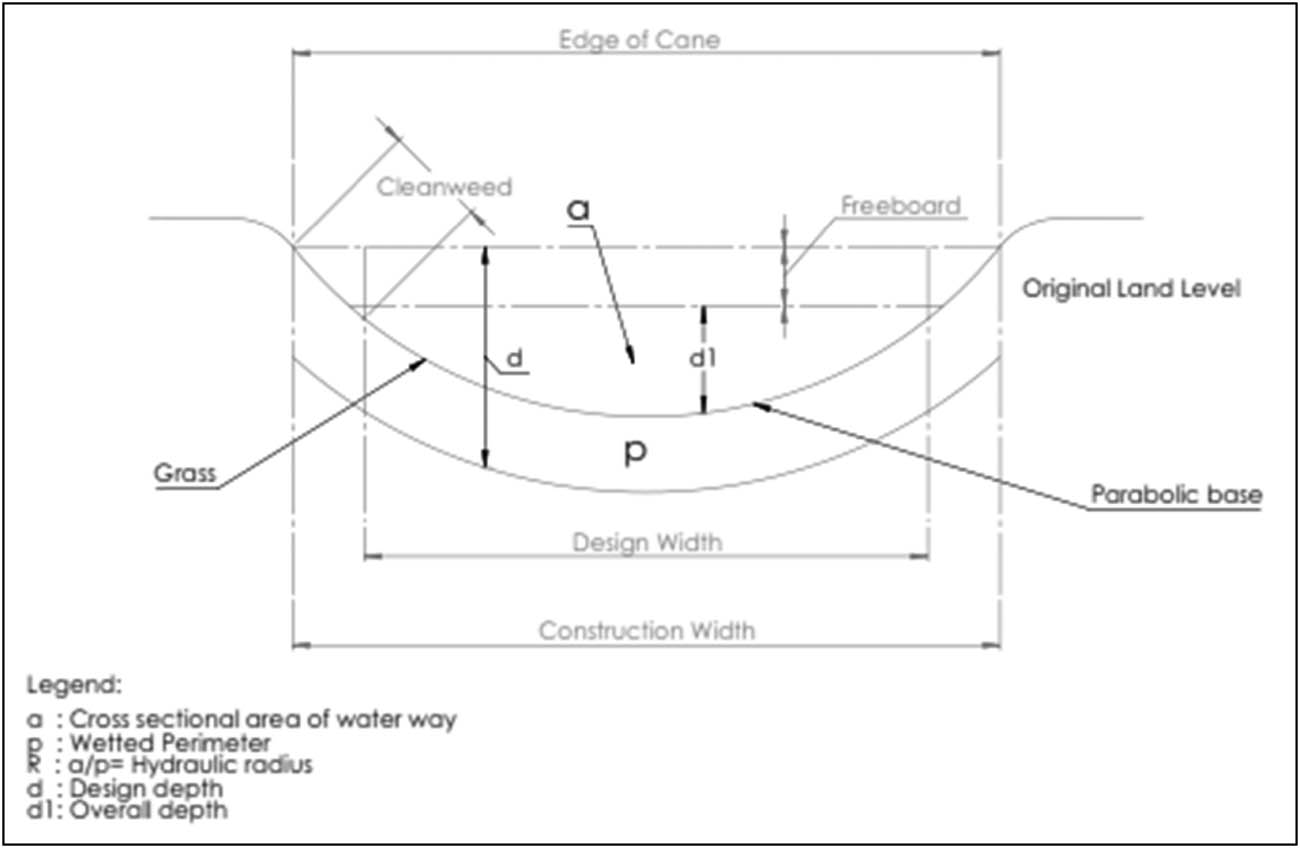
Shape of drainage channel.
The depth of the channel structure requires the addition of 20% to the design depth for freeboard to prevent over-topping [55]. Based on peak discharge obtained from the rational equation, the largest channel size was 1.7 m wide and 0.60 m deep. The largest Froude number value at a depth of 0.5 m was 0.51 which indicated sub-critical flow. Therefore, a freeboard depth of 30 cm was added to the designed channel [41]. Thus, the largest channel size was 1.7 m wide with a depth of 0.90 m. This design is able to drain all surface runoff and does not interfere with the movement of mechanization equipment. The tractors used at Bone Sugarcane Plantation have a wheel center distance of 150 cm and a height of center of gravity of 62 cm. With a channel depth of 90 cm, the maximum slope of the tractor is 36.8o when its tires reach the bottom of the channel. This slope is still safe for the tractor operation since its center of gravity is still within the baseline of tractor stability as suggested previously [56]. Nonetheless, it is recommended that the tractor is operated slowly under this condition to prevent accident due to the shift the center of gravity upward due to the slope of the tractor [20,56,57]. It is important to note that the condition where the tires of the tractor reach the deepest part of the channel during operation is sometime necessary to prevent a decrease in planting area due to the required head land for turning the tractor. In addition to the consideration for the movement of mechanization equipment, the depth of the channel is also limited to maintaining soil moisture so that soil temperature does not increase. Low soil moisture and high soil temperature can cause flowering of plants [58], including sugarcane [59]. Flowering sugarcane plants can cause a decrease in sugarcane productivity and sugar yield [60].
4 Conclusions
Based on the results of the study, it can be concluded that the appropriate drainage system applied to the Bone Sugar Plantation was surface drainage with parabolic shape. The largest width and depth of the designed channel were 1.7 m and 0.90 m, respectively. This shape and size of the channel did not disturb the movement of the mechanization equipment, and the channel walls were stable and able to drain all surface runoff. Restrictions were applied on the depth of the drainage channel in order to maintain soil moisture so that soil temperature does not increase because this can trigger sugarcane flowering which can lead to a decrease in sugarcane productivity and sugar yield. The results of this study can solve drainage problems in sugarcane fields that apply full mechanization in cultivation and harvest activities. In addition, the practical analysis used in this study can be adapted to analyze the design of drainage channel at other regions where field data on soil and rainfall intensity are scarcely available. There are some limitations of this study such as soil sampling was not conducted on the entire Bone Sugarcane Plantation, but only on land areas that have drainage problems. In addition, rain intensity data in the area was not available, so it was generated from rainfall data through the IDF curve. Therefore, for future study, it is suggested to collect these data to validate the results obtained in the current study.
Acknowledgments
The authors thank Ir. Andi Arwan (SEVP Operations PTPN XIV) for the appointment of researchers to carry out research on the design of the drainage system of the Bone sugarcane Plantations. Salary and research support are provided by Hasanuddin University.
-
Funding information: PT. Perkebunan Nusantara XIV is a company which provides research funding.
-
Conflict of interest: The authors state no conflict of interest.
-
Data availability statement: The datasets generated during and/or analyzed during the current study are available from the corresponding author on reasonable request.
References
[1] Javan K, Mirabi M, Hamidi SA, Darestani M, Altaee A, Zhou J. Enhancing environmental sustainability in a critical region: climate change impacts on agriculture and tourism. Civ Eng J. 2023;9:2630–48. 10.28991/CEJ-2023-09-11-01.Search in Google Scholar
[2] Gravois K, Viator H, Reagan G, Beuzelin J, Griffin J, Tubana B, et al. Sugarcane Production Handbook. Louisiana: LSU Ag Center; 2014.Search in Google Scholar
[3] Hamdi H. Sustainability in sugarcane production: opportunities and limitations in SouthWest of Iran. Sugar Tech. 2016;18:642–6. 10.1007/s12355-016-0493-3.Search in Google Scholar
[4] Canning AD, Smart JCR, Dyke J, Curwen G, Hasan S, Waltham NJ. Constructed wetlands suitability for sugarcane profitability, freshwater biodiversity and ecosystem services. Environ Manage. 2023;71:304–20. 10.1007/s00267-022-01734-4.Search in Google Scholar PubMed PubMed Central
[5] Halbac-Cotoara-zamfir R, Farias-Ramirez AJ, de Miranda JH, Moreno-Pizani MA, Duarte SN, Paredes-Trejo FJ, et al. Simulation of subsurface drainage in the sugarcane crop under different spacing and drain depths. Land. 2022;11:1–20. 10.3390/land11050626.Search in Google Scholar
[6] Herdiansyah H, Negoro HA, Rusdayanti N, Shara S. Palm oil plantation and cultivation: Prosperity and productivity of smallholders. Open Agric. 2020;5:617–30. 10.1515/opag-2020-0063.Search in Google Scholar
[7] Jahani B, Soltani Mohammadi A, Nasseri AA, Van Oel PR, Sadeghi Lari A. Reduction of sugarcane water footprint by controlled drainage, in Khuzestan, Iran. Irrig Drain. 2017;66:884–95. 10.1002/ird.2148.Search in Google Scholar
[8] Morteza S, Vafaei M, Mohammadi AS, Naseri A, Van P. Investigation of sugarcane water footprint index components in free drainage, controlled drainage and water requirement conditions (Case study: Salman Farsi Agro-industry). Iran J Soil Water Res. 2022;52:2623–35. 10.22059/ijswr.2021.319562.668904.Search in Google Scholar
[9] Tama DR, Limantara LM, Suhartanto E, Devia YP. The reliability of W-flow run-off-rainfall model in predicting rainfall to the discharge. Civ Eng J. 2023;9:1768–78. 10.28991/CEJ-2023-09-07-015.Search in Google Scholar
[10] Riajaya PD, Pemanis BT, Kadarwati FT. Potensi Sumber Daya Iklim di Kabupaten Bone untuk Pengembangan Tanaman Tebu. Bul Tanam Tembakau, Serat Miny Ind. 2015;7:28. 10.21082/bultas.v7n1.2015.28-44.Search in Google Scholar
[11] Valipour M. How do different factors impact agricultural water management? Open Agric. 2016;1:89–111. 10.1515/opag-2016-0014.Search in Google Scholar
[12] Groot K de. Covariance structure analysis of health-related indicators for elderly people living at home, focusing on subjective sense of health. World Dev. 2018;1:1–15.Search in Google Scholar
[13] SASEX. Soil Conservation: A Guide to Farming Practices in the Sugarcane Industry; Mount Edgecombe, Natal: Experiment Station of the South African Sugar Association; 1974. p. 27.Search in Google Scholar
[14] Ghane E. Agricultural drainage. USA: Michigan State University; 2018. p. 1–8.Search in Google Scholar
[15] Ridge R, Reghenzani J. Drainage. Man Canegrowing. BSES; 2000. p. 227–39, https://elibrary.sugarresearch.com.au/bitstream/handle/11079/15541/Chapter11Drainage.pdf?sequence=31&isAllowed=y.Search in Google Scholar
[16] Wegener M, Yinggang O. Organization and profit-sharing in mechanized sugarcane harvesting: Is Australia’s experience relevant to China? Agric Eng Int CIGR J. 2015;2015:110–29.Search in Google Scholar
[17] Zhang M, Govindaraju M. Sugarcane production in China. Sugarcane – Technol Res. 2018;49:50–66. 10.5772/intechopen.73113.Search in Google Scholar
[18] Dagar H, Nimbrayan PK, Soni S, Kumar P. Sustainability of sugarcane cultivation and production in India – A review. Agric Mech Asia. 2021;51:1051–71.Search in Google Scholar
[19] Usaborisut P. Progress in mechanization of sugarcane farms in Thailand. Sugar Tech. 2018;20:116–21. 10.1007/s12355-018-0600-8.Search in Google Scholar
[20] Health and Safety Executive. Using tractors safely: A step-by-step guide. Free Leafl INDG185(rev3). 2013. p. 1–13, http://www.hse.gov.uk/pubns/indg185.pdf.Search in Google Scholar
[21] García-Gutiérrez C, Pachepsky Y, Ángel Martín M. Technical note: Saturated hydraulic conductivity and textural heterogeneity of soils. Hydrol Earth Syst Sci. 2018;22:3923–32. 10.5194/hess-22-3923-2018.Search in Google Scholar
[22] Dec D, Dörner J, Becker-Fazekas O, Horn R. Efecto de la densidad aparente sobre las propiedades hidráulicas de los suelos homogenizados y estructurados. Rev Cienc Suelo Nutr Veg. 2008;8:1–13.Search in Google Scholar
[23] Musa JJ, Gupa YU. An Overview of Methods Used in the Determination of Soil Hydraulic Conductivity. Al-Hikmah J Pure Appl Sci. 2019;7:22–30.Search in Google Scholar
[24] Setiawan BI. Pengukuran Konduktivitas Hidrolika Tanah Jenuh-Penentuan Diameter Pipa-Tegak (Standpipe) pada Metode Falling-Head. Keteknikan Pertan. 2005;19:139–41. 10.1108/f.2001.06919aab.019.Search in Google Scholar
[25] CVC. Handbook of Stormwater Drainage Design. North Rivers Local Gov. Lismore: AUS-SPEC-1\NSW; 2018.Search in Google Scholar
[26] ASCE, Rossmiller. Appendix A-1 : Runoff Peak Discharge Calculations; 1992. p. 2–9. https://www.maine.gov/dep/land/stormwater/stormwaterbmps/vol3/appendixa.pdf.Search in Google Scholar
[27] Grace A, Yudianto D, Fitriana F, No JC, Barat J. Optimasi Perencanaan Sistem Drainase Kawasan Industri Di Cikarang, Kabupaten Bekasi, Jawa Barat Design Optimization of Industrial Estate Drainage System in Cikarang, Bekasi Regency, West Java. J Tek Hidraul. 2022;13:103–12. 10.32679/jth.v13i2.712.Search in Google Scholar
[28] Hidayat R, Setiyadi S, Hutabarat LE. Evaluation of road drainage capacity to improve optimized road performance in Kebon Pala Area East Jakarta. IOP Conf Ser Earth Environ Sci. 2021;878:1–20. 10.1088/1755-1315/878/1/012051.Search in Google Scholar
[29] Thomason C. Hydraulic Design Manual, Notice: 2019-1 Section 12: Rational Method. Texas: Texas Department of Transportation; 2019.Search in Google Scholar
[30] Dibs H, Jaber HS, Al-Ansari N. Multi-fusion algorithms for detecting land surface pattern changes using multi-high spatial resolution images and remote sensing analysis. Emerg Sci J. 2023;7:1215–31. 10.28991/ESJ-2023-07-04-013.Search in Google Scholar
[31] Chaulya SK, Prasad GM. Slope failure mechanism and monitoring techniques. In Sensing and Monitoring Technologies for Mines and Hazardous Areas. Elseiver; 2016. p. 1–86. 10.1016/b978-0-12-803194-0.00001-5.Search in Google Scholar
[32] Shamkhi MS, Azeez MK, Obeid ZH. Deriving rainfall intensity-duration-frequency (IDF) curves and testing the best distribution using EasyFit software 5.5 for Kut city, Iraq. Open Eng. 2022;12:834–43. 10.1515/eng-2022-0330.Search in Google Scholar
[33] Anghel CG, Ilinca C. Parameter estimation for some probability distributions used in Hydrology. Appl Sci. 2022;12:1–25. 10.3390/app122412588.Search in Google Scholar
[34] Mustofa MJ, Kusumastuti DI, Romdania Y. Analisis Hidrologi dan Hidrolika pada Saluran Drainase Ramanuju Hilir Kotabumi (Menggunakan Program HEC-RAS). J Rekayasa Sipil dan Desain. 2015;3:303–12.Search in Google Scholar
[35] Amin MT, Izwan M, Alazba AA. A best-fit probability distribution for the estimation of rainfall in northern regions of Pakistan. Open Life Sci. 2016;11:432–40. 10.1515/biol-2016-0057.Search in Google Scholar
[36] Suadnya D, Sumarauw J, Mananoma T. Analisis Debit Banjir Dan Tinggi Muka Air. J Sipil Statik. 2017;5:143–50. https://ejournal.unsrat.ac.id/index.php/jss/article/view/29979.Search in Google Scholar
[37] Upomo TC, Kusumawardani R. Pemilihan distribusi probabilitas pada analisa hujan dengan metode goodness of fit test. J Tek Sipil dan Perenc. 2016;18:139–48. 10.15294/jtsp.v18i2.7480.Search in Google Scholar
[38] Majeed AR, Nile BK, Al-Baidhani JH, Chung MY, Loo VH. Analysis of intensity, duration, and frequency rain daily of Java Island using mononobe method. J Phys Conf Ser. 2021;1783:1–7. 10.1088/1742-6596/1783/1/012107.Search in Google Scholar
[39] Thomason C. Hydraulic Design Manual Notice: 2019-1 Section 11: Time of Concentration. Texas: Texas Department of Transportation; 2019.Search in Google Scholar
[40] FDOT. State of Florida Department of Transportation Drainage Manual. Florida: Florida Department of Transportation; 2023.Search in Google Scholar
[41] Payson A. CHAPTER 152: GRADING AND DRAINAGE. Cincinnati, Ohio: American Legal Publishing; 2023. https://codelibrary.amlegal.com/codes/payson/latest/overview.Search in Google Scholar
[42] Nurfatimah AA. Alur Produksi Gula Kristal Putih PTPN XIV Pabrik Gula Bone, Arasoe. Makassar: Politeknik ATI Makassar; 2022.Search in Google Scholar
[43] Sanjaya AR, Habibah S. Analisis Pengendalian Persediaan Bahan Baku Tebu Dalam Pembuatan Gula Pasir di Pabrik Gula Bone Arasoe. J Ilm Al-Tsarwah. 2019;2:125–39. 10.30863/al-tsarwah.v2i2.273.Search in Google Scholar
[44] Suhardi, Mubarak H, Rizal M. Desain Sistem Drainase Permukaan Lahan Pabrik Gula Bone. Makassar: Hasanuddin University; 2022.Search in Google Scholar
[45] Chattamvelli R, Shanmugam R. Gumbel Distribution. In: HandWiki [Internet]; 2021. p. 1–6. 10.1007/978-3-031-02435-1_11.Search in Google Scholar
[46] Fasdarsyah F. Analisis Curah Hujan Untuk Membuat Kurva Intensity-Duration-Frequency (Idf) Di Kawasan Kota Lhokseumawe. Teras J. 2014;4:22–30. 10.29103/tj.v4i1.28.Search in Google Scholar
[47] Ritzema H. Subsurface drainage. UNESCO-IHE MSc Programme Land and Water Development for Food Security. Wageningen: UNESCO-IHE; 2014.Search in Google Scholar
[48] Wahjunie ED, Baskoro DPT, Tarigan SD. Peranan Pergerakan Air Dalam-Tanah dalam Menurunkan Aliran Permukaan. J Ilmu Pertan Indones. 2021;26:292–300. 10.18343/jipi.26.2.292.Search in Google Scholar
[49] Chaibandit K, Konyai S. Using statistics in hydrology for analyzing the discharge of Yom river. APCBEE Procedia. 2012;1:356–62. 10.1016/j.apcbee.2012.03.059.Search in Google Scholar
[50] Sofia DA, Nursila N. Analisis intensitas, durasi, dan frekuensi kejadian hujan di wilayah Sukabumi. JTERA (J Teknol Rekayasa). 2019;4:85. 10.31544/jtera.v4.i1.2019.85-92.Search in Google Scholar
[51] Yang Y, Li M, Xiong M, Cao J. Return period for urban rainwater drainage networks based on the lowest total social investment method: A case study in Tianjin, China. Pol J Environ Stud. 2019;28:3993–9. 10.15244/pjoes/99105.Search in Google Scholar
[52] Ponce V. Return Period to be used for Hydrologic Design; 2008. https://ponce.sdsu.edu/return_period.html.Search in Google Scholar
[53] Han YC, Gao XP, Xu ZH. The best hydraulic section of horizontal-bottomed parabolic channel section. J Hydrodyn. 2017;29:305–13. 10.1016/S1001-6058(16)60740-0.Search in Google Scholar
[54] Yang Z, He W, Wang Y, Lou Z, Duan P. Research on the comprehensive optimization of the hydraulic performance and frost-heaving resistance of a parabolic channel. Water (Switz). 2020;12:1–15. 10.3390/W12092574.Search in Google Scholar
[55] Hussein T. Open channel flow. Irrigation and Drainage Engineering; 2019. p. 1–52. https://theconstructor.org/fluhttps://engineering.mu.edu.iq/wp-content/uploads/2019/09/WaterResources.pdf.Search in Google Scholar
[56] HOSTA (Hazardous Occupations Safety Training in Agriculture). Tractor stability, national safe tractor and machinery operation program. Pennsylvania; 2004. https://extension.psu.edu/tractor-stability-and-instability.Search in Google Scholar
[57] New Zealand Government. Safe use of tractors on farms. New Zealand; 2014. https://www.worksafe.govt.nz/topic-and-industry/agriculture/farm-vehicles/tractors/safe-use-of-tractors-guide/#lf-doc-35185.Search in Google Scholar
[58] Jaroensutasinee K, Jaroensutasinee M, Boonsanong P. Climatic factor differences and mangosteen fruit quality between on-and off-season productions. Emerg Sci J. 2023;7:578–88. 10.28991/ESJ-2023-07-02-020.Search in Google Scholar
[59] Mehareb EM, Salem ESR, Ghonema MA. Effects of environmental factors on sugarcane flowering under natural conditions in Egypt. Egypt J Plant Breed. 2016;20:1093–105. 10.12816/0046420.Search in Google Scholar
[60] Rao PS. Effects of flowering on yield and quality of sugarcane. Exp Agric. 1977;13:381–7. 10.1017/S0014479700008139.Search in Google Scholar
© 2024 the author(s), published by De Gruyter
This work is licensed under the Creative Commons Attribution 4.0 International License.
Articles in the same Issue
- Regular Articles
- Supplementation of P-solubilizing purple nonsulfur bacteria, Rhodopseudomonas palustris improved soil fertility, P nutrient, growth, and yield of Cucumis melo L.
- Yield gap variation in rice cultivation in Indonesia
- Effects of co-inoculation of indole-3-acetic acid- and ammonia-producing bacteria on plant growth and nutrition, soil elements, and the relationships of soil microbiomes with soil physicochemical parameters
- Impact of mulching and planting time on spring-wheat (Triticum aestivum) growth: A combined field experiment and empirical modeling approach
- Morphological diversity, correlation studies, and multiple-traits selection for yield and yield components of local cowpea varieties
- Participatory on-farm evaluation of new orange-fleshed sweetpotato varieties in Southern Ethiopia
- Yield performance and stability analysis of three cultivars of Gayo Arabica coffee across six different environments
- Biology of Spodoptera frugiperda (Lepidoptera: Noctuidae) on different types of plants feeds: Potency as a pest on various agricultural plants
- Antidiabetic activity of methanolic extract of Hibiscus sabdariffa Linn. fruit in alloxan-induced Swiss albino diabetic mice
- Bioinformatics investigation of the effect of volatile and non-volatile compounds of rhizobacteria in inhibiting late embryogenesis abundant protein that induces drought tolerance
- Nicotinamide as a biostimulant improves soybean growth and yield
- Farmer’s willingness to accept the sustainable zoning-based organic farming development plan: A lesson from Sleman District, Indonesia
- Uncovering hidden determinants of millennial farmers’ intentions in running conservation agriculture: An application of the Norm Activation Model
- Mediating role of leadership and group capital between human capital component and sustainability of horticultural agribusiness institutions in Indonesia
- Biochar technology to increase cassava crop productivity: A study of sustainable agriculture on degraded land
- Effect of struvite on the growth of green beans on Mars and Moon regolith simulants
- UrbanAgriKG: A knowledge graph on urban agriculture and its embeddings
- Provision of loans and credit by cocoa buyers under non-price competition: Cocoa beans market in Ghana
- Effectiveness of micro-dosing of lime on selected chemical properties of soil in Banja District, North West, Ethiopia
- Effect of weather, nitrogen fertilizer, and biostimulators on the root size and yield components of Hordeum vulgare
- Effects of selected biostimulants on qualitative and quantitative parameters of nine cultivars of the genus Capsicum spp.
- Growth, yield, and secondary metabolite responses of three shallot cultivars at different watering intervals
- Design of drainage channel for effective use of land on fully mechanized sugarcane plantations: A case study at Bone Sugarcane Plantation
- Technical feasibility and economic benefit of combined shallot seedlings techniques in Indonesia
- Control of Meloidogyne javanica in banana by endophytic bacteria
- Comparison of important quality components of red-flesh kiwifruit (Actinidia chinensis) in different locations
- Efficiency of rice farming in flood-prone areas of East Java, Indonesia
- Comparative analysis of alpine agritourism in Trentino, Tyrol, and South Tyrol: Regional variations and prospects
- Detection of Fusarium spp. infection in potato (Solanum tuberosum L.) during postharvest storage through visible–near-infrared and shortwave–near-infrared reflectance spectroscopy
- Forage yield, seed, and forage qualitative traits evaluation by determining the optimal forage harvesting stage in dual-purpose cultivation in safflower varieties (Carthamus tinctorius L.)
- The influence of tourism on the development of urban space: Comparison in Hanoi, Danang, and Ho Chi Minh City
- Optimum intra-row spacing and clove size for the economical production of garlic (Allium sativum L.) in Northwestern Highlands of Ethiopia
- The role of organic rice farm income on farmer household welfare: Evidence from Yogyakarta, Indonesia
- Exploring innovative food in a developing country: Edible insects as a sustainable option
- Genotype by environment interaction and performance stability of common bean (Phaseolus vulgaris L.) cultivars grown in Dawuro zone, Southwestern Ethiopia
- Factors influencing green, environmentally-friendly consumer behaviour
- Factors affecting coffee farmers’ access to financial institutions: The case of Bandung Regency, Indonesia
- Morphological and yield trait-based evaluation and selection of chili (Capsicum annuum L.) genotypes suitable for both summer and winter seasons
- Sustainability analysis and decision-making strategy for swamp buffalo (Bubalus bubalis carabauesis) conservation in Jambi Province, Indonesia
- Understanding factors affecting rice purchasing decisions in Indonesia: Does rice brand matter?
- An implementation of an extended theory of planned behavior to investigate consumer behavior on hygiene sanitation-certified livestock food products
- Information technology adoption in Indonesia’s small-scale dairy farms
- Draft genome of a biological control agent against Bipolaris sorokiniana, the causal phytopathogen of spot blotch in wheat (Triticum turgidum L. subsp. durum): Bacillus inaquosorum TSO22
- Assessment of the recurrent mutagenesis efficacy of sesame crosses followed by isolation and evaluation of promising genetic resources for use in future breeding programs
- Fostering cocoa industry resilience: A collaborative approach to managing farm gate price fluctuations in West Sulawesi, Indonesia
- Field investigation of component failures for selected farm machinery used in small rice farming operations
- Near-infrared technology in agriculture: Rapid, simultaneous, and non-destructive determination of inner quality parameters on intact coffee beans
- The synergistic application of sucrose and various LED light exposures to enhance the in vitro growth of Stevia rebaudiana (Bertoni)
- Weather index-based agricultural insurance for flower farmers: Willingness to pay, sales, and profitability perspectives
- Meta-analysis of dietary Bacillus spp. on serum biochemical and antioxidant status and egg quality of laying hens
- Biochemical characterization of trypsin from Indonesian skipjack tuna (Katsuwonus pelamis) viscera
- Determination of C-factor for conventional cultivation and soil conservation technique used in hop gardens
- Empowering farmers: Unveiling the economic impacts of contract farming on red chilli farmers’ income in Magelang District, Indonesia
- Evaluating salt tolerance in fodder crops: A field experiment in the dry land
- Labor productivity of lowland rice (Oryza sativa L.) farmers in Central Java Province, Indonesia
- Cropping systems and production assessment in southern Myanmar: Informing strategic interventions
- The effect of biostimulants and red mud on the growth and yield of shallots in post-unlicensed gold mining soil
- Effects of dietary Adansonia digitata L. (baobab) seed meal on growth performance and carcass characteristics of broiler chickens: A systematic review and meta-analysis
- Analysis and structural characterization of the vid-pisco market
- Pseudomonas fluorescens SP007s enhances defense responses against the soybean bacterial pustule caused by Xanthomonas axonopodis pv. glycines
- A brief investigation on the prospective of co-composted biochar as a fertilizer for Zucchini plants cultivated in arid sandy soil
- Supply chain efficiency of red chilies in the production center of Sleman Indonesia based on performance measurement system
- Investment development path for developed economies: Is agriculture different?
- Power relations among actors in laying hen business in Indonesia: A MACTOR analysis
- High-throughput digital imaging and detection of morpho-physiological traits in tomato plants under drought
- Converting compression ignition engine to dual-fuel (diesel + CNG) engine and experimentally investigating its performance and emissions
- Structuration, risk management, and institutional dynamics in resolving palm oil conflicts
- Spacing strategies for enhancing drought resilience and yield in maize agriculture
- Composition and quality of winter annual agrestal and ruderal herbages of two different land-use types
- Investigating Spodoptera spp. diversity, percentage of attack, and control strategies in the West Java, Indonesia, corn cultivation
- Yield stability of biofertilizer treatments to soybean in the rainy season based on the GGE biplot
- Evaluating agricultural yield and economic implications of varied irrigation depths on maize yield in semi-arid environments, at Birfarm, Upper Blue Nile, Ethiopia
- Chemometrics for mapping the spatial nitrate distribution on the leaf lamina of fenugreek grown under varying nitrogenous fertilizer doses
- Pomegranate peel ethanolic extract: A promising natural antioxidant, antimicrobial agent, and novel approach to mitigate rancidity in used edible oils
- Transformative learning and engagement with organic farming: Lessons learned from Indonesia
- Tourism in rural areas as a broader concept: Some insights from the Portuguese reality
- Assessment enhancing drought tolerance in henna (Lawsonia inermis L.) ecotypes through sodium nitroprusside foliar application
- Edible insects: A survey about perceptions regarding possible beneficial health effects and safety concerns among adult citizens from Portugal and Romania
- Phenological stages analysis in peach trees using electronic nose
- Harvest date and salicylic acid impact on peanut (Arachis hypogaea L.) properties under different humidity conditions
- Hibiscus sabdariffa L. petal biomass: A green source of nanoparticles of multifarious potential
- Use of different vegetation indices for the evaluation of the kinetics of the cherry tomato (Solanum lycopersicum var. cerasiforme) growth based on multispectral images by UAV
- First evidence of microplastic pollution in mangrove sediments and its ingestion by coral reef fish: Case study in Biawak Island, Indonesia
- Physical and textural properties and sensory acceptability of wheat bread partially incorporated with unripe non-commercial banana cultivars
- Cereibacter sphaeroides ST16 and ST26 were used to solubilize insoluble P forms to improve P uptake, growth, and yield of rice in acidic and extreme saline soil
- Avocado peel by-product in cattle diets and supplementation with oregano oil and effects on production, carcass, and meat quality
- Optimizing inorganic blended fertilizer application for the maximum grain yield and profitability of bread wheat and food barley in Dawuro Zone, Southwest Ethiopia
- The acceptance of social media as a channel of communication and livestock information for sheep farmers
- Adaptation of rice farmers to aging in Thailand
- Combined use of improved maize hybrids and nitrogen application increases grain yield of maize, under natural Striga hermonthica infestation
- From aquatic to terrestrial: An examination of plant diversity and ecological shifts
- Statistical modelling of a tractor tractive performance during ploughing operation on a tropical Alfisol
- Participation in artisanal diamond mining and food security: A case study of Kasai Oriental in DR Congo
- Assessment and multi-scenario simulation of ecosystem service values in Southwest China’s mountainous and hilly region
- Analysis of agricultural emissions and economic growth in Europe in search of ecological balance
- Bacillus thuringiensis strains with high insecticidal activity against insect larvae of the orders Coleoptera and Lepidoptera
- Technical efficiency of sugarcane farming in East Java, Indonesia: A bootstrap data envelopment analysis
- Comparison between mycobiota diversity and fungi and mycotoxin contamination of maize and wheat
- Evaluation of cultivation technology package and corn variety based on agronomy characters and leaf green indices
- Exploring the association between the consumption of beverages, fast foods, sweets, fats, and oils and the risk of gastric and pancreatic cancers: Findings from case–control study
- Phytochemical composition and insecticidal activity of Acokanthera oblongifolia (Hochst.) Benth & Hook.f. ex B.D.Jacks. extract on life span and biological aspects of Spodoptera littoralis (Biosd.)
- Land use management solutions in response to climate change: Case study in the central coastal areas of Vietnam
- Evaluation of coffee pulp as a feed ingredient for ruminants: A meta-analysis
- Interannual variations of normalized difference vegetation index and potential evapotranspiration and their relationship in the Baghdad area
- Harnessing synthetic microbial communities with nitrogen-fixing activity to promote rice growth
- Agronomic and economic benefits of rice–sweetpotato rotation in lowland rice cropping systems in Uganda
- Response of potato tuber as an effect of the N-fertilizer and paclobutrazol application in medium altitude
- Bridging the gap: The role of geographic proximity in enhancing seed sustainability in Bandung District
- Evaluation of Abrams curve in agricultural sector using the NARDL approach
- Challenges and opportunities for young farmers in the implementation of the Rural Development Program 2014–2020 of the Republic of Croatia
- Yield stability of ten common bean (Phaseolus vulgaris L.) genotypes at different sowing dates in Lubumbashi, South-East of DR Congo
- Effects of encapsulation and combining probiotics with different nitrate forms on methane emission and in vitro rumen fermentation characteristics
- Phytochemical analysis of Bienertia sinuspersici extract and its antioxidant and antimicrobial activities
- Evaluation of relative drought tolerance of grapevines by leaf fluorescence parameters
- Yield assessment of new streak-resistant topcross maize hybrids in Benin
- Improvement of cocoa powder properties through ultrasonic- and microwave-assisted alkalization
- Potential of ecoenzymes made from nutmeg (Myristica fragrans) leaf and pulp waste as bioinsecticides for Periplaneta americana
- Analysis of farm performance to realize the sustainability of organic cabbage vegetable farming in Getasan Semarang, Indonesia
- Revealing the influences of organic amendment-derived dissolved organic matter on growth and nutrient accumulation in lettuce seedlings (Lactuca sativa L.)
- Identification of viruses infecting sweetpotato (Ipomoea batatas Lam.) in Benin
- Assessing the soil physical and chemical properties of long-term pomelo orchard based on tree growth
- Investigating access and use of digital tools for agriculture among rural farmers: A case study of Nkomazi Municipality, South Africa
- Does sex influence the impact of dietary vitD3 and UVB light on performance parameters and welfare indicators of broilers?
- Design of intelligent sprayer control for an autonomous farming drone using a multiclass support vector machine
- Deciphering salt-responsive NB-ARC genes in rice transcriptomic data: A bioinformatics approach with gene expression validation
- Review Articles
- Impact of nematode infestation in livestock production and the role of natural feed additives – A review
- Role of dietary fats in reproductive, health, and nutritional benefits in farm animals: A review
- Climate change and adaptive strategies on viticulture (Vitis spp.)
- The false tiger of almond, Monosteira unicostata (Hemiptera: Tingidae): Biology, ecology, and control methods
- A systematic review on potential analogy of phytobiomass and soil carbon evaluation methods: Ethiopia insights
- A review of storage temperature and relative humidity effects on shelf life and quality of mango (Mangifera indica L.) fruit and implications for nutrition insecurity in Ethiopia
- Green extraction of nutmeg (Myristica fragrans) phytochemicals: Prospective strategies and roadblocks
- Potential influence of nitrogen fertilizer rates on yield and yield components of carrot (Dacus carota L.) in Ethiopia: Systematic review
- Corn silk: A promising source of antimicrobial compounds for health and wellness
- State and contours of research on roselle (Hibiscus sabdariffa L.) in Africa
- The potential of phosphorus-solubilizing purple nonsulfur bacteria in agriculture: Present and future perspectives
- Minor millets: Processing techniques and their nutritional and health benefits
- Meta-analysis of reproductive performance of improved dairy cattle under Ethiopian environmental conditions
- Review on enhancing the efficiency of fertilizer utilization: Strategies for optimal nutrient management
- The nutritional, phytochemical composition, and utilisation of different parts of maize: A comparative analysis
- Motivations for farmers’ participation in agri-environmental scheme in the EU, literature review
- Evolution of climate-smart agriculture research: A science mapping exploration and network analysis
- Short Communications
- Music enrichment improves the behavior and leukocyte profile of dairy cattle
- Effect of pruning height and organic fertilization on the morphological and productive characteristics of Moringa oleifera Lam. in the Peruvian dry tropics
- Corrigendum
- Corrigendum to “Bioinformatics investigation of the effect of volatile and non-volatile compounds of rhizobacteria in inhibiting late embryogenesis abundant protein that induces drought tolerance”
- Corrigendum to “Composition and quality of winter annual agrestal and ruderal herbages of two different land-use types”
- Special issue: Smart Agriculture System for Sustainable Development: Methods and Practices
- Construction of a sustainable model to predict the moisture content of porang powder (Amorphophallus oncophyllus) based on pointed-scan visible near-infrared spectroscopy
- FruitVision: A deep learning based automatic fruit grading system
- Energy harvesting and ANFIS modeling of a PVDF/GO-ZNO piezoelectric nanogenerator on a UAV
- Effects of stress hormones on digestibility and performance in cattle: A review
- Special Issue of The 4th International Conference on Food Science and Engineering (ICFSE) 2022 - Part II
- Assessment of omega-3 and omega-6 fatty acid profiles and ratio of omega-6/omega-3 of white eggs produced by laying hens fed diets enriched with omega-3 rich vegetable oil
- Special Issue on FCEM - International Web Conference on Food Choice & Eating Motivation - Part II
- Special Issue on FCEM – International Web Conference on Food Choice & Eating Motivation: Message from the editor
- Fruit and vegetable consumption: Study involving Portuguese and French consumers
- Knowledge about consumption of milk: Study involving consumers from two European Countries – France and Portugal
Articles in the same Issue
- Regular Articles
- Supplementation of P-solubilizing purple nonsulfur bacteria, Rhodopseudomonas palustris improved soil fertility, P nutrient, growth, and yield of Cucumis melo L.
- Yield gap variation in rice cultivation in Indonesia
- Effects of co-inoculation of indole-3-acetic acid- and ammonia-producing bacteria on plant growth and nutrition, soil elements, and the relationships of soil microbiomes with soil physicochemical parameters
- Impact of mulching and planting time on spring-wheat (Triticum aestivum) growth: A combined field experiment and empirical modeling approach
- Morphological diversity, correlation studies, and multiple-traits selection for yield and yield components of local cowpea varieties
- Participatory on-farm evaluation of new orange-fleshed sweetpotato varieties in Southern Ethiopia
- Yield performance and stability analysis of three cultivars of Gayo Arabica coffee across six different environments
- Biology of Spodoptera frugiperda (Lepidoptera: Noctuidae) on different types of plants feeds: Potency as a pest on various agricultural plants
- Antidiabetic activity of methanolic extract of Hibiscus sabdariffa Linn. fruit in alloxan-induced Swiss albino diabetic mice
- Bioinformatics investigation of the effect of volatile and non-volatile compounds of rhizobacteria in inhibiting late embryogenesis abundant protein that induces drought tolerance
- Nicotinamide as a biostimulant improves soybean growth and yield
- Farmer’s willingness to accept the sustainable zoning-based organic farming development plan: A lesson from Sleman District, Indonesia
- Uncovering hidden determinants of millennial farmers’ intentions in running conservation agriculture: An application of the Norm Activation Model
- Mediating role of leadership and group capital between human capital component and sustainability of horticultural agribusiness institutions in Indonesia
- Biochar technology to increase cassava crop productivity: A study of sustainable agriculture on degraded land
- Effect of struvite on the growth of green beans on Mars and Moon regolith simulants
- UrbanAgriKG: A knowledge graph on urban agriculture and its embeddings
- Provision of loans and credit by cocoa buyers under non-price competition: Cocoa beans market in Ghana
- Effectiveness of micro-dosing of lime on selected chemical properties of soil in Banja District, North West, Ethiopia
- Effect of weather, nitrogen fertilizer, and biostimulators on the root size and yield components of Hordeum vulgare
- Effects of selected biostimulants on qualitative and quantitative parameters of nine cultivars of the genus Capsicum spp.
- Growth, yield, and secondary metabolite responses of three shallot cultivars at different watering intervals
- Design of drainage channel for effective use of land on fully mechanized sugarcane plantations: A case study at Bone Sugarcane Plantation
- Technical feasibility and economic benefit of combined shallot seedlings techniques in Indonesia
- Control of Meloidogyne javanica in banana by endophytic bacteria
- Comparison of important quality components of red-flesh kiwifruit (Actinidia chinensis) in different locations
- Efficiency of rice farming in flood-prone areas of East Java, Indonesia
- Comparative analysis of alpine agritourism in Trentino, Tyrol, and South Tyrol: Regional variations and prospects
- Detection of Fusarium spp. infection in potato (Solanum tuberosum L.) during postharvest storage through visible–near-infrared and shortwave–near-infrared reflectance spectroscopy
- Forage yield, seed, and forage qualitative traits evaluation by determining the optimal forage harvesting stage in dual-purpose cultivation in safflower varieties (Carthamus tinctorius L.)
- The influence of tourism on the development of urban space: Comparison in Hanoi, Danang, and Ho Chi Minh City
- Optimum intra-row spacing and clove size for the economical production of garlic (Allium sativum L.) in Northwestern Highlands of Ethiopia
- The role of organic rice farm income on farmer household welfare: Evidence from Yogyakarta, Indonesia
- Exploring innovative food in a developing country: Edible insects as a sustainable option
- Genotype by environment interaction and performance stability of common bean (Phaseolus vulgaris L.) cultivars grown in Dawuro zone, Southwestern Ethiopia
- Factors influencing green, environmentally-friendly consumer behaviour
- Factors affecting coffee farmers’ access to financial institutions: The case of Bandung Regency, Indonesia
- Morphological and yield trait-based evaluation and selection of chili (Capsicum annuum L.) genotypes suitable for both summer and winter seasons
- Sustainability analysis and decision-making strategy for swamp buffalo (Bubalus bubalis carabauesis) conservation in Jambi Province, Indonesia
- Understanding factors affecting rice purchasing decisions in Indonesia: Does rice brand matter?
- An implementation of an extended theory of planned behavior to investigate consumer behavior on hygiene sanitation-certified livestock food products
- Information technology adoption in Indonesia’s small-scale dairy farms
- Draft genome of a biological control agent against Bipolaris sorokiniana, the causal phytopathogen of spot blotch in wheat (Triticum turgidum L. subsp. durum): Bacillus inaquosorum TSO22
- Assessment of the recurrent mutagenesis efficacy of sesame crosses followed by isolation and evaluation of promising genetic resources for use in future breeding programs
- Fostering cocoa industry resilience: A collaborative approach to managing farm gate price fluctuations in West Sulawesi, Indonesia
- Field investigation of component failures for selected farm machinery used in small rice farming operations
- Near-infrared technology in agriculture: Rapid, simultaneous, and non-destructive determination of inner quality parameters on intact coffee beans
- The synergistic application of sucrose and various LED light exposures to enhance the in vitro growth of Stevia rebaudiana (Bertoni)
- Weather index-based agricultural insurance for flower farmers: Willingness to pay, sales, and profitability perspectives
- Meta-analysis of dietary Bacillus spp. on serum biochemical and antioxidant status and egg quality of laying hens
- Biochemical characterization of trypsin from Indonesian skipjack tuna (Katsuwonus pelamis) viscera
- Determination of C-factor for conventional cultivation and soil conservation technique used in hop gardens
- Empowering farmers: Unveiling the economic impacts of contract farming on red chilli farmers’ income in Magelang District, Indonesia
- Evaluating salt tolerance in fodder crops: A field experiment in the dry land
- Labor productivity of lowland rice (Oryza sativa L.) farmers in Central Java Province, Indonesia
- Cropping systems and production assessment in southern Myanmar: Informing strategic interventions
- The effect of biostimulants and red mud on the growth and yield of shallots in post-unlicensed gold mining soil
- Effects of dietary Adansonia digitata L. (baobab) seed meal on growth performance and carcass characteristics of broiler chickens: A systematic review and meta-analysis
- Analysis and structural characterization of the vid-pisco market
- Pseudomonas fluorescens SP007s enhances defense responses against the soybean bacterial pustule caused by Xanthomonas axonopodis pv. glycines
- A brief investigation on the prospective of co-composted biochar as a fertilizer for Zucchini plants cultivated in arid sandy soil
- Supply chain efficiency of red chilies in the production center of Sleman Indonesia based on performance measurement system
- Investment development path for developed economies: Is agriculture different?
- Power relations among actors in laying hen business in Indonesia: A MACTOR analysis
- High-throughput digital imaging and detection of morpho-physiological traits in tomato plants under drought
- Converting compression ignition engine to dual-fuel (diesel + CNG) engine and experimentally investigating its performance and emissions
- Structuration, risk management, and institutional dynamics in resolving palm oil conflicts
- Spacing strategies for enhancing drought resilience and yield in maize agriculture
- Composition and quality of winter annual agrestal and ruderal herbages of two different land-use types
- Investigating Spodoptera spp. diversity, percentage of attack, and control strategies in the West Java, Indonesia, corn cultivation
- Yield stability of biofertilizer treatments to soybean in the rainy season based on the GGE biplot
- Evaluating agricultural yield and economic implications of varied irrigation depths on maize yield in semi-arid environments, at Birfarm, Upper Blue Nile, Ethiopia
- Chemometrics for mapping the spatial nitrate distribution on the leaf lamina of fenugreek grown under varying nitrogenous fertilizer doses
- Pomegranate peel ethanolic extract: A promising natural antioxidant, antimicrobial agent, and novel approach to mitigate rancidity in used edible oils
- Transformative learning and engagement with organic farming: Lessons learned from Indonesia
- Tourism in rural areas as a broader concept: Some insights from the Portuguese reality
- Assessment enhancing drought tolerance in henna (Lawsonia inermis L.) ecotypes through sodium nitroprusside foliar application
- Edible insects: A survey about perceptions regarding possible beneficial health effects and safety concerns among adult citizens from Portugal and Romania
- Phenological stages analysis in peach trees using electronic nose
- Harvest date and salicylic acid impact on peanut (Arachis hypogaea L.) properties under different humidity conditions
- Hibiscus sabdariffa L. petal biomass: A green source of nanoparticles of multifarious potential
- Use of different vegetation indices for the evaluation of the kinetics of the cherry tomato (Solanum lycopersicum var. cerasiforme) growth based on multispectral images by UAV
- First evidence of microplastic pollution in mangrove sediments and its ingestion by coral reef fish: Case study in Biawak Island, Indonesia
- Physical and textural properties and sensory acceptability of wheat bread partially incorporated with unripe non-commercial banana cultivars
- Cereibacter sphaeroides ST16 and ST26 were used to solubilize insoluble P forms to improve P uptake, growth, and yield of rice in acidic and extreme saline soil
- Avocado peel by-product in cattle diets and supplementation with oregano oil and effects on production, carcass, and meat quality
- Optimizing inorganic blended fertilizer application for the maximum grain yield and profitability of bread wheat and food barley in Dawuro Zone, Southwest Ethiopia
- The acceptance of social media as a channel of communication and livestock information for sheep farmers
- Adaptation of rice farmers to aging in Thailand
- Combined use of improved maize hybrids and nitrogen application increases grain yield of maize, under natural Striga hermonthica infestation
- From aquatic to terrestrial: An examination of plant diversity and ecological shifts
- Statistical modelling of a tractor tractive performance during ploughing operation on a tropical Alfisol
- Participation in artisanal diamond mining and food security: A case study of Kasai Oriental in DR Congo
- Assessment and multi-scenario simulation of ecosystem service values in Southwest China’s mountainous and hilly region
- Analysis of agricultural emissions and economic growth in Europe in search of ecological balance
- Bacillus thuringiensis strains with high insecticidal activity against insect larvae of the orders Coleoptera and Lepidoptera
- Technical efficiency of sugarcane farming in East Java, Indonesia: A bootstrap data envelopment analysis
- Comparison between mycobiota diversity and fungi and mycotoxin contamination of maize and wheat
- Evaluation of cultivation technology package and corn variety based on agronomy characters and leaf green indices
- Exploring the association between the consumption of beverages, fast foods, sweets, fats, and oils and the risk of gastric and pancreatic cancers: Findings from case–control study
- Phytochemical composition and insecticidal activity of Acokanthera oblongifolia (Hochst.) Benth & Hook.f. ex B.D.Jacks. extract on life span and biological aspects of Spodoptera littoralis (Biosd.)
- Land use management solutions in response to climate change: Case study in the central coastal areas of Vietnam
- Evaluation of coffee pulp as a feed ingredient for ruminants: A meta-analysis
- Interannual variations of normalized difference vegetation index and potential evapotranspiration and their relationship in the Baghdad area
- Harnessing synthetic microbial communities with nitrogen-fixing activity to promote rice growth
- Agronomic and economic benefits of rice–sweetpotato rotation in lowland rice cropping systems in Uganda
- Response of potato tuber as an effect of the N-fertilizer and paclobutrazol application in medium altitude
- Bridging the gap: The role of geographic proximity in enhancing seed sustainability in Bandung District
- Evaluation of Abrams curve in agricultural sector using the NARDL approach
- Challenges and opportunities for young farmers in the implementation of the Rural Development Program 2014–2020 of the Republic of Croatia
- Yield stability of ten common bean (Phaseolus vulgaris L.) genotypes at different sowing dates in Lubumbashi, South-East of DR Congo
- Effects of encapsulation and combining probiotics with different nitrate forms on methane emission and in vitro rumen fermentation characteristics
- Phytochemical analysis of Bienertia sinuspersici extract and its antioxidant and antimicrobial activities
- Evaluation of relative drought tolerance of grapevines by leaf fluorescence parameters
- Yield assessment of new streak-resistant topcross maize hybrids in Benin
- Improvement of cocoa powder properties through ultrasonic- and microwave-assisted alkalization
- Potential of ecoenzymes made from nutmeg (Myristica fragrans) leaf and pulp waste as bioinsecticides for Periplaneta americana
- Analysis of farm performance to realize the sustainability of organic cabbage vegetable farming in Getasan Semarang, Indonesia
- Revealing the influences of organic amendment-derived dissolved organic matter on growth and nutrient accumulation in lettuce seedlings (Lactuca sativa L.)
- Identification of viruses infecting sweetpotato (Ipomoea batatas Lam.) in Benin
- Assessing the soil physical and chemical properties of long-term pomelo orchard based on tree growth
- Investigating access and use of digital tools for agriculture among rural farmers: A case study of Nkomazi Municipality, South Africa
- Does sex influence the impact of dietary vitD3 and UVB light on performance parameters and welfare indicators of broilers?
- Design of intelligent sprayer control for an autonomous farming drone using a multiclass support vector machine
- Deciphering salt-responsive NB-ARC genes in rice transcriptomic data: A bioinformatics approach with gene expression validation
- Review Articles
- Impact of nematode infestation in livestock production and the role of natural feed additives – A review
- Role of dietary fats in reproductive, health, and nutritional benefits in farm animals: A review
- Climate change and adaptive strategies on viticulture (Vitis spp.)
- The false tiger of almond, Monosteira unicostata (Hemiptera: Tingidae): Biology, ecology, and control methods
- A systematic review on potential analogy of phytobiomass and soil carbon evaluation methods: Ethiopia insights
- A review of storage temperature and relative humidity effects on shelf life and quality of mango (Mangifera indica L.) fruit and implications for nutrition insecurity in Ethiopia
- Green extraction of nutmeg (Myristica fragrans) phytochemicals: Prospective strategies and roadblocks
- Potential influence of nitrogen fertilizer rates on yield and yield components of carrot (Dacus carota L.) in Ethiopia: Systematic review
- Corn silk: A promising source of antimicrobial compounds for health and wellness
- State and contours of research on roselle (Hibiscus sabdariffa L.) in Africa
- The potential of phosphorus-solubilizing purple nonsulfur bacteria in agriculture: Present and future perspectives
- Minor millets: Processing techniques and their nutritional and health benefits
- Meta-analysis of reproductive performance of improved dairy cattle under Ethiopian environmental conditions
- Review on enhancing the efficiency of fertilizer utilization: Strategies for optimal nutrient management
- The nutritional, phytochemical composition, and utilisation of different parts of maize: A comparative analysis
- Motivations for farmers’ participation in agri-environmental scheme in the EU, literature review
- Evolution of climate-smart agriculture research: A science mapping exploration and network analysis
- Short Communications
- Music enrichment improves the behavior and leukocyte profile of dairy cattle
- Effect of pruning height and organic fertilization on the morphological and productive characteristics of Moringa oleifera Lam. in the Peruvian dry tropics
- Corrigendum
- Corrigendum to “Bioinformatics investigation of the effect of volatile and non-volatile compounds of rhizobacteria in inhibiting late embryogenesis abundant protein that induces drought tolerance”
- Corrigendum to “Composition and quality of winter annual agrestal and ruderal herbages of two different land-use types”
- Special issue: Smart Agriculture System for Sustainable Development: Methods and Practices
- Construction of a sustainable model to predict the moisture content of porang powder (Amorphophallus oncophyllus) based on pointed-scan visible near-infrared spectroscopy
- FruitVision: A deep learning based automatic fruit grading system
- Energy harvesting and ANFIS modeling of a PVDF/GO-ZNO piezoelectric nanogenerator on a UAV
- Effects of stress hormones on digestibility and performance in cattle: A review
- Special Issue of The 4th International Conference on Food Science and Engineering (ICFSE) 2022 - Part II
- Assessment of omega-3 and omega-6 fatty acid profiles and ratio of omega-6/omega-3 of white eggs produced by laying hens fed diets enriched with omega-3 rich vegetable oil
- Special Issue on FCEM - International Web Conference on Food Choice & Eating Motivation - Part II
- Special Issue on FCEM – International Web Conference on Food Choice & Eating Motivation: Message from the editor
- Fruit and vegetable consumption: Study involving Portuguese and French consumers
- Knowledge about consumption of milk: Study involving consumers from two European Countries – France and Portugal
