Bacillus thuringiensis strains with high insecticidal activity against insect larvae of the orders Coleoptera and Lepidoptera
-

 ,
,
,
,
,
,
,
and
,
,
,
,
,
,
,
and

Abstract
The concept of sustainable agricultural development is aimed at reducing the use of chemical pest control agents. Since the use of chemical pesticides poses a significant environmental threat, one of the possible solutions to overcome this problem is the study of biological approaches, in particular, the use of entomopathogenic microorganisms as biological pest control agents. Insecticidal activity of over 220 strains of Bacillus thuringiensis (Bt) and Lysinibacillus sphaericus from the collection of the Laboratory of Spore-Forming Microorganisms of the Microbial Depository Center of the Scientific and Production Center “Armbiotechnology” and 15 strains isolated from samples of dead insects (imago) of representatives of various genera of the Coleoptera order was studied. The pathogenic effect of the strains was assessed in relation to the insect species Tenebrio molitor, Zophobas morio, Leptinotarsa decemlineata Say and Pieris brassicae, belonging to the Coleoptera and Lepidoptera orders. Among the test objects, the representative of Lepidoptera Pieris brassicae demonstrated the highest degree of sensitivity to B. thuringiensis strains up to 100%, with some Bt strains causing 60–100% mortality of Tenebrio molitor and Zophobas morio larvae of different ages. The larvae of the beetle Leptinotarsa decemlineata Say were also partially susceptible, presenting mortality levels of between 31 and 60%. The article is devoted to the study of Bt bacterial strains that have pronounced insecticidal activity against insect larvae of the orders Coleoptera and Lepidoptera.
1 Introduction
Nowadays, synthetic pesticides are still widely used to control insect pests of agricultural crops, although their negative impact on natural biocenoses is well known. In this regard, the use of biological control methods that can minimize the impact of chemical pesticides on the environment is an alternative for sustainable agricultural development. Similarly, a number of authors, e.g., Baker et al. [1] and Singh et al. [2], emphasize that the implementation of biological approaches in integrated pest management is a priority of sustainable agricultural development. As noted by Heckel [3], the use of entomopathogenic strains of Bacillus thuringiensis (Bt) as a biological method of insect control has a number of advantages over chemical ones, primarily in terms of environmental safety.
Bt, a member of the Bacillus cereus group, is ubiquitous in the environment, predominantly in soil [4,5]. Lacey et al. [6] reported that Bt has found wide application as a microbial insecticide in agriculture due to its insecticidal activity based on the combined action of its spores and crystals. The ability to form parasporal crystalline inclusions is a characteristic feature of Bt strains, which distinguishes them from other members of the Bacillus group [7,8]. Rosas-García [9] and Berini et al. [10] also reported the safety of insecticidal products based on Bt strains for humans and the environment as an important factor.
According to Güneş et al. [11] and Bravo et al. [12], the pathogenic effect of Bt is due to the obligatory presence of crystals of the delta-endotoxin protein (Cry toxin). At the same time, as observed by Roh et al. [13], the presence of crystals does not always ensure the obligatory effect of the Bt strains against insect pests.
Perhaps, as Letowski et al. [14] and Noguera and Ibarra [15] believe, this is explained by the presence of more than one crystal protein gene in pathogenic Bt strains. Entomocidal crystals are a type of protein toxins that is only harmful to insects when administered orally to insects [16]. Afrikian [17] describes that when silkworm (Bombyx mori) caterpillars were fed mulberry leaves treated with Bt crystals, it was found that after 1 h, the caterpillars stopped consuming food due to paralysis of the midgut, after which general paralysis and death of the insects are observed within 1–2 days. According to Bravo et al. [18], the mechanism of action of the endotoxin protein described for Lepidoptera is most likely identical for other orders of insects.
However, Federici [19] pointed out a difference between the suppressive toxicity of most of the Cry toxin proteins studied against lepidopteran pests and a small number of known delta-endotoxin crystal proteins that are toxic to Coleoptera. Nester et al. [20] and Portela-Dussán et al. [21] reported that Bt, in addition to Cry toxin proteins, also synthesizes a biodegradable vegetative insecticidal protein (Vip) in the vegetative growth phase. However, Palma et al. [22] emphasized that among the identified families of Vip proteins, only Vip1/Vip2 proteins exhibit toxicity against Coleoptera pests. According to Chakroun et al. [23], a fundamentally important fact regarding the pathogenic action of vegetative-insecticidal proteins has been established. High insect mortality is achieved only with the combined action of Vip1 and Vip2 proteins.
It should also be noted that the development of new technologies has opened up prospects for the production of more effective Bt formulations that will overcome some of the problems associated with limited field stability and loss of insecticidal activity, in particular, due to degradation of the pesticidal protein under the influence of ultraviolet radiation [24,25].
Although the toxicity of Bt proteins against target organisms from various insect orders has been studied for many years, research on the interactions between this bacterium and insect species classified in the order Coleoptera is more limited compared to those in the orders Lepidoptera and Diptera [7,26,27,28,29]. The work is devoted to the study of Bt bacterial strains with pronounced insecticidal activity against insect larvae from the order Coleoptera.
2 Materials and methods
The development of microbiological plant protection products with pronounced insecticidal activity against agricultural pests from the order Coleoptera was carried out using strains of entomopathogenic bacteria, including Bt, Brevibacillus laterosporus, and Lysinibacillus sphaericus (more than 3,000 strains) from the Culture Collection of the Microbial Depository Center (MDC) of the Scientific and Production Center “Armbiotechnology” of the National Academy of Sciences of Armenia, potentially possessing entomopathogenic action against insects of the order Coleoptera.
2.1 Strain maintenance and isolation
The collection strains and 15 new isolates used in this study are stored in the MDC Spore Forming Bacteria Laboratory. Strains were stored at 20°C as spores on meat-peptone agar slants (MPA – in g/100 ml: 1.0 peptone, 0.5 NaCl, 2.0 agar and 100 ml meat broth, pH 7.2) and activated in fish-yeast extract medium (FYE – in g/100 ml: 2.0 fish extract paste, 0.5 yeast extract, 2.0 agar, 100 ml water, pH 7.2) for 3–5 days. New isolates, designated NI 1 to NI 15, were recovered from dead insect samples on FYE agar with incubation at 30°C. The identity of each isolate was confirmed by a series of morphological and physiological tests. The type of strains of Bacillus cereus (MDC-2185/ATCC-25621/DSM-609), Bt (MDC-735/ATCC-10792/DSM-2046), Brevibacillus laterosporus (MDC-2176/ATCC-6456/DSM-335) and Lysinibacillus sphaericus (MDC-2177/ATCC-19394/DSM-488) from the Spore-Forming Bacteria Laboratory, and MDC Culture Collection were used as controls.
2.2 Preparation of material for bioassays
To study the insecticidal activity, the test strains were initially grown on FYE agar medium with incubation at 30°C for 48 h. Standardized suspensions of 2-day cultures (with a cell count of 4–6 × 10⁹ CFU) were used for the experiment. The inoculum included resuspended biomass (viable vegetative bacterial cells with abundant spore formation and endotoxin inclusions). Direct observations of the sporulation process and endotoxin crystal formation, determination of the cell count (in a Goryayev chamber), and the study of the growth phase of each culture were carried out using light microscopy.
2.3 Bioassays
In all bioassays using Tenebrio molitor and Zophobas morio, larvae were fed an artificial diet based on cabbage, wheat germ, and egg white. Colorado potato beetle (Leptinotarsa decemlineata Say) larvae were fed potato haulms. For the representative of the Lepidoptera order Pieris brassicae, common cress (Barbarea vulgaris) was used as a supplementary diet. The criteria used to define the association between mortality and toxicity were those established by us: (+) – low toxicity (1–30% mortality); (++) – medium toxicity (31–60% mortality); and high toxicity (+++) – high toxicity (61–100% mortality).
Mealworm and Zophobas (family Tenebrionidae) bioassays. Ten 2-week-old Tenebrio molitor and 4-week-old Zophobas morio larvae were placed in an 18 cm × 12 cm × 6 cm container filled with a feeding substrate treated with a bacterial suspension of 2-day-old cultures of the selected strains with a cell count of 109 CFU/ml. Each analysis consisted of five repetitions of each test strain. The mortality rate was determined after 48 and 72 h.
Colorado potato beetle bioassay (family Chrysomelidae). The 10 s-instar larvae of Leptinotarsa decemlineata Say were placed in an 18 cm × 12 cm × 6 cm container filled with a feeding substrate treated with a bacterial suspension of 2-day-old cultures of the selected strains (which showed insecticidal properties against the beetle larvae of the pilot test objects Zophobas morio and Tenebrio molitor with a cell count of 109 CFU/ml). Each analysis consisted of three repetitions of each test strain. After 48 h, dead larvae were removed, and the remaining larvae were transferred to a new container containing the control diet. Mortality levels were monitored for 5 days.
Pieris brassicae bioassay (family Pieridae, Lepidoptera). The 10 s-instar caterpillars were placed in a container measuring 18 cm × 12 cm × 6 cm, containing a substrate for feeding treated with a bacterial suspension of 2-day cultures of selected strains (which showed insecticidal properties against the beetle larvae of the pilot test objects Zophobas morio and Tenebrio molitor with a cell count of 109 CFU/ml). Each assay consisted of three replicates of each test strain. Mortality rates were determined after 24 and 48 h.
The insect larvae for bioanalysis were provided by the Laboratory of Entomology and Soil Zoology of the Scientific Center of Zoology and Hydroecology of the National Academy of Sciences of Armenia.
2.4 Molecular genetic analysis
The bacterial genomic DNA was extracted using the FastPure® Blood/Cell/Tissue/Bacteria DNA Isolation Mini Kit (Vazyme Biotech Co., Ltd, Nanjing, China) in accordance with the manufacturer’s instructions To perform bacterial 16S rRNA gene amplification, 27F (AGAGTTTGATCMTGGCTCAG) and 1492R (TACGGYTACCTTGTTACGACTT) universal primers were used. Sequencing was carried out at Novogene company (UK). For comparative analysis of nucleotide sequences, the BLAST program was used.
3 Results and discussion
3.1 Selection of strains of entomopathogenic bacteria with potential insecticidal activity according to the database of the Collection of Microorganism Cultures
The MDC contains more than 3,000 strains of entomopathogenic bacteria belonging to the species Bt (different serotypes), Lysinibacillus sphaericus, Brevibacillus laterosporus, and Bacillus popilliae. Given the large number and diversity of strains, the criterion for selecting priority strains for the study was their origin and synthesis of bacterial insecticides: dead insects of the orders Coleoptera and Lepidoptera (larvae or adults of the Colorado potato beetle, weevils, bark beetles, flour beetles, fruit borers, mulberry moths and other insect pests). As a result of monitoring the database of the Collection of Microorganism Cultures, over 220 cultures of Bt and Lysinibacillus sphaericus were selected:
172 strains isolated from dead insects of the order Coleoptera;
29 strains isolated from dead insects of the order Lepidoptera;
23 strains isolated from soil.
In addition, 15 new strains of entomopathogenic bacteria were isolated from dead insects (imago) belonging to various genera within the order Coleoptera, samples of which were collected during expeditionary work.
3.2 Selection of strains of entomopathogenic bacteria by cultural and morphological characteristics
By reviving museum cultures of the selected entomopathogens from dry shoals on the corresponding nutrient media (MPA, FYE), their viability and reproductive capacity were assessed, after which the second stage of selection was carried out based on the micromorphology of the strains. Microscopy was carried out after 24 and 48 h of incubation at 30°C, which is the optimal temperature for cultivating Bt bacteria. The main requirement for Bt strains used in industry is high entomocidal activity, along with other production indicators, such as phage resistance and high yield of the product. The Bt culture should ensure the highest possible percentage of spore and entomocidal inclusion formation since asporogenous variants and strains that do not form entomocidal inclusions do not have insecticidal activity. Since the pathogenic action of Bt is due to the presence of the delta-endotoxin protein, subsequent screening by phase-contrast microscopy showed that only actively growing 2-day cultures of 58 strains abundantly produced crystalline endospores during the sporulation phase. The form of the synthesized endotoxin was also taken into account. According to Afrikian [17], insecticidal action on representatives of the order Coleoptera is mainly possessed by strains of entomopathogenic bacteria with a quadrate and diamond crystal (endotoxin) shape. Further studies were conducted on the indicated strains with entomocidal inclusions to determine their insecticidal activity.
3.3 Testing the effect of entomopathogenic bacteria strains on test object larvae
By the nature of their entomopathogenic action, Bt crop insecticides can be classified as intestinal poisons. This is true primarily for toxins of a crystalline nature. In all cases, for the Bt culture to manifest its effect, endotoxin crystals must enter the insect’s intestinal tract, i.e., the spectrum of entomocidal activity is based on oral administration of native Bt culture liquid together with the food consumed and refers to the spore–cell–toxin complex. The nature of the entomopathogenic action of Bt cultures is highly dependent on the insect larvae and the age of the larval stage, as well as on the influence of other factors – temperature, food composition, intestinal microflora, etc. Based on this, various substrates were studied, which, after treatment with a suspension of 48 h, cultures of selected strains with a titer of 109 CFU/ml were used to feed the larvae. Cabbage, wheat germ, and egg white were used as substrates for feeding. The feeding substrate without treatment with culture suspension was used as a control. The larvae of different ages of Zophobas morio (4–6 weeks) and Tenebrio molitor (2–4 weeks) were used as test objects. As shown in Table 1, when using a suspension of the same strain to treat different substrates, the variant with the egg demonstrates higher insecticidal activity. It can be stated that it is possible to use animal protein as a carrier to enhance the insecticidal effect of endotoxin, compared to other substrates.
Influence of feed composition on the level of insecticidal activity of Bt strains towards the larvae of Tenebrio molitor and Zophobas morio
| Strain, MDC | Mortality (%) | |||||
|---|---|---|---|---|---|---|
| Tenebrio molitor, age 2 weeks | Zophobas morio, age 4 weeks | |||||
| Egg white | Wheat germ | Cabbage | Egg white | Wheat germ | Cabbage | |
| 837 | ++ | + | − | + | − | ND |
| 1008 | ++ | + | − | + | + | − |
| 1063 | + | − | ND | − | − | ND |
| 1115 | − | − | ND | − | − | ND |
| 2267 | ++ | − | − | − | − | − |
| 2299 | + | − | − | − | − | ND |
| 2374 | ++ | + | − | + | + | − |
| 2393 | + | − | − | + | − | − |
| 2493 | + | − | − | − | − | ND |
| 2661 | ++ | + | − | + | + | − |
| 2661+1008 | +++ | ++ | + | +++ | + | + |
| 2670 | + | + | − | + | − | − |
| 2670+2661 | ++ | + | + | +++ | + | + |
| 2673 | + | + | − | + | − | ND |
| 2673+1008 | ++ | ++ | − | +++ | + | + |
| 2697 | + | − | − | − | − | − |
| 2700 | + | − | − | − | ND | ND |
| 2701 | + | − | − | − | − | − |
| 2702 | + | + | − | − | − | − |
| 2703 | ++ | + | + | + | + | − |
| 2706 | + | − | − | − | − | ND |
| 2728 | + | − | − | − | − | − |
| 2730 | − | − | − | − | − | − |
| 2767 | + | − | − | − | − | − |
| 2858 | + | − | − | − | − | − |
| 2867 | + | − | − | − | − | − |
| 2867 | ++ | − | − | − | − | − |
| 2936 | + | − | − | − | ND | ND |
| 14041 | +++ | + | + | ++ | − | − |
| 14955 | +++ | − | ++ | − | − | |
| 15258 | +++ | ++ | − | ++ | + | − |
| 15282 | + | − | + | − | − | − |
| 15282+1008 | ++ | + | − | +++ | + | − |
| 15336 | +++ | + | − | ++ | + | − |
| 15374 | + | − | + | + | − | ND |
| 15875 | + | − | − | − | − | − |
| 15891 | +++ | − | − | ++ | + | = |
| 15891 | +++ | + | + | ++ | − | − |
| 15892 | + | − | − | − | − | − |
| 15929 | − | − | − | + | − | − |
| 16084 | ++ | − | − | − | − | − |
| 16311 | +++ | ++ | + | +++ | + | − |
| NI 2 | + | − | − | _ | − | ND |
| NI 3 | + | − | − | + | − | ND |
| NI 5 | + | − | + | + | − | − |
| NI 7 | + | + | − | + | − | ND |
| NI 8 | + | _ | − | _ | − | ND |
| NI 13 | + | + | − | _ | − | ND |
* (−) – without toxicity, (+) – low toxicity; (++) – medium toxicity, (+++) – high toxicity, NI – newly isolated strain, ND – not done.
The tests were carried out both with individual Bt strains and with a combination consisting of different strains. The counting was carried out after 48 and 72 h. As a result of testing the effects of the selected strains of entomopathogenic bacteria and their combinations, their full or partial insecticidal activity was established in relation to the larvae of test objects of representatives of the Coleoptera order. It should also be noted that some strains demonstrated a higher mortality rate of test objects in the combined test than when used separately. It is possible that in these variants with strains 1008 or 2661, there is a combination of vegetative insecticidal proteins Vip1 and Vip2, the toxicity of which increases with combined action, which is consistent with known studies [22,23].
It was found that with the increasing age of the test object larvae, the insecticidal activity of entomopathogenic bacteria against larvae in terms of percentage decreases. It was also found that for the correct interpretation of the test results of the insecticidal activity, Bt strains demonstrated against test object larvae, the temperature in the laboratory should not exceed 25°C. The appearance of dead test object larvae after exposure to Bt strains is shown in Figures 1 and 2.
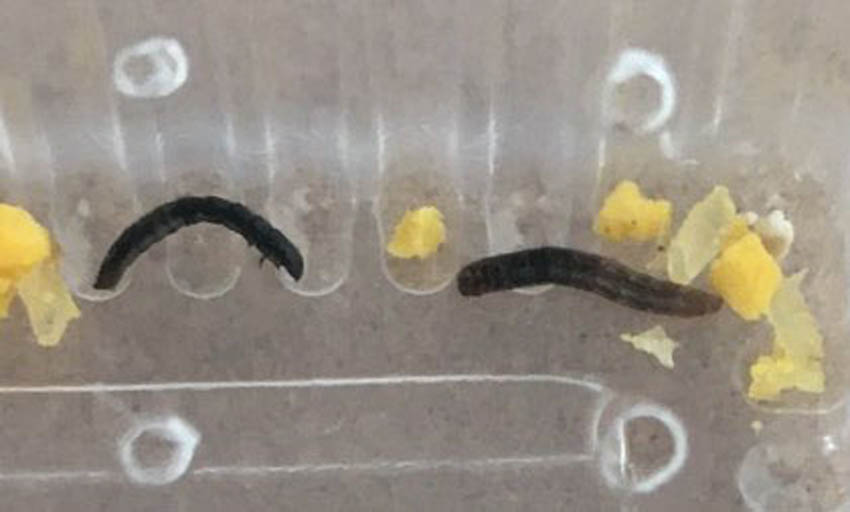
Insecticidal effect of the strain Bt 15891 on 4-week-old mealworm larvae.

Insecticidal effect of the strain Bt 16311 on Zophobas larvae (6 weeks old).
The initiation of sporulation apparently coincides with the beginning of crystal biosynthesis. The formation of these inclusions in the sporulating cell is an irreversible process, and its completion does not require additional exotrophic factors. When sporulating cells are suspended in distilled water, the formation of free crystals, as well as spores, is completed without any additional nutrient sources. The correlation of the quantitative content of spores and endotoxin crystals of Bt strains with insecticidal activity is presented in Table 2.
Microscopic characteristics of selected strains of Bt and their toxic levels towards coleopteran test objects
| Strain (MDC) | Mortality of larvae (%) | Microscopy, after 48 h | Isolation source and area | |
|---|---|---|---|---|
| Tenebrio molitor | Zophobas morio | |||
| 837 | ++ | + | 80% free spores, 5% sporulating cells, crystals in large quantities | Silkworm, Lepidoptera, Bombyx mori L., Georgia, Kakheti region |
| 1008 | ++ | + | 70% free spores, sporulating cells contain crystals | Colorado potato beetle (Leptinotarsa decemlineata Say), Armenia, Gegharkunik province |
| 2374 | ++ | + | 70% free spores, sporulating cells contain crystals | Rat flea, (Xenopsylla cheopis), Russia, Krasnodar Krai |
| 2661 | ++ | + | 80% free spores, 5% sporulating cells, crystals in large quantities | Small flour beetle (Tribolium confusum Duv.), Armenia, Kotayk province |
| 2703 | ++ | + | 80% free spores, there are cells with crystals | Alfalfa leaf weevil, Coleoptera (Phytonomus variabilis Hbst.), Armenia, Armavir province |
| 14041 | +++ | ++ | 90% free spores, 10% sporulating cells, large amounts of diamond-shaped crystals | May beetle, Coleoptera, Melolontha pectoralis Germ., Armenia, Syunik province |
| 14955 | +++ | ++ | 90% free spores, sporulating cells with crystals | Cereal leaf beetle, Coleoptera (Lema melanopus L.,) Russia, Krasnodar Krai |
| 15258 | +++ | ++ | 80% free spores with remnants of sporangium, 10% vegetative cells, diamond-shaped crystals in large quantities | Colorado potato beetle (Leptinotarsa decemlineata Say), Armenia, Gegharkunik province |
| 15336 | +++ | ++ | 90% free spores, oval, large, single sporulating cells with crystals | Pit oak splendour beetle, Coleoptera (Chrysobothris affinis L., Armenia, Kotayk province |
| 15891 | +++ | ++ | 80% free spores, 20% sporulating cells, crystals in large quantities | Silkworm pupa Lepidoptera (Bombyx mori L.), Iran, Mazandaran province |
| 16311 | +++ | +++ | 80% free spores, there are cells with a crystal | Silkworm farm, soil, Iran, Mazandaran province |
(++) – medium toxicity and (+++) – high toxicity.
3.4 Insecticidal activity of Bt strains against lepidopteran pests
It is well known that Bt strains exhibiting insecticidal activity against Coleoptera due to the presence of the delta-endotoxin protein (Cry toxin) are also toxic to Lepidoptera [19]. As a test object, we chose the cabbage white butterfly, the caterpillars that cause the most severe damage in white cabbage and cauliflower. According to Carter and Hargreaves [30], the caterpillars of the second generation are the most harmful, which appear in late July–early August.
Studies of the insecticidal activity of selected Bt strains against lepidopteran caterpillars showed that almost all strains have a lethal effect on Pieris brassicae (L.) Moreover, in variants with strains MDC 2661, MDC 15258, and MDC 15336, 100% death of caterpillars is observed after 24 h, in contrast to strain MDC 837 (40% mortality), known for its activity against lepidopterans (Table 3).
Insecticidal activity of strain Bt against cabbage white caterpillar lepidopteran Pieris brassicae (L.) (second-instar larvae)
| Strain | Mortality of caterpillars (%) | Eating of leaf (%) | |
|---|---|---|---|
| 24 h | 48 h | ||
| MDC 837 | ++ | +++ | 20 |
| MDC 1008 | +++ | +++ | 10 |
| MDC 2661 | +++ | +++ | 10 |
| MDC 14041 | + | +++ | 20 |
| MDC 15258 | +++ | +++ | 10 |
| MDC 15336 | +++ | +++ | 20 |
| MDC 15891 | ++ | +++ | 40 |
| MDC 16311 | ++ | +++ | 40 |
| Control | 0 | 0 | 50 |
(++) – medium toxicity and (+++) – high toxicity.
3.5 Insecticidal activity of Bt strains against coleopteran pests Colorado potato beetle (Leptinotarsa decemlineata Say)
The larvae and adults of beetles cause serious damage to agricultural crops due to their feeding habits, resulting in significant economic losses [31]. The Colorado potato beetle, Leptinotarsa decemlineata Say (Coleoptera, Chrysomelidae), is considered to be one of the most destructive insect pests of cultivated potatoes globally [32]. Alyokhin et al. [33] contend that pest control is difficult due to their natural tendency to adapt to toxic substances and due to their high resistance to pesticides, to which they quickly develop immunity. This has led to the emergence of a large number of Colorado potato beetle populations that are resistant to insecticides. Insecticide resistance in this insect remains a serious problem for pest management specialists.
The sublethal effect of the Bt delta-endotoxin protein on the larvae of Leptinotarsa decemlineata [34] and the pathogenic effect of the Bt Cry3A toxin on the development of the Colorado potato beetle [35] is known from the literature data. According to Hussein et al. [36], it is possible that the Cry3A toxin accumulates in the tissues of insects before the imago stage and negatively affects the reproduction of the Colorado potato beetle In this regard, a biological method of control against Leptinotarsa decemlineata Say is promising, especially since strains of Bt bacteria are known to exhibit activity against the Colorado potato beetle, provided that they are used at the first two larval stages [37].
We studied the effect of Bt strains with high insecticidal activity against Colorado potato beetle larvae. As shown in Table 4, strains MDC 15258, 15891, and 16311, and a combination of strains MDC 1008 and MDC 2661 showed toxicity against Leptinotarsa decemlineata Say larvae. However, it should be noted that to achieve the lethal concentration LC50 against second-instar larvae Colorado potato beetle, the exposure to strain MDC 12258 was 72 h, unlike other strains. It can also be stated that at a suspension cell count of the test strains of 4 × 10⁹ CFU/ml, the LC50 concentration of the toxin is achieved, which is necessary to destroy 50% of the exposed population of Colorado potato beetle larvae.
Insecticidal activity of Bt strains against Colorado potato beetle (second-instar larvae)
| Strain, MDC | Mortality (%) | Eating of leaf (%) | |
|---|---|---|---|
| 72 h | 120 h | ||
| 1008+2661 | + | ++ | 80 |
| 14041 | — | — | 90 |
| 15258 | ++ | ++ | 60 |
| 15336 | — | — | 90 |
| 15891 | + | ++ | 60 |
| 16311 | + | ++ | 80 |
| Control | − | − | 100 |
(+) – low toxicity and (++) – medium toxicity.
The appearance of dead Colorado potato beetle larvae after exposure to Bt strain MDC 15258 is shown in Figure 3.

Insecticidal effect of Bt 15258 strain on second-instar larvae Colorado potato beetle.
3.6 Phylogenetic sequencing of the B. thuringiensis strains
The study of the genetic profile of strains of entomopathogenic bacteria with high insecticidal activity was carried out at Novogene Company (UK). As expected, the results of comparative analysis of the 16S rRNA sequence confirmed the phylogenetic relationship of the selected strains with Bt. Figure 4 shows the phylogenetic tree of the Bt strain MDC 15258 constructed using the neighbor joining method.

Phylogenetic tree of strain Bt MDC-15258.
4 Conclusion
In summary, the bioassay data indicate a wide activity spectrum of the Bt strains from the MDC Spore Forming Bacteria Laboratory collection against species of the insect orders Coleoptera and Lepidoptera, stimulating further experiments to evaluate the use of the Bt strains MDC 15258, MDC 15891, and MDC 16311 as a bioinsecticide, particularly against another agricultural pest, the click beetle. Another potential area of research is to elucidate the molecular basis for the increased toxicity of the combined action of Bt strains MDC 1008 and MDC 2661.
Acknowledgments
This work was supported by the Laboratory of Entomology and Soil Zoology of the Scientific Center of Zoology and Hydroecology of the National Academy of Sciences of Armenia. The authors express their gratitude to Dr. Mark Kalashyan for assistance in providing insect larvae of test objects.
-
Funding information: This research was funded by the Science Committee of the Ministry of ESCS of Armenia (grant number 23EDP-4D003).
-
Author contributions: All authors have accepted responsibility for the entire content of this manuscript and consented to its submission to the journal, reviewed all the results and approved the final version of the manuscript. VB – supervision, conceptualization, and writing – original draft; MK – supervision and investigation; NG – formal analysis and investigation; NK – methodology and investigation; SG – data curation and investigation; KC – investigation and validation; SB – writing – review and editing and software; AV – resources; VG – conceptualization, project administration, and writing – review and editing.
-
Conflict of interest: Authors state no conflict of interest.
-
Data availability statement: All data generated or analyzed during this study is included in this published article.
References
[1] Baker BP, Green TA, Loker AJ. Biological control and integrated pest management in organic and conventional systems. Biol Control. 2020 Jan;140:104095. 10.1016/j.biocontrol.Search in Google Scholar
[2] Singh A, Bhardwaj R, Singh IK. Biocontrol agents: Potential of biopesticides for integrated pest management. Biofertilizers for sustainable agriculture and environment. Soil Biology. Switzerland: Springer; p. 413–33. 10.1007/978-3-030-18933-4.Search in Google Scholar
[3] Heckel DG. How do toxins from Bacillus thuringiensis kill insects? An evolutionary perspective. Arch Insect Biochem Physiol. 2020 Jun;104(2):e21673. 10.1002/arch.21673.Search in Google Scholar PubMed
[4] Stenfors Arnesen LP, Fagerlund A, Granum PE. From soil to gut: Bacillus cereus and its food poisoning toxins. FEMS Microbiol Rev. 2008 Jul;32(4):579–606. 10.1111/j.1574-6976.2008.00112.Search in Google Scholar
[5] Ehling-Schulz M, Lereclus D, Koehler TM. The Bacillus cereus group: Bacillus species with pathogenic potential. Microbiol Spectr. 2019 May;7(3):10–128. 10.1128/microbiolspec.gpp3-0032-2018.Search in Google Scholar PubMed PubMed Central
[6] Lacey LA, Grzywacz D, Shapiro-Ilan DI, Frutos R, Brownbridge M, Goettel MS. Insect pathogens as biological control agents: Back to the future. J Invertebr Pathol. 2015 Nov;132:1–41. 10.1016/J.JIP.2015.07.009.Search in Google Scholar PubMed
[7] Schnepf E, Crickmore N, Van Rie J, Lereclus D, Baum J, Feitelson J, et al. Bacillus thuringiensis and its pesticidal crystal proteins. Microbiol Mol Biol Rev. 1998 Sep;62(3):775–806. 10.1128/mmbr.62.3.775-806.1998.Search in Google Scholar
[8] Bravo A, Gill SS, Soberon M. Mode of action of Bacillus thuringiensis Cry and Cyt toxins and their potential for insect control. Toxicon. 2007;49(4):423–35. 10.1016/j.toxicon.2006.11.022.Search in Google Scholar PubMed PubMed Central
[9] Rosas-García NM. Biopesticide production from Bacillus thuringiensis: an environmentally friendly alternative. Recent Pat Biotechnol. 2009 Jan;3(1):28. 10.2174/187220809787172632.Search in Google Scholar PubMed
[10] Berini F, Montali A, Liguori R, Venturini G, Bonelli M, Shaltiel‐Harpaz L, et al. Production and characterization of Trichoderma asperellum chitinases and their use in synergy with Bacillus thuringiensis for lepidopteran control. Pest Manag Sci. 2024 Jul;80(7):3401–11. 10.1002/ps.8045.Search in Google Scholar PubMed
[11] Güneş H, Alper M, Çöl B, Tunca H. Bioactivities of cry gene positive Bacillus thuringiensis (Berliner)(Bacillales: Bacillaceae) strains on Ephestia kuehniella Zeller, 1879 and Plodia interpunctella (Hübner, 1813)(Lepidoptera: Pyralidae). Turk J Entomol. 2016;40(4):365–75.10.16970/ted.62135Search in Google Scholar
[12] Bravo A, Gómez I, Porta H, García‐Gómez BI, Rodriguez‐Almazan C, Pardo L, et al. Evolution of Bacillus thuringiensis Cry toxins insecticidal activity. Microb Biotechnol. 2013 Jan;6(1):17–26. 10.1111/j.1751-7915.2012.00342.x.Search in Google Scholar PubMed PubMed Central
[13] Roh JY, Choi JY, Li MS, Jin BR, Je YH. Bacillus thuringiensis as a specific, safe, and effective tool for insect pest control. J Microbiol Biotechnol. 2007 Apr;17(4):547.Search in Google Scholar
[14] Letowski J, Bravo A, Brousseau R, Masson L. Assessment of cry1 gene contents of Bacillus thuringiensis strains by use of DNA microarrays. Appl Environ Microbiol. 2005 Sep;71(9):5391–8. 10.1128/AEM.71.9.5391-5398.2005.Search in Google Scholar PubMed PubMed Central
[15] Noguera PA, Ibarra JE. Detection of new cry genes of Bacillus thuringiensis by use of a novel PCR primer system. Appl Environ Microbiol. 2010 Sep;76(18):6150–5. 10.1128/AEM.00797-10.Search in Google Scholar PubMed PubMed Central
[16] Jurat-Fuentes JL, Crickmore N. Specificity determinants for Cry insecticidal proteins: Insights from their mode of action. J Invertebr Pathol. 2017 Jan;142:5–10. 10.1016/j.jip.2016.07.018.Search in Google Scholar PubMed
[17] Afrikian EK. Entomopathogenic bacteria and their significance. Armenia: Academic Publisher, Echmiadzin; 1973. p. 418.Search in Google Scholar
[18] Bravo A, Likitvivatanavong S, Gill SS, Soberón M. Bacillus thuringiensis: a story of a successful bioinsecticide. Insect Biochem Mol Biol. 2011 Jul;41(7):423–31. 10.1016/j.ibmb.2011.02.006.Search in Google Scholar PubMed PubMed Central
[19] Federici BA. Insecticidal protein crystals of Bacillus thuringiensis. Microbiology Monographs Inclusions in Prokaryotes. Berlin/Heidelberg, Germany: Springer-Verlag; 2006. p. 195–235. 10.1007/3-540-33774-1_8.Search in Google Scholar
[20] Nester EW, Thomashow LS, Metz M, Gordon M. 100 years of Bacillis thuringiensis, a Paradigm for producing transgenic organisms: A critical scientific assessment. Ithaca, New York: American Academy of Microbiology; 2002. p. 195–235. 10.1128/AAMCol.16Nov.2002.Search in Google Scholar PubMed
[21] Portela-Dussán DD, Chaparro-Giraldo A, López-Pazos SA. Bacillus thuringiensis biotechnology in agriculture. Nova. 2013 Jul;11(20):87–96.10.22490/24629448.1031Search in Google Scholar
[22] Palma L, Muñoz D, Berry C, Murillo J, Caballero P. Bacillus thuringiensis toxins: an overview of their biocidal activity. Toxins. 2014 Dec;6(12):3296–325. 10.3390/toxins6123296.Search in Google Scholar PubMed PubMed Central
[23] Chakroun M, Banyuls N, Bel Y, Escriche B, Ferré J. Bacterial vegetative insecticidal proteins (Vip) from entomopathogenic bacteria. Microbiol Mol Biol Rev. 2016 Jun;80(2):329–50. 10.1128/MMBR.00060-15.Search in Google Scholar PubMed PubMed Central
[24] De Oliveira JL, Fraceto LF, Bravo A, Polanczyk RA. Encapsulation strategies for Bacillus thuringiensis: from now to the future. J Agric Food Chem. 2021 Apr;69(16):4564–77. 10.1021/acs.jafc.0c07118.Search in Google Scholar PubMed
[25] Azizoglu U, Salehi Jouzani G, Sansinenea E, Sanchis-Borja V. Biotechnological advances in Bacillus thuringiensis and its toxins: Recent updates. Rev Environ Sci Bio/Technol. 2023 Jun;22(2):319–48. 10.1007/s11157-023-09652-5.Search in Google Scholar
[26] Raymond B, Johnston PR, Wright DJ, Ellis RJ, Crickmore N, Bonsall MB. A mid‐gut microbiota is not required for the pathogenicity of Bacillus thuringiensis to diamondback moth larvae. Environ Microbiol. 2009 Oct;11(10):2556–63. 10.1111/j.1462-2920.2009.01980.x.Search in Google Scholar PubMed
[27] Yu Y, Yuan Y, Gao M. Construction of an environmental safe Bacillus thuringiensis engineered strain against Coleoptera. Appl Microbiol Biotechnol. 2016 May;100:4027–34. 10.1007/s00253-015-7250-5.Search in Google Scholar PubMed
[28] Buisson C, Gohar M, Huillet E, Nielsen-LeRoux C. Bacillus thuringiensis spores and vegetative bacteria: infection capacity and role of the virulence regulon PlcR following intrahaemocoel injection of Galleria mellonella. Insects. 2019 May;10(5):129. 10.3390/insects10050129.Search in Google Scholar PubMed PubMed Central
[29] Domínguez-Arrizabalaga M, Villanueva M, Escriche B, Ancín-Azpilicueta C, Caballero P. Insecticidal activity of Bacillus thuringiensis proteins against coleopteran pests. Toxins. 2020 Jun;12(7):430. 10.3390/toxins12070430.Search in Google Scholar PubMed PubMed Central
[30] Carter DJ, Hargreaves B. A field guide to caterpillars of butterflies and moths in Britain and Europe. London: William Collins & Sons LTD; 1986 Jul. p. 296.Search in Google Scholar
[31] Jolivet P, Petitpierre E, Hsiao TH. Biology of chrysomelidae. Vol. 615, Boston: Kluwer Academic Publishers; 1988.10.1007/978-94-009-3105-3Search in Google Scholar
[32] Alyokhin A. Colorado potato beetle management on potatoes: current challenges and future prospects. Fruit, Veg Cereal Sci Biotechnol. 2009;3(1):10.Search in Google Scholar
[33] Alyokhin A, Baker M, Mota-Sanchez D, Dively G, Grafius E. Colorado potato beetle resistance to insecticides. Am J Potato Res. 2008 Dec;85:395–413. 10.1007/s12230-008-9052-0.Search in Google Scholar
[34] Costa SD, Barbercheck ME, Kennedy GG. Sublethal acute and chronic exposure of Colorado potato beetle (Coleoptera: Chrysomelidae) to the δ-endotoxin of Bacillus thuringiensis. J Econ entomology. 2000 Jun;93(3):680–9. 10.1603/0022-0493-93.3.680.Search in Google Scholar PubMed
[35] Nault BA. Survival and fecundity of Bt‐susceptible Colorado potato beetle adults after consumption of transgenic potato containing Bacillus thuringiensis subsp. tenebrionis Cry3A toxin. Entomol Exp et applicata. 2003 Dec;101(3):265–72. 10.1046/j.1570-7458.2001.00911.x.Search in Google Scholar
[36] Hussein HM, Habuštová O, Turanli F, Sehnal F. Potato expressing beetle-specific Bacillus thuringiensis Cry3Aa toxin reduces performance of a moth. J Chem Ecol. 2006 Jan;32:1–3. 10.1007/s10886-006-9347-x.Search in Google Scholar PubMed
[37] Capinera JL. Handbook of vegetable pests. Vol. 96, New York, NY: Academic Press; 2001. p. 98.Search in Google Scholar
© 2024 the author(s), published by De Gruyter
This work is licensed under the Creative Commons Attribution 4.0 International License.
Articles in the same Issue
- Regular Articles
- Supplementation of P-solubilizing purple nonsulfur bacteria, Rhodopseudomonas palustris improved soil fertility, P nutrient, growth, and yield of Cucumis melo L.
- Yield gap variation in rice cultivation in Indonesia
- Effects of co-inoculation of indole-3-acetic acid- and ammonia-producing bacteria on plant growth and nutrition, soil elements, and the relationships of soil microbiomes with soil physicochemical parameters
- Impact of mulching and planting time on spring-wheat (Triticum aestivum) growth: A combined field experiment and empirical modeling approach
- Morphological diversity, correlation studies, and multiple-traits selection for yield and yield components of local cowpea varieties
- Participatory on-farm evaluation of new orange-fleshed sweetpotato varieties in Southern Ethiopia
- Yield performance and stability analysis of three cultivars of Gayo Arabica coffee across six different environments
- Biology of Spodoptera frugiperda (Lepidoptera: Noctuidae) on different types of plants feeds: Potency as a pest on various agricultural plants
- Antidiabetic activity of methanolic extract of Hibiscus sabdariffa Linn. fruit in alloxan-induced Swiss albino diabetic mice
- Bioinformatics investigation of the effect of volatile and non-volatile compounds of rhizobacteria in inhibiting late embryogenesis abundant protein that induces drought tolerance
- Nicotinamide as a biostimulant improves soybean growth and yield
- Farmer’s willingness to accept the sustainable zoning-based organic farming development plan: A lesson from Sleman District, Indonesia
- Uncovering hidden determinants of millennial farmers’ intentions in running conservation agriculture: An application of the Norm Activation Model
- Mediating role of leadership and group capital between human capital component and sustainability of horticultural agribusiness institutions in Indonesia
- Biochar technology to increase cassava crop productivity: A study of sustainable agriculture on degraded land
- Effect of struvite on the growth of green beans on Mars and Moon regolith simulants
- UrbanAgriKG: A knowledge graph on urban agriculture and its embeddings
- Provision of loans and credit by cocoa buyers under non-price competition: Cocoa beans market in Ghana
- Effectiveness of micro-dosing of lime on selected chemical properties of soil in Banja District, North West, Ethiopia
- Effect of weather, nitrogen fertilizer, and biostimulators on the root size and yield components of Hordeum vulgare
- Effects of selected biostimulants on qualitative and quantitative parameters of nine cultivars of the genus Capsicum spp.
- Growth, yield, and secondary metabolite responses of three shallot cultivars at different watering intervals
- Design of drainage channel for effective use of land on fully mechanized sugarcane plantations: A case study at Bone Sugarcane Plantation
- Technical feasibility and economic benefit of combined shallot seedlings techniques in Indonesia
- Control of Meloidogyne javanica in banana by endophytic bacteria
- Comparison of important quality components of red-flesh kiwifruit (Actinidia chinensis) in different locations
- Efficiency of rice farming in flood-prone areas of East Java, Indonesia
- Comparative analysis of alpine agritourism in Trentino, Tyrol, and South Tyrol: Regional variations and prospects
- Detection of Fusarium spp. infection in potato (Solanum tuberosum L.) during postharvest storage through visible–near-infrared and shortwave–near-infrared reflectance spectroscopy
- Forage yield, seed, and forage qualitative traits evaluation by determining the optimal forage harvesting stage in dual-purpose cultivation in safflower varieties (Carthamus tinctorius L.)
- The influence of tourism on the development of urban space: Comparison in Hanoi, Danang, and Ho Chi Minh City
- Optimum intra-row spacing and clove size for the economical production of garlic (Allium sativum L.) in Northwestern Highlands of Ethiopia
- The role of organic rice farm income on farmer household welfare: Evidence from Yogyakarta, Indonesia
- Exploring innovative food in a developing country: Edible insects as a sustainable option
- Genotype by environment interaction and performance stability of common bean (Phaseolus vulgaris L.) cultivars grown in Dawuro zone, Southwestern Ethiopia
- Factors influencing green, environmentally-friendly consumer behaviour
- Factors affecting coffee farmers’ access to financial institutions: The case of Bandung Regency, Indonesia
- Morphological and yield trait-based evaluation and selection of chili (Capsicum annuum L.) genotypes suitable for both summer and winter seasons
- Sustainability analysis and decision-making strategy for swamp buffalo (Bubalus bubalis carabauesis) conservation in Jambi Province, Indonesia
- Understanding factors affecting rice purchasing decisions in Indonesia: Does rice brand matter?
- An implementation of an extended theory of planned behavior to investigate consumer behavior on hygiene sanitation-certified livestock food products
- Information technology adoption in Indonesia’s small-scale dairy farms
- Draft genome of a biological control agent against Bipolaris sorokiniana, the causal phytopathogen of spot blotch in wheat (Triticum turgidum L. subsp. durum): Bacillus inaquosorum TSO22
- Assessment of the recurrent mutagenesis efficacy of sesame crosses followed by isolation and evaluation of promising genetic resources for use in future breeding programs
- Fostering cocoa industry resilience: A collaborative approach to managing farm gate price fluctuations in West Sulawesi, Indonesia
- Field investigation of component failures for selected farm machinery used in small rice farming operations
- Near-infrared technology in agriculture: Rapid, simultaneous, and non-destructive determination of inner quality parameters on intact coffee beans
- The synergistic application of sucrose and various LED light exposures to enhance the in vitro growth of Stevia rebaudiana (Bertoni)
- Weather index-based agricultural insurance for flower farmers: Willingness to pay, sales, and profitability perspectives
- Meta-analysis of dietary Bacillus spp. on serum biochemical and antioxidant status and egg quality of laying hens
- Biochemical characterization of trypsin from Indonesian skipjack tuna (Katsuwonus pelamis) viscera
- Determination of C-factor for conventional cultivation and soil conservation technique used in hop gardens
- Empowering farmers: Unveiling the economic impacts of contract farming on red chilli farmers’ income in Magelang District, Indonesia
- Evaluating salt tolerance in fodder crops: A field experiment in the dry land
- Labor productivity of lowland rice (Oryza sativa L.) farmers in Central Java Province, Indonesia
- Cropping systems and production assessment in southern Myanmar: Informing strategic interventions
- The effect of biostimulants and red mud on the growth and yield of shallots in post-unlicensed gold mining soil
- Effects of dietary Adansonia digitata L. (baobab) seed meal on growth performance and carcass characteristics of broiler chickens: A systematic review and meta-analysis
- Analysis and structural characterization of the vid-pisco market
- Pseudomonas fluorescens SP007s enhances defense responses against the soybean bacterial pustule caused by Xanthomonas axonopodis pv. glycines
- A brief investigation on the prospective of co-composted biochar as a fertilizer for Zucchini plants cultivated in arid sandy soil
- Supply chain efficiency of red chilies in the production center of Sleman Indonesia based on performance measurement system
- Investment development path for developed economies: Is agriculture different?
- Power relations among actors in laying hen business in Indonesia: A MACTOR analysis
- High-throughput digital imaging and detection of morpho-physiological traits in tomato plants under drought
- Converting compression ignition engine to dual-fuel (diesel + CNG) engine and experimentally investigating its performance and emissions
- Structuration, risk management, and institutional dynamics in resolving palm oil conflicts
- Spacing strategies for enhancing drought resilience and yield in maize agriculture
- Composition and quality of winter annual agrestal and ruderal herbages of two different land-use types
- Investigating Spodoptera spp. diversity, percentage of attack, and control strategies in the West Java, Indonesia, corn cultivation
- Yield stability of biofertilizer treatments to soybean in the rainy season based on the GGE biplot
- Evaluating agricultural yield and economic implications of varied irrigation depths on maize yield in semi-arid environments, at Birfarm, Upper Blue Nile, Ethiopia
- Chemometrics for mapping the spatial nitrate distribution on the leaf lamina of fenugreek grown under varying nitrogenous fertilizer doses
- Pomegranate peel ethanolic extract: A promising natural antioxidant, antimicrobial agent, and novel approach to mitigate rancidity in used edible oils
- Transformative learning and engagement with organic farming: Lessons learned from Indonesia
- Tourism in rural areas as a broader concept: Some insights from the Portuguese reality
- Assessment enhancing drought tolerance in henna (Lawsonia inermis L.) ecotypes through sodium nitroprusside foliar application
- Edible insects: A survey about perceptions regarding possible beneficial health effects and safety concerns among adult citizens from Portugal and Romania
- Phenological stages analysis in peach trees using electronic nose
- Harvest date and salicylic acid impact on peanut (Arachis hypogaea L.) properties under different humidity conditions
- Hibiscus sabdariffa L. petal biomass: A green source of nanoparticles of multifarious potential
- Use of different vegetation indices for the evaluation of the kinetics of the cherry tomato (Solanum lycopersicum var. cerasiforme) growth based on multispectral images by UAV
- First evidence of microplastic pollution in mangrove sediments and its ingestion by coral reef fish: Case study in Biawak Island, Indonesia
- Physical and textural properties and sensory acceptability of wheat bread partially incorporated with unripe non-commercial banana cultivars
- Cereibacter sphaeroides ST16 and ST26 were used to solubilize insoluble P forms to improve P uptake, growth, and yield of rice in acidic and extreme saline soil
- Avocado peel by-product in cattle diets and supplementation with oregano oil and effects on production, carcass, and meat quality
- Optimizing inorganic blended fertilizer application for the maximum grain yield and profitability of bread wheat and food barley in Dawuro Zone, Southwest Ethiopia
- The acceptance of social media as a channel of communication and livestock information for sheep farmers
- Adaptation of rice farmers to aging in Thailand
- Combined use of improved maize hybrids and nitrogen application increases grain yield of maize, under natural Striga hermonthica infestation
- From aquatic to terrestrial: An examination of plant diversity and ecological shifts
- Statistical modelling of a tractor tractive performance during ploughing operation on a tropical Alfisol
- Participation in artisanal diamond mining and food security: A case study of Kasai Oriental in DR Congo
- Assessment and multi-scenario simulation of ecosystem service values in Southwest China’s mountainous and hilly region
- Analysis of agricultural emissions and economic growth in Europe in search of ecological balance
- Bacillus thuringiensis strains with high insecticidal activity against insect larvae of the orders Coleoptera and Lepidoptera
- Technical efficiency of sugarcane farming in East Java, Indonesia: A bootstrap data envelopment analysis
- Comparison between mycobiota diversity and fungi and mycotoxin contamination of maize and wheat
- Evaluation of cultivation technology package and corn variety based on agronomy characters and leaf green indices
- Exploring the association between the consumption of beverages, fast foods, sweets, fats, and oils and the risk of gastric and pancreatic cancers: Findings from case–control study
- Phytochemical composition and insecticidal activity of Acokanthera oblongifolia (Hochst.) Benth & Hook.f. ex B.D.Jacks. extract on life span and biological aspects of Spodoptera littoralis (Biosd.)
- Land use management solutions in response to climate change: Case study in the central coastal areas of Vietnam
- Evaluation of coffee pulp as a feed ingredient for ruminants: A meta-analysis
- Interannual variations of normalized difference vegetation index and potential evapotranspiration and their relationship in the Baghdad area
- Harnessing synthetic microbial communities with nitrogen-fixing activity to promote rice growth
- Agronomic and economic benefits of rice–sweetpotato rotation in lowland rice cropping systems in Uganda
- Response of potato tuber as an effect of the N-fertilizer and paclobutrazol application in medium altitude
- Bridging the gap: The role of geographic proximity in enhancing seed sustainability in Bandung District
- Evaluation of Abrams curve in agricultural sector using the NARDL approach
- Challenges and opportunities for young farmers in the implementation of the Rural Development Program 2014–2020 of the Republic of Croatia
- Yield stability of ten common bean (Phaseolus vulgaris L.) genotypes at different sowing dates in Lubumbashi, South-East of DR Congo
- Effects of encapsulation and combining probiotics with different nitrate forms on methane emission and in vitro rumen fermentation characteristics
- Phytochemical analysis of Bienertia sinuspersici extract and its antioxidant and antimicrobial activities
- Evaluation of relative drought tolerance of grapevines by leaf fluorescence parameters
- Yield assessment of new streak-resistant topcross maize hybrids in Benin
- Improvement of cocoa powder properties through ultrasonic- and microwave-assisted alkalization
- Potential of ecoenzymes made from nutmeg (Myristica fragrans) leaf and pulp waste as bioinsecticides for Periplaneta americana
- Analysis of farm performance to realize the sustainability of organic cabbage vegetable farming in Getasan Semarang, Indonesia
- Revealing the influences of organic amendment-derived dissolved organic matter on growth and nutrient accumulation in lettuce seedlings (Lactuca sativa L.)
- Identification of viruses infecting sweetpotato (Ipomoea batatas Lam.) in Benin
- Assessing the soil physical and chemical properties of long-term pomelo orchard based on tree growth
- Investigating access and use of digital tools for agriculture among rural farmers: A case study of Nkomazi Municipality, South Africa
- Does sex influence the impact of dietary vitD3 and UVB light on performance parameters and welfare indicators of broilers?
- Design of intelligent sprayer control for an autonomous farming drone using a multiclass support vector machine
- Deciphering salt-responsive NB-ARC genes in rice transcriptomic data: A bioinformatics approach with gene expression validation
- Review Articles
- Impact of nematode infestation in livestock production and the role of natural feed additives – A review
- Role of dietary fats in reproductive, health, and nutritional benefits in farm animals: A review
- Climate change and adaptive strategies on viticulture (Vitis spp.)
- The false tiger of almond, Monosteira unicostata (Hemiptera: Tingidae): Biology, ecology, and control methods
- A systematic review on potential analogy of phytobiomass and soil carbon evaluation methods: Ethiopia insights
- A review of storage temperature and relative humidity effects on shelf life and quality of mango (Mangifera indica L.) fruit and implications for nutrition insecurity in Ethiopia
- Green extraction of nutmeg (Myristica fragrans) phytochemicals: Prospective strategies and roadblocks
- Potential influence of nitrogen fertilizer rates on yield and yield components of carrot (Dacus carota L.) in Ethiopia: Systematic review
- Corn silk: A promising source of antimicrobial compounds for health and wellness
- State and contours of research on roselle (Hibiscus sabdariffa L.) in Africa
- The potential of phosphorus-solubilizing purple nonsulfur bacteria in agriculture: Present and future perspectives
- Minor millets: Processing techniques and their nutritional and health benefits
- Meta-analysis of reproductive performance of improved dairy cattle under Ethiopian environmental conditions
- Review on enhancing the efficiency of fertilizer utilization: Strategies for optimal nutrient management
- The nutritional, phytochemical composition, and utilisation of different parts of maize: A comparative analysis
- Motivations for farmers’ participation in agri-environmental scheme in the EU, literature review
- Evolution of climate-smart agriculture research: A science mapping exploration and network analysis
- Short Communications
- Music enrichment improves the behavior and leukocyte profile of dairy cattle
- Effect of pruning height and organic fertilization on the morphological and productive characteristics of Moringa oleifera Lam. in the Peruvian dry tropics
- Corrigendum
- Corrigendum to “Bioinformatics investigation of the effect of volatile and non-volatile compounds of rhizobacteria in inhibiting late embryogenesis abundant protein that induces drought tolerance”
- Corrigendum to “Composition and quality of winter annual agrestal and ruderal herbages of two different land-use types”
- Special issue: Smart Agriculture System for Sustainable Development: Methods and Practices
- Construction of a sustainable model to predict the moisture content of porang powder (Amorphophallus oncophyllus) based on pointed-scan visible near-infrared spectroscopy
- FruitVision: A deep learning based automatic fruit grading system
- Energy harvesting and ANFIS modeling of a PVDF/GO-ZNO piezoelectric nanogenerator on a UAV
- Effects of stress hormones on digestibility and performance in cattle: A review
- Special Issue of The 4th International Conference on Food Science and Engineering (ICFSE) 2022 - Part II
- Assessment of omega-3 and omega-6 fatty acid profiles and ratio of omega-6/omega-3 of white eggs produced by laying hens fed diets enriched with omega-3 rich vegetable oil
- Special Issue on FCEM - International Web Conference on Food Choice & Eating Motivation - Part II
- Special Issue on FCEM – International Web Conference on Food Choice & Eating Motivation: Message from the editor
- Fruit and vegetable consumption: Study involving Portuguese and French consumers
- Knowledge about consumption of milk: Study involving consumers from two European Countries – France and Portugal
Articles in the same Issue
- Regular Articles
- Supplementation of P-solubilizing purple nonsulfur bacteria, Rhodopseudomonas palustris improved soil fertility, P nutrient, growth, and yield of Cucumis melo L.
- Yield gap variation in rice cultivation in Indonesia
- Effects of co-inoculation of indole-3-acetic acid- and ammonia-producing bacteria on plant growth and nutrition, soil elements, and the relationships of soil microbiomes with soil physicochemical parameters
- Impact of mulching and planting time on spring-wheat (Triticum aestivum) growth: A combined field experiment and empirical modeling approach
- Morphological diversity, correlation studies, and multiple-traits selection for yield and yield components of local cowpea varieties
- Participatory on-farm evaluation of new orange-fleshed sweetpotato varieties in Southern Ethiopia
- Yield performance and stability analysis of three cultivars of Gayo Arabica coffee across six different environments
- Biology of Spodoptera frugiperda (Lepidoptera: Noctuidae) on different types of plants feeds: Potency as a pest on various agricultural plants
- Antidiabetic activity of methanolic extract of Hibiscus sabdariffa Linn. fruit in alloxan-induced Swiss albino diabetic mice
- Bioinformatics investigation of the effect of volatile and non-volatile compounds of rhizobacteria in inhibiting late embryogenesis abundant protein that induces drought tolerance
- Nicotinamide as a biostimulant improves soybean growth and yield
- Farmer’s willingness to accept the sustainable zoning-based organic farming development plan: A lesson from Sleman District, Indonesia
- Uncovering hidden determinants of millennial farmers’ intentions in running conservation agriculture: An application of the Norm Activation Model
- Mediating role of leadership and group capital between human capital component and sustainability of horticultural agribusiness institutions in Indonesia
- Biochar technology to increase cassava crop productivity: A study of sustainable agriculture on degraded land
- Effect of struvite on the growth of green beans on Mars and Moon regolith simulants
- UrbanAgriKG: A knowledge graph on urban agriculture and its embeddings
- Provision of loans and credit by cocoa buyers under non-price competition: Cocoa beans market in Ghana
- Effectiveness of micro-dosing of lime on selected chemical properties of soil in Banja District, North West, Ethiopia
- Effect of weather, nitrogen fertilizer, and biostimulators on the root size and yield components of Hordeum vulgare
- Effects of selected biostimulants on qualitative and quantitative parameters of nine cultivars of the genus Capsicum spp.
- Growth, yield, and secondary metabolite responses of three shallot cultivars at different watering intervals
- Design of drainage channel for effective use of land on fully mechanized sugarcane plantations: A case study at Bone Sugarcane Plantation
- Technical feasibility and economic benefit of combined shallot seedlings techniques in Indonesia
- Control of Meloidogyne javanica in banana by endophytic bacteria
- Comparison of important quality components of red-flesh kiwifruit (Actinidia chinensis) in different locations
- Efficiency of rice farming in flood-prone areas of East Java, Indonesia
- Comparative analysis of alpine agritourism in Trentino, Tyrol, and South Tyrol: Regional variations and prospects
- Detection of Fusarium spp. infection in potato (Solanum tuberosum L.) during postharvest storage through visible–near-infrared and shortwave–near-infrared reflectance spectroscopy
- Forage yield, seed, and forage qualitative traits evaluation by determining the optimal forage harvesting stage in dual-purpose cultivation in safflower varieties (Carthamus tinctorius L.)
- The influence of tourism on the development of urban space: Comparison in Hanoi, Danang, and Ho Chi Minh City
- Optimum intra-row spacing and clove size for the economical production of garlic (Allium sativum L.) in Northwestern Highlands of Ethiopia
- The role of organic rice farm income on farmer household welfare: Evidence from Yogyakarta, Indonesia
- Exploring innovative food in a developing country: Edible insects as a sustainable option
- Genotype by environment interaction and performance stability of common bean (Phaseolus vulgaris L.) cultivars grown in Dawuro zone, Southwestern Ethiopia
- Factors influencing green, environmentally-friendly consumer behaviour
- Factors affecting coffee farmers’ access to financial institutions: The case of Bandung Regency, Indonesia
- Morphological and yield trait-based evaluation and selection of chili (Capsicum annuum L.) genotypes suitable for both summer and winter seasons
- Sustainability analysis and decision-making strategy for swamp buffalo (Bubalus bubalis carabauesis) conservation in Jambi Province, Indonesia
- Understanding factors affecting rice purchasing decisions in Indonesia: Does rice brand matter?
- An implementation of an extended theory of planned behavior to investigate consumer behavior on hygiene sanitation-certified livestock food products
- Information technology adoption in Indonesia’s small-scale dairy farms
- Draft genome of a biological control agent against Bipolaris sorokiniana, the causal phytopathogen of spot blotch in wheat (Triticum turgidum L. subsp. durum): Bacillus inaquosorum TSO22
- Assessment of the recurrent mutagenesis efficacy of sesame crosses followed by isolation and evaluation of promising genetic resources for use in future breeding programs
- Fostering cocoa industry resilience: A collaborative approach to managing farm gate price fluctuations in West Sulawesi, Indonesia
- Field investigation of component failures for selected farm machinery used in small rice farming operations
- Near-infrared technology in agriculture: Rapid, simultaneous, and non-destructive determination of inner quality parameters on intact coffee beans
- The synergistic application of sucrose and various LED light exposures to enhance the in vitro growth of Stevia rebaudiana (Bertoni)
- Weather index-based agricultural insurance for flower farmers: Willingness to pay, sales, and profitability perspectives
- Meta-analysis of dietary Bacillus spp. on serum biochemical and antioxidant status and egg quality of laying hens
- Biochemical characterization of trypsin from Indonesian skipjack tuna (Katsuwonus pelamis) viscera
- Determination of C-factor for conventional cultivation and soil conservation technique used in hop gardens
- Empowering farmers: Unveiling the economic impacts of contract farming on red chilli farmers’ income in Magelang District, Indonesia
- Evaluating salt tolerance in fodder crops: A field experiment in the dry land
- Labor productivity of lowland rice (Oryza sativa L.) farmers in Central Java Province, Indonesia
- Cropping systems and production assessment in southern Myanmar: Informing strategic interventions
- The effect of biostimulants and red mud on the growth and yield of shallots in post-unlicensed gold mining soil
- Effects of dietary Adansonia digitata L. (baobab) seed meal on growth performance and carcass characteristics of broiler chickens: A systematic review and meta-analysis
- Analysis and structural characterization of the vid-pisco market
- Pseudomonas fluorescens SP007s enhances defense responses against the soybean bacterial pustule caused by Xanthomonas axonopodis pv. glycines
- A brief investigation on the prospective of co-composted biochar as a fertilizer for Zucchini plants cultivated in arid sandy soil
- Supply chain efficiency of red chilies in the production center of Sleman Indonesia based on performance measurement system
- Investment development path for developed economies: Is agriculture different?
- Power relations among actors in laying hen business in Indonesia: A MACTOR analysis
- High-throughput digital imaging and detection of morpho-physiological traits in tomato plants under drought
- Converting compression ignition engine to dual-fuel (diesel + CNG) engine and experimentally investigating its performance and emissions
- Structuration, risk management, and institutional dynamics in resolving palm oil conflicts
- Spacing strategies for enhancing drought resilience and yield in maize agriculture
- Composition and quality of winter annual agrestal and ruderal herbages of two different land-use types
- Investigating Spodoptera spp. diversity, percentage of attack, and control strategies in the West Java, Indonesia, corn cultivation
- Yield stability of biofertilizer treatments to soybean in the rainy season based on the GGE biplot
- Evaluating agricultural yield and economic implications of varied irrigation depths on maize yield in semi-arid environments, at Birfarm, Upper Blue Nile, Ethiopia
- Chemometrics for mapping the spatial nitrate distribution on the leaf lamina of fenugreek grown under varying nitrogenous fertilizer doses
- Pomegranate peel ethanolic extract: A promising natural antioxidant, antimicrobial agent, and novel approach to mitigate rancidity in used edible oils
- Transformative learning and engagement with organic farming: Lessons learned from Indonesia
- Tourism in rural areas as a broader concept: Some insights from the Portuguese reality
- Assessment enhancing drought tolerance in henna (Lawsonia inermis L.) ecotypes through sodium nitroprusside foliar application
- Edible insects: A survey about perceptions regarding possible beneficial health effects and safety concerns among adult citizens from Portugal and Romania
- Phenological stages analysis in peach trees using electronic nose
- Harvest date and salicylic acid impact on peanut (Arachis hypogaea L.) properties under different humidity conditions
- Hibiscus sabdariffa L. petal biomass: A green source of nanoparticles of multifarious potential
- Use of different vegetation indices for the evaluation of the kinetics of the cherry tomato (Solanum lycopersicum var. cerasiforme) growth based on multispectral images by UAV
- First evidence of microplastic pollution in mangrove sediments and its ingestion by coral reef fish: Case study in Biawak Island, Indonesia
- Physical and textural properties and sensory acceptability of wheat bread partially incorporated with unripe non-commercial banana cultivars
- Cereibacter sphaeroides ST16 and ST26 were used to solubilize insoluble P forms to improve P uptake, growth, and yield of rice in acidic and extreme saline soil
- Avocado peel by-product in cattle diets and supplementation with oregano oil and effects on production, carcass, and meat quality
- Optimizing inorganic blended fertilizer application for the maximum grain yield and profitability of bread wheat and food barley in Dawuro Zone, Southwest Ethiopia
- The acceptance of social media as a channel of communication and livestock information for sheep farmers
- Adaptation of rice farmers to aging in Thailand
- Combined use of improved maize hybrids and nitrogen application increases grain yield of maize, under natural Striga hermonthica infestation
- From aquatic to terrestrial: An examination of plant diversity and ecological shifts
- Statistical modelling of a tractor tractive performance during ploughing operation on a tropical Alfisol
- Participation in artisanal diamond mining and food security: A case study of Kasai Oriental in DR Congo
- Assessment and multi-scenario simulation of ecosystem service values in Southwest China’s mountainous and hilly region
- Analysis of agricultural emissions and economic growth in Europe in search of ecological balance
- Bacillus thuringiensis strains with high insecticidal activity against insect larvae of the orders Coleoptera and Lepidoptera
- Technical efficiency of sugarcane farming in East Java, Indonesia: A bootstrap data envelopment analysis
- Comparison between mycobiota diversity and fungi and mycotoxin contamination of maize and wheat
- Evaluation of cultivation technology package and corn variety based on agronomy characters and leaf green indices
- Exploring the association between the consumption of beverages, fast foods, sweets, fats, and oils and the risk of gastric and pancreatic cancers: Findings from case–control study
- Phytochemical composition and insecticidal activity of Acokanthera oblongifolia (Hochst.) Benth & Hook.f. ex B.D.Jacks. extract on life span and biological aspects of Spodoptera littoralis (Biosd.)
- Land use management solutions in response to climate change: Case study in the central coastal areas of Vietnam
- Evaluation of coffee pulp as a feed ingredient for ruminants: A meta-analysis
- Interannual variations of normalized difference vegetation index and potential evapotranspiration and their relationship in the Baghdad area
- Harnessing synthetic microbial communities with nitrogen-fixing activity to promote rice growth
- Agronomic and economic benefits of rice–sweetpotato rotation in lowland rice cropping systems in Uganda
- Response of potato tuber as an effect of the N-fertilizer and paclobutrazol application in medium altitude
- Bridging the gap: The role of geographic proximity in enhancing seed sustainability in Bandung District
- Evaluation of Abrams curve in agricultural sector using the NARDL approach
- Challenges and opportunities for young farmers in the implementation of the Rural Development Program 2014–2020 of the Republic of Croatia
- Yield stability of ten common bean (Phaseolus vulgaris L.) genotypes at different sowing dates in Lubumbashi, South-East of DR Congo
- Effects of encapsulation and combining probiotics with different nitrate forms on methane emission and in vitro rumen fermentation characteristics
- Phytochemical analysis of Bienertia sinuspersici extract and its antioxidant and antimicrobial activities
- Evaluation of relative drought tolerance of grapevines by leaf fluorescence parameters
- Yield assessment of new streak-resistant topcross maize hybrids in Benin
- Improvement of cocoa powder properties through ultrasonic- and microwave-assisted alkalization
- Potential of ecoenzymes made from nutmeg (Myristica fragrans) leaf and pulp waste as bioinsecticides for Periplaneta americana
- Analysis of farm performance to realize the sustainability of organic cabbage vegetable farming in Getasan Semarang, Indonesia
- Revealing the influences of organic amendment-derived dissolved organic matter on growth and nutrient accumulation in lettuce seedlings (Lactuca sativa L.)
- Identification of viruses infecting sweetpotato (Ipomoea batatas Lam.) in Benin
- Assessing the soil physical and chemical properties of long-term pomelo orchard based on tree growth
- Investigating access and use of digital tools for agriculture among rural farmers: A case study of Nkomazi Municipality, South Africa
- Does sex influence the impact of dietary vitD3 and UVB light on performance parameters and welfare indicators of broilers?
- Design of intelligent sprayer control for an autonomous farming drone using a multiclass support vector machine
- Deciphering salt-responsive NB-ARC genes in rice transcriptomic data: A bioinformatics approach with gene expression validation
- Review Articles
- Impact of nematode infestation in livestock production and the role of natural feed additives – A review
- Role of dietary fats in reproductive, health, and nutritional benefits in farm animals: A review
- Climate change and adaptive strategies on viticulture (Vitis spp.)
- The false tiger of almond, Monosteira unicostata (Hemiptera: Tingidae): Biology, ecology, and control methods
- A systematic review on potential analogy of phytobiomass and soil carbon evaluation methods: Ethiopia insights
- A review of storage temperature and relative humidity effects on shelf life and quality of mango (Mangifera indica L.) fruit and implications for nutrition insecurity in Ethiopia
- Green extraction of nutmeg (Myristica fragrans) phytochemicals: Prospective strategies and roadblocks
- Potential influence of nitrogen fertilizer rates on yield and yield components of carrot (Dacus carota L.) in Ethiopia: Systematic review
- Corn silk: A promising source of antimicrobial compounds for health and wellness
- State and contours of research on roselle (Hibiscus sabdariffa L.) in Africa
- The potential of phosphorus-solubilizing purple nonsulfur bacteria in agriculture: Present and future perspectives
- Minor millets: Processing techniques and their nutritional and health benefits
- Meta-analysis of reproductive performance of improved dairy cattle under Ethiopian environmental conditions
- Review on enhancing the efficiency of fertilizer utilization: Strategies for optimal nutrient management
- The nutritional, phytochemical composition, and utilisation of different parts of maize: A comparative analysis
- Motivations for farmers’ participation in agri-environmental scheme in the EU, literature review
- Evolution of climate-smart agriculture research: A science mapping exploration and network analysis
- Short Communications
- Music enrichment improves the behavior and leukocyte profile of dairy cattle
- Effect of pruning height and organic fertilization on the morphological and productive characteristics of Moringa oleifera Lam. in the Peruvian dry tropics
- Corrigendum
- Corrigendum to “Bioinformatics investigation of the effect of volatile and non-volatile compounds of rhizobacteria in inhibiting late embryogenesis abundant protein that induces drought tolerance”
- Corrigendum to “Composition and quality of winter annual agrestal and ruderal herbages of two different land-use types”
- Special issue: Smart Agriculture System for Sustainable Development: Methods and Practices
- Construction of a sustainable model to predict the moisture content of porang powder (Amorphophallus oncophyllus) based on pointed-scan visible near-infrared spectroscopy
- FruitVision: A deep learning based automatic fruit grading system
- Energy harvesting and ANFIS modeling of a PVDF/GO-ZNO piezoelectric nanogenerator on a UAV
- Effects of stress hormones on digestibility and performance in cattle: A review
- Special Issue of The 4th International Conference on Food Science and Engineering (ICFSE) 2022 - Part II
- Assessment of omega-3 and omega-6 fatty acid profiles and ratio of omega-6/omega-3 of white eggs produced by laying hens fed diets enriched with omega-3 rich vegetable oil
- Special Issue on FCEM - International Web Conference on Food Choice & Eating Motivation - Part II
- Special Issue on FCEM – International Web Conference on Food Choice & Eating Motivation: Message from the editor
- Fruit and vegetable consumption: Study involving Portuguese and French consumers
- Knowledge about consumption of milk: Study involving consumers from two European Countries – France and Portugal
