The influence of tourism on the development of urban space: Comparison in Hanoi, Danang, and Ho Chi Minh City
-
Thuy Thu Tran
 und
Huong Lan Pham
und
Huong Lan Pham

Abstract
Tourism is not only a driving force behind the development of many urban areas in Vietnam, but also a cause of accelerating problems such as tourist overload and great pressure on infrastructure. The study’s purpose is to evaluate the impact that tourism has had on the development of metropolitan regions in Hanoi, Da Nang, and Ho Chi Minh City, which are the three most popular tourist destinations in Vietnam. These effects are measured through two indicators: land consumption and land use efficiency (LUE). Research data are collected through two main sources: Vietnam General Statistics Office (with population and tourist data) and JAXA (with land use data). These data were collected and compared over two periods: 2010–2015 and 2015–2020. Research results have shown that consumption is increasing in all three localities, and all three cities are expanding spatially. In particular, the period 2015–2020 shows a higher level of land consumption than the period 2010–2015. However, LUE witnessed the opposite result when the period 2010–2015 showed more efficiency than the later period. Thus, all three urban areas tend to grow more if we count the amount of tourists as residents in that locality over time. This impedes future sustainable tourism development.
1 Introduction
Tourism is a messenger of peace, friendship, and cooperation between countries and peoples [1]. Within the global context, tourism presently holds the status of being one of the foremost economic sectors in the service industry, experiencing rapid growth and garnering the participation of numerous nations due to the significant socio-economic advantages it offers [2,3,4]. As tourism activities have developed and become popular, it has become the subject of research by scientists in many different fields such as sociology [5,6], psychology [7], and economics [8]. At present, within the context of the worldwide phenomenon of globalization, the tourism sector assumes a notably significant function in generating domestic revenue [9,10]. Travel has become an indispensable need of people in modern industrial life. Tourism development is a good condition for exporting on-site tourism products [11,12], increasing foreign exchange revenue for the country [13,14]. Developing this industry also creates many new jobs for workers to solve the rising unemployment problem [15], exploit surplus labor sources [16], and promote the development of other economic sectors [17,18].
Following the liberalization of Vietnam’s economy, the tourism sector has experienced substantial growth in terms of visitor arrivals and revenue [19]. With respect to international tourism, Vietnam experienced a surge in the number of visitors from 250,000 in 1990 to 1.3 million within a span of merely 5 years, an increase of over fourfold. This number reached 5 million in 2010 and reached 18 million in 2019 [20]. On a regular basis, the yearly growth rate is higher than the double digits, with the average annual growth rate for the period 2015–2019 being 22.7%. From 1990 to 2019, domestic tourism increased by an astounding 85 times, from 1 million to 85 million [21]. This increase in tourist arrivals indicates that Vietnam’s economy is receiving an ever-increasing portion of its revenue from tourism. Tourism activities garner the involvement of individuals from diverse economic backgrounds and sectors, generating revenue not only for those engaged in tourism-related enterprises but also for associated industries on an indirect level [22]. It generates income for local communities. Tourism-generated revenue increased from 1,340 billion VND in 1990 to 755,000 billion VND (equivalent to $32.8 billion USD) in 2019. In 2019, this particular revenue accounted for 9.2% of the gross domestic product [23]. To be sure, the COVID-19 pandemic has slowed the growth of Vietnam’s tourist industry and reduced its economic impact. In 2022, tourism contributed less than 2% to the country’s gross domestic product (GDP) [21], clearly indicating a decline.
Furthermore, the surge in tourist influx to metropolitan regions throughout the tourist season has imposed considerable strain on urban infrastructure [24]. Among them, the waste treatment system is one of the major problems, while the capacity to collect and treat waste in most Vietnamese urban areas is still limited [25]. The increase in passenger numbers also puts pressure on the urban transport system, which is already overloaded due to rapid urbanization, especially in big cities [26]. In addition, the expansion of lodging establishments and recreational facilities to cater to the demands of visitors in metropolitan regions results in the encroachment upon residential space for indigenous populations [27]. This causes the land fund to shrink and real estate prices to increase [28]. Along with that is the increase in the cost of living and increasing social problems that have negative impacts on tangible and intangible cultural heritage in urban areas [29]. The conflict that arises between increasing the number of visitors in urban areas, especially in urban areas with a long history, and preserving inherent values is becoming more and more serious [30,31]. This is the situation that most tourist cities in the world have to face and seek to resolve through building mechanisms, and flexible sharing solutions to ensure tourism in urban areas develops more sustainably.
Despite the growing number of studies on tourism-oriented urban change, little attention has been paid to the urban policy drivers of this transformation [32]. In China, tourism development has a significant impact on urban economic growth but does not reduce the economic gap between cities [33]. Rusu et al. [34] point out that unplanned suburban development negatively impacts urban policy in the tourism sector in Romania. Some researchers have pointed out the impact of tourism development on urban–rural integration. However, these effects are only at the level of encouragement and do not bring positive effects [35]. In Vietnam, there have been no studies showing the impact of tourism on the expansion of urban space. In particular, this impact is measured by two indicators: land consumption and land use efficiency (LUE). Therefore, given the research gap pointed out above, this study will answer the question, “In Vietnam, how does tourism influence the development of urban space?” To answer this research question, the authors will measure through two indicators: LUE and land consumption level (LCL). Specifically, the research will be conducted in three major urban centers in Vietnam: Hanoi, Da Nang, and Ho Chi Minh City (HCM City). These three cities will also be representative of the three regions of Vietnam that are located in the north, central, and south. Part two of the research will involve reading articles discussing how tourism affects economic, social, and ecological growth. The research location and research model will be described in the following section. Before getting to the discussion, the research results will be pointed out. Finally, there is a conclusion with answers to the research question.
2 An examination of the research concerning the effects of tourism on socio-economic and environmental progress
Socio-economic development has brought income to people to better meet the needs of life. Resort demand is identified as a smokeless industry and has many important contributions to the economic development of each country [36]. The contemporary era’s tourism sector has grown in response to people’s desires to unwind, explore, and fulfill basic human needs. This wish has also become very necessary in the present situation [37]. In 2019, prior to the COVID-19 pandemic, the tourism industry accounted for 10.4% of global GDP, or 10 trillion USD. This number has dropped to only 7.6% in 2022. This industry also contributed to 10.3% of jobs worldwide in 2019 [38]. This demonstrates the significant impact that the tourism sector has had on global economic progress.
However, the tourism industry has two-way impacts on a country’s economic, social, and environmental issues [39,40]. In the economic field, tourism plays a significant role in contributing to the national revenue by boosting consumption and production [41] and improving the infrastructure system, both for the tourism industry and other economic sectors [42]. Since then, the global balance of payments has been significantly influenced by tourism [43]. In addition to increasing budget revenue for communities that foster tourism development, tourism actively contributes to the redistribution of national income among regions [44,45]. In regions characterized by traditional craft communities, economic development is fostered through the promotion of regional products. In other words, tourism contributes to “on-site export” of industrial goods, agricultural, and forestry products at higher retail prices, and the seller will not have to pay transportation costs, insurance, or import and export taxes [46,47]. Besides these positive impacts, tourism also has negative impacts on the economy. The risk of inflation [48,49] and an imbalance in the international balance of payments [50] are potential consequences of an overabundance of tourism development. Moreover, unanticipated tourism expansion may detrimentally affect the area’s sustainable socio-economic progress [51].
In the social field, an evident and tangible beneficial consequence of tourism on individuals’ social lives is an enhancement in mental well-being [52]. In nations with a thriving tourism sector, individuals are afforded convenient access to high-quality services at affordable rates [53]. Thanks to that, life is improved, and people’s health and longevity are increased. Travel is like a means of connection, a thread that connects people together. When traveling to a tourist area, people from different geographical regions become more understanding and closer to each other. Furthermore, tourism is a bridge for countries and people around the world to understand each other [54]. This strengthens foreign relations. The outcome indicates that tourism is a significant catalyst for income equality [55]. Hence, tourism can be employed as a means to mitigate income inequality within a nation. However, tourism development can cause local overpopulation and reduce the amount of resources and amenities available to local people [56]. Local population growth caused by tourism also affects traffic congestion, communication, and urban spatial development [57]. Furthermore, the detrimental societal ramifications were expressed in a restricted manner and linked to the unequal access to the previously mentioned public facilities, the widespread practice of prostitution, the continuation of theft and unauthorized trade of cultural artifacts, and the capricious assimilation of tourist practices and habits by indigenous populations [58].
Tourism activities make a substantial contribution to the long-term preservation of natural reserves, national parks, and architectural monuments [59]. For the purpose of preserving and enhancing urban landscapes as well as landscapes at tourist destinations, the tourism sector provides a contribution. This includes the transformation of residential areas into new tourist facilities [60]. Not only does tourism improve the environment for tourists, but it also improves the environment for local residents by increasing the number of public sanitary facilities [61]. Upgrading this urban landscape can increase LUE by fully utilizing the available land fund for use [62]. However, tourism has negative impacts on resources, including land resources. Tourism development means building infrastructure, hotels, and tourist facilities. This naturally leads to damage to land resources, such as land encroachment [63]. For example, in the past, there were natural landscapes, farming, and livestock lands; they have been replaced by tourist and entertainment areas to serve entertainment purposes for tourists [64]. Frequently, the reduction of agricultural land funds is proportional to the expansion of tourist areas [65,66].
3 Research methods
3.1 Research location
In the list of the best tourist cities in Southeast Asia 2022, Vietnam has three representatives: Hanoi, Da Nang, and HCM City [67] (Figure 1).
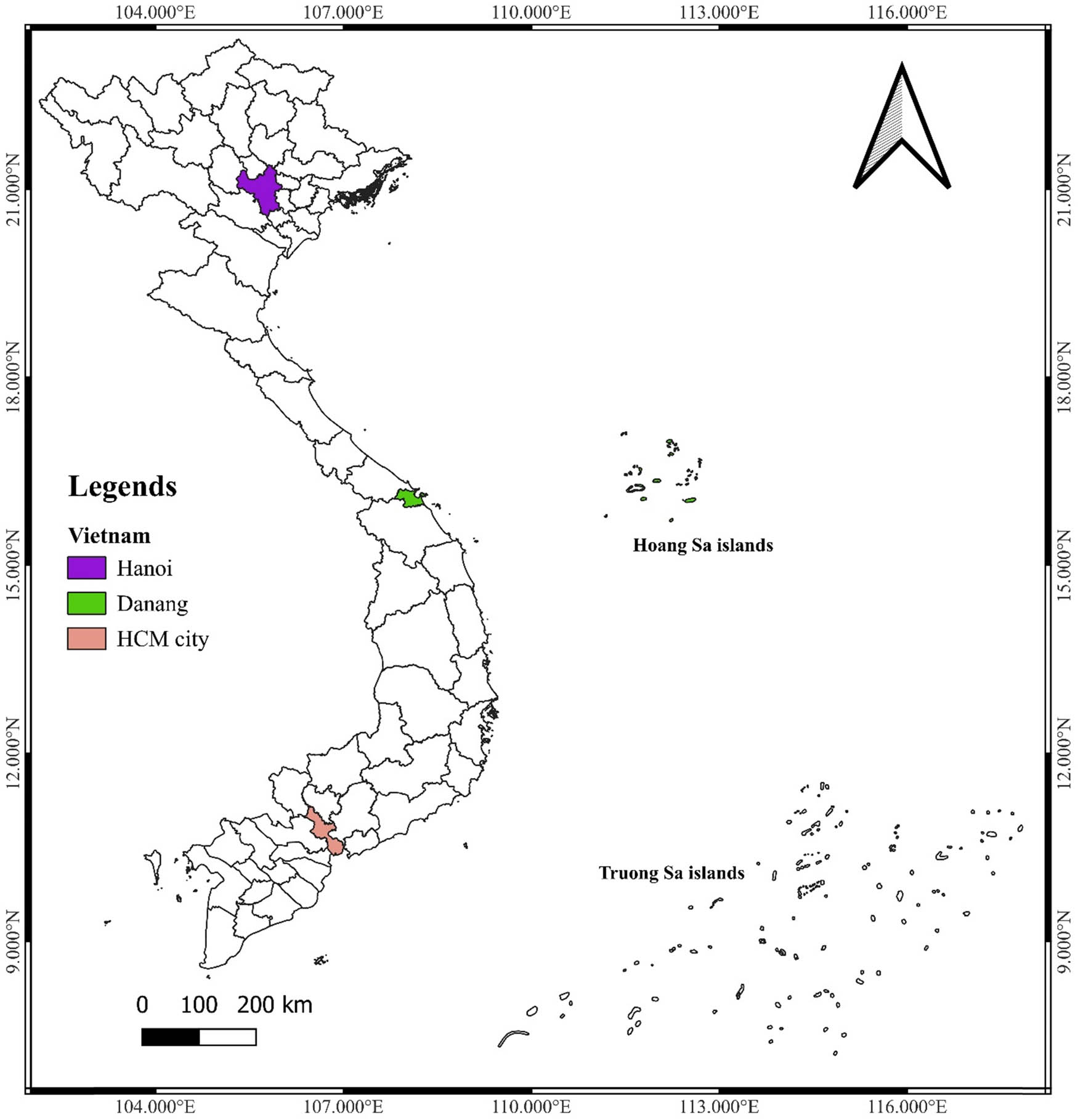
The geographical location of research studies. Source: authors’ compilation, 2023.
Hanoi is the capital and one of two special urban areas of Vietnam. Hanoi is located northwest of the central Red River Delta, with terrain including central plains and mountainous areas to the north and west of the city. In Vietnam, there are 63 administrative divisions at the provincial level; Hanoi, with a size of 3359.82 km² and a population of 8.4 million, is the largest centrally controlled city. It is also the second most populated city and has the second greatest population density. Hanoi is a typical region with a tropical monsoon climate and high humidity. Therefore, this is also the place where the four seasons of Spring, Summer, Fall, and Winter are most clearly expressed during the year. This location has become a well-known tourist destination all over the world because of the thousand-year heritage of civilization that Hanoi possesses. The city has more than 4,000 monuments and beautiful landscapes, including more than 900 nationally ranked monuments, along with a large-scale museum system along with unique and diverse architectural works.
Surrounded by five cities governed centrally, Da Nang is situated in the geographic center of Vietnam. At present, Da Nang city stands as the most populous in the Central region with a recorded tally of 1,134,310 individuals. In terms of urbanization and socio-economic progress, it ranks fourth in the nation, trailing only HCM City, Hanoi, and Hai Phong. Central Vietnam’s Da Nang is a port city situated on the Han River estuary and the East Sea coast, affording it a strategic location. In particular, Da Nang is an important transit gateway for Laos (a landlocked country) and an alternative route to help Thailand and Myanmar access the East Sea. In addition, Da Nang has direct flights to other regional hubs such as Shenzhen, Bangkok, Hong Kong, and Singapore. This is an opportunity for Da Nang to develop a modern logistics cluster and commercial center serving Southeast Asia through road, air, and sea connections.
Located in the geographic heart of Vietnam, HCM City is well-known as a welcoming and vibrant metropolis that serves as a regional and national hub for commerce, culture, education, science, and technology. Attracting substantial quantities of investment capital from abroad, this metropolitan area is the country’s economic engine and home to numerous sophisticated industrial parks; it is also the most populous urban area. Natural advantages have also contributed to HCM City’s rise to prominence as a transportation center for Southeast Asia and Vietnam (Table 1).
Indicators are used for measurement
| Indicators | Definition | Formula | Meaning |
|---|---|---|---|
| 1. Measuring LCL | |||
| Built-up land per resident (
|
Is the area of construction land available for each resident in a defined area |
|
|
| Built-up land per tourist (
|
Is the area of construction land available for each visitor in a defined area |
|
|
| Built-up land per capita (
|
Is the area of construction land available for each person in a defined area |
|
|
|
|||
| 2. Measuring LUE | |||
| Population growth rate | Is the rate of change in the number of residents in a specific area over a certain period of time |
|
|
| Land consumption rate | Is the proportion of land used for a specific purpose |
|
|
| Tourist growth rate | Is the rate of change in the number of visitors visiting a particular location during a specified time period |
|
|
|
|
|||
3.2 Research model and data collection
Figure 2 shows the research model of this article from the research sequence as well as the data collection method. The study collects three main input data: population, total number of tourists, and land area. These data were collected for 3 years, 2010, 2015, and 2020. While data on population and total number of tourists were collected from the General Statistics Office (GSO), data on land area were collected from JAXA. These data can be found in Table A1. Although the GSO collects and publishes data related to land, these data have an inadequacy in that they include approved projects that have not yet been implemented [68]. Therefore, measuring map data through satellite images will be reliable in later data processing. The authors used QGIS software to cut land use maps and calculate construction land data in three research locations over 3 years. After completing the research data collection step, the authors began calculating two indicators measuring LUE and LCL. Specific calculation formulas will be specified in Section 3.3.
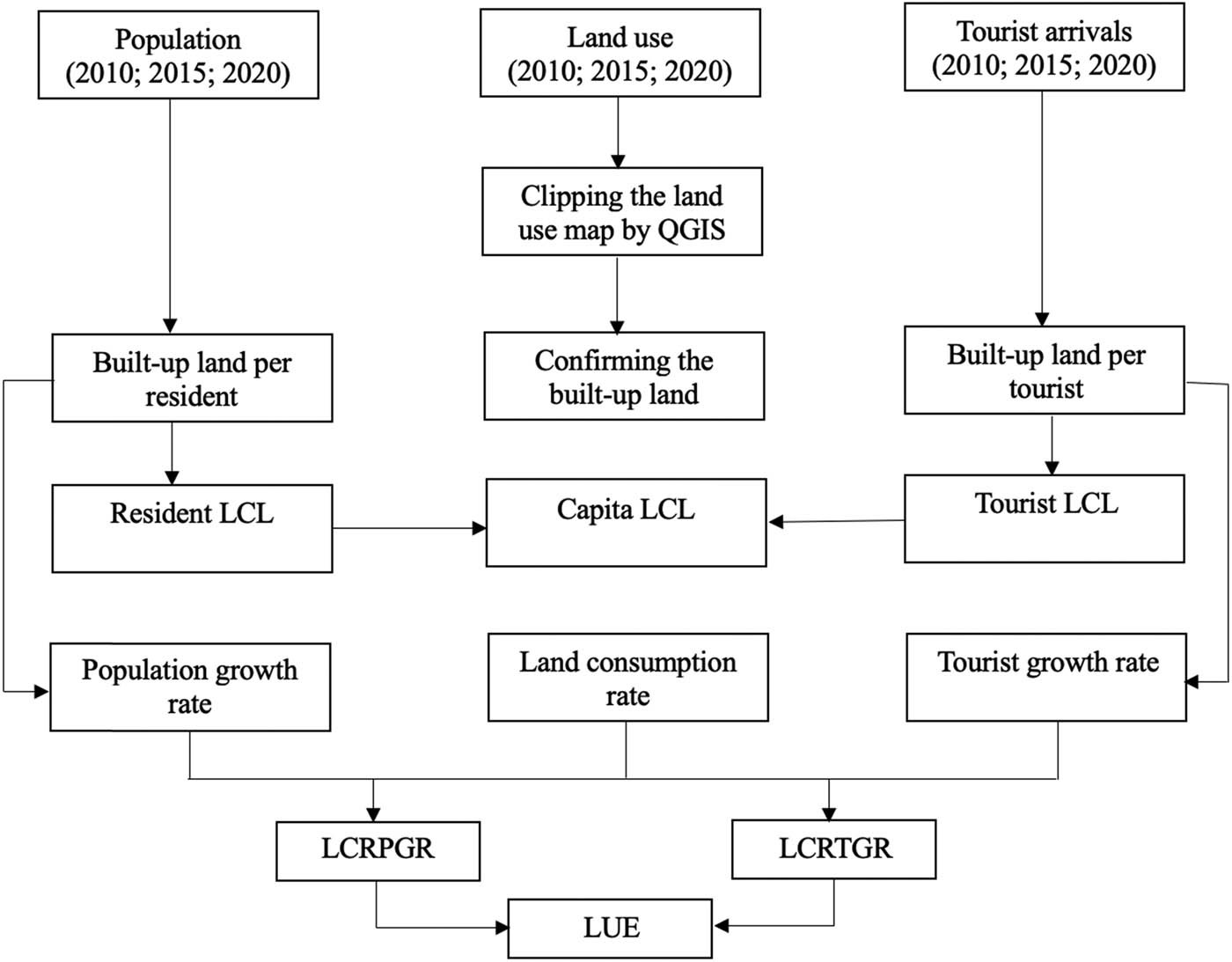
Research model. Source: authors’ compilation, 2023.
3.3 Some formulas to measure LUE and land consumption
This study has two goals: measuring LUE and LCL. Therefore, measurement indicators are calculated based on a number of SDG indicators.
4 Research results
4.1 Measuring LCL
Figure 3 shows the results of the indexes
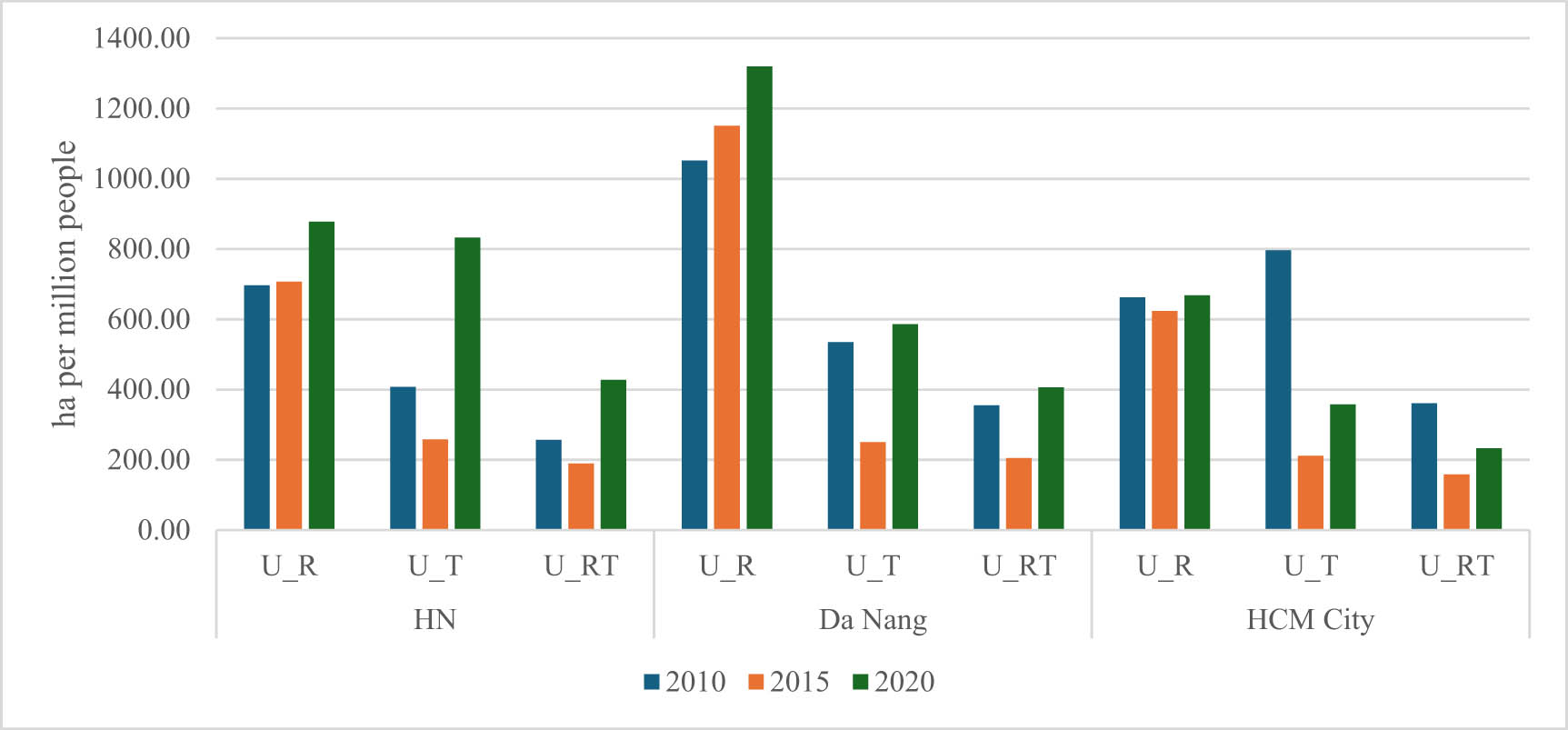
Results of indices:
Table 2 shows the results of land consumption according to three indicators in three localities in two periods: 2010–2015 and 2015–2020. A change in the built-up land area of each resident or tourist during a certain time period is used to determine the amount of land that is consumed by each individual resident or tourist. A larger land consumption per person is shown by positive numbers, while a lower land consumption per person is indicated by negative values. Additionally, the tendency toward decreasing per capita land consumption indicates that certain cities are becoming more compact, while the trend toward growing per capita land consumption indicates that other cities are going to become more wide.
Results of measuring LCL
| Research areas | Indicators | 2010–2015 | 2015–2020 |
|---|---|---|---|
| Hanoi | Resident LCL | 1.52 | 24.18 |
| Tourist LCL | −36.55 | 222.10 | |
| Capita LCL | −26.36 | 125.78 | |
| Da Nang | Resident LCL | 9.39 | 14.61 |
| Tourist LCL | −53.23 | 134.31 | |
| Capita LCL | −42.05 | 97.47 | |
| HCM City | Resident LCL | −5.78 | 7.14 |
| Tourist LCL | −73.44 | 69.28 | |
| Capita LCL | −56.31 | 47.61 |
Source: authors’ calculations, 2023.
The results show that land consumption in the three localities showed more positive signs in the period 2015–2020 compared to the period 2010–2015. In the first stage, the Resident LCL index in Hanoi showed a positive number, in contrast to HCM City’s negative value. The remaining values of this period in all three localities have negative values, while the indicators of land consumption in the period 2015–2020 have positive values. The above results show that the period 2015–2020 shows a more positive sign when compared to the previous 5-year period. In particular, the effectiveness can be clearly seen through the land consumption index for tourism. The reason is explained because 2020 is in the COVID-19 period, and the amount of tourists is not much. This results in land use that appears to be more efficient than before. However, the level of land consumption for residents was also seen in all three localities in two periods, except for HCM City in the period 2010–2015. This result also shows that the increase in construction land area still meets the population increase in all three localities. The increase in Capita LCL value in the next 5 years also shows that cities tend to expand more than in the 5 years of phase 1.
4.2 Measuring LUE
Figure 4 shows the calculation results of LCR, PGR, and TGR indices in three localities through two periods: 2010–2015 and 2015–2020. The results show that all index values are positive except for the TGR index of the period 2015–2020. With the remaining two indices, LCR and PGR, the value of 2015–2020 is higher than the previous 5-year period. The only difference is in the PGR index of HCM City. In contrast, negative numbers suggest a lesser amount of land consumption per person or tourist, whereas positive values indicate a higher amount of land consumption overall. Therefore, the research results show that land consumption is increasing in all three localities, and all three cities are expanding spatially. However, land consumption per capita decreased in all three localities in the period 2015–2020 due to a decrease in tourists.
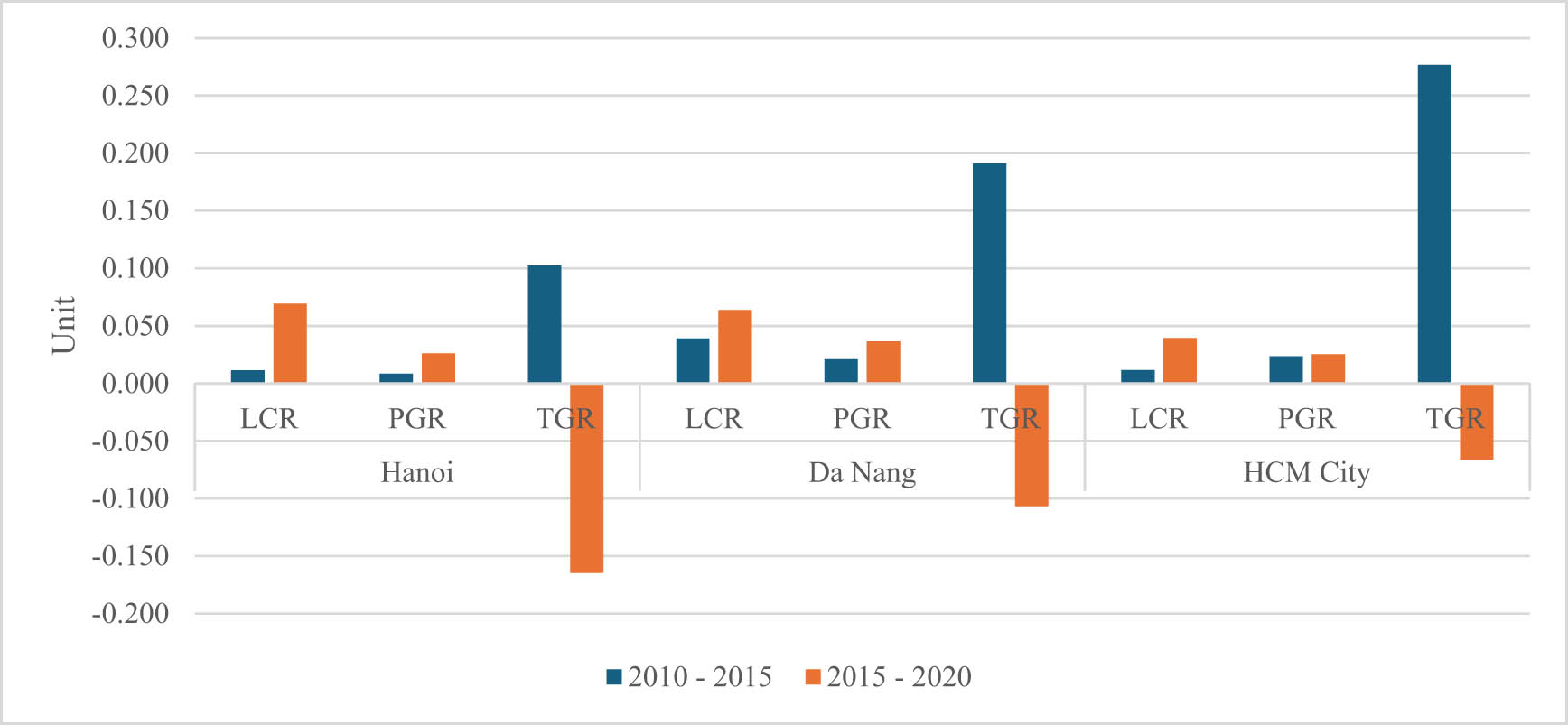
Results of the indices: LCR, PGR, and TGR. Source: authors’ calculations, 2023.
Table 3 shows the results of measuring LUE in Hanoi, Da Nang, and HCM City. That is to see a clear difference when comparing the two indices LCRPGR and LCRTGR, in all three localities through two periods. While in the first 5-year period, all indexes had positive values, the LCRPGR index still showed positive values in the following five years, but the LCRTGR index witnessed the appearance of negative values. Besides, a value between 0 and 1 will show that land use is effective. Therefore, if considering land use separately for each type of people’s livelihood and tourism, only HCM City shows effective land use in the period 2010–2015. However, if we consider the number of tourists as temporary residents who influence the spatial shape of that locality, all three research locations show effective land use. The following five years saw its ineffectiveness due to fewer visitors to these locations due to the COVID-19 pandemic.
Results of measuring LUE
| Research areas | Indicators | 2010–2015 | 2015–2020 |
|---|---|---|---|
| Hanoi | LCRPGR | 1.354 | 2.665 |
| LCRTGR | 0.112 | −0.421 | |
| LUE | 0.104 | −0.5 | |
| Da Nang | LCRPGR | 1.852 | 1.748 |
| LCRTGR | 0.204 | −0.598 | |
| LUE | 0.184 | −0.909 | |
| HCM City | LCRPGR | 0.494 | 1.541 |
| LCRTGR | 0.042 | −0.595 | |
| LUE | 0.039 | −0.968 |
Source: authors’ calculations, 2023.
5 Results and discussion
The strong socio-economic development is helping Vietnam form many new urban areas. From the perspective of tourism development, urban areas are helping the tourism industry have more attractive experience spaces and quality services for tourists. However, the high concentration of tourists, sometimes overloaded, also poses the problem of having effective and sustainable tourism development policies in urban areas. This study has shown some impacts of tourism on the development of urban space in three major Vietnam cities (Hanoi, Da Nang, and HCM City) through measuring LUE. Research results have shown that land consumption in the three localities showed more positive signs in the period 2015–2020 compared to the period 2010–2015. However, LUE witnessed the opposite result when the period 2010–2015 showed more efficiency than the later period.
Research results have shown that if we consider the number of tourists as residents in that locality for a certain period of time, land consumption tends to increase. This leads to the result that all three cities tend to expand more urban than before. This situation raises concerns about uncontrolled growth in urban areas, especially large cities. The expansion of urban space also occurs unevenly among localities. In particular, urban expansion in Vietnam mainly develops in width, with low and dispersed population density. This results in the waste of land and restricts the accumulation of economic wealth. This conclusion is seen to be similar to that of Tan et al. [35]. In addition, this increase has resulted in inefficiencies in land management, planning, and development regulations. It is possible that this will result in the failure to achieve sustainable tourism development. Hence, it is neccesary to pay immediate attention to the process of integrating the various components of the tourism system into the planning of the region using a decentralized management system. If this issue is implemented, it will contribute to solving problems of uneven distribution between urban areas or regions within an urban area. This shows a similar conclusion to the study of Rusu et al. [34].
In addition, the efficiency with which urban land is utilized is another factor that impacts the sustainability of an urban environment. In addition, promoting ecotourism in metropolitan areas is a top priority for the tourism business. When considering the swift urbanization occurring in Vietnam, land is considered the principal resource that drives the overall expansion of urban regions. The development and good management of the land market will have the effect of promoting economic growth through land stimulation measures, such as creating tourist projects or accommodation facilities to develop tourism. However, land resources can be considered a “double-edged sword.” If this resource is managed well, this will be an important factor in promoting sustainable urban development, as well as developing tourism in a sustainable direction. On the other hand, if there is a lack of oversight, it will be simple to build a “real estate bubble,” which would have direct repercussions for the economy and the tourism industry. Therefore, land resources must be utilized rationally and efficiently in order to accomplish the greatest possible ecological, economic, and social benefits.
To ensure sustainable tourism development in urban areas, it is necessary to pay attention to policies for urban development that are specific to tourism. Urban authorities need to develop the management capacity of urban authorities in a green direction and with an understanding of tourism. Outstanding is the responsiveness of urban infrastructure. This is a very important factor in effectively exploiting tourism potential as well as limiting the negative impacts of urban development activities on urban tourism. In addition, local authorities need to actively propagate and raise people’s awareness about land use and conversion of land use purposes, especially for households doing business in tourist accommodation. At the same time, it is resolutely coordinating with local authorities to strictly handle organizations and individuals that violate regulations on land management and use.
This study has compared some of the effects of tourism on the expansion of urban space in three localities with a large number of tourists in Vietnam: Hanoi, Da Nang, and HCM City. The results of this study can be a basis for policymakers and land use planners to refer to land use and management issues in Vietnam. It contributes to sustainable tourism development and especially reasonable land use. However, this study has some shortcomings as the data collected on the number of tourists are not consistent. This is a statistical number for the city, but the number of tourists who regularly stay and visit is mostly in the inner city area. Therefore, for future research, it is recommended that calculations in urban districts will show a higher level of accuracy.
Acknowledgements
To make this article more complete, the authors would like to thank the reviewers’ comments and editing of this work.
-
Funding information: Authors state no funding involved.
-
Author contributions: All authors accepted the responsibility for the content of the manuscript and consented to its submission, reviewed all the results, and approved the final version of the manuscript. TTT: conceptualization, funding acquisition, writing – original draft. TTN: formal analysis, methodology, writing – review and editing. HLP: methodology, writing – review and editing.
-
Conflict of interest: Authors state no conflict of interest.
-
Data availability statement: All data generated or analyzed during this study are included in this published article and its supplementary information files.
Appendix
Research input data
| Categories | Research areas | 2010 | 2015 | 2020 |
|---|---|---|---|---|
| Built-up land (Unit: ha) | Hanoi | 4805.95 | 5091.08 | 7200.27 |
| Da Nang | 947.18 | 1151.25 | 1583.28 | |
| HCM City | 4767.27 | 5052.94 | 6148.73 | |
| Tourists (Unit: million people) | Hanoi | 11.8 | 19.7 | 8.65 |
| Da Nang | 1.77 | 4.6 | 2.7 | |
| HCM City | 5.99 | 23.9 | 17.18 | |
| Population (Unit: million people) | Hanoi | 6.9 | 7.2 | 8.2 |
| Da Nang | 0.9 | 1.0 | 1.2 | |
| HCM City | 7.2 | 8.1 | 9.2 |
Source: GSO and JAXA, 2023.
References
[1] Pratt S, Liu A. Does Tourism really lead to peace? A global view. Int J Tour Res. 2016;18:82–90. 10.1002/jtr.2035.Suche in Google Scholar
[2] Benkovic A, Mejia JF. Tourism as a driver of economic development: The Colombian experience. Schriftenreihe des Promotionsschwerpunkts Globalisierung und Beschäftigung, No. 26/2008. Universität Hohenheim, Stuttg; 2008, https://nbn-resolving.de/urn:nbn:de:bsz:100-opus-4461.10.2139/ssrn.2475871Suche in Google Scholar
[3] Wu T-P, Wu H-C. The link between tourism activities and economic growth: Evidence from China’s provinces. Tour Hosp Res. 2019;19(1):3–14. 10.1177/1467358416683769.Suche in Google Scholar
[4] Rasool H, Maqbool S, Tarique M. The relationship between tourism and economic growth among BRICS countries: a panel cointegration analysis. Future Bus J. 2021;7(1):1. 10.1186/s43093-020-00048-3.Suche in Google Scholar
[5] Rasoolimanesh SM, Seyfi S, Hall CM, Hatamifar P. Understanding memorable toursim experiences and behavioural intentions of heritage tourists. J Dest Mark Manag. 2021;21:100621. 10.1016/j.jdmm.2021.100621.Suche in Google Scholar
[6] Lei WSC, Suntikul W, Chen Z. Tourism development induced social change. Ann Tour Res Empir Insights. 2023;4(1):100088. 10.1016/j.annale.2023.100088.Suche in Google Scholar
[7] Lan F, Huang Q, Zeng L, Guan X, Xing D, Cheng Z. Tourism experience and construction of personalized smart tourism program under tourist psychology. Front Psychol. 2021;12:691183. 10.3389/fpsyg.2021.691183.Suche in Google Scholar PubMed PubMed Central
[8] Cong LC, Thu DA, Thao VT. The compeririveness of small and medium enterprises in the tourism sector: the role of leadership competencies. J Econ Dev. 2021;23(3):299–316. 10.1108/JED-06-2020-0080.Suche in Google Scholar
[9] Tabash MI. The role of tourism sector in economic growth: an empirical evidence from Palestine. Int J Econ Financ Issues. 2017;7(2):103–8.Suche in Google Scholar
[10] Thomamandru A, Espinoza-Maguina M, Ramirez-Asis E, Ray S, Naved M, Guzman-Avalos M. Role of tourism and hospitality business in economic development. Mater Today. 2023;80(3):2901–4. 10.1016/j.matpr.2021.07.059.Suche in Google Scholar
[11] Akbulaev N, Salihova S. Relationship between tourism sector and export: VAR analysis using Kazakhstan as case study. J Int Stud. 2020;13(1):184–95. 10.14254/2071-8330.2020/13-1/12.Suche in Google Scholar
[12] Gnjatović D, Leković M. Contribution of international tourism to export and development performance of Serbia. Tourism in Function of Development of the Republic of Serbia - Spa Tourism in Serbia and Experiences of Other Countries. Vrnjačka Banja, Serbia; 2016. p. 51–66.Suche in Google Scholar
[13] FaladeObalade TA, Dubey S. Managing tourism as a source of revenue and foreign direct investment inflow in a developing Country: The Jordanian experience. Int J Acad Res Econ Manag Sci. 2014;3(3):16–42. 10.6007/IJAREMS/v3-i3/901.Suche in Google Scholar
[14] Matthew OA, Ede C, Osabohien R, Ejemeyovwi J, Ayanda T, Okunbor J. Interaction effect of tourism and foreign exhange earnings on economic growth in Nigeria. Glob Bus Rev. 2021;22(1):7–22. 10.1177/0972150918812985.Suche in Google Scholar
[15] López FS. Unemployment and growth in the tourism sector in Mexico: Revisiting the growth-rate version of okun’s law. Economies. 2019;7(3):83. 10.3390/economies7030083.Suche in Google Scholar
[16] Zhao J, Yang D, Zhao X, Lei M. Tourism industry and employment generation in emerging seven economies: evidence from novel panel methods. Econ Res-Ekonomska Istrazivanja. 2023;36(3):2206471. 10.1080/1331677X.2023.2206471.Suche in Google Scholar
[17] Chou MC. Does tourism development promote economic growth in transition countries? A panel data analysis. Econ Model. 2013;33:226–32. 10.1016/j.econmod.2013.04.024.Suche in Google Scholar
[18] Khan A, Bibi S, Lorenzo A, Lyu J, Babar ZU. Tourism and development in developing economies: a policy implication perspective. Sustainability. 2020;12:1618. 10.3390/su12041618.Suche in Google Scholar
[19] Tung LT. Tourism development in Vietnam: New strategy for a sustainable pathway. Geoj Tour Geosites. 2020;31(3):1174–9. 10.30892/gtg.3311333322--555555.Suche in Google Scholar
[20] Tourist Information Center. Vietnam Tourism – Proud of the 63-year journey of construction and development. DongNai Tourism; 2023. https://mydongnai.vn/en/detailnews/? t = vietnam-tourism-proud-of-the-63year-journey-of-construction-and-development&id = news_1160.Suche in Google Scholar
[21] Vietnam News. Việt Nam strengthens core brand values for sustainable tourism development; 2023. https://vietnamnews.vn/society/1594803/viet-nam-strengthens-core-brand-values-for-sustainable-tourism-development.html.Suche in Google Scholar
[22] Vu HD, Nguyen ATN, Nguyen NTP, Tran DB. Impacts and restoration strategy of the tourism industry post-COVID-19 pandemic: evidence from Vietnam. J Tour Futures. 2022. 10.1108/JTF-09-2021-0218.Suche in Google Scholar
[23] Vietnam National Administration of Tourism; 2020. Vietnam Tourism Annual Report 2019. https://images.vietnamtourism.gov.vn/vn/dmdocuments/2020/E-BCTNDLVN_2019.pdf.Suche in Google Scholar
[24] Hristov M, Hristić ND, Stefanović N. Impact of overtourism on Urban life. Spatium. 2021;45:59–66. 10.2298/SPAT2145059H.Suche in Google Scholar
[25] Salhofer S, Jandric A, Soudachanh S, Xuan TL, Tran TD. Plastic recycling practices in Vietnam and Related hazards for health and the environment. Int J Environ Res Public Health. 2021;18(8):4203. 10.3390/ijerph18084203.Suche in Google Scholar PubMed PubMed Central
[26] Albalate D, Bel G. Tourism and urban public transport: Holding demand pressure under supply constraints. Tour Manag. 2010;31(3):425–33. 10.1016/j.tourman.2009.04.011.Suche in Google Scholar
[27] Xie Y, Zhu Q, Gao G, Zhang L. Study on changes in tourism land and influence factors in mountain areas: A case study of Luanchuan country, China. Global. J Ecol. 2021;6(1):34–45. 10.17352/gje.0000142.Suche in Google Scholar
[28] Tran Tuan N. Shrinking agricultural land and changing livelihoods after land acquisition in Vietnam. Bull Geogr Socio-econ Ser. 2021;53(53):17–32. 10.2478/bog-2021-0020.Suche in Google Scholar
[29] Rodzi NIM, Zaki SA, Subli SMHS. Between tourism and intangible cultural heritage. Procedia-Social Behav Sci. 2013;85:411–20.10.1016/j.sbspro.2013.08.370Suche in Google Scholar
[30] Al-Saad S. The conflicts between sustainable tourism and urban development in the Jerasharchaeological site (Gerasa), Jordan. PhD thesis. Ingolstadt, Abu Dhabi, United Arab Emirates: The Catholic University of Eichstätt; 2016.Suche in Google Scholar
[31] Pham Hong L, Ngo HT, Pham LT. Community-based tourism: Opportunities and challenges a case study in Thanh Ha pottery village, Hoi An city, Vietnam. Cogent Soc Sci. 2021;7(1):1926100. 10.1080/23311886.2021.1926100.Suche in Google Scholar
[32] Kowalczyk-Anioł J. Rethinking tourism-driven urban transformation and social tourism impact: A scenario from a CEE city. Cities. 2023;134:104178. 10.1016/j.cities.2022.104178.Suche in Google Scholar
[33] Ma T, Hong T, Zhang H. Tourism spatial spillover effects and urban economic growth. J Bus Res. 2015;68(1):74–80. 10.1016/j.jbusres.2014.05.005.Suche in Google Scholar
[34] Rusu R, Bodocan V, Man T. Urban sprawl and its impact on urban tourism in Romania. J Balk East Stud. 2020;22(4):521–33. 10.1080/19448953.2020.1775403.Suche in Google Scholar
[35] Tan J, Wang K, Gan C, Ma X. The impacts of tourism development on urban-rural integration: an empirical study undertaken in the Yangtze River Delta Region. Land. 2023;12(7):1365. 10.3390/land12071365.Suche in Google Scholar
[36] Yang W, Chen Q, Dao Y, Huang X, Shao W. Ecological civilization and high-quality development: do tourism industry and technological progress affect ecological economy development? Int J Environ Res Public Health. 2022;20(1):783. 10.3390/ijerph20010783.Suche in Google Scholar PubMed PubMed Central
[37] Camilleri MA. The tourism industry: an overview. Travel Marketing, Tourism Economics and the Airline Product: An Introduction to Theory and Practice. Cham: Springer Nature; 2017. p. 3–27 Ch. 1, 10.1007/978-3-319-49849-2_1.Suche in Google Scholar
[38] WTTC. Economic Impact Research; 2023, https://wttc.org/research/economic-impact.Suche in Google Scholar
[39] Shafieisabet N, Haratifard S. The empowerment of local tourism stakeholders and their perceived environmental effects for participation in sustainable development of tourism. J Hosp Tour Manag. 2020;45:486–98. 10.1016/j.jhtm.2020.10.007.Suche in Google Scholar
[40] Wonbera TW. The socio-economic and environmental impact of tourism industry on people of Arba Minch and its surroundings. J Tour Hosp Sports. 2019;40:2312–5187. 10.7176/JTHS/40-01.Suche in Google Scholar
[41] Zhou Z. Critical shifts in the global tourism industry: perspectives from Africa. Geojournal. 2022;87:1245–64. 10.1007/s10708-020-10297-y.Suche in Google Scholar PubMed PubMed Central
[42] Nguyen QH. Impact of investment in tourism infrastructure development on attracting international visitors: A nonlinear panel ARDL approach using Vietnam’s Data. Economies. 2021;9(3):131. 10.3390/economies9030131.Suche in Google Scholar
[43] Garidzirai R. The role of international tourism on foreign trade in the BRICS nations. Cogent Soc Sci. 2022;8(1):1–11. 10.1080/23311886.2022.2076792.Suche in Google Scholar
[44] Song H, Seetaram N, Ye S. The effect of tourism taxation on tourists’ budget allocation. J Desti Mark Manag. 2019;11:32–9. 10.1016/j.jdmm.2018.12.001.Suche in Google Scholar
[45] Adedoyin FF, Seetaram N, Disegna M, Filis G. The effect of tourism taxation on international arrivals to a small tourism-dependent economy. J Travel Res. 2023;62(1):135–53. 10.1177/00472875211053658.Suche in Google Scholar
[46] Tien NH, Ngoc NM, Anh DBH, Huong ND, Huong NTT, Phuong TNM. Sustainable development of tourism industry in post Covid-19 period in Vietnam. Int J Multidiscip Res Growth Eval. 2020;1(5):88–94.Suche in Google Scholar
[47] Tung LT. Does exchange rate affect the foreign tourist arrivals? Evidence in an emerging tourist market. Manag Sci Lett. 2019;9:1141–52. 10.5267/j.msl.2019.5.001.Suche in Google Scholar
[48] Cannonier C, Burke MG. The economic growth impact of tourism in Small Island Developing States—evidence from the Caribbean. Tour Econ. 2019;25(1):85–108. 10.1177/1354816618792792.Suche in Google Scholar
[49] Shaari MS, Ahmad TST, Razali R. Tourism Led-Inflation: A case of Malaysia. MATEC Web Conf. 2018;150:06026. 10.1051/matecconf/201815006026.Suche in Google Scholar
[50] Çelik AK, Özcan S, Topcuoğl A, Yildirim KE. Effects of the tourism industry on the balance of payments deficit. Anatolia: An Int J Tour Hosp Res. 2013;24(1):86–90. 10.1080/13032917.2013.772529.Suche in Google Scholar
[51] Tahiri A, Kovaci I. The theory of sustainable tourism development. Academic J Bus, Admin Law Soc Sci. 2017;3(1):343–9.Suche in Google Scholar
[52] Godovykh M, Ridderstaat J. Health outcomes of tourism development: A longitudinal study of the impact of tourism arrivals on residents’ health. J Dest Mark Manag. 2020;17:100462. 10.1016/j.jdmm.2020.100462.Suche in Google Scholar
[53] Pham K, Andereck K, Vogt C. Local residents’ perceptions about tourism development. Travel Tour Res Association: Advanc Tour Res Globally. 2019;74:1–12. https://scholarworks.umass.edu/ttra/2019/research_papers/74.Suche in Google Scholar
[54] Mathabathe T. Cultural tourism as a tool for cross-cultural understanding. Educor Multidiscip J. 2019;3(1):173–99.Suche in Google Scholar
[55] Subramaniam Y, Masron TA, Loganathan N. Tourism and income inequality. J Bus Socio-econ Dev. 2022;2(2):181–94. 10.1108/JBSED-07-2021-0102.Suche in Google Scholar
[56] García-Buades ME, García-Sastre MA, Alemany-Hormaeche M. Effects of overtourism, local government, and tourist behavior on residents’ perceptions in Alcúdia (Majorca, Spain). J Outdoor Recreat Tour. 2022;39:100499. 10.1016/j.jort.2022.100499.Suche in Google Scholar
[57] Linderová I, Scholz P, Almeida N. Attitudes of local population towards the impacts of tourism development: evidence from Czechia. Front Psychol. 2021;12:684773. 10.3389/fpsyg.2021.684773.Suche in Google Scholar PubMed PubMed Central
[58] Alamineh GA, Hussein JW, Endaweke Y, Taddesse B. The local communities’ perceptions on the social impact of tourism and its implication for sustainable development in Amhara regional state. Heliyon. 2023;9(6):e17088. 10.1016/j.heliyon.2023.e17088.Suche in Google Scholar PubMed PubMed Central
[59] Koshim A, Sergeyeva A, Kakimzhanov Y, Aktymbayeva A, Sakypbek M, Sapiyeva A. Sustainable development of ecotourism in “Altynemel” National Park, Kazakhstan: Assessment through the perception of residents. Sustainability. 2023;15(11):8496. 10.3390/su15118496.Suche in Google Scholar
[60] Terkenli TS. Research advances in tourism-landscape interrelations: An Editorial. Land. 2021;10(9):944. 10.3390/land10090944.Suche in Google Scholar
[61] Elysia V, Wihadanto A. The impact of poor sanitation on tourism development: A global review. Indonesian J Urban Environ Technol. 2020;3(2):220–31. 10.25105/urbanenvirotech.v3i2.6720.Suche in Google Scholar
[62] Chen Q, Zheng L, Wang Y, Wu D, Li J. A comparative study on urban land use eco-efficiency of Yangtze and Yellow rivers in China: From the perspective of spatiotemporal heterogeneity, spatial transition and driving factors. Ecol Indic. 2023;151:110331. 10.1016/j.ecolind.2023.110331.Suche in Google Scholar
[63] Bunruamkaew K, Murayama Y. Land use and natural resources planning for sustainable ecotourism using GIS in Surat Thani, Thailand. Sustainability. 2012;4(3):412–29. 10.3390/su4030412.Suche in Google Scholar
[64] Pavić L, Pazek K, Pavlovič M. Agritourism. between agriculture and tourism. A ReviewIn book. 3rd International Thematic Monograh – Thematic Proceedings: Modern Management Tools and Economy of Tourism Sector in Present Era; 2018. 10.31410/tmt.2018.243.Suche in Google Scholar
[65] Pandya R, Dev HS, Rai ND, Fletcher R. Rendering land touristifiable: (eco)tourism and land use change. An Int J Tour Space, Place Environ. 2022;25(4):1068–84. 10.1080/14616688.2022.2077425.Suche in Google Scholar
[66] Javan K, Mirabi M, Hamidi SA, Darestani M, Altaee A, Zhou J. Enhancing environmental sustainability in a critical region: climate change impacts on agriculture and tourism. Civ Eng J. 2023;9(11):2630–48. 10.28991/CEJ-2023-09-11-01.Suche in Google Scholar
[67] Quang N. Đà Nẵng, Hà Nội và TP. HCM được chọn là thành phố du lịch hàng đầu Đông Nam Á. Bnews.vn. 2022. https://bnews.vn/da-nang-ha-noi-va-tp-hcm-duoc-chon-la-thanh-pho-du-lich-hang-dau-dong-nam-a/249910.html.Suche in Google Scholar
[68] Tuan NT. Urbanization and land use change: A study in Vietnam. Environ Socio-econ Stud. 2022;10(2):19–29. 10.1016/j.jdmm.2020.100462.Suche in Google Scholar
[69] UN-HABITAT. Metadata on SDGs Indicator 11.3.1 Indicator category: Tier II. United Nations Human Settlement Program. Nairobi; 2018a. https://unhabitat.org/sites/default/files/2020/07/metadata_on_sdg_indicator_11.3.1.pdf.Suche in Google Scholar
[70] UN-HABITAT. SDG Indicator 11.3.1 Training Module: Land Use Efficiency. United Nations Human Settlement Programme (UN-Habitat). Nairobi; 2018b. https://unhabitat.org/sites/default/files/2021/08/indicator_11.3.1_training_module_land_use_efficiency.pdf.Suche in Google Scholar
© 2024 the author(s), published by De Gruyter
This work is licensed under the Creative Commons Attribution 4.0 International License.
Artikel in diesem Heft
- Regular Articles
- Supplementation of P-solubilizing purple nonsulfur bacteria, Rhodopseudomonas palustris improved soil fertility, P nutrient, growth, and yield of Cucumis melo L.
- Yield gap variation in rice cultivation in Indonesia
- Effects of co-inoculation of indole-3-acetic acid- and ammonia-producing bacteria on plant growth and nutrition, soil elements, and the relationships of soil microbiomes with soil physicochemical parameters
- Impact of mulching and planting time on spring-wheat (Triticum aestivum) growth: A combined field experiment and empirical modeling approach
- Morphological diversity, correlation studies, and multiple-traits selection for yield and yield components of local cowpea varieties
- Participatory on-farm evaluation of new orange-fleshed sweetpotato varieties in Southern Ethiopia
- Yield performance and stability analysis of three cultivars of Gayo Arabica coffee across six different environments
- Biology of Spodoptera frugiperda (Lepidoptera: Noctuidae) on different types of plants feeds: Potency as a pest on various agricultural plants
- Antidiabetic activity of methanolic extract of Hibiscus sabdariffa Linn. fruit in alloxan-induced Swiss albino diabetic mice
- Bioinformatics investigation of the effect of volatile and non-volatile compounds of rhizobacteria in inhibiting late embryogenesis abundant protein that induces drought tolerance
- Nicotinamide as a biostimulant improves soybean growth and yield
- Farmer’s willingness to accept the sustainable zoning-based organic farming development plan: A lesson from Sleman District, Indonesia
- Uncovering hidden determinants of millennial farmers’ intentions in running conservation agriculture: An application of the Norm Activation Model
- Mediating role of leadership and group capital between human capital component and sustainability of horticultural agribusiness institutions in Indonesia
- Biochar technology to increase cassava crop productivity: A study of sustainable agriculture on degraded land
- Effect of struvite on the growth of green beans on Mars and Moon regolith simulants
- UrbanAgriKG: A knowledge graph on urban agriculture and its embeddings
- Provision of loans and credit by cocoa buyers under non-price competition: Cocoa beans market in Ghana
- Effectiveness of micro-dosing of lime on selected chemical properties of soil in Banja District, North West, Ethiopia
- Effect of weather, nitrogen fertilizer, and biostimulators on the root size and yield components of Hordeum vulgare
- Effects of selected biostimulants on qualitative and quantitative parameters of nine cultivars of the genus Capsicum spp.
- Growth, yield, and secondary metabolite responses of three shallot cultivars at different watering intervals
- Design of drainage channel for effective use of land on fully mechanized sugarcane plantations: A case study at Bone Sugarcane Plantation
- Technical feasibility and economic benefit of combined shallot seedlings techniques in Indonesia
- Control of Meloidogyne javanica in banana by endophytic bacteria
- Comparison of important quality components of red-flesh kiwifruit (Actinidia chinensis) in different locations
- Efficiency of rice farming in flood-prone areas of East Java, Indonesia
- Comparative analysis of alpine agritourism in Trentino, Tyrol, and South Tyrol: Regional variations and prospects
- Detection of Fusarium spp. infection in potato (Solanum tuberosum L.) during postharvest storage through visible–near-infrared and shortwave–near-infrared reflectance spectroscopy
- Forage yield, seed, and forage qualitative traits evaluation by determining the optimal forage harvesting stage in dual-purpose cultivation in safflower varieties (Carthamus tinctorius L.)
- The influence of tourism on the development of urban space: Comparison in Hanoi, Danang, and Ho Chi Minh City
- Optimum intra-row spacing and clove size for the economical production of garlic (Allium sativum L.) in Northwestern Highlands of Ethiopia
- The role of organic rice farm income on farmer household welfare: Evidence from Yogyakarta, Indonesia
- Exploring innovative food in a developing country: Edible insects as a sustainable option
- Genotype by environment interaction and performance stability of common bean (Phaseolus vulgaris L.) cultivars grown in Dawuro zone, Southwestern Ethiopia
- Factors influencing green, environmentally-friendly consumer behaviour
- Factors affecting coffee farmers’ access to financial institutions: The case of Bandung Regency, Indonesia
- Morphological and yield trait-based evaluation and selection of chili (Capsicum annuum L.) genotypes suitable for both summer and winter seasons
- Sustainability analysis and decision-making strategy for swamp buffalo (Bubalus bubalis carabauesis) conservation in Jambi Province, Indonesia
- Understanding factors affecting rice purchasing decisions in Indonesia: Does rice brand matter?
- An implementation of an extended theory of planned behavior to investigate consumer behavior on hygiene sanitation-certified livestock food products
- Information technology adoption in Indonesia’s small-scale dairy farms
- Draft genome of a biological control agent against Bipolaris sorokiniana, the causal phytopathogen of spot blotch in wheat (Triticum turgidum L. subsp. durum): Bacillus inaquosorum TSO22
- Assessment of the recurrent mutagenesis efficacy of sesame crosses followed by isolation and evaluation of promising genetic resources for use in future breeding programs
- Fostering cocoa industry resilience: A collaborative approach to managing farm gate price fluctuations in West Sulawesi, Indonesia
- Field investigation of component failures for selected farm machinery used in small rice farming operations
- Near-infrared technology in agriculture: Rapid, simultaneous, and non-destructive determination of inner quality parameters on intact coffee beans
- The synergistic application of sucrose and various LED light exposures to enhance the in vitro growth of Stevia rebaudiana (Bertoni)
- Weather index-based agricultural insurance for flower farmers: Willingness to pay, sales, and profitability perspectives
- Meta-analysis of dietary Bacillus spp. on serum biochemical and antioxidant status and egg quality of laying hens
- Biochemical characterization of trypsin from Indonesian skipjack tuna (Katsuwonus pelamis) viscera
- Determination of C-factor for conventional cultivation and soil conservation technique used in hop gardens
- Empowering farmers: Unveiling the economic impacts of contract farming on red chilli farmers’ income in Magelang District, Indonesia
- Evaluating salt tolerance in fodder crops: A field experiment in the dry land
- Labor productivity of lowland rice (Oryza sativa L.) farmers in Central Java Province, Indonesia
- Cropping systems and production assessment in southern Myanmar: Informing strategic interventions
- The effect of biostimulants and red mud on the growth and yield of shallots in post-unlicensed gold mining soil
- Effects of dietary Adansonia digitata L. (baobab) seed meal on growth performance and carcass characteristics of broiler chickens: A systematic review and meta-analysis
- Analysis and structural characterization of the vid-pisco market
- Pseudomonas fluorescens SP007s enhances defense responses against the soybean bacterial pustule caused by Xanthomonas axonopodis pv. glycines
- A brief investigation on the prospective of co-composted biochar as a fertilizer for Zucchini plants cultivated in arid sandy soil
- Supply chain efficiency of red chilies in the production center of Sleman Indonesia based on performance measurement system
- Investment development path for developed economies: Is agriculture different?
- Power relations among actors in laying hen business in Indonesia: A MACTOR analysis
- High-throughput digital imaging and detection of morpho-physiological traits in tomato plants under drought
- Converting compression ignition engine to dual-fuel (diesel + CNG) engine and experimentally investigating its performance and emissions
- Structuration, risk management, and institutional dynamics in resolving palm oil conflicts
- Spacing strategies for enhancing drought resilience and yield in maize agriculture
- Composition and quality of winter annual agrestal and ruderal herbages of two different land-use types
- Investigating Spodoptera spp. diversity, percentage of attack, and control strategies in the West Java, Indonesia, corn cultivation
- Yield stability of biofertilizer treatments to soybean in the rainy season based on the GGE biplot
- Evaluating agricultural yield and economic implications of varied irrigation depths on maize yield in semi-arid environments, at Birfarm, Upper Blue Nile, Ethiopia
- Chemometrics for mapping the spatial nitrate distribution on the leaf lamina of fenugreek grown under varying nitrogenous fertilizer doses
- Pomegranate peel ethanolic extract: A promising natural antioxidant, antimicrobial agent, and novel approach to mitigate rancidity in used edible oils
- Transformative learning and engagement with organic farming: Lessons learned from Indonesia
- Tourism in rural areas as a broader concept: Some insights from the Portuguese reality
- Assessment enhancing drought tolerance in henna (Lawsonia inermis L.) ecotypes through sodium nitroprusside foliar application
- Edible insects: A survey about perceptions regarding possible beneficial health effects and safety concerns among adult citizens from Portugal and Romania
- Phenological stages analysis in peach trees using electronic nose
- Harvest date and salicylic acid impact on peanut (Arachis hypogaea L.) properties under different humidity conditions
- Hibiscus sabdariffa L. petal biomass: A green source of nanoparticles of multifarious potential
- Use of different vegetation indices for the evaluation of the kinetics of the cherry tomato (Solanum lycopersicum var. cerasiforme) growth based on multispectral images by UAV
- First evidence of microplastic pollution in mangrove sediments and its ingestion by coral reef fish: Case study in Biawak Island, Indonesia
- Physical and textural properties and sensory acceptability of wheat bread partially incorporated with unripe non-commercial banana cultivars
- Cereibacter sphaeroides ST16 and ST26 were used to solubilize insoluble P forms to improve P uptake, growth, and yield of rice in acidic and extreme saline soil
- Avocado peel by-product in cattle diets and supplementation with oregano oil and effects on production, carcass, and meat quality
- Optimizing inorganic blended fertilizer application for the maximum grain yield and profitability of bread wheat and food barley in Dawuro Zone, Southwest Ethiopia
- The acceptance of social media as a channel of communication and livestock information for sheep farmers
- Adaptation of rice farmers to aging in Thailand
- Combined use of improved maize hybrids and nitrogen application increases grain yield of maize, under natural Striga hermonthica infestation
- From aquatic to terrestrial: An examination of plant diversity and ecological shifts
- Statistical modelling of a tractor tractive performance during ploughing operation on a tropical Alfisol
- Participation in artisanal diamond mining and food security: A case study of Kasai Oriental in DR Congo
- Assessment and multi-scenario simulation of ecosystem service values in Southwest China’s mountainous and hilly region
- Analysis of agricultural emissions and economic growth in Europe in search of ecological balance
- Bacillus thuringiensis strains with high insecticidal activity against insect larvae of the orders Coleoptera and Lepidoptera
- Technical efficiency of sugarcane farming in East Java, Indonesia: A bootstrap data envelopment analysis
- Comparison between mycobiota diversity and fungi and mycotoxin contamination of maize and wheat
- Evaluation of cultivation technology package and corn variety based on agronomy characters and leaf green indices
- Exploring the association between the consumption of beverages, fast foods, sweets, fats, and oils and the risk of gastric and pancreatic cancers: Findings from case–control study
- Phytochemical composition and insecticidal activity of Acokanthera oblongifolia (Hochst.) Benth & Hook.f. ex B.D.Jacks. extract on life span and biological aspects of Spodoptera littoralis (Biosd.)
- Land use management solutions in response to climate change: Case study in the central coastal areas of Vietnam
- Evaluation of coffee pulp as a feed ingredient for ruminants: A meta-analysis
- Interannual variations of normalized difference vegetation index and potential evapotranspiration and their relationship in the Baghdad area
- Harnessing synthetic microbial communities with nitrogen-fixing activity to promote rice growth
- Agronomic and economic benefits of rice–sweetpotato rotation in lowland rice cropping systems in Uganda
- Response of potato tuber as an effect of the N-fertilizer and paclobutrazol application in medium altitude
- Bridging the gap: The role of geographic proximity in enhancing seed sustainability in Bandung District
- Evaluation of Abrams curve in agricultural sector using the NARDL approach
- Challenges and opportunities for young farmers in the implementation of the Rural Development Program 2014–2020 of the Republic of Croatia
- Yield stability of ten common bean (Phaseolus vulgaris L.) genotypes at different sowing dates in Lubumbashi, South-East of DR Congo
- Effects of encapsulation and combining probiotics with different nitrate forms on methane emission and in vitro rumen fermentation characteristics
- Phytochemical analysis of Bienertia sinuspersici extract and its antioxidant and antimicrobial activities
- Evaluation of relative drought tolerance of grapevines by leaf fluorescence parameters
- Yield assessment of new streak-resistant topcross maize hybrids in Benin
- Improvement of cocoa powder properties through ultrasonic- and microwave-assisted alkalization
- Potential of ecoenzymes made from nutmeg (Myristica fragrans) leaf and pulp waste as bioinsecticides for Periplaneta americana
- Analysis of farm performance to realize the sustainability of organic cabbage vegetable farming in Getasan Semarang, Indonesia
- Revealing the influences of organic amendment-derived dissolved organic matter on growth and nutrient accumulation in lettuce seedlings (Lactuca sativa L.)
- Identification of viruses infecting sweetpotato (Ipomoea batatas Lam.) in Benin
- Assessing the soil physical and chemical properties of long-term pomelo orchard based on tree growth
- Investigating access and use of digital tools for agriculture among rural farmers: A case study of Nkomazi Municipality, South Africa
- Does sex influence the impact of dietary vitD3 and UVB light on performance parameters and welfare indicators of broilers?
- Design of intelligent sprayer control for an autonomous farming drone using a multiclass support vector machine
- Deciphering salt-responsive NB-ARC genes in rice transcriptomic data: A bioinformatics approach with gene expression validation
- Review Articles
- Impact of nematode infestation in livestock production and the role of natural feed additives – A review
- Role of dietary fats in reproductive, health, and nutritional benefits in farm animals: A review
- Climate change and adaptive strategies on viticulture (Vitis spp.)
- The false tiger of almond, Monosteira unicostata (Hemiptera: Tingidae): Biology, ecology, and control methods
- A systematic review on potential analogy of phytobiomass and soil carbon evaluation methods: Ethiopia insights
- A review of storage temperature and relative humidity effects on shelf life and quality of mango (Mangifera indica L.) fruit and implications for nutrition insecurity in Ethiopia
- Green extraction of nutmeg (Myristica fragrans) phytochemicals: Prospective strategies and roadblocks
- Potential influence of nitrogen fertilizer rates on yield and yield components of carrot (Dacus carota L.) in Ethiopia: Systematic review
- Corn silk: A promising source of antimicrobial compounds for health and wellness
- State and contours of research on roselle (Hibiscus sabdariffa L.) in Africa
- The potential of phosphorus-solubilizing purple nonsulfur bacteria in agriculture: Present and future perspectives
- Minor millets: Processing techniques and their nutritional and health benefits
- Meta-analysis of reproductive performance of improved dairy cattle under Ethiopian environmental conditions
- Review on enhancing the efficiency of fertilizer utilization: Strategies for optimal nutrient management
- The nutritional, phytochemical composition, and utilisation of different parts of maize: A comparative analysis
- Motivations for farmers’ participation in agri-environmental scheme in the EU, literature review
- Evolution of climate-smart agriculture research: A science mapping exploration and network analysis
- Short Communications
- Music enrichment improves the behavior and leukocyte profile of dairy cattle
- Effect of pruning height and organic fertilization on the morphological and productive characteristics of Moringa oleifera Lam. in the Peruvian dry tropics
- Corrigendum
- Corrigendum to “Bioinformatics investigation of the effect of volatile and non-volatile compounds of rhizobacteria in inhibiting late embryogenesis abundant protein that induces drought tolerance”
- Corrigendum to “Composition and quality of winter annual agrestal and ruderal herbages of two different land-use types”
- Special issue: Smart Agriculture System for Sustainable Development: Methods and Practices
- Construction of a sustainable model to predict the moisture content of porang powder (Amorphophallus oncophyllus) based on pointed-scan visible near-infrared spectroscopy
- FruitVision: A deep learning based automatic fruit grading system
- Energy harvesting and ANFIS modeling of a PVDF/GO-ZNO piezoelectric nanogenerator on a UAV
- Effects of stress hormones on digestibility and performance in cattle: A review
- Special Issue of The 4th International Conference on Food Science and Engineering (ICFSE) 2022 - Part II
- Assessment of omega-3 and omega-6 fatty acid profiles and ratio of omega-6/omega-3 of white eggs produced by laying hens fed diets enriched with omega-3 rich vegetable oil
- Special Issue on FCEM - International Web Conference on Food Choice & Eating Motivation - Part II
- Special Issue on FCEM – International Web Conference on Food Choice & Eating Motivation: Message from the editor
- Fruit and vegetable consumption: Study involving Portuguese and French consumers
- Knowledge about consumption of milk: Study involving consumers from two European Countries – France and Portugal
Artikel in diesem Heft
- Regular Articles
- Supplementation of P-solubilizing purple nonsulfur bacteria, Rhodopseudomonas palustris improved soil fertility, P nutrient, growth, and yield of Cucumis melo L.
- Yield gap variation in rice cultivation in Indonesia
- Effects of co-inoculation of indole-3-acetic acid- and ammonia-producing bacteria on plant growth and nutrition, soil elements, and the relationships of soil microbiomes with soil physicochemical parameters
- Impact of mulching and planting time on spring-wheat (Triticum aestivum) growth: A combined field experiment and empirical modeling approach
- Morphological diversity, correlation studies, and multiple-traits selection for yield and yield components of local cowpea varieties
- Participatory on-farm evaluation of new orange-fleshed sweetpotato varieties in Southern Ethiopia
- Yield performance and stability analysis of three cultivars of Gayo Arabica coffee across six different environments
- Biology of Spodoptera frugiperda (Lepidoptera: Noctuidae) on different types of plants feeds: Potency as a pest on various agricultural plants
- Antidiabetic activity of methanolic extract of Hibiscus sabdariffa Linn. fruit in alloxan-induced Swiss albino diabetic mice
- Bioinformatics investigation of the effect of volatile and non-volatile compounds of rhizobacteria in inhibiting late embryogenesis abundant protein that induces drought tolerance
- Nicotinamide as a biostimulant improves soybean growth and yield
- Farmer’s willingness to accept the sustainable zoning-based organic farming development plan: A lesson from Sleman District, Indonesia
- Uncovering hidden determinants of millennial farmers’ intentions in running conservation agriculture: An application of the Norm Activation Model
- Mediating role of leadership and group capital between human capital component and sustainability of horticultural agribusiness institutions in Indonesia
- Biochar technology to increase cassava crop productivity: A study of sustainable agriculture on degraded land
- Effect of struvite on the growth of green beans on Mars and Moon regolith simulants
- UrbanAgriKG: A knowledge graph on urban agriculture and its embeddings
- Provision of loans and credit by cocoa buyers under non-price competition: Cocoa beans market in Ghana
- Effectiveness of micro-dosing of lime on selected chemical properties of soil in Banja District, North West, Ethiopia
- Effect of weather, nitrogen fertilizer, and biostimulators on the root size and yield components of Hordeum vulgare
- Effects of selected biostimulants on qualitative and quantitative parameters of nine cultivars of the genus Capsicum spp.
- Growth, yield, and secondary metabolite responses of three shallot cultivars at different watering intervals
- Design of drainage channel for effective use of land on fully mechanized sugarcane plantations: A case study at Bone Sugarcane Plantation
- Technical feasibility and economic benefit of combined shallot seedlings techniques in Indonesia
- Control of Meloidogyne javanica in banana by endophytic bacteria
- Comparison of important quality components of red-flesh kiwifruit (Actinidia chinensis) in different locations
- Efficiency of rice farming in flood-prone areas of East Java, Indonesia
- Comparative analysis of alpine agritourism in Trentino, Tyrol, and South Tyrol: Regional variations and prospects
- Detection of Fusarium spp. infection in potato (Solanum tuberosum L.) during postharvest storage through visible–near-infrared and shortwave–near-infrared reflectance spectroscopy
- Forage yield, seed, and forage qualitative traits evaluation by determining the optimal forage harvesting stage in dual-purpose cultivation in safflower varieties (Carthamus tinctorius L.)
- The influence of tourism on the development of urban space: Comparison in Hanoi, Danang, and Ho Chi Minh City
- Optimum intra-row spacing and clove size for the economical production of garlic (Allium sativum L.) in Northwestern Highlands of Ethiopia
- The role of organic rice farm income on farmer household welfare: Evidence from Yogyakarta, Indonesia
- Exploring innovative food in a developing country: Edible insects as a sustainable option
- Genotype by environment interaction and performance stability of common bean (Phaseolus vulgaris L.) cultivars grown in Dawuro zone, Southwestern Ethiopia
- Factors influencing green, environmentally-friendly consumer behaviour
- Factors affecting coffee farmers’ access to financial institutions: The case of Bandung Regency, Indonesia
- Morphological and yield trait-based evaluation and selection of chili (Capsicum annuum L.) genotypes suitable for both summer and winter seasons
- Sustainability analysis and decision-making strategy for swamp buffalo (Bubalus bubalis carabauesis) conservation in Jambi Province, Indonesia
- Understanding factors affecting rice purchasing decisions in Indonesia: Does rice brand matter?
- An implementation of an extended theory of planned behavior to investigate consumer behavior on hygiene sanitation-certified livestock food products
- Information technology adoption in Indonesia’s small-scale dairy farms
- Draft genome of a biological control agent against Bipolaris sorokiniana, the causal phytopathogen of spot blotch in wheat (Triticum turgidum L. subsp. durum): Bacillus inaquosorum TSO22
- Assessment of the recurrent mutagenesis efficacy of sesame crosses followed by isolation and evaluation of promising genetic resources for use in future breeding programs
- Fostering cocoa industry resilience: A collaborative approach to managing farm gate price fluctuations in West Sulawesi, Indonesia
- Field investigation of component failures for selected farm machinery used in small rice farming operations
- Near-infrared technology in agriculture: Rapid, simultaneous, and non-destructive determination of inner quality parameters on intact coffee beans
- The synergistic application of sucrose and various LED light exposures to enhance the in vitro growth of Stevia rebaudiana (Bertoni)
- Weather index-based agricultural insurance for flower farmers: Willingness to pay, sales, and profitability perspectives
- Meta-analysis of dietary Bacillus spp. on serum biochemical and antioxidant status and egg quality of laying hens
- Biochemical characterization of trypsin from Indonesian skipjack tuna (Katsuwonus pelamis) viscera
- Determination of C-factor for conventional cultivation and soil conservation technique used in hop gardens
- Empowering farmers: Unveiling the economic impacts of contract farming on red chilli farmers’ income in Magelang District, Indonesia
- Evaluating salt tolerance in fodder crops: A field experiment in the dry land
- Labor productivity of lowland rice (Oryza sativa L.) farmers in Central Java Province, Indonesia
- Cropping systems and production assessment in southern Myanmar: Informing strategic interventions
- The effect of biostimulants and red mud on the growth and yield of shallots in post-unlicensed gold mining soil
- Effects of dietary Adansonia digitata L. (baobab) seed meal on growth performance and carcass characteristics of broiler chickens: A systematic review and meta-analysis
- Analysis and structural characterization of the vid-pisco market
- Pseudomonas fluorescens SP007s enhances defense responses against the soybean bacterial pustule caused by Xanthomonas axonopodis pv. glycines
- A brief investigation on the prospective of co-composted biochar as a fertilizer for Zucchini plants cultivated in arid sandy soil
- Supply chain efficiency of red chilies in the production center of Sleman Indonesia based on performance measurement system
- Investment development path for developed economies: Is agriculture different?
- Power relations among actors in laying hen business in Indonesia: A MACTOR analysis
- High-throughput digital imaging and detection of morpho-physiological traits in tomato plants under drought
- Converting compression ignition engine to dual-fuel (diesel + CNG) engine and experimentally investigating its performance and emissions
- Structuration, risk management, and institutional dynamics in resolving palm oil conflicts
- Spacing strategies for enhancing drought resilience and yield in maize agriculture
- Composition and quality of winter annual agrestal and ruderal herbages of two different land-use types
- Investigating Spodoptera spp. diversity, percentage of attack, and control strategies in the West Java, Indonesia, corn cultivation
- Yield stability of biofertilizer treatments to soybean in the rainy season based on the GGE biplot
- Evaluating agricultural yield and economic implications of varied irrigation depths on maize yield in semi-arid environments, at Birfarm, Upper Blue Nile, Ethiopia
- Chemometrics for mapping the spatial nitrate distribution on the leaf lamina of fenugreek grown under varying nitrogenous fertilizer doses
- Pomegranate peel ethanolic extract: A promising natural antioxidant, antimicrobial agent, and novel approach to mitigate rancidity in used edible oils
- Transformative learning and engagement with organic farming: Lessons learned from Indonesia
- Tourism in rural areas as a broader concept: Some insights from the Portuguese reality
- Assessment enhancing drought tolerance in henna (Lawsonia inermis L.) ecotypes through sodium nitroprusside foliar application
- Edible insects: A survey about perceptions regarding possible beneficial health effects and safety concerns among adult citizens from Portugal and Romania
- Phenological stages analysis in peach trees using electronic nose
- Harvest date and salicylic acid impact on peanut (Arachis hypogaea L.) properties under different humidity conditions
- Hibiscus sabdariffa L. petal biomass: A green source of nanoparticles of multifarious potential
- Use of different vegetation indices for the evaluation of the kinetics of the cherry tomato (Solanum lycopersicum var. cerasiforme) growth based on multispectral images by UAV
- First evidence of microplastic pollution in mangrove sediments and its ingestion by coral reef fish: Case study in Biawak Island, Indonesia
- Physical and textural properties and sensory acceptability of wheat bread partially incorporated with unripe non-commercial banana cultivars
- Cereibacter sphaeroides ST16 and ST26 were used to solubilize insoluble P forms to improve P uptake, growth, and yield of rice in acidic and extreme saline soil
- Avocado peel by-product in cattle diets and supplementation with oregano oil and effects on production, carcass, and meat quality
- Optimizing inorganic blended fertilizer application for the maximum grain yield and profitability of bread wheat and food barley in Dawuro Zone, Southwest Ethiopia
- The acceptance of social media as a channel of communication and livestock information for sheep farmers
- Adaptation of rice farmers to aging in Thailand
- Combined use of improved maize hybrids and nitrogen application increases grain yield of maize, under natural Striga hermonthica infestation
- From aquatic to terrestrial: An examination of plant diversity and ecological shifts
- Statistical modelling of a tractor tractive performance during ploughing operation on a tropical Alfisol
- Participation in artisanal diamond mining and food security: A case study of Kasai Oriental in DR Congo
- Assessment and multi-scenario simulation of ecosystem service values in Southwest China’s mountainous and hilly region
- Analysis of agricultural emissions and economic growth in Europe in search of ecological balance
- Bacillus thuringiensis strains with high insecticidal activity against insect larvae of the orders Coleoptera and Lepidoptera
- Technical efficiency of sugarcane farming in East Java, Indonesia: A bootstrap data envelopment analysis
- Comparison between mycobiota diversity and fungi and mycotoxin contamination of maize and wheat
- Evaluation of cultivation technology package and corn variety based on agronomy characters and leaf green indices
- Exploring the association between the consumption of beverages, fast foods, sweets, fats, and oils and the risk of gastric and pancreatic cancers: Findings from case–control study
- Phytochemical composition and insecticidal activity of Acokanthera oblongifolia (Hochst.) Benth & Hook.f. ex B.D.Jacks. extract on life span and biological aspects of Spodoptera littoralis (Biosd.)
- Land use management solutions in response to climate change: Case study in the central coastal areas of Vietnam
- Evaluation of coffee pulp as a feed ingredient for ruminants: A meta-analysis
- Interannual variations of normalized difference vegetation index and potential evapotranspiration and their relationship in the Baghdad area
- Harnessing synthetic microbial communities with nitrogen-fixing activity to promote rice growth
- Agronomic and economic benefits of rice–sweetpotato rotation in lowland rice cropping systems in Uganda
- Response of potato tuber as an effect of the N-fertilizer and paclobutrazol application in medium altitude
- Bridging the gap: The role of geographic proximity in enhancing seed sustainability in Bandung District
- Evaluation of Abrams curve in agricultural sector using the NARDL approach
- Challenges and opportunities for young farmers in the implementation of the Rural Development Program 2014–2020 of the Republic of Croatia
- Yield stability of ten common bean (Phaseolus vulgaris L.) genotypes at different sowing dates in Lubumbashi, South-East of DR Congo
- Effects of encapsulation and combining probiotics with different nitrate forms on methane emission and in vitro rumen fermentation characteristics
- Phytochemical analysis of Bienertia sinuspersici extract and its antioxidant and antimicrobial activities
- Evaluation of relative drought tolerance of grapevines by leaf fluorescence parameters
- Yield assessment of new streak-resistant topcross maize hybrids in Benin
- Improvement of cocoa powder properties through ultrasonic- and microwave-assisted alkalization
- Potential of ecoenzymes made from nutmeg (Myristica fragrans) leaf and pulp waste as bioinsecticides for Periplaneta americana
- Analysis of farm performance to realize the sustainability of organic cabbage vegetable farming in Getasan Semarang, Indonesia
- Revealing the influences of organic amendment-derived dissolved organic matter on growth and nutrient accumulation in lettuce seedlings (Lactuca sativa L.)
- Identification of viruses infecting sweetpotato (Ipomoea batatas Lam.) in Benin
- Assessing the soil physical and chemical properties of long-term pomelo orchard based on tree growth
- Investigating access and use of digital tools for agriculture among rural farmers: A case study of Nkomazi Municipality, South Africa
- Does sex influence the impact of dietary vitD3 and UVB light on performance parameters and welfare indicators of broilers?
- Design of intelligent sprayer control for an autonomous farming drone using a multiclass support vector machine
- Deciphering salt-responsive NB-ARC genes in rice transcriptomic data: A bioinformatics approach with gene expression validation
- Review Articles
- Impact of nematode infestation in livestock production and the role of natural feed additives – A review
- Role of dietary fats in reproductive, health, and nutritional benefits in farm animals: A review
- Climate change and adaptive strategies on viticulture (Vitis spp.)
- The false tiger of almond, Monosteira unicostata (Hemiptera: Tingidae): Biology, ecology, and control methods
- A systematic review on potential analogy of phytobiomass and soil carbon evaluation methods: Ethiopia insights
- A review of storage temperature and relative humidity effects on shelf life and quality of mango (Mangifera indica L.) fruit and implications for nutrition insecurity in Ethiopia
- Green extraction of nutmeg (Myristica fragrans) phytochemicals: Prospective strategies and roadblocks
- Potential influence of nitrogen fertilizer rates on yield and yield components of carrot (Dacus carota L.) in Ethiopia: Systematic review
- Corn silk: A promising source of antimicrobial compounds for health and wellness
- State and contours of research on roselle (Hibiscus sabdariffa L.) in Africa
- The potential of phosphorus-solubilizing purple nonsulfur bacteria in agriculture: Present and future perspectives
- Minor millets: Processing techniques and their nutritional and health benefits
- Meta-analysis of reproductive performance of improved dairy cattle under Ethiopian environmental conditions
- Review on enhancing the efficiency of fertilizer utilization: Strategies for optimal nutrient management
- The nutritional, phytochemical composition, and utilisation of different parts of maize: A comparative analysis
- Motivations for farmers’ participation in agri-environmental scheme in the EU, literature review
- Evolution of climate-smart agriculture research: A science mapping exploration and network analysis
- Short Communications
- Music enrichment improves the behavior and leukocyte profile of dairy cattle
- Effect of pruning height and organic fertilization on the morphological and productive characteristics of Moringa oleifera Lam. in the Peruvian dry tropics
- Corrigendum
- Corrigendum to “Bioinformatics investigation of the effect of volatile and non-volatile compounds of rhizobacteria in inhibiting late embryogenesis abundant protein that induces drought tolerance”
- Corrigendum to “Composition and quality of winter annual agrestal and ruderal herbages of two different land-use types”
- Special issue: Smart Agriculture System for Sustainable Development: Methods and Practices
- Construction of a sustainable model to predict the moisture content of porang powder (Amorphophallus oncophyllus) based on pointed-scan visible near-infrared spectroscopy
- FruitVision: A deep learning based automatic fruit grading system
- Energy harvesting and ANFIS modeling of a PVDF/GO-ZNO piezoelectric nanogenerator on a UAV
- Effects of stress hormones on digestibility and performance in cattle: A review
- Special Issue of The 4th International Conference on Food Science and Engineering (ICFSE) 2022 - Part II
- Assessment of omega-3 and omega-6 fatty acid profiles and ratio of omega-6/omega-3 of white eggs produced by laying hens fed diets enriched with omega-3 rich vegetable oil
- Special Issue on FCEM - International Web Conference on Food Choice & Eating Motivation - Part II
- Special Issue on FCEM – International Web Conference on Food Choice & Eating Motivation: Message from the editor
- Fruit and vegetable consumption: Study involving Portuguese and French consumers
- Knowledge about consumption of milk: Study involving consumers from two European Countries – France and Portugal
