Tourism in rural areas as a broader concept: Some insights from the Portuguese reality
-
Raquel Nunes Tenreiro


Abstract
For sustainable rural development, the complementarity between the socioeconomic activities developed in rural areas is fundamental to create synergies and economic dynamics with positive externalities for the populations in less favoured spaces. The great challenge for the rural regions is the creation of attractive employment to avoid the desertification of these areas and the respective consequences. Some of the impacts of the rural exodus are related to the agroforestry activities abandonment and the increase of biomass in the respective land which, in certain circumstances, is fuel for forest fires. Tourism in rural areas/space (TRA/S) may contribute significantly to improving the complementarity among activities in less favoured spaces and promoting sustainability in mentioned areas. From this perspective, this research aims to explore dimensions associated with TRA/S, highlighting the main contributions from the scientific literature and showing that it can be considered, in some contexts, a broader concept than the concept of rural tourism. To achieve these objectives, first a systematic review based on metrics from the bibliometric analysis was carried out, considering 165 documents found in the Scopus database in a search performed on 19 March 2024 for the following topics and conditions: “tourism in rural areas” or “tourism in rural space.” Then, statistics on the Portuguese reality are presented and analysed, highlighting evidence of the context in Portugal. The findings obtained from the systematic review and bibliometric analysis show the importance of this economic activity for the rural regions and reveal some gaps in the literature that may be considered in future studies, namely the following: the links between tourism in rural areas and economic dynamics should be further developed, further address the interconnection between TRA/S dynamics and the Sustainable Development Goals, and more knowledge about the particularities of each Portuguese context. The statistical analysis of the Portuguese context shows that tourism in rural areas has benefited from the pandemic; it seems that tourists have discovered this form of tourism.
1 Introduction
Tourism in rural areas/space (TRA/S) is an important economic sector [1] that has grown in importance over the last decade in some contexts [2] and can be considered as a link between different economic activities [3]. From this perspective, this tourism is fundamental for balanced development in less favoured regions and has its relevance as an economic sector within the global economy and within the dynamics of tourism.
The literature highlights the different relationships of TRA/S worldwide, such as in the following frameworks: Spanish [4], French [5], Dutch [6], Polish [7,8,9], and Romanian [10,11,12]. These are just a few examples of the interlinkages of tourism in rural geographies around the world, among many others.
Specifically in Portugal, the asymmetric development among rural and urban spaces is a concern, particularly for public institutions, because of the consequences of this unbalanced development. TRA/S may play a crucial role in promoting more economic dynamics in the less favoured regions. There are several examples highlighted by the scientific literature about the different dimensions of TRA/S in Portugal. Some of these examples are presented in the following. Some of the studies show the contributions of these activities to the creation of local employment and socioeconomic synergies. Tourism in rural spaces is, in fact, interrelated with the economic development in rural regions [13], because it can be a complement of agriculture and small industry and may contribute to a more integrated growth of the rural regions [14].
The research found in the literature related to rural tourism for Portuguese realities focuses, for example, on the following topics: nature-based tourism in the Aldeia da Pedralva [15], Ways of Saint James in the interior north of Portugal [16], artisans and rural tourism [17], entrepreneurship and rural tourism in Alto Alentejo [18], entrepreneurship and sustainable tourism [19], the different needs of rural tourists in the centre and north of Portugal [20], rural tourism and COVID-19 [21], Schist Villages Network in the centre of Portugal [22], rural tourism in coastal areas [23], cultural tourism with the dream houses built by Portuguese that emigrated in other times [24], rural tourism demand [25], renewable energy in rural tourism [26], and tourism in rural space and the cultural heritage preservation [27].
There are not so many studies about TRA/S considering bibliometric analysis, which justifies the research presented here for these topics and considering metrics from the scientific literature to carry out a systematic review. A study developed by a team of researchers from Dubai (UAE) and Bangladesh [28] considered bibliometric analysis and systematic review for topics related to rural tourism but with other approaches. Other scientific contributions focused on the definitions and challenges [29]. Our perspective is to consider this concept (TRA/S) as a broader approach than rural tourism, although sometimes these two expressions are used as similar. For example, Portuguese legislation in 1997 considered tourism in rural areas as encompassing the following modalities [30]: residential tourism, rural tourism, agro-tourism, village tourism, and country houses. The approaches taken into account in this research contribute to bringing added value to the scientific context. Other documents considered the rural tourism topic for bibliometric analyses related to the following issues: rural tourism research [31], community-based tourism [32], perceptions related to rural tourism [33], rural tourism complexity [34], sustainable tourism [35], rural tourism and rural development [36], nature-based tourism [37], tendencies in the literature about rural tourism [38], Romanian framework [39], and agritourism [40].
The reality described before reveals that there is still a field to be explored about tourism in rural areas in Portugal. Conversely, not many studies consider tourism in rural areas as a broader concept than rural tourism and explore it through bibliometric analysis. In addition, the literature shows the importance of bringing more insights into the reality in Portugal. In this framework, this study aims to highlight dimensions from the scientific literature and statistical information about TRA/S that may be considered as benchmarks of and for the Portuguese dynamics in these topics. These insights may be used as support for the different stakeholders, including the scientific community for future research. This study analyses the scenario of TRA/S worldwide, highlighting the specific case of Portugal in these realities.
The great novelty and added value of this research is to highlight that TRA/S is not the same as rural tourism and that it makes sense to highlight and analyse the concept of TRA/S as a broader approach. Conversely, the new dynamics brought about by climate change [41] and the COVID-19 pandemic [42] have created new challenges and opportunities that are also worth analysing and exploring in this research.
In addition to this introduction, this study is structured in five more sections. Section 2 presents the material and methods, Section 3 presents the bibliometric analysis, Section 4 presents the systematic review, Section 5 presents the presentation and analysis of the Portuguese context, and Section 6 presents the discussion and main conclusions.
2 Materials and methods
To achieve the aims proposed, a systematic review was carried out following the PRISMA statement [43] based on metrics from the bibliometric analysis [44]. For the bibliometric analysis, the procedures proposed by the software VOSviewer [45,46,47,48] were followed. For this bibliometric analysis and systematic review, 165 documents were considered from a search performed on 19 March 2024 (without any restriction for the period of time) in the Scopus [49] database for the following topics: “tourism in rural areas” or “tourism in rural space.” To highlight the Portuguese reality, a set of statistical information is presented and analysed.
In the following section for bibliometric analysis, the results for author keywords items (considering co-occurrence links) and for the following items, taking into account bibliographic coupling links, will be presented: authors, countries, organisations, and sources. Figures highlight the items with the highest number of occurrences (for the author keywords) and of documents (for the items of the bibliographic coupling links). The dimension of the circles and labels in the figures is related to the number of these attributes. Tables present the top 20 items with the highest average normalised citations (average normalised number of citations obtained by the documents in which a keyword appears or the average normalised number of citations obtained by the documents published by a source, an author, an organisation, or a country). The normalisation corrects the impact of time on the number of citations documents have. In addition to the average normalised citations, tables also show other attributes, such as occurrences (the number of documents in which a keyword appears), documents (the number of documents produced by a source, an author, an organisation, or a country), total link strength (total strength of the links of an item with others), average publication year (the average publication year of the documents in which a keyword appears or the average publication year of the documents produced by a source, an author, an organisation, or a country), and average citations (the average number of citations obtained by the documents in which a keyword or a term appears or the average number of citations received by the documents produced by a source, an author, an organisation, or a country). This and other information can be found in the VOSviewer manual [47].
The methodology followed can be summarised in the following points:
General review of the literature;
Bibliometric analysis of 165 documents obtained from the Scopus database, on 19 March 2024, for the topics “tourism in rural areas” or “tourism in rural space”;
Systematic review of the top 20 documents with the highest normalised citations (considering the results of the bibliometric analysis);
Analysis of the Portuguese context.
3 Bibliometric assessment based on bibliographic data
Considering co-occurrence links, Figure 1 reveals that the author keywords with the highest number of occurrences are the following: rural tourism, tourism, rural areas, tourism in rural areas, sustainability, rural development, and cultural tourism. Conversely, Table 1 shows that the author keywords with the highest average normalised citations are, for example, rural settlements, sustainable rural development index (SRDI), tourism recovery, creativity, smart mobility, smart tourism, rural innovation, and cultural learning. These findings highlight, for example, the relationships of tourism in rural areas with the sustainability, culture, creativity, and new technologies associated with the digital transition.
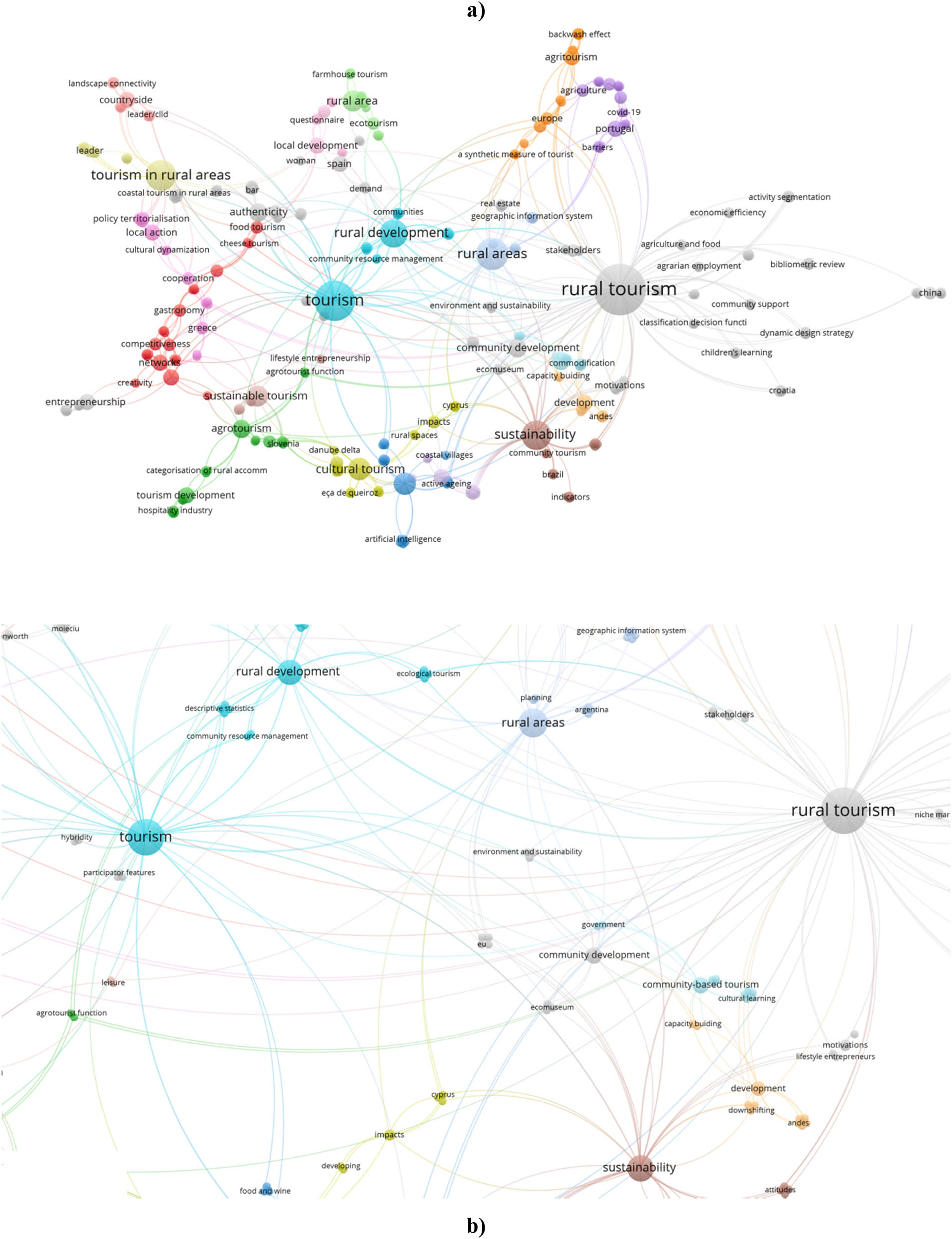
Author keywords items, considering full counting (as counting method), for the topics “tourism in rural areas” or “tourism in rural space” and co-occurrence links. (a) Full network and (b) network around the items with the highest number of occurrences. Source: Own elaboration.
Top 20 author keywords with the highest average normalised citations, considering full counting (as counting method), for the topics “tourism in rural areas” or “tourism in rural space” and co-occurrence links
| Author keywords | Total link strength | Occurrences | Average publication year | Average citations | Average normalised citations |
|---|---|---|---|---|---|
| Rural settlements | 5 | 1 | 2019 | 65 | 7.395 |
| Serbia | 5 | 1 | 2019 | 65 | 7.395 |
| SRDI | 5 | 1 | 2019 | 65 | 7.395 |
| Covid-19 | 4 | 1 | 2022 | 56 | 7.385 |
| Tourism recovery | 4 | 1 | 2022 | 56 | 7.385 |
| Creativity | 3 | 1 | 2019 | 57 | 6.485 |
| Indicators | 4 | 1 | 2023 | 9 | 6.429 |
| Smart mobility | 4 | 1 | 2023 | 9 | 6.429 |
| Smart rural community | 4 | 1 | 2023 | 9 | 6.429 |
| Smart tourism | 4 | 1 | 2023 | 9 | 6.429 |
| Lifestyle entrepreneurs | 4 | 1 | 2020 | 78 | 6.078 |
| Management practices | 4 | 1 | 2020 | 78 | 6.078 |
| Domestic tourism | 8 | 2 | 2018 | 54 | 4.976 |
| Environment and sustainability | 5 | 1 | 2016 | 60 | 4.404 |
| Rural innovation | 5 | 1 | 2016 | 60 | 4.404 |
| Social capital | 5 | 1 | 2016 | 60 | 4.404 |
| Motivations | 6 | 2 | 2017 | 56 | 4.399 |
| Commodification | 5 | 1 | 2018 | 43 | 3.671 |
| Creative tourism | 5 | 1 | 2018 | 43 | 3.671 |
| Cultural learning | 5 | 1 | 2018 | 43 | 3.671 |
Source: Own elaboration.
Taking into account bibliographic coupling links and authors as items, Figure 2 highlights Elisabeth Kastenholz and Manuela Blapp as the most productive researchers. When considering the average normalised citations (Table 2), the top 5 authors are the following: Miroljub Milinčić, Dušan Ristić, Danijela Vukoičić, Ricardo Bento, and Alexandre Guedes. These results reveal that the most productive authors are not those with the highest impact on the scientific communities. Portugal and Italy are among the countries of affiliation with the biggest values for the number of documents and average normalised citations (Figure 3 and Table 3). The College of Urban and Environmental Sciences (China) and Breda University of Applied Sciences (Netherlands) are the organisations with the biggest number of documents (Figure 4), and organisations from Portugal are those with the biggest average normalised citations (Table 4). Finally, Sustainability and Tourism Management are the sources with the greatest number of documents (Figure 5), and Land Use Policy, International Journal of Entrepreneurship Behaviour and Research, Technology in Society, Journal of Hospitability and Tourism Management, and Current Issues in Tourism are those with greatest average normalised citations (Table 5). These findings show the differences in the production of documents and the impact of scientific results between researchers. Conversely, the results obtained reveal that the Portuguese scientific community have made a significant contribution to knowledge related to the topics discussed here.
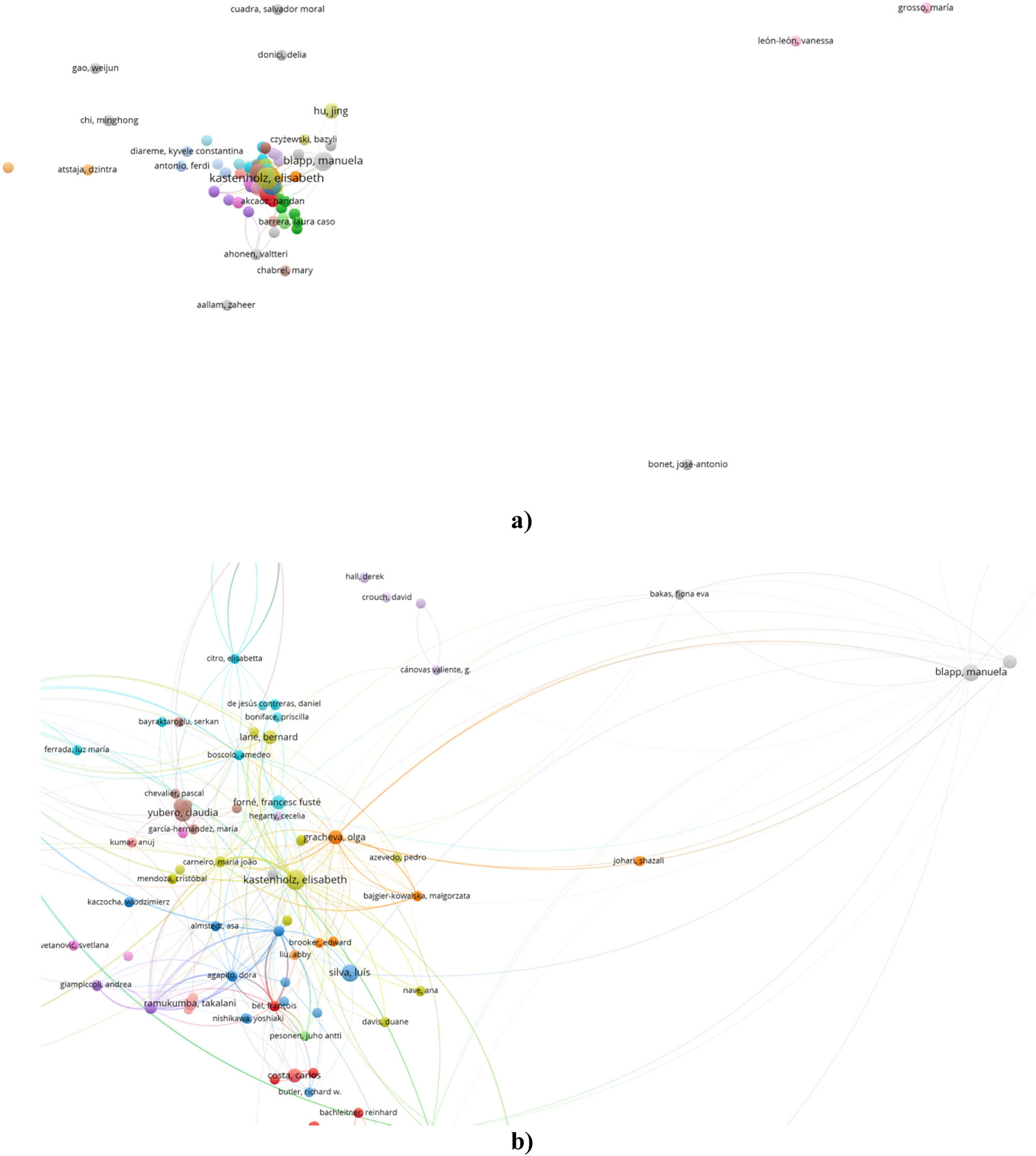
Authors items, considering full counting (as counting method), for the topics “tourism in rural areas” or “tourism in rural space” and bibliographic coupling links. (a) Full network and (b) network around the items with the highest number of documents. Source: Own elaboration.
Top 20 authors with the highest average normalised citations, considering full counting (as counting method), for the topics “tourism in rural areas” or “tourism in rural space” and bibliographic coupling links
| Authors | Total link strength | Documents | Average publication year | Average citations | Average normalised citations |
|---|---|---|---|---|---|
| Milinčić, Miroljub | 160 | 1 | 2019 | 65 | 7.395 |
| Ristić, Dušan | 160 | 1 | 2019 | 65 | 7.395 |
| Vukoičić, Danijela | 160 | 1 | 2019 | 65 | 7.395 |
| Bento, Ricardo | 31 | 1 | 2022 | 56 | 7.385 |
| Guedes, Alexandre | 31 | 1 | 2022 | 56 | 7.385 |
| Marques, Carlos Peixeira | 31 | 1 | 2022 | 56 | 7.385 |
| Bakas, Fiona Eva | 174 | 1 | 2019 | 57 | 6.485 |
| Duxbury, Nancy | 174 | 1 | 2019 | 57 | 6.485 |
| Vinagre de Castro, Tiago | 174 | 1 | 2019 | 57 | 6.485 |
| Ahonen, Valtteri | 303 | 1 | 2023 | 9 | 6.429 |
| Hussain, Shahid | 303 | 1 | 2023 | 9 | 6.429 |
| Karasu, Taha | 303 | 1 | 2023 | 9 | 6.429 |
| Leviäkangas, Pekka | 303 | 1 | 2023 | 9 | 6.429 |
| Carneiro, Maria João | 347 | 1 | 2020 | 78 | 6.078 |
| Cunha, Conceição | 347 | 1 | 2020 | 78 | 6.078 |
| Citro, Elisabetta | 181 | 1 | 2016 | 60 | 4.404 |
| Quaranta, Giovanni | 181 | 1 | 2016 | 60 | 4.404 |
| Salvia, Rosanna | 181 | 1 | 2016 | 60 | 4.404 |
| Coelho, Celeste | 96 | 1 | 2012 | 86 | 4.300 |
| Farsani, Neda T. | 96 | 1 | 2012 | 86 | 4.300 |
Source: Own elaboration.
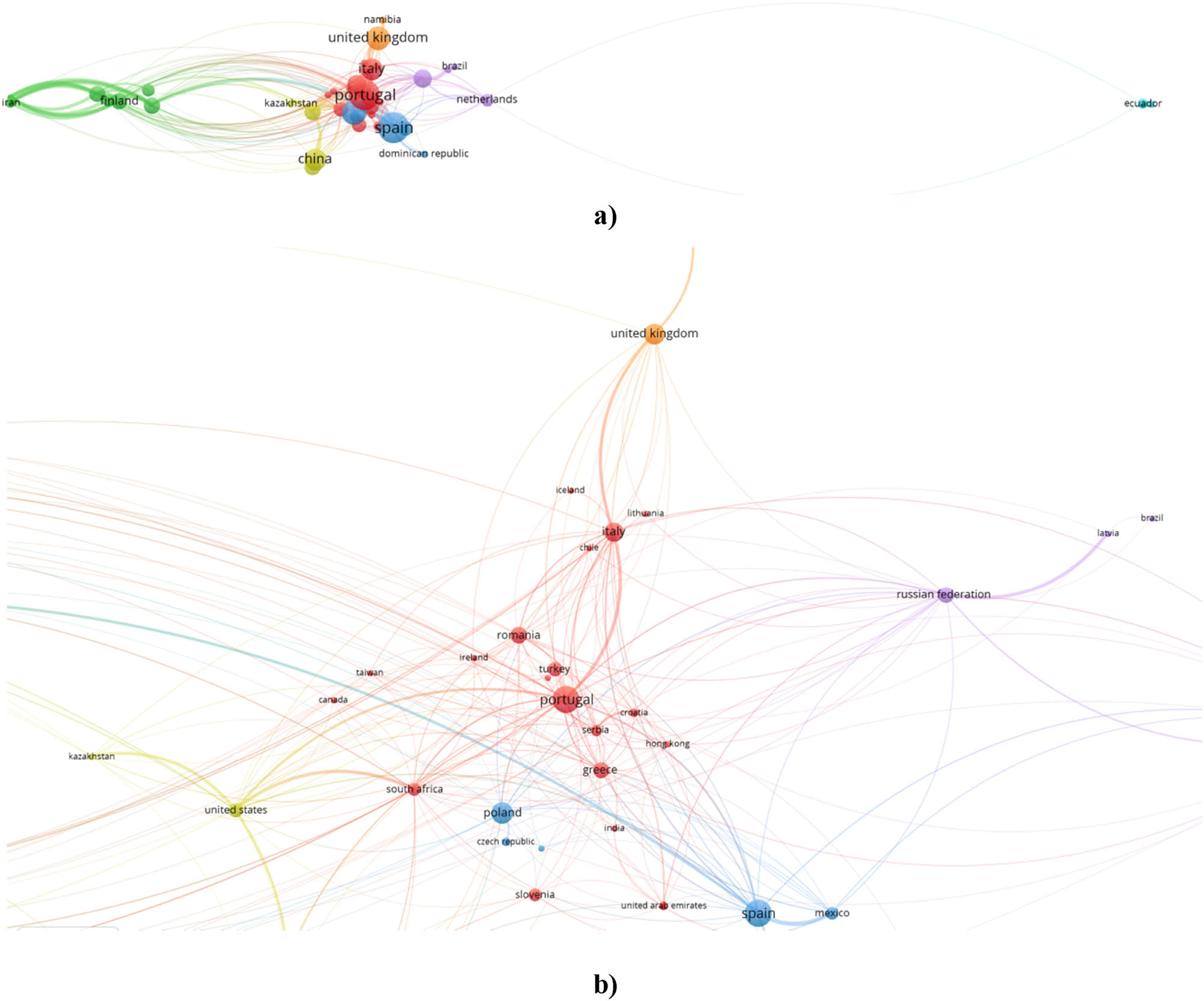
Countries items, considering full counting (as counting method), for the topics “tourism in rural areas” or “tourism in rural space” and bibliographic coupling links. (a) Full network and (b) network around the items with the highest number of documents. Source: Own elaboration.
Top 20 countries with the highest average normalised citations, considering full counting (as counting method), for the topics “tourism in rural areas” or “tourism in rural space” and bibliographic coupling links
| Countries | Total link strength | Documents | Average publication year | Average citations | Average normalised citations |
|---|---|---|---|---|---|
| Serbia | 102 | 3 | 2020 | 22 | 2.503 |
| Portugal | 326 | 17 | 2018 | 30 | 2.202 |
| Iceland | 5 | 1 | 2018 | 23 | 1.963 |
| Finland | 498 | 5 | 2019 | 8 | 1.896 |
| Namibia | 48 | 1 | 1998 | 25 | 1.852 |
| Italy | 268 | 9 | 2021 | 11 | 1.456 |
| Netherlands | 57 | 3 | 2019 | 16 | 1.375 |
| United States | 360 | 5 | 2011 | 54 | 1.316 |
| Latvia | 99 | 1 | 2020 | 16 | 1.247 |
| United Kingdom | 158 | 10 | 2003 | 62 | 1.177 |
| Chile | 18 | 1 | 2021 | 5 | 1.129 |
| Cyprus | 6 | 1 | 2021 | 5 | 1.129 |
| Canada | 12 | 1 | 2014 | 22 | 1.086 |
| India | 13 | 1 | 2024 | 0 | 1.000 |
| Taiwan | 16 | 1 | 2006 | 130 | 1.000 |
| Sweden | 469 | 3 | 2017 | 15 | 0.922 |
| South Africa | 170 | 4 | 2019 | 11 | 0.902 |
| Argentina | 2 | 1 | 2018 | 10 | 0.854 |
| Indonesia | 24 | 3 | 2022 | 2 | 0.853 |
| Japan | 90 | 5 | 2018 | 9 | 0.803 |
Source: Own elaboration.
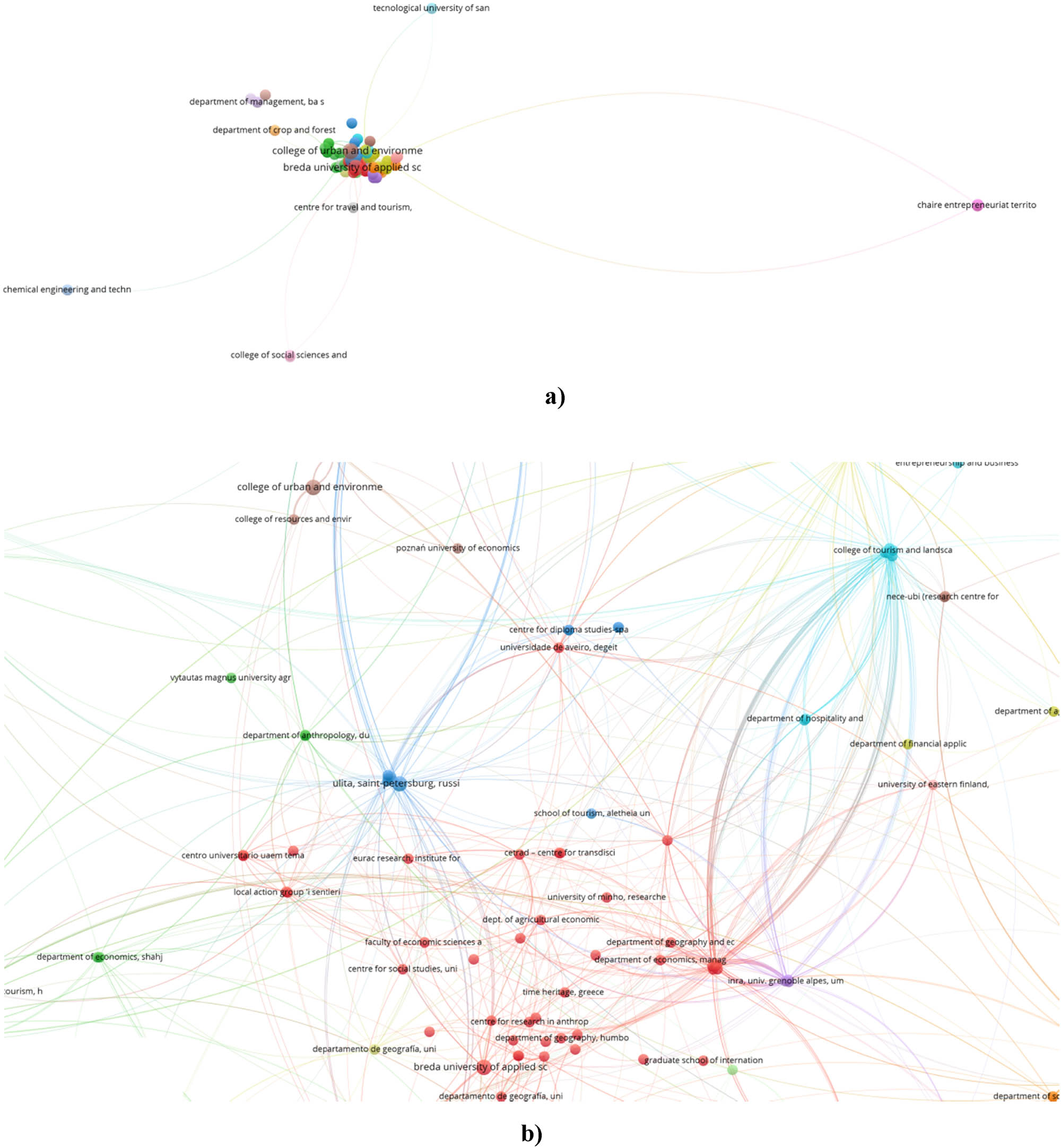
Organisations items, considering full counting (as counting method), for the topics “tourism in rural areas” or “tourism in rural space” and bibliographic coupling links. (a) Full network and (b) network around the items with the highest number of documents. Source: Own elaboration.
Top 20 organisations with the highest average normalised citations, considering full counting (as counting method), for the topics “tourism in rural areas” or “tourism in rural space” and bibliographic coupling links
| Organisations | Total link strength | Documents | Average publication year | Average citations | Average normalised citations |
|---|---|---|---|---|---|
| University in Priština – Kosovska Mitrovica, Faculty of Natural Sciences and Mathematics, Department of Geography, Lole Ribara 29, Kosovska, Mitrovica, 38220, Serbia | 86 | 1 | 2019 | 65 | 7.395 |
| University of Belgrade, Faculty of Geography, Studentski Trg 3/3, Belgrade, 11000, Serbia | 86 | 1 | 2019 | 65 | 7.395 |
| CETRAD – Centre for Transdisciplinary Development Studies, DE – Department of Engineering, UTAD – University of Trás-os-Montes and Alto Douro, Vila Real, Portugal | 16 | 1 | 2022 | 56 | 7.385 |
| CETRAD – Centre for Transdisciplinary Development Studies, DESG – Department of Economics, Sociology and Management, UTAD – University of Trás-os-Montes and Alto Douro, Vila Real, Portugal | 16 | 1 | 2022 | 56 | 7.385 |
| Centre for Social Studies, Universidade de Coimbra, Coimbra, Portugal | 16 | 1 | 2019 | 57 | 6.485 |
| Civil Engineering, University of Oulu, Finland | 15 | 1 | 2023 | 9 | 6.429 |
| Universidade de Aveiro, DEGEIT Campus Universitário De Santiago, Aveiro, 3810-193, Portugal | 103 | 1 | 2020 | 78 | 6.078 |
| Local Action Group “I Sentieri del Buon Vivere,” Largo Padre Pio Snc, Laviano, 84020, Italy | 97 | 1 | 2016 | 60 | 4.404 |
| Mathematics, Computer Science and Economics Department, University of Basilicata, Viale dell’Ateneo Lucano, Potenza, 85100, Italy | 97 | 1 | 2016 | 60 | 4.404 |
| Economic, Management and Industrial Engineering, Aveiro University, Aveiro, Portugal | 52 | 1 | 2012 | 86 | 4.300 |
| Environment and Planning, Aveiro University, Aveiro, Portugal | 52 | 1 | 2012 | 86 | 4.300 |
| Academy for Tourism, Nhtv Breda University of Applied Sciences, Breda, Netherlands | 97 | 1 | 2018 | 43 | 3.671 |
| NECE-UBI (Research Centre for Business Sciences), University of Beira Interior, Covilha, Portugal | 46 | 1 | 2023 | 5 | 3.571 |
| Universidade de Aveiro, Aveiro, Portugal | 46 | 1 | 2023 | 5 | 3.571 |
| Aristotle University of Thessaloniki, School of Forestry and Natural Environment, P.O. Box 247, Thessaloniki, 54124, Greece | 140 | 1 | 2021 | 15 | 3.387 |
| Aristotle University of Thessaloniki, University Campus, Thessaloniki, 54424, Greece | 140 | 1 | 2021 | 15 | 3.387 |
| Democritus University of Thrace, Department of Forestry and Management of Environment and Natural Resources, 193 Pantazidou Street, Orestiada, 68 200, Greece | 140 | 1 | 2021 | 15 | 3.387 |
| EURAC Research, Institute for Regional Development, Viale Druso 1, Bolzano, 39100, Italy | 41 | 1 | 2023 | 4 | 2.857 |
| ISCTE, Instituto Universitário de Lisboa and BRU-ISCTE – Business Research Unit (IBS), Av. das Forças Armadas, Lisbon, 1649-026, Portugal | 103 | 1 | 2023 | 4 | 2.857 |
| Management School, Instituto Superior de Gestão, Av. Marechal Craveiro Lopes, N.°2A, Lisbon, 1700-284, Portugal | 103 | 1 | 2023 | 4 | 2.857 |
Source: Own elaboration.
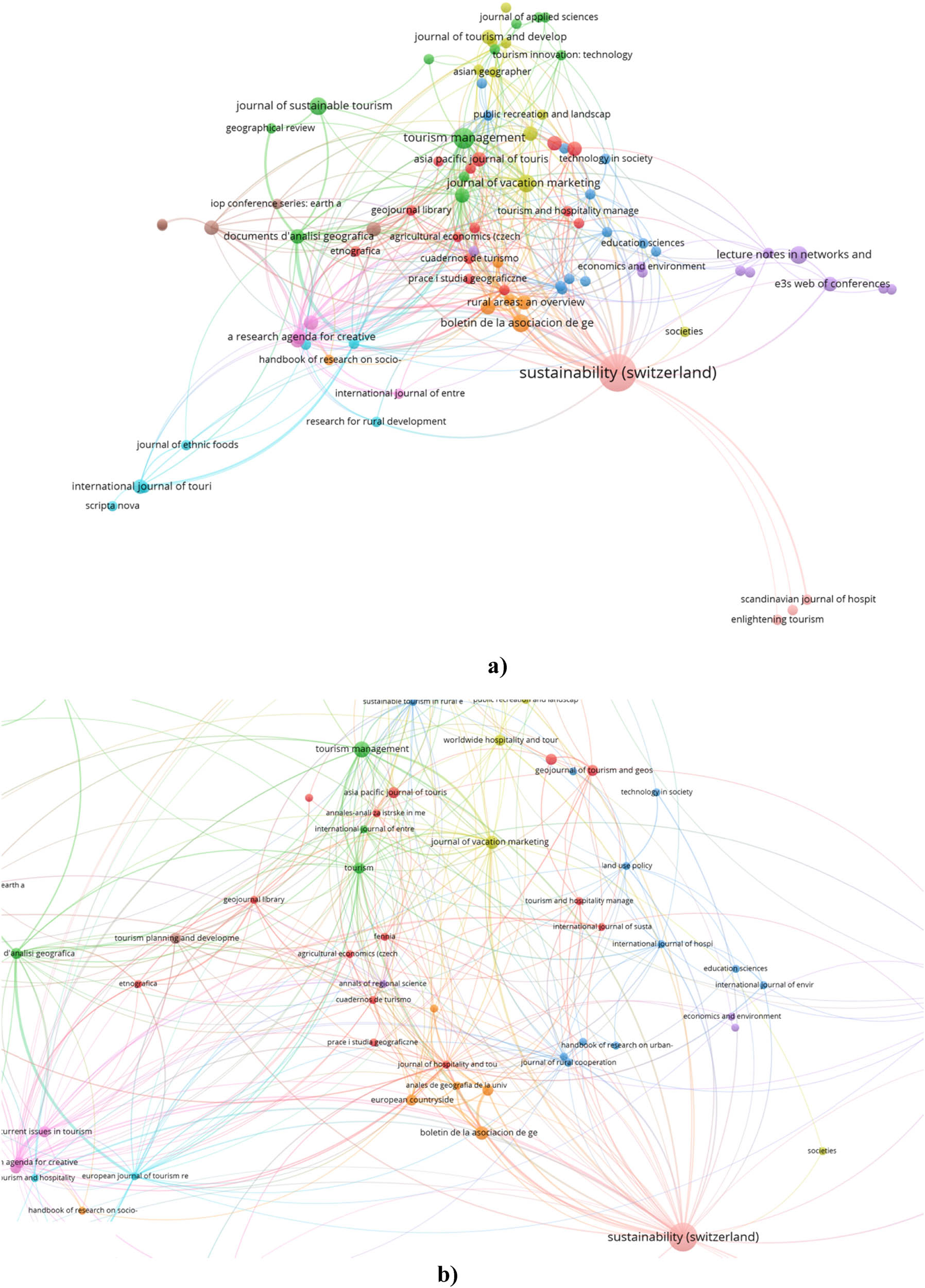
Sources items, considering full counting (as counting method), for the topics “tourism in rural areas” or “tourism in rural space” and bibliographic coupling links. (a) Full network and (b) network around the items with the highest number of documents. Source: Own elaboration.
Top 20 sources with the highest average normalised citations, considering full counting (as counting method), for the topics “tourism in rural areas” or “tourism in rural space” and bibliographic coupling links
| Sources | Total link strength | Documents | Average publication year | Average citations | Average normalised citations |
|---|---|---|---|---|---|
| Land Use Policy | 18 | 1 | 2019 | 65 | 7.395 |
| International Journal of Entrepreneurial Behaviour and Research | 11 | 1 | 2019 | 57 | 6.485 |
| Technology in Society | 7 | 1 | 2023 | 9 | 6.429 |
| Journal of Hospitality and Tourism Management | 49 | 1 | 2020 | 78 | 6.078 |
| Current Issues in Tourism | 72 | 2 | 2020 | 50 | 5.528 |
| Asia Pacific Journal of Tourism Research | 11 | 2 | 2011 | 57 | 3.535 |
| Journal of Rural Studies | 17 | 1 | 2021 | 15 | 3.387 |
| Annals of Regional Science | 25 | 1 | 2023 | 4 | 2.857 |
| International Journal of Environmental Research and Public Health | 9 | 1 | 2023 | 4 | 2.857 |
| European Journal of Tourism Research | 65 | 1 | 2015 | 32 | 2.612 |
| Tasting Tourism: Travelling for Food and Drink | 2 | 1 | 2017 | 31 | 2.362 |
| Worldwide Hospitality and Tourism Themes | 18 | 2 | 2022 | 5 | 2.350 |
| Journal of Vacation Marketing | 77 | 3 | 2011 | 39 | 2.284 |
| Scandinavian Journal of Hospitality and Tourism | 5 | 1 | 2018 | 23 | 1.963 |
| Tourism Geographies | 27 | 2 | 2012 | 41 | 1.728 |
| Fennia | 22 | 1 | 2016 | 22 | 1.615 |
| Societies | 2 | 1 | 2021 | 7 | 1.581 |
| Tourism Management | 65 | 4 | 1998 | 49 | 1.392 |
| Journal of Ethnic Foods | 6 | 1 | 2020 | 16 | 1.247 |
| Journal of Travel Research | 5 | 1 | 1999 | 179 | 1.226 |
Source: Own elaboration.
4 Systematic review based on bibliometric analysis
Table 6 presents the documents with the highest normalised citations. These documents highlight the importance of interlinkages between handicrafts and tourism in rural areas from a perspective of creative tourism [17] and the interrelationships of endogenous resources with sustainable development [50]. Creative tourism, under specific conditions, may bring relevant contributions to rural development [51]. Gastronomic, natural, and cultural heritage, for example, play a crucial role in the sustainability of rural areas [52]. Travelling for food and drink is, in fact, something that attracts tourists [53]. In any case, there is still some work to do to promote better and analyse tourism in rural spaces [54], and these activities have positive and negative impacts [55].
Top 20 documents with the highest normalised citations, considering full counting (as counting method), for the topics “tourism in rural areas” or “tourism in rural space” and bibliographic coupling links
Source: Own elaboration.
The entrepreneurship associated with small businesses can promote rural tourism [18], namely the entrepreneurial dynamics motivate healthy lifestyles. Lifestyle entrepreneurship may be a way to promote more balanced tourism [19], as well as permaculture [56], rural events [57], smart rural mobility [58], and well-being and wellness amenities [59].
Tourism in rural areas has increased its importance and has been implemented in different ways, including agritourism [60] and geotourism [61]. This tourism appears as an alternative to generating income for the populations that remain in less favoured regions [62]. This tourism also appears as an alternative to tourism outside the rural spaces, namely in contexts such as those created by the COVID-19 pandemic [21].
In these contexts, it is important to understand the attitudes and perceptions of the residents about the impacts of rural tourism. Particularly to provide the stakeholders with adjusted information that will allow the design of adequate policies and the adoption of more sustainable decisions in the respective regions [63]. A better understanding of the rural contexts will benefit the respective small businesses [64]. The specific characteristics of the rural spaces create conditions to attract tourists to these areas, but, in certain circumstances, also bring additional difficulties to achieving the requirements of the tourism industry [65].
5 Trends in residential and rural areas tourism in Portugal
Taking data from the Portuguese database Pordata [66], Table 7 shows the results (as a percentage of the total) for various indicators associated with residential and rural areas tourism in tourist accommodation. In general, the COVID-19 pandemic seems to have had an impact on the relative importance of residential and rural areas tourism. In fact, these modalities of tourist accommodation increased their relative importance, particularly in terms of the number of beds, number of overnight stays, average number of stays, number of guests, thousands of euros in total income, number of rooms, and average income per room.
Ratio in percentage (%) between the values of residential and rural areas tourism and the total in tourist accommodation, for various indicators, in Portugal
| Years and average | Number of establishments | Number of beds | Number of overnight stays | Average number of stays | Number of guests | Number of staff employed | Thousands of euros in total income | Number of rooms | Average income (euros) per room |
|---|---|---|---|---|---|---|---|---|---|
| 2013 | 24.873 | 3.947 | 1.710 | 79.310 | 2.131 | 3.937 | 1.831 | 4.175 | 50.173 |
| 2014 | 24.679 | 4.010 | 1.757 | 82.143 | 2.148 | 3.962 | 1.757 | 4.286 | 49.206 |
| 2015 | 29.915 | 6.016 | 2.397 | 78.571 | 2.973 | 4.352 | 2.287 | 6.325 | 41.143 |
| 2016 | 27.159 | 5.916 | 2.458 | 78.571 | 3.148 | 5.488 | 2.388 | 6.043 | 49.005 |
| 2017 | 24.298 | 5.762 | 2.600 | 77.778 | 3.318 | 5.328 | 2.573 | 5.877 | 50.866 |
| 2018 | 21.389 | 5.669 | 2.647 | 77.778 | 3.361 | 5.309 | 2.606 | 5.826 | 51.883 |
| 2019 | 24.689 | 5.999 | 2.800 | 80.769 | 3.494 | 2.763 | 6.208 | 52.227 | |
| 2020 | 26.510 | 6.796 | 5.015 | 88.000 | 5.716 | 5.756 | 7.013 | 107.965 | |
| 2021 | 26.009 | 6.755 | 4.925 | 84.615 | 5.851 | 5.476 | 6.943 | 92.025 | |
| 2022 | 25.271 | 6.590 | 3.733 | 84.615 | 4.491 | 3.869 | 6.834 | 63.701 | |
| 2023 | 3.752 | 80.769 | 4.488 | 3.835 | |||||
| Average | 25.479 | 5.746 | 3.072 | 81.175 | 3.738 | 4.729 | 3.195 | 5.953 | 60.819 |
In each column, the cells with a bold values correspond to the highest values. Source: Own elaboration.
On average, over the period considered, residential and rural areas tourism, in relation to total tourist accommodation, represents around 26% of the number of establishments, 6% of the number of beds, 3% of the number of overnight stays, 4% of the number of guests, 5% of the number of staff employed (although for statistical information up to 2018), 3% of total income, and 6% of the number of rooms. On average, the average income per room obtained by residential tourism and rural areas tourism is 61% of the average income received by all tourist accommodations. Conversely, the average number of stays in residential and rural areas tourism is 81% of the average for all tourist accommodations.
Although the statistics available on Pordata refer to tourism in rural areas and residential tourism, the number of guests, for example, in tourism in rural areas represented 82 per cent in 2012 and around 90 per cent in 2022 for the total of tourism in rural areas and residential tourism. Similar proportions were found for the number of overnight stays [67].
The number of average stays in 2022 in tourism in rural space/residential in Portugal was highest in the Algarve and the Autonomous Regions of the Azores and Madeira (Figure 6). Conversely, residents of European and African countries had the highest average stays (Figure 7). Figure 8 shows that the tourists with the highest average stays come from the following countries: Germany, Belgium, Netherlands, United Kingdom, Austria, Poland, Czechia, Other Africa, Ireland, and Finland. Tourists from China and Brazil have the lowest average stays [68].
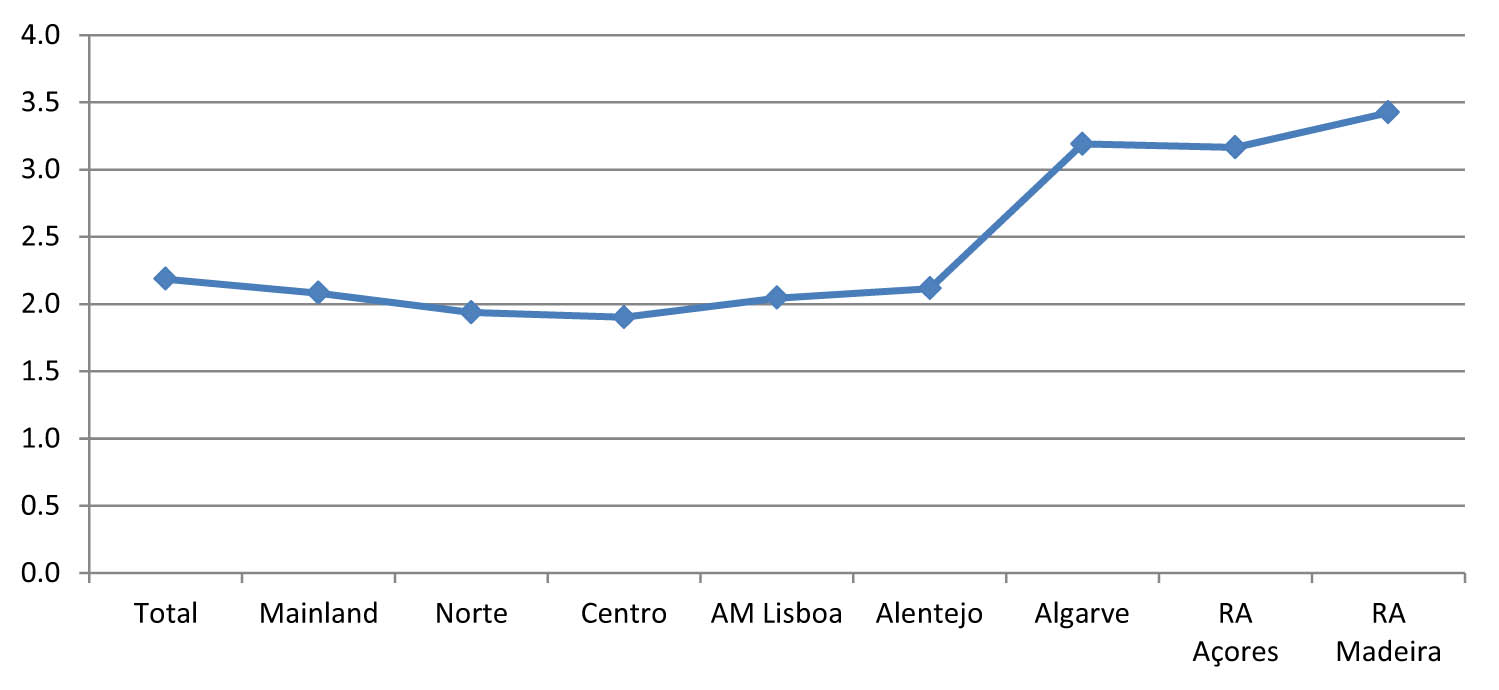
Average stay (number of nights) in tourism in rural space/residential in Portugal, Portugal Mainland, and NUT II, in 2022. Source: Own elaboration.
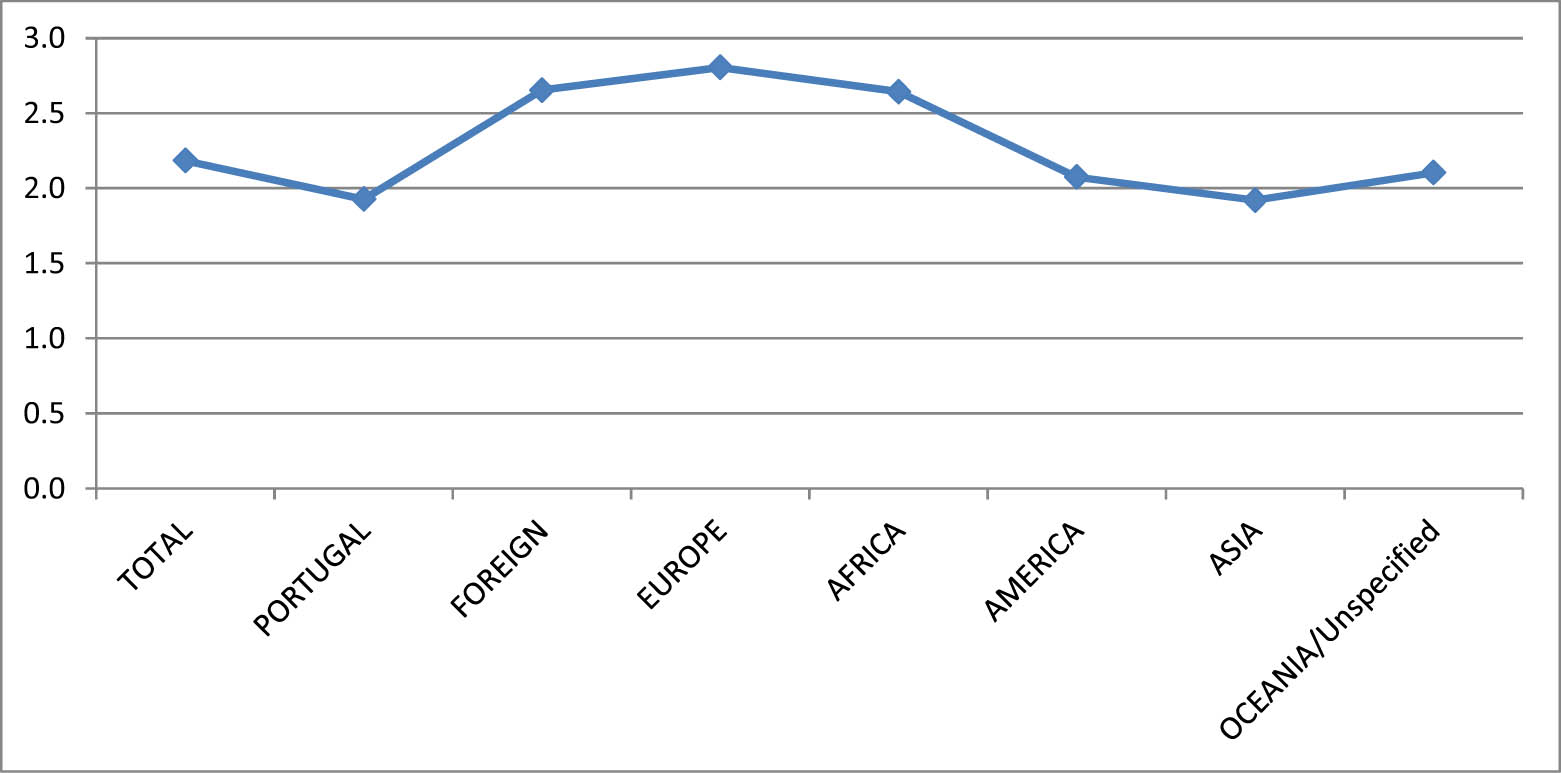
Average stay (number of nights) in tourism in rural space/residential according to country/continent of residence in 2022. Source: Own elaboration.
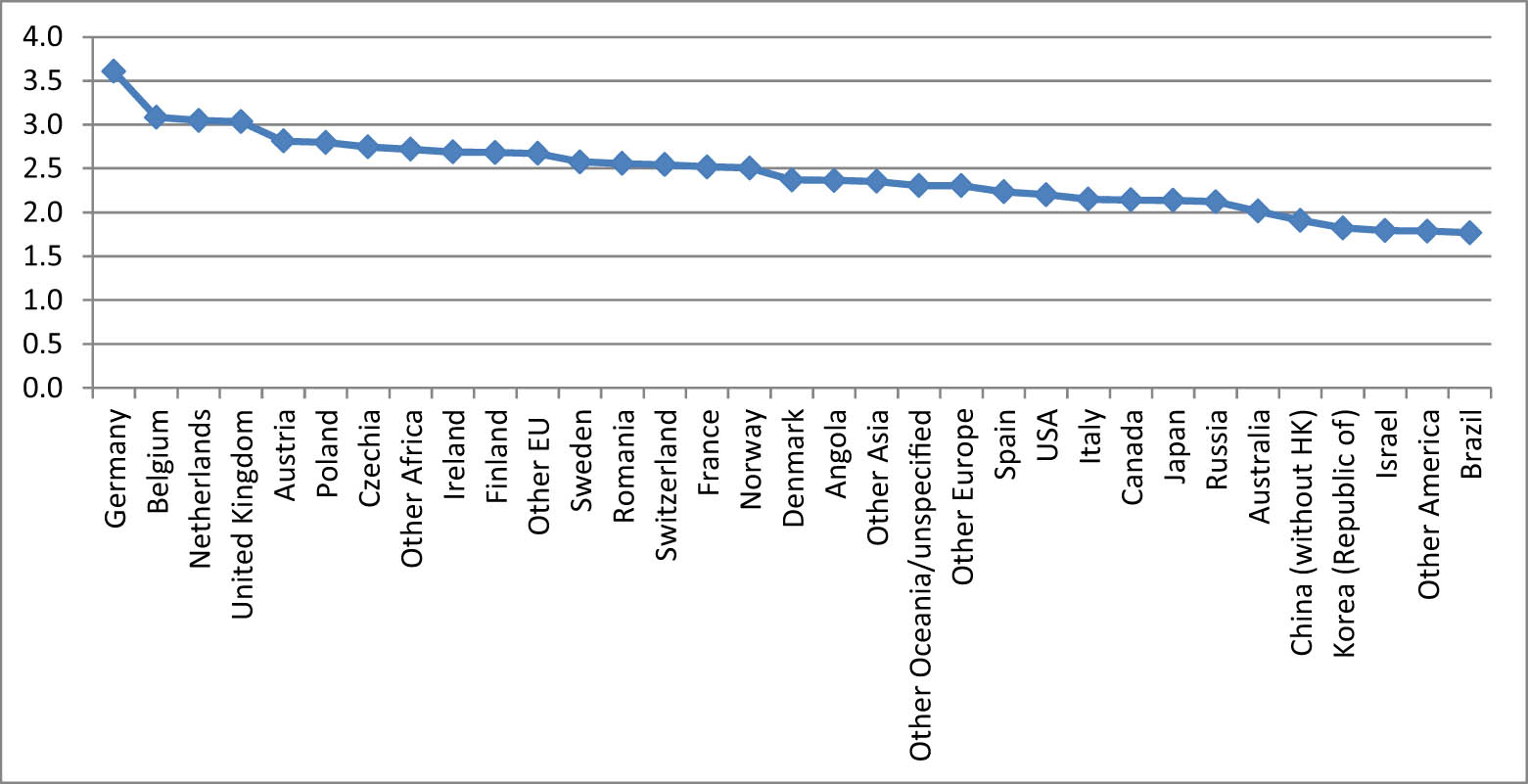
Average stay (number of nights) in tourism in rural space/residential according to country of residence in 2022. Source: Own elaboration.
Spearman’s rank correlation coefficients [69] obtained following the Stata [70,71,72] software procedures reveal that the strongest correlations for the number of average stays in tourism in rural space/residential in the Portuguese NUTS II (in 2022) are between the Centro and the Algarve, the Centro, and the Alentejo and between the Alentejo and the Algarve (Table 8). Eventually, these regions could define joint strategic plans for these types of tourism.
Spearman’s rank correlation coefficients between Portuguese NUTS II, for the number of average stays for tourism in rural space/residential (data disaggregated by tourists’ country of residence in 2022)
| Norte | Centro | AMLisboa | Alentejo | Algarve | RAAçores | RAMadeira | |
|---|---|---|---|---|---|---|---|
| Norte | 1.000 | ||||||
| Centro | 0.4756* | 1.000 | |||||
| (0.005) | |||||||
| AMLisboa | 0.4743* | 0.227 | 1.000 | ||||
| (0.005) | (0.203) | ||||||
| Alentejo | 0.5916* | 0.7540* | 0.131 | 1.000 | |||
| (0.000) | (0.000) | (0.467) | |||||
| Algarve | 0.5287* | 0.6842* | 0.3539* | 0.6173* | 1.000 | ||
| (0.002) | (0.000) | (0.043) | (0.000) | ||||
| RAAçores | 0.202 | 0.108 | 0.234 | 0.177 | 0.235 | 1.000 | |
| (0.260) | (0.550) | (0.190) | (0.325) | (0.189) | |||
| RAMadeira | 0.5696* | 0.294 | 0.3500* | 0.339 | 0.4491* | 0.124 | 1.000 |
| (0.001) | (0.097) | (0.046) | (0.054) | (0.009) | (0.494) |
*, statistically significant at 5%. Source: Own elaboration.
6 Discussion and conclusions
TRA/S plays a fundamental role in improving the income of the local population and, in this way, promoting a more sustainable rural development. In this way, this study proposes to contribute to bringing more knowledge about the different dimensions of these subjects. For that, a search on the Scopus database was carried out for the topics “tourism in rural areas” or “tourism in rural space.” From this search, performed on 19 March 2024, 165 documents were obtained. These documents were assessed through bibliometric analysis (following VOSviewer software procedures) and systematic review (considering the PRISMA statement).
6.1 Main findings of the present study
The literature survey highlighted that these topics may be further investigated through bibliometric assessment and systematic review. Conversely, the scientific literature shows the importance of bringing more socioeconomic dynamics for the rural contexts, and tourism in rural spaces may contribute significantly to these frameworks, especially in countries, such as Portugal, with tendencies of desertification of the interior and overpopulation in some areas of the littoral. The studies that considered examples of tourism in rural areas in the Portuguese realities focused particularly on nature-based tourism, Ways of Saint James, handicraft, entrepreneurship, sustainability, tourism demand, Schist Villages, cultural tourism, and cultural heritage. This literature analysis reveals that some issues may be explored deeper in future research for the Portuguese specificities, namely the following: bring more insights about the interrelationships between TRA/S and the economic dynamics in these frameworks, particularly bringing more suggestions on how this tourism may contribute for the economic growth and the creation of employment; contribute further for understanding about the interlinkage among the TRA/S activities and the Sustainable Development Goals; highlight the specific conditions of each Portuguese context. Some of these suggestions may be considered for the TRA/S dynamics implemented in other countries. In fact, the systematic review, carried out for the top 20 documents with the greatest normalised citations, highlights the following domains: handicraft activities, creativity, sustainability, natural and cultural heritage, travelling for food and drink, entrepreneurship, well-being and wellness services, agritourism, and geotourism.
The bibliometric analysis carried out for TRA/S activities developed worldwide shows that the author keywords with the biggest number of occurrences and average normalised citations are associated with sustainability, integrated rural development, cultural tourism, creativity, smart approaches, and innovation. Conversely, the most productive countries (and with the highest impact on the scientific community) are, for example, Portugal and Italy. Additionally, organisations from China and the Netherlands are the most productive, and those from Portugal have more impact on the scientific community. Lastly, Land Use Policy, for example, is a source among those with the biggest scientific impact, and Sustainability and Tourism Management are between the most productive (with more documents).
Analysis of the Portuguese context reveals that the COVID-19 pandemic favoured the dynamics of tourism in rural areas. In fact, the various indicators associated with this tourism have improved since 2019. In any case, there is still room to improve the indicators in some Portuguese NUTS II and to improve the average stays of tourists coming, for example, from China and Brazil. Finally, NUTS II from the centre and south of Portugal show a strong correlation in the number of average stays, showing that they will eventually be able to define joint strategic plans for these types of tourism.
6.2 Implication of findings and comparison with other studies
In terms of practical implications, this research highlights that TRA/S plays a significant role in promoting more sustainable development in the rural regions [62], namely interlinking economic activities with heritage [27], sustainability, creativity [51], innovation, and digital transition approaches. There is an enormous potential to be explored worldwide for tourism in rural spaces, with benefits for local populations, sustainability, and economic dynamics. Particularly, Portugal has a great diversity of rural heritage that may be promoted through economic activities, where tourism has its relevance. The findings presented here may be relevant benchmarks for and of the Portuguese scenario.
6.3 Conclusions, strengths and limitations, recommendation, and future direction
This research highlights the importance of distinguishing the concepts of rural tourism and tourism in rural areas. Conversely, it brings a set of insights into the concept of tourism in rural areas that can be considered by the academic community as a basis for future research in these subjects. The analysis of the Portuguese case reveals that there are regions where some indicators related to these types of tourism can be improved and some of these regions could benefit from close cooperation to define strategic plans for tourism in rural areas. One of the limitations of the study has to do with the difficulty in finding more disaggregated data and for longer time series.
In terms of recommendation, it is suggested to promote the publication of more information about tourism in rural areas in the free access international databases. It could be important also to give more attention to these activities in the framework of the European Union Common Agricultural Policy. The European Union has created several policy instruments, particularly since the 1990s, to promote TRA/S, but there is still some way to go to improve the measures designed for rural development. For future research, in addition to the suggestions presented throughout the study, it would be interesting to analyse the impacts of the national and international policies and legislation on the performance of several TRA/S activities and dynamics.
Acknowledgments
Furthermore, we would like to thank the CERNAS Research Centre and the Polytechnic Institute of Viseu for their support.
-
Funding information: This work is funded by National Funds through the FCT – Foundation for Science and Technology, I.P., within the scope of the project Refª UIDB/00681/2020 (https://doi.org/10.54499/UIDP/00681/2020).
-
Author contributions: All authors have accepted responsibility for the entire content of this manuscript and consented to its submission to the journal, reviewed all the results and approved the final version of the manuscript. Conceptualisation, VJPDM and RNT; data curation, VJPDM and RNT; formal analysis, VJPDM and RNT; funding acquisition, VJPDM; investigation, VJPDM and RNT; methodology, VJPDM and RNT; resources, VJPDM; software, VJPDM; supervision, VJPDM; validation, VJPDM and RNT; visualisation, VJPDM and RNT; writing – original draft, VJPDM and RNT; writing – review & editing, VJPDM and RNT.
-
Conflict of interest: Vítor João Pereira Domingues Martinho, who is the co-author of this article, is a current Editorial Board member of Open Agriculture. This fact did not affect the peer-review process.
-
Data availability statement: The datasets generated during and/or analysed during the current study are available from the corresponding author on reasonable request.
References
[1] Baležentis T, Kriščiukaitiene I, Baležentis A, Garland R. Rural tourism development in Lithuania (2003–2010) – A quantitative analysis. Tour Manag Perspect. 2012;2–3:1–6. 10.1016/j.tmp.2012.01.001.Suche in Google Scholar
[2] Navarro JG. Analysis and assessment of the profitability of rural tourism in the province of Ávila. Invest Turisticas. 2020;19:121–38. 10.14198/INTURI2020.19.06.Suche in Google Scholar
[3] Litheko A, Potgieter M. Strategic management of tourism stakeholders: Bakgatla-Ba-Kgafela, South Africa. Afr J Hospitality Tour Leisure. 2019;8(2):1–23.Suche in Google Scholar
[4] Morales-Urrutia X, Naranjo-Gaibor A, Tejada-Moyano S, Vargas-Ramos F. Public policies for rural tourism in Spain. Adv Intell Syst Comput. 2021;1327:223–34. 10.1007/978-3-030-68083-1_18. AISC.Suche in Google Scholar
[5] Vitte P. Tourism in rural areas of France: The need for more meaningful planning. Rev de Geogr Alp. 1998;86:69–85. 10.3406/rga.1998.2893.Suche in Google Scholar
[6] Brooker E, Joppe M. Entrepreneurial approaches to rural tourism in the netherlands: distinct differences. Tour Plan Dev. 2014;11:343–53. 10.1080/21568316.2014.889743.Suche in Google Scholar
[7] Baum S. The tourist potential of rural areas in Poland. East Eur Countrys. 2011;17:107–35. 10.2478/v10130-011-0006-z.Suche in Google Scholar
[8] Król K. Forgotten agritourism: abandoned websites in the promotion of rural tourism in Poland. J Hospitality Tour Technol. 2019;10:461–72. 10.1108/JHTT-09-2018-0092.Suche in Google Scholar
[9] Król K. Digital cultural heritage of rural tourism facilities in Poland. J Cult Herit Manag Sustain Dev. 2021;11:488–98. 10.1108/JCHMSD-10-2019-0130.Suche in Google Scholar
[10] Călina A, Călina J, Tiberiu I. Research regarding the implementation, development and impact of agritourism on romania’s rural areas between 1990 and 2015. Environ Eng Manag J. 2017;16:157–68. 10.30638/eemj.2017.018.Suche in Google Scholar
[11] Creţu RC, Moraru C. Countryside and rural tourism in Romania – A marketing perspective. Qual – Access Success. 2011;12:161–6.Suche in Google Scholar
[12] Partal C. Romanian rural tourism emergence. Qual – Access Success. 2011;12:1026–33.Suche in Google Scholar
[13] Ruiz-Real JL, Uribe-Toril J, de Pablo Valenciano J, Gázquez-Abad JC. Rural tourism and development: evolution in scientific literature and trends. J Hospitality Tour Res. 2022;46:1322–46. 10.1177/1096348020926538.Suche in Google Scholar
[14] Ibănescu B-C, Stoleriu OM, Munteanu A, Iațu C. The impact of tourism on sustainable development of rural areas: evidence from Romania. Sustainability. 2018;10:3529. 10.3390/su10103529.Suche in Google Scholar
[15] Agapito D, Mendes J, Valle POD. The rural village as an open door to nature-based tourism in Portugal: The Aldeia Da Pedralva Case. Tourism. 2012;60:325–38.Suche in Google Scholar
[16] Azevedo P. The ways of saint james in Trás-Os-Montes and Alto Douro as an example of soft tourism in rural areas. Eur Ctry. 2021;13:314–29. 10.2478/euco-2021-0020.Suche in Google Scholar
[17] Bakas FE, Duxbury N, Vinagre de Castro T. Creative tourism: catalysing artisan entrepreneur networks in rural portugal. Int J Entrep Behav Res. 2019;25:731–52. 10.1108/IJEBR-03-2018-0177.Suche in Google Scholar
[18] Cunha C, Kastenholz E, Carneiro MJ. Entrepreneurs in rural tourism: do lifestyle motivations contribute to management practices that enhance sustainable entrepreneurial ecosystems? J Hosp Tour Manage. 2020;44:215–26. 10.1016/j.jhtm.2020.06.007.Suche in Google Scholar
[19] Duarte M, Dias Á, Sousa B, Pereira L. Lifestyle entrepreneurship as a vehicle for leisure and sustainable tourism. Int J Environ Res Public Health. 2023;20(4):3241. 10.3390/ijerph20043241.Suche in Google Scholar PubMed PubMed Central
[20] Kastenholz E, Davis D, Paul G. Segmenting tourism in rural areas: the case of North and Central Portugal. J Travel Res. 1999;37:353–63. 10.1177/004728759903700405.Suche in Google Scholar
[21] Marques CP, Guedes A, Bento R. Rural tourism recovery between two covid-19 waves: the case of portugal. Curr Issues Tour. 2022;25:857–63. 10.1080/13683500.2021.1910216.Suche in Google Scholar
[22] Moutela JAT, Trentin F, Roget FM. Stakeholders’ integrated perspective of the schist villages network as a tourist destination: Motivational factors. J Tour Dev. 2021;36:605–18. 10.34624/rtd.v36i2.9233.Suche in Google Scholar
[23] Ramos D, Costa C, Teles F. Tourism in low density areas: a review of coastal and rural development practices. In Tourism Innovation: Technology, Sustainability and Creativity. London: Routledge; 2019. p. 113–26.10.4324/9780429022814-8Suche in Google Scholar
[24] Santos R. “Dream houses” of portuguese emigrants and the development of cultural tourism. Heranca Hist Herit C J. 2018;1:67–92. 10.29073/heranca.v1i2.130.Suche in Google Scholar
[25] Silva L. The demand for tourism in rural areas. Etnografica. 2007;11:141–63. 10.4000/etnografica.1896.Suche in Google Scholar
[26] Silva L. Adoption of renewable energy innovations in the portuguese rural tourist accommodation sector. Morav Geogr Rep. 2022;30:22–33. 10.2478/mgr-2022-0002.Suche in Google Scholar
[27] Skoczek M. Rural tourism as a factor of cultural heritage protection in Spain and Portugal. Pr Stud Geogr. 2003;32:35–48.Suche in Google Scholar
[28] Siddiqui SA, Parahoo S, Sadi MAN, Afzal MNI. Rural tourism as a transformative service of community well-being: a systematic literature review. IJSDP. 2021;16:1081–90. 10.18280/ijsdp.160609.Suche in Google Scholar
[29] Rosalina PD, Dupre K, Wang Y. Rural tourism: a systematic literature review on definitions and challenges. J Hospitality Tour Manag. 2021;47:134–49. 10.1016/j.jhtm.2021.03.001.Suche in Google Scholar
[30] Diário da República n.o 152/1997, Série I-A Decreto-lei 169/97, de 4 de Julho. https://dre.tretas.org/dre/83161/decreto-lei-169-97-de-4-de-julho (accessed on 30 May 2024).Suche in Google Scholar
[31] Karali A, Das S, Roy H. Forty years of the rural tourism research: reviewing the trend, pattern and future Agenda. Tour Recreat Res. 2024;49(1):173–20010.1080/02508281.2021.1961065Suche in Google Scholar
[32] Krittayaruangroj K, Suriyankietkaew S, Hallinger P. Research on Sustainability in community-based tourism: a bibliometric review and future directions. Asia Pac J Tour Res. 2023;28(9):1031–51.10.1080/10941665.2023.2276477Suche in Google Scholar
[33] Lulu L, Ramachandran S, Bidin S, Subramaniam T, Chaoyi C. A bibliometric analysis of residents’ perceptions in rural tourism development using citespace. Tour Plan Dev. 2024;21(4):438–61. 10.1080/21568316.2023.2209057.Suche in Google Scholar
[34] Priatmoko S, Kabil M, Akaak A, Lakner Z, Gyuricza C, Dávid LD. Understanding the complexity of rural tourism business: scholarly perspective. Sustainability. 2023;15:1193. 10.3390/su15021193.Suche in Google Scholar
[35] Ferreira J, Vaz MF, Silvério AC, Fernandes PO. The Relationship of Rural Tourism with Sustainable Tourism and Outdoor Activities: A Bibliometric Analysis. In Proceedings of the 2022 17th Iberian Conference on Information Systems and Technologies (CISTI); June 2022. p. 1–5.10.23919/CISTI54924.2022.9820157Suche in Google Scholar
[36] Singhania O, Swain SK, George B. Interdependence and complementarity between rural development and rural tourism: a bibliometric analysis. Rural Soc. 2022;31(1):15–32.10.1080/10371656.2022.2062198Suche in Google Scholar
[37] Rivero-Guerra AO. The scientific production of nature-based tourism: bibliometric analysis of the clarivate analytics databases. Rev Gen de Informacion y Documentacion. 2021;31:461–93. 10.5209/RGID.76973.Suche in Google Scholar
[38] Leković M, Cvijanović D, Pantić N, Stanišić T. Evaluative bibliometric analysis of recent trends in rural tourism literature. Econ Agric. 2020;67:1265–82. 10.5937/ekoPolj2004265L.Suche in Google Scholar
[39] Stanciu M, Popescu A, Stanciu C. Rural tourism, agrotourism and ecotourism in romania: current research status and future trends. Sci Pap-Ser Manag Econ Eng Agric Rural Dev. 2023;23:745–58.Suche in Google Scholar
[40] Rauniyar S, Awasthi MK, Kapoor S, Mishra AK. Agritourism: structured literature review and bibliometric analysis. Tour Recreat Res. 2021;46(1):52–70.10.1080/02508281.2020.1753913Suche in Google Scholar
[41] Javan K, Mirabi M, Hamidi SA, Darestani M, Altaee A, Zhou J. Enhancing environmental sustainability in a critical region: climate change impacts on agriculture and tourism. Civ Eng J. 2023;9(11):2630–48.10.28991/CEJ-2023-09-11-01Suche in Google Scholar
[42] Farooqui MO, Alshdaifat SA, Siddiquei MI. A socio-legal study on vaccine tourism in the context of covid-19 travel restrictions. Emerg Sci J. 2023;7:1653–62. 10.28991/ESJ-2023-07-05-012.Suche in Google Scholar
[43] Moher D, Liberati A, Tetzlaff J, Altman DG, Group TP. Preferred reporting items for systematic reviews and meta-analyses: The PRISMA statement. PLOS Med. 2009;6:e1000097. 10.1371/journal.pmed.1000097.Suche in Google Scholar PubMed PubMed Central
[44] Martinho VJPD. Impacts of the COVID-19 pandemic and the russia–ukraine conflict on land use across the world. Land. 2022;11:1614. 10.3390/land11101614.Suche in Google Scholar
[45] van Eck NJ, Waltman L. Software survey: VOSviewer, a computer program for bibliometric mapping. Scientometrics. 2010;84:523–38. 10.1007/s11192-009-0146-3.Suche in Google Scholar PubMed PubMed Central
[46] van Eck NJ, Waltman L. Visualizing bibliometric networks. In: Ding Y, Rousseau R, Wolfram D, eds. In Measuring scholarly impact: Methods and practice. Cham: Springer International Publishing; 2014. p. 285–320. ISBN 978-3-319-10377-8.10.1007/978-3-319-10377-8_13Suche in Google Scholar
[47] van Eck NJ, Waltman L. Manual for VOSviewer Version 1.6.20; 2023.Suche in Google Scholar
[48] VOSviewer VOSviewer – Visualizing Scientific Landscapes Available online: https://www.vosviewer.com// (accessed on 28 March 2024).Suche in Google Scholar
[49] Scopus Scopus - Document Search Available online: https://www.scopus.com/search/form.uri? display = basic#basic (accessed on 28 March 2024).Suche in Google Scholar
[50] Quaranta G, Citro E, Salvia R. Economic and social sustainable synergies to promote innovations in rural tourism and local development. Sustainability. 2016;8:668. 10.3390/su8070668.Suche in Google Scholar
[51] Blapp M, Mitas O. Creative tourism in balinese rural communities. Curr Issues Tour. 2018;21:1285–311. 10.1080/13683500.2017.1358701.Suche in Google Scholar
[52] Bel F, Lacroix A, Lyser S, Rambonilaza T, Turpin N. Domestic demand for tourism in rural areas: insights from summer stays in three French Regions. Tour Manag. 2015;46:562–70. 10.1016/j.tourman.2014.07.020.Suche in Google Scholar
[53] Boniface P. Tasting tourism: Travelling for food and drink. London: Routledge; 2016. ISBN 978-1-315-24177-7.Suche in Google Scholar
[54] Clark G, Chabrel M. Measuring integrated rural tourism. Tour Geogr. 2007;9:371–86. 10.1080/14616680701647550.Suche in Google Scholar
[55] Ristić D, Vukoičić D, Milinčić M. Tourism and sustainable development of rural settlements in protected areas - example NP Кopaonik (Serbia). Land Use Policy. 2019;89:104231. 10.1016/j.landusepol.2019.104231.Suche in Google Scholar
[56] Epuran G, Tescașiu B, Tecău A-S, Ivasciuc I-S, Candrea A-N. Permaculture and downshifting-sources of sustainable tourism development in rural areas. Sustainability. 2021;13:230. 10.3390/su13010230.Suche in Google Scholar
[57] Fytopoulou E, Tampakis S, Galatsidas S, Karasmanaki E, Tsantopoulos G. The role of events in local development: an analysis of residents’ perspectives and visitor satisfaction. J Rural Stud. 2021;82:54–63. 10.1016/j.jrurstud.2021.01.018.Suche in Google Scholar
[58] Hussain S, Ahonen V, Karasu T, Leviäkangas P. Sustainability of smart rural mobility and tourism: a key performance indicators-based approach. Technol Soc. 2023;74:102287. 10.1016/j.techsoc.2023.102287.Suche in Google Scholar
[59] Pesonen JA, Tuohino A. Activity-based market segmentation of rural well-being tourists: comparing online information search. J Vacat Mark. 2017;23:145–58. 10.1177/1356766715610163.Suche in Google Scholar
[60] Streifeneder T, Hoffmann C, Corradini P. The future of agritourism? a review of current trends of touristic commercialisation in rural areas. Ann Reg Sci. 2023;71:93–119. 10.1007/s00168-022-01126-w.Suche in Google Scholar
[61] Torabi Farsani N, Coelho C, Costa C. Geotourism and geoparks as gateways to socio-cultural sustainability in qeshm rural areas, Iran. Asia Pac J Tour Res. 2012;17:30–48. 10.1080/10941665.2011.610145.Suche in Google Scholar
[62] Dong E, Wang Y, Morais D, Brooks D. Segmenting the rural tourism market: the case of potter county, pennsylvania, USA. J Vacat Mark. 2013;19:181–93. 10.1177/1356766712471231.Suche in Google Scholar
[63] Kastenholz E, Paço A, Nave A. Wine tourism in rural areas – hopes and fears amongst local residents. Worldw Hospitality Tour Themes. 2023;15:29–40. 10.1108/WHATT-08-2022-0095.Suche in Google Scholar
[64] Roberts L, Hall D. Consuming the countryside: marketing for ‘rural tourism. J Vacat Mark. 2004;10:253–63. 10.1177/135676670401000305.Suche in Google Scholar
[65] Kausar DR, Nishikawa Y. Heritage tourism in rural areas: challenges for improving socio-economic impacts. Asia Pac J Tour Res. 2010;15:195–213. 10.1080/10941661003629995.Suche in Google Scholar
[66] Pordata Several Statistics. https://www.pordata.pt (accessed on 30 May 2024).Suche in Google Scholar
[67] INE Several Statistics Available online: https://www.ine.pt/xportal/xmain? xpgid = ine_main&xpid = INE (accessed on 10 June 2024).Suche in Google Scholar
[68] Estatísticas Do Turismo – 2022; Instituto Nacional de Estatística, I.P., Ed.; 2023.Suche in Google Scholar
[69] Spearman C. The proof and measurement of association between two things. Am J Psychol. 1904;15:72–101. 10.2307/1412159.Suche in Google Scholar
[70] Stata Statistical Software for Data Science Available online: https://www.stata.com/ (accessed on 10 June 2024).Suche in Google Scholar
[71] StataCorp Stata 15 Base Reference Manual 2017.Suche in Google Scholar
[72] StataCorp Stata Statistical Software: Release 15 2017.Suche in Google Scholar
© 2024 the author(s), published by De Gruyter
This work is licensed under the Creative Commons Attribution 4.0 International License.
Artikel in diesem Heft
- Regular Articles
- Supplementation of P-solubilizing purple nonsulfur bacteria, Rhodopseudomonas palustris improved soil fertility, P nutrient, growth, and yield of Cucumis melo L.
- Yield gap variation in rice cultivation in Indonesia
- Effects of co-inoculation of indole-3-acetic acid- and ammonia-producing bacteria on plant growth and nutrition, soil elements, and the relationships of soil microbiomes with soil physicochemical parameters
- Impact of mulching and planting time on spring-wheat (Triticum aestivum) growth: A combined field experiment and empirical modeling approach
- Morphological diversity, correlation studies, and multiple-traits selection for yield and yield components of local cowpea varieties
- Participatory on-farm evaluation of new orange-fleshed sweetpotato varieties in Southern Ethiopia
- Yield performance and stability analysis of three cultivars of Gayo Arabica coffee across six different environments
- Biology of Spodoptera frugiperda (Lepidoptera: Noctuidae) on different types of plants feeds: Potency as a pest on various agricultural plants
- Antidiabetic activity of methanolic extract of Hibiscus sabdariffa Linn. fruit in alloxan-induced Swiss albino diabetic mice
- Bioinformatics investigation of the effect of volatile and non-volatile compounds of rhizobacteria in inhibiting late embryogenesis abundant protein that induces drought tolerance
- Nicotinamide as a biostimulant improves soybean growth and yield
- Farmer’s willingness to accept the sustainable zoning-based organic farming development plan: A lesson from Sleman District, Indonesia
- Uncovering hidden determinants of millennial farmers’ intentions in running conservation agriculture: An application of the Norm Activation Model
- Mediating role of leadership and group capital between human capital component and sustainability of horticultural agribusiness institutions in Indonesia
- Biochar technology to increase cassava crop productivity: A study of sustainable agriculture on degraded land
- Effect of struvite on the growth of green beans on Mars and Moon regolith simulants
- UrbanAgriKG: A knowledge graph on urban agriculture and its embeddings
- Provision of loans and credit by cocoa buyers under non-price competition: Cocoa beans market in Ghana
- Effectiveness of micro-dosing of lime on selected chemical properties of soil in Banja District, North West, Ethiopia
- Effect of weather, nitrogen fertilizer, and biostimulators on the root size and yield components of Hordeum vulgare
- Effects of selected biostimulants on qualitative and quantitative parameters of nine cultivars of the genus Capsicum spp.
- Growth, yield, and secondary metabolite responses of three shallot cultivars at different watering intervals
- Design of drainage channel for effective use of land on fully mechanized sugarcane plantations: A case study at Bone Sugarcane Plantation
- Technical feasibility and economic benefit of combined shallot seedlings techniques in Indonesia
- Control of Meloidogyne javanica in banana by endophytic bacteria
- Comparison of important quality components of red-flesh kiwifruit (Actinidia chinensis) in different locations
- Efficiency of rice farming in flood-prone areas of East Java, Indonesia
- Comparative analysis of alpine agritourism in Trentino, Tyrol, and South Tyrol: Regional variations and prospects
- Detection of Fusarium spp. infection in potato (Solanum tuberosum L.) during postharvest storage through visible–near-infrared and shortwave–near-infrared reflectance spectroscopy
- Forage yield, seed, and forage qualitative traits evaluation by determining the optimal forage harvesting stage in dual-purpose cultivation in safflower varieties (Carthamus tinctorius L.)
- The influence of tourism on the development of urban space: Comparison in Hanoi, Danang, and Ho Chi Minh City
- Optimum intra-row spacing and clove size for the economical production of garlic (Allium sativum L.) in Northwestern Highlands of Ethiopia
- The role of organic rice farm income on farmer household welfare: Evidence from Yogyakarta, Indonesia
- Exploring innovative food in a developing country: Edible insects as a sustainable option
- Genotype by environment interaction and performance stability of common bean (Phaseolus vulgaris L.) cultivars grown in Dawuro zone, Southwestern Ethiopia
- Factors influencing green, environmentally-friendly consumer behaviour
- Factors affecting coffee farmers’ access to financial institutions: The case of Bandung Regency, Indonesia
- Morphological and yield trait-based evaluation and selection of chili (Capsicum annuum L.) genotypes suitable for both summer and winter seasons
- Sustainability analysis and decision-making strategy for swamp buffalo (Bubalus bubalis carabauesis) conservation in Jambi Province, Indonesia
- Understanding factors affecting rice purchasing decisions in Indonesia: Does rice brand matter?
- An implementation of an extended theory of planned behavior to investigate consumer behavior on hygiene sanitation-certified livestock food products
- Information technology adoption in Indonesia’s small-scale dairy farms
- Draft genome of a biological control agent against Bipolaris sorokiniana, the causal phytopathogen of spot blotch in wheat (Triticum turgidum L. subsp. durum): Bacillus inaquosorum TSO22
- Assessment of the recurrent mutagenesis efficacy of sesame crosses followed by isolation and evaluation of promising genetic resources for use in future breeding programs
- Fostering cocoa industry resilience: A collaborative approach to managing farm gate price fluctuations in West Sulawesi, Indonesia
- Field investigation of component failures for selected farm machinery used in small rice farming operations
- Near-infrared technology in agriculture: Rapid, simultaneous, and non-destructive determination of inner quality parameters on intact coffee beans
- The synergistic application of sucrose and various LED light exposures to enhance the in vitro growth of Stevia rebaudiana (Bertoni)
- Weather index-based agricultural insurance for flower farmers: Willingness to pay, sales, and profitability perspectives
- Meta-analysis of dietary Bacillus spp. on serum biochemical and antioxidant status and egg quality of laying hens
- Biochemical characterization of trypsin from Indonesian skipjack tuna (Katsuwonus pelamis) viscera
- Determination of C-factor for conventional cultivation and soil conservation technique used in hop gardens
- Empowering farmers: Unveiling the economic impacts of contract farming on red chilli farmers’ income in Magelang District, Indonesia
- Evaluating salt tolerance in fodder crops: A field experiment in the dry land
- Labor productivity of lowland rice (Oryza sativa L.) farmers in Central Java Province, Indonesia
- Cropping systems and production assessment in southern Myanmar: Informing strategic interventions
- The effect of biostimulants and red mud on the growth and yield of shallots in post-unlicensed gold mining soil
- Effects of dietary Adansonia digitata L. (baobab) seed meal on growth performance and carcass characteristics of broiler chickens: A systematic review and meta-analysis
- Analysis and structural characterization of the vid-pisco market
- Pseudomonas fluorescens SP007s enhances defense responses against the soybean bacterial pustule caused by Xanthomonas axonopodis pv. glycines
- A brief investigation on the prospective of co-composted biochar as a fertilizer for Zucchini plants cultivated in arid sandy soil
- Supply chain efficiency of red chilies in the production center of Sleman Indonesia based on performance measurement system
- Investment development path for developed economies: Is agriculture different?
- Power relations among actors in laying hen business in Indonesia: A MACTOR analysis
- High-throughput digital imaging and detection of morpho-physiological traits in tomato plants under drought
- Converting compression ignition engine to dual-fuel (diesel + CNG) engine and experimentally investigating its performance and emissions
- Structuration, risk management, and institutional dynamics in resolving palm oil conflicts
- Spacing strategies for enhancing drought resilience and yield in maize agriculture
- Composition and quality of winter annual agrestal and ruderal herbages of two different land-use types
- Investigating Spodoptera spp. diversity, percentage of attack, and control strategies in the West Java, Indonesia, corn cultivation
- Yield stability of biofertilizer treatments to soybean in the rainy season based on the GGE biplot
- Evaluating agricultural yield and economic implications of varied irrigation depths on maize yield in semi-arid environments, at Birfarm, Upper Blue Nile, Ethiopia
- Chemometrics for mapping the spatial nitrate distribution on the leaf lamina of fenugreek grown under varying nitrogenous fertilizer doses
- Pomegranate peel ethanolic extract: A promising natural antioxidant, antimicrobial agent, and novel approach to mitigate rancidity in used edible oils
- Transformative learning and engagement with organic farming: Lessons learned from Indonesia
- Tourism in rural areas as a broader concept: Some insights from the Portuguese reality
- Assessment enhancing drought tolerance in henna (Lawsonia inermis L.) ecotypes through sodium nitroprusside foliar application
- Edible insects: A survey about perceptions regarding possible beneficial health effects and safety concerns among adult citizens from Portugal and Romania
- Phenological stages analysis in peach trees using electronic nose
- Harvest date and salicylic acid impact on peanut (Arachis hypogaea L.) properties under different humidity conditions
- Hibiscus sabdariffa L. petal biomass: A green source of nanoparticles of multifarious potential
- Use of different vegetation indices for the evaluation of the kinetics of the cherry tomato (Solanum lycopersicum var. cerasiforme) growth based on multispectral images by UAV
- First evidence of microplastic pollution in mangrove sediments and its ingestion by coral reef fish: Case study in Biawak Island, Indonesia
- Physical and textural properties and sensory acceptability of wheat bread partially incorporated with unripe non-commercial banana cultivars
- Cereibacter sphaeroides ST16 and ST26 were used to solubilize insoluble P forms to improve P uptake, growth, and yield of rice in acidic and extreme saline soil
- Avocado peel by-product in cattle diets and supplementation with oregano oil and effects on production, carcass, and meat quality
- Optimizing inorganic blended fertilizer application for the maximum grain yield and profitability of bread wheat and food barley in Dawuro Zone, Southwest Ethiopia
- The acceptance of social media as a channel of communication and livestock information for sheep farmers
- Adaptation of rice farmers to aging in Thailand
- Combined use of improved maize hybrids and nitrogen application increases grain yield of maize, under natural Striga hermonthica infestation
- From aquatic to terrestrial: An examination of plant diversity and ecological shifts
- Statistical modelling of a tractor tractive performance during ploughing operation on a tropical Alfisol
- Participation in artisanal diamond mining and food security: A case study of Kasai Oriental in DR Congo
- Assessment and multi-scenario simulation of ecosystem service values in Southwest China’s mountainous and hilly region
- Analysis of agricultural emissions and economic growth in Europe in search of ecological balance
- Bacillus thuringiensis strains with high insecticidal activity against insect larvae of the orders Coleoptera and Lepidoptera
- Technical efficiency of sugarcane farming in East Java, Indonesia: A bootstrap data envelopment analysis
- Comparison between mycobiota diversity and fungi and mycotoxin contamination of maize and wheat
- Evaluation of cultivation technology package and corn variety based on agronomy characters and leaf green indices
- Exploring the association between the consumption of beverages, fast foods, sweets, fats, and oils and the risk of gastric and pancreatic cancers: Findings from case–control study
- Phytochemical composition and insecticidal activity of Acokanthera oblongifolia (Hochst.) Benth & Hook.f. ex B.D.Jacks. extract on life span and biological aspects of Spodoptera littoralis (Biosd.)
- Land use management solutions in response to climate change: Case study in the central coastal areas of Vietnam
- Evaluation of coffee pulp as a feed ingredient for ruminants: A meta-analysis
- Interannual variations of normalized difference vegetation index and potential evapotranspiration and their relationship in the Baghdad area
- Harnessing synthetic microbial communities with nitrogen-fixing activity to promote rice growth
- Agronomic and economic benefits of rice–sweetpotato rotation in lowland rice cropping systems in Uganda
- Response of potato tuber as an effect of the N-fertilizer and paclobutrazol application in medium altitude
- Bridging the gap: The role of geographic proximity in enhancing seed sustainability in Bandung District
- Evaluation of Abrams curve in agricultural sector using the NARDL approach
- Challenges and opportunities for young farmers in the implementation of the Rural Development Program 2014–2020 of the Republic of Croatia
- Yield stability of ten common bean (Phaseolus vulgaris L.) genotypes at different sowing dates in Lubumbashi, South-East of DR Congo
- Effects of encapsulation and combining probiotics with different nitrate forms on methane emission and in vitro rumen fermentation characteristics
- Phytochemical analysis of Bienertia sinuspersici extract and its antioxidant and antimicrobial activities
- Evaluation of relative drought tolerance of grapevines by leaf fluorescence parameters
- Yield assessment of new streak-resistant topcross maize hybrids in Benin
- Improvement of cocoa powder properties through ultrasonic- and microwave-assisted alkalization
- Potential of ecoenzymes made from nutmeg (Myristica fragrans) leaf and pulp waste as bioinsecticides for Periplaneta americana
- Analysis of farm performance to realize the sustainability of organic cabbage vegetable farming in Getasan Semarang, Indonesia
- Revealing the influences of organic amendment-derived dissolved organic matter on growth and nutrient accumulation in lettuce seedlings (Lactuca sativa L.)
- Identification of viruses infecting sweetpotato (Ipomoea batatas Lam.) in Benin
- Assessing the soil physical and chemical properties of long-term pomelo orchard based on tree growth
- Investigating access and use of digital tools for agriculture among rural farmers: A case study of Nkomazi Municipality, South Africa
- Does sex influence the impact of dietary vitD3 and UVB light on performance parameters and welfare indicators of broilers?
- Design of intelligent sprayer control for an autonomous farming drone using a multiclass support vector machine
- Deciphering salt-responsive NB-ARC genes in rice transcriptomic data: A bioinformatics approach with gene expression validation
- Review Articles
- Impact of nematode infestation in livestock production and the role of natural feed additives – A review
- Role of dietary fats in reproductive, health, and nutritional benefits in farm animals: A review
- Climate change and adaptive strategies on viticulture (Vitis spp.)
- The false tiger of almond, Monosteira unicostata (Hemiptera: Tingidae): Biology, ecology, and control methods
- A systematic review on potential analogy of phytobiomass and soil carbon evaluation methods: Ethiopia insights
- A review of storage temperature and relative humidity effects on shelf life and quality of mango (Mangifera indica L.) fruit and implications for nutrition insecurity in Ethiopia
- Green extraction of nutmeg (Myristica fragrans) phytochemicals: Prospective strategies and roadblocks
- Potential influence of nitrogen fertilizer rates on yield and yield components of carrot (Dacus carota L.) in Ethiopia: Systematic review
- Corn silk: A promising source of antimicrobial compounds for health and wellness
- State and contours of research on roselle (Hibiscus sabdariffa L.) in Africa
- The potential of phosphorus-solubilizing purple nonsulfur bacteria in agriculture: Present and future perspectives
- Minor millets: Processing techniques and their nutritional and health benefits
- Meta-analysis of reproductive performance of improved dairy cattle under Ethiopian environmental conditions
- Review on enhancing the efficiency of fertilizer utilization: Strategies for optimal nutrient management
- The nutritional, phytochemical composition, and utilisation of different parts of maize: A comparative analysis
- Motivations for farmers’ participation in agri-environmental scheme in the EU, literature review
- Evolution of climate-smart agriculture research: A science mapping exploration and network analysis
- Short Communications
- Music enrichment improves the behavior and leukocyte profile of dairy cattle
- Effect of pruning height and organic fertilization on the morphological and productive characteristics of Moringa oleifera Lam. in the Peruvian dry tropics
- Corrigendum
- Corrigendum to “Bioinformatics investigation of the effect of volatile and non-volatile compounds of rhizobacteria in inhibiting late embryogenesis abundant protein that induces drought tolerance”
- Corrigendum to “Composition and quality of winter annual agrestal and ruderal herbages of two different land-use types”
- Special issue: Smart Agriculture System for Sustainable Development: Methods and Practices
- Construction of a sustainable model to predict the moisture content of porang powder (Amorphophallus oncophyllus) based on pointed-scan visible near-infrared spectroscopy
- FruitVision: A deep learning based automatic fruit grading system
- Energy harvesting and ANFIS modeling of a PVDF/GO-ZNO piezoelectric nanogenerator on a UAV
- Effects of stress hormones on digestibility and performance in cattle: A review
- Special Issue of The 4th International Conference on Food Science and Engineering (ICFSE) 2022 - Part II
- Assessment of omega-3 and omega-6 fatty acid profiles and ratio of omega-6/omega-3 of white eggs produced by laying hens fed diets enriched with omega-3 rich vegetable oil
- Special Issue on FCEM - International Web Conference on Food Choice & Eating Motivation - Part II
- Special Issue on FCEM – International Web Conference on Food Choice & Eating Motivation: Message from the editor
- Fruit and vegetable consumption: Study involving Portuguese and French consumers
- Knowledge about consumption of milk: Study involving consumers from two European Countries – France and Portugal
Artikel in diesem Heft
- Regular Articles
- Supplementation of P-solubilizing purple nonsulfur bacteria, Rhodopseudomonas palustris improved soil fertility, P nutrient, growth, and yield of Cucumis melo L.
- Yield gap variation in rice cultivation in Indonesia
- Effects of co-inoculation of indole-3-acetic acid- and ammonia-producing bacteria on plant growth and nutrition, soil elements, and the relationships of soil microbiomes with soil physicochemical parameters
- Impact of mulching and planting time on spring-wheat (Triticum aestivum) growth: A combined field experiment and empirical modeling approach
- Morphological diversity, correlation studies, and multiple-traits selection for yield and yield components of local cowpea varieties
- Participatory on-farm evaluation of new orange-fleshed sweetpotato varieties in Southern Ethiopia
- Yield performance and stability analysis of three cultivars of Gayo Arabica coffee across six different environments
- Biology of Spodoptera frugiperda (Lepidoptera: Noctuidae) on different types of plants feeds: Potency as a pest on various agricultural plants
- Antidiabetic activity of methanolic extract of Hibiscus sabdariffa Linn. fruit in alloxan-induced Swiss albino diabetic mice
- Bioinformatics investigation of the effect of volatile and non-volatile compounds of rhizobacteria in inhibiting late embryogenesis abundant protein that induces drought tolerance
- Nicotinamide as a biostimulant improves soybean growth and yield
- Farmer’s willingness to accept the sustainable zoning-based organic farming development plan: A lesson from Sleman District, Indonesia
- Uncovering hidden determinants of millennial farmers’ intentions in running conservation agriculture: An application of the Norm Activation Model
- Mediating role of leadership and group capital between human capital component and sustainability of horticultural agribusiness institutions in Indonesia
- Biochar technology to increase cassava crop productivity: A study of sustainable agriculture on degraded land
- Effect of struvite on the growth of green beans on Mars and Moon regolith simulants
- UrbanAgriKG: A knowledge graph on urban agriculture and its embeddings
- Provision of loans and credit by cocoa buyers under non-price competition: Cocoa beans market in Ghana
- Effectiveness of micro-dosing of lime on selected chemical properties of soil in Banja District, North West, Ethiopia
- Effect of weather, nitrogen fertilizer, and biostimulators on the root size and yield components of Hordeum vulgare
- Effects of selected biostimulants on qualitative and quantitative parameters of nine cultivars of the genus Capsicum spp.
- Growth, yield, and secondary metabolite responses of three shallot cultivars at different watering intervals
- Design of drainage channel for effective use of land on fully mechanized sugarcane plantations: A case study at Bone Sugarcane Plantation
- Technical feasibility and economic benefit of combined shallot seedlings techniques in Indonesia
- Control of Meloidogyne javanica in banana by endophytic bacteria
- Comparison of important quality components of red-flesh kiwifruit (Actinidia chinensis) in different locations
- Efficiency of rice farming in flood-prone areas of East Java, Indonesia
- Comparative analysis of alpine agritourism in Trentino, Tyrol, and South Tyrol: Regional variations and prospects
- Detection of Fusarium spp. infection in potato (Solanum tuberosum L.) during postharvest storage through visible–near-infrared and shortwave–near-infrared reflectance spectroscopy
- Forage yield, seed, and forage qualitative traits evaluation by determining the optimal forage harvesting stage in dual-purpose cultivation in safflower varieties (Carthamus tinctorius L.)
- The influence of tourism on the development of urban space: Comparison in Hanoi, Danang, and Ho Chi Minh City
- Optimum intra-row spacing and clove size for the economical production of garlic (Allium sativum L.) in Northwestern Highlands of Ethiopia
- The role of organic rice farm income on farmer household welfare: Evidence from Yogyakarta, Indonesia
- Exploring innovative food in a developing country: Edible insects as a sustainable option
- Genotype by environment interaction and performance stability of common bean (Phaseolus vulgaris L.) cultivars grown in Dawuro zone, Southwestern Ethiopia
- Factors influencing green, environmentally-friendly consumer behaviour
- Factors affecting coffee farmers’ access to financial institutions: The case of Bandung Regency, Indonesia
- Morphological and yield trait-based evaluation and selection of chili (Capsicum annuum L.) genotypes suitable for both summer and winter seasons
- Sustainability analysis and decision-making strategy for swamp buffalo (Bubalus bubalis carabauesis) conservation in Jambi Province, Indonesia
- Understanding factors affecting rice purchasing decisions in Indonesia: Does rice brand matter?
- An implementation of an extended theory of planned behavior to investigate consumer behavior on hygiene sanitation-certified livestock food products
- Information technology adoption in Indonesia’s small-scale dairy farms
- Draft genome of a biological control agent against Bipolaris sorokiniana, the causal phytopathogen of spot blotch in wheat (Triticum turgidum L. subsp. durum): Bacillus inaquosorum TSO22
- Assessment of the recurrent mutagenesis efficacy of sesame crosses followed by isolation and evaluation of promising genetic resources for use in future breeding programs
- Fostering cocoa industry resilience: A collaborative approach to managing farm gate price fluctuations in West Sulawesi, Indonesia
- Field investigation of component failures for selected farm machinery used in small rice farming operations
- Near-infrared technology in agriculture: Rapid, simultaneous, and non-destructive determination of inner quality parameters on intact coffee beans
- The synergistic application of sucrose and various LED light exposures to enhance the in vitro growth of Stevia rebaudiana (Bertoni)
- Weather index-based agricultural insurance for flower farmers: Willingness to pay, sales, and profitability perspectives
- Meta-analysis of dietary Bacillus spp. on serum biochemical and antioxidant status and egg quality of laying hens
- Biochemical characterization of trypsin from Indonesian skipjack tuna (Katsuwonus pelamis) viscera
- Determination of C-factor for conventional cultivation and soil conservation technique used in hop gardens
- Empowering farmers: Unveiling the economic impacts of contract farming on red chilli farmers’ income in Magelang District, Indonesia
- Evaluating salt tolerance in fodder crops: A field experiment in the dry land
- Labor productivity of lowland rice (Oryza sativa L.) farmers in Central Java Province, Indonesia
- Cropping systems and production assessment in southern Myanmar: Informing strategic interventions
- The effect of biostimulants and red mud on the growth and yield of shallots in post-unlicensed gold mining soil
- Effects of dietary Adansonia digitata L. (baobab) seed meal on growth performance and carcass characteristics of broiler chickens: A systematic review and meta-analysis
- Analysis and structural characterization of the vid-pisco market
- Pseudomonas fluorescens SP007s enhances defense responses against the soybean bacterial pustule caused by Xanthomonas axonopodis pv. glycines
- A brief investigation on the prospective of co-composted biochar as a fertilizer for Zucchini plants cultivated in arid sandy soil
- Supply chain efficiency of red chilies in the production center of Sleman Indonesia based on performance measurement system
- Investment development path for developed economies: Is agriculture different?
- Power relations among actors in laying hen business in Indonesia: A MACTOR analysis
- High-throughput digital imaging and detection of morpho-physiological traits in tomato plants under drought
- Converting compression ignition engine to dual-fuel (diesel + CNG) engine and experimentally investigating its performance and emissions
- Structuration, risk management, and institutional dynamics in resolving palm oil conflicts
- Spacing strategies for enhancing drought resilience and yield in maize agriculture
- Composition and quality of winter annual agrestal and ruderal herbages of two different land-use types
- Investigating Spodoptera spp. diversity, percentage of attack, and control strategies in the West Java, Indonesia, corn cultivation
- Yield stability of biofertilizer treatments to soybean in the rainy season based on the GGE biplot
- Evaluating agricultural yield and economic implications of varied irrigation depths on maize yield in semi-arid environments, at Birfarm, Upper Blue Nile, Ethiopia
- Chemometrics for mapping the spatial nitrate distribution on the leaf lamina of fenugreek grown under varying nitrogenous fertilizer doses
- Pomegranate peel ethanolic extract: A promising natural antioxidant, antimicrobial agent, and novel approach to mitigate rancidity in used edible oils
- Transformative learning and engagement with organic farming: Lessons learned from Indonesia
- Tourism in rural areas as a broader concept: Some insights from the Portuguese reality
- Assessment enhancing drought tolerance in henna (Lawsonia inermis L.) ecotypes through sodium nitroprusside foliar application
- Edible insects: A survey about perceptions regarding possible beneficial health effects and safety concerns among adult citizens from Portugal and Romania
- Phenological stages analysis in peach trees using electronic nose
- Harvest date and salicylic acid impact on peanut (Arachis hypogaea L.) properties under different humidity conditions
- Hibiscus sabdariffa L. petal biomass: A green source of nanoparticles of multifarious potential
- Use of different vegetation indices for the evaluation of the kinetics of the cherry tomato (Solanum lycopersicum var. cerasiforme) growth based on multispectral images by UAV
- First evidence of microplastic pollution in mangrove sediments and its ingestion by coral reef fish: Case study in Biawak Island, Indonesia
- Physical and textural properties and sensory acceptability of wheat bread partially incorporated with unripe non-commercial banana cultivars
- Cereibacter sphaeroides ST16 and ST26 were used to solubilize insoluble P forms to improve P uptake, growth, and yield of rice in acidic and extreme saline soil
- Avocado peel by-product in cattle diets and supplementation with oregano oil and effects on production, carcass, and meat quality
- Optimizing inorganic blended fertilizer application for the maximum grain yield and profitability of bread wheat and food barley in Dawuro Zone, Southwest Ethiopia
- The acceptance of social media as a channel of communication and livestock information for sheep farmers
- Adaptation of rice farmers to aging in Thailand
- Combined use of improved maize hybrids and nitrogen application increases grain yield of maize, under natural Striga hermonthica infestation
- From aquatic to terrestrial: An examination of plant diversity and ecological shifts
- Statistical modelling of a tractor tractive performance during ploughing operation on a tropical Alfisol
- Participation in artisanal diamond mining and food security: A case study of Kasai Oriental in DR Congo
- Assessment and multi-scenario simulation of ecosystem service values in Southwest China’s mountainous and hilly region
- Analysis of agricultural emissions and economic growth in Europe in search of ecological balance
- Bacillus thuringiensis strains with high insecticidal activity against insect larvae of the orders Coleoptera and Lepidoptera
- Technical efficiency of sugarcane farming in East Java, Indonesia: A bootstrap data envelopment analysis
- Comparison between mycobiota diversity and fungi and mycotoxin contamination of maize and wheat
- Evaluation of cultivation technology package and corn variety based on agronomy characters and leaf green indices
- Exploring the association between the consumption of beverages, fast foods, sweets, fats, and oils and the risk of gastric and pancreatic cancers: Findings from case–control study
- Phytochemical composition and insecticidal activity of Acokanthera oblongifolia (Hochst.) Benth & Hook.f. ex B.D.Jacks. extract on life span and biological aspects of Spodoptera littoralis (Biosd.)
- Land use management solutions in response to climate change: Case study in the central coastal areas of Vietnam
- Evaluation of coffee pulp as a feed ingredient for ruminants: A meta-analysis
- Interannual variations of normalized difference vegetation index and potential evapotranspiration and their relationship in the Baghdad area
- Harnessing synthetic microbial communities with nitrogen-fixing activity to promote rice growth
- Agronomic and economic benefits of rice–sweetpotato rotation in lowland rice cropping systems in Uganda
- Response of potato tuber as an effect of the N-fertilizer and paclobutrazol application in medium altitude
- Bridging the gap: The role of geographic proximity in enhancing seed sustainability in Bandung District
- Evaluation of Abrams curve in agricultural sector using the NARDL approach
- Challenges and opportunities for young farmers in the implementation of the Rural Development Program 2014–2020 of the Republic of Croatia
- Yield stability of ten common bean (Phaseolus vulgaris L.) genotypes at different sowing dates in Lubumbashi, South-East of DR Congo
- Effects of encapsulation and combining probiotics with different nitrate forms on methane emission and in vitro rumen fermentation characteristics
- Phytochemical analysis of Bienertia sinuspersici extract and its antioxidant and antimicrobial activities
- Evaluation of relative drought tolerance of grapevines by leaf fluorescence parameters
- Yield assessment of new streak-resistant topcross maize hybrids in Benin
- Improvement of cocoa powder properties through ultrasonic- and microwave-assisted alkalization
- Potential of ecoenzymes made from nutmeg (Myristica fragrans) leaf and pulp waste as bioinsecticides for Periplaneta americana
- Analysis of farm performance to realize the sustainability of organic cabbage vegetable farming in Getasan Semarang, Indonesia
- Revealing the influences of organic amendment-derived dissolved organic matter on growth and nutrient accumulation in lettuce seedlings (Lactuca sativa L.)
- Identification of viruses infecting sweetpotato (Ipomoea batatas Lam.) in Benin
- Assessing the soil physical and chemical properties of long-term pomelo orchard based on tree growth
- Investigating access and use of digital tools for agriculture among rural farmers: A case study of Nkomazi Municipality, South Africa
- Does sex influence the impact of dietary vitD3 and UVB light on performance parameters and welfare indicators of broilers?
- Design of intelligent sprayer control for an autonomous farming drone using a multiclass support vector machine
- Deciphering salt-responsive NB-ARC genes in rice transcriptomic data: A bioinformatics approach with gene expression validation
- Review Articles
- Impact of nematode infestation in livestock production and the role of natural feed additives – A review
- Role of dietary fats in reproductive, health, and nutritional benefits in farm animals: A review
- Climate change and adaptive strategies on viticulture (Vitis spp.)
- The false tiger of almond, Monosteira unicostata (Hemiptera: Tingidae): Biology, ecology, and control methods
- A systematic review on potential analogy of phytobiomass and soil carbon evaluation methods: Ethiopia insights
- A review of storage temperature and relative humidity effects on shelf life and quality of mango (Mangifera indica L.) fruit and implications for nutrition insecurity in Ethiopia
- Green extraction of nutmeg (Myristica fragrans) phytochemicals: Prospective strategies and roadblocks
- Potential influence of nitrogen fertilizer rates on yield and yield components of carrot (Dacus carota L.) in Ethiopia: Systematic review
- Corn silk: A promising source of antimicrobial compounds for health and wellness
- State and contours of research on roselle (Hibiscus sabdariffa L.) in Africa
- The potential of phosphorus-solubilizing purple nonsulfur bacteria in agriculture: Present and future perspectives
- Minor millets: Processing techniques and their nutritional and health benefits
- Meta-analysis of reproductive performance of improved dairy cattle under Ethiopian environmental conditions
- Review on enhancing the efficiency of fertilizer utilization: Strategies for optimal nutrient management
- The nutritional, phytochemical composition, and utilisation of different parts of maize: A comparative analysis
- Motivations for farmers’ participation in agri-environmental scheme in the EU, literature review
- Evolution of climate-smart agriculture research: A science mapping exploration and network analysis
- Short Communications
- Music enrichment improves the behavior and leukocyte profile of dairy cattle
- Effect of pruning height and organic fertilization on the morphological and productive characteristics of Moringa oleifera Lam. in the Peruvian dry tropics
- Corrigendum
- Corrigendum to “Bioinformatics investigation of the effect of volatile and non-volatile compounds of rhizobacteria in inhibiting late embryogenesis abundant protein that induces drought tolerance”
- Corrigendum to “Composition and quality of winter annual agrestal and ruderal herbages of two different land-use types”
- Special issue: Smart Agriculture System for Sustainable Development: Methods and Practices
- Construction of a sustainable model to predict the moisture content of porang powder (Amorphophallus oncophyllus) based on pointed-scan visible near-infrared spectroscopy
- FruitVision: A deep learning based automatic fruit grading system
- Energy harvesting and ANFIS modeling of a PVDF/GO-ZNO piezoelectric nanogenerator on a UAV
- Effects of stress hormones on digestibility and performance in cattle: A review
- Special Issue of The 4th International Conference on Food Science and Engineering (ICFSE) 2022 - Part II
- Assessment of omega-3 and omega-6 fatty acid profiles and ratio of omega-6/omega-3 of white eggs produced by laying hens fed diets enriched with omega-3 rich vegetable oil
- Special Issue on FCEM - International Web Conference on Food Choice & Eating Motivation - Part II
- Special Issue on FCEM – International Web Conference on Food Choice & Eating Motivation: Message from the editor
- Fruit and vegetable consumption: Study involving Portuguese and French consumers
- Knowledge about consumption of milk: Study involving consumers from two European Countries – France and Portugal
