Research Libraries in Russia: The Past Revisited – Leading to the Future
-
Irina L. Lynden
Irina L. Lynden
 und
Yakov L. Shrayberg
und
Yakov L. Shrayberg
Yakov L. Shrayberg

Abstract
The article describes the development of research libraries in the USSR and Russia after Perestroika up till the present and the prospects for the future, including an overview of library automation, changes in collection development and the creation of the post-Soviet book market. The transformation of library mission, the active stand of Russian librarians during the transition time in the 1980s and 1990s, Government and private foundation support for library developments, and the role of international co-operation are also covered.
1 Introduction
The second part of the 20th century became the beginning of a new era in library development in all countries in the world. Computer and telecommunication technologies came to change the way librarians work and provide services to society. It was indeed a second revolution in librarianship since the 15th-century invention by Johannes Gutenberg of the printing press. Different countries started the transition at different times, depending on their economy, level of computer technology, the will of the authorities; and, of course, the readiness of librarians for change. In Russia, which till 1991 was part of the USSR, the change in librarianship coincided with Perestroika, the political course announced in 1985 by Mikhail Gorbachev, the new General Secretary of the Communist Party, later the first President of the USSR.
2 Soviet Research Libraries in the 1980s
By 1985, the USSR had a very strong library system and library education. The system of 360 000 libraries[1] covered all administrative districts, research institutions, industrial and agricultural enterprises, public societies, and organizations. The total library collection was more than 5 billion items and unique collections of manuscripts, maps, incunabula, and rare books. It was to the great credit of libraries that the USSR had a practically completely literate population, a high level of education, and a widespread reading culture.
Research libraries comprised a large group within the Soviet library system. They were:
The State[2] Lenin Library of the USSR in Moscow, and state libraries in all Soviet Republics
A group of state research libraries with special collections: the State Public Library for Science and Technology (from 1992– Russian National Public Library for Science and Technology), the State Central Scientific Medical Library, the State Public Historical Library, All-Russia State Library for Foreign Literature; the Russian State Art Library and some others
Regional research libraries[3] located in the main cities of the administrative regions of the USSR
Network of more than 450 libraries of the Academy of Sciences with two main libraries in Leningrad (now St Petersburg) and in Moscow (Library for Natural Sciences)
Research libraries of universities and higher education institutes
Museum libraries
The greatest development of Soviet libraries occurred in the period from 1930 to 1950. The Communist Party and Government realized the value of libraries in building a new society and their influence on the ideological transformation of people. The number of libraries was growing, e. g., in the 1930s their numbers increased four-fold and their collections twelve-fold[4] compared to 1929. In the 1960s and 1970s, the need for libraries as ideological agents of Party and Government was not so urgent, and attention to them started to wane. That significantly affected library funding and the salary of librarians.[5] Eugeny Kuz’min, Head of the Department of Libraries at the Ministry of Culture after Perestroika, wrote: “Libraries, even research ones, in the state policy and strategy were included in the group of culture and enlightenment institutions, and their role in information support of science, economy, and technology was underestimated”.[6]
In the 1970s, and especially in the 1980s, dissatisfaction with library collections and services resulted in a growing loss of users and a low level of prestige for the library profession. The All-Union Research Project under the title “Library Profession Today and Tomorrow (1986–1988)” produced alarming data. According to its report, 40 % of public library collections in Moscow were not being used because of too much ideological literature and a lack of the literature in current demand. The annual loss of patrons was 3 % to 6 %, especially in research and public libraries, although less in university libraries.[7] Already at the end of the 1960s, it was clear that libraries with their resources and outdated search tools could not meet the needs of science and technology, which became the leading force in the country’s economy and prosperity. The solution was found outside the library network.
This task was given to the State System of Information on Sciences and Technology, SSIST.[8] By the 1980s, the System had more than 4 000 information institutes and centres with 150 000 staff working specifically for SSIST.[9] SSIST made a great impact on Soviet librarianship. It became the cradle of library automation. The Union Catalogue of Literature on Sciences and Technology (domestic and foreign publications) was initially created as a computer file. The prototype for the automated order system for periodicals was created in 1983 at the State Public Library for Science and Technology, based on ES-1040[10] mainframes (IBM-360/370 type models).
In 1968, the first textbook Foundations of Informatics was published by three leading experts from SSIST: Aleksandr Mikhailov, Arkadii Chiorny, and Rugero Giliarevsky.[11] In 1967, the first Chair of Informatics was established at the Graduate Library School at the Leningrad State Institute of Culture.[12] This broadened library education, including its courses, such as Information Science, Information Needs, Information Search and Retrieval Systems, Basics of Mathematical Logic and Automation, and Computer Languages. The majority of Professors of Information Science came to Library Schools from SSIST. From SSIST journals, library experts learned about new trends and technologies in information development abroad. Publications and abstract journals by SSIST were translated into English and were purchased by foreign libraries. However, these innovations had little effect on the work of Soviet libraries.
3 Perestroika: The Beginnings of Library Transition
Perestroika did not change the situation with libraries or resolve their woes right away. The Party and Government call for “Glasnost’”[13] and freedom did not have financial support, and the old administrative system still existed until 1991. Moreover, the fall of the USSR in 1991 and the most severe economic crises brought libraries to the edge of survival. There were times when libraries did not have money to pay for electricity or maintenance; and they did not receive salaries or they received them with a delay, not to mention crises in collection development. Up to the end of the 1990s, libraries experienced extremely poor funding, e. g., according to the Law on Culture of the Russian Federation (RF), libraries were supposed to receive 2 % from the Federal Budget, but in reality, they received 0.35 % in 1993, 0.82 % in 1994, and in 1995 (a year of positive change in the economy) 0.94 %.[14]
The large and extensive Soviet library system started to collapse. It lost the libraries of the former Soviet Republics, which became independent states. Next, a solid network of Communist Party libraries completely disappeared, as well as the Trade Union library network.[15] A significant loss took place among the formerly strong and well-funded system of technical libraries as a result of the deep crises in economy and industry. However, the networks of public libraries, regional research libraries and university libraries survived. In 1999, there were 160 000 libraries in Russia[16] and, in 2013, there were 95 200 with a total collection of 1.6 billion.[17]
Against the backdrop of the crises, however, free initiative and a zeal for change were unleashed! Librarians were freed from ideological pressure and strict administrative rule. In Leningrad (now St Petersburg) in May 1989, a group of professors and librarians, led by Arkady Sokolov, called the first library congress. The goal was to discuss the situation and formulate a vision for library development in the new Russia. More than 900 representatives of all types of libraries from the city and the Leningrad region got together in the Conference Hall of the Leningrad State Institute of Culture. This was when the first professional association in the USSR was created: The Leningrad (now Petersburg) Library Society. Soon after that, similar societies were established in Moscow (1994) and in other major regions and republics in the USSR.
Another important event for Soviet librarians was the IFLA 1991 Conference in Moscow. It could not have been a better time for a major international library meeting to be held in the USSR. IFLA gave the Soviet librarians a unique opportunity to meet and speak with their international counterparts and become familiar with the way librarians worked around the world. Many joint projects, partnerships, and close personal friendships were born at IFLA 1991. It is quite special that the IFLA Conference coincided with a political coup in the USSR. During the first three days of IFLA, delegates witnessed with their own eyes the confrontation of two political forces, experienced instability of life, sensed the spirit of Perestroika, and the hardships, which their Soviet colleagues had to go through. In 1991, the USSR collapsed giving birth to several independent states. One of them was the Russian Federation, which may be called the successor to the USSR.
4 Research Libraries in the New Russia after 1991
Major change and the transition of librarianship began after 1991. On 27 May 1992, President Boris Yeltsin signed a decree “On the National Library of Russia”. It was the new name and status for the former State Public Library in Leningrad.[18] In the USSR the word “national” was never used in the names of libraries or other institutions, being replaced with such words as “State” or “Soviet”. The goals of the national libraries were to collect and preserve national book heritage and provide citizens with free access to their collections. The National Library of Russia (NLR) was designated a research institution and a valuable cornerstone of the national heritage. In the USSR it was the State Library of the Russian Federation, one of the Soviet Republics, and it was quite logical to rename it as the NLR. At the same time, in Moscow there was the State Lenin Library, which used to be the main library of the former Union. The existence of two national libraries created uncertainty, which was resolved in the new Russian Federation (RF) Law, “The Library Law of 1994”, and later in the 1996 Partnership Agreement between the Russian State Library (the former State Lenin Library) and the NLR.
The Russian Federation’s Library Law was the next major step in library transition after Perestroika. It was written with the active participation of library experts and was discussed and reviewed by the library community. In the 1994 Law, the library was defined as an “information, education and cultural institution”. The ideological function was withdrawn. Libraries’ major responsibilities were to collect, preserve and provide free access to its collections for citizens. Libraries were freed from strict administrative and ideological rule. Based on the new law, the Republic of the RF and administrative regions adopted related laws for their libraries, and new national libraries were established in the Republic and the National Regions (Karelia, Komi, Tatarstan, Chechnya, et al.). Another important right for librarians and library administrations was the right for independent financial activities, which helped greatly in this time of monetary crisis. The next Federal Law which followed was The Legal Deposit Law of the RF, and related laws of the subjects of the Russian Federation. It will be discussed later in this article (Collection Development).
The Russian Federation of Library Societies and Associations presided over by Mikhail Afanasiev,[19] the Director of the State Research Historical Library in Moscow, was founded in 1991. It functioned until the establishment of the Russian Library Association (RLA) in 1995. A meeting of the Federation and RLA leadership agreed that the Federation would cease to exist and would delegate its powers to the newly-created Russian Library Association, which was headed by Vladimir Zaitsev, its first President and Director-General of the National Library of Russia. Vladimir Zaitsev was re-elected several times keeping the Presidency up to 2010. It should be added that the National Day of Libraries (27 May) was also introduced at that time on the initiative of Vladimir Zaitsev and the RLA by a President’s Decree. Over the years, the RLA gained vast respect in Russia turning into a powerful professional organization. It has sections for all library services and all types of libraries. University and regional libraries have their sections too, as do regional, museum and public libraries.
The creation of legal foundations for libraries and librarians, their growing self-awareness and active participation in libraries took place at this time of financial drought. That is why the first skills that librarians needed, and which helped them to save libraries, were entrepreneurial skills. Each research library, with the exception of university libraries, actively utilised paid for services, e. g., they rented out their space, offered rooms for public events and their façades for advertising posters and other commercial signs. Librarians learned how to fundraise and apply for grants, and they started book sales, etc. As for the university libraries, they were not independent entities and they did not, with rare exceptions, have an opportunity to earn additional funds, although they benefitted from newly-established tuition-based departments, and the introduction of paid education in many universities.[20]
The rise in energy and the sense of liberation in the early 1990s co-existed with poverty and lack of funds. There was an exodus of librarians to other jobs in order to earn money elsewhere to support families. At that time Yakov Shrayberg, the first Deputy Director of the Russian National Public Library for Science and Technology (RNPLS&T),[21] came up with the idea of organizing a professional conference for librarians in Crimea, the most famous resort on the Black Sea. The theme of the conference was the new trends and technologies in librarianship. It was conceived as an annual meeting where librarians, who were isolated at that time, could share experience, and unite their efforts in building the future in the new society. The conference was designed as an international event, and many key experts from various countries were invited to it. The Crimean Conferences were organized with assistance from the Administration of the Crimean Autonomy and the Ukrainian Library Association. The organizing committee included representatives from the principal libraries, the RLA, the Ministry of Culture, and so on, but the main team was formed by the librarians from the RNPLS&T.
The first Conference “Crimea-1994” took place in Yevpatoria: subsequently, it was moved to Foros and later to Sudak. In 1994, not too many Russian librarians could afford a trip to the Crimean resort (around 260 participated). The organizers spent a lot of energy searching for funding and grants from Government, private foundations, and sponsors, in order to make such an impossible dream come true. Intense work at the Conference was combined with personal contacts in early morning and late evening at a beautiful sea resort. And it did give excellent results. The Crimean Conference till recently was one of the most popular and productive professional meetings for Russian librarians and attracted significant international participation.
The Crimea Library Conference (later Forum) played an enormous role in the establishment and development of the Russian and Commonwealth of Independent States (CIS) library community at the time. It was in Crimea that representatives of libraries, publishing houses, the book trade, law firms specializing in copyright issues, computer companies engaged in library automation and information technology development and, of course, library educators gathered together. And naturally, the Conference was the discussion forum for the most urgent topics. Working in close contact with IFLA and even, to some extent, representing IFLA in the post-Soviet territory, the Conference had indisputable advantages, in particular, a short period between paper submission and delivery and a focus on the hottest topics of interest to library users as well as for library scientists and administrations.
The Organizing Committee formed by the RNPLST and headed by Dr Yakov Shrayberg played a significant role. Many world-leading librarians thought it an honour to participate in the Conference, starting with the Librarian of Congress Dr James Billington, and the Conference brought contacts with representatives from remote rural areas in Russia and other post-Soviet states. The role of the Conference and the importance of the Annual Paper delivered over a period of twenty years by the Organizing Committee Chairman, Dr Shrayberg, can hardly be overestimated. The Annual Paper really was in great demand. Two years ago, through an initiative by Professor Arkady Sokolov, a decision was made to publish a two-volume collection of these Annual Papers. As Professor Sokolov put it, “They all need to be in one book. When they are published as individual papers some people may find a certain paper missing, which will not happen if they are all collected in one book.” The first copy of the book signed by the author was gratefully presented to Professor Sokolov, who had spearheaded the initiative.
After Crimea 1994, many annual conferences at a national and regional level started in Russia. First of all, the annual RLA Conference takes place each year in a different city.[22] This conference encourages new directions in library development. Another that should be mentioned is the Annual Meeting of the Directors of Federal and Regional research libraries, held in Moscow and St Petersburg at the two national libraries. The Annual LIBCOM[23] Conference focuses on digital technologies, computer systems and publishing. The Associated Regional Library Consortia (ARBICON)[24] Annual Conferences unite university librarians from all over Russia for discussion.
5 Government Assistance towards Library Transition
The majority of research libraries in Russia belong to the State. The “founders” of the state institutions are the Federal Government (through various ministries) and local administrations, which provide budgets, protect libraries, and observe their rights and responsibilities. The leading role belongs to two Federal Ministries: the Ministry of Culture (Department of Libraries) and the Ministry of Science and Higher Education. University libraries are first of all part of their institutions, which in their turn receive support from Ministries on account of their educational programmes.
After Perestroika, libraries and their professional association obtained independence and power in building their activities. This was stated in the first resolution of the notable First Library Conference in Leningrad in 1989 and was then enshrined in the RF’s 1994 Library Law. At the same time, from the very beginning of Perestroika, librarians built very good co-operation with the Ministry of Culture (MC), and with its new Department of Libraries.[25] In the early 1990s, it was headed by Eugeny Kuz’min, one of the leading figures of library transformation. He and his two assistants, Tatyana Manilova and Vera Nikolaeva, played a tremendously important role in library modernization in Russia. They participated in major conferences and were responsive to library problems and ideas. It was quite a unique partnership of Government officials and librarians. As a result, the Ministry of Culture supported a number of national library projects: the development of RUSMARC[26], the creation and development of LIBNET, a state programme including a national network for shared cataloguing and union catalogues, a national programme of support for reading, a national programme of preservation for library collections, revision of the national library classification system, later, a national digital library, support for RLA conferences, analysis of library development, computers for libraries, and many others.
In 1993, the MC and the RLA called the first Meeting of Directors of the National, Federal, and Central Regional libraries. It was held in Tula Library on the theme “Information-Library Networking – the Way to the Information Society”. In the midst of economic and professional decline in the country, the librarians enthusiastically planned their bright future. And the Ministry was with them. In 1998, Government approved and funded a series of national programmes under the title “Culture of Russia”. They were administered by the MC. Through an annual competitive round of project proposals, they provided funds for many important national and regional initiatives. The first programme, which ended in 2000, was regarded as successful, and the next programme ran from 2001 to 2005.[27] “Culture of Russia” invited participation from various institutions and organizations. Over the years, the focus has varied and has included the preservation of library collections, the restitution of cultural heritage, support for free access to information through advanced new systems and technologies, new library services, modernization of library buildings and space, and the creation of an integrated network of library and information resources in Russia with its further integration into the world information infrastructure. The 2019 national “Culture” programme combined three strands: Cultural Environment, Creative People, and Digital Culture. The assigned focus was the preservation of library collections and digitization and digital resources.
The Ministry of Science and Higher Education is the coordinator of “Electronic Russia”, the Federal programme which provides opportunities and funds for computer and digital projects in libraries. The same Ministry led and currently coordinates approximately thirteen other Federal programmes focused on digitization, digital resources and services, digital preservation and increasing access to information for science and research. Among them are Development of Education in the RF, Information Society, Research and Development in Priority Areas of ST Development of Russia for 2014–2020 etc.[28] Finally in 2021, the Ministry of Culture and the RLA developed – and the Government approved – the document “Strategy for the Development of Libraries in 2021–2030”. Among the main directions are the modernization of the library system, research and professional support for libraries, and the development of digital technologies and digitization.[29]
6 The Growth of International Co-operation among Research Libraries
In 1994, Professor Sokolov wrote: “We cannot overcome the crisis in librarianship without the assistance and support of foreign colleagues”, and he particularly pointed to, “the expertise of technical re-equipment and computerization; library management skills and entrepreneurship; and their view of the library role, rights and responsibilities in contemporary society”.[30] As mentioned earlier in this paper, IFLA 1991 was a great and timely start to international relations.
Historically, the international collaboration of Soviet research libraries was limited to international book exchange (IBE) and international interlibrary loan (IILL). After Perestroika, especially after the 1991 IFLA Conference in Moscow, it expanded far beyond IBE and IILL.
The interest in co-operation was mutual. In 1990s, one by one, and then on a larger scale, foreign publishers, book dealers and resource providers started to open their offices in Moscow, St Petersburg, and large cities in the vast territory of the RF. Libraries established partnerships with their counterparts abroad. Among the first publishers were: Martinus Nijhoff and Swets (The Netherlands), Norman Ross Publishing and East View (USA), Springer Verlag and Saur (Germany), and some others. Besides products, they brought to Russia new expertise, which influenced the further development of Russian libraries, publishing, and the information business. Providers of e-resources came to Russia later, in 1998–1999. They were ProQuest, EBSCO, LEXIS-NEXIS, Elsevier, OVID, Silver Platter, and some others.
Less successful were the international companies which sold library automation systems. Lack of funds was one of the primary reasons why, with rare exceptions, foreign systems were not purchased in Russia.[31] Another reason resulted from system standards. From the very beginning, Russia chose to develop its own national MARC format, based on IFLA UNIMARC, while the majority of systems used US MARC (later MARC 21). Format conversion initially seemed an obstacle. Rather soon, however, talented computer enthusiasts and IT teams from universities and newly-established library IT departments had produced a number of library automation systems (LAS).
In the 1990s Russia increased its participation in IFLA. Librarians became free from government control of their international activities. Now not only the country but individual libraries became corporate members of IFLA, and Russian experts joined practically every section and committee. The size of the Russian delegation grew significantly over the 1990s and became one of the largest. In 1995, Ekaterina Genieva, Director of the All-Russia State Library for Foreign Literature (RSLFL), was elected IFLA Vice-President, and in 1997, became IFLA First Vice-President. The Department of International Co-operation at the RSL started to publish Russian translations of IFLA materials and periodicals, as well as providing simultaneous translation for members of the Russian delegation at meetings.
In 1995, Russia joined The International Florence Agreement (1950–1976) in order to participate in international library book exchange and receive books in the areas of education, science, and humanities. Both National Libraries became members of the Conference of European National Librarians (CENL), Conference of Directors of National Libraries (CDNL), the Consortium of European Research Libraries (CERL), and the association of Baltic libraries, Bibliotheca Baltica. Participation in those organizations allowed them to keep abreast of European and world librarianship and participate in such important projects as The European Library and the Hand-Press Book (HPB), later renamed the Heritage of the Printed Book database.
The RSL initiated the creation of the Eurasia Library Assembly of the National Libraries of the former Soviet Republics: Kazakhstan, Uzbekistan, Tajikistan, Belarus, and others. Special libraries also joined corresponding international organizations. For example, the RNPLS&T became a member of the International Document Supply Library Consortium SUBITO,[32] which includes 34 libraries in Germany, Austria, Switzerland, and China. Russian Technical University Libraries in Russia maintain membership of the International Association of Scientific and Technological University Libraries (IATUL).[33]
Many libraries signed partnership agreements with their foreign counterparts. Partnerships helped with international projects and professional visits and training. A good example is one of the first international digital libraries “Meeting of Frontiers”, which was created through the partnership of the Library of Congress (USA) and the NLR in St Petersburg in the 1990s. It gave a start to digitization at the NLR, and other institutions participated in this project.[34] Later in 2007, the Meeting of Frontiers digital collections were used as the prototype for the World Digital Library (WDL).[35] The three National Libraries in Russia, the third being the Presidential Library, opened in 2009, became members of the WDL.[36]
Many international experts visited Russia in the 1990s. In St Petersburg and Moscow, librarians greeted IFLA Vice-President Russell Bowden (1994), IFLA Secretary-General Leo Voogt (1995), Director of the University Library in Paris, IFLA President-Elect Christine Deschamps, ALA President Barbara Ford (1997), Librarian of Congress James Billington (1997), George Soros (1997), and Director of Queens County Public Library, USA, Harry Strong (1998), to mention but a few. We should also mention the seminars on retrospective conversion of catalogues and MARC format given by Sally MacCallum (Library of Congress) on the premises of the RNPLS&T in 1991. The partnership between the NLR, the RSL and the Library of Congress was very successful in the harmonization of national cataloguing rules and cataloguing principles.
Assistance and partnerships were promoted and supported by foreign cultural centres and institutions, which opened in Russia in 1990s: the British Council and its Library, the American Center and its Library, the Goethe Institute and its Library, Alliance Française with its Médiathèque, NORDEN, the Danish Cultural Institute, the Institute of Finland, the Swiss Cultural Centre, HELENIKA, International Cultural Center, and others. Some of them were supported by the related diplomatic mission (e. g., American Centers and libraries). RSLFL’s Director, Ekaterina Genieva, pioneered renting out space at the Library to international institutions. This brought valuable benefits to their collections, information resources and services, technical equipment, and public programmes. The funds from renting should be added to the list since in the 1990s this was a very valuable benefit. RSLFL’s example was followed by others. Foreign centres in partnership with a Russian host library organized conferences and seminars, invited experts from their countries, and received additional computers and printers.[37]
Substantial assistance to Russian research and public libraries was provided by the Open Society Institute (OSI), the George Soros Foundation. It was opened in 1995 in Moscow and Ekaterina Genieva became its President. Being a prominent librarian, she well knew the current needs of libraries. OSI arranged many programmes on library automation, telecommunications, book supply, access to e-resources and the renovation of libraries. Three programmes were particularly important: “The Pushkin Library”, “Computers for Libraries”, and “Information for Libraries (IFL)”. To enable more efficient management of OSI programmes, a regional branch of OSI was opened in St Petersburg, under its Director Sergei Basov.[38]
Among other international foundations working in Russia in the 1990s and 2000s were: the MacArthur Foundation, the Ford Foundation, and the Andrew Mellon Foundation. Sponsorship was provided by the European Union’s TACIS (Technical Assistance to the Commonwealth of Independent States) programme, the largest aid programme in the world.[39] Through TACIS, university and regional libraries received computers, library automation systems, training programmes and professional travel grants. For example, TACIS, with co-funding from the Mellon Foundation, helped the RSL in Moscow to purchase the new library automation system ALEPH 500 (Ex Libris, Israel), and computer workstations for librarians and users. TACIS also provided funding to Tomsk University Library for the purchase of Virtua (VTLS, USA) through the “Internet for Libraries (IFL)” programme.
7 Library Collections in Transition
Recalling the first decade of library transition after Perestroika, librarians agree that acquisitions suffered the most severe damage. The old system of book publishing and the book trade collapsed. The Soviet Legal Deposit Law had been repealed, but the new one had not yet been adopted till 1994. For the first time in the country’s history, legal deposit libraries reported lacunae in their collections.[40] According to the regional research libraries, in 1997, there were lacunae for 10 % to 30 % of all published books.[41] For the first time, the volume of new acquisitions in research libraries was extremely uneven, ranging from 10 % to 90 % of books published in Russia.[42] There was a shortage of funds or even no funds for collection development in the early 1990s, and a high concentration of publishers in two cities: Moscow and St Petersburg.[43]
In the 1990s, four important events had a major impact on the publishing market and on library collection development:
Abolition of censorship of the press and publishing
Destruction of the centralized state-regulated book publishing system
Liberalization of book prices
Abolition of the old book distribution system for libraries: book “collectors”, who accumulated new publications and then sold them to libraries, were closed.
In the absence of the former sources for collection development, libraries learned to find new alternatives, buying directly from publishers, in bookstores and at spontaneously emerging book markets. Entrepreneurs quickly discovered an untapped market sector and formed new book supply startups. Price liberalization, unknown in Soviet times, took place. In a sense in the 1990s, libraries, especially in Moscow and St Petersburg and a number of large cities, benefitted financially from flexible prices, choosing the most favourable terms among many offers. Having found themselves in a market economy, librarians quickly learned new skills.
The new Legal Deposit Law in the Russian Federation was adopted in 1994. Similar laws and regulations were issued in the republics and administrative regions of the RF. Librarians themselves, through associations, actively worked with new publishers, informing them about the importance of the law and the system of law enforcement. In 2016, the 1994 Law was extended to the provision of digital copies of publications, which publishers must supply along with the hard copy to designated libraries.
The OSI Pushkin Library Mega Project, which began in 1998, provided major assistance with domestic acquisitions. The OSI Project team acted as a book dealer.[44] They compiled book trade catalogues, which were then published and uploaded on the project website. The selection of books for cataloguing was given to a committee of prominent scholars and librarians, and thus the best publications (reviewed de visu) were recommended for libraries. In the first year, out of 5 000 titles submitted to the Project by publishers, only 1 000 were recommended for libraries. A grant was given to 3 500 libraries to purchase 1 000 books per year. The financial model assumed co-financing. The OSI paid 75 % of new revenues in the first year, 50 % in the second, and 25 % in the third. Thanks to the Mega Project, the first translations into Russian of leading modern Western sociologists, philosophers, and cultural experts were added to library collections. The project covered public, university and regional research libraries.
After Perestroika, the situation with foreign acquisitions was no less difficult. Even National and Federal libraries reported a two-fold drop in the number of purchased books and journals, compared to the relative calm of 1990. The gaps and lacunae in foreign periodical subscriptions were widening. The matter was complicated by the rise in prices for scholarly journals abroad. This affected International Book Exchange (IBE) since partner libraries were reluctant to include those journals in their exchange lists. And yet in those years, the IBE was perhaps the main source of foreign acquisitions. For example, in 1997, the Russian National Public Library for Science and Technology received 70 % of all its foreign receipts through IBE.[45] Other sources were international book fairs and book donations from international partners. The English-Speaking Union programme “Books Across the Sea” is one example: another was books and periodicals donated by the American Association of Advancement of Science (AAAS). Nevertheless, ILL, IBE, book fairs and donations could not replace a stable acquisitions system.
The turning point in foreign book and periodical supply was in the late 1990s, when foreign publishers and book dealers established their businesses in Russia: Springer Verlag, Martinus Nijhoff, Saur, Blackwell, Oxford and Cambridge University Presses. In addition to books, they brought something equally important – expertise in book publishing and bookselling and new ways of doing business and new technologies. Later they were followed by e-resources providers: SWETS, EBSCO, ELSEVIER, ProQuest, JSTOR et al. By that time, most research libraries had computers and access to the Internet to use online databases. Subscriptions to electronic resources and new digital technologies led to the first experiments in Electronic Document Delivery (EDD) in 1998–1999 and are successfully used nowadays.
In the 2000s, the predominance of foreign book dealers started to decrease giving place to Russian publishers and vendors. In the area of foreign acquisitions, they were: KONEK[46], heir to the Dutch Martinus Nijhoff, Mir Periodiki (journals and e-resources), RELOD (the official distributor of Oxford University Press and CLE International (French Publisher), LOGOSFERA (books from more than 50 foreign publishers) and others.[47]
The first domestic consortium, created to enable research libraries to buy scholarly journals and e-resources, became NEICON (National Electronic Information Consortium).[48] It was founded in 2002 with the participation of the RSL, NLR, and RSLFL. With financial assistance from Government, NEICON was at the time the largest provider of foreign scholarly resources for research libraries. Currently, its membership consists of more than 1 000 organizations (universities, research organizations and libraries). A consortium-type subscription allows libraries to obtain more affordable prices.
However, the cost of foreign scholarly journals and e-resources was an issue for many research libraries. To assist, the Ministry of Science and Higher Education launched the National Subscription Programme (NSP) in 2015. It is funded from the Federal budget and is free to participating libraries. The NSP was run by the Russian National Public Library for Science and Technology (2014–2019) and since then by the Russian Foundation for Basic Research, renamed in 2020 the Russian Centre for Research Information.[49] We should stress the significant role of the Russian National Public Library for Science and Technology, which ran the centralised NSP. It has helped about 1 300 libraries in research institutions and universities to gain access to foreign research or scholarly resources, including the Web of Science and Scopus, and provided support along the way. The main goal of the NSP is information support for the development of Russian science and technology. The current organization (RCRI) takes responsibility for signing contracts and licensing agreements with publishers and resource providers, as well as for all management and financial transactions. The subscription includes both foreign and domestic resources. RCRI publishes analytical reviews, usage statistics and news information about products and services.
The domestic book market also went through a big change. In the 2000s mergers and acquisitions led to the creation of gigantic enterprises, while small and independent publishers disappeared. By 2010, several conglomerations uniting publishing, wholesale and the retail book business took over the market. The largest are AST-EKSMO, Azbuka-Atticus, Lan, T8, and Prosveshchenie,[50] with an annual turnover of tens of billions of Rubles. According to the industry report of the Ministry of Digital Development for Russia, the share of twenty leading publishing houses (out of a total of 4 450) amounted to more than 40 % of titles and 80 % of copies in the country’s book publishing.
The rapid development of digitization and electronic collections motivated Russian publishers to create digital online resources from their own publications. These e-collections were called Electronic Library Systems (ELS).[51] Especially valuable for university libraries, these for educational materials became learning platforms, and were integrated into the educational process. Such ELS platforms are: “University Library Online”[52], ELS “Znanium”,[53] the online encyclopaedia by the same publisher, and IPR Media.[54] One of the largest publishers, Lan, signed agreements with more than 200 universities, which started sending their new publications to Lan to be included in ELS. In exchange, the universities received free access to all the collections in Lan’s ELS.[55] Most of the major book publishers then started to sell electronic books and aggregate book collections selling access to them.
As to aggregators of domestic Russian scholarly journals, they were not created by the publishers. The largest of them, “The Scientific Electronic Library” (also known as “eLibrary”),[56] was started in 2005 by the Russian Foundation for Basic Research, later renamed the Russian Centre for Research Information (RCRI).[57] Currently, it is the largest aggregator of scholarly journals and articles in the Russian language in the world. It contains 5 600 Russian Science and Technology journals (4 500 are open access) and 38 million articles. The eLibrary has 2 800 corporate and 1.7 million individual users from 125 countries: it also offers the Russian Science Citation Index, created by the “Research Electronic Library”.[58] Currently, eLibrary collections include not only journals but also conference papers, PhD theses, and textbooks for higher education institutions. Another aggregator of Russian research articles is Project MARS,[59] initiated by the university library consortium ARBICON[60] at St Petersburg State Technical University. MARS provides access to research articles and research materials mostly for regional libraries.
The National Electronic Library (NEL)[61] is a joint project of Russian libraries, led by the Russian State Library in close co-operation with the other two national libraries. It contains e-copies of books, maps, music, theses and abstracts, and other documents from the library collections. A notable part of the NEL is the collection of “book monuments”, old, rare, and most valuable books, and another is the e-library of dissertations (theses and abstracts).
With a growing number of e-resources and traditional publishing, library collection development becomes more and more complicated. Given the growing expenditure for new acquisitions and collection preservation, librarians have constantly lobbied Government through the Russian Library Association for additional funds, and they search for sponsorships and grants. It is certainly as a result of the “Library Lobby” that in the new “Strategy for Library Development till 2030”,[62] approved by order of the Government in 2021, there is a notable provision for increasing funds for library collection development.
National libraries provide assistance and professional courses for collection development librarians in person and online. The National Library of Russia in co-operation with the Russian Library Association and the RLA Section on Collection Development has created a useful professional tool, the “E.Navigator for Collection Development”,[63] an annotated online list of existing resource providers and publishers. Two All-Russia Annual Collection Development Conferences assist librarians with exchanges of experience and learning new trends and practices.[64]
To finalize a brief overview of the past and present of CD, two most important national resources for current and retrospective CD should be mentioned: the National Bibliographic Resource (NBR) and the National Book Platform (NBP). The NBR is meant to be an online bibliography of all publications produced in the territory of Russia. The RSL will be downloading new resources, and the NLR will work on the retrospective database. This resource will be an important information tool for current and retrospective collection development. It is not aiming to assist with actual acquisitions.
The second project, The National Book Platform (NBP), is to help with new acquisitions and purchases. The project was started by the RSL and the Russian Book Chamber (RBCh)[65] in 2020.[66] Its main goal is to bring together in one market place all publishers and libraries, to assist with book searches, and to promote small regional publishers and assist them with sales. The NBP is fully funded by Government and is free to libraries and publishers. According to its regulations, publishers register with the NBP and upload information and images of new publications on the NBP. Libraries registered with the NBP will be able to search for materials and use other services up to filling in order forms, which the system automatically forwards to the publisher.
8 Automation and Digitization
In the USSR the use of computers for information search and retrieval goes back to the 1970s. As was mentioned earlier, automation was initiated within the State System of Information in Science and Technology (SSIST).[67] SSIST was established to provide information support for Science and Technology and was developing in parallel with libraries. One of its sub-systems was specifically aimed at automation of information gathering and retrieval.[68] Since several major libraries in the USSR were included in SSIST, e. g., the Russian National Public Library for Science and Technology (RNPLS&T),[69] they received funds and technical support for computerization. SSIST at that time used large computers: Russian models of IBM360/IBM370 mainframes. As to the software, it was designed on the basis of either UNESCO standard utilities, such as the CDS/ISIS package, or other solutions compatible with mainframes, e. g., Assembler, high-level computer languages (PL/1, Fortran. etc).
Modern library computerization took off after Perestroika in the 1990s. It was stimulated by the new role of libraries as information institutions and implemented by the energy and initiative of librarians. Automation began with single reference sources: catalogues, bibliographic indexes, and card files, or processes, mostly periodicals subscription and order system. But very soon the task of integrated library automation systems (LAS) was set up. CDS/ISIS remained the main software package for LAS. The RNPLS&T was appointed as an official UNESCO representative and distributer of the CDS/ISIS package in Russia. Library experts carried out its “Russification” for domestic needs. For personal computers, which by that time had replaced large ones, a special version of CDS/ISIS/M was created.
In the early 1990s, the first domestic integrated systems with two or more modules were developed by institutions (mostly universities) for their own use without any goal of commercial sale. They were designed by groups of talented programmers made up of from one to several people. The “BKS” library computer system was designed at the Moscow Bauman State Technical University. Moscow State University Library had its own system called “Biblioteka”, which was upgraded over time as “Biblioteka 1”, 02, 03, 04, etc. The Law School at St Petersburg State University used its own system JOSTIC successfully from the 1990s to the beginning of the 2000s. The National Library of Russia and the State Library in Moscow initially used their own systems developed by experts in their IT departments.[70]
The next step in library automation was the integration of library resources and services. They required web technologies and system standards. Examples were: The Russian Union Catalogue of Science and Technical Literature (RNPLS&T), the University Library Consortium ARBICON, St Petersburg, Tomsk Region Library Network, the Network of Moscow Libraries, the LIBWEB project and several others. Those projects also needed external funds beyond library budgets. The grants provided by Federal and local administrations and private international and domestic foundations played the key role. Among the major private and Government sponsors were: OSI, TACIS, the RF Ministry of Culture, the Ministry of Science and Higher Education, and the Russian Foundation for Basic Research (RFBR).
The LIBWEB Project linked the collections of six institutions: RNPLS&T, Moscow State University (MSU) Research Library, the Central Agricultural Library, the State Central Medical Library, the Library for Natural Sciences at the Russian Academy of Sciences, and the Institute for Information Transmission Problems at the Russian Academy of Sciences acted as the LIBWEB coordinator and aggregator. This successful project later led the way to the major national library network in Russia: LIBNET. Afterwards, the name LIBNET was assigned to the National Programme of Library Automation Development in Russia. Access to the Internet became critical for networking libraries and their resources. To help with this, the OSI started the programmes “Internet for Libraries” and “Russian libraries on the Internet”. They helped many regional and university libraries to build access to the Internet, create Internet centres and classes, and purchase the related equipment.
In the late 1990s, foreign companies brought their systems to the Russian market. They were not many, and very few libraries could afford their products in the 1990s. Those systems were: Virtua by VTLS (USA), ALEPH by ExLibris (Israel), LIBER (France) and several others. All of them were purchased for libraries through grants from private and government foundations (TACIS, OSI). Much later in the 2010s, the NLR purchased ALEPH, thanks to Government funding. In the 2020s, the first New Zealand LAS KOHA appeared on the Russian market and was purchased by Tomsk University Library and several others.
One of the first commercial domestic LAS – IRBIS – was developed at the RNPLS&T, along with the Association of Electronic Libraries and New Information Technologies.[71] This original product was adjusted and edited for local library practice and needs. IRBIS proved to be a success. It was used by all types of libraries in Russia, and by the Russian Union Catalogue of Science and Technical Literature, as well as in some online programme-oriented and specialized databases. Among the first domestic commercial systems were: DIT-IBIS by Document and Information Systems Co. (primarily used by medical libraries), RUSLAN by ARBICON (Peter the Great St Petersburg State Technical University), and MARC by Informsistema. MARC was the name of just one of the systems which Informsistema developed and offered to libraries. At the beginning of the 2000s, Informsistema split into two independent companies: one continued with the MARC system, but changed its name to “MARC Cloud”, and the other took the name “Data Express”. Data Express created a new system “MegaPro”, and currently, MegaPro and IRBIS have become the most popular systems in Russia. One more to be mentioned in our brief survey is “FOLIANT”, developed at the Petrozavodsk State University (Republic of Karelia). This system is used in the National Library of Karelia and in most of the Republic’s research libraries, where it supports the regional library network. Thus, currently on the Russian library market, there are six major systems, used by the majority of research libraries: IRBIS, MegaPro, MARC Cloud, RUSLAN, OPAC Global (DIT IBIS) and FOLIANT.
Library automation systems in Russia are developing in line with global trends. They support digital resources and technologies, remote services, cloud technologies, cross-platform software, and data conversion in various formats. It would be true to say that Russian LAS are harmonized with their international counterparts, both from the point of view of functionality and programming. That is why the co-existence of domestic and international LAS in Russian libraries does not prevent cross-system communication and resource sharing. Discovery services were previously generally imported, e. g., PRIMO and EBSCO Discovery.
The departure from the Russian market of European and North American publishers, scholarly resource aggregators, as well as providers of discovery services over the past two years, has certainly affected developments in the information market for science and technology. Nonetheless, librarians have not given up looking for new providers and partners to fulfil their main goal – to provide information to society and to each citizen.
9 The Future We Envision for Research Libraries
The future of research libraries today seems quite optimistic. The Internet has become a communication medium and is developing with all its might increasing access to scholarly resources and communications. Libraries have been successfully digitizing their collections, enriching their services, access to information, and collaboration between students and scholars on the one hand and the library on the other. In the 2010s, much has been done to harmonize issues of free access to information through libraries and the interests of copyright owners in the new digital environment. Open access is also practiced and promoted by research libraries among scholars. The new Copyright Law has boosted the creation of large e-libraries by publishers, institutions, and libraries themselves. This part of modern research librarianship moves on in full swing. Indeed, libraries now see fewer readers coming to their premises in person, and electronic resources are increasing in importance for collection development, and they do compromise collection development of traditional documents for electronic ones. But it does not come even close to libraries disappearing or books disappearing from their stacks. Not only collections, services and technologies go through significant change: so too do library space, styles of communication with readers, and programmes. One believes that librarians should agree with new trends but should always keep in mind the mission and the main goals, evolving changes intelligently.
One also hopes that formerly successful co-operation and true friendship with foreign colleagues will be restored, and a united global library and information space will continue to develop with the participation of Russian libraries for the benefit of the sciences and the humanities.
* * *
About the authors

Irina L. Lynden
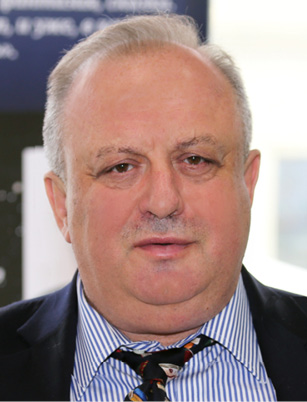
Yakov L. Shrayberg
Acknowledgements
We would like to express our deep appreciation to our colleagues with whom we discussed and recalled the development of libraries in Russia at their most interesting and challenging period. They encouraged us in working on the article and helped tremendously with comments, ideas, and advice. Especially we would like to thank Viktor Zverevich (National Public Library for Science and Technology), Irina Eidemiller (National Library of Russia), Marina Karpova and Ekaterina Polnikova (Research Library of the St Petersburg State University), Natalia Vershinina (MIVERCOM, St Petersburg) and colleagues from the Library Science Reading Rooms at the National Library of Russia and the National Public Library for Science and Technology. We would also like to thank Ksenia Volkova and Daria Baisel (National Public Library for Science and Technology) for their help and assistance on the final stages of preparing the text. Special thanks go to Ann Matheson (formerly National Library of Scotland), who invited us to write this article and was a wonderful editor of the final text.
References
Duda, Vadim (2020): Natsionalnye biblioteki stran SNG. In: Vestnik BAE, 3, 3–7.Suche in Google Scholar
Duda, Vadim; Levchenko, Viktor; Badekina, Olga (2023): Natsionalnyi bibliotechnyi resurs. Available at http://www.rsl.ru/ru/events/afisha/conf/ezhegodnoe-soveshhanie-rukovoditelej-bibliotek-rossii-23.Suche in Google Scholar
Dvorkina, M.; Salnikova; L. I. [Altukhova, G. A.; Voikova, O. F.; Guseva, E. N.] (Eds.) (2015): Obshchee bibliotekovedenie. Moskva: MGIK.Suche in Google Scholar
Evstigneeva, G. A.; Zemskov, A. I. (1998): O novykh podkhodah k formirovaniu kollektsii nauchno-tekhnicheskoi literatury. In: Nauchnye I tekhnicheskije biblioteki, 1, 63–72.Suche in Google Scholar
Grikhanov, Yu. A. (1998): Pravovoie regulirovanie informatsyonni-bibliotechnoi deiatelnosti. In: Nauchnye I tekhnicheskije biblioteki, 1, 47.Suche in Google Scholar
Kuz’min, Eugenii (1999): Bibliotechnaia Rossia na rubezhe tysiacheletii. Moskva: LIBEREIA.Suche in Google Scholar
Kuz’min, Eugenii (2000): Introduction. In: Bol’shie i malyie biblioteki Rossii. 2nd edition. Moskva.Suche in Google Scholar
Kuz’min, Eugenii (2001): Gosudarstvennaia informatsionnaia politika i biblioteki. In: Nauchnye I tekhnicheskie biblioteki, 1, 27–46.Suche in Google Scholar
Levchenko, Viktor (2023): Natsionalnaia knizhnaia platforma: v ozhidanii versii 2.0. In: Universitetskaia Kniga, November, 54–58. Available at http://www.unkniga.ru/biblioteki/bibdelo/15871-nkp-v-ozhidanii-versii-20.html.Suche in Google Scholar
Lushnikov, P. Yu. (2020): Otsyfrovannoe dostoianie. In: Biblioteki Novogo Pokoletvia, 2, 37–42.Suche in Google Scholar
Mikhailov A. I.; Chornyi A. I.; Goliarevsky R. S. (1968): Osnovy informatiki: uchebnoe posobie. Moskva: Nauka.Suche in Google Scholar
Petrusenko, Tatiana; Eidemiller, Irina (2017): Obiazatelnyi ekzempliar dokumentov v Rossiiskoi Natsionalnoi Biblioteke. In: Rossiiskaia Knizhnaia Palata: Conference proceedings, ed by K. M. Sukhorukova. Moskva: Rossiiskaia Knizhnaia Palata.Suche in Google Scholar
Polozhenie o federalnoi gosudarstvennoi informatsyonnoi sisteme “Natsionalnaia elektronnaia biblioteka”. Available at http://static.government.ru/media/files/yYAeqiBDSwITsAXr81LtXSDSdefAbLzi9.pdf.Suche in Google Scholar
Shraiberg, Yakov; Voroisky, Felix (1995): Automated library automated systems of Russia. Moskva: LIBEREYA.Suche in Google Scholar
Sokolov, Arkadii (1994): Bibleiski Iov i bibliotechnyi fakultet. In: Retrospectiva, 60, 326–27.Suche in Google Scholar
Sokolov, Arkadii (2004): Professia bibliotekar’. In: Retrospectiva, 60, 272.Suche in Google Scholar
Tarachenko, G. V.; Eidemiller, I. V. (2010): Bibliotechnye Fondy. In: Spravochnik Bibliotekaria, ed. by A. N. Vaneev. St Petersburg: Professia.Suche in Google Scholar
Tomsk State University (2018): Kontseptsiya razvitia vuzovskikh bibliotek Rossii na 2019–2024. Tomsk State University. Research Library. Available at http://inion.ru/site/assets/files.3071/6kontceptciia_razvitiia_vuzovskikh_bibliotek.pdf.Suche in Google Scholar
Tsypina, N. E.; Sulimova, N. S. (1998): Oblastnaia nauchnaia biblioteka na rubezhe vekov. In: Informatsyonnyi Bulleten’ RBA, 11, 41–45.Suche in Google Scholar
Volodin, Boris (2002): Vsemirnaia istoria bibliotek. St Petersburg: Professia.Suche in Google Scholar
Voronina, Olga (2003): Tikhaia gavan’ kolumbov. In: Bibliotechnoe delo, 6, 10–13.Suche in Google Scholar
© 2024 bei den Autoren, publiziert von Walter de Gruyter GmbH, Berlin/Boston
Dieses Werk ist lizensiert unter einer Creative Commons Namensnennung 4.0 International Lizenz.
Artikel in diesem Heft
- Titelseiten
- Editorial
- Von der Wende zur Zeitenwende – A Turning Point to the Turning of the Times
- Europe
- Die politische Wende 1989–1991 und die Zusammenarbeit der Bibliotheken in Ostmitteleuropa mit LIBER
- Thirty Years of Change in the UK and in Europe After 1989: A Personal Perspective
- Europas Nationalbibliotheken – das Gedächtnis des Kontinents
- Around the 1990s: A “Wende” for Research Libraries
- Germany
- Glück gehabt! – Die deutschen Bibliotheken nach der Wende – mit einem Ausblick auf die Entwicklung in Europa
- Die Rückkehr in die Zukunft
- „Wind of Change“ – von den zwei Königskindern, die nicht zueinander kommen konnten
- Die wissenschaftlichen Bibliotheken der DDR nach der Wiedervereinigung
- Die Universitätsbibliothek Leipzig in der Nachwendezeit
- Die altehrwürdige Universitätsbibliothek Rostock erwacht zu neuem Leben
- Die Etablierung der Bibliothek der Fachhochschule Anhalt
- Von der Wissenschaftlichen Allgemeinbibliothek zur Stadt- und Landesbibliothek
- Von der Wende zur Zeitenwende (1990–2020) in Dresden, Sachsen und beim Deutschen Bibliotheksverband
- Stadtbibliothek Magdeburg im Umbruch
- Stadtbibliothek Magdeburg ab 2014: Profilschärfung als Bildungshaus und städtisches Veranstaltungszentrum
- Die Bibliotheken der Goethe-Institute in Russland und den sowjetischen Nachfolgestaaten
- Auf dem Weg zum gemeinsamen europäischen Kulturraum
- Central and Eastern Europe
- A Paradigmatic Shift for Estonian Research Libraries: Thirty Years of Rapid Travel on the Digital Highway
- Latvian Research Libraries from the 1980s to the Present
- Research Libraries in Russia: The Past Revisited – Leading to the Future
- Between the East and the West. Regional Transformations and the Development of Polish Research Libraries 1989–2023
- From “Difficult to Find” to “Picking from the Flood”: A Turning Point to the Turning of the Times
- Das ungarische Bibliothekssystem und die Veränderungen der Situation der Bibliothekare nach 1990
- The Vernadsky National Library of Ukraine in Times of Independence and Martial Law: Development Strategy, Preservation, and International Co-operation
- Turning Points in the Croatian Information Environment: From the 1980s to 2023
- Armenian Libraries from Afar and Up Close
- Southern Europe
- Turkish University Libraries on the Centenary of the Republic
- The Tenses of the Greek Metamorphoses
- Academic and Research Libraries in Italy from Past to Future
- “Alone You Are Nothing. Together We Will Build a Better World”
- Western Europe
- The Experience of the Bibliothèque nationale de France
- A Portrayal of French University Libraries 1989–2024
- University Library Collaboration in Belgium: Successes and Obstacles
- Futures
- Danish Libraries between ‘Wende’ and ‘Zeitenwende’
- Research Libraries’ Diverse Orientations to an Algorithmic Future
- The Turning Point in Time from the Serbian Perspective: How to Turn the Digital Tide
- List of Contributors
Artikel in diesem Heft
- Titelseiten
- Editorial
- Von der Wende zur Zeitenwende – A Turning Point to the Turning of the Times
- Europe
- Die politische Wende 1989–1991 und die Zusammenarbeit der Bibliotheken in Ostmitteleuropa mit LIBER
- Thirty Years of Change in the UK and in Europe After 1989: A Personal Perspective
- Europas Nationalbibliotheken – das Gedächtnis des Kontinents
- Around the 1990s: A “Wende” for Research Libraries
- Germany
- Glück gehabt! – Die deutschen Bibliotheken nach der Wende – mit einem Ausblick auf die Entwicklung in Europa
- Die Rückkehr in die Zukunft
- „Wind of Change“ – von den zwei Königskindern, die nicht zueinander kommen konnten
- Die wissenschaftlichen Bibliotheken der DDR nach der Wiedervereinigung
- Die Universitätsbibliothek Leipzig in der Nachwendezeit
- Die altehrwürdige Universitätsbibliothek Rostock erwacht zu neuem Leben
- Die Etablierung der Bibliothek der Fachhochschule Anhalt
- Von der Wissenschaftlichen Allgemeinbibliothek zur Stadt- und Landesbibliothek
- Von der Wende zur Zeitenwende (1990–2020) in Dresden, Sachsen und beim Deutschen Bibliotheksverband
- Stadtbibliothek Magdeburg im Umbruch
- Stadtbibliothek Magdeburg ab 2014: Profilschärfung als Bildungshaus und städtisches Veranstaltungszentrum
- Die Bibliotheken der Goethe-Institute in Russland und den sowjetischen Nachfolgestaaten
- Auf dem Weg zum gemeinsamen europäischen Kulturraum
- Central and Eastern Europe
- A Paradigmatic Shift for Estonian Research Libraries: Thirty Years of Rapid Travel on the Digital Highway
- Latvian Research Libraries from the 1980s to the Present
- Research Libraries in Russia: The Past Revisited – Leading to the Future
- Between the East and the West. Regional Transformations and the Development of Polish Research Libraries 1989–2023
- From “Difficult to Find” to “Picking from the Flood”: A Turning Point to the Turning of the Times
- Das ungarische Bibliothekssystem und die Veränderungen der Situation der Bibliothekare nach 1990
- The Vernadsky National Library of Ukraine in Times of Independence and Martial Law: Development Strategy, Preservation, and International Co-operation
- Turning Points in the Croatian Information Environment: From the 1980s to 2023
- Armenian Libraries from Afar and Up Close
- Southern Europe
- Turkish University Libraries on the Centenary of the Republic
- The Tenses of the Greek Metamorphoses
- Academic and Research Libraries in Italy from Past to Future
- “Alone You Are Nothing. Together We Will Build a Better World”
- Western Europe
- The Experience of the Bibliothèque nationale de France
- A Portrayal of French University Libraries 1989–2024
- University Library Collaboration in Belgium: Successes and Obstacles
- Futures
- Danish Libraries between ‘Wende’ and ‘Zeitenwende’
- Research Libraries’ Diverse Orientations to an Algorithmic Future
- The Turning Point in Time from the Serbian Perspective: How to Turn the Digital Tide
- List of Contributors
