Between the East and the West. Regional Transformations and the Development of Polish Research Libraries 1989–2023
-
Ewa Kobierska-Maciuszko
Ewa Kobierska-Maciuszko


Abstract
The article explores developments and challenges in Polish research libraries from 1989, which opened the country up to new economic, technological, educational, and cultural realities to the present. These decades saw intense development, particularly in technology, although not without stumbling blocks. How have libraries benefitted and changed? How sustainable and useful for user communities are these changes? The article is based on available data and studies, and on the author’s own observations and experience from 30 years of managerial activity in one of Poland’s research libraries.
1 Introduction
Poland, a country with an area of 312 700 sq. km and a population of 37.7 million, has approximately 9 000 libraries of all types. They hold over 229 million volumes (including over 93 million volumes in academic libraries), used annually by around 8 million readers, of which about 700 000 use academic libraries. Public libraries are the most numerous: there are 7 600, alongside 970 academic libraries.[1] In addition to the National Library, as many as 16 libraries (including the libraries of the ten largest universities) enjoy the privilege of legal deposit. Purchases for the printed collections are made within each library. In the case of public libraries, financial decisions lie with the local authority while in the case of research libraries this role is exercised by universities or other scholarly institutions.[2] Government centrally finances access to licensed electronic collections. In 2022, a significant part of this resource consisted of electronic books (43.2M), followed by electronic journals (4.5M), and databases (7 700). Academic libraries enjoyed the widest access to electronic collections, i. e., 78.9 % of the total stock.
The legal environment for libraries in Poland is governed by legislation related to three Ministries:
Ministry of Culture and National Heritage: in relation to the National Library and the network of public libraries,
Ministry of Science: in relation to academic libraries,
Ministry of Education: in relation to school libraries.
This tripartite legal structure, albeit well-established thanks to a long tradition, has repeatedly hindered comprehensive changes in the methodology and technology of library work. Moreover, this distribution of responsibility among ministries is not conducive to building a coherent vision and guiding principles for regulating the profession of librarianship.
In the academic year 2022/23, there were 362 higher education institutions (HEI) in Poland, and the number of students totalled 1 223 600, with 105 400 foreign nationals among them. Most foreigners came from European countries, with the largest group from Ukraine (48 100, 45.6 % of all foreigners), followed by Belarus (12 000, 11.4 %) and Turkey (3 800, 3.6 %). Compared to 1989 (the starting point for this article), the number of academic institutions has increased almost four times (back then, Poland had 87 universities and 380 000 students). This massive change affected the libraries of these higher education institutions (HEI) in every aspect of their operations: budgets, space, technology, and people.
2 Historical Heritage and Polish Academic Libraries
The history of Poland’s oldest libraries, i. e., the cathedral libraries in Gniezno near Poznań and on the Wawel Hill in Krakow, dates back to the early days of Polish statehood, i. e., the 10th and 11th centuries. Up to the end of the 14th century, this time was marked by the complete dominance of church institutions as centres of writing culture, reading and intellectual life for the elites associated with Church and State structures. When King Casimir the Great founded Krakow Academy (later renamed the Jagiellonian University)[3] in 1364, this paved the way towards the modern path of development for centres of learning and education that enjoyed relative independence from Church structures. By the end of the 15th century, the Jagiellonian Library collection, gathered since the early days of the University, comprised thousands of manuscript copies representing the state of knowledge at the time, while the 16th century brought a quantum leap associated with the development of printing, with Krakow being the largest centre of printing in Poland. Like elsewhere in Europe, the emergence of a market for printed books in the Kingdom of Poland and the Grand Duchy of Lithuania (which was a single state called ‘the Polish-Lithuanian Commonwealth’[4] from the mid-16th century) generated an intellectual and social need to collect and store books and to make them available. At that time, this was obviously limited to the still very narrow circle of those who were literate.
Between the 16th and 18th centuries, library collections developed in the capitals of successive dynastic and electoral kings (Krakow and, from 1596, Warsaw), as well as libraries located in aristocratic houses, which served as the centres of local political power and intellectual life at the time. In 1579, King Stefan Batory[5] founded the University of Vilnius (the second university in the Polish-Lithuanian Commonwealth) with a library that was one of the most extensive collections in the country until 1939. A later initiative, already starting in the late Enlightenment (1817), and yet comparable in scope (in the Eastern Territories of the Commonwealth too) but richer in polonica and slavica, was the Zakład Narodowy im Ossolińskich (‘Ossolineum’) founded by Józef Maksymilian Ossoliński in 1817 in Lviv. It combined a library, publishing house and museum.[6] The institution, which managed to bring together the Polish intellectual and cultural movement, survived in very good condition for the next two centuries. However, the period of the Second World War and the two Occupations (German and Soviet) irreversibly destroyed the coherence of this collection through successive evacuations to other locations (permitted by the Occupation authorities of the General Government first, then the USSR). Finally, in 1945, approximately 30 % of the surviving collections ended up in Wrocław, a city which was in ruins at that time. Today, the collections and the building of the former Ossolineum Library in Lviv are part of the Vasyl Stefanyk National Science Library of Ukraine.[7]
It was also during the Enlightenment that the idea of a publicly-accessible national library was born, the concept outlined by two brothers, Bishops Józef and Andrzej Załuski. They were learned patrons of the arts and social activists, associated with the Enlightenment concept of the modernisation of Poland. The pillar – and one of the main authors – of that concept was King Stanisław August Poniatowski,[8] who came from a rich and ambitious aristocratic family and had had an excellent education. He himself amassed a large library of contemporary scientific publications, mainly French and German, and works of European art. His collection of prints and drawings formed the foundation of the library of the third university centre after Krakow and Vilnius, namely the University of Warsaw (1816), and it was purchased from the King’s heirs. The King’s Enlightenment concepts and the idea of the Załuski brothers’ National Library[9] did not survive the historical turmoil at the end of the 18th century, when Poland ceased to exist as a country for 120 years and its territory was divided between three powers: Russia, Prussia, and Austria-Hungary. Of course, due to this fact, the idea of creating a national library was abandoned, and only revived after Poland regained its statehood after the First World War (1918). The National Library was established and in the short 20-year interwar period, it amassed an impressive collection of over 800 000 volumes. In the 1930s, the collections of three libraries, i. e. The National Library in Warsaw, the Jagiellonian Library in Krakow, and the Ossoliński National Institute in Lviv encompassed almost the entirety of Polish writings from the earliest times to the present. Together with the university libraries in Warsaw, Lviv, and Vilnius, and several libraries founded by aristocratic families,[10] they represented a source of information for scientific research and academic education.
The disaster of the Second World War derailed these successful trends. As a result of warfare, the policies of Nazi Germany, and also in the Eastern Territories (Vilnius, Lviv) the Soviet occupation, followed by the shifting borders in Central Europe (following the decisions made during the Yalta Conference[11]), Poland’s libraries irreversibly lost around 70 % of their holdings, with research libraries losing around 45 %.[12] The surviving collections were often damaged and fragmented, including those that had been partly rescued and relocated from areas incorporated into the USSR (the libraries of Lviv and Vilnius) or found by Polish librarians in post-German areas: mainly the German-language libraries of Lower Silesia and Western Pomerania (primarily in Wrocław and Szczecin).
The period of 1945–1989, i. e., the forty-four years of Communist rule in Poland, can hardly be called an era of great library investment. However, to be fair, it should be noted that the first post-war decade was primarily a period during which the network of public and school libraries was rebuilt in conditions of a demographic and educational boom, supported by propaganda slogans about universal education. This went in parallel with the reorganisation of academic libraries under new conditions and within the new borders. Among the more spectacular achievements of this period, are two architectural projects: the National Library in Warsaw and the Silesian Library in Katowice.
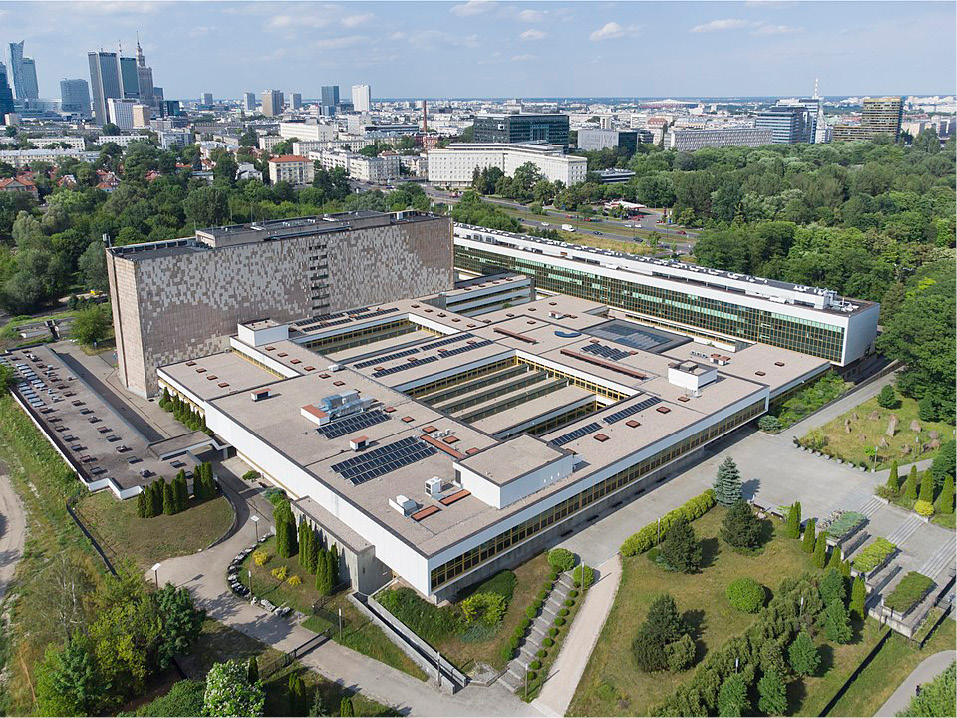
The National Library National Library, Warsaw. Current building, ©Emptywords – Praca własna, CC BY-SA 4.0, https://commons.wikimedia.org/w/index.php?curid=130507075
The National Library building was designed by Stanisław Fijałkowski in the 1960s and is very much rooted in its era, both aesthetically and functionally. The headquarters (collection storage, reading rooms, administration) which in fact consists of three fairly separate buildings, has by today’s standards, an imbalanced proportion of overlong passage routes in relation to the workspace assigned for readers and librarians, without clear points of contact between them. Nonetheless, in recent years (2022) the public spaces have been modernised, the area of reading rooms has been enlarged three times, with the addition of a modern network infrastructure, and the available reference book collection has been updated and quadrupled.[13]
The design for the new building of the Silesian Library, historically the Library of the Silesian Sejm (1922), and now the voivodship-level public library, dates back to the last years of Communist Poland (1989). The authors of the project were Marek Gierlotka, Jurand Jarecki, and Stanisław Kwaśniewicz (ARAR Architecture). The design relied on the concept of a robotic warehouse, with full automation of the process of ordering items from the warehouse and delivering them to a desk in the reading room. It was an innovative solution, used in Poland for the first time and modelled, among others, on the design of the public library in Bordeaux. However, it was not replicated in any other library in subsequent decades. Nevertheless, the new building, officially opened in the mid-1990s, was widely acclaimed, not least for its architectural expression.
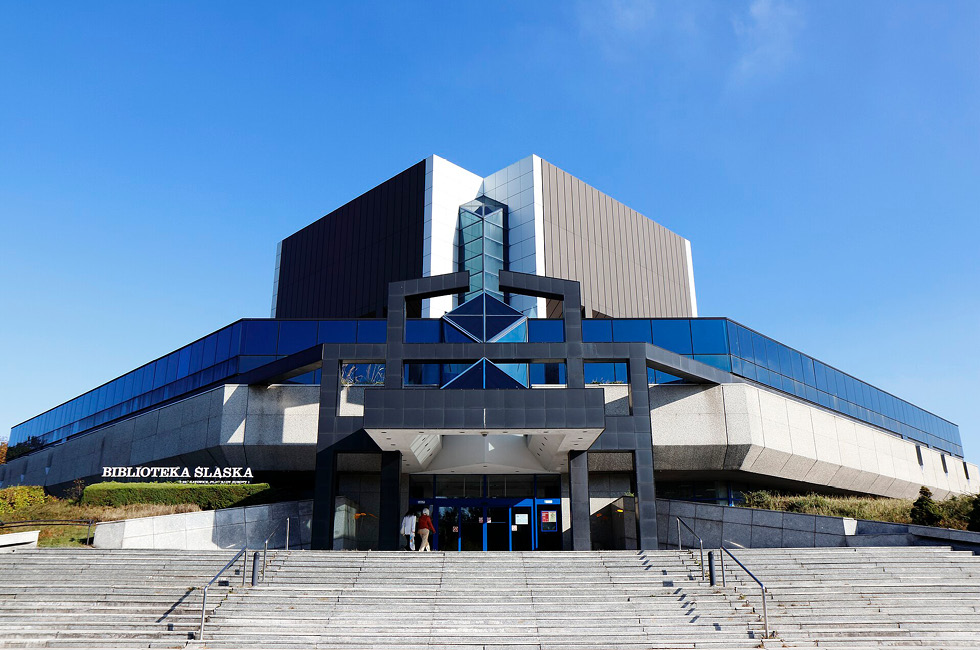
Silesian Library, Katowice (1992). The central part is a high-rise storage room, © Fiflon – Praca własna, CC BY-SA 4.0, https://commons.wikimedia.org/w/index.php?curid=73817819
3 Poland’s Political, Economic and Technological Opening Up to the World in 1989: A New Generation of Librarians, New Ideas, New Funding
The period of the last 35 years—initiated in 1989 by the great political and economic transformation covering all areas of public life—brought some spectacular achievements to the library world in Poland. The most important included the computerisation of academic libraries, which began in 1992 and, over the next decade, resulted in the creation of the Union Catalogue of Polish Research Library Collections (NUKAT)[14]. Among the construction projects, one must note the building of the University Library in Warsaw (BUW), which was opened in the academic year 1999/2000 and set the standards for the construction and organisation of a modern academic library in this region of Europe.
However, before this happened, i. e., in the 1990s, the organisational model of an academic library in Poland did not differ in any particular way from the standard solutions applied in academic libraries in Eastern Europe for decades. The tasks of an academic library were codified in the literature on the subject, both contemporary and historical. They comprised the collection and processing of collections, making them available, and conducting professional research and partly didactic activities in the fields of library science, research information as well as the broadly understood interface between historical, philological, and cultural studies based on special collections. All this built up a rather stable position for the main library in the structure of the University and created the impression of historical permanence. Meanwhile, library work in Western Europe and the USA was already undergoing the first ICT revolution with its cultural and social consequences. Local OPAC catalogues were being created, the centralised OCLC WorldCat Catalogue was developing in the USA and new content, images and sound media appeared on the shelves of libraries. Making them available to the public was a task that required a slightly different technical infrastructure from libraries and different competencies from librarians. Polish librarians were only starting to discover that world, and librarians in academic libraries were in the avant-garde of the change. It was precisely in the libraries of the largest universities and polytechnics that the ideas of co-operation were born when it came to the selection and implementation of integrated library systems, the building of central and distributed catalogues and, finally, coordinated co-operation in the creation of digital libraries. Although these positive models were used ever more willingly and widely by public and special libraries (which are now catching up with academic libraries or even surpassing some), it is academic librarianship that sets the technological and organisational standards in Poland.
4 Infrastructure Development: New Buildings, New Technologies, Integrated Library Systems
Let us go back for a moment to 1992, when thanks to the Andrew W. Mellon Foundation,[15] the VTLS integrated library system was purchased for the first four academic libraries that were ready for a ‘big change’.[16] These were the libraries of three universities: in Gdańsk, Krakow, and Warsaw, as well as the AGH University of Science and Technology in Krakow. The group expanded very quickly, new implementations arrived, including other integrated systems (Aleph, Horizon), alongside Polish systems such as Prolib, Sowa, etc. A separate and even faster path was chosen by the Sejm Library in Warsaw, which implemented the Aleph system at the same time, in consultation with the Library of Congress in Washington DC and with its financial assistance.
The newly created OPAC catalogues, based on the conversion of card catalogues into the MARC21 format, controlled by index cards created on an ongoing basis for the work of cataloguers in a dedicated centre in Warsaw University Library, grew rapidly and became the starting point for the concept of a central catalogue of research and academic libraries (NUKAT). It was launched in 2002 as a project that was initiated and led by BUW, but unfortunately without the active participation of the National Library, which had momentous consequences in the following years, persisting up to the present day.
The initial minimal expectations, i. e., the creation of central online catalogue information, quickly evolved alongside the intensive development of online library materials available in an increasing number of repositories, databases, and digital libraries. In the first stage, local OPAC catalogues gained an incomparably wider reach via NUKAT. In the next, a bibliographic description that directed the reader to a physical copy on the shelf of a library, gained a second life thanks to access to the full text. In the NUKAT Catalogue alone, 6 % of bibliographic descriptions contain a link to the full text, which is still quite modest. On the other hand, Polish libraries provide access to vast digital collections from national licences and local acquisitions. Initially, the challenge was how to effectively promote and educate users to make the most of the opportunities offered by today’s digital access tools. For several years now, the usage rates of e-resources have been clearly increasing[17] in relation to printed collections shown in AFBN materials, although they still do not fully amortise the outlays that Government incurs in purchasing and organising access to those collections. Similarly, the idea of open access to research output created within the given university and from its budget was not fully understood in the Polish academic community for a long time. While these attitudes have been evolving in recent years, the change has been rather slow.
Academic libraries are still ahead of all others in Poland, not only in terms of the degree of ICT advancement, but also in terms of investment in spatial infrastructure. Over the last decade, the number of reading places in academic libraries has increased by more than 1 200. This is all the more important given that as many as 66.2 % of registered readers in these institutions are from higher education libraries, and onsite access is more than twice as high as external loans.
5 The Beginnings of International Co-operation
The late 1980s and 1990s were a time of great fascination with libraries that we labelled as ‘Western’ at the time. Just as in other areas of professional and private life, both at the end of Communist times and during the transition period, our sector also experienced a yearning for modern technology, aesthetics, as well as functionality, comfort, and the luxury of working and living conditions – something that was unimaginable to us at the time. Despite all its advantages, the radicalism of this change also had the disadvantage of isolating Poland from the librarianship of Eastern European countries, deepening the separation and mutual isolation of librarians from the so-called Post-Communist countries. It was very difficult for us to reverse this trend. With a lot of effort from colleagues active in international library organisations (IFLA, LIBER and CERL), Poland only succeeded in doing it in the 21st century and it is still not clear to me if success has been complete.
However, there was something more important to us in the late 1980s and early 1990s, namely the staggering new opportunities for the transfer of technology and funds from the West, unhindered by political obstacles. We saw an avalanche of proposals from foundations and institutions supporting various areas of social and academic life, including librarianship in developing and Post-Communist countries. The Andrew W. Mellon Foundation supported the purchase and implementation of the VTLS system for the first four libraries. Professor Richard Quandt,[18] who headed the Foundation, affirmed financial support as well for the transfer of know-how and a long-term commitment to building a coherent system of information about the resources of Polish research libraries, which ultimately led to the creation of NUKAT. Architects were becoming increasingly interested in designing new buildings for Polish libraries, and we also knew that libraries in the USA and Western Europe were an inexhaustible source of inspiration in terms of the forms and functions of contemporary library buildings. People who spoke languages other than Polish and Russian and were brave enough to test their skills in practice could choose from a range of scholarships, grants, and study trips at various levels of academic education. When returning from those trips, we brought back diverse intellectual and mental baggage, depending on individual perception, openness to innovation, etc.[19] This process was facilitated thanks to the fact that the largest Polish libraries retained their membership (also formally during the Communist period) in several international organisations: IFLA (International Federation of Library Associations and Institutions) and the International Advisory Committee of Keepers of Public Collections of Graphic Art. As early as the second half of the 1990s, we initiated new contacts with LIBER (Ligue des Bibliothèques Européennes de Recherche) and CERL (Consortium of European Research Libraries).
Particular attention should be drawn to our relationship with LIBER. This organisation was founded in 1971 under the auspices of the Council of Europe as an association of European research libraries (currently from more than 30 countries).[20] The overarching aim has been to actively promote co-operation between libraries and library organisations, and to support the operation of a transnational network of European research libraries. An extensive network of international co-operation ensures the necessary flow of information and co-operation between European and non-European librarianship. One of the aims was to maintain contacts with American librarianship, which pioneered modern developments in library technology for practically the whole of the 20th century. In the second half of the 20th century, they imposed the Anglo-Saxon open library model, with free access to collections. It replaced the traditional model of academic library organisation to such an extent that the US model was adopted as its own in most European countries. For developing and Post-Communist countries, LIBER prepared a special ‘membership package’ including exemption from membership fees, coupled with grants to attend annual meetings. This had a tangible effect: LIBER ceased to be an elitist organisation limited to libraries from the former EEC member states and became a genuine representation of the interests of academic libraries from all European countries. Contacts with the “expert group”, i. e., the LIBER Architecture Group (LAG) turned out to be extremely useful and creative, especially in the context of new library buildings being designed and modernised. This expert group of architects and librarians was set up in the early 1990s, at the time headed by Professor Elmar Mittler, Director of Göttingen University Library,[21] then succeeded by Dr Ulrich Niederer, Director of Lucerne Central and University Library. The biennial international seminars for architects and librarians from many European countries were an invaluable source of knowledge and inspiration, bringing these two communities together with the idea of presenting new and modernised library buildings and providing an excellent opportunity for learning and exchanging experience.[22]
6 New Buildings for Academic and Research Libraries
Access to the experience and knowledge of West European librarians, as well as practical know-how competencies gained through co-operation, have been of great use to Polish librarians in the process of comprehensive renewal and modernisation of the academic library infrastructure. In many cases, this enabled the development of partnerships with designers and contractors at various stages of investment. This process peaked in the 1990s and the first decade of the 21st century.
The building of the University Library in Warsaw (BUW), completed at the turn of 2000, was a key investment. Those 25 years ago, it set the benchmark for a modern library building in this part of Europe. The history of this investment project is a good reflection of the nature of Poland’s changes in politics, economy, and library operations over the last thirty years. The main library of Poland’s largest university, perceived by the Communist authorities as a breeding ground for political opposition and on account of its intellectual background, did not get a new building throughout the entire period of the Polish People’s Republic, despite operating in the paralysing conditions of cramped space in a worn 19th-century building. The decision to allocate funds for the design and construction of a new BUW building was only adopted by the first “Solidarity”-based government and its Prime Minister Tadeusz Mazowiecki. It was 1990, and the meagre central budget of the country was struggling to recover from the economic collapse of the declining Communist period while it was being reoriented towards a free market economy. The design of the BUW building and its subsequent construction was financed from the rental of the former Communist Party headquarters,[23] by then used for various commercial purposes. Among others, the then fledgling Warsaw Stock Exchange had its main office there.
The design was approved in 1994 and the construction and the removal of the collections took five years. The final result exceeded all expectations and permanently changed the spatial and organisational model of a large academic library in this part of Europe. There were several factors that contributed to this success. First, the political and economic sentiment in the second half of the 1990s made it possible to implement this project in a way that was in line with the ambitions and vision of its creators.[24] Second, the building had non-standard architecture: monumental postmodernism with strong symbolic accents. Third, the functional principles played a role, giving the readers free access to the current and most used part of the collection for academic teaching.
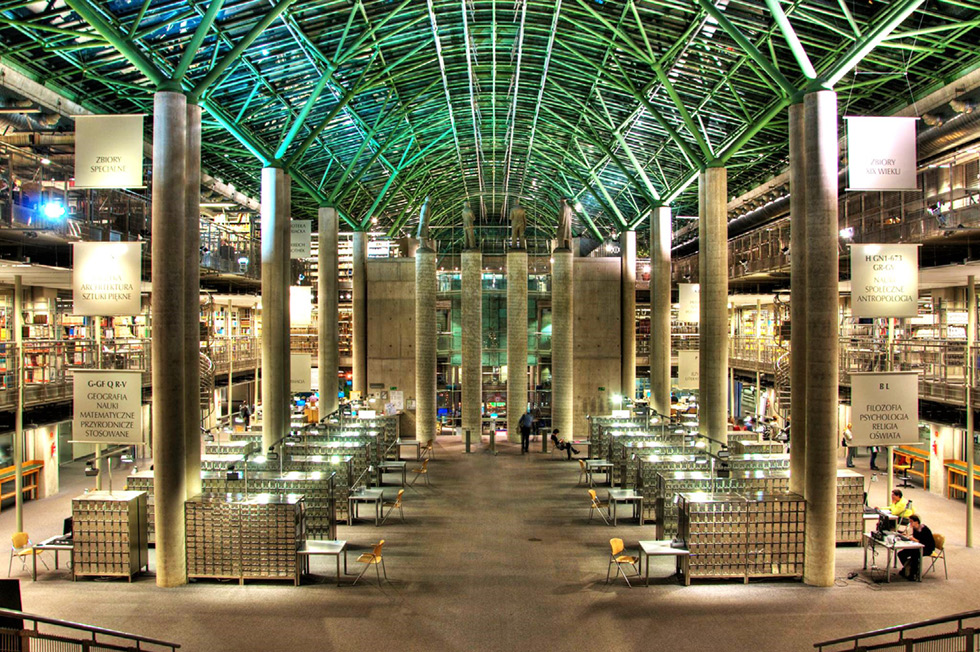
University of Warsaw Library (1999). Library interior with free access to approximately 1 million volumes, ©Library’ Digital Archive
In East European librarianship, the BUW building is the first such full and consistent embodiment of Harry Faulkner-Brown’s “Ten Rules”.[25] Several of them are arguably most important in this case: the modularity and flexibility of the structure, the open plan of the interior that is amenable to any arrangement and the free access to systematically arranged collections, guiding readers “from the general to the specific” in an evocative way while not limiting their individual choices. These features, alongside, of course, the quality of the collection, allow BUW librarians to still fight a relatively equal battle in ensuring that BUW is effective from an educational point of view, useful for research and attractive in social terms while facing the flood of information on the Web and other challenges of modern technology. The new University of Warsaw Library building has also set the standards for several other buildings designed for large academic libraries. Indeed, its influence is strongest in the designs of the university libraries in Wrocław and Gdańsk.
The University of Wrocław Library (BUWr) was created by architects previously associated with the design and construction of the BUW building.[26] The BUWr Library building, comparable to BUW in size and capacity,[27] was located on Wrocław’s riverside boulevards and designed in the form of two compact blocks. They include the main part of the Library, intended for access spaces, general collection storage, including open access, and new collections departments, as well as a second part, intended for reading rooms, stacks and special collections. The main entrance to the Library is through a pedestrian footpath between the two parts. The building was officially opened in 2012.
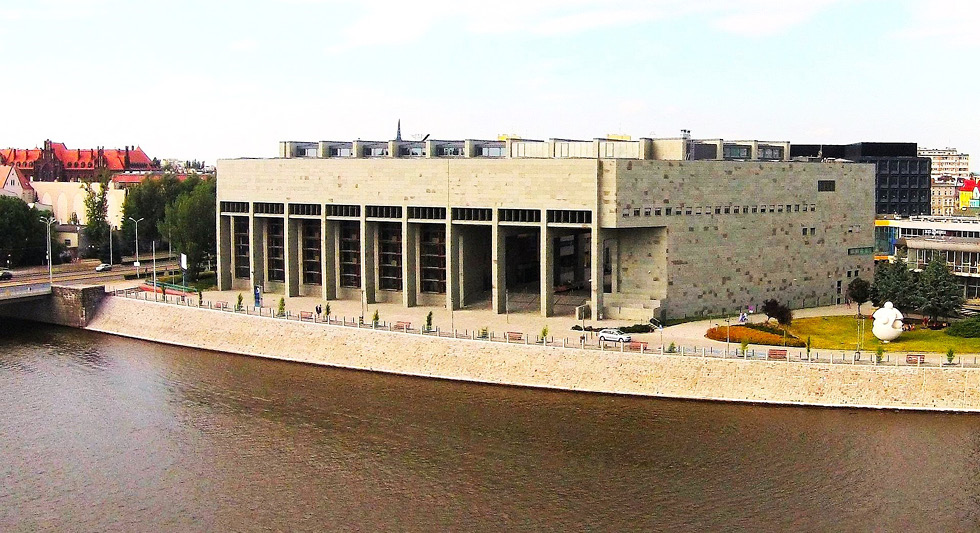
University of Wrocław Library (2012) on the banks of the River Oder, Wrocław, © Fallaner – Praca własna, CC BY-SA 4.0, https://commons.wikimedia.org/w/index.php?curid=104195634
The building of the Library of the University of Gdańsk (BUGd) is equally successful, although on a smaller scale.[28] The architectural format, which makes modest use of maritime motifs and its function, which is limited to providing access to current teaching and research collections exclusively on open access, has produced a usable and aesthetically pleasing effect that is above average for a medium-sized university. Located in the centre of the campus, the facility with a usable area of 15 000 sq.m has attracted increasing interest and popularity since its opening in autumn 2006.
These three projects used spatial and organisational solutions that had already been used quite widely in West European and US libraries for decades. However, since Central and Eastern Europe was deprived of access to modern architectural and technological solutions during decades of Communist domination, these were avant-garde projects. On the one hand, they took account of the development of new primarily digital techniques for collecting, processing, and providing access to information. On the other, they promoted the noble idea of freeing the reader from numbered tables in the reading room and making their library work more independent through access to increasingly large areas of printed collections, parallel access to networked resources and a variety of other services.

University of Gdańsk Library (2006), Gdańsk, © Zero – Praca własna, CC BY 2.5, https://commons.wikimedia.org/w/index.php?curid=2041527
A different path was chosen for the Jagiellonian Library (BJ) in Krakow. The extension of the BJ building had been already envisaged in Wacław Krzyżanowski’s original design, created just before the Second World War. The first extension took place in the 1960s and Romuald Loegler’s design successfully referred to both earlier phases.[29] As a result of the latest expansion, the BJ building doubled its floor space and storage capacity. The public part of the Jagiellonian Library gained a set of new reading rooms for science, modern languages and multimedia, and the time spent waiting for a book has been reduced to that governed by the Telelift transport system (with closed stacks). Already this description suggests that the traditional organisation of stacks (inaccessible to readers) and accessibility mainly through subject-focused/special reading rooms was preserved, thus ignoring (in this author’s opinion) the experience of modern academic libraries with regard to the organisation of internal library space and its role as a factor supporting readers’ library searches and individualised working tools.
The previous paragraphs describe just a few of the most impressive examples of new and expanded buildings. The scale of infrastructure modernisation in Poland was much broader, however. In the two decades under review (1990–2010): new library buildings were built in more than a dozen universities and polytechnics, and almost all academic libraries were modernised, albeit to varying degrees. At a somewhat later stage (i. e., after 2004) this investment boom also extended to public and school libraries of all sizes and scope. Although neither of them is the subject matter of this article, one cannot fail to mention that this was enabled by factors such as the launch of the European Union’s structural funds and operational programmes[30] and the support from the Melinda and Bill Gates Foundation.[31]

Jagiellonian Library (2001), Kraków. The extension with the old part at the back, photo: W. Kryński
7 After 2004: Poland in the European Union, NUKAT, a Shift towards a Digital Model for Creating and Sharing Research Information
After years of major investment then came two decades (2004–2023) that also brought significant changes in academic libraries. This was not so much in terms of infrastructure, but more in the sphere of technology for collecting, processing, distributing, and creating access to research information: it was no longer just bibliographic information but also full-text data. We have now reached a stage where data from the overwhelming majority (ca. 90 %) of the catalogues of Polish research libraries are available online, both from the websites of libraries/universities and via the NUKAT Catalogue. Since 2006, data have been regularly exported to the WorldCat Catalogue via monthly updates. They are also available under the ‘Combined Catalogues of the National Library’ project (since 2018).[32]
NUKAT (the National Union Catalogue) deserves a separate section in this narrative. According to prevailing opinion, it is the largest and longest running joint project among academic libraries in Poland (dating back to 2002). The idea behind the project was to create a catalogue based on co-operative cataloguing in a central database, with each bibliographic description entered only once, by the first library to create the bibliographic record in the database. Other libraries do not repeat this process, they just copy the record and add their own location. In its first phase, the NUKAT project was co-financed by the A. W. Mellon Foundation and the then Ministry of Science and Higher Education. Since 2004, it has had two sources of funding: the BUW budget and a special annually renewable grant from the Ministry. The average annual cost of running the project is approximately PLN 3.5 million.
The project has been run by the University of Warsaw Library,[33] initially in collaboration with 27 libraries. Twenty years later, at the peak of its development, it included data from 185 libraries, including all major universities and polytechnics. For two decades, it has optimised the processing of both current and older collections, enormously accelerating the retroconversion of card-based catalogues, and extending to more categories of library collections, including historical and special collections (manuscripts, old prints, maps, musical prints, and 19th-century publications), whose cataloguing became possible with the arrival of the Polish variants of the MARC21 format for special collections. However, the speed of cataloguing is not the only advantage of the project. The second equally important aspect refers to the clearly defined principles of cataloguing, consistently applied since the very beginning, together with control of most of the entered data using a parallel list of authority records. After 22 years, the project has produced a coherent central database of 5 250 000 bibliographic records and 8 000 000 authority records,[34] readable by related projects (OCLC, VIAF, CERL/HPB) with which data exchange has been going on for years. Data from the NUKAT Catalogue are copied to the catalogues of local libraries in Poland about 20 million times a year on average. Within NUKAT, they form an extensive library information network which gradually connects metadata from digital libraries, leading readers to full texts.
Moving to the topic of digital libraries, I must mention that both the National Library and numerous research libraries have been running their own digital libraries for several years, either independently or in conjunction with other libraries in the same region. Those digital libraries contain full texts of historical publications from the most valuable historical collections hosted by these libraries as well as from the public domain. The largest of these, POLONA, has been run by the National Library since 2017. It was designed to cover the entire Polish cultural, literary, and artistic heritage held in the National Library and the Jagiellonian Library collections.[35] In recent years, another 11 libraries have included their own digitised collections in POLONA, rendering over 4 million digitised publications altogether.
However, the National Library was not the pioneer of digital libraries in Poland. Instead, this status could be attributed to the research libraries of the Poznań and Wielkopolski region: as early as in 2002, they launched a project called “Wielkopolska Biblioteka Cyfrowa (WBC)”.[36] This project, which was pioneering at the time, was intended to provide full-text access to the historical literary works documenting the cultural heritage of the Wielkopolski region. Nevertheless, it soon extended its scope to include research publications, and not only those related to the region. Currently, the WBC is co-created by 10 research libraries from Poznań and Kórnik as well as the municipal library in Ostrów Wielkopolski. The research community in Poznań also initiated a nationwide aggregator of content from digital libraries, the Federation of Digital Libraries (FBC).[37] This project, commenced in 2007 by the Poznań Supercomputing and Networking Centre of the Polish Academy of Sciences, enables users to carry out multifaceted searches and offers access to digital versions of more than 8 million documents provided by Polish libraries, archives, and museums. The FBC is part of Europeana, the European Digital Library.
Nowadays, in addition to digital libraries covering historical collections, most academic libraries maintain and also run institutional repositories (often in co-operation with other university-wide units, such as IT research and development centres), which systematically integrate the outputs of the university’s current research into digital circulation. In this case too, the Adam Mickiewicz University in Poznań was a pioneer with its institutional repository AMUR,[38] initiated in 2010. This was followed by the repositories in other universities, as well as RCIN, the joint repository operated by the 27 research institutes of the Polish Academy of Sciences.[39] The nationwide open access policy regulations adopted in 2015[40] are slowly producing results, albeit not yet on a 1:1 basis.
To conclude this discussion of new information media, technologies of collecting and providing access to information, it would be useful to have at least a cursory look at the structure of expenditure and costs in Polish academic libraries. Despite all that has been said about the very important support and co-financing from European and US grant institutions, the annual budget is the key element in the funding and development of any academic library, especially the maintenance of professional staff. The library’s annual budget is part of the overall budget of the parent university. The size of the university budget and the algorithm for allocating funds among universities is determined by the country’s Ministry of Science and Higher Education.
The analysis of academic libraries in Poland, including their funding, has been carried out since 2002 under a project called “Analysis of the Functioning of Academic Libraries (AFBN)”,[41] conducted by six university libraries and coordinated by the Adam Mickiewicz University Library in Poznań since 2015, in partnership with the Association of Polish Librarians. The database is based on questionnaires addressed annually to library directors and it includes 156 types of statistical data, which are processed into 116 indicators describing key aspects of library activities, including the size of and access to collections, space and infrastructure, number and activity of readers, financial resources, both overall and per user.
When we look at basic financial indicators over the years, e. g., the percentage of the library budget in the overall university budget, we can see that this indicator steadily decreased from 2002 to 2007. The median values for public university libraries in this period were respectively: 4.23, 2.74, 2.65, 2.48, 2.44 and 2.72 %.[42] This decline was halted in the next decade, but still has not exceeded 3 % at the present day. This also applies to the budgets of the libraries run by the so-called “research universities” selected under the amended Act on Higher Education, which introduced the nationwide programme called “Excellence Initiative – Research University”.[43] Unfortunately, the fact of “being the main library of a research university” has not boosted the budgets of these libraries. The situation has been rescued thanks to grants from other sources obtained through competitions for grants and special research and teaching tasks (extending access to collections, improving information literacy, culture-building activities, etc.). This is an area where one can see a clear change and difference between the elite group of research university libraries, where the share of grants from non-budgetary sources is between 10 % and 20 %, and the other academic libraries, where the same indicator has been declining for a decade, from 4.7 % in 2013 to under 1 % in 2021. These libraries are financed almost exclusively from the budgets of their parent universities.[44]
What is the structure of expenditure in these libraries? The payroll consumes more than 50 % of the budget, acquisitions (printed and electronic) represent 25 %, while the remaining 25 % or so covers technical and administrative costs. This distribution is not strikingly different from the IFLA recommendations set out in the early 21st century, and the comparison looks as follows:
IFLA Cost Structure in a Hypothetical Academic Library and in Polish Academic Libraries
|
|
Types of costs |
IFLA[45] |
AFBN project[46] (for Polish academic libraries) |
|
1. |
Costs of personnel |
65 % |
55 % |
|
2. |
Costs involved in acquiring library collections (research publications: monographs, journals, e-collections, conservation, and preservation of printed collections: bindery, microfilming and digitisation) |
21 % |
24.7 % |
|
3. |
Current administrative costs (telecommunication and postal fees, ongoing repairs, minor renovations, cleaning, and office supplies) |
4 % |
9.9 % |
|
4. |
Costs involved in operating the buildings (utility bills and facility administration fees, servicing contracts and security services) |
10 % |
10.4 % |
It is difficult to briefly summarise the financial condition of Polish research libraries, probably because their situation is not uniform. The main libraries at large universities are doing quite well, both in terms of investment (raising additional extra-budgetary funds of various origins), building up printed and electronic collections and, finally, salaries. The last, salaries, have been criticised as too low for as long as I can remember, but any comparison with their real value 20 or 30 years ago shows the enormous positive changes that have occurred. However, there are also libraries in small academic institutions, with unique niche collections of great value, which are funded at scandalously low levels. Will this situation ever even out, pro rata to their scale, function, and value? This question is difficult to answer.
8 Recent Years: The Impact of Current Policies on Universities and their Libraries, the New National Library project, the War across Poland’s Eastern Border, Contacts with Ukrainian Librarians
The successes and failures of the last 35 years of Polish academic libraries cannot be considered in isolation from ‘big politics’. The latter has rarely been an ally. Instead, it has been a difficult relationship where high expectations have been intertwined with a lack of understanding and a sense of being underestimated, to put it mildly. Our high hopes, like everyone else’s hopes after the 1989 transition, were fulfilled insofar as they opened a window onto the world but were not backed up by adequate ministerial funding. This sentenced libraries to dependence on foreign donors and sponsors or, if seen from a positive angle, built libraries’ ties with such entities for many years. We were fortunate since we came across organisations and people genuinely involved in the transformation of academic libraries in Post-Communist countries, such as George Soros of the Open Society Foundation, Richard Quandt of the Andrew W. Mellon Foundation, and Melinda and Bill Gates. Finally, after 2004, we received less spectacular, smaller, and scattered, but equally important support from EU programmes. Fortunately, they all found partners on the Polish side, primarily the numerous non-profit organisations, as well as individuals in managerial positions in university structures. Those were members of the new staff, brought in through generational change, and included numerous new and young directors of academic libraries – well-educated enthusiasts for modern librarianship modelled on Western Europe and the United States. The extraordinary potential of such staff worked wonders in the initial phase but did cover up for all the shortcomings: libraries were still underfunded, they lacked money and people with vision in mid-level positions, willing to take the risk of co-operating in major structural and technological changes. There was also an absence of a modern legal framework defining the conditions and scope of operation for libraries. In the 1990s, Poland still had an Act on Libraries dating back to 1968, which triggered more or less coordinated attempts to amend or rewrite it. Several legislative initiatives emerged: institutions such as the National Library Board, the Association of Polish Librarians or the National Library set up their own dedicated legislative teams or expert groups, bringing together prominent librarianship of the time. However, neither of those players (whether acting in unity or not), had a strong enough influence on the legislature and the Government. In fact, Government Ministers, regardless of their political profile, had other priorities, such as the law on local government, on cultural activities, on education and on higher education. As a result, the topic of libraries ‘spilled over’ to different ministries. In the end, the new law on libraries that was adopted in June 1997,[47] with the Minister of Culture the responsible authority, contained a multitude of exemptions and delegations to other legislation and other ministries. This scattering was felt most painfully in the segment of professional conditions. Attempts to define the training framework for librarianship, the qualification requirements for different positions, and salary scales were discussed and agreed upon, unfortunately, mainly between librarians from different ministries. The situation was shaped differently in public libraries in comparison to school libraries and research libraries. Even the latter saw differences between the conditions for librarians employed in universities and in research institutes (e. g., the Polish Academy of Sciences). For decades, this disorder had a common denominator, i. e., the imperfect and gradually anachronistic state examination for certified librarians that confirmed the highest qualifications and opened opportunities for those holding managerial positions. Unfortunately, this changed when the profession of a librarian was “liberated” from statutory regulation in 2013 by amending the Act on Higher Education. At the same time, the positions of certified librarians were erased from the job structure of academic teachers. As a professional group within the university structure, librarians were unable to defend the coherence of the profession or to effectively lobby for it among the academic decision-makers, or to propose an alternative solution. This situation has been affecting the position of librarians for a full decade now, relegating our profession to a niche for idealists, with no requirement for specialised training. The latter also leads to the redefining of the former institutes of library science and information science: they now have new branding and undertake to educate almost anyone, on almost any subject, sometimes quite distant from librarianship.
Heading slowly towards a summary of the current situation in Polish academic libraries, I cannot skip a topic that has been a concern for us for some time now. In 2018, the National Library approached what it considered to be the largest and most important academic libraries as well as numerous public libraries (here the criteria are not clear), offering a library system that is clearly at the forefront of global IT solutions for libraries. The project, heralded as “building a nationwide library network through the OMNIS 2 integrated library resource management system,”[48] uses a technologically advanced integrated library system (Alma software from Ex-Libris, Primo search engine, working in the cloud provided by the software provider). As part of the project, a single database was developed for the catalogues of over a dozen large academic libraries, including the Jagiellonian Library, and over a hundred municipal public libraries, including those at the primary level. The initiative is being joined by more large university libraries that were previously part of the NUKAT Catalogue (unlike the National Library itself). As a prerequisite to joining the National Library project, these libraries must waive their presence in the NUKAT Catalogue. The recruitment of further libraries is competitive. Attempts to combine the 20-year-old NUKAT bibliographic database with the National Library’s new multisearch engine[49] and to incorporate NUKAT’s methodological output into the project have so far been unsuccessful.
Consequently, what does the future hold for the NUKAT Catalogue with its five million bibliographic records, eight million authority records and 30 years of methodological work on the rules of co-operative cataloguing of all kinds of library collections in a central database? Despite our great efforts, made with the best of our knowledge and intentions, we are in an uncertain situation, and all the ideas for the future involve attempts to save NUKAT for libraries that remain outside the National Library’s sphere of interest (e. g., due to their narrow specialization) as well as to save the standards of quality and consistency in co-operative cataloguing. The librarians gathered around NUKAT are trying to address the basic demand of our libraries (also the ones that are smaller and less important), expressed quite strongly in all the discussions so far, namely the preservation of the coherence and functionality of the NUKAT Catalogue. Who for? Well, for all those libraries that will not join the National Library project for three, five or maybe ten years. We assume that if further funding is obtained from the Ministry, the NUKAT Catalogue will continue to operate. We have plans to move to an open-source platform since it requires much less investment than a commercial system.
Therefore, after 35 years of working to develop Poland’s research libraries, we are in a rather peculiar situation: we have a lot of achievements (in technology, methodology, image), but we are trying to start building from scratch. Maybe the result will be better, more modern, friendlier to the ordinary person? But why do we have to build from scratch once again, destroying something that has already been built? This is unclear.[50]
Regardless of our internal problems, there has been a war going on for the past two years behind Poland’s Eastern border. As I am writing these words, the end of the war is still not in sight. Like any other war, this one is affecting Ukrainian academic and cultural institutions, including libraries, with all its devastating force. We are maintaining working contact with colleagues from Ukrainian libraries, both centrally (the Polish Librarians’ Association co-operates with its Ukrainian counterpart, and the same is true for both National Libraries in our respective countries) and in various regional centres. However, we are not able to speak of specific librarianship-related forms of assistance, differing from the activities for Ukrainian refugees undertaken by the central government and the majority of local authorities, acting under a special law on assistance to citizens of Ukraine.[51] So far, we have not offered help in evacuating endangered library collections from Ukraine to Poland based on the perception (correct or not) that such an initiative would not necessarily be well received by our Ukrainian partners (unfortunately, the trauma of numerous wartime relocations of cultural assets is still alive in this region of Europe). Nevertheless, public and academic libraries have been quite efficient in other types of assistance. Public libraries and school libraries have focused on serving Ukrainian readers, mainly the young, while academic libraries have become actively involved in serving Ukrainian students (in the academic year 2022/2023, there were almost 50 000 in Poland).[52] This has not been particularly difficult since Ukrainian students and doctoral candidates at Polish universities use more or less the same resources as everyone else. As far as professional contacts are concerned, they do touch upon the issue of rebuilding Ukrainian libraries after the war, and we also share our experiences from the last decades of our technological and methodological progress, including the transition to international standards of bibliographic description, etc. Polish professional journals have published several texts on Ukrainian libraries, their situation under the war and future plans. The first text is a sobering analysis of the reactions of the international library community to the appeal issued by the Association of Polish Librarians to exclude Russian organisations and libraries from IFLA.[53] Then the EBIB (Electronic Library) Association offered the pages of one of its bulletins to Ukrainian librarians so that they could share battlefield stories and plans for “after the war” with their Polish colleagues.[54] It is currently difficult to predict what the coming year will bring, and it is difficult to plan future co-operation under the conditions of the ongoing war.
9 Final Remarks
Thirty-five years of a free market and free technology transfer have enabled Poland to make up for the disadvantages of the coarse period of Communist Poland also in the domain of libraries. The new buildings for academic libraries, central bibliographic information and catalogues linked to global bibliographic services and, finally, networked access to licensed and open access information resources are the best evidence. At the moment, librarians in Poland are struggling with the same dilemmas as the rest of the world, and it is hoped that our problems do not extend beyond those. How and why should we create new buildings for libraries, when we are increasingly finding that the only problem with paper-based resources is the problem of their high-density storage? How far will the digitisation of information sources change the role and working style of a research library? How about its space organisation? Is physical space going to be needed at all? What kind of developments can we expect in the technology for creating and sharing digital information, which is already transgressing the limits of our imagination? Will AI replace the library and the librarian? Making sound predictions is difficult here …
Libraries in Poland, much like everywhere else in the world, have turned into a virtual space. However, they have not ceased to be a physical place, a space for intellectual and social interaction among readers and librarians. And it can be hoped that this kind of social activity, and this style of free yet not chaotic access to resources and information of all kinds can be preserved for as long as possible in the new locations of libraries in Poland and Europe, for the common benefit of the next generations of our readers.
About the author
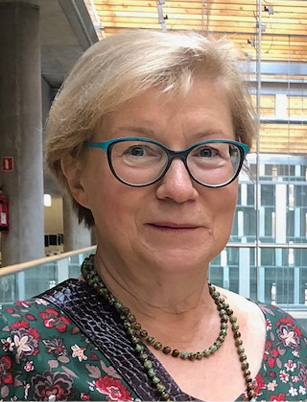
Ewa Kobierska-Maciuszko
References
Biuletyn EBIB (2023): Biuletyn EBIB. 208. Available at https://ebibojs.pl/index.php/ebib/issue/view/97.Search in Google Scholar
Ceynowa, Klaus; Coners, André (in collaboration with Roswitha Poll et al.) (2003): Cost Management for University Libraries. (IFLA Publications: 104). München: K. G. Saur.Search in Google Scholar
Derfert-Wolf, Lidia; Górski, Marek; Jazdon, Artur (2009): Finansowanie bibliotek uczelni publicznych. Analiza wybranych wskaźników z lat 2002–2009. In: Biuletyn EBIB, 8 (108). Available at https://www.ebib.pl/2009/108/a.php?derfert_gorski_jazdon, accessed on 06.02.2024.Search in Google Scholar
Faulkner-Brown, Harry (1994): Factors affecting the planning and design of academic libraries: speaker’s notes for the British Council Seminar. In: Library planning and design. Newcastle upon Tyne, 11–24 Sept. 1994.Search in Google Scholar
Franke, Jerzy (2024): Projekt OMNIS Biblioteki Narodowej. Online. Miscellanea. 21 May 2024. Available at https://repozytorium.uw.edu.pl//handle/item/160372.Search in Google Scholar
Häkli, Esko (2011): Innovation through co-operation: The history of LIBER, Ligue des Bibliothèques Européennes de Recherche 1971–2009. Copenhagen: The Royal Library.Search in Google Scholar
Kościewicz D.; Szczepanowska S. (2023): Finansowanie uczelni badawczych w świetle danych AFBN. In: Biuletyn EBIB, 8 (108). Available at https://ebibojs.pl/index.php/ebib/article/view/861/887, accessed on 12.02.2024.Search in Google Scholar
Mężyński, Andrzej (2008): Polnische Bibliotheken in den Jahren 1939–1945. In: Bibliotheken in der NS-Zeit. Provenienzforschung und Bibliotheksgeschichte, Wien, 291–301.10.14220/9783737097840.291Search in Google Scholar
Ministry of Science and Higher Education (2015): Kierunki rozwoju otwartego dostępu do publikacji i wyników badań naukowych w Polsce. [Directions for the development of open access to publications and scientific research results in Poland]. 23.10.2015. Available at https://www.gov.pl/web/nauka/otwarty-dostep-do-publikacji-naukowych.Search in Google Scholar
Quandt, Richard (2002): The Changing Landscape in Eastern Europe: A Personal Perspective on Philanthropy and Technology Transfer. Oxford: Oxford University Press.10.1093/oso/9780195146691.001.0001Search in Google Scholar
Wiorogórska, Zuzanna (2022): Reakcje międzynarodowego środowiska bibliotekarskiego na apel SBP w sprawie wykluczenia rosyjskich organizacji i bibliotek z IFLA. In: Przegląd Biblioteczny, 90, 365–91. Available at http://ojs.sbp.pl/index.php/pb/article/view/941, accessed on 12.02.2024.10.36702/pb.941Search in Google Scholar
© 2024 bei den Autoren, publiziert von Walter de Gruyter GmbH, Berlin/Boston
Dieses Werk ist lizensiert unter einer Creative Commons Namensnennung 4.0 International Lizenz.
Articles in the same Issue
- Titelseiten
- Editorial
- Von der Wende zur Zeitenwende – A Turning Point to the Turning of the Times
- Europe
- Die politische Wende 1989–1991 und die Zusammenarbeit der Bibliotheken in Ostmitteleuropa mit LIBER
- Thirty Years of Change in the UK and in Europe After 1989: A Personal Perspective
- Europas Nationalbibliotheken – das Gedächtnis des Kontinents
- Around the 1990s: A “Wende” for Research Libraries
- Germany
- Glück gehabt! – Die deutschen Bibliotheken nach der Wende – mit einem Ausblick auf die Entwicklung in Europa
- Die Rückkehr in die Zukunft
- „Wind of Change“ – von den zwei Königskindern, die nicht zueinander kommen konnten
- Die wissenschaftlichen Bibliotheken der DDR nach der Wiedervereinigung
- Die Universitätsbibliothek Leipzig in der Nachwendezeit
- Die altehrwürdige Universitätsbibliothek Rostock erwacht zu neuem Leben
- Die Etablierung der Bibliothek der Fachhochschule Anhalt
- Von der Wissenschaftlichen Allgemeinbibliothek zur Stadt- und Landesbibliothek
- Von der Wende zur Zeitenwende (1990–2020) in Dresden, Sachsen und beim Deutschen Bibliotheksverband
- Stadtbibliothek Magdeburg im Umbruch
- Stadtbibliothek Magdeburg ab 2014: Profilschärfung als Bildungshaus und städtisches Veranstaltungszentrum
- Die Bibliotheken der Goethe-Institute in Russland und den sowjetischen Nachfolgestaaten
- Auf dem Weg zum gemeinsamen europäischen Kulturraum
- Central and Eastern Europe
- A Paradigmatic Shift for Estonian Research Libraries: Thirty Years of Rapid Travel on the Digital Highway
- Latvian Research Libraries from the 1980s to the Present
- Research Libraries in Russia: The Past Revisited – Leading to the Future
- Between the East and the West. Regional Transformations and the Development of Polish Research Libraries 1989–2023
- From “Difficult to Find” to “Picking from the Flood”: A Turning Point to the Turning of the Times
- Das ungarische Bibliothekssystem und die Veränderungen der Situation der Bibliothekare nach 1990
- The Vernadsky National Library of Ukraine in Times of Independence and Martial Law: Development Strategy, Preservation, and International Co-operation
- Turning Points in the Croatian Information Environment: From the 1980s to 2023
- Armenian Libraries from Afar and Up Close
- Southern Europe
- Turkish University Libraries on the Centenary of the Republic
- The Tenses of the Greek Metamorphoses
- Academic and Research Libraries in Italy from Past to Future
- “Alone You Are Nothing. Together We Will Build a Better World”
- Western Europe
- The Experience of the Bibliothèque nationale de France
- A Portrayal of French University Libraries 1989–2024
- University Library Collaboration in Belgium: Successes and Obstacles
- Futures
- Danish Libraries between ‘Wende’ and ‘Zeitenwende’
- Research Libraries’ Diverse Orientations to an Algorithmic Future
- The Turning Point in Time from the Serbian Perspective: How to Turn the Digital Tide
- List of Contributors
Articles in the same Issue
- Titelseiten
- Editorial
- Von der Wende zur Zeitenwende – A Turning Point to the Turning of the Times
- Europe
- Die politische Wende 1989–1991 und die Zusammenarbeit der Bibliotheken in Ostmitteleuropa mit LIBER
- Thirty Years of Change in the UK and in Europe After 1989: A Personal Perspective
- Europas Nationalbibliotheken – das Gedächtnis des Kontinents
- Around the 1990s: A “Wende” for Research Libraries
- Germany
- Glück gehabt! – Die deutschen Bibliotheken nach der Wende – mit einem Ausblick auf die Entwicklung in Europa
- Die Rückkehr in die Zukunft
- „Wind of Change“ – von den zwei Königskindern, die nicht zueinander kommen konnten
- Die wissenschaftlichen Bibliotheken der DDR nach der Wiedervereinigung
- Die Universitätsbibliothek Leipzig in der Nachwendezeit
- Die altehrwürdige Universitätsbibliothek Rostock erwacht zu neuem Leben
- Die Etablierung der Bibliothek der Fachhochschule Anhalt
- Von der Wissenschaftlichen Allgemeinbibliothek zur Stadt- und Landesbibliothek
- Von der Wende zur Zeitenwende (1990–2020) in Dresden, Sachsen und beim Deutschen Bibliotheksverband
- Stadtbibliothek Magdeburg im Umbruch
- Stadtbibliothek Magdeburg ab 2014: Profilschärfung als Bildungshaus und städtisches Veranstaltungszentrum
- Die Bibliotheken der Goethe-Institute in Russland und den sowjetischen Nachfolgestaaten
- Auf dem Weg zum gemeinsamen europäischen Kulturraum
- Central and Eastern Europe
- A Paradigmatic Shift for Estonian Research Libraries: Thirty Years of Rapid Travel on the Digital Highway
- Latvian Research Libraries from the 1980s to the Present
- Research Libraries in Russia: The Past Revisited – Leading to the Future
- Between the East and the West. Regional Transformations and the Development of Polish Research Libraries 1989–2023
- From “Difficult to Find” to “Picking from the Flood”: A Turning Point to the Turning of the Times
- Das ungarische Bibliothekssystem und die Veränderungen der Situation der Bibliothekare nach 1990
- The Vernadsky National Library of Ukraine in Times of Independence and Martial Law: Development Strategy, Preservation, and International Co-operation
- Turning Points in the Croatian Information Environment: From the 1980s to 2023
- Armenian Libraries from Afar and Up Close
- Southern Europe
- Turkish University Libraries on the Centenary of the Republic
- The Tenses of the Greek Metamorphoses
- Academic and Research Libraries in Italy from Past to Future
- “Alone You Are Nothing. Together We Will Build a Better World”
- Western Europe
- The Experience of the Bibliothèque nationale de France
- A Portrayal of French University Libraries 1989–2024
- University Library Collaboration in Belgium: Successes and Obstacles
- Futures
- Danish Libraries between ‘Wende’ and ‘Zeitenwende’
- Research Libraries’ Diverse Orientations to an Algorithmic Future
- The Turning Point in Time from the Serbian Perspective: How to Turn the Digital Tide
- List of Contributors
