Editorial
-
H. Vehoff

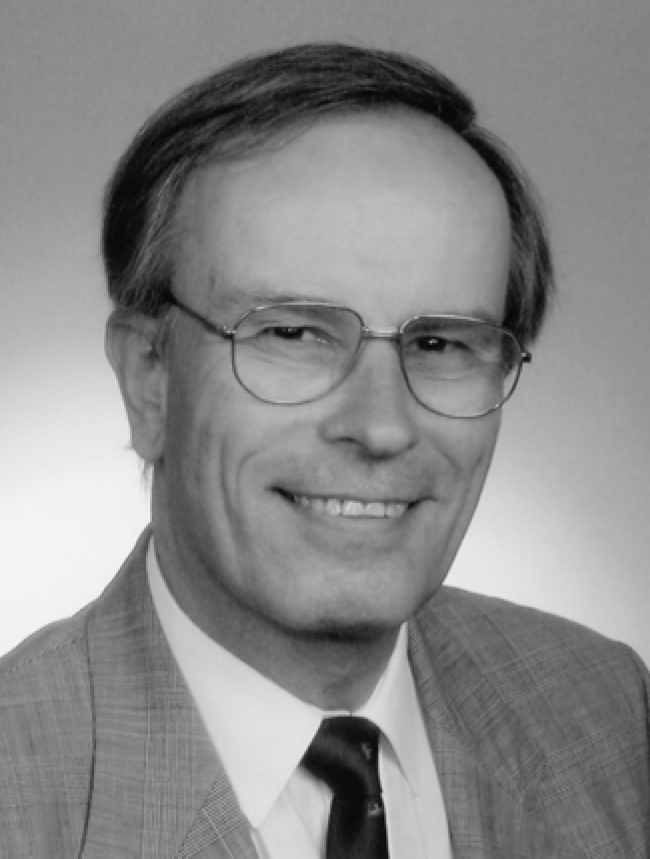
Prof. Dr. rer. nat. Peter Neumann zum 65. Geburtstag
1973 nahm mich Peter Neumann als seinen ersten Doktoranden an. Deshalb seien hier neben den trockenen Daten einige persönliche Bemerkungen gestattet. Gefördert von der Studienstiftung des Deutschen Volkes, studierte er bei Peter Haasen Metallphysik in Göttingen. Aus dieser Zeit berichtet er gerne über die spartanische Lebensweise in der Studentenbude und dass man deshalb schon aus Langeweile nächtelang studieren und experimentieren musste. Dies sparte Heizkosten. Etwas von dieser Einstellung hat er sein Leben lang beibehalten. Besonders begeisterte ihn neben dem Computer das Auseinandernehmen existierender Maschinen, die er dann aber wieder so zusammensetzte, dass sie mehr konnten als vorher. Aus diesem ,,Spieltrieb“ heraus entstanden die eleganten Arbeiten über plastische Instabilitäten (strain bursts) und über den Mechanismus der Rissausbreitung bei der Ermüdung. Diese Arbeiten wurden 1968 mit dem Masing-Gedächtnispreis der Deutschen Gesellschaft für Materialkunde ausgezeichnet. Nach einem zweijährigen Forschungsaufenthalt am Argonne National Lab., U. S. A., nahm er 1972 den Ruf an das Max-Planck-Institut für Eisenforschung an, um hier eine Arbeitsgruppe für Schädigungsmechanismen aufzubauen. In dieser Zeit wurden insbesondere experimentelle Arbeiten zur Ermüdungsrissausbreitung und Versetzungssimulationen zu Multipolwechselwirkungen zur Deutung der zyklischen Verfestigung durchgeführt. Solche Simulationen von Versetzungsstrukturen sind heute sehr populär, aber vor mehr als zwanzig Jahren insbesondere wegen der intelligenten Grafiken eröffneten sie neue Forschungsfelder.
1978 wurde Peter Neumann Wissenschaftliches Mitglied der Max Planck Gesellschaft und zwei Jahre später, als Nachfolger von Prof. Kochendörfer, Leiter der Abteilung physikalische Metallkunde und Direktor am Max-Planck-Institut für Eisenforschung. Unter der aktiven Leitung von Herrn Neumann wurden in den Arbeitsgruppen der Abteilung weltweit anerkannte Arbeiten zu den Mechanismen der Kriechrissausbreitung und zu den Mechanismen der Ermüdungsrissausbreitung durchgeführt. Wiederum soll hier der experimentelle ,,Spieltrieb“ erwähnt werden: neben seinen Aufgaben als Direktor fand er zusammen mit seinen Doktoranden noch Zeit, Compiler zu entwickeln, Programme zur automatischen Steuerung von Maschinen zu programmieren sowie Prüfmaschinen mit Positioniergenauigkeiten im Nanometerbereich zu bauen, indem hydraulische und elektrische Antriebe entkoppelt in Reihe geschaltet wurden. Die damals innovativen Programmiertechniken zur Steuerung und Regelung technischer Prozesse führten dazu, dass 50% der Doktoranden als Werkstoffwissenschaftler gutbezahlte Stellen in der Computerindustrie annahmen und dort heute an führenden Stellen tätig sind. Die anregende Arbeitsatmosphäre in der Abteilung führte zu vielen Auszeichnungen der Mitarbeiter. Hier seien nur zwei Masing-Preise der deutschen Gesellschaft für Metallkunde genannt und ein Leibnizpreis, den ein Mitarbeiter kurz nach seinem Wechsel zur Fraunhofergesellschaft erhielt.
1987 erhielt Herr Neumann den Ruf auf den Lehrstuhl für Metallkunde und Metallphysik an die TH Aachen (Nachfolge Prof. Lücke), den er ablehnte, um stellvertretender Direktor und dann 1990 Direktor und Hauptgeschäftsführer des Max-Planck-Instituts für Eisenforschung GmbH (Nachfolge Prof. Engell) zu werden. Er ist seitdem für die vielfältigen Forschungsaktivitäten an diesem Institut verantwortlich. Neben seinen organisatorischen Arbeiten findet Herr Neumann immer noch Zeit zu eigenen Forschungsarbeiten über den Einfluss der Textur auf die Rissbildung und zu Simulationsrechnungen von Ermüdungsmechanismen. In seiner eigenen Abteilung wird das mechanische Verhalten intermetallischer Phasen und die Thermodynamik und Kinetik der Gefügeausbildung eingehend untersucht. Hier möchte ich insbesondere die Förderung der Rastersondenmikroskopie in der Werkstoffwissenschaft hervorheben sowie seine Anstöße zur Geräteentwicklung dieser Mikroskope. Innovative technische Probleme faszinierten ihn auch noch als Direktor, und er verwendete seine wenige Freizeit, um sich aktiv an der Lösung dieser Probleme zu beteiligen. Schon kurz nach der Entdeckung der Tunnelmikroskopie wurde in der Abteilung versucht, mit dieser Technik die lokalen Vorgänge bei der Bruchschädigung zu untersuchen. Aus diesen Arbeiten gingen zwei C4-Rufe und ein weiterer Masingpreis hervor (Schüler und ,,Enkel“).
Schließlich betrieb Prof. Neumann sehr erfolgreich die innere und äußere Erneuerung des Max-Planck-Institutes für Eisenforschung, die 1999/2000 zur Berufung zweier neuer Wisenschaftlicher Mitglieder der Max Planck Gesellschaft und Direktoren am Institut mit der Etablierung zweier neuer Abteilungen führte. Gleichzeitig wird das Institut mit dem unter Denkmalschutz stehenden Hauptgebäude seit 1999 generalsaniert mit Ausstattung der Labors mit modernster Technik, so dass das Institut bestens für die Zukunft gerüstet ist.
Prof. Neumann ist Autor oder Mitverfasser von über hundert wissenschaftlichen Veröffentlichungen und lehrte an den Universitäten Göttingen und Düsseldorf. Ferner hat er die vielen Veröffentlichungen des Instituts (häufig mehr als hundert pro Jahr) mit seinen Ideen und mit finanzieller Unterstützung begleitet. Seine Leistungen als anspruchsvoller wissenschaftlicher Lehrer werden auch dadurch deutlich, dass seine Schüler teilweise leitende Positionen in der Forschung und in der Industrie besetzen. 2001 wurde er in Anerkennung seines herausragenden wissenschaftlichen Leistungen mit der Heyn-Denkmünze der DGM ausgezeichnet.
Prof. Neumann ist aktives Mitglied in den wichtigen Forschungsorganisationen wie VDEh, DGM, DVM und ASM. Von 1988 bis 1993 war er Mitglied des Vorstands der DGM, und seit 1989 ist er Mitglied des Vorstands des VDEh. Ferner ist er seit 1990 Mitglied des techn.-wiss. Beirates der GKSS und seit 1992 Mitglied der Schriftleitung der Zeitschrift für Metallkunde. 1982 bis 1998 war er Vorsitzender der Prüfungsgruppe des Schwerpunktprogramms ,,Verformung und Bruch geordneter Mischkristalle“ der DFG und 1993 – 1994 Vorsitzender des Gutachterausschusses ,,Materialforschung II – Metalle“ des BMFT. Seit 1994 ist er Mitglied des Projektkomitees ,,Komponentenverhalten“ der Gesellschaft für Anlagen- und Reaktorsicherheit mbH. 1995 wurde Prof. Neumann zum Ordentlichen Mitglied der Nordrhein-Westfälischen Akademie der Wissenschaften und der Academia Europaea berufen, und seit 1999 ist er Mitglied des Board of Governors of Acta Metallurgica, Inc.
Während unserer gemeinsamen Jahre wurden wir zu Freunden, und ich freue mich auf noch viele gemeinsame Skiurlaube in Adelboden. Glückauf!
H. Vehoff, Saarbrücken
In 1973, Peter Neumann accepted me as his first doctoral student. Therefore, apart from the bare facts, some personal comments may be in order. Sponsored by the “Studienstiftung des Deutschen Volkes”, he studied metal physics under Peter Haasen in Göttingen. When speaking about these years, he often recalls the Spartan way of life in the students’ residence – where you were practically forced to study and carry out experiments through the night in order to escape boredom. That saved heating costs. To some extent, this attitude has remained with him. He was especially fascinated not only by computers but also by taking machines apart and putting them back together again, so that they could perform better than before. This “play-instinct” led to the elegant research work on strain bursts and on crack propagation during fatigue for which he received the Masing award of the DGM (German Society for Materials Science). After two years of research at the Argonne National Lab., USA, he accepted a position at the Max-Planck-Institute for Iron Research and initiated a research group on damage mechanisms. Special activities during this period were experimental work on fatigue crack propagation and simulations of multipole interactions of dislocations for the interpretation of cyclic hardening. Such simulations of dislocation structures are very popular today, but more than twenty years ago they opened up new fields of research especially because of the intelligent graphics.
In 1978, Peter Neumann became a Scientific Member of the Max-Planck-Society, and, two years later, succeeded Prof. Kochendörfer as Head of the Department of Physical Metallurgy and Director at the Max-Planck-Institute for Iron Research. Under his active management, worldwide renowned research on the mechanisms of creep crack propagation and fatigue crack propagation was conducted in the research groups of the Department. Again special mention should be made of the experimental “play-instinct”, for, besides his tasks as a Director, he still found time to develop, together with his doctoral students, compilers, programs for the automatic control of testing machines and testing machines with positioning sensitivities in the nanometre range, achieved by a series connection of decoupled hydraulic and electric drives. As a result of what were in those days innovative programming techniques for the control of technical processes, 50% of the doctoral students in materials science found well-paid jobs in the computer industry and are now in high positions. The stimulating working atmosphere within the Department led to several awards to staff members. At this point, mention shall be made only of two Masing awards of the DGM (German Society for Materials Science) and a Leibniz award received by a staff member shortly after moving to the Fraunhofer Society.
In 1987, Professor Neumann was offered the Chair of Metallurgy and Metal Physics at the Technical University Aachen (as successor of Prof. Lücke), which he declined and instead went on to become deputy director and later director and chief executive of the Max-Planck-Institute for Iron Research (as successor of Prof. Engell). Since then, he has been responsible for the diverse research activities at this institute. Besides his organizational tasks, Professor Neumann still finds time for his own research on the influence of texture on crack formation and for simulations of fatigue mechanisms. In his Department, the mechanical behaviour of intermetallics and the thermodynamics and kinetics of microstructure evolution are investigated in detail. At this point, I should like to emphasize especially his commitment to promoting scanning probe microscopy in materials science as well as his stimulation of the development of these microscopes. Innovative technical problems fascinated him even as a director and he used his meagre spare time to take an active part in solving those problems. Shortly after the discovery of tunnel microscopy, attempts were made in the Department to investigate local processes during fracture damage with this technique. This work resulted in two offers for C4 positions and another Masing award (pupil and “grandson”).
In addition, Prof. Neumann undertook the internal and external renewal of the Max-Planck-Institute for Iron Research with great success, which in 1999/2000 led to the appointment of two new scientific members of the Max Planck Society and directors in the institute and to the foundation of two new departments. At the same time, a general renovation of the Institute has been under way since 1999, including the main building, which is under historical monument protection, while the laboratory equipment has been brought up to the latest standards so that the Institute is well prepared for the future.
Prof. Neumann is the author and co-author of more than one hundred scientific publications and has taught at the universities of Göttingen and Düsseldorf. In addition, he has contributed to the numerous publications of the institute (often more than one hundred per year) with his ideas and financial support. His achievements as a teacher of science are apparent from the high positions his students hold in research and industry. In 2001, he was awarded the Heyn medal of the DGM (German Society for Materials Science) for his exceptional scientific research activities.
Prof. Neumann is an active member of important research organizations such as the Steel Institute VDEh, the DGM (German Society for Materials Science), the DVM (German Association for Materials Research and Testing) and the ASM (American Society of Metals). From 1988 to 1993, he was a member of the Board of the DGM and since 1989 he has been a member of the Board of the Steel Institute VDEh. Since 1990, he has also been a member of the scientific advisory board of the GKSS and since 1992 a member of the editorial department of the Zeitschrift für Metallkunde. Between 1982 and 1998, he was Chairman of the Board of Examiners for the Research Programme “Deformation and Fracture of Ordered Solid Solutions” of the DFG (German Research Foundation) and between 1993 and 1994 chairman of the circle of experts “Materials Research II – Metals” of the BMFT (Federal Ministry of Research and Technology). Since 1994, he has been a member of the project committee “Component Behaviour” of the Gesellschaft für Anlagen- und Reaktorsicherheit mbH. In 1995, Prof. Neumann was appointed full member of the Northrhine-Westfalian Academy of Science and the Academia Europea, and since 1999 a member of the Board of Governors of Acta Metallurgica, Inc.
During the years we have spent together, we have become friends. Dear Peter, I look forward to many ski trips to Adelboden with you. Good luck!
H. Vehoff, Saarbrücken
© 2004 Carl Hanser Verlag, München
Artikel in diesem Heft
- Frontmatter
- Editorial
- Editorial
- Articles Basic
- Thermally assisted motion of dislocations in solid solution-strengthened fcc alloys and the concept of “stress equivalence”
- From single to collective dislocation glide instabilities: A hierarchy of scales, embracing the Neumann strain bursts
- Geometry and surface state effects on the mechanical response of Au nanostructures
- Microstructural evolution and its effect on the mechanical properties of Cu–Ag microcomposites
- Deformation behaviour of strontium titanate between room temperature and 1800 K under ambient pressure
- The deformation response of ultra-thin polymer films on steel sheet in a tensile straining test: the role of slip bands emerging at the polymer/metal interface
- Influence of dissolved gas molecules on the size recovery kinetics of cold-rolled BPA-PC
- Comparison between Monte Carlo and Cluster Variation method calculations in the BCC Fe–Al system including tetrahedron interactions
- Experimental study and Cluster Variation modelling of the A2/B2 equilibria at the titanium-rich side of the Ti–Fe system
- Phases and phase equilibria in the Fe–Al–Zr system
- On the plate-like τ-phase formation in MnAl–C alloys
- Articles Applied
- The grain boundary hardness in austenitic stainless steels studied by nanoindentations
- The effect of grain size on the mechanical properties of nanonickel examined by nanoindentation
- Microstructures and mechanical properties of V–V3Si eutectic composites
- Grain boundary characterization and grain size measurement in an ultrafine-grained steel
- On the determination of the volume fraction of Ni4Ti3 precipitates in binary Ni-rich NiTi shape memory alloys
- Mechanical properties of NiAl–Cr alloys in relation to microstructure and atomic defects
- Characterization of the cyclic deformation behaviour and fatigue crack initiation on titanium in physiological media by electrochemical techniques
- Effect of prestraining on high-temperature fatigue behaviour of two Ni-base superalloys
- Influence of surface defects and edge geometry on the bending strength of slip-cast ZrO2 micro-specimens
- Tensile failure in a superplastic alumina
- Notifications/Mitteilungen
- Personal/Personelles
- Conferences/Konferenzen
Artikel in diesem Heft
- Frontmatter
- Editorial
- Editorial
- Articles Basic
- Thermally assisted motion of dislocations in solid solution-strengthened fcc alloys and the concept of “stress equivalence”
- From single to collective dislocation glide instabilities: A hierarchy of scales, embracing the Neumann strain bursts
- Geometry and surface state effects on the mechanical response of Au nanostructures
- Microstructural evolution and its effect on the mechanical properties of Cu–Ag microcomposites
- Deformation behaviour of strontium titanate between room temperature and 1800 K under ambient pressure
- The deformation response of ultra-thin polymer films on steel sheet in a tensile straining test: the role of slip bands emerging at the polymer/metal interface
- Influence of dissolved gas molecules on the size recovery kinetics of cold-rolled BPA-PC
- Comparison between Monte Carlo and Cluster Variation method calculations in the BCC Fe–Al system including tetrahedron interactions
- Experimental study and Cluster Variation modelling of the A2/B2 equilibria at the titanium-rich side of the Ti–Fe system
- Phases and phase equilibria in the Fe–Al–Zr system
- On the plate-like τ-phase formation in MnAl–C alloys
- Articles Applied
- The grain boundary hardness in austenitic stainless steels studied by nanoindentations
- The effect of grain size on the mechanical properties of nanonickel examined by nanoindentation
- Microstructures and mechanical properties of V–V3Si eutectic composites
- Grain boundary characterization and grain size measurement in an ultrafine-grained steel
- On the determination of the volume fraction of Ni4Ti3 precipitates in binary Ni-rich NiTi shape memory alloys
- Mechanical properties of NiAl–Cr alloys in relation to microstructure and atomic defects
- Characterization of the cyclic deformation behaviour and fatigue crack initiation on titanium in physiological media by electrochemical techniques
- Effect of prestraining on high-temperature fatigue behaviour of two Ni-base superalloys
- Influence of surface defects and edge geometry on the bending strength of slip-cast ZrO2 micro-specimens
- Tensile failure in a superplastic alumina
- Notifications/Mitteilungen
- Personal/Personelles
- Conferences/Konferenzen
