Editorial

Prof. Dr. Wolfgang Blum 65 Years
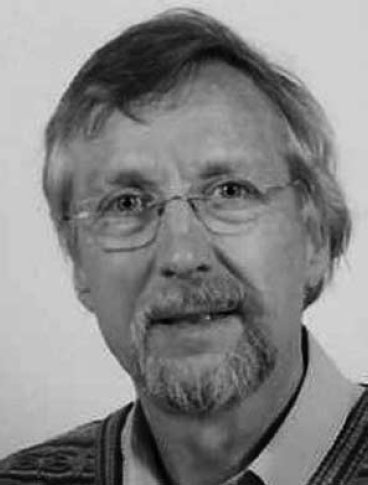
This issue of Zeitschrift für Metallkunde is dedicated to Professor Wolfgang Blum on the occasion of his 65th birthday where he will officially retire from his duties as a Professor for Materials Science at the University Erlangen–Nürnberg. Wolfgang Blum was born on March 26, 1940 in Rehme close to Bad Oeynhausen, where he went to school and completed his Abitur in 1959. He studied physics in Göttingen and Berlin and started his scientific career under the guidance of Peter Haasen and Bernhard Ilschner at the Institute for Metal Physics in Göttingen. Already his diploma thesis brought him in contact with a topic, which should fascinate him for more than 40 years and which played a key role in his research through his entire scientific career: The deformation kinetics and especially the creep properties of materials. In 1966 Wolfgang Blum followed Bernhard Ilschner to the Institute of Materials Science & Engineering in the newly founded Technical Faculty at the University Erlangen – Nürnberg, where he obtained his doctoral degree in 1969. For nearly 40 years he was a researcher and faculty member at the Chair for General Materials Properties. He obtained the official teaching allowance (German Habilitation) in 1978. In the same year he obtained the prestigious Masing-Gedächtnis award from the German Society for Materials Science (DGM).
Wolfgang Blum started to work on ionic crystals like NaCl and LiF which in later years often regained his interests. However, his investigations of the various aspects of plasticity spanned a broad range of materials from pure metals and Mg alloys over ferritic steels for power plants to superalloys and dispersion-hardened materials. Recently he regained his interest on ionic crystal by working on CaF2 which became an interesting material for applications as lenses for ultraviolet light in lithographic processes, where defect free materials are required. While Blum’s early work focused on basic plasticity aspects, he later successfully tackled microstructural issues associated with engineering materials for high temperature applications. His recent work represents good examples on how important industrial questions can represent the driving force for attractive scientific work.
During his 40 years of research by measuring, modeling, understanding and predicting the high temperature strength of a certain material and most importantly the role of microstructure on creep, he contributed significantly to our understanding of plasticity of crystalline solids. Up to now, Wolfgang Blum published some 230 articles on fundamental as well as applied aspects. He was an early promoter of the idea to use strain rate versus strain plots instead of strain versus time diagrams because they more directly account for the underlying elementary deformation processes which govern plastic deformation (see his review paper: Understanding Creep, Met. Mat. Trans. Vol. 33A, 291, 2002). A further milestone has been his contribution to the understanding of self organization principles in microstructures of creeping solids, where dislocation spacings like subgrain size, distances between individual dislocations and spacings between dislocations in subgrain walls all show an inverse stress dependence. Wolfgang Blum’s insight into the role of subgrain boundaries during creep was internationally recognized, and also his generalization of Mughrabi’s composite model which rationalizes plastic deformation on the basis of the presence of hard and soft regions.
Wolfgang Blum retires, but he keeps up his strong interest in elementary deformation processes which govern plasticity of ultrafine grained materials, where he recently published new results on a hardening/softening transition so far unknown for this class of materials.
In his career Wolfgang Blum visited a number of internationally renowned researchers to exchange ideas and to work on unsolved problems. From 1980– 1981 he worked at the University of Stanford in the group of Prof. W. D. Nix. In 1986 he spent some time with Prof. J. L. Martin at the Ecole Poytechnique Fédérale de Lausanne and in 1989 he was an invited scholar of the Japan Society for Promotion of Science hosted by Prof. H. Oikawa. Throughout his career Wolfgang Blum maintained excellent contacts with researchers from all over the world and many came to visit him and to discuss with him in Erlangen.
In 1981, after returning from Stanford, he was appointed as a professor with a promotion in 1991. He served as the associate dean for academic affairs (teaching) in the Technical Faculty and also as the head of the committee for academic affairs (teaching) in the Department of MS & E in Erlangen.
As a researcher and teacher he kept a high research profile and had a strong positive influence on his students, several of whom succeeded in academic careers and are now university professors. His students always could learn and benefit from his highly motivated, enthusiastic and dedicated attitude to scientific work.
This special edition of ZfM highlights some aspects of the current status in the field of high temperature deformation processes. Leading experts from the USA, Japan and Europe contributed to this volume to honor Wolfgang Blum’s scientific contributions.
M. Göken, Erlangen
G. Eggeler, Bochum
© 2005 Carl Hanser Verlag, München
Artikel in diesem Heft
- Frontmatter
- Editorial
- Editorial
- Articles Basic
- Identifying creep mechanisms in plastic flow
- A unified microstructural metal plasticity model applied in testing, processing, and forming of aluminium alloys
- Implications of non-negligible microstructural variations during steady-state deformation
- Tertiary creep of metals and alloys
- Interactions between particles and low-angle dislocation boundaries during high-temperature deformation
- Strain-rate sensitivity of ultrafine-grained materials
- Transient plastic flow at nominally fixed structure due to load redistribution
- Vacancy concentrations determined from the diffuse background scattering of X-rays in plastically deformed copper
- Effect of heating rate in α + γ dual-phase field on lamellar microstructure and creep resistance of a TiAl alloy
- About stress reduction experiments during constant strain-rate deformation tests
- Finite-element modelling of anisotropic single-crystal superalloy creep deformation based on dislocation densities of individual slip systems
- Variational approach to subgrain formation
- Articles Applied
- Pseudoelastic cycling of ultra-fine-grained NiTi shape-memory wires
- Creep properties at 125 °C of an AM50 Mg alloy modified by Si additions
- Dependence of mechanical strength on grain structure in the γ′ and oxide dispersions-trengthened nickelbase superalloy PM 3030
- On the improvement of the ductility of molybdenum by spinel (MgAl2O4) particles
- Hot workability and extrusion modelling of magnesium alloys
- Characterization of hot-deformation behaviour of Zircaloy-2: a comparison between kinetic analysis and processing maps
- Requirements for microstructural investigations of steels used in modern power plants
- Influence of Lüders band formation on the cyclic creep behaviour of a low-carbon steel for piping applications
- Creep and creep rupture behaviour of 650 °C ferritic/martensitic super heat resistant steels
- Toughening mechanisms of a Ti-based nanostructured composite containing ductile dendrites
- Notifications/Mitteilungen
- Personal/Personelles
- News/Aktuelles
- Conferences/Konferenzen
Artikel in diesem Heft
- Frontmatter
- Editorial
- Editorial
- Articles Basic
- Identifying creep mechanisms in plastic flow
- A unified microstructural metal plasticity model applied in testing, processing, and forming of aluminium alloys
- Implications of non-negligible microstructural variations during steady-state deformation
- Tertiary creep of metals and alloys
- Interactions between particles and low-angle dislocation boundaries during high-temperature deformation
- Strain-rate sensitivity of ultrafine-grained materials
- Transient plastic flow at nominally fixed structure due to load redistribution
- Vacancy concentrations determined from the diffuse background scattering of X-rays in plastically deformed copper
- Effect of heating rate in α + γ dual-phase field on lamellar microstructure and creep resistance of a TiAl alloy
- About stress reduction experiments during constant strain-rate deformation tests
- Finite-element modelling of anisotropic single-crystal superalloy creep deformation based on dislocation densities of individual slip systems
- Variational approach to subgrain formation
- Articles Applied
- Pseudoelastic cycling of ultra-fine-grained NiTi shape-memory wires
- Creep properties at 125 °C of an AM50 Mg alloy modified by Si additions
- Dependence of mechanical strength on grain structure in the γ′ and oxide dispersions-trengthened nickelbase superalloy PM 3030
- On the improvement of the ductility of molybdenum by spinel (MgAl2O4) particles
- Hot workability and extrusion modelling of magnesium alloys
- Characterization of hot-deformation behaviour of Zircaloy-2: a comparison between kinetic analysis and processing maps
- Requirements for microstructural investigations of steels used in modern power plants
- Influence of Lüders band formation on the cyclic creep behaviour of a low-carbon steel for piping applications
- Creep and creep rupture behaviour of 650 °C ferritic/martensitic super heat resistant steels
- Toughening mechanisms of a Ti-based nanostructured composite containing ductile dendrites
- Notifications/Mitteilungen
- Personal/Personelles
- News/Aktuelles
- Conferences/Konferenzen
