Evaluation of damage mechanisms in full-forward rod extruded AISI 5115 steel by AI-based image segmentation
-
L. A. Lingnau
Lars Andree Lingnau works as Scientific Assistant at the Chair of Materials Test Engineering (WPT) of the TU Dortmund University since May 2022 and group leader of the Process Control Group since 2025. Besides the investigation of the influence of forming-induced ductile damage on the fatigue properties he is concerned with microstructural characterization by means of in situ investigations inside the SEM. ,
J. Heermant
,
J. Heermant
Johannes Heermant works as Student Assistant at the Chair of Materials Test Engineering (WPT) of the TU Dortmund University since July 2022. In the course of this investigation he was responsible for the image segmentation and 3D reconstruction of the 3D void and manganese sulfide distributions.Frank Walther completed his PhD on the fatigue assessment of railway wheel steels in 2002 and his habilitation on the metrological acquisition of the microstructure- and fatigue evolution of metals in 2007 at RPTU Kaiserslautern University. Since 2010 he has been Professor of Materials Test Engineering (WPT) at TU Dortmund University. His main research focuses on the microstructure- and mechanism-based characterization and modeling of the fatigue behavior depending on production processes and operating environment conditions, aiming at a comprehensive process-structure-property-damage understanding.

Abstract
As climate change and resource scarcity become more critical, demand for energy efficiency, emission reduction, and resource conservation increases. Forming technology offers high potential for lightweight design, cost effectiveness, and resource efficiency. However, forming-induced ductile damage, such as void formation, is often overlooked in component design, which focuses on mechanical properties and safety factors. A deeper understanding of forming-induced ductile damage can lead to more efficient, lightweight structures. Therefore, the void distribution was analyzed using focused ion beam and scanning electron microscopy, enabling the development of a 3D model via AI-based image segmentation. To assess void inclusion interactions, an intersection analysis was performed in Fiji ImageJ by merging in-lens images of sulfides with secondary electron images of voids, allowing a volumetric representation of their intersections.
Kurzfassung
Angesichts der Zuspitzung von Klimawandel und Ressourcenknappheit steigt die Nachfrage nach Energieeffizienz, Emissionsreduzierung und der Schonung von Ressourcen. Die Umformungstechnik bietet hier erhebliches Potenzial für den Leichtbau, für Wirtschaftlichkeit und Ressourceneffizienz. Umformungsinduzierte duktile Schädigungen, beispielsweise die Bildung von Poren, werden beim Bauteildesign, bei dem vorrangig auf mechanische Eigenschaften und Sicherheitsfaktoren geachtet wird, häufig keine Beachtung geschenkt. Mit einem besseren Verständnis umformungsinduzierter duktiler Schädigungen lassen sich effizientere, leichtere Strukturen verwirklichen. Vor diesem Hintergrund wurde eine Analyse der Porenverteilung mittels Rasterelektronenmikroskopie mit fokussiertem Ionenstrahl durchgeführt. Diese diente als Grundlage einer KI-basierten Bildsegmentierung, mit der ein 3D-Modell entwickelt werden konnte. Zur Beurteilung der Wechselwirkungen zwischen Poren und Einschlüssen wurde in Fiji ImageJ an zusammengeführten in-lens-Bildern von Sulfiden und Sekundärelektronenbildern von Hohlräumen eine Schnittmengenanalyse durchgeführt, die eine volumetrische Darstellung der Schnittmengen ermöglichte.
About the authors
Lars Andree Lingnau works as Scientific Assistant at the Chair of Materials Test Engineering (WPT) of the TU Dortmund University since May 2022 and group leader of the Process Control Group since 2025. Besides the investigation of the influence of forming-induced ductile damage on the fatigue properties he is concerned with microstructural characterization by means of in situ investigations inside the SEM.
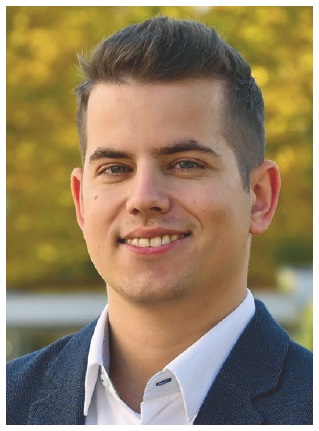
Johannes Heermant works as Student Assistant at the Chair of Materials Test Engineering (WPT) of the TU Dortmund University since July 2022. In the course of this investigation he was responsible for the image segmentation and 3D reconstruction of the 3D void and manganese sulfide distributions.
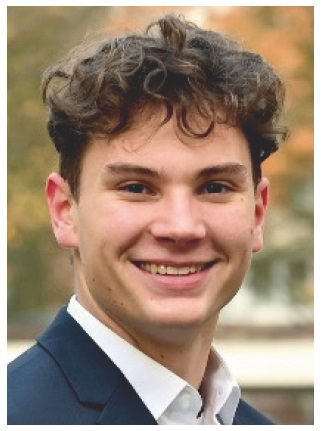
Frank Walther completed his PhD on the fatigue assessment of railway wheel steels in 2002 and his habilitation on the metrological acquisition of the microstructure- and fatigue evolution of metals in 2007 at RPTU Kaiserslautern University. Since 2010 he has been Professor of Materials Test Engineering (WPT) at TU Dortmund University. His main research focuses on the microstructure- and mechanism-based characterization and modeling of the fatigue behavior depending on production processes and operating environment conditions, aiming at a comprehensive process-structure-property-damage understanding.
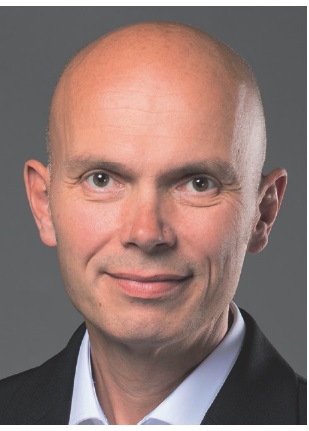
5 Acknowledgments
The authors gratefully acknowledge the funding by the German Research Foundation (Deutsche Forschungsgemeinschaft, DFG) for the subproject C01 within the Collaborative Research Center CRC/Transregio 188 “Damage-controlled forming processes” (project no. 278868966). The authors further thank the DFG and the Ministry of Culture and Science of North Rhine-Westphalia (Ministerium für Kultur und Wissenschaft des Landes Nordrhein-Westfalen, NRW) for their financial support within the Major Research Instrumentation Program for the FIB-SEM (project no. 386509496) and for the magneto-optical Kerr microscope with in situ tension-compression stage (project no. 464498574).
5 Danksagung
Die Autoren danken der Deutschen Forschungsgemeinschaft (DFG) für die Förderung des Teilprojekts C01 im Sonderforschungsbereich SFB/Transregio 188 „Schädigungskontrollierte Umformprozesse“ (Projektnr. 278868966). Die Autoren danken außerdem der DFG und dem Ministerium für Kultur und Wissenschaft des Landes Nordrhein-Westfalen (NRW) für die finanzielle Unterstützung im Rahmen des Forschungsgroßgeräteprogramms für das FIB-REM (Projektnr. 386509496) und für das mit einem Objekttisch für In-situ-Zug- und Druckversuche ausgestattete magnetooptische Kerr-Mikroskop (Projektnr. 464498574).
References / Literatur
[1] Tekkaya, A. E., Bouchard, P.-O., Bruschi, S., and Tasan, C. C.: Damage in metal forming. CIRP Annals 69 (2020) 2, pp. 600–623. DOI:10.1016/j.cirp.2020.05.005.10.1016/j.cirp.2020.05.005Search in Google Scholar
[2] Koplik, J. and Needleman, A.: Void growth and coalescence in porous plastic solids. International Journal of Solids and Structures 24 (1988) 8, pp. 835–853. DOI:10.1016/0020-7683(88)90051-0.10.1016/0020-7683(88)90051-0Search in Google Scholar
[3] Hering, O. and Tekkaya, A. E: Damage-induced performance variations of cold forged parts. Journal of Materials Processing Technology 279 (2020), p. 116556. DOI:10.1016/j.jmatprotec.2019.116556.10.1016/j.jmatprotec.2019.116556Search in Google Scholar
[4] Meya, Rickmer, Löbbe, Christian, and Tekkaya, A. Erman: Stress State Control by a Novel Bending Process and its Effect on Damage and Product Performance. Journal of Manufacturing Science and Engineering 141 (2019) 10. DOI:10.1115/1.4044394.10.1115/1.4044394Search in Google Scholar
[5] Lingnau, L. A. and Walther, F: Characterization and Separation of Damage Mechanisms of Extruded Case-Hardening Steel AISI 5115 under Cyclic Axial-Torsional Loading. Materials Science Forum 1105 (2023, pp. 13–18. DOI:10.4028/p-kJ0mH5.10.4028/p-kJ0mH5Search in Google Scholar
[6] Chou, K. J. C. and Earthman, J. C: Characterization of Low-cycle Fatigue Damage in Inconel 718 by Laser Light Scanning. Journal of Materials Research 12 (1997) 8, pp. 2048–2056. DOI:10.1557/JMR.1997.0275.10.1557/JMR.1997.0275Search in Google Scholar
[7] Shankar, V., Mariappan, K., Sandhya, R., and Laha, K: Understanding low cycle fatigue and creep–fatigue interaction behavior of 316 L(N) stainless steel weld joint. International Journal of Fatigue 82 (2016), pp. 487–496. DOI:10.1016/j.ijfatigue.2015.09.003.10.1016/j.ijfatigue.2015.09.003Search in Google Scholar
[8] Beretta, S., Foletti, S., and Valiullin, K: Fatigue strength for small shallow defects/cracks in torsion. International Journal of Fatigue 33 (2011) 3, pp. 287–299. DOI:10.1016/j.ijfatigue.2010.08.014.10.1016/j.ijfatigue.2010.08.014Search in Google Scholar
[9] Zapara, M, Augenstein, E. and Helm, D: Prediction of damage in cold bulk forming processes. PAMM Proceedings in Applied Mathematics and Mechanics 14 (2014) 1.10.1002/pamm.201410492Search in Google Scholar
[10] Lingnau, L. A. and Walther, F. Characterization and separation of damage mechanisms of extruded casehardening steel AISI 5115 under cyclic axial-torsional loading. Trans Tech Publications Ltd (2023).10.4028/p-kJ0mH5Search in Google Scholar
[11] Otto, J. L., Sauer, L. M., Brink, M, Schaum, T., Lingnau, L. A., Macias Barrientos, M., and Walther, F: A 2D and 3D segmentation-based microstructure study on the role of brittle phases in diffusion brazed AISI 304L/NiCrSiFeMoB joints. Materials & Design 235 (2023), p. 112401. DOI:10.1016/j.matdes.2023.112401.10.1016/j.matdes.2023.112401Search in Google Scholar
[12] Otto, J. L., Sönmez, M. I., Brink, M., Donnerbauer, K., Lingnau, L. A., Reisch-Lang, L., Wojarski, L., and Walther, F: Precipitation reconstruction of a diffusion brazed austenite joint with Ni-filler. Practical Metallography 61 (2024) 12, pp. 923–937. DOI:10.1515/pm-2024-0084.10.1515/pm-2024-0084Search in Google Scholar
[13] Lingnau, L. A., Heermant, J., Otto, J. L., Donnerbauer, K., Barrientos, M. Macias, and Walther, F: Quantification of forming-induced damage in casehardening steel AISI 5115 by advanced SEM methods. Practical Metallography 61 (2024) 9–10, pp. 661–678. DOI:10.1515/pm-2024-0061.10.1515/pm-2024-0061Search in Google Scholar
[14] Lingnau, L. A., Heermant, J., Otto, J. L., Donnerbauer, K., Sauer, L. M., Lücker, L., Macias Barrientos, M., and Walther, F: Separation of Damage Mechanisms in Full Forward Rod Extruded Case-Hardening Steel 16MnCrS5 Using 3D Image Segmentation. Materials (Basel, Switzerland) 17 (2024) 12. DOI:10.3390/ma17123023.10.3390/ma17123023Search in Google Scholar PubMed PubMed Central
© 2025 Walter de Gruyter GmbH, Berlin/Boston, Germany
Articles in the same Issue
- Contents
- Editorial
- Editorial
- Evaluation of damage mechanisms in full-forward rod extruded AISI 5115 steel by AI-based image segmentation
- A roll-headed pin from Getzersdorf, Austria, opens up interesting questions about iron metallurgy in the Hallstatt period
- Magneto-optical Kerr effect analysis of strain-induced martensite formation during flow forming of metastable austenitic steel AISI 304L
- Materials scientific challenges of a circular economy of high-alloy tool steels
- Cavitation-induced damage on a ship propeller’s Kort nozzle made of AISI 316L and investigation of the near-surface microstructural changes
- Preparation of aluminum thin films and laminates
- Preparation and microstructural examination of additively manufactured alloys 316L and 17-4PH
- Results of a round robin test on grain boundary determination by image analysis in the DGM working group ‘Quantitative Structural Analysis’
- Deep learning-based precipitate quantification in STEM images of complex steel microstructures
- A bronze fibula foot from the Roman Carnuntum, Lower Austria
- Optimization of preparation methods for EBSD analysis of highly metastable austenitic steels
- Picture of the Month
- Picture of the Month
- People
- Interview with Gaby Ketzer-Raichle on the occasion of the new edition of “Schumann Metallography”, published by Heinrich Oettel and Gaby Ketzer-Raichle
- News
- News
- Meeting Diary
- Meeting Diary
Articles in the same Issue
- Contents
- Editorial
- Editorial
- Evaluation of damage mechanisms in full-forward rod extruded AISI 5115 steel by AI-based image segmentation
- A roll-headed pin from Getzersdorf, Austria, opens up interesting questions about iron metallurgy in the Hallstatt period
- Magneto-optical Kerr effect analysis of strain-induced martensite formation during flow forming of metastable austenitic steel AISI 304L
- Materials scientific challenges of a circular economy of high-alloy tool steels
- Cavitation-induced damage on a ship propeller’s Kort nozzle made of AISI 316L and investigation of the near-surface microstructural changes
- Preparation of aluminum thin films and laminates
- Preparation and microstructural examination of additively manufactured alloys 316L and 17-4PH
- Results of a round robin test on grain boundary determination by image analysis in the DGM working group ‘Quantitative Structural Analysis’
- Deep learning-based precipitate quantification in STEM images of complex steel microstructures
- A bronze fibula foot from the Roman Carnuntum, Lower Austria
- Optimization of preparation methods for EBSD analysis of highly metastable austenitic steels
- Picture of the Month
- Picture of the Month
- People
- Interview with Gaby Ketzer-Raichle on the occasion of the new edition of “Schumann Metallography”, published by Heinrich Oettel and Gaby Ketzer-Raichle
- News
- News
- Meeting Diary
- Meeting Diary
