Raising burden of non-communicable diseases: importance of integrating Yoga and Naturopathy at primary care level
-
Hyndavi Salwa


Abstract
Primary health care is a vital component in health care delivery. Non-communicable diseases (NCD’s) are rising like a major threat to human survival, which is expected to account for 75% of the total mortality by 2030. Lifestyle and behavioural changes are reckoned as the way ahead. Yoga and Naturopathy, a drugless system of medicine has intersecting paradigms which addresses all planes of health effectively. Yoga and Naturopathy through its holistic approach educate and make the people responsible for their own health. It has shown its efficacy in alleviating and preventing various NCD’s. A systematic approach should be initiated, which can channelize the integration of Yoga and Naturopathy at the primary care level considering its cost-effectiveness and efficacy over NCD’s.
Introduction
Health is not an individual entity as we approach in current scenario. As defined by World Health Organization (WHO) it’s a broader spectrum of factors which mutually embrace each other and shape the life of an individual and his surrounding community. We need to discuss more about the raising disease burden, irrespective of the multi-faceted national programs and other heterogeneous preventive measures. In earlier decades communicable diseases were a threat to human existence which has now shifted towards non-communicable diseases (NCD’s) which accounts to almost 60% of the total mortality in the world [1]. This drastic shift in disease patterns are due to our single centred approach towards health where we just consider human as a physical entity made up of anatomical integrity and physiological excellence. When approaching a disease we should have wisdom of looking beyond the body and drugs available. A holistic and individualized care with a focus on staying healthy, where primary and secondary prevention plays a major role is important in managing NCD’s, as this ensures all the planes of health has been attended properly. Yoga and Naturopathy provides such holistic and individualized care to an individual where the former heals the mind and spirit, whereas the later is a system of medicine which uses in body’s innate capacity to cure diseases and treats the human body as a complete unit. The ultimate aim of Yoga and Naturopathy is to promote the inherent power within the human body and to accelerate self-healing capacity [2].
Primary health care (PHC) in India
India though, a fastest growing economy the very essential components of PHC such as promotion of food supply, proper nutrition, safe water and basic sanitation and provision for quality health information concerning the prevailing health problems is largely ignored [3]. India follows three tier PHC model in rural areas, which includes sub centres, primary health centres and community health centres [4] whereas in urban region it is catered through dispensaries, hospitals and medical colleges besides the private sector health care providers, who are the major stake holders in health care delivery. When primary care is accessed via busy state-run outpatient departments there is often little time for the physician to investigate causes behind a patient’s condition, and these factors can adversely affect patient outcomes [5]. Irrespective of this the goal of “Health for All” still eludes the public health experts more so in developing countries like India. The concept of social determinants of health evidently underlines the existence of key illness factors beyond the conventional boundaries of primary care [6]. Therefore health interventions must go beyond stethoscope and medicines and adopt a holistic approach to address health and related issues [7].
Patient centred approach in PHC set-ups
Patient-centred care is a quality which includes personal, professional, and organizational relationships. Thus, efforts to promote patient-centred care should consider patient-centeredness of patients (and their families), clinicians, and health systems [8], [9]. Patient-centred care is prominently positioned on the political agenda, but our measures are not yet up to the challenge of ensuring that it is happening [10]. Recent systematic review suggests that there are promising evidences to implement patient centred approach as it improves patient satisfaction and perceived quality of care [11]. However, currently there are lot of bottlenecks like non-availability of sufficient health care personals, drugs, poor infrastructure and increasing disease burden pose as a challenge in delivering patient centred approach at the PHC level. Currently our PHC works on screening, diagnosing and dispensing medicines. Additionally there are National awareness programs created by the union government to address various communicable and non-communicable diseases. However all these programs are largely community centred and not individual centred. Due to the various hurdles, the duration a doctor spends with his patient in consultations; explanation about the disease, treatment, investigations has been considerably less at primary care level [12].
Yoga and Naturopathy in PHC delivery
PHC is a vital component as it can contribute to a greater extent in reduction of lifestyle related morbidity and mortality. However this can be only achieved by adapting a proactive intervention rather than adapting reactive approach. The time spend with a patient and understanding him as a whole entity and not mere symptoms can prevent many catastrophic health hazards which he or she is likely to encounter in his/her lifespan. Yoga and Naturopathy is a distinct type of primary care medicine that blends age-old healing traditions with scientific advances and current research. It is guided by a unique set of principles that recognize the body’s innate healing capacity, emphasize disease prevention, and encourage individual responsibility to obtain optimal health [13]. In India, Yoga and Naturopathy is one of the official systems of Indian medicine under Ministry of AYUSH (Ayurveda, Yoga and Naturopathy, Unani, Siddha, Sowa-Rigpa and Homoeopathy), Government of India [14]. Yoga and Naturopathy is an ideal system for prevention and management of metabolic risk factors which are the major cause for deaths due to NCD’s. The modalities used like Diet, fasting therapy behavioural counselling, lifestyle management and stress management along with natural therapies like Hydrotherapy, Mud therapy, heliotherapy, Manipulative therapies, chromotherapy, magnetotherapy and Yoga help in addressing risk factors. Many of the underlying principles of Naturopathic medicine are analogous to the underlying principles and activities of public health, specifically in areas such as health promotion, prevention, patient education, and proactive rather than reactive approaches to disease management and treatment [15].
Naturopathic prescriptions for health are mostly dependent on promoting healthy behaviours. Unlike conventional health care practices where the physician’s focus is on addressing the symptoms, Naturopathy physicians focus on addressing the root cause of the condition. Therefore, by promoting healthy behaviours in an individual by series of counselling sessions and imparting education on Naturopathy can be helpful in implementing behavioural change interventions at an individual level. Typical consultation with a Naturopathy physician is usually long with more detailed patient assessment. In a survey conducted by world Naturopathic Federation, it is seen that over 82% of first visits are at least 1 h in length. Fifty-two percent of follow-up visits are 30–45 min and 28% are 45 min–1 h in length [16]. This approach is the need of the hour, in our hastened effort to bring down the NCD related morbidity and mortality. Moreover we are social beings, we have an inborn tendency to imitate and adapt behaviours from our surroundings. We are shaped or rather our thoughts are shaped based on what we see and perceive from the society. Therefore, to create a change in an individual it is important to change the surrounding environment how other people think, perceive and act [17]. Consequently, to bring a change in clinical outcomes it is important to understand the potential barriers and promoters for implementing change which is possible only through individual centric approach as in Yoga and Naturopathy. Goals of naturopathic medicine parallel those of family medicine in providing and maintaining the well-being of both the patient and the health care system as a whole [13].
Evidence based Yoga and Naturopathy
Naturopath’s focus is on using “salutogenetic resources” (scholarly orientation focussing attention on the study of the origins of health in contrary to look in to the origins of disease) and adapting sustainable lifestyle modifications. A cross sectional study by Kennedy et al. on complementary medical health services in a Canadian naturopathic teaching clinic found that the primary motivators for patient visits were obtaining health education, health prevention and help with chronic health conditions [18]. Bradley et al. reported in their study on adjunctive naturopathic care for type 2 diabetes, that there were significant improvements in patient reported outcomes at 6 months of Naturopathic intervention in diet, physical activity, mood, self-efficacy and motivation to change lifestyle [19]. A retrospective analysis by Bradley et al. on Naturopathic medicine and type 2 diabetes inferred that Naturopathic physicians prescribe comprehensive therapeutic lifestyle change recommendations supported by a high level of evidence 100 percent received dietary counselling, 69 percent were taught stress reduction techniques, and 94 percent were prescribed exercise [20]. Bairy S et al. in a recent prospective cohort study has reported that adjunct Naturopathy and Yoga can improve glycaemic control as well as reduce the overall need for anti-diabetes medications [21]. A systematic review by Oberg et al. on estimated effects of whole-system Naturopathic medicine in select chronic disease conditions found that there were significant changes seen in primary clinical outcomes [22]. A randomized controlled trial (RCT) on naturopathic medicine has reported that the addition of naturopathic care to enhanced usual care may reduce the risk of cardiovascular disease among those at high risk [23].
A naturopathic approach to cardio-vascular disease (CVD) primary prevention significantly reduced CVD risk over usual care plus biometric screening and reduced costs to society and employers as reported by Hermen PM et al. [24]. A quasi experimental study by Murthy et al. on role of Naturopathy and Yoga treatment in the management of hypertension stated that after starting non-pharmacological approach of Naturopathy and Yoga, systolic blood pressure (SBP) came down from mean of 139.6–129.6 and diastolic blood pressure (DBP) came down from 91.2–86.1 [25]. Naturopathy and Yoga in combination have reported to reduce obesity and related risk factors like lipid profile, blood pressure etc.[26] Naturopathy and Yoga has shown significant improvement in respiratory variables in bronchial asthma patients [27]. Innes KE et al. suggested Yoga to reduce insulin resistance (IRS) related risk factors for CVD, may improve clinical outcomes, and may aid in the management of CVD and other IRS-related conditions [28]. Further Naturopathy and yoga based lifestyle intervention has also been reported to reduce the risk of CVD [29].
Yoga and Naturopathy aid in weight loss along with reduction in body mass index, lipid profile, free fat mass as reported by Shetty et al. [30]. A RCT on abdominal obese women suggested yoga to be a safe intervention which helps in reducing anthropometric and self-reported variables of obesity [31]. Besides this naturopathy modalities like fasting has been reported to produce statistically significant health outcomes in metabolic syndrome [32]. Many reviews also reckon the beneficial effects of yoga and naturopathy in preventing as well as managing metabolic syndrome and associated co-morbidities [33]. Naturopathy and yoga plays a significant role in mitigation and prevention of cancers. Primary prevention through improving the lifestyle and behavioural as well as environmental interventions are been suggested as the only way ahead to reduce the burden of cancers [34]. Considering the multi-modular factors responsible for cancers Naturopathy and Yoga can help in addressing these modifiable factors by behavioural and lifestyle interventions. Extensive evidence are available for modalities like fasting and diet, sun bath, hydrotherapy, acupuncture and yoga therapy in prevention of cancers and its associated side effects. These effects can be hypothesized as the effect of Yoga and Naturopathy interventions on gut-bacterial symbiosis, circadian rhythm and thereby enhancing immunity [35], [36].
Arankalle DV in their review opines that naturopathy and yoga protocol such as correcting the lifestyle, implementing therapeutic fasting followed by diet modifications and using modalities like hydrotherapy, mud therapy, massage, physiotherapy, yoga and exercise therapy can be beneficial for population at large with musculoskeletal disorders [37]. A review further recommends ancillary effects of yoga on rheumatic diseases like osteoarthritis, fibromyalgia syndrome and rheumatoid arthritis [38]. Further Rao YC et al. and Sathyaprabha TN et al. reported the efficacy of Yoga and Naturopathy interventions to improve the lung functions in bronchial asthma patients [27], [39].
Studies also have reported beneficial effects of Yoga and Naturopathy modalities on neurological and psychological variables. A cross sectional survey by Shinto et al. on outcome measure on perceived effectiveness of naturopathic treatments on multiple sclerosis (MS) found that after 6 month intervention Naturopathic medicine combined with usual care for MS showed a trend in improvement in the general health subscale of the short form health survey-36 (SF-36) on timed walk, and neurologic impairment [40].
A RCT by Cooley et al. on Natsuropathic care (NC) for anxiety found that a significant decrease in anxiety levels in the NC group over the psychotherapy group (PT). Significant improvements in secondary quality of life measures were also observed in the NC group as compared to PT [41]. An observational study by Sarris et al. on Naturopathic medicine for treating self-reported depression and anxiety reported that naturopathic medicine will be beneficial in improving mood and reducing anxiety [42].
While these evidences suggests the potential role of Naturopathy and Yoga in addressing the burden of NCD’s, further application of whole system research designs will help to evaluate the efficacy and safety of naturopathic medicine as it is actually practiced [43] in real time scenario will give more insights on its mechanistic. Figure 1 explains a possible mechanism by which naturopathy and yoga can induce potential health benefits in NCD’s.
![Figure 1: Causation and Possible mechanisms of Yoga and Naturopathy interventions in prevention and management of NCD’s [48–77]. Stage 1–3: Causation; Stage-1: Risk Factors; Stage-2A: Naturopathic understanding of causation; Stage-2B: Conventional understanding of causation; Stage-3: NCD’s. Stage 4–6: Possible Mechanism; Stage-4: Naturopathy and yoga interventions; Stage-5: Biochemical changes; Stage-6: Physiological changes BDNF-Brain-derived neurotrophic factor; HPA-Hypothalamic Pituitary adrenal axis; CVD-Cardiovascular diseases; COPD- Chronic Obstructive Pulmonary Diseases.](/document/doi/10.1515/jcim-2017-0019/asset/graphic/j_jcim-2017-0019_fig_001.jpg)
Causation and Possible mechanisms of Yoga and Naturopathy interventions in prevention and management of NCD’s [48–77]. Stage 1–3: Causation; Stage-1: Risk Factors; Stage-2A: Naturopathic understanding of causation; Stage-2B: Conventional understanding of causation; Stage-3: NCD’s. Stage 4–6: Possible Mechanism; Stage-4: Naturopathy and yoga interventions; Stage-5: Biochemical changes; Stage-6: Physiological changes BDNF-Brain-derived neurotrophic factor; HPA-Hypothalamic Pituitary adrenal axis; CVD-Cardiovascular diseases; COPD- Chronic Obstructive Pulmonary Diseases.
The way ahead
One of the goals of WHO First Ministerial Conference on Healthy Lifestyles and Non communicable Disease Control aimed at promoting multi-sectoral actions to reduce the level of exposure of individuals and populations to the common modifiable risk factors for NCDs, while strengthening the capacity of individuals and populations to make healthier choices and follow lifestyle patterns that foster good health [44]. NCD’s require long-term care that should be proactive, patient centred, community based and sustainable. Such care can be delivered equitably only through health systems based on primary health care [45]. There are substantial areas of overlap between Yoga-Naturopathy and public health, which include a focus on health rather than disease, a preventive approach, and an emphasis on health promotion and health education. Public health can look to Naturopathy for answers to the emergence of chronic disease through natural therapies, many of which can take the role of primordial and primary prevention of several diseases [46]. There should be proper systems which can channelize the integration of Yoga and Naturopathy at the primary care level considering its cost effectiveness [47] and efficacy in alleviating and preventing NCD’s. The aforesaid cost effectiveness can be achieved by implementing Yoga and Naturopathy in the PHC by government unlike the current scenario, where the major stake holders are private parties which has considerably reduced the accessibility for low-socio economic strata of the society. Naturopathy and Yoga can be further advanced to the society by training the grass root health workers. Besides this Yoga and Naturopathy physician can train the individual towards self health reliance by taking the responsibility of their own health in their hand (Figure 2).
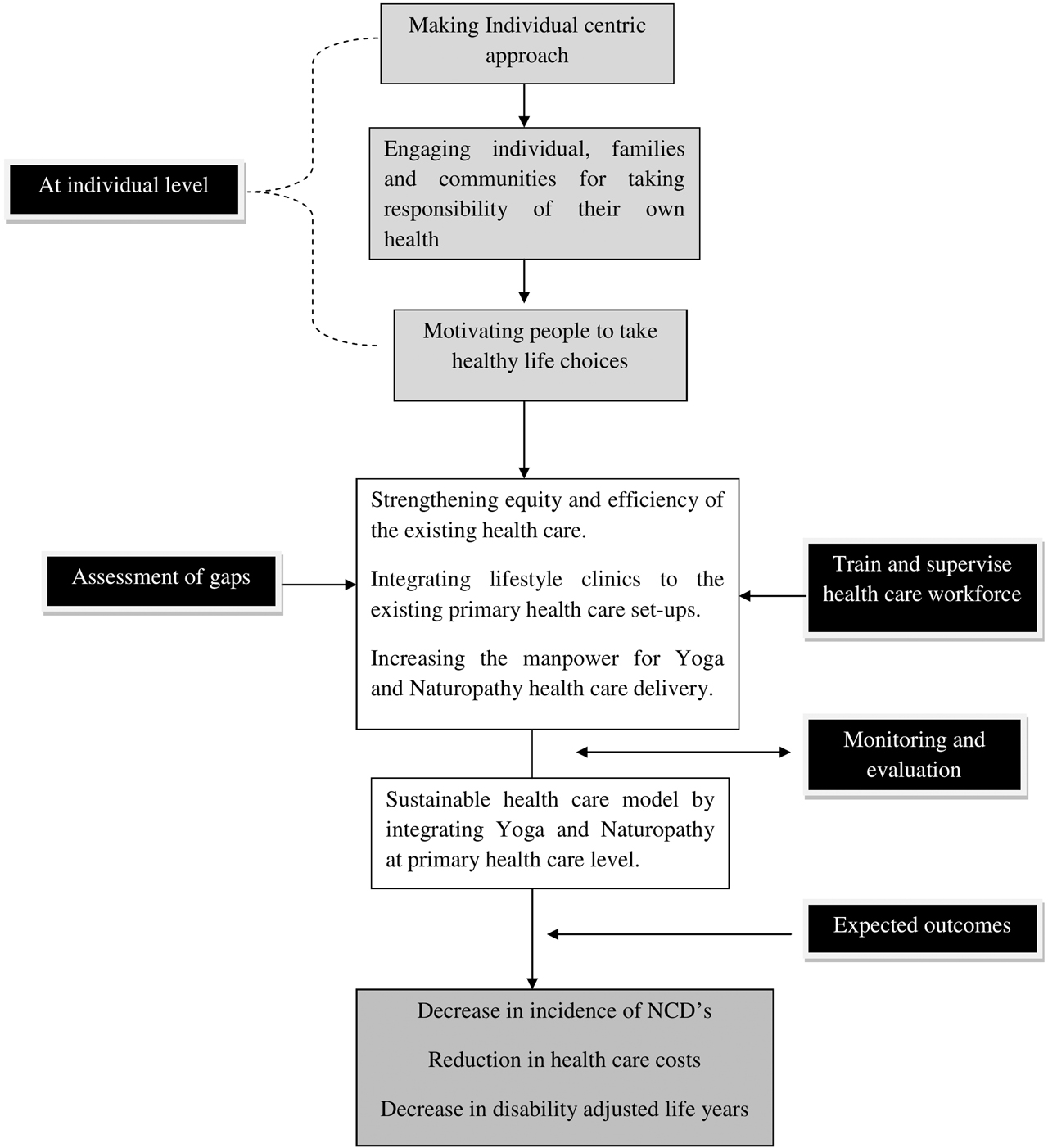
Framework for implementation of yoga and Naturpathy in primary health care.
Acknowledgment
The authors would like to thank National Institute of Naturopathy, Pune, Ministry of AYUSH, Government of India for their support.
Research funding: This research was funded by the National Institute of Naturopathy.
Author contributions: All authors have accepted responsibility for the entire content of this manuscript and approved its submission.
Competing interests: Authors state no conflict of interest.
References
1. World Health Organization. Non communicable diseases country profiles. Genève WHO Press; 2014;p. 91–3. Available from: http://apps.who.int/iris/bitstream/10665/128038/1/9789241507509_eng.pdf [Last accessed 24 June 2016].Search in Google Scholar
2. Nair, PM, Nanda, A. Naturopathic medicine in India. Focus Altern Compl Ther 2014;19:140–7. https://doi.org/10.1111/fct.12125.Search in Google Scholar
3. Bhaumik, S. Health and beyond… strategies for a better India: concept paper on primary health care in India. J Fam Med Prim Care 2014;3:94. https://doi.org/10.4103/2249-4863.137608.Search in Google Scholar
4. Ministry of Health and Family Welfare. Rural health care system in India. Available from: http://www.mohfw.nic.in/WriteReadData/l892s/rural%20health%20care%20system%20in%20india.pdf[Last accessed 24 June 2016].Search in Google Scholar
5. Worthington, RP, Gogne, A. Cultural aspects of primary healthcare in India: a case-based analysis. Asia Pac Fam Med 2011;10:1. https://doi.org/10.1186/1447-056x-10-8.Search in Google Scholar
6. Wilkinson, R, Marmot, M. Social determinants of health: the solid facts. Copenhagen, Denmark: World Health Organization/Regional Office for Europe; 1998. Available from: http://www.euro.who.int/__data/assets/pdf_file/0005/98438/e81384.pdf [Accessed 24 June 2016].Search in Google Scholar
7. Shivalli, S, Majra, JP, Akshaya, KM, Qadiri, GJ. Family centered approach in primary health care: experience from an urban area of Mangalore, India. Sci World J 2015;2015:419192. https://doi.org/10.1155/2015/419192.Search in Google Scholar
8. Epstein, RM, Street, JRRL. Patient-centered communication in cancer care: promoting healing and reducing suffering. NIH 2007. https://doi.org/10.1037/e481972008-001.Search in Google Scholar
9. Epstein, RM, Fiscella, K, Lesser, CS, Stange, KC. Why the nation needs a policy push on patient-centered health care. Health Aff 2010;29:1489–95. https://doi.org/10.1377/hlthaff.2009.0888.Search in Google Scholar
10. Epstein, RM, Street, RL. The values and value of patient-centered care. Ann Fam Med 2011;9:100–3. https://doi.org/10.1370/afm.1239.Search in Google Scholar
11. McMillan, SS, Kendall, E, Sav, A, King, MA, Whitty, JA, Kelly, F, et al. Patient-centered approaches to health care: a systematic review of randomized controlled trials. Med Care Res Rev 2013;70:567–96. https://doi.org/10.1177/1077558713496318.Search in Google Scholar
12. Kumari, R, Idris, MZ, Bhushan, V, Khanna, A, Agarwal, M, Singh, SK. Study on patient satisfaction in the government allopathic health facilities of Lucknow district, India. Indian J Community Med 2009;34:35. https://doi.org/10.4103/0970-0218.45372.Search in Google Scholar
13. Fleming, SA, Gutknecht, NC. Naturopathy and the primary care practice. Prim Care Clin Off Pract 2010;37:119–36. https://doi.org/10.1016/j.pop.2009.09.002.Search in Google Scholar
14. Ministry of AYUSH. Available from: http://ayush.gov.in/about-the-systems [Last accessed 30 June 2016].Search in Google Scholar
15. Wardle, J, Oberg, EB. The intersecting paradigms of naturopathic medicine and public health: opportunities for naturopathic medicine. J Altern Compl Med 2011;17:1079–84. https://doi.org/10.1089/acm.2010.0830.Search in Google Scholar
16. World Naturopathic Federation. Findings from the 1st world naturopathic federation survey. Available from: http://worldnaturopathicfederation.org/wp-content/uploads/2015/12/World-Federation-Report_June2015.pdf [Last accessed 30 June 2016].Search in Google Scholar
17. Dijksterhuis, A, Bargh, JA. The perception-behavior expressway: automatic effects of social perception on social behavior. Adv Exp Soc Psychol 2001;33:1–40. https://doi.org/10.1016/s0065-2601(01)80003-4.Search in Google Scholar
18. Kennedy, DA, Bernhardt, B, Snyder, T, Bancu, V, Cooley, K. Complementary medical health services: a cross sectional descriptive analysis of a Canadian naturopathic teaching clinic. BMC Compl Altern Med 2015;15:1. https://doi.org/10.1186/s12906-015-0550-6.Search in Google Scholar
19. Bradley, R, Sherman, KJ, Catz, S, Calabrese, C, Oberg, EB, Jordan, L, et al. Adjunctive naturopathic care for type 2 diabetes: patient-reported and clinical outcomes after one year. BMC Compl Alternative Med 2012;12:1. https://doi.org/10.1186/1472-6882-12-44.Search in Google Scholar
20. Bradley, R, Oberg, EB. Naturopathic medicine and type 2 diabetes: a retrospective analysis from an academic clinic. Alternative Med Rev 2006;11:30.Search in Google Scholar
21. Bairy, S, Kumar, AM, Raju, MS, Achanta, S, Naik, B, Tripathy, JP, et al. Is adjunctive naturopathy associated with improved glycaemic control and a reduction in need for medications among type 2 diabetes patients? A prospective cohort study from India. BMC Compl Alternative Med 2016;16:290. https://doi.org/10.1186/s12906-016-1264-0.Search in Google Scholar
22. Oberg, EB, Bradley, R, Cooley, K, Fritz, H, Goldenberg, JZ. Estimated effects of whole-system naturopathic medicine in select chronic disease conditions: a systematic review. Altern Integ Med 2015;4:2. https://doi.org/10.4172/2327-5162.1000192.Search in Google Scholar
23. Seely, D, Szczurko, O, Cooley, K, Fritz, H, Aberdour, S, Herrington, C, et al. Naturopathic medicine for the prevention of cardiovascular disease: a randomized clinical trial. Can Med Assoc J 2013;185:E409–16. https://doi.org/10.1503/cmaj.120567.Search in Google Scholar
24. Herman, PM, Szczurko, O, Cooley, K, Seely, D. A naturopathic approach to the prevention of cardiovascular disease: cost-effectiveness analysis of a pragmatic multi-worksite randomized clinical trial. J Occup Environ Med 2014;56:171–6. https://doi.org/10.1097/jom.0000000000000066.Search in Google Scholar
25. Murthy, SN, Rao, NS, Nandkumar, B, Kadam, A. Role of Naturopathy and Yoga treatment in the management of hypertension. Compl Ther Clin Pract 2011;17:9–12. https://doi.org/10.1016/j.ctcp.2010.08.005.Search in Google Scholar
26. Agrawal, KU. Effect of Yoga and Naturopathy on selected morphological physiological and biochemical variables among obese girls. 2014. Available from: http://ir.inflibnet.ac.in:8080/jspui/bitstream/10603/18633/14/14_chapter%205.pdf [Last accessed on 30 June 2016].Search in Google Scholar
27. Sathyaprabha, TN, Murthy, H, Murthy, BT. Efficacy of Naturopathy and Yoga in bronchial asthma-a self controlled matched scientific study. Indian J Physiol Pharmacol 2001;45:80–6.Search in Google Scholar
28. Innes, KE. Cheryl Bourguignon, and Ann Gill Taylor. Risk indices associated with the insulin resistance syndrome, cardiovascular disease, and possible protection with Yoga: a systematic review. J Am Board Fam Pract 2005;18:491–519. https://doi.org/10.3122/jabfm.18.6.491.Search in Google Scholar
29. Nandakumar, B, Kadam, A, Srikanth, H, Rao, R. P02. 50. Naturopathy and yoga based lifestyle intervention for cardiovascular risk reduction in patients with cardiovascular risk factors: a pilot study. BMC Compl Alternative Med 2012;12:106. https://doi.org/10.1186/1472-6882-12-s1-p106.Search in Google Scholar
30. Shetty, P, Mooventhan, A, Nagendra, HR. Does short-term lemon honey juice fasting have effect on lipid profile and body composition in healthy individuals?. J Ayurveda Integr Med 2016;7:11–3. https://doi.org/10.1016/j.jaim.2016.03.001.Search in Google Scholar
31. Cramer, H, Thoms, MS, Anheyer, D, Lauche, R, Dobos, G. Yoga in women with abdominal obesity—a randomized controlled trial. Deutsches Ärzteblatt Int 2016;113:645. https://doi.org/10.3238/arztebl.2016.0645.Search in Google Scholar
32. Xydakis, AM, Case, CC, Jones, PH, Hoogeveen, RC, Liu, MY, Smith, EO, et al. Adiponectin, inflammation, and the expression of the metabolic syndrome in obese Individuals: the impact of rapid weight loss through caloric restriction. J Clin Endocrinol Metab 2016;89:2697–703. https://doi.org/10.1210/jc.2003-031826.10.1210/jc.2003-031826Search in Google Scholar
33. Cramer, H, Langhorst, J, Dobos, G, Lauche, R. Yoga for metabolic syndrome: a systematic review and meta-analysis. Eur J Prev Cardiol 2016;23:1982–93. https://doi.org/10.1177/2047487316665729.Search in Google Scholar
34. Danaei, G, Vander Hoorn, S, Lopez, AD, Murray, CJL, Azzait, M, The Comparative Risk Assessment collaborating group. Comparative risk assessment collaborating group cancers. Causes of cancer in the world: comparative risk assessment of nine behavioural and environmental risk factors. Lancet 2005;366:1784–93. https://doi.org/10.1016/s0140-6736(05)67725-2.Search in Google Scholar
35. Herbert, S, Nair, PMK. Cancers of GIT. In: Satyalakshmi, K, Nair, PMK, Salwa, H, editors. Text book on Clinical Naturopathy and Yoga. India: National Institute of Naturopathy; 2017:pp. 254–67.Search in Google Scholar
36. Agarwal, RP, Maroko-Afek, A. Yoga into cancer care: a review of the evidence-based research. Int J Yoga 2018;11:3. https://doi.org/10.4103/ijoy.IJOY_42_17.Search in Google Scholar
37. Arankalle, DV. Integrating Naturopathy and Yoga in management of musculoskeletal disorders. Int J Prev Med 2013;4:120–1.Search in Google Scholar
38. Cramer, H, Lauche, R, Langhorst, J, Dobos, G. Yoga for rheumatic diseases: a systematic review. Rheumatology 2013;52:2025–30. https://doi.org/10.1093/rheumatology/ket264.Search in Google Scholar
39. Rao, YC, Kadam, A, Jagannathan, A, Babina, N, Rao, R, Nagendra, HR. Efficacy of Naturopathy and Yoga in bronchial asthma. J Aust Tradit Med Soc. 2015;21:198.Search in Google Scholar
40. Shinto, L, Calabrese, C, Morris, C, Yadav, V, Griffith, D, Frank, R, et al. A randomized pilot study of naturopathic medicine in multiple sclerosis. J Alternative Compl Med 2008;14:489–96. https://doi.org/10.1089/acm.2007.0757.Search in Google Scholar
41. Cooley, K, Szczurko, O, Perri, D, Mills, EJ, Bernhardt, B, Zhou, Q, et al. Naturopathic care for anxiety: a randomized controlled trial ISRCTN78958974. PloS One 2009;4:e6628. https://doi.org/10.1371/journal.pone.0006628.Search in Google Scholar
42. Sarris, J, Gadsden, S, Schweitzer, I. Naturopathic medicine for treating self-reported depression and anxiety: an observational pilot study of naturalistic practice. Adv Integrat Med 2014;1:87–92. https://doi.org/10.1016/j.aimed.2013.06.001.Search in Google Scholar
43. Sarris, J. Whole system research of naturopathy and medical herbalism for improving mood and reducing anxiety. Aust J Med Herbal 2011;23:116.Search in Google Scholar
44. World Health Organization. First global ministerial conference on healthy lifestyles and non-communicable disease control moscow. 2011:pp. 28–9. Available from: http://www.who.int/nmh/events/moscow_ncds_2011/conference_documents/moscow_declaration_en.pdf [Last accessed 28 June 2016].Search in Google Scholar
45. World Health Organization. Package of essential non-communicable (PEN) disease interventions for primary health care in low-resource settings. Available at: http://www.who.int/nmh/publications/essential_ncd_interventions_lr_settings.pdf [Last accessed 28 June 2016].Search in Google Scholar
46. Tripathy, JP. Can Naturopathy provide answers to the escalating health care costs in India?. J Tradit Complement Med 2015;5:63–5. https://doi.org/10.1016/j.jtcme.2014.11.006.Search in Google Scholar
47. Access EconomicsNational Institute of Complementary Medicine. Cost effectiveness of complementary medicines. National Institute of complementary medicine. New South Wales, Australia: University of Western Sydney; 2010.Search in Google Scholar
48. Cahn, BR, Goodman, MS, Peterson, CT, Maturi, R, Mills, PJ. Yoga, meditation and mind-body health: increased BDNF, cortisol awakening response, and altered inflammatory marker expression after a 3-month yoga and meditation retreat. Front Hum Neurosci 2017;11:315. https://doi.org/10.3389/fnhum.2017.00315.Search in Google Scholar
49. Lee, M, Moon, W, Kim, J. Effect of yoga on pain, brain-derived neurotrophic factor, and serotonin in premenopausal women with chronic low back pain. Evid base Compl Alternative Med 2014. https://doi.org/10.1155/2014/203173.Search in Google Scholar
50. Halappa, NG, Thirthalli, J, Varambally, S, Rao, M, Christopher, R, Nanjundaiah, GB. Improvement in neurocognitive functions and serum brain-derived neurotrophic factor levels in patients with depression treated with antidepressants and yoga. Indian J Psychiatr 2018;60:32–7. https://doi.org/10.4103/psychiatry.IndianJPsychiatry_154_17.Search in Google Scholar
51. Kojima, D, Nakamura, T, Banno, M, Umemoto, Y, Kinoshita, T, Ishida, Y, et al. Head-out immersion in hot water increases serum BDNF in healthy males. Int J Hyperther 2018;34:834–9. https://doi.org/10.1080/02656736.2017.1394502.Search in Google Scholar
52. Frazzitta, G, Maestri, R, Ferrazzoli, D, Riboldazzi, G, Bera, R, Fontanesi, C, et al. Multidisciplinary intensive rehabilitation treatment improves sleep quality in Parkinson’s disease. J Clin Mov Disorders 2015;2:11. https://doi.org/10.1186/s40734-015-0020-9.Search in Google Scholar
53. Mattson, MP, Moehl, K, Ghena, N, Schmaedick, M, Cheng, A. Intermittent metabolic switching, neuroplasticity and brain health. Nat Rev Neurosci 2018;19:63–80. https://doi.org/10.1038/nrn.2017.156.Search in Google Scholar
54. Walsh, JJ, Edgett, BA, Tschakovsky, ME, Gurd, BJ. Fasting and exercise differentially regulate BDNF mRNA expression in human skeletal muscle. Appl Physiol Nutr Metabol 2014;40:96–8.10.1139/apnm-2014-0290Search in Google Scholar PubMed
55. Longo, VD, Mattson, MP. Fasting: molecular mechanisms and clinical applications. Cell Metabol 2014;19:181–92. https://doi.org/10.1016/j.cmet.2013.12.008.Search in Google Scholar
56. Rao, RM, Vadiraja, HS, Nagaratna, R, Gopinath, KS, Patil, S, Diwakar, RB, et al. Effect of yoga on sleep quality and neuroendocrine immune response in metastatic breast cancer patients. Indian J Palliat Care 2017;23:253–60. https://doi.org/10.4103/ijpc.ijpc_102_17.Search in Google Scholar
57. Benfield, RD, Hortobágyi, T, Tanner, CJ, Swanson, M, Heitkemper, MM, Newton, ER. The effects of hydrotherapy on anxiety, pain, neuroendocrine responses, and contraction dynamics during labor. Biol Res Nurs 2010;12:28–36. https://doi.org/10.1177/1099800410361535.Search in Google Scholar
58. Zamunér, AR, Andrade, CP, Arca, EA, Avila, MA. Impact of water therapy on pain management in patients with fibromyalgia: current perspectives. J Pain Res 2019;12:1971. https://doi.org/10.2147/jpr.s161494.Search in Google Scholar
59. Gálvez, I, Torres-Piles, S, Ortega-Rincón, E. Balneotherapy, immune system, and stress response: a hormetic strategy?. Int J Mol Sci 2018;19:1687. https://doi.org/10.3390/ijms19061687.Search in Google Scholar
60. Rapaport, MH, Schettler, P, Bresee, C. A preliminary study of the effects of repeated massage on hypothalamic-pituitary-adrenal and immune function in healthy individuals: a study of mechanisms of action and dosage. J Alternative Compl Med 2012;18:789–97. https://doi.org/10.1089/acm.2011.0071.Search in Google Scholar
61. Azeemi, ST, Raza, SM. A critical analysis of chromotherapy and its scientific evolution. Evid Based Complement Alternat Med 2005;2:481–8. https://doi.org/10.1093/ecam/neh137.Search in Google Scholar
62. Bochukova, EG, Lawler, K, Croizier, S, Keogh, JM, Patel, N, Strohbehn, G, et al. A transcriptomic signature of the hypothalamic response to fasting and BDNF deficiency in Prader-Willi syndrome. Cell Rep 2018;22:3401–8. https://doi.org/10.1016/j.celrep.2018.03.018.Search in Google Scholar
63. Sanada, K, Díez, MA, Valero, MS, Pérez-Yus, MC, Demarzo, MM, García-Toro, M, et al. Effects of non-pharmacological interventions on inflammatory biomarker expression in patients with fibromyalgia: a systematic review. Arthritis Res Ther 2015;17:272. https://doi.org/10.1186/s13075-015-0789-9.Search in Google Scholar
64. Bazzichi, L, Da Valle, Y, Rossi, A, Giacomelli, C, Sernissi, F, Giannaccini, G, et al. A multidisciplinary approach to study the effects of balneotherapy and mud-bath therapy treatments on fibromyalgia. Clin Exp Rheumatol 2013;31:s111–20.Search in Google Scholar
65. Michalsen, A, Schneider, S, Rodenbeck, A, Lüdtke, R, Huether, G, Dobos, GJ. The short-term effects of fasting on the neuroendocrine system in patients with chronic pain syndromes. Nutr Neurosci 2003;6:11–8. https://doi.org/10.1080/1028415021000042811.Search in Google Scholar
66. Lovas, JM, Craig, AR, Segal, YD, Raison, RL, Weston, KM, Markus, MR. The effects of massage therapy on the human immune response in healthy adults. J Bodyw Mov Ther 2002;6:143–50. https://doi.org/10.1054/jbmt.2001.0251.Search in Google Scholar
67. Lee, YM, Yeun, YR. Effects of combined foot massage and cognitive behavioral therapy on the stress response in middle-aged women. J Alternative Compl Med 2017;23:445–50. https://doi.org/10.1089/acm.2016.0421.Search in Google Scholar
68. Joseph, B, Nair, PM, Nanda, A. Effects of Naturopathy and Yoga intervention on CD4 count of the individuals receiving antiretroviral therapy-report from a human immunodeficiency virus sanatorium, Pune. Int J Yoga 2015;8:122. https://doi.org/10.4103/0973-6131.158475.Search in Google Scholar
69. González Maglio, DH, Paz, ML, Leoni, J. Sunlight effects on immune system: is there something else in addition to UV-induced immunosuppression?. BioMed Res Int 2016;2016:1934518. https://doi.org/10.1155/2016/1934518.Search in Google Scholar
70. Buric, I, Farias, M, Jong, J, Mee, C, Brazil, IA. What is the molecular signature of mind–body interventions? A systematic review of gene expression changes induced by meditation and related practices. Front Immunol 2017;8:670. https://doi.org/10.3389/fimmu.2017.00670.Search in Google Scholar
71. Mody, J. Epigenetics and yoga. J Clin Epigenetics 2018;4:10.10.21767/2472-1158.100095Search in Google Scholar
72. Kanherkar, RR, Stair, SE, Bhatia-Dey, N, Mills, PJ, Chopra, D, Csoka, AB. Epigenetic mechanisms of integrative medicine. Evid base Compl Alternative Med 2017;2017:4365429. https://doi.org/10.1155/2017/4365429.Search in Google Scholar
73. Tolahunase, M, Sagar, R, Dada, R. Impact of yoga and meditation on cellular aging in apparently healthy individuals: a prospective, open-label single-arm exploratory study. Oxid Med Cell Longev 2017;2017:2784153. https://doi.org/10.1155/2017/2784153.Search in Google Scholar
74. Duraimani, S, Schneider, RH, Randall, OS, Nidich, SI, Xu, S, Ketete, M, et al. Effects of lifestyle modification on telomerase gene expression in hypertensive patients: a pilot trial of stress reduction and health education programs in African Americans. PloS One 2015;10:e0142689. https://doi.org/10.1371/journal.pone.0142689.Search in Google Scholar
75. Alves, AC, Glastonbury, CA, El-Sayed Moustafa, JS, Small, KS. Fasting and time of day independently modulate circadian rhythm relevant gene expression in adipose and skin tissue. BMC Genom 2018;19:659. https://doi.org/10.1186/s12864-018-4997-y.Search in Google Scholar
76. Afzal Javan, F, Pasdar, A. The effects of fasting on physiological status and gene expression; an overview. JFH 2015;3:111–4.Search in Google Scholar
77. Kita, R, Fraser, HB. Local adaptation of sun-exposure-dependent gene expression regulation in human skin. PLoS Genet 2016;12: e1006382. https://doi.org/10.1371/journal.pgen.1006382.Search in Google Scholar
© 2020 Walter de Gruyter GmbH, Berlin/Boston
Articles in the same Issue
- Frontmatter
- Reviews
- The effect of Nigella sativa on oxidative stress and inflammatory biomarkers: a systematic review and meta-analysis
- Effect of fennel on primary dysmenorrhea: a systematic review and meta-analysis
- Raising burden of non-communicable diseases: importance of integrating Yoga and Naturopathy at primary care level
- Research Articles Basic
- Marketing and legal status of phytomedicines and food supplements in Morocco
- Hydrogen sulfide as a mediator of endothelium-dependent relaxation evoked by Moringa oleifera leaf extract in mesenteric arterial beds isolated from L-NAME hypertensive rats
- Acute and sub-acute toxicity assessment of aqueous leaves extract of Crassocephalum crepidioides (Asteraceae) in Wistar rats
- Zingerone improves the immune responses in an animal model of breast cancer
- Evaluation of efficacy of Bombax ceiba extract and its major constituent, mangiferin in streptozotocin (STZ)-induced diabetic rats
- Bacterial endosymbiont inhabiting Leucaena leucocephala leaves and their antioxidant and antidiabetic potential
- Ameliorative effect of morin on dutasteride-tamsulosin-induced testicular oxidative stress in rat
- The potentiation of beta-lactam and anti-bacterial activities of lipophilic constituents from Mesua ferrae leaves against methicillin-resistant Staphylococcus aureus
- Influence of irisin on diet-induced metabolic syndrome in experimental rat model
- Modulatory effect of methanol extract of Annona muricata stem bark on mitochondrial membrane permeability transition pore in normal rat liver and monosodium glutamate-induced uterine hyperplasia
- Research Articles Clinical
- Functional status in adhesive capsulitis – yoga vs. physiotherapy: a quasi experimental study
- Okada Purifying Therapy in combination with duloxetine vs. duloxetine alone in patients with TMD and fibromyalgia: a randomized clinical study
- The FIFA 11+ does not alter performance in amateur female basketball players—a randomized control trial
- Body composition, phenotype and central obesity indices in Egyptian women with non-alcoholic fatty liver disease
- Immediate effect of interscapular cupping on blood pressure, oxygen saturation, pulse rate and chest expansion in sedentary smoker students
- The effects of an olive-oil massage on hemodialysis patients suffering from fatigue at a hemodialysis unit in southern India – a randomized controlled trial
- Effects of epigallocatechin-3-gallate of Camellia sinensis leaves on blood pressure, lipid profile, atherogenic index of plasma and some inflammatory and antioxidant markers in type 2 diabetes mellitus patients: a clinical trial
- The effect of practicing yoga during pregnancy on labor stages length, anxiety and pain: a randomized controlled trial
- Effect of lumbar stabilization exercises and thoracic mobilization with strengthening exercises on pain level, thoracic kyphosis, and functional disability in chronic low back pain
- A prospective controlled study on Ramadan fasting in the healthy young males in summer in Germany: effect on cytokines
- Tualang honey versus steroid impregnated nasal dressing following endoscopic sinus surgery: a randomized controlled trial
- Short Communications
- Improved anti-arthritic activity of ginger extract, a traditional medicine, using novel drug delivery approach
- Efficacy of fenugreek seed extract on men's psychological and physical health: a randomized placebo-controlled double-blind clinical trial
Articles in the same Issue
- Frontmatter
- Reviews
- The effect of Nigella sativa on oxidative stress and inflammatory biomarkers: a systematic review and meta-analysis
- Effect of fennel on primary dysmenorrhea: a systematic review and meta-analysis
- Raising burden of non-communicable diseases: importance of integrating Yoga and Naturopathy at primary care level
- Research Articles Basic
- Marketing and legal status of phytomedicines and food supplements in Morocco
- Hydrogen sulfide as a mediator of endothelium-dependent relaxation evoked by Moringa oleifera leaf extract in mesenteric arterial beds isolated from L-NAME hypertensive rats
- Acute and sub-acute toxicity assessment of aqueous leaves extract of Crassocephalum crepidioides (Asteraceae) in Wistar rats
- Zingerone improves the immune responses in an animal model of breast cancer
- Evaluation of efficacy of Bombax ceiba extract and its major constituent, mangiferin in streptozotocin (STZ)-induced diabetic rats
- Bacterial endosymbiont inhabiting Leucaena leucocephala leaves and their antioxidant and antidiabetic potential
- Ameliorative effect of morin on dutasteride-tamsulosin-induced testicular oxidative stress in rat
- The potentiation of beta-lactam and anti-bacterial activities of lipophilic constituents from Mesua ferrae leaves against methicillin-resistant Staphylococcus aureus
- Influence of irisin on diet-induced metabolic syndrome in experimental rat model
- Modulatory effect of methanol extract of Annona muricata stem bark on mitochondrial membrane permeability transition pore in normal rat liver and monosodium glutamate-induced uterine hyperplasia
- Research Articles Clinical
- Functional status in adhesive capsulitis – yoga vs. physiotherapy: a quasi experimental study
- Okada Purifying Therapy in combination with duloxetine vs. duloxetine alone in patients with TMD and fibromyalgia: a randomized clinical study
- The FIFA 11+ does not alter performance in amateur female basketball players—a randomized control trial
- Body composition, phenotype and central obesity indices in Egyptian women with non-alcoholic fatty liver disease
- Immediate effect of interscapular cupping on blood pressure, oxygen saturation, pulse rate and chest expansion in sedentary smoker students
- The effects of an olive-oil massage on hemodialysis patients suffering from fatigue at a hemodialysis unit in southern India – a randomized controlled trial
- Effects of epigallocatechin-3-gallate of Camellia sinensis leaves on blood pressure, lipid profile, atherogenic index of plasma and some inflammatory and antioxidant markers in type 2 diabetes mellitus patients: a clinical trial
- The effect of practicing yoga during pregnancy on labor stages length, anxiety and pain: a randomized controlled trial
- Effect of lumbar stabilization exercises and thoracic mobilization with strengthening exercises on pain level, thoracic kyphosis, and functional disability in chronic low back pain
- A prospective controlled study on Ramadan fasting in the healthy young males in summer in Germany: effect on cytokines
- Tualang honey versus steroid impregnated nasal dressing following endoscopic sinus surgery: a randomized controlled trial
- Short Communications
- Improved anti-arthritic activity of ginger extract, a traditional medicine, using novel drug delivery approach
- Efficacy of fenugreek seed extract on men's psychological and physical health: a randomized placebo-controlled double-blind clinical trial
