Expression of Hepcidin and Neogenin in colorectal cancer
-
Pan Xiang-tao


Abstract
Objective
To investigate the expression of Hepcidin and Neogenin in tissue from patients with colorectal cancer, to evaluate the relationship between Hepcidin and Neogenin with clinical features, and to study their relationship with anemia.
Methods
Immuno- histochemical method was used to detect the expression of Hepcidin and Neogenin in 62 cases of colorectal cancer. At the same time, the relationship between them and their relationship with clinical characteristics and anemia were analyzed.
Results
The expression of Hepcidin was related to T stage (P<0.05), but not with age, gender, lymph node metastasis and distant metastasis. The expression of Neogenin was not correlated with T stage and lymph node metastasis, age, gender, and distant metastasis (P>0.05). There was no significant difference in the expression of Hepcidin and Neogenin between anemia group and non-anemia group. There was no correlation between Hepcidin and Neogenin (r =-0.04, P>0.05).
Conclusion
The expression of Hepcidin in colorectal cancer was related to the T stage, and had no correlation with Neogenin. The expression of Neogenin could not be used as an objective index to reflect the biological behavior of colorectal cancer.
1 Introduction
At present, iron may play an important role in promoting the proliferation and differentiation of tumors. So, there is an increased demand for iron in tumors. The disorder of iron metabolism can obviously affect the proliferation and metastasis of tumor. In addition, there are many tumor patients with anemia; in addition to blood loss, radiotherapy and chemotherapy, tumor bone marrow involvement, but also may be related to the disorder of iron metabolism. Recent studies have shown that hepcidin was highly expressed upon stimulation of inflammatory mediators, especially. interleukin 6 in patients with cancer [1,2]. Additionally, hepcidin has been shown to cause iron metabolism disorders which results in anemia in patients [3, 4]. However, recent reports have suggested that iron may function as a cofactor that contributes to the proliferation and differentiation of tumors [5, 6]. So iron metabolism disorders caused by hepcidin may play an important role in the development of cancer. Neogenin, a deleted in colorectal cancer (DCC) family member, has been identified as a receptor for the neuronal axon guidance cues netrins and repulsive guidance molecules repulsive guidance molecules (RGM). RGMc, also called hemojuvelin (HJV), is essential for iron homeostasis. Recent studies shown neogenin can inhibit hemojuvelin (HJV) secretion and regulates BMP-induced hepcidin expression and iron homeostasis [7]. Therefore, this study used immunohistochemical methods to determine the expression of Hepcidin and Neogenin in the pathological tissues of 62 cases of colorectal cancer patients, and analyzed the relationship between Hepcidin and Neogenin and their relationship with clinical characteristics and anemia.
2 Methods
2.1 Data collection and population
62 cases of colorectal cancer patients who hospitalized between January 2009 and January 2014 in our hospital were included in this study, along with their surgical specimens embedded by paraffin. All cases were confirmed by pathological examination, and none of them received chemotherapy or radiotherapy before surgery. There were 39 males and 23 females, the median age was 66 years. Criteria for the diagnosis of anemia in men were Hb less than 120.0 g/L and women with Hb less than 110.0 g/L, and there were 21 cases of anemia and 41 cases without anemia. Hb levels were110.0±12.9g/L(range: from 56.3g/L to 155.8g/L).TNM staging was consistent with the criteria for the pathology group of Chinese National Colorectal Cancer Cooperative Group. Among them, there were 16 cases in stage T1 and T2, and 46 cases in stage T3 and T4. There were 31 cases with and 31 cases without lymph node metastasis, 7 cases with and 55 cases without distant metastasis. During the same period, we randomly selected 15 cases of normal intestinal mucosa of patients with colorectal cancer as a control group. This study was approved by the Ethics Committee of Taicang Hospital of Suzhou University. Informed consent has been obtained from all individuals included in this study.
2.2 Experimental methods
Immunohistochemistry was performed by using the StreptAvidin-Biotin Complex (SABC) staining system. Four consecutive sections, each with a thickness of 5 μm, were cut from the paraffin blocks and then incubated at 60°C for 30 minutes. Dimethylbenzene, anhydrous alcohol, and different concentrations of alcohol were used to dewax the sections. They were then washed with water for two minutes. One section from each set was stained with hematoxylin and eosin to facilitate the pathological diagnosis according to the manufacturer’s protocol (Wuhan Boshide Biological Engineering Co., Ltd., China. Produced by R&D Co., Ltd., German). The remaining three sections were stained by the SABC method according to the manufacturer’s protocol (Fuzhou Maixin Biotech. Co, Ltd, primary antibodies was from Abcam Hong Kong, Ltd.). Phosphate-buffered saline instead of the primary antibody was used as a negative control.
2.3 Result Evaluation
The cytoplasm and nucleus stained as pale or yellow brown were evaluated as positive. At high magnification, the five fields were randomly selected, positive was defined as the staining color was yellow or deeper color and the number of positive cells was larger than 10%.
2.4 Statistical Analysis
Using the SPSS statistical software (version 16.0), the data were calculated by Chi square test.we compared groups with the SNK method, Person test, and using Spearman rank test to grade correlation analysis, P < 0.05 for the difference was statistically significant.
3 Results
3.1 Expression of Hepcidin in colorectal cancer
The positive expression rate of Hepcidin in normal intestinal mucosa was 20% (3/15), and the positive rate was 66.1% (41/62) in colorectal cancer tissues, and the difference was significant (P= 0.003). The expression of Hepcidin in cancer tissues in stage T3 and T4 was significantly higher than that in stage T1 and T2 (P<0.05). But there was no significant difference among the patients with or without lymph node metastasis and distant metastasis (P>0.05). (for detail See Figure 1 and Table 1).
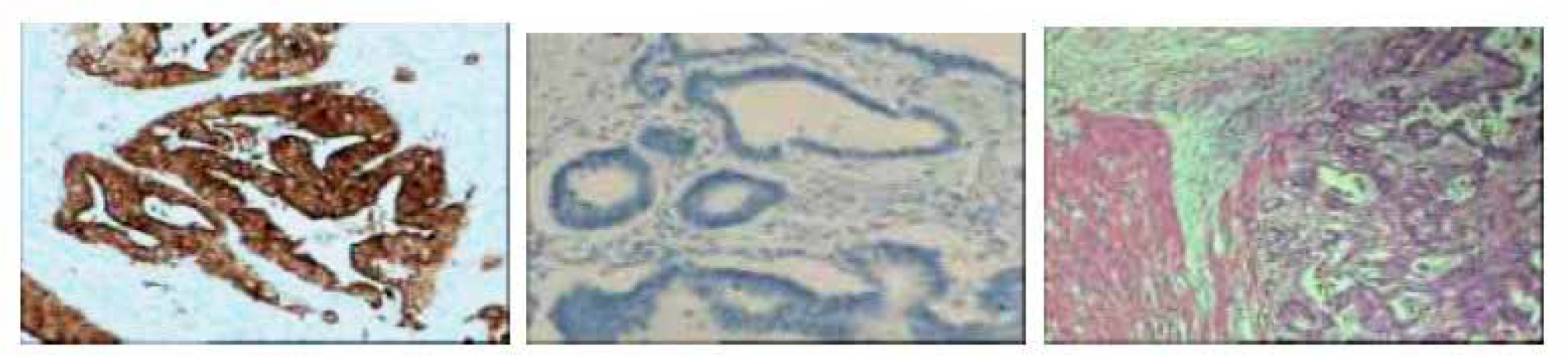
A. Hepcidin Positive (×100); B. Negative stain control (×100) C H&E (×100)
Expressions of Hepcidin and Neogenin in colorectal cancer and their association with clinical characteristics.
| Charact-eristics | Hepcidin Negative | Positive | Chi Square | Neogenin Negative | Positive | Chi Square | |
|---|---|---|---|---|---|---|---|
| Age | ≤60 | 5 | 14 | 0.70 | 1 | 18 | 2.60 |
| >60 | 16 | 27 | 9 | 34 | |||
| Gengder | male | 15 | 24 | 0.99 | 5 | 34 | 0.85 |
| female | 6 | 17 | 5 | 18 | |||
| T-stage | TI, T2 | 9 | 7 | 4.82[*] | 3 | 13 | 0.11 |
| T3, T4 | 12 | 34 | 7 | 39 | |||
| LNT[a] | Yes | 8 | 23 | 1.80 | 4 | 27 | 0.48 |
| Not | 13 | 18 | 6 | 25 | |||
| DM[b] | Yes | 1 | 6 | 1.52 | 1 | 6 | 0.02 |
| No | 20 | 35 | 1.52 | 9 | 46 |
3.2 Expression of Neogenin in colorectal cancer
The positive expression rate of Neogenin in normal intestinal mucosa was 100% (15/15), the positive expression rate in cancer tissue was 83.8% (52/62), and the difference was not significant (P =0.45). There showed no significant difference in different stages (P>0.05), with or without lymph node metastasis (P>0.05), and with or without distant metastasis(P>0.05)(For details, see Figure 2 and Table 1).

A. Neogenin Positive (×100); B Negative stain control (×100) C H&E (×100)
3.3 Correlation between anemia and the expression of Hepcidin and Neogenin
There was no correlation between the expression of Hepcidin and Neogenin in tumor tissues with anemia. Chi Square were 0.40 and 2.38 respectively,all P>0.05 (for detail, see Table 2).
Correlation between anemia and Hepcidin and Neogenin Expression in colorectal cancer tissue.
| Anemia | Neogenin Positive | Negative | Hepcidin Positive | Negative |
|---|---|---|---|---|
| Yes | 15 | 6 | 15 | 6 |
| NO | 37 | 4 | 26 | 15 |
At the same time, we also applied the Spearman rank correlation test method to analysis the relationship between hemoglobin levels and the expression of hepcidin and Neogenin in tumor tissues, the results were indicated that there also no correlation(r = 0.08 and r =-0.04 respectively, all P > 0.05.
3.4 Correlation between the expression of Neogenin and Hepcidin
32 of 52 Neogenin positive patients expressed Hepcidin, and 7 cases of 10 Neogenin negative patients expressed Hepcidin (χ2 =0.01, P >0.05).
4 Discussion
Iron might serve as the synergistic factor to induce the cellular proliferation and differentiation in cancer. Metabolism of iron in tumor cells has changed a lot, many proteins which participated in the regulation of iron metabolism showed highly expressed, and they could apparently affect the proliferation and metastasis in cancer [8-11]. Patients with cancer often show a high level of serum Hepcidin [12].Studies showed that the increased intracellular iron could promote the development of cancer mediated by the stimulation of Wnt signaling pathway [13,14] .We found that patients with high T staging (T3, 4) had high level of hepcidin expression(χ2 =4.82, P<0.05), which had no relevant with patients’ age, gender, lymph node metastasis or distant metastasis. And this result was consistent with Wards’ study [15,16] which showed that hepcidin expression of patients with colorectal cancer was related to T staging .We found the expression of neogenin was not correlated with T stage and lymph node metastasis, age, gender, and distant metastasis (P>0.05).The result showed neogenin was not correlated with tumor severity, and neogenin could not be used as an objective index to reflect the biological behavior of colorectal cancer.
At the same time, the study results showed that there was no correlation between neogenin expression and T stage, patients age, gender, lymph node metastasis and distant metastasis(all P>0.05), suggesting that the expression of Neogenin may have no association with hepcidin in colorectal cancer.
The correlation analysis between Hepcidin and Neogenin was carried out. The results confirmed that Hepcidin and Neogenin had no correlation with in colorectal cancer (χ2 =0.01,P > 0.05), which showed that the abnormal expression of Hepcidin in colorectal carcinoma was not related to Neogenin.
Of course, it is possible that less cases of general cases and case with distant metastasis before surgery (only 8 cases) led to the negative results, which certainly has to be further studied by expanding the clinical sample size.
Anemia is one of the common symptoms in patients with intestinal tumor. It is generally considered that the anemia is a chronic disease in chronic inflammation and malignant tumors (ACD), Current research [17-19] has confirmed that Hepcidin plays a key role in the occurrence and development of ACD [17]. Elevated expression of Hepcidin can inhibit the intestinal iron absorption and inhibit the release of iron from the mononuclear macrophage system, which makes the iron storage in the cells, iron reduction in bone marrow, and ultimately lead to iron loss and anemia [18,20-22]. Our previous studies [19] also showed that Hepcidin plays an important role in the treatment of postoperative radiotherapy and chemotherapy in patients with advanced tumor anemia, the expression of hepcidin in patients with anemia was significantly higher compared with that of patients without anemia (P<0.05), which was negatively correlated with Hb (r =-0.2597,P<0.01).
But there has not report research about the relationship between the expression of Hepcidin and anemia in tumor tissue yet. Our study showed that there was no difference between the Neogenin and the Hepcidin in the tissues of the patients with anemia and anemia, and there was no correlation between the level of Hb and Hepcidin and Neogenin in the patients. The local level of the iron in the tumor tissue does not represent the level of the whole body of the patient. In another research, we [23] analyzed the relationships between expression of Hepcidin in Breast cancer tissues and the levels of those factors in serum. No statistically significant correlations were observed(r =0.1419, P>0.05). So we speculated the serum level of hepcidin in colorectal cancer has not any relation with the hepcidin expression level of tumor tissue, and it was consistence with the result that there were no relationship between the expression of hepcidin in colorectal cancer tissue and anemia.
In conclusion, our study showed that the elevation expression of Hepcidin in colorectal cancer was related to the T staging of cancer patients, and the expression level of Neogenin was not related to the biological behavior of colorectal cancer. Also the expression of Hepcidin and Neogenin in tumor tissue was not related to anemia.
Conflict of interest: No authors report any conflict of interest.
References
[1] Rodriguez R, Jung CL, Gabayan V, et al. Hepcidin induction by pathogens and pathogen-derived molecules is strongly dependent on interleukin-6. Infect Immun 2014; 82:745-75210.1128/IAI.00983-13Suche in Google Scholar PubMed PubMed Central
[2] Gardenghi S, Renaud TM, Meloni A, et al. Distinct roles for hepcidin and interleukin-6 in the recovery from anemia in mice injected with heat-killed Bruiellu abortus. Blood 2014; 123:1137-114510.1182/blood-2013-08-521625Suche in Google Scholar PubMed PubMed Central
[3] Ganz T. Systemic iron homeostasis. Physiol Rev 2013; 93:1721-174110.1152/physrev.00008.2013Suche in Google Scholar PubMed
[4] Ganz T, Nemeth E. Hepcidin and iron homeostasis. Biochim Biophys Acta 2012; 1823:1434-144310.1016/j.bbamcr.2012.01.014Suche in Google Scholar PubMed PubMed Central
[5] Tirnitz-Parker JE, Glanfield A, Olynyk JK, Ramm GA. Iorn and hepatic carcinogenesis. Crit Rev Oncog 2013; 18:391-34010.1615/CritRevOncog.2013007759Suche in Google Scholar PubMed
[6] Durrenberger F, Abbate V, Ma Y, et al. Functional characterization of fluorescent hepcidin. Bioconjug Chem 2013; 24:1527-153210.1021/bc400121xSuche in Google Scholar PubMed
[7] Lee DH, Zhou LJ, Zhou Z, et al. Neogenin inhibits HJV secretion and regulates BMP-induced hepcidin expression and homeostasis. Blood 2010; 115:3136-314510.1182/blood-2009-11-251199Suche in Google Scholar PubMed PubMed Central
[8] Alkhateeb AA, Connor JR. The significance of ferritin in cancer: anti-oxidation, inflammation and tumorigenesis. Biochim Biophys Acta, 2013, 1836(2):245-25410.1016/j.bbcan.2013.07.002Suche in Google Scholar PubMed
[9] Vander Wall K, Daniels-Wells TR, Penichet M, et al. Iron in multiple myeloma. Crit Rev Oncog. 2013, 18(5):449-46110.1615/CritRevOncog.2013007934Suche in Google Scholar
[10] Tirnitz-Parker JE, Glanfield A, Olynyk JK, et al. Iron and hepatic carcinogenesis. Crit Rev Oncog. 2013, 18(5):391-407.10.1615/CritRevOncog.2013007759Suche in Google Scholar
[11] Bookes MJ, Boult J, Roberts K.et al.A role for iron in WNT signaling. Oncogene[J]. 2008,27:966-97510.1038/sj.onc.1210711Suche in Google Scholar PubMed
[12] Ukarma L, Johannes H, Beyer U ,et al. Hepcidin as a predictor of response to epoetin therapy in anem ic cancer patients [ J ]. Clin Chem , 2009, 55 (7) : 1354-136010.1373/clinchem.2008.121285Suche in Google Scholar PubMed
[13] Torti SV, Torti FM. Iron and cancer: more ore to be mined. Nat Rev Cancer. 2013, 13 (5):342-35510.1038/nrc3495Suche in Google Scholar PubMed PubMed Central
[14] Bienz M, Clevers H. Linking colorectal cancer to Wnt signaling. Cell[J].2000,244:76-78Suche in Google Scholar
[15] Ward DG, Roberts K, Brookes MJ, et al. Increased hepcidin expression in colorectal carcinogenesis [J]. WorldJ Gastroenterol, 2008, 14(9): 1339-134510.3748/wjg.14.1339Suche in Google Scholar PubMed PubMed Central
[16] Atanasiu YL, Manolescu B, Stoian I. Hepcidin-central regulator of iron metabolism. Eur J Haematol [J].2007,78(1) :1-10.10.1111/j.1600-0609.2006.00772.xSuche in Google Scholar PubMed
[17] Gangat N, Wolanskyj AP. Anemia of chronic disease. Semin Hematol. 2013 Jul;50(3):232-23810.1053/j.seminhematol.2013.06.006Suche in Google Scholar PubMed
[18] Beguin Y, Aapro M, Ludwig H, et al. Epidemiological and nonclinical studies investigating effects of iron in carcinogenesis - A critical review. Crit Rev Oncol Hematol. 2014, 89(1):1-1510.1016/j.critrevonc.2013.10.008Suche in Google Scholar PubMed
[19] Shi YJ, Pan XT.BMP6 and BMP4 expression in patients with cancer-related anemia and its relationship with hepcidin and s-HJV. Genetics and molecular. Research[J].2016,15(1):1-510.4238/gmr.15017130Suche in Google Scholar PubMed
[20] Means RT. Hepcidin and cytokines in anemia. Hematology[J].20 04,9(56) :357-36210.1080/10245330400018540Suche in Google Scholar PubMed
[21] Nemeth E, Tuttle MS,Powelson J, etal. Hepcidin regulates iron efflux by binding to ferroportin and inducing its internalization. Science [J].2004, 306(5704):2090-209310.1126/science.1104742Suche in Google Scholar PubMed
[22] Fleming RE, Sly WS. Hepcidin: a putative iron-regulatory hormone relevant to hereditary hemochromatosis and the anemia of chronic disease .Proc Natl Acd Sci. USA [J]. 2001 , 98(15):8160-816210.1073/pnas.161296298Suche in Google Scholar PubMed PubMed Central
[23] Pan XT, Lu y, Cheng X, et,al. Hepcidin and forroportin expression in breast cancer tissue and serum and their relationship with anemia [J].2016,23(1):24-2610.3747/co.23.2840Suche in Google Scholar PubMed PubMed Central
© 2017 PAN Xiang-tao
This work is licensed under the Creative Commons Attribution-NonCommercial-NoDerivatives 3.0 License.
Artikel in diesem Heft
- Regular Articles
- Intravascular treatment of left subclavian artery aneurysm coexisting with aortic coarctation in an adult patient
- Regular Articles
- Effect of electrical stimulation on blood flow velocity and vessel size
- Regular Articles
- Live birth pregnancy outcome after first in vitro fertilization treatment in a patient with Systemic Lupus Erythematosus and isolated high positive IgA anti-β2glycoprotein I antibodies: a case report
- Regular Articles
- Periodontal ligament stem cells regulate apoptosis of neutrophils
- Regular Articles
- Platelet-rich fibrin (PRF) in implants dentistry in combination with new bone regenerative flapless technique: evolution of the technique and final results
- Regular Articles
- The significance of strong ion gap for predicting return of spontaneous circulation in patients with cardiopulmonary arrest
- Regular Articles
- Clinicopathology of EpCAM and EGFR in human epithelial ovarian carcinoma
- Regular Articles
- Intraosseous lipoma of the mandibula: A case report and review of the literature
- Regular Articles
- Transurethral resection of the prostate, bladder explosion and hyponatremic encephalopathy: a rare case report of malpractice
- Regular Articles
- Brain strokes related to aortic aneurysma – the analysis of three cases
- Regular Articles
- Effect of Bicyclol tablets on drug induced liver injuries after kidney transplantation
- Regular Articles
- Plasma free fatty acids in hyperemesis gravidarum pregnancy
- Regular Articles
- Impact of chromosomal rearrangement upon DNA methylation patterns in leukemia
- Regular Articles
- Gefitinib versus docetaxel in treated non-small-cell lung cancer: a meta-analysis
- Regular Articles
- The clinical characteristics of patients with chronic idiopathic anal pain
- Regular Articles
- Bone tunnel impaction reduced the tibial tunnel enlargement
- Regular Articles
- Effects of S-1 combined with radiotherapy in the treatment of nasopharyngeal cancer: a meta-analysis based on randomized controlled trials
- Regular Articles
- Predictions and outcomes of atrial fibrillation in the patients with acute myocardial infarction
- Regular Articles
- An accuracy study of the Intracavitary Electrocardiogram (IC-ECG) guided peripherally inserted central catheter tip placement among neonates
- Regular Articles
- Serum CA125, CA199 and CEA combined detection for epithelial ovarian cancer diagnosis: A meta-analysis
- Regular Articles
- Surface coil intensity correction in magnetic resonance imaging in spinal metastases
- Regular Articles
- Muscle stem cell and physical activity: what point is the debate at?
- Regular Articles
- MicroRNA let-7g directly targets forkhead box C2 (FOXC2) to modulate bone metastasis in breast cancer
- Regular Articles
- Monitoring health inequalities at the municipal level: Lithuanian experience
- Regular Articles
- Role of Epstein-Barr virus in the development of nasopharyngeal carcinoma
- Regular Articles
- Thrombectomy combined with indwelling-catheter thrombolysis is more effective than pure thrombectomy for the treatment of lower extremity deep venous thrombosis
- Regular Articles
- Expression of Hepcidin and Neogenin in colorectal cancer
- Regular Articles
- Carnitine and adiponectin levels in breast cancer after radiotherapy
- Regular Articles
- Pathophysiology of meningioma growth in pregnancy
- Regular Articles
- Causal neuro-immune relationships at patients with chronic pyelonephritis and cholecystitis. Correlations between parameters EEG, HRV and white blood cell count
- Regular Articles
- Measuring efficiency of secondary healthcare providers in Slovenia
- Regular Articles
- Galectin-3 expression in colorectal cancer and its correlation with clinical pathological characteristics and prognosis
- Regular Articles
- Model for studying anti- allergic drugs for allergic conjunctivitis in animals
- Regular Articles
- Barriers perceived by nurses in the optimal treatment of postoperative pain
- Regular Articles
- Tumor microenvironment in treatment of glioma
- Regular Articles
- Delirium risk of dexmedetomidine and midazolam in patients treated with postoperative mechanical ventilation: A meta-analysis
- Regular Articles
- Hemangioma of the rib: a rare case report and literature review
- Regular Articles
- The diagnostic accuracy of conventional forceps biopsy compared to ESD
- Regular Articles
- Increased miR-25 expression in serum of gastric cancer patients is correlated with CA19-9 and acts as a potential diagnostic biomarker
- Regular Articles
- Therapeutic nanomedicine surmounts the limitations of pharmacotherapy
- Regular Articles
- Relationship between PD-L1 expression and clinical characteristics in patients with breast invasive ductal carcinoma
- Regular Articles
- Trypsinogen activation peptide induces HMGB1 release from rat pancreatic acinar cells
- Regular Articles
- The effective regulation of pro- and anti-inflammatory cytokines induced by combination of PA-MSHA and BPIFB1 in initiation of innate immune responses
- Regular Articles
- Cell based therapeutic approach in vascular surgery: application and review
- Regular Articles
- Clinical efficacy of alprostadil combined with α-lipoic acid in the treatment of elderly patients with diabetic nephropathy
- Regular Articles
- Professional burnout and concurrent health complaints in neonatal nursing
- Regular Articles
- Esophageal xanthoma: presence of M2 macrophages suggests association with late inflammatory and reparative processes
- Regular Articles
- Cone beam computed tomography analysis in 3D position of maxillary denture
- Regular Articles
- CK20 mRNA expression in serum as a biomarker for colorectal cancer diagnosis: A meta-analysis
- Regular Articles
- Serum AFU, 5’-NT and AFP as biomarkers for primary hepatocellular carcinoma diagnosis
- Regular Articles
- Absolute reliability and concurrent validity of hand held dynamometry and isokinetic dynamometry in the hip, knee and ankle joint: systematic review and meta-analysis
- Regular Articles
- The Fountain of Youth: A tale of parabiosis, stem cells, and rejuvenation
- Regular Articles
- Foam sclerotherapy during shunt surgery for portal hypertension and varices
- Regular Articles
- Insomnia and depression: Japanese hospital workers questionnaire survey
- Regular Articles
- Serum NF-κBp65, TLR4 as biomarker for diagnosis of preeclampsia
- Regular Articles
- Docetaxel/cisplatin therapy in myasthenia gravis with hypertension/diabetes
- Regular Articles
- Fluid resuscitation and markers of glycocalyx degradation in severe sepsis
- Regular Articles
- Modified Sauve-Kapandji procedure for patients with old fractures of the distal radius
- Regular Articles
- Bile leakage after liver transplantation
- Regular Articles
- VEGF overexpression predicts poor survival in hepatocellular carcinoma
- Regular Articles
- Galen vein aneurysm– challenge for treatment
- Regular Articles
- Retrieval of a broken sewing needle from the sacrum aided by a permanent magnet: a case report and literature review
- Regular Articles
- HIV/STI prevention interventions: A systematic review and meta-analysis
- Regular Articles
- Aortic aneurysm as a complication of myeloperoxidase-antineutrophil cytoplasmic antibody-associated vasculitis
- Regular Articles
- Real-time monitoring of contrast-enhanced ultrasound for radio frequency ablation
- Regular Articles
- Successful drug-eluting stent implantation in a male patient with dextrocardia: a case report
- Regular Articles
- Primary pleomorphic liposarcoma of fallopian tube with recurrence: a case report and review of the literature
- Regular Articles
- Color Doppler Ultrasound in Uterine Arterial Embolization
- Regular Articles
- Pattern of alcohol consumption by young people from North Eastern Portugal
- Regular Articles
- Effects of out-of-hospital continuing nursing on schizophrenia patients' rehabilitation and quality of life
Artikel in diesem Heft
- Regular Articles
- Intravascular treatment of left subclavian artery aneurysm coexisting with aortic coarctation in an adult patient
- Regular Articles
- Effect of electrical stimulation on blood flow velocity and vessel size
- Regular Articles
- Live birth pregnancy outcome after first in vitro fertilization treatment in a patient with Systemic Lupus Erythematosus and isolated high positive IgA anti-β2glycoprotein I antibodies: a case report
- Regular Articles
- Periodontal ligament stem cells regulate apoptosis of neutrophils
- Regular Articles
- Platelet-rich fibrin (PRF) in implants dentistry in combination with new bone regenerative flapless technique: evolution of the technique and final results
- Regular Articles
- The significance of strong ion gap for predicting return of spontaneous circulation in patients with cardiopulmonary arrest
- Regular Articles
- Clinicopathology of EpCAM and EGFR in human epithelial ovarian carcinoma
- Regular Articles
- Intraosseous lipoma of the mandibula: A case report and review of the literature
- Regular Articles
- Transurethral resection of the prostate, bladder explosion and hyponatremic encephalopathy: a rare case report of malpractice
- Regular Articles
- Brain strokes related to aortic aneurysma – the analysis of three cases
- Regular Articles
- Effect of Bicyclol tablets on drug induced liver injuries after kidney transplantation
- Regular Articles
- Plasma free fatty acids in hyperemesis gravidarum pregnancy
- Regular Articles
- Impact of chromosomal rearrangement upon DNA methylation patterns in leukemia
- Regular Articles
- Gefitinib versus docetaxel in treated non-small-cell lung cancer: a meta-analysis
- Regular Articles
- The clinical characteristics of patients with chronic idiopathic anal pain
- Regular Articles
- Bone tunnel impaction reduced the tibial tunnel enlargement
- Regular Articles
- Effects of S-1 combined with radiotherapy in the treatment of nasopharyngeal cancer: a meta-analysis based on randomized controlled trials
- Regular Articles
- Predictions and outcomes of atrial fibrillation in the patients with acute myocardial infarction
- Regular Articles
- An accuracy study of the Intracavitary Electrocardiogram (IC-ECG) guided peripherally inserted central catheter tip placement among neonates
- Regular Articles
- Serum CA125, CA199 and CEA combined detection for epithelial ovarian cancer diagnosis: A meta-analysis
- Regular Articles
- Surface coil intensity correction in magnetic resonance imaging in spinal metastases
- Regular Articles
- Muscle stem cell and physical activity: what point is the debate at?
- Regular Articles
- MicroRNA let-7g directly targets forkhead box C2 (FOXC2) to modulate bone metastasis in breast cancer
- Regular Articles
- Monitoring health inequalities at the municipal level: Lithuanian experience
- Regular Articles
- Role of Epstein-Barr virus in the development of nasopharyngeal carcinoma
- Regular Articles
- Thrombectomy combined with indwelling-catheter thrombolysis is more effective than pure thrombectomy for the treatment of lower extremity deep venous thrombosis
- Regular Articles
- Expression of Hepcidin and Neogenin in colorectal cancer
- Regular Articles
- Carnitine and adiponectin levels in breast cancer after radiotherapy
- Regular Articles
- Pathophysiology of meningioma growth in pregnancy
- Regular Articles
- Causal neuro-immune relationships at patients with chronic pyelonephritis and cholecystitis. Correlations between parameters EEG, HRV and white blood cell count
- Regular Articles
- Measuring efficiency of secondary healthcare providers in Slovenia
- Regular Articles
- Galectin-3 expression in colorectal cancer and its correlation with clinical pathological characteristics and prognosis
- Regular Articles
- Model for studying anti- allergic drugs for allergic conjunctivitis in animals
- Regular Articles
- Barriers perceived by nurses in the optimal treatment of postoperative pain
- Regular Articles
- Tumor microenvironment in treatment of glioma
- Regular Articles
- Delirium risk of dexmedetomidine and midazolam in patients treated with postoperative mechanical ventilation: A meta-analysis
- Regular Articles
- Hemangioma of the rib: a rare case report and literature review
- Regular Articles
- The diagnostic accuracy of conventional forceps biopsy compared to ESD
- Regular Articles
- Increased miR-25 expression in serum of gastric cancer patients is correlated with CA19-9 and acts as a potential diagnostic biomarker
- Regular Articles
- Therapeutic nanomedicine surmounts the limitations of pharmacotherapy
- Regular Articles
- Relationship between PD-L1 expression and clinical characteristics in patients with breast invasive ductal carcinoma
- Regular Articles
- Trypsinogen activation peptide induces HMGB1 release from rat pancreatic acinar cells
- Regular Articles
- The effective regulation of pro- and anti-inflammatory cytokines induced by combination of PA-MSHA and BPIFB1 in initiation of innate immune responses
- Regular Articles
- Cell based therapeutic approach in vascular surgery: application and review
- Regular Articles
- Clinical efficacy of alprostadil combined with α-lipoic acid in the treatment of elderly patients with diabetic nephropathy
- Regular Articles
- Professional burnout and concurrent health complaints in neonatal nursing
- Regular Articles
- Esophageal xanthoma: presence of M2 macrophages suggests association with late inflammatory and reparative processes
- Regular Articles
- Cone beam computed tomography analysis in 3D position of maxillary denture
- Regular Articles
- CK20 mRNA expression in serum as a biomarker for colorectal cancer diagnosis: A meta-analysis
- Regular Articles
- Serum AFU, 5’-NT and AFP as biomarkers for primary hepatocellular carcinoma diagnosis
- Regular Articles
- Absolute reliability and concurrent validity of hand held dynamometry and isokinetic dynamometry in the hip, knee and ankle joint: systematic review and meta-analysis
- Regular Articles
- The Fountain of Youth: A tale of parabiosis, stem cells, and rejuvenation
- Regular Articles
- Foam sclerotherapy during shunt surgery for portal hypertension and varices
- Regular Articles
- Insomnia and depression: Japanese hospital workers questionnaire survey
- Regular Articles
- Serum NF-κBp65, TLR4 as biomarker for diagnosis of preeclampsia
- Regular Articles
- Docetaxel/cisplatin therapy in myasthenia gravis with hypertension/diabetes
- Regular Articles
- Fluid resuscitation and markers of glycocalyx degradation in severe sepsis
- Regular Articles
- Modified Sauve-Kapandji procedure for patients with old fractures of the distal radius
- Regular Articles
- Bile leakage after liver transplantation
- Regular Articles
- VEGF overexpression predicts poor survival in hepatocellular carcinoma
- Regular Articles
- Galen vein aneurysm– challenge for treatment
- Regular Articles
- Retrieval of a broken sewing needle from the sacrum aided by a permanent magnet: a case report and literature review
- Regular Articles
- HIV/STI prevention interventions: A systematic review and meta-analysis
- Regular Articles
- Aortic aneurysm as a complication of myeloperoxidase-antineutrophil cytoplasmic antibody-associated vasculitis
- Regular Articles
- Real-time monitoring of contrast-enhanced ultrasound for radio frequency ablation
- Regular Articles
- Successful drug-eluting stent implantation in a male patient with dextrocardia: a case report
- Regular Articles
- Primary pleomorphic liposarcoma of fallopian tube with recurrence: a case report and review of the literature
- Regular Articles
- Color Doppler Ultrasound in Uterine Arterial Embolization
- Regular Articles
- Pattern of alcohol consumption by young people from North Eastern Portugal
- Regular Articles
- Effects of out-of-hospital continuing nursing on schizophrenia patients' rehabilitation and quality of life
