Approximation properties of tensor norms and operator ideals for Banach spaces
-
Ju Myung Kim


Abstract
For a finitely generated tensor norm
1 Introduction
The main subjects of this paper originate from the classical approximation properties for Banach spaces, which was systematically investigated by Grothendieck [1]. A Banach space X is said to have the approximation property (AP) if
where
Let X and Y be Banach spaces. We denote by
where
It is well known that a Banach space X has the AP if and only if for every Banach space Y, the natural map
is injective (cf. [2, Theorem 5.6]). This equivalent statement can be naturally extended to tensor norms. For basic definitions and general background of the theory of tensor norms, we refer to [2,3]. For a finitely generated tensor norm
is injective (cf. [2, Section 21.7]). It is well known that if a Banach space X has the AP, then it has the
Some of the well-known tensor norms can be obtained from the tensor norm
where
Let
It is well known that a Banach space X has the
satisfies
satisfies
The main goal of this paper is to study the
2 The α-approximation property
We denote by
where
We call
Lemma 2.1
[2, Theorem 17.5] Let
Let
is injective.
Theorem 2.2
Let
X has the
For every Banach space Y,
For every Banach space Y,
Proof
(a)
where
be the natural map. To show that
Let
Since
as
Thus,
The aforementioned argument also shows that
for every
(b)
Since the canonical imbedding from
(c)
is injective. Assume that
where
for every
for every
Let
for every
(see [2, Section 17.12] and [9, Section 17.4]).
Theorem 2.2 applied to the tensor norm
Corollary 2.3
Let
X has the
For every Banach space Y,
For every Banach space Y,
Recall that a Banach space X has the AP if and only if X has the
Corollary 2.4
The following statements are equivalent for a Banach space X
X has the AP.
For every Banach space Y,
For every Banach space Y,
Proof
It is well known that
Theorem 2.5
Let
Proof
Assume that X has the
Then as in the proof of Theorem 2.2, we can show that the natural map
To show the converse, let Y be a Banach space. We want to show that the natural map
is injective. Assume that
Thus,
Corollary 2.6
Let
3 The bounded
α
-approximation property
Let
and
It follows that
From [2, Proposition 21.7(2)], a Banach space X has the
for every
for every
Lemma 3.1
[2, Theorem 15.5] For all Banach spaces X and Y, and a tensor norm
are isometries.
The following lemma is a reformulation of [2, Lemma 16.2].
Lemma 3.2
Let
Proof
Suppose that
for every
Also, since
the net
To show the converse, let
Hence,
Lemma 3.3
[2, Proposition 21.8] Let
We denote the strong operator topology and the weak operator topology on
for every
Theorem 3.4
Let
X has the
For every Banach space Y and every
For every Banach space Y and every
Proof
(b)
(a)
Since
(c)
Now, let
Hence by Lemma 3.2, we complete the proof.
Corollary 3.5
Let
X has the
For every Banach space Y and every
For every Banach space Y and every
Proof
If
For the following result, we will need [11, Corollary 2.14], which can be reformulated as follows.
Lemma 3.6
Let
For every Banach space Y and every
For every Banach space Y and every
According to [11, Definition 1.2], for a Banach operator ideal
Theorem 3.7
Let
Proof
By Corollary 3.5 and Lemma 3.6, if X has the
Now, let Y be a Banach space and let
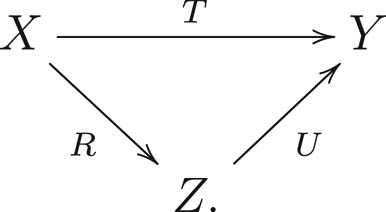
By the aforementioned statement, for every finite
for every
we have shown that for every
Let
Then, there exists an
Then for every
Hence,
In [7, Proposition 2], it was shown that if a Banach space X has the
Corollary 3.8
Let
Theorem 3.9
Let
Proof
Let
be the isometry defined by
Suppose that X has the
Let us consider the net
and for every
Hence,
To show the converse, we also use Lemma 3.2. Let Y be a Banach space and let
Consider the net
Thus by Lemma 3.2,
From Theorem 3.9, we have:
Corollary 3.10
Let
4 Open problems
The following question is a well-known problem (cf. [2, Section 21.12]).
Problem 1
Is the tensor norm
Since a finitely generated tensor norm
Problem 1
Does every Banach space have the 1-bounded
According to Corollaries 3.5 and 3.10, a Banach space X has the 1-bounded
if and only if for every Banach space Y and every
Therefore, the problem can be reformulated as follows.
Problem 1
Let
Or, for every
Reinov [12] constructed Banach spaces failing to have the
Problem 2
Let
Or, is
Acknowledgments
The author would like to thank the referees for valuable comments. This work was supported by the National Research Foundation of Korea (NRF-2018R1D1A1B07043566).
References
[1] A. Grothendieck, Produits tensoriels topologiques et espaces nucléaires, Mem. Amer. Math. Soc. 16 (1955), http://dx.doi.org/10.1090/memo/0016.10.1090/memo/0016Search in Google Scholar
[2] A. Defant and K. Floret, Tensor Norms and Operator Ideals, Elsevier, North-Holland, 1993.Search in Google Scholar
[3] O. Reinov, Approximation properties of order p and the existence of non-p-nuclear operators with p-nuclear second adjoints, Math. Nachr. 109 (1982), 125–134.10.1002/mana.19821090112Search in Google Scholar
[4] J. T. Lapresté, Opérateurs sommants et factorisations à travers les espaces Lp, Studia Math. 57 (1976), 47–83.10.4064/sm-57-1-47-83Search in Google Scholar
[5] S. Chevet, Sur certains produits tensoriels topologiques d’espaces de Banach, Z. Wahrscheinlichkeitstheorie verw. Gebiete 11 (1969), 120–138.10.1007/BF00531813Search in Google Scholar
[6] P. Saphar, Applications à puissance nucléaire et applications de Hilbert-Schmidt dans les espaces de Banach, Ann. Scient. Ec. Norm. Sup. 83 (1966), 113–151.10.24033/asens.1150Search in Google Scholar
[7] J. C. Díaz, J. A. López-Molina, and M. J. Rivera, The approximation property of order (p,q) in Banach spaces, Collect. Math. 41 (1990), 217–232.Search in Google Scholar
[8] J. Diestel, H. Jarchow, and A. Tonge, Absolutely Summing Operators, Cambridge University Press, Cambridge, 1995.10.1017/CBO9780511526138Search in Google Scholar
[9] S. Lassalle, E. Oja, and P. Turco, Weaker relatives of the bounded approximation property for a Banach operator ideal, J. Approx. Theory 205 (2016), 25–42.10.1016/j.jat.2016.01.005Search in Google Scholar
[10] N. Tomczak-Jaegermann, Banach-Mazur Distances and Finite-Dimensional Operator Ideals, Pitman Monographs and Surveys in Pure and Applied Mathematics, vol. 38, Longman Scientifical and Technical, New York, 1989.Search in Google Scholar
[11] R. A. Ryan, Introduction to Tensor Products of Banach Spaces, Springer, Berlin, 2002.10.1007/978-1-4471-3903-4Search in Google Scholar
[12] A. Pietsch, Operator Ideals, North-Holland, Amsterdam, 1980.Search in Google Scholar
© 2020 Ju Myung Kim, published by De Gruyter
This work is licensed under the Creative Commons Attribution 4.0 International License.
Articles in the same Issue
- Regular Articles
- Non-occurrence of the Lavrentiev phenomenon for a class of convex nonautonomous Lagrangians
- Strong and weak convergence of Ishikawa iterations for best proximity pairs
- Curve and surface construction based on the generalized toric-Bernstein basis functions
- The non-negative spectrum of a digraph
- Bounds on F-index of tricyclic graphs with fixed pendant vertices
- Crank-Nicolson orthogonal spline collocation method combined with WSGI difference scheme for the two-dimensional time-fractional diffusion-wave equation
- Hardy’s inequalities and integral operators on Herz-Morrey spaces
- The 2-pebbling property of squares of paths and Graham’s conjecture
- Existence conditions for periodic solutions of second-order neutral delay differential equations with piecewise constant arguments
- Orthogonal polynomials for exponential weights x2α(1 – x2)2ρe–2Q(x) on [0, 1)
- Rough sets based on fuzzy ideals in distributive lattices
- On more general forms of proportional fractional operators
- The hyperbolic polygons of type (ϵ, n) and Möbius transformations
- Tripled best proximity point in complete metric spaces
- Metric completions, the Heine-Borel property, and approachability
- Functional identities on upper triangular matrix rings
- Uniqueness on entire functions and their nth order exact differences with two shared values
- The adaptive finite element method for the Steklov eigenvalue problem in inverse scattering
- Existence of a common solution to systems of integral equations via fixed point results
- Fixed point results for multivalued mappings of Ćirić type via F-contractions on quasi metric spaces
- Some inequalities on the spectral radius of nonnegative tensors
- Some results in cone metric spaces with applications in homotopy theory
- On the Malcev products of some classes of epigroups, I
- Self-injectivity of semigroup algebras
- Cauchy matrix and Liouville formula of quaternion impulsive dynamic equations on time scales
- On the symmetrized s-divergence
- On multivalued Suzuki-type θ-contractions and related applications
- Approximation operators based on preconcepts
- Two types of hypergeometric degenerate Cauchy numbers
- The molecular characterization of anisotropic Herz-type Hardy spaces with two variable exponents
- Discussions on the almost 𝒵-contraction
- On a predator-prey system interaction under fluctuating water level with nonselective harvesting
- On split involutive regular BiHom-Lie superalgebras
- Weighted CBMO estimates for commutators of matrix Hausdorff operator on the Heisenberg group
- Inverse Sturm-Liouville problem with analytical functions in the boundary condition
- The L-ordered L-semihypergroups
- Global structure of sign-changing solutions for discrete Dirichlet problems
- Analysis of F-contractions in function weighted metric spaces with an application
- On finite dual Cayley graphs
- Left and right inverse eigenpairs problem with a submatrix constraint for the generalized centrosymmetric matrix
- Controllability of fractional stochastic evolution equations with nonlocal conditions and noncompact semigroups
- Levinson-type inequalities via new Green functions and Montgomery identity
- The core inverse and constrained matrix approximation problem
- A pair of equations in unlike powers of primes and powers of 2
- Miscellaneous equalities for idempotent matrices with applications
- B-maximal commutators, commutators of B-singular integral operators and B-Riesz potentials on B-Morrey spaces
- Rate of convergence of uniform transport processes to a Brownian sheet
- Curves in the Lorentz-Minkowski plane with curvature depending on their position
- Sequential change-point detection in a multinomial logistic regression model
- Tiny zero-sum sequences over some special groups
- A boundedness result for Marcinkiewicz integral operator
- On a functional equation that has the quadratic-multiplicative property
- The spectrum generated by s-numbers and pre-quasi normed Orlicz-Cesáro mean sequence spaces
- Positive coincidence points for a class of nonlinear operators and their applications to matrix equations
- Asymptotic relations for the products of elements of some positive sequences
- Jordan {g,h}-derivations on triangular algebras
- A systolic inequality with remainder in the real projective plane
- A new characterization of L2(p2)
- Nonlinear boundary value problems for mixed-type fractional equations and Ulam-Hyers stability
- Asymptotic normality and mean consistency of LS estimators in the errors-in-variables model with dependent errors
- Some non-commuting solutions of the Yang-Baxter-like matrix equation
- General (p,q)-mixed projection bodies
- An extension of the method of brackets. Part 2
- A new approach in the context of ordered incomplete partial b-metric spaces
- Sharper existence and uniqueness results for solutions to fourth-order boundary value problems and elastic beam analysis
- Remark on subgroup intersection graph of finite abelian groups
- Detectable sensation of a stochastic smoking model
- Almost Kenmotsu 3-h-manifolds with transversely Killing-type Ricci operators
- Some inequalities for star duality of the radial Blaschke-Minkowski homomorphisms
- Results on nonlocal stochastic integro-differential equations driven by a fractional Brownian motion
- On surrounding quasi-contractions on non-triangular metric spaces
- SEMT valuation and strength of subdivided star of K 1,4
- Weak solutions and optimal controls of stochastic fractional reaction-diffusion systems
- Gradient estimates for a weighted nonlinear parabolic equation and applications
- On the equivalence of three-dimensional differential systems
- Free nonunitary Rota-Baxter family algebras and typed leaf-spaced decorated planar rooted forests
- The prime and maximal spectra and the reticulation of residuated lattices with applications to De Morgan residuated lattices
- Explicit determinantal formula for a class of banded matrices
- Dynamics of a diffusive delayed competition and cooperation system
- Error term of the mean value theorem for binary Egyptian fractions
- The integral part of a nonlinear form with a square, a cube and a biquadrate
- Meromorphic solutions of certain nonlinear difference equations
- Characterizations for the potential operators on Carleson curves in local generalized Morrey spaces
- Some integral curves with a new frame
- Meromorphic exact solutions of the (2 + 1)-dimensional generalized Calogero-Bogoyavlenskii-Schiff equation
- Towards a homological generalization of the direct summand theorem
- A standard form in (some) free fields: How to construct minimal linear representations
- On the determination of the number of positive and negative polynomial zeros and their isolation
- Perturbation of the one-dimensional time-independent Schrödinger equation with a rectangular potential barrier
- Simply connected topological spaces of weighted composition operators
- Generalized derivatives and optimization problems for n-dimensional fuzzy-number-valued functions
- A study of uniformities on the space of uniformly continuous mappings
- The strong nil-cleanness of semigroup rings
- On an equivalence between regular ordered Γ-semigroups and regular ordered semigroups
- Evolution of the first eigenvalue of the Laplace operator and the p-Laplace operator under a forced mean curvature flow
- Noetherian properties in composite generalized power series rings
- Inequalities for the generalized trigonometric and hyperbolic functions
- Blow-up analyses in nonlocal reaction diffusion equations with time-dependent coefficients under Neumann boundary conditions
- A new characterization of a proper type B semigroup
- Constructions of pseudorandom binary lattices using cyclotomic classes in finite fields
- Estimates of entropy numbers in probabilistic setting
- Ramsey numbers of partial order graphs (comparability graphs) and implications in ring theory
- S-shaped connected component of positive solutions for second-order discrete Neumann boundary value problems
- The logarithmic mean of two convex functionals
- A modified Tikhonov regularization method based on Hermite expansion for solving the Cauchy problem of the Laplace equation
- Approximation properties of tensor norms and operator ideals for Banach spaces
- A multi-power and multi-splitting inner-outer iteration for PageRank computation
- The edge-regular complete maps
- Ramanujan’s function k(τ)=r(τ)r2(2τ) and its modularity
- Finite groups with some weakly pronormal subgroups
- A new refinement of Jensen’s inequality with applications in information theory
- Skew-symmetric and essentially unitary operators via Berezin symbols
- The limit Riemann solutions to nonisentropic Chaplygin Euler equations
- On singularities of real algebraic sets and applications to kinematics
- Results on analytic functions defined by Laplace-Stieltjes transforms with perfect ϕ-type
- New (p, q)-estimates for different types of integral inequalities via (α, m)-convex mappings
- Boundary value problems of Hilfer-type fractional integro-differential equations and inclusions with nonlocal integro-multipoint boundary conditions
- Boundary layer analysis for a 2-D Keller-Segel model
- On some extensions of Gauss’ work and applications
- A study on strongly convex hyper S-subposets in hyper S-posets
- On the Gevrey ultradifferentiability of weak solutions of an abstract evolution equation with a scalar type spectral operator on the real axis
- Special Issue on Graph Theory (GWGT 2019), Part II
- On applications of bipartite graph associated with algebraic structures
- Further new results on strong resolving partitions for graphs
- The second out-neighborhood for local tournaments
- On the N-spectrum of oriented graphs
- The H-force sets of the graphs satisfying the condition of Ore’s theorem
- Bipartite graphs with close domination and k-domination numbers
- On the sandpile model of modified wheels II
- Connected even factors in k-tree
- On triangular matroids induced by n3-configurations
- The domination number of round digraphs
- Special Issue on Variational/Hemivariational Inequalities
- A new blow-up criterion for the N – abc family of Camassa-Holm type equation with both dissipation and dispersion
- On the finite approximate controllability for Hilfer fractional evolution systems with nonlocal conditions
- On the well-posedness of differential quasi-variational-hemivariational inequalities
- An efficient approach for the numerical solution of fifth-order KdV equations
- Generalized fractional integral inequalities of Hermite-Hadamard-type for a convex function
- Karush-Kuhn-Tucker optimality conditions for a class of robust optimization problems with an interval-valued objective function
- An equivalent quasinorm for the Lipschitz space of noncommutative martingales
- Optimal control of a viscous generalized θ-type dispersive equation with weak dissipation
- Special Issue on Problems, Methods and Applications of Nonlinear analysis
- Generalized Picone inequalities and their applications to (p,q)-Laplace equations
- Positive solutions for parametric (p(z),q(z))-equations
- Revisiting the sub- and super-solution method for the classical radial solutions of the mean curvature equation
- (p,Q) systems with critical singular exponential nonlinearities in the Heisenberg group
- Quasilinear Dirichlet problems with competing operators and convection
- Hyers-Ulam-Rassias stability of (m, n)-Jordan derivations
- Special Issue on Evolution Equations, Theory and Applications
- Instantaneous blow-up of solutions to the Cauchy problem for the fractional Khokhlov-Zabolotskaya equation
- Three classes of decomposable distributions
Articles in the same Issue
- Regular Articles
- Non-occurrence of the Lavrentiev phenomenon for a class of convex nonautonomous Lagrangians
- Strong and weak convergence of Ishikawa iterations for best proximity pairs
- Curve and surface construction based on the generalized toric-Bernstein basis functions
- The non-negative spectrum of a digraph
- Bounds on F-index of tricyclic graphs with fixed pendant vertices
- Crank-Nicolson orthogonal spline collocation method combined with WSGI difference scheme for the two-dimensional time-fractional diffusion-wave equation
- Hardy’s inequalities and integral operators on Herz-Morrey spaces
- The 2-pebbling property of squares of paths and Graham’s conjecture
- Existence conditions for periodic solutions of second-order neutral delay differential equations with piecewise constant arguments
- Orthogonal polynomials for exponential weights x2α(1 – x2)2ρe–2Q(x) on [0, 1)
- Rough sets based on fuzzy ideals in distributive lattices
- On more general forms of proportional fractional operators
- The hyperbolic polygons of type (ϵ, n) and Möbius transformations
- Tripled best proximity point in complete metric spaces
- Metric completions, the Heine-Borel property, and approachability
- Functional identities on upper triangular matrix rings
- Uniqueness on entire functions and their nth order exact differences with two shared values
- The adaptive finite element method for the Steklov eigenvalue problem in inverse scattering
- Existence of a common solution to systems of integral equations via fixed point results
- Fixed point results for multivalued mappings of Ćirić type via F-contractions on quasi metric spaces
- Some inequalities on the spectral radius of nonnegative tensors
- Some results in cone metric spaces with applications in homotopy theory
- On the Malcev products of some classes of epigroups, I
- Self-injectivity of semigroup algebras
- Cauchy matrix and Liouville formula of quaternion impulsive dynamic equations on time scales
- On the symmetrized s-divergence
- On multivalued Suzuki-type θ-contractions and related applications
- Approximation operators based on preconcepts
- Two types of hypergeometric degenerate Cauchy numbers
- The molecular characterization of anisotropic Herz-type Hardy spaces with two variable exponents
- Discussions on the almost 𝒵-contraction
- On a predator-prey system interaction under fluctuating water level with nonselective harvesting
- On split involutive regular BiHom-Lie superalgebras
- Weighted CBMO estimates for commutators of matrix Hausdorff operator on the Heisenberg group
- Inverse Sturm-Liouville problem with analytical functions in the boundary condition
- The L-ordered L-semihypergroups
- Global structure of sign-changing solutions for discrete Dirichlet problems
- Analysis of F-contractions in function weighted metric spaces with an application
- On finite dual Cayley graphs
- Left and right inverse eigenpairs problem with a submatrix constraint for the generalized centrosymmetric matrix
- Controllability of fractional stochastic evolution equations with nonlocal conditions and noncompact semigroups
- Levinson-type inequalities via new Green functions and Montgomery identity
- The core inverse and constrained matrix approximation problem
- A pair of equations in unlike powers of primes and powers of 2
- Miscellaneous equalities for idempotent matrices with applications
- B-maximal commutators, commutators of B-singular integral operators and B-Riesz potentials on B-Morrey spaces
- Rate of convergence of uniform transport processes to a Brownian sheet
- Curves in the Lorentz-Minkowski plane with curvature depending on their position
- Sequential change-point detection in a multinomial logistic regression model
- Tiny zero-sum sequences over some special groups
- A boundedness result for Marcinkiewicz integral operator
- On a functional equation that has the quadratic-multiplicative property
- The spectrum generated by s-numbers and pre-quasi normed Orlicz-Cesáro mean sequence spaces
- Positive coincidence points for a class of nonlinear operators and their applications to matrix equations
- Asymptotic relations for the products of elements of some positive sequences
- Jordan {g,h}-derivations on triangular algebras
- A systolic inequality with remainder in the real projective plane
- A new characterization of L2(p2)
- Nonlinear boundary value problems for mixed-type fractional equations and Ulam-Hyers stability
- Asymptotic normality and mean consistency of LS estimators in the errors-in-variables model with dependent errors
- Some non-commuting solutions of the Yang-Baxter-like matrix equation
- General (p,q)-mixed projection bodies
- An extension of the method of brackets. Part 2
- A new approach in the context of ordered incomplete partial b-metric spaces
- Sharper existence and uniqueness results for solutions to fourth-order boundary value problems and elastic beam analysis
- Remark on subgroup intersection graph of finite abelian groups
- Detectable sensation of a stochastic smoking model
- Almost Kenmotsu 3-h-manifolds with transversely Killing-type Ricci operators
- Some inequalities for star duality of the radial Blaschke-Minkowski homomorphisms
- Results on nonlocal stochastic integro-differential equations driven by a fractional Brownian motion
- On surrounding quasi-contractions on non-triangular metric spaces
- SEMT valuation and strength of subdivided star of K 1,4
- Weak solutions and optimal controls of stochastic fractional reaction-diffusion systems
- Gradient estimates for a weighted nonlinear parabolic equation and applications
- On the equivalence of three-dimensional differential systems
- Free nonunitary Rota-Baxter family algebras and typed leaf-spaced decorated planar rooted forests
- The prime and maximal spectra and the reticulation of residuated lattices with applications to De Morgan residuated lattices
- Explicit determinantal formula for a class of banded matrices
- Dynamics of a diffusive delayed competition and cooperation system
- Error term of the mean value theorem for binary Egyptian fractions
- The integral part of a nonlinear form with a square, a cube and a biquadrate
- Meromorphic solutions of certain nonlinear difference equations
- Characterizations for the potential operators on Carleson curves in local generalized Morrey spaces
- Some integral curves with a new frame
- Meromorphic exact solutions of the (2 + 1)-dimensional generalized Calogero-Bogoyavlenskii-Schiff equation
- Towards a homological generalization of the direct summand theorem
- A standard form in (some) free fields: How to construct minimal linear representations
- On the determination of the number of positive and negative polynomial zeros and their isolation
- Perturbation of the one-dimensional time-independent Schrödinger equation with a rectangular potential barrier
- Simply connected topological spaces of weighted composition operators
- Generalized derivatives and optimization problems for n-dimensional fuzzy-number-valued functions
- A study of uniformities on the space of uniformly continuous mappings
- The strong nil-cleanness of semigroup rings
- On an equivalence between regular ordered Γ-semigroups and regular ordered semigroups
- Evolution of the first eigenvalue of the Laplace operator and the p-Laplace operator under a forced mean curvature flow
- Noetherian properties in composite generalized power series rings
- Inequalities for the generalized trigonometric and hyperbolic functions
- Blow-up analyses in nonlocal reaction diffusion equations with time-dependent coefficients under Neumann boundary conditions
- A new characterization of a proper type B semigroup
- Constructions of pseudorandom binary lattices using cyclotomic classes in finite fields
- Estimates of entropy numbers in probabilistic setting
- Ramsey numbers of partial order graphs (comparability graphs) and implications in ring theory
- S-shaped connected component of positive solutions for second-order discrete Neumann boundary value problems
- The logarithmic mean of two convex functionals
- A modified Tikhonov regularization method based on Hermite expansion for solving the Cauchy problem of the Laplace equation
- Approximation properties of tensor norms and operator ideals for Banach spaces
- A multi-power and multi-splitting inner-outer iteration for PageRank computation
- The edge-regular complete maps
- Ramanujan’s function k(τ)=r(τ)r2(2τ) and its modularity
- Finite groups with some weakly pronormal subgroups
- A new refinement of Jensen’s inequality with applications in information theory
- Skew-symmetric and essentially unitary operators via Berezin symbols
- The limit Riemann solutions to nonisentropic Chaplygin Euler equations
- On singularities of real algebraic sets and applications to kinematics
- Results on analytic functions defined by Laplace-Stieltjes transforms with perfect ϕ-type
- New (p, q)-estimates for different types of integral inequalities via (α, m)-convex mappings
- Boundary value problems of Hilfer-type fractional integro-differential equations and inclusions with nonlocal integro-multipoint boundary conditions
- Boundary layer analysis for a 2-D Keller-Segel model
- On some extensions of Gauss’ work and applications
- A study on strongly convex hyper S-subposets in hyper S-posets
- On the Gevrey ultradifferentiability of weak solutions of an abstract evolution equation with a scalar type spectral operator on the real axis
- Special Issue on Graph Theory (GWGT 2019), Part II
- On applications of bipartite graph associated with algebraic structures
- Further new results on strong resolving partitions for graphs
- The second out-neighborhood for local tournaments
- On the N-spectrum of oriented graphs
- The H-force sets of the graphs satisfying the condition of Ore’s theorem
- Bipartite graphs with close domination and k-domination numbers
- On the sandpile model of modified wheels II
- Connected even factors in k-tree
- On triangular matroids induced by n3-configurations
- The domination number of round digraphs
- Special Issue on Variational/Hemivariational Inequalities
- A new blow-up criterion for the N – abc family of Camassa-Holm type equation with both dissipation and dispersion
- On the finite approximate controllability for Hilfer fractional evolution systems with nonlocal conditions
- On the well-posedness of differential quasi-variational-hemivariational inequalities
- An efficient approach for the numerical solution of fifth-order KdV equations
- Generalized fractional integral inequalities of Hermite-Hadamard-type for a convex function
- Karush-Kuhn-Tucker optimality conditions for a class of robust optimization problems with an interval-valued objective function
- An equivalent quasinorm for the Lipschitz space of noncommutative martingales
- Optimal control of a viscous generalized θ-type dispersive equation with weak dissipation
- Special Issue on Problems, Methods and Applications of Nonlinear analysis
- Generalized Picone inequalities and their applications to (p,q)-Laplace equations
- Positive solutions for parametric (p(z),q(z))-equations
- Revisiting the sub- and super-solution method for the classical radial solutions of the mean curvature equation
- (p,Q) systems with critical singular exponential nonlinearities in the Heisenberg group
- Quasilinear Dirichlet problems with competing operators and convection
- Hyers-Ulam-Rassias stability of (m, n)-Jordan derivations
- Special Issue on Evolution Equations, Theory and Applications
- Instantaneous blow-up of solutions to the Cauchy problem for the fractional Khokhlov-Zabolotskaya equation
- Three classes of decomposable distributions
