Comparative analysis of blockchain technology to support digital transformation in ports and shipping
-
Dimah H. Alahmadi
 ,
Mona M. Alrajhi
,
Mona M. Alrajhi

Abstract
Blockchain is one of the technologies that can support digital transformation in industries in many aspects. This sophisticated technology can provide a decentralized, transparent, and secure environment for organizations and businesses. This review article discusses the adoption of blockchain in the ports and shipping industry to support digital transformation. It also explores the integration of this technology into the current ports and shipping ecosystem. Besides, the study highlighted the situation of the supply chains management in ports and shipping domain as a case study in this field. The investigated studies show that blockchain can be integrated into processes such as financial and document workflow. This review contributes to research by focusing on the adoption of blockchain in the ports and shipping industry to support digital transformation. It also aims to understand the existing port practice and map it with current tendencies based on blockchain. This study gives insight analysis to incorporate blockchain technology into ports and shipping processes globally.
1 Introduction
Recently, the need for digital transformation in the business world has increased in many sectors. Logistics and ports are considered in this discussion to exemplify these advances because technology changes and advancements have affected seaports and supply chains (SCs) worldwide [1,2,3]. The adoption of the digital revolution is important to retain competitiveness in the logistics sector due to the promise of sustainability, efficiency, costs, and security requirements. The use of information system technologies in containerization has become a crucial aspect of success for ports’ competitiveness, such as enabling decision-making, productivity, visibility, and efficiency of port procedures [4]. Nowadays, to develop smart ports, government agencies should implement solutions of information technologies to facilitate better management and planning between and within ports.
In general, ports’ functions can be seen as a link between land and sea, via unloading and loading operations. Currently, ports’ functions are an integral part of logistics networks across the world that offer value-added services and manage cargo flow effectively and efficiently. The current transformation emphasizes the adoption of digitization skills to effectively control, monitor, and positively measure port activities [4,5]. The shipping and port sectors require the digital transformation and new technologies to help in achieving high efficiency, security, transparency, decreased risks, and ease of tracking [6].
Ports’ stakeholders are constantly looking for new ways to facilitate the growth of commercial activities in ports and shipping industry and to reduce negative effects [5,7]. These industry sectors are optimistic regarding the ability of new technologies and digital transformation to help them achieve increased transparency, security and efficiency, ease of tracking, and decreased risk arising from port activities [8,9]. Based on the dearth of available literature that reviews current technology and digitization trends in ports, this article provides a review of technology use to assist in ports’ digital transformation.
This research aims to investigate the influences of applying blockchain technology as a digital transformation function in ports and shipping, and it explores how blockchain technology can improve ports’ shipping performance. Furthermore, it discovers the current situation of the digital transformation and technologies in the ports and shipping operations to provide a thorough analysis and guidelines for adopting blockchain to support SC management. This study provides insights into the blockchain-based supply chain and products tracking by investigating the following research questions:
– What are the current technologies and digitization trends in ports?
– How can blockchain support digital transformation in ports and shipping?
In this study, a thorough literature review was conducted to examine the effects of the digital transformation in ports and the shipping industry. An exhaustive review of the current technologies in the context of ports and the shipping industry was discussed. The SC management was discussed as a use case of blockchain in ports and shipping domains. In addition, a guideline for adopting blockchain to support the digital transformation in the ports and shipping industry was followed by using the SWOT. The main contributions are as follows:
– Investigate the current technologies and digital transformations used in ports and shipping.
– Explain the role of blockchain technology in supporting digital transformations in ports and shipping.
– Conduct a thorough analysis of blockchain applied to ports.
The remaining of the research was organized as follows: Section 2 explains the blockchain background, Section 3 provides a brief literature review in different methods applied in supporting ports and shipping, Section 4 discusses the role of blockchains support for digital transformation in shipping and ports, Section 5 gives an overview of blockchain-based SC use case in ports and shipping, including Strengths, Weakness, Opportunities, and Threats (SWOT) analysis and study limitations, and Section 6 summarizes the conclusion and the future work of the research.
2 Blockchain background
Blockchain technology provides a promising future for different domains, such as the real estate industry, the Internet of Things (IoT) technology, the supply chain management (SCM) industry, the healthcare industry, the financial services industry, and much more [10]. Basically, blockchain technology can be considered as a sequence of blocks, which contains a complete list of the transaction and tamper-resistant digital ledger implemented in a distributed way (i.e., without a central repository) and usually without a central authority (i.e., a bank, a company, or a government) [11]. Blockchain allows users to record their transactions in a shared ledger within a community, so that any transaction cannot be changed once it is published, and any changes made on the transactions will be displayed to everybody in the network and who did it and if that person is authorized to make these changes or not [12]. This technology became widely known in 2008 with the establishment of the Bitcoin cryptocurrency blockchain. Since the first blockchain application (i.e., Bitcoin) was developed, blockchain technology has received a lot of attention and researchers’ attention. However, the use of cryptocurrencies in the financial sector is just one application field for the blockchain technology. Moreover, the blockchain can be introduced as a technology that can change the business cultures, the SC management, and different industries [13,14,15,16]. In general, blockchain technology allows the sharing, storage, and transfer the data in secure way between many users in a distributed and decentralized digital ledger without the need to an intermediary. Moreover, it affects the transaction costs and enhances the performance and communication [17]. According to Nakamoto [18], blockchain technology included the blueprint of the most modern cryptocurrency schemes. Bitcoin was just the first of many blockchain applications [10]. One of these applications is blockchain-based SCM in the ports and shipping industry, in recent days SCM becoming a massive industry. The traditional supply chain operations are not traceable or transparent or secure enough to accommodate the customers’ needs and their expectations, leading to big overheads due to human error, costs, management, and fraud management [12].
However, the economy is changing so fast every day that ports’ stakeholders have to work harder to achieve an efficient operation and improve the overall SCM performance [19,20]. One of the most important aspects of SCs is transport and logistics, which depends on the shipping industry to ship the products around the world. It has an important role in the raw material shipments from the providers or the suppliers to the manufacturers and the shipment of the final form of the products from the manufacturers to customers, retailers, or the end users [21]. However, the problem with the traditional SCM is untrusted methods of data collecting and sharing, which can be easily manipulated by unauthorized parties if they gain access to the SCM system. This can hugely create a negative impact on the data security, traceability, and transparency in sharing the data and information between customers and suppliers, and between suppliers themselves in the SCM industry [22,23,24].
However, blockchain is a great solution to traceability, transparency, data sharing, and much more issues in SCM in ports and shipping domains. As a result, many of the companies and businesses who are interested in the distributed and decentralized applications are encouraging early use of the technology for organizations to continue and stay competitive in the global market [25]. Many businesses (e.g., Maersk and Walmart), and in cooperation with IBM, began to implement the blockchain technology by starting to create pilot projects to apply the blockchain technology and discover the benefits at an early stage [26,27]. Moreover, these two businesses (i.e., Walmart and Maersk) have announced that the final version will be ready to be applied and implemented in their organizational operations soon [26]. In the logistics and transportation domain, many researchers find a lot of possibilities for blockchain technology to enhance the products tracking and tracing, secure the data, and enhance transparency solutions in the blockchain-based SCM [25]. However, after conducting a literature review that addressed the importance of the digital transformation in the ports and shipping industry, blockchain technology is a decentralized database consisting of copies of identical data represented in blocks with distributed storage. It can be further defined as a peer-to-peer network-based distributed database, which consists of block sequences with transactions that are timestamped, certified by the network community, and secured using cryptography [28]. Contrary to centralized systems, the involved parties can verify the database’s state and whether it is in line with the required protocol. Moreover, each block keeps the record of finished transactions in storage. The participants confirm all transactions, which become unchangeable after completion, and these transactions have a timestamp that shows how and when a transaction was completed [29].
There is a low risk of fabrication due to general block dependency and decentralization. A new block is always dependent on the hash of a previous block, so blockchain technology’s key aspect revolves around its editability and transparency of all transactions [30]. Decentralization eradicates the need for an intermediary that authenticates and verifies transactions and keeps all data; instead, the technology establishes a direct link between the participants, enabling post-factum actions and communication [31,32,33].
Today, blockchain technology is used in many sectors, including government and big business. It has been implemented widely in banking services and financial markets by reinventing financial services, payments, and economics [34]. Blockchain is now considered as a transformation tool in various industries, including healthcare, wildlife management, data management, governance, logistics, and SCs [35,36,37]. The technology can be linked back to the dot-com era in the 1990s, as cryptocurrencies have resemblances with e-cash and digital and wallet coins implemented in Europe and the United States. However, this technology did not last due to banks and the use of credit cards.
Blockchain technology was built to solve the double-spending issues that happened in e-transactions. At the basic level, blockchain technology composes of bitcoin, which is a digital currency that is executed on a peer-to-peer network without the existence of a third party [38]. The blockchain can be used in a variety of applications, such as finance, cryptocurrency, IoT, and SC management applications. Blockchain can improve the quality of those applications from different aspects, such as confidentiality, speed, and security. To discover the capabilities of implementing blockchain technology in different domains, many companies began to create a variety of research centers to enhance this technology [39]. However, blockchain technology still has many issues, such as the size of the blocks in the blockchains, the blockchain efficiency (such as transaction transfer and latency), scalability, and privacy, which still needed a lot of technical solutions. However, blockchain technology can be used to decrease the business’s rubbings, costs, and resolve the weakness of transactions [38].
2.1 Blockchain characteristics
The main characteristics of blockchain technology and the description of each of them are presented in Table 1 [12,38].
Blockchain characteristics
| Characteristics | Description |
|---|---|
| Decentralized | This means that the data can be accessed, monitored, stored, and updated on multiple systems under a central authority |
| Ledger | Blockchain technology uses an attached ledger to provide full transactional history |
| Transparency | This means that the data is recorded, shared, and stored on the network, with consensus from the network, and is visible and trackable along its lifetime |
| Secure | The blockchains are secure and cryptographical to guarantee that the transaction data in the ledger has not been tampered with or changed |
| Immutable | This means the blockchain technology provides timestamps and controls to ascertain immutability |
| Shared | This means the ledger is shared among many users in the network. This will provide transparency across the node users in the blockchain network |
| Irreversible | This means that for every transaction made in the blockchain network, a verifiable record is stored in each blockchain |
| Distributed | This means the ability to scale the number of nodes in the blockchain network to increase preventions against attacks. These means reduce the ability of the attackers to impact the consensus protocol of the blockchain technology |
| Autonomy | Each node on the blockchain can safely access, transfer, store, and update data by itself without a third-party intervention |
| Open-source | Blockchain technology can provide an open-source access to all the participants in the network with a hierarchy sequence |
| Anonymity | Due to the transportation of the data between users in the blockchain network, the identity of the users is kept anonymous |
| Ownership\uniqueness | Every transaction transferred on the blockchain network keeps its ownership associated with a unique hash code |
| Provenance | In the blockchain network, every transaction has a digital record to prove the origin and the authenticity of it |
| Smart contracts | It is the program, which can run a contract. It can provide good security and reduce transaction costs. Usually, it includes the conditions, the policies and rules, and the punishments that will be applied for all the users included in the transaction |
3 Literature review
Blockchain has been considered a solution that simplifies maritime communication by solving issues related to the intermediary, data security, communication issues, point-to-point communication, transparency, and transaction visibility [40]. In terms of the use of current technologies in ports and shipping, we survey current digital transformation technologies in the coming sections.
The shipping industry started automation and mechanization in the early 1950s after containerization. Today, techniques and procedures used in processing information have evolved, but the maritime industry has been slow in adopting digital technologies compared to other sectors. Ports need to adopt technologies, such as connected devices, artificial intelligence, geospatial technology, and automation due to stricter environmental standards, increased regulations, and cost pressures. However, various ports have established digital programs. The port of Hamburg, for instance, has run 5G tests in diverse applications. Ship sensors were put in place to transmit real-time environmental and movement data across large port areas. Elsewhere, traffic lights were linked to the mobile network to regulate them remotely via the port and improve efficiency and safety processes. The success of such trials would result in more secure connections between logistic companies and ports, which would provide a basis for an intelligent IoT supply chain [41,42,43,44,45,46].
Accelerated information and communication technologies have led to changing service systems and making them smart systems [47]. The main reason for the emergence of smart services is tremendous technological advances in recent years [48]. In recent years, smart technologies have played a significant and decisive role in enhancing the competitive advantages of ports and shipping operations. Smart technologies are used in port operations to promote productivity, safety procedures, vision, and effectiveness in port procedures and shipping [49]. Smart systems of the ports and shipping enable increased operational efficiency, enhance transparency levels, enable logistics chains traceability, and improve the activities of ports and shipping operations [50].
Smart technologies in ports are used to support all activities of warehousing, shipping terminal operations, logistics services, and transportation in the port by using a particular connected wireless network. Recently, studies and research on many information systems have focused on smart technologies in port activities [49]. Smart technologies mean innovative technologies, depending on an artificial intelligence [51]. With the increase in the quantities of goods shipped through ports globally, goods-handling operations in the ports must be conducted efficiently and using the latest artificial intelligence technologies [52]. The information system literature has determined the leading intelligence technologies used in ports [49]. The information system literature reviewed information and communications technology applications used in ports and identified a range of these technologies that are recently widespread in ports. These technologies classified are as follows.
3.1 Global navigation satellite systems (GNSS)
GNSS is also known as satellite navigation or satnav, and it provides detailed timing and location services using satellites. It has become a backbone of today’s societies, as shown by the provision of GNSS satellites to deliver the services originally done by the United States Global Positioning System (GPS), Russia’s Glonass, China’s Beidou, and Europe’s Galileo system [53]. The maritime industry and ports have adopted this technology, with an estimated 87% of mercantile ships already using the positioning and navigation systems. This is driven by the fact that 90% of trade is done by sea across the world [54]. Thus, there is an increasing interest in GNSS potential for rescue and search operations, coastal navigation, inland waterways navigation, and leisure craft users.
3.2 Electronic data interchange (EDI)
Modern forms of communication are crucial in the present global shipping and freighting industries. Complex SCs offer a flexible and fast response to client demands and need a precise information flow for control, planning, and tracking. From the beginning, many containerizations and freighting industrial sectors saw EDI as the ideal solution for communicating much-needed information [55]. EDI automates the recording, sending, reception, and generation of exchange documents; improves management accuracy; enhances customer services; reduces costs by optimizing processes; and reduces response times. The technology has enabled the shipping industry to reduce stopover and freight waiting times, boost and streamline administrative procedures, reduce errors through automation, increase traceability, tracking, and visibility, and increase performance in storage areas. Also, it has enabled the integration of the whole intermodal operations [55].
3.3 Radio-frequency identification (RFID)
RFID is an automated data collection and identification technology, including passports, access cards, and toll tags. An item to be tracked is branded with a tag or transponder, which unilaterally broadcasts its unique ID number after a request from an RFID reader. The reader then passes the tag data to middleware with formats, which then aggregates and filters the data for interpretation. The most common RFID technology used includes active (with battery) and passive (no battery) RFIDs. It is mostly used to track and identify inventory, assets, and people without needing a line of sight, and it can be read at varying ranges and encoded with a substantial amount of data. This differs from other automatic identification and data capture technologies. RFID was adopted by the ports market immediately after its inception and has continued to be a growing area for the technology. RFID use has shifted from its initial focus on security into a predominant market for process automation and long-range tracking, including asset tracking, network asset visibility, process automation, visibility within terminals or ports, provision of equipment and personnel safety, and provision of inventory and asset security. RFID applications have been successful due to various factors, such as security, safety, increased asset utilization, and labor productivity [56].
3.4 Optical character recognition (OCR) systems
The OCR system is an automated data collection and identification system. It ranges from home use scanners and printers to toll collection and port security systems. Port operators use OCR to automate equipment identification, the same as data extraction and document scanning in offices. In this technology, a unique pattern of distinct elements or a series of numbers on an object is captured electronically during the image capture or imaging process. This requires the target to be visible to an imaging device. Specialized software then processes the bits and bytes of the image to extract and locate the predetermined patterns. The identified patterns are then assembled and used to identify the object uniquely. The technology is used to record the equipment’s condition while easing the identification of its markings, such as texts on license plates or number stencils. It helps to identify an item without using any device or tags [49].
3.5 Wireless sensor networks (WSNs)
WSN is an infrastructure-less and self-configured wireless network used to monitor environmental or physical conditions such as pressure, sound, pollutants, temperature, or motion [57]. The data is then sent to a main sink or location through the network, where it is analyzed and observed. The sink acts like the link between the network and its users, and users can then get information by querying and retrieving results from the sink. This technology requires sensor nodes that communicate using wireless signals [57]. Shipping companies have used WSNs to keep track of their products during transit, and they are also used to control light. Lighting in ports consumes a great amount of energy and cost since they operate 24/7, which requires proper management and appropriate intensity [49].
3.6 Real-time location systems (RTLSs)
RTLS enables the management and tracking of assets that move through a facility. The technology uses wireless tags or chips that are either embedded in or attached to items for tracking. The tags use sensors to communicate, positioned throughout a location to relay asset data and location to a management application. RTLS uses various wireless technologies ranging from RFID to inertial navigation system (INS)/differential global positioning system (DGPS), and ports and container terminals implement real-time location services. Today, auto handoff, extended real-time monitoring, and terminal equipment position systems are being applied in ports [57].
3.7 Mobile devices
A port is accountable for effective trade and traffic management to maximize the throughput of goods; therefore, connected infrastructure and logistics within a port require well-designed information and communications technology infrastructure to form an intelligent transport system. Today, mobile devices, such as tablets and smartphones, have powerful sensing, communication, and computing capabilities, including mobile data service, RFID, and GPS, to transmit and receive data via mobile networks. Various standards such as long-term evolution, universal mobile telecommunications system, and the global system for mobile communication are used for mobile communication. The availability and evolution of these mobile devices provide many solutions in the logistics sector as they can be integrated with all other technologies [49]. Comparison between current technology used in ports is presented in Table 2.
Comparison between current technology used in ports
| GNSS | EDI | RFID | OCR systems | WSN | RTLS | Mobile devices | |
|---|---|---|---|---|---|---|---|
| Advantages | Rescue and search operations, coastal navigation, inland waterways navigation, and leisure craft users | Automates the recording, sending, reception, and generation of exchange documents improves management accuracy, enhances customer services, reduces costs by optimizing processes, and reduces response times | Track and identify inventory, assets, and people without needing a line of sight, and it can be read at varying ranges and encoded with a substantial amount of data | Automates equipment identification. It helps identify an item without using any device or tags | Used to monitor environmental or physical conditions such as pressure, sound, pollutants, temperature, or motion | Uses various wireless technologies ranging from RFID to INS/DGPS, which can be used for real-time location services | The availability and evolution of these mobile devices provide many solutions in the logistics sector since they can be integrated with all other technologies |
| Disadvantages | Cybersecurity threats such as GPS jamming | High set-up costs and lack of standardization | Maintenance costs, tag prices, and battery costs | Implementation costs | Implementation costs due to required hardware such as sensors | Uses RFID technology, thus, maintenance and hardware costs | Susceptible to cyber attacks |
| Port example | HHLA container terminal Burchardkai | Southampton Container Terminals | Port of Seattle (USA), Nhava Sheva Port (India), and Port of Shanghai (China) | APM terminals | Ports of Los Angeles and Long Beach | Port of Hamburg | Port of Hamburg |
4 Blockchains support for digital transformation in shipping and ports
Due to the global ledger consideration of blockchain that can enable tracking throughout an entire transportation process, trustworthiness and reliability between partners on both sides and the final customer can avail real-time information, including temperature requirements, transportation time, country of manufacture, and time spent in the warehouse. For instance, provenance, a fishing pilot project, allowed operators to monitor the storage conditions, transportation chain, and catching date, allowing them to decide about the product’s freshness and quality. The predisposition is described by the whole IoT and the digitalization approach of device connectivity [58].
There are ongoing projects in the logistics and supply chain industry that are worth noting. One such project was introduced by Maersk, a Danish freighting company, alongside tech giant IBM. The project aimed to speed up paper-based and supply chain processes by reducing the overall communication volume and increasing the efficiency of tracing goods. It tried to eliminate uncertainties and frictions, track shipments, and digitalize the workflow. For instance, once the shipping documents have been signed and approved by the customs authorities, they are entered into the database with their corresponding digital signatures, which are used instead of physical analogs. This confirms a completed transaction to involved parties, including government representatives and Maersk, which simplifies work with further communication and disputes, as complete transactions cannot be altered [59].
Other companies, particularly startup companies, implement blockchain platforms for tracking services and products in SCs [60]. For example, projects such as Chronicled, Gemalto, and Modum aim to control and keep track of temperature changes during transportation. They also intend to reduce disputes and paperwork for the pharmaceutical industry, and the systems can help manage the supply chain during the entire route, including information about manufacture. This case of enhancing the shipping process in ports is very critical due to the large-scale problems and the variety of the input data. Blockchain recently emerged to overcome the limitation of data exchange with decentralized mode. Next section will investigate an example of a large-scale problem, which is the SCM using blockchain.
5 Blockchain-based SC use case in ports and shipping
Applications are growing every day in more industries due to decentralization of the blockchain technology and its verified and immutable nature. However, SCs are counted as a big challenge for the suppliers and providers of the SCs’ operations such as the production, transportation, warehousing, and selling to the end users. Many studies and research explore that the current centralized SC systems and applications are weak and could not have the trust, traceability, transparency, and accessibility for end users. Blockchain technology can support the SC systems and applications. However, blockchain users can trust those kinds of applications even though they may not trust the other participants of transactions [61].
The traditional SCM in the ports and shipping industry does not allow data sharing to facilitate a more efficient integration between all the parties in the operations. It is rarely available that tracking and tracing the shipments in ports, as well as the issue of the integration of the information from equipment with the other systems. The current centralized SC systems take the same general idea of the traditional centralized systems, such as inaccessibility of the public access, the weakness in the trust of the stored data, as the data storage, and data analysis were conducted inside the SCs individually, and the requirements of the transparency for end users to track the products’ history especially in the food sector [61]. Figure 1 shows the workflow of the current SC management in ports and shipping industry.
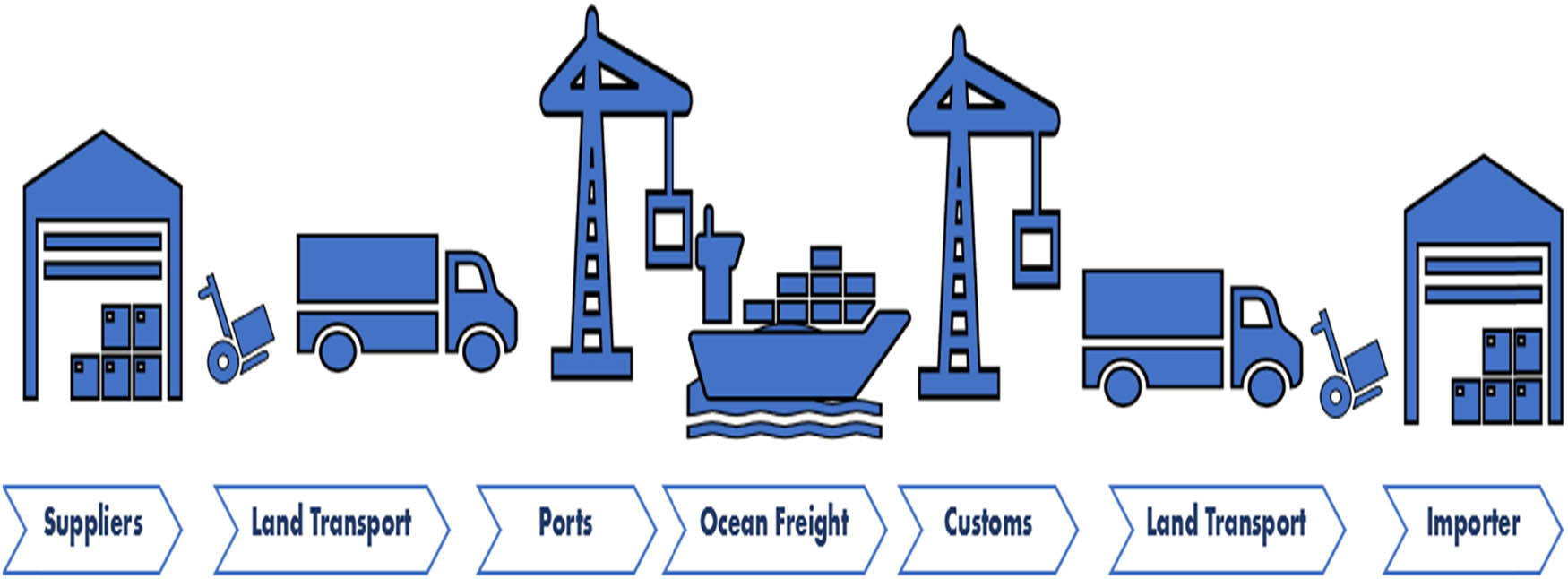
The workflow of the traditional SC management.
5.1 Blockchain-based SC management
As the ports and shipping industry deal with cross-border business and transportation, the operation involves a variety of paperwork, many languages, and multiple organizations, which make it subject to fraud and human errors, and that may slow down the whole operation. However, the digital transformation can enable collaboration across multiple stakeholders (suppliers, service providers, customers, etc.), thereby enhancing the efficiency of operations by connecting and integrating parties in the SC operations in the ports and shipping industry. Currently, the information of shipment tracking can only be gained through the system provided by the transportation institution’s home page. Therefore, the shipment information is limited to the time that the shipment enters the transportation organization system. However, blockchain-based SCs can improve the transport operation and enhance the quality and efficiency of ports and shipping. Blockchain technology covers a wide range of global logistics parties such as service providers, suppliers, shippers, transportation companies, ocean freight forwarders, shipping carriers, and customs offices, which making it possible to monitoring and tracking products in the real-time situation and providing open access to the shipment’s information. However, this usage of blockchain technology can make SCM more efficient and productive [62]. Figure 2 below shows the workflow using blockchain-based SCM in ports and the shipping industry.
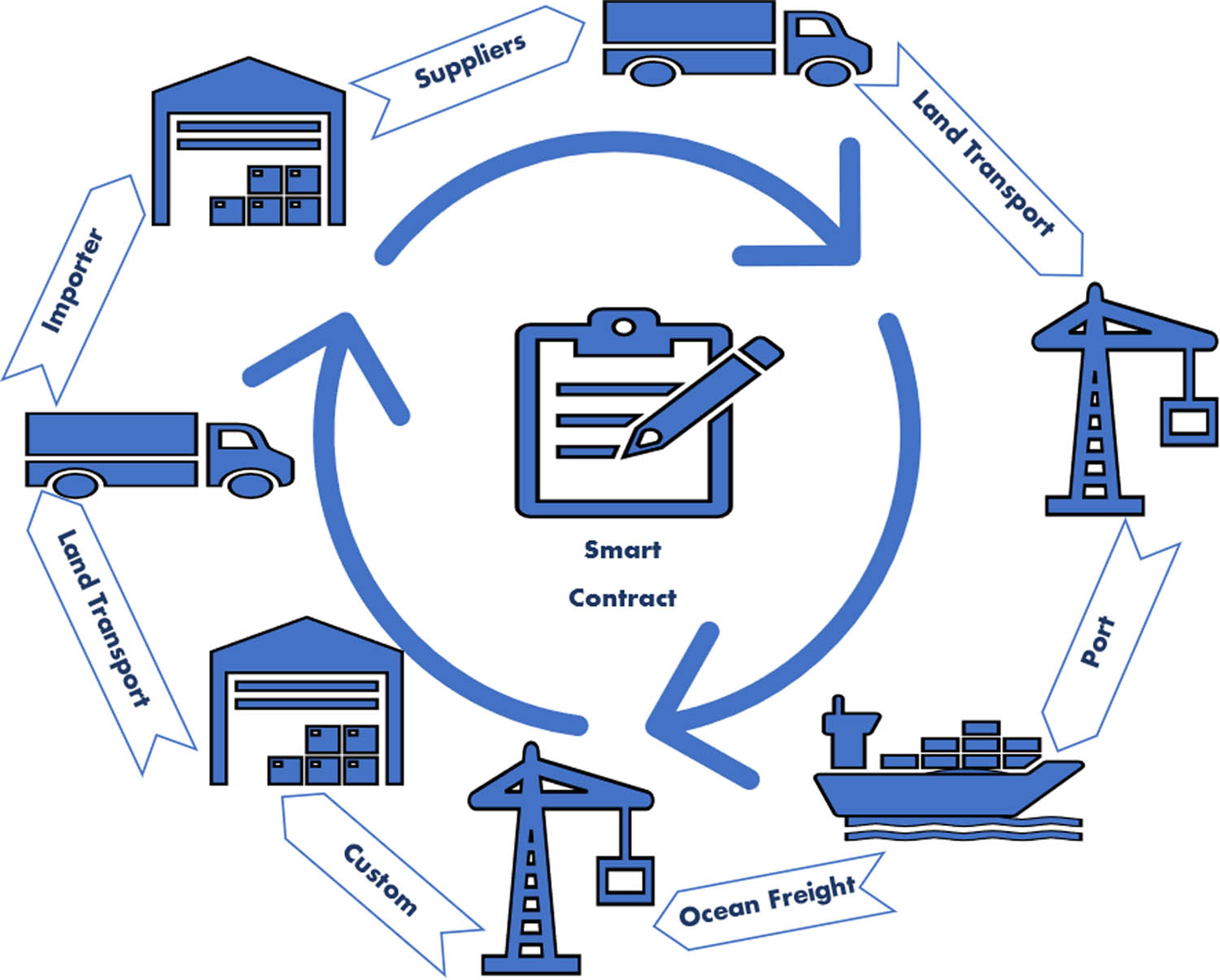
Blockchain-based SC management workflow.
5.2 Comparing the traditional SC management with blockchain-based SC management
According to earlier studies [12,39,63,64], the blockchain-based SCM has multiple benefits comparing to the traditional SC management in the ports and shipping industry. Table 3 shows a comparison between these two types of SCs in some aspects. SWOT analysis for ports is presented in Table 4.
Comparison between the traditional SC management and blockchain-based SCM
| Comparison factor | Traditional SCs | Blockchain-based SCs |
|---|---|---|
| Performance | Low | High |
| Scalability | Low | High |
| Privacy | Low | High |
| Flexibility | Low | High |
| Cost | High | Low |
| Speed | Low | High |
| Trust | Low | High |
| Time | High | Low |
| Tracking | Bad | Excellent |
| Efficiency | Good | Excellent |
| Consensus | Bad | Excellent |
| Transparency | Bad | Excellent |
SWOT analysis for ports
| Strengths | Weaknesses |
|---|---|
| Exemplary port services and industrial power | High implementation costs |
| Maritime transit from all over the world | Human capital problem |
| High-solution capacity and advanced logistics practices | Regression errors or vulnerability issues |
| Efficient management of port assets | Lack of strategic planning |
| Reduced maintenance and operation costs | Need for control and monitoring |
| Opportunities | Threats |
|---|---|
| Acceleration of international trade growth | Interaction issues among institutional, political, and technological elements |
| Improved productivity | Risk of poor integration and interaction with others in the sector |
| Synergic interaction between smart cities and ports | Issues of inconsistent regional and national policy regulations and rules |
| Predictive and efficient supply chain | Cyber-attacks concern |
| Competitive advantage due to reduced transportation costs | Reduction in the workforce issue |
| A worldwide network of intelligent ports |
5.3 Integration of blockchain technology into ports and shipping SWOT analysis
5.3.1 Weaknesses
There are high costs associated with the implementation and development of emerging technologies. Process automation and digitalization at the ports require sufficiently trained staff, so existing staff need to be retrained or to hire a specialized and technical professional. There is also the issue of human capital, as workers directly impact the automation process. Other problems, such as insecurity issues, can arise due to a lack of information and training in digital matters, particularly blockchain technology.
Moreover, there is the issue of regression errors or vulnerability. The company’s integrity and security are enhanced by adopting blockchain technology, which increases transparency and efficiency by eliminating the need for paperwork. However, technology can introduce errors due to complexity and encryption. There is a risk associated with a lack of strategic planning, as ports do not have enough knowledge of possible solutions within the digitalization framework. Furthermore, how blockchain technology works and how it can be integrated with other systems is limited. Other effects of operations changes need to be considered, as the risk of staff members losing their jobs. This could result in the rejection of the new technology, which would eventually hinder the systems’ implementation. The implemented digital system needs to be monitored and controlled, and it needs to be secure, stable, and reliable since port operations depend on them [65].
5.3.2 Strengths
One of the strengths is that a company can have to differentiate port services and industrial power and become an example in the industry; for example, the Spanish port system is being used as a benchmark for modern ports. Digitalization can help a port attract maritime transit from all over the world, enabling it to become a major player in the world’s transportation industry, and an increase in port transparency through open data platforms allows users in the system access to the public sector’s information, which increases trust from the public. Furthermore, blockchain technology brings about high-solution capacity and advanced logistics practices. Terminal automation allows ports to manage assets more efficiently based on transshipment and collection times, which increases productivity by reducing operating times and unnecessary movements. Automation also helps reduce maintenance and operation costs through the reduction in the workforce, and blockchain technology guarantees the safety of all processes and transactions [65].
5.3.3 Threats
Digitalization requires interaction among institutional, political, and technological elements, resulting in some issues. There is also the risk of poor integration and interaction with others in the sector, which can harm the port’s operations. The issues of inconsistent regional and national policy regulations and rules can hinder the transformation to smart ports, and the massive use of data and big data has legal consequences controlled by various administrations in a region, community, or country. Hence, digitalization will require changes in legislation, which is a large task. Although blockchain relies on a decentralized system, it is still susceptible to cyber-attacks. Adopting technology can also cause irregularity with other transportation modes, including air and land transport [65].
5.3.4 Opportunities
Digitalization will accelerate the growth of international trade, creating business opportunities in new markets in developing countries. As blockchain technology matures, productivity also improves, and this will allow participants to provide a wide range of services and products. Digitalization will also enable synergic interaction between smart cities and ports, which will play a vital role in future developments and technological advancements. Adopting new technology will create a predictive and efficient supply chain that is more sustainable to reduce pollution and improve agility and flexibility. Also, smart ports have a competitive advantage due to the reduced costs of transportation. The whole idea behind smart ports is to have a worldwide network of intelligent ports focused on developing common strategies and offering future-oriented solutions [65].
This analysis provides a clear view on the current use of blockchain in ports and shipment; however, some limitations were encountered. More insights can be obtained by exploring real case problem and shed light on the implementations. Another limitation can be avoided in future survey is a comparison of blockchain architectures for real countries’ shipping problems.
6 Conclusion and future work
This review shows notable shifts toward digitalization of ports and shipping and a tendency to correlate different technologies like the blockchain, integrating them into the current port’s and shipping information management systems. The identified projects focus on integrating technology into financial and document workflow processes and device connectivity. Most literature support blockchain concepts and their use in ports and shipping. Blockchain would bring real-time functionality, auditability, and transparency of transactions. This review is important for port-based organizations and port authorities to obtain the characteristics, weaknesses, and strengths of blockchain initiatives within the maritime industry. Besides, there is an increased interest from the research and scientific community and commercial enterprises and organizations toward adopting blockchain technology to support digital transformation. As future work, we plan to collect real data from Saudi Arabia ports and develop a real application using blockchain-based SCM in Saudi Arabia ports and the shipping industry.
Acknowledgments
The authors, gratefully acknowledge DSR’s technical and financial support.
-
Funding information: This project is funded by the Deanship of Scientific Research (DSR), King Abdulaziz University, Jeddah, under grant no. (DF-665-165-1441).
-
Conflict of interest: The authors declare that there is no conflict of interest regarding the publication of this article.
References
[1] Poongodi M, Malviya M, Hamdi M, Vijayakumar V, Mohammed MA, Rauf HT, et al. 5G based Blockchain network for authentic and ethical keyword search engine. IET Commun. 2021;1–7. 10.1049/cmu2.12251.Search in Google Scholar
[2] Lakhan A, Mohammed MA, Rashid AN, Kadry S, Panityakul T, Abdulkareem KH, et al. Smart-contract aware ethereum and client-fog-cloud healthcare system. Sensors. 2021;21(12):4093.10.3390/s21124093Search in Google Scholar PubMed PubMed Central
[3] Mohammed MA, Ibrahim DA, Salman AO. Adaptive intelligent learning approach based on visual anti-spam email model for multi-natural language. J Intell Syst. 2021;30(1):774–92.10.1515/jisys-2021-0045Search in Google Scholar
[4] Heilig L, Schwarze S, Voß S. An analysis of digital transformation in the history and future of modern ports. In Proceedings of the 50th Hawaii International Conference on System Sciences; 2017. http://hdl.handle.net/10125/4131310.24251/HICSS.2017.160Search in Google Scholar
[5] Malyavkina LI, Savina AG, Parshutina IG. Blockchain technology as the basis for digital transformation of the supply chain management system: benefits and implementation challenges. In 1st International Scientific Conference on Modern Management Trends and the Digital Economy: From Regional Development to Global Economic Growth (MTDE 2019), Series of Books AEBMR-Advances in Economics Business and Management Research. Vol. 81, 2019. p. 10–5.10.2991/mtde-19.2019.3Search in Google Scholar
[6] Sanchez-Gonzalez PL, Díaz-Gutiérrez D, Leo TJ, Núñez-Rivas LR. Toward digitalization of maritime transport? Sensors. 2019;19(4):926.10.3390/s19040926Search in Google Scholar PubMed PubMed Central
[7] González-Cancelas N, Molina Serrano B, Soler-Flores F, Camarero-Orive A. Using the SWOT methodology to know the scope of the digitalization of the Spanish ports. Logistics. 2020;4(3):20.10.3390/logistics4030020Search in Google Scholar
[8] Fawzi H, Mostafa SA, Ahmed D, Alduais N, Mohammed MA, Elhoseny M. TOQO: A new Tillage operations quality optimization model based on parallel and dynamic decision support system. J Clean Prod. 2021;316:128263.10.1016/j.jclepro.2021.128263Search in Google Scholar
[9] Baothman FA, Edhah BS. Toward agent-based LSB image steganography system. J Intell Syst. 2021;30(1):903–19. 10.1515/jisys-2021-0044.Search in Google Scholar
[10] Sarmah SS. Understanding blockchain technology. Comput Sci Eng. 2018;8(2):23–9.Search in Google Scholar
[11] Zheng Z, Xie S, Dai H, Chen X, Wang H. An overview of blockchain technology: architecture, consensus, and future trends. In 2017 IEEE international congress on big data (BigData congress). Honolulu, HI, USA: IEEE; 2017, June. p. 557–64.10.1109/BigDataCongress.2017.85Search in Google Scholar
[12] Dutta P, Choi TM, Somani S, Butala R. Blockchain technology in supply chain operations: applications, challenges and research opportunities. Transp Res E Logist Transp Rev. 2020;142:102067.10.1016/j.tre.2020.102067Search in Google Scholar PubMed PubMed Central
[13] Underwood S. Blockchain beyond bitcoin. Commun ACM. 2016;59(11):15–7.10.1145/2994581Search in Google Scholar
[14] Staples M, Chen S, Falamaki S, Ponomarev A, Rimba P, Tran AB, et al. Risks and opportunities for systems using blockchain and smart contracts. Data61. Sydney: CSIRO; 2017.Search in Google Scholar
[15] Baothman FA. An intelligent big data management system using haar algorithm-based Nao agent multisensory communication. Wirel Commun Mob Comput. 2021;2021:9977751.10.1155/2021/9977751Search in Google Scholar
[16] Podder AK, Bukhari AA, Islam S, Mia S, Mohammed MA, Kumar NM, et al. IoT based smart agrotech system for verification of Urban farming parameters. Microprocess Microsyst. 2021;82:104025.10.1016/j.micpro.2021.104025Search in Google Scholar
[17] Upadhyay A, Mukhuty S, Kumar V, Kazancoglu Y. Blockchain technology and the circular economy: Implications for sustainability and social responsibility. J Clean Prod. 2021;293:126130.10.1016/j.jclepro.2021.126130Search in Google Scholar
[18] Nakamoto S. Bitcoin: a peer-to-peer electronic cash system. Decentralized Bus Rev. 2008;21260.Search in Google Scholar
[19] Ghani MKA, Mohammed MA, Ibrahim MS, Mostafa SA, Ibrahim DA. Implementing an efficient expert system for services center management by fuzzy logic controller. J Theor Appl Inf Technol. 2017;95:13.Search in Google Scholar
[20] Mohammed MA, Al-Khateeb B, Ibrahim DA. Case based reasoning shell frameworkas decision support tool. Indian J Sci Technol. 2016;9(42):1–8.10.17485/ijst/2016/v9i42/101280Search in Google Scholar
[21] Mostafa SA, Mustapha A, Gunasekaran SS, Ahmad MS, Mohammed MA, Parwekar P, et al. An agent architecture for autonomous UAV flight control in object classification and recognition missions. Soft Comput. 2021;22:1–14. 10.1007/s00500-021-05613-8.Search in Google Scholar
[22] Lakhan A, Mastoi Q-Ul-A, Elhoseny M, Memon MS, Mohammed MA. Deep neural network-based application partitioning and scheduling for hospitals and medical enterprises using IoT assisted mobile fog cloud. Enterp Inf Syst. 2021;15:1–23. 10.1080/17517575.2021.1883122.Search in Google Scholar
[23] Mohammed MA, Gunasekaran SS, Mostafa SA, Mustafa A, Ghani MKA. Implementing an agent-based multi-natural language anti-spam model. In 2018 international symposium on agent, multi-agent systems and robotics (ISAMSR). Putrajaya, Malaysia: IEEE; 2018. p. 1–5. 10.1109/ISAMSR.2018.8540555.Search in Google Scholar
[24] Mostafa SA, Mustapha A, Hazeem AA, Khaleefah SH, Mohammed MA. An agent-based inference engine for efficient and reliable automated car failure diagnosis assistance in. IEEE Access. 2018;6:8322–31. 10.1109/ACCESS.2018.2803051.Search in Google Scholar
[25] Kshetri N. 1 Blockchain’s roles in meeting key supply chain management objectives. Int J Inf Manag. 2018;39:80–9.10.1016/j.ijinfomgt.2017.12.005Search in Google Scholar
[26] Popper N, Lohr S. Blockchain: a better way to track pork chops, bonds, bad peanut butter. N Y Times. 2017;4:4.Search in Google Scholar
[27] Makhadmeh SN, Al-Betar MA, Alyasseri ZAA, Abasi AK, Khader AT, Damaševičius R, et al. Smart home battery for the multi-objective power scheduling problem in a smart home using grey wolf optimizer. Electronics. 2021;10:447. 10.3390/electronics10040447.Search in Google Scholar
[28] Seebacher S, Schüritz R. Blockchain technology as an enabler of service systems: a structured literature review. In International Conference on Exploring Services Science. Cham: Springer; 2017, May. p. 12–23.10.1007/978-3-319-56925-3_2Search in Google Scholar
[29] Wüst K, Gervais A. Do you need a blockchain? In 2018 Crypto Valley Conference on Blockchain Technology (CVCBT). IEEE; 2018, June. p. 45–54.10.1109/CVCBT.2018.00011Search in Google Scholar
[30] Reyna A, Martín C, Chen J, Soler E, Díaz M. On blockchain and its integration with IoT. Challenges and opportunities. Future Gener Comp Syst. 2018;88:173–90.10.1016/j.future.2018.05.046Search in Google Scholar
[31] Antonopoulos AM. Mastering Bitcoin: unlocking digital cryptocurrencies. UK: O’Reilly Media, Inc; 2014.Search in Google Scholar
[32] Mostafa SA, Gunasekaran SS, Mustapha A, Mohammed MA, Abduallah WM. Modelling an adjustable autonomous multi-agent internet of things system for elderly smart home. In: Ayaz H, editor. Advances in neuroergonomics and cognitive engineering. AHFE 2019. Advances in intelligent systems and computing. Vol. 953, Cham: Springer; 2020. 10.1007/978-3-030-20473-0_29.Search in Google Scholar
[33] Mujahid A, Awan MJ, Yasin A, Mohammed MA, Damaševičius R, Maskeliūnas R, et al. Real-time hand gesture recognition based on deep learning YOLOv3 model. Appl Sci. 2021;11(9):4164.10.3390/app11094164Search in Google Scholar
[34] Nguyen QK. Blockchain-a financial technology for future sustainable development. In 2016 3rd International Conference on Green Technology and Sustainable Development (GTSD). IEEE; 2016, November. p. 51–4.10.1109/GTSD.2016.22Search in Google Scholar
[35] Khalaf BA, Mostafa SA, Mustapha A, Mohammed MA, Mahmoud MA, Al-Rimy BAS, et al. An adaptive protection of flooding attacks model for complex network environments. Sec Commun Netw. 2021;2021:1–17.10.1155/2021/5542919Search in Google Scholar
[36] Kashinath SA, Mostafa SA, Mustapha A, Mahdin H, Lim D, Mahmoud MA, et al. Review of data fusion methods for real-time and multi-sensor traffic flow analysis. IEEE Access. 2021;9:51258–76.10.1109/ACCESS.2021.3069770Search in Google Scholar
[37] Zhou X, Ma Y, Zhang Q, Mohammed MA, Damaševičius R. A reversible watermarking system for medical color images: balancing capacity, imperceptibility, and robustness. Electronics. 2021;10(9):1024.10.3390/electronics10091024Search in Google Scholar
[38] Chang SE, Chen YC, Lu MF. Supply chain re-engineering using blockchain technology: a case of smart contract based tracking process. Technol Forecast Soc Change. 2019;144:1–11.10.1016/j.techfore.2019.03.015Search in Google Scholar
[39] Bodkhe U, Tanwar S, Parekh K, Khanpara P, Tyagi S, Kumar N, et al. Blockchain for industry 4.0: a comprehensive review. IEEE Access. 2020;8:79764–800.10.1109/ACCESS.2020.2988579Search in Google Scholar
[40] Casino F, Dasaklis TK, Patsakis C. A systematic literature review of blockchain-based applications: current status, classification and open issues. Telemat Inform. 2019;36:55–81.10.1016/j.tele.2018.11.006Search in Google Scholar
[41] Mohammed MA, Ahmad MS, Mostafa SA. Using genetic algorithm in implementing capacitated vehicle routing problem. In 2012 International Conference on Computer & Information Science (ICCIS). Vol. 1, IEEE; 2012, June. p. 257–62.10.1109/ICCISci.2012.6297250Search in Google Scholar
[42] Mostafa SA, Ahmad MS, Mustapha A, Mohammed MA. Formulating layered adjustable autonomy for unmanned aerial vehicles. Int J Intell Comput Cybern. 2017;10(4):430–50. 10.1108/IJICC-02-2017-0013.Search in Google Scholar
[43] Abdulkareem KH, Mohammed MA, Salim A, Arif M, Geman O, Gupta D, et al. Realizing an effective COVID-19 diagnosis system based on machine learning and IOT in smart hospital environment. IEEE Internet Things J. 2021;8:15919–28. 10.1109/JIOT.2021.3050775.Search in Google Scholar PubMed PubMed Central
[44] Subathra MSP, Mohammed MA, Maashi MS, Garcia-Zapirain B, Sairamya NJ, George ST. Detection of focal and non-focal electroencephalogram signals using fast Walsh-Hadamard transform and artificial neural network. Sensors. 2020;20(17):4952.10.3390/s20174952Search in Google Scholar PubMed PubMed Central
[45] Lakhan A, Memon MS, Elhoseny M, Mohammed MA, Qabulio M, Abdel-Basset M. Cost-efficient mobility offloading and task scheduling for microservices IoVT applications in container-based fog cloud network. Clust Comput. 2021;20:1–23. 10.1007/s10586-021-03333-0 Search in Google Scholar
[46] Kumar NM, Mohammed MA, Abdulkareem KH, Damasevicius R, Mostafa SA, Maashi MS, et al. Artificial intelligence-based solution for sorting COVID related medical waste streams and supporting data-driven decisions for smart circular economy practice. Process Saf Environ Prot. 2021;152:482–94.10.1016/j.psep.2021.06.026Search in Google Scholar
[47] Watanabe K, Mochimaru M. Expanding impacts of technology-assisted service systems through generalization: case study of the Japanese service engineering research project. Serv Sci. 2017;9(3):250–62.10.1287/serv.2017.0183Search in Google Scholar
[48] Paukstadt U, Strobel G, Eicker S. Understanding services in the era of the internet of things: a smart service taxonomy. In Proceedings of the 27th European Conference on Information Systems (ECIS). Stockholm & Uppsala, Sweden; June 8–14, 2019. ISBN 978-1-7336325-0-8. Research Papers https://aisel.aisnet.org/ecis2019_rp/72Search in Google Scholar
[49] Heilig L, Lalla-Ruiz E, Voß S. Digital transformation in maritime ports: analysis and a game theoretic framework. Netnomics Econom Res Electron Netw. 2017;18(2):227–54.10.1007/s11066-017-9122-xSearch in Google Scholar
[50] Acciaro M, Renken K, El Khadiri N. Technological change and logistics development in European ports. Eur Port Cities Transit. 2020;73–88.10.1007/978-3-030-36464-9_5Search in Google Scholar
[51] Papagiannidis S, Marikyan D. Smart offices: A productivity and well-being perspective. Int J Inf Manag. 2020;51:102027.10.1016/j.ijinfomgt.2019.10.012Search in Google Scholar
[52] Jović M, Kavran N, Aksentijević S, Tijan E. The transition of Croatian seaports into smart ports. In 2019 42nd International Convention on Information and Communication Technology, Electronics and Microelectronics (MIPRO). IEEE; 2019, May. p. 1386–90.10.23919/MIPRO.2019.8757111Search in Google Scholar
[53] Hapgood M. Societal and economic importance of space weather. In Machine Learning Techniques for Space Weather. UK: Elsevier; 2018. p. 3–26.10.1016/B978-0-12-811788-0.00001-9Search in Google Scholar
[54] Medina D, Lass C, Marcos EP, Ziebold R, Closas P, García J. On GNSS jamming threat from the maritime navigation perspective. In 2019 22th International Conference on Information Fusion (FUSION). IEEE; 2019, July. p. 1–7.10.23919/FUSION43075.2019.9011348Search in Google Scholar
[55] Vujičić S, Hasanspahić N, Car M, Čampara L. Distributed ledger technology as a tool for environmental sustainability in the shipping industry. J Mar Sci Eng. 2020;8(5):366.10.3390/jmse8050366Search in Google Scholar
[56] Hu L, Shi X, Voß S, Zhang W. Application of RFID technology at the entrance gate of container terminals. In International Conference on Computational Logistics. Berlin, Heidelberg: Springer; 2011, September. p. 209–20.10.1007/978-3-642-24264-9_16Search in Google Scholar
[57] Ma X, Liu T. The application of Wi-Fi RTLS in automatic warehouse management system. In 2011 IEEE International Conference on Automation and Logistics (ICAL). IEEE; 2011, August. p. 64–9.10.1109/ICAL.2011.6024685Search in Google Scholar
[58] Skwarek V. Blockchains as security-enabler for industrial IoT-applications. Asia Pac J Innov Entrepreneurship. 2017;11(3):301–11. 10.1108/APJIE-12-2017-035.Search in Google Scholar
[59] Pournader M, Shi Y, Seuring S, Koh SL. Blockchain applications in supply chains, transport and logistics: a systematic review of the literature. Int J Prod Res. 2020;58(7):2063–81.10.1080/00207543.2019.1650976Search in Google Scholar
[60] Wang Y, Singgih M, Wang J, Rit M. Making sense of blockchain technology: How will it transform supply chains? Int J Prod Econ. 2019;211:221–36.10.1016/j.ijpe.2019.02.002Search in Google Scholar
[61] Niya SR, Dordevic D, Nabi AG, Mann T, Stiller B. A platform-independent, generic-purpose, and blockchain-based supply chain tracking. In 2019 IEEE International Conference on Blockchain and Cryptocurrency (ICBC). IEEE; 2019, May. p. 11–2.10.1109/BLOC.2019.8751415Search in Google Scholar
[62] Yang CS. Maritime shipping digitalization: Blockchain-based technology applications, future improvements, and intention to use. Transportation Res E Logist Transport Rev. 2019;131:108–17.10.1016/j.tre.2019.09.020Search in Google Scholar
[63] Litke A, Anagnostopoulos D, Varvarigou T. Blockchains for supply chain management: architectural elements and challenges towards a global scale deployment. Logistics. 2019;3(1):5.10.3390/logistics3010005Search in Google Scholar
[64] Choi TM. Supply chain financing using blockchain: impacts on supply chains selling fashionable products. Ann Oper Res. 2020;1–23.10.1007/s10479-020-03615-7Search in Google Scholar
[65] González-Cancelas N, Serrano Molina, Soler-Flores B, F, Camarero-Orive A. Using the SWOT methodology to know the scope of the digitalization of the Spanish ports. Logistics. 2020;4(3):20.10.3390/logistics4030020Search in Google Scholar
© 2022 Dimah H. Alahmadi et al., published by De Gruyter
This work is licensed under the Creative Commons Attribution 4.0 International License.
Articles in the same Issue
- Research Articles
- Construction of 3D model of knee joint motion based on MRI image registration
- Evaluation of several initialization methods on arithmetic optimization algorithm performance
- Application of visual elements in product paper packaging design: An example of the “squirrel” pattern
- Deep learning approach to text analysis for human emotion detection from big data
- Cognitive prediction of obstacle's movement for reinforcement learning pedestrian interacting model
- The application of neural network algorithm and embedded system in computer distance teach system
- Machine translation of English speech: Comparison of multiple algorithms
- Automatic control of computer application data processing system based on artificial intelligence
- A secure framework for IoT-based smart climate agriculture system: Toward blockchain and edge computing
- Application of mining algorithm in personalized Internet marketing strategy in massive data environment
- On the correction of errors in English grammar by deep learning
- Research on intelligent interactive music information based on visualization technology
- Extractive summarization of Malayalam documents using latent Dirichlet allocation: An experience
- Conception and realization of an IoT-enabled deep CNN decision support system for automated arrhythmia classification
- Masking and noise reduction processing of music signals in reverberant music
- Cat swarm optimization algorithm based on the information interaction of subgroup and the top-N learning strategy
- State feedback based on grey wolf optimizer controller for two-wheeled self-balancing robot
- Research on an English translation method based on an improved transformer model
- Short-term prediction of parking availability in an open parking lot
- PUC: parallel mining of high-utility itemsets with load balancing on spark
- Image retrieval based on weighted nearest neighbor tag prediction
- A comparative study of different neural networks in predicting gross domestic product
- A study of an intelligent algorithm combining semantic environments for the translation of complex English sentences
- IoT-enabled edge computing model for smart irrigation system
- A study on automatic correction of English grammar errors based on deep learning
- A novel fingerprint recognition method based on a Siamese neural network
- A hidden Markov optimization model for processing and recognition of English speech feature signals
- Crime reporting and police controlling: Mobile and web-based approach for information-sharing in Iraq
- Convex optimization for additive noise reduction in quantitative complex object wave retrieval using compressive off-axis digital holographic imaging
- CRNet: Context feature and refined network for multi-person pose estimation
- Improving the efficiency of intrusion detection in information systems
- Research on reform and breakthrough of news, film, and television media based on artificial intelligence
- An optimized solution to the course scheduling problem in universities under an improved genetic algorithm
- An adaptive RNN algorithm to detect shilling attacks for online products in hybrid recommender system
- Computing the inverse of cardinal direction relations between regions
- Human-centered artificial intelligence-based ice hockey sports classification system with web 4.0
- Construction of an IoT customer operation analysis system based on big data analysis and human-centered artificial intelligence for web 4.0
- An improved Jaya optimization algorithm with ring topology and population size reduction
- Review Articles
- A review on voice pathology: Taxonomy, diagnosis, medical procedures and detection techniques, open challenges, limitations, and recommendations for future directions
- An extensive review of state-of-the-art transfer learning techniques used in medical imaging: Open issues and challenges
- Special Issue: Explainable Artificial Intelligence and Intelligent Systems in Analysis For Complex Problems and Systems
- Tree-based machine learning algorithms in the Internet of Things environment for multivariate flood status prediction
- Evaluating OADM network simulation and an overview based metropolitan application
- Radiography image analysis using cat swarm optimized deep belief networks
- Comparative analysis of blockchain technology to support digital transformation in ports and shipping
- IoT network security using autoencoder deep neural network and channel access algorithm
- Large-scale timetabling problems with adaptive tabu search
- Eurasian oystercatcher optimiser: New meta-heuristic algorithm
- Trip generation modeling for a selected sector in Baghdad city using the artificial neural network
- Trainable watershed-based model for cornea endothelial cell segmentation
- Hessenberg factorization and firework algorithms for optimized data hiding in digital images
- The application of an artificial neural network for 2D coordinate transformation
- A novel method to find the best path in SDN using firefly algorithm
- Systematic review for lung cancer detection and lung nodule classification: Taxonomy, challenges, and recommendation future works
- Special Issue on International Conference on Computing Communication & Informatics
- Edge detail enhancement algorithm for high-dynamic range images
- Suitability evaluation method of urban and rural spatial planning based on artificial intelligence
- Writing assistant scoring system for English second language learners based on machine learning
- Dynamic evaluation of college English writing ability based on AI technology
- Image denoising algorithm of social network based on multifeature fusion
- Automatic recognition method of installation errors of metallurgical machinery parts based on neural network
- An FCM clustering algorithm based on the identification of accounting statement whitewashing behavior in universities
- Emotional information transmission of color in image oil painting
- College music teaching and ideological and political education integration mode based on deep learning
- Behavior feature extraction method of college students’ social network in sports field based on clustering algorithm
- Evaluation model of multimedia-aided teaching effect of physical education course based on random forest algorithm
- Venture financing risk assessment and risk control algorithm for small and medium-sized enterprises in the era of big data
- Interactive 3D reconstruction method of fuzzy static images in social media
- The impact of public health emergency governance based on artificial intelligence
- Optimal loading method of multi type railway flatcars based on improved genetic algorithm
- Special Issue: Evolution of Smart Cities and Societies using Emerging Technologies
- Data mining applications in university information management system development
- Implementation of network information security monitoring system based on adaptive deep detection
- Face recognition algorithm based on stack denoising and self-encoding LBP
- Research on data mining method of network security situation awareness based on cloud computing
- Topology optimization of computer communication network based on improved genetic algorithm
- Implementation of the Spark technique in a matrix distributed computing algorithm
- Construction of a financial default risk prediction model based on the LightGBM algorithm
- Application of embedded Linux in the design of Internet of Things gateway
- Research on computer static software defect detection system based on big data technology
- Study on data mining method of network security situation perception based on cloud computing
- Modeling and PID control of quadrotor UAV based on machine learning
- Simulation design of automobile automatic clutch based on mechatronics
- Research on the application of search algorithm in computer communication network
- Special Issue: Artificial Intelligence based Techniques and Applications for Intelligent IoT Systems
- Personalized recommendation system based on social tags in the era of Internet of Things
- Supervision method of indoor construction engineering quality acceptance based on cloud computing
- Intelligent terminal security technology of power grid sensing layer based upon information entropy data mining
- Deep learning technology of Internet of Things Blockchain in distribution network faults
- Optimization of shared bike paths considering faulty vehicle recovery during dispatch
- The application of graphic language in animation visual guidance system under intelligent environment
- Iot-based power detection equipment management and control system
- Estimation and application of matrix eigenvalues based on deep neural network
- Brand image innovation design based on the era of 5G internet of things
- Special Issue: Cognitive Cyber-Physical System with Artificial Intelligence for Healthcare 4.0.
- Auxiliary diagnosis study of integrated electronic medical record text and CT images
- A hybrid particle swarm optimization with multi-objective clustering for dermatologic diseases diagnosis
- An efficient recurrent neural network with ensemble classifier-based weighted model for disease prediction
- Design of metaheuristic rough set-based feature selection and rule-based medical data classification model on MapReduce framework
Articles in the same Issue
- Research Articles
- Construction of 3D model of knee joint motion based on MRI image registration
- Evaluation of several initialization methods on arithmetic optimization algorithm performance
- Application of visual elements in product paper packaging design: An example of the “squirrel” pattern
- Deep learning approach to text analysis for human emotion detection from big data
- Cognitive prediction of obstacle's movement for reinforcement learning pedestrian interacting model
- The application of neural network algorithm and embedded system in computer distance teach system
- Machine translation of English speech: Comparison of multiple algorithms
- Automatic control of computer application data processing system based on artificial intelligence
- A secure framework for IoT-based smart climate agriculture system: Toward blockchain and edge computing
- Application of mining algorithm in personalized Internet marketing strategy in massive data environment
- On the correction of errors in English grammar by deep learning
- Research on intelligent interactive music information based on visualization technology
- Extractive summarization of Malayalam documents using latent Dirichlet allocation: An experience
- Conception and realization of an IoT-enabled deep CNN decision support system for automated arrhythmia classification
- Masking and noise reduction processing of music signals in reverberant music
- Cat swarm optimization algorithm based on the information interaction of subgroup and the top-N learning strategy
- State feedback based on grey wolf optimizer controller for two-wheeled self-balancing robot
- Research on an English translation method based on an improved transformer model
- Short-term prediction of parking availability in an open parking lot
- PUC: parallel mining of high-utility itemsets with load balancing on spark
- Image retrieval based on weighted nearest neighbor tag prediction
- A comparative study of different neural networks in predicting gross domestic product
- A study of an intelligent algorithm combining semantic environments for the translation of complex English sentences
- IoT-enabled edge computing model for smart irrigation system
- A study on automatic correction of English grammar errors based on deep learning
- A novel fingerprint recognition method based on a Siamese neural network
- A hidden Markov optimization model for processing and recognition of English speech feature signals
- Crime reporting and police controlling: Mobile and web-based approach for information-sharing in Iraq
- Convex optimization for additive noise reduction in quantitative complex object wave retrieval using compressive off-axis digital holographic imaging
- CRNet: Context feature and refined network for multi-person pose estimation
- Improving the efficiency of intrusion detection in information systems
- Research on reform and breakthrough of news, film, and television media based on artificial intelligence
- An optimized solution to the course scheduling problem in universities under an improved genetic algorithm
- An adaptive RNN algorithm to detect shilling attacks for online products in hybrid recommender system
- Computing the inverse of cardinal direction relations between regions
- Human-centered artificial intelligence-based ice hockey sports classification system with web 4.0
- Construction of an IoT customer operation analysis system based on big data analysis and human-centered artificial intelligence for web 4.0
- An improved Jaya optimization algorithm with ring topology and population size reduction
- Review Articles
- A review on voice pathology: Taxonomy, diagnosis, medical procedures and detection techniques, open challenges, limitations, and recommendations for future directions
- An extensive review of state-of-the-art transfer learning techniques used in medical imaging: Open issues and challenges
- Special Issue: Explainable Artificial Intelligence and Intelligent Systems in Analysis For Complex Problems and Systems
- Tree-based machine learning algorithms in the Internet of Things environment for multivariate flood status prediction
- Evaluating OADM network simulation and an overview based metropolitan application
- Radiography image analysis using cat swarm optimized deep belief networks
- Comparative analysis of blockchain technology to support digital transformation in ports and shipping
- IoT network security using autoencoder deep neural network and channel access algorithm
- Large-scale timetabling problems with adaptive tabu search
- Eurasian oystercatcher optimiser: New meta-heuristic algorithm
- Trip generation modeling for a selected sector in Baghdad city using the artificial neural network
- Trainable watershed-based model for cornea endothelial cell segmentation
- Hessenberg factorization and firework algorithms for optimized data hiding in digital images
- The application of an artificial neural network for 2D coordinate transformation
- A novel method to find the best path in SDN using firefly algorithm
- Systematic review for lung cancer detection and lung nodule classification: Taxonomy, challenges, and recommendation future works
- Special Issue on International Conference on Computing Communication & Informatics
- Edge detail enhancement algorithm for high-dynamic range images
- Suitability evaluation method of urban and rural spatial planning based on artificial intelligence
- Writing assistant scoring system for English second language learners based on machine learning
- Dynamic evaluation of college English writing ability based on AI technology
- Image denoising algorithm of social network based on multifeature fusion
- Automatic recognition method of installation errors of metallurgical machinery parts based on neural network
- An FCM clustering algorithm based on the identification of accounting statement whitewashing behavior in universities
- Emotional information transmission of color in image oil painting
- College music teaching and ideological and political education integration mode based on deep learning
- Behavior feature extraction method of college students’ social network in sports field based on clustering algorithm
- Evaluation model of multimedia-aided teaching effect of physical education course based on random forest algorithm
- Venture financing risk assessment and risk control algorithm for small and medium-sized enterprises in the era of big data
- Interactive 3D reconstruction method of fuzzy static images in social media
- The impact of public health emergency governance based on artificial intelligence
- Optimal loading method of multi type railway flatcars based on improved genetic algorithm
- Special Issue: Evolution of Smart Cities and Societies using Emerging Technologies
- Data mining applications in university information management system development
- Implementation of network information security monitoring system based on adaptive deep detection
- Face recognition algorithm based on stack denoising and self-encoding LBP
- Research on data mining method of network security situation awareness based on cloud computing
- Topology optimization of computer communication network based on improved genetic algorithm
- Implementation of the Spark technique in a matrix distributed computing algorithm
- Construction of a financial default risk prediction model based on the LightGBM algorithm
- Application of embedded Linux in the design of Internet of Things gateway
- Research on computer static software defect detection system based on big data technology
- Study on data mining method of network security situation perception based on cloud computing
- Modeling and PID control of quadrotor UAV based on machine learning
- Simulation design of automobile automatic clutch based on mechatronics
- Research on the application of search algorithm in computer communication network
- Special Issue: Artificial Intelligence based Techniques and Applications for Intelligent IoT Systems
- Personalized recommendation system based on social tags in the era of Internet of Things
- Supervision method of indoor construction engineering quality acceptance based on cloud computing
- Intelligent terminal security technology of power grid sensing layer based upon information entropy data mining
- Deep learning technology of Internet of Things Blockchain in distribution network faults
- Optimization of shared bike paths considering faulty vehicle recovery during dispatch
- The application of graphic language in animation visual guidance system under intelligent environment
- Iot-based power detection equipment management and control system
- Estimation and application of matrix eigenvalues based on deep neural network
- Brand image innovation design based on the era of 5G internet of things
- Special Issue: Cognitive Cyber-Physical System with Artificial Intelligence for Healthcare 4.0.
- Auxiliary diagnosis study of integrated electronic medical record text and CT images
- A hybrid particle swarm optimization with multi-objective clustering for dermatologic diseases diagnosis
- An efficient recurrent neural network with ensemble classifier-based weighted model for disease prediction
- Design of metaheuristic rough set-based feature selection and rule-based medical data classification model on MapReduce framework
