Green synthesis of gold nanoparticles using quail egg yolk and investigation of potential application areas
-
Hayrunnisa Nadaroglu
Hayrunnisa Nadaroglu is a full-time professor. She got her PhD on bioorganic reactions using purified carbonic anhydrase isoenzymes at the Department of Biochemistry, Graduate Institute of Sciences, University of Ataturk, Erzurum, Turkey, in 2003. She is a scientific expert in the process development of bioremediation of wastewater, nanobiotechnological synthesis and applications in environmental pollution, and industrial enzyme applications in food technology (clarification of fruit juice, hydrolyzation of phytate). She has published more than 120 papers in the fields of biochemistry, food technology and nanobiotechnology.
 ,
Selvi Ince
,
Selvi Ince
Selvi Ince received her BS degree at the Molecular Biology and Genetics Department, Ataturk University, Erzurum, Turkey, in 2014. Since then, she has been pursuing a master’s program at the Department of Nano-Science and Nano-Engineering, Ataturk University (supervisor: Hayrunnisa Nasaroglu).
Azize Alayli Gungor received her MSc and PhD degrees in Biochemistry from Ataturk University, Erzurum, Turkey, in 2002 and in 2008, respectively. She became an associate professor in 2002. Her current research interests include enzyme purification and characterization, immobilization, DNA purification, ARMS, isolation and purification techniques.

Abstract
Nanotechnology is a growing area of research. For example, gold nanoparticles have a wide variety of applications, including optical, electronic, and medical; they are also used as catalysts in biosensor applications and can be used for scanning, carrier, heat source, and sensors. Therefore, nanoparticle synthesis is of great importance to the country’s economy and to scientific development. Nanoparticle synthesis involves using chemical methods, physical methods, or both chemical and physical methods. The synthesis is performed at high pressures or high temperatures and severe conditions, both of which have a high cost in terms of energy. In our investigation, we used a green synthesis method, which used quail eggs that required more moderate conditions and less energy. The yolk from quail eggs has a high protein and vitamin content. Using quail egg yolks, the reaction conditions were optimized in terms of pH, temperature, and concentration. The morphological properties of the obtained gold nanoparticles were characterized using an ultraviolet-visible spectrophotometer, a scanning electron microscope, and an X-ray diffraction analysis.
1 Introduction
When we look at the advent of nanotechnology, we can see that nanoparticles (NPs) with different properties are used in many fields, including industrial, biomedical, medical, diagnostics, biomarkers, cell labeling, antimicrobial, pharmaceutical, pollution control, drug delivery systems, cancer therapy, biosensors, and materials chemistry [1], [2], [3]. NPs have a high surface area-to-volume ratio, and they also have different characteristics from their starting materials; these properties include conductivity and electrical and chemical properties.
Gold NPs are one of many NPs that are used in various applications, including the use of catalysts, biological labeling, optics, plasma, electronics, photothermal therapy, and biomedical fields [4], [5], [6], [7], [8], [9], [10], suggesting that because gold NPs are an inert metal, they can be used as excellent catalysts. One study reduced a nitro derivative as toxic substances in the presence of gold NP catalyst [11]. Recently, studies have been conducted on the detection of chromium ions in water by gold NPs [12], [13], [14]. It is possible to increase the sample studies for gold NPs.
Gold NPs have been synthesized using different physical and chemical methods, including the Turkevich method, the biphasic Schiffrin-Brust method, and the seeding growth method [15], [16], [17], [18]. However, researchers using green syntheses reported there were no disadvantages, such as limited quantities of obtained NPs, compared with using chemical methods, which required a lot of energy, produced toxic substances, required multiple reactions, and involved high costs [19], [20].
Green synthesis of NPs has many advantages over chemical methods; it is simple and small, has a low cost, is nontoxic, and has an ease of shape and stability control. There are many studies in the literature about the green synthesis of gold NPs. However, each alternative method for NPs from gold has value because of the increase in area used [21], [22], [23], [24], [25]. Some studies showed the synthesis of nanometals and their alloys using chicken eggs and magnesium (Mn2+/Mn3+), iron (Fe2+/Fe3+), copper (Cu2+), zinc (Zn2+), and nickel (Ni2+) ions [26], [27], [28].
In our study, we used quail egg yolks, which have high protein and vitamin contents, for the green synthesis of gold NPs. The characteristics of the synthesized gold NPs were explored using a spectrophotometer, a scanning electron microscope (SEM), and an X-ray diffraction (XRD) analysis.
2 Materials and methods
2.1 Chemicals and reagents
Chloroauric acid (HAuCl4), sodium acetate (CH3COONa), sodium bicarbonate (NaHCO3), and disodium phosphate (Na2HPO4) were purchased from Sigma-Aldrich (USA). The pH level of the solution was adjusted by 0.1 M of hydrochloric acid (HCl) or 0.1 M of sodium hydroxide (NaOH). All the chemicals used were analytical grade without any further purification. Distilled water was used for all the tests (GFL 2004). Fresh quail eggs were purchased from a local grocery store (Erzurum, Turkey).
2.2 Synthesis of Au NPs
The research commenced immediately after the quail eggs were obtained. To prepare the green synthesis reaction medium, the quail egg whites and yolks were separated. One milliliter of egg yolk was added to 99 ml of distilled water, and the solution was mixed together to prepare a homogeneous reaction medium using a magnetic stirrer for 30 min. The egg yolk homogenate was then allowed to leach out of the heterogeneous components through filtration. The egg yolk homogenate was used as the reaction medium for the green synthesis.
First, 2.0 ml of 10.0 mM HAuCl4 was quickly added to the egg yolk homogenate to prepare 100 ml of the reaction medium. The reaction medium was stirred with the help of a magnetic stirrer at 100 rpm at normal atmospheric pressure, and the medium was kept at room conditions. The reaction was monitored using a spectrophotometer for 72 h.
As the gold chloride transformed to metallic gold NPs, the medium was scanned using an ultraviolet-visible (UV-Vis) spectrophotometer between 200 and 900 nm. In this way, the wavelength for the maximum absorbance of gold NPs gold was detected. This wavelength was determined in the optimization process. pH level, temperature, reaction time, and metal ion concentration were determined separately for optimizing the green synthesis reaction [26], [27], [28], [29], [30].
2.2.1 Reaction time
To determine the reaction time, the gold solution was measured every 3 min for the formation of minute gold NPs. The absorbance was monitored against the gold solution using the spectrophotometer for 240 min.
2.2.2 Optimum pH
For the synthesis of gold NPs, different buffer solutions were used to create different pH values. The medium was formed using phosphate buffers (pH 2–3), acetate buffers (pH 4–6), phosphate buffers (pH 7–8), and carbonate buffer (pH 9–11). The absorbance changes were recorded using the spectrophotometer.
2.2.3 Optimum temperature
To determine at which temperature the most efficient synthesis of gold NPs took place, the reactions were performed at different temperatures, from 10°C to 90°C with 10° intervals. The optimum temperature was determined using a spectrophotometer by measuring samples taken from the reaction medium against a blind solution. At the end of the optimum time, the optimum temperature was determined.
2.2.4 Optimum metal ion concentration
The effect on gold NP synthesis of using five different concentrations of HAuCl4 solutions (0.5, 1, 3, 5, and 7 mM) was studied. The reaction medium was centrifuged at 15,000g for 15 min. The gold NPs were then obtained as a precipitate, which was rinsed twice with distilled water and dried under vacuum. The characterization of the obtained gold NPs was then determined.
2.3 Characterization of gold NPs
Synthesized gold NPs were characterized using a UV-Vis spectrophotometer (Epoch Nano Drop UV-Vis spectrophotometer) screening from 200 to 900 nm. The topography of the gold NPs was detected using an SEM. In addition, the size of the gold NPs was determined using XRD analysis.
3 Results
3.1 Green synthesis of Au NPs
The green synthesis of gold NPs was carried out using a reaction medium that was prepared from a quail egg yolk and HAuCl4 solution. For this study, the quail egg yolk was diluted to 1/100 after being filtrated. The amount of egg yolk protein was determined using the Bradford method, and the solution was adjusted to 1.5 μg/ml protein. The obtained results are in line with previous studies [31].
The synthesis of gold NPs was performed using a reaction medium prepared from quail egg yolk. The processing steps used to prepare the reaction medium are shown in Figure 1.

The processing to prepare the reaction medium.
To prepare 100 ml of reaction medium, 2.0 ml of 10.0 mM HAuCl4 solution was quickly added. The reaction medium was stirred using a magnetic stirrer at 100 rpm at normal atmospheric pressure; the medium was kept at room conditions. After the quail egg yolk was added to the reaction medium, its color changed from clear to red-purple. This color change showed that the gold NPs had formed [31].
3.2 Characterization of the synthesized gold NPs
The absorbance of synthesized gold NPs was measured against the blank using the UV-Vis spectrophotometer. Figure 2 shows the UV-Vis spectra of the gold NPs synthesized after 4 h. Because of the gold NPs excitation of surface plasmon vibration, the reaction medium color changed from light to dark red/purple. Gold NPs were synthesized using quail egg yolk. Although the obtained gold NPs were washed, the remaining proteins in the medium give peak in the range 280–300 nm (Figure 2). Also, the peak at 547 nm (range, 500–660 nm) belonged to the gold NPs. Many studies have identified those gold NPs had an absorbance around 547 nm [32].

UV-Vis spectra of gold nanoparticles.
3.2.1 Effect of temperature
A UV-Vis spectrum of gold NPs, which is prepared at different temperatures, was given in Figure 3. Au NPs were synthesized using a quail egg yolk for 4 h between 10°C and 90°C. When the temperature was increased, the absorbance increased at 20°C, as shown in Figure 3. A high amount of gold NP synthesis was observed from the proteins of egg yolks, which served as a catalyst at room temperature. Au NPs synthesized at room temperature provided a great advantage to reduce the heating costs and prevented the loss of activity of quail egg yolk proteins, which were denatured in high temperature.

The effect of temperature on the synthesis of gold nanoparticles using quail egg yolk.
3.2.2 Effect of pH
A UV-Vis spectrum of the prepared gold NPs is given at different pH levels in Figure 4. The effects of pH levels (between 3 and 11) on Au NP synthesis were investigated. For this purpose, suitable buffers were used: glycine-HCl buffer (pH 2–3), Na-citrate buffer (pH 4–6), phosphate buffer (pH 7–8), and carbonate buffer (pH 9–11). The synthesis of NPs does not greatly affect pH levels, but the high synthesis of Au NPs takes place at pH 7.0, as shown in Figure 4. Increasing time did not have much effect on the Au NP synthesis at different pH levels, but Pt NP synthesis reached equilibrium at the end of 4 h.

The effect of pH on the synthesis of gold nanoparticles.
3.2.3 Effect of contact time at room temperature
Absorbance change depending on the time of Au NP synthesis reaction was given in Figure 5. It was observed that the absorbance values were increased at 547 nm with the increasing time. The synthesis of Au NPs reached the maximum peak in the first 48 min and then the reaction reached equilibrium. When the reaction was monitored for 240 min, at the end of the reaction period, obvious changes in the absorbance of Au NPs were not observed, and the absorbance remained stable. The Au NP synthesis reaction of the completion rate was 90.98% after 48 min, and this reaction was observed for 10 days. The obtained results showed that the Au NPs were prepared using the green synthesis method and were not aggregate and stable. The NPs were determined to remain stable condition after 10 days (240 h).
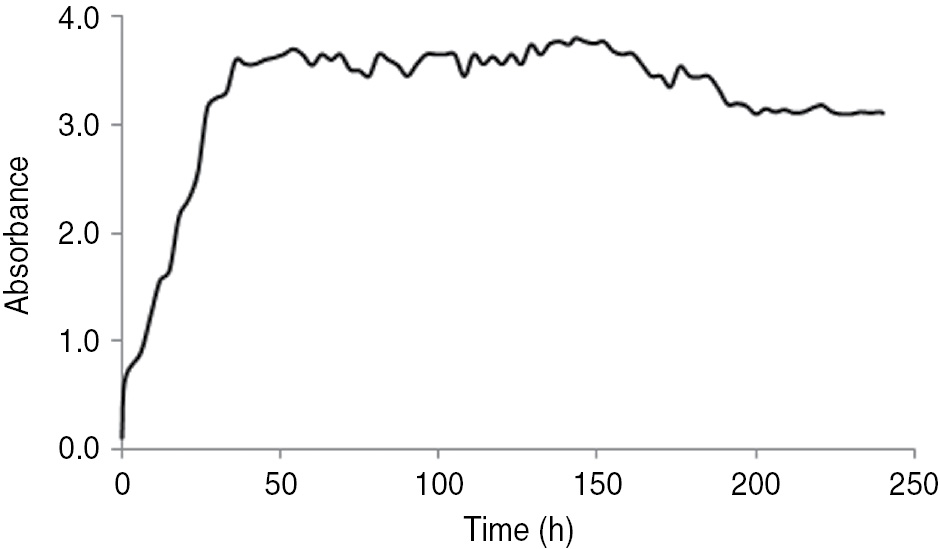
UV-Vis spectra of gold nanoparticles as function of time at room temperature and pH 7.
3.2.4 Effect of HAuCl4 concentration
The effects of the HAuCl4 concentration in the Au NP synthesis that occurred in the quail egg yolk medium were investigated. For this purpose, Pt concentrations (0.5, 1, 2.5, 5, 7.5, and 10 mM) and the same amount of egg yolk medium were used for Au NP synthesis, in which an increase in HAuCl4 concentration was observed for 4 h (Figure 6). In Figure 6, when 0.5 mM HAuCl4 was used, the signals of Au NPs were enriched in the strongest rate and the spectrum was taken properly. A concentration of 0.5 mM HAuCl4 was appropriate for measuring the absorbance and observing the reaction. Some studies used 5 mM HAuCl4 [33].
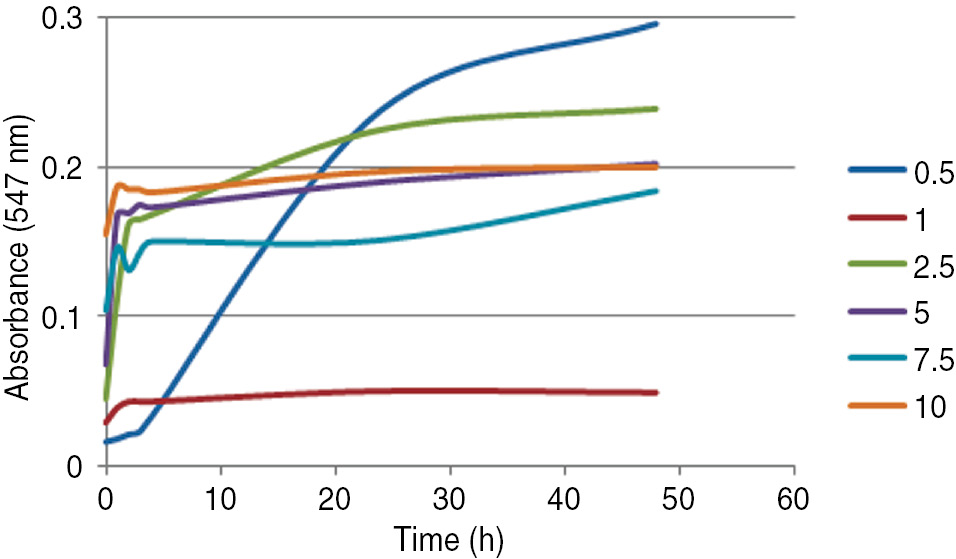
The effect of HAuCl4 concentration on the synthesis of gold nanoparticles.
3.3 SEM analysis
Chemical and mineralogical compositions of green synthesized Au NPs were determined by SEM, which was used to examine the surface of adsorbent. Images of Au NPs were magnified ×5000 using Metek, Apollo prime, active area 10 mm2, Microscope inspect S50, SE detector R580 (Figure 7). It was observed from Figure 7 that most of the Au NPs were spherical in shape. Well-dispersed Au NPs were identified, with sizes ranging from 20 to 50 nm.

SEM image of gold nanoparticles.
3.4 Fourier transform infrared spectroscopy analysis
This band shows high shift to 3421 cm−1 in gold NPs. The medium intense band (2928 cm−1) observed in the C=O stretching mode in the infrared spectrum of gold NPs indicates the presence of –COOH group in the material bound to Au NPs, and the C=O groups do not attach to the gold NPs. At 1642 cm−1, the band belonged to the free amine groups or carboxylate ion of the amino acid residue of quail egg yolk. It is well known that proteins can bind to Au NPs (Figure 8) [32].

Fourier transform infrared spectroscopy diffraction pattern of the synthesis of gold nanoparticles.
3.5 XRD analysis
The XRD spectra of the synthesized nanogold using the aqueous solution of quail egg yolk are shown in Figure 9. The XRD patterns showed intense peaks at 39.5°, 46.0°, 66.5°, and 73.5°, which may be indexed to (111), (200), (220), and (311) hkl planes, respectively (Figure 9). These indexed Bragg’s reflections resemble the cubic structures of gold NPs in room temperature. Figure 9 represents the XRD patterns of synthesized nanogold obtained green synthesis method. Bragg’s peaks at (111), (200), (220), and (311) revealed the formation of face-centered cubic structures of gold NPs.

XRD pattern of the synthesis of gold nanoparticles.
4 Conclusions
Au NPs, which occurred in the quail egg yolk medium, were 20–50 nm. Au NPs were characterized using UV-Vis spectroscopy, Fourier transform infrared spectroscopy, SEM, and XRD. The synthesis of Au NPs was performed using quantity, direction, and morphology characterization. Synthesized Au NPs are considered to have a wide range of applications in nanotechnology, catalyst, pharmaceutical, and energy industries.
About the authors

Hayrunnisa Nadaroglu is a full-time professor. She got her PhD on bioorganic reactions using purified carbonic anhydrase isoenzymes at the Department of Biochemistry, Graduate Institute of Sciences, University of Ataturk, Erzurum, Turkey, in 2003. She is a scientific expert in the process development of bioremediation of wastewater, nanobiotechnological synthesis and applications in environmental pollution, and industrial enzyme applications in food technology (clarification of fruit juice, hydrolyzation of phytate). She has published more than 120 papers in the fields of biochemistry, food technology and nanobiotechnology.

Selvi Ince received her BS degree at the Molecular Biology and Genetics Department, Ataturk University, Erzurum, Turkey, in 2014. Since then, she has been pursuing a master’s program at the Department of Nano-Science and Nano-Engineering, Ataturk University (supervisor: Hayrunnisa Nasaroglu).

Azize Alayli Gungor received her MSc and PhD degrees in Biochemistry from Ataturk University, Erzurum, Turkey, in 2002 and in 2008, respectively. She became an associate professor in 2002. Her current research interests include enzyme purification and characterization, immobilization, DNA purification, ARMS, isolation and purification techniques.
Acknowledgments
The authors thank the University of Ataturk Project Research Fund 2015/333 for supporting this research.
References
[1] Debaditya B, Rajinder K. Crit. Rev. Biotechnol. 2005, 25(4), 199–204.10.1080/07388550500361994Search in Google Scholar
[2] Gupta J. J. Investig. Clin. Dent. 2011, 2, 81–88.10.1111/j.2041-1626.2011.00046.xSearch in Google Scholar
[3] Xie H, Mason MM, Wise JP Sr. Rev. Environ. Health. 2011, 26(4), 251–6810.1515/REVEH.2011.033Search in Google Scholar
[4] Yoon I, Kang T, Choi W, Kim J, Yoo Y, Joo S-W, Park QH, Ihee H, Kim B. J. Am. Chem. Soc. 2008, 131, 758–762.10.1021/ja807455sSearch in Google Scholar
[5] Yun S, Oh MK, Kim SK, Park S. J. Phys. Chem. C. 2009, 113, 13551–13557.10.1021/jp9024624Search in Google Scholar
[6] Llevot A, Astruc D. Chem Soc Rev. 2012, 41(1), 242–257.10.1039/C1CS15080DSearch in Google Scholar
[7] Feng J-J, Gernert U, Hildebrandt P, Weidinger IM. Adv. Funct. Mater. 2010, 20, 1954–1961.10.1002/adfm.201000302Search in Google Scholar
[8] Haruta M, Date M. Appl. Catal. A. 2001, 222, 227–235.10.1016/S0926-860X(01)00847-XSearch in Google Scholar
[9] Haruta M, Kobayashi T, Sano H, Yamada N. Chem. Lett. 1987, 10, 405–408.10.1246/cl.1987.405Search in Google Scholar
[10] Louis C, Pluchery O, editors. Gold Nanoparticles for Physics, Chemistry, and Biology. London: Imperial College Press, 2012:395.10.1142/p815Search in Google Scholar
[11] Corma A, Serna P. Science. 2006, 313, 332–334.10.1126/science.1128383Search in Google Scholar PubMed
[12] Hughes SI, Dasary SSR, Singh AK, Glenn Z, Jamison H, Ray PC, Yu H. Sens. Actuators B. Chem. 2013, 178, 514–519.10.1016/j.snb.2012.12.003Search in Google Scholar PubMed PubMed Central
[13] Sun J, Zhang J, Jin Y, J. Mater. Chem. C. 2013, 1, 138–143.10.1039/C2TC00021KSearch in Google Scholar
[14] Zhang H, Liu Q, Wang T, Yun Z, Li G, Liu J, Jiang G. Anal. Chim. Acta. 2013, 770, 140–146.10.1016/j.aca.2013.01.042Search in Google Scholar PubMed
[15] Brust M, Walker M, Bethell D, Schiffrin DJ, Whyman RJ. Chem. Soc. Chem. Commun. 1994, 9, 801–802.10.1039/C39940000801Search in Google Scholar
[16] Kimling J, Maier M, Okenve B, Kotaidis V, Ballot H, Plech A. J. Phys. Chem. B. 2006, 110(32), 15700–15707.10.1021/jp061667wSearch in Google Scholar PubMed
[17] Jana NR, Gearheart L, Murphy CJ. Langmuir. 2001, 9(22), 6782–6786.10.1021/la0104323Search in Google Scholar
[18] Zhao P, Li N, Astruc D. Coord. Chem. Rev. 2013, 9(3), 638–665.10.1016/j.ccr.2012.09.002Search in Google Scholar
[19] Prabhu S, Poulose E. Int. Nano Lett. 2012, 2(32), 1–10.10.1186/2228-5326-2-32Search in Google Scholar
[20] Mishra S, Kaushik NK, Sardar M, Sahal D. Colloids Surf. B. 2013, 111, 713–718.10.1016/j.colsurfb.2013.06.036Search in Google Scholar PubMed
[21] Rao AM, Gangula A, Podila R, Ramakrishna M, Karanam L, Janardhana C. Langmuir. 2011, 27, 15268–15274.10.1021/la2034559Search in Google Scholar PubMed
[22] Kumar KP, Paul W, Sharma CP. Proc. Biochem. 2011, 9(10), 2007–2013.10.1016/j.procbio.2011.07.011Search in Google Scholar
[23] Ghosh S, Patil S, Ahire M, Kitture R, Gurav DD, Jabgunde AM, Kale S, Pardesi K, Shinde V, Bellare J, Dhavale DD, Chopade BA. J. Nanobiotech. 2012, 10, 17.10.1186/1477-3155-10-17Search in Google Scholar PubMed PubMed Central
[24] Yi S, Xia L, Lenaghan SC, Sun L, Huang Y, Burris JN, Stewart CN Jr, Zhang M. J. Nanosci. Nanotechnol. 2013, 13(3), 1649–1659.10.1166/jnn.2013.7183Search in Google Scholar PubMed
[25] Gurunathan S, Han J, Park JH, Kim JH. Nanoscale Res. Lett. 2014, 9(1), 248.10.1186/1556-276X-9-248Search in Google Scholar PubMed PubMed Central
[26] Senthil SM, Jayaprakash R, Singh VN, Mehta BR, Nano Res. 2008, 4, 107–116.10.4028/www.scientific.net/JNanoR.4.107Search in Google Scholar
[27] Durmus Z, Baykal A, Kavas H, Direkci M, Toprak MS. Polyhedron, 2009, 28(11), 2119–2122.10.1016/j.poly.2009.03.026Search in Google Scholar
[28] Gabal MA. Mater Lett. 2010, 64(17), 1887–1890.10.1016/j.matlet.2010.05.022Search in Google Scholar
[29] Nouroozi F, Farzaneh F. J. Braz. Chem. Soc. 2011, 22(3), 484–488.10.1590/S0103-50532011000300011Search in Google Scholar
[30] Maensiria S, Laokula P, Klınkaewnaronga J, Phokhaa S, Promarakc V, Seraphind S. J. Optoelectron. Adv. Mater. 2008, 10(3), 161–165.Search in Google Scholar
[31] Cicek S, Gungor AA, Adiguzel A, Nadaroglu H. J. Chem. 2015, Article ID 486948, 1–7.10.1155/2015/486948Search in Google Scholar
[32] Ismail EH, Khalil MMH, Seif FAAS, El-Magdoub F. Prog. Nanotech. Nanomat. 2014, 3(1), 1–13.Search in Google Scholar
[33] Khalil MMH, Ismail EH, El-Magdoub F. Arabian J. Chem. 2012, 5, 431–437.10.1016/j.arabjc.2010.11.011Search in Google Scholar
©2017 Walter de Gruyter GmbH, Berlin/Boston
This article is distributed under the terms of the Creative Commons Attribution Non-Commercial License, which permits unrestricted non-commercial use, distribution, and reproduction in any medium, provided the original work is properly cited.
Articles in the same Issue
- Frontmatter
- In this issue
- Review
- Biomass processing into ethanol: pretreatment, enzymatic hydrolysis, fermentation, rheology, and mixing
- Original articles
- Shora (Capparis petiolaris) fruit mediated green synthesis and application of silver nanoparticles
- Hydrothermal green synthesis of silver nanoparticles using Pelargonium/Geranium leaf extract and evaluation of their antifungal activity
- Green synthesis of gold nanoparticles using quail egg yolk and investigation of potential application areas
- Low temperature green synthesis of LaAlO3 using microcrystalline LaOCl and amorphous Al2O3 precursors derived from spray pyrolysis
- Intensification of enzyme catalysed synthesis of hexyl acetate using sonication
- The development and numerical simulation of a plasma microreactor dedicated to chemical synthesis
- Ultrasound promoted green synthesis of benzofuran substituted thiazolo[3,2-b][1,2,4]triazoles
- Solventless synthesis of solketal with commercially available sulfonic acid based ion exchange resins and their catalytic performance
- Investigation on the conversion of rapeseed oil via supercritical ethanol condition in the presence of a heterogeneous catalyst
- Investigation on drying characteristics of high titanium slag using microwave heating
- Effects of waste eggshells and SiC addition in the synthesis of aluminum hybrid green metal matrix composite
- Conference announcements
- 4th International Conference Implementation of Microreactor Technology in Biotechnology (IMTB 2017), Bled, Slovenia, April 23–26, 2017
- 7th Advances in Microfluidics & Nanofluidics (AMN)/9th International Symposium on Microchemistry and Microsystems (ISMM)/5th Asia-Pacific Chemical and Biological Microfluidic Conference (APCBM)/8th Australia New Zealand Nano-Microfluidics Symposium (ANZNMF) (Hobart, Australia, June 26–29, 2017)
- Book review
- Alternative energy sources for green chemistry
Articles in the same Issue
- Frontmatter
- In this issue
- Review
- Biomass processing into ethanol: pretreatment, enzymatic hydrolysis, fermentation, rheology, and mixing
- Original articles
- Shora (Capparis petiolaris) fruit mediated green synthesis and application of silver nanoparticles
- Hydrothermal green synthesis of silver nanoparticles using Pelargonium/Geranium leaf extract and evaluation of their antifungal activity
- Green synthesis of gold nanoparticles using quail egg yolk and investigation of potential application areas
- Low temperature green synthesis of LaAlO3 using microcrystalline LaOCl and amorphous Al2O3 precursors derived from spray pyrolysis
- Intensification of enzyme catalysed synthesis of hexyl acetate using sonication
- The development and numerical simulation of a plasma microreactor dedicated to chemical synthesis
- Ultrasound promoted green synthesis of benzofuran substituted thiazolo[3,2-b][1,2,4]triazoles
- Solventless synthesis of solketal with commercially available sulfonic acid based ion exchange resins and their catalytic performance
- Investigation on the conversion of rapeseed oil via supercritical ethanol condition in the presence of a heterogeneous catalyst
- Investigation on drying characteristics of high titanium slag using microwave heating
- Effects of waste eggshells and SiC addition in the synthesis of aluminum hybrid green metal matrix composite
- Conference announcements
- 4th International Conference Implementation of Microreactor Technology in Biotechnology (IMTB 2017), Bled, Slovenia, April 23–26, 2017
- 7th Advances in Microfluidics & Nanofluidics (AMN)/9th International Symposium on Microchemistry and Microsystems (ISMM)/5th Asia-Pacific Chemical and Biological Microfluidic Conference (APCBM)/8th Australia New Zealand Nano-Microfluidics Symposium (ANZNMF) (Hobart, Australia, June 26–29, 2017)
- Book review
- Alternative energy sources for green chemistry
