The IUPAC-Soong Prize for Sustainable Chemistry—the first IUPAC presidential prize
-
Ehud Keinan
Ehud Keinan <
ekeinan@iupac.org > has been IUPAC President since January 2024 and is currently a Professor of Chemistry at the Schulich Faculty of Chemistry, Technion – Israel Institute of Technology. He was born and educated in Israel, obtained his Ph.D. from the Weizmann Institute of Science, and postdoc at the University of Wisconsin with Prof. B.M. Trost. His research focuses on organic synthesis, biocatalysis, drug discovery, molecular computing, and supra-molecular chemistry. He was Dean of Chemistry at the Technion, Head of the Institute of Catalysis, and an Adjunct Professor at The Scripps Research Institute, California. He served as Pro-Vice-Chancellor and Dean of Sciences at GTIIT, Guangdong, China (2015-2016). He is Editor-in-Chief of the Israel J. Chem. (Wiley-VCH), President of the Israel Chemical Society, Editor-in-Chief of the AsiaChem magazine (FACS), and Council Member of the Wolf Foundation. Ehud is a public writer and activist on science education, higher education, and chemical industry policy. Before serving as IUPAC President, Prof Keinan was elected member of the Bureau from 2016-2023.

Abstract
In November 2020, during the early phase of the COVID pandemic, Prof. Nili Cohen, then President of the Israel Academy of Sciences and Humanities, invited me to a personal meeting in Jerusalem. She wanted to discuss my involvement with IUPAC as a long-time member of the IUPAC Bureau. Prof. Cohen mentioned that in the long history of IUPAC, the Union had only one President from Israel. Prof. Joshua Jortner, who served as the Israel Academy President from 1986-1995, was later elected the 28th IUPAC President (1998-1999).
Prof. Cohen wanted to hear my reaction to the idea that the Israel Academy would nominate me as a candidate for IUPAC President-elect for the 2021 elections. I responded that it would make sense only if I could contribute significantly to IUPAC during my six-year service as President-elect, President, and past president. I explained that the Union has been an essential organization for global chemistry with a remarkable history and has continuously attracted excellent volunteers. However, I noted to Prof. Cohen that Union has been underfunded, too dependent on income from national subscriptions with insignificant fundraising records.
In that brainstorming session, I proposed using my long experience and network to improve the financial status of IUPAC. I thought using my experience in raising multi-million USD$ for public organizations while serving as Head of the Institute of Catalysis and Dean of Chemistry at the Technion, President of the Israel Chemical Society, Director at the Wolf Foundation, and long-time Adjunct Professor at the Scripps Research Institute. I considered fundraising for IUPAC to allow for new initiatives, new prizes, and enhanced global stature.
Proposal for IUPAC presidential prizes
In preparation for the IUPAC Science Board meeting of 13 March 2024, and the Executive Board meeting of 10 April 2024, I distributed a document outlining my proposal to establish a series of high-profile international prizes for breakthrough science and technology topics of high public interest. My main goal was to highlight important issues that deserve worldwide attention and emphasize the central role of chemistry in meeting global challenges. The proposed prizes would be the largest and most significant in each field and attract international attention to the essential scientific and industrial challenges, opportunities, and achievements. I proposed establishing endowment funds of $ 1 million each to support these high profile prizes, allowing for annual awards of $ 30 000 plus $ 15 000 for administrative expenses of handling the prize.
Although the Science and Executive Boards unanimously approved my proposal, most members expressed skepticism about raising funds of that magnitude, mainly because IUPAC was unsuccessful in fundraising for its Centennial Endowment Fund. Indeed, fundraising efforts are challenging, reminiscent of launching a startup company. Philanthropists and various foundations usually receive multiple requests, which creates tough competition. Interestingly, the success rate in fundraising resembles that of startup companies, with only 5 % success.
The IUPAC-Soong Prize
Two influential chemists, Prof. Wen-Chang Chen, President of the National Taiwan University (NTU), and Prof. Chi-Huey Wong of the Scripps Research Institute in California and Academia Sinica in Taipei, and who has been serving as a member of the IUPAC Science Board, have been instrumental in establishing my connection with Mr. Soong.
Mr. Gong-Yuan (Raymond) Soong, a graduate of NTU, is a pioneer in optoelectronics industry. In 1975, after serving as a senior engineer for RCA Corporation and a chief engineer for Texas Instruments, Taiwan Ltd., Mr. Soong and several of his coworkers founded Taiwan LITEON Electronic Co. Ltd., a manufacturer of electronic components and subsystems. In 2023, Raymond Soong committed $ 6,250,000 million for a 10-year program at NTU to establish “Raymond Soong Chair Professorships of Distinguished Research.” The fund aims to invite top international scholars to serve as short- to long-term chair professors and engage in academic collaborations with research teams at NTU, especially in disciplines such as semiconductor and data science, sustainable and green energy, precision medicine, quantum technology, sinology, legal studies, or related fields.
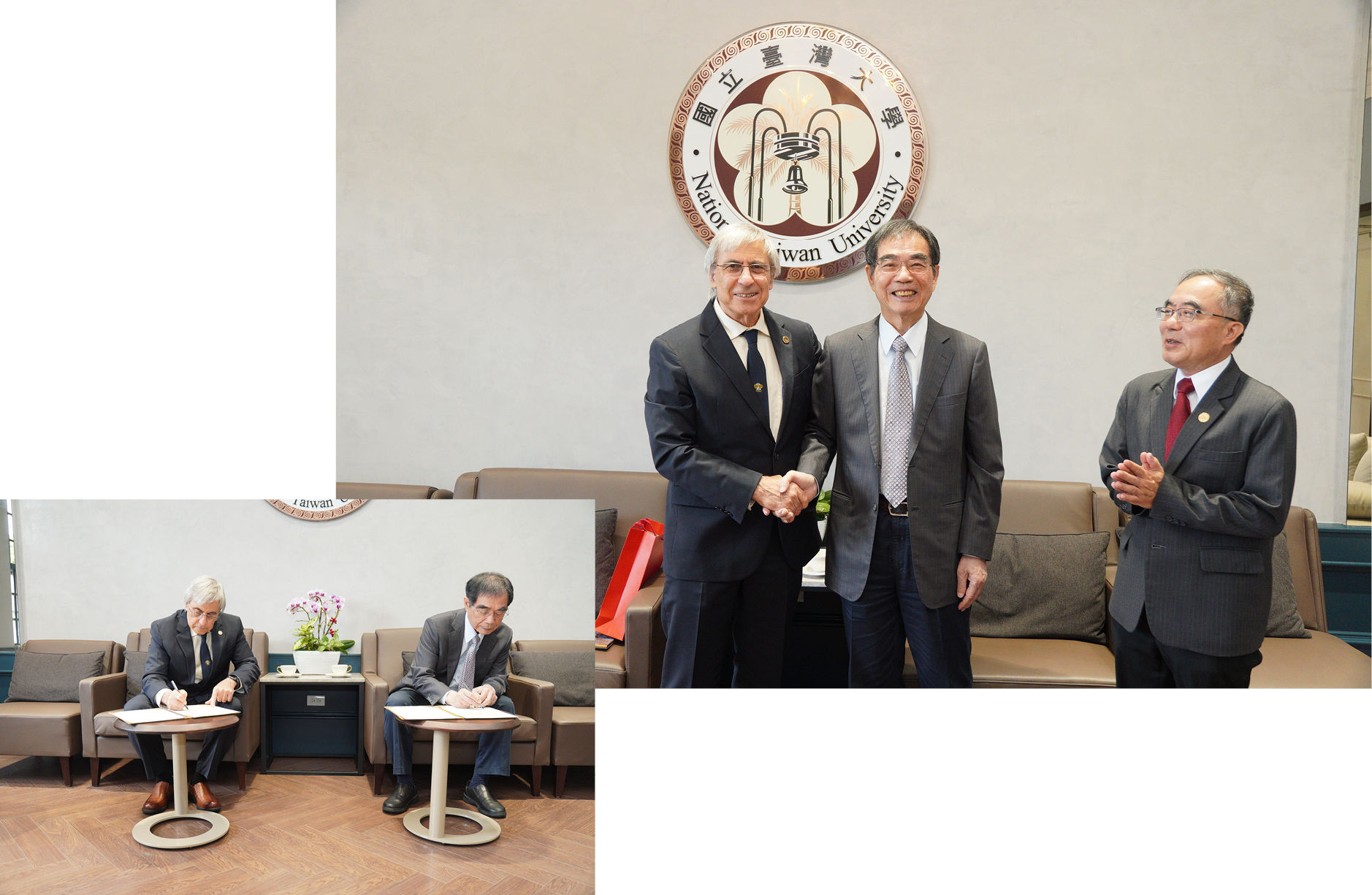
Ehud Keinan (left), Raymond Soong, and Wen-Chang Chen at NTU.
Following several meetings in Taipei and an exchange of several versions of the donation agreement, we and several other professors from NTU met for a happy lunch in Taipei on 8 October, where we agreed on the final version of the agreement. The general plan was to secure an endowment fund to recognize excellence and progress in Sustainable Chemistry. We all agreed that IUPAC will present the first prize laureate during the 50th IUPAC World Chemistry Congress in Kuala Lumpur, Malaysia. The laureate will also give a public lecture at National Taiwan University within two years of receiving the Prize.
On 9 October, I presented the proposed agreement and general plan to the IUPAC Executive Board, and all board members endorsed it, and the Science Board approved it on 13 November. On 11 October, I met again at NTU with Mr. Soong to jointly sign the agreement in a formal ceremony hosted by Prof. Wen-Chang Chen and attended by several distinguished guests, including two prominent professors from the NTU Department of Chemistry: Prof. Shie-Ming Peng who wrote extensively on who history of NTU and the Chemical Society Located in Taipei, and Prof. Shiuh-Tzung, Liu, the former Dean (2013-2019) of the College of Science at NTU.
In the name of thousands of IUPAC volunteers worldwide, I expressed my deep gratitude to Mr. Soong and my humility for the challenge, stressing that the annual award will recognize exceptional scientists who have achieved breakthrough discoveries in sustainable chemistry worldwide. The IUPAC-Soong Prize will encourage innovative research to meet the most pressing challenges jeopardizing humanity and planet Earth. The Prize would also strengthen IUPAC’s leadership position in global chemical sciences and help unite the academic, industrial, education, and public sectors. I mentioned that IUPAC is well-recognized as the world authority on chemical nomenclature, terminology, standardized methods for measurement, atomic weights, and many other critically evaluated data.
Mr. Raymond Soong said that sustainable development is essential for the planet’s and humanity’s survival as we confront significant social, economic, and environmental threats. Addressing these challenges requires a concerted effort from governments, businesses, universities, and individuals. He added that recognizing the crucial role of education in cultivating talent and advancing sustainable development, he was pleased to offer his support through IUPAC, hoping to unite academia and various sectors of society to pursue the shared vision of global sustainability. In addition to the formal Prize ceremony, he would happily host the Prize laureates, thereby exposing young Taiwanese scholars to the cutting edge of sustainable chemistry.
Prof. Wen-Chang Chen said that as sustainability becomes an increasingly relevant issue globally, how to use fundamental science to address these challenges has become increasingly critical. He was happy to see IUPAC’s initiative to establish an Award of Sustainable Chemistry to inspire chemists to join this effort. He assured that NTU was proud to play a role by providing a platform for exchanging academic insights and practical solutions. Prof. Chen reminded us that NTU, founded in 1928 as Taihoku Imperial University, is guided by its motto, “Integrity, Diligence, Fidelity, and Compassion.” With over 34,000 students, including over 6,000 international students from 77 countries and more than 5,700 faculty and staff, NTU is determined to promote sustainable development while continuing to expand global opportunities, empowering students to realize their full potential and build global competence.
Prize regulations and selection mechanism
Establishing a new high-profile prize is a non-trivial task because the reputation and attractiveness of the prize depends on the mechanism of handling the nomination of candidates, the jury’s composition and procedures, and the announcement and award ceremony. The broad spectrum of mechanisms translates to a wide spectrum of prize reputation, global visibility, and desirability, all resulting in an indicative number, which is the success rate. For example, the success rate for the Wolf Prize in Chemistry is approximately 0.5 %. Although the Nobel Prizes’ success rates are unknown, they are probably in the same range. Therefore, it would be helpful to learn from the cumulative experience, procedures, and mechanisms used by other high-profile prizes, such as the Nobel, Wolf, Japan, Welch, Tang, Kavli, Breakthrough, Millennium Technology, Lasker, Turing, Dan David, Harvey, and others.
In my intensive discussion with Mr. Raymond Soong on these issues, I shared my four-decade experience with several significant prizes, including the Wolf Prize, the Harvey Prize, and the various prizes awarded by the Israel Chemical Society. We agreed on several leading principles for handling the IUPAC-Soong Prize, prize regulations and deadlines:
The prize will be awarded to a single winner or shared between two or a maximum of three winners.
No restrictions would apply to the nominee’s background and affiliation, and they could be in academia, research organizations, or industries. Nobel prize Laureates cannot become candidates for the IUPAC-Soong Prize.
The nominator will fill out the nomination forms and add a letter indicating the candidate’s groundbreaking discoveries and achievements related to Sustainable Chemistry, the candidate’s short CV, and three letters of support. Self-nomination is not allowed.
A Prize Committee chaired by the IUPAC President will nominate a five-member jury, including a chairperson, while considering issues of reputation, field of expertise, and geographic and gender inclusivity.
The Jury members will serve for one cycle, and their identity will always remain confidential.
Future plans
The IUPAC-Soong Prize is the first in the new category of high profile IUPAC prizes, but certainly not the only one. Other initiatives may follow this model with the same parameters: a $1 million endowment fund to indefinitely support an annual prize of circa $30,000. Attempts to establish additional prizes on this model are currently underway. 
About the author
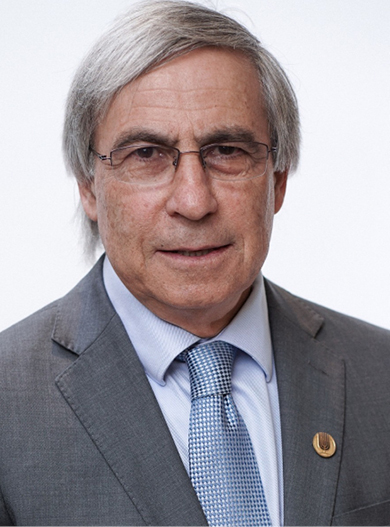
Ehud Keinan <ekeinan@iupac.org> has been IUPAC President since January 2024 and is currently a Professor of Chemistry at the Schulich Faculty of Chemistry, Technion – Israel Institute of Technology. He was born and educated in Israel, obtained his Ph.D. from the Weizmann Institute of Science, and postdoc at the University of Wisconsin with Prof. B.M. Trost. His research focuses on organic synthesis, biocatalysis, drug discovery, molecular computing, and supra-molecular chemistry. He was Dean of Chemistry at the Technion, Head of the Institute of Catalysis, and an Adjunct Professor at The Scripps Research Institute, California. He served as Pro-Vice-Chancellor and Dean of Sciences at GTIIT, Guangdong, China (2015-2016). He is Editor-in-Chief of the Israel J. Chem. (Wiley-VCH), President of the Israel Chemical Society, Editor-in-Chief of the AsiaChem magazine (FACS), and Council Member of the Wolf Foundation. Ehud is a public writer and activist on science education, higher education, and chemical industry policy. Before serving as IUPAC President, Prof Keinan was elected member of the Bureau from 2016-2023.
©2025 by IUPAC & De Gruyter
This work is licensed under the Creative Commons Attribution-NonCommercial-NoDerivatives 4.0 International License.
Artikel in diesem Heft
- Masthead - Full issue pdf
- President’s Column
- The IUPAC-Soong Prize for Sustainable Chemistry—the first IUPAC presidential prize
- Features
- Hazard Information Profiles
- Global Conversation on Sustainability
- Scientists Reviewed 7,000 Studies on Microplastics.
- IUPAC Wire
- Standard atomic weights of three technology critical elements revised
- IUPAC-Soong Prize for Sustainable Chemistry
- Green Chemistry for Life grants presented to Top Young Scientists
- Election of IUPAC Officers, Members of the Executive Board and Science Board
- 2025 IUPAC International Award for Advances in Harmonized Approaches to Crop Protection Chemistry—Call for Nominations
- 2025 IUPAC-Solvay International Award for Young Chemists—Call for applicants
- Navigating New Horizons
- In memoriam: Morton Z. Hoffman
- Project Place
- Advanced methods for assessment of risks of false decisions in analytical chemistry (testing) laboratories—basic concepts and associated terms
- IUPAC HELM Glycans Extension
- Molecular Machine Terminology
- Terminology and Classification of Per- and Poly-Fluoroalkyl Substances (PFAS)
- Chemistry Entrepreneurship
- Multilingual Encyclopedia Polymer Science—Improving Communication in Science and Education
- Making an imPACt
- Terms of Latin origin relating to sample characterization (IUPAC Technical Report)
- Glossary of terms used in biochar research (IUPAC Technical Report)
- Properties and units in the clinical laboratory sciences. Part XXVIII. NPU codes for characterizing subpopulations of the hematopoietic lineage, described from their clusters of differentiation molecules (IUPAC Technical Report)
- Definition of materials chemistry (IUPAC Recommendations 2024)
- IUPAC Recommendations: (Un)equivocal Understanding of Hydrogen and Halogen Bonds and Their (Un)equivocal Naming!
- Conference Call
- Chemistry Education
- Building Chemical Bridges in Latin America: Reflections from the 36th Congreso Latinoamericano de Química
- African Training School on Green Chemistry and Environmental Sustainability
- New Perspectives on the Fight against Chemical Weapons
- Where 2B & Y
- Global Gathering of Chemistry Experts: IUPAC 2025 Comes to Kuala Lumpur, Malaysia!
- Mark Your Calendar
Artikel in diesem Heft
- Masthead - Full issue pdf
- President’s Column
- The IUPAC-Soong Prize for Sustainable Chemistry—the first IUPAC presidential prize
- Features
- Hazard Information Profiles
- Global Conversation on Sustainability
- Scientists Reviewed 7,000 Studies on Microplastics.
- IUPAC Wire
- Standard atomic weights of three technology critical elements revised
- IUPAC-Soong Prize for Sustainable Chemistry
- Green Chemistry for Life grants presented to Top Young Scientists
- Election of IUPAC Officers, Members of the Executive Board and Science Board
- 2025 IUPAC International Award for Advances in Harmonized Approaches to Crop Protection Chemistry—Call for Nominations
- 2025 IUPAC-Solvay International Award for Young Chemists—Call for applicants
- Navigating New Horizons
- In memoriam: Morton Z. Hoffman
- Project Place
- Advanced methods for assessment of risks of false decisions in analytical chemistry (testing) laboratories—basic concepts and associated terms
- IUPAC HELM Glycans Extension
- Molecular Machine Terminology
- Terminology and Classification of Per- and Poly-Fluoroalkyl Substances (PFAS)
- Chemistry Entrepreneurship
- Multilingual Encyclopedia Polymer Science—Improving Communication in Science and Education
- Making an imPACt
- Terms of Latin origin relating to sample characterization (IUPAC Technical Report)
- Glossary of terms used in biochar research (IUPAC Technical Report)
- Properties and units in the clinical laboratory sciences. Part XXVIII. NPU codes for characterizing subpopulations of the hematopoietic lineage, described from their clusters of differentiation molecules (IUPAC Technical Report)
- Definition of materials chemistry (IUPAC Recommendations 2024)
- IUPAC Recommendations: (Un)equivocal Understanding of Hydrogen and Halogen Bonds and Their (Un)equivocal Naming!
- Conference Call
- Chemistry Education
- Building Chemical Bridges in Latin America: Reflections from the 36th Congreso Latinoamericano de Química
- African Training School on Green Chemistry and Environmental Sustainability
- New Perspectives on the Fight against Chemical Weapons
- Where 2B & Y
- Global Gathering of Chemistry Experts: IUPAC 2025 Comes to Kuala Lumpur, Malaysia!
- Mark Your Calendar
