Survival mechanisms to selective pressures and implications
-
 and
and

Abstract
Organisms have evolved a spectrum of strategies that facilitate survival in the face of adverse environmental conditions. In order to make full use of the unfavorable resources of nature, human beings usually impose selective pressures to breed phenotypic traits that can survive in adverse environments. Animals are frequently under attack by biotic stress, such as bacterial and viral infections, while plants are more often subjected to abiotic stress, including high salinity, drought, and cold. In response to these diverse stresses, animals and plants initiate wide-ranging changes in gene expression by altering regulation of transcriptional and post-transcriptional activities. Recent studies have identified a number of key responsive components that promote survival of animals and plants in response to biotic and abiotic stresses. Importantly, with recent developments in genome-editing technology based on the CRISPR/Cas9 system, manipulation of genetic elements to generate stress-resistant animals and plants has become both feasible and cost-effective. Herein, we review important mechanisms that govern the response of organisms to biotic and abiotic stresses with the aim of applying our understanding to the agriculture and animal husbandry industries.
1 Introduction
Our world is characterized by broad biodiversity [1, 2], present even in niches with unfavorable environmental conditions [3, 4, 5, 6, 7, 8]. Organisms living in these environments have evolved a variety of adaptive mechanisms to respond to biotic and abiotic stresses [9, 10]. For example, animals have developed sophisticated immune systems to respond to the biotic stresses they frequently encounter, such as bacterial or viral infections [11, 12, 13]. In contrast, plants more often respond to abiotic stresses through regulation of transcriptional and post-transcriptional activities that affect gene expression [14, 15, 16, 17, 18, 19, 20]. Abiotic stresses, which include high salinity [21, 22, 23, 24, 25], extreme temperature [20, 26, 27, 28], drought [18, 29, 30], heavy metal toxicity [17, 31, 32], ozone [33, 34, 35, 36, 37], irradiation [30, 38], carbon dioxide [19, 36, 37, 39, 40, 41], sulfur dioxide [42, 43, 44], and variations in soil pH [4, 45, 46, 47], severely constrain plant growth and development, leading to loss of crop production [48, 49, 50, 51, 52, 53]. Thus, one strategy for improvement of crop yields is to cultivate crops that are tolerant to the abiotic stresses. Clearly, genetic variation plays a principal role in adaptation. However, natural selection is long-term process with constant mutation rate. To fuel the adaption processes, stress-stimulated adaption is usually applied for the rapid generation of phenotypic traits (Figure 1).
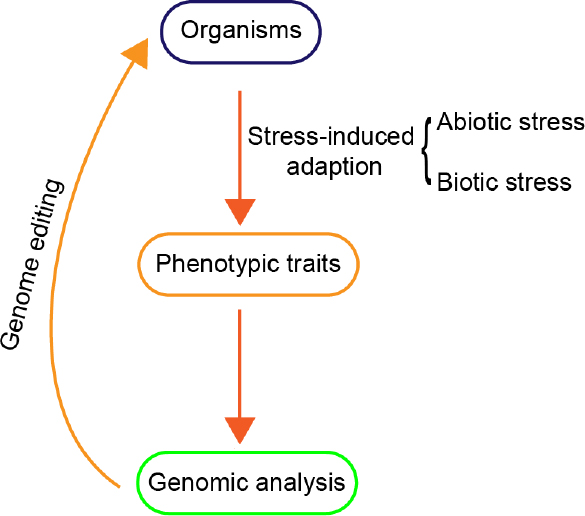
Stress-induced adaption strategy adopted for the generation of phenotypic traits.
Broadening our understanding of the molecular mechanisms governing the responses of animals and plants to stressful conditions would provide substantial benefits for animal husbandry and plant domestication [31, 54, 55, 56, 57, 58, 59]. With recent developments in genome-editing technology, carrying out genetic manipulations to generate novel genotypic species resistant to biotic and abiotic stresses has become technically feasible and economically viable [60, 61, 62, 63, 64, 65, 66]. In this review, we discuss the molecular mechanisms that contribute to resistance to biotic stresses in animals and abiotic stresses in plants, highlighting key pathways responsible for stress resistance. Genetic manipulation of these pathways may be used in future studies to facilitate development of stress-resistant animals and plants for application in animal husbandry and agriculture [67].
2 Immune responses to biotic stresses
Animals have developed defense mechanisms to respond to biotic stresses, such as bacteria, viruses, fungi, and parasites [68, 69, 70, 71, 72, 73, 74]. The innate immune system acts as the first-line of defense against these invading pathogens through the action of pattern recognition receptors directed against conserved pathogenic molecules, termed pathogen-associated molecular patterns [75, 76, 77, 78]. The roles of the insulin, TGF-β, mTOR, and p38 MAPK pathways in the immune response have been well characterized, and a number of other challenge-response genes have also been identified. For example, the alpha-2-macroglobulin gene has been associated with mastitis and has the potential to serve as a biomarker for mastitis susceptibility [26, 79, 80]. Mannose-binding lectin is crucial for the host immune defense against a spectrum of pathogens [81, 82, 83]. Melanoma differentiation-associated gene 5, interferon regulatory factor 5, and hepcidin family genes have been shown to be essential for the innate immune response of common carp [84, 85, 86].
3 Survival mechanisms to abiotic stresses
During evolution, plants have formed diverse adaptive mechanisms to survive in the adverse environmental conditions. High salinity represents one of most common abiotic stresses faced by plants. Exposure to high salinity markedly limits the growth and production of plants due to induction of osmotic, oxidative, and temperature stresses [25, 32, 34, 87, 88, 89]. Although the molecular mechanisms used by plants to overcome high salinity challenge are not fully understood, recent advances have begun to identify key pathways and molecules [12, 28, 90, 91, 92, 93, 94, 95], many of which regulate the ionic balance [16, 21, 24, 38, 77, 96, 97, 98, 99, 100, 101]. For example, Na+ has been shown to be important for maintenance of intracellular K+ concentrations, and Na+/K+ homeostasis is crucial for plant growth and development. At high salt concentrations, plants reduce Na+ influx and/or increase Na+ efflux to maintain homeostasis of intracellular Na+ concentrations [102]. Genes involved in the response to high salinity stress include the glycosyltransferase Qua1, which modulates Ca2+ levels as part of the response to high salinity stress [103]. Overexpression of AtZFP1, a CCCH type zinc finger protein, promotes tolerance to high salinity by regulating expression of ion transport proteins [97, 104]. A subset of genes with ion-independent functions have also been shown to be critical for tolerance to high salinity [14, 22, 23, 105, 106, 107, 108, 109, 110, 111, 112]. For example, Arabidopsis plants overexpressing glutathione S-transferase (GST) are more tolerant to high salinity stress [113].
Ionic compartmentalization into vacuoles, salt exclusion and excretion by vesicles are the underlying mechanism of high salinity tolerance. However, the intensively studied plant Arabidopsis thaliana is not a true halophyte without salt glands in its epidermis, as such the precise mechanism of high salinity tolerance in Arabidopsis to be largely elusive. Limonium bicolor, a typical exo-recretohalophyte, has been sequenced to identify the genes involved in salt secretion [114]. Several transcription factors, including MYB, bHLH, C2H2, and NAC, have been identified to be essential for high salinity tolerance, suggesting transcriptional regulation of salt resistant-related gene expression during high salinity stress. Genes encoding proteins that are involved in the modulation of Na+ efflux, K+ uptake, chloride transport, cation transport, and H+-ATPase have been identified, confirming that ion transport is important for salt secretion from salt glands [114]. In addition, four ascorbate peroxidase genes, fourteen glutathione S-transferase (GST) genes, and four monodehydroascorbate reductase genes were differentially expressed under high salinity exposure, indicating the importance of the reactive oxygen species (ROS) scavenging system in high salinity tolerance [114, 115].
In addition to high salinity, chilling stress is another major environmental factor that affects plant growth and development, leading to crop loss [16]. Chilling stress influences seed germination and damages seedlings and root systems by affecting the membrane phase transition, water absorption, metabolism, and other physiological processes. Tolerance to chilling stress varies across plant species, and variations are associated with changes in epigenetic modifications affecting plant physiology, metabolism, and growth. Ectopic expression of genes that affect these activities can promote resistance to chilling stress [16, 20, 26, 27, 28, 109, 116, 117]. For example, glycine betaine enhances the tolerance of tomato to chilling stress by regulating expression of codA and synthesis of choline oxidase [118]. Overexpression of peanut acyl carrier protein in tobacco alters the membrane lipid synthesis pathway, promoting resistance to chilling stress [116]. Reactive oxygen species signaling has also been associated with responses to chilling [19, 48, 61, 108, 119, 120].
Drought stress is also a common environmental factor affecting plant survival. Drought stress leads to dehydration and reduction of cytosolic and vacuolar volume. Moreover, drought stress typically suppresses the photosynthesis rate and efficiency and can ultimately result in wilting and apoptotic cell death. Mounting evidence shows that stomatal closure plays an essential role in the plant response to drought stress, and genes that are involved in this process are crucial for drought stress resistance [18, 29, 30, 48, 103, 105, 121, 122]. Recent studies have implicated casein kinase 1-like protein 2 and stomatal closure-related actin binding protein 1 in hypersensitivity to drought stress and these proteins drive actin filament reorganization to regulate stomatal closure [121, 122]. PhyB regulates plant sensitivity to drought stress by suppressing expression of cell expansion-associated genes, including putative erecta family genes and expansin family genes [29]. A wide variety of drought-responsive genes have been identified in different species, including genes encoding stress-responsive proteins, auxin-responsive proteins, transcription factors, Na+/H+ transporters, and chloroplast photosynthetic oxygen-evolving protein subunits [18].
4 Crosstalk between biotic and abiotic stress responses
In addition to abiotic stress, plants are often simultaneously challenged by biotic stress, such as pathogen attack [123, 124]. Interestingly, a widely observed phenomenon seen in plants is resistance to multiple stress exposure, termed as cross-tolerance, and this phenomenon suggests that a powerful regulatory mechanism allows plants to adapt rapidly to a varying environment. Multiple lines of evidence reveal that hormones, transcription factors, kinase cascades, and ROS are the major regulatory factors controlling crosstalk between biotic and abiotic stress responses [125, 126]. Abscisic acid (ABA), an endogenous phytohormone associated with abiotic stress responses to drought and low temperature, plays a negative role in pathogen resistance through down-regulation of the expression of key biotic stress-responsive genes, such as jasmonic acid (JA) and ethylene (ET) [125]. ROS, as toxic by-products of aerobic metabolism, must be tightly controlled; on the other hand, ROS behave as an important signaling modulator in a diversity of cellular events. Emerging evidence reveals that ROS produced by NADPH-dependent respiratory burst oxidase homolog genes (AtrbohD and AtrbohF) might connect ABA-related signaling pathways and pathogen-response signaling pathways [123, 125]. In addition, a number of transcription factors, such as the dehydration responsive element binding proteins (DREB), C-repeat binding factors (CBF), and cup-shaped cotyledon (CUC), induce the expression of a number of biotic and abiotic stress-responsive genes, leading to plant resistance to abiotic stress and pathogen infection [126].
5 Concluding Remarks and Future Perspectives
Biotic and abiotic stresses continue to represent a major threat to animal and agriculture husbandry. As a result of exposure to stressful conditions, animals and plants have evolved a wide range of defense mechanisms that promote survival in adverse environments. Increasing our understanding of the diverse mechanisms that promote resistance to biotic and abiotic stresses will provide valuable insight into selection and generation of desirable traits important for future innovations in animal husbandry and agriculture [127, 128, 129, 130, 131, 132, 133, 134]. Simultaneous manipulation of multiple genes with precise specificity is required for effective crop breeding and animal husbandry, since abiotic stress usually involves multiple gene responses, which coordinately regulate metabolic pathways so that the organism can adapt to the stressful conditions [135]. Fortunately, with recent advances in genome-editing technology, such as discovery and optimization of the CRISPR/Cas9 system, combinatorial introduction of stress-response genes into animals and plants has become feasible, raising the possibility of the development of stress-resistant species [136, 137]. Advances in high-throughput sequencing technologies, functional genomics analyses, and integrated ‘omics’ analyses, especially integrated metabolomics [138], have additionally facilitated many ongoing studies characterizing the complex interactomes associated with stress tolerance. Application of genome-editing technology to modify the expression of key proteins associated with challenge tolerance could accelerate the development of stress-resistant animals and crop plants, thereby benefiting the animal husbandry and agriculture industries.
Conflict of interest: Authors state no conflict of interest.
Acknowledgments
This work was supported by grants from the National Natural Science Foundation of China (31701216), Shandong Provincial Natural Science Foundation (ZR2017MC008), and China Postdoctoral Science Foundation (2016M600553).
References
[1] Schluter D, Pennell MW. Speciation gradients and the distribution of biodiversity. Nature. 2017;546(7656):48-55.10.1038/nature22897Search in Google Scholar PubMed
[2] Xie SB, Zhou J. Harnessing plant biodiversity for the discovery of novel anticancer drugs targeting microtubules. Frontiers In Plant Science. 2017;8:720.10.3389/fpls.2017.00720Search in Google Scholar PubMed PubMed Central
[3] Ren Q. New species of Pertusaria from China. Telopea. 2014;16:133-40.10.1017/S0024282913000066Search in Google Scholar
[4] Ren Q. A new species and new records of the lichen genus Pertusaria from China. Mycotaxon. 2015;130(3):689-93.10.5248/130.689Search in Google Scholar
[5] Ren Q, Kou XR. A new species of Pertusaria from China. Lichenologist. 2013;45(3):337-9.10.1017/S0024282913000066Search in Google Scholar
[6] Ren Q, Zhao N. New taxa of the lichen genus Pertusaria from China. Mycotaxon. 2014;127:221-6.10.5248/127.221Search in Google Scholar
[7] Tian Q, Wang LS, Wang HY, Zhao ZT. A new species of Nephroma (Nephromataceae) from the Tibetan Plateau. Mycotaxon. 2011;115:281-5.10.5248/115.281Search in Google Scholar
[8] Du YD, Meng FG, Li HM, Wang HY, Zhao ZT. Three new records of brown parmelioid lichens from the Tibetan Plateau. Mycotaxon. 2010;111:283-6.10.5248/111.283Search in Google Scholar
[9] Zogli P, Libault M. Plant response to biotic stress: Is there a common epigenetic response during plant-pathogenic and symbiotic interactions? Plant Science 2017;263:89-93.10.1016/j.plantsci.2017.07.008Search in Google Scholar PubMed
[10] Agashe D. The road not taken: Could stress-specific mutations lead to different evolutionary paths? PLoS Biology. 2017;15(6):e2002862.10.1371/journal.pbio.2002862Search in Google Scholar PubMed PubMed Central
[11] Liu XY, Ju ZH, Wang LL, Zhang Y, Huang JM, Li QL, et al. Six novel single-nucleotide polymorphisms in SPAG11 gene and their association with sperm quality traits in Chinese Holstein bulls. Animal Reproduction Science. 2011;129(1-2):14-21.10.1016/j.anireprosci.2011.10.003Search in Google Scholar PubMed
[12] Song J, Wang BS. Using euhalophytes to understand salt tolerance and to develop saline agriculture: Suaeda salsa as a promising model. Annals Of Botany. 2015;115(3):541-53.10.1093/aob/mcu194Search in Google Scholar PubMed PubMed Central
[13] Wang CM, An LG, Huang Y. A new species of free-living marine nematode (Nematoda: Chromadoridae) from the East China Sea. Zootaxa. 2015;3947(2):289-95.10.11646/zootaxa.3947.2.11Search in Google Scholar PubMed
[14] Shen XY, Wang ZL, Song XF, Xu JJ, Jiang CY, Zhao YX, et al. Transcriptomic profiling revealed an important role of cell wall remodeling and ethylene signaling pathway during salt acclimation in Arabidopsis. Plant Molecular Biology. 2014;86(3):303-17.10.1007/s11103-014-0230-9Search in Google Scholar PubMed
[15] Wang PF, Song H, Li CS, Li PC, Li AQ, Guan HS, et al. Genome-wide dissection of the heat shock transcription factor family genes in Arachis. Frontiers In Plant Science. 2017;8:106.10.3389/fpls.2017.00106Search in Google Scholar PubMed PubMed Central
[16] Wang JS, Zhang Q, Cui F, Hou L, Zhao SZ, Xia H, et al. Genome-wide analysis of gene expression provides new insights into cold responses in Thellungiella salsuginea. Frontiers In Plant Science. 2017;8:713.10.3389/fpls.2017.00713Search in Google Scholar PubMed PubMed Central
[17] Deng YQ, Bao J, Yuan F, Liang X, Feng ZT, Wang BS. Exogenous hydrogen sulfide alleviates salt stress in wheat seedlings by decreasing Na+ content. Plant Growth Regulation. 2016;79(3):391-9.10.1007/s10725-015-0143-xSearch in Google Scholar
[18] Hou L, Liu W, Li Z, Huang C, Fang XL, Wang Q, et al. Identification and expression analysis of genes responsive to drought stress in peanut. Russian Journal Of Plant Physiology. 2014;61(6):842-52.10.1134/S1021443714060089Search in Google Scholar
[19] Kong LA, Xie Y, Hu L, Si JS, Wang ZS. Excessive nitrogen application dampens antioxidant capacity and grain filling in wheat as revealed by metabolic and physiological analyses. Scientific Reports. 2017;7: 43363.10.1038/srep43363Search in Google Scholar PubMed PubMed Central
[20] Liu W, Ji SX, Fang XL, Wang QG, Li Z, Yao FY, et al. Protein kinase LTRPK1 influences cold adaptation and microtubule stability in rice. Journal Of Plant Growth Regulation. 2013;32(3):483-90.10.1007/s00344-012-9314-4Search in Google Scholar
[21] Wang FX, Xu YG, Wang S, Shi WW, Liu RR, Feng G, et al. Salinity affects production and salt tolerance of dimorphic seeds of Suaeda salsa. Plant Physiology And Biochemistry. 2015;95:41-8.10.1016/j.plaphy.2015.07.005Search in Google Scholar PubMed
[22] Zhang SR, Song J, Wang H, Feng G. Effect of salinity on seed germination, ion content and photosynthesis of cotyledons in halophytes or xerophyte growing in Central Asia. Journal Of Plant Ecology. 2010;3(4):259-67.10.1093/jpe/rtq005Search in Google Scholar
[23] Zhao KF, Song J, Fan H, Zhou S, Zhao M. Growth response to ionic and osmotic stress of NaCl in salt-tolerant and salt-sensitive Maize. Journal Of Integrative Plant Biology. 2010;52(5):468-75.10.1111/j.1744-7909.2010.00947.xSearch in Google Scholar PubMed
[24] Zhou JC, Fu TT, Sui N, Guo JR, Feng G, Fan JL, et al. The role of salinity in seed maturation of the euhalophyte Suaeda salsa. Plant Biosystems. 2016;150(1):83-90.10.1080/11263504.2014.976294Search in Google Scholar
[25] Cheng S, Yang Z, Wang MJ, Song J, Sui N, Fan H. Salinity improves chilling resistance in Suaeda salsa. Acta Physiologiae Plantarum. 2014;36(7):1823-30.10.1007/s11738-014-1555-3Search in Google Scholar
[26] Zhao XY, Zheng ZW, Shang ZY, Wang J, Cheng RQ, Qian JL. Climatic information recorded in stable carbon isotopes in tree rings of Cryptomeria fortunei, Tianmu Mountain, China. Dendrochronologia. 2014;32(3):256-65.10.1016/j.dendro.2014.06.002Search in Google Scholar
[27] He YA, Li YP, Cui LX, Xie LX, Zheng CK, Zhou GH, et al. Phytochrome B negatively affects cold tolerance by regulating OsDREB1 gene expression through Phytochrome interacting factor-like protein OsPIL16 in Rice. Frontiers In Plant Science. 2016;7:1963.10.3389/fpls.2016.01963Search in Google Scholar PubMed PubMed Central
[28] Hou L, Chen LJ, Wang JY, Xu DF, Dai LX, Zhang H, et al. Construction of stress responsive synthetic promoters and analysis of their activity in transgenic Arabidopsis thaliana. Plant Molecular Biology Reporter. 2012;30(6):1496-506.10.1007/s11105-012-0464-0Search in Google Scholar
[29] Liu J, Zhang F, Zhou JJ, Chen F, Wang BS, Xie XZ. Phytochrome B control of total leaf area and stomatal density affects drought tolerance in rice. Plant Molecular Biology. 2012;78(3):289-300.10.1007/s11103-011-9860-3Search in Google Scholar PubMed
[30] Chen M, Zhang WH, Lv ZW, Zhang SL, Hidema J, Shi FM, et al. Abscisic acid is involved in the response of Arabidopsis mutant sad2-1 to ultraviolet-B radiation by enhancing antioxidant enzymes. South African Journal Of Botany. 2013;85:79-86.10.1016/j.sajb.2012.11.006Search in Google Scholar
[31] Zhao BT, Zhu XF, Jung JH, Xuan YH. Effect of brassinosteroids on ammonium uptake via regulation of ammonium transporter and N-metabolism genes in Arabidopsis. Biologia Plantarum. 2016;60(3):563-71.10.1007/s10535-016-0627-1Search in Google Scholar
[32] Fu C, Zhang JX, Liu XX, Yang WW, Yu HB, Liu J. AtFes1A is essential for highly efficient molecular chaperone function in Arabidopsis. Journal Of Plant Biology. 2015;58(6):366-73.10.1007/s12374-015-0181-ySearch in Google Scholar
[33] Zhao SZ, Sun HZ, Chen M, Wang BS. Light-regulated betacyanin accumulation in euhalophyte Suaeda salsa calli. Plant Cell Tissue And Organ Culture. 2010;102(1):99-107.10.1007/s11240-010-9710-zSearch in Google Scholar
[34] Guo FD, Liu CL, Xia H, Bi YP, Zhao CZ, Zhao SZ, et al. Induced expression of AtLEC1 and AtLEC2 differentially promotes somatic embryogenesis in transgenic Tobacco plants. PLoS One. 2013;8(8):e71714.10.1371/journal.pone.0071714Search in Google Scholar PubMed PubMed Central
[35] Hu L, Zhao X, Sun LY, Zhao ZT, Zhang LL. Four lecideoid lichens new to China. Mycotaxon. 2014;128:83-91.10.5248/128.83Search in Google Scholar
[36] Li YY, Ma XL, Zhao JL, Xu JJ, Shi JF, Zhu XG, et al. Developmental genetic mechanisms of C-4 syndrome based on transcriptome analysis of C-3 cotyledons and C-4 assimilating shoots in Haloxylon ammodendron. PLoS One. 2015;10(2):e0117175.10.1371/journal.pone.0117175Search in Google Scholar PubMed PubMed Central
[37] Li YY, Xu JJ, Ul Haq N, Zhang H, Zhu XG. Was low CO2 a driving force of C-4 evolution: Arabidopsis responses to long-term low CO2 stress. Journal Of Experimental Botany. 2014;65(13):3657-67.10.1093/jxb/eru193Search in Google Scholar PubMed PubMed Central
[38] Yuan F, Chen M, Yang JC, Song J, Wang BS. The optimal dosage of Co-60 gamma irradiation for obtaining salt gland mutations of exo-recretohalophyte Limonium bicolor (Bunge) O. Kuntze. Lower case? Pakistan Journal Of Botany. 2015;47(1):71-6.Search in Google Scholar
[39] Guo JR, Suo SS, Wang BS. Sodium chloride improves seed vigour of the euhalophyte Suaeda salsa. Seed Science Research. 2015;25(3):335-44.10.1017/S0960258515000239Search in Google Scholar
[40] Li L, Yang HJ, Liu DC, He HB, Wang CF, Zhong JF, et al. Analysis of biofilms formation and associated genes detection in staphylococcus isolates from bovine mastitis. International Journal Of Applied Research In Veterinary Medicine. 2012;10(1):62-8.10.5897/AJB11.081Search in Google Scholar
[41] Li X, Liu Y, Chen M, Song YP, Song J, Wang BS, et al. Relationships between ion and chlorophyll accumulation in seeds and adaptation to saline environments in Suaeda salsa populations. Plant Biosystems. 2012;146:142-9.10.1080/11263504.2012.727880Search in Google Scholar
[42] Lu L, Joshi Y, Elix JA, Lumbsch HT, Wang HY, Koh YJ, et al. New and noteworthy species of the lichen genus Lecanora (Ascomycota; Lecanoraceae) from South Korea. Lichenologist. 2011;43:321-9.10.1017/S0024282911000144Search in Google Scholar
[43] Wang XY, Zhang LL, Joshi Y, Wang HY, Hur JS. New species and new records of the lichen genus Porpidia (Lecideaceae) from western China. Lichenologist. 2012;44(5):619-24.10.1017/S0024282912000242Search in Google Scholar
[44] Zhao ZT, Zhao X, Gao W, Zhou GL, Zhang LL. Pertusaria yunnana, a new species from south-west China. Lichenologist. 2014;46(2):169-73.10.1017/S0024282913000881Search in Google Scholar
[45] Wang HY, Ge AN, Li HM, Zhao ZT. Additional information on Lecanora loekoesii. Mycotaxon. 2013;123:235-9.10.5248/123.235Search in Google Scholar
[46] Wang HY, Jiang DF, Huang YH, Wang PM, Li T. Study on the phylogeny of Nephroma helveticum and allied species. Mycotaxon. 2013;125:263-75.10.5248/125.263Search in Google Scholar
[47] Zhang LL, Zhao X, Hu L. New records of one Amygdalaria and three Porpidia taxa (Lecideaceae) from China. Mycotaxon. 2015;130(1):33-40.10.5248/130.33Search in Google Scholar
[48] Cao S, Du XH, Li LH, Liu YD, Zhang L, Pan X, et al. Overexpression of Populus tomentosa cytosolic ascorbate peroxidase enhances abiotic stress tolerance in tobacco plants. Russian Journal Of Plant Physiology. 2017;64(2):224-34.10.1134/S1021443717020029Search in Google Scholar
[49] Feng ZT, Deng YQ, Fan H, Sun QJ, Sui N, Wang BS. Effects of NaCl stress on the growth and photosynthetic characteristics of Ulmus pumila L. seedlings in sand culture. Photosynthetica. 2014;52(2):313-20.10.1007/s11099-014-0032-ySearch in Google Scholar
[50] Kong XQ, Wang T, Li WJ, Tang W, Zhang DM, Dong HZ. Exogenous nitric oxide delays salt-induced leaf senescence in cotton (Gossypium hirsutum L.). Acta Physiologiae Plantarum. 2016;38(3):61.10.1007/s11738-016-2079-9Search in Google Scholar
[51] Song J, Shi GW, Gao B, Fan H, Wang BS. Waterlogging and salinity effects on two Suaeda salsa populations. Physiologia Plantarum. 2011;141(4):343-51.10.1111/j.1399-3054.2011.01445.xSearch in Google Scholar PubMed
[52] Yang JC, Li M, Xie XZ, Han GL, Sui N, Wang BS. Deficiency of Phytochrome B alleviates chilling-induced photoinhibition in rice. American Journal Of Botany. 2013;100(9):1860-70.10.3732/ajb.1200574Search in Google Scholar PubMed
[53] Zhang JX, Wang C, Yang CY, Wang JY, Chen L, Bao XM, et al. The role of arabidopsis AtFes1A in cytosolic Hsp70 stability and abiotic stress tolerance. Plant Journal. 2010;62(4):539-48.10.1111/j.1365-313X.2010.04173.xSearch in Google Scholar PubMed
[54] Zhao X, Leavitt SD, Zhao ZT, Zhang LL, Arup U, Grube M, et al. Towards a revised generic classification of lecanoroid lichens (Lecanoraceae, Ascomycota) based on molecular, morphological and chemical evidence. Fungal Diversity. 2016;78(1):293-304.10.1007/s13225-015-0354-5Search in Google Scholar
[55] Zhao X, Zhang LL, Zhao ZT, Wang WC, Leavitt SD, Lumbsch HT. A molecular phylogeny of the lichen genus Lecidella focusing on species from Mainland China. PLoS One. 2015;10(9):e0139405.10.1371/journal.pone.0139405Search in Google Scholar PubMed PubMed Central
[56] Zhou GL, Zhao ZT, Lu L, Tong DB, Ma MM, Wang HY. Seven dark fruiting lichens of Caloplaca from China. Mycotaxon. 2012;122:307-24.10.5248/122.307Search in Google Scholar
[57] Zhou JJ, Liu QQ, Zhang F, Wang YY, Zhang SY, Cheng HM, et al. Overexpression of OsPIL15, a phytochromeinteracting factor-like protein gene, represses etiolated seedling growth in rice. Journal Of Integrative Plant Biology. 2014;56(4):373-87.10.1111/jipb.12137Search in Google Scholar PubMed
[58] Zhao SZ, Sun HZ, Gao Y, Sui N, Wang BS. Growth regulator-induced betacyanin accumulation and dopa-4,5-dioxygenase (DODA) gene expression in euhalophyte Suaeda salsa calli. In Vitro Cellular & Developmental Biology-Plant. 2011;47(3):391-8.10.1007/s11627-011-9339-6Search in Google Scholar
[59] Zhao X, Fernandez-Brime S, Wedin M, Locke M, Leavitt SD, Lumbsch HT. Using multi-locus sequence data for addressing species boundaries in commonly accepted lichen-forming fungal species. Organisms Diversity & Evolution. 2017;17(2):351-63.10.1007/s13127-016-0320-4Search in Google Scholar
[60] Yuan C, Wang HY, Wu CS, Jiao Y, Li M, Wang YY, et al. Austdiol, fulvic acid and citromycetin derivatives from an endolichenic fungus, Myxotrichum sp. Phytochemistry Letters. 2013;6(4):662-6.10.1016/j.phytol.2013.08.011Search in Google Scholar
[61] Yuan F, Lyu MJA, Leng BY, Zhu XG, Wang BS. The transcriptome of NaCl-treated Limonium bicolor leaves reveals the genes controlling salt secretion of salt gland. Plant Molecular Biology. 2016;91(3):241-56.10.1007/s11103-016-0460-0Search in Google Scholar PubMed
[62] Zhang F, Wang XJ, Huang YH, Zhao ZG, Zhang SS, Gong XS, et al. Differential expression of hemolymph proteins between susceptible and insecticide-resistant Blattella germanica (Blattodea: Blattellidae). Environmental Entomology. 2014;43(4):1117-23.10.1603/EN13351Search in Google Scholar PubMed
[63] Zhang HY, Zhang L, Gao B, Fan H, Jin JB, Botella MA, et al. Golgi apparatus-localized synaptotagmin 2 is required for unconventional secretion in Arabidopsis. PLoS One. 2011;6(11):e26477.10.1371/journal.pone.0026477Search in Google Scholar PubMed PubMed Central
[64] Zhang LL, Wang XY, Zhao ZT, Hur JS. Lichens newly recorded from the South Korean coast. Mycotaxon. 2012;122:421-32.10.5248/122.421Search in Google Scholar
[65] Zhang T, Song J, Fan JL, Feng G. Effects of saline-waterlogging and dryness/moist alternations on seed germination of halophyte and xerophyte. Plant Species Biology. 2015;30(3):231-6.10.1111/1442-1984.12056Search in Google Scholar
[66] Zhang XY, Lou MF, Shen W, Fu RS, Wang DH. A maternal low-fiber diet predisposes offspring to improved metabolic phenotypes in adulthood in an herbivorous rodent. Physiological And Biochemical Zoology. 2017;90(1):75-84.10.1086/688978Search in Google Scholar PubMed
[67] Zhang Y, Li D, Zhang D, Zhao X, Cao X, Dong L, et al. Analysis of the functions of TaGW2 homoeologs in wheat grain weight and protein content traits. The Plant Journal. 2018;94(5):857-66.10.1111/tpj.13903Search in Google Scholar PubMed
[68] He CQ, Liu YX, Wang HM, Hou PL, He HB, Ding NZ. New genetic mechanism, origin and population dynamic of bovine ephemeral fever virus. Veterinary Microbiology. 2016;182:50-6.10.1016/j.vetmic.2015.10.029Search in Google Scholar PubMed
[69] Liang JW, Tian FL, Lan ZR, Huang B, Zhuang WZ. Selection characterization on overlapping reading frame of multiple-protein-encoding P gene in Newcastle disease virus. Veterinary Microbiology. 2010;144(3-4):257-63.10.1016/j.vetmic.2009.12.029Search in Google Scholar PubMed
[70] Yu J, Wu JQ, Zhang YY, Guo LH, Cong XY, Du YJ, et al. Concurrent highly pathogenic porcine reproductive and respiratory syndrome virus infection accelerates Haemophilus parasuis infection in conventional pigs. Veterinary Microbiology. 2012;158(3-4):316-21.10.1016/j.vetmic.2012.03.001Search in Google Scholar PubMed
[71] Guo T, Zhang L, Cheng D, Liu T, An LG, Li WP, et al. Low-density lipoprotein receptor affects the fertility of female mice. Reproduction Fertility And Development. 2015;27(8):1222-32.10.1071/RD13436Search in Google Scholar PubMed
[72] Lou MF, Zhang XY, Fu RS, Wang DH. Effects of dietary fiber content on energetics in nonreproductive and reproductive Brandt’s voles (Lasiopodomys brandtii). Canadian Journal Of Zoology. 2015;93(4):251-8.10.1139/cjz-2014-0243Search in Google Scholar
[73] Meng XQ, Dai YY, Jing LD, Bai J, Liu SZ, Zheng KG, et al. Subcellular localization of proline-rich tyrosine kinase 2 during oocyte fertilization and early-embryo development in mice. Journal Of Reproduction And Development. 2016;62(4):351-8.10.1262/jrd.2016-015Search in Google Scholar PubMed PubMed Central
[74] Sun GJ, Pan J, Liu KC, Wang SF, Wang X, Wang XM. Molecular cloning and expression analysis of P-selectin glycoprotein ligand-1 from zebrafish (Danio rerio). Fish Physiology And Biochemistry. 2012;38(2):555-64.10.1007/s10695-011-9535-7Search in Google Scholar PubMed
[75] Li H, Yang GW, Ma F, Li T, Yang HT, Rombout J, et al. Molecular characterization of a fish-specific toll-like receptor 22 (TLR22) gene from common carp (Cyprinus carpio L.): Evolutionary relationship and induced expression upon immune stimulants. Fish & Shellfish Immunology. 2017;63:74-86.10.1016/j.fsi.2017.02.009Search in Google Scholar PubMed
[76] Rombout J, Yang GW, Kiron V. Adaptive immune responses at mucosal surfaces of teleost fish. Fish & Shellfish Immunology. 2014;40(2):634-43.10.1016/j.fsi.2014.08.020Search in Google Scholar PubMed
[77] Yuan F, Chen M, Yang JC, Leng BY, Wang BS. A system for the transformation and regeneration of the recretohalophyte Limonium bicolor. In Vitro Cellular & Developmental Biology-Plant. 2014;50(5):610-7.10.1007/s11627-014-9611-7Search in Google Scholar
[78] Zhang FM, Liu DZ, Wang L, Li T, Chang Q, An LG, et al. Characterization of IgM-binding protein: A pIgR-like molecule expressed by intestinal epithelial cells in the common carp (Cyprinus carpio L.). Veterinary Immunology And Immunopathology. 2015;167(12):30-5.10.1016/j.vetimm.2015.06.015Search in Google Scholar PubMed
[79] Du X, Zhou J. Application of biosensors to detection of epidemic diseases in animals. Research In Veterinary Science. 2018;118:444-8.10.1016/j.rvsc.2018.04.011Search in Google Scholar PubMed
[80] Liu S, Zheng Z, Ji S, Liu T, Hou Y, Li S, et al. Resveratrol reduces senescence-associated secretory phenotype by SIRT1/NF-kappaB pathway in gut of the annual fish Nothobranchius guentheri. Fish & Shellfish Immunology. 2018; 80:473-479.10.1016/j.fsi.2018.06.027Search in Google Scholar PubMed
[81] Wang XJ, Ju ZH, Huang JM, Hou MH, Zhou L, Qi C, et al. The relationship between the variants of the bovine MBL2 gene and milk production traits, mastitis, serum MBL-C levels and complement activity. Veterinary Immunology And Immunopathology. 2012;148(3-4):311-9.10.1016/j.vetimm.2012.06.017Search in Google Scholar PubMed
[82] Li H, Li T, Guo Y, Li Y, Zhang Y, Teng N, et al. Molecular characterization and expression patterns of a non-mammalian toll-like receptor gene (TLR21) in larvae ontogeny of common carp (Cyprinus carpio L.) and upon immune stimulation. BMC Veterinary Research. 2018;14(1):153.10.1186/s12917-018-1474-4Search in Google Scholar PubMed PubMed Central
[83] Xie W, Zhou J. Aberrant regulation of autophagy in mammalian diseases. Biology Letters. 2018;14(1):20170540.10.1098/rsbl.2017.0540Search in Google Scholar PubMed PubMed Central
[84] Li H, Zhang FM, Guo HY, Zhu YY, Yuan JD, Yang GW, et al. Molecular characterization of hepcidin gene in common carp (Cyprinus carpio L.) and its expression pattern responding to bacterial challenge. Fish & Shellfish Immunology. 2013;35(3):1030-8.10.1016/j.fsi.2013.07.001Search in Google Scholar PubMed
[85] Zhu YY, Xing WX, Shan SJ, Zhang SQ, Li YQ, Li T, et al. Characterization and immune response expression of the Rig-I-like receptor mda5 in common carp Cyprinus carpio. Journal Of Fish Biology. 2016;88(6):2188-202.10.1111/jfb.12981Search in Google Scholar PubMed
[86] Zhu YY, Qi CC, Shan SJ, Zhang FM, Li H, An LG, et al. Characterization of common carp (Cyprinus carpio L.) interferon regulatory factor 5 (IRF5) and its expression in response to viral and bacterial challenges. BMC Veterinary Research. 2016;12(1):127.10.1186/s12917-016-0750-4Search in Google Scholar PubMed PubMed Central
[87] Chen M, Song J, Wang BS. NaCl increases the activity of the plasma membrane H+-ATPase in C-3 halophyte Suaeda salsa callus. Acta Physiologiae Plantarum. 2010;32(1):27-36.10.1007/s11738-009-0371-7Search in Google Scholar
[88] Gao TL, Ren Q. New records of Ochrolechia and Placopsis from the Hengduan Mountains, China. Mycotaxon. 2012;122:461-6.10.5248/122.461Search in Google Scholar
[89] Han N, Shao Q, Bao HY, Wang BS. Cloning and characterization of a Ca2+/H+ antiporter from halophyte Suaeda salsa L. Plant Molecular Biology Reporter. 2011;29(2):449-57.10.1007/s11105-010-0244-7Search in Google Scholar
[90] Guo YH, Jia WJ, Song J, Wang DA, Chen M, Wang BS. Thellungilla halophila is more adaptive to salinity than Arabidopsis thaliana at stages of seed germination and seedling establishment. Acta Physiologiae Plantarum. 2012;34(4):1287-94.10.1007/s11738-012-0925-ySearch in Google Scholar
[91] Han N, Lan WJ, He X, Shao Q, Wang BS, Zhao XJ. Expression of a Suaeda salsa vacuolar H+/Ca2+ transporter gene in Arabidopsis contributes to physiological changes in salinity. Plant Molecular Biology Reporter. 2012;30(2):470-7.10.1007/s11105-011-0353-ySearch in Google Scholar
[92] Li K, Pang CH, Ding F, Sui N, Feng ZT, Wang BS. Overexpression of Suaeda salsa stroma ascorbate peroxidase in Arabidopsis chloroplasts enhances salt tolerance of plants. South African Journal Of Botany. 2012;78:235-45.10.1016/j.sajb.2011.09.006Search in Google Scholar
[93] Yuan F, Chen M, Leng BY, Wang BS. An efficient autofluorescence method for screening Limonium bicolor mutants for abnormal salt gland density and salt secretion. South African Journal Of Botany. 2013;88:110-7.10.1016/j.sajb.2013.06.007Search in Google Scholar
[94] Zhang Q, Zhao CZ, Li M, Sun W, Liu Y, Xia H, et al. Genome-wide identification of Thellungiella salsuginea microRNAs with putative roles in the salt stress response. Bmc Plant Biology. 2013;13:180.10.1186/1471-2229-13-180Search in Google Scholar PubMed PubMed Central
[95] Feng ZT, Sun QJ, Deng YQ, Sun SF, Zhang JG, Wang BS. Study on pathway and characteristics of ion secretion of salt glands of Limonium bicolor. Acta Physiologiae Plantarum. 2014;36(10):2729-41.10.1007/s11738-014-1644-3Search in Google Scholar
[96] Yang MF, Song J, Wang BS. Organ-specific responses of vacuolar H+-ATPase in the shoots and roots of C-3 halophyte Suaeda salsa to NaCl. Journal Of Integrative Plant Biology. 2010;52(3):308-14.10.1111/j.1744-7909.2010.00895.xSearch in Google Scholar PubMed
[97] Han GL, Wang MJ, Yuan F, Sui N, Song J, Wang BS. The CCCH zinc finger protein gene AtZFP1 improves salt resistance in Arabidopsis thaliana. Plant Molecular Biology. 2014;86(3):237-53.10.1007/s11103-014-0226-5Search in Google Scholar PubMed
[98] Shao Q, Han N, Ding TL, Zhou F, Wang BS. SsHKT1;1 is a potassium transporter of the C-3 halophyte Suaeda salsa that is involved in salt tolerance. Functional Plant Biology. 2014;41(8):790-802.10.1071/FP13265Search in Google Scholar PubMed
[99] Sui N, Han GL. Salt-induced photoinhibition of PSII is alleviated in halophyte Thellungiella halophila by increases of unsaturated fatty acids in membrane lipids. Acta Physiologiae Plantarum. 2014;36(4):983-92.10.1007/s11738-013-1477-5Search in Google Scholar
[100] Feng ZT, Deng YQ, Zhang SC, Liang X, Yuan F, Hao JL, et al. K+ accumulation in the cytoplasm and nucleus of the salt gland cells of Limonium bicolor accompanies increased rates of salt secretion under NaCl treatment using NanoSIMS. Plant Science. 2015;238:286-96.10.1016/j.plantsci.2015.06.021Search in Google Scholar PubMed
[101] Yuan F, Leng BY, Wang BS. Progress in studying salt secretion from the salt glands in recretohalophytes: How do plants secrete salt? Frontiers In Plant Science. 2016;7:977.10.3389/fpls.2016.00977Search in Google Scholar PubMed PubMed Central
[102] Rios JJ, Martinez-Ballesta MC, Ruiz JM, Blasco B, Carvajal M. Silicon-mediated improvement in plant salinity tolerance: The role of Aquaporins. Frontiers In Plant Science. 2017;8:948.10.3389/fpls.2017.00948Search in Google Scholar PubMed PubMed Central
[103] Zheng Y, Liao CC, Zhao SS, Wang CW, Guo Y. The glycosyltransferase QUA1 regulates chloroplast-associated calcium signaling during salt and drought stress in Arabidopsis. Plant And Cell Physiology. 2017;58(2):329-41.10.1093/pcp/pcw192Search in Google Scholar PubMed
[104] Ding F, Chen M, Sui N, Wang BS. Ca2+ significantly enhanced development and salt-secretion rate of salt glands of Limonium bicolor under NaCl treatment. South African Journal Of Botany. 2010;76(1):95-101.10.1016/j.sajb.2009.09.001Search in Google Scholar
[105] Sun W, Li Y, Zhao YX, Zhang H. The TsnsLTP4, a nonspecific lipid transfer protein involved in wax deposition and stress tolerance. Plant Molecular Biology Reporter. 2015;33(4):962-74.10.1007/s11105-014-0798-xSearch in Google Scholar
[106] Qi YC, Wang FF, Zhang H, Liu WQ. Overexpression of suadea salsa S-adenosylmethionine synthetase gene promotes salt tolerance in transgenic tobacco. Acta Physiologiae Plantarum. 2010;32(2):263-9.10.1007/s11738-009-0403-3Search in Google Scholar
[107] Sui N, Li M, Li K, Song J, Wang BS. Increase in unsaturated fatty acids in membrane lipids of Suaeda salsa L. enhances protection of photosystem II under high salinity. Photosynthetica. 2010;48(4):623-9.10.1007/s11099-010-0080-xSearch in Google Scholar
[108] Sun YL, Li F, Su N, Sun XL, Zhao SJ, Meng QW. The increase in unsaturation of fatty acids of phosphatidylglycerol in thylakoid membrane enhanced salt tolerance in tomato. Photosynthetica. 2010;48(3):400-8.10.1007/s11099-010-0052-1Search in Google Scholar
[109] Guo YH, Wang D, Jia WJ, Song J, Yang JC, Wang BS. Effects of seed vernalisation and photoperiod on flowering induction in the halophyte Thellungiella halophila. Australian Journal Of Botany. 2012;60(8):743-8.10.1071/BT12180Search in Google Scholar
[110] Sun ZB, Qi XY, Wang ZL, Li PH, Wu CX, Zhang H, et al. Overexpression of TsGOLS2, a galactinol synthase, in Arabidopsis thaliana enhances tolerance to high salinity and osmotic stresses. Plant Physiology And Biochemistry. 2013;69:82-9.10.1016/j.plaphy.2013.04.009Search in Google Scholar PubMed
[111] Deng YQ, Feng ZT, Yuan F, Guo JR, Suo SS, Wang BS. Identification and functional analysis of the autofluorescent substance in Limonium bicolor salt glands. Plant Physiology And Biochemistry. 2015;97:20-7.10.1016/j.plaphy.2015.09.007Search in Google Scholar PubMed
[112] Yuan F, Lyu MJA, Leng BY, Zheng GY, Feng ZT, Li PH, et al. Comparative transcriptome analysis of developmental stages of the Limonium bicolor leaf generates insights into salt gland differentiation. Plant Cell And Environment. 2015;38(8):1637-57.10.1111/pce.12514Search in Google Scholar PubMed
[113] Qi YC, Liu WQ, Qiu LY, Zhang SM, Ma L, Zhang H. Overexpression of glutathione S-transferase gene increases salt tolerance of arabidopsis. Russian Journal Of Plant Physiology. 2010;57(2):233-40.10.1134/S102144371002010XSearch in Google Scholar
[114] Yuan F, Lyu MJ, Leng BY, Zhu XG, Wang BS. The transcriptome of NaCl-treated Limonium bicolor leaves reveals the genes controlling salt secretion of salt gland. Plant Molecular Biology. 2016;91(3):241-56.10.1007/s11103-016-0460-0Search in Google Scholar PubMed
[115] Lee MH, Cho EJ, Wi SG, Bae H, Kim JE, Cho JY, et al. Divergences in morphological changes and antioxidant responses in salt-tolerant and salt-sensitive rice seedlings after salt stress. Plant Physiology And Biochemistry. 2013;70:325-35.10.1016/j.plaphy.2013.05.047Search in Google Scholar PubMed
[116] Tang GY, Wei LQ, Liu ZJ, Bi YP, Shan L. Ectopic expression of peanut acyl carrier protein in tobacco alters fatty acid composition in the leaf and resistance to cold stress. Biologia Plantarum. 2012;56(3):493-501.10.1007/s10535-012-0057-7Search in Google Scholar
[117] Liu XX, Fu C, Yang WW, Zhang Q, Fan H, Liu J. The involvement of TsFtsH8 in Thellungiella salsuginea tolerance to cold and high light stresses. Acta Physiologiae Plantarum. 2016;38(3):62.10.1007/s11738-016-2080-3Search in Google Scholar
[118] Park EJ, Jeknic Z, Sakamoto A, DeNoma J, Yuwansiri R, Murata N, et al. Genetic engineering of glycinebetaine synthesis in tomato protects seeds, plants, and flowers from chilling damage. The Plant Journal. 2004;40(4):474-87.10.1111/j.1365-313X.2004.02237.xSearch in Google Scholar PubMed
[119] Pang CH, Li K, Wang BS. Overexpression of SsCHLAPXs confers protection against oxidative stress induced by high light in transgenic Arabidopsis thaliana. Physiologia Plantarum. 2011;143(4):355-66.10.1111/j.1399-3054.2011.01515.xSearch in Google Scholar PubMed
[120] Sui N. Photoinhibition of Suaeda salsa to chilling stress is related to energy dissipation and water-water cycle. Photosynthetica. 2015;53(2):207-12.10.1007/s11099-015-0080-ySearch in Google Scholar
[121] Zhao Y, Zhao SS, Mao TL, Qu XL, Cao WH, Zhang L, et al. The plant-specific actin binding protein SCAB1 stabilizes actin filaments and regulates stomatal movement in Arabidopsis. Plant Cell. 2011;23(6):2314-30.10.1105/tpc.111.086546Search in Google Scholar PubMed PubMed Central
[122] Zhao SS, Jiang YX, Zhao Y, Huang SJ, Yuan M, Zhao YX, et al. Casein kinase 1-like protein 2 regulates actin filament stability and stomatal closure via phosphorylation of actin depolymerizing factor. Plant Cell. 2016;28(6):1422-39.10.1105/tpc.16.00078Search in Google Scholar
[123] Mittler R. Oxidative stress, antioxidants and stress tolerance. Trends In Plant Science. 2002;7(9):405-10.10.1016/S1360-1385(02)02312-9Search in Google Scholar
[124] Agarwal PK, Agarwal P, Reddy MK, Sopory SK. Role of DREB transcription factors in abiotic and biotic stress tolerance in plants. Plant Cell Reports. 2006;25(12):1263-74.10.1007/s00299-006-0204-8Search in Google Scholar PubMed
[125] Fujita M, Fujita Y, Noutoshi Y, Takahashi F, Narusaka Y, Yamaguchi-Shinozaki K, et al. Crosstalk between abiotic and biotic stress responses: a current view from the points of convergence in the stress signaling networks. Current Opinion in Plant Biology. 2006;9(4):436-42.10.1016/j.pbi.2006.05.014Search in Google Scholar PubMed
[126] Rejeb IB, Pastor V, Mauch-Mani B. Plant responses to simultaneous biotic and abiotic stress: Molecular mechanisms. Plants. 2014;3(4):458-75.10.3390/plants3040458Search in Google Scholar PubMed PubMed Central
[127] Wang F, Yang HJ, He HB, Wang CF, Gao YD, Zhong QF, et al. Study on the hemolysin phenotype and the genetype distribution of Staphyloccocus aureus caused bovine mastitis in Shandong dairy farms. International Journal Of Applied Research In Veterinary Medicine. 2011;9(4):416-21.Search in Google Scholar
[128] Wang FR, Xu ZZ, Sun R, Gong YC, Liu GD, Zhang JX, et al. Genetic dissection of the introgressive genomic components from Gossypium barbadense L. that contribute to improved fiber quality in Gossypium hirsutum L. Molecular Breeding. 2013;32(3):547-62.10.1007/s11032-013-9888-ySearch in Google Scholar
[129] Wang FR, Zhang CY, Liu GD, Chen Y, Zhang JX, Qiao QH, et al. Phenotypic variation analysis and QTL mapping for cotton (Gossypium hirsutum L.) fiber quality grown in different cotton-producing regions. Euphytica. 2016;211(2):169-83.10.1007/s10681-016-1728-9Search in Google Scholar
[130] Wang SS, Wang F, Tan SJ, Wang MX, Sui N, Zhang XS. Transcript profiles of maize embryo sacs and preliminary identification of genes involved in the embryo sac-pollen tube interaction. Frontiers In Plant Science. 2014;5:702.10.3389/fpls.2014.00702Search in Google Scholar PubMed PubMed Central
[131] Weng L, Tian ZX, Feng XZ, Li X, Xu SL, Hu XH, et al. Petal development in Lotus japonicus. Journal Of Integrative Plant Biology. 2011;53(10):770-82.10.1111/j.1744-7909.2011.01072.xSearch in Google Scholar PubMed
[132] Xu JJ, Li YY, Ma XL, Ding JF, Wang K, Wang SS, et al. Whole transcriptome analysis using next-generation sequencing of model species Setaria viridis to support C-4 photosynthesis research. Plant Molecular Biology. 2013;83(1-2):77-87.10.1007/s11103-013-0025-4Search in Google Scholar PubMed
[133] Xu SG, Liu YF, Cui YG, Pei ZY. Litter decomposition in a subtropical plantation in Qianyanzhou, China. Journal Of Forest Research. 2011;16(1):8-15.10.1007/s10310-010-0206-9Search in Google Scholar
[134] Xu YG, Liu RR, Sui N, Shi WW, Wang L, Tian CY, et al. Changes in endogenous hormones and seed-coat phenolics during seed storage of two Suaeda salsa populations. Australian Journal Of Botany. 2016;64(4):325-32.10.1071/BT16014Search in Google Scholar
[135] Jain M. Function genomics of abiotic stress tolerance in plants: a CRISPR approach. Frontiers In Plant Science. 2015;6:375.10.3389/fpls.2015.00375Search in Google Scholar PubMed PubMed Central
[136] Osakabe Y, Watanabe T, Sugano SS, Ueta R, Ishihara R, Shinozaki K, et al. Optimization of CRISPR/Cas9 genome editing to modify abiotic stress responses in plants. Scientific Reports. 2016;6:26685.10.1038/srep26685Search in Google Scholar PubMed PubMed Central
[137] Liang Z, Chen K, Yan Y, Zhang Y, Gao C. Genotyping genomeedited mutations in plants using CRISPR ribonucleoprotein complexes. Plant Biotechnology Journal. 2018. https://doi.org/10.1111/pbi.1293810.1111/pbi.12938Search in Google Scholar PubMed PubMed Central
[138] Nakabayashi R, Saito K. Integrated metabolomics for abiotic stress responses in plants. Current Opinion in Plant Biology. 2015;24:10-6.10.1016/j.pbi.2015.01.003Search in Google Scholar PubMed
© 2018 Songbo Xie, Min Liu, published by De Gruyter
This work is licensed under the Creative Commons Attribution-NonCommercial-NoDerivatives 4.0 License.
Articles in the same Issue
- Research Article
- Purification of Tea saponins and Evaluation of its Effect on Alcohol Dehydrogenase Activity
- Runt-related transcription factor 3 promoter hypermethylation and gastric cancer risk: A meta-analysis
- Risk Factors for Venous Thromboembolism in Hospitalized Patients in the Chinese Population
- Value of Dual-energy Lung Perfusion Imaging Using a Dual-source CT System for the Pulmonary Embolism
- A new combination of substrates: biogas production and diversity of the methanogenic microorganisms
- mTOR modulates CD8+ T cell differentiation in mice with invasive pulmonary aspergillosis
- Direct Effects on Seed Germination of 17 Tree Species under Elevated Temperature and CO2 Conditions
- Role of water soluble vitamins in the reduction diet of an amateur sportsman
- Aberrant DNA methylation involved in obese women with systemic insulin resistance
- 16S ribosomal RNA-based gut microbiome composition analysis in infants with breast milk jaundice
- Characterization of Haemophilus parasuis Serovar 2 CL120103, a Moderately Virulent Strain in China
- MiRNA-145 induces apoptosis in a gallbladder carcinoma cell line by targeting DFF45
- Telmisartan induces osteosarcoma cells growth inhibition and apoptosis via suppressing mTOR pathway
- Optimizing the Formulation for Ginkgolide B Solid Dispersion
- Determination of the In Vitro Gas Production and Potential Feed Value of Olive, Mulberry and Sour Orange Tree Leaves
- Factors Influencing the Successful Isolation and Expansion of Aging Human Mesenchymal Stem Cells
- The Value of Diffusion-Weighted Magnetic Resonance Imaging in Predicting the Efficacy of Radiation and Chemotherapy in Cervical Cancer
- Chemical profile and antioxidant activity of Trollius europaeus under the influence of feeding aphids
- SSR Markers Suitable for Marker Assisted Selection in Sunflower for Downy Mildew Resistance
- A Fibroblast Growth Factor Antagonist Peptide Inhibits Breast Cancer in BALB/c Mice
- Antihyperglycemic and antihyperlipidemic effects of low-molecular-weight carrageenan in rats
- Microbial indicators and environmental relationships in the Umhlangane River, Durban, South Africa
- TUFT1 promotes osteosarcoma cell proliferation and predicts poor prognosis in osteosarcoma patients
- Long non-coding RNA-2271 promotes osteogenic differentiation in human bone marrow stem cells
- The prediction of cardiac events in patients with acute ST segment elevation myocardial infarction: A meta–analysis of serum uric acid
- Risk expansion of Cr through amphibious clonal plant from polluted aquatic to terrestrial habitats
- Overexpression of Zinc Finger Transcription Factor ZAT6 Enhances Salt Tolerance
- Sini decoction intervention on atherosclerosis via PPARγ-LXRα-ABCA1 pathway in rabbits
- Soluble myeloid triggering receptor expressed on myeloid cell 1 might have more diagnostic value for bacterial ascites than C-reactive protein
- A Preliminary Study on the Newly Isolated High Laccase-producing Fungi: Screening, Strain Characteristics and Induction of Laccase Production
- Hydrolytic Enzyme Production by Thermophilic Bacteria Isolated from Saudi Hot Springs
- Analysis of physiological parameters of Desulfovibrio strains from individuals with colitis
- Emodin promotes apoptosis of human endometrial cancer through regulating the MAPK and PI3K/ AKT pathways
- Down-regulation of miR-539 indicates poor prognosis in patients with pancreatic cancer
- Inhibitory activities of ethanolic extracts of two macrofungi against eggs and miracidia of Fasciola spp.
- PAQR6 expression enhancement suggests a worse prognosis in prostate cancer patients
- Characterization of a potential ripening regulator, SlNAC3, from Solanum lycopersicum
- Expression of Angiopoietin and VEGF in cervical cancer and its clinical significance
- Umbilical Cord Tissue Derived Mesenchymal Stem Cells Can Differentiate into Skin Cells
- Isolation and Characterization of a Phage to Control Vancomycin Resistant Enterococcus faecium
- Glycogen Phosphorylase Isoenzyme Bb, Myoglobin and BNP in ANT-Induced Cardiotoxicity
- BAG2 overexpression correlates with growth and poor prognosis of esophageal squamous cell carcinoma
- Relationship between climate trends and grassland yield across contrasting European locations
- Review Articles
- Mechanisms of salt tolerance in halophytes: current understanding and recent advances
- Salivary protein roles in oral health and as predictors of caries risk
- Nanoparticles as carriers of proteins, peptides and other therapeutic molecules
- Survival mechanisms to selective pressures and implications
- Up-regulation of key glycolysis proteins in cancer development
- Communications
- In vitro plant regeneration of Zenia insignis Chun
- DNA barcoding of online herbal supplements: crowd-sourcing pharmacovigilance in high school
- Case Reports
- Management of myasthenia gravis during pregnancy: A report of eight cases
- Three Cases of Extranodal Rosai-Dorfman Disease and Literature Review
- Letters to the Editor
- First report of Chlamydia psittaci seroprevalence in black-headed gulls (Larus ridibundus) at Dianchi Lake, China
- Special Issue on Agricultural and Biological Sciences - Part II
- Chemical composition of essential oil in Mosla chinensis Maxim cv. Jiangxiangru and its inhibitory effect on Staphylococcus aureus biofilm formation
- Secondary metabolites of Antarctic fungi antagonistic to aquatic pathogenic bacteria
- Study of Seizure-Manifested Hartnup Disorder Case Induced by Novel Mutations in SLC6A19
- Transcriptome analysis of Pinus massoniana Lamb. microstrobili during sexual reversal
- Mechanism of oxymatrine-induced human esophageal cancer cell apoptosis by the endoplasmic reticulum stress pathway
- Methylation pattern polymorphism of cyp19a in Nile tilapia and hybrids
- A Method of Biomedical Information Classification based on Particle Swarm Optimization with Inertia Weight and Mutation
- A novel TNNI3 gene mutation (c.235C>T/ p.Arg79Cys) found in a thirty-eight-year-old women with hypertrophic cardiomyopathy
- Remote Sensing-Based Extraction and Analysis of Temporal and Spatial Variations of Winter Wheat Planting Areas in the Henan Province of China
- Topical Issue on Precision Medicine
- Serum sTREM-1, PCT, CRP, Lac as biomarkers for death risk within 28 days in patients with severe sepsis
- IL-17 gene rs3748067 C>T polymorphism and gastric cancer risk: A meta-analysis
- Efficacy of Danhong injection on serum concentration of TNF-α, IL-6 and NF-κB in rats with intracerebral hemorrhage
- An ensemble method to predict target genes and pathways in uveal melanoma
- Evaluation of the quality of CT images acquired with smart metal artifact reduction software
- NPM1A in plasma is a potential prognostic biomarker in acute myeloid leukemia
- Arterial infusion of rapamycin in the treatment of rabbit hepatocellular carcinoma to improve the effect of TACE
- New progress in understanding the cellular mechanisms of anti-arrhythmic drugs
Articles in the same Issue
- Research Article
- Purification of Tea saponins and Evaluation of its Effect on Alcohol Dehydrogenase Activity
- Runt-related transcription factor 3 promoter hypermethylation and gastric cancer risk: A meta-analysis
- Risk Factors for Venous Thromboembolism in Hospitalized Patients in the Chinese Population
- Value of Dual-energy Lung Perfusion Imaging Using a Dual-source CT System for the Pulmonary Embolism
- A new combination of substrates: biogas production and diversity of the methanogenic microorganisms
- mTOR modulates CD8+ T cell differentiation in mice with invasive pulmonary aspergillosis
- Direct Effects on Seed Germination of 17 Tree Species under Elevated Temperature and CO2 Conditions
- Role of water soluble vitamins in the reduction diet of an amateur sportsman
- Aberrant DNA methylation involved in obese women with systemic insulin resistance
- 16S ribosomal RNA-based gut microbiome composition analysis in infants with breast milk jaundice
- Characterization of Haemophilus parasuis Serovar 2 CL120103, a Moderately Virulent Strain in China
- MiRNA-145 induces apoptosis in a gallbladder carcinoma cell line by targeting DFF45
- Telmisartan induces osteosarcoma cells growth inhibition and apoptosis via suppressing mTOR pathway
- Optimizing the Formulation for Ginkgolide B Solid Dispersion
- Determination of the In Vitro Gas Production and Potential Feed Value of Olive, Mulberry and Sour Orange Tree Leaves
- Factors Influencing the Successful Isolation and Expansion of Aging Human Mesenchymal Stem Cells
- The Value of Diffusion-Weighted Magnetic Resonance Imaging in Predicting the Efficacy of Radiation and Chemotherapy in Cervical Cancer
- Chemical profile and antioxidant activity of Trollius europaeus under the influence of feeding aphids
- SSR Markers Suitable for Marker Assisted Selection in Sunflower for Downy Mildew Resistance
- A Fibroblast Growth Factor Antagonist Peptide Inhibits Breast Cancer in BALB/c Mice
- Antihyperglycemic and antihyperlipidemic effects of low-molecular-weight carrageenan in rats
- Microbial indicators and environmental relationships in the Umhlangane River, Durban, South Africa
- TUFT1 promotes osteosarcoma cell proliferation and predicts poor prognosis in osteosarcoma patients
- Long non-coding RNA-2271 promotes osteogenic differentiation in human bone marrow stem cells
- The prediction of cardiac events in patients with acute ST segment elevation myocardial infarction: A meta–analysis of serum uric acid
- Risk expansion of Cr through amphibious clonal plant from polluted aquatic to terrestrial habitats
- Overexpression of Zinc Finger Transcription Factor ZAT6 Enhances Salt Tolerance
- Sini decoction intervention on atherosclerosis via PPARγ-LXRα-ABCA1 pathway in rabbits
- Soluble myeloid triggering receptor expressed on myeloid cell 1 might have more diagnostic value for bacterial ascites than C-reactive protein
- A Preliminary Study on the Newly Isolated High Laccase-producing Fungi: Screening, Strain Characteristics and Induction of Laccase Production
- Hydrolytic Enzyme Production by Thermophilic Bacteria Isolated from Saudi Hot Springs
- Analysis of physiological parameters of Desulfovibrio strains from individuals with colitis
- Emodin promotes apoptosis of human endometrial cancer through regulating the MAPK and PI3K/ AKT pathways
- Down-regulation of miR-539 indicates poor prognosis in patients with pancreatic cancer
- Inhibitory activities of ethanolic extracts of two macrofungi against eggs and miracidia of Fasciola spp.
- PAQR6 expression enhancement suggests a worse prognosis in prostate cancer patients
- Characterization of a potential ripening regulator, SlNAC3, from Solanum lycopersicum
- Expression of Angiopoietin and VEGF in cervical cancer and its clinical significance
- Umbilical Cord Tissue Derived Mesenchymal Stem Cells Can Differentiate into Skin Cells
- Isolation and Characterization of a Phage to Control Vancomycin Resistant Enterococcus faecium
- Glycogen Phosphorylase Isoenzyme Bb, Myoglobin and BNP in ANT-Induced Cardiotoxicity
- BAG2 overexpression correlates with growth and poor prognosis of esophageal squamous cell carcinoma
- Relationship between climate trends and grassland yield across contrasting European locations
- Review Articles
- Mechanisms of salt tolerance in halophytes: current understanding and recent advances
- Salivary protein roles in oral health and as predictors of caries risk
- Nanoparticles as carriers of proteins, peptides and other therapeutic molecules
- Survival mechanisms to selective pressures and implications
- Up-regulation of key glycolysis proteins in cancer development
- Communications
- In vitro plant regeneration of Zenia insignis Chun
- DNA barcoding of online herbal supplements: crowd-sourcing pharmacovigilance in high school
- Case Reports
- Management of myasthenia gravis during pregnancy: A report of eight cases
- Three Cases of Extranodal Rosai-Dorfman Disease and Literature Review
- Letters to the Editor
- First report of Chlamydia psittaci seroprevalence in black-headed gulls (Larus ridibundus) at Dianchi Lake, China
- Special Issue on Agricultural and Biological Sciences - Part II
- Chemical composition of essential oil in Mosla chinensis Maxim cv. Jiangxiangru and its inhibitory effect on Staphylococcus aureus biofilm formation
- Secondary metabolites of Antarctic fungi antagonistic to aquatic pathogenic bacteria
- Study of Seizure-Manifested Hartnup Disorder Case Induced by Novel Mutations in SLC6A19
- Transcriptome analysis of Pinus massoniana Lamb. microstrobili during sexual reversal
- Mechanism of oxymatrine-induced human esophageal cancer cell apoptosis by the endoplasmic reticulum stress pathway
- Methylation pattern polymorphism of cyp19a in Nile tilapia and hybrids
- A Method of Biomedical Information Classification based on Particle Swarm Optimization with Inertia Weight and Mutation
- A novel TNNI3 gene mutation (c.235C>T/ p.Arg79Cys) found in a thirty-eight-year-old women with hypertrophic cardiomyopathy
- Remote Sensing-Based Extraction and Analysis of Temporal and Spatial Variations of Winter Wheat Planting Areas in the Henan Province of China
- Topical Issue on Precision Medicine
- Serum sTREM-1, PCT, CRP, Lac as biomarkers for death risk within 28 days in patients with severe sepsis
- IL-17 gene rs3748067 C>T polymorphism and gastric cancer risk: A meta-analysis
- Efficacy of Danhong injection on serum concentration of TNF-α, IL-6 and NF-κB in rats with intracerebral hemorrhage
- An ensemble method to predict target genes and pathways in uveal melanoma
- Evaluation of the quality of CT images acquired with smart metal artifact reduction software
- NPM1A in plasma is a potential prognostic biomarker in acute myeloid leukemia
- Arterial infusion of rapamycin in the treatment of rabbit hepatocellular carcinoma to improve the effect of TACE
- New progress in understanding the cellular mechanisms of anti-arrhythmic drugs
