Identifying best parameters of particleboard bonded with dextrin-based adhesives
-
Eka Mulya Alamsyah
 ,
Sutrisno
,
Sutrisno

Abstract
The objective of this study was to evaluate the best parameters of particleboard manufacturing throughout the physical and mechanical properties’ test under Japanese Industrial Standard. Particleboard panels were manufactured from veneer waste of sengon wood (Paraserianthes moluccana) bonded with dextrin-based adhesives (DAs) and urea formaldehyde (UF) adhesives at the density target of 0.70 g/cm2 under various manufacturing parameters of adhesives composition, load pressure and pressure temperatures. The results showed that an increase in the value of physical and mechanical properties occurred on particleboards which were glued with DAs added with UF. As the addition of UF adhesive increases, the physical and mechanical properties of the particleboard also gradually increase. This confirms that a good bonding occurs when adding UF adhesives compared to using only dextrin. The particleboard manufacturing parameters demonstrated the best properties when 40% DA was mixed with 60% UF adhesives (DA–UF = 40:60 pbw; P12) for the physical test and 20% DA mixed with 80% UF (DA–UF = 20:80; P13) for the mechanical test for both particleboards under the load pressurized at 40 kgf/cm2 for 30 min at a temperature of 105°C.
1 Introduction
Until now, formaldehyde-based adhesives such as urea formaldehyde (UF), melamine-formaldehyde (MF), melamine urea formaldehyde (MUF), and phenol formaldehyde (PF) are still dominantly used as adhesives for wood composite products due to several advantages, including easily and cheaply produced, the nature of its optimal attachment for the final purpose of use (interior or exterior) and easy application because their viscosity/thickness can be regulated, of their fast cure (mature) by adjusting the pH conditions and of their pressing temperature. But unfortunately, formaldehyde-based adhesives will continuously release formaldehyde emissions (due to hydrolysis that is reversible) both during production and have been applied as an adhesive on wood products/wood composites that have a negative effect on users/humans, which results in sick house syndrome (SHS; the inconvenience of living inside a building that is filled with furniture glued by formalin-based adhesives). The World Health Organization (WHO) even reports that the long-term effects of SHS are carcinogenic (International Agency of Research Cancer 2006). Proposing researchers also recently reported that although formaldehyde levels were lowered to a minimum in UF adhesives, they still have a negative effect on mice, namely, increased white blood cell contents and thickened mucous membrane lining in the respiratory organs of mice (Nuryawan et al. 2017). The production of composite wood mainly relies on the petrochemical-based and formaldehyde-based adhesives such as UF, PF and MUF, which can cause under certain conditions problem for health and environment (Moubarik et al. 2010). Therefore, in order to substitute these formaldehyde-based resins as well as based on environment awareness, bioadhesives have been re-used nowadays even though their strength and durability are limited (Matting and Brockmann 1968; Frihart and Hunt 2010; Umemura et al. 2013; Ferdosian et al. 2017). Bioadhesives are definitively advantageous in terms of health and environmental issues because the parents of these adhesives are natural renewable resources (such as animals and botanical plants; Mathias et al 2016). Despite the raw materials of bioadhesive are mainly used for human food consumption, some available sources are utilized as feedstock of bioadhesives, such as waste of skin, bone, fish, blood (from animals) and residue of bark, rind and seed (from plants; Ulker 2016).
The dextrin adhesive (DA) was chosen because it is made without formalin and is relatively easily produced because it is starch based and the thickness can be adjusted, so that it can be applied as a composite product adhesive by spraying. Starch-based and protein-based adhesives commonly called as bioadhesives derived from plant-based materials such as durian, corn, cassava, wheat, etc. (Yang et al. 2006; Jarusombuti et al. 2012; Liu et al. 2012; Nikyash et al. 2012) for the manufacturing of wood composites. Durian is a famous and popular native fruit of Southeast Asia, also known as the king of fruits. It is considered exceedingly delicious. Durian is a climacteric fruit that undergoes rapid postharvest changes resulting in a short shelf life at ambient temperature. These changes are essential for consumption. The fruit is usually consumed fresh, but it can be processed into different products. Nowadays both fresh and processed durians have become popular in both local and export markets, possibly because the new ways of eating the fruit have been well received. In addition, a huge amount of inedible husk left has created biomass that can be developed into many innovative products (Ketsa 2018). The inedible durian seeds are also obtained in huge amounts, which in turn can be developed into DA materials, and they are environmentally friendly (Nuryawan et al. 2019). On the other hand, the information on the utilization of durian DA for particleboard production are still limited.
Dextrin in this study is produced from durian seeds. Those durian seeds came from North Sumatera Province with the consideration that durian fruit production in North Sumatra Province is the largest in Indonesia so it can be concluded that as an area that produces a lot of durian fruits, there are many post-consumption durian seed waste. One main utilization of durian seed is as a source of starch that is mixed with polyethylene in plastic bag production (Cornelia et al. 2013). Another utilization of durian seed starch is as the filler of material based on its tensile strength and biodegradation polymer polysterene (Sudi 2013). The quality of durian starch through the addition of sodium metabisulfite and duration in solution resulted in low quality (Suarti et al. 2013). Furthermore, the durian seed starch contains high amylopectin, which is known for its high binding capacity compared to other vegetable starches. To anticipate starch durability and starch adhesive durability as wood composite product adhesives, the water-soluble wood preservatives (boric acid/H3BO3) at various concentrations are introduced into DAs based on the weight of the solid DAs applied, so that ultimately the product is not overgrown with fungus and not attacked by termites.
Some previous studies on the utilization of starch-based adhesive for manufacturing wood composites have been done by some researchers. Dextrin can be used as an economic feedstock for the synthesis of curing agents for waterborne epoxies in an effort to develop formaldehyde-free adhesives (Liu et al. 2011). Hosseinpourpia et al. (2019) reported the potential use of dextrin-based wood adhesive which is cross-linked in situ with glyoxal and polymeric diphenylmethane diisocyanate (pMDI) for medium-density fiberboard (MDF) manufacturing. It was possible to utilize selected starch-based products as bioadhesive for the production of particleboard (Janiszewska et al. 2015). Galvas (2011) reported that the utilization of protein-based adhesives gives the best characteristic compared to the starch-based adhesive formulations as wood adhesives. Ninjan et al. (2018) chose latex-based adhesive to develop the natural adhesives. Generally, these research outputs showed that good quality bonding occurred when starch or dextrin was mixed with a synthetic adhesives such as UF or cross-linkers compared to starch or dextrin alone.
The waste wood from MDF, medium-density particleboard, plywood and timber after reduction of these wood product residues to particles could be made particleboards (Azambuja et al. 2018). Similarly bamboo and woody waste are used as wood composite products (Chung and Wang 2019). In the current study, sengon wood veneer waste from plywood and laminated veneer lumber (LVL) industry were chosen as particle materials.
The objective of this study was to evaluate the best parameters for manufacturing particleboard of sengon wood (Paraserianthes moluccana) veneer waste bonded with DA throughout its physical and mechanical properties’ test under Japanese Industrial Standard (JIS 2003).
2 Materials and methods
2.1 Materials
2.1.1 Adhesives
In this study durian seed starch DAs obtained from the Faculty of Forestry, University of North Sumatra (Surti 2019) and commercial UF resin adhesives were used, which were provided by PT. Sumber Graha Sejahtera, a plywood and LVL company in Balaraja Tangerang, Indonesia.
2.1.2 Particle
Particles used in this study were sengon wood (Paraserianthes moluccana) veneer waste obtained from PT. Sumber Graha Sejahtera, a plywood and LVL company in Balaraja Tangerang, Indonesia.
2.2 Methods
2.2.1 Preparation of DA
Dextrin flour is diluted in water at a ratio of 1:20 (w/v) and heated in boiling water for 15 min. After chilling, DAs are ready to be used as particleboard adhesives (Surti 2019). Figure 1 showed the preparation of DA in laboratory.
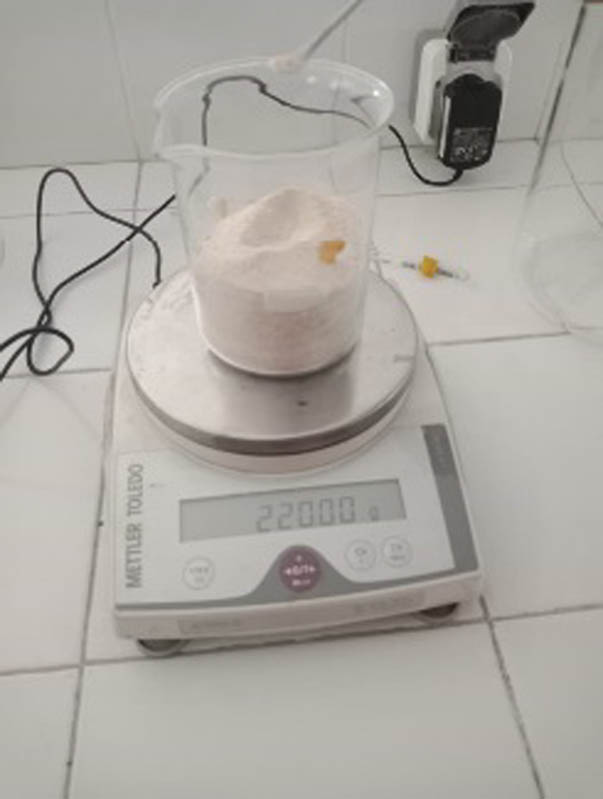
Durian seed starch dextrin.
2.2.2 Preparation of wood particle
Wood particles are made in a simple way through splitting of the veneer waste as shown in Figure 2. After being converted into small sizes, the particles are then cooled until they reach a moisture content (MC) of approximately 5%. After that, they are stored in different plastic bags according to their size. The manufacture of wood particles is carried out at the School of Life Sciences and Technology, Institut Teknologi Bandung and brought to PT. Sumber Graha Sejahtera.
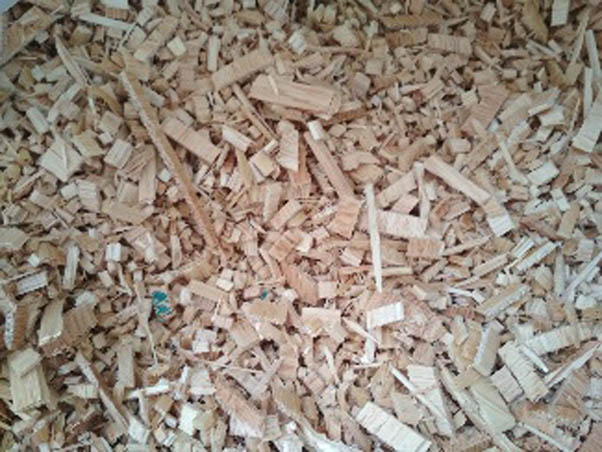
Particle from veneer waste.
2.2.3 Manufacturing of particleboard
For preliminary test of making DA particleboard of medium density (0.70 g/cm3), 15% adhesive content based on the weight of the solid adhesive content, hot pressing was carried out at pressures of 10, 25 and 40 kgf/cm2 for 2 × 15 min (open and close) at temperatures of 105°C, 140°C and 150°C. The complete manufacturing parameters of particleboards are presented in Table 1.
Manufacturing parameters of particleboards
| Code | Adhesives compositions (pbw) | Glued spread (g) | Pressing temperature (°C) | Load pressure (kgf/cm2) | Pressing time (min) | |
|---|---|---|---|---|---|---|
| DA | UF | |||||
| P1 | DA control 1 (100) | 70 | 0 | 150 | 25 | 30 |
| P2 | DA control 2 (100) | 70 | 0 | 150 | 10 | 30 |
| P3 | DA control 3 (100) | 70 | 0 | 140 | 40 | 30 |
| P4 | UF control 1 (100) | 0 | 100 | 140 | 10 | 30 |
| P5 | UF control 2 (100) | 0 | 100 | 105 | 40 | 30 |
| P6 | DA–UF (80:20) | 56 | 20 | 150 | 25 | 30 |
| P7 | DA–UF (80:20) | 56 | 20 | 150 | 10 | 30 |
| P8 | DA–UF (60:40) | 42 | 40 | 150 | 25 | 30 |
| P9 | DA–UF (60:40) | 42 | 40 | 150 | 10 | 30 |
| P10 | DA–UF (40:60) | 28 | 60 | 140 | 10 | 30 |
| P11 | DA–UF (20:80) | 14 | 80 | 140 | 10 | 30 |
| P12 | DA–UF (40:60) | 28 | 60 | 105 | 40 | 30 |
| P13 | DA–UF (20:80) | 14 | 80 | 105 | 40 | 30 |
Note: pbw, part by weight; DA, dextrin adhesive; UF, urea formaldehyde adhesives.
2.2.4 Testing parameters
In the testing stage, some particleboards did not met the requirements for testing and show failures, such as the absence of adhesive bonding with particles, the occurrence of bubbles or blisters and the lack of felt load when making boards. These particleboard failures occurred on boards P1, P2, P4, P6, P7, P8, P9, P10 and P11. While the successful particleboards were obtained from P3, P5, P12 and P13, as shown in Figure 3. From Figure 3 it could be seen that the appearance of the board ready to test, no bubbles or blister so that the boards were continued to the physical and mechanical properties test. The physical property tests include measurements of density, MC, thickness of swelling and water absorption. Tests for mechanical properties include measurement of modulus of rupture (MOR), modulus of elasticity (MOE), screw holding strength and internal bond (IB) strength. The testing parameters were based on JIS (Japanese Agricultural Standard 2003).
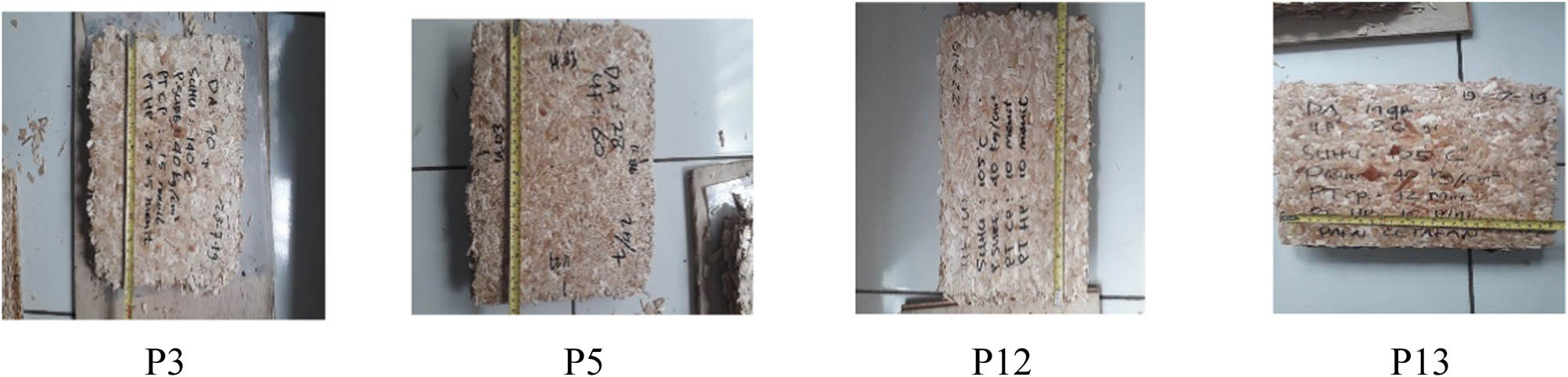
Appearance of the performance of the successful particleboards P3, P5, P12 and P13.
3 Results and discussion
3.1 Particleboard performance
All the particleboards made may not be of good quality and not all of them can be continued with the testing process because they demonstrated failure before being tested (worst and failed before tested). This was possible because the adhesive weight, the temperature and the pressure and the load pressure used were not optimal, causing failures such as the absence of adhesive bonding with particles, the occurrence of bubbles or blisters and the lack of felt load when making boards. These criteria show that the parameter applied to particleboard manufacturing could not meet the best parameters. Therefore, it was important to separate the specimen for board testing before applying physical and mechanical testing. The decision for carrying out the testing of the particleboard is presented in Table 2.
Decision for testing particleboards
| Code | Board performance | Decision |
|---|---|---|
| P1 | Worst | Not tested |
| P2 | Worst | Not tested |
| P3 | Good | Tested |
| P4 | Worst | Not tested |
| P5 | Good | Tested |
| P6 | Worst | Not tested |
| P7 | Worst | Not tested |
| P8 | Worst | Not tested |
| P9 | Worst | Not tested |
| P10 | Worst | Not tested |
| P11 | Worst | Not tested |
| P12 | Good | Tested |
| P13 | Good | Tested |
3.2 Physical properties
Physical test results for particleboards P3, P5, P12 and P13 are presented in Table 3. The MC test results showed that all particleboards met the JIS requirements because their values were still below 14%. While the board density values range from 0.58 to 0.69 g/cm3. The highest density of 0.69 g/cm3 was obtained by particleboard bonded with 40% DAs mixed with 60% UF (P12). This value is nearest to the target density value of 0.70 g/cm3, and this is presumably because the particles used have a non-uniform size, so that some areas on the board are not filled with adhesives and particles. Suggestions for improvement are aimed at making particles of even smaller sizes. For shrinkage and thickness swelling values, the sample particleboard test with 100% DAs (P3) failed because before testing the sample was damaged or dispersed when immersed in water. This shows that the 100% dextrin adhesive has not been able to meet the requirements of shrinkage values.
Physical properties of particleboards
| Code | Parameters | ||||
|---|---|---|---|---|---|
| MC (%) | Density (g/cm3) | Radial shrinkage (%) | Tangential shrinkage (%) | Thickness of swelling (%) | |
| P3 | 5.93 | 0.58 | NT | NT | NT |
| P5 | 11.56 | 0.62 | 0.54 | 0.55 | 44.44 |
| P12 | 11.87 | 0.69 | 0.63 | 0.67 | 45.34 |
| P13 | 12.71 | 0.62 | 0.75 | 0.71 | 33.09 |
NT: not tested, boards failed before testing.
3.3 Mechanical properties
The results of mechanical properties’ testing of particleboards P3, P5, P12 and P13 are presented in Table 4. The highest MOE test results 1014.72 N/mm2 were obtained by particleboard bonded with 100% UF adhesives (P5), while the smallest 494.44 N/mm2 were obtained by particleboard bonded with 40% DAs mixed with 60% UF adhesives (P12). The same condition was observed in MOR test results, where the highest value 9.66 N/mm2 was obtained with P5 and the lowest 5.41 N/mm2 obtained with P12. These results are the same as the previous research wherein the particleboard bonded with UF adhesives has the highest MOE and MOR compared to particleboard bonded with wheat starch and oil palm starch (Salleh et al. 2015). The screw holding strength ranges from 138.28 for P3 (the lowest) to 680 N for P13 (the highest). For the IB strength, the values range from 0.11 for P3 (the lowest) to 0.57 N/mm2 for P5 and P13 (the highest). Another study shows that the IB values of the particleboard ranged 0.74 ± 0.92 kgf/cm2 (Nuryawan et al. 2019). It was predicted that the uneven distribution of DA presumably making less strength of the IB.
Mechanical properties of particleboards
| Code | Bending strength 200 (N/mm2) | Screw withdrawal (N) | Internal bond (N/mm2) | |
|---|---|---|---|---|
| MOE | MOR | |||
| P3 | 915.67 | 5.68 | 138.28 | 0.11 |
| P5 | 1014.72 | 9.66 | 582.03 | 0.57 |
| P12 | 494.44 | 5.41 | 298.44 | 0.47 |
| P13 | 548.51 | 6.57 | 680.08 | 0.57 |
Relating to the MC values among the particleboard, it can be predicted that the high mechanical test values were obtained by the more dried particleboard. By far, among the DAs used, it can be found that the best mechanical properties were obtained by the particleboard bonded with 20% dextrin mixture with 80% UF (P13). This confirms that a good bonding quality occurs when adding UF adhesives compared to using only dextrin.
Previous study confirmed that the utilization of cassava starch-based adhesive only in MDF manufacturing showed lower quality of bonding compared to the MDF bonded with cassava starch mixed with UF adhesive (Jarusombuti et al. 2012). Another study of DA for particleboard stated that the use of additive materials, for example, cross-linker agent into DA could improve the mechanical properties of MOR and IB compared to using dextrin only (Hosseinpourpia et al. 2019). Both the previous studies supported the current study that starch and dextrin only cannot improve bonding. Therefore, in the future studies it is necessary to understand ways to improve the quality of the particleboard, which are of two kinds: one is improving the characteristics of DA and the other is improving the parameters of manufacturing including using particles of smaller size than the particle size used in the current study.
4 Conclusion
From the 13 composition parameters tested, particleboards that meet the requirements and whose physical properties can be further developed, i.e., a particleboard that can be bonded using a mixture of 40% DA and 60% UF adhesives (DA–UF = 40:60) (P12) and pressurized at 40 kgf/cm2 for 30 min at 105°C. While in the mechanical properties’ test, particleboards that meet the requirement and have the opportunity to be further developed, i.e., a particleboard that can be bonded using a mixture of 20% DAs and 80% UF adhesives (DA–UF = 20:80) (P13) and pressurized at 40 kgf/cm2 for 30 min at 105°C. These results indicated that the use of DAs at the level of 40% is the maximum when mixed with UF adhesives as the binder. Further, these confirm that a good bonding quality occurs when adding UF adhesives compared to using only dextrin.
Acknowledgment
The authors would like to thank the Lembaga Pengabdian Pada Masyarakat Institut Teknologi Bandung (LPPM ITB) for their financial support during the research period under the scheme of Program Penelitian Kolaborasi Indonesia (PPKI) research grant 2019. The authors would also like to appreciate PT. Sumber Graha Sejahtera in Balaraja Tangerang, Indonesia for their research equipment and assistance.
Conflict of interest: Authors declare no conflict of interest.
References
[1] Azambuja RR, de Castro VG, Triasnoki R, Iwakiri S. Recycling wood waste from construction and demolition to produce particleboards. Maderas Cienciya Y. Technologia. 2018;20(4):681–90.10.4067/S0718-221X2018005041401Search in Google Scholar
[2] Chung MJ, Wang SY. Physical and mechanical properties of composites made from bamboo and woody wastes in Taiwan. J Wood Sci. 2019;65:67. 10.1186/s10086-019-1833-1.Search in Google Scholar
[3] Cornelia M, Rizal S, Effendi H, Nurtama B. The utilization of durian seed starch (Durio zibethinus Murr) and Sago starch (Metroxylon sp) in making of bioplastic (in Indonesia). J Kimia Kemasan. 2013;35(no. 1):20–9.10.24817/jkk.v35i1.1869Search in Google Scholar
[4] Ferdosian F, Pan Z, Gao G, Zhao B. Polymer. 2017;9(70):1–29.10.3390/polym9010001Search in Google Scholar PubMed PubMed Central
[5] Frihart CR, Hunt CG. Adhesive with wood materials. Bond Formation and Performance. General Technical Report FPL-GTR-190. ch. 10. Madison, WI, USA: Wood Handbook. USDA; 2010. p. 10.1–24.Search in Google Scholar
[6] Galvas L. Starch and protein based wood adhesives. Degree Project in Polymer Technology 2 Level, 30 ECTS Nacka Swedennd. 2011.Search in Google Scholar
[7] Hosseinpourpia R, Adamopoulos S, Mai C, Taghiyari HR. Properties of medium density fiberboards bonded with Dextrin-based wood adhesive. J Wood Res. 2019;64(2):185–94.Search in Google Scholar
[8] International Agency of Research Cancer. IARC monograph on the evaluation of carcinogenic risks to humans Vol. 88 Formaldehyde, 2-Butoxyethanol and 1-tert-Butoxypropan-2-ol. Perancis: WHO Press; 2006.Search in Google Scholar
[9] Janiszewska D, Frackowiak I, Andrzejak C. Exploration of the possibilities for using selected starch-based adhesives for particleboard production. Ann Wars Univ Life Sciences-SGGW, Forestry Wood Technol. 2015;(92):p. 127–30.Search in Google Scholar
[10] Japanese Industrial Standard. Japanese Industrial Standard for particleboard JIS A 5908. Jepang: Japanese Standard Association; 2003.Search in Google Scholar
[11] Jarusombuti S, Buchongkol P, Hiziroglu S, Fueangvivat V. Properties of rubber-wood medium density fiberboard bonded with starch and urea formaldehyde. For Products J. 2012;62(1):58–62.10.13073/FPJ-D-11-00114.1Search in Google Scholar
[12] Ketsa S. Durian-Durio zibethinus in Exotics fruits. Reference Guide. Brazil: Academic Press; 2018. p. 169–80.10.1016/B978-0-12-803138-4.00022-8Search in Google Scholar
[13] Liu J, He C, Yu M, Zhang H, Hou R. Decorative materials from rice straw and cornstarch adhesives. For Products J. 2012;62(2):150–6.10.13073/0015-7473-62.2.150Search in Google Scholar
[14] Liu X, Wang Y, Cao Y, Yadama V, Xian M, Zhang J. Study on dextrin-derived curing agent for waterbone epoxy adhesive. J Carbohydr Polym. 2011;83:1180–4.10.1016/j.carbpol.2010.09.019Search in Google Scholar
[15] Mathias JD, Grediac M, Michaud P. Bio-based adhesives. Biopolymers and Biotech Admixtures for Eco-Efficient Construction Materials. France; 2016. p. 369–85. ch. 16. 10.1016/B978-0-08-100214-8.00016-6.Search in Google Scholar
[16] Matting A, Brockmann W. Recent development in the adhesives field. Angew Chem Int Ed. 1968;7(8):598–605.10.1002/anie.196805981Search in Google Scholar
[17] Moubarik A, Allal A, Pizzi A, Charrier F, Charrier B. Preparation and mechanical Characterization of particleboard made from maritime pine and glued with bio-adhesive based on cornstarch and tannins. Maderas Ciencia Y. Technologia. 2010;12(3):189–97.10.4067/S0718-221X2010000300004Search in Google Scholar
[18] Nikyash N, Kharazipour A, Euring M. Effect of wheat protein as a biological binder in the manufacture of particleboards using a mixture of canola, hemp, bagasse and commercial wood. For Products J. 2012;62(1):49–57.10.13073/FPJ-D-11-00102.1Search in Google Scholar
[19] Ninjan R, Thongnuanchan B, Lopattananon N, Thitithammawong A, Nakason C. Ambient curable latex films and adhesives based on natural rubber bearing Acetoacetoxy functionality. Poly Adv Technol. 2019;30(3):598–607. 10.1002/pat.4496.Search in Google Scholar
[20] Nuryawan A, Risnasari I, Sucipto T, Iswanto AH, Dewi RR. Urea-formaldehyde resins: production, application, and testing. IOP Conf Series: Mater Sci Eng. 2017;223:012053.10.1088/1757-899X/223/1/012053Search in Google Scholar
[21] Nuryawan A, Ridwansyah, Alamsyah EM, Widyorini R. Starch based adhesive made from durian seed through dextrinization. TALENTA-ICST. 2019.10.1088/1742-6596/1542/1/012021Search in Google Scholar
[22] Salleh KM, Hashim R, Sulaiman O, Hiziroglu S, Nadhari WNAW, Karim NA, Jumhuri N, Ang , LZP. Evaluation of properties of starch-based adhesives and particleboard manufactured from them. J Adhes Sci Technol. 2015;29(4):319–36.10.1080/01694243.2014.987362Search in Google Scholar
[23] Suarti B, Fuadi M, Siregar BH. Starch production from durian seed through addition of natrium metabisulfit and duration in solution. Agrium. 2013;18(1):13–22.Search in Google Scholar
[24] Sudi R, Irhamni R. The study of starch seed durian (Durio zibethinus) effect as the filler material on tensile strength and bio-degradation of polymer polystyrene (PS) (in Indonesia). J Aceh Phys Society, SS. 2013;2(1):7–8.Search in Google Scholar
[25] Surti. Comparison of the characteristics of dextrin wood adhesives from durian seed starch, sago starch and cassava starch (in Indonesia). Thesis of Faculty of Forestry-University of North Sumatra Indonesia. 2019.Search in Google Scholar
[26] Ulker O. Wood Adhesives and Bonding Theory. Adhesives-Application and Properties. Intechopen; 2016. p. 271–88. ch. 11. 10.5772/65759.Search in Google Scholar
[27] Umemura K, Sugihara O, Kawai S. Investigation of a new natural adhesive composed of citric acid and sucrose for particleboard. J Wood Sci. 2013;59:203–8. 10.1007/s10086-013-1326-6.Search in Google Scholar
[28] Yang I, Kuo M, Myers DJ, Pu A. Comparison of protein-based adhesive resin for wood composite. J Wood Sci. 2006;52:503–8. 10.1007/s10086-006-0804-5.Search in Google Scholar
© 2020 Eka Mulya Alamsyah et al., published by De Gruyter
This work is licensed under the Creative Commons Attribution 4.0 International License.
Articles in the same Issue
- Regular Articles
- Synergistic and antagonistic effects of soil applied P and Zn fertilizers on the performance, minerals and heavy metal composition of groundnut
- The Analysis of Nutritional Habits of the Third Age Students in Poznań
- Biochar, poultry manure and NPK fertilizer: sole and combine application effects on soil properties and ginger (Zingiber officinale Roscoe) performance in a tropical Alfisol
- Nutritional and functional properties of maize-oyster mushroom (Zea mays-Pleurotus ostreatus) based composite flour and its storage stability
- Rural Folks Perception of Suicide Drivers in rural communities of Delta State, Nigeria: Implications for Societal and Agricultural Security
- Evaluation of Potato (Solanum tuberosum L.) Varieties for Yield and Some Agronomic Traits
- Micropropagation, Callus Induction and Regeneration of Ginger (Zingiber officinale Rosc.)
- The impact of foliar feeding on the yield components of three winter rape morphotypes (Brassica napus L.)
- The effect of soil water content and biochar on rice cultivation in polybag
- Influence of Azospirillum brasilense associated with silicon and nitrogen fertilization on macronutrient contents in corn
- Effect of Christmas Island rock phosphate and rice straw compost application on soil phosphorus availability and maize (Zea mays L.) growth in a tropical acid soil of Kelantan, Malaysia
- The evolution of Romanian agritourism and the role of European Union subsidies in rural areas
- Assessment of crop farmers coping strategies to pastoralism/nomad activities in Nigeria
- Assessing yield stability in African yam bean (Sphenostylis stenocarpa) performance using year effect
- Walnut leaf extract-based green synthesis of selenium nanoparticles via microwave irradiation and their characteristics assessment
- Evaluating the water productivity by Aquacrop model of wheat under irrigation systems and algae
- Micronutrients status of mango (Mangifera indica) orchards in Multan region, Punjab, Pakistan, and relationship with soil properties
- Molecular studies for drought tolerance in some Egyptian wheat genotypes under different irrigation systems
- Biosynthesized silver nanoparticles using Ulva lactuca as a safe synthetic pesticide (in vitro)
- Development of SPE clean-up procedure for acrylamide determination from potato-based products by GC-MS/MS
- Insulative effect of plastic mulch systems and comparison between the effects of different plant types
- Trends and constraints in the production and utilization of cowpea leaves in the arid and semi-arid lands of Kenya
- Microbiome of abandoned agricultural and mature tundra soils in southern Yamal region, Russian Arctic
- Method of biochar application affects growth, yield and nutrient uptake of cowpea
- Identity gaps and negotiations among layers of young farmers: Case study in Indonesia
- Genetically modified crops in India: Experiments with Bt Cotton to explore the road ahead
- Effect of phyto-extracts of neem (Azadirachta indica) and garlic (Allium sativum) on leaf spot disease of groundnut (Arachis hypogaea L.)
- Influence of cellulose fibers on physicochemical properties of biodegradable films based on polysaccharide derivatives
- Do the determinants of food security differ in improved rice variety adoption? Evidence from Sierra Leone
- Assessment of yield components of some cassava (Manihot esculenta Crantz) genotypes using multivariate analysis such as path coefficients
- Microbiome of post-technogenic soils of quarries in the Republic of Bashkortostan (Russia)
- Occurrence of arbuscular mycorrhizal fungi spores in soils of some legumes and their response to varying concentrations of phosphorus application
- Baseline fertility status of a gravelly Alfisol in a derived savannah agro-ecological zone of Nigeria
- Effect of strain, sex and slaughter weight on growth performance, carcass yield and quality of broiler meat
- Palm oil plantation and cultivation: Prosperity and productivity of smallholders
- Seasonal normalized difference vegetation index responses to air temperature and precipitation in Baghdad
- Classification and geovisualization process of soil data using a web-based spatial information system
- Assessment of stakeholders’ contributions to livestock development in Delta State, Nigeria: Rural infrastructure intervention
- Linear and structural changes in rural space – the positive and problematic aspects (case of Latvia)
- Farmers’ responses to organic rice farming in Indonesia: Findings from central Java and south Sulawesi
- Interactive effects of Potato virus Y and Potato leafroll virus infection on potato yields in Uganda
- Adoption of agricultural practices with climate smart agriculture potentials and food security among farm households in northern Nigeria
- Green approach in gold, silver and selenium nanoparticles using coffee bean extract
- Value chain for agritourism products
- Trichoderma asperellum affects Meloidogyne incognita infestation and development in Celosia argentea
- Growth, chlorophyll content and productivity responses of maize to magnesium sulphate application in calcareous soil
- Gene action in low nitrogen tolerance and implication on maize grain yield and associated traits of some tropical maize populations
- Zambian farm blocks: A vehicle for increased private sector investments
- Farm size and its impact on land use: The case of the South African private wildlife industry
- Characterizing macropore structure of agrosoddy-podzolic soil using computed tomography
- Influence of priming on germination, development, and yield of soybean varieties
- Review Articles
- Zinc biofortification as an innovative technology to alleviate the zinc deficiency in human health: a review
- Biological management of allelopathic plant Parthenium sp.
- Microbial antagonists against plant pathogens in Iran: A review
- Communication
- Risk assessment of Ni, Cr, and Si release from alkaline minerals during enhanced weathering
- Phylogenetic relationships among accessions in Citrus and related genera based on the insertion polymorphism of the CIRE1 retrotransposon
- Gamma radiosensitivity study on wheat (Triticum turgidum ssp. durum)
- Special Issue on the 10th Circumpolar Agriculture Conference 2019
- Preface to the Special Issue on the 10th Circumpolar Agriculture Conference 2019
- Rumen bacterial community of young and adult of reindeer (Rangifer tarandus) from Yamalo-Nenets Autonomous District of Russia
- Carcass weight of Greenlandic lambs in relation to grazing area biomass
- Transnational cooperation to develop local barley to beer value chains
- Addition of biochar to acidic boreal podzolic soils enhances micronutrient availability and crop productivity
- Digitalisation in a local food system: Emphasis on Finnish Lapland
- Abandoned agricultural soils from the central part of the Yamal region of Russia: morphology, diversity, and chemical properties
- Fishing as an important source of food in the Arctic and subarctic zones of Yakutia
- Special Issue on the APA 2019 - 11th Triennial Conference
- Yield potential of sandponically produced sweetpotato (Ipomoea batatas (L.) Lam) pre-basic seed for selected genotypes
- Monitoring with social media: Experiences from “integrating” WhatsApp in the M&E system under sweet potato value chain
- Breeding farmer and consumer preferred sweetpotatoes using accelerated breeding scheme and mother–baby trials
- Decentralised sweetpotato (Ipomoea batatas) vine multiplication in Lake Zone, Tanzania: Five years later
- Mineral fertilizer use in land-scarce conditions: Case of Rwanda
- Assessment of the roles and farmer-preferred traits of sweetpotato in a crop-livestock farming system in Rwanda: implications for breeding dual-purpose varieties
- A public–private partnership to speed up potato breeding
- Dietary acrylamide intake by potato crisps consumers: A case of Nairobi County
- Special Issue on ICESAT 2019
- Biochemical activity and bioassay on maize seedling of selected indigenous phosphate-solubilizing bacteria isolated from the acid soil ecosystem
- Identifying best parameters of particleboard bonded with dextrin-based adhesives
- Performance of rice paddy varieties under various organic soil fertility strategies
- Improved strength properties of LVL glued using PVAc adhesives with physical treatment-based Rubberwood (Hevea brasiliensis)
- Evaluation and possible mechanism of beet armyworm (Spodoptera exigua Hubner) resistance to chlorpyrifos and their sensitivity to neem oil insecticides
- Fermented compost and N-fertilizer for enhancing the growth and productivity of purple eggplant on vertisols
- Bioactive peptide effect on brain activity identified by 2D brain mapping
- Shifting of microbial biodiversity and soil health in rhizomicrobiome of natural forest and agricultural soil
- Special Issue on CERNAS 2020
- Evaluation of consumer habits and knowledge about dietary fibre and fibre-rich products in Turkish population
- Evaluation of texture in jelly gums incorporating berries and aromatic plants
- Food choice motivations and perception of a healthy diet in a developing Mediterranean country
- The evolution of the milk sector in Portugal: Implications from the Common Agricultural Policy
- Energetic and exergetic analysis of a convective drier: A case study of potato drying process
- Cluster analysis to the factors related to information about food fibers: A multinational study
- Study of the drying kinetics and calculation of mass transfer properties in hot air drying of Cynara cardunculus
- Short food supply chains – a growing movement. The case study of the Viseu Dão Lafões Region
- Evaluation of phenolic compounds and antioxidant activity in some edible flowers
- Chemical composition and study on liquefaction optimization of chestnut shells
- Is organic agriculture a potential public health indicator? Evidence from literature
Articles in the same Issue
- Regular Articles
- Synergistic and antagonistic effects of soil applied P and Zn fertilizers on the performance, minerals and heavy metal composition of groundnut
- The Analysis of Nutritional Habits of the Third Age Students in Poznań
- Biochar, poultry manure and NPK fertilizer: sole and combine application effects on soil properties and ginger (Zingiber officinale Roscoe) performance in a tropical Alfisol
- Nutritional and functional properties of maize-oyster mushroom (Zea mays-Pleurotus ostreatus) based composite flour and its storage stability
- Rural Folks Perception of Suicide Drivers in rural communities of Delta State, Nigeria: Implications for Societal and Agricultural Security
- Evaluation of Potato (Solanum tuberosum L.) Varieties for Yield and Some Agronomic Traits
- Micropropagation, Callus Induction and Regeneration of Ginger (Zingiber officinale Rosc.)
- The impact of foliar feeding on the yield components of three winter rape morphotypes (Brassica napus L.)
- The effect of soil water content and biochar on rice cultivation in polybag
- Influence of Azospirillum brasilense associated with silicon and nitrogen fertilization on macronutrient contents in corn
- Effect of Christmas Island rock phosphate and rice straw compost application on soil phosphorus availability and maize (Zea mays L.) growth in a tropical acid soil of Kelantan, Malaysia
- The evolution of Romanian agritourism and the role of European Union subsidies in rural areas
- Assessment of crop farmers coping strategies to pastoralism/nomad activities in Nigeria
- Assessing yield stability in African yam bean (Sphenostylis stenocarpa) performance using year effect
- Walnut leaf extract-based green synthesis of selenium nanoparticles via microwave irradiation and their characteristics assessment
- Evaluating the water productivity by Aquacrop model of wheat under irrigation systems and algae
- Micronutrients status of mango (Mangifera indica) orchards in Multan region, Punjab, Pakistan, and relationship with soil properties
- Molecular studies for drought tolerance in some Egyptian wheat genotypes under different irrigation systems
- Biosynthesized silver nanoparticles using Ulva lactuca as a safe synthetic pesticide (in vitro)
- Development of SPE clean-up procedure for acrylamide determination from potato-based products by GC-MS/MS
- Insulative effect of plastic mulch systems and comparison between the effects of different plant types
- Trends and constraints in the production and utilization of cowpea leaves in the arid and semi-arid lands of Kenya
- Microbiome of abandoned agricultural and mature tundra soils in southern Yamal region, Russian Arctic
- Method of biochar application affects growth, yield and nutrient uptake of cowpea
- Identity gaps and negotiations among layers of young farmers: Case study in Indonesia
- Genetically modified crops in India: Experiments with Bt Cotton to explore the road ahead
- Effect of phyto-extracts of neem (Azadirachta indica) and garlic (Allium sativum) on leaf spot disease of groundnut (Arachis hypogaea L.)
- Influence of cellulose fibers on physicochemical properties of biodegradable films based on polysaccharide derivatives
- Do the determinants of food security differ in improved rice variety adoption? Evidence from Sierra Leone
- Assessment of yield components of some cassava (Manihot esculenta Crantz) genotypes using multivariate analysis such as path coefficients
- Microbiome of post-technogenic soils of quarries in the Republic of Bashkortostan (Russia)
- Occurrence of arbuscular mycorrhizal fungi spores in soils of some legumes and their response to varying concentrations of phosphorus application
- Baseline fertility status of a gravelly Alfisol in a derived savannah agro-ecological zone of Nigeria
- Effect of strain, sex and slaughter weight on growth performance, carcass yield and quality of broiler meat
- Palm oil plantation and cultivation: Prosperity and productivity of smallholders
- Seasonal normalized difference vegetation index responses to air temperature and precipitation in Baghdad
- Classification and geovisualization process of soil data using a web-based spatial information system
- Assessment of stakeholders’ contributions to livestock development in Delta State, Nigeria: Rural infrastructure intervention
- Linear and structural changes in rural space – the positive and problematic aspects (case of Latvia)
- Farmers’ responses to organic rice farming in Indonesia: Findings from central Java and south Sulawesi
- Interactive effects of Potato virus Y and Potato leafroll virus infection on potato yields in Uganda
- Adoption of agricultural practices with climate smart agriculture potentials and food security among farm households in northern Nigeria
- Green approach in gold, silver and selenium nanoparticles using coffee bean extract
- Value chain for agritourism products
- Trichoderma asperellum affects Meloidogyne incognita infestation and development in Celosia argentea
- Growth, chlorophyll content and productivity responses of maize to magnesium sulphate application in calcareous soil
- Gene action in low nitrogen tolerance and implication on maize grain yield and associated traits of some tropical maize populations
- Zambian farm blocks: A vehicle for increased private sector investments
- Farm size and its impact on land use: The case of the South African private wildlife industry
- Characterizing macropore structure of agrosoddy-podzolic soil using computed tomography
- Influence of priming on germination, development, and yield of soybean varieties
- Review Articles
- Zinc biofortification as an innovative technology to alleviate the zinc deficiency in human health: a review
- Biological management of allelopathic plant Parthenium sp.
- Microbial antagonists against plant pathogens in Iran: A review
- Communication
- Risk assessment of Ni, Cr, and Si release from alkaline minerals during enhanced weathering
- Phylogenetic relationships among accessions in Citrus and related genera based on the insertion polymorphism of the CIRE1 retrotransposon
- Gamma radiosensitivity study on wheat (Triticum turgidum ssp. durum)
- Special Issue on the 10th Circumpolar Agriculture Conference 2019
- Preface to the Special Issue on the 10th Circumpolar Agriculture Conference 2019
- Rumen bacterial community of young and adult of reindeer (Rangifer tarandus) from Yamalo-Nenets Autonomous District of Russia
- Carcass weight of Greenlandic lambs in relation to grazing area biomass
- Transnational cooperation to develop local barley to beer value chains
- Addition of biochar to acidic boreal podzolic soils enhances micronutrient availability and crop productivity
- Digitalisation in a local food system: Emphasis on Finnish Lapland
- Abandoned agricultural soils from the central part of the Yamal region of Russia: morphology, diversity, and chemical properties
- Fishing as an important source of food in the Arctic and subarctic zones of Yakutia
- Special Issue on the APA 2019 - 11th Triennial Conference
- Yield potential of sandponically produced sweetpotato (Ipomoea batatas (L.) Lam) pre-basic seed for selected genotypes
- Monitoring with social media: Experiences from “integrating” WhatsApp in the M&E system under sweet potato value chain
- Breeding farmer and consumer preferred sweetpotatoes using accelerated breeding scheme and mother–baby trials
- Decentralised sweetpotato (Ipomoea batatas) vine multiplication in Lake Zone, Tanzania: Five years later
- Mineral fertilizer use in land-scarce conditions: Case of Rwanda
- Assessment of the roles and farmer-preferred traits of sweetpotato in a crop-livestock farming system in Rwanda: implications for breeding dual-purpose varieties
- A public–private partnership to speed up potato breeding
- Dietary acrylamide intake by potato crisps consumers: A case of Nairobi County
- Special Issue on ICESAT 2019
- Biochemical activity and bioassay on maize seedling of selected indigenous phosphate-solubilizing bacteria isolated from the acid soil ecosystem
- Identifying best parameters of particleboard bonded with dextrin-based adhesives
- Performance of rice paddy varieties under various organic soil fertility strategies
- Improved strength properties of LVL glued using PVAc adhesives with physical treatment-based Rubberwood (Hevea brasiliensis)
- Evaluation and possible mechanism of beet armyworm (Spodoptera exigua Hubner) resistance to chlorpyrifos and their sensitivity to neem oil insecticides
- Fermented compost and N-fertilizer for enhancing the growth and productivity of purple eggplant on vertisols
- Bioactive peptide effect on brain activity identified by 2D brain mapping
- Shifting of microbial biodiversity and soil health in rhizomicrobiome of natural forest and agricultural soil
- Special Issue on CERNAS 2020
- Evaluation of consumer habits and knowledge about dietary fibre and fibre-rich products in Turkish population
- Evaluation of texture in jelly gums incorporating berries and aromatic plants
- Food choice motivations and perception of a healthy diet in a developing Mediterranean country
- The evolution of the milk sector in Portugal: Implications from the Common Agricultural Policy
- Energetic and exergetic analysis of a convective drier: A case study of potato drying process
- Cluster analysis to the factors related to information about food fibers: A multinational study
- Study of the drying kinetics and calculation of mass transfer properties in hot air drying of Cynara cardunculus
- Short food supply chains – a growing movement. The case study of the Viseu Dão Lafões Region
- Evaluation of phenolic compounds and antioxidant activity in some edible flowers
- Chemical composition and study on liquefaction optimization of chestnut shells
- Is organic agriculture a potential public health indicator? Evidence from literature
