Evaluation of consumer habits and knowledge about dietary fibre and fibre-rich products in Turkish population
-
Erkan Yalçın
 und
Raquel P. F. Guiné
und
Raquel P. F. Guiné

Abstract
This study investigated the Turkish consumers’ knowledge about dietary fibres and purchasing behaviours about fibre rich foods and also their attitudes towards food labelling with specific emphasis on dietary fibre. The survey consisted of a longitudinal study undertaken on a sample of 293 participants. For the analysis of the data, basic descriptive statistics was used, complemented with statistical tests (U-Mann Whitney [UMW] for comparisons between two groups and Kruskal–Wallis [KW] test for comparisons between three or more groups). Finally, a tree classification analysis was done to evaluate the relative importance of each of the possible influential variables on knowledge: age group, level of education, gender or living environment. The results revealed that both the level of knowledge about dietary fibre and foods and also the level of knowledge about dietary fibre and health effects were considered high for the general population. The classification analysis revealed that gender was the major discriminant for knowledge about dietary fibre and foods, while the most important discriminant for knowledge about dietary fibre and health effects was age. The importance of this study resided in the highlight of the pivotal factors that influence people’s knowledge about dietary fibre sources and the health benefits of its ingestion.
1 Introduction
A healthy lifestyle comprises, together with other aspects, the consumption of required quantity of fruits, vegetables and whole cereals, which are known to be rich in dietary fibre, besides other important nutrients (Redgwell and Fischer 2005). Dietary fibres (DFs) are defined as complex carbohydrates, non-starch polysaccharides (NSP) or structural carbohydrates, which do not suffer digestion in the small intestine, thus reaching intact the large intestine where they suffer fermentation (partially or completely). The physiologic effects of DFs are linked to these fermenting properties and include metabolism and disease regulation (Brennan 2005).
The consumption of DF is associated with the reduction of plasma and low-density lipoprotein (LDL) cholesterol, as well as controlling glycaemic and insulin response (Conlon and Bird 2014). Furthermore, DFs also have proven to increase stool bulk, facilitating the intestinal transit and reducing the exposure of the intestinal mucosa to dietary carcinogens (Tungland and Meyer 2002). Other physiological effects include the prevention of obesity, coronary heart diseases, gastrointestinal disorders or colon cancer (Charalampopoulos et al. 2002).
According to the World Health Organization (WHO), the daily recommended intake of DF for an average adult is 25 g per day for a healthy diet (Szűcs et al. 2016). The claim of “source of fibre” can be used only if the minimum amount of DF is 3% (w/w) (or equivalent to 1.5 g per 100 kcal), whereas if the amount is more than 6%, then the claim “high in fibre” can be used (EU 2011).
A survey study was conducted for evaluating the consumer’s awareness about DF in 10 different countries (Guiné et al. 2016a). They found that the consumption of fibre-rich foods was low and far from the recommended levels. In addition, the consumers do not consider food labelling and nutritional information while purchasing, and consumers’ knowledge about DF was generally not satisfactory. The degree of knowledge about DF was also studied considering the influence of different factors such as gender, level of education, living environment and country. They observed some differences between genders, levels of education, living environments and countries, and the highest level of knowledge was seen in the female participants, those owing a university degree and those living in urban zones. It was also indicated that Turkey was in the third place among the best informed countries (Guiné et al. 2016b). Szűcs et al. (2016) also conducted a survey research on 713 consumers from Hungary and Romania, and the results indicated that the level of knowledge about DF was inadequate, and Internet appeared as a frequent source of information to promote the consumption of DF.
There is a gap in the information regarding how Turkish people perceive DF, what are their attitudes about it, both from the perspective of consumption and also buying, and what is their degree of knowledge about facts related with DF. Hence, the objective of this study is to learn the Turkish consumers’ knowledge about DF and purchasing behaviours for fibre-rich foods and to find out their attitudes towards food labelling regarding DF. Furthermore, the effects of gender, age, level of education and living environment on their experiences about DF and fibre-rich foods were investigated in 293 adults from different cities located in different geographical regions of Turkey.
2 Materials and methods
2.1 Instrument
The instrument in this study was a questionnaire of self-report response, designed to collect information on knowledge about DF. This measuring instrument consists of several sections aimed at obtaining information about different topics. The questionnaire was developed, tested and validated by the competent authorities (The Nacional Centre for Human Studies). The questions present in different sections of the instrument are as follows:
Section A. Demographics: Age/gender/education/living environment/nearest city.
Section B. Consuming habits(open questions): How many meals that include vegetables and/or salads do you have in a week? How many pieces of fruit do you eat per week? How often do you eat outside from home per week? How many times a week do you eat fast food? How many times a week do you eat whole grains (whole-wheat bread, whole-wheat pasta)?
Section C. Food labelling (Scale: 1 = never, 2 = rarely, 3 = sometimes, 4 = many times, 5 = always): When buying a food product, I usually consult the label information. On the label, I usually consult the nutritional information. In the nutritional label of any food, I usually check how much fibre it possesses. The amount of fibres is a factor to be taken into account in the choice of similar foods. If I buy a food product where the packaging refers to “high fibre” or “high in fibre,” I check the label for the amount of fibre it has.
Section D. Dietary fibres and foods (Scale: 1 = strongly disagree, 2 = disagree, 3 = neither agree nor disagree, 4 = agree, 5 = strongly agree): Only plant foods have fibre. According to the World Health Organization, the average adult should eat 25 g of fibre per day. Dietary fibres are classified into soluble and insoluble. Dietary fibres have calories, and so they provide energy to the organism when ingested. Legumes (peas and beans.), cereals and fruits are foods that are very rich in dietary fibre.
Section E. Dietary fibres and health (Scale: 1 = strongly disagree, 2 = disagree, 3 = neither agree nor disagree, 4 = agree, 5 = strongly agree): Eating dietary fibres in appropriate amounts can prevent and/or treat diseases. Fibres can prevent and/or treat cardiovascular diseases. Fibres can prevent and/or treat cholesterol. Fibres can prevent and/or treat bowel cancer. Fibres can prevent and/or treat obesity. Fibres can prevent and/or treat breast cancer. Fibres can prevent and/or treat constipation. Fibres can prevent and/or treat diabetes.
2.2 Data collection
The participation in the survey was voluntary, and the participants, adults only, were enquired by direct interview after verbal informed consent. The participants were chosen in an attempt to represent different sectors of the population, including different ages, education levels, genders or living environment. The participants were recruited by convenience, and the collection of the data occurred between January and May 2017. All the questionnaires were answered without personal identification to preserve the participants’ identity. The design and the application of the questionnaire followed the necessary ethical principles. Of the 300 questionnaires answered, 293 were considered as valid for the development of this study. This rejection was due to incomplete questionnaires that are not useful to be included in the study.
2.3 Statistical analysis
For the analysis of the data, basic descriptive statistics was used, complemented with nonparametric tests for the assessment of differences between the quantitative variables among groups. U-Mann Whitney (UMW) was used for comparisons between two groups, and Kruskal–Wallis (KW) was used for comparisons between three or more groups. The non-parametric tests were used instead of the corresponding parametric tests (ANOVA or T-test) due to the lack of homogeneity between the groups.
The level of knowledge was grouped into two variables (knowledge about dietary fibres and foods [KDFF] and knowledge about dietary fibres and health effects (KDFHE), and these were subjected to a tree classification analysis for evaluation of the relative importance of each of the possible influential variables: age group, level of education, gender or living environment. The analysis followed the Classification and Regression Trees (CRT) algorithm with cross validation, and the minimum number of cases considered for parent or child nodes was 20 and 10, respectively. The software SPSS from IBM Inc. (version 22) was used to perform the data analysis, with a level of significance of 5%.
2.4 Sample characterization
This study included 293 participants residing in Turkey, of which 48.5% were female and 51.5% were male. The age varied between 18 and 71 years, with average of 34.8 ± 12.7 years. The average age of the female participants was lower than that of the male participants (31.0 ± 11.0 and 38.4 ± 13.1 years, respectively). The variable age was classified into the following categories: young adults, 18–30 years, accounting for 43.0%; average adults, 31–50 years, representing 45.1%; senior adults, 51–65 years, corresponding to 10.6%; elderly, 66 or older, representing 1.4%.
The participants were from different cities of Turkey, the majority being from Ankara, 27%, followed by Bolu, 15%, and then Isparta, 10%, while 48% from other cities. Regarding the living environment, only 8.5% resided in rural environments.
The majority of the participants had a high level of education (87.0% with a university degree), while 10.6% had competed secondary school and just a minor portion (2.4%) had the lowest level of education (primary school). The proportion of women participants with university degree was higher than that of men with the same level of education (91.5% vs 82.8%), and so the sample of enquired women was slightly more educated than men.
3 Results and discussion
3.1 Consuming habits
Social and demographic characteristics are potential determinants of food acceptance (Verbeke, 2005). Thus, the study of the eating habits could be related with several intrinsic factors of the respondents, such as age, gender, level of education and living environment.
The average numbers of occurrences by week, considering the eating habits of the participants, were presented in Table 1. Generally, during the week, there were some participants who did not eat vegetables, fruits, whole grains or fast food, and never eat outside home (minimum value of 0). The consumption of vegetables and fruits presented maximum values for fruits (40) and vegetables (30), followed by the whole grains (21), with a total average of 10.6, 7.6 and 4.0, respectively. The results also indicated that Turkish participants eat vegetables and fruits in average of 7.6 and 10.6 times a week, meaning once a day for fruits and vegetables, which was quite few. These values and tendencies were in agreement with the results found by Guiné et al. (2016a). The recommended consumption portions are 3.5–6.5 cups of fruits and vegetables per day for adults, depending on several factors such as age, gender and level of physical activity (USDHHS/USDA 2015, 2010), but the results from our samples are way below these recommendations. On the other hand, according to Nepal et al. (2011), people of higher socioeconomic classes had healthier and nutritionally more balanced diets, with high consumption of fruits and vegetables, than those of lower socioeconomic classes. However, in our study, only the education factor was considered, and the results suggested no significant differences in the consumption of fruits and vegetables according to the level of education. Furthermore, diets rich in DF certainly consist of fruit and vegetables, and they also include other bioactive components such as vitamins, minerals and phenolic compounds that improve the human health benefits (Ajila and Rao 2013). Although this kind of information would be expected to increase consumption of fruits and vegetables in more educated people, our results did not confirm that assumption. Moreover, the tendency for whole grains consumption was similar for all the tested variables, with no statistically significant differences, and the total average was four portions a week, which was a low nutritional intake. Although in our work no differences were found for the consumption of whole grains between women and men, it was reported by other authors that in Poland women were more willing to eat whole grain products than men (Jeżewska-Zychowic and Królak 2015), and these differences might be due to cultural or social differences between the countries involved. According to a survey elaborated by Nielsen (2005), only 38% of the Europeans regularly consumed whole grain products and high-fibre products (Nielsen 2005). Also, about 29% of them believed that high-fibre products offered additional health benefits as they claimed, and 12% of them mentioned that those products were very expensive (Nielsen 2005). These results indicate that also in Europe the consumption of whole grain products is low, like it was verified for the Turkish participating in the present survey.
Eating habits of the participants (average number of occurrences/week)
| Vegetables | Fruits | Whole grains | Meals out of home | Fast food meals | |
|---|---|---|---|---|---|
| Minimum value | 0 | 0 | 0 | 0 | 0 |
| Maximum value | 30 | 40 | 21 | 14 | 12 |
| Variables | Mean ± SDa | Mean ± SDa | Mean ± SDa | Mean ± SDa | Mean ± SDa |
|---|---|---|---|---|---|
| Ageb | |||||
| Young adults | 6.7 ± 4.5 | 9.8 ± 7.3 | 3.7 ± 4.0 | 3.1 ± 2.7 | 2.3 ± 2.3 |
| Average adults | 8.6 ± 5.7 | 10.6 ± 6.6 | 4.4 ± 3.8 | 1.6 ± 1.8 | 1.0 ± 1.4 |
| Senior adults | 7.3 ± 4.3 | 13.5 ± 8.6 | 3.9 ± 3.2 | 1.1 ± 1.7 | 0.5 ± 1.0 |
| Elderly | 11.25 ± 7.9 | 14.0 ± 10.8 | 4.3 ± 3.0 | 0.8 ± 1.5 | 0.0 ± 0.0 |
| KW test, p-valuec | 0.025 | 0.048 | 0.245 | 0.019 | 0.000 |
| Gender | |||||
| Female | 8.0 ± 5.2 | 9.5 ± 6.4 | 3.8 ± 3.4 | 2.3 ± 2.3 | 1.8 ± 2.3 |
| Male | 6.5 ± 5.1 | 11.6 ± 7.9 | 4.2 ± 4.2 | 2.3 ± 2.4 | 1.2 ± 1.6 |
| UMW test, p-valued | 0.112 | 0.019 | 0.291 | 0.053 | 0.019 |
| Level of education | |||||
| Primary | 7.6 ± 7.1 | 9.6 ± 3.2 | 2.6 ± 2.5 | 0.7 ± 1.1 | 0.0 ± 0.0 |
| Secondary | 7.3 ± 5.8 | 10.0 ± 5.4 | 3.5 ± 2.9 | 1.5 ± 2.2 | 1.0 ± 1.7 |
| University | 7.7 ± 5.1 | 10.7 ± 7.6 | 4.1 ± 3.9 | 2.3 ± 2.4 | 1.5 ± 2.0 |
| KW test, p-valuec | 0.323 | 0.944 | 0.591 | 0.002 | 0.001 |
| Living environment | |||||
| Rural | 7.5 ± 4.8 | 13.3 ± 8.5 | 4.4 ± 4.3 | 1.3 ± 1.4 | 1.1 ± 1.4 |
| Urban | 7.7 ± 5.2 | 10.3 ± 7.1 | 4.0 ± 3.8 | 2.3 ± 2.4 | 1.5 ± 2.0 |
| UMW test, p-valued | 0.444 | 0.025 | 0.361 | 0.029 | 0.131 |
| Total | 7.6 ± 5.2 | 10.6 ± 7.2 | 4.0 ± 3.8 | 2.2 ± 2.4 | 1.5 ± 2.0 |
- a
Mean ± standard deviation.
- b
Young adults: 18–30 years; average adults: 31–50 years, senior adults: 51–65 years; elderly: ≥66 years.
- c
KW is Kruskal–Wallis test and p-value is the significance of the test.
- d
UMW is U-Mann–Whitney test and p-value is the significance of the test.
The consumption of vegetables and fruits generally increased with age. It was obvious that consumption of whole grains was the only parameter that was independent of the participant’s age (p ≤ 0.05), meaning that all participants consumed similar amounts of whole grain foods compared to other foods, where the age influenced the consumption habits. Furthermore, the young individuals preferred to eat more often fast food meals compared to the elderly group that did not prefer to eat any.
Both genders consumed fruits more frequently followed by vegetables; however, the males substantially preferred to eat more quantity of fruits. Some researchers found that women consumed more fruits than men (Azagba and Sharaf 2011, Nepal et al. 2011, Emanuel et al. 2012). Moreover, the participants preferred to eat out of home in average of 2.2 times a week, meaning a low incidence, and the women consumed fast food meals slightly more times than males. In fact, according to Guiné et al. (2016a), men eat out of home more frequently than women in a number of countries. Regarding consumption of fast food meals, in our study, women tend to eat fast food more frequently than men, and these results are contradictory with those from Driskell et al. (2006), according to which a lower percentage of women (58%) when compared to men (84%) consumed fast food for lunch at least once a week. These discrepancies could be explained by cultural and educational habits. According to several authors, a significant part of eating behaviour were based on habits, yielding evidence that it was the most powerful predictor of eating behaviour (van’t Riet et al. 2011).
The results presented in Table 1 also show that individuals with university level preferred to eat more often out of home (2.3 times a week) and had a higher number of fast food meals (average of 1.5 occurrences per week).
It was observed that the living environment did not influence the majority of the eating habits of the participants. However, the results showed that people living in urban areas preferred to eat out of home more frequently, when compared with people living in rural areas, probably due to the higher number of restaurants in the cities. According to the study accomplished by Guiné et al. (2016a), it was reported that Turkish people preferred to eat less out of home when compared with the people from other countries, such as Italy, Hungary and Latvia, but not more than people from Macedonia and Romania who just preferred to eat out of home once a week.
3.2 Attitudes regarding food labelling
Packaging labels, which are a key source for consumers, provides useful information about nutritional content and safety of foods. They play an important role in consumer protection (Rimpeekool et al. 2015). Furthermore, manufacturers and retailers should provide easy-to-understand and clear nutritional information to consumers for their health (Nielsen 2015) because food labelling has a prominent role for communication between the producer and retailer on one hand and the purchaser and consumer on the other hand (WHO 2007).
Table 2 shows that the Turkish consumers read the labels while purchasing their food, since the obtained score (3.9) was close to 4.0 (many times). These results are in accordance with a survey undertaken in 2004 by Nielsen Global Health & Wellness in different countries, which showed that 75% of the participants carefully read packaging labels (Nielsen 2005). In this study, the participants mildly considered the nutritional information and the quantity of fibre in chosen food, with average scores of 3.4 and 3.6, respectively. The respondents rarely confirmed the fibre content mentioned in the label when the packages announce “fibre-rich” food (2.7). However, people older than 51 years tended to check more often the fibre content of the food products, even if the package announces “fibre rich” (3.3). It was also determined that the amount of fibre was taken into account by people from rural areas when they had to choose similar products (3.2). This could be explained by a desire of rural societies to maintain and practice a healthy diet in daily life. It was reported that people having healthy diets considered the amount of fibres present while making food choices, and they also revealed a responsible attitude of verifying any claims advertised in the label (Guiné et al. 2014). It was also reported that the participants living in urban areas tended to pay more attention to food labels (Guiné et al. 2016a). Same authors indicated that the Turkish participants presented the highest interest for food labelling, when compared to other countries, such as Macedonia. In our study, the differences between the genders were not statistically significant for all aspects investigated, including nutrition information and amount of DF. These results prove that the attitudes towards food labelling are relatively similar among the different sectors of the Turkish population, indicating that other factors not investigated might determine food labelling attitudes. The nature of the guidance on fibre provided by manufacturers’ use of front-of-package references on food in Canadian supermarkets was evaluated by Sacco et al. (2013). They reported that front-of-package references to fibre were found on 6% of all foods; high-fibre foods mostly had no front-of-package references to the fibre. They also indicated that consumers may be faced with challenges in seeking out healthful sources of fibre, given the complexity of existing front-of-package nutrition-related marketing and limited references to fibre in some categories. Their work suggested that current nutrition-related marketing cannot replace nutrition education (Sacco et al. 2013).
Habits towards labelling
| Variables | Statementsa | ||||
|---|---|---|---|---|---|
| S1 | S2 | S3 | S4 | S5 | |
| Mean ± SDb | Mean ± SDb | Mean ± SDb | Mean ± SDb | Mean ± SDb | |
| Agec | |||||
| Young adults | 3.9 ± 1.1 | 3.4 ± 1.1 | 2.2 ± 1.1 | 3.5 ± 1.1 | 2.7 ± 1.2 |
| Average adults | 3.9 ± 0.9 | 3.4 ± 1.0 | 2.4 ± 1.1 | 3.7 ± 1.1 | 2.6 ± 1.1 |
| Senior adults | 4.0 ± 1.0 | 3.7 ± 1.0 | 3.2 ± 1.0 | 3.7 ± 1.1 | 3.3 ± 1.0 |
| Elderly | 3.3 ± 1.5 | 3.5 ± 1.3 | 3.0 ± 0.8 | 3.8 ± 1.0 | 3.3 ± 1.3 |
| KW tes4,c p-value | 0.333 | 0.230 | 0.000 | 0.201 | 0.019 |
| Gender | |||||
| Female | 3.9 ± 1.0 | 3.5 ± 1.0 | 2.4 ± 1.2 | 3.7 ± 1.0 | 2.8 ± 1.2 |
| Male | 3.9 ± 1.0 | 3.4 ± 1.1 | 2.4 ± 1.1 | 3.5 ± 1.1 | 2.7 ± 1.2 |
| UMW tes4,c p-value | 0.492 | 0.405 | 0.324 | 0.107 | 0.065 |
| Level of education | |||||
| Primary | 3.9 ± 1.2 | 3.9 ± 1.6 | 3.4 ± 1.4 | 3.9 ± 1.2 | 3.4 ± 1.1 |
| Secondary | 3.5 ± 1.1 | 3.0 ± 1.2 | 2.7 ± 1.2 | 3.6 ± 1.1 | 2.5 ± 1.1 |
| University | 3.9 ± 1.0 | 3.5 ± 1.0 | 2.3 ± 1.1 | 3.6 ± 1.1 | 2.7 ± 1.2 |
| KW test,d p-value | 0.058 | 0.069 | 0.018 | 0.390 | 0.151 |
| Living environment | |||||
| Rural | 3.9 ± 0.9 | 3.7 ± 0.9 | 3.2 ± 1.1 | 4.0 ± 0.8 | 3.2 ± 1.0 |
| Urban | 3.9 ± 0.9 | 3.4 ± 1.0 | 2.3 ± 1.1 | 3.6 ± 1.1 | 2.7 ± 1.2 |
| UMW test,d p-value | 0.354 | 0.139 | 0.001 | 0.030 | 0.030 |
| Total | 3.9 ± 1.0 | 3.4 ± 1.0 | 2.4 ± 1.1 | 3.6 ± 1.1 | 2.7 ± 1.2 |
- a
S1: When I buy a food, I always see the label; S2: On the label, I see the nutritional information; S3: I check the fibre content of the food; S4: The quantity of fibre conditions my food choices; S5: When I see “fibre rich” on the package I confirm the fibre content.
- b
Mean ± standard deviation (scale: 1 = never, 2 = rarely, 3 = sometimes, 4 = many times, 5 = always)
- c
Young adults: 18–30 years; average adults: 31–50 years, senior adults: 51–65 years; elderly: ≥66 years.
- d
Statistical tests: KW = Kruskal–Wallis, UMW = U-Mann–Whitney.
3.3 Knowledge about dietary fibres and variety of foods
The knowledge about DF and food (KDFF) sources was assessed through questions in group D entitled as Dietary Fibres & Foods as shown previously. This group comprised five questions classified from 1 = strongly disagree to 5 = strongly agree. To measure the overall knowledge, a new variable was created, KDFF, corresponding to the sum of the scores for all questions, thus varying on a scale from 5 to 25, in which the middle of the scale, 15, corresponded to no opinion (neither agree nor disagree). Hence, this variable was established as corresponding to categories of knowledge as follows: 5–9 = very low knowledge; 10–14 = low knowledge; 15 = no opinion; 16–20 = high knowledge; 21–25 = very high knowledge.
The statistical results considering the measure of the general degree of KDFF were presented in Table 3. In general, the Turkish respondents showed a high KDFF sources, with a total value of 17.5. It was likely detected that there were no significant differences among age, gender, level of education and living environment (p > 0.05). Moreover, the results obtained for the level of KDFF showed that only 1.4% of the participants had a very low level of knowledge, 10.4% revealed a low knowledge, 10.0% had no opinion, while the majority, 65.7%, had a high level of knowledge and 12.5% had a very high knowledge. These results were in accordance with the studies carried out on Portuguese (Guiné et al. 2014) and Hungarian (Szűcs et al. 2016) populations. In addition, in a general overview, in a study accomplished in different countries, the results showed that the participants revealed on average a positive but still low global level of knowledge about DF (Guiné et al. 2016b).
A total of 12.5% participants showed a very high KDFF (aged between 21 and 25 years), and these were characterized by being mostly average adults (61.1%, aged between 31 and 50 years), with a university degree (91.7%), residing in urban areas (86.1%) and equally distributed between genders (50.0% for each). As another outcome of the study, there were participants with a very low KDFF (between 5 and 9), corresponding to only 1.4% of participants: 75% men and 25% woman, 50% were young adults and the other 50% were average adults, 25% had secondary education level compared to 75% who had a university degree and all lived in urban areas. The participants with no opinion represented 10.0% and were mostly young adults (62.1%), with a university degree (72.4%), living in urban environments (96.6%) and of the male gender (62.1%).
3.4 KDFHEs
The KDFHEs was assessed through questions in group E entitled as Dietary Fibres & Health as shown previously. This group contained eight questions evaluated from 1 = strongly disagree to 5 = strongly agree. To measure the overall knowledge, another variable called KDFHE was created. KDFHE was the sum of the scores for all questions, and thus, it varied on a scale from 8 to 40, in which the middle of the scale was 24 that corresponded to no opinion (neither agree nor disagree). Consequently, this variable was established as corresponding to categories of knowledge in the following scale: 8–15 = very low knowledge; 16–23 = low knowledge; 24 = no opinion; 25–32 = high knowledge; 33–40 = very high knowledge.
The overall perception was that the responders presented high KDFHE score (30.6, Table 3). The living environment did not significantly influence the KDFHE (p > 0.05). Persons having secondary education level exhibited the lowest level of KDFHE score (27.5) compared to the ones with primary and university education levels (33.2 and 31.0, respectively). Thus, it can be seen that a high level of education was not strictly connected with KDFHE. The statistical results also revealed that the elderly persons presented high KDFHE score (32.0), and the female group exhibited better perception of the importance of consumption of DF for their health (31.4 score). These findings can be supported with the results of a study reporting that women were significantly better informed about the nutritive value of foods than men (Chourdakis et al. 2010). It was also concluded that in spite of the Portuguese people presenting a general conscience about the benefits associated with an adequate fibre intake, there was a difference between genders, like women being more informed than men (Guiné et al. 2014). This study shows that Turkish men and young population could also be educated about adequate fibre intake because DF plays an important role in their daily diet for preventing the risks of certain diseases.
Measurement of the General Level of Knowledge
| Variable | KDFFa | KDFHEb |
|---|---|---|
| Mean ± SDc | Mean ± SDd | |
| Age | ||
| Young adults (18–30 years) | 17.2 ± 2.7 | 29.9 ± 4.3 |
| Average adults (31–50 years) | 17.9 ± 2.9 | 31.7 ± 4.9 |
| Senior adults (51–65 years) | 17.1 ± 2.5 | 29.5 ± 4.8 |
| Elderly (≥66 years) | 19.3 ± 2.5 | 32.0 ± 8.0 |
| KW test,e p-value | 0.062 | 0.002 |
| Gender | ||
| Female | 17.8 ± 2.5 | 31.4 ± 4.3 |
| Male | 17.3 ± 3.0 | 30.0 ± 5.1 |
| UMW test,e p-value | 0.055 | 0.009 |
| Level of education | ||
| Primary | 18.2 ± 2.2 | 33.2 ± 4.8 |
| Secondary | 17.0 ± 2.2 | 27.5 ± 5.3 |
| University | 17.6 ± 2.8 | 31.0 ± 4.5 |
| KW test,ep-value | 0.100 | 0.003 |
| Living environment | ||
| Rural | 18.3 ± 2.8 | 29.5 ± 4.5 |
| Urban | 17.5 ± 2.8 | 30.8 ± 4.8 |
| UMW test,ep-value | 0.132 | 0.070 |
| Total | 17.5 ± 2.9 | 30.6 ± 4.7 |
| Level of knowledgef,g | ||
| Very low | 1.4% | 0.7% |
| Low | 10.4% | 3.1% |
| No opinion | 10.0% | 6.3% |
| High | 65.7% | 59.1% |
| Very high | 12.5% | 30.8% |
| Total | 100.0% | 100.0% |
- a
KDFF: knowledge about dietary fibre and foods.
- b
KDFHE: knowledge about dietary fibre and health effects.
- c
Mean ± standard deviation; scale from 5 to 25.
- d
Mean ± standard deviation; scale from 8 to 40.
- e
Statistical tests: KW = Kruskal–Wallis, UMW = U-Mann–Whitney.
- f
Classes of knowledge for variable KDFF: very low (5–9 points), Low (10–14 points), no opinion (15 points), high (16–20 points), very high (21–25 points).
- g
Classes of knowledge for variable KDFHE: very low (8–15 points), low (16–23 points), no opinion (24 points), high (25–32 points), very high (33–40 points).
It was further noticed that regarding the level of KDFHE, only 0.7% of the participants revealed a very low level of knowledge, 3.1% revealed a low knowledge, 6.3% had no opinion and 59.1% had a high level of knowledge and 30.8% had a very high knowledge. These results proved that people were apparently aware of the benefits of DF for their well-being. Moreover, the number of participants having high or very high KDFHE scores (over 25) was 257, and those were principally young adults (44.0%) or average adults (45.9%), having university degree (89.5%), living in urban environments (91.4%) and almost equally distributed between genders (50.6% for female and 49.4% for male).
3.5 Classification of predicting factors affecting knowledge
The two variables accounting for knowledge (KDFF and KDFHE) were subject to a tree classification analysis by CRT algorithm, which searched for all possible variables and all possible values to find the best split—the question that splits the data into two parts with maximum homogeneity (see Figures 1 and 2). Figure 1 shows that that the best predictor for KDFF was gender, followed by living environment for the women or education for the men. This classification tree had an estimated risk of 0.343 with standard error of 0.028 for resubstitution, and for cross-validation, the values were 0.346 and 0.028, respectively, for risk estimate and standard error. For the men having university degree, the next predictor was living environment, and the age group had only prediction importance for the men having university degree and living in urban areas. Figure 1 shows that 65.7% of the participants were in the high category; 72.3% of the females (48.8% of the population) were in the high knowledge category; and 74.6% of the females living in urban area (45% of the females) were in the high knowledge category. The males (51.2% of the population) having secondary education and lower level (9.0%) had a high category with the population rate of 53.8%; 90% of the males living in rural areas and having university degree were in the high category. Furthermore, 62.5% of the men living in urban areas belonging to the age groups >1 (older than 30 years) were in the high category in terms of KDFF variable.
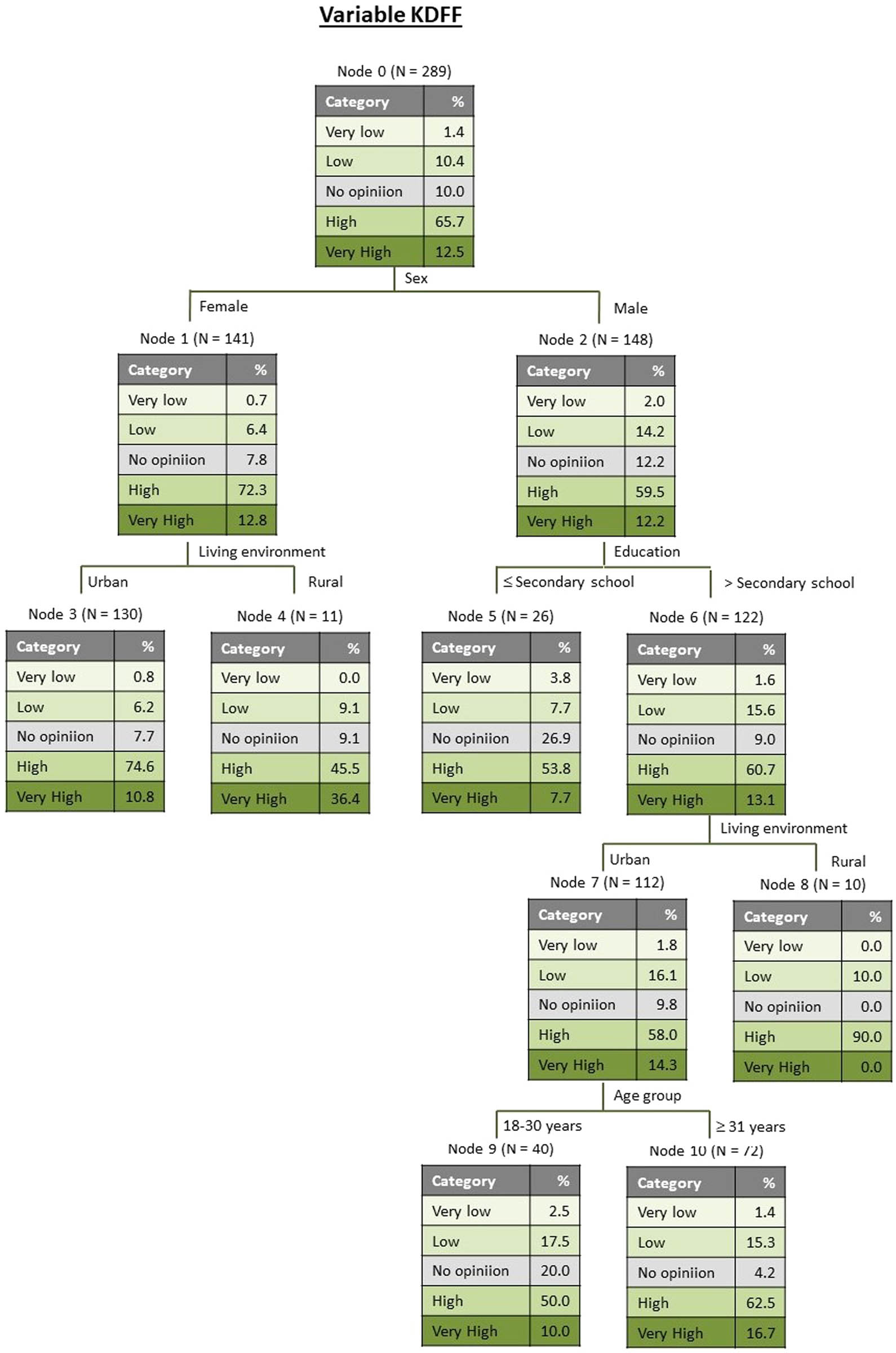
Classification tree for variable KDFF.
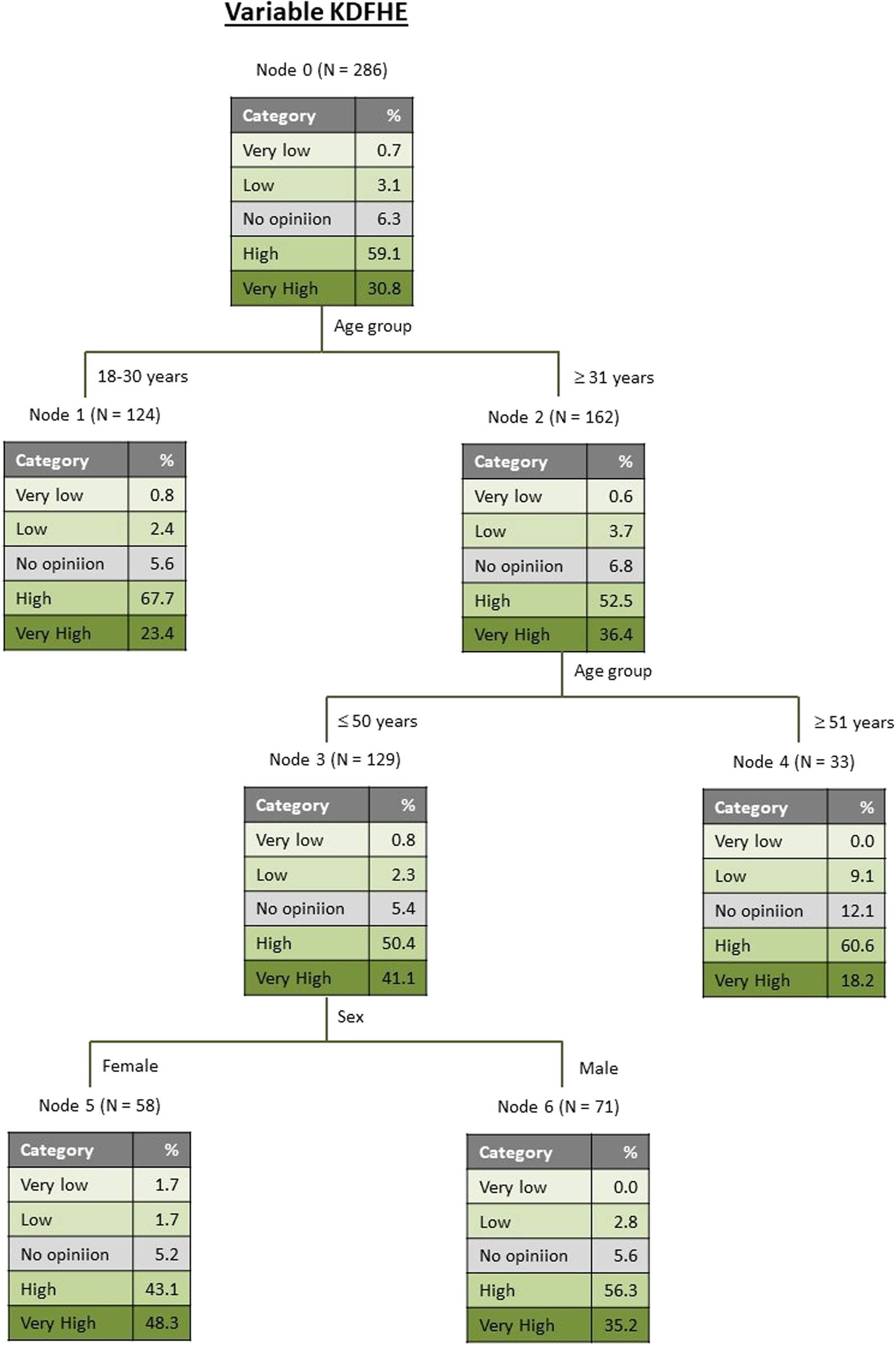
Classification tree for variable KDFHE.
The analysed results in terms of KDFHE variable were presented in Figure 2. This classification tree had an estimated risk of 0.399 with standard error of 0.029 for resubstitution, and for cross-validation, the values were 0.437 and 0.029, respectively, for risk estimate and standard error. The best predictor was age group that differentiated the young adults from the other age groups. For the young adults, the next predictor was gender, while for the other age groups, age differentiation continued in the subsequent level, and the gender was a predictor only for average adults. This variable was not significantly influenced by the living environment. The participants (59.1% of the population) were in the high category of KDFHE variable. This was stickily related with the age factor. Indeed, 70.1% of the young females were in the high category of KDFHE variable when compared with 63.8% of the young males. However, when the age of participants was more than 30 years (>1.0), 60.6% of the participants older than 51 years (>2.0) were in the high category and 48.3% of the females with age group of ≤2 (average adults) were in very high category of KDFHE, while 35.2% of the males were in very high category in terms of KDFHE variable (see Figure 2).
4 Conclusions
This study showed that in the Turkish participants, the consumption of vegetables, fruits and whole grains was way below the recommended levels. This alerts for the need of better nutritional information to stimulate the people to consume healthier foods in the recommended quantities. However, eating habits of Turkish participants verified that they tended to eat out of home few times or have fast food with a low incidence. It could be potentially an indicator of their tendency for eating high-quality meals. The results further showed that Turkish participants tended to pay some attention to food labelling in relation to aspects, like consulting to the label, reading the nutritional information or the amounts of DF, which determine their purchasing choices. However, they were not careful to verify the amount of DF in foods that were marketed as fibre-rich products. The level of knowledge about DF and variety of foods was high in the general population, as well as the level of knowledge about the benefits of an adequate consumption of fibre for health. Finally, the classification analysis revealed that gender was the major discriminant for the KDFFs, while the most important discriminant for the knowledge about the health benefits of DF was age.
The importance of an adequate diet to maintain health is well described in many scientific reports, and DFs are fundamental to a healthy life style. Thus, the findings of this study are essential to promote and implement interventions that effectively contribute to a better knowledge about the important role of DF and therefore to healthier eating habits.
Acknowledgments
This work was funded by National Funds through the FCT – Foundation for Science and Technology, I.P., within the scope of the project Refª UIDB/00681/2020. Furthermore, we would like to thank the CERNAS Research Centre and the Polytechnic Institute of Viseu for their support. This work was prepared in the ambit of the multinational project from CI&DETS Research Centre (IPV – Viseu, Portugal) with reference PROJ/CI&DETS/2014/0001.
Conflict of interest: The authors declare no conflict of interest.
References
[1] Ajila CM, Rao UJSP. Mango peel dietary fibre: composition and associated bound phenolics. J Funct Foods. 2013;5:444–50. 10.1016/j.jff.2012.11.017.Suche in Google Scholar
[2] Azagba S, Sharaf MF. Disparities in the frequency of fruit and vegetable consumption by socio-demographic and lifestyle characteristics in Canada. Nutr J. 2011;10:118. 10.1186/1475-2891-10-118.Suche in Google Scholar
[3] Brennan CS. Dietary fibre, glycaemic response, and diabetes. Mol Nutr Food Res. 2005;49:560–70. 10.1002/mnfr.200500025.Suche in Google Scholar
[4] Charalampopoulos D, Wang R, Pandiella SS, Webb C. Application of cereals and cereal components in functional foods: a review. Int J Food Microbiol Notermans Spec Issue. 2002;79:131–41. 10.1016/S0168-1605(02)00187-3.Suche in Google Scholar
[5] Chourdakis M, Tzellos T, Papazisis G, Toulis K, Kouvelas D. Eating habits, health attitudes and obesity indices among medical students in northern Greece. Appetite. 2010;55:722–5. 10.1016/j.appet.2010.08.013.Suche in Google Scholar PubMed
[6] Conlon MA, Bird AR. The impact of diet and lifestyle on gut microbiota and human health. Nutrients. 2014;7:17–44. 10.3390/nu7010017.Suche in Google Scholar PubMed PubMed Central
[7] Driskell JA, Meckna BR, Scales NE. Differences exist in the eating habits of university men and women at fast-food restaurants. Nutr Res. 2006;26:524–30. 10.1016/j.nutres.2006.09.003.Suche in Google Scholar
[8] Emanuel AS, McCully SN, Gallagher KM, Updegraff JA. Theory of planned behavior explains gender difference in fruit and vegetable consumption. Appetite. 2012;59:693–7. 10.1016/j.appet.2012.08.007.Suche in Google Scholar PubMed PubMed Central
[9] EU. REGULATION (EU) No 1169/2011 of the European Parliament and of the Council of 25 October 2011. Official J Eur Union. 2011;L304:18–63.Suche in Google Scholar
[10] Guiné R, Martinho C, Barroca MJ, Viseu C. Knowledge and attitudes regarding dietary fibres: a consumer survey in Portuguese population. J Basic Appl Res Int. 2014;1:1–12.Suche in Google Scholar
[11] Guiné RPF, Duarte J, Ferreira M, Correia P, Leal M, Rumbak I, et al. Attitudes towards dietary fibre on a multicultural basis: a fibre study framework. Curr Nutr Food Sci. 2016a;12:132–41. 10.2174/157340131202160412171430.Suche in Google Scholar
[12] Guiné RPF, Ferreira M, Correia P, Duarte J, Leal M, Rumbak I, et al. Knowledge about dietary fibre: a fibre study framework. Int J Food Sci Nutr. 2016b;67:707–14. 10.1080/09637486.2016.1191443.Suche in Google Scholar PubMed
[13] Jeżewska-Zychowic M, Królak M. Do consumers' attitudes towardsfood technologies and motives of food choice influence willigness to eat cereal products fortified with fibre? Polish J Food Nutr Sci. 2015;65:281–91. 10.2478/pjfns-2013-0014.Suche in Google Scholar
[14] Nepal VP, Mgbere O, Banerjee D, Arafat RR. Disparities in fruits and vegetables consumption in houston, Texas: implications for health promotion. J Prim Care Community Health. 2011;2:142–7. 10.1177/2150131911399446.Suche in Google Scholar PubMed
[15] Nielsen, Functional Food & Organics. A global ACNielsen online survey on consumer behaviour & attitudes. Australia: ACNielsen Company; 2005.Suche in Google Scholar
[16] Nielsen NV. We are what we eat: healthy eating trends around the world. New York, USA: The Nielsen Company; 2015.Suche in Google Scholar
[17] Redgwell RJ, Fischer M. Dietary fiber as a versatile food component: an industrial perspective. Mol Nutr Food Res. 2005;49:521–35. 10.1002/mnfr.200500028.Suche in Google Scholar PubMed
[18] Rimpeekool W, Seubsman S, Banwell C, Kirk M, Yiengprugsawan V, Sleigh A. Food and nutrition labelling in Thailand: a long march from subsistence producers to international traders. Food Policy. 2015;56:59–66. 10.1016/j.foodpol.2015.07.011.Suche in Google Scholar PubMed PubMed Central
[19] Sacco JE, Sumanac D, Tarasuk V. Front-of-package references to fiber on foods in canadian supermarkets highlight the need for increased nutrition knowledge among consumers. J Nutr Educ Behav. 2013;45:518–24. 10.1016/j.jneb.2013.02.003.Suche in Google Scholar PubMed
[20] Szűcs V, Fazakas Z, Tarcea M, Guiné R. Consumers knowledge about dietary fibre – results of a survey questionnaire in Hungary and Romania. Acta Alimentaria. 2016;45:469–76. 10.1556/066.2016.45.4.2.Suche in Google Scholar
[21] Tungland BC, Meyer D. Nondigestible oligo- and polysaccharides (dietary fiber): their physiology and role in human health and food. Comprehens Rev Food Sci Food Safety. 2002;1:90–109. 10.1111/j.1541-4337.2002.tb00009.x.Suche in Google Scholar PubMed
[22] USDHHS/USDA. Dietary Guidelines for Americans 2010, 7th ed. USA: U.S. Dep. of Health and Human Services & U. S. Dep. Agriculture; 2010.Suche in Google Scholar
[23] USDHHS/USDA. Dietary Guidelines for Americans 2015–2020, 8th ed. USA: US Dep. of Health and Human Services & U. S. Dep. Agriculture; 2015.Suche in Google Scholar
[24] van’t Riet J, Sijtsema SJ, Dagevos H, De Bruijn GJ. The importance of habits in eating behaviour. An overview and recommendations for future research. Appetite. 2011;57:585–96. 10.1016/j.appet.2011.07.010.Suche in Google Scholar PubMed
[25] Verbeke W. Consumer acceptance of functional foods: socio-demographic, cognitive and attitudinal determinants. Food Qual Prefer. 2005;16:45–57. 10.1016/j.foodqual.2004.01.001.Suche in Google Scholar
[26] WHO. Codex Alimentarius: Food Labelling, 5th ed. Rome, Italy: World Health Organization; 2007.Suche in Google Scholar
© 2020 Erkan Yalçın et al., published by De Gruyter
This work is licensed under the Creative Commons Attribution 4.0 International License.
Artikel in diesem Heft
- Regular Articles
- Synergistic and antagonistic effects of soil applied P and Zn fertilizers on the performance, minerals and heavy metal composition of groundnut
- The Analysis of Nutritional Habits of the Third Age Students in Poznań
- Biochar, poultry manure and NPK fertilizer: sole and combine application effects on soil properties and ginger (Zingiber officinale Roscoe) performance in a tropical Alfisol
- Nutritional and functional properties of maize-oyster mushroom (Zea mays-Pleurotus ostreatus) based composite flour and its storage stability
- Rural Folks Perception of Suicide Drivers in rural communities of Delta State, Nigeria: Implications for Societal and Agricultural Security
- Evaluation of Potato (Solanum tuberosum L.) Varieties for Yield and Some Agronomic Traits
- Micropropagation, Callus Induction and Regeneration of Ginger (Zingiber officinale Rosc.)
- The impact of foliar feeding on the yield components of three winter rape morphotypes (Brassica napus L.)
- The effect of soil water content and biochar on rice cultivation in polybag
- Influence of Azospirillum brasilense associated with silicon and nitrogen fertilization on macronutrient contents in corn
- Effect of Christmas Island rock phosphate and rice straw compost application on soil phosphorus availability and maize (Zea mays L.) growth in a tropical acid soil of Kelantan, Malaysia
- The evolution of Romanian agritourism and the role of European Union subsidies in rural areas
- Assessment of crop farmers coping strategies to pastoralism/nomad activities in Nigeria
- Assessing yield stability in African yam bean (Sphenostylis stenocarpa) performance using year effect
- Walnut leaf extract-based green synthesis of selenium nanoparticles via microwave irradiation and their characteristics assessment
- Evaluating the water productivity by Aquacrop model of wheat under irrigation systems and algae
- Micronutrients status of mango (Mangifera indica) orchards in Multan region, Punjab, Pakistan, and relationship with soil properties
- Molecular studies for drought tolerance in some Egyptian wheat genotypes under different irrigation systems
- Biosynthesized silver nanoparticles using Ulva lactuca as a safe synthetic pesticide (in vitro)
- Development of SPE clean-up procedure for acrylamide determination from potato-based products by GC-MS/MS
- Insulative effect of plastic mulch systems and comparison between the effects of different plant types
- Trends and constraints in the production and utilization of cowpea leaves in the arid and semi-arid lands of Kenya
- Microbiome of abandoned agricultural and mature tundra soils in southern Yamal region, Russian Arctic
- Method of biochar application affects growth, yield and nutrient uptake of cowpea
- Identity gaps and negotiations among layers of young farmers: Case study in Indonesia
- Genetically modified crops in India: Experiments with Bt Cotton to explore the road ahead
- Effect of phyto-extracts of neem (Azadirachta indica) and garlic (Allium sativum) on leaf spot disease of groundnut (Arachis hypogaea L.)
- Influence of cellulose fibers on physicochemical properties of biodegradable films based on polysaccharide derivatives
- Do the determinants of food security differ in improved rice variety adoption? Evidence from Sierra Leone
- Assessment of yield components of some cassava (Manihot esculenta Crantz) genotypes using multivariate analysis such as path coefficients
- Microbiome of post-technogenic soils of quarries in the Republic of Bashkortostan (Russia)
- Occurrence of arbuscular mycorrhizal fungi spores in soils of some legumes and their response to varying concentrations of phosphorus application
- Baseline fertility status of a gravelly Alfisol in a derived savannah agro-ecological zone of Nigeria
- Effect of strain, sex and slaughter weight on growth performance, carcass yield and quality of broiler meat
- Palm oil plantation and cultivation: Prosperity and productivity of smallholders
- Seasonal normalized difference vegetation index responses to air temperature and precipitation in Baghdad
- Classification and geovisualization process of soil data using a web-based spatial information system
- Assessment of stakeholders’ contributions to livestock development in Delta State, Nigeria: Rural infrastructure intervention
- Linear and structural changes in rural space – the positive and problematic aspects (case of Latvia)
- Farmers’ responses to organic rice farming in Indonesia: Findings from central Java and south Sulawesi
- Interactive effects of Potato virus Y and Potato leafroll virus infection on potato yields in Uganda
- Adoption of agricultural practices with climate smart agriculture potentials and food security among farm households in northern Nigeria
- Green approach in gold, silver and selenium nanoparticles using coffee bean extract
- Value chain for agritourism products
- Trichoderma asperellum affects Meloidogyne incognita infestation and development in Celosia argentea
- Growth, chlorophyll content and productivity responses of maize to magnesium sulphate application in calcareous soil
- Gene action in low nitrogen tolerance and implication on maize grain yield and associated traits of some tropical maize populations
- Zambian farm blocks: A vehicle for increased private sector investments
- Farm size and its impact on land use: The case of the South African private wildlife industry
- Characterizing macropore structure of agrosoddy-podzolic soil using computed tomography
- Influence of priming on germination, development, and yield of soybean varieties
- Review Articles
- Zinc biofortification as an innovative technology to alleviate the zinc deficiency in human health: a review
- Biological management of allelopathic plant Parthenium sp.
- Microbial antagonists against plant pathogens in Iran: A review
- Communication
- Risk assessment of Ni, Cr, and Si release from alkaline minerals during enhanced weathering
- Phylogenetic relationships among accessions in Citrus and related genera based on the insertion polymorphism of the CIRE1 retrotransposon
- Gamma radiosensitivity study on wheat (Triticum turgidum ssp. durum)
- Special Issue on the 10th Circumpolar Agriculture Conference 2019
- Preface to the Special Issue on the 10th Circumpolar Agriculture Conference 2019
- Rumen bacterial community of young and adult of reindeer (Rangifer tarandus) from Yamalo-Nenets Autonomous District of Russia
- Carcass weight of Greenlandic lambs in relation to grazing area biomass
- Transnational cooperation to develop local barley to beer value chains
- Addition of biochar to acidic boreal podzolic soils enhances micronutrient availability and crop productivity
- Digitalisation in a local food system: Emphasis on Finnish Lapland
- Abandoned agricultural soils from the central part of the Yamal region of Russia: morphology, diversity, and chemical properties
- Fishing as an important source of food in the Arctic and subarctic zones of Yakutia
- Special Issue on the APA 2019 - 11th Triennial Conference
- Yield potential of sandponically produced sweetpotato (Ipomoea batatas (L.) Lam) pre-basic seed for selected genotypes
- Monitoring with social media: Experiences from “integrating” WhatsApp in the M&E system under sweet potato value chain
- Breeding farmer and consumer preferred sweetpotatoes using accelerated breeding scheme and mother–baby trials
- Decentralised sweetpotato (Ipomoea batatas) vine multiplication in Lake Zone, Tanzania: Five years later
- Mineral fertilizer use in land-scarce conditions: Case of Rwanda
- Assessment of the roles and farmer-preferred traits of sweetpotato in a crop-livestock farming system in Rwanda: implications for breeding dual-purpose varieties
- A public–private partnership to speed up potato breeding
- Dietary acrylamide intake by potato crisps consumers: A case of Nairobi County
- Special Issue on ICESAT 2019
- Biochemical activity and bioassay on maize seedling of selected indigenous phosphate-solubilizing bacteria isolated from the acid soil ecosystem
- Identifying best parameters of particleboard bonded with dextrin-based adhesives
- Performance of rice paddy varieties under various organic soil fertility strategies
- Improved strength properties of LVL glued using PVAc adhesives with physical treatment-based Rubberwood (Hevea brasiliensis)
- Evaluation and possible mechanism of beet armyworm (Spodoptera exigua Hubner) resistance to chlorpyrifos and their sensitivity to neem oil insecticides
- Fermented compost and N-fertilizer for enhancing the growth and productivity of purple eggplant on vertisols
- Bioactive peptide effect on brain activity identified by 2D brain mapping
- Shifting of microbial biodiversity and soil health in rhizomicrobiome of natural forest and agricultural soil
- Special Issue on CERNAS 2020
- Evaluation of consumer habits and knowledge about dietary fibre and fibre-rich products in Turkish population
- Evaluation of texture in jelly gums incorporating berries and aromatic plants
- Food choice motivations and perception of a healthy diet in a developing Mediterranean country
- The evolution of the milk sector in Portugal: Implications from the Common Agricultural Policy
- Energetic and exergetic analysis of a convective drier: A case study of potato drying process
- Cluster analysis to the factors related to information about food fibers: A multinational study
- Study of the drying kinetics and calculation of mass transfer properties in hot air drying of Cynara cardunculus
- Short food supply chains – a growing movement. The case study of the Viseu Dão Lafões Region
- Evaluation of phenolic compounds and antioxidant activity in some edible flowers
- Chemical composition and study on liquefaction optimization of chestnut shells
- Is organic agriculture a potential public health indicator? Evidence from literature
Artikel in diesem Heft
- Regular Articles
- Synergistic and antagonistic effects of soil applied P and Zn fertilizers on the performance, minerals and heavy metal composition of groundnut
- The Analysis of Nutritional Habits of the Third Age Students in Poznań
- Biochar, poultry manure and NPK fertilizer: sole and combine application effects on soil properties and ginger (Zingiber officinale Roscoe) performance in a tropical Alfisol
- Nutritional and functional properties of maize-oyster mushroom (Zea mays-Pleurotus ostreatus) based composite flour and its storage stability
- Rural Folks Perception of Suicide Drivers in rural communities of Delta State, Nigeria: Implications for Societal and Agricultural Security
- Evaluation of Potato (Solanum tuberosum L.) Varieties for Yield and Some Agronomic Traits
- Micropropagation, Callus Induction and Regeneration of Ginger (Zingiber officinale Rosc.)
- The impact of foliar feeding on the yield components of three winter rape morphotypes (Brassica napus L.)
- The effect of soil water content and biochar on rice cultivation in polybag
- Influence of Azospirillum brasilense associated with silicon and nitrogen fertilization on macronutrient contents in corn
- Effect of Christmas Island rock phosphate and rice straw compost application on soil phosphorus availability and maize (Zea mays L.) growth in a tropical acid soil of Kelantan, Malaysia
- The evolution of Romanian agritourism and the role of European Union subsidies in rural areas
- Assessment of crop farmers coping strategies to pastoralism/nomad activities in Nigeria
- Assessing yield stability in African yam bean (Sphenostylis stenocarpa) performance using year effect
- Walnut leaf extract-based green synthesis of selenium nanoparticles via microwave irradiation and their characteristics assessment
- Evaluating the water productivity by Aquacrop model of wheat under irrigation systems and algae
- Micronutrients status of mango (Mangifera indica) orchards in Multan region, Punjab, Pakistan, and relationship with soil properties
- Molecular studies for drought tolerance in some Egyptian wheat genotypes under different irrigation systems
- Biosynthesized silver nanoparticles using Ulva lactuca as a safe synthetic pesticide (in vitro)
- Development of SPE clean-up procedure for acrylamide determination from potato-based products by GC-MS/MS
- Insulative effect of plastic mulch systems and comparison between the effects of different plant types
- Trends and constraints in the production and utilization of cowpea leaves in the arid and semi-arid lands of Kenya
- Microbiome of abandoned agricultural and mature tundra soils in southern Yamal region, Russian Arctic
- Method of biochar application affects growth, yield and nutrient uptake of cowpea
- Identity gaps and negotiations among layers of young farmers: Case study in Indonesia
- Genetically modified crops in India: Experiments with Bt Cotton to explore the road ahead
- Effect of phyto-extracts of neem (Azadirachta indica) and garlic (Allium sativum) on leaf spot disease of groundnut (Arachis hypogaea L.)
- Influence of cellulose fibers on physicochemical properties of biodegradable films based on polysaccharide derivatives
- Do the determinants of food security differ in improved rice variety adoption? Evidence from Sierra Leone
- Assessment of yield components of some cassava (Manihot esculenta Crantz) genotypes using multivariate analysis such as path coefficients
- Microbiome of post-technogenic soils of quarries in the Republic of Bashkortostan (Russia)
- Occurrence of arbuscular mycorrhizal fungi spores in soils of some legumes and their response to varying concentrations of phosphorus application
- Baseline fertility status of a gravelly Alfisol in a derived savannah agro-ecological zone of Nigeria
- Effect of strain, sex and slaughter weight on growth performance, carcass yield and quality of broiler meat
- Palm oil plantation and cultivation: Prosperity and productivity of smallholders
- Seasonal normalized difference vegetation index responses to air temperature and precipitation in Baghdad
- Classification and geovisualization process of soil data using a web-based spatial information system
- Assessment of stakeholders’ contributions to livestock development in Delta State, Nigeria: Rural infrastructure intervention
- Linear and structural changes in rural space – the positive and problematic aspects (case of Latvia)
- Farmers’ responses to organic rice farming in Indonesia: Findings from central Java and south Sulawesi
- Interactive effects of Potato virus Y and Potato leafroll virus infection on potato yields in Uganda
- Adoption of agricultural practices with climate smart agriculture potentials and food security among farm households in northern Nigeria
- Green approach in gold, silver and selenium nanoparticles using coffee bean extract
- Value chain for agritourism products
- Trichoderma asperellum affects Meloidogyne incognita infestation and development in Celosia argentea
- Growth, chlorophyll content and productivity responses of maize to magnesium sulphate application in calcareous soil
- Gene action in low nitrogen tolerance and implication on maize grain yield and associated traits of some tropical maize populations
- Zambian farm blocks: A vehicle for increased private sector investments
- Farm size and its impact on land use: The case of the South African private wildlife industry
- Characterizing macropore structure of agrosoddy-podzolic soil using computed tomography
- Influence of priming on germination, development, and yield of soybean varieties
- Review Articles
- Zinc biofortification as an innovative technology to alleviate the zinc deficiency in human health: a review
- Biological management of allelopathic plant Parthenium sp.
- Microbial antagonists against plant pathogens in Iran: A review
- Communication
- Risk assessment of Ni, Cr, and Si release from alkaline minerals during enhanced weathering
- Phylogenetic relationships among accessions in Citrus and related genera based on the insertion polymorphism of the CIRE1 retrotransposon
- Gamma radiosensitivity study on wheat (Triticum turgidum ssp. durum)
- Special Issue on the 10th Circumpolar Agriculture Conference 2019
- Preface to the Special Issue on the 10th Circumpolar Agriculture Conference 2019
- Rumen bacterial community of young and adult of reindeer (Rangifer tarandus) from Yamalo-Nenets Autonomous District of Russia
- Carcass weight of Greenlandic lambs in relation to grazing area biomass
- Transnational cooperation to develop local barley to beer value chains
- Addition of biochar to acidic boreal podzolic soils enhances micronutrient availability and crop productivity
- Digitalisation in a local food system: Emphasis on Finnish Lapland
- Abandoned agricultural soils from the central part of the Yamal region of Russia: morphology, diversity, and chemical properties
- Fishing as an important source of food in the Arctic and subarctic zones of Yakutia
- Special Issue on the APA 2019 - 11th Triennial Conference
- Yield potential of sandponically produced sweetpotato (Ipomoea batatas (L.) Lam) pre-basic seed for selected genotypes
- Monitoring with social media: Experiences from “integrating” WhatsApp in the M&E system under sweet potato value chain
- Breeding farmer and consumer preferred sweetpotatoes using accelerated breeding scheme and mother–baby trials
- Decentralised sweetpotato (Ipomoea batatas) vine multiplication in Lake Zone, Tanzania: Five years later
- Mineral fertilizer use in land-scarce conditions: Case of Rwanda
- Assessment of the roles and farmer-preferred traits of sweetpotato in a crop-livestock farming system in Rwanda: implications for breeding dual-purpose varieties
- A public–private partnership to speed up potato breeding
- Dietary acrylamide intake by potato crisps consumers: A case of Nairobi County
- Special Issue on ICESAT 2019
- Biochemical activity and bioassay on maize seedling of selected indigenous phosphate-solubilizing bacteria isolated from the acid soil ecosystem
- Identifying best parameters of particleboard bonded with dextrin-based adhesives
- Performance of rice paddy varieties under various organic soil fertility strategies
- Improved strength properties of LVL glued using PVAc adhesives with physical treatment-based Rubberwood (Hevea brasiliensis)
- Evaluation and possible mechanism of beet armyworm (Spodoptera exigua Hubner) resistance to chlorpyrifos and their sensitivity to neem oil insecticides
- Fermented compost and N-fertilizer for enhancing the growth and productivity of purple eggplant on vertisols
- Bioactive peptide effect on brain activity identified by 2D brain mapping
- Shifting of microbial biodiversity and soil health in rhizomicrobiome of natural forest and agricultural soil
- Special Issue on CERNAS 2020
- Evaluation of consumer habits and knowledge about dietary fibre and fibre-rich products in Turkish population
- Evaluation of texture in jelly gums incorporating berries and aromatic plants
- Food choice motivations and perception of a healthy diet in a developing Mediterranean country
- The evolution of the milk sector in Portugal: Implications from the Common Agricultural Policy
- Energetic and exergetic analysis of a convective drier: A case study of potato drying process
- Cluster analysis to the factors related to information about food fibers: A multinational study
- Study of the drying kinetics and calculation of mass transfer properties in hot air drying of Cynara cardunculus
- Short food supply chains – a growing movement. The case study of the Viseu Dão Lafões Region
- Evaluation of phenolic compounds and antioxidant activity in some edible flowers
- Chemical composition and study on liquefaction optimization of chestnut shells
- Is organic agriculture a potential public health indicator? Evidence from literature
