Dietary acrylamide intake by potato crisps consumers: A case of Nairobi County
-
George Ooko Abong
 ,
Jackline Akinyi Ogolla
,
Jackline Akinyi Ogolla

Abstract
The levels of acrylamide intake because of potato crisps consumption remains unknown in Kenyan context. This study assessed the exposure to acrylamide because of consumption of potato crisps in Nairobi, Kenya. A cross-sectional survey was carried out among 315 crisps consumers in Nairobi, and consumption patterns were collected using a pre-tested structured 7-day recall questionnaire. A total of 43 branded and 15 unbranded potato crisps samples were purchased in triplicates of 100 g and acrylamide was quantified using a gas chromatograph with a flame ionization detector. Consumption data were combined with the data on acrylamide contents from which dietary acrylamide intake was calculated using a probabilistic approach based on @Risk TopRank 6 risk analysis software for excel. The mean estimated acrylamide intake was 1.57 µg/kg body weight (BW) per day while the 95th (P95) percentile was 5.1 µg/kg BW per day, with margins of exposures (MOE) being 197 and 61, respectively. The intake of acrylamide was significantly (P < 0.05) higher in unbranded crisps with a mean value of 2.26 and 95th percentile of 6.54 µg/kg BW per day, MOE being 137 and 47, respectively. There were extremely lower MOE indicating higher exposure to acrylamide by the consumers mainly because of the higher acrylamide contents in potato crisps, and hence the need for mitigation measures.
1 Introduction
There has been a general trend of increased consumption of fried potato products with potato crisps being one of the most important industrial product consumed by a large proportion of urban dwellers, including Nairobi (Abong’ et al. 2010). The increased consumption is mainly linked to the young generation who find the products convenient with unique appealing sensory properties (Chiou et al. 2012). However, fried potato products have been shown to contain by-products such as acrylamide depending on the level of contamination and consumption (Ogolla et al. 2015). The presence of acrylamide in food products has raised food safety concerns worldwide (Halford et al. 2012).
It is widely agreed that acrylamide is a monomer mainly formed through Maillard reaction involving free asparagine and carbohydrates, the reducing sugars glucose and fructose. Asparagine, the backbone of the acrylamide molecule, is necessary in the reaction, whereas reducing sugars are essential co-reactants especially in the formation of the N-glycoside intermediates (Allmadge et al. 2003; Muttucumaru et al. 2017). However, the extent of acrylamide formation is influenced by temperature; formation usually increases above 120°C depending on the food matrix (Yang et al. 2016). Together with French fries, potato crisps have been shown to have relatively high acrylamide contents in a number of recorded research reports (EFSA 2011; Sirot et al. 2012). The high acrylamide contents in these products have been attributed to the high amounts of free asparagine in potatoes compared to other foods that undergo similar processing conditions. The levels are influenced by a number of factors including genetic variation, post-harvest handling, and storage conditions as well processing parameters (Krishnakumar and Visvanathan 2014; Wiberley-Bradford et al. 2014; Mu et al. 2016; Yang et al. 2016). Cereal products such as bread, breakfast cereals, biscuits cakes, and coffee have also been implicated as major sources of acrylamide. Variation in acrylamide contents can be quite high in different foods. For instance, in Europe where monitoring was undertaken for 3 years, the mean contents of acrylamide were found to range from as low as 37 µg/kg for soft drinks and as high as 1,504 µg/kg for substitute coffee, whereas the highest 95th percentile and maximum levels were recorded in substitute coffee at 3,976 and potato crisps at 4,804 μg/kg (EFSA 2011).
Because of the adverse effects indicated in animal studies, acrylamide has been classified as a probable human carcinogen and a neurotoxicant; more recently being placed in the list of carcinogens and those that affect reproductive health (EPA-USA 2019). Carcinogenic, reproductive, and genotoxic effects of acrylamide have been shown to be mediated partly by epoxide glycidamide that is its main toxic metabolite in animals studies (Doerge et al. 2005; Annola et al. 2008). Animal studies have indicated increased incidences of tumor in different glands such as pituitary, adrenal, and mammary glands after exposure to acrylamide (Friedman et al. 1995). Human studies have indicated mixed results; some indicating positive associations of cancer with acrylamide exposure (Bongers et al. 2012) whereas it lacks in others (Pelucchi et al. 2011; Lipworth et al. 2012).
Although the daily dietary acrylamide intakes may vary with age and rate of consumption, the estimation by World Health Organization in the world is in the range of 0.3–2.0 µg/kg body weight (BW) for the total population. The intake may reach 5.1 µg/kg BW when the 99 percentile is taken into account (JECFA 2010). In a Polish study, exposure of infants (6–12 months) was found to be higher than the general population being estimated at the minimum to range from 0.41 to 0.62 μg/kg BW per day, on the average level it ranged from 2.10 to 4.32 μg/kg BW per day, whereas for the worst case scenario the exposure ranged from 7.47 to 12.35 μg/kg BW per day (Mojska et al. 2012). In Europe the mean acrylamide exposure has been estimated to range between 0.31 and 1.1 μg/kg BW per day for adults over 18 years, and between 0.43 and 1.4 μg/kg BW per day for adolescents (11–17 years). Major contributors to exposure for adults were fried potatoes, coffee, and soft bread, whereas for adolescents and children they were French fries, soft bread, potato crisps, and biscuits (JECFA 2010).
Although there is an increasing trend toward consumption of crisps in Kenya (Abong’ et al. 2010), it is not clear as to what extent the consumers are exposed to acrylamide. There are differences in potato varieties as well as processing parameters for crisps. Even though studies have been carried out in developed countries, there is limited information on acrylamide intake assessment in Kenya and hence the need for this study. Because acrylamide has been proven to be a probable human carcinogenic, possible risk may not to be wished off. The purpose of the current study was to assess the level of intake of acrylamide because of consumption of potato crisps in Nairobi, Kenya.
2 Assessment of exposure to acrylamide and risk characterization
2.1 Materials and methods
2.1.1 Potato crisps consumption data acquisition
Because of limited information on potato crisps consumption in Kenya, consumption data were collected from retail outlets in Nairobi, Kenya, based on potato crisps consumers. Nairobi is the capital city of Kenya and it was purposively selected because of the large number of supermarkets, the greatest presence of crisps processing companies, and retail outlets. This study involved a cross-sectional survey applying quantitative data collection methods. Sampling was carried out as described by previous study (Abong’ et al. 2010). A total of 315 consumers including 189 females and 126 males were interviewed from randomly selected retail outlets. Data were collected using a structured 7-day recall questionnaire that had previously been pre-tested with 10 consumers. Data were collected on gender of consumer, frequency and amount of consumption, the preferred brand, estimated individual consumer weight and height, and preferred flavor. The daily consumption was calculated by dividing the weekly intake (kilogram per person) by a factor of 7, and by the estimated BW of an individual or an average weight of 60 kg where the weight was not available (JECFA 2010).
2.1.2 Determination of acrylamide contamination of potato crisps
2.1.2.1 Sampling of potato crisps for analysis
Potato crisps for acrylamide analysis were sampled from different retail outlets and street processors in Nairobi, Kenya. A total of 43 brands sold in different retail outlets were purchased in triplicates of 100 g each, whereas 15 unbranded samples were bought from five different street processors. The main flavors of crisps in the market included onion, tomatoes, chilly, garlic, lemon, and cheese. Utmost care was taken to ensure that no similar brands were purchased from the same retail outlet.
2.1.2.2 Determination of acrylamide in potato crisps
Acrylamide content of potato crisps was determined using gas chromatography (Shimadzu GC 14B, Japan) and Flame Ionization Detector (Shimadzu G-14B, Japan) as described by our earlier study (Ogolla et al. 2015).
2.1.2.3 Assessment of acrylamide intake using a probabilistic approach
Using @Risk TopRank 6 risk analysis software for excel (Palisade, UK), data for acrylamide contents and consumption were fitted to obtain the best distributions. All the formulae for distributions and outputs are presented in Table 1. Independent consumption data were combined with acrylamide contents results and intake calculated. The average exposure and 95 percentile (P95) were obtained and compared with BMDL10 to obtain margin of exposure (MOE) for risk characterization. Because of insufficient epidemiological data on carcinogenic effect, a dose–response relationship has been set depending on animal data with JECFA proposing lower limit on the benchmark dose for a 10% response (BMDL10) for acrylamide to be 0.31 mg/kg BW per day in case of induction of mammary tumors in rats and 0.18 mg/kg BW per day for Harderian gland tumors in mice (JECFA 2010). To cater for variability and uncertainty, Monte Carlo simulation of exposure was performed using @Risk risk analysis software that combined randomly the consumption and acrylamide contamination distributions. One million iterations were performed to describe the variability.
Formulae used in quantitative risk assessment model for acrylamide in potato crisps
| A | B | C | |
|---|---|---|---|
| Unit | Distribution | Formula | |
| 1 | Acrylamide, non-branded crisps (µg/kg) | Input (contents) | RiskExtvalueMin (8539.94, 1247.34) |
| 2 | Acrylamide, overall sample content (µg/kg) | Input (contents) | RiskTriang (0.0, 16287) |
| 3 | Acrylamide, branded crisps (µg/kg) | Input (contents) | RiskExpon (4261.5, 48.98) |
| 4 | Consumption (kg/kg BW per day) | Input (extent) | RiskPearson5 (1.899, 0.0) |
| 5 | Acrylamide intake (µg/kg BW per day), non-branded crisps | Output | RiskOutput () + B4*B1 |
| 6 | Acrylamide intake (µg/kg BW per day), overall | Output | RiskOutput () + B4*B2 |
| 7 | Acrylamide intake (µg/kg BW per day), branded crisps | Output | RiskOutput () + B4*B3 |
| 8 | MOE | Output | BMDL10/Intake |
3 Results and discussion
3.1 Potato crisps consumption survey
Most of the people who consumed potato crisps in Nairobi among the study cohort were mainly women (60%) compared to men (40%). This indicates the fact that women prefer sweet fast foods compared to men who prefer foods that are filling, the preference being genetically determined (Keskitalo et al. 2007). The educational levels of the respondents varied with 37.9% being in tertiary institutions, 37.8% being graduates of secondary ordinary level, whereas 18.9% had secondary advanced level of education. Figure 1 indicates the education levels of the respondents who purchased and consumed potato crisps in Nairobi.
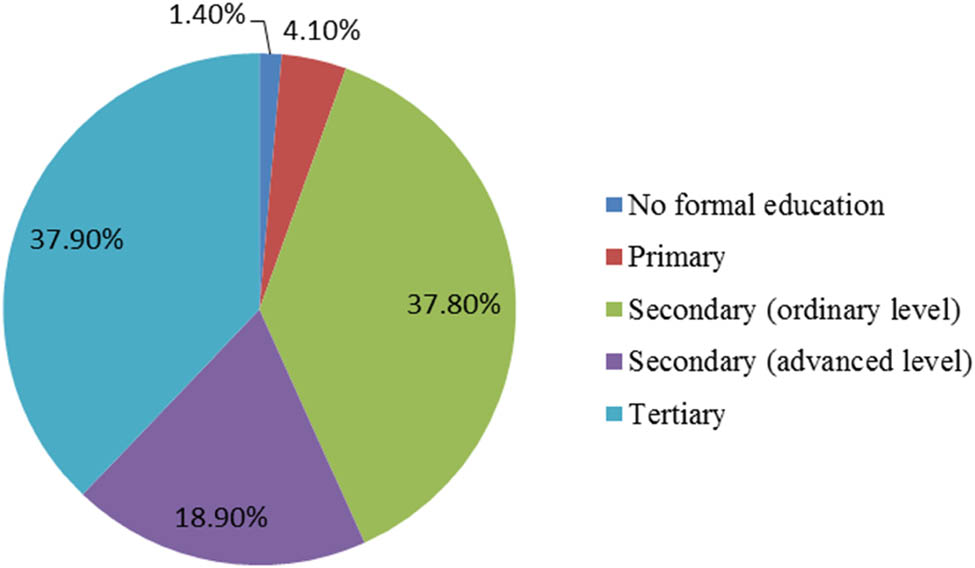
Education levels of potato crisps consumers in Nairobi, Kenya.
About 51.9% of those interviewed were students, whereas 32.9% were employed and receiving a monthly salary. Only 5.1% were not employed, whereas those who were self-employed and casual laborers were 2.5%. Nairobi city has many colleges and schools and this explains why most respondents were students. Crisps can be consumed as a snack of choice between meals or some people consume crisps as a meal on its own, the choice depending on a number of factors including education and knowledge.
The age of the respondents ranged from 5 to 51 years with a majority (38%) being in the age bracket of 20–24 years, followed by 25–29 years (22.7%). About 89% of those interviewed were youths between the ages of 17 and 35 years (Figure 2). This is an indication that the highest number of consumers of potato crisps are young people in agreement with the previous findings in Kenya (Abong’ et al. 2010). This may result in a higher intake of acrylamide among the younger generation.
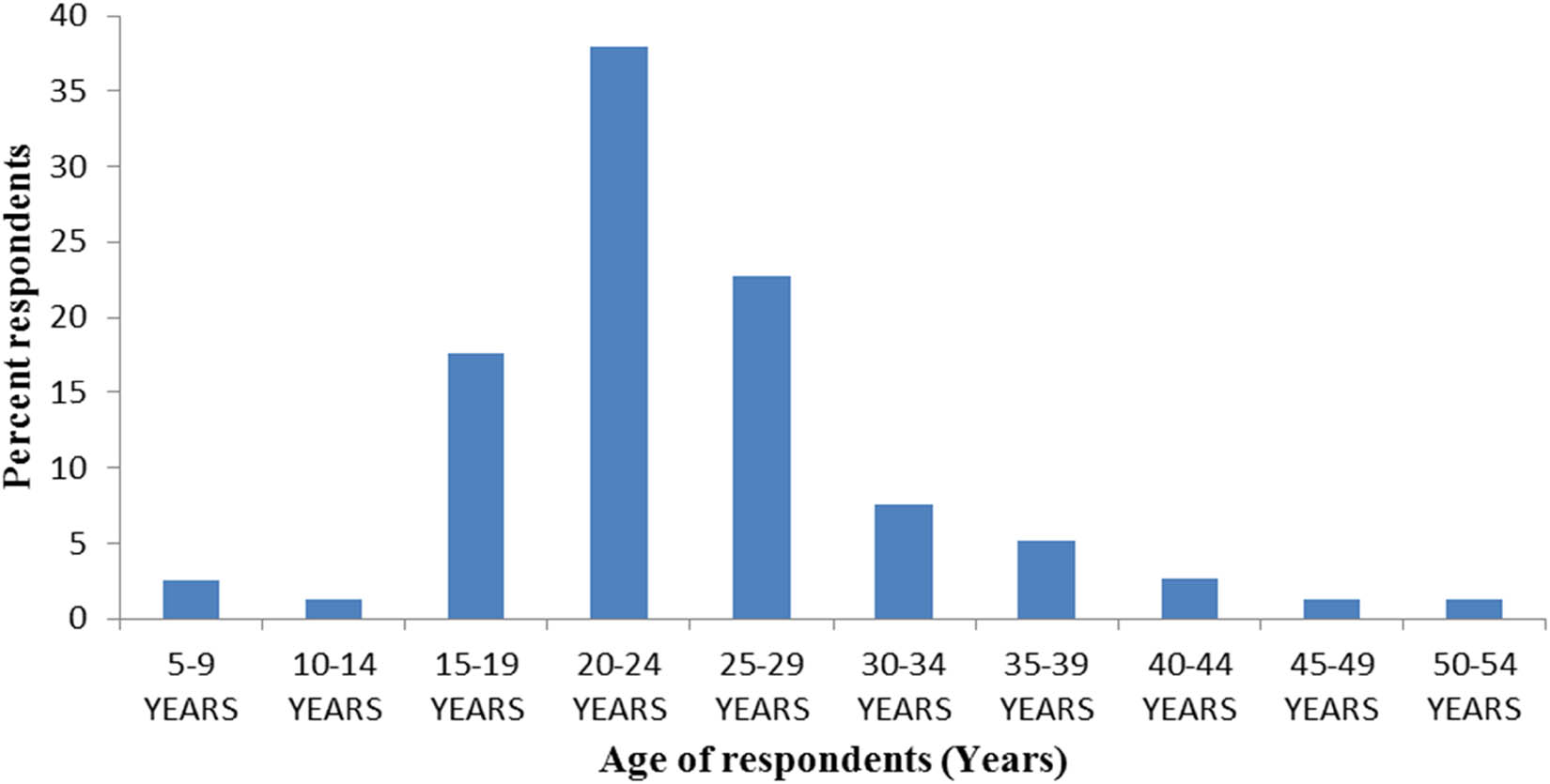
Age of respondents of crisps consumers in Nairobi.
The most frequently purchased unit package was 100 g (40.5%), followed by 50 g (25.2%), 30 g (12.7%), and 200 g (11.4%). The least purchased package unit was 70 g (3.8%). Approximately 92.1% of the respondents interviewed purchased their potato crisps from supermarkets with only 7.9% purchasing the crisps from kiosks. Reasons given for preference of place of purchase included high quality (72%), proximity (12%), affordability (9.3%), and desire for more quantity (6.7%).
Figure 3 indicates the frequency of consumption of potato crisps expressed as percentages. Most (25%) respondents consumed potato crisps twice a week followed by once per week (23.7%) and once daily (22.4%), whereas the twice a month was the least (5.3%) frequency. Therefore, it shows that a substantial number of the consumers eat crisps daily and up to 75% eat the products in a week. To these consumers, crisps is an important snack whose quality and safety require to be assured.
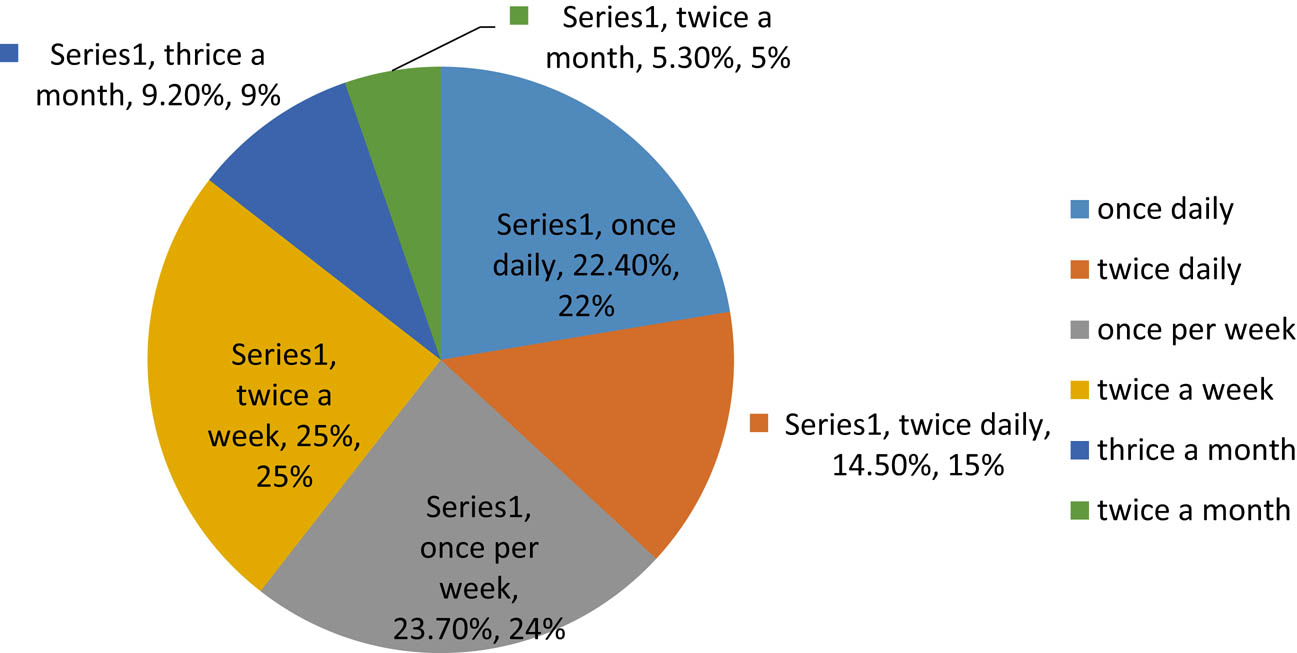
Frequency of potato crisps consumption by respondents.
Figure 4 shows the preference in consumption based on flavor of the potato crisps, onion and chilly or plain salted being preferred. The current findings closely agree with a previous study in Nairobi (Abong’ et al. 2010) indicating that consumer preference has remained generally the same for about 3 years. Reasons given for the choice of specific flavors consumed included irresistibility, taste, delicious nature, quality of the product, and the crunchy nature of the potato crisps. The brands that were preferred by the respondents were Amigos (27.8%), Tropical Heat (21.5%), Deepys (8.9%), Chigs (2.5%), Eskay (1.3%), Urban Bites (1.3%), Hoops (1.3%), Yankee Doodles (1.3%), Wow (1.3%), Krackles (1.3%), Kripsii (8.9%), Happys Golden (1.3%), Pringles (1.3%), and Potato crisps (6.3%).
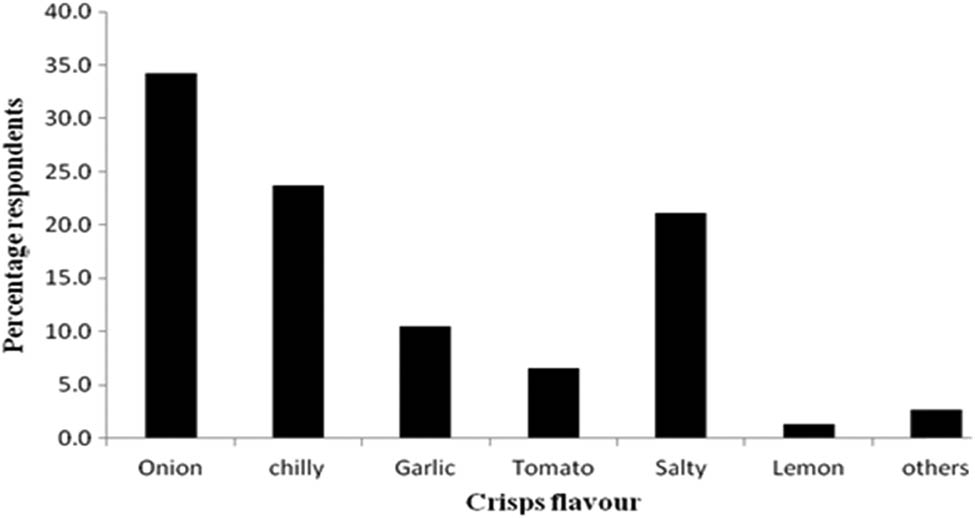
Percentage consumption based on the flavor of potato crisps.
About 81% of the respondents interviewed had no complaints about the crisps they consumed. The majority complaining stated the following reasons: the quantity packaged being quite less compared to the price charged; some crisps in the packages being broken down into tiny pieces; and high fat and salt content. Despite these complaints, 59.5% noted that their consumption rate was increasing because of the sweet taste, increased income, and the availability of the potato crisps. Some respondents (27.9%) indicated that their consumption was decreasing because of increased cost of living, high fat and salt content because of related health complications, and the high pricing of the potato crisps.
3.2 Acrylamide intake and risk characterization
3.2.1 Acrylamide content, consumption, and intake
Table 2 presents the summary results of distribution fit for acrylamide contents and consumption as well as simulations for acrylamide intake in potato crisps, both consumption and contents being defined with continuous distributions. Acrylamide content in potato crisps was defined with an extreme value minimum distribution with a mean of 7819.96 µg/kg for non-branded crisps from street processors, whereas an exponential distribution characterized acrylamide contents of branded crisps mainly from supermarkets with a mean of 4212.53 µg/kg. Overall acrylamide content was defined with a triangular distribution with a mean of 5,429 µg/kg. On the contrary, consumption data followed Pearson’s distribution with a mean value of 3.0 × 10⁻⁴ kg/kg BW per day. Significantly higher content values were found in unbranded crisps samples compared to branded samples from retail outlets.
Results of distribution fitting and simulations of acrylamide intake in potato crisps
| Unit | Output (mean) | Min–max |
|---|---|---|
| Acrylamide, non-branded crisps (µg/kg) | 7,819 | −8,814 to 11,834 |
| Acrylamide, overall content (µg/kg) | 5,429 | 0.001–16,273 |
| Acrylamide, branded crisps (µg/kg) | 4,212 | −48 to 72,667 |
| Consumption (kg/kg BW per day) | 3.0 × 10⁻⁴ | 0.00–0.348 |
| Acrylamide intake (µg/kg BW per day), non-branded crisps | 2.25 | −8.22 to 2059.49 |
| Acrylamide intake (µg/kg BW per day), overall consumption | 1.57 | 0.00–1744.13 |
| Acrylamide intake (µg/kg BW per day), branded crisps | 1.22 | −0.67 to 4198.21 |
Acrylamide contents in the current study appear to be higher compared to the values reported by other researchers in Italy (27–1,400 µg/kg) by Tateo et al. (2010), Sweden (30–2,300 µg/kg) by Tareke et al. (2002), Iran (244–1,688 µg/kg) by Taher et al. (2010), France (954µg/kg) by Sirot et al. (2012), and Chile (40–1,770 µg/kg) by Pedreschi et al. (2010). Variation in acrylamide in potato crisps is influenced by a number of factors ranging from agronomic practices, storage conditions to processing parameters (Meulenaer et al. 2008). Potato variety plays a major role in determining the levels of reducing sugars and has been shown to have a direct relationship with acrylamide (Williams 2005; Abong et al. 2009; Claeys et al. 2010). Post-harvest handling and storage conditions have profound effect on the contents of reducing sugars. Storage at temperatures below 8°C generally leads to accumulation of reducing sugars which requires tubers to be reconditioned before frying to achieve low acrylamide contamination and desired color. However, this is cultivar dependent as indicated by other studies (Abong et al. 2009; Abong et al. 2015; Muttucumaru et al. 2017).
Pre-frying activities such as soaking in water, blanching, and coating have been shown to reduce acrylamide formation in crisps because of leaching with subsequent reduction of the Maillard reaction necessary for acrylamide formation (Liu and Scanlon 2007; Wiberley-Bradford et al. 2014). On the contrary, frying at elevated temperature for long duration is a major facilitator to acrylamide contamination (Cummins et al. 2008; Yang et al. 2016). The size of the product may also influence acrylamide contents that tend to be higher in thin slices or sticks (Taylor et al. 2009). Acrylamide contamination seems generally high in Nairobi potato crisps, a scenario that may be attributed to many factors. The use of any available potato tuber by processors especially from the streets and use of immature tubers may be significant contributors (Matthaus et al. 2004; Abong et al. 2010). Uncontrolled frying temperature, which is a common scenario in Kenya, is no doubt another contributor to higher acrylamide contamination. Branded crisps sold in the retail outlets come from small-medium to large enterprises some of which have raw material and processing control while the majority lacks the control measures.
All consumers in the current study were exposed to acrylamide, the amount increasing with consumption. The mean acrylamide intake for overall crisps content was found to be 1.57 µg/kg BW per day, whereas the 95th (P95) percentile was 5.1 µg/kg BW per day (Table 3).
Estimated MOE for the mean and 95th percentile of dietary exposure to acrylamide of crisps consumers in Nairobi, Kenya
| Overall crisps | Branded crisps | Non-branded crisps | ||||
|---|---|---|---|---|---|---|
| Mean | P95 | Mean | P95 | Mean | P95 | |
| Dietary exposure (µg/kg BW per day) | 1.57 | 5.10 | 1.22 | 4.24 | 2.26 | 6.54 |
| MOE (BMDL10 = 180 µg/kg BW per day)a | 115 | 35 | 148 | 42 | 80 | 28 |
| MOE (BMDL10 = 310 µg/kg BW per day)a | 197 | 61 | 254 | 73 | 137 | 47 |
- a
BMDL10 defined for carcinogenic and toxigenic effects (JECFA 2010).
The acrylamide intake was higher in non-branded crisps with a mean value of 2.26 µg/kg BW per day and 95th percentile of 6.54 µg/kg BW per day. The intake is dependent on acrylamide content and consumption amounts (Arribas-lorenzo and Morales 2011). High acrylamide contents of potato crisps are a major contributor to the current high exposure to acrylamide by crisps consumers in Nairobi, Kenya. Together with roasted coffee, biscuits, and French fries, potato crisps have been identified at the international level to be a major contributor to acrylamide exposure (JECFA 2010; EFSA 2011; Sirot et al. 2012). The mean exposure in the current study was high when compared to 0.40 and 0.43 µg/kg, respectively, reported by Mestdagh et al. (2007) and Sirot et al. (2012) which considered total diet studies in Belgian and French populations. However, the current exposure levels are quite high when compared to other research findings when only potato crisps is taken into account compared to the findings of Sirot et al. (2012) who found an exposure of 0.01 in France, Bongers et al. (2012) who found an exposure of 0.047 in the Netherlands, and other researchers (Arribas-lorenzo and Morales 2011) who found exposure from crisps in Spain to be 0.045.
3.2.2 Risk characterization
As an unavoidable food component that may be carcinogenic and genotoxic for humans, the MOE approach has been proposed and adopted as a useful concept giving an indication of the possible extent of a given risk to acrylamide (EFSA 2005; JECFA 2005). The MOE compares the lower limit on the benchmark dose for a 10% response (BMDL10) for a selected tumor from animal studies and the exposure (intake) of a population group. Therefore, it follows that the higher the MOE, the lower the relative risk of a given substance and vice versa. The calculated MOEs for the mean were 115 and 197, respectively, for both BMDL10 of 0.18 and 0.31 mg/kg BW per day, whereas for 95th percentile they were 35 and 61, respectively. The MOE for the 95th percentile for non-branded potato crisps was extremely low (28). Because FAO/WHO (JECFA 2010) considers MOEs of 45–310 for acrylamide to raise a public health concern, the mean and 95th percentile values determined in this study can raise concern for crisps in Kenya. On the same note, if the conclusions of EFSA/WHO (JECFA 2005) which places any MOE lower than 10,000 to be of public health concern, then the level of exposure in this study raises in general concern that requires redress. This indicates that an emphasis on efforts to reduce acrylamide contents in Kenyan potato crisps should continue.
4 Conclusion and recommendations
The high exposure to acrylamide by potato crisps consumers in Kenya is because of high acrylamide contents, street processed consumers being more at risk. Concerted efforts to reduce the high exposure are warranted. The national Bureau of Standards as well as ministry of Health (food safety division) need to take the lead of not only formulating guidelines to reduce acrylamide in crisps but also creating awareness and training actors along the value chain. The current study only focused on potato crisps consumers and did not consider acrylamide contribution from total diet and seasonal variation. It also did not include children who may be more exposed.
Acknowledgments
The current study was accomplished by funding from Dean’s Committee grant from the University of Nairobi, Kenya. Exposure assessment was made possible through training the corresponding author received from University Ghent, Belgium sponsored by VLIR-OUS organization. The manuscript was proof read and received valuable input from Prof. David Lineback.
Consent for publication: There is no reservation received from any of the authors and they give their consent to publish this manuscript.
Conflict of interest: The authors declare that there is no conflict of interest.
References
[1] Abong GO, Okoth MW, Karuri EG, Kabira JN, Mathooko FM. Levels of reducing sugars in eight Kenyan potato cultivars as influenced by stage of maturity and storage conditions. J Anim Plant Sci. 2009;2(2):76–84.Suche in Google Scholar
[2] Abong GO, Okoth MW, Imungi JK, Kabira JN. Characteristics of the industry, constraints in processing, and marketing of potato crisps in Kenya. J Anim Plant Sci. 2010;8(1):936–43.10.5251/abjna.2010.1.5.886.893Suche in Google Scholar
[3] Abong GO, Okoth MW, Kabira JN, Ogolla J, Ouma J, Ngunju CW, et al. Physico-chemical changes in popular Kenyan processing potato varieties as influenced by storage condition. Curr Res Nutr Food Sci [Internet]. 2015;3(2):112–20.10.12944/CRNFSJ.3.2.03Suche in Google Scholar
[4] Abong’ GO, Okoth MW, Imungi JK, Kabira JN. Consumption patterns, diversity and characteristics of potato crisps in Nairobi, Kenya. J Appl Biosci [Internet]. 2010;32:1942–55. Available from: www.biosciences.elewa.org.Suche in Google Scholar
[5] Allmadge D, Berhart B, Wald D, Ruber D, Orsch T, Trothers M, et al. Acrylamide formation mechanism in heated foods. J Agric Food Chem. 2003;51:4782–7.10.1021/jf034180iSuche in Google Scholar PubMed
[6] Annola K, Karttunen V, Keski-rahkonen P, Myllynen P, Segerbäck D, Heinonen S, et al. Transplacental transfer of acrylamide and glycidamide are comparable to that of antipyrine in perfused human placenta. Toxicol Lett. 2008;182:50–6.10.1016/j.toxlet.2008.08.006Suche in Google Scholar PubMed
[7] Arribas-lorenzo G, Morales FJ. Spanish population To cite this version: r P Fo r R w On ly. Food Addit Contam Part A. 2011;26:289–97.10.1080/02652030802477954Suche in Google Scholar PubMed
[8] Bongers ML, Hogervorst JGF, Schouten LJ, Goldbohm RA, Schouten HC, Van Den Brandt PA. Dietary acrylamide intake and the risk of lymphatic malignancies: the Netherlands cohort study on diet and cancer. PLoS One. 2012;7(6):e38016.10.1371/journal.pone.0038016Suche in Google Scholar PubMed PubMed Central
[9] Chiou A, Kalogeropoulos N, Boskou G, Salta FN. Migration of health promoting microconstituents from frying vegetable oils to French fries. Food Chem [Internet]. 2012;133(4):1255–63. Available from: 10.1016/j.foodchem.2011.08.068.Suche in Google Scholar
[10] Claeys W, Baert K, Mestdagh F, Vercammen J, Daenens P, Meulenaer B, et al. Assessment of the acrylamide intake of the Belgian population and the effect of mitigation strategies. Food Addit Contam. 2010;27(9):1199–207.10.1080/19440049.2010.489577Suche in Google Scholar PubMed
[11] Cummins E, Butler F, Gormley R, Brunton N. A methodology for evaluating the formation and human exposure to acrylamide through fried potato crisps. LWT. 2008;41:854–67.10.1016/j.lwt.2007.05.022Suche in Google Scholar
[12] Doerge DR, Mcdaniel LP, Churchwell MI, Twaddle NC, Beland FA. DNA adducts derived from administration of acrylamide and glycidamide to mice and rats. Mutat Res. 2005;580:131–41.10.1016/j.mrgentox.2004.10.013Suche in Google Scholar PubMed
[13] EFSA. Opinion of the Scientific Committee on a request from EFSA related to a harmonised approach for risk assessment of substances which are both genotoxic and carcinogenic (Request No EFSA-Q-2004-020). EFSA J. 2005;282:1–31.10.2903/j.efsa.2005.282Suche in Google Scholar
[14] EFSA. Results on arylamide levels in food from monitoring years 2007–2009. EFSA J. 2011;9(4):1–48.10.2903/j.efsa.2011.2133Suche in Google Scholar
[15] EPA-USA. Chemicals known to the state to cause cancer or reproductive toxicity. State California: Environmental Protection Agency; 2019. p. 1–22.Suche in Google Scholar
[16] Friedman M, Dulaki L, Stedham M. A lifetime oncogenicity study in rats with acrylamide. Fundam Appl Toxicol. 1995;27:95–105.10.1006/faat.1995.1112Suche in Google Scholar PubMed PubMed Central
[17] Halford NG, Curtis TY, Muttucumaru N, Postles J, Elmore JS, Mottram DS. The acrylamide problem: a plant and agronomic science issue. J Exp Bot. 2012;63(8):2841–51.10.1093/jxb/ers011Suche in Google Scholar PubMed
[18] JECFA. Joint FAO/WHO expert Committee on Food Additives. Sixty-fourth Meeting. FAO; 2005. p. 1–47.Suche in Google Scholar
[19] JECFA. Joint FAO/WHO expert committee on food additives. Sixty-fourth meeting. FAO; 2010. p. 1–16.Suche in Google Scholar
[20] Keskitalo K, Knaapila A, Kallela M, Palotie A, Wessman M, Sammalisto S, et al. Sweet taste preferences are partly genetically determined: identification of a trait locus on chromosome 16. Am J Clin Nutr. 2007;86:55–63.10.1093/ajcn/86.1.55Suche in Google Scholar PubMed
[21] Krishnakumar T, Visvanathan R. Acrylamide in food products: a review. Food Process Technol. 2014;5(7):344.10.4172/2157-7110.1000344Suche in Google Scholar
[22] Lipworth L, Sonderman JS, Tarone RE, Mclaughlin JK. Review of epidemiologic studies of dietary acrylamide intake and the risk of cancer. Eur J Cancer Prev. 2012;21:375–86.10.1097/CEJ.0b013e3283529b64Suche in Google Scholar PubMed
[23] Liu EZ, Scanlon MG. Modeling the effect of blanching conditions on the texture of potato strips. J Food Eng. 2007;81:292–7.10.1016/j.jfoodeng.2006.08.002Suche in Google Scholar
[24] Matthaus B, Haase NU, Vosmann K. Factors affecting the concentration of acrylamide during deep-fat frying of potatoes. Eur J Lipid Sci. 2004;106:793–801.10.1002/ejlt.200400992Suche in Google Scholar
[25] Mestdagh F, Lachat C, Baert K, Moons E. Importance of a canteen lunch on the dietary intake of acrylamide. Mol Nutr. 2007;51:509–16.10.1002/mnfr.200600253Suche in Google Scholar PubMed
[26] Meulenaer B, Wilde T, Govaert Y, Ooghe W, Degroodt J, Verh R, et al. Comparison of potato varieties between seasons and their potential for acrylamide formation. J Sci Food Agric. 2008;318(July 2007):313–8.10.1002/jsfa.3091Suche in Google Scholar
[27] Mojska H, Gielecinska I, Stos K. Determination of acrylamide level in commercial baby foods and an assessment of infant dietary exposure. Food Chem Toxicol. 2012;50:2722–8.10.1016/j.fct.2012.05.023Suche in Google Scholar PubMed
[28] Mu TH, Li PG, Sun HN. Bakery products and snacks based on sweet potato. In: Tropical roots and tubers: production, processing and technology; 2016.10.1002/9781118992739.ch11bSuche in Google Scholar
[29] Muttucumaru N, Powers SJ, Elmore JS, Dodson A, Briddon A, Mottram DS, et al. Acrylamide-forming potential of potatoes grown at different locations, and the ratio of free asparagine to reducing sugars at which free asparagine becomes a limiting factor for acrylamide formation. Food Chem [Internet]. 2017;220:76–86. Available from: 10.1016/j.foodchem.2016.09.199.Suche in Google Scholar PubMed PubMed Central
[30] Pedreschi F, Granby K, Risum J. Acrylamide mitigation in potato chips by using NaCl acrylamide mitigation in potato chips by using NaCl. Food Bioprocess Technol. 2010;3:917–21.10.1007/s11947-010-0349-xSuche in Google Scholar
[31] Pelucchi C, La Vecchia C, Bosetti C, Boyle P, Boffetta P. Exposure to acrylamide and human cancer – a review and meta-analysis of epidemiologic studies. Ann Oncol. 2011;22:1487–99.10.1093/annonc/mdq610Suche in Google Scholar PubMed
[32] Ogolla JA, Abong GO, Okoth MW, Kabira JN, Imungi JK, Karanja PN. Levels of acrylamide in commercial potato crisps sold in Nairobi County, Kenya. J Food Nutr Res [Internet]. 2015;3(8):495–501. Available from: http://pubs.sciepub.com/jfnr/3/8/4.Suche in Google Scholar
[33] Sirot V, Hommet F, Tard A, Leblanc J. Dietary acrylamide exposure of the French population: results of the second French total diet study. Food Chem Toxicol. 2012;50:889–94.10.1016/j.fct.2011.12.033Suche in Google Scholar PubMed
[34] Taher M, Nikkhah E, Kazemi A, Oskooei M, Raters M. Determination of acrylamide level in popular Iranian brands of potato and corn products. Food Chem Toxicol [Internet]. 2010;48(10):2581–4. Available from: 10.1016/j.fct.2010.06.011.Suche in Google Scholar PubMed
[35] Tareke E, Rydberg P, Karlsson P, Eriksson S, Tornqvist M. Analysis of acrylamide, a carcinogen formed in heated foodstuffs. J Agric Food Chem. 2002;50:4998–5006.10.1021/jf020302fSuche in Google Scholar PubMed
[36] Tateo F, Bononi M, Gallone F. Acrylamide content in potato chips on the Italian market determined by liquid chromatography tandem mass spectrometry. Int J Food Sci Techno. 2010;45:629–34.10.1111/j.1365-2621.2009.02176.xSuche in Google Scholar
[37] Taylor P, Biedermann M, Grundböck F, Fiselier K, Biedermann S, Bürgi C, et al. Food additives & contaminants: part a acrylamide monitoring in Switzerland, 2007–2009: results and conclusions. Food Addit Contam Part A. 2009;27(10):37–41.10.1080/19440049.2010.501037Suche in Google Scholar
[38] Wiberley-Bradford AE, Busse JS, Jiang J, Bethke PC. Sugar metabolism, chip color, invertase activity, and gene expression during long-term cold storage of potato (Solanum tuberosum) tubers from wild-type and vacuolar invertase silencing lines of Katahdin. BMC Res Notes. 2014;7:801.10.1186/1756-0500-7-801Suche in Google Scholar PubMed PubMed Central
[39] Williams JSE. Influence of variety and processing conditions on acrylamide levels in fried potato crisps. Food Chem. 2005;90:875–81.10.1016/j.foodchem.2004.05.050Suche in Google Scholar
[40] Yang Y, Achaerandio I, Pujolà M. Influence of the frying process and potato cultivar on acrylamide formation in French fries. Food Control. 2016;62:216–23.10.1016/j.foodcont.2015.10.028Suche in Google Scholar
© 2020 George Ooko Abong et al., published by De Gruyter
This work is licensed under the Creative Commons Attribution 4.0 International License.
Artikel in diesem Heft
- Regular Articles
- Synergistic and antagonistic effects of soil applied P and Zn fertilizers on the performance, minerals and heavy metal composition of groundnut
- The Analysis of Nutritional Habits of the Third Age Students in Poznań
- Biochar, poultry manure and NPK fertilizer: sole and combine application effects on soil properties and ginger (Zingiber officinale Roscoe) performance in a tropical Alfisol
- Nutritional and functional properties of maize-oyster mushroom (Zea mays-Pleurotus ostreatus) based composite flour and its storage stability
- Rural Folks Perception of Suicide Drivers in rural communities of Delta State, Nigeria: Implications for Societal and Agricultural Security
- Evaluation of Potato (Solanum tuberosum L.) Varieties for Yield and Some Agronomic Traits
- Micropropagation, Callus Induction and Regeneration of Ginger (Zingiber officinale Rosc.)
- The impact of foliar feeding on the yield components of three winter rape morphotypes (Brassica napus L.)
- The effect of soil water content and biochar on rice cultivation in polybag
- Influence of Azospirillum brasilense associated with silicon and nitrogen fertilization on macronutrient contents in corn
- Effect of Christmas Island rock phosphate and rice straw compost application on soil phosphorus availability and maize (Zea mays L.) growth in a tropical acid soil of Kelantan, Malaysia
- The evolution of Romanian agritourism and the role of European Union subsidies in rural areas
- Assessment of crop farmers coping strategies to pastoralism/nomad activities in Nigeria
- Assessing yield stability in African yam bean (Sphenostylis stenocarpa) performance using year effect
- Walnut leaf extract-based green synthesis of selenium nanoparticles via microwave irradiation and their characteristics assessment
- Evaluating the water productivity by Aquacrop model of wheat under irrigation systems and algae
- Micronutrients status of mango (Mangifera indica) orchards in Multan region, Punjab, Pakistan, and relationship with soil properties
- Molecular studies for drought tolerance in some Egyptian wheat genotypes under different irrigation systems
- Biosynthesized silver nanoparticles using Ulva lactuca as a safe synthetic pesticide (in vitro)
- Development of SPE clean-up procedure for acrylamide determination from potato-based products by GC-MS/MS
- Insulative effect of plastic mulch systems and comparison between the effects of different plant types
- Trends and constraints in the production and utilization of cowpea leaves in the arid and semi-arid lands of Kenya
- Microbiome of abandoned agricultural and mature tundra soils in southern Yamal region, Russian Arctic
- Method of biochar application affects growth, yield and nutrient uptake of cowpea
- Identity gaps and negotiations among layers of young farmers: Case study in Indonesia
- Genetically modified crops in India: Experiments with Bt Cotton to explore the road ahead
- Effect of phyto-extracts of neem (Azadirachta indica) and garlic (Allium sativum) on leaf spot disease of groundnut (Arachis hypogaea L.)
- Influence of cellulose fibers on physicochemical properties of biodegradable films based on polysaccharide derivatives
- Do the determinants of food security differ in improved rice variety adoption? Evidence from Sierra Leone
- Assessment of yield components of some cassava (Manihot esculenta Crantz) genotypes using multivariate analysis such as path coefficients
- Microbiome of post-technogenic soils of quarries in the Republic of Bashkortostan (Russia)
- Occurrence of arbuscular mycorrhizal fungi spores in soils of some legumes and their response to varying concentrations of phosphorus application
- Baseline fertility status of a gravelly Alfisol in a derived savannah agro-ecological zone of Nigeria
- Effect of strain, sex and slaughter weight on growth performance, carcass yield and quality of broiler meat
- Palm oil plantation and cultivation: Prosperity and productivity of smallholders
- Seasonal normalized difference vegetation index responses to air temperature and precipitation in Baghdad
- Classification and geovisualization process of soil data using a web-based spatial information system
- Assessment of stakeholders’ contributions to livestock development in Delta State, Nigeria: Rural infrastructure intervention
- Linear and structural changes in rural space – the positive and problematic aspects (case of Latvia)
- Farmers’ responses to organic rice farming in Indonesia: Findings from central Java and south Sulawesi
- Interactive effects of Potato virus Y and Potato leafroll virus infection on potato yields in Uganda
- Adoption of agricultural practices with climate smart agriculture potentials and food security among farm households in northern Nigeria
- Green approach in gold, silver and selenium nanoparticles using coffee bean extract
- Value chain for agritourism products
- Trichoderma asperellum affects Meloidogyne incognita infestation and development in Celosia argentea
- Growth, chlorophyll content and productivity responses of maize to magnesium sulphate application in calcareous soil
- Gene action in low nitrogen tolerance and implication on maize grain yield and associated traits of some tropical maize populations
- Zambian farm blocks: A vehicle for increased private sector investments
- Farm size and its impact on land use: The case of the South African private wildlife industry
- Characterizing macropore structure of agrosoddy-podzolic soil using computed tomography
- Influence of priming on germination, development, and yield of soybean varieties
- Review Articles
- Zinc biofortification as an innovative technology to alleviate the zinc deficiency in human health: a review
- Biological management of allelopathic plant Parthenium sp.
- Microbial antagonists against plant pathogens in Iran: A review
- Communication
- Risk assessment of Ni, Cr, and Si release from alkaline minerals during enhanced weathering
- Phylogenetic relationships among accessions in Citrus and related genera based on the insertion polymorphism of the CIRE1 retrotransposon
- Gamma radiosensitivity study on wheat (Triticum turgidum ssp. durum)
- Special Issue on the 10th Circumpolar Agriculture Conference 2019
- Preface to the Special Issue on the 10th Circumpolar Agriculture Conference 2019
- Rumen bacterial community of young and adult of reindeer (Rangifer tarandus) from Yamalo-Nenets Autonomous District of Russia
- Carcass weight of Greenlandic lambs in relation to grazing area biomass
- Transnational cooperation to develop local barley to beer value chains
- Addition of biochar to acidic boreal podzolic soils enhances micronutrient availability and crop productivity
- Digitalisation in a local food system: Emphasis on Finnish Lapland
- Abandoned agricultural soils from the central part of the Yamal region of Russia: morphology, diversity, and chemical properties
- Fishing as an important source of food in the Arctic and subarctic zones of Yakutia
- Special Issue on the APA 2019 - 11th Triennial Conference
- Yield potential of sandponically produced sweetpotato (Ipomoea batatas (L.) Lam) pre-basic seed for selected genotypes
- Monitoring with social media: Experiences from “integrating” WhatsApp in the M&E system under sweet potato value chain
- Breeding farmer and consumer preferred sweetpotatoes using accelerated breeding scheme and mother–baby trials
- Decentralised sweetpotato (Ipomoea batatas) vine multiplication in Lake Zone, Tanzania: Five years later
- Mineral fertilizer use in land-scarce conditions: Case of Rwanda
- Assessment of the roles and farmer-preferred traits of sweetpotato in a crop-livestock farming system in Rwanda: implications for breeding dual-purpose varieties
- A public–private partnership to speed up potato breeding
- Dietary acrylamide intake by potato crisps consumers: A case of Nairobi County
- Special Issue on ICESAT 2019
- Biochemical activity and bioassay on maize seedling of selected indigenous phosphate-solubilizing bacteria isolated from the acid soil ecosystem
- Identifying best parameters of particleboard bonded with dextrin-based adhesives
- Performance of rice paddy varieties under various organic soil fertility strategies
- Improved strength properties of LVL glued using PVAc adhesives with physical treatment-based Rubberwood (Hevea brasiliensis)
- Evaluation and possible mechanism of beet armyworm (Spodoptera exigua Hubner) resistance to chlorpyrifos and their sensitivity to neem oil insecticides
- Fermented compost and N-fertilizer for enhancing the growth and productivity of purple eggplant on vertisols
- Bioactive peptide effect on brain activity identified by 2D brain mapping
- Shifting of microbial biodiversity and soil health in rhizomicrobiome of natural forest and agricultural soil
- Special Issue on CERNAS 2020
- Evaluation of consumer habits and knowledge about dietary fibre and fibre-rich products in Turkish population
- Evaluation of texture in jelly gums incorporating berries and aromatic plants
- Food choice motivations and perception of a healthy diet in a developing Mediterranean country
- The evolution of the milk sector in Portugal: Implications from the Common Agricultural Policy
- Energetic and exergetic analysis of a convective drier: A case study of potato drying process
- Cluster analysis to the factors related to information about food fibers: A multinational study
- Study of the drying kinetics and calculation of mass transfer properties in hot air drying of Cynara cardunculus
- Short food supply chains – a growing movement. The case study of the Viseu Dão Lafões Region
- Evaluation of phenolic compounds and antioxidant activity in some edible flowers
- Chemical composition and study on liquefaction optimization of chestnut shells
- Is organic agriculture a potential public health indicator? Evidence from literature
Artikel in diesem Heft
- Regular Articles
- Synergistic and antagonistic effects of soil applied P and Zn fertilizers on the performance, minerals and heavy metal composition of groundnut
- The Analysis of Nutritional Habits of the Third Age Students in Poznań
- Biochar, poultry manure and NPK fertilizer: sole and combine application effects on soil properties and ginger (Zingiber officinale Roscoe) performance in a tropical Alfisol
- Nutritional and functional properties of maize-oyster mushroom (Zea mays-Pleurotus ostreatus) based composite flour and its storage stability
- Rural Folks Perception of Suicide Drivers in rural communities of Delta State, Nigeria: Implications for Societal and Agricultural Security
- Evaluation of Potato (Solanum tuberosum L.) Varieties for Yield and Some Agronomic Traits
- Micropropagation, Callus Induction and Regeneration of Ginger (Zingiber officinale Rosc.)
- The impact of foliar feeding on the yield components of three winter rape morphotypes (Brassica napus L.)
- The effect of soil water content and biochar on rice cultivation in polybag
- Influence of Azospirillum brasilense associated with silicon and nitrogen fertilization on macronutrient contents in corn
- Effect of Christmas Island rock phosphate and rice straw compost application on soil phosphorus availability and maize (Zea mays L.) growth in a tropical acid soil of Kelantan, Malaysia
- The evolution of Romanian agritourism and the role of European Union subsidies in rural areas
- Assessment of crop farmers coping strategies to pastoralism/nomad activities in Nigeria
- Assessing yield stability in African yam bean (Sphenostylis stenocarpa) performance using year effect
- Walnut leaf extract-based green synthesis of selenium nanoparticles via microwave irradiation and their characteristics assessment
- Evaluating the water productivity by Aquacrop model of wheat under irrigation systems and algae
- Micronutrients status of mango (Mangifera indica) orchards in Multan region, Punjab, Pakistan, and relationship with soil properties
- Molecular studies for drought tolerance in some Egyptian wheat genotypes under different irrigation systems
- Biosynthesized silver nanoparticles using Ulva lactuca as a safe synthetic pesticide (in vitro)
- Development of SPE clean-up procedure for acrylamide determination from potato-based products by GC-MS/MS
- Insulative effect of plastic mulch systems and comparison between the effects of different plant types
- Trends and constraints in the production and utilization of cowpea leaves in the arid and semi-arid lands of Kenya
- Microbiome of abandoned agricultural and mature tundra soils in southern Yamal region, Russian Arctic
- Method of biochar application affects growth, yield and nutrient uptake of cowpea
- Identity gaps and negotiations among layers of young farmers: Case study in Indonesia
- Genetically modified crops in India: Experiments with Bt Cotton to explore the road ahead
- Effect of phyto-extracts of neem (Azadirachta indica) and garlic (Allium sativum) on leaf spot disease of groundnut (Arachis hypogaea L.)
- Influence of cellulose fibers on physicochemical properties of biodegradable films based on polysaccharide derivatives
- Do the determinants of food security differ in improved rice variety adoption? Evidence from Sierra Leone
- Assessment of yield components of some cassava (Manihot esculenta Crantz) genotypes using multivariate analysis such as path coefficients
- Microbiome of post-technogenic soils of quarries in the Republic of Bashkortostan (Russia)
- Occurrence of arbuscular mycorrhizal fungi spores in soils of some legumes and their response to varying concentrations of phosphorus application
- Baseline fertility status of a gravelly Alfisol in a derived savannah agro-ecological zone of Nigeria
- Effect of strain, sex and slaughter weight on growth performance, carcass yield and quality of broiler meat
- Palm oil plantation and cultivation: Prosperity and productivity of smallholders
- Seasonal normalized difference vegetation index responses to air temperature and precipitation in Baghdad
- Classification and geovisualization process of soil data using a web-based spatial information system
- Assessment of stakeholders’ contributions to livestock development in Delta State, Nigeria: Rural infrastructure intervention
- Linear and structural changes in rural space – the positive and problematic aspects (case of Latvia)
- Farmers’ responses to organic rice farming in Indonesia: Findings from central Java and south Sulawesi
- Interactive effects of Potato virus Y and Potato leafroll virus infection on potato yields in Uganda
- Adoption of agricultural practices with climate smart agriculture potentials and food security among farm households in northern Nigeria
- Green approach in gold, silver and selenium nanoparticles using coffee bean extract
- Value chain for agritourism products
- Trichoderma asperellum affects Meloidogyne incognita infestation and development in Celosia argentea
- Growth, chlorophyll content and productivity responses of maize to magnesium sulphate application in calcareous soil
- Gene action in low nitrogen tolerance and implication on maize grain yield and associated traits of some tropical maize populations
- Zambian farm blocks: A vehicle for increased private sector investments
- Farm size and its impact on land use: The case of the South African private wildlife industry
- Characterizing macropore structure of agrosoddy-podzolic soil using computed tomography
- Influence of priming on germination, development, and yield of soybean varieties
- Review Articles
- Zinc biofortification as an innovative technology to alleviate the zinc deficiency in human health: a review
- Biological management of allelopathic plant Parthenium sp.
- Microbial antagonists against plant pathogens in Iran: A review
- Communication
- Risk assessment of Ni, Cr, and Si release from alkaline minerals during enhanced weathering
- Phylogenetic relationships among accessions in Citrus and related genera based on the insertion polymorphism of the CIRE1 retrotransposon
- Gamma radiosensitivity study on wheat (Triticum turgidum ssp. durum)
- Special Issue on the 10th Circumpolar Agriculture Conference 2019
- Preface to the Special Issue on the 10th Circumpolar Agriculture Conference 2019
- Rumen bacterial community of young and adult of reindeer (Rangifer tarandus) from Yamalo-Nenets Autonomous District of Russia
- Carcass weight of Greenlandic lambs in relation to grazing area biomass
- Transnational cooperation to develop local barley to beer value chains
- Addition of biochar to acidic boreal podzolic soils enhances micronutrient availability and crop productivity
- Digitalisation in a local food system: Emphasis on Finnish Lapland
- Abandoned agricultural soils from the central part of the Yamal region of Russia: morphology, diversity, and chemical properties
- Fishing as an important source of food in the Arctic and subarctic zones of Yakutia
- Special Issue on the APA 2019 - 11th Triennial Conference
- Yield potential of sandponically produced sweetpotato (Ipomoea batatas (L.) Lam) pre-basic seed for selected genotypes
- Monitoring with social media: Experiences from “integrating” WhatsApp in the M&E system under sweet potato value chain
- Breeding farmer and consumer preferred sweetpotatoes using accelerated breeding scheme and mother–baby trials
- Decentralised sweetpotato (Ipomoea batatas) vine multiplication in Lake Zone, Tanzania: Five years later
- Mineral fertilizer use in land-scarce conditions: Case of Rwanda
- Assessment of the roles and farmer-preferred traits of sweetpotato in a crop-livestock farming system in Rwanda: implications for breeding dual-purpose varieties
- A public–private partnership to speed up potato breeding
- Dietary acrylamide intake by potato crisps consumers: A case of Nairobi County
- Special Issue on ICESAT 2019
- Biochemical activity and bioassay on maize seedling of selected indigenous phosphate-solubilizing bacteria isolated from the acid soil ecosystem
- Identifying best parameters of particleboard bonded with dextrin-based adhesives
- Performance of rice paddy varieties under various organic soil fertility strategies
- Improved strength properties of LVL glued using PVAc adhesives with physical treatment-based Rubberwood (Hevea brasiliensis)
- Evaluation and possible mechanism of beet armyworm (Spodoptera exigua Hubner) resistance to chlorpyrifos and their sensitivity to neem oil insecticides
- Fermented compost and N-fertilizer for enhancing the growth and productivity of purple eggplant on vertisols
- Bioactive peptide effect on brain activity identified by 2D brain mapping
- Shifting of microbial biodiversity and soil health in rhizomicrobiome of natural forest and agricultural soil
- Special Issue on CERNAS 2020
- Evaluation of consumer habits and knowledge about dietary fibre and fibre-rich products in Turkish population
- Evaluation of texture in jelly gums incorporating berries and aromatic plants
- Food choice motivations and perception of a healthy diet in a developing Mediterranean country
- The evolution of the milk sector in Portugal: Implications from the Common Agricultural Policy
- Energetic and exergetic analysis of a convective drier: A case study of potato drying process
- Cluster analysis to the factors related to information about food fibers: A multinational study
- Study of the drying kinetics and calculation of mass transfer properties in hot air drying of Cynara cardunculus
- Short food supply chains – a growing movement. The case study of the Viseu Dão Lafões Region
- Evaluation of phenolic compounds and antioxidant activity in some edible flowers
- Chemical composition and study on liquefaction optimization of chestnut shells
- Is organic agriculture a potential public health indicator? Evidence from literature
