Enhancing chemical security and safety in the education sector: a pilot study at the university of Zakho and Koya University as an initiative for Kurdistan’s Universities-Iraq
-
Dunya I. Saleh

 ,
Kanaan R. Ahmed
,
Kanaan R. Ahmed

Abstract
Shortcomings in the chemical safety and security curriculum in Kurdistan universities and a lack of awareness have led to undesired incidents. Unassessed chemical risks in academic centers challenge compliance with health, safety, and environmental policies. To address this, a pilot study evaluated the effectiveness of a new chemical risk management curriculum. Results showed a 57.4 % increase in participants’ knowledge of chemical safety and security principles. Awareness of the distinction between safety and security improved significantly, from 18.8 % to 42.6 %. Interest in learning more about chemical safety rose from 35 % to 50 %. Statistical analysis summarized the findings, including weighted mean, ranked mean, grouped standard deviation, count, and percentages. The Wilcoxon Signed Rank Test assessed differences between pre- and post-surveys, with a p-value of 0.05 or less confirming statistical significance. This pilot study demonstrates the curriculum’s potential to enhance chemical safety and security knowledge, offering a model for other universities to reduce incidents and improve compliance with safety protocols.
1 Introduction
Chemicals commonly used in laboratories and industries can pose risks if not managed properly. Chemical safety practices help prevent accidental exposure, while chemical security practices prevent intentional misuse. Walters explores central to this is the concept of “dual-use chemicals” that have both peaceful and harmful potential, with some even classified as chemical weapons due to misuse in warfare while all explosives are considered chemicals by many, chemical weapons are formally defined as toxic chemicals or their precursors that cause harm through reactions rather than explosions. 1 Dual-use chemicals described by the Organization for the Prohibition of Chemical Weapons (OPCW), are chemicals that have legitimate, peaceful applications but can also be misused for harmful purposes, such as the development or production of chemical weapons. 2 In a trial with 221 chemistry students from Z.B. Patil College, India and Concord University, USA it was discovered that even though 97 % had undergone safety training many failed to observe safety measures and had poor knowledge of hazard symbols. Analysis of differences between institutions indicated that policies and educators possibly have critical roles in determining the students’ safety perceptions. The findings highlight gaps between safety training and practice, emphasizing the critical roles of policies and educators in shaping safety perceptions. This aligns with our pilot study’s goals to improve both knowledge and application of chemical safety in Kurdistan universities. Incorporating hazard recognition, hands-on training, and assessing behavioral changes in our curriculum can address these gaps, ensuring a more practical and impactful approach to safety education. 3
Chemical risk assessment was devised and applied in enhancing Health, Safety, and Environmental measures as well as the reduction of Work-related illnesses, and Accidents by Fatemi across sectional study was performed in five academic labs in an Iranian medical sciences university and evaluated the risks with a five graded approach of risk assessment, risk assessment and risk categorization of hazardous chemical substances. Overall, the estimated risks were moderate to very high; for health, 9.3 %, for environment, 35.2 %; and for safety, 20.4 %. The research underlines the necessity of enhanced risk analysis and promotion of the awareness of hazards as the principal causes of occupational and environmental risks in laboratories. 4 The knowledge of incorporating safety practices in hazards to undergraduate chemical education was evaluated by Zhao et al. through a survey conducted among first-year students pursuing doctoral studies in chemical sciences. Though 95 % of the respondents received Safety Data Sheets, and 61 % discussed lab safety often in coursework, similar talks were limited in research laboratories, in only 16 % cases highlighting a gap in safety communication and awareness in research environments compared to formal academic settings While there were numerous discussions about safety, there was no correlation with the number of incidents in the laboratory. 5 Safety skills are essential to the undergraduate level and learning in chemical safety education is best done actively in a bid to improve knowledge and practice among the students. Students’ principle-based safety skills, chemical information and general laboratory safety are important in shaping up their safety attitude. Nevertheless, data derived from questionnaires reveals a disparity between students’ safety behavior and safety attitude; therefore, more investigations and actions are required to improve the correspondence of the students’ attitudes and actions concerning lab safety. This emphasizes the need for a curriculum that actively engages students in chemical safety education to bridge the gap between safety attitudes and behaviors. 6 Thompson indicates that Incorporation of chemical safety and security as part of an academic curriculum has become relevant in current society and more so in chemistry disciplines. The growing concern with chemical security, in addition to safety, is evidence of emerging threats affecting academic institutions across the world. While chemical safety has long been a focus in academic institutions, the need for integrated chemical security education has become increasingly apparent. 7 While Youssef highlights the unique vulnerabilities of academic institutions, particularly in developing countries, to both accidental mishandling and premeditated security threats involving chemicals. 8
There is a significant difference in how American Chemical Society ACS-approved chemistry programs approach chemical safety versus chemical security. About chemical safety, the study found that over 99 % of undergraduate programs and 73 % of graduate programs teach chemical safety. This suggests that safety education is widely implemented and considered a core aspect of chemistry education. In contrast, only about one-third of programs (32 % undergraduate, 34 % graduate) include chemical security in their curriculum. 7
In their study, DeMasi, Elston, and Langerman discuss the challenges that Safety Data Sheets (SDSs) are essential for chemical hazard communication but pose significant challenges for manufacturers due to regulatory complexities, high costs, and issues with accuracy and completeness. While the Globally Harmonized System (GHS) aims to standardize hazard communication, it has introduced additional burdens in SDS creation and management. Advancements like machine-generated SDSs may offer solutions, highlighting the need for streamlined approaches in regulatory compliance and hazard communication. 9
It’s noticeable that several researchers focused on moving beyond compliance to cultivating a culture of chemical safety and security by showing that effective curriculum development goes beyond simply fulfilling regulatory requirements. It should aim to cultivate a culture of responsibility and initiative-taking risk management among students and faculty. 10
The lack of a comprehensive curriculum on chemical safety and security is highlighted by the prevalence of incidents in laboratories, such as the one where a student was burned after igniting acetone instead of ether. This underscores the need for systematic safety training. Incident registration forms, which are crucial for documenting and addressing the causes of incidents, reveal that accidents occured due to insufficient safety awareness and inadequate communication of safety information to students. If a structured chemical safety curriculum were in place, including regular education on safety practices, the risk of chemical incidents and waste would be significantly reduced. Additionally, the proper disposal of chemical waste, another common issue in universities, could be better managed through a dedicated curriculum that emphasizes safety and security at all stages of laboratory work.
1.1 Aim of the study
The goal of this study is to create, implement, and assess a comprehensive scientific curriculum on chemical safety and security, specifically tailored for chemistry laboratories in the Kurdistan region of Iraq. This integrated curriculum involves enhancing safety and security measures and ensuring compliance with international standards to foster a culture of safety and security among the students and faculty members. This paper demonstrates the effectiveness of the developed curriculum by implementing a pilot study at the universities of Zakho and Koya in the Kurdistan Region of Iraq, using these institutions as a case study.
2 Methods
The first step involved conducting pre-survey and diagnostic assessment by the instructors, targeting second-year students in the chemistry departments at Koya University and the University of Zakho to ensure the curriculum meets current demands and future trends across our Region’s universities. Next, a module handbook was written to show the syllabus with clear and measurable learning objectives. Basic Safety and Security concepts, detailed contents as shown in Table 1, clear student learning outcomes, a well-designed syllabus according to the educational standard, and alignment with instructions of the Ministry of Higher Education and Scientific Research of Kurdistan, were the content of the mentioned handbook. International norms, such as those supplied by Sandia National Laboratories and other internationally accepted safety procedures, influenced the curriculum development process. Furthermore, in order to guarantee relevance and applicability within Kurdistan’s educational and regulatory framework, local cultural and institutional issues were included. The Bologna process system, which is an educational framework adapted to align the region’s higher education system with international standards. Introduced in the early 2010s, it aims to improve the quality of education, enhance mobility, and foster employability for students within the Kurdistan Region and beyond, 11 is modeled after the learning method that is being employed. In order to conform to local educational norms, this system needs to be significantly modified. One such modification was the incorporation of chemical safety and security subjects, which are not often prioritized in the area. This curriculum uses formative and summative assessments along with ongoing feedback systems as part of its evaluation process.
The implemented content of the pilot Phase.
| Time | Content |
|---|---|
| Week 1 | Introduction to chemical safety and security |
| Week 2 | Chemical hazards |
| Week 3 |
|
| Week 4 | Chemical security and risk assessment
|
| Week 5 | Case study–real life examples on lack of chemical security awareness |
| Week 6 | Lab accident/First aid information
|
Prior to putting the carefully thought-out curriculum into practice, we created a pilot study to evaluate its effectiveness. We then carried out a final survey to use the input to improve the curriculum and fix any problems discovered during the pilot stage (see Table 1 for the content).
While being customized to the requirements and circumstances of Kurdistan, the materials for this study were developed in accordance with international frameworks such as the Organization for the Prohibition of Chemical Weapons (OPCW) principles. As part of this, localized examples that were pertinent to the industrial and educational environments of the area were included, and cultural sensitivities were addressed. For example, dual-use chemical safety was presented within a larger framework of regional security and community well-being. To make sure the curriculum aligned with the academic and cultural context, local educators and safety specialists collaborated during its development. The specialized focus reflects the unique sociopolitical and resource-related issues of the region, even though we did not formally compare it with comparable worldwide curricula. This method offers a reproducible structure that organizations in comparable situations can use to modify and successfully execute chemical safety and security education.
2.1 Participants
Sixty-eight undergraduate students in their second year from the chemistry departments at the University of Zakho and Koya University attended the pilot study class. The reason behind selecting the University of Zakho is that its students had not previously received chemical safety and security education in their curriculum. In contrast, Koya University students were exposed to a curriculum that did not adequately address chemical security and risk assessment topics, instead concentrating solely on general safety topics. Since no sensitive or personal information was gathered and participation was entirely voluntary with an exclusive focus on educational evaluation, no formal human ethics approval was needed.
2.2 Survey design
The survey was distributed via official university email using Google Sheets. Initial distribution was done on February 18, 2024, during the first-class session, with a brief introduction about the chemical safety and security topic. We implemented the pilot phase for six weeks, dedicating 3 h per week, and conducted a post-pilot study on May 7, 2024. This extended period was due to the presence of several official holidays in the country during March 2024. Both pre-and post-surveys included 20 questions with clear definitions for “chemical safety” and “chemical security”. Both surveys measured knowledge, attitude and behavioral intentions, were obtained from training courses for chemistry departments representatives in Kurdistan universities by Ministry of higher education and scientific Research of Kurdistan and collaboration with Sandia National Laboratories and revised and aligned by faculty members from the University of Zakho and Koya University depending on texts from Chemical Security Handbook: Security Risk Assessment for Laboratories. 12 This was in addition to several diagnostic assessments and continuous formative assessments done by the instructors during the learning process in both class and office hours. The final step was analyzing the feedback collected from the students.
Moreover, in order to provide a concise summary of the findings of the study with regard to each variable examined, statistical analysis was carried out. The weighted mean, ranked mean, grouped standard deviation, count and percent of variables were displayed. The difference of items between pre and post surveys (Related-Samples) was assessed by Wilcoxon Signed Rank Test. We utilized version 27.0 of the SPSS program for Windows (SPSS for Windows).
3 Results and discussion
The absence of a unified curriculum on chemical safety and security across all universities presented a challenge. To address this, we gathered and analyzed multiple existing curricula to identify the most effective learning outcomes, which informed the development phase of our new curriculum. The lack of standardized and consistent chemical safety and risk assessment guidelines was another challenge in the design and development of the new curricula.
The lack of awareness about chemical security and risk assessment made it more difficult for us to implement and deliver the lectures. We had to give more clarifications and explanations first to convince students and sometimes even the university administrative staff about the importance of this subject. The absence of specialized tools, a shortage of well-trained staff, and a lack of funding significantly limited our work during the pilot phase. However, by implementing the pilot phase, someone can be positive about the clear shift that occurred in the knowledge and intentions about this topic.
The pre-survey categorizes students’ responses regarding their knowledge, attitudes, and practices into objectives 1A, 1B, and 1C, as illustrated in Figure 1(A–C), respectively. Responses are measured on a Likert scale ranging from Strongly Agree to Strongly Disagree that shows the level of their understanding about the questions in the survey.
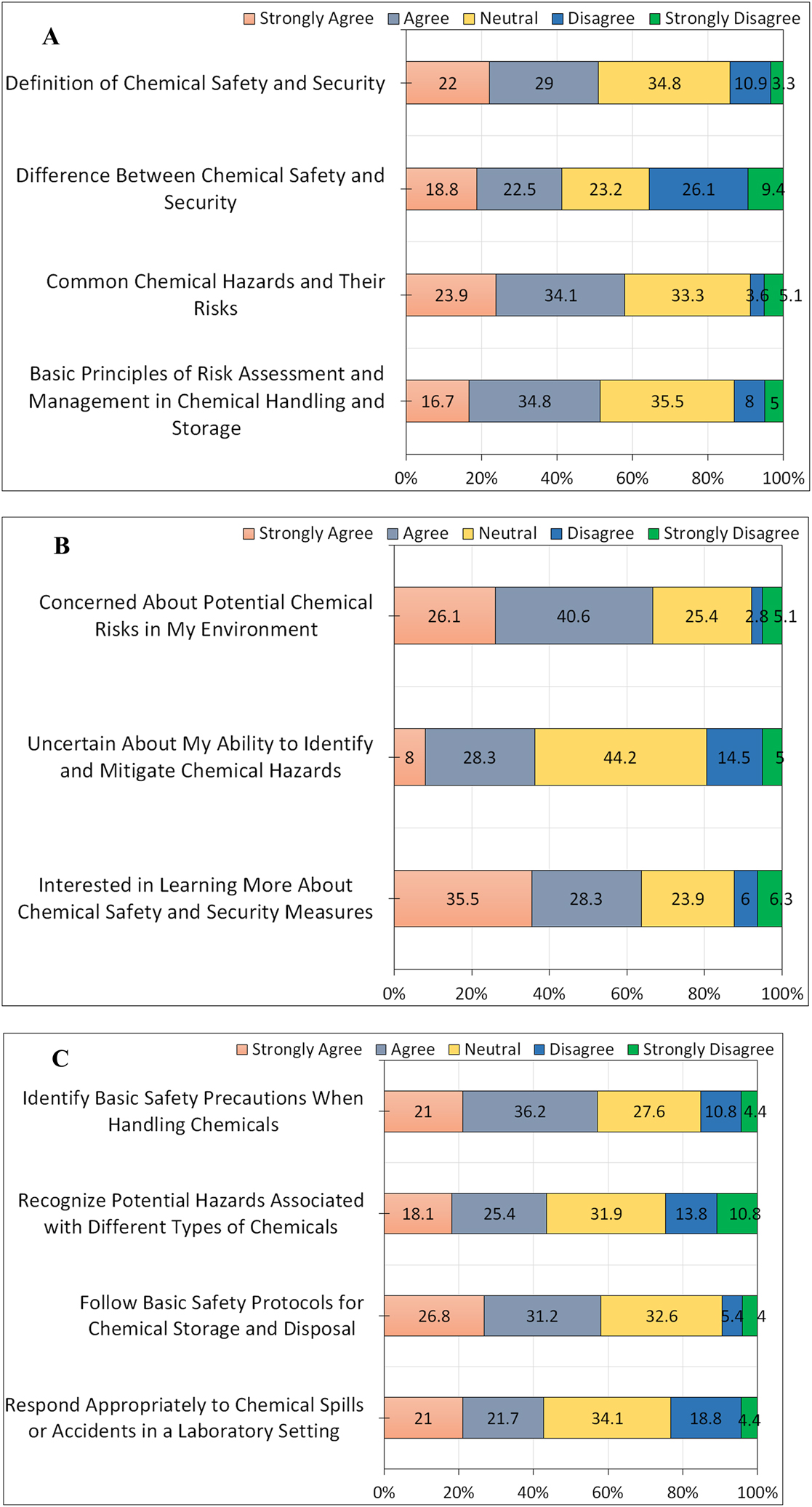
Pre-survey responces. (A) Students Knowledge. (B) Students Attitude. (C) Students behavioral intention.
Moreover, the post-survey labels students’ knowledge, feel, and do objectives results are compared with the pre-survey and the results are illustrated in Figure 2 and Table 2.

Pre- and post-survey based on students’ knowledge, attitude and behavioral Intention.
Data analysis of pre- and post-survey based on students’ knowledge, attitude and behavioral intention.
| Items | Pre-survey | Post-survey | ||||
|---|---|---|---|---|---|---|
| Weighted mean | G.SD | Relative importance | Weighted mean | G.SD | Relative importance | |
| The definition of chemical safety and security | 3.61 | 1.00 | 72.17 | 4.41 | 0.86 | 88.26 |
| The difference between chemical safety and security | 3.19 | 1.24 | 63.77 | 4.21 | 0.88 | 84.20 |
| Common chemical hazards and their risks. | 3.74 | 0.98 | 74.78 | 4.27 | 0.88 | 85.36 |
| Basic principles of risk assessment and management in chemical handling and storage. | 3.50 | 1.03 | 70.00 | 4.29 | 0.87 | 85.94 |
| Concerned about potential chemical risks in my environment | 3.85 | 0.97 | 76.96 | 2.79 | 1.40 | 55.80 |
| Interested in learning more about chemical safety and security measures | 3.83 | 1.14 | 76.67 | 4.31 | 0.88 | 86.23 |
| Identify basic safety precautions when handling chemicals. | 3.60 | 1.05 | 72.03 | 4.24 | 0.92 | 84.78 |
| Total | 3.62 | 1.06 | 72.34 | 4.07 | 0.96 | 81.51 |
Furthermore, adding more questions in the post-survey was intentional, as a set of additional questions was posed after the pilot phase implementation to evaluate the effectiveness of the curriculum and the applied instructional approach. The result of the overall usefulness of the workshop is shown in Figure 3 and Table 3.

The overall usefulness of the workshop.
Usefulness of the course.
| Items | Not useful at all | Slightly useful | Moderately useful | Very useful | Extremely useful | Weighted mean | G.SD | Relative importance |
|---|---|---|---|---|---|---|---|---|
| Count | Count | Count | Count | Count | ||||
| % | % | % | % | % | ||||
| Usefulness | 10 | 6 | 29 | 38 | 55 | 3.88 | 1.20 | 77.68 |
| 7.2 | 4.3 | 21 | 27.5 | 39.9 |
The course is seen as useful, with most respondents rating it as “Very Useful” or “Extremely Useful” there is some variability in the responses (indicated by the standard deviation), but the average score is high, reflecting positive overall feedback. The relative importance score is also high, indicating that respondents value the item significantly in the context being assessed. This table suggests that the item is viewed as both important and useful by most respondents, though some differences in opinion exist.
Moreover, the knowledge gained from this course in future laboratory work is illustrated in Figure 4 and Table 4.
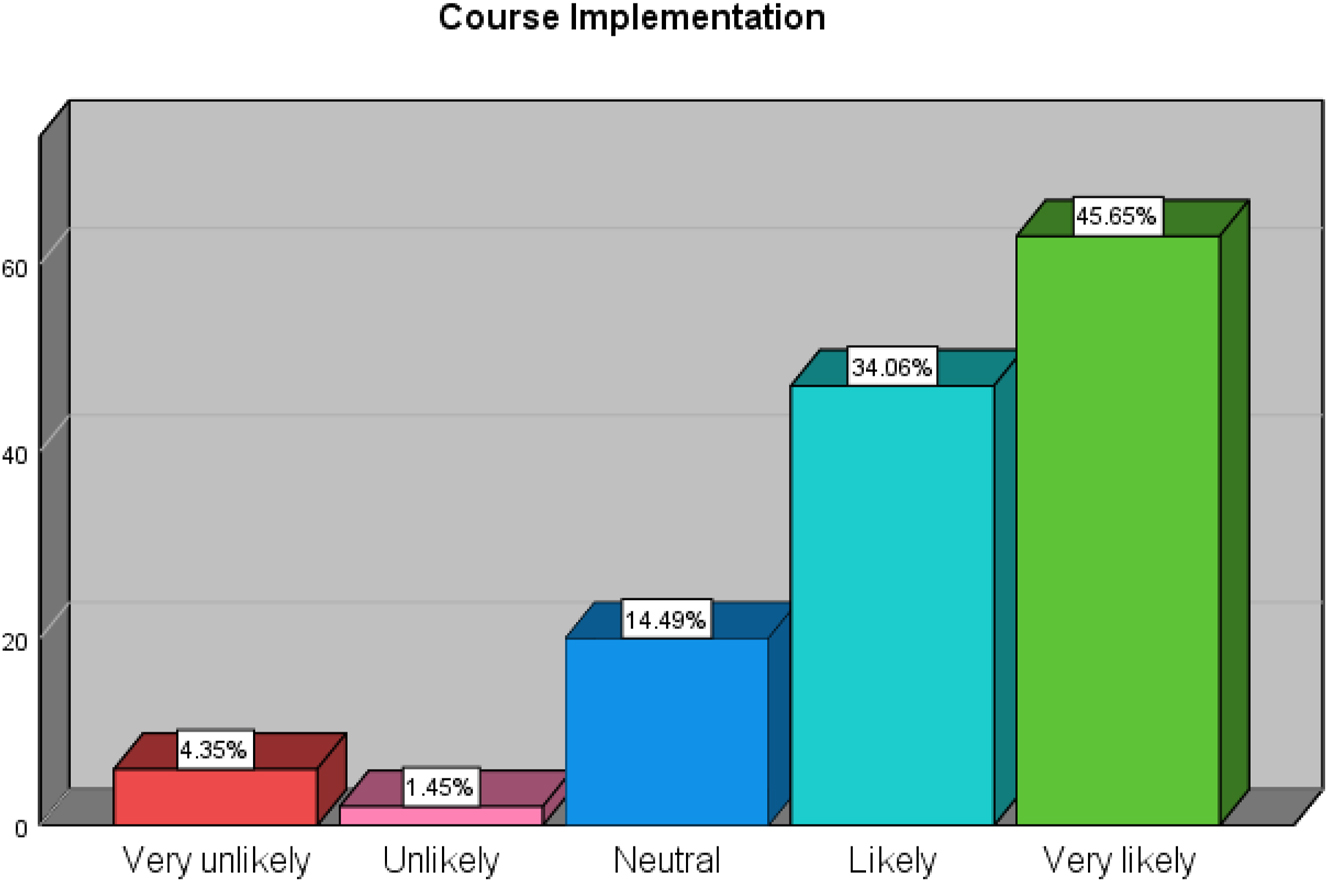
Implement the knowledge gained from this course in future laboratory work.
implement the knowledge gained from this course in future laboratory work.
| Items | Very unlikely | Unlikely | Neutral | Likely | Very likely | Weighted mean | G.SD | Relative importance |
|---|---|---|---|---|---|---|---|---|
| Count | Count | Count | Count | Count | ||||
| % | % | % | % | % | ||||
| Implement | 6 | 2 | 20 | 47 | 63 | 4.15 | 1.02 | 83.04 |
| 4.3 | 1.4 | 14.5 | 34.1 | 45.7 |
The overwhelming majority of respondents (both likely and very likely combined) intend to apply the knowledge gained in their future laboratory work, reflecting strong practical relevance and applicability. The weighted mean of 4.15 further underscores that respondents are confident they will apply the knowledge gained. While most respondents are positive, the standard deviation of 1.02 suggests there is still some variation in how likely different individuals feel about implementing the knowledge. The high relative importance score (83.04) indicates that implementing the knowledge is considered very valuable in the context of future laboratory work. The data shows that the knowledge gained from this course is viewed as highly likely to be applied in future laboratory settings, with a strong majority of respondents indicating they are likely or very likely to implement what they have learned. The course content is seen as important and relevant to the respondents’ future work.
In addition to the above, the results of the pilot course enhance their understanding of the importance of chemical Security measures in laboratory environments is shown in Figure 5 and Table 5.
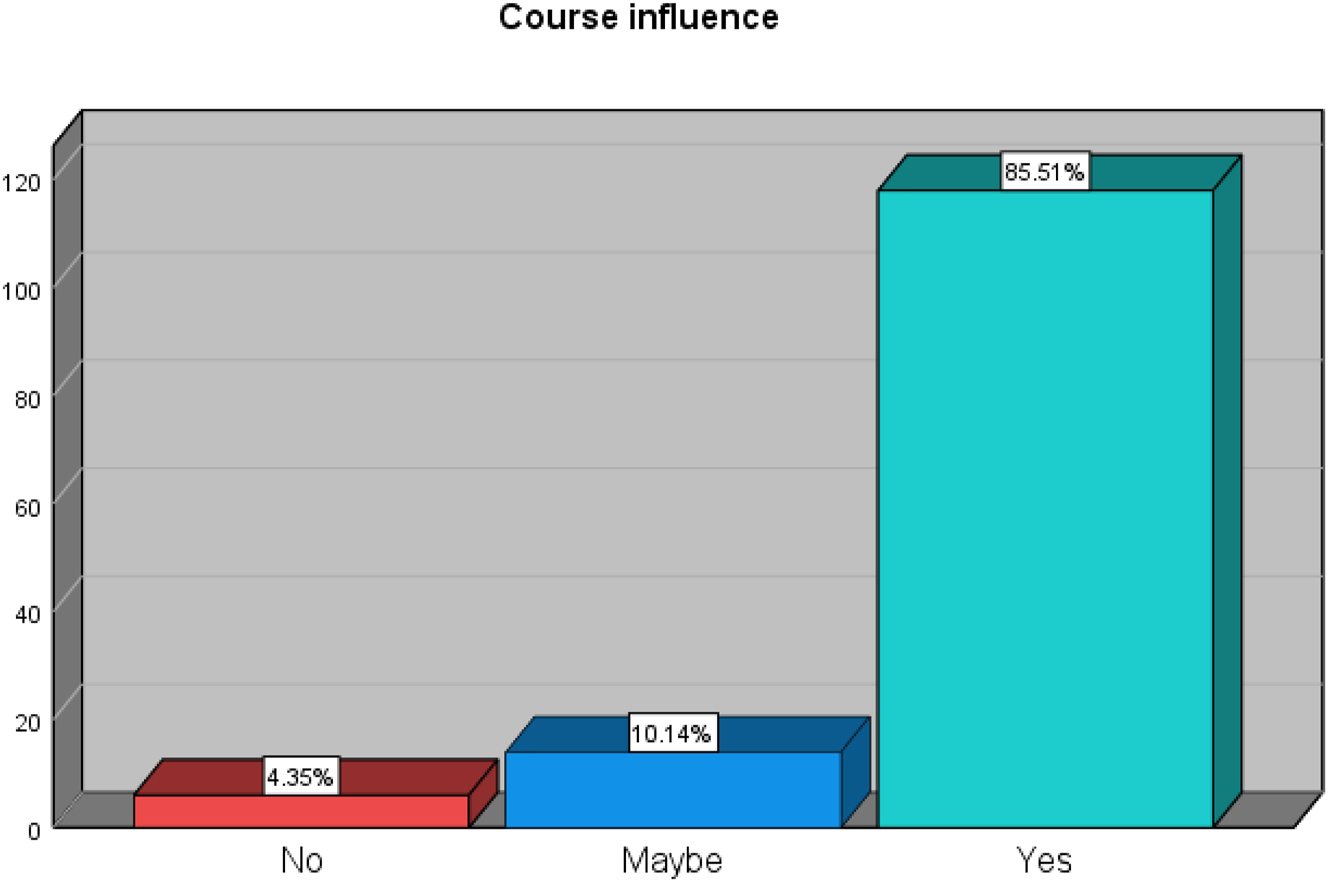
The workshop enhances understanding by students.
The workshop enhances understanding by students.
| Items | No | Maybe | Yes | Weighted mean | G.SD | Relative importance |
|---|---|---|---|---|---|---|
| Count | Count | Count | ||||
| % | % | % | ||||
| Did this pilot course enhance your understanding of the importance of chemical security measures in laboratory environments? | 6 | 14 | 118 | 2.81 | 0.49 | 93.72 |
| 4.3 | 10.1 | 85.5 |
The results suggest that the pilot course was highly successful in enhancing respondents’ understanding of the importance of chemical security measures in laboratory environments, with 85.5 % of respondents affirming its effectiveness. The course is seen as extremely important, as reflected by the 93.72 % relative importance score. While there was some uncertainty among a small portion of respondents (10.1 %), the majority felt the course achieved its goal in this area.
On the other hand, Table 6 and Table 7 show the data analysis of know, feel, and do for both pre-and post-survey using the Paired-Samples T-test and Wilcoxon Signed Rank Test.
Comparison of pre- and post-assessment scores for knowledge, attitude feel and behavioral intentions.
| W.Mean | G.SD | P-Valuea | Mean Rank | P-Valueb | ||
|---|---|---|---|---|---|---|
| Know | Pre | 3.51 | 0.83 | <0.001 | 108.75 | <0.001 |
| Post | 4.30 | 0.79 | 168.25 | |||
| Feel | Pre | 3.63 | 0.77 | 0.409 | 136.87 | 0.372 |
| Post | 3.55 | 0.78 | 140.13 | |||
| Do | Pre | 3.51 | 0.88 | <0.001 | 112.51 | <0.001 |
| Post | 4.24 | 0.92 | 164.49 |
-
a, Paired-samples T Test b, wilcoxon signed rank test.
Comparison of Pre- and Post-Assessment Scores for Knowledge, attitude feel and behavioral intentions by items.
| Items | W.Mean | G.SD | Mean Rank | p-Valuea | ||
|---|---|---|---|---|---|---|
| Know | The definition of chemical safety and security | Pre | 3.61 | 1.00 | 106.13 | <0.001 |
| Post | 4.41 | 0.86 | 170.87 | |||
| The difference between chemical safety and security | Pre | 3.19 | 1.24 | 105.96 | <0.001 | |
| Post | 4.21 | 0.88 | 171.04 | |||
| Basic principles of risk assessment and management in chemical handling and storage. | Pre | 3.50 | 1.03 | 107.48 | <0.001 | |
| Post | 4.27 | 0.88 | 169.52 | |||
| Feel | Concerned about potential chemical risks in my environment | Pre | 3.85 | 0.97 | 167.73 | <0.001 |
| Post | 2.79 | 1.40 | 109.27 | |||
| Interested in learning more about chemical safety and security measures | Pre | 3.83 | 1.14 | 121.85 | <0.001 | |
| Post | 4.31 | 0.88 | 155.15 | |||
| Do | Identify basic safety precautions when handling chemicals. | Pre | 3.60 | 1.05 | 113.78 | <0.001 |
| Post | 4.24 | 0.92 | 163.22 |
-
a, Wilcoxon signed rank test.
There was a significant increase in knowledge after the course, both in terms of the weighted mean and the mean rank, with a very low P-value (<0.001). There was no significant change in feelings after the course, as indicated by the non-significant P-value (0.409) and the very small difference in mean ranks. There was a significant improvement in behavioral intentions after the course, with a large increase in both the weighted mean and the mean rank, supported by a very low P-value (<0.001). The course had a significant impact on knowledge and behavioral intentions in both areas, which showed marked improvement. However, there was no significant change in feelings, suggesting that while the course effectively improved participants’ knowledge and intentions, it did not significantly affect their emotional or attitudinal responses. The course seems to have had a more cognitive and action-oriented effect than an emotional or affective one
All three knowledge-related items showed significant improvements in respondents’ understanding, with P-values of <0.001 for each. The changes were consistent across the items, with large increases in both weighted mean and mean rank. Concern about chemical risks decreased significantly (P-value <0.001), showing a reduction in worry after the course. However, interest in learning more about chemical safety increased significantly, indicating that while concern decreased, curiosity and interest grew. The item related to identifying basic safety precautions showed a significant improvement in participants’ behavioral intentions, with an increase in both weighted mean and mean rank (P-value <0.001). The course had a significant positive impact on knowledge and behavioral intentions, with participants showing improved understanding and the ability to apply safety measures. Feelings, however, exhibited mixed results, with a decrease in concern but an increase in interest about learning more. This suggests that while participants became more confident and knowledgeable, their concern about chemical risks was reduced, possibly reflecting a better understanding of the risks and safety measures.
3.1 Analysis
The result, which is shown in Figure 6, illustrates that students’ knowledge of chemical safety and security topics has significantly increased since the pilot phase. The percentage of the students who strongly agreed that they understood these concepts improved from 22 % to 57.4 %. Further, those who could distinguish between safety and security increased from 18.8 % to 42.6 %, (see Figure 5), considering this is only for “strongly agree answer”. If we notice phases A1 and B1 in Figure 1, the “Agree” response increased from 29 % to 32.4 % and from 22.5 % to 41.2 % for the first and second questions of knowledge, respectively. These outcomes suggest the curriculum’s efficiency in the students’ knowledge improvement.
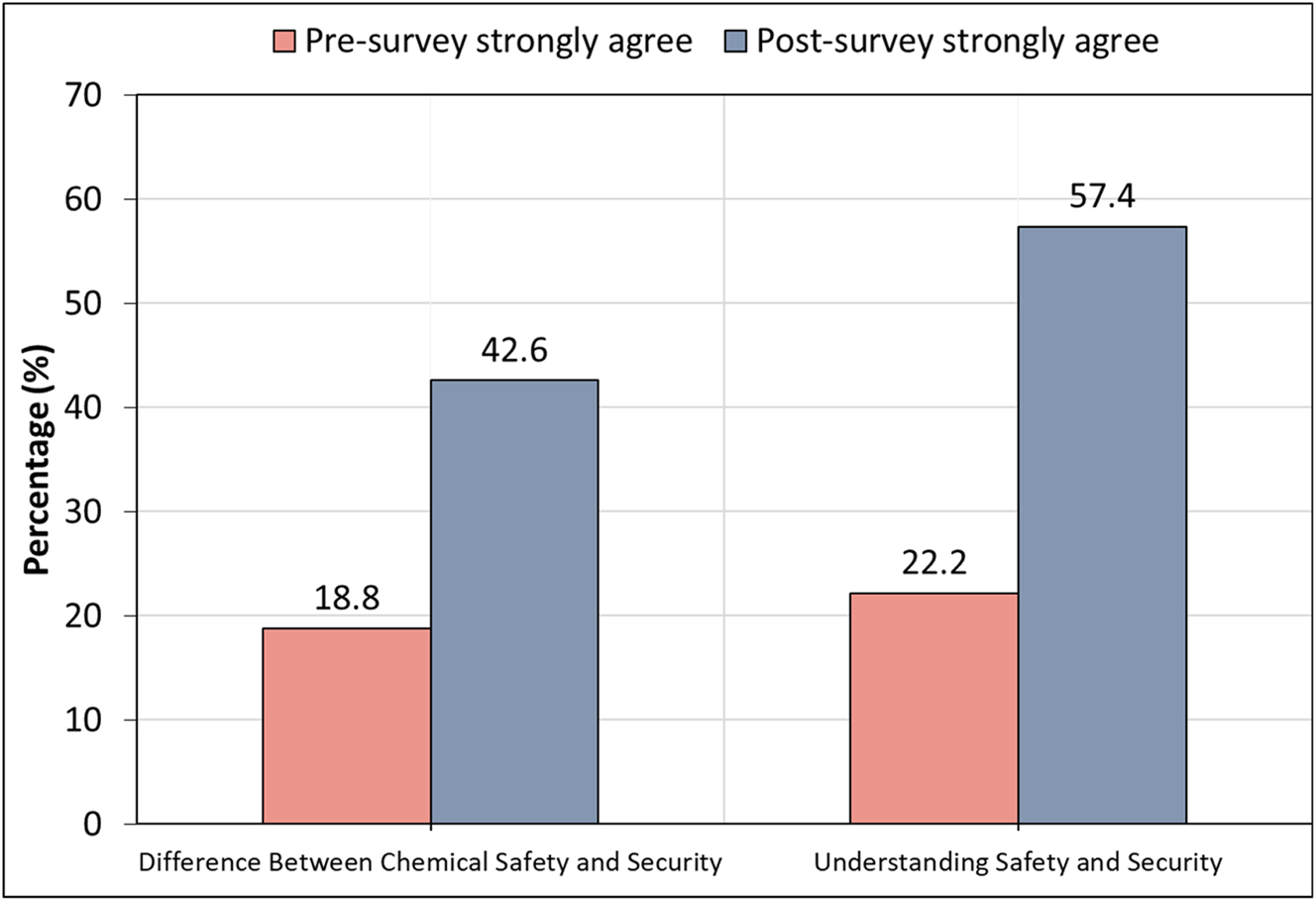
Improvement in students’ knowledge of chemical safety and security.
It is noticeable from the results that there is a dramatic decline in the student’s concern about the chemical risk since after the pilot phase, Students may feel more confident in managing chemical risks, possibly due to increased knowledge and understanding gained during attending the pilot class. On the other hand, the respondents’ level of interest in learning more about chemical safety and security has greatly increased from 35 % to 50 %. This rise suggests that the pilot of the curriculum improved the students’ knowledge and made them more interested in learning more about the topic (See Figure 7). This can be noticed the same change from the phase in Figures 1 and 2.
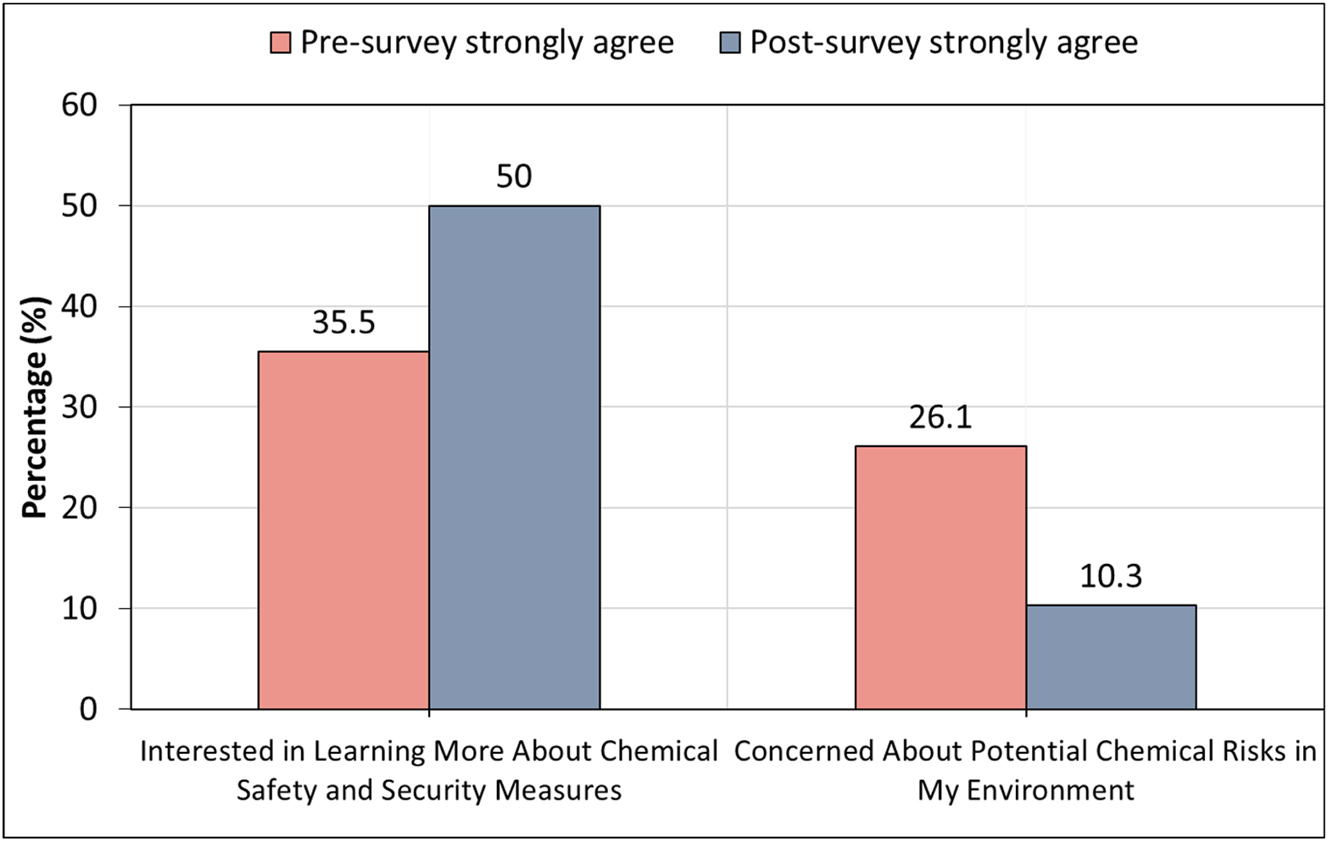
Shift in student attitudes towards chemical safety and security.
Regarding course usefulness, a positive increase in the students’ response occurred. Figure 8 illustrates this by measuring students’ behavioral intention based on their confidence in identifying safety precautions, which increased from 21 % to 48.5. Altogether, the results presented prove that the training program increased the confidence of the students and their intentions to apply the safety principles acquired during the pilot phase.
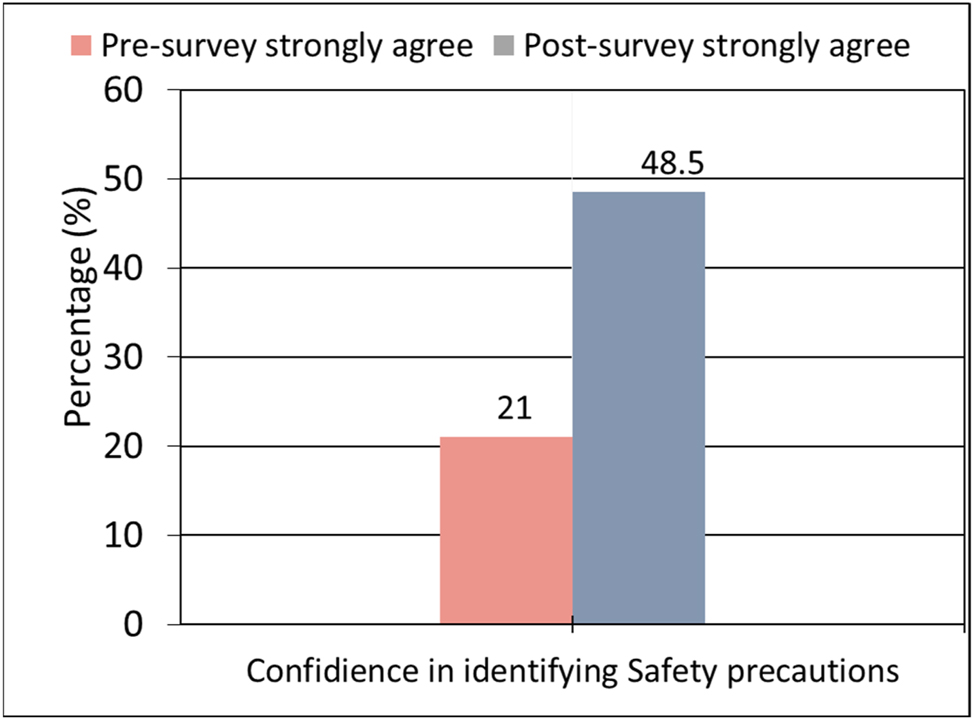
Behavioral intentions and course usefulness.
These above results affirm the curriculum’s potential as a valuable tool for elevating chemical safety and security standards across educational institutions.
4 Conclusions
This study highlights conducting pilot phase at two public universities, Zakho University and Koya University, to evaluate a developed curriculum about chemical safety and security education and show its effectiveness. The students had a limited understanding of chemical security, focusing only on safety concerns in their courses.
During the pilot phase, well-structured pre- and post-surveys, ongoing assessments, and practical activities revealed a significant improvement in students’ knowledge, attitudes, and behaviors regarding chemical safety and security. Both universities adopted well-integrated content that successfully raised student awareness of chemical risk management.
Moreover, the difference of items between pre and post survey (Related-Samples) were assessed by Wilcoxon Signed Rank Test. The p-value of 0.05 or less was used in the analysis, which led to the conclusion that the results were statistically significant. A p-value of 0.05 or lower was judged statistically significant across the board for all the tests.
To ensure consistency and quality, all institutions in the region must standardize their chemical safety and security curriculum. A unified syllabus would establish a solid foundation in safety principles, foster a culture of chemical safety, and ensure that students and faculty across institutions receive comparable training. This approach would be instrumental in reducing potential hazards, improving risk mitigation measures, and promoting responsible chemical handling and security practices. Ultimately, creating a standardized curriculum will help build a safer learning environment and establish a lasting safety culture across academic institutions in the region.
Funding source: International Union of Pure and Applied Chemistry
Acknowledgements
It is our pleasure to acknowledge Sandia International Laboratories for their support and guidance on the development of this project. They also played a significant role in defining the course content and relevance to international education standards. We also express our utmost gratitude to the Ministry of Higher Education and Scientific Research – Kurdistan Region, Iraq. for their valuable support and for enhancing the ties between universities in the region. They have supported the need to improve the quality and safety of education in learning institutions in this project.
-
Research ethics: Not applicable.
-
Informed consent: Not applicable.
-
Author contributions: All authors have accepted responsibility for the entire content of this manuscript and approved its submission.
-
Use of Large Language Models, AI and Machine Learning Tools: None declared.
-
Conflict of interest: All other authors state no conflict of interest.
-
Research funding: International Union of Pure and Applied Chemistry (http://dx.doi.org/https://doi.org/10.13039/100006987).
-
Data availability: Not applicable.
References
1. Walters, D. B.; Ho, P.; Hardesty, J. Safety, Security and Dual-Use Chemicals. J. Chem. Health Saf. 2015, 22 (5), 3–16. https://doi.org/10.1016/j.jchas.2014.12.001.Suche in Google Scholar
2. Organization for the Prohibition of Chemical Weapons. Indicative Guidelines for Safe and Secure Transport of Hazardous Chemicals by Road: The Outcome of the Workshops on Chemical Safety and Security Tools Development Program; Organization for the Prohibition of Chemical Weapons: The Hague, Netherlands, 2024.Suche in Google Scholar
3. Sonawane, S.; Patil, V.; Tigaa, R. Evaluating and Promoting Chemical Safety Awareness in the Chemical Sciences. J. Chem. Educ. 2023, 100 (2), 469–478; https://doi.org/10.1021/acs.jchemed.2c00102.Suche in Google Scholar
4. Fatemi, F.; Dehdashti, A.; Jannati, M. Implementation of Chemical Health, Safety, and Environmental Risk Assessment in Laboratories: A Case-Series Study. Front. Public Health 2022, 10. https://doi.org/10.3389/fpubh.2022.898826.Suche in Google Scholar PubMed PubMed Central
5. Zhao, A. Y.; DeSousa, N. E.; Henriksen, H. C.; May, A. M.; Tan, X.; Lawrence, D. S. An Assessment of Laboratory Safety Training in Undergraduate Education. J. Chem. Educ. 2024, 101 (4), 1626–1634. https://doi.org/10.1021/acs.jchemed.3c01299.Suche in Google Scholar
6. Nyansa, M.; Burrows, N.; Galerneau, A.; Bekkala, A.; Hungwe, K. Beyond Intentions: Understanding the Gap Between Safety Education and Student Behaviors. J. Chem. Educ. 2024, 101, 798–806. https://doi.org/10.1021/acs.jchemed.3c00620.Suche in Google Scholar
7. Thompson, C. E.; Nelson, A. W.; Gribble, L. A.; Caskey, S. A.; Eitrheim, E. S. Chemical Safety and Security Education in ACS-Approved Chemistry Programs. J. Chem. Educ. 2020, 97 (7), 1739–1746. https://doi.org/10.1021/acs.jchemed.9b00913.Suche in Google Scholar
8. Youssef, A. F. A. Chemical Safety and Security Challenges in Academic Institutions in Developing Countries. In Responsible Conduct in Chemistry Research and Practice: Global Perspectives; American Chemical Society, Vol. 1288, 2018; pp. 97–106.10.1021/bk-2018-1288.ch006Suche in Google Scholar
9. DeMasi, A.; Elston, H.; Langerman, N. Safety Data Sheets: Challenges for Authors, Expectations for End-Users. ACS Chem. Health Saf. 2022, 29 (4), 369–377. https://doi.org/10.1021/acs.chas.2c00015.Suche in Google Scholar
10. Idziorek, J.; Rursch, J.; Jacobson, D. Security Across the Curriculum and Beyond. In 2012 Frontiers in Education Conference Proceedings; 2012, pp. 1–6.10.1109/FIE.2012.6462297Suche in Google Scholar
11. Saeed, H. A.; Al-Hadad, B. M.; Sherwani, K. A. Implementing Bologna Process at Iraqi Kurdistan Universities: Opportunities and Challenges, In Bologna Process Conference – KRG; 2024. Available from: https://bpc-krg.com/implementing-bologna-process-at-iraqi-kurdistan-universities-opportunities-and-challenges/?utm_source=chatgpt.com.Suche in Google Scholar
12. Sandia National Laboratories. Chemical Security Handbook: Security Risk Assessment for Laboratories (Global Chemical and Biological Security Sandia National Laboratories, Ed.); Global Chemical and Biological Security Sandia National Laboratories: USA, Vol. SAND2020-6033, 2020; pp 15–40.Suche in Google Scholar
© 2025 the author(s), published by De Gruyter, Berlin/Boston
This work is licensed under the Creative Commons Attribution-NonCommercial-NoDerivatives 4.0 International License.
Artikel in diesem Heft
- Frontmatter
- Editorial
- The 27th IUPAC International Conference on Chemistry Education (ICCE 2024)
- Special Issue Papers
- Recent advances in laboratory education research
- Examining the effect of categorized versus uncategorized homework on test performance of general chemistry students
- Enhancing chemical security and safety in the education sector: a pilot study at the university of Zakho and Koya University as an initiative for Kurdistan’s Universities-Iraq
- Leveraging virtual reality to enhance laboratory safety and security inspection training
- Advancing culturally relevant pedagogy in college chemistry
- High school students’ perceived performance and relevance of chemistry learning competencies to sustainable development, action competence, and critical thinking disposition
- Spatial reality in education – approaches from innovation experiences in Singapore
- Teachers’ perceptions and design of small-scale chemistry driven STEM learning activities
- Electricity from saccharide-based galvanic cell
- pH scale. An experimental approach to the math behind the pH chemistry
- Engaging chemistry teachers with inquiry/investigatory based experimental modules for undergraduate chemistry laboratory education
- Reasoning in chemistry teacher education
- Development of the concept-process model and metacognition via FAR analogy-based learning approach in the topic of metabolism among second-year undergraduates
- Synthesis of magnetic ionic liquids and teaching materials: practice in a science fair
- The development of standards & guidelines for undergraduate chemistry education
Artikel in diesem Heft
- Frontmatter
- Editorial
- The 27th IUPAC International Conference on Chemistry Education (ICCE 2024)
- Special Issue Papers
- Recent advances in laboratory education research
- Examining the effect of categorized versus uncategorized homework on test performance of general chemistry students
- Enhancing chemical security and safety in the education sector: a pilot study at the university of Zakho and Koya University as an initiative for Kurdistan’s Universities-Iraq
- Leveraging virtual reality to enhance laboratory safety and security inspection training
- Advancing culturally relevant pedagogy in college chemistry
- High school students’ perceived performance and relevance of chemistry learning competencies to sustainable development, action competence, and critical thinking disposition
- Spatial reality in education – approaches from innovation experiences in Singapore
- Teachers’ perceptions and design of small-scale chemistry driven STEM learning activities
- Electricity from saccharide-based galvanic cell
- pH scale. An experimental approach to the math behind the pH chemistry
- Engaging chemistry teachers with inquiry/investigatory based experimental modules for undergraduate chemistry laboratory education
- Reasoning in chemistry teacher education
- Development of the concept-process model and metacognition via FAR analogy-based learning approach in the topic of metabolism among second-year undergraduates
- Synthesis of magnetic ionic liquids and teaching materials: practice in a science fair
- The development of standards & guidelines for undergraduate chemistry education
