Engineered living materials: pushing the boundaries of materials sciences through biological engineering
-
Geisler Muñoz-Guamuro
 ,
Miguel Baños
,
Miguel Baños


Abstract
Biological engineering is enabling disruptive innovations in biopharmaceutical research, in the bio-based and sustainable production of chemicals, in decarbonization, energy production, or bioremediation. Recently, the transfer of technologies from biological engineering and synthetic biology to materials sciences established the concept of engineered living materials (ELMs). ELMs are defined as materials composed of living cells that form or assemble the material itself or modulate the functional performance of the material. ELMs enable the sustainable production of materials as well as the design of novel material properties and functions that have so far been beyond the realm of technical materials. In this contribution, we give an overview of how ELMs can offer innovative and sustainable solutions to overcome current boundaries in materials science.
Zusammenfassung
Biologisches Engineering ermöglicht bahnbrechende Innovationen in der biopharmazeutischen Forschung, bei der biobasierten und nachhaltigen Herstellung von Chemikalien, bei der Dekarbonisierung, der Energieerzeugung oder der Bioremediation. In jüngster Zeit wurde durch den Transfer von Technologien aus dem biologischen Engineering und der synthetischen Biologie auf die Materialwissenschaften das Konzept der “engineered living materials” (ELMs) eingeführt. ELMs sind definiert als Materialien, die aus lebenden Zellen bestehen, die das Material selbst bilden oder zusammensetzen, oder die funktionelle Leistung des Materials modulieren. ELMs ermöglichen die nachhaltige Herstellung von Materialien, sowie die Entwicklung neuartiger Materialeigenschaften und -funktionen, die bisher außerhalb des Bereichs der technischen Materialien lagen. In diesem Beitrag geben wir einen Überblick darüber, wie ELMs innovative und nachhaltige Lösungen zur Überwindung der derzeitigen Grenzen in der Materialwissenschaft bieten können.
About the authors
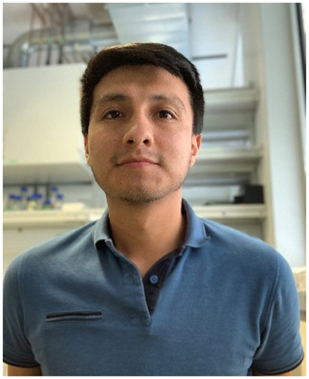
Geisler Muñoz-Guamuro received his M.Sc. degree in Biotechnology in 2022 from the University of Strasbourg’s Engineering School of Biotechnology (ESBS), France. He is currently doing his PhD at the Leibniz Institute for New Materials (INM), Germany, under the guidance of Prof. Wilfried Weber. His research focus on the development of biofilm-based materials.
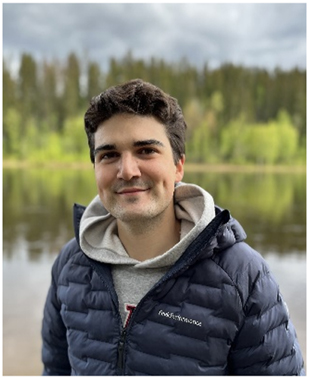
Miguel Baños completed his Bachelor’s degree in Biomedical Engineering at Universidad Carlos III de Madrid. He later pursued a Master’s degree in Biofabrication at Universität Bayreuth. Currently he is working as a PhD student under Prof. Wilfried Weber’s guidance on interfacing mammalian cells with biohybrid materials.
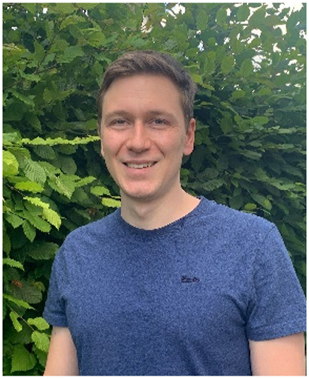
Jan Becker received his M.Sc. degree in Biochemistry and Biophysics in 2021 at the University of Freiburg, Germany. Afterward he started his PhD studies in Freiburg during which he moved together with his supervisor Prof. Wilfried Weber to the Leibniz Institute for New Materials (INM) in Saarbrücken. Currently he is working with engineering hydrogels and their application in combination with mammalian cells.

Prof. Dr. Wilfried Weber is Scientific Director at INM – Leibniz Institute for New Materials and Professor for New Materials at Saarland University. Prior to this he was Professor of Synthetic Biology at the University of Freiburg, Germany. His research aims at combining synthetic biology and materials sciences for the development of biohybrid, living materials for biomedical and biosensing applications. Copyright: Thomas Kunz/BIOSS, University of Freiburg.
-
Research ethics: Not applicable.
-
Author contributions: The authors have accepted responsibility for the entire content of this manuscript and approved its submission. The authors G.M-G., M.B. and J.B. contributed equally to this work.
-
Competing interests: The authors state no conflict of interest.
-
Research funding: None declared.
-
Data availability: Not applicable.
References
[1] O. Burgos-Morales, et al.., “Synthetic biology as driver for the biologization of materials sciences,” Mater. Today Bio, vol. 11, 2021, Art. no. 100115. https://doi.org/10.1016/j.mtbio.2021.100115.Suche in Google Scholar PubMed PubMed Central
[2] A. Samir, F. H. Ashour, A. A. A. Hakim, and M. Bassyouni, “Recent advances in biodegradable polymers for sustainable applications,” npj Mater. Degrad., vol. 6, no. 1, pp. 1–28, 2022. https://doi.org/10.1038/s41529-022-00277-7.Suche in Google Scholar
[3] P. Q. Nguyen, N. D. Courchesne, A. Duraj-Thatte, P. Praveschotinunt, and N. S. Joshi, “Engineered living materials: prospects and challenges for using biological systems to direct the assembly of smart materials,” Adv. Mater., vol. 30, no. 19, p. e1704847, 2018. https://doi.org/10.1002/adma.201704847.Suche in Google Scholar PubMed PubMed Central
[4] M. J. Sailor, “The future of engineered living sensors — I hope it is not the thing with feathers,” ACS Sens., vol. 7, no. 10, pp. 2795–2796, 2022. https://doi.org/10.1021/acssensors.2c02178.Suche in Google Scholar PubMed
[5] W. Jetz, et al.., “Biological Earth observation with animal sensors,” Trends Ecol. Evol., vol. 37, no. 4, pp. 293–298, 2022. https://doi.org/10.1016/j.tree.2021.11.011.Suche in Google Scholar PubMed
[6] T. Jezierski, et al.., “Efficacy of drug detection by fully-trained police dogs varies by breed, training level, type of drug and search environment,” Forensic Sci. Int., vol. 237, pp. 112–118, 2014. https://doi.org/10.1016/j.forsciint.2014.01.013.Suche in Google Scholar PubMed
[7] S. Liu and W. Xu, “Engineered living materials-based sensing and actuation,” Front. Sens., vol. 1, 2020. https://doi.org/10.3389/fsens.2020.586300.Suche in Google Scholar
[8] N. Ostrov, et al.., “A modular yeast biosensor for low-cost point-of-care pathogen detection,” Sci. Adv., vol. 3, no. 6, p. e1603221, 2017. https://doi.org/10.1126/sciadv.1603221.Suche in Google Scholar PubMed PubMed Central
[9] B. Luisi, R. Hegab, C. Person, K. Seo, and J. Gleason, “Engineered biosensors in an encapsulated and deployable system for environmental chemical detection,” ACS Sens., vol. 7, no. 9, pp. 2589–2596, 2022. https://doi.org/10.1021/acssensors.2c00775.Suche in Google Scholar PubMed
[10] Y. Zhang, T. Ren, J. He, H. Tian, and B. Jin, “Acute heavy metal toxicity test based on bacteria-hydrogel,” Colloids Surf., A, vol. 563, pp. 318–323, 2019. https://doi.org/10.1016/j.colsurfa.2018.12.016.Suche in Google Scholar
[11] L. M. González, N. Mukhitov, and C. A. Voigt, “Resilient living materials built by printing bacterial spores,” Nat. Chem. Biol., vol. 16, no. 2, pp. 126–133, 2020. https://doi.org/10.1038/s41589-019-0412-5.Suche in Google Scholar PubMed
[12] C. Gilbert, et al.., “Living materials with programmable functionalities grown from engineered microbial co-cultures,” Nat. Mater., vol. 20, no. 5, pp. 691–700, 2021. https://doi.org/10.1038/s41563-020-00857-5.Suche in Google Scholar PubMed
[13] X. Liu, et al.., “3D printing of living responsive materials and devices,” Adv. Mater., vol. 30, no. 4, 2018, Art. no. 1704821. https://doi.org/10.1002/adma.201704821.Suche in Google Scholar PubMed
[14] B. An, et al.., “Engineered living materials for sustainability,” Chem. Rev., vol. 123, no. 5, pp. 2349–2419, 2023. https://doi.org/10.1021/acs.chemrev.2c00512.Suche in Google Scholar PubMed
[15] P. K. R. Tay, P. Q. Nguyen, and N. S. Joshi, “A synthetic circuit for mercury bioremediation using self-assembling functional amyloids,” ACS Synth. Biol., vol. 6, no. 10, pp. 1841–1850, 2017. https://doi.org/10.1021/acssynbio.7b00137.Suche in Google Scholar PubMed
[16] D. Datta, et al.., “Phenotypically complex living materials containing engineered cyanobacteria,” Nat. Commun., vol. 14, no. 1, pp. 1–14, 2023. https://doi.org/10.1038/s41467-023-40265-2.Suche in Google Scholar PubMed PubMed Central
[17] B.-A. Stefanov and M. Fussenegger, “Biomarker-driven feedback control of synthetic biology systems for next-generation personalized medicine,” Front. Bioeng. Biotechnol., vol. 10, 2022, Art. no. 986210. https://doi.org/10.3389/fbioe.2022.986210.Suche in Google Scholar PubMed PubMed Central
[18] M. Mimee, et al.., “An ingestible bacterial-electronic system to monitor gastrointestinal health,” Science, vol. 360, no. 6391, pp. 915–918, 2018. https://doi.org/10.1126/science.aas9315.Suche in Google Scholar PubMed PubMed Central
[19] P. Dhakane, V. S. Tadimarri, and S. Sankaran, “Light-regulated pro-angiogenic engineered living materials,” Adv. Funct. Mater., vol. 33, no. 31, 2023, Art. no. 2212695. https://doi.org/10.1002/adfm.202212695.Suche in Google Scholar
[20] S. Sankaran, J. Becker, C. Wittmann, and A. del Campo, “Optoregulated drug release from an engineered living material: self-replenishing drug depots for long-term, light-regulated delivery,” Small, vol. 15, no. 5, 2019, Art. no. 1804717. https://doi.org/10.1002/smll.201804717.Suche in Google Scholar PubMed
[21] L. Koivusalo, et al.., “Tissue adhesive hyaluronic acid hydrogels for sutureless stem cell delivery and regeneration of corneal epithelium and stroma,” Biomaterials, vol. 225, 2019, Art. no. 119516. https://doi.org/10.1016/j.biomaterials.2019.119516.Suche in Google Scholar PubMed
[22] H. Chen, et al.., “Dissolved oxygen from microalgae-gel patch promotes chronic wound healing in diabetes,” Sci. Adv., vol. 6, no. 20, p. eaba4311, 2020. https://doi.org/10.1126/sciadv.aba4311.Suche in Google Scholar PubMed PubMed Central
[23] M. Lufton, et al.., “Living bacteria in thermoresponsive gel for treating fungal infections,” Adv. Funct. Mater., vol. 28, no. 40, 2018, Art. no. 1801581. https://doi.org/10.1002/adfm.201801581.Suche in Google Scholar
[24] W. Bacchus, M. Lang, M. D. El-Baba, W. Weber, J. Stelling, and M. Fussenegger, “Synthetic two-way communication between mammalian cells,” Nat. Biotechnol., vol. 30, no. 10, pp. 991–996, 2012. https://doi.org/10.1038/nbt.2351.Suche in Google Scholar PubMed
[25] L. C. Gerber, F. M. Koehler, R. N. Grass, and W. J. Stark, “Incorporation of penicillin-producing fungi into living materials to provide chemically active and antibiotic-releasing surfaces,” Angew. Chem., Int. Ed., vol. 51, no. 45, pp. 11293–11296, 2012. https://doi.org/10.1002/anie.201204337.Suche in Google Scholar PubMed
[26] K. Niinimäki, “How fast fashion can cut its staggering environmental impact,” Nature, vol. 609, no. 7928, pp. 653–654, 2022. https://doi.org/10.1038/d41586-022-02914-2.Suche in Google Scholar PubMed
[27] K. Niinimäki, G. Peters, H. Dahlbo, P. Perry, T. Rissanen, and A. Gwilt, “The environmental price of fast fashion,” Nat. Rev. Earth Environ., vol. 1, no. 4, pp. 189–200, 2020. https://doi.org/10.1038/s43017-020-0039-9.Suche in Google Scholar
[28] A. Cai, Z. Abdali, D. J. Saldanha, M. Aminzare, and N.-M. Dorval Courchesne, “Endowing textiles with self-repairing ability through the fabrication of composites with a bacterial biofilm,” Sci. Rep., vol. 13, no. 1, pp. 1–13, 2023. https://doi.org/10.1038/s41598-023-38501-2.Suche in Google Scholar PubMed PubMed Central
[29] F. Moser, E. Tham, L. M. González, T. K. Lu, and C. A. Voigt, “Light-controlled, high-resolution patterning of living engineered bacteria onto textiles, ceramics, and plastic,” Adv. Funct. Mater., vol. 29, no. 30, 2019, Art. no. 1901788. https://doi.org/10.1002/adfm.201901788.Suche in Google Scholar
[30] K. T. Walker, et al.., “Self-pigmenting textiles grown from cellulose-producing bacteria with engineered tyrosinase expression,” Nat. Biotechnol., 2024, https://doi.org/10.1038/s41587-024-02194-3.Suche in Google Scholar PubMed
[31] A. P. Provin, A. L. V. Cubas, A. R. D. A. Dutra, and N. K. Schulte, “Textile industry and environment: can the use of bacterial cellulose in the manufacture of biotextiles contribute to the sector?” Clean Technol. Environ. Policy, vol. 23, no. 10, pp. 2813–2825, 2021. https://doi.org/10.1007/s10098-021-02191-z.Suche in Google Scholar
[32] V. A. Webster-Wood, et al.., “Biohybrid robots: recent progress, challenges, and perspectives,” Bioinspir. Biomim., vol. 18, no. 1, p. 015001, 2022. https://doi.org/10.1088/1748-3190/ac9c3b.Suche in Google Scholar PubMed
[33] M. B. Akolpoglu, et al.., “Magnetically steerable bacterial microrobots moving in 3D biological matrices for stimuli-responsive cargo delivery,” Sci. Adv., vol. 8, no. 28, p. eabo6163, 2022. https://doi.org/10.1126/sciadv.abo6163.Suche in Google Scholar PubMed PubMed Central
[34] O. I. Sentürk, O. Schauer, F. Chen, V. Sourjik, and S. V. Wegner, “Red/far-red light switchable cargo attachment and release in bacteria-driven microswimmers,” Adv. Healthcare Mater., vol. 9, no. 1, 2020, Art. no. 1900956. https://doi.org/10.1002/adhm.201900956.Suche in Google Scholar PubMed
[35] F. Zhang, et al.., “ACE2 receptor-modified algae-based microrobot for removal of SARS-CoV-2 in wastewater,” J. Am. Chem. Soc., vol. 143, no. 31, pp. 12194–12201, 2021. https://doi.org/10.1021/jacs.1c04933.Suche in Google Scholar PubMed
[36] H. Xu, M. Medina-Sánchez, V. Magdanz, L. Schwarz, F. Hebenstreit, and O. G. Schmidt, “Sperm-Hybrid micromotor for targeted drug delivery,” ACS Nano, vol. 12, no. 1, pp. 327–337, 2018. https://doi.org/10.1021/acsnano.7b06398.Suche in Google Scholar PubMed
[37] F. Zhang, et al.., “Nanoparticle-modified microrobots for in vivo antibiotic delivery to treat acute bacterial pneumonia,” Nat. Mater., vol. 21, no. 11, pp. 1324–1332, 2022. https://doi.org/10.1038/s41563-022-01360-9.Suche in Google Scholar PubMed PubMed Central
[38] K. B. Justus, et al.., “A biosensing soft robot: autonomous parsing of chemical signals through integrated organic and inorganic interfaces,” Sci. Robot., vol. 4, no. 31, p. eaax0765, 2019. https://doi.org/10.1126/scirobotics.aax0765.Suche in Google Scholar PubMed
[39] K. Y. Lee, et al.., “An autonomously swimming biohybrid fish designed with human cardiac biophysics,” Science, vol. 375, no. 6581, pp. 639–647, 2022. https://doi.org/10.1126/science.abh0474.Suche in Google Scholar PubMed PubMed Central
[40] S.-J. Park, et al.., “Phototactic guidance of a tissue-engineered soft-robotic ray,” Science, vol. 353, no. 6295, pp. 158–162, 2016. https://doi.org/10.1126/science.aaf4292.Suche in Google Scholar PubMed PubMed Central
[41] N. Pellicciotta, O. S. Bagal, V. C. Sosa, G. Frangipane, G. Vizsnyiczai, and R. D. Leonardo, “Light controlled biohybrid microbots,” Adv. Funct. Mater., vol. 33, no. 39, 2023, Art. no. 2214801. https://doi.org/10.1002/adfm.202214801.Suche in Google Scholar
[42] B. E. Logan, M. J. Wallack, K.-Y. Kim, W. He, Y. Feng, and P. E. Saikaly, “Assessment of microbial fuel cell configurations and power densities,” Environ. Sci. Technol. Lett., vol. 2, no. 8, pp. 206–214, 2015. https://doi.org/10.1021/acs.estlett.5b00180.Suche in Google Scholar
[43] N. Schuergers, C. Werlang, C. M. Ajo-Franklin, and A. A. Boghossian, “A synthetic biology approach to engineering living photovoltaics,” Energy Environ. Sci., vol. 10, no. 5, pp. 1102–1115, 2017. https://doi.org/10.1039/C7EE00282C.Suche in Google Scholar PubMed PubMed Central
[44] C.-P. Tseng, et al.., “Solution-deposited and patternable conductive polymer thin-film electrodes for microbial bioelectronics,” Adv. Mater., vol. 34, no. 13, 2022, Art. no. 2109442. https://doi.org/10.1002/adma.202109442.Suche in Google Scholar PubMed
[45] B. Cao, et al.., “Silver nanoparticles boost charge-extraction efficiency in Shewanella microbial fuel cells,” Science, vol. 373, no. 6561, pp. 1336–1340, 2021. https://doi.org/10.1126/science.abf3427.Suche in Google Scholar PubMed
[46] B. E. Logan, R. Rossi, A. A. Ragab, and P. E. Saikaly, “Electroactive microorganisms in bioelectrochemical systems,” Nat. Rev. Microbiol., vol. 17, no. 5, pp. 307–319, 2019. https://doi.org/10.1038/s41579-019-0173-x.Suche in Google Scholar PubMed
[47] J. Guo, et al.., “Light-driven fine chemical production in yeast biohybrids,” Science, vol. 362, no. 6416, pp. 813–816, 2018. https://doi.org/10.1126/science.aat9777.Suche in Google Scholar PubMed PubMed Central
[48] S. Cestellos-Blanco, H. Zhang, J. M. Kim, Y.-X. Shen, and P. Yang, “Photosynthetic semiconductor biohybrids for solar-driven biocatalysis,” Nat. Catal., vol. 3, no. 3, pp. 245–255, 2020. https://doi.org/10.1038/s41929-020-0428-y.Suche in Google Scholar
[49] K. K. Sakimoto, A. B. Wong, and P. Yang, “Self-photosensitization of nonphotosynthetic bacteria for solar-to-chemical production,” Science, vol. 351, no. 6268, pp. 74–77, 2016. https://doi.org/10.1126/science.aad3317.Suche in Google Scholar PubMed
[50] Z. Xu, et al.., “Algal cell bionics as a step towards photosynthesis-independent hydrogen production,” Nat. Commun., vol. 14, no. 1, p. 1872, 2023. https://doi.org/10.1038/s41467-023-37608-4.Suche in Google Scholar PubMed PubMed Central
[51] S. Xiao, et al.., “Hybrid microbial photoelectrochemical system reduces CO2 to CH4 with 1.28% solar energy conversion efficiency,” Chem. Eng. J., vol. 390, 2020, Art. no. 124530. https://doi.org/10.1016/j.cej.2020.124530.Suche in Google Scholar
[52] W. Xiong, et al.., “Microalgae–material hybrid for enhanced photosynthetic energy conversion: a promising path towards carbon neutrality,” Natl. Sci. Rev., vol. 10, no. 10, p. nwad200, 2023. https://doi.org/10.1093/nsr/nwad200.Suche in Google Scholar PubMed PubMed Central
[53] G. Habert, et al.., “Environmental impacts and decarbonization strategies in the cement and concrete industries,” Nat. Rev. Earth Environ., vol. 1, no. 11, pp. 559–573, 2020. https://doi.org/10.1038/s43017-020-0093-3.Suche in Google Scholar
[54] D. N. Beatty, S. L. Williams, and W. V. SrubarIII, “Biomineralized materials for sustainable and durable construction,” Annu. Rev. Mater. Res., vol. 52, pp. 411–439, 2022. https://doi.org/10.1146/annurev-matsci-081720-105303.Suche in Google Scholar
[55] C. M. Heveran, et al.., “Biomineralization and successive regeneration of engineered living building materials,” Matter, vol. 2, no. 2, pp. 481–494, 2020. https://doi.org/10.1016/j.matt.2019.11.016.Suche in Google Scholar
[56] E. Delesky, R. Jones, S. Cook, J. C. Cameron, M. Hubler, and W. SrubarIII, “Hydrogel-assisted self-healing of biomineralized living building materials,” J. Clean. Prod., vol. 418, 2023, Art. no. 138178. https://doi.org/10.1016/j.jclepro.2023.138178.Suche in Google Scholar
[57] D. Bernardi, J. DeJong, B. Montoya, and B. Martinez, “Bio-bricks: biologically cemented sandstone bricks,” Constr. Build. Mater., vol. 55, pp. 462–469, 2014. https://doi.org/10.1016/j.conbuildmat.2014.01.019.Suche in Google Scholar
[58] M. Smirnova, et al.., “High strength bio-concrete for the production of building components,” npj Mater. Sustain., vol. 1, no. 1, p. 4, 2023. https://doi.org/10.1038/s44296-023-00004-6.Suche in Google Scholar
[59] M. Peplow, “Bioconcrete presages new wave in environmentally friendly construction,” Nat. Biotechnol., vol. 38, no. 7, pp. 776–779, 2020. https://doi.org/10.1038/s41587-020-0595-z.Suche in Google Scholar PubMed
[60] N. De Belie, et al.., “A review of self‐healing concrete for damage management of structures,” Adv. Mater. Interfaces, vol. 5, no. 17, 2018, Art. no. 1800074. https://doi.org/10.1002/admi.201800074.Suche in Google Scholar
[61] M. Nodehi, T. Ozbakkaloglu, and A. Gholampour, “A systematic review of bacteria-based self-healing concrete: biomineralization, mechanical, and durability properties,” J. Build. Eng., vol. 49, 2022, Art. no. 104038. https://doi.org/10.1016/j.jobe.2022.104038.Suche in Google Scholar
[62] J. Wang, H. Soens, W. Verstraete, and N. De Belie, “Self-healing concrete by use of microencapsulated bacterial spores,” Cem. Concr. Res., vol. 56, pp. 139–152, 2014. https://doi.org/10.1016/j.cemconres.2013.11.009.Suche in Google Scholar
[63] V. Wiktor and H. M. Jonkers, “Quantification of crack-healing in novel bacteria-based self-healing concrete,” Cem. Concr. Compos., vol. 33, no. 7, pp. 763–770, 2011. https://doi.org/10.1016/j.cemconcomp.2011.03.012.Suche in Google Scholar
[64] W. Du, C. Qian, and Y. Xie, “Demonstration application of microbial self-healing concrete in sidewall of underground engineering: a case study,” J. Build. Eng., vol. 63, 2023, Art. no. 105512. https://doi.org/10.1016/j.jobe.2022.105512.Suche in Google Scholar
[65] V. Wiktor and H. Jonkers, “Bacteria-based concrete: from concept to market,” Smart Mater. Struct., vol. 25, no. 8, 2016, Art. no. 084006. https://doi.org/10.1088/0964-1726/25/8/084006.Suche in Google Scholar
[66] C. M. Heveran and C. J. Hernandez, “Make engineered living materials carry their weight,” Matter, vol. 6, no. 11, pp. 3705–3718, 2023. https://doi.org/10.1016/j.matt.2023.07.023.Suche in Google Scholar
[67] M. Jones, A. Mautner, S. Luenco, A. Bismarck, and S. John, “Engineered mycelium composite construction materials from fungal biorefineries: a critical review,” Mater. Des., vol. 187, 2020, Art. no. 108397. https://doi.org/10.1016/j.matdes.2019.108397.Suche in Google Scholar
[68] R. M. McBee, et al.., “Engineering living and regenerative fungal–bacterial biocomposite structures,” Nat. Mater., vol. 21, no. 4, pp. 471–478, 2022. https://doi.org/10.1038/s41563-021-01123-y.Suche in Google Scholar PubMed
[69] K. Li, et al.., “Engineered living materials grown from programmable Aspergillus Niger mycelial pellets,” Mater. Today Bio, vol. 19, 2023, Art. no. 100545. https://doi.org/10.1016/j.mtbio.2023.100545.Suche in Google Scholar PubMed PubMed Central
© 2024 Walter de Gruyter GmbH, Berlin/Boston
Artikel in diesem Heft
- Frontmatter
- Survey
- Biological engineering – an engineering discipline crucial to the future of our civilization
- Forum
- New biological solutions to the many problems of our time
- Survey
- Biological engineering as a driver of innovation: implications for the economy
- Advancing vertical farming with automation for sustainable food production
- Harnessing microalgae: from biology to innovation in sustainable solutions
- Generation of molecular hydrogen (H2) by microalgae and their biocatalysts
- Biocatalytic approaches for plastic recycling
- Engineered living materials: pushing the boundaries of materials sciences through biological engineering
- The fabrication-assembly challenge in tissue engineering
- Evolution of biofabrication and 3D-bioprinting technologies – from market pull to technology push
- A bio-engineering approach to generate bioinspired (spider) silk protein-based materials
- RNA aptamers: promising tools in synthetic biology
- Automated handling of biological objects with a flexible gripper for biodiversity research
- Building with renewable materials
- Growing new types of building materials: mycelium-based composite materials
- Façade greening – from science to school
Artikel in diesem Heft
- Frontmatter
- Survey
- Biological engineering – an engineering discipline crucial to the future of our civilization
- Forum
- New biological solutions to the many problems of our time
- Survey
- Biological engineering as a driver of innovation: implications for the economy
- Advancing vertical farming with automation for sustainable food production
- Harnessing microalgae: from biology to innovation in sustainable solutions
- Generation of molecular hydrogen (H2) by microalgae and their biocatalysts
- Biocatalytic approaches for plastic recycling
- Engineered living materials: pushing the boundaries of materials sciences through biological engineering
- The fabrication-assembly challenge in tissue engineering
- Evolution of biofabrication and 3D-bioprinting technologies – from market pull to technology push
- A bio-engineering approach to generate bioinspired (spider) silk protein-based materials
- RNA aptamers: promising tools in synthetic biology
- Automated handling of biological objects with a flexible gripper for biodiversity research
- Building with renewable materials
- Growing new types of building materials: mycelium-based composite materials
- Façade greening – from science to school
