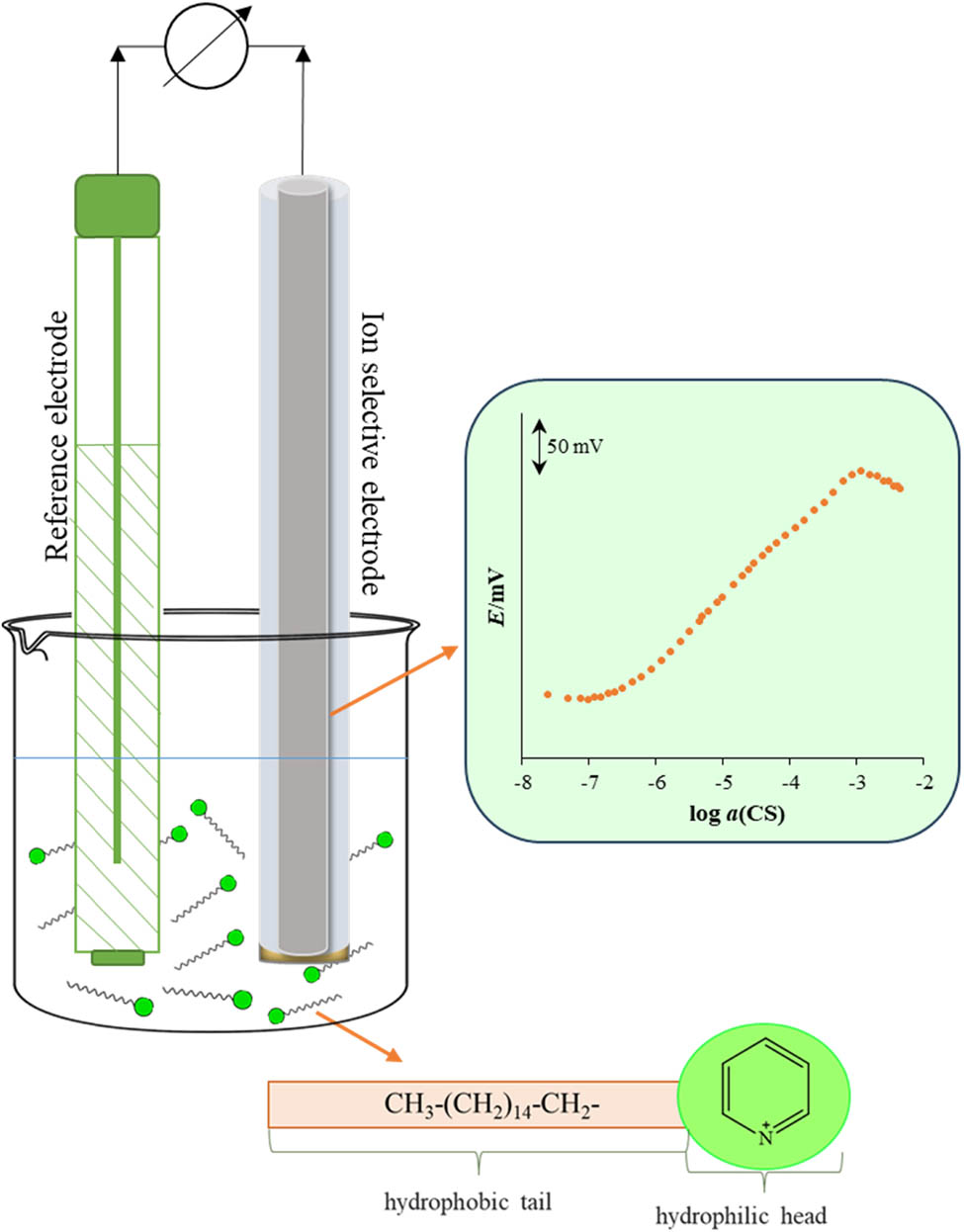
In this work, a solid-state electrochemical sensor relying on potentiometric transduction was constructed and optimized to detect Bosentan (BOS) in its pharmaceutical dosage form and human plasma. BOS is useful in pulmonary hypertension management as a nonselective endothelin receptor antagonist. A printed circuit board has been constructed and used as a substrate for microfabricated Cu electrodes. In comparison to a microfabricated control (Cu/ISM) electrode, the sensor potential signal drift was enhanced, and the response time was reduced by using multi-walled carbon nanotubes (MWCNTs) as an ion-to-electron transducer layer. According to IUPAC requirements, the suggested BOS sensors have been electrochemically characterized, and the linear dynamic range is (1.0 × 10 −8 to 1.0 × 10 −5 ) M with a limit of detection of 6.28 × 10 −9 M and 6.12 × 10 −9 M for MWCNT-based sensor (Cu/CNT-NC/ISM) and control sensor (Cu/ISM), respectively. The described sensors have been used successfully to selectively determine BOS in dosage form and human plasma without any pre-treatment steps.
Issue
Open Access
Volume 43, Issue 1
January 2024
Contents
- Research Articles
-
August 6, 2024
- Review Articles
-
February 16, 2024
-
Open AccessLatest trends in honey contaminant analysis, challenges, and opportunities for green chemistry developmentFebruary 29, 2024
-
March 21, 2024
-
August 27, 2024
-
August 27, 2024
- Special Issue: Greener Analytical Methods - Part II
-
February 15, 2024