Scientific spring metamorphosis


The sun was shining in my office window just at the moment when I was thinking about what could be the content of my Editorial for the current issue (2/2013). Since no direct impulse about scientific issues came to mind, I let my thoughts flow in more general terms in the hope it would redirect me to my actual problem, and it helped.
Now, at the beginning of March, we just have overcome the winter. It has been pretty cold here in the Netherlands and in Europe although without much snow. It is a relief to be finished with the endless dark days and to embrace the brighter days and warmer temperatures of spring.
Spring is the time for cleaning the house and maybe also for cleaning one’s mind, to be open to new directions and to have hopes. Its scientific equivalent would be starting new research, leaving yesterday’s approaches behind and going in a new direction. This can be done by supplementing research branch in addition to existing research streams or as new main direction leaving in one short step yesterday’s approaches behind as those of the past. I made both. The big, radical change in 2011 in my life was when I changed my friends, country, language, way of living, house, environment and total scientific direction. For the latter, the change was towards organic chemistry and process design and away from microdevice making and characterization.
I have also made the first type of change mentioned. Here and there, I am pulled in various diections towards new research which compliments my main scientific research. Just recently we started a project with two PhD students on plasma chemistry which is a field entirely new to me. It is like being born or reborn after a hard winter. All is essentially new – the conferences, the journals, the main players, the innovations, the bottlenecks, and even the state of the art. It is like renting an empty room and redecorating it. One starts like a baby, yet with the experience of an old man. It is interesting to see if and how the colleagues accept such a metamorphosis. Everything will take time especially when one is new to the field but has a acknowledged reputation in another field.
Such endeavor bears a risk, being unknown in a field has both advantages and disavandages. Similar transformations outside the field of science are well known, even the best failed here. The first true endeavor of the Beatles, outside of their music, which had always been unanimously praised, was not at all well received. The self-produced movie Magical Mystery Tour in late 1967, presented that Christmas on British TV, received a volley of criticism and was perceived as a disaster. Magical Mystery Tour never became a classic. There are many examples in society and science where exactly the opposite happened – when wallflowers become orchids and thus masterpieces. In the early phase of impressionism painting, the Salon jury year in and year out rejected the Impressionists’ works in favor of works by artists faithful to the approved style – as happened to Edouard Manet in 1863 with his later famous “Luncheon on the Grass”. Today, every museum would pay many, many millions for these paintings when initially they would not even show them. Albert Einstein was nominated for the Nobel Prize almost every year from 1910 to 1922 onwards (with two exceptions). Yet, as there were doubts about his (masterpiece) relativity theory he finally received this acknowledgment for the (comparatively smaller impact) photoelectric effect instead.
Thus, spring finally turns into summer and autumn, followed by winter and then a new spring. There are early and late springs, but each spring is worth the wait. Finally, there is also different personal perceptions of spring. For some of us it is extremely important, for others it is hardly noticed and for others it has no major impact on their life. There are open-minded, even impulsive people and there are others who dislike even the smallest change. This holds also for scientific careers – some like the constant change towards new challenges and fields. Such scientists seemingly can cope with every field and new trend; and this can lead to a varied curriculum vitae. Other researchers are deeply rooted in one main research area and rigidly stick to “their apparatus”, “their analytical technique”, “their chemical reaction”, etc. A constant deepening of knowledge can be a positive. There are equivalents in arts and society – I mentioned in my first Editorial the multi-talented Leonardo da Vinci who was painter, sculptor, architect, musician, mathematician, engineer, inventor, anatomist, geologist, cartographer, botanist, and writer. Whereas, the famous painter Michelangelo Merisi da Caravaggio (most often known by the shorter name Caravaggio) focused largely on one painting style known as Tenebrism, which is the shift from light to dark with little intermediate value, and implemented in this way radical naturalism with a dramatic kind of representation.
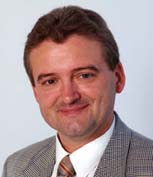
About the author
©2013 by Walter de Gruyter Berlin Boston
Artikel in diesem Heft
- Masthead
- Masthead
- Graphical abstracts
- In this Issue
- Editorial
- Scientific spring metamorphosis
- Original articles
- Development highlights of micro-nano technologies in the MENA region and pathways for initiatives to support and network
- Integrated processing for the separation of biobutanol. Part A: experimental investigation and process modelling
- Integrated processing for the separation of biobutanol. Part B: model-based process analysis
- Direct saccharification of lignocellulosic biomass by hydrolysis with formic acid solution
- A facile synthesis of 2H-chromen-2-ones via Pechmann condensation under solvent free conditions using grinding technique
- Counter-current arrangement of microfluidic liquid-liquid droplet flow contactors
- Organization profiles
- The Centre for Green Process Engineering (CGPE) opens with launch event at London South Bank University (LSBU)
- King Saud University: nanoscience and nanotechnology research highlights
- Kuwait Institute for Scientific Research
- University profile
- Nanoscience and nanotechnology research highlights at Kuwait University
- Laboratory profiles
- Microfluidics Group – Department of Chemistry, Sultan Qaboos University
- Assiut Microfluidics Laboratory
- Company profiles
- Hikma Pharmaceuticals
- SÜSS MicroTec and iX-factory: qualified process and equipment support for development, research and production – made in Germany
- LionX: our chips enable your products
- Conference announcements
- 17th Annual Green Chemistry and Engineering Conference (GC&E; North Bethesda, MD, USA, June 18–20, 2013)
- 17th IUPAC Conference on Organometallic Chemistry Directed Towards Organic Synthesis (OMCOS 17), Fort Collins, CO, USA, July 28–August 1, 2013
- Conferences 2013/2014
- Book review
- Chemicals from biomass: integrating bioprocesses into chemical production complexes for sustainable development
Artikel in diesem Heft
- Masthead
- Masthead
- Graphical abstracts
- In this Issue
- Editorial
- Scientific spring metamorphosis
- Original articles
- Development highlights of micro-nano technologies in the MENA region and pathways for initiatives to support and network
- Integrated processing for the separation of biobutanol. Part A: experimental investigation and process modelling
- Integrated processing for the separation of biobutanol. Part B: model-based process analysis
- Direct saccharification of lignocellulosic biomass by hydrolysis with formic acid solution
- A facile synthesis of 2H-chromen-2-ones via Pechmann condensation under solvent free conditions using grinding technique
- Counter-current arrangement of microfluidic liquid-liquid droplet flow contactors
- Organization profiles
- The Centre for Green Process Engineering (CGPE) opens with launch event at London South Bank University (LSBU)
- King Saud University: nanoscience and nanotechnology research highlights
- Kuwait Institute for Scientific Research
- University profile
- Nanoscience and nanotechnology research highlights at Kuwait University
- Laboratory profiles
- Microfluidics Group – Department of Chemistry, Sultan Qaboos University
- Assiut Microfluidics Laboratory
- Company profiles
- Hikma Pharmaceuticals
- SÜSS MicroTec and iX-factory: qualified process and equipment support for development, research and production – made in Germany
- LionX: our chips enable your products
- Conference announcements
- 17th Annual Green Chemistry and Engineering Conference (GC&E; North Bethesda, MD, USA, June 18–20, 2013)
- 17th IUPAC Conference on Organometallic Chemistry Directed Towards Organic Synthesis (OMCOS 17), Fort Collins, CO, USA, July 28–August 1, 2013
- Conferences 2013/2014
- Book review
- Chemicals from biomass: integrating bioprocesses into chemical production complexes for sustainable development
