Assiut Microfluidics Laboratory
-
Mohamed Omar Abdelgawad


Assiut University
Assiut University is a comprehensive university in southern Egypt composed of 16 faculties and two institutes. Founded in 1949, Assiut University is the fourth oldest university in Egypt. The university offers 200 undergraduate and graduate degree programs to >70,000 undergraduate students and 14,000 graduate students. The university employs about 2100 faculty members.
Assiut Microfluidics Lab
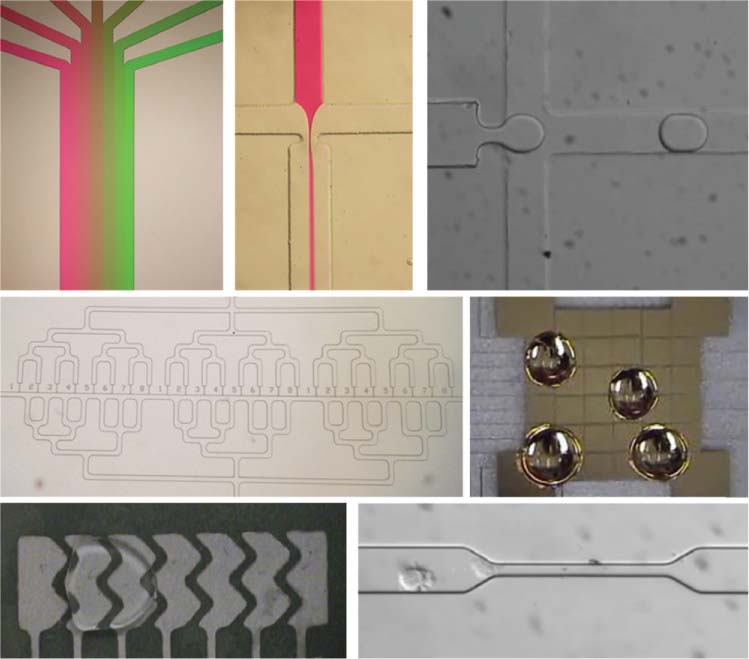
Assiut Microfluidics Lab was established by Dr. Mohamed Abdelgawad in September 2010 to be the first microfluidics laboratory in Egypt. The laboratory focuses on three main research tracks:
Understanding the fundamentals of liquid manipulation on the microscale to enable a more efficient design of microfluidics and lab-on-chip systems.
Exploring new biological applications that can benefit from the inherent advantages in microfluidics to advance health care and biomedical research in Egypt.
Developing new low-cost techniques to fabricate microfluidics chips with the limited facilities of typical laboratories in developing countries.
Key person
Dr. Mohamed Omar Abdelgawad is the director of Assiut Microfluidics Lab. He received his PhD in Mechanical Engineering from the University of Toronto in 2009. His PhD research focused on the use of digital microfluidics as a tool to automate sample processing on lab-on-chip devices. Some of Dr. Abdelgawad’s achievements during his PhD include developing the first hybrid digital-channel microfluidics platform [1], three low-cost rapid prototyping techniques to produce microfluidics chips [2–4], and a digital microfluidics chip to measure estrogen levels in breast tissue [5]. Before joining Assiut University, Dr. Abdelgawad worked as a postdoctoral fellow at the Department of Surgical Oncology at Princess Margaret Hospital in Toronto, where he was part of a team developing a microfluidics chip to measure the mechanical stiffness of bladder cells exfoliated in urine as a mechanical biomarker for cancer detection. Dr. Abdelgawad’s area of expertise includes digital microfluidics, rapid prototyping techniques, dielectrophoretic manipulation of particles, and mechanical characterization of biological cells.
Current research projects
Building a microfluidic chip to gauge the mechanical properties of biological cells
Mechanical properties of biological cells bear a significant relation with the state of health of the cell. Some diseases increase the mechanical stiffness of cells as in the case of malaria with red blood cells [6], whereas others decrease cell stiffness as in many reported cancer types [7]. The aim of this project is to build a chip that measures the mechanical stiffness of different cells to use it as a biomarker for different diseases.
Modeling droplet actuation in digital microfluidics
Electrodynamic forces induced on droplets in digital microfluidics are dependent on many factors, such as electrical properties of the liquid being manipulated, electrode shape, actuation frequency, and device geometrical parameters [8]. By simulating droplet actuation numerically, the effect of liquid properties and actuation frequency on electrodynamic forces generated on droplets and on droplet motion will be understood, which should enable more efficient device designs based on the intended application.
Studying contact angle saturation in electrowetting
When the potential of a sessile droplet sitting on a hydrophobic surface is biased relative to the electrode beneath the droplet, the electrodynamic forces generated on the droplet spread it on the surface, thus reducing its contact angle. This electrically induced wetting, called electrowetting, has extensive applications in optics, such as variable focal length lenses [9] and flexible displays [10]. The aim of this project is to use energy modeling to find an explanation for the contact angle saturation phenomenon in electrowetting, where the droplet contact angle ceases to decrease at a certain voltage contrary to the predictions of the physics of electrowetting.
Low-cost digital microfluidics for exploratory research and educational purposes
In this project, we target spreading digital microfluidics technology into the academic community for exploratory research and educational purposes, by integrating rapidly prototyped devices [3, 4] with a portable and inexpensive setup to generate and control the high potentials required for droplet manipulation. We believe such a combination will encourage researchers with non-engineering backgrounds, in Egypt and throughout the world, to test digital microfluidics as a useful tool in their respective fields. Such low-cost and accessible adaptation should promote the technology and generate novel applications.
References
[1] Abdelgawad M, Watson MWL, Wheeler AR. Lab Chip 2009, 9, 1046–1051.10.1039/b820682aSearch in Google Scholar PubMed
[2] Abdelgawad M, Watson MWL, Young EKW, Mudrik J, Ungrin MD, Wheeler AR. Lab Chip 2008, 8, 1379–1385.10.1039/b804050hSearch in Google Scholar PubMed
[3] Abdelgawad M, Wheeler AR. Adv. Mater. 2007, 19, 133–137.Search in Google Scholar
[4] Abdelgawad M, Wheeler AR. Microfluid. Nanofluidics 2008, 4, 349–355.10.1007/s10404-007-0190-3Search in Google Scholar
[5] Mousa NA, Jebrail MJ, Yang H, Abdelgawad M, Metalnikov P, Chen J, Wheeler AR, Casper RF. Sci. Transl. Med. 2009, 1, 1ra2.Search in Google Scholar
[6] Suresh S, Spatz J, Mills JP, Micoulet A, Dao M, Lim CT, Beil M, SeufferleinT. Acta Biomater. 2005, 1, 15–30.Search in Google Scholar
[7] Cross SE, Jin YS, Rao J, Gimzewski JK. Nat. Nanotechnol. 2007, 2, 780–783.Search in Google Scholar
[8] Abdelgawad M, Park P, Wheeler AR. J. Appl. Phys. 2009, 105, 094506.Search in Google Scholar
[9] Berge B, Peseux J. Eur. Phys. J. E Soft Matter 2000, 3, 159–163.10.1007/s101890070029Search in Google Scholar
[10] Hayes RA, Feenstra BJ. Nature 2003, 425, 383–385.10.1038/nature01988Search in Google Scholar PubMed
©2013 by Walter de Gruyter Berlin Boston
Articles in the same Issue
- Masthead
- Masthead
- Graphical abstracts
- In this Issue
- Editorial
- Scientific spring metamorphosis
- Original articles
- Development highlights of micro-nano technologies in the MENA region and pathways for initiatives to support and network
- Integrated processing for the separation of biobutanol. Part A: experimental investigation and process modelling
- Integrated processing for the separation of biobutanol. Part B: model-based process analysis
- Direct saccharification of lignocellulosic biomass by hydrolysis with formic acid solution
- A facile synthesis of 2H-chromen-2-ones via Pechmann condensation under solvent free conditions using grinding technique
- Counter-current arrangement of microfluidic liquid-liquid droplet flow contactors
- Organization profiles
- The Centre for Green Process Engineering (CGPE) opens with launch event at London South Bank University (LSBU)
- King Saud University: nanoscience and nanotechnology research highlights
- Kuwait Institute for Scientific Research
- University profile
- Nanoscience and nanotechnology research highlights at Kuwait University
- Laboratory profiles
- Microfluidics Group – Department of Chemistry, Sultan Qaboos University
- Assiut Microfluidics Laboratory
- Company profiles
- Hikma Pharmaceuticals
- SÜSS MicroTec and iX-factory: qualified process and equipment support for development, research and production – made in Germany
- LionX: our chips enable your products
- Conference announcements
- 17th Annual Green Chemistry and Engineering Conference (GC&E; North Bethesda, MD, USA, June 18–20, 2013)
- 17th IUPAC Conference on Organometallic Chemistry Directed Towards Organic Synthesis (OMCOS 17), Fort Collins, CO, USA, July 28–August 1, 2013
- Conferences 2013/2014
- Book review
- Chemicals from biomass: integrating bioprocesses into chemical production complexes for sustainable development
Articles in the same Issue
- Masthead
- Masthead
- Graphical abstracts
- In this Issue
- Editorial
- Scientific spring metamorphosis
- Original articles
- Development highlights of micro-nano technologies in the MENA region and pathways for initiatives to support and network
- Integrated processing for the separation of biobutanol. Part A: experimental investigation and process modelling
- Integrated processing for the separation of biobutanol. Part B: model-based process analysis
- Direct saccharification of lignocellulosic biomass by hydrolysis with formic acid solution
- A facile synthesis of 2H-chromen-2-ones via Pechmann condensation under solvent free conditions using grinding technique
- Counter-current arrangement of microfluidic liquid-liquid droplet flow contactors
- Organization profiles
- The Centre for Green Process Engineering (CGPE) opens with launch event at London South Bank University (LSBU)
- King Saud University: nanoscience and nanotechnology research highlights
- Kuwait Institute for Scientific Research
- University profile
- Nanoscience and nanotechnology research highlights at Kuwait University
- Laboratory profiles
- Microfluidics Group – Department of Chemistry, Sultan Qaboos University
- Assiut Microfluidics Laboratory
- Company profiles
- Hikma Pharmaceuticals
- SÜSS MicroTec and iX-factory: qualified process and equipment support for development, research and production – made in Germany
- LionX: our chips enable your products
- Conference announcements
- 17th Annual Green Chemistry and Engineering Conference (GC&E; North Bethesda, MD, USA, June 18–20, 2013)
- 17th IUPAC Conference on Organometallic Chemistry Directed Towards Organic Synthesis (OMCOS 17), Fort Collins, CO, USA, July 28–August 1, 2013
- Conferences 2013/2014
- Book review
- Chemicals from biomass: integrating bioprocesses into chemical production complexes for sustainable development
