Efficient and reliable corrosion control for subsea assets: challenges in the design and testing of corrosion probes in aggressive marine environments
-
Olushola Olufemi Odeyemi
Olushola Olufemi Odeyemi, pursuing an MSc in Engineering Leadership at the University of Oklahoma, has 16 years of experience in the oil and gas industry. With a B.Eng. in Mechanical Engineering, he is the Subsea Engineering Manager at SLB OneSubsea in Mobile, Alabama. He has contributed to eight major Deepwater projects in the Gulf of Mexico and West Africa, specializing in subsea operations, API standards, and technical solutions to optimize subsea investments.
 und
Peter Adeniyi Alaba
und
Peter Adeniyi Alaba
Dr. Peter Adeniyi Alaba holds a Ph.D. in Chemical Engineering from the University of Malaya. Specializing in manufacturing excellence, he promotes continuous improvement in advanced manufacturing. He is a valued member of the review panel for over 30 esteemed journals and is a grant expert for the National Centre of Science and Technology Evaluation (Kazakhstan) and the Estonian Research Council. His research focuses on waste conversion, electrocatalysis, sustainable material production, catalysis, reaction engineering, and water/wastewater treatment.


Abstract
This review discusses the challenges in designing and testing corrosion probes for aggressive marine environments. The objectives are to analyze existing literature, identify methodological problems, and highlight research gaps in subsea corrosion control. To achieve these, a comprehensive review of relevant literature was conducted, focusing on factors like high salinity, fluctuating temperatures, and the presence of corrosive agents. The methods involved synthesizing information from peer-reviewed articles, industry reports, and academic publications to thoroughly analyze current state of knowledge. The findings of this review highlight the need for standardized testing protocols, improved understanding of material compatibility, and consideration of real-world conditions in corrosion probe design and testing. Methodological problems include the lack of standardized testing protocols, limited understanding of material compatibility, and insufficient consideration of real-world conditions. These findings emphasize the challenges researchers and practitioners face in developing efficient and reliable corrosion control strategies for subsea assets. In terms of novelty and improvement, this manuscript contributes to improving corrosion control practices in aggressive marine environments by synthesizing existing literature, identifying methodological problems, and highlighting gaps. By addressing these challenges, future research can focus on developing innovative solutions and methodologies to enhance the durability and effectiveness of corrosion probes in subsea environments.
1 Introduction
Fossil fuels like coal, natural gas, and oil still involve more than 85 % of the entire energy consumption in the world (Sotoodeh 2019). Development and operation of offshore oil fields started with ships and platforms. Nevertheless, oil producers and operators are searching for new and innovative ways to reduce production costs and enhance production and recovery rates from reservoirs. Consequently, subsea production solutions are becoming more prevalent. The subsea production system comprises complete well(s), subsea tie-ins to flow line systems, production tree(s), seabed wellhead(s), and subsea equipment and control facilities for the well(s) operation (Sotoodeh 2019). The wellhead comprises the pressure-holding components at the oil and gas well surface that provide the interface for the well drilling, completion, and testing, together with the production equipment (Epelle and Gerogiorgis 2020).
Subsea field development concept was proposed in the 1970s by placing the production equipment and wellheads on the seabed (Bai and Bai 2018) (Figure 1). Since oil producers and operators seek novel and innovative techniques to reduce production costs and boost reservoirs production and recovery rates, subsea production solutions are becoming more popular. Subsea processing can lessen the complexity and cost of developing an offshore field by saving space on offshore production facilities and minimizing the amount of products transferred from the sea floor to the topside facilities (Sotoodeh 2019). Figure 1 also shows a typical subsea field architecture comprising subsea equipment and structures like subsea flowline, flow line ends and inline structures, production risers, subsea wellheads, umbilical systems, subsea trees, jumpers, and subsea manifolds (Bai and Bai 2018).

Subsea production systems (Sotoodeh 2019); reproduced with permission from Springer Nature.
The role of subsea oil and gas industry in meeting global energy demands is crucial, and offshore production flow lines are the lifelines for the transportation of hydrocarbons to the surface facilities from subsea reservoirs (Marfo et al. 2018). In the challenging depths of the world’s oceans, the major flow lines are persistently exposed to destructive marine environments that can facilitate corrosion, compromising the reliability of these vital channels (Starosielski and Walker 2016). Therefore, the reliable and efficient control of corrosion in subsea production flow lines is of utmost importance, ensuring the economic viability, environmental sustainability, and safety of offshore operations.
The challenge of corrosion is universal and present in virtually all industrial sectors comprising mining (Tang et al. 2009), petroleum refining (Gaylarde et al. 1999), food processing and transportation (Lee and Newman 2003), nuclear industry (Cattant et al. 2008), industrial water systems (Cloete et al. 1998) and offshore oil and gas industry (Battersby et al. 1985). It exists in systems and processes applying metals and other advanced materials (Holdom 1976). Regardless of widely varying estimations, it could be established that corrosion cost is 1–5 % of the gross national product (GNP) of countries worldwide (Javaherdashti 2011), which for the US is about 500 billion dollars. A NACE International IMPACT report reveals an estimation of the global cost of corrosion of about $2.5 trillion in 2013 (Kannan et al. 2018).
Corrosion in subsea environments is a multidimensional challenge, demanding a comprehensive knowledge of the complex relationship between environmental factors, materials, and monitoring techniques (Yazdi et al. 2022b). The corrosion probes are in the middle of this corrosion control struggle and are employed in assessing the rate and severity of corrosion within these flow lines (Prasad et al. 2020). These probes are specially designed for accurate corrosion measuring, and the material must withstand the aggressive conditions of the marine environment for several years without the need for maintenance. Subsea environments present significant difficulties and challenges in subsea corrosion control, including the lack of standardized testing protocols, limited understanding of material compatibility, and insufficient consideration of real-world conditions (Castro-Vargas and Paul 2023; Mohsan et al. 2023). It contributes original achievements by synthesizing existing literature, identifying methodological problems, and highlighting research gaps. By offering comprehensive insights and directions for future research, it aims to enhance the durability and effectiveness of corrosion probes in aggressive marine environments, ultimately advancing the field of subsea corrosion control.
This review explores the intricacies of reliable and efficient corrosion control for subsea production flow lines, mainly focusing on the corrosion probe design and testing. Several challenges faced in this area are explored, including the need to select materials that can withstand the extreme pressures and corrosive forces of seawater, develop front-line monitoring techniques, and implement data transmission systems (Loughney and Edesess 2022). Besides, this article highlights the significance of all-inclusive corrosion management tactics that incorporate corrosion probes into a broader framework of chemical inhibitors, coatings, and cathodic protection (CP) for effectively safeguarding subsea flow lines. Also explored is the analysis of challenges and advancements in subsea corrosion control, highlighting methodological problems and research gaps. Unlike previous literature (Khan et al. 2020; Rajendran et al. 2023; Wang et al. 2021b), it identifies issues such as the lack of standardized testing protocols and limited understanding of material compatibility.
Furthermore, the long-term reliability of corrosion probes in subsea environments is also a significant issue. By emphasizing its novelty and improvement, the manuscript provides valuable insights for future research to enhance the durability and effectiveness of corrosion probes in aggressive marine environments. Its unique perspective and clear direction make it a significant contribution to the field.
This adventure will give valuable insights and suitable strategies for alleviating the corrosion challenges threatening the consistency of subsea production flow lines to safeguard sustainability and ensure the continued reliability of offshore energy operations in the face of the unrelenting forces of nature. Some key considerations and challenges are presented in this context.
2 Corrosion in subsea environments
Corrosion in subsea production environments is an essential and intricate challenge faced by the offshore oil and gas industry (Iannuzzi et al. 2017). Subsea environments are exceptionally hostile, with conditions that can speedily speed up corrosion processes. The corrosive forces of high pressures, temperature variations, and saltwater will corrode the materials over time (Alaba et al. 2020). Parameters such as temperature, salinity, exposure time, and corrosive agent concentration are selected due to their significant influence on corrosion processes in marine environments. These parameters are widely recognized in the literature as critical factors affecting the performance and durability of corrosion probes (Emam et al. 2014; Shukla and Naraian 2017).
Understanding the corrosion mechanisms, which include microbiologically influenced corrosion (MIC), pitting corrosion, and galvanic corrosion, is essential to control corrosion effectively (Wei et al. 2022). Addressing this challenge requires a multidisciplinary tactic encompassing effective corrosion control strategies, materials science, monitoring technologies, and corrosion engineering. With the knowledge of the mechanisms and factors affecting corrosion in subsea environments, industry experts can develop and devise robust solutions to protect critical subsea infrastructure, ensuring the sustainability of offshore operations.
2.1 Aggressive marine conditions
Subsea environments, characterized by high salinity due to seawater, pose significant challenges to offshore and subsea assets (Emam et al. 2014). The presence of dissolved oxygen, varying pressure, and temperature conditions with depth create favorable conditions for destructive corrosion forms like general corrosion and stress corrosion cracking (Shukla and Naraian 2017). Wave and tidal action also exert mechanical stresses and impact loads, potentially causing structural fatigue and wear (Pereira et al. 2022). Abrasive sediments and microbial activity, particularly by sulfate-reducing bacteria, contribute to corrosion, while the chemical composition of seawater impacts corrosion processes (Jia et al. 2019).
Sensitivity analyses may involve evaluating the magnitude of change in corrosion rates or probe performance in response to parameter alterations (Soomro et al. 2022). By considering the sensitivity of critical parameters, researchers can better understand the robustness and reliability of corrosion control strategies in subsea environments.
Furthermore, marine fouling and biofouling, including algae and barnacle growth, increase maintenance needs and reduce equipment efficiency (Hopkins et al. 2021). Managing these challenges involves using corrosion-resistant materials, regular monitoring and inspections, implementing CP systems, applying protective coatings, and conducting environmental impact assessments to ensure the longevity, safety, and environmental responsibility of subsea structures and assets.
2.2 Corrosion mechanisms
Corrosion of subsea flow lines weakens their resistance to external and internal forces, making it the primary factor that results in the integrity loss of the flow lines (Palmer and King 2008; Yang et al. 2017) Flow lines corrosion is in two categories: internal corrosion as a result of fluid flow, solids and chemical agents in flow lines, and external corrosion due to ambient conditions of the subsea pipeline. Both corrosion categories are electrochemical processes involving metal dissolution into positively charged ions at the anode and removing resultant free electrons by oxidizers at the cathode in an electrically conductive solution (Yang et al. 2017).
2.2.1 Internal corrosion
Internal corrosion occurs due to an electrochemical process occasioned by contaminants like hydrogen sulfide, carbon dioxide, and microbial community. CO2 dissolves in the water and dissociates to hydrogen ions and bicarbonate anion, which act as oxidizers in a pipeline (Yang et al. 2017). The internal corrosion commences locally, develops slowly, and the corrosion rate increases with CO2 concentration, pressure, and temperature.
H2S-induced corrosion has four categories due to varying environmental conditions of subsea flow lines:
Sulfide pitting corrosion due to deposition of solid sulfide generated by the interaction between hydrogen sulfide and ferrous ion;
Pitting attack at the cracking area of the sulfide film deposited on the pipeline surface;
Sulfide stress cracking (SSC), a general failure form occasioned by the joint effect of corrosion and stress; and
Hydrogen-induced cracking (HIC) and blistering occur in the flow line resulting from atomic hydrogen diffusion.
Microbiological corrosion, driven by sulfate-reducing bacteria (SRB), is a significant concern in subsea flow lines (Palmer and King 2008). SRBs thrive in anaerobic environments such as waterlogged sediments and specific subsea conditions (Kushkevych et al. 2021). These bacteria play a crucial role in biogeochemical cycles by utilizing sulfate as a terminal electron acceptor in their metabolism (Li et al. 2018a). They oxidize organic compounds like fatty acids, using sulfate as an electron acceptor, producing CO2, water, and H2S (Liu et al. 2018b; Wolfson et al. 2022; Zeng et al. 2011).
The presence of SRB and their metabolic activities can facilitate corrosion, affect water quality, and contribute to nutrient cycling in aquatic ecosystems. Additionally, H2S production by SRB poses challenges in industrial processes such as oil and gas production, leading to equipment corrosion and safety risks (Al-Janabi 2020). Thus, effectively monitoring and controlling SRB activities are essential in subsea environments to mitigate these consequences.
2.2.2 External corrosion
External corrosion poses a significant threat to subsea flow lines due to exposure to harsh offshore and underwater conditions (Little and Lee 2015). While some flow lines are buried to mitigate damage, others, like deepwater flow lines and platform risers, remain exposed to seawater (Yang et al. 2017). Seawater containing dissolved O2 acts as an oxidizing agent, leading to corrosion on exposed metal surfaces (Chen et al. 2022; Yang et al. 2017). Lower seawater temperatures can increase current velocity and coating breakdown, exacerbating external corrosion.
Buried flow lines experience different corrosion mechanisms, with aerobic corrosion being less common due to low O2 content. However, acidic organic sediments and sulfate-reducing bacteria can induce microbiologically influenced corrosion (Yang et al. 2017). Preventive measures against external corrosion include corrosion-resistant materials, protective coatings, CP systems, and monitoring techniques (Farh et al. 2023). Regular inspections and maintenance are crucial for early detection and mitigation of corrosion issues, ensuring the integrity and safety of subsea flow lines (Zhang et al. 2019).
2.2.3 General corrosion
Uniform or general corrosion affects the entire external surface of flow lines uniformly, typically influenced by factors such as temperature fluctuations, seawater exposure, and sediment composition (Singer 2017). This corrosive process results in consistent material degradation across the exposed surface, leading to predictable thickness loss (Harsimran et al. 2021). It is primarily caused by exposure to aggressive chemicals, oxygen, and moisture, with corrosion rates proportional to the severity of exposure (Reddy et al. 2021). Figure 2 presents the uniform corrosion of a chemical transfer pipeline gate valve.
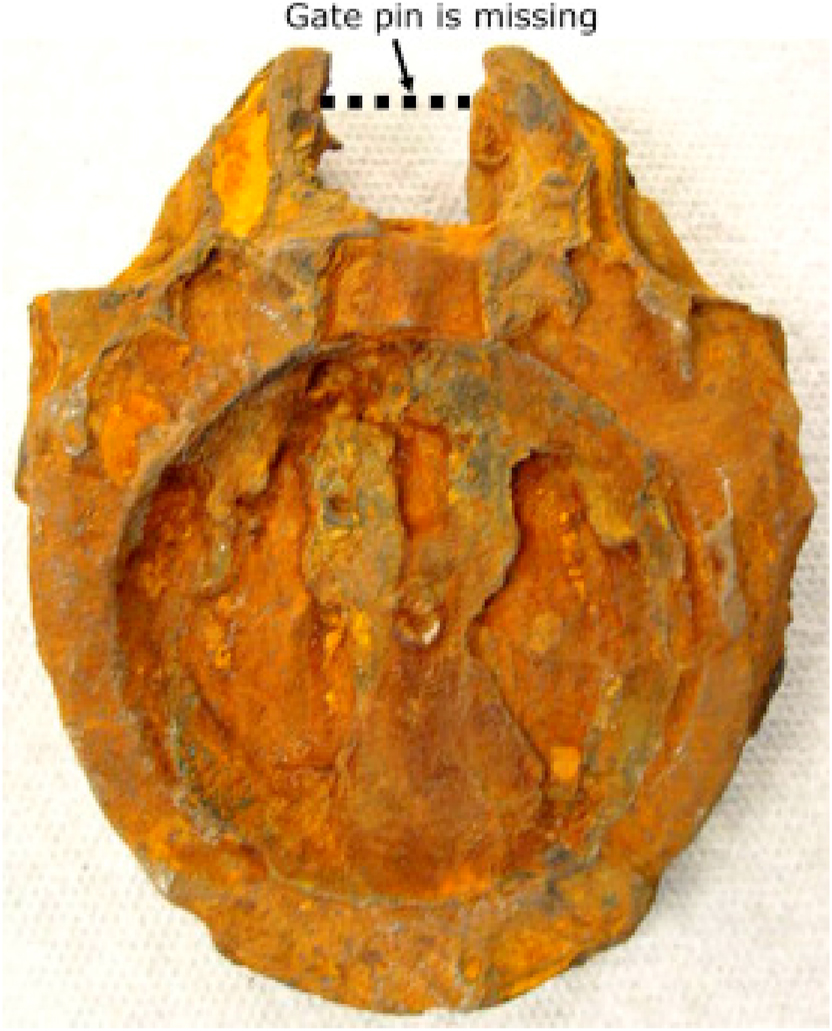
Uniform (general) corrosion (Tait 2018); reproduced with permission from Elsevier.
Visible signs of oxidation or rust on the material surface characterize uniform corrosion, facilitating detection (Tait 2018). Consequentially, material loss can compromise equipment functionality and structural integrity (Price and Figueira 2017). Preventive measures such as protective coatings, material selection, corrosion inhibitors, and CP systems are crucial in managing uniform corrosion (Biondini and Frangopol 2016). Implementing these strategies minimizes the impact of uniform corrosion, prolonging the service life of equipment and ensuring continued safety and functionality.
2.2.4 Galvanic corrosion
Galvanic corrosion occurs when dissimilar metals are in electrical contact within a conductive solution like seawater, leading to differential corrosion rates between the metals (Alazizi et al. 2016; Taheri et al. 2014). This phenomenon is prevalent in subsea structures where metals with varying oxidation potentials are in contact (Figure 3), with the risk increasing with more significant differences in potential (Alazizi et al. 2016). This electrochemical process forms a small cell, with one metal acting as the sacrificial anode and corroding more rapidly, while the other metal serves as the cathode and remains protected (Park and Kim 2020).

Illustration of galvanic corrosion; adapted from (PIF 2023).
The process hinges on the electrochemical potential of the metals, with the less noble metal undergoing faster corrosion as the sacrificial anode. In contrast, the more noble metal acts as the cathode and is shielded from corrosion (Alazizi et al. 2016). Common examples include aluminum and steel contact in subsea environments, where aluminum corrodes more rapidly as the anode, leaving steel relatively unharmed (Pedeferri and Ormellese 2018). Sacrificial anodes made of metals like magnesium or zinc protect critical components by diverting corrosion from them.
Effective management strategies for galvanic corrosion include using galvanic isolators, barrier materials, and protective coatings to separate and shield the metals (Farh et al. 2023). Additionally, sacrificial anodes can be installed to redirect corrosion away from vulnerable components (Khan et al. 2017). Understanding and addressing galvanic corrosion are crucial, particularly in industries where dissimilar metals are commonly in proximity, such as construction, maritime, and manufacturing, to ensure equipment and structural longevity and safety.
2.2.5 Crevice corrosion
Crevice corrosion is a localized form of corrosion within confined spaces or gaps on the surface of metals caused by differing oxygen concentrations (Pedeferri and Ormellese 2018). These spaces may be natural, like gaps between metal components, or intentionally designed, such as in flanges or gaskets (Bermúdez-Castañeda et al. 2021). Limited access to oxygen and electrolytes within these areas creates stagnant conditions conducive to corrosion (Da Costa et al. 2022).
The primary mechanism of crevice corrosion involves a contrast in oxygen concentration, with higher levels outside the crevice forming a protective oxide layer on the metal surface (Machuca et al. 2013). Depleted oxygen levels within the crevice lead to anodic dissolution of the metal, while the exterior surface acts as the cathode, shielded by the oxide layer (Chen et al. 2016b). This difference in electrochemical potential exacerbates corrosion within the crevice, identifiable by the presence of brownish or reddish corrosion products nearby (Bermúdez-Castañeda et al. 2021). Figure 4 illustrates the crevice corrosion mechanism describing the main electrochemical reactions. The major anodic reaction is given in reaction (1), and the possible cathodic reactions are hydrogen evolution reaction and/or oxygen reduction, provided by reactions (2) and (3), respectively.
where M represents the metal, and Mn+ represents the metal ions.
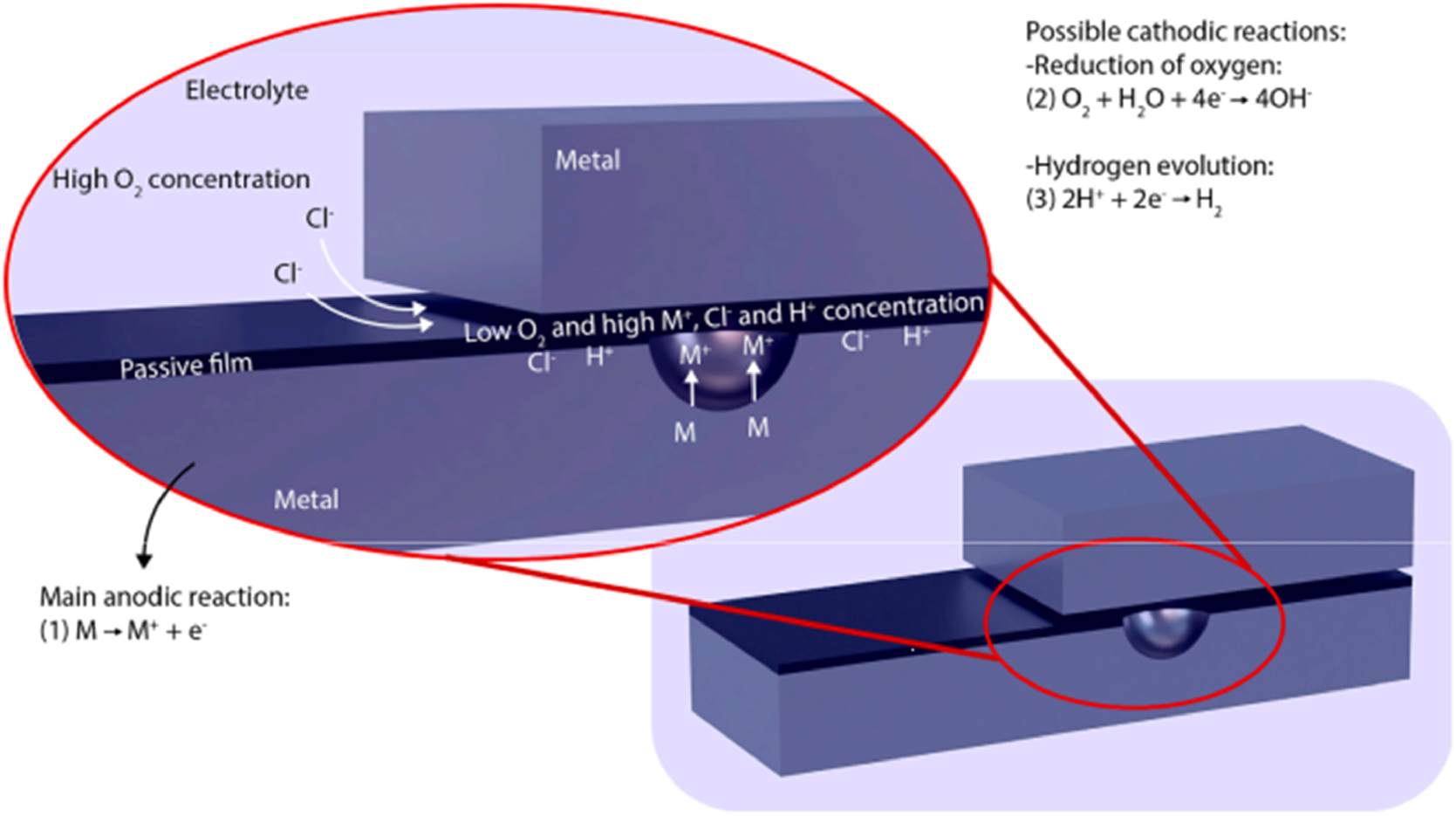
Crevice corrosion illustration and main electrochemical reactions (Costa et al. 2023); reproduced with permission from Elsevier.
The possible cathodic reactions are:
Crevice corrosion commonly occurs in flanges, bolted joints and where biofilms accumulate. Prevention strategies include reducing crevices in design, applying protective coatings, and ensuring effective drainage (Pedeferri and Ormellese 2018; Tator 2015). Environmental factors like pH and temperature influence the severity of crevice corrosion, necessitating careful monitoring and control (Da Costa et al. 2022). This is crucial in corrosive environments such as marine and offshore applications, where structures have numerous connections (Price and Figueira 2017). Rational design and maintenance practices are essential for predicting and mitigating crevice corrosion.
2.2.6 Microbiologically influenced corrosion
MIC poses significant challenges in subsea environments due to microorganisms like archaea and bacteria, which produce corrosive byproducts (Yazdi et al. 2022b). MIC, a form of harsh microbiota-enabled material degradation, is challenging to moderate and can lead to localized corrosion (Kannan et al. 2018). Detecting MIC requires a comprehensive understanding, combining compositional, chemical, morphological, biological, and electrochemical analyses (Kannan et al. 2018). Culture-based methods for detecting MIC may produce inaccurate results, highlighting the need for more reliable methods like metabolomic and metagenomic assays (Hoxha et al. 2014; Zhu and Kilbane 2005). Biofilms formed by microorganisms on subsea equipment surfaces can facilitate corrosion by creating oxygen barriers, accelerating localized corrosion (Zhang et al. 2022).
The mechanisms of MIC are complex, involving theories like biomineralization and anodic depolarization (Khan et al. 2021). However, the direct involvement of microorganisms in the corrosion process remains debated (Blackwood 2018). Classic theories, like the oxygen concentration difference cell theory (Figure 5a) and the corrosion product (Figure 5b) hypothesis, suggested that microbes are not directly involved in the corrosion process (Liu et al. 2023). The biocatalytic cathodic sulfate reaction (BCSR) hypothesis proposes that microorganisms extract electrons from metal surfaces, leading to corrosion (Figure 5c) (Zhou et al. 2013). Further studies have supported and refined this theory, elucidating mechanisms such as extracellular electron transfer (EET) (Jia et al. 2019; Li et al. 2018b). Biosensors targeting key MIC-inducing organisms, and wireless transmitters offer real-time monitoring solutions (Lafleur et al. 2016; Romao et al. 2017). Like probabilistic methods, risk-based inspection techniques, enhance MIC threat assessment (Singh and Pokhrel 2018).

Schematic diagram of corrosion mechanism of marine microorganisms. In marine environments, microorganisms are involved in the corrosion process in the form of biofilms, and several corrosion mechanisms have been illustrated: (a) oxygen concentration difference cell; (b) corrosion product; (c) biocatalytic cathodic sulfate reaction; (d) extracellular electron transfer; adapted from (Liu et al. 2023).
MIC presents a unique challenge due to its often subtle and insidious nature, which conventional total corrosion monitoring techniques may not adequately capture (Yazdi et al. 2022b). The inability to differentiate between microbial corrosion and other forms of corrosion can obscure the true extent of microbial activity and hinder targeted mitigation efforts. Exploring more specific MIC monitoring techniques is warranted to address this limitation. Techniques such as genetic analysis or microbiological assays offer the potential for more accurate detection and quantification of microbial corrosion (Sharma et al. 2022). Genetic analysis, including metagenomic sequencing, can provide insights into the microbial communities present on pipeline surfaces and their potential corrosive activity (Avelino-Jiménez et al. 2023; Staniszewska et al. 2019). Similarly, microbiological assays, such as corrosion coupon studies and microbial analysis, can offer direct evidence of microbial involvement in corrosion processes (Canales et al. 2021; Permeh et al. 2017).
By incorporating these more specific microbial corrosion monitoring techniques into corrosion control strategies, operators can better understand the microbial factors contributing to corrosion and tailor mitigation measures accordingly. Furthermore, integrating these techniques with existing total corrosion monitoring systems can provide a comprehensive understanding of corrosion mechanisms and improve the effectiveness of corrosion management programs.
Identifying biomarkers and improving biomonitoring standards are crucial for developing robust biosensors (Lomans et al. 2016). Nanomaterial-based platforms provide opportunities for precise MIC detection sensors (Gao et al. 2015; Hsu et al. 2016). Future research should focus on reliable MIC detection techniques in dynamic environments like subsea oil platforms, offering economic benefits and enhancing safety (Yazdi et al. 2022b). These advancements can reduce MIC incidents, despite increasing economic pressures, by providing low-cost and reliable monitoring solutions.
2.2.6.1 Significance and effectiveness of conventional microbial corrosion protection methods
Conventional microbial corrosion protection methods are vital in mitigating MIC in marine oil and gas pipelines. These methods are significant due to their proven effectiveness in inhibiting or controlling microbial activity, thereby reducing the risk of corrosion-related failures and extending the service life of pipelines (Lou et al. 2021). By targeting the microbial organisms responsible for corrosion, these protection methods help prevent costly damage and maintain the integrity of critical infrastructure.
Biocide treatment is one of the most commonly employed conventional microbial corrosion protection methods. Biocides are chemical agents that inhibit microbial growth and activity in pipeline systems (Erdogan 2022). By introducing biocides into the pipeline flow, operators can effectively suppress microbial populations and reduce the likelihood of MIC. Additionally, corrosion inhibitors or oxygen scavengers may be utilized to disrupt microbial metabolic processes and limit corrosion rates (Zhang et al. 2022).
Furthermore, CP is another essential method for mitigating MIC in submarine pipelines. CP systems work by imposing a negative potential on the pipeline surface, which helps to prevent the formation of corrosive microenvironments and inhibit microbial activity (Yazdi et al. 2023). However, it is crucial to consider the potential impact of marine fouling on CP effectiveness, as fouling organisms can interfere with the distribution of protective currents and compromise CP performance (Erdogan 2022).
Conventional MIC protection methods represent valuable tools in the fight against MIC in marine pipelines. Their significance lies in their ability to target microbial activity directly, offering an effective means of corrosion control in challenging subsea environments. By implementing these methods alongside comprehensive monitoring and maintenance programs, operators can safeguard their pipelines against microbial-induced corrosion and ensure the long-term integrity of their assets.
2.2.7 Pitting corrosion
Pitting corrosion, characterized by forming small pits on metal surfaces, is a severe challenge in subsea environments due to its destructive and localized nature (Alamri 2020). When the protective oxide layer on a stainless-steel component is impaired by contact with a corrosive marine environment, unshielded metal loses electrons through oxidation due to an electrochemical reaction. The result of the electrochemical reaction results in small cavities forming on the metal, called “pits” (Figure 6) (Bestic 2023).
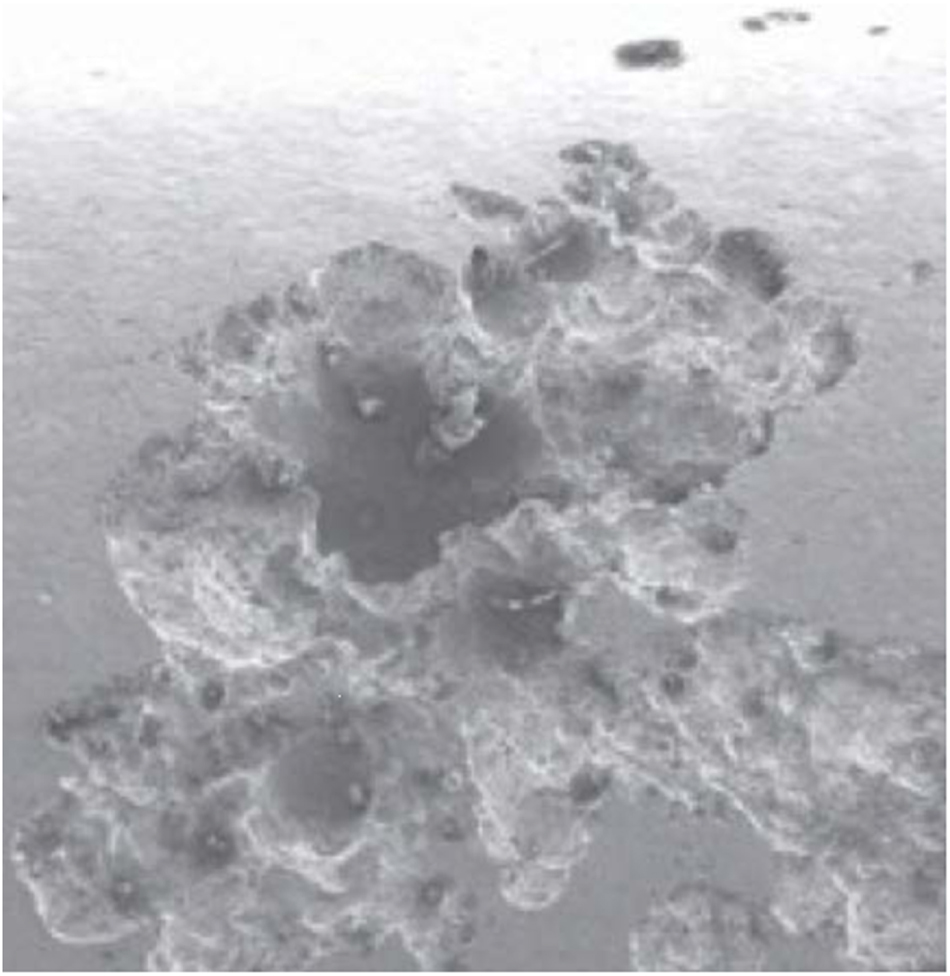
Illustration of pitting corrosion; adapted from (Bestic 2023).
The outcomes of pitting corrosion include material loss and deterioration of metal thickness, posing a significant threat to critical subsea equipment and structures (Zhang et al. 2019). To mitigate pitting corrosion, a multifaceted approach is necessary, including using corrosion-resistant materials like corrosion-resistant alloys (CRAs), protective coatings, and CP systems (Aljibori et al. 2023; Kermani and Harrop 2019). Thorough monitoring and regular inspections are crucial for early detection, while rational design practices can reduce crevices and improve ventilation to limit stagnant conditions that accelerate corrosion (Wan et al. 2019). Effective management of pitting corrosion is essential for safeguarding offshore equipment and structures from catastrophic failures in high-stakes subsea environments (Al-Dhanhani et al. 2018).
2.2.8 Hydrogen-induced cracking and stress corrosion cracking
HIC and SCC are significant corrosion mechanisms in subsea environments, influenced by factors like hydrogen absorption and tensile stress (Ohaeri et al. 2018). HIC, prevalent in carbon steel, occurs due to hydrogen absorption from hydrogen sulfide (H2S)-rich media, leading to internal defects and mechanical property degradation (Wojnas 2021). This makes structures susceptible to sudden failure under tensile stress (Figure 7), a concern for subsea structures (Mohtadi-Bonab 2019) (Figure 8).

Illustration of hydrogen induced crack: initiation, and when the sample fractured; adapted from (Zhang et al. 2017).
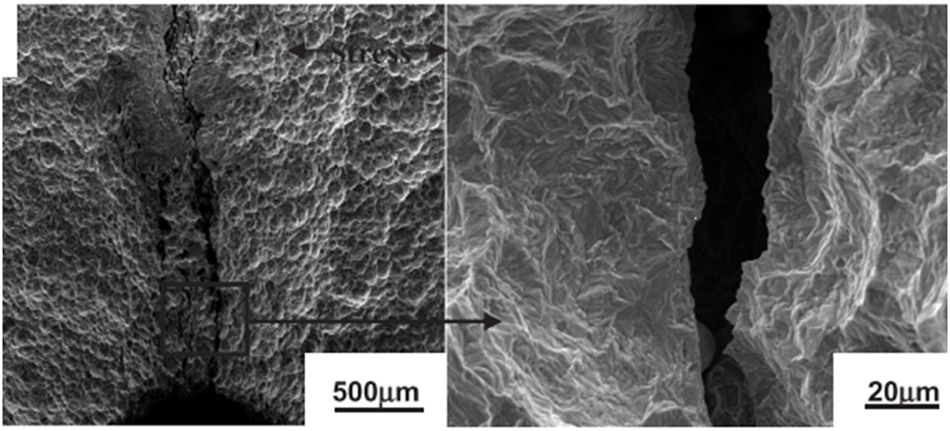
Illustration of stress corrosion cracking (Hao et al. 2018); reproduced with permission from Elsevier.
SCC, occurring under corrosive environments and tensile stress, is facilitated by chloride ions in seawater, compromising protective films and leading to cracking and structural failure (Hao et al. 2018; Prado 2022). Effective management requires corrosion-resistant materials, H2S monitoring, regular inspections, and maintenance protocols to detect and address corrosion signs, including early crack detection (Prado 2022). Additionally, inhibitors, protective coatings, and rational design can mitigate the corrosive impact and stress concentrations, ensuring structural integrity and safety (Farh et al. 2023).
Effective management of HIC and SCC in subsea environments requires a comprehensive approach. This includes the application of corrosion-resistant materials like corrosion-resistant alloys (CRAs) to reduce vulnerability to corrosion mechanisms (Kermani and Harrop 2019). In addition, it is crucial to monitor and control H2S concentrations in produced fluids, conduct regular inspections, and employ maintenance protocols toward identifying and addressing signs of corrosion, like early detection of cracks (Prado 2022). Inhibitors and protective coatings can also be used to reduce the corrosive impact of subsea environments. At the same time, material selection and rational design can minimize stress concentrations and ensure that materials operate below their SCC threshold (Farh et al. 2023).
2.2.9 Marine fouling and biofouling
The colonization of marine organisms such as algae, mussels, and barnacles on pipeline surfaces can lead to localized corrosion cells (Figure 9) due to their biological activities, altering oxygen and pH conditions (Dürr et al. 2022; Gu 2018; Menchaca et al. 2014). Their growth introduces local oxygen and pH variations, influencing the corrosion environment (Rao 2022). Algal metabolic processes affect oxygen concentrations, while the attachment of barnacles and mussels may alter pH levels (Wahl 2020). These variations create conditions conducive to localized corrosion initiation and spread (Ma et al. 2020).
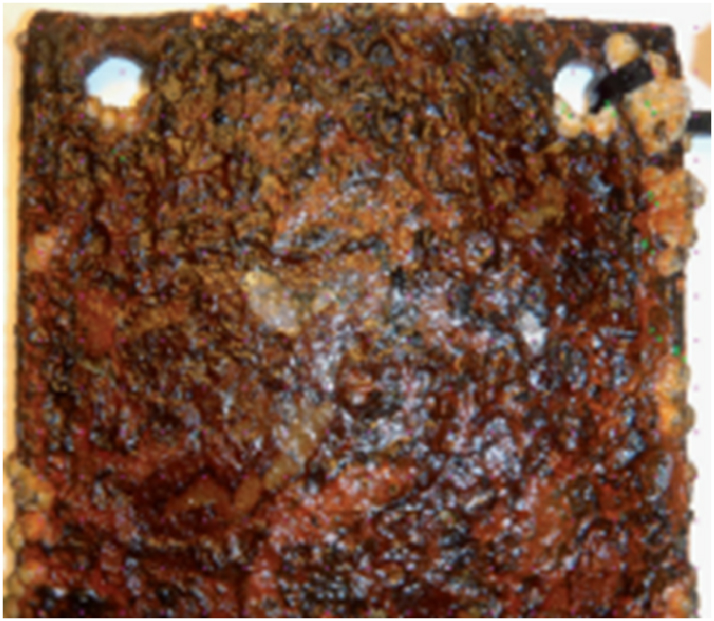
Illustration of marine fouling and biofouling; adapted from (Menchaca et al. 2014).
The secretion of acidic substances by marine organisms further lowers pH levels, exacerbating corrosion (Oluwoye et al. 2023). Proactive monitoring and mitigation strategies are essential to address the impact of aquatic organisms on flow line integrity, ensuring the sustained reliability of subsea infrastructure (Wang et al. 2021a).
2.3 Cathodic protection
CP is a crucial technique for mitigating corrosion in subsea environments, employing sacrificial anodes or impressed current systems to prevent structural degradation (Farh et al. 2022; Oryshchenko and Kuzmin 2015). Sacrificial anodes, typically made of more reactive metals like aluminum or zinc, sacrificially corrode to protect the structure, facilitated by the electrolytic nature of seawater (Khan et al. 2017). Impressed current systems, powered by external rectifiers, provide more precise control over protection levels and are suitable for larger structures (Zamanzadeh et al. 2021). Regular surveillance and maintenance are essential for both methods (Pedeferri and Pedeferri 2018). CP extends asset service life and minimizes environmental impact, offering cost-effective corrosion mitigation compared to repair and replacement (Lauria et al. 2018). However, effective implementation requires careful design, installation, and ongoing maintenance to ensure optimal performance (Zhou et al. 2023). Routine monitoring and inspections are crucial to sustain protection in subsea environments, safeguarding critical offshore assets from corrosion. See Figure 10 for an illustration of Sacrificial Anode CP (Erdogan 2022).

Implementation of sacrificial anode cathodic protection; adapted from (Harahap et al. 2023).
2.4 Coatings and inhibitors
Protective coatings, such as polyethylene and epoxy, serve as a crucial barrier between subsea equipment and corrosive environments, extending the operational safety and service life of assets like underwater structures and flow lines (Abbas and Shafiee 2020). These coatings form a tangible shield against corrosive elements, enduring subsea challenges like abrasion and saltwater exposure (Aljibori et al. 2023). Regular maintenance is essential to maintain coating integrity and prevent localized corrosion (Abbas and Shafiee 2020).
Corrosion inhibitors act as chemical safeguard compounds, reducing corrosion rates by forming protective layers on metal surfaces. They are introduced into subsea systems and come in various categories, like organic inhibitors (e.g., imidazolines) and inorganic inhibitors (e.g., aluminum compounds) (Abbas and Shafiee 2020). Inhibitors also mitigate gas hydrate formation, preventing flow blockages in subsea systems. Robust control and monitoring systems ensure correct inhibitor dosages for effective protection. Inhibitors and coatings work synergistically to provide comprehensive defense in subsea environments, with coatings establishing the initial protection and inhibitors providing secondary defense against corrosion (Olajire 2018). Careful selection, precise application, and regular maintenance of these protective measures are vital for preserving operational efficiency, minimizing maintenance costs, and ensuring subsea operation safety (Price and Figueira 2017).
2.5 Challenges
2.5.1 Fouling
Fouling, accumulating unwanted materials on subsea structures, poses challenges in offshore industries, particularly in subsea oil and gas production, impacting flow lines’ efficiency and lifespan (Nwuzor et al. 2021). Biofouling, caused by marine organisms like sea grasses and barnacles, limits fluid flow and increases drag on underwater structures (Rao 2022). Sediment fouling reduces flow line efficiency and may require cleaning operations (Abdulhussein et al. 2023). Corrosion byproducts and chemical treatments can contribute to fouling, exacerbating corrosion concerns (Obot 2021). Fouling increases internal surface roughness, leading to higher pumping costs and reduced production rates.
Marine fouling poses significant challenges in setting protection potentials for CP systems in submarine pipelines (Erdogan 2022). Marine fouling refers accumulating organisms, such as algae, barnacles, and mussels, on the surface of submerged structures. These fouling organisms can create electrical insulating layers, alter the local chemistry, and interfere with the distribution of protective currents in CP systems, complicating the accurate determination of protection potentials (Alonso-Valdesueiro et al. 2022).
One of the primary challenges is the variability of fouling growth rates and patterns across different marine environments. Fouling organisms tend to colonize pipeline surfaces unevenly, leading to localized changes in CP effectiveness. As a result, determining the appropriate protection potential for the entire pipeline length becomes challenging, as some areas may experience excessive CP, while others remain under-protected (Erdogan 2022).
Additionally, the presence of marine fouling can introduce variability in the electrical conductivity of the surrounding seawater. Fouling organisms may release organic compounds or create biofilms that alter the conductivity of the electrolyte, affecting the distribution of protective currents in CP systems (Price and Figueira 2017). This variability complicates the accurate prediction and adjustment of protection potentials to maintain uniform corrosion protection along the pipeline.
Moreover, the dynamic nature of marine fouling presents challenges in long-term CP system management. Fouling growth rates may vary seasonally or in response to environmental changes, requiring regular monitoring and maintenance to ensure adequate corrosion protection. Failure to address fouling accumulation promptly can lead to localized corrosion, undermining the overall effectiveness of CP systems and increasing the risk of pipeline integrity issues (Li and Ning 2019).
Marine fouling poses challenges in setting protection potentials for CP systems by introducing variability in fouling growth rates, altering seawater conductivity, and complicating long-term management strategies (Shokri and Fard 2022). Addressing these challenges requires comprehensive monitoring and maintenance programs tailored to specific marine environments, and the development of innovative fouling-resistant coatings or mitigation techniques to enhance CP effectiveness in subsea pipelines.
2.5.2 Optimizing protection potential settings
Antifouling coatings deter marine growth and lessen biofouling by releasing chemicals inhibiting attachment by aquatic organisms (Nurioglu and Esteves 2015). Regular pigging and cleaning operations remove fouling deposits, restoring flow line efficiency (Nakatsuka et al. 2021). Chemical inoculation with scale inhibitors and biocides can prevent fouling. Design practices, including suitable coatings and materials, can mitigate fouling potential, while design modifications enhance the flow regime to inhibit sediment deposition (Pistone et al. 2021).
Optimizing protection potential settings in the presence of marine fouling requires a combination of insights from existing literature and practical field experience (Pistone et al. 2021). Drawing upon these sources, several suggestions can be made to enhance the effectiveness of CP systems:
Regular inspection and cleaning: implementing routine inspections of submarine pipelines to assess fouling levels and cleaning as necessary can help maintain optimal CP performance. Utilize remotely operated vehicles (ROVs) with imaging technology to monitor fouling accumulation and identify areas requiring cleaning (Ho et al. 2020).
Fouling-resistant coatings: apply fouling-resistant coatings to pipeline surfaces to deter fouling organism attachment and minimize the formation of insulating layers. These coatings, such as silicone-based or non-stick polymer coatings, can help maintain the integrity of CP systems by reducing the impact of fouling on current distribution (Khalid et al. 2023).
Dynamic adjustment of protection potentials: incorporate dynamic adjustment mechanisms into CP systems to adapt protection potentials in response to changing fouling conditions. To continuously assess fouling levels and optimize protection potentials accordingly, utilize advanced monitoring techniques, such as real-time corrosion sensors or intelligent control systems.
Utilize marine growth predictive models: develop predictive models based on environmental parameters (e.g., water temperature and nutrient levels) to forecast fouling growth rates and anticipate potential CP performance issues (Khalid et al. 2023). These models can aid in proactive maintenance planning and optimization of protection potential settings to mitigate fouling-related corrosion risks.
Collaborative research and development: collaborate with industry stakeholders, research institutions, and technology providers to develop innovative fouling mitigation strategies and CP system enhancements. By leveraging collective expertise and resources, novel solutions tailored to specific marine environments can be developed to address fouling challenges effectively (Giammar et al. 2021).
Field testing and validation: conduct comprehensive field testing and validation studies to assess the performance of optimized protection potential settings in real-world marine environments (Khalaf et al. 2023). Collaborate with operators to implement pilot projects and monitor the long-term effectiveness of CP system modifications in mitigating fouling-induced corrosion.
By implementing these suggestions, operators can optimize protection potential settings in marine fouling, ensuring the continued integrity and reliability of submarine pipelines in challenging subsea environments.
2.5.3 Remote operation
Subsea equipment, often located at great depths, poses challenges for inspection and maintenance, prompting the adoption of remote operations in offshore industries (Prestidge 2022). Remote control centers, ROVs, and communication systems enable efficient subsea asset management (Aguirre-Castro et al. 2019). ROVs with sensors and cameras conduct repairs, maintenance, and inspections, providing real-time data feedback (Armstrong et al. 2019). Robust communication links, including fiber optic and acoustic technologies, facilitate data transmission between remote control centers and subsea assets (Wei et al. 2021).
The advantages of remote operations include heightened safety, cost efficiency, enhanced efficiency, and reduced environmental impact (Petillot et al. 2019). Reduced human exposure to subsea risks and decreased need for manned operations lead to cost savings and increased economic efficiency (Anderson 2018). Real-time data enable swift decision-making and maintenance procedures while minimizing disruptions to marine ecosystems (Macreadie et al. 2018). This evolving field promises to reshape subsea activities, enhancing safety, sustainability, and efficiency in the aquatic world (Khaskheli et al. 2023).
2.5.4 Long-term reliability
Subsea structures must endure harsh underwater conditions for prolonged periods, necessitating robust materials and corrosion control techniques (Ren et al. 2021). Long-term reliability is crucial for the smooth functioning of subsea operations and for safeguarding substantial investments in subsea assets.
Critical factors for achieving long-term reliability include selecting suitable materials such as non-metallic materials and corrosion-resistant alloys (Sonke and Paterson 2022), employing careful design practices to reduce stress and corrosion (Fang et al. 2022), and implementing effective corrosion control measures like inhibitors, coatings, and CP (Habib et al. 2021).
Challenges to long-term reliability include persistent corrosion exacerbated by seawater and aggressive agents, mechanical wear from sediment presence, waves, and currents, as well as fouling, which reduces efficiency and requires recurring maintenance (Houmstuen 2010; Weber and Esmaeili 2023).
Addressing these challenges requires a multifaceted approach involving rigorous monitoring, proactive design, corrosion control, judicious material selection, and compliance with industry standards (Johnson 2017). By adopting such strategies, subsea infrastructures can operate efficiently, safely, and sustainably over prolonged periods, validating investments in subsea assets (Brun 2021).
3 Corrosion probe design
Corrosion probe design is crucial to managing and monitoring corrosion in subsea environments (Xia et al. 2017). A corrosion probe is an instrument dedicated to assessing the rate and extent of corrosion on subsea equipment and structures (De Oliveira et al. 2022; Slomp et al. 2012). Corrosion probe design is a complicated process that needs a deep knowledge of corrosion mechanisms and the detailed conditions of the subsea environment (Laleh et al. 2023; Tan et al. 2021). Effective probe design is crucial for accurate corrosion rate measurements and reliable data collection. Careful reflection on material selection, geometry, protection against fouling, and sensor placement is essential to ensure that corrosion probes give reliable and accurate data for corrosion control and management of asset integrity in subsea applications (Bender et al. 2022). Miniaturization and advanced sensor technologies improve the effectiveness of corrosion probes (He et al. 2022a). The report of (Wasif et al. 2023) explored the design considerations and proposed improvements in probe design for better performance (Tan et al. 2011). considered a test technique using wire beam electrodes to avoid the challenges of testing and monitoring under-deposit corrosion and its inhibitors. Figure 11 presents a schematic illustration of a corrosion probe built by partially covering the wire beam electrode working surface with a rubber ‘O’-shaped ring filled with sand. This partially covered wire beam electrode probe surface was opened to a customized electrochemical testing cell to mimic a localized under deposit corrosion environment. The proficiency of this corrosion probe was established by mapping galvanic currents and corrosion potentials across the multi-electrode array with the effects of numerous inhibitors. A distinct corrosion behaviour was observed from a partially concealed wire beam electrode surface in a CO2-saturated brine environment with and without corrosion inhibitor imidazoline (Tan 2020).
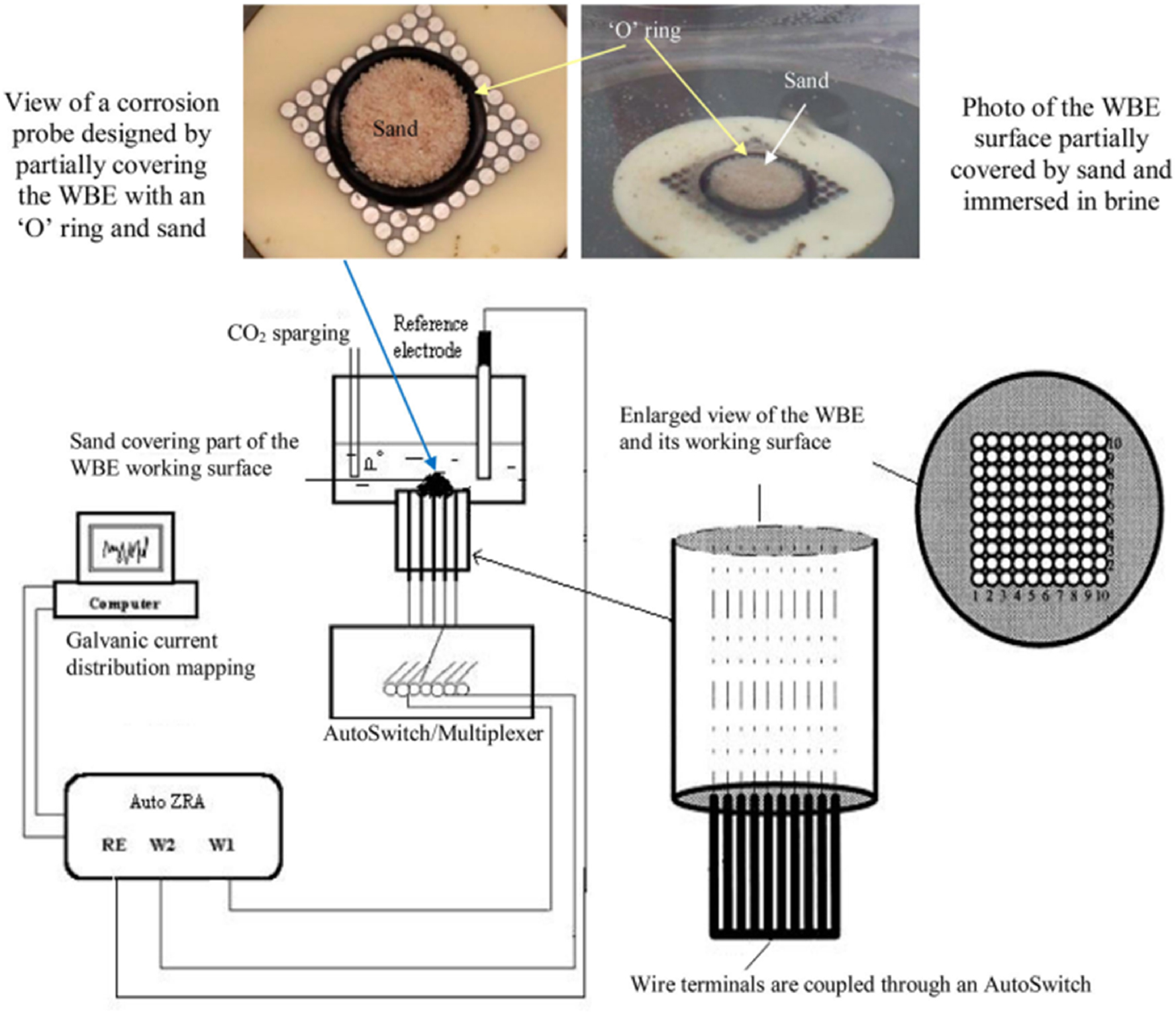
Schematic diagrams showing a corrosion probe designed using the wire beam electrode to simulate and monitor under-deposit corrosion and its inhibition (Tan 2020); reproduced with permission from Sage.
3.1 Geometry and surface area
The geometry of a corrosion probe is a vital consideration. The size, shape, and surface area of a probe directly impact its ability to measure corrosion rates effectively (Durnie et al. 2005; Martinelli-Orlando and Angst 2022). The geometry must enable collection of representative data reflecting the corrosion conditions of the whole subsea structure (Barker et al. 2014). The geometry of a corrosion probe for subsea domains is carefully designed to fulfill its primary role: monitoring and assessing the corrosion rate on submerged surfaces (Wright et al. 2019b). This specific design accounts for the exceptional challenges of subsea conditions, including low temperatures, high-pressure environments, and the corrosive nature of seawater. Numerous critical factors come into play when shaping the geometry of a corrosion probe in this challenging context.
Essentially, the sensing surface geometry is an essential consideration. Usually, the sensing surface of the probe is either slightly curved or flat to ensure direct and steady contact with the target surface, either the external surface of a submerged structure or the interior of a subsea pipeline (Reddy et al. 2021). This geometry is essential in giving dependable and precise corrosion measurements.
The size and profile of corrosion probes differ to accommodate diverse subsea applications (Durnie et al. 2005; Martinelli-Orlando and Angst 2022). Probes come in various dimensions, with side lengths or diameters attuned to suit particular requirements. More miniature probes are suitable for accessing confined spaces within flow lines, while larger ones are used for broader surface monitoring (Floreano and Wood 2015). Furthermore, the material selected for the probe itself is of paramount importance, with corrosion-resistant materials such as stainless steel, non-metallic composites, or titanium being the preferred choices to ensure the probe remains invulnerable to the corrosive nature of seawater (Shokri and Fard 2022). The geometry also includes features for easy deployment, mounting, and accessibility for maintenance, addressing the practical aspects of their incorporation into subsea systems. Finally, several corrosion probes are designed with a rationalized shape to curtail flow disruption when placed within a flow line (Nolte et al. 2021). This rationalized design ensures that the probe does not create additional pressure drops or considerably obstruct fluid flow, sustaining the efficiency of the subsea system. Eventually, the geometry of corrosion probes in subsea domains is a careful balance of ease of deployment and maintenance, compatibility, and functionality, all of which are critical for perfect corrosion monitoring while enduring the challenges of the subsea realm (Barker et al. 2014).
3.2 Material compatibility
The materials used in constructing corrosion probes should be compatible with the subsea environment (Joosten et al. 1998). Materials must be immune to corrosion themselves to ensure the accuracy and longevity of the probe. Materials used in constructing corrosion probes for the subsea environment are carefully chosen to endure the formidable challenges posed by these underwater settings (Lasebikan et al. 2021). The principal criteria for material selection include durability, corrosion resistance, and compatibility with the aggressive conditions characteristic of subsea locations (Iannuzzi et al. 2017). Numerous key materials are suitable for the design of corrosion probes for underwater monitoring.
Stainless steel, notably the 316 series, is one of the preferred choices since it is exceptionally corrosion resistant, making it proficient in combating the harsh nature of seawater (Fajobi et al. 2021). Stainless steel corrosion probes are renowned for their robustness and capacity for prolonged lifespan. Meanwhile, titanium alloys are frequently engaged to combat the rigors of deepwater environments (Zhu et al. 2014). These alloys give excellent corrosion resistance, a remarkable strength-to-weight ratio, and biocompatibility, which make them essential for enduring subsea conditions (Reddy et al. 2021).
Hastelloy alloys, comprising a large amount of nickel, can endure corrosive environments, including those encountered in subsea settings (Shifler 2022b). Their usefulness covers applications requiring resistance to aggressive chemicals, pressures, and high temperatures. Non-metallic materials, like fiberglass-reinforced composites, high-density polyethylene (HDPE), and thermoplastics, are embraced for their inherent corrosion resistance, hardiness, and lightweight attributes, factors particularly relevant in situations where weight reduction and electrical insulation are vital (Khalid et al. 2020). The choice of material pivots on the particular demands of the application, the level of required corrosion resistance, the budget constraints, and the environmental milieu, all of which underline the need to make an informed choice for optimum performance and reliability in subsea corrosion monitoring.
3.3 Sensor placement
The placement of corrosion sensors on the probe is crucial. Sensors should be strategically located to measure corrosion rates at critical points on the structure (Ciang et al. 2008). This often involves positioning sensors in areas prone to corrosion initiation or where materials transition (Ahuir-Torres et al. 2019). Strategic placement of corrosion sensors on a subsea probe is critical to its design, and it plays a fundamental role in the efficacy of the probe for corrosion rates monitoring on submerged surfaces (Ho et al. 2020). Precise positioning ensures these sensors can provide reliable data in the demanding subsea environment (Ciang et al. 2008). Several vital considerations guide the corrosion sensor placement, including factors like coverage, accessibility, and the unique requisites of the subsea application (He et al. 2022b).
Essentially, the sensors must establish direct contact with the monitored surface. This confirms that corrosion rates are correctly measured, and the probe geometry usually includes a slightly curved or flat sensing surface to expedite this close interaction (Wright et al. 2019a). Even distribution of sensors across this surface is another vital aspect. The distribution pattern could vary based on the size and shape of the probe, but the objective is to obtain representative data from different points on the submerged surface, ensuring that corrosion is detected uniformly (Varela et al. 2015).
Accessibility for maintenance is a vital concern. Several probes feature replaceable or removable sensing elements, streamlining periodic inspection and upkeep without requiring the removal of the entire probe from the subsea domain (Mustapha et al. 2021). Furthermore, installation and deployment factors are considered during the sensor’s placement (Noel et al. 2017). This can include features such as threads, flanges, or connectors that permit secure attachment to subsea structures or equipment. Moreover, the configuration and type of corrosion sensors employed, as well as any defensive measures against flow-related effects, play a role in manipulating their optimum placement (Van Blaricum et al. 2016). These collective considerations contribute to the accurate monitoring of corrosion and the overall integrity of subsea assets.
3.4 Sensor types
Several types of sensors can be combined with the corrosion probe, including:
3.4.1 Electrochemical sensors
Electrochemical sensors measure corrosion rates by monitoring changes in electrical current or potential between the structure and the probe (Xia et al. 2017). Electrochemical sensors are commonly used in subsea corrosion probes. They function on the principles of electrochemistry, making them a reliable choice for monitoring corrosion rates on submerged surfaces (Figueira 2017). These sensors operate within an electrochemical cell framework, usually comprising an electrolyte, a reference electrode, and a working electrode (Xia et al. 2017). Since the working electrode comes into contact with the submerged surface, it methodically tracks electrochemical reactions occurring at the metal-electrolyte junction, facilitating the precise measurement of corrosion rates (Rajendran et al. 2023).
The standout characteristic of electrochemical sensors lies in their outstanding precision and sensitivity. These sensors can detect even the smallest shifts in the electrochemical behavior of the metal, thus expediting the accurate measurement of corrosion rates (Khan et al. 2020). This amplified sensitivity proves specifically essential in subsea applications where early detection of corrosion is vital for proactive maintenance and damage mitigation.
Moreover, electrochemical sensors come in different types, including electrochemical impedance spectroscopy (EIS), galvanostatic, and potentiostatic sensors (Khan et al. 2020). Each type indulges various approaches to corrosion monitoring, in alignment with certain application requirements. The sensors are fabricated using corrosion-resistant materials like iridium, gold, or platinum, ensuring both their steadfast performance and longevity in the corrosive subsea environment (Li et al. 2022a). These sensors are incorporated into corrosion probes, establishing direct contact with submerged surfaces, and are linked to data acquisition systems, enabling real-time data analysis (Al Handawi et al. 2016). Consequently, they give priceless insights into the corrosion process, eventually contributing to the current reliability and integrity of subsea equipment and structures while reducing the environmental concerns of corrosion-induced failures (Khan et al. 2020).
3.4.2 Weight loss sensors
Weight loss sensors measure corrosion by tracking the weight loss of the probe due to corrosion over time (Liu et al. 2019). Weight loss sensors are fundamental constituents of corrosion probes designed for subsea environments, serving as dependable tools for monitoring corrosion rates on submerged surfaces (Wright et al. 2019a). These sensors function on a straightforward yet extremely effective principle, including the measurement of weight loss in test specimens (normally metal coupons) because of the corrosive impacts of the subsea environment in the long run. Several key considerations and features make weight loss sensors a robust choice for corrosion monitoring in these challenging underwater settings.
The choice of the test sample is of utmost importance in weight loss sensors. Coupons are usually manufactured from the same material as the pipeline or structure under observation, ensuring that the corrosion rate measured on the coupons perfectly reflects the corrosion occurring on the real infrastructure (Reddy et al. 2021). These coupons are open to the subsea environment together with the structure, and at predefined intervals, they are retrieved, cleaned to remove corrosion products, and meticulously weighed. The weight loss measured on the coupons is directly proportional to the corrosion rate, thus giving extremely accurate and precise insights into the advancement of corrosion (Ali et al. 2020).
The accuracy and precision of weight loss sensors are notable, allowing the detection of even minor weight changes in the coupons, which is crucial for all-inclusive corrosion monitoring (Reddy et al. 2021). Their capability to gauge corrosion advancement over time enables operators and engineers to make informed decisions concerning maintenance and potential repairs. Furthermore, the data collected from weight loss sensors can help in corrosion modeling, predicting future corrosion rates, and enhancing maintenance strategies for subsea infrastructure (Xia et al. 2022). This predictive approach not only aids in preserving structural integrity but also contributes to reducing the environmental impact related to corrosion-related damage in the subsea milieu (Soomro et al. 2022).
3.4.3 Ultrasonic sensors
Ultrasonic sensors detect changes in material thickness using sound waves, indicating corrosion (Marcantonio et al. 2019). In subsea corrosion probes, ultrasonic sensors are essential in monitoring the structural integrity of submerged infrastructure using high-frequency sound waves (Meribout et al. 2021). This state-of-the-art technology works based on the basic principle of sending these sound waves into the material under inspection and analyzing the reflected waves or echoes. The subtlest of deviations in material thickness or structure is accurately detected, making ultrasonic sensors an indispensable and versatile tool for evaluating erosion, corrosion, or defects in a range of materials, from metals to non-metallics (Adegboye et al. 2019).
One of the remarkable features of ultrasonic sensors is their ability to monitor in real-time, enabling continuous assessment of subsea assets (Ramachandran 2016). This dynamic functionality empowers operators and engineers in making informed and timely decisions regarding repair and maintenance activities, thus mitigating the risks accompanying corrosion-related damage. Moreover, ultrasonic sensors give a vital approach to measuring material thickness in subsea applications, allowing the identification of areas with substantial material loss to corrosion (Ho et al. 2020). Their non-destructive testing nature ensures the structural integrity of subsea components is intact during the process of inspection.
Ultrasonic sensors are mostly beneficial in subsea environments where accessibility can be difficult since they can be remotely used and incorporated into subsea pipelines, structures, or ROVs (Jacob et al. 2017). Their application in such conditions highlights the importance of accurate calibration and interpretation of ultrasonic data to ensure the results are reliable. These sensors are also designed to endure the extreme conditions prevalent in subsea environments, like low temperatures, high pressures, and the corrosive effects of seawater (Yang et al. 2017). The data they collect is not just raw information but a valuable resource for improving maintenance schedules and minimizing downtime by creating detailed reports and corrosion maps, eventually contributing to the dependability and preservation of subsea infrastructure.
3.5 Protection against fouling
Subsea structures can be prone to fouling from marine sediments and organisms, interfering with probe accuracy (Delgado et al. 2023). Design features like cleaning mechanisms, protective housings, and anti-fouling coatings should be integrated to alleviate fouling effects (Liu et al. 2021). Designing corrosion probes to prevent fouling in subsea settings is a specified undertaking geared toward ensuring the unhindered (Pacheco et al. 2008), lasting reliability of corrosion monitoring systems. Fouling is the amassing of unwanted substances such as sediments and marine organisms on submerged structures, which poses a substantial challenge to accurate corrosion measurements (Rao 2022). In addressing this concern, many key design considerations come into play to maintain the integrity of these vital monitoring tools.
The choice of a smooth and streamlined shape for corrosion probes is pivotal. Such designs reduce the likelihood of marine organisms and debris adhering to the probe’s surface. The goal is to maintain a low-turbulence environment around the probe, which helps prevent the accumulation of fouling agents that can hinder its functionality. Additionally, anti-fouling coatings are often applied to the probe’s surface, acting as a protective barrier against the attachment of fouling agents (Pacheco et al. 2008). These coatings come in various forms, including biocides and non-stick materials, to cater to the specific conditions of the subsea environment.
Proper orientation and positioning of the probe within the subsea system are vital factors. Selecting areas with favorable water flow can deter the buildup of fouling agents. Moreover, the strategic orientation of the probe minimizes the impact of fouling on the corrosion sensors, ensuring their accessibility for accurate measurements (Rao 2022). Some corrosion probes are equipped with self-cleaning mechanisms, such as brushes or wipers, to periodically remove fouling materials, enhancing their resistance to fouling and maintaining the reliability of corrosion data (Delgado et al. 2023). Material selection plays a role as well, favoring smooth-surfaced materials with inherent resistance to biofouling. These corrosion probes often require regular maintenance, including inspections and cleaning procedures, to ensure that fouling does not compromise the accuracy of corrosion measurements (Delgado et al. 2023). In tandem with remote monitoring capabilities, operators can track fouling levels and take timely corrective actions, safeguarding subsea infrastructure from the challenges posed by fouling while maintaining the precision of corrosion data.
3.6 Data transmission and power supply
Corrosion probes require a means of data transmission to the surface monitoring equipment. This may involve wireless communication systems or electrical cables (Khan et al. 2020). Adequate power supply or energy harvesting mechanisms also need to be considered to ensure continuous operation (Hudson et al. 2022). Reliable data transmission and power supply are essential for subsea corrosion probes to operate effectively in remote and challenging underwater environments (Zhang et al. 2019). To ensure their smooth performance, different approaches have been used for data transmission.
Wired communication is a reliable choice, enabling real-time data exchange via subsea cables or umbilicals (Jakovljevic 2017). These connections facilitate continuous control and monitoring, making them fit for quite shallow subsea scenarios or locations demanding constant connectivity. Fiber-optic cables are often the conduit of choice, given their high data transmission capacity and resistance to the corrosive effects of seawater (Yan et al. 2022). In inaccessible and more remote subsea sites, optical and acoustic communication gives practical solutions. Acoustic modems transmit data through sound signals via the water, with information relayed between the probe and an underwater vehicle or a surface buoy (Otero et al. 2023). Optical communication uses light for data transmission, specifically suitable for high-bandwidth applications and frequently used in tandem with subsea cables or ROVs (Tsai et al. 2019). Moreover, satellite communication covers the reach of subsea probes in isolated and deep environments by transmitting data to satellites in orbit, which then communicate it to ground stations for further analysis (Trasviña-Moreno et al. 2017). These versatile data transmission techniques cater to a variety of subsea conditions and requirements.
To power subsea corrosion probes, several strategies are used. High-capacity Batteries provide the needed power supply, with options like rechargeable or non-rechargeable batteries, designed for specific deployment requirements and duration (Alonso-Valdesueiro et al. 2022). Inductive coupling gives a wireless solution, enabling power transfer via electromagnetic fields from a surface source to the probe. Pneumatic and hydraulic systems are used in specific applications, harnessing air or pressurized fluid to generate power. In exceptional cases, thermal energy differentials in the subsea environment are leveraged to produce power via thermoelectric generators, converting temperature gradients into electrical energy (Mysorewala et al. 2022). These diverse power supply techniques ensure that subsea corrosion probes can function autonomously and deliver critical data for asset management and corrosion monitoring. The choice of method depends on factors like deployment duration, data bandwidth, subsea depth, and environmental conditions (Jayamaruthi et al. 2023).
3.7 Durability and longevity
Corrosion probes must be designed to survive the aggressive subsea environment for long periods without maintenance (Price and Figueira 2017). Coatings, materials, and construction techniques must be carefully selected to ensure durability and long-term reliability (Ho et al. 2020). Extending the longevity and durability of corrosion probes operating in the challenging subsea environment is vital for the reliability of corrosion monitoring and preserving the integrity of underwater infrastructure (Wold et al. 2018). Subsea conditions present a formidable range of challenges, like frigid temperatures, high pressure, and the corrosive nature of seawater, requiring a comprehensive approach to probe design and maintenance (Zhou et al. 2023).
Material selection is key to achieving durability. Corrosion probes must be designed using materials known for their resistance to corrosion, like titanium, stainless steel, or specialized alloys (Nogara and Zarrouk 2018). These materials endure harsh subsea conditions and remain compatible with anti-corrosion biocides and coatings (Omran et al. 2020). Safeguarding the continuous protection of the probe is accomplished using anti-corrosion coatings, forming a needed barrier against the corrosive effects of seawater (Li et al. 2023a). Regular inspection and maintenance, as well as recoating when required, are crucial in preserving this protective shield.
Effective encapsulation is another vital aspect of promoting durability. Robust enclosures and seals are the first line of defense, inhibiting water ingress and preserving the internal components of the probe, predominantly sensors and electronic systems (Darr et al. 2007). Connectors and seals must be carefully selected to endure subsea pressures and protect against water incursion, ensuring the integrity of the electrical components of the probe. Moreover, implementing maintenance capabilities and remote monitoring not only streamlines the probe’s operation but also alleviates the need for frequent physical interventions (Nauert and Kampmann 2023). This technique will benefit the environment and extend the operational lifespan of the probe, offering vital corrosion data for asset integrity management. Corrosion probes in subsea settings perform well when rationally designed, assiduously maintained and fortified against the numerous challenges presented by the underwater world.
3.8 Compatibility with remote monitoring
Various subsea structures are monitored remotely, and the design corrosion probe must accommodate remote data collection and integration with present monitoring systems (Reddy et al. 2021). Attaining compatibility between remote monitoring systems and corrosion probes in the challenging subsea environment is crucial for easy corrosion data collection and the effective management of asset integrity (Ho et al. 2020). This compatibility depends on numerous critical considerations that should be addressed in the design and operation of the probes.
Firstly, communication protocols are a basis of compatibility. Corrosion probes must be equipped with communication systems in alignment with the remote monitoring infrastructure. Whether it’s through wired solutions, optical, or acoustic, the communication method of the probe must be designed to work cohesively with the broader monitoring system to support the real-time transmission of corrosion data (Reddy et al. 2021).
Efficiency in power management and data transmission is equally crucial. The subsea environment poses distinctive challenges, and the data transmission system of the probe must be designed to resist these conditions, ensuring interference-resistant and reliable communication (Ho et al. 2020). Moreover, energy-efficient components and power sources, like renewable options, help prolong the operational life of the probe and reduce the need for frequent battery replacements (Yadav and Kumar 2023). This compatibility with remote monitoring will streamline data collection and optimize the overall functionality of the probe, making it a precious tool in subsea asset management.
3.9 Integration with cathodic protection
With the implementation of CP systems, corrosion probes must be designed to work in conjunction with the systems to ensure corrosion control optimization (Xia et al. 2022). Integrating CP with corrosion monitoring systems in subsea environments creates a powerful strategy, effectively harmonizing proactive monitoring with active corrosion inhibition to preserve the integrity of submerged structures (Shifler 2022a). This synergy depends on several vital considerations to ensure a robust and unified approach to corrosion management.
First and foremost, this incorporation aligns with the shared objectives of CP and corrosion monitoring, both of which aim to alleviate corrosion damage (Khalaf et al. 2023). By effortlessly blending their goals, operators can formulate a comprehensive corrosion management scheme that ranges from real-time data collection to proactive mitigation. The data generated by corrosion monitoring gives essential feedback for measuring the performance of the CP system, enabling immediate adjustments when necessary (Varela et al. 2015). This synergy facilitates efficient and targeted protection, addressing corrosion curses more effectively. Furthermore, this incorporation facilitates decision-making via data-driven insights. Corrosion data informs operators about the effectiveness of CP systems, allowing them to vary parameters like anode replacements or current output promptly (Rossouw and Doorsamy 2021). This ensures that CP systems remain highly efficient and economically feasible. By predicting areas prone to corrosion, this integration also expedites proactive maintenance, prolonging the life of CP equipment while minimizing operational costs.
Moreover, the concurrence of CP systems and corrosion monitoring provides a level of redundancy, improving overall reliability (Stephenson et al. 2009). In case of a failure in one system, the other can step in to give corrosion data and protection, ensuring continuous asset integrity and safety. Furthermore, the integration can harness remote monitoring capabilities, expediting swift responses from a central location, even in remote subsea settings (Onuoha et al. 2022). This combination underlines the proactive approach, significant cost savings, and enhanced decision-making inherent in the effective management of corrosion in the challenging subsea realm (Agarwala et al. 2000).
3.10 Data accuracy and precision
The design must aim for precise and accurate data collection. Calibration and validation procedures should be established to ensure the probes provide reliable information (Barshinger et al. 2016). The precision and accuracy of data obtained by corrosion probes in subsea settings are essential for making informed decisions about the maintenance and integrity of underwater infrastructure (Ho et al. 2020). These probes depend on many key factors to ensure the reliability and quality of the data they deliver.
Sensor calibration is a basic aspect of data accuracy. Consistent calibration procedures are crucial to regulating corrosion sensors, correcting any performance drift, and ensuring that the measurements align with established standards (Meribout et al. 2021). By doing so, corrosion probes can constantly provide data that accurately reflects the actual corrosion rates, facilitating precise decision-making. Materials used in constructing corrosion probes also hold significant weight. Choosing high-quality materials known for their durability and corrosion resistance is vital in maintaining data accuracy. These materials are carefully chosen to endure the demanding subsea environment, where they are exposed to harsh conditions that can otherwise affect the precision of measurements.
Data validation and quality control mechanisms further contribute to the accuracy of the data (Gao et al. 2016). Real-time validation processes help detect inconsistencies or anomalies in the data, which may signal environmental fluctuations or sensor issues (Habeeb et al. 2019). Applying redundancy in sensor systems also plays a role in improving precision, since it allows cross-verification of measurements and the identification of any irregularities that could affect data accuracy (Lang and Han 2022). Integrating maintenance capabilities and remote monitoring, together with effective post-processing and data analysis skills, ensures that subsea corrosion probes can frequently provide reliable and precise corrosion data (Shukla and Karki 2016). The implementation of quality assurance practices and the expertise of trained personnel complete this comprehensive approach to preserving the precision and accuracy of corrosion data in the challenging subsea realm.
3.11 Cost-efficiency
While the design must prioritize reliability and accuracy, cost considerations are vital. The cost of manufacturing, installation, and maintenance of corrosion probes must be balanced with the value of the data they provide (Eden and Srinivasan 2004). Attaining a harmonious balance between the expenses accompanying the manufacturing, installation, and maintenance of corrosion probes in subsea realms and the value of the data they yield is a vital consideration. It includes a careful assessment of investments against the benefits they promise (Wright et al. 2019a).
The basis of this equilibrium manifests in conducting a detailed cost-benefit analysis. This comprehensive evaluation involves a meticulous examination of the cumulative costs associated with the manufacture, installation, and ongoing maintenance of the probes throughout their expected lifetime (Wright et al. 2019a). These costs are then weighed against the value inherent to the data they provide. This value includes the potential for early corrosion detection, resulting in significant savings by preventing costly replacements or repairs of subsea assets. Additionally, the precision and accuracy of the data obtained by corrosion probes play a major role in this balance (Cai et al. 2017). Investment in high-quality sensors, careful calibration processes, and consistent maintenance are imperative to ensure the reliability of the data and its potential to offer actionable insights (Han et al. 2023). This precise data allows early corrosion detection, preventing expensive and extensive subsea asset damage, hence revitalizing the overall cost-effectiveness of corrosion probes.
Integrating maintenance capabilities and remote monitoring improves the economic viability of corrosion probe deployments (Stubelj et al. 2019). Remote access allows real-time data collection, enabling prompt responses to maintenance needs and minimizing the expenses related to frequent on-site interventions (Barshinger et al. 2019). The adoption of this technology improves the cost-effectiveness of corrosion probes and ends the whole value proposition, emphasizing the importance of a balanced approach to maintaining the integrity and longevity of subsea assets.
4 Monitoring techniques
Regular inspection and monitoring of subsea equipment are crucial for identifying corrosion damage early. Various techniques, including ROVs, underwater cameras, and specialized probes, are used to assess the condition of equipment and corrosion rates (Capocci et al. 2017, Ma et al. 2021). Other techniques, like electrochemical methods and remote monitoring systems, give important data for decision-making, enabling timely implementation of corrosion control measures and the protection of subsea assets in the offshore oil and gas industry (Onuoha et al. 2022). Electrochemical methods, including linear polarization resistance and electrochemical impedance spectroscopy, are commonly used (Ashrafi 2023). Advanced techniques like acoustic emission monitoring and remote sensing are gaining prominence for their ability to provide real-time data (Abarkane et al. 2023). The selection of the most appropriate monitoring technique depends on factors such as the nature of the structure, the depth of deployment, and the specific corrosion challenges faced. Research by (Xia et al. 2022) provides insights into the application of electrochemical methods for corrosion assessment.
4.1 Electrochemical methods
4.1.1 Linear polarization eesistance
Linear polarization resistance (LPR) is a widely used electrochemical method for measuring the polarization resistance of metal surfaces, providing insights into corrosion rate and potential (Brown et al. 2014; Eškinja et al. 2022). By applying a small potential perturbation to a metal surface and analyzing the resulting current and polarization response, LPR allows for the estimation of polarization resistance, directly linked to corrosion rate (Scully 2000). Its real-time corrosion rate data facilitates prompt decision-making in subsea infrastructure management (Scully 2000). LPR’s adaptability in both laboratory studies and field applications, along with its simplicity and speed, makes it ideal for routine monitoring and targeted intervention strategies (Ferreira et al. 2022). Moreover, LPR data aids in understanding metal electrochemical behavior in subsea environments, informing corrosion mechanisms and optimizing mitigation strategies for enhanced reliability and durability (Agarwala et al. 2000). Overall, LPR stands as a versatile technique for preemptive corrosion management in challenging subsea conditions.
4.1.2 Electrochemical impedance spectroscopy
Electrochemical impedance spectroscopy (EIS) involves applying small alternating currents to corroding metal and measuring resulting impedance, providing valuable insights into corrosion processes and inhibitor effectiveness (Narozny et al. 2018; Valério et al. 2022). By assessing impedance spectra across a frequency range, EIS offers detailed knowledge of electrochemical processes, examining parameters like capacitance and resistance, facilitating detection of protective films, corrosive species, and early signs of corrosion (Song and Feng 2020; Zehra et al. 2022). Beyond corrosion rate assessment, EIS aids in optimizing corrosion protection strategies, enabling customization of CP systems, inhibitors, and coatings for specific subsea conditions, enhancing the resilience of submerged structures (Habib et al. 2021). In summary, EIS is a sophisticated tool providing insights into metal electrochemistry, guiding proactive corrosion prevention measures and ensuring asset integrity.
4.2 Weight loss measurements
Weight loss monitoring (WLM) involves placing small metal samples, known as weight loss coupons, at strategic locations on subsea structures to corrode alongside the structure, occasionally retrieving, cleaning, and weighing them to determine corrosion rates (Fischer et al. 2015; Melchers and Jeffrey 2022). This straightforward technique exposes metal samples to the corrosive environment, such as seawater, for a set period, then measures the weight loss due to corrosion after cleaning and reweighing the samples. The difference in weight reflects the extent of corrosion, providing a tangible measure of corrosion rate (Fischer et al. 2015). While WLM is cost-effective and offers direct insights into corrosion effects, it may not be suitable for real-time monitoring and requires periodic retrieval of samples (Melchers and Jeffrey 2022). Nonetheless, it remains valuable for periodic assessments, contributing to corrosion management strategies by informing preemptive measures and maintenance programs for subsea structures.
4.3 Ultrasonic thickness measurement
Ultrasonic thickness measurement (UTM) is a technique that utilizes high-frequency sound waves to measure material thickness, providing insights into corrosion rates (Guan et al. 2022; Yadav et al. 2023). It involves ultrasonic waves passing through the material, with the time taken for waves to reflect back measured for accurate thickness determination (Bond 2018). In subsea environments, specialized ultrasonic transducers emit pulses, and thickness is estimated based on wave travel time (Lynnworth 2013). UTM enables continuous monitoring without sample retrieval, offering real-time structural integrity data (Espinoza and Field 2017). It’s non-intrusive nature and ability to detect localized corrosion make it ideal for preventive maintenance, aiding interventions before significant degradation (Khalili and Cawley 2018). UTM supports safety compliance and overall integrity management of subsea infrastructure, ensuring the safety and reliability of submerged structures (Rizzo 2022).
4.4 Remote monitoring systems
Corrosion monitoring via remote monitoring systems (RMS) is a groundbreaking method for subsea asset integrity management (Kowalczyk et al. 2019). RMS utilizes sensors and advanced technologies for real-time, remote data collection, offering insights into corrosion dynamics without frequent physical inspections. Various sensors, like visual inspection devices and ultrasonic sensors, gather data on corrosion rates and environmental conditions, transmitting it to a central station (Ahuir-Torres et al. 2019). RMS enables continuous monitoring, facilitating proactive identification of corrosion trends and timely preventive measures (Ho et al. 2020). It reduces the need for manual inspections, cutting operational costs and minimizing human interventions in challenging subsea environments. Early anomaly detection through RMS enhances corrosion management efficiency, triggering alerts for quick responses and interventions (Cheng et al. 2023). Integration with data analytics and machine learning optimizes maintenance strategies and predicts corrosion trends (Abbas and Shafiee 2020). RMS revolutionizes subsea asset management, ensuring continuous reliability and integrity while reducing costs and risks associated with manual inspections.
4.4.1 Remotely operated vehicles
Corrosion monitoring through ROVs equipped with sensors and cameras is an advanced method for assessing subsea structures (Hansen et al. 2015). ROVs, remotely controlled robotic devices, navigate challenging underwater environments to capture high-resolution visuals and gather corrosion-related data. Figure 12 illustrates CP survey for flow lines (Deepwater 2023).
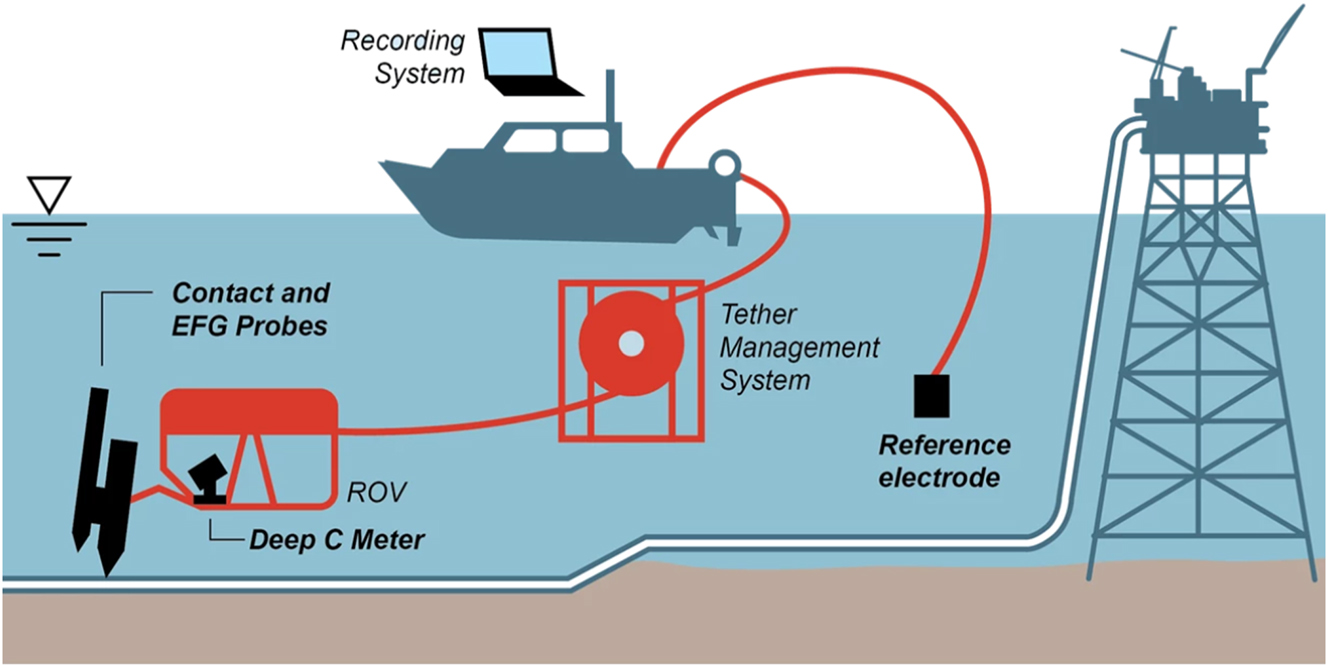
Illustration of cathodic protection survey for flow lines; adapted from (Deepwater 2023).
These vehicles access intricate subsea structures, providing real-time visual representations and utilizing tools like CP measurement devices and ultrasonic thickness gauges (Fun Sang Cepeda et al. 2023). They detect localized corrosion, quantify corrosion rates, and assess coating effectiveness, with data transmitted in real-time for instant analysis (Konoplin et al. 2022). ROVs reach depths and places inaccessible to human divers, enhancing safety and efficiency in subsea inspections (Venkatesh et al. 2022). They can be deployed for emergency or routine inspections, reducing downtime and supporting proactive asset integrity management (Aldaher 2021). Integration of ROVs in corrosion monitoring aligns with technological innovation in the oil and gas industry, improving accuracy, optimizing maintenance strategies, and ensuring reliability of subsea infrastructure (Ho et al. 2020).
4.4.2 Autonomous underwater vehicles
Autonomous underwater vehicles (AUVs) are unmanned vehicles equipped with sensors, including those tailored for corrosion measurement, making them efficient tools for subsea monitoring (Ruth et al. 2016). Their autonomy allows them to navigate underwater environments flexibly, covering vast areas without physical constraints (Petillot et al. 2019). AUVs carry multiple sensors, measuring corrosion rates, pressure, temperature, and water chemistry, providing detailed insights into subsea conditions (Ludvigsen and Sørensen 2016). They excel in tasks requiring systematic data collection, executing programmed missions reliably over time (Keane and Joiner 2020). The data collected enhances understanding of corrosion dynamics, aiding in the development of effective mitigation strategies (Adumene et al. 2020). AUVs represent a technological advancement in subsea monitoring, improving efficiency and data scope in harsh marine environments. Their versatility, autonomy, and sensor capabilities make them invaluable assets in corrosion management efforts (Atyabi et al. 2018).
4.5 Coupon holder systems
Coupon holder systems are commonly used for corrosion monitoring in various environments, including subsea applications, offering practicality and versatility. These systems employ different types of coupons strategically positioned on the structure’s surface, representing the material of interest (García-Ávila et al. 2019). Strip coupons are the most common and cost-effective, while disc coupons, particularly flush discs, are suitable for multi-phase flow evaluation (El Ibrahimi and Berdimurodov 2023; Mansoori et al. 2017). Special purpose coupons as shown in Figure 13, such as scale, bio-film, and elastomeric coupons, serve specific monitoring needs (Aie 2023).
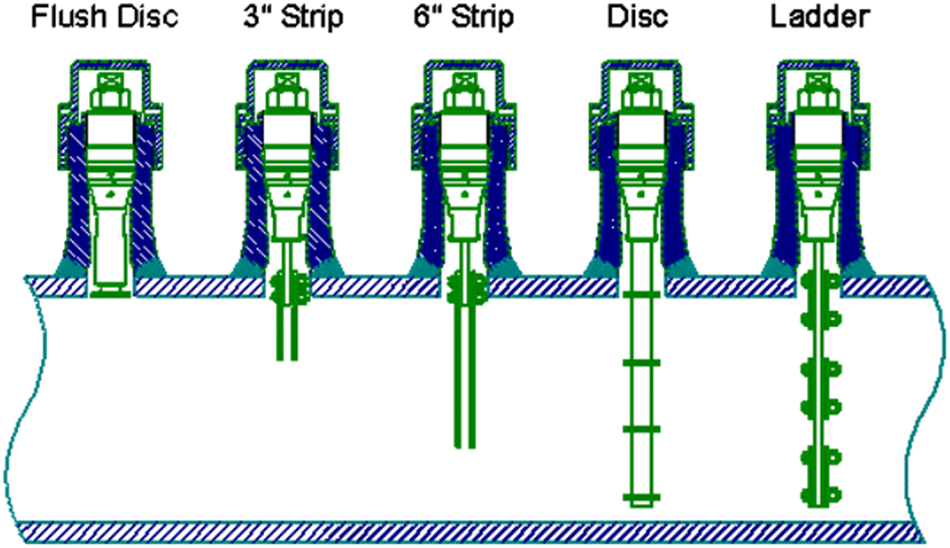
Corrosion coupon and holder types; adapted from (Aie 2023).
The method involves periodic retrieval of coupons for analysis to assess corrosion rates and the effectiveness of corrosion prevention strategies (Collins 2018). It offers flexibility in monitoring diverse coatings, materials, or inhibitors, especially in challenging environments where continuous monitoring may not be feasible (Savill and Jewell 2021). Additionally, it facilitates comparative studies to understand the impact of various factors on corrosion rates over time (Salgar-Chaparro et al. 2020).
Although it requires regular manual intervention for coupon retrieval, the simplicity and cost-effectiveness of coupon holder systems make them essential tools for effective corrosion measurement and management in subsea structures (Lahme et al. 2021).
4.6 Hybrid monitoring systems
Hybrid monitoring systems integrate various technologies, such as ultrasonic measurements and electrochemical sensors, to provide a comprehensive assessment of corrosion in subsea environments (Li et al. 2023b; Price and Figueira 2017). This approach combines multiple techniques, including visual inspection tools, ultrasonic thickness measurements, and electrochemical sensors, into an integrated system to enhance the reliability and accuracy of corrosion data (Adumene et al. 2020).
These systems utilize different sensors and technologies to complement each other, offering real-time corrosion rate measurements alongside occasional ultrasonic thickness assessments to detect localized corrosion (Liu et al. 2018a). Additionally, visual inspection tools like ROVs or cameras provide high-resolution images, aiding in correlating visual data with quantitative corrosion information for a deeper understanding of corrosion mechanisms and facilitating targeted maintenance interventions.
Hybrid monitoring systems adapt to diverse subsea conditions, offering proactive responses to corrosion challenges by combining various monitoring techniques (Tian et al. 2022). Leveraging data analytics and machine learning further enhances their predictive capabilities, optimizing maintenance schedules and providing actionable insights for asset integrity management in subsea environments (Khalaf et al. 2023). Overall, these systems represent a holistic approach to subsea asset management, ensuring the long-term integrity and reliability of subsea structures through effective corrosion monitoring and preventive measures.
4.7 Data transmission and telemetry
4.7.1 Wired systems
The utilization of underwater cables or umbilicals facilitates the transmission of data from subsea corrosion monitoring systems to offshore or onshore facilities, enabling real-time analysis and monitoring (Chen et al. 2016a). Acting as channels for data transmission, umbilicals seamlessly transfer information on structural integrity, corrosion rates, and environmental conditions to designated facilities equipped for data analysis (Jayamaruthi et al. 2023).
This transmission method allows for near-instantaneous and continuous communication, crucial for rapid responses to changing conditions and early detection of corrosion abnormalities (Williams 2023). It also expedites the integration of subsea monitoring into broader management systems, enabling consolidated data analysis and facilitating proactive interventions and optimized maintenance strategies (Newell and Gayathry 2020).
Overall, the application of underwater cables or umbilicals supports timely decision-making, improves corrosion management efficiency, and contributes to the longevity and reliability of subsea infrastructure.
4.7.2 Wireless systems
Wireless data transmission in subsea corrosion monitoring, facilitated by advanced telemetry systems, revolutionizes data communication, enabling efficient monitoring in deep-sea or remote locations (Hawthorn and Aguilar 2017). Leveraging technologies like satellite communication or acoustic modems, wireless systems transmit data from subsea sensors to onshore or offshore facilities (Green 2012), eliminating the need for physical cables or umbilicals.
Key benefits include adaptability to remote environments, minimized infrastructure complexity, real-time monitoring and analysis, improved flexibility and mobility, and cost efficiency (Li et al. 2018c; Watt et al. 2019). However, challenges such as data security, signal reliability, and power management must be addressed to ensure successful deployment and optimize effectiveness in subsea asset integrity management (Ali et al. 2015).
4.8 Data analysis and reporting
Data management software plays a crucial role in subsea corrosion monitoring by processing data from various techniques, calculating corrosion rates, conducting trend analysis, and generating reports (Hameed et al. 2011; Li et al. 2022c). It serves as a centralized platform for interpreting data from monitoring systems, facilitating informed decision-making.
The software computes corrosion rates by analyzing data from sensors or probes, aiding in identifying corrosion severity and guiding mitigation strategies (Chen et al. 2024). Trend analysis conducted by the software over long-term datasets detects anomalies and patterns, enabling proactive measures to address corrosion challenges (Zhao et al. 2021).
Additionally, data management software simplifies reporting by translating complex data into actionable insights for stakeholders, ensuring regulatory compliance and strategic decision-making (Chen et al. 2018). Its integration into corrosion monitoring systems enhances efficiency, minimizes errors, and fosters a proactive approach to maintaining subsea structure integrity, ultimately prolonging operational life in marine environments (Fahmy 2023).
4.9 Integration with corrosion models
The integration of monitoring data with corrosion rate models enhances proactive subsea corrosion management by predicting future corrosion rates and evaluating the effectiveness of corrosion control strategies (Caines et al. 2013). Corrosion rate models, based on environmental factors and empirical data, serve as mathematical representations of the corrosion process, and when combined with real-time monitoring data, they improve forecasting accuracy (Cai et al. 2018).
Predicting future corrosion rates enables targeted mitigation strategies, minimizing structural integrity risks and reducing downtime (Melchers 2015). By comparing forecasted and actual corrosion rates, operators can assess the efficacy of mitigation measures, fostering continuous improvement and optimization of corrosion control strategies (Skovhus et al. 2017). This synergistic approach offers a data-driven framework for adaptive corrosion management in subsea environments, enhancing reliability and longevity of structures in harsh marine conditions.
4.10 Environmental sensors
Continuous monitoring of seawater chemistry parameters such as pH, chloride concentrations, and dissolved oxygen provides crucial insights into corrosion conditions (Da Costa et al. 2022). Seawater pH influences metal corrosion behavior, with deviations from natural alkalinity potentially impacting corrosion rates (Ma et al. 2023). High chloride levels significantly contribute to corrosion, especially pitting corrosion, necessitating the use of corrosion-resistant materials and protective measures (Chen et al. 2024). Monitoring chloride concentrations is essential for assessing marine environment corrosivity and implementing appropriate corrosion mitigation strategies. Dissolved oxygen levels also affect corrosion processes, with low oxygen leading to anoxic corrosion and high oxygen levels potentially causing aggressive corrosion forms (Trigodet et al. 2019). Monitoring these parameters guides the selection of corrosion mitigation strategies, facilitating proactive maintenance of subsea assets in harsh marine conditions.
4.11 Inspection intervals
The frequency of monitoring intervals for subsea corrosion depends on the corrosiveness of the environment and specific structural characteristics (Ramachandran 2016). Inspection plans are established based on regulatory requirements and industry standards, considering factors like water temperature, chemistry, and the presence of corrosive agents such as chlorides (Li et al. 2022c). More aggressive environments or structures vulnerable to corrosion may require more frequent inspections. Regulatory bodies often specify inspection intervals to ensure safety and environmental compliance (Hameed et al. 2021). Industry best practices, informed by material behavior and corrosion risk evaluations, contribute to the formulation of inspection plans (Yazdi et al. 2022a). These proactive measures aim to detect corrosion issues early, promoting structural integrity and longevity in diverse marine conditions.
5 Testing protocols
Rigorous testing protocols are vital for checking the durability, reliability and performance of corrosion probes and monitoring systems in subsea environments. These protocols ensure that the probes can resist the harshness of the marine environment, give correct corrosion data, and operate effectively over long periods (Mohsan et al. 2023). The testing involves exposure to simulated seawater sample, varying temperatures, and high pressures (Castro-Vargas and Paul 2023). Furthermore, the protocols, include laboratory tests, compliance with industry standards, and field deployments, providing confidence in the ability of the probes to correctly monitor corrosion rates and contribute to the safe and viable operation of offshore structures in the oil and gas industry (Arnold et al. 2021). Testing for a long period is required to ensure probes can endure extended deployment (Delgado et al. 2021).
5.1 Laboratory testing
Corrosion probes and their components are usually tested using simulated seawater sample in controlled laboratory environments (Gao et al. 2019). This exposure enables researchers to measure the materials’ immunity to corrosion under conditions mimicking subsea environments.
5.1.1 Pressure testing
Pressure testing is crucial for evaluating the structural integrity and survivability of corrosion probes under high-pressure subsea conditions (Ho et al. 2020). It involves subjecting probes to hydrostatic pressure, simulating the conditions experienced at specific depths underwater (Corredor and Corredor 2018). Testing at or above projected maximum subsea pressure ensures probes can withstand real-world conditions (Ho et al. 2020).
Key aspects of pressure testing for corrosion probes include assessing structural integrity, verifying survivability under subsea pressure, confirming design specifications, and identifying potential issues (Gorma et al. 2021). By scrutinizing these factors, engineers ensure probes meet safety and performance standards and address vulnerabilities proactively (Ho et al. 2020).
Overall, pressure testing is integral to developing reliable corrosion monitoring solutions for subsea environments, ensuring probes can endure the harsh conditions, particularly high pressure at variable depths (Shafiee et al. 2020). This comprehensive testing process enhances the resilience and effectiveness of corrosion monitoring systems in subsea settings.
5.1.2 Temperature cycling
Temperature cycling tests assess corrosion probe materials and components’ response to subsea temperature variations, ensuring functionality and reliability (Raghavan and Cesnik 2008). These tests expose probes to simulated temperature changes, identifying vulnerabilities that could affect performance (Martinez-Luengo et al. 2016).
Beyond structural integrity, tests validate probes’ ability to withstand thermal stresses and maintain corrosion data accuracy (Wright et al. 2019b). Scholars gain insights into probe robustness, aiding corrosion monitoring solution development for dynamic subsea environments (Kousiatza et al. 2019). Temperature cycling tests proactively address material degradation and thermal effects, refining probe designs for long-term reliability in subsea applications (Wright et al. 2019b).
5.1.3 Corrosion testing
Samples of the materials used in probes are subjected to accelerated corrosion tests to assess their immunity to corrosion and prove their anticipated service life (Tang et al. 2021). These tests are designed to mimic aggressive environmental conditions, facilitating the corrosion process to gauge the durability and immunity of the materials. The goal is to simulate the corrosive challenges that probes could encounter in real-life subsea environments, giving engineers and researchers with the knowledge of the performance of materials under enhanced degradation. By exposing these samples to conditions that strengthen corrosion, scientists can proficiently measure the materials’ resistance, ensuring they meet the required standards and can withstand the expected service life of corrosion probes.
Augmented corrosion tests include exposing the material samples to corrosive elements like chemical solutions, high humidity, or salt spray (Xia et al. 2022). This controlled environment increases the corrosion rate, empowering researchers to detect the behavior of the materials over a shorter duration than it would obviously occur in the field. The results of these tests inform decisions concerning material selection, supporting in the development of corrosion probes that can effectively survive the harsh subsea conditions and offer reliable long-term performance.
The augmented corrosion testing process is essential for authenticating the materials’ corrosion resistance, empowering researchers in making informed decisions about their appropriateness for subsea applications (Kumar et al. 2023). This systematic method ensures that corrosion probes are constructed with materials that can withstand the aggressive marine environment, eventually contributing to the extended service life and reliability of the probes.
5.2 Field testing
5.2.1 Deployment in subsea environments
Field testing encompasses deployment of corrosion probes in real subsea environments, typically on offshore equipment or structures. These tests assess the performance of probes under real-world conditions, like exposure to seawater, varying pressures and temperature fluctuations (Flohr et al. 2021). Field testing involves the deployment of corrosion probes in authentic subsea environments, often on offshore equipment or structures. These tests provide a comprehensive assessment of the probes’ performance under actual operating conditions, exposing them to the complexities of real-world scenarios such as seawater exposure, fluctuating pressures, and temperature variations. By conducting field tests, researchers and engineers gain invaluable insights into how corrosion probes function in situ, allowing them to evaluate their durability and reliability in the dynamic and challenging conditions prevalent in subsea settings (Pei et al. 2020).
During field testing, corrosion probes are exposed to the full spectrum of environmental factors faced in their proposed subsea applications (Caines et al. 2013). This involves immersion in seawater, adaptation to temperature variations, and exposure to varying pressures and depths. The data obtained from these field tests not only authenticates the performance of the corrosion probes but also helps in identifying unforeseen areas for improvement or issues (Aalsalem et al. 2018). Field testing is a vital step in developing and refining corrosion monitoring solutions, ensuring that the probes can excellently survive the harsh conditions of real subsea environments over extended periods (Caines et al. 2013).
5.2.2 Long-term exposure
Field tests usually run for long durations. It ranges from months to several years, evaluating the probes’ resistance to corrosion and long-term reliability (Lazarescu 2015). The field data collected from corrosion probes are subjected to a thorough validation process, including a comparison with lab-scale corrosion rate models and forecasts (Fuse et al. 2019). This severe validation is vital to confirm the reliability and accuracy of the data delivered by the probes. By contrasting the real-life observations from the field with the expected corrosion rates obtained from controlled laboratory conditions, scientists aim to ensure that the corrosion probes provide reliable and precise data (Lazarescu 2015). This validation is a vital checkpoint in the fabrication and application of corrosion probes for subsea applications. The comparison not only confirms the alignment of field data with laboratory forecasts but also helps in refining and improving the accuracy of corrosion rate models (Qin et al. 2021). The iterative nature of this validation process facilitates continuous improvement, ensuring that the corrosion probes maintain effectiveness in delivering reliable understanding of the corrosion dynamics of subsea environments (Singh and Poblete 2015).
Eventually, the correlation between laboratory predictions and field data creates a foundation for the current optimization of corrosion monitoring techniques. It contributes to the confidence in the ability of the probes to accurately capture and signify the complex corrosion behaviors taking place in real-life subsea conditions, supporting the longevity and integrity of offshore equipment and structures.
5.2.3 Data validation
Validating field data obtained from corrosion probes by comparing it with lab-scale corrosion rate predictions and models is crucial for ensuring the reliability and accuracy of corrosion monitoring systems (Caines et al. 2013). This process involves assessing the correspondence between predicted corrosion rates generated in controlled laboratory settings and the actual corrosion rates observed by the probes in real subsea conditions (Majhi et al. 2022).
The correlation between laboratory forecasts and field data is essential for determining the effectiveness of probes in translating theoretical models into accurate information under the complex and dynamic conditions of subsea environments (Castell et al. 2017). Any discrepancies may require adjustments to ensure accurate representation of the unique challenges and environmental factors encountered (Fernandez et al. 2016).
Moreover, this comparison serves as a comprehensive analysis tool to identify factors not fully accounted for in laboratory models, providing deeper insights into corrosion behavior in the field (Majhi et al. 2022). This continuous feedback loop supports ongoing improvements to corrosion rate models, enabling refinement to better capture the complexities of corrosion behavior in diverse subsea settings (Castell et al. 2017). Ultimately, validating field data against laboratory forecasts strengthens the reliability of corrosion probes, providing accurate information for informed decision-making regarding asset integrity, maintenance, and corrosion control strategies in subsea applications.
5.3 Validation against standards
Corrosion probes are usually assessed against industry guidelines and standards, like those provided by organizations such as National Association of Corrosion Engineers (NACE) International (Stubelj et al. 2019). Compliance with these standards confirms that the probes meet industry-known performance criteria. These industry standards offer an all-inclusive framework for testing and validating corrosion probes, ensuring that they comply with recognized performance criteria generally accepted within the corrosion monitoring field (Caines et al. 2015).
Assessment against NACE International and similar industry standards is essential since it institutes a benchmark for the performance and reliability probes (Fernandez et al. 2020). Compliance endorses that the corrosion probes meet or surpass certain standards related to material selection, design, and functionality. These standards are established to ensure the probes can survive the aggressive conditions of subsea domain, offering consistent and accurate corrosion data over prolonged periods (Fattah et al. 2020).
Essentially, complying with industry standards like those set by NACE International infuses confidence in the reliability and quality of corrosion probes. It indicates that the probes have passed through comprehensive testing, in alignment with the collective knowledge of industry experts and best practices. This compliance not only ensures the effectiveness of probes in subsea applications but also expedites consistency and interoperability across the corrosion monitoring landscape. It attests to the dedication of researchers and manufacturers to produce corrosion probes that meet the highest industry-recognized reliability and performance standards.
5.4 Environmental considerations
Testing protocols for corrosion probes must thoroughly replicate the environmental conditions of subsea sites where the probes will be deployed, including water chemistry, pressure, and temperature (Bhandari et al. 2015). Water chemistry, influencing corrosion rates directly, requires replication of the subsea chemical composition to evaluate probe response to corrosive agents (Kawamura et al. 2016). Pressure testing is essential to simulate varying hydrostatic pressures at different depths, ensuring probe durability under subsea pressure conditions. Temperature variations characteristic of subsea conditions must also be considered to assess probe performance under various thermal scenarios (Menaka et al. 2022).
These testing protocols are crucial for comprehensive validation of corrosion probes, identifying weaknesses, optimizing designs, and enhancing overall reliability for subsea applications (Bai and Bai 2014). By exposing probes to conditions mirroring actual subsea environments, researchers can develop probes capable of withstanding the dynamic and complex conditions prevalent in subsea settings (Bhandari et al. 2015). This meticulous testing process is essential for ensuring the effectiveness and longevity of corrosion monitoring solutions in challenging subsea environments.
5.5 Sensor calibration
Sensor calibration is crucial in ensuring the accuracy and repeatability of measurements obtained from corrosion probes (Liu and Kleiner 2013). Calibration guarantees that sensors provide consistent and reliable data, aligning with industry standards and specific requirements of subsea applications (Gowers et al. 2019). The process involves adjusting sensors to known reference values, often by subjecting them to controlled conditions with known corrosion rates (Martins et al. 2020).
Accurate sensor calibration is vital for several reasons:
Reliability of data: calibrated sensors ensure the reliability of corrosion data, crucial for monitoring corrosion rates and detecting deviations indicating potential issues with subsea structures (Marindra and Tian 2020).
Consistency in monitoring: calibration ensures consistent sensor output for the same input, facilitating reliable tracking of corrosion trends and early identification of abnormalities (Alwis et al. 2017).
Performance verification: calibration verifies the overall performance of corrosion probes, ensuring adherence to accuracy standards and effective capture of dynamic corrosion conditions in subsea settings (Ren et al. 2018).
Compliance with standards: calibration meets industry standards such as those by NACE International, ensuring adherence to recognized performance criteria (Barshinger et al. 2017).
Sensor calibration is integral to corrosion probe testing, enhancing measurement precision and reliability for informed decision-making and long-term subsea structure integrity.
5.6 Data retrieval and transmission
Field tests play a vital role in evaluating the functionality of data retrieval and transmission systems used in corrosion probes, replicating real-life subsea conditions (Nayyar and Balas 2019). These tests validate communication system performance by exposing probes to environmental challenges such as temperature variations, pressure, and water chemistry (Ali et al. 2015). The focus is on assessing communication reliability, ensuring accurate and consistent data transmission to surface monitoring stations (Kayastha et al. 2014). Field tests also examine the integrity of transmitted data, validating its reflection of actual corrosion conditions documented by probes (Parks et al. 2022).
Moreover, field tests evaluate power management within data retrieval systems, assessing the efficiency and sustainability of power sources over time (Prauzek et al. 2018). They also investigate the adaptability of communication systems to subsea challenges like marine life influence and signal attenuation (Wang et al. 2018).
Overall, field tests provide a comprehensive assessment of corrosion probes’ practical effectiveness in transmitting reliable data from subsea sites to surface stations. This critical testing process bridges lab-based assessments with real-world deployments, enabling adjustments and optimizations for the complexities of subsea environments.
5.7 Fouling and maintenance considerations
Field tests evaluate corrosion probes’ resistance to fouling by marine growth and the simplicity of maintenance, crucial for their effectiveness in subsea environments (Selim et al. 2017). Design considerations must include provisions for servicing or cleaning the probes to ensure long-term functionality (Wright et al. 2019b). These tests focus on assessing the probes’ ability to withstand fouling by marine organisms like algae and barnacles, which can affect monitoring accuracy (Alonso-Valdesueiro et al. 2022). Resistance to fouling is vital in environments with abundant marine life (Alonso-Valdesueiro et al. 2022).
Furthermore, field tests evaluate maintenance procedures’ practicality, including easy access to probes and component durability (James et al. 2019). Simplified maintenance supports probe reliability and ensures minimal disruption to subsea operations. Designing probes with maintenance considerations is essential for their sustainability in subsea environments. Field tests provide valuable insights into these design features, enabling optimization for practical maintenance and resistance to fouling challenges in diverse subsea conditions (Zhang et al. 2023).
5.8 Safety protocols
Safety protocols for deploying and retrieving corrosion probes in subsea environments prioritize equipment and personnel safety (Eudeline 2019; Larbi Zeghlache et al. 2022). These protocols mitigate risks associated with underwater operations, considering the dynamic and challenging nature of subsea conditions.
They outline guidelines for emergency response, personnel training, and equipment handling to minimize risks (Abdulghani et al. 2023). Specialized training prepares personnel for underwater hazards (Khan et al. 2015), ensuring correct equipment use and preventing injuries (Wright et al. 2019b). Emergency response procedures are integral, covering rapid ascent, communication, and contingency plans (Eudeline 2019; Larbi Zeghlache et al. 2022). Prioritizing safety fosters a vigilant culture (Khan and Amyotte 2002), enhancing a safe working environment in subsea operations.
Safety protocols are vital for corrosion probe operations in subsea environments, providing a framework to reduce risks, safeguard equipment, and protect personnel. Compliance with these protocols ensures safe subsea operations, supporting the success of corrosion monitoring initiatives in harsh marine conditions.
6 Challenges and future directions
The efficient and reliable corrosion control of subsea production flowlines is a multifaceted challenge that requires a multidisciplinary approach (Kondapi et al. 2017). Challenges and future directions in subsea corrosion control and monitoring are crucial considerations in the offshore oil and gas industry. As technology advances and environmental concerns grow, addressing these challenges and planning for the future is essential for maintaining the safety, integrity, and sustainability of subsea assets. However, advances in materials science, probe design, monitoring techniques, and data analytics are reshaping the field (Prabowo et al. 2021). The literature identifies several ongoing challenges in subsea corrosion control, such as mitigating fouling and optimizing probe placement (Xie et al. 2020; Wang et al. 2018). Integration with broader corrosion management strategies, compliance with regulations, and environmental sustainability considerations are becoming increasingly prominent in addressing the challenges of aggressive marine environments (Nuchturee et al. 2020). Further research and innovation in these areas hold the key to enhancing the longevity and reliability of subsea production flowlines. The research directions include exploring advanced materials, machine learning algorithms for predictive corrosion modeling, and innovative fouling-resistant designs (Delgado et al. 2023; Mubashir et al. 2023).
6.1 Challenges
6.1.1 Extreme depths
Deep-sea operations pose challenges such as high pressures, low temperatures, and limited accessibility. Water pressure increases significantly with depth, stressing subsea equipment’s structural integrity. Designing corrosion probes and monitoring systems must account for extreme pressures (Song et al. 2022). Low temperatures impact materials, requiring specialized cold-resistant materials for accurate corrosion assessments (Cheung et al. 2022). Accessing deep-sea structures for maintenance is logistically challenging and expensive, necessitating designs for sustainable reliability and autonomous technologies to minimize interventions (Ho et al. 2020). Aggressive environmental conditions, including marine life and corrosive seawater, accelerate wear and tear (Day and Gusmitta 2016). Innovation in materials science and autonomous systems is crucial to meet the evolving demands of deep-sea operations, ensuring equipment durability and performance in extreme conditions.
6.1.2 Corrosive environments
In aggressive subsea environments, high chloride concentrations and temperature variations accelerate corrosion rates, challenging asset integrity (Abbas and Shafiee 2020). Chloride ions break down protective oxide layers on metals, necessitating tough materials and corrosion-resistant designs (Khan et al. 2020). Temperature changes affect corrosion kinetics, demanding infrastructure to withstand cyclical stress (Cheung et al. 2022). Researchers strive to develop coatings, materials, and mitigation techniques to enhance equipment resilience (Pessu et al. 2020). A holistic approach, including innovative corrosion monitoring and advanced materials, is crucial to mitigate these challenges (Idumah et al. 2020). Tackling the synergistic effects of temperature fluctuations and chloride concentrations is imperative for prolonged asset lifespan and reliability in harsh marine conditions.
6.1.3 Masking properties of local corrosion
The masking properties of local corrosion refer to the phenomenon where localized corrosion damage, such as pitting or crevice corrosion, may conceal or mask the extent of material degradation occurring beneath the surface (Sahu et al. 2020). This masking effect poses significant challenges in accurately predicting material failure in subsea environments, as it can lead to underestimation of the true extent of corrosion damage and compromise the reliability of integrity assessments (Singh 2014).
One of the main challenges posed by the masking properties of local corrosion is the difficulty in detecting and characterizing corrosion damage hidden beneath intact surface layers (Agarwala et al. 2000). For example, pitting corrosion can create small, discrete pits on the metal surface, making it challenging to identify and quantify the extent of corrosion using conventional inspection techniques (Alamri 2020). As a result, corrosion damage may progress undetected until it reaches a critical threshold, leading to unexpected material failure.
Moreover, the masking properties of local corrosion can obscure the underlying corrosion mechanisms and failure modes, complicating the development of accurate predictive models for material degradation (Sahu et al. 2020). Predictive modeling relies on accurate data inputs to estimate corrosion rates, remaining useful life, and failure probabilities. However, the presence of localized corrosion may introduce variability and uncertainty into these models, reducing their predictive accuracy and reliability (Singh 2014).
Another challenge is the potential for localized corrosion to initiate SCC or HIC in susceptible materials. Localized corrosion damage can create microenvironments with elevated tensile stresses or hydrogen concentrations, increasing the susceptibility of the material to crack initiation and propagation (Xu et al. 2021). The interaction between localized corrosion and cracking mechanisms further complicates the prediction of material failure, as it requires consideration of multiple degradation processes and their synergistic effects (Li et al. 2020).
The masking properties of local corrosion present significant challenges in accurately predicting material failure in subsea environments (Singh 2014). Addressing these challenges requires the development of advanced inspection techniques capable of detecting and characterizing hidden corrosion damage. Also, the refinement of predictive models to account for the complex interactions between localized corrosion, cracking mechanisms, and material degradation processes. By improving our understanding of the masking properties of local corrosion, researchers and engineers can enhance the reliability of integrity assessments and reduce the risk of unexpected failures in subsea assets.
6.1.4 Monitoring complex structures
6.1.4.1 Subsea complexity
Monitoring complex subsea structures like underwater pipelines demands innovative solutions due to challenges such as high pressures and limited visibility (Ho et al. 2020). Remote monitoring technologies, including AUVs and ROVs, enable precise inspections without human intervention (Agnisarman et al. 2019). AUVs autonomously navigate, capturing data and images for analysis (Jahanbakht et al. 2021). ROVs, equipped with manipulator arms and sensors, facilitate close-up inspections and maintenance (Sivčev et al. 2018). Advanced imaging and sonar systems enhance inspection quality by providing detailed visualizations and acoustic data (Reagan et al. 2018). Integrating AI and data analytics processes sensor data to identify corrosion spots and structural weaknesses, enhancing inspection efficiency and enabling predictive maintenance strategies (Liu and Bao 2022). These technologies ensure the reliability and integrity of vital underwater structures.
6.1.4.2 Limited visibility
In subsea environments, low visibility poses challenges for visual inspections and corrosion identification. Sonar imaging provides detailed underwater views despite murky waters, aiding in visualizing structures and corrosion concerns (Sharma et al. 2022). Advanced optical systems, like laser-based technologies and high-intensity lights, improve visibility for clearer inspections. ROVs and AUVs with specialized cameras and sensors navigate and capture high-resolution data, effectively inspecting structures in low visibility conditions (Armstrong et al. 2019). Non-visual inspection methods such as ultrasonic testing (Figure 14) and electromagnetic sensors offer valuable insights into structural integrity and corrosion status without relying on optical visibility (Adegboye et al. 2019). These approaches enhance understanding and assessment of critical underwater structures, addressing challenges of low visibility.
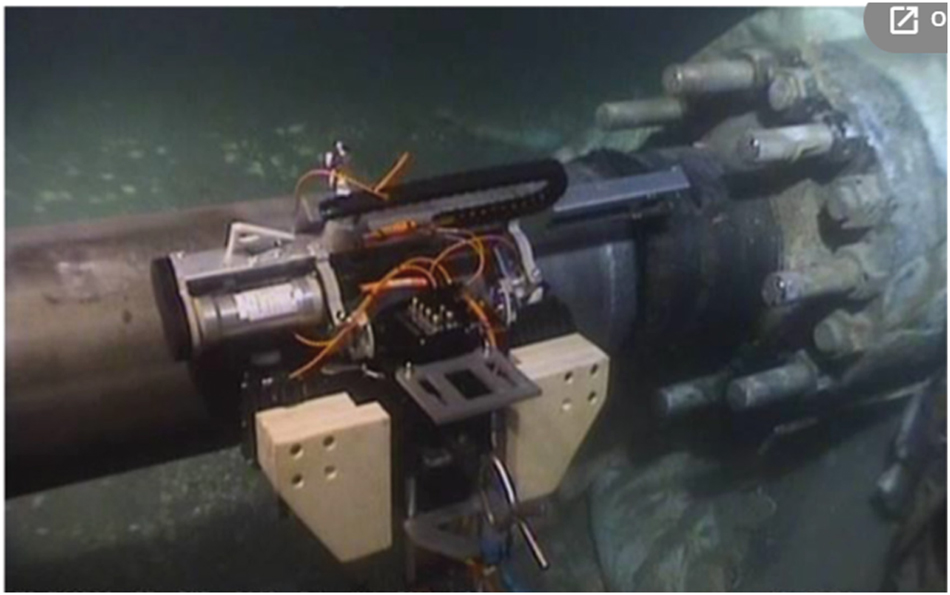
ROV using ultrasound-based sensing is time of flight diffraction (TOFD) onto subsea pipeline, courtesy of Sonomatic (adapted from (Lilley 2023)).
6.1.5 Fouling and biofouling
6.1.5.1 Anti-fouling coating limitations
Developing environmentally friendly anti-fouling coatings resilient to subsea conditions is challenging (Li et al. 2023c; Nwuzor et al. 2021). Balancing efficacy, environmental impact, and durability is crucial. Coatings must be non-toxic, biodegradable, and adhere to environmental regulations (Watermann and Eklund 2019). Ensuring strong adhesion to substrates despite subsea challenges like currents and pressure is imperative (Yazdi et al. 2022b). Coatings need corrosion and abrasion resistance to maintain longevity. Compliance with regulatory standards further complicates development (Vaiopoulou and Gikas 2020). Collaborative efforts focus on bio-inspired coatings, innovative polymers, and sustainable formulations to mitigate fouling while minimizing ecological impact (Aljibori et al. 2023).
6.1.5.2 Biofouling management
Preventing biofouling on subsea equipment while preserving marine ecosystems poses technical and environmental challenges (Arndt et al. 2021). Biofouling, the accumulation of organisms on submerged surfaces, threatens subsea assets (Abioye et al. 2019). Achieving a balance between prevention and environmental sustainability requires innovative strategies. Formulating environmentally friendly anti-biofouling measures is crucial (Arndt et al. 2021). Material selection for subsea equipment must balance biofouling resistance with durability (Arndt et al. 2021). Early detection systems are essential, requiring robust monitoring in challenging subsea conditions (Ho et al. 2020). Eco-friendly fouling-resistant coatings are sought to meet environmental standards (Ruzi et al. 2022). Collaboration across disciplines is essential to develop solutions that combat biofouling while preserving marine ecosystems.
6.1.6 Data management and analytics
6.1.6.1 Big data challenges
Managing data from subsea corrosion monitoring systems requires robust data management and advanced analytics. Efficient mechanisms for data collection and secure storage are crucial in the complex subsea environment (Jahanbakht et al. 2021). Integration of monitoring technologies is essential to create cohesive insights into corrosion dynamics (Ho et al. 2020). Advanced analytics, including statistical analyses and machine learning, identify anomalies and trends, aiding in corrosion hotspot detection (Xu et al. 2023). Real-time monitoring and analytics enable agile decision-making in response to corrosion events, reducing damage and optimizing resource allocation (Bao et al. 2023). Decision support systems enhance operators’ ability to respond promptly to corrosion challenges. Efficient data management and advanced analytics ensure the reliability of subsea assets through predictive and proactive corrosion management (Jahanbakht et al. 2021).
6.1.6.2 Integration of data
Integrating data from diverse sources, including sensors and environmental data, is crucial for meaningful analysis in subsea environments (Li et al. 2021). Harmonizing data from multiple sensors is essential to discern patterns contributing to corrosion dynamics. Subsea corrosion monitoring relies on systems aggregating data from various sensors, necessitating the amalgamation of monitoring systems for streamlined analysis (Thompson 2020). Incorporating environmental data, such as currents and water chemistry, offers contextual insights into corrosion events.
Unified data analytics, employing statistical analyses and machine learning, extract meaningful patterns for proactive corrosion mitigation (Soomro et al. 2022). This approach facilitates detailed understandings, aiding in the development of mitigation strategies (Khalaf et al. 2023). Collaboration among engineers, data scientists, and domain experts is crucial for navigating data integration challenges. Standardized frameworks ensure reliability and consistency, supporting informed decision-making and long-term reliability in subsea infrastructure (Chan 2023).
6.1.7 Regulatory compliance
6.1.7.1 Evolving regulations
Adapting to evolving environmental regulations and safety standards while maintaining cost-effective corrosion control practices presents a challenge for operators (Wright 2017). The fluidity of regulatory frameworks necessitates operators to stay informed, understand implications, and adjust practices promptly. Strict safety regulations mandate refined corrosion control measures, striking a balance between effectiveness and compliance (Amaechi et al. 2022). Operators face the challenge of balancing cost-efficient practices while ensuring corrosion protection goals are met (Farh et al. 2023). Technological advancements offer opportunities for more efficient solutions aligning with regulations and safety standards. Integrating these advancements empowers operators to improve performance while meeting compliance requirements (Wright et al. 2019b). Continuous training and collaborative efforts contribute to effective navigation of safety standards, environmental compliance, and cost-effective corrosion control (Amaechi et al. 2022).
6.1.7.2 Balancing production and compliance
Achieving a balance between efficient production and regulatory compliance, especially in remote or deep-sea locations, necessitates meticulous planning (Loftesnes 2021). Operational excellence involves utilizing innovative technologies and optimizing processes while considering environmental and safety standards (Dutta et al. 2020). Automated systems, advanced drilling methods, and data-driven analytics are employed to minimize costs and maximize output in challenging environments (Alali et al. 2021). Regulatory compliance in remote and deep-sea areas involves stringent standards due to environmental risks and ecological sensitivity (Macreadie et al. 2018). Adherence to national, international, and regional regulations, including measures to reduce emissions and prevent oil spills, is imperative (Ho et al. 2020). Careful planning, encompassing environmental impact studies and risk assessments, is essential for navigating compliance and efficiency challenges (Yang et al. 2017). Technological innovation, such as remote sensing and real-time monitoring systems, enhances operational optimization and regulatory compliance in remote operations (Wang et al. 2018). Adopting these advancements enables organizations to uphold sustainable and responsible practices in offshore activities.
6.1.8 Applicability of current research findings
The applicability of current research findings in practical environments is crucial for advancing corrosion control strategies and ensuring the integrity of subsea assets. While research efforts have yielded valuable insights into corrosion mechanisms, mitigation techniques, and monitoring technologies, translating these findings into practical applications presents several challenges and unresolved issues.
One key challenge is the scalability and adaptability of research findings to real-world subsea environments (Tan 2023). Laboratory experiments and small-scale field studies may not fully capture the complexity and variability of conditions encountered in operational settings. As a result, there is a need to validate research findings through large-scale field trials and long-term monitoring programs to assess their effectiveness and reliability under practical conditions.
Furthermore, the cost-effectiveness and feasibility of implementing research findings in practical environments are important considerations. While innovative corrosion control technologies and monitoring systems may offer promising solutions, their implementation may be hindered by high costs, technical complexities, or logistical challenges (Khalaf et al. 2023). Therefore, research efforts should prioritize the development of practical, cost-effective solutions that can be readily adopted by industry stakeholders.
Additionally, addressing key unresolved issues in corrosion control and monitoring is essential for enhancing the applicability of current research findings. These unresolved issues include the development of more accurate predictive models for corrosion rates, the optimization of corrosion mitigation strategies in challenging environments, and the integration of advanced monitoring techniques into existing asset management frameworks (Al-Ghamdi et al. 2020; Wasim and Djukic 2022).
Moreover, interdisciplinary collaboration and knowledge sharing between researchers, industry practitioners, regulatory bodies, and technology providers are critical for bridging the gap between research and practical applications. By fostering collaboration and communication, stakeholders can leverage collective expertise and resources to address common challenges, accelerate technology adoption, and drive innovation in subsea corrosion control and monitoring (Dutta and Goswami 2021).
While current research findings offer valuable insights into subsea corrosion control and monitoring, their practical applicability depends on addressing key challenges and unresolved issues. By validating research findings in real-world environments, prioritizing cost-effective solutions, and fostering collaboration across disciplines, researchers and industry stakeholders can enhance the effectiveness and reliability of corrosion management practices in subsea assets.
6.2 Future directions
6.2.1 Advanced materials
6.2.1.1 Development of advanced alloys
Ongoing research in corrosion-resistant materials for subsea applications emphasizes durability and cost-effectiveness (Olajire 2018). Materials must endure temperature fluctuations, high pressures, and corrosion, aiming for longevity to reduce maintenance needs (Iannuzzi et al. 2017). The research strives for cost-effectiveness, balancing initial expenses with long-term savings from reduced maintenance and replacement costs (Bender et al. 2022). Advancements focus on alloys and coatings enhancing corrosion resistance, integrating elements to withstand harsh subsea conditions (Olajire 2018). Environmental considerations drive sustainable solutions, assessing material life cycles, recyclability, and environmental footprints (Bender et al. 2022). Collaborative efforts aim to develop corrosion-resistant materials that are not only durable and cost-effective but also environmentally friendly, fortifying subsea assets against underwater corrosion challenges.
6.2.1.2 Nanotechnology applications
Nano-coatings and nanomaterials offer heightened corrosion resistance and fouling prevention in subsea applications (Abdeen et al. 2019; Selim et al. 2017). Nano-coatings create ultra-thin protective barriers, repelling corrosive agents and environmental stressors (Olajire 2018). Nanomaterials deter fouling by forming surfaces with properties that inhibit organism adhesion, contributing to subsea equipment integrity and efficiency (Halvey et al. 2019). The flexibility of nanomaterials allows tailored properties for specific needs, such as increased hardness or enhanced adhesion (Yong et al. 2022). Nano-coatings’ versatility enables application across various substrates and geometries, facilitating widespread adoption (Dutta and Goswami 2021). Collaboration among industry stakeholders continues to unlock the potential of nanotechnology, offering sustainable solutions for subsea infrastructure against fouling and corrosion challenges (Dutta and Goswami 2021).
6.2.2 Remote inspection technologies
6.2.2.1 Robotics and AI
Advancements in remotely operated robotic systems, coupled with AI integration for automated inspections, mark a significant leap in subsea evaluation efficiency and accuracy (Bogue 2020). Remotely operated robotic systems, with advanced imaging and sensing capabilities, eliminate the need for human divers in hazardous conditions, ensuring safer and more efficient inspections (Zagatti et al. 2018). AI-driven automation allows real-time analysis of vast datasets, expediting anomaly identification and promoting predictive maintenance (Serradilla et al. 2022). This integration improves inspection efficiency, resulting in cost savings by reducing downtime and operational expenses (Khalaf et al. 2023). Continuous AI-enabled monitoring supports proactive maintenance, enhancing subsea asset reliability and integrity (Serradilla et al. 2022). As these technologies evolve, their combined impact promises to revolutionize subsea inspections, providing swift, data-driven insights for informed decision-making in real-time.
6.2.2.2 Autonomous systems
The deployment of AUVs equipped with advanced sensors and cameras revolutionizes subsea inspections by offering comprehensive and efficient assessments (Petillot et al. 2019). Their autonomous operation enables navigation in challenging subsea environments without constant human supervision, covering vast areas with unmatched efficiency. Integration of high-resolution cameras and advanced sensors allows AUVs to capture detailed anomalies and defects, enhancing understanding of the underwater environment (Fun Sang Cepeda et al. 2023). Cost-effectiveness is a major advantage, with AUVs reducing the need for extensive human intervention and logistical support (Mukherjee 2018). Rationalizing data collection processes, AUVs provide systematic and continuous inspections, yielding comprehensive datasets for informed decision-making in asset management and maintenance (Mclean et al. 2020). AUVs with cameras and advanced sensors signify a crucial advancement in subsea inspection capabilities, offering improved accuracy, efficiency, and safety for exploring and maintaining harsh subsea environments (Fun Sang Cepeda et al. 2023).
6.2.3 Validation of corrosion detection data
Validation studies are essential to ensure the reliability and accuracy of corrosion detection data obtained from monitoring sensors in submarine pipelines (Parjane et al. 2023). These studies involve comparing the corrosion rates measured by sensors with the actual corrosion rates observed in situ, providing valuable insights into the performance and effectiveness of monitoring systems. Emphasizing the need for validation studies serves several critical purposes:
Assessing sensor accuracy: validation studies allow for the evaluation of sensor accuracy by comparing the corrosion rates measured by sensors with the corrosion rates observed in the field (Xia et al. 2022). Discrepancies between sensor readings and actual corrosion rates can indicate potential inaccuracies or limitations of the monitoring system, highlighting areas for improvement.
Verifying sensor reliability: validation studies help verify the reliability of monitoring sensors under real-world operating conditions (Shin et al. 2022). By assessing sensor performance over an extended period and under varying environmental conditions, operators can gain confidence in the consistency and dependability of sensor data, ensuring reliable corrosion monitoring.
Identifying measurement biases: validation studies help identify and address any measurement biases or discrepancies between sensor data and in situ observations (Xia et al. 2022). Factors such as sensor placement, calibration drift, or environmental interference can influence sensor readings and lead to inaccurate corrosion rate estimates (Figueira 2017). By systematically analyzing these factors, operators can mitigate potential sources of measurement bias and improve data quality.
Validating corrosion control strategies: validation studies provide valuable feedback on the effectiveness of corrosion control strategies implemented based on sensor data (Momber et al. 2022). By correlating sensor readings with observed corrosion rates, operators can assess the impact of mitigation measures on corrosion prevention and identify areas for optimization or refinement.
Enhancing confidence in monitoring systems: ultimately, validation studies help enhance confidence in monitoring systems by demonstrating their ability to accurately detect and quantify corrosion in submarine pipelines (Shafeek et al. 2021; Spahic et al. 2023). By validating sensor data against in situ observations, operators can make informed decisions regarding asset integrity management, maintenance planning, and corrosion mitigation strategies.
Emphasizing the need for validation studies underscores the importance of rigorously evaluating the performance and reliability of corrosion monitoring sensors in submarine pipelines. By conducting validation studies, operators can ensure the accuracy of sensor data, verify the effectiveness of corrosion control measures, and enhance confidence in the integrity of subsea assets.
6.2.4 Advanced sensors and monitoring techniques
6.2.4.1 Real-time corrosion monitoring
The development of real-time corrosion sensors marks a significant advancement in corrosion monitoring, offering proactive protection for materials in corrosive environments (Wright et al. 2019a,b). These sensors provide continuous corrosion data, allowing swift responses to evolving corrosion processes, thus minimizing potential damage (Wright et al. 2019b). With exceptional accuracy, they precisely quantify corrosion rates, aiding in understanding corrosion kinetics and implementing targeted mitigation strategies (Ho et al. 2020). Their remarkable sensitivity detects early signs of corrosion initiation, facilitating proactive maintenance and intervention (Sriramadasu et al. 2022). Easily integrated into monitoring systems, they enable centralized data collection and real-time analysis, enhancing efficiency and providing comprehensive insights into corrosion activities (Meribout et al. 2021). As industries prioritize asset integrity, these sensors are poised to play a vital role in ensuring the reliability and longevity of structures in corrosive environments (Tan 2017).
6.2.4.2 Wireless and telemetry innovations
Advancements in wireless communication and telemetry systems revolutionize subsea operations by enabling high-speed, reliable data transmission from remote locations (Fasham and Dunn 2015; Prakash et al. 2019). Underwater wireless networks and acoustic modems facilitate flexible connectivity, eliminating the limitations of physical cables (Hudson et al. 2022). Telemetry systems equipped with sensors collect critical data like corrosion rates, transmitting it in real-time for prompt monitoring and decision-making (Mons et al. 2019). Enhanced data transfer rates support efficient conveyance of large datasets, facilitating faster decision-making (Perera et al. 2017). These systems offer improved connectivity and reliability in harsh subsea conditions, ensuring stable transmission even amidst environmental challenges (Feng et al. 2022). Ultimately, these technological advances enhance subsea operational efficiency, safety, and decision-making capabilities (Jahanbakht et al. 2021).
6.2.5 Data analytics and predictive modeling
6.2.5.1 Machine learning and AI
The integration of machine learning and AI algorithms revolutionizes corrosion management by forecasting corrosion rates, optimizing maintenance schedules, and enhancing risk assessment (Cheng et al. 2020). These algorithms leverage historical data, environmental factors, and sensor inputs to predict corrosion progression accurately, enabling proactive mitigation strategies (Xu et al. 2023). AI algorithms also optimize maintenance schedules by analyzing usage patterns and corrosion data, reducing costs and downtime (Grønsund and Aanestad 2020). Additionally, they contribute to detailed risk assessment models considering structural vulnerabilities, environmental conditions, and corrosion rates, fostering proactive risk management (Sircar et al. 2021). AI’s adaptability ensures continuous learning and optimization of corrosion management strategies, making it invaluable in dynamic subsea environments (Hung et al. 2022; Mughal 2018). Ultimately, the integration of AI and machine learning offers a proactive, data-driven approach to corrosion management, enhancing the reliability, efficiency, and safety of subsea infrastructure.
6.2.5.2 Data fusion
Enhanced data fusion techniques integrate diverse data sources, including inspection data, environmental variables, and sensor data, to provide a detailed understanding of subsea corrosion processes (Diez-Olivan et al. 2019). By harmonizing this information, data fusion methods improve corrosion predictions, enabling proactive management strategies (Nelson et al. 2021). These methods develop predictive models that capture the complex interplay of factors affecting corrosion, facilitating prompt implementation of preventive measures (Xu et al. 2023). Moreover, data fusion supports the development of decision support systems for corrosion management, empowering organizations to make informed decisions about risk mitigation and resource allocation (Diez-Olivan et al. 2019). By fostering a synergistic and holistic approach to corrosion management, data fusion methods improve resource allocation and asset protection in subsea environments (Li et al. 2022b). Ultimately, these techniques enhance the efficiency and effectiveness of corrosion management strategies in subsea settings.
6.2.6 Green and sustainable technologies
6.2.6.1 Eco-friendly anti-fouling coatings
Environmentally friendly anti-fouling coatings are developed to prevent marine growth without harmful chemicals, prioritizing sustainability and marine protection (Majumdar et al. 2008). Unlike traditional coatings with toxic biocides, these alternatives use non-toxic biocides from natural sources to deter marine organisms without harming the environment (Silva et al. 2021). Sustainable materials and biodegradable components are favored to minimize environmental impact (Ielo et al. 2021). Innovations like ultrasmooth or superhydrophobic surfaces provide chemical-free means of preventing marine adhesion (Selim et al. 2020). These coatings ensure enduring fouling resistance while upholding marine health and sustainability, aligning with the maritime industry’s shift towards environmentally conscious solutions (Pradhan et al. 2019).
6.2.6.2 Bio-inspired solutions
Research into bio-inspired strategies for fouling prevention and corrosion resistance aims to replicate nature’s design principles to develop efficient and resilient solutions (George et al. 2022). Scientists explore imitating unique surface textures from marine organisms like lotus leaves and shark skin, which naturally repel fouling (Richards et al. 2020). Bio-mimetic coatings replicate compounds found in algae to hinder fouling attachment, offering environmentally benign prevention methods (Chandran 2017). Emulating self-cleaning mechanisms from certain fish and mussels leads to coatings that shed fouling organisms, reducing maintenance needs (Sullivan and O’callaghan 2020). For corrosion resistance, researchers draw inspiration from the protective exoskeletons of corrosion-resistant fish and crustaceans to design materials for harsh subsea environments (Macintosh et al. 2022). These bio-inspired approaches enhance material performance, supporting eco-friendly and sustainable practices in marine industries.
6.2.7 Regulatory alignment and best practices
6.2.7.1 Collaboration and standardization
Collaboration between industry stakeholders, regulatory bodies, and environmental organizations drives the establishment of best practices and standards for subsea corrosion control and monitoring (Amaechi et al. 2022). Oil and gas companies, engineering firms, and technology providers come together to share knowledge and develop innovative technologies for effective corrosion prevention (Basile et al. 2021). Regulatory bodies contribute by defining and enforcing standards, ensuring alignment with regulatory requirements and industry-wide best practices (Amaechi et al. 2022). Environmental organizations advocate for eco-friendly practices, emphasizing the importance of reducing the ecological impact of subsea operations (Khan and Mcnally 2023). The collaboration results in detailed standards covering materials selection, data management, monitoring techniques, and corrosion prevention technologies (Farh et al. 2023). These benchmarks aim to improve environmental sustainability, safety, and reliability in subsea operations, reflecting a commitment to tough and sustainable practices.
Moreover, it is crucial for scientists to collaborate closely with industry stakeholders to address the challenges in subsea corrosion control effectively and promote the adoption of innovative technologies (Dutta and Goswami 2021). By forming collaborative partnerships, scientists and industry professionals can leverage their respective expertise and resources to tackle common challenges and drive technological advancements in corrosion control. The following are recommendations for fostering collaboration between scientists and industry stakeholders:
Establish collaborative research initiatives: scientists and industry stakeholders can collaborate on joint research initiatives focused on addressing specific challenges in subsea corrosion control (Al-Amiery et al. 2024). These initiatives can involve conducting field trials, sharing data and resources, and co-developing innovative solutions tailored to industry needs.
Facilitate knowledge exchange platforms: organize workshops, seminars, and conferences where scientists and industry professionals can exchange ideas, share best practices, and discuss emerging trends and technologies in corrosion control (Eckert and Skovhus 2018). These platforms provide valuable networking opportunities and foster collaboration among diverse stakeholders.
Foster technology transfer and commercialization: scientists can work closely with industry partners to facilitate the transfer of research findings from the laboratory to practical applications in the field (Al-Tabbaa et al. 2018). This may involve licensing agreements, joint ventures, or collaborative research projects aimed at commercializing innovative corrosion control technologies.
Engage in standards development and regulatory compliance: collaborate with industry associations, regulatory bodies, and standards organizations to develop industry standards and guidelines for corrosion control practices (National Research Council et al. 2011). By actively participating in standards development, scientists can ensure that their research findings align with industry requirements and regulatory mandates.
Support education and training initiatives: develop educational programs, training workshops, and certification courses to enhance the skills and knowledge of industry professionals in corrosion control (National Research Council 2009). By investing in workforce development, scientists can empower industry stakeholders with the expertise needed to implement innovative technologies effectively.
Establish industry-academia partnerships: foster long-term collaborations between academic institutions and industry partners to address fundamental research questions and develop practical solutions to complex corrosion challenges (Huang et al. 2015). These partnerships can lead to mutually beneficial outcomes, including joint publications, technology licensing agreements, and research grants.
By collaborating with industry stakeholders, scientists can accelerate the adoption of innovative corrosion control technologies in the industry, address common challenges collectively, and promote sustainable practices for safeguarding subsea assets.
6.2.7.2 Adaptive compliance
An agile approach to compliance, guided by continuous vigilance and proactive measures, ensures organizations adapt swiftly to evolving regulations while prioritizing environmental responsibility (Bass 2013; Nesan 2022). By staying informed about regulatory changes and engaging in ongoing dialogues with regulatory bodies, companies can anticipate shifts and integrate updates seemlessly into their operations (Zaki et al. 2020). This forward-thinking mindset enables the development of measures that align with current and future compliance requirements. Moreover, agile compliance emphasizes environmental responsibility by incorporating sustainability practices into daily operations, reducing environmental impact, and contributing to broader conservation initiatives (Parmiggiani 2015). Flexible operational processes are designed to swiftly adapt to regulatory changes without compromising efficiency, ensuring compliance measures are seamlessly integrated (Bass 2013; Nesan 2022). In a rapidly evolving regulatory landscape, adopting agility in compliance is both a necessity and a strategic imperative for organizations committed to environmental stewardship.
6.2.8 Environmental sustainability
6.2.8.1 Renewable energy
The exploration of renewable energy sources, such as offshore wind and wave energy, signifies a pivotal shift away from traditional fossil fuel extraction in offshore environments, driven by the imperative to mitigate climate change and embrace sustainability (Oliveira-Pinto et al. 2019). Offshore wind energy, facilitated by advancements in turbine technology, harnesses the power of offshore winds to generate electricity, reducing greenhouse gas emissions and diversifying the energy mix (Mitchell et al. 2022). Wave energy, another promising avenue, utilizes ocean wave motion to produce electricity without combustion, further promoting environmental sustainability (Guo et al. 2022). Unlike fossil fuel extraction, offshore renewable energy projects have minimal environmental impact and offer significant economic opportunities, attracting investments, fostering innovation, and creating employment in the burgeoning green energy sector (Kaldellis et al. 2016; Leeney et al. 2014). This transformative shift positions offshore environments as key drivers of sustainable economic development, illustrating the potential of renewable energy to reshape global energy production.
6.2.8.2 Ecosystem protection
The increasing focus on protecting marine ecosystems and minimizing the impact of offshore operations reflects a heightened awareness of marine ecosystems’ critical role in ecological balance and biodiversity (Davies et al. 2007; Fowler et al. 2018). Efforts are underway to understand and conserve diverse habitats, with measures aimed at reducing disruptions from offshore activities like resource extraction and drilling (Jagoda and Wojcik 2019). Stringent regulations and technological advancements are employed to minimize pollution and oil spills, aiming for a delicate balance between offshore activities and environmental preservation (Shadman et al. 2021). Sustainable resource management is prioritized, ensuring long-term resilience and health of marine environments through responsible practices (Delevaux et al. 2018). International cooperation is essential, with collaborative initiatives fostering knowledge exchange and applying protective measures to address offshore challenges (Nonås and Bratseth 2023). This collective commitment underscores the interconnectedness of human activities and marine vitality, promoting a more sustainable coexistence for the future.
7 Conclusions
Efficient and reliable corrosion control for subsea production flow lines in challenging marine environments is a vital aspect of the subsea oil and gas industry. This review emphasizes the complicated nature of this challenge and the incredible paces made in addressing it. Some key takeaways arise from this comprehensive review.
First of all, the knowledge of corrosion mechanisms in subsea environments has deepened, including microbiologically influenced corrosion (MIC) processes and electrochemical. This improved knowledge is the foundation upon which corrosion control strategies are built. Materials selection is essential in corrosion control. Stainless steels, duplex stainless steels, and corrosion-resistant alloys have established their mettle in resisting the corrosive forces of seawater. Continual research into material composition and performance is vital to stay ahead of growing corrosion threats.
The design of corrosion probes is a vital concern, influencing their ability to give accurate corrosion rate assessments. Scientists have explored into probe geometry and surface area, struggling for optimum designs that ensure reliable monitoring. A suite of monitoring methods, particularly electrochemical methods, has been used to measure corrosion in real-time. These techniques have advanced corrosion control abilities, giving critical data for decision-making. Long-term reliability is a significant challenge. Materials, durability, and coatings must be thoroughly tested and enhanced to prolong the operational life of corrosion probes.
In challenging subsea domain, where structural integrity and safety are vital, successfully managing the risks associated with SCC and HIC is crucial. This ensures the long-term reliability of subsea assets, protecting both valuable investments in the offshore industry. Effectiveness of CP systems anchors on rational design, accurate installation, and steady maintenance efforts to ensure best performance. Routine monitoring is the basis in this effort, including regular inspections and assessments to ensure that the system is incessantly providing the necessary shield to subsea structures. In subsea domains where corrosion poses an unyielding and continuous threat, CP stands as an essential sentry, ensuring the durability and integrity of critical offshore assets.
The management of fouling stands as a vital aspect of subsea operations, for it wields substantial influence over production, maintenance costs, and the operational durability of subsea flow lines. Effective approaches for mitigation and prevention are essential in guaranteeing the efficient and seamless function of subsea assets. Remote monitoring systems and efficient data transmission have arose as critical components of corrosion control, improving the capability to respond to corrosion threats promptly. Incorporation with comprehensive corrosion mitigation schemes, like CP, chemical inhibitors, and coatings, has proven effective in preserving the integrity of subsea flow lines. The compliance with regulatory standards and the development of environmentally benign corrosion control solutions are critical to maintaining sustainable and safe offshore operations. Challenges like optimal probe placement and fouling mitigation persist, prompting the current research efforts. Emerging trends in predictive corrosion modeling, advanced materials, and state-of-the-art fouling-resistant designs promise to shape the future of subsea corrosion control.
The pursuit of efficient and reliable corrosion control for subsea production flow lines is an ongoing journey marked by considerable achievements and continuously evolving challenges. As the offshore industry continues to push boundaries in deeper and more corrosive environments, innovation, research, and multidisciplinary collaboration will be the driving forces behind ensuring the sustainability and long-term integrity of subsea flow line systems. The lessons learned from this literature review emphasize the imperative to remain vigilant and adaptive in protecting these critical structures and equipment against the aggressive subsea environment.
About the authors

Olushola Olufemi Odeyemi, pursuing an MSc in Engineering Leadership at the University of Oklahoma, has 16 years of experience in the oil and gas industry. With a B.Eng. in Mechanical Engineering, he is the Subsea Engineering Manager at SLB OneSubsea in Mobile, Alabama. He has contributed to eight major Deepwater projects in the Gulf of Mexico and West Africa, specializing in subsea operations, API standards, and technical solutions to optimize subsea investments.

Dr. Peter Adeniyi Alaba holds a Ph.D. in Chemical Engineering from the University of Malaya. Specializing in manufacturing excellence, he promotes continuous improvement in advanced manufacturing. He is a valued member of the review panel for over 30 esteemed journals and is a grant expert for the National Centre of Science and Technology Evaluation (Kazakhstan) and the Estonian Research Council. His research focuses on waste conversion, electrocatalysis, sustainable material production, catalysis, reaction engineering, and water/wastewater treatment.
Acknowledgments
The authors acknowledge the University of Malaya library for access to literature on the subjects of this article.
-
Research ethics: Not applicable.
-
Informed consent: Not applicable.
-
Author contributions: The authors have accepted responsibility for the entire content of this manuscript and approved its submission.
-
Use of Large Language Models, AI and Machine Learning Tools: None declared.
-
Conflict of interests: The authors state no conflict of interest.
-
Research funding: None declared.
-
Data availability: Not applicable.
References
Aalsalem, M.Y., Khan, W.Z., Gharibi, W., Khan, M.K., and Arshad, Q. (2018). Wireless Sensor Networks in oil and gas industry: recent advances, taxonomy, requirements, and open challenges. J. Netw. Comput. Appl. 113: 87–97, https://doi.org/10.1016/j.jnca.2018.04.004.Suche in Google Scholar
Abarkane, C., Florez-Tapia, A.M., Odriozola, J., Artetxe, A., Lekka, M., García-Lecina, E., Grande, H.-J., and Vega, J.M. (2023). Acoustic emission as a reliable technique for filiform corrosion monitoring on coated AA7075-T6: tailored data processing. Corros. Sci. 214: 110964, https://doi.org/10.1016/j.corsci.2023.110964.Suche in Google Scholar
Abbas, M. and Shafiee, M. (2020). An overview of maintenance management strategies for corroded steel structures in extreme marine environments. Mar. Struct. 71: 102718, https://doi.org/10.1016/j.marstruc.2020.102718.Suche in Google Scholar
Abdeen, D.H., El Hachach, M., Koc, M., and Atieh, M.A. (2019). A review on the corrosion behaviour of nanocoatings on metallic substrates. Materials 12: 210, https://doi.org/10.3390/ma12020210.Suche in Google Scholar PubMed PubMed Central
Abdulghani, A., Muailu, H., Bukhamseen, A., and Haque, M. (2023). Ensuring effective downhole corrosion control management through the newly integrated corrosion monitoring surveillance system. In: SPE annual technical Conference and exhibition, 2023: SPE, D022S021R001.10.2118/214937-MSSuche in Google Scholar
Abdulhussein, Z.A., Al-Sharify, Z.T., Alzuraiji, M., and Onyeaka, H. (2023). Environmental significance of fouling on the crude oil flow. A comprehensive review. J. Eng. Sustain. Dev. 27, https://doi.org/10.31272/jeasd.27.3.3.Suche in Google Scholar
Abioye, O., Loto, C., and Fayomi, O. (2019). Evaluation of anti-biofouling progresses in marine application. J. Bio- Tribo-Corros. 5: 1–8, https://doi.org/10.1007/s40735-018-0213-5.Suche in Google Scholar
Adegboye, M.A., Fung, W.-K., and Karnik, A. (2019). Recent advances in pipeline monitoring and oil leakage detection technologies: principles and approaches. Sensors 19: 2548, https://doi.org/10.3390/s19112548.Suche in Google Scholar PubMed PubMed Central
Adumene, S., Adedigba, S., Khan, F., and Zendehboudi, S. (2020). An integrated dynamic failure assessment model for offshore components under microbiologically influenced corrosion. Ocean Eng. 218: 108082, https://doi.org/10.1016/j.oceaneng.2020.108082.Suche in Google Scholar
Agarwala, V.S., Reed, P.L., and Ahmad, S. (2000). Corrosion detection and monitoring-A review. Nace Corrosion: NACE-00271.Suche in Google Scholar
Agnisarman, S., Lopes, S., Madathil, K.C., Piratla, K., and Gramopadhye, A. (2019). A survey of automation-enabled human-in-the-loop systems for infrastructure visual inspection. Autom. Constr. 97: 52–76, https://doi.org/10.1016/j.autcon.2018.10.019.Suche in Google Scholar
Aguirre-Castro, O.A., Inzunza-González, E., García-Guerrero, E.E., Tlelo-Cuautle, E., López-Bonilla, O.R., Olguín-Tiznado, J.E., and Cárdenas-Valdez, J.R. (2019). Design and construction of an ROV for underwater exploration. Sensors 19: 5387, https://doi.org/10.3390/s19245387.Suche in Google Scholar PubMed PubMed Central
Ahuir-Torres, J.I., Bausch, N., Farrar, A., Webb, S., Simandjuntak, S., Nash, A., Thomas, B., Muna, J., Jonsson, C., and Mathew, D. (2019). Benchmarking parameters for remote electrochemical corrosion detection and monitoring of offshore wind turbine structures. Wind Energy 22: 857–876, https://doi.org/10.1002/we.2324.Suche in Google Scholar
Aie, A.I.E. (2023). Introduction to corrosion coupons [Online]. VeracityCCM. Available: https://www.assetintegrityengineering.com/introduction-corrosion-coupons/ (Accessed 12 December 2023).Suche in Google Scholar
Al Handawi, K., Vahdati, N., Rostron, P., Lawand, L., and Shiryayev, O. (2016). Strain based FBG sensor for real-time corrosion rate monitoring in pre-stressed structures. Sens. Actuators B: Chem. 236: 276–285, https://doi.org/10.1016/j.snb.2016.05.167.Suche in Google Scholar
Al-Amiery, A., Isahak, W.N.R.W., and Al-Azzawi, W.K. (2024). Sustainable corrosion Inhibitors: a key step towards environmentally responsible corrosion control. Ain Shams Eng. J.: 102672, https://doi.org/10.1016/j.asej.2024.102672.Suche in Google Scholar
Al-Dhanhani, K., Govindavilas, D.S., Palmer, J.C.W., Al-Mukhmari, H., Al-Marzooqi, M., and Al-Sayed, T. (2018). Aging offshore well conductors structural integrity issues and challenges in their life extension. In: Abu Dhabi International Petroleum Exhibition and Conference, 2018. OnePetro, Abu Dhabi, UAE.10.2118/192795-MSSuche in Google Scholar
Al-Ghamdi, S.M., Debruyn, H.J., Costa, R.S., and The, L.S. (2020). Challenges in developing, deploying, and transforming online corrosion management dashboards. Nace Corrosion, 2020: NACE, NACE-2020-14757.Suche in Google Scholar
Al-Janabi, Y.T. (2020). An overview of corrosion in oil and gas industry: upstream, midstream, and downstream sectors. In: Corrosion inhibitors in the oil and gas industry. Wiley, New Jersey, USA, pp. 1–39.10.1002/9783527822140.ch1Suche in Google Scholar
Al-Tabbaa, A., Lark, B., Paine, K., Jefferson, T., Litina, C., Gardner, D., and Embley, T. (2018). Biomimetic cementitious construction materials for next-generation infrastructure. Proc Inst Civil Eng-Smart Infrast Constr 171: 67–76, https://doi.org/10.1680/jsmic.18.00005.Suche in Google Scholar
Alaba, P.A., Adedigba, S.A., Olupinla, S.F., Agboola, O., and Sanni, S.E. (2020). Unveiling corrosion behavior of pipeline steels in CO2-containing oilfield produced water: towards combating the corrosion curse. Crit. Rev. Solid State Mater. Sci. 45: 239–260, https://doi.org/10.1080/10408436.2019.1588706.Suche in Google Scholar
Alali, A.M., Abughaban, M.F., Aman, B.M., and Ravela, S. (2021). Hybrid data driven drilling and rate of penetration optimization. J. Pet. Sci. Eng. 200: 108075, https://doi.org/10.1016/j.petrol.2020.108075.Suche in Google Scholar
Alamri, A.H. (2020). Localized corrosion and mitigation approach of steel materials used in oil and gas pipelines–An overview. Eng. Failure Anal. 116: 104735, https://doi.org/10.1016/j.engfailanal.2020.104735.Suche in Google Scholar
Alazizi, A., Draskovics, A., Ramirez, G., Erdemir, A., and Kim, S.H. (2016). Tribochemistry of carbon films in oxygen and humid environments: oxidative wear and galvanic corrosion. Langmuir 32: 1996–2004, https://doi.org/10.1021/acs.langmuir.5b04207.Suche in Google Scholar PubMed
Aldaher, M. (2021). Resilience-Based Maintenance: a new concept for subsea oil and gas industry. thesis type. NTNU.Suche in Google Scholar
Ali, N., Putra, T., Iskandar, V., and Ramli, M. (2020). A simple empirical model for predicting weight loss of mild steel due to corrosion in NaCl solution. Int. J. Automot. Mech. Eng. 17: 7784–7791, https://doi.org/10.15282/ijame.17.1.2020.24.0579.Suche in Google Scholar
Ali, S., Qaisar, S.B., Saeed, H., Farhan Khan, M., Naeem, M., and Anpalagan, A. (2015). Network challenges for cyber physical systems with tiny wireless devices: a case study on reliable pipeline condition monitoring. Sensors 15: 7172–7205, https://doi.org/10.3390/s150407172.Suche in Google Scholar PubMed PubMed Central
Aljibori, H., Alamiery, A., and Kadhum, A. (2023). Advances in corrosion protection coatings: a comprehensive review. Int. J. Corros. Scale Inhib. 12: 1476–1520.10.17675/2305-6894-2023-12-4-6Suche in Google Scholar
Alonso-Valdesueiro, J., Madinabeitia, I., Santos-Pereda, I., Jorcin, J.-B., and Acha-Peña, E. (2022). Highly sensitive undersea corrosion monitoring system. IEEE Sens. J. 22: 12278–12287, https://doi.org/10.1109/jsen.2022.3168364.Suche in Google Scholar
Alwis, L.S.M., Bustamante, H., Roth, B., Bremer, K., Sun, T., and Grattan, K.T. (2017). Evaluation of the durability and performance of FBG-based sensors for monitoring moisture in an aggressive gaseous waste sewer environment. J. Lightwave Technol. 35: 3380–3386, https://doi.org/10.1109/jlt.2016.2593260.Suche in Google Scholar
Amaechi, C.V., Reda, A., Kgosiemang, I.M., Ja’e, I.A., Oyetunji, A.K., Olukolajo, M.A., and Igwe, I.B. (2022). Guidelines on asset management of offshore facilities for monitoring, sustainable maintenance, and safety practices. Sensors 22: 7270, https://doi.org/10.3390/s22197270.Suche in Google Scholar PubMed PubMed Central
Anderson, B.S. (2018). Cost reduction in E&, IMR, and survey operations using unmanned surface vehicles. In Offshore Technology Conference, 2018: OTC, D041S054R004.10.4043/28707-MSSuche in Google Scholar
Armstrong, R.A., Pizarro, O., and Roman, C. (2019). Underwater robotic technology for imaging mesophotic coral ecosystems. Mesophotic Coral Ecosystems: 973–988, https://doi.org/10.1007/978-3-319-92735-0_51.Suche in Google Scholar
Arndt, E., Robinson, A., Hester, S., Woodham, B., Wilkinson, P., and Gorgula, S. (2021). Factors that influence vessel biofouling and its prevention and management. Center of Excellence for Biosecurity Risk Analysis: Melbourne, Australia.Suche in Google Scholar
Arnold, R.B., Rhoades, J., Criswell, M., Ingels, T., and Becker, W. (2021). Colorado’s bench-scale lead and copper corrosion testing protocol. J. – Am. Water Works Assoc.: 113.10.1002/awwa.1725Suche in Google Scholar
Ashrafi, A. (2023). Biosensors, mechatronics, and microfluidics for early detection and monitoring of microbial corrosion: a comprehensive critical review. Results Mater.: 100402, https://doi.org/10.1016/j.rinma.2023.100402.Suche in Google Scholar
Atyabi, A., Mahmoudzadeh, S., and Nefti-Meziani, S. (2018). Current advancements on autonomous mission planning and management systems: an AUV and UAV perspective. Annual Rev Control 46: 196–215, https://doi.org/10.1016/j.arcontrol.2018.07.002.Suche in Google Scholar
Avelino-Jiménez, I., Hernández-Maya, L., Larios-Serrato, V., Quej-Ake, L., Castelán-Sánchez, H., Herrera-Díaz, J., Garibay-Febles, V., Rivera-Olvera, J., Zavala-Olivares, G., and Zapata-Peñasco, I. (2023). Biofouling and biocorrosion by microbiota from a marine oil pipeline: a metagenomic and proteomic approach. J. Environ. Chem. Eng. 11: 109413, https://doi.org/10.1016/j.jece.2023.109413.Suche in Google Scholar
Bai, Q. and Bai, Y. (2014). Subsea pipeline design, analysis, and installation. Gulf Professional Publishing, Amsterdam, Netherlands.10.1016/B978-0-12-386888-6.00033-XSuche in Google Scholar
Bai, Y. and Bai, Q. (2018). Subsea engineering handbook. Gulf Professional Publishing, Amsterdam, Netherlands.10.1016/B978-0-12-812622-6.00012-9Suche in Google Scholar
Bao, H., Zhang, Y., Song, M., Kong, Q., Hu, X., and An, X. (2023). A review of underwater vehicle motion stability. Ocean Eng. 287: 115735, https://doi.org/10.1016/j.oceaneng.2023.115735.Suche in Google Scholar
Barker, R., Hu, X., Neville, A., and Cushnaghan, S. (2014). Empirical prediction of carbon-steel degradation rates on an offshore oil and gas facility: predicting CO2 erosion-corrosion pipeline failures before they occur. SPE J. 19: 425–436, https://doi.org/10.2118/163143-pa.Suche in Google Scholar
Barshinger, J., Feydo, M., and Strachan, S. (2019). Development of a non-intrusive, wireless, corrosion monitoring device. NACE Corrosion: NACE-2019-13553.Suche in Google Scholar
Barshinger, J., Lynch, S. and Nugent, M. (2017). Deployment of cellular-based ultrasonic corrosion measurement system for refining & petro-chemical plant applications. In: NACE Corrosion, 2017: NACE, NACE-2017-8925.Suche in Google Scholar
Barshinger, J., Pellegrino, B., and Nugent, M. (2016). Permanently installed monitoring system for accurate wall thickness and corrosion rate measurement. NACE Corrosion: NACE-2016-7374.Suche in Google Scholar
Basile, V., Capobianco, N., and Vona, R. (2021). The usefulness of sustainable business models: analysis from oil and gas industry. Corp. Soc. Responsib. Environ. Manag. 28: 1801–1821, https://doi.org/10.1002/csr.2153.Suche in Google Scholar
Bass, J.M. (2013). Agile method tailoring in distributed enterprises: product owner teams. In: 2013 IEEE 8th international Conference on global software engineering, 2013. IEEE, pp. 154–163.10.1109/ICGSE.2013.27Suche in Google Scholar
Battersby, N., Stewart, D., and Sharma, A. (1985). Microbiological problems in the offshore oil and gas industries. J. Appl. Microbiol. 59: 227S–235S, https://doi.org/10.1111/j.1365-2672.1985.tb04902.x.Suche in Google Scholar
Bender, R., Féron, D., Mills, D., Ritter, S., Bässle, R., Bettge, D., De Graeve, I., Dugstad, A., Grassini, S., Hack, T., et al.. (2022). Corrosion challenges towards a sustainable society. Mater. Corros. 73: 1730–1751, https://doi.org/10.1002/maco.202213140.Suche in Google Scholar
Bermúdez-Castañeda, A., Igual-Muñoz, A., and Mischler, S. (2021). A crevice corrosion model for biomedical trunnion geometries and surfaces feature. Materials 14: 1005, https://doi.org/10.3390/ma14041005.Suche in Google Scholar PubMed PubMed Central
Bestic, M. (2023). Pitting corrosion vs. crevice corrosion: identifying and preventing [Online]. Available: https://ssw-americas.com/pitting-corrosion-vs-crevice-corrosion-identifying-and-preventing/ (Accessed 13 December 2023).Suche in Google Scholar
Bhandari, J., Khan, F., Abbassi, R., Garaniya, V., and Ojeda, R. (2015). Modelling of pitting corrosion in marine and offshore steel structures–A technical review. J. Loss Prev. Process Ind. 37: 39–62, https://doi.org/10.1016/j.jlp.2015.06.008.Suche in Google Scholar
Biondini, F. and Frangopol, D.M. (2016). Life-cycle performance of deteriorating structural systems under uncertainty. J. Struct. Eng. 142: F4016001, https://doi.org/10.1061/(asce)st.1943-541x.0001544.Suche in Google Scholar
Blackwood, D.J. (2018). An electrochemist perspective of microbiologically influenced corrosion. Corros. Mater. Degrad. 1: 59–76, https://doi.org/10.3390/cmd1010005.Suche in Google Scholar
Bogue, R. (2020). Robots in the offshore oil and gas industries: a review of recent developments. Ind. Robot 47: 1–6, https://doi.org/10.1108/ir-10-2019-0207.Suche in Google Scholar
Bond, L.J. (2018). Fundamentals of ultrasonic inspection. ASM Digital Library, Ohio, United States, pp. 155–168.10.31399/asm.hb.v17.a0006470Suche in Google Scholar
Brown, D.W., Connolly, R.J., Darr, D.R., and Laskowski, B. (2014). Linear polarization resistance sensor using the structure as a Working electrode. PHM So Euro. Conf. 2014, https://doi.org/10.36001/phme.2014.v2i1.1555.Suche in Google Scholar
Brun, L.-C.J.R. (2021). A modern Canadian submarine force. In: Joint Command and staff program paper, Canadian forces College. National Defence, Ontario, Canada.Suche in Google Scholar
Cai, S.-Y., Wen, L., and Jin, Y. (2017). A comparative study on corrosion kinetic parameter estimation methods for the early stage corrosion of Q345B steel in 3.5 wt% NaCl solution. Int. J. Miner. Metall. Mater. 24: 1112–1124, https://doi.org/10.1007/s12613-017-1502-6.Suche in Google Scholar
Cai, Y., Zhao, Y., Ma, X., Zhou, K., and Chen, Y. (2018). Influence of environmental factors on atmospheric corrosion in dynamic environment. Corros. Sci. 137: 163–175, https://doi.org/10.1016/j.corsci.2018.03.042.Suche in Google Scholar
Caines, S., Khan, F., and Shirokoff, J. (2013). Analysis of pitting corrosion on steel under insulation in marine environments. J. Loss Prev. Process Ind. 26: 1466–1483, https://doi.org/10.1016/j.jlp.2013.09.010.Suche in Google Scholar
Caines, S., Khan, F., Shirokoff, J., and Qiu, W. (2015). Experimental design to study corrosion under insulation in harsh marine environments. J. Loss Prev. Process Ind. 33: 39–51, https://doi.org/10.1016/j.jlp.2014.10.014.Suche in Google Scholar
Canales, C., Galarce, C., Rubio, F., Pineda, F., Anguita, J., Barros, R., Parragué, M., Daille, L.K., Aguirre, J., Armijo, F., et al.. (2021). Testing the test: a comparative study of marine microbial corrosion under laboratory and field conditions. ACS Omega 6: 13496–13507, https://doi.org/10.1021/acsomega.1c01762.Suche in Google Scholar PubMed PubMed Central
Capocci, R., Dooly, G., Omerdić, E., Coleman, J., Newe, T., and Toal, D. (2017). Inspection-class remotely operated vehicles—a review. J. Mar. Sci. Eng. 5: 13, https://doi.org/10.3390/jmse5010013.Suche in Google Scholar
Castell, N., Dauge, F.R., Schneider, P., Vogt, M., Lerner, U., Fishbain, B., Broday, D., and Bartonova, A. (2017). Can commercial low-cost sensor platforms contribute to air quality monitoring and exposure estimates? Environ. Int. 99: 293–302, https://doi.org/10.1016/j.envint.2016.12.007.Suche in Google Scholar PubMed
Castro-Vargas, A. and Paul, S. (2023). Effect of surface contamination on the corrosion performance of thermally sprayed aluminium coating in synthetic seawater. AMPP Corrosion 2023, AMPP, AMPP-2023-19138.Suche in Google Scholar
Cattant, F., Crusset, D., and Féron, D. (2008). Corrosion issues in nuclear industry today. Mater. Today 11: 32–37, https://doi.org/10.1016/s1369-7021(08)70205-0.Suche in Google Scholar
Chan, L. (2023). Data integrity challenges and solutions in machine learningdriven clinical trials. Department of Computer Science, University of California, California.10.31219/osf.io/fz24qSuche in Google Scholar
Chandran, R. (2017). Bio-mimetic multimodal nanostructured surfaces Fabricated with self-assembling Biopolymer and its applications. The University of North Carolina at Greensboro.Suche in Google Scholar
Chen, J., Jia, J., and Zhu, M. (2024). Development of admixtures on seawater sea sand concrete: a critical review on Concrete hardening, chloride ion penetration and steel corrosion. Constr. Build. Mater. 411: 134219, https://doi.org/10.1016/j.conbuildmat.2023.134219.Suche in Google Scholar
Chen, J., Xu, C., Chen, Y., Ji, J., and Yan, D. (2016a). Study of a novel underwater cable with whole cable monitoring. Mar. Technol. Soc. J. 50: 75–82, https://doi.org/10.4031/mtsj.50.2.7.Suche in Google Scholar
Chen, L., Arzaghi, E., Abaei, M.M., Garaniya, V., and Abbassi, R. (2018). Condition monitoring of subsea pipelines considering stress observation and structural deterioration. J. Loss Prev. Process Ind. 51: 178–185, https://doi.org/10.1016/j.jlp.2017.12.006.Suche in Google Scholar
Chen, L., Liu, W., Dong, B., Zhang, P., Zhao, Q., Zhang, T., Fan, P., and Li, H. (2022). Role of trace dissolved oxygen content in corrosion scale of 3Cr steel in CO2 aqueous environment. J. Mater. Eng. Perform. 31: 4864–4876, https://doi.org/10.1007/s11665-021-06556-9.Suche in Google Scholar
Chen, X., Gao, F., Wang, Y., and He, C. (2016b). Transient numerical model for crevice corrosion of pipelines under disbonded coating with cathodic protection. Mater. Des. 89: 196–204, https://doi.org/10.1016/j.matdes.2015.09.047.Suche in Google Scholar
Cheng, J.C., Chen, W., Chen, K., and Wang, Q. (2020). Data-driven predictive maintenance planning framework for MEP components based on BIM and IoT using machine learning algorithms. Autom. Constr. 112: 103087, https://doi.org/10.1016/j.autcon.2020.103087.Suche in Google Scholar
Cheng, Z., Wan, H., Niu, H., Qu, X., Ding, X., Peng, H., and Zheng, Y. (2023). China offshore intelligent oilfield production monitoring system: design and technical path forward for implementation. In: Abu dhabi international petroleum Exhibition and conference, 2023: SPE, D021S048R005.10.2118/216490-MSSuche in Google Scholar
Cheung, W.W., Wei, C.-L., and Levin, L.A. (2022). Vulnerability of exploited deep-sea demersal species to ocean warming, deoxygenation, and acidification. Environ. Biol. Fishes 105: 1301–1315, https://doi.org/10.1007/s10641-022-01321-w.Suche in Google Scholar
Ciang, C.C., Lee, J.-R., and Bang, H.-J. (2008). Structural health monitoring for a wind turbine system: a review of damage detection methods. Meas. Sci. Technol. 19: 122001, https://doi.org/10.1088/0957-0233/19/12/122001.Suche in Google Scholar
Cloete, T.E., Jacobs, L., and Brözel, V.S. (1998). The chemical control of biofouling in industrial water systems. Biodegradation 9: 23–37, https://doi.org/10.1023/a:1008216209206.10.1023/A:1008216209206Suche in Google Scholar PubMed
Collins, R. (2018). Improved testing methodologies for evaluating the corrosion resistance of paint systems and materials for aging military aircraft. thesis Type. University of Southampton.Suche in Google Scholar
Corredor, J.E. and Corredor, J.E. (2018). Environmental constraints to instrumental ocean observing: power sources, hydrostatic pressure, metal corrosion, biofouling, and mechanical abrasion. Coastal Ocean Obser.: Platforms, Sens., Syst.: 85–100, https://doi.org/10.1007/978-3-319-78352-9_4.Suche in Google Scholar
Costa, E.M., Dedavid, B.A., Santos, C.A., Lopes, N.F., Fraccaro, C., Pagartanidis, T., and Lovatto, L.P. (2023). Crevice corrosion on stainless steels in oil and gas industry: a review of techniques for evaluation, critical environmental factors and dissolved oxygen. Eng. Fail. Anal. 144: 106955.Suche in Google Scholar
Da Costa, E.M., Dedavid, B.A., Dos Santos, C.A., Lopes, N.F., Fraccaro, C., Pagartanidis, T., and Lovatto, L.P. (2022). Crevice corrosion on stainless steels in oil and gas industry: a review of techniques for evaluation, critical environmental factors and dissolved oxygen. Eng. Fail. Anal.: 106955, https://doi.org/10.1016/j.engfailanal.2022.106955.Suche in Google Scholar
Darr, M.J., Zhao, L., Ni, J.-Q., and Gecik, C. (2007). A robust sensor for monitoring the operational status of agricultural ventilation fans. Trans. ASABE 50: 1019–1027, https://doi.org/10.13031/2013.23142.Suche in Google Scholar
Davies, A.J., Roberts, J.M., and Hall-Spencer, J. (2007). Preserving deep-sea natural heritage: emerging issues in offshore conservation and management. Biol. Conserv. 138: 299–312, https://doi.org/10.1016/j.biocon.2007.05.011.Suche in Google Scholar
Day, M. and Gusmitta, A. (2016). Decommissioning of offshore oil and gas installations. Environ. Technol. Oil Indust.: 257–283, https://doi.org/10.1007/978-3-319-24334-4_8.Suche in Google Scholar
De Oliveira, M.C.L., Da Silva, R.M.P., Souto, R.M., and Antunes, R.A. (2022). Investigating local corrosion processes of magnesium alloys with scanning probe electrochemical techniques: a review. J. Magnesium Alloys 10: 2997–3030, https://doi.org/10.1016/j.jma.2022.09.024.Suche in Google Scholar
Deepwater. (2023). Subsea CP survey [Online]. Available: https://stoprust.com/products-and-services/subsea-corrosion-survey/ (Accessed 12 December 2023).Suche in Google Scholar
Delevaux, J.M., Winter, K.B., Jupiter, S.D., Blaich-Vaughan, M., Stamoulis, K.A., Bremer, L.L., Burnett, K., Garrod, P., Troller, J.L., and Ticktin, T. (2018). Linking land and sea through collaborative research to inform contemporary applications of traditional resource management in Hawai ‘i. Sustainability 10: 3147, https://doi.org/10.3390/su10093147.Suche in Google Scholar
Delgado, A., Briciu-Burghina, C., and Regan, F. (2021). Antifouling strategies for sensors used in water monitoring: review and future perspectives. Sensors 21: 389, https://doi.org/10.3390/s21020389.Suche in Google Scholar PubMed PubMed Central
Delgado, A., Power, S., Richards, C., Daly, P., Briciu-Burghina, C., Delauré, Y., and Regan, F. (2023). Establishment of an antifouling performance index derived from the assessment of biofouling on typical marine sensor materials. Sci. Total Environ. 887: 164059, https://doi.org/10.1016/j.scitotenv.2023.164059.Suche in Google Scholar PubMed
Diez-Olivan, A., Del Ser, J., Galar, D., and Sierra, B. (2019). Data fusion and machine learning for industrial prognosis: trends and perspectives towards Industry 4.0. Inform. Fusion 50: 92–111, https://doi.org/10.1016/j.inffus.2018.10.005.Suche in Google Scholar
Durnie, W., Gough, M., and De Reus, H. (2005). Development of corrosion inhibitors to address under deposit corrosion in oil and gas production systems. NACE CORROSION, 2005: NACE, NACE-05290.Suche in Google Scholar
Dürr, S., Edyvean, R., and Ramsden-Lister, E. (2022). Marine biofouling. LaQue’s Handbook of marine corrosion. Wiley, New Jersey, USA, pp. 191–214.10.1002/9781119788867.ch8Suche in Google Scholar
Dutta, G., Kumar, R., Sindhwani, R., and Singh, R.K. (2020). Digital transformation priorities of India’s discrete manufacturing SMEs–a conceptual study in perspective of Industry 4.0. Compet. Rev. 30: 289–314, https://doi.org/10.1108/cr-03-2019-0031.Suche in Google Scholar
Dutta, M.M. and Goswami, M. (2021). Coating materials: nano-materials. In: Advanced Surface Coating Techniques for Modern Industrial Applications IGI Global. IGI Global, Pennsylvania, USA, pp. 1–30.10.4018/978-1-7998-4870-7.ch001Suche in Google Scholar
Eckert, R.B. and Skovhus, T.L. (2018). Advances in the application of molecular microbiological methods in the oil and gas industry and links to microbiologically influenced corrosion. Int. Biodeter. Biodegrad. 126: 169–176, https://doi.org/10.1016/j.ibiod.2016.11.019.Suche in Google Scholar
Eden, D.A. and Srinivasan, S. (2004). Real-time, on-line and on-board: the use of computers, enabling corrosion monitoring to optimize process control. NACE CORROSION, 2004: NACE, NACE-04059.Suche in Google Scholar
El Ibrahimi, B. and Berdimurodov, E. (2023). Weight loss technique for corrosion measurements. In: Electrochemical and analytical techniques for sustainable corrosion monitoring. Elsevier, Amsterdam, Netherlands, pp. 81–90.10.1016/B978-0-443-15783-7.00011-6Suche in Google Scholar
Emam, E.A., Moawad, T.M., and Aboul-Gheit, N. (2014). Evaluating the characteristics of offshore oilfield produced water. Petroleum Coal 56: 363–372.Suche in Google Scholar
Epelle, E.I. and Gerogiorgis, D.I. (2020). A review of technological advances and open challenges for oil and gas drilling systems engineering. AIChE J. 66: e16842, https://doi.org/10.1002/aic.16842.Suche in Google Scholar
Erdogan, C. (2022). The effect of zonation, biofouling, and corrosion products on cathodic protection design for offshore monopiles. PhD Thesis. Florida, Institute of Technology.10.3390/jmse10111670Suche in Google Scholar
Eškinja, M., Moshtaghi, M., Hönig, S., Zehethofer, G., and Mori, G. (2022). Investigation of the effects of temperature and exposure time on the corrosion behavior of a ferritic steel in CO2 environment using the optimized linear polarization resistance method. Results Mater. 14: 100282, https://doi.org/10.1016/j.rinma.2022.100282.Suche in Google Scholar
Espinoza, A.J. and Field, T.C. (2017). Comparison of intrusive and non-intrusive methods for corrosion monitoring of fuel processing systems. BSc Project. California Polytechnic State University.Suche in Google Scholar
Eudeline, G. (2019). Drix USV-improving safety and margins through efficient data acquisition. In: Abu Dhabi International Petroleum Exhibition and Conference, Vol. 2019, SPE, D012S146R001.10.2118/197973-MSSuche in Google Scholar
Fahmy, M.M. (2023). A holistic view for the role of digitalization of corrosion management and monitoring systems for integrity optimization. In: Gas & oil technology Showcase and conference, 2023, OnePetro.10.2118/213979-MSSuche in Google Scholar
Fajobi, M.A., Loto, R.T., and Oluwole, O.O. (2021). Austenitic 316L stainless steel; corrosion and organic inhibitor: a review. Key Eng. Mater. 886: 126–132, https://doi.org/10.4028/www.scientific.net/kem.886.126.Suche in Google Scholar
Fang, C., Wang, W., Qiu, C., Hu, S., Macrae, G.A., and Eatherton, M.R. (2022). Seismic resilient steel structures: a review of research, practice, challenges and opportunities. J. Constr. Steel Res. 191: 107172, https://doi.org/10.1016/j.jcsr.2022.107172.Suche in Google Scholar
Farh, H.M.H., Seghier, M.E.A.B., and Zayed, T. (2022). A comprehensive review of corrosion protection and control techniques for metallic pipelines. Eng. Fail. Anal.: 106885.Suche in Google Scholar
Farh, H.M.H., Seghier, M.E.A.B., and Zayed, T. (2023). A comprehensive review of corrosion protection and control techniques for metallic pipelines. Eng. Fail. Anal. 143: 106885, https://doi.org/10.1016/j.engfailanal.2022.106885.Suche in Google Scholar
Fasham, S. and Dunn, S. (2015). Developments in subsea wireless communications. In: 2015 IEEE Underwater Technology (UT), 2015. IEEE, Chennai, India, pp. 1–5.10.1109/UT.2015.7108239Suche in Google Scholar
Fattah, S., Gani, A., Ahmedy, I., Idris, M.Y.I., and Targio Hashem, I.A. (2020). A survey on underwater wireless sensor networks: requirements, taxonomy, recent advances, and open research challenges. Sensors 20: 5393, https://doi.org/10.3390/s20185393.Suche in Google Scholar PubMed PubMed Central
Feng, J.-C., Liang, J., Cai, Y., Zhang, S., Xue, J., and Yang, Z. (2022). Deep-sea organisms research oriented by deep-sea technologies development. Sci. Bull. 67: 1802–1816, https://doi.org/10.1016/j.scib.2022.07.016.Suche in Google Scholar PubMed
Fernandez, I., Bairán, J.M., and Marí, A.R. (2016). Mechanical model to evaluate steel reinforcement corrosion effects on σ–ε and fatigue curves. Experimental calibration and validation. Eng. Struct. 118: 320–333, https://doi.org/10.1016/j.engstruct.2016.03.055.Suche in Google Scholar
Fernandez, M., Al Hinai, A., Mawali, M., Zada, F.M., and Al Behlani, N. (2020). Importance of corrosion Monitoring to ensure effective corrosion Management of carbon steel pipelines. NACE CORROSION, 2020: NACE, NACE-2020-15083.Suche in Google Scholar
Ferreira, L.F., Giordano, G.F., Gobbi, A.L., Piazzetta, M.H., Schleder, G.R., and Lima, R.S. (2022). Real-time and in situ monitoring of the synthesis of silica nanoparticles. ACS Sens. 7: 1045–1057, https://doi.org/10.1021/acssensors.1c02697.Suche in Google Scholar PubMed
Figueira, R.B. (2017). Electrochemical sensors for monitoring the corrosion conditions of reinforced concrete structures: a review. Appl. Sci. 7: 1157, https://doi.org/10.3390/app7111157.Suche in Google Scholar
Fischer, D., Enning, D., Xiong, Y., Desai, S., Huang, W. and Digulio, J. (2015). Addressing the unique materials challenges for Black Sea development. In: International Petroleum Technology Conference, Vol. 2015: IPTC, D031S021R002.10.2523/IPTC-18427-MSSuche in Google Scholar
Flohr, A., Schaap, A., Achterberg, E.P., Alendal, G., Arundell, M., Berndt, C., Blackford, J., Böttner, C., Borisov, S.M., Brown, R., et al.. (2021). Towards improved monitoring of offshore carbon storage: a real-world field experiment detecting a controlled sub-seafloor CO2 release. Int. J. Greenhouse Gas Control 106: 103237, https://doi.org/10.1016/j.ijggc.2020.103237.Suche in Google Scholar
Floreano, D. and Wood, R.J. (2015). Science, technology and the future of small autonomous drones. Nature 521: 460–466, https://doi.org/10.1038/nature14542.Suche in Google Scholar PubMed
Fowler, A.M., Jørgensen, A.M., Svendsen, J.C., Macreadie, P.I., Jones, D.O., Boon, A.R., Booth, D.J., Brabant, R., Callahan, E., Claisse, J.T., et al.. (2018). Environmental benefits of leaving offshore infrastructure in the ocean. Front. Ecol. Environ. 16: 571–578, https://doi.org/10.1002/fee.1827.Suche in Google Scholar
Fun Sang Cepeda, M., Freitas Machado, M.D.S., Sousa Barbosa, F.H., Santana Souza Moreira, D., Legaz Almansa, M.J., Lourenço De Souza, M.I., and Caprace, J.-D. (2023). Exploring autonomous and remotely operated vehicles in offshore structure inspections. J. Mar. Sci. Eng. 11: 2172, https://doi.org/10.3390/jmse11112172.Suche in Google Scholar
Fuse, N., Shumuta, Y., Naganuma, A., Tani, J.-I., and Hori, Y. (2019). Corrosion rate estimation based on sensor monitoring: field test validation in transmission towers. Corrosion 75: 839–847, https://doi.org/10.5006/3131.Suche in Google Scholar
Gao, J., Xie, C., and Tao, C. (2016). Big data validation and quality assurance--issuses, challenges, and needs. In: 2016 IEEE symposium on service-oriented system engineering (SOSE). IEEE, pp. 433–441.10.1109/SOSE.2016.63Suche in Google Scholar
Gao, N., Zhou, W., Jiang, X., Hong, G., Fu, T.-M., and Lieber, C.M. (2015). General strategy for biodetection in high ionic strength solutions using transistor-based nanoelectronic sensors. Nano Lett. 15: 2143–2148, https://doi.org/10.1021/acs.nanolett.5b00133.Suche in Google Scholar PubMed PubMed Central
Gao, Y., Ward, L., Fan, L., Li, H., and Liu, Z. (2019). A study of the use of polyaspartic acid derivative composite for the corrosion inhibition of carbon steel in a seawater environment. J. Mol. Liq. 294: 111634, https://doi.org/10.1016/j.molliq.2019.111634.Suche in Google Scholar
García-Ávila, F., Flores Del Pino, L., Bonifaz-Barba, G., Zhindón-Arévalo, C., Ramos-Fernández, L., García-Altamirano, D., Vázquez-García, S., and Sánchez-Alvarracín, C. (2019). Effect of residual chlorine on copper pipes in drinking water systems. J. Eng. Sci. Technol. Rev. 12, https://doi.org/10.25103/jestr.122.17.Suche in Google Scholar
Gaylarde, C.C., Bento, F.M., and Kelley, J. (1999). Microbial contamination of stored hydrocarbon fuels and its control. Rev. Microbiol. 30: 01–10, https://doi.org/10.1590/s0001-37141999000100001.Suche in Google Scholar
George, J.S., Hoang, A.T., Kalarikkal, N., Nguyen-Tri, P., and Thomas, S. (2022). Recent advances in bio-inspired multifunctional coatings for corrosion protection. Prog. Org. Coat. 168: 106858, https://doi.org/10.1016/j.porgcoat.2022.106858.Suche in Google Scholar
Giammar, D., Jiang, S., Xu, P., Breckenridge, R., Edirisooriya, T., Jiang, W., Lin, L., Macknick, J., Rao, N., and Sedlak, D. (2021). National Alliance for Water Innovation (NAWI) municipal sector technology roadmap 2021. National Renewable Energy Lab.(NREL), Golden, CO (United States).10.2172/1782448Suche in Google Scholar
Gorma, W., Post, M.A., White, J., Gardner, J., Luo, Y., Kim, J., Mitchell, P.D., Morozs, N., Wright, M., and Xiao, Q. (2021). Development of modular bio-inspired autonomous underwater vehicle for close subsea asset inspection. Appl. Sci. 11: 5401, https://doi.org/10.3390/app11125401.Suche in Google Scholar
Gowers, S.A., Rogers, M.L., Booth, M.A., Leong, C.L., Samper, I.C., Phairatana, T., Jewell, S.L., Pahl, C., Strong, A.J., and Boutelle, M.G. (2019). Clinical translation of microfluidic sensor devices: focus on calibration and analytical robustness. Lab Chip 19: 2537–2548, https://doi.org/10.1039/c9lc00400a.Suche in Google Scholar PubMed PubMed Central
Green, D. (2012). ACOMMS-based sensing, tracking, and telemetry. IFAC Proc. Vol. 45: 336–341, https://doi.org/10.3182/20120919-3-it-2046.00057.Suche in Google Scholar
Grønsund, T. and Aanestad, M. (2020). Augmenting the algorithm: emerging human-in-the-loop work configurations. J. Strateg. Inf. Syst. 29: 101614, https://doi.org/10.1016/j.jsis.2020.101614.Suche in Google Scholar
Gu, J.-D. (2018). Microbial biofilms, fouling, corrosion, and biodeterioration of materials. In: Handbook of environmental degradation of materials. William Andrew Publishing, Amsterdam, Netherlands, pp. 273–298.10.1016/B978-0-323-52472-8.00014-9Suche in Google Scholar
Guan, Z., Liu, L., Xu, X., Liu, A., Wu, H., Li, J., and Ou-Yang, W. (2022). A self-powered acoustic sensor excited by ultrasonic wave for detecting and locating underwater ultrasonic sources. Nano Energy 104: 107879, https://doi.org/10.1016/j.nanoen.2022.107879.Suche in Google Scholar
Guo, B., Wang, T., Jin, S., Duan, S., Yang, K., and Zhao, Y. (2022). A review of point absorber wave energy converters. J. Mar. Sci. Eng. 10: 1534, https://doi.org/10.3390/jmse10101534.Suche in Google Scholar
Habeeb, R.A.A., Nasaruddin, F., Gani, A., Hashem, I.A.T., Ahmed, E., and Imran, M. (2019). Real-time big data processing for anomaly detection: a survey. Int. J. Inform. Manag. 45: 289–307, https://doi.org/10.1016/j.ijinfomgt.2018.08.006.Suche in Google Scholar
Habib, S., Shakoor, R., and Kahraman, R. (2021). A focused review on smart carriers tailored for corrosion protection: developments, applications, and challenges. Prog. Org. Coat. 154: 106218, https://doi.org/10.1016/j.porgcoat.2021.106218.Suche in Google Scholar
Halvey, A.K., Macdonald, B., Dhyani, A., and Tuteja, A. (2019). Design of surfaces for controlling hard and soft fouling. Philos. Trans. R. Soc., A 377: 20180266, https://doi.org/10.1098/rsta.2018.0266.Suche in Google Scholar PubMed PubMed Central
Hameed, H., Bai, Y., and Ali, L. (2021). A risk-based inspection planning methodology for integrity management of subsea oil and gas pipelines. Ships Offshore Struc 16: 687–699.10.1080/17445302.2020.1747751Suche in Google Scholar
Hameed, Z., Vatn, J., and Heggset, J. (2011). Challenges in the reliability and maintainability data collection for offshore wind turbines. Renew. Energy 36: 2154–2165, https://doi.org/10.1016/j.renene.2011.01.008.Suche in Google Scholar
Han, D., Hosamo, H., Ying, C., and Nie, R. (2023). A comprehensive review and analysis of nanosensors for structural health monitoring in bridge maintenance: innovations, challenges, and future perspectives. Appl. Sci. 13: 11149, https://doi.org/10.3390/app132011149.Suche in Google Scholar
Hansen, K., Sprague, M., Joeckel, J., Rockley, M., Research, C.G.N.L.C., and Center, D. (2015). Response to oil sands products assessment. USCG Research and Development Center, CG-D-16-15.Suche in Google Scholar
Hao, W., Liu, Z., Wu, W., Li, X., Du, C., and Zhang, D. (2018). Electrochemical characterization and stress corrosion cracking of E690 high strength steel in wet-dry cyclic marine environments. Mater. Sci. Eng. A 710: 318–328, https://doi.org/10.1016/j.msea.2017.10.042.Suche in Google Scholar
Harahap, S., Puspitasari, S.D., Fauzah, D., Sigiro, M.W.M., Ragil, M., Muhaimin, A.A., and Astuti, P. (2023). Comparison between sacrificial anode cathodic protection and impress current cathodic protection in concrete structures: a review. In: AIP conference proceedings. AIP Publishing, USA.10.1063/5.0154303Suche in Google Scholar
Harsimran, S., Santosh, K., and Rakesh, K. (2021). Overview of corrosion and its control: a critical review. Proc. Eng. Sci. 3: 13–24, https://doi.org/10.24874/pes03.01.002.Suche in Google Scholar
Hawthorn, A. and Aguilar, S. (2017). New wireless acoustic telemetry system allows real-time downhole data transmission through regular drillpipe. In: SPE annual technical Conference and exhibition, 2017: SPE: D021S015R006.10.2118/187082-MSSuche in Google Scholar
He, R., Liu, H., Niu, Y., Zhang, H., Genin, G.M., and Xu, F. (2022a). Flexible miniaturized sensor technologies for long-term physiological monitoring. npj Flexible Electron. 6: 20, https://doi.org/10.1038/s41528-022-00146-y.Suche in Google Scholar
He, S., Shi, K., Liu, C., Guo, B., Chen, J., and Shi, Z. (2022b). Collaborative sensing in Internet of Things: a comprehensive survey. IEEE Commun. Surv. Tutor. 24: 1435–1474, https://doi.org/10.1109/comst.2022.3187138.Suche in Google Scholar
Ho, M., El-Borgi, S., Patil, D., and Song, G. (2020). Inspection and monitoring systems subsea pipelines: a review paper. Struct. Health Monit. 19: 606–645, https://doi.org/10.1177/1475921719837718.Suche in Google Scholar
Holdom, R. (1976). Microbial spoilage of engineering materials: Part 1: the power of the microbe. Tribol. Int. 9: 165–170, https://doi.org/10.1016/0301-679x(76)90094-3.Suche in Google Scholar
Hopkins, G., Davidson, I., Georgiades, E., Floerl, O., Morrisey, D., and Cahill, P. (2021). Managing biofouling on submerged static artificial structures in the marine environment–assessment of current and emerging approaches. Front. Marine Sci. 8: 759194, https://doi.org/10.3389/fmars.2021.759194.Suche in Google Scholar
Houmstuen, J. (2010). Condition monitoring of offshore O&G separator–cost-benefit evaluations and presentation of information. Thesis. Norges Teknisk-Naturvitenskapelige Universitet.Suche in Google Scholar
Hoxha, G., Di Iorio, C., and De Ferra, F. (2014). Microbial corrosion. In: New Investigation Techniques. Abu Dhabi International Petroleum Exhibition and Conference, Vol. 2014, SPE, D021S035R004.10.2118/171805-MSSuche in Google Scholar
Hsu, C.-L., Tsai, J.-Y., and Hsueh, T.-J. (2016). Ethanol gas and humidity sensors of CuO/Cu2O composite nanowires based on a Cu through-silicon via approach. Sens. Actuators B: Chem. 224: 95–102, https://doi.org/10.1016/j.snb.2015.10.018.Suche in Google Scholar
Huang, Y., Leu, M.C., Mazumder, J., and Donmez, A. (2015). Additive manufacturing: current state, future potential, gaps and needs, and recommendations. J. Manuf. Sci. Eng. 137: 014001, https://doi.org/10.1115/1.4028725.Suche in Google Scholar
Hudson, S.M., Taylor, J.T., and Bowen, C.R. (2022). Energy harvesting of cathodic protection currents in subsea and marine structures for wireless sensor power and communication. Appl. Energy 316: 119133, https://doi.org/10.1016/j.apenergy.2022.119133.Suche in Google Scholar
Hung, S.-L., Kao, C.-Y., and Huang, J.-W. (2022). Constrained K-means and genetic algorithm-based approaches for optimal placement of wireless structural health monitoring sensors. Civil Eng. J. 8: 2675–2692, https://doi.org/10.28991/cej-2022-08-12-01.Suche in Google Scholar
Iannuzzi, M., Barnoush, A., and Johnsen, R. (2017). Materials and corrosion trends in offshore and subsea oil and gas production. npj Mater. Degrad. 1: 2, https://doi.org/10.1038/s41529-017-0003-4.Suche in Google Scholar
Idumah, C.I., Obele, C.M., Emmanuel, E.O., and Hassan, A. (2020). Recently emerging nanotechnological advancements in polymer nanocomposite coatings for anti-corrosion, anti-fouling and self-healing. Surf. Interfaces 21: 100734, https://doi.org/10.1016/j.surfin.2020.100734.Suche in Google Scholar PubMed PubMed Central
Ielo, I., Giacobello, F., Castellano, A., Sfameni, S., Rando, G., and Plutino, M.R. (2021). Development of antibacterial and antifouling innovative and eco-sustainable sol–gel based materials: from marine areas protection to healthcare applications. Gels 8: 26, https://doi.org/10.3390/gels8010026.Suche in Google Scholar PubMed PubMed Central
Jacob, A.A., Galipali, M., Upadhyay, V., and Balasubramaniam, K. (2017). A novel ultrasonic inspection methodology for submerged metallic structures using a remotely operated vehicle (ROV). ISNT JNDE 1: 14–16.Suche in Google Scholar
Jagoda, K. and Wojcik, P. (2019). Implementation of risk management and corporate sustainability in the Canadian oil and gas industry: an evolutionary perspective. Acc. Res. J. 32: 381–398, https://doi.org/10.1108/arj-05-2016-0053.Suche in Google Scholar
Jahanbakht, M., Xiang, W., Hanzo, L., and Azghadi, M.R. (2021). Internet of underwater things and big marine data analytics—a comprehensive survey. IEEE Commun. Surv. Tutor. 23: 904–956, https://doi.org/10.1109/comst.2021.3053118.Suche in Google Scholar
Jakovljevic, L. (2017). Wireless seabed to surface communication for real-time operations. thesis type. University of Stavanger, Norway.Suche in Google Scholar
James, A., Bazarchi, E., Chiniforush, A.A., Aghdam, P.P., Hosseini, M.R., Akbarnezhad, A., Martek, I., and Ghodoosi, F. (2019). Rebar corrosion detection, protection, and rehabilitation of reinforced concrete structures in coastal environments: a review. Constr. Build. Mater. 224: 1026–1039, https://doi.org/10.1016/j.conbuildmat.2019.07.250.Suche in Google Scholar
Javaherdashti, R. (2011). Impact of sulphate-reducing bacteria on the performance of engineering materials. Appl. Microbiol. Biotechnol. 91: 1507–1517, https://doi.org/10.1007/s00253-011-3455-4.Suche in Google Scholar PubMed
Jayamaruthi, B.V.R., Muralimohan, G., and Jayamaruthi, N. (2023). Developing a subsea valve automation system using fiber optic umbilical. In: AIP Conf. Proc., 2023, 2946. AIP Publishing, Chennai, India.10.1063/5.0178934Suche in Google Scholar
Jia, R., Unsal, T., Xu, D., Lekbach, Y., and Gu, T. (2019). Microbiologically influenced corrosion and current mitigation strategies: a state of the art review. Int. Biodeter. Biodegrad. 137: 42–58, https://doi.org/10.1016/j.ibiod.2018.11.007.Suche in Google Scholar
Johnson, C.E. (2017). Development of a framework for integrated oil and gas pipeline monitoring and incident mitigation system (IOPMIMS). Ph.D. Thesis. Wolverhampton, University of Wolverhampton.Suche in Google Scholar
Joosten, M.W., Kolts, J., Humble, P.G., Keilty, D., and Blakset, T. (1998). Internal corrosion Monitoring of a subsea production flowlines-probe Design and testing. NACE CORROSION, 1998: NACE, NACE-98077.10.4043/11058-MSSuche in Google Scholar
Kaldellis, J.K., Apostolou, D., Kapsali, M., and Kondili, E. (2016). Environmental and social footprint of offshore wind energy. Comparison with onshore counterpart. Renew. Energy 92: 543–556, https://doi.org/10.1016/j.renene.2016.02.018.Suche in Google Scholar
Kannan, P., Su, S.S., Mannan, M.S., Castaneda, H., and Vaddiraju, S. (2018). A review of characterization and quantification tools for microbiologically influenced corrosion in the oil and gas industry: current and future trends. Ind. Eng. Chem. Res. 57: 13895–13922, https://doi.org/10.1021/acs.iecr.8b02211.Suche in Google Scholar
Kawamura, H., Hirano, H., Katsumura, Y., Uchida, S., Mizuno, T., Kitajima, H., Tsuzuki, Y., Terachi, T., Nagase, M., Usui, N., et al.. (2016). BWR water chemistry guidelines and PWR primary water chemistry guidelines in Japan–Purpose and technical background. Nucl. Eng. Des. 309: 161–174, https://doi.org/10.1016/j.nucengdes.2016.08.029.Suche in Google Scholar
Kayastha, N., Niyato, D., Hossain, E., and Han, Z. (2014). Smart grid sensor data collection, communication, and networking: a tutorial. Wirel. Commun. Mob. Comput. 14: 1055–1087, https://doi.org/10.1002/wcm.2258.Suche in Google Scholar
Keane, J. and Joiner, K. (2020). Experimental test and evaluation of autonomous underwater vehicles. Aust. J. Multi-Discip. Eng. 16: 67–79, https://doi.org/10.1080/14488388.2020.1788228.Suche in Google Scholar
Kermani, B. and Harrop, D. (2019). Corrosion and materials in hydrocarbon production: a compendium of operational and engineering aspects. John Wiley & Sons, New Jersey, USA.10.1002/9781119515753Suche in Google Scholar
Khalaf, A.H., Xiao, Y., Xu, N., Wu, B., Li, H., Lin, B., Nie, Z., and Tang, J. (2023). Emerging AI technologies for corrosion monitoring in oil and gas industry: a comprehensive review. Eng. Fail. Anal.: 107735.10.1016/j.engfailanal.2023.107735Suche in Google Scholar
Khalid, H.U., Ismail, M.C., and Nosbi, N. (2020). Permeation damage of polymer liner in oil and gas pipelines: a review. Polymers 12: 2307, https://doi.org/10.3390/polym12102307.Suche in Google Scholar PubMed PubMed Central
Khalid, M.A., Miyazato, S., Minato, T., and Mizuguchi, H. (2023). Effect of silane and silicate based penetrants against corrosion of steel with partial cover thickness. Civil Eng. J. 9: 2970–2988, https://doi.org/10.28991/cej-2023-09-12-02.Suche in Google Scholar
Khalili, P. and Cawley, P. (2018). The choice of ultrasonic inspection method for the detection of corrosion at inaccessible locations. NDT E Int. 99: 80–92, https://doi.org/10.1016/j.ndteint.2018.06.003.Suche in Google Scholar
Khan, A., Qurashi, A., Badeghaish, W., Noui-Mehidi, M.N., and Aziz, M.A. (2020). Frontiers and challenges in electrochemical corrosion monitoring; surface and downhole applications. Sensors 20: 6583, https://doi.org/10.3390/s20226583.Suche in Google Scholar PubMed PubMed Central
Khan, B., Rosli, M., Jahidi, H., Ishak, M.I., Zakaria, M., Jamalludin, M.R., Khor, C., Faizal, W., Rahim, W., and Nawi, M. (2017). Effect of zinc addition on the performance of aluminium alloy sacrificial anode for marine application. In: AIP conference proceedings, 1885. AIP Publishing, New York, USA.10.1063/1.5002268Suche in Google Scholar
Khan, F., Ahmed, S., Yang, M., Hashemi, S.J., Caines, S., Rathnayaka, S., and Oldford, D. (2015). Safety challenges in harsh environments: lessons learned. Proc. Safety Prog. 34: 191–195, https://doi.org/10.1002/prs.11704.Suche in Google Scholar
Khan, F.I. and Amyotte, P.R. (2002). Inherent safety in offshore oil and gas activities: a review of the present status and future directions. J. Loss Prev. Process Ind. 15: 279–289, https://doi.org/10.1016/s0950-4230(02)00009-8.Suche in Google Scholar
Khan, M., Hussain, M., and Djavanroodi, F. (2021). Microbiologically influenced corrosion in oil and gas industries: a review. Int. J. Corros. Scale Inhib. 10: 80–106.10.17675/2305-6894-2021-10-1-5Suche in Google Scholar
Khan, M. and Mcnally, C. (2023). A holistic review on the contribution of civil engineers for driving sustainable concrete construction in the built environment. Dev. Built Environ.: 100273, https://doi.org/10.1016/j.dibe.2023.100273.Suche in Google Scholar
Khaskheli, M.B., Wang, S., Zhang, X., Shamsi, I.H., Shen, C., Rasheed, S., Ibrahim, Z., and Baloch, D.M. (2023). Technology advancement and international law in marine policy, challenges, solutions and future prospective. Front. Marine Sci. 10: 1–17, https://doi.org/10.3389/fmars.2023.1258924.Suche in Google Scholar
Kondapi, P.B., Chin, Y.D., Srivastava, A., and Yang, Z.F. (2017). How will subsea Processing and pumping technologies enable future deepwater field developments? Offshore technology conference, 2017. OTC, D031S033R001.10.4043/27661-MSSuche in Google Scholar
Konoplin, A., Konoplin, N., and Yurmanov, A. (2022). Development and field testing of a smart support system for ROV operators. J. Mar. Sci. Eng. 10: 1439, https://doi.org/10.3390/jmse10101439.Suche in Google Scholar
Kousiatza, C., Tzetzis, D., and Karalekas, D. (2019). In-situ characterization of 3D printed continuous fiber reinforced composites: a methodological study using fiber Bragg grating sensors. Compos. Sci. Technol. 174: 134–141, https://doi.org/10.1016/j.compscitech.2019.02.008.Suche in Google Scholar
Kowalczyk, M., Claus, B., and Donald, C. (2019). Auv integrated cathodic protection icp inspection system–results from a north sea survey. In: Offshore technology conference, 2019. OTC, D011S002R004.10.4043/29524-MSSuche in Google Scholar
Kumar, K., Bansal, V., Sharma, S., Hassan, S., Kimothi, S., and Sharma, A. (2023). Synthesis of Ni-P/Ni-P-ZnO nanocomposite coatings and their corrosion resistance. In: AIP Conference Proceedings, 2764. AIP Publishing, New York, USA.10.1063/5.0144161Suche in Google Scholar
Kushkevych, I., Hýžová, B., Vítězová, M., and Rittmann, S.K.-M. (2021). Microscopic methods for identification of sulfate-reducing bacteria from various habitats. Int. J. Mol. Sci. 22: 4007, https://doi.org/10.3390/ijms22084007.Suche in Google Scholar PubMed PubMed Central
Lafleur, J.P., Jönsson, A., Senkbeil, S., and Kutter, J.P. (2016). Recent advances in lab-on-a-chip for biosensing applications. Biosens. Bioelectr. 76: 213–233, https://doi.org/10.1016/j.bios.2015.08.003.Suche in Google Scholar PubMed
Lahme, S., Mand, J., Longwell, J., Smith, R., and Enning, D. (2021). Severe corrosion of carbon steel in oil field produced water can be linked to methanogenic archaea containing a special type of [NiFe] hydrogenase. Appl. Environ. Microbiol. 87: e01819-20, https://doi.org/10.1128/aem.01819-20.Suche in Google Scholar PubMed PubMed Central
Laleh, M., Huo, Y., Melchers, R.E., and Tan, M.Y. (2023). Electrode array probe designed for visualising and monitoring multiple localised corrosion processes and mechanisms simultaneously occurring on marine structures. npj Mater. Degrad. 7: 68, https://doi.org/10.1038/s41529-023-00388-9.Suche in Google Scholar
Lang, X. and Han, F. (2022). MFL image recognition method of pipeline corrosion defects based on multilayer feature fusion multiscale GhostNet. IEEE Trans. Instrum. Meas. 71: 1–8, https://doi.org/10.1109/tim.2022.3199247.Suche in Google Scholar
Larbi Zeghlache, M., Bukhamseen, A., Muailu, H., and Abdulghani, A. (2022). Sensor-Ball: Field Deployment of Autonomous and Untethered Surveillance In: International Petroleum Technology Conference, Vol. 2022, IPTC, D031S074R001.10.2523/IPTC-22255-MSSuche in Google Scholar
Lasebikan, B., Hamilton, D., Sleire, H. and Martinussen, H. (2021). Implementation of an innovative subsea corrosion monitoring device to manage corrosion in a new subsea development. In: NACE Corrosion, 2021: NACE, D041S019R003.Suche in Google Scholar
Lauria, D., Minucci, S., Mottola, F., Pagano, M., and Petrarca, C. (2018). Active cathodic protection for HV power cables in undersea application. Electr. Power Syst. Res. 163: 590–598, https://doi.org/10.1016/j.epsr.2017.11.016.Suche in Google Scholar
Lazarescu, M.T. (2015). Design and field test of a WSN platform prototype for long-term environmental monitoring. Sensors 15: 9481–9518, https://doi.org/10.3390/s150409481.Suche in Google Scholar PubMed PubMed Central
Lee, A. and Newman, D. (2003). Microbial iron respiration: impacts on corrosion processes. Appl. Microbiol. Biotechnol. 62: 134–139, https://doi.org/10.1007/s00253-003-1314-7.Suche in Google Scholar PubMed
Leeney, R.H., Greaves, D., Conley, D., and O’hagan, A.M. (2014). Environmental Impact Assessments for wave energy developments–Learning from existing activities and informing future research priorities. Ocean Coastal Manag. 99: 14–22, https://doi.org/10.1016/j.ocecoaman.2014.05.025.Suche in Google Scholar
Li, F.M., Huang, L., Zaman, S., Guo, W., Liu, H., Guo, X., and Xia, B.Y. (2022a). Corrosion chemistry of electrocatalysts. Adv. Mater. 34: 2200840, https://doi.org/10.1002/adma.202200840.Suche in Google Scholar PubMed
Li, J., Zhang, H., and Xu, E. (2022b). Quantifying production-living-ecology functions with spatial detail using big data fusion and mining approaches: a case study of a typical karst region in Southwest China. Ecol. Indic. 142: 109210, https://doi.org/10.1016/j.ecolind.2022.109210.Suche in Google Scholar
Li, L., Chakik, M., and Prakash, R. (2021). A review of corrosion in aircraft structures and graphene-based sensors for advanced corrosion monitoring. Sensors 21: 2908, https://doi.org/10.3390/s21092908.Suche in Google Scholar PubMed PubMed Central
Li, W., Tao, J., Chen, Y., Wu, K., Luo, J., and Liu, R. (2023a). Porous microspheres with corrosion sensing and active protecting abilities towards intelligent self-reporting and anti-corrosion coating. Prog. Org. Coat. 178: 107468, https://doi.org/10.1016/j.porgcoat.2023.107468.Suche in Google Scholar
Li, X., Guo, M., and Chen, G. (2023b). A hybrid algorithm for inspection planning of subsea pipelines subject to corrosion-fatigue degradation. Process Saf. Environ. Prot. 178: 685–694, https://doi.org/10.1016/j.psep.2023.08.070.Suche in Google Scholar
Li, X., Jia, R., Zhang, R., Yang, S., and Chen, G. (2022c). A KPCA-BRANN based data-driven approach to model corrosion degradation of subsea oil pipelines. Reliab. Eng. Syst. Saf. 219: 108231, https://doi.org/10.1016/j.ress.2021.108231.Suche in Google Scholar
Li, X., Lan, S.-M., Zhu, Z.-P., Zhang, C., Zeng, G.-M., Liu, Y.-G., Cao, W.-C., Song, B., Yang, H., Wang, S.-F., et al.. (2018a). The bioenergetics mechanisms and applications of sulfate-reducing bacteria in remediation of pollutants in drainage: a review. Ecotoxicol. Environ. Saf. 158: 162–170, https://doi.org/10.1016/j.ecoenv.2018.04.025.Suche in Google Scholar PubMed
Li, Y. and Ning, C. (2019). Latest research progress of marine microbiological corrosion and bio-fouling, and new approaches of marine anti-corrosion and anti-fouling. Bioact. Mater. 4: 189–195, https://doi.org/10.1016/j.bioactmat.2019.04.003.Suche in Google Scholar PubMed PubMed Central
Li, Y., Xu, D., Chen, C., Li, X., Jia, R., Zhang, D., Sand, W., Wang, F., and Gu, T. (2018b). Anaerobic microbiologically influenced corrosion mechanisms interpreted using bioenergetics and bioelectrochemistry: a review. J. Mater. Sci. 34: 1713–1718, https://doi.org/10.1016/j.jmst.2018.02.023.Suche in Google Scholar
Li, Y., Zhang, Y., Li, W., and Jiang, T. (2018c). Marine wireless big data: efficient transmission, related applications, and challenges. IEEE Wirel. Commun. 25: 19–25, https://doi.org/10.1109/mwc.2018.1700192.Suche in Google Scholar
Li, Z., Liu, P., Chen, S., Liu, X., Yu, Y., Li, T., Wan, Y., Tang, N., Liu, Y., and Gu, Y. (2023c). Bioinspired marine antifouling coatings: antifouling mechanisms, design strategies and application feasibility studies. Eur. Polym. J.: 111997, https://doi.org/10.1016/j.eurpolymj.2023.111997.Suche in Google Scholar
Li, Z., Lu, Y., and Wang, X. (2020). Modeling of stress corrosion cracking growth rates for key structural materials of nuclear power plant. J. Mater. Sci. 55: 439–463, https://doi.org/10.1007/s10853-019-03968-w.Suche in Google Scholar
Little, B.J. and Lee, J.S. (2015). Microbiologically influenced corrosion. Oil Gas Pipe.: 387–398, https://doi.org/10.1002/9781119019213.ch27.Suche in Google Scholar
Liu, C., Wang, W., Yang, B., Xiao, K., and Zhao, H. (2021). Separation, anti-fouling, and chlorine resistance of the polyamide reverse osmosis membrane: from mechanisms to mitigation strategies. Water Res. 195: 116976, https://doi.org/10.1016/j.watres.2021.116976.Suche in Google Scholar PubMed
Liu, H., Zhang, L., Liu, H.F., Chen, S., Wang, S., Wong, Z.Z., and Yao, K. (2018a). High-frequency ultrasonic methods for determining corrosion layer thickness of hollow metallic components. Ultrasonics 89: 166–172, https://doi.org/10.1016/j.ultras.2018.05.006.Suche in Google Scholar PubMed
Liu, L., Xu, Y., Xu, C., Wang, X., and Huang, Y. (2019). Detecting and monitoring erosion-corrosion using ring pair electrical resistance sensor in conjunction with electrochemical measurements. Wear 428: 328–339, https://doi.org/10.1016/j.wear.2019.03.025.Suche in Google Scholar
Liu, P., Zhang, H., Fan, Y., and Xu, D. (2023). Microbially influenced corrosion of steel in marine environments: a review from mechanisms to prevention. Microorganisms 11: 2299, https://doi.org/10.3390/microorganisms11092299.Suche in Google Scholar PubMed PubMed Central
Liu, Y. and Bao, Y. (2022). Review on automated condition assessment of pipelines with machine learning. Adv. Eng. Inform. 53: 101687, https://doi.org/10.1016/j.aei.2022.101687.Suche in Google Scholar
Liu, Z. and Kleiner, Y. (2013). State of the art review of inspection technologies for condition assessment of water pipes. Measurement 46: 1–15, https://doi.org/10.1016/j.measurement.2012.05.032.Suche in Google Scholar
Liu, Z.-H., Yin, H., Lin, Z., and Dang, Z. (2018b). Sulfate-reducing bacteria in anaerobic bioprocesses: basic properties of pure isolates, molecular quantification, and controlling strategies. Environ. Technol. Rev. 7: 46–72, https://doi.org/10.1080/21622515.2018.1437783.Suche in Google Scholar
Loftesnes, N. (2021). Framework for effective spare parts management in late-life/end-life from planning to decommissioning & removal, MSc. Thesis. Illinois, UIS.Suche in Google Scholar
Lomans, B.P., De Paula, R., Geissler, B., Kuijvenhoven, C.A., and Tsesmetzis, N. (2016). Proposal of improved biomonitoring standard for purpose of microbiologically influenced corrosion risk assessment. In: SPE international oilfield corrosion Conference and exhibition, 2016, OnePetro.10.2118/179919-MSSuche in Google Scholar
Lou, Y., Chang, W., Cui, T., Wang, J., Qian, H., Ma, L., Hao, X., and Zhang, D. (2021). Microbiologically influenced corrosion inhibition mechanisms in corrosion protection: a review. Bioelectrochemistry 141: 107883, https://doi.org/10.1016/j.bioelechem.2021.107883.Suche in Google Scholar PubMed
Loughney, S. and Edesess, A.J. (2022). Applications of industrial iot and wsns in o&m programmes for offshore wind farms. In: Computational Sciences and artificial Intelligence in industry. Springer, Cham, Schweiz, pp. 223–245.10.1007/978-3-030-70787-3_15Suche in Google Scholar
Ludvigsen, M. and Sørensen, A.J. (2016). Towards integrated autonomous underwater operations for ocean mapping and monitoring. Annual Rev. Control 42: 145–157, https://doi.org/10.1016/j.arcontrol.2016.09.013.Suche in Google Scholar
Lynnworth, L.C. (2013). Ultrasonic measurements for process control: theory, techniques, applications. Academic Press, Cambridge, Massachusetts.Suche in Google Scholar
Ma, H., Wang, Z.-X., Liu, Y., Wang, Y.-X., Wang, T.-F., Zhang, Q.-P., and Cui, Z.-Y. (2023). pH-dependent corrosion initiation behavior induced by inclusions of low alloy steel in simulated marine environments. J. Iron Steel Res. Int. 30: 2067–2079, https://doi.org/10.1007/s42243-022-00878-1.Suche in Google Scholar
Ma, Q., Tian, G., Zeng, Y., Li, R., Song, H., Wang, Z., Gao, B., and Zeng, K. (2021). Pipeline in-line inspection method, instrumentation and data management. Sensors 21: 3862, https://doi.org/10.3390/s21113862.Suche in Google Scholar PubMed PubMed Central
Ma, Y., Zhang, Y., Zhang, R., Guan, F., Hou, B., and Duan, J. (2020). Microbiologically influenced corrosion of marine steels within the interaction between steel and biofilms: a brief view. Appl. Microbiol. Biotechnol. 104: 515–525, https://doi.org/10.1007/s00253-019-10184-8.Suche in Google Scholar PubMed
Machuca, L.L., Bailey, S.I., Gubner, R., Watkin, E.L., Ginige, M.P., Kaksonen, A.H., and Heidersbach, K. (2013). Effect of oxygen and biofilms on crevice corrosion of UNS S31803 and UNS N08825 in natural seawater. Corros. Sci. 67: 242–255, https://doi.org/10.1016/j.corsci.2012.10.023.Suche in Google Scholar
Macintosh, A., Dafforn, K., Penrose, B., Chariton, A., and Cresswell, T. (2022). Ecotoxicological effects of decommissioning offshore petroleum infrastructure: a systematic review. Crit. Rev. Environ. Sci. Technol. 52: 3283–3321, https://doi.org/10.1080/10643389.2021.1917949.Suche in Google Scholar
Macreadie, P.I., Mclean, D.L., Thomson, P.G., Partridge, J.C., Jones, D.O., Gates, A.R., Benfield, M.C., Collin, S.P., Booth, D.J., Smith, L.L., et al.. (2018). Eyes in the sea: unlocking the mysteries of the ocean using industrial, remotely operated vehicles (ROVs). Sci. Total Environ. 634: 1077–1091, https://doi.org/10.1016/j.scitotenv.2018.04.049.Suche in Google Scholar PubMed
Majhi, S., Asilo, L.K., Mukherjee, A., George, N.V., and Uy, B. (2022). Multimodal monitoring of corrosion in reinforced concrete for effective lifecycle management of built facilities. Sustainability 14: 9696, https://doi.org/10.3390/su14159696.Suche in Google Scholar
Majumdar, P., Lee, E., Patel, N., Stafslien, S.J., Daniels, J., and Chisholm, B.J. (2008). Development of environmentally friendly, antifouling coatings based on tethered quaternary ammonium salts in a crosslinked polydimethylsiloxane matrix. J. Coat. Technol. Res. 5: 405–417, https://doi.org/10.1007/s11998-008-9098-4.Suche in Google Scholar
Mansoori, H., Mirzaee, R., Esmaeilzadeh, F., Vojood, A., and Dowrani, A.S. (2017). Pitting corrosion failure analysis of a wet gas pipeline. Eng. Fail. Anal. 82: 16–25, https://doi.org/10.1016/j.engfailanal.2017.08.012.Suche in Google Scholar
Marcantonio, V., Monarca, D., Colantoni, A., and Cecchini, M. (2019). Ultrasonic waves for materials evaluation in fatigue, thermal and corrosion damage: a review. Mech. Syst. Signal Proc. 120: 32–42, https://doi.org/10.1016/j.ymssp.2018.10.012.Suche in Google Scholar
Marfo, S., Appau, P.O., and Kpami, L. (2018). Subsea pipeline design for natural gas transportation: a case study of Côte D’ivoire’s Gazelle Field. Int. J. Pet. Petrochem. Eng. 4: 21–34.Suche in Google Scholar
Marindra, A.M.J. and Tian, G.Y. (2020). Chipless RFID sensor for corrosion characterization based on frequency selective surface and feature fusion. Smart Mater. Struct. 29: 125010, https://doi.org/10.1088/1361-665x/abbff4.Suche in Google Scholar
Martinelli-Orlando, F. and Angst, U. (2022). Monitoring corrosion rates with ER-probes–a critical assessment based on experiments and numerical modelling. Corros. Eng. Sci. 57: 254–268, https://doi.org/10.1080/1478422x.2022.2053036.Suche in Google Scholar
Martinez-Luengo, M., Kolios, A., and Wang, L. (2016). Structural health monitoring of offshore wind turbines: a review through the Statistical Pattern Recognition Paradigm. Renew. Sustain. Energy Rev. 64: 91–105, https://doi.org/10.1016/j.rser.2016.05.085.Suche in Google Scholar
Martins, A., Farinha, J.T., and Cardoso, A.M. (2020). Calibration and certification of industrial sensors—a global review. WSEAS Trans. Syst. Control: 394–416.10.37394/23203.2020.15.41Suche in Google Scholar
Mclean, D.L., Parsons, M.J., Gates, A.R., Benfield, M.C., Bond, T., Booth, D.J., Bunce, M., Fowler, A.M., Harvey, E.S., Macreadie, P.I., et al.. (2020). Enhancing the scientific value of industry remotely operated vehicles (ROVs) in our oceans. Front. Marine Sci. 7: 220, https://doi.org/10.3389/fmars.2020.00220.Suche in Google Scholar
Melchers, R.E. (2015). Using models to interpret data for monitoring and life prediction of deteriorating infrastructure systems. Struct. Infrastruct. Eng. 11: 63–72, https://doi.org/10.1080/15732479.2013.879317.Suche in Google Scholar
Melchers, R.E. and Jeffrey, R. (2022). The transition from short-to long-term marine corrosion of carbon steels: 1. Experimental observations. Corrosion 78: 415–426, https://doi.org/10.5006/4061.Suche in Google Scholar
Menaka, D., Gauni, S., Manimegalai, C.T., and Kalimuthu, K. (2022). Challenges and vision of wireless optical and acoustic communication in underwater environment. Int. J. Commun. Syst. 35: e5227, https://doi.org/10.1002/dac.5227.Suche in Google Scholar
Menchaca, I., Zorita, I., Rodríguez-Ezpeleta, N., Erauskin, C., Erauskin, E., Liria, P., Mendibil, I., Santesteban, M., and Urtizberea, I. (2014). Guide for the evaluation of biofouling formation in the marine environment. Revista de Investigación Marina, AZTI-Tecnalia 21: 89–99.Suche in Google Scholar
Meribout, M., Mekid, S., Kharoua, N., and Khezzar, L. (2021). Online monitoring of structural materials integrity in process industry for I4. 0: a focus on material loss through erosion and corrosion sensing. Measurement 176: 109110, https://doi.org/10.1016/j.measurement.2021.109110.Suche in Google Scholar
Mitchell, D., Blanche, J., Harper, S., Lim, T., Gupta, R., Zaki, O., Tang, W., Robu, V., Watson, S., and Flynn, D. (2022). A review: challenges and opportunities for artificial intelligence and robotics in the offshore wind sector. Energy AI 8: 100146, https://doi.org/10.1016/j.egyai.2022.100146.Suche in Google Scholar
Mohsan, S.A.H., Othman, N.Q.H., Li, Y., Alsharif, M.H., and Khan, M.A. (2023). Unmanned aerial vehicles (UAVs): practical aspects, applications, open challenges, security issues, and future trends. Intell. Serv. Robot. 16: 109–137, https://doi.org/10.1007/s11370-022-00452-4.Suche in Google Scholar PubMed PubMed Central
Mohtadi-Bonab, M. (2019). Effects of different parameters on initiation and propagation of stress corrosion cracks in pipeline steels: a review. Metals 9: 590, https://doi.org/10.3390/met9050590.Suche in Google Scholar
Momber, A., Wilms, M., and Brün, D. (2022). The use of meteorological and oceanographic sensor data in the German offshore territory for the corrosion monitoring of marine structures. Ocean Eng. 257: 110994, https://doi.org/10.1016/j.oceaneng.2022.110994.Suche in Google Scholar
Mons, I., Veedu, V., Pollock, J., Nakafuji, G., Elshahawi, H., Jim, K., and Hadmack, M. (2019). Subsea broadband using underwater LASER telemetry and remote access. In: Offshore technology conference, 2019. OTC, D011S002R005.10.4043/29303-MSSuche in Google Scholar
Mubashir, M., Ahmad, T., Liu, X., Rehman, L.M., De Levay, J.-P.B.B., Al Nuaimi, R., Thankamony, R., and Lai, Z. (2023). Artificial intelligence and structural design of inorganic hollow fiber membranes: materials chemistry. Chemosphere: 139525, https://doi.org/10.1016/j.chemosphere.2023.139525.Suche in Google Scholar PubMed
Mughal, A.A. (2018). Artificial intelligence in information security: exploring the advantages, challenges, and future directions. J. Artif. Intell. Machine Learning Manag. 2: 22–34.Suche in Google Scholar
Mukherjee, T. (2018). The role of artificial intelligence in naval operations. ORF Observer Research Foundation, India.Suche in Google Scholar
Mustapha, S., Lu, Y., Ng, C.-T., and Malinowski, P. (2021). Sensor networks for structures health monitoring: placement, implementations, and challenges—a review. Vibration 4: 551–585, https://doi.org/10.3390/vibration4030033.Suche in Google Scholar
Mysorewala, M.F., Cheded, L., and Aliyu, A. (2022). Review of energy harvesting techniques in wireless sensor-based pipeline monitoring networks. Renew. Sustain. Energy Rev. 157: 112046, https://doi.org/10.1016/j.rser.2021.112046.Suche in Google Scholar
Nakatsuka, M., Marco, B., Thapa, S., Ventura, A., Pascolini, O., Pellicciotta, L., and Veedu, V. (2021). Decarbonization and improved energy efficiency using a novel nanocomposite surface treatment. In: Abu Dhabi International Petroleum Exhibition and Conference, Vol. 2021, SPE, D021S036R002.10.2118/208080-MSSuche in Google Scholar
Narozny, M., Zakowski, K., and Darowicki, K. (2018). Application of Electrochemical Impedance Spectroscopy to evaluate cathodically protected coated steel in seawater. Constr. Build. Mater. 181: 721–726, https://doi.org/10.1016/j.conbuildmat.2018.06.033.Suche in Google Scholar
National Research Council (2009). Assessment of corrosion education. National Academies Press, Washington, DC.Suche in Google Scholar
National Research Council, Engineering, D.O., Sciences, P., Board, N.M.A., and Science, C.O.R.O.I.C. (2011). Research opportunities in corrosion science and engineering. National Academies Press, Washington DC.Suche in Google Scholar
Nauert, F. and Kampmann, P. (2023). Inspection and maintenance of industrial infrastructure with autonomous underwater robots. Front. Robotics AI: 10, https://doi.org/10.3389/frobt.2023.1240276.Suche in Google Scholar PubMed PubMed Central
Nayyar, A. and Balas, V.E. (2019). Analysis of simulation tools for underwater sensor networks (UWSNs). In: International Conference on Innovative Computing and Communications: Proceedings of ICICC 2018, Vol. 1. Springer, pp. 165–180.10.1007/978-981-13-2324-9_17Suche in Google Scholar
Nelson, J.R., Romeo, L., and Duran, R. (2021). Exploring the spatial variations of stressors impacting platform removal in the northern gulf of Mexico. J. Mar. Sci. Eng. 9: 1223, https://doi.org/10.3390/jmse9111223.Suche in Google Scholar
Nesan, A. (2022). The FEL-agile hybrid approach to selecting the ‘Right’Oil & gas project. In: Offshore technology conference asia, 2022. OTC.D021S001R002.10.4043/31659-MSSuche in Google Scholar
Newell, T. and Gayathry, H. (2020). An autonomous underwater vehicle with remote piloting using 4G technology. In: Offshore technology conference asia, 2020, OnePetro.10.4043/30276-MSSuche in Google Scholar
Noel, A.B., Abdaoui, A., Elfouly, T., Ahmed, M.H., Badawy, A., and Shehata, M.S. (2017). Structural health monitoring using wireless sensor networks: a comprehensive survey. IEEE Commun. Surv. Tutor. 19: 1403–1423, https://doi.org/10.1109/comst.2017.2691551.Suche in Google Scholar
Nogara, J. and Zarrouk, S.J. (2018). Corrosion in geothermal environment Part 2: metals and alloys. Renew. Sustain. Energy Rev. 82: 1347–1363, https://doi.org/10.1016/j.rser.2017.06.091.Suche in Google Scholar
Nolte, O., Volodin, I.A., Stolze, C., Hager, M.D., and Schubert, U.S. (2021). Trust is good, control is better: a review on monitoring and characterization techniques for flow battery electrolytes. Mater. Horiz. 8: 1866–1925, https://doi.org/10.1039/d0mh01632b.Suche in Google Scholar PubMed
Nonås, S.V. and Bratseth, K.O. (2023). Open innovation and knowledge sharing-towards a sustainable offshore aquaculture. thesis type, UIS.Suche in Google Scholar
Nuchturee, C., Li, T., and Xia, H. (2020). Energy efficiency of integrated electric propulsion for ships–A review. Renew. Sustain. Energy Rev. 134: 110145, https://doi.org/10.1016/j.rser.2020.110145.Suche in Google Scholar
Nurioglu, A.G., and Esteves, A.C.C. (2015). Non-toxic, non-biocide-release antifouling coatings based on molecular structure design for marine applications. J. Mater. Chem. B 3: 6547–6570, https://doi.org/10.1039/c5tb00232j.Suche in Google Scholar PubMed
Nwuzor, I.C., Idumah, C.I., Nwanonenyi, S.C., and Ezeani, O.E. (2021). Emerging trends in self-polishing anti-fouling coatings for marine environment. Saf. Extrem. Environ. 3: 9–25, https://doi.org/10.1007/s42797-021-00031-3.Suche in Google Scholar
Obot, I.B. (2021). Under-deposit corrosion on steel pipeline surfaces: mechanism, mitigation and current challenges. J. Bio- Tribo-Corros. 7: 49, https://doi.org/10.1007/s40735-021-00485-9.Suche in Google Scholar
Ohaeri, E., Eduok, U., and Szpunar, J. (2018). Hydrogen related degradation in pipeline steel: a review. Int. J. Hydrogen Energy 43: 14584–14617, https://doi.org/10.1016/j.ijhydene.2018.06.064.Suche in Google Scholar
Olajire, A.A. (2018). Recent advances on organic coating system technologies for corrosion protection of offshore metallic structures. J. Mol. Liq. 269: 572–606, https://doi.org/10.1016/j.molliq.2018.08.053.Suche in Google Scholar
Oliveira-Pinto, S., Rosa-Santos, P., and Taveira-Pinto, F. (2019). Electricity supply to offshore oil and gas platforms from renewable ocean wave energy: overview and case study analysis. Energy Convers. Manage. 186: 556–569, https://doi.org/10.1016/j.enconman.2019.02.050.Suche in Google Scholar
Oluwoye, I., Machuca, L.L., Higgins, S., Suh, S., Galloway, T.S., Halley, P., Tanaka, S., and Iannuzzi, M. (2023). Degradation and lifetime prediction of plastics in subsea and offshore infrastructures. Sci. Total Environ.: 166719, https://doi.org/10.1016/j.scitotenv.2023.166719.Suche in Google Scholar PubMed
Omran, B.A., Abdel-Salam, M.O., Omran, B.A., and Abdel-Salam, M.O. (2020). The catastrophic battle of biofouling in oil and gas facilities: impacts, history, involved microorganisms, biocides and polymer coatings to combat biofouling. In: A New Era for Microbial Corrosion Mitigation Using Nanotechnology: Biocorrosion and Nanotechnology, pp. 47–99.10.1007/978-3-030-49532-9_2Suche in Google Scholar
Onuoha, D.O., Mgbemena, C.E., Godwin, H.C., and Okeagu, F.N. (2022). Application of industry 4.0 technologies for effective remote monitoring of cathodic protection system of oil and gas pipelines–A systematic review. Int. J. Ind. Prod. Eng. 1: 29–50.Suche in Google Scholar
Oryshchenko, A. and Kuzmin, Y.L. (2015). Development of electrochemical cathodic protection against corrosion of ships, vessels, and offshore structures. Inorg. Mater. 6: 612–625, https://doi.org/10.1134/s207511331506012x.Suche in Google Scholar
Otero, P., Hernández-Romero, Á., Luque-Nieto, M.-Á., and Ariza, A. (2023). Underwater positioning system based on drifting buoys and acoustic modems. J. Mar. Sci. Eng. 11: 682, https://doi.org/10.3390/jmse11040682.Suche in Google Scholar
Pacheco, J.L., Martin, T.G., Regina, J., Abrams, P.I., Hickman, S.R. and Talley, L.D. (2008). Corrosion inhibitor qualification testing for subsea wet gas pipelines. In: NACE Corrosion, 2008: NACE, NACE-08626.Suche in Google Scholar
Palmer, R.K. and King, R. (2008). Subsea pipeline engineering, 2nd ed., Tulsa, Oklahoma: PennWell, pp. 477–505.Suche in Google Scholar
Parjane, V.A., Arjariya, T., and Gangwar, M. (2023). Corrosion detection and prediction for underwater pipelines using IoT and machine learning techniques. Int. J. Intell. Syst. Appl. Eng. 11: 293–300.Suche in Google Scholar
Park, I.-C. and Kim, S.-J. (2020). Determination of corrosion protection current density requirement of zinc sacrificial anode for corrosion protection of AA5083-H321 in seawater. Appl. Surf. Sci. 509: 145346, https://doi.org/10.1016/j.apsusc.2020.145346.Suche in Google Scholar
Parks, J., Bringas, F., Cowley, R., Hanstein, C., Krummel, L., Sprintall, J., Cheng, L., Cirano, M., Cruz, S., Goes, M., et al.. (2022). XBT operational best practices for quality assurance. Front. Marine Sci. 9: 991760, https://doi.org/10.3389/fmars.2022.991760.Suche in Google Scholar
Parmiggiani, E. (2015). Integration by infrastructuring: the case of subsea environmental monitoring in oil and gas offshore operations, Ph.D. Thesis: Norway, Norwegian University of Science and Technology.Suche in Google Scholar
Pedeferri, P. and Ormellese, M. (2018). Corrosion science and engineering, 720. Springer, Cham, Switzerland.Suche in Google Scholar
Pedeferri, P. and Pedeferri, P. (2018). Cathodic and anodic protection. Corr. Sci. Eng.: 383–422, https://doi.org/10.1007/978-3-319-97625-9_19.Suche in Google Scholar
Pei, Z., Zhang, D., Zhi, Y., Yang, T., Jin, L., Fu, D., Cheng, X., Terryn, H.A., Mol, J.M., and Li, X. (2020). Towards understanding and prediction of atmospheric corrosion of an Fe/Cu corrosion sensor via machine learning. Corros. Sci. 170: 108697, https://doi.org/10.1016/j.corsci.2020.108697.Suche in Google Scholar
Pereira, P.N.D.A.A.D.S., Campilho, R.D.S.G., and Pinto, A.M.G. (2022). Application of a design for excellence methodology for a wireless charger housing in underwater environments. Machines 10: 232, https://doi.org/10.3390/machines10040232.Suche in Google Scholar
Perera, T.D.P., Jayakody, D.N.K., Sharma, S.K., Chatzinotas, S., and Li, J. (2017). Simultaneous wireless information and power transfer (SWIPT): recent advances and future challenges. IEEE Commun. Surv. Tutor. 20: 264–302.10.1109/COMST.2017.2783901Suche in Google Scholar
Permeh, S., Reid, C., Echeverría Boan, M., Lau, K., Tansel, B., Duncan, M., and Lasa, I. (2017). Microbiological influenced corrosion (MIC) in Florida marine environment: a case study. In: NACE Corrosion,Vol. 2017. NACE, NACE-2017-9536.Suche in Google Scholar
Pessu, F., Barker, R., and Neville, A. (2020). CO2 corrosion of carbon steel: the synergy of chloride ion concentration and temperature on metal penetration. Corrosion 76, https://doi.org/10.5006/3583.Suche in Google Scholar
Petillot, Y.R., Antonelli, G., Casalino, G., and Ferreira, F. (2019). Underwater robots: from remotely operated vehicles to intervention-autonomous underwater vehicles. IEEE Robot. Autom. Mag. 26: 94–101, https://doi.org/10.1109/mra.2019.2908063.Suche in Google Scholar
Pistone, A., Scolaro, C., and Visco, A. (2021). Mechanical properties of protective coatings against marine fouling: a review. Polymers 13: 173, https://doi.org/10.3390/polym13020173.Suche in Google Scholar PubMed PubMed Central
Prabowo, A.R., Tuswan, T., and Ridwan, R. (2021). Advanced development of sensors’ roles in maritime-based industry and research: from field monitoring to high-risk phenomenon measurement. Appl. Sci. 11: 3954, https://doi.org/10.3390/app11093954.Suche in Google Scholar
Pradhan, S., Kumar, S., Mohanty, S., and Nayak, S.K. (2019). Environmentally benign fouling-resistant marine coatings: a review. Polym. -Plast. Technol. Mater. 58: 498–518, https://doi.org/10.1080/03602559.2018.1482922.Suche in Google Scholar
Prado, L.H. (2022). Fabrication and characterization of superhydrophobic and slippery liquid infused porous surfaces (SLIPS) for corrosion protection of stainless steel, thesis type. Friedrich-Alexander-Universität Erlangen-Nürnberg (FAU).Suche in Google Scholar
Prakash, V.D., Vedachalam, N., Ramesh, R., Prasanth, P.U., Ramesh, S., Murugesan, M., Vasu Murthy, K.N.V., and Ramadass, G.A. (2019). Assessment of the effectiveness of the subsea optical wireless communication system in the Arabian sea using field data. Mar. Technol. Soc. J. 53: 9–19, https://doi.org/10.4031/mtsj.53.1.3.Suche in Google Scholar
Prasad, A.R., Kunyankandy, A., and Joseph, A. (2020). Corrosion inhibition in oil and gas industry: economic considerations. In: Corrosion inhibitors in the oil and gas industry. Wiley, New Jersey, USA, pp. 135–150.10.1002/9783527822140.ch5Suche in Google Scholar
Prauzek, M., Konecny, J., Borova, M., Janosova, K., Hlavica, J., and Musilek, P. (2018). Energy harvesting sources, storage devices and system topologies for environmental wireless sensor networks: a review. Sensors 18: 2446, https://doi.org/10.3390/s18082446.Suche in Google Scholar PubMed PubMed Central
Prestidge, K.L. (2022). Digital Transformation in the Oil and gas industry: Challenges and potential solutions, thesis type. Massachusetts Institute of Technology.Suche in Google Scholar
Price, S.J. and Figueira, R.B. (2017). Corrosion protection systems and fatigue corrosion in offshore wind structures: current status and future perspectives. Coatings 7: 25, https://doi.org/10.3390/coatings7020025.Suche in Google Scholar
Qin, G., Cheng, Y.F., and Zhang, P. (2021). Finite element modeling of corrosion defect growth and failure pressure prediction of pipelines. Int. J. Press. Vessels Pip. 194: 104509, https://doi.org/10.1016/j.ijpvp.2021.104509.Suche in Google Scholar
Raghavan, A. and Cesnik, C.E. (2008). Effects of elevated temperature on guided-wave structural health monitoring. J. Intell. Mater. Syst. Struct. 19: 1383–1398, https://doi.org/10.1177/1045389x07086691.Suche in Google Scholar
Rajendran, V., Prathuru, A., Fernandez, C., and Faisal, N.H. (2023). Corrosion monitoring at the interface using sensors and advanced sensing materials: methods, challenges and opportunities. Corros. Eng. Sci. Technol. 58: 281–321, https://doi.org/10.1080/1478422x.2023.2180195.Suche in Google Scholar
Ramachandran, S. (2016). Selection of corrosion monitoring Equipment for subsea safety joint, thesis type. University of Stavanger, Norway.Suche in Google Scholar
Rao, T.S. (2022). Biofouling (macro-fouling) in seawater intake systems. In: Water-formed deposits. Elsevier, Amsterdam, Netherlands, pp. 565–587.10.1016/B978-0-12-822896-8.00016-9Suche in Google Scholar
Reagan, D., Sabato, A., and Niezrecki, C. (2018). Feasibility of using digital image correlation for unmanned aerial vehicle structural health monitoring of bridges. Struct. Health Monit. 17: 1056–1072, https://doi.org/10.1177/1475921717735326.Suche in Google Scholar
Reddy, M.S.B., Ponnamma, D., Sadasivuni, K.K., Aich, S., Kailasa, S., Parangusan, H., Ibrahim, M., Eldeib, S., Shehata, O., Ismail, M., et al.. (2021). Sensors in advancing the capabilities of corrosion detection: a review. Sens. Actuators A: Phys. 332: 113086, https://doi.org/10.1016/j.sna.2021.113086.Suche in Google Scholar
Ren, L., Jiang, T., Jia, Z.-G., Li, D.-S., Yuan, C.-L., and Li, H.-N. (2018). Pipeline corrosion and leakage monitoring based on the distributed optical fiber sensing technology. Measurement 122: 57–65, https://doi.org/10.1016/j.measurement.2018.03.018.Suche in Google Scholar
Ren, Z., Verma, A.S., Li, Y., Teuwen, J.J., and Jiang, Z. (2021). Offshore wind turbine operations and maintenance: a state-of-the-art review. Renew. Sustain. Energy Rev. 144: 110886, https://doi.org/10.1016/j.rser.2021.110886.Suche in Google Scholar
Richards, C., Slaimi, A., O’connor, N.E., Barrett, A., Kwiatkowska, S., and Regan, F. (2020). Bio-inspired surface texture modification as a viable feature of future aquatic antifouling strategies: a review. Int. J. Mol. Sci. 21: 5063, https://doi.org/10.3390/ijms21145063.Suche in Google Scholar PubMed PubMed Central
Rizzo, P. (2022). Sensing solutions for assessing and monitoring underwater systems. In: Sensor Technologies for civil infrastructures. Woodhead Publishing, Cambridge, UK, pp. 355–376.10.1016/B978-0-08-102706-6.00018-0Suche in Google Scholar
Romao, V.C., Martins, S.A., Germano, J., Cardoso, F.A., Cardoso, S., and Freitas, P.P. (2017). Lab-on-chip devices: gaining ground losing size. ACS Nano 11: 10659–10664, https://doi.org/10.1021/acsnano.7b06703.Suche in Google Scholar PubMed
Rossouw, E. and Doorsamy, W. (2021). Predictive maintenance framework for cathodic protection systems using data analytics. Energies 2021, 14, 5805, https://doi.org/10.3390/en14185805.Suche in Google Scholar
Ruth, T., Audersch, S., Von Lukas, U.F., Schriever, G., Nuppenau, V., Appel, F., and Kühn, M. (2016). FlexMoT-a flexible and adaptable environmental monitoring platform for offshore applications. In: OCEANS 2016 MTS/IEEE Monterey, 2016: IEEE: 1–7.10.1109/OCEANS.2016.7761257Suche in Google Scholar
Ruzi, M., Celik, N., and Onses, M.S. (2022). Superhydrophobic coatings for food packaging applications: a review. Food Packag. Bull. Shelf Life 32: 100823, https://doi.org/10.1016/j.fpsl.2022.100823.Suche in Google Scholar
Sahu, S., Swanson, O.J., Li, T., Gerard, A.Y., Scully, J.R., and Frankel, G.S. (2020). Localized corrosion behavior of non-equiatomic NiFeCrMnCo multi-principal element alloys. Electrochim. Acta 354: 136749, https://doi.org/10.1016/j.electacta.2020.136749.Suche in Google Scholar
Salgar-Chaparro, S.J., Darwin, A., Kaksonen, A.H., and Machuca, L.L. (2020). Carbon steel corrosion by bacteria from failed seal rings at an offshore facility. Sci. Rep. 10: 12287, https://doi.org/10.1038/s41598-020-69292-5.Suche in Google Scholar PubMed PubMed Central
Savill, T. and Jewell, E. (2021). Techniques for in situ monitoring the performance of organic coatings and their applicability to the pre-finished steel industry: a review. Sensors 21: 6334, https://doi.org/10.3390/s21196334.Suche in Google Scholar PubMed PubMed Central
Scully, J.R. (2000). Polarization resistance method for determination of instantaneous corrosion rates. Corrosion 56, https://doi.org/10.5006/1.3280536.Suche in Google Scholar
Selim, M.S., El-Safty, S.A., Shenashen, M.A., Higazy, S.A., and Elmarakbi, A. (2020). Progress in biomimetic leverages for marine antifouling using nanocomposite coatings. J. Mater. Chem. B 8: 3701–3732, https://doi.org/10.1039/c9tb02119a.Suche in Google Scholar PubMed
Selim, M.S., Shenashen, M., El-Safty, S.A., Higazy, S., Selim, M.M., Isago, H., and Elmarakbi, A. (2017). Recent progress in marine foul-release polymeric nanocomposite coatings. Prog. Mater. Sci. 87: 1–32, https://doi.org/10.1016/j.pmatsci.2017.02.001.Suche in Google Scholar
Serradilla, O., Zugasti, E., Rodriguez, J., and Zurutuza, U. (2022). Deep learning models for predictive maintenance: a survey, comparison, challenges and prospects. Appl. Intell. 52: 10934–10964, https://doi.org/10.1007/s10489-021-03004-y.Suche in Google Scholar
Shadman, M., Amiri, M.M., Silva, C., Estefen, S.F., and La Rovere, E. (2021). Environmental impacts of offshore wind installation, operation and maintenance, and decommissioning activities: a case study of Brazil. Renew. Sustain. Energy Rev. 144: 110994, https://doi.org/10.1016/j.rser.2021.110994.Suche in Google Scholar
Shafeek, H., Soltan, H., and Abdel-Aziz, M. (2021). Corrosion monitoring in pipelines with a computerized system. Alex. Eng. J. 60: 5771–5778, https://doi.org/10.1016/j.aej.2021.04.006.Suche in Google Scholar
Shafiee, M., Elusakin, T., and Enjema, E. (2020). Subsea blowout preventer (BOP): design, reliability, testing, deployment, and operation and maintenance challenges. J. Loss Prev. Process Ind. 66: 104170, https://doi.org/10.1016/j.jlp.2020.104170.Suche in Google Scholar
Sharma, M., Liu, H., Tsesmetzis, N., Handy, J., Place, T., and Gieg, L.M. (2022). Diagnosing microbiologically influenced corrosion at a crude oil pipeline facility leak site. A multiple lines of evidence approach. Int. Biodeter. Biodegrad. 172: 105438, https://doi.org/10.1016/j.ibiod.2022.105438.Suche in Google Scholar
Shifler, D.A. (2022a). Design for corrosion vontrol in marine environments. In: LaQue’s handbook of marine corrosion. Wiley, New Jersey, USA, pp. 335–354.10.1002/9781119788867.ch13Suche in Google Scholar
Shifler, D.A. (2022b). Structural alloys in marine service. In: LaQue’s handbook of marine corrosion. Wiley, New Jersey, USA, pp. 453–526.10.1002/9781119788867.ch18Suche in Google Scholar
Shin, D.-H., Hwang, H.-K., Kim, H.-H., and Lee, J.-H. (2022). Evaluation of commercial corrosion sensors for real-time monitoring of pipe wall thickness under various operational conditions. Sensors 22: 7562, https://doi.org/10.3390/s22197562.Suche in Google Scholar PubMed PubMed Central
Shokri, A. and Fard, M.S. (2022). Corrosion in seawater desalination industry: a critical analysis of impacts and mitigation strategies. Chemosphere: 135640, https://doi.org/10.1016/j.chemosphere.2022.135640.Suche in Google Scholar PubMed
Shukla, A. and Karki, H. (2016). Application of robotics in offshore oil and gas industry. A review Part II. Robot. Auton. Syst. 75: 508–524, https://doi.org/10.1016/j.robot.2015.09.013.Suche in Google Scholar
Shukla, P.K. and Naraian, S. (2017). Under-deposit corrosion in a sub-sea water injection pipeline: a case study. NACE CORROSION, 2017: NACE, NACE-2017-8973.Suche in Google Scholar
Silva, E.R., Tulcidas, A.V., Ferreira, O., Bayón, R., Igartua, A., Mendoza, G., Mergulhao, F.J., Faria, S.I., Gomes, L.C., Carvalho, S., et al.. (2021). Assessment of the environmental compatibility and antifouling performance of an innovative biocidal and foul-release multifunctional marine coating. Environ. Res. 198: 111219, https://doi.org/10.1016/j.envres.2021.111219.Suche in Google Scholar PubMed
Singer, M. (2017). Study of the localized nature of top of the line corrosion in sweet environment. Corrosion 73: 1030–1055, https://doi.org/10.5006/2222.Suche in Google Scholar
Singh, B. and Poblete, B. (2015). Offshore pipeline risk, corrosion, and integrity management. Oil Gas Pipe.: 727–758, https://doi.org/10.1002/9781119019213.ch49.Suche in Google Scholar
Singh, M. and Pokhrel, M. (2018). A fuzzy logic-possibilistic methodology for risk-based inspection (RBI) planning of oil and gas piping subjected to microbiologically influenced corrosion (MIC). Intl. J. Press Vessels Pip. 159: 45–54, https://doi.org/10.1016/j.ijpvp.2017.11.005.Suche in Google Scholar
Singh, R. (2014). Corrosion control for offshore structures: cathodic protection and high-efficiency Coating. Gulf Professional Publishing, Houston, Texas.Suche in Google Scholar
Sircar, A., Yadav, K., Rayavarapu, K., Bist, N., and Oza, H. (2021). Application of machine learning and artificial intelligence in oil and gas industry. Petr. Res. 6: 379–391, https://doi.org/10.1016/j.ptlrs.2021.05.009.Suche in Google Scholar
Sivčev, S., Rossi, M., Coleman, J., Omerdić, E., Dooly, G., and Toal, D. (2018). Collision detection for underwater ROV manipulator systems. Sensors 18: 1117, https://doi.org/10.3390/s18041117.Suche in Google Scholar PubMed PubMed Central
Skovhus, T.L., Eckert, R.B., and Rodrigues, E. (2017). Management and control of microbiologically influenced corrosion (MIC) in the oil and gas industry—overview and a North Sea case study. J. Biotechnol. 256: 31–45, https://doi.org/10.1016/j.jbiotec.2017.07.003.Suche in Google Scholar PubMed
Slomp, E., Bertelli, M., and Milijanovic, D. (2012). Subsea pec: the NDT diverless robotic system for the pipeline corrosion inspection. In: Abu Dhabi International Petroleum Exhibition and Conference, Vol. 2012, SPE, SPE-161662-MS.10.2118/161662-MSSuche in Google Scholar
Song, G.-L. and Feng, Z. (2020). Modification, degradation and evaluation of a few organic coatings for some marine applications. Corros. Mater. Degrad. 1, https://doi.org/10.3390/cmd1030019.Suche in Google Scholar
Song, X., Cui, S., Tan, Y., and Zhang, Y. (2022). Influence of water pressure on deep subsea tunnel buried within sandy seabed. Mar. Georesources Geotechnol. 40: 967–982, https://doi.org/10.1080/1064119x.2021.1961954.Suche in Google Scholar
Sonke, J. and Paterson, S. (2022). Guidance for materials selection and corrosion control in CO2 transport and injection for carbon capture and storage. AMPP Corrosion 2022, AMPP, D041S044R008.10.1016/j.ijggc.2022.103601Suche in Google Scholar
Soomro, A.A., Mokhtar, A.A., Kurnia, J.C., Lashari, N., Lu, H., and Sambo, C. (2022). Integrity assessment of corroded oil and gas pipelines using machine learning: a systematic review. Eng. Fail. Anal. 131: 105810, https://doi.org/10.1016/j.engfailanal.2021.105810.Suche in Google Scholar
Sotoodeh, K. (2019). A review on subsea process and valve technology. Ma. Syst. Ocean Technol. 14: 210–219, https://doi.org/10.1007/s40868-019-00061-4.Suche in Google Scholar
Spahic, R., Lundteigen, M.A., and Hepsø, V. (2023). Context-based and image-based subsea pipeline degradation monitoring. Discov. Artif. Intell. 3: 17, https://doi.org/10.1007/s44163-023-00063-7.Suche in Google Scholar
Sriramadasu, R.C., Lu, Y., Banerjee, S., and Sriramula, S. (2022). Advances in corrosion monitoring of reinforced concrete using active and passive sensing approaches. In: The Rise of smart cities. Elsevier, Amsterdam, Netherlands, pp. 407–429.10.1016/B978-0-12-817784-6.00011-4Suche in Google Scholar
Staniszewska, A., Kunicka‐Styczyńska, A., Otlewska, A., Gawor, J., Gromadka, R., Żuchniewicz, K., and Ziemiński, K. (2019). High‐throughput sequencing approach in analysis of microbial communities colonizing natural gas pipelines. Microbiologyopen 8: e00806, https://doi.org/10.1002/mbo3.806.Suche in Google Scholar PubMed PubMed Central
Starosielski, N. and Walker, J. (2016). Sustainable media: Critical approaches to media and environment. Routledge, Oxfordshire, UK.10.4324/9781315794877Suche in Google Scholar
Stephenson, L., Kumar, A., Bushman, J.B., Phull, B., Research, E., and Lab, D.C.C.I.C.E.R. (2009). Demonstration of cathodic protection systems for utilities in severely corrosive environments at Fort Jackson. U.S. Army Engineer Research and Development Center, Construction Engineering Research Laboratory, Mississippi, USA.10.21236/ADA522641Suche in Google Scholar
Stubelj, I.R., Ruschmann, H., Wold, K., and Gomnaes, J.O. (2019). Pipeline predictive analitics trough on-line remote corrosion monitoring. In: NACE Corrosion, 2019: NACE, NACE-2019-12899.Suche in Google Scholar
Sullivan, T. and O’callaghan, I. (2020). Recent developments in biomimetic antifouling materials: a review. Biomimetics 5: 58, https://doi.org/10.3390/biomimetics5040058.Suche in Google Scholar PubMed PubMed Central
Taheri, M., Kish, J., Birbilis, N., Danaie, M., Mcnally, E.A., and Mcdermid, J.R. (2014). Towards a physical description for the origin of enhanced catalytic activity of corroding magnesium surfaces. Electrochim. Acta 116: 396–403, https://doi.org/10.1016/j.electacta.2013.11.086.Suche in Google Scholar
Tait, W.S. (2018). Controlling corrosion of chemical processing equipment. In: Handbook of environmental degradation of materials. Elsevier, Amsterdam, Netherlands, pp. 583–600.10.1016/B978-0-323-52472-8.00028-9Suche in Google Scholar
Tan, M.Y. (2017). Principles and issues in structural health monitoring using corrosion sensors. In: NACE Corrosion, Vol. 2017. NACE, NACE-2017-9240.Suche in Google Scholar
Tan, M.Y. (2020). A critical overview of monitoring infrastructural health using corrosion probes. Corros. Eng. Sci. 55: 103–117, https://doi.org/10.1080/1478422x.2019.1695390.Suche in Google Scholar
Tan, M.Y. (2023). An overview and discussion on challenges and future perspectives of corrosion engineering in the emerging renewable energy age. The Australian Corrosion Association Inc, Victoria.Suche in Google Scholar
Tan, M.Y., Varela, F.B., and Huo, Y. (2021). Field and laboratory assessment of electrochemical probes for visualizing localized corrosion under buried pipeline conditions. J. Pipeline Sci. Eng. 1: 88–99, https://doi.org/10.1016/j.jpse.2021.01.004.Suche in Google Scholar
Tan, Y., Fwu, Y., and Bhardwaj, K. (2011). Electrochemical evaluation of under-deposit corrosion and its inhibition using the wire beam electrode method. Corros. Sci. 53: 1254–1261, https://doi.org/10.1016/j.corsci.2010.12.015.Suche in Google Scholar
Tang, F., Zhao, L., Tian, H., Li, H.-N., and Li, H. (2021). Localization and monitoring of initiation and propagation of corrosion-induced mortar cracking based on OFDR distributed optical fiber sensor. J. Intell. Mater. Syst. Struct. 32: 1948–1965, https://doi.org/10.1177/1045389x20986996.Suche in Google Scholar
Tang, K., Baskaran, V., and Nemati, M. (2009). Bacteria of the sulphur cycle: an overview of microbiology, biokinetics and their role in petroleum and mining industries. Biochem. Eng. J. 44: 73–94, https://doi.org/10.1016/j.bej.2008.12.011.Suche in Google Scholar
Tator, K. (2015). Protective coatings for corrosion control in municipal wastewater systems. In: ASM Handbooks Online. ASM, Netherlands, pp. 403–421, https://doi.org/10.31399/asm.hb.v05b.a0006059.Suche in Google Scholar
Thompson, M. (2020). Structural health monitoring of pipelines in radioactive environments through acoustic sensing and machine learning, MSc. thesis. Miami, Florida International University FIU Digital Commons.Suche in Google Scholar
Tian, Y., Chen, C., Sagoe-Crentsil, K., Zhang, J., and Duan, W. (2022). Intelligent robotic systems for structural health monitoring: applications and future trends. Autom. Constr. 139: 104273, https://doi.org/10.1016/j.autcon.2022.104273.Suche in Google Scholar
Trasviña-Moreno, C.A., Blasco, R., Marco, Á., Casas, R., and Trasviña-Castro, A. (2017). Unmanned aerial vehicle based wireless sensor network for marine-coastal environment monitoring. Sensors 17: 460, https://doi.org/10.3390/s17030460.Suche in Google Scholar PubMed PubMed Central
Trigodet, F., Larché, N., Morrison, H.G., Maignien, L., and Thierry, D. (2019). Influence of dissolved oxygen content on the bacteria‐induced ennoblement of stainless steels in seawater and its consequence on the localized corrosion risk. Mater. Corros. 70: 2238–2246, https://doi.org/10.1002/maco.201911225.Suche in Google Scholar
Tsai, C.-T., Cheng, C.-H., Kuo, H.-C., and Lin, G.-R. (2019). Toward high-speed visible laser lighting based optical wireless communications. Prog. Quant. Electr. 67: 100225, https://doi.org/10.1016/j.pquantelec.2019.100225.Suche in Google Scholar
Vaiopoulou, E. and Gikas, P. (2020). Regulations for chromium emissions to the aquatic environment in Europe and elsewhere. Chemosphere 254: 126876, https://doi.org/10.1016/j.chemosphere.2020.126876.Suche in Google Scholar PubMed
Valério, M.B., Dos Santos, L.E., De Carvalho, L.J., Reznik, L.Y., and Da Silva, A.L.N. (2022). Barrier behavior evaluation of polyamide 12 nanoclay composite to offshore application by electrochemical impedance spectroscopy. J. Appl. Polym. Sci. 139: 51863, https://doi.org/10.1002/app.51863.Suche in Google Scholar
Van Blaricum, V.L., Russell, K., and Broadwater, R. (2016). Demonstration of a model-based technology for monitoring water quality and corrosion in water-distribution systems: final report on Project F07-AR05. Construction Engineering Research, pp. 1–43.Suche in Google Scholar
Varela, F., Yongjun Tan, M., and Forsyth, M. (2015). An overview of major methods for inspecting and monitoring external corrosion of on-shore transportation pipelines. Corros. Eng., Sci. Technol. 50: 226–235, https://doi.org/10.1179/1743278215y.0000000013.Suche in Google Scholar
Venkatesh, V., Kodoth, K., Jacob, A.A., Upadhyay, V., Jhunjhunwala, T., Rajagopal, P., Ali, M.N., and Balasubramaniam, K. (2022). Non-destructive testing of quay walls using submersible remotely operated vehicles (ROV) in waterways around the north sea coast. In: OCEANS 2022-Chennai, 2022: IEEE: 1–6.10.1109/OCEANSChennai45887.2022.9775419Suche in Google Scholar
Wahl, M. (2020). Living attached: aufwuchs, fouling, epibiosis. Fouling organisms of the Indian Ocean. CRC Press, Boca Raton, Florida, USA, pp. 31–83.10.1201/9781003077992-2Suche in Google Scholar
Wan, Y., Tan, J., Zhu, S., Cui, J., Zhang, K., Wang, X., Shen, X., Li, Y., and Zhu, X. (2019). Insight into atmospheric pitting corrosion of carbon steel via a dual-beam FIB/SEM system associated with high-resolution TEM. Corros. Sci. 152: 226–233, https://doi.org/10.1016/j.corsci.2019.03.017.Suche in Google Scholar
Wang, P., Tian, X., Peng, T., and Luo, Y. (2018). A review of the state-of-the-art developments in the field monitoring of offshore structures. Ocean Eng. 147: 148–164, https://doi.org/10.1016/j.oceaneng.2017.10.014.Suche in Google Scholar
Wang, S., Lamborn, L., and Chen, W. (2021a). Near-neutral pH corrosion and stress corrosion crack initiation of a mill-scaled pipeline steel under the combined effect of oxygen and paint primer. Corros. Sci. 187: 109511, https://doi.org/10.1016/j.corsci.2021.109511.Suche in Google Scholar
Wang, Z., Zhou, Z., Xu, W., Yang, D., Xu, Y., Yang, L., Ren, J., Li, Y., and Huang, Y. (2021b). Research status and development trends in the field of marine environment corrosion: a new perspective. Environ. Sci. Pollut. Res. 28: 54403–54428, https://doi.org/10.1007/s11356-021-15974-0.Suche in Google Scholar PubMed
Wasif, R., Tokhi, M.O., Rudlin, J., Shirkoohi, G., and Duan, F. (2023). Reliability improvement of magnetic corrosion monitor for long-term applications. Sensors 23: 2212, https://doi.org/10.3390/s23042212.Suche in Google Scholar PubMed PubMed Central
Wasim, M. and Djukic, M.B. (2022). External corrosion of oil and gas pipelines: a review of failure mechanisms and predictive preventions. J. Nat. Gas Sci. Eng. 100: 104467, https://doi.org/10.1016/j.jngse.2022.104467.Suche in Google Scholar
Watermann, B. and Eklund, B. (2019). Can the input of biocides and polymeric substances from antifouling paints into the sea be reduced by the use of non-toxic hard coatings? Mar. Pollut. Bull. 144: 146–151, https://doi.org/10.1016/j.marpolbul.2019.04.059.Suche in Google Scholar PubMed
Watt, A., Phillips, M.R., Campbell, C.-A., Wells, I., and Hole, S. (2019). Wireless Sensor Networks for monitoring underwater sediment transport. Sci. Total Environ. 667: 160–165, https://doi.org/10.1016/j.scitotenv.2019.02.369.Suche in Google Scholar PubMed
Weber, F. and Esmaeili, N. (2023). Marine biofouling and the role of biocidal coatings in balancing environmental impacts. Biofouling 39: 661–681, https://doi.org/10.1080/08927014.2023.2246906.Suche in Google Scholar PubMed
Wei, B., Xu, J., Sun, C., and Cheng, Y.F. (2022). Internal microbiologically influenced corrosion of natural gas pipelines: a critical review. J. Nat. Gas Sci. Eng. 102: 104581, https://doi.org/10.1016/j.jngse.2022.104581.Suche in Google Scholar
Wei, T., Feng, W., Chen, Y., Wang, C.-X., Ge, N., and Lu, J. (2021). Hybrid satellite-terrestrial communication networks for the maritime Internet of Things: key technologies, opportunities, and challenges. IEEE Int. Things J. 8: 8910–8934, https://doi.org/10.1109/jiot.2021.3056091.Suche in Google Scholar
Williams, E.F. (2023). Probing solid-earth, ocean, and structural Dynamics with distributed fiber-optic sensing. California Institute of Technology, California, USA.Suche in Google Scholar
Wojnas, C.T. (2021). Influence of fine-scale niobium carbonitride precipitates on hydrogen-induced cracking of X70 pipeline steel. thesis Type.Suche in Google Scholar
Wold, K., Ruschmann, H., and Stubelj, I.R. (2018). A new perspective on Corrosion Monitoring. In: NACE Corrosion, 2018: NACE, NACE-2018-10937.Suche in Google Scholar
Wolfson, S.J., Hitchings, R., Peregrina, K., Cohen, Z., Khan, S., Yilmaz, T., Malena, M., Goluch, E.D., Augenlicht, L., and Kelly, L. (2022). Bacterial hydrogen sulfide drives cryptic redox chemistry in gut microbial communities. Nat. Metab. 4: 1260–1270, https://doi.org/10.1038/s42255-022-00656-z.Suche in Google Scholar PubMed PubMed Central
Wright, E.J. (2017). Enabling materials and corrosion technologies for optimizing offshore developments. In: Offshore technology conference, 2017. OTC, D011S010R003.10.4043/27742-MSSuche in Google Scholar
Wright, R.F., Lu, P., Devkota, J., Lu, F., Ziomek-Moroz, M., and Ohodnicki Jr, P.R. (2019a). Corrosion sensors for structural health monitoring of oil and natural gas infrastructure: a review. Sensors 19: 3964, https://doi.org/10.3390/s19183964.Suche in Google Scholar PubMed PubMed Central
Wright, R.F., Lu, P., Devkota, J., Lu, F., Ziomek-Moroz, M., and Ohodnicki Jr, P.R. (2019b). Review on corrosion sensors for structural health monitoring of oil and natural gas infrastructure. In: Smart Structures and NDE for Energy Systems and Industry 4.0: 128–142, 2019b: SPIE.10.1117/12.2514398Suche in Google Scholar
Xia, D., Song, S., Jin, W., Li, J., Gao, Z., Wang, J., and Hu, W. (2017). Atmospheric corrosion monitoring of field-exposed Q235B and T91 steels in Zhoushan offshore environment using electrochemical probes. Journal of Wuhan University of Technology-Mater. Sci. Ed. 32: 1433–1440, https://doi.org/10.1007/s11595-017-1765-9.Suche in Google Scholar
Xia, D.-H., Deng, C.-M., Macdonald, D., Jamali, S., Mills, D., Luo, J.-L., Strebl, M.G., Amiri, M., Jin, W., Song, S., et al.. (2022). Electrochemical measurements used for assessment of corrosion and protection of metallic materials in the field: a critical review. J. Mater. Sci. Technol. 112: 151–183, https://doi.org/10.1016/j.jmst.2021.11.004.Suche in Google Scholar
Xie, T., Wang, T., He, Q., Diallo, D., and Claramunt, C. (2020). A review of current issues of marine current turbine blade fault detection. Ocean Eng. 218: 108194, https://doi.org/10.1016/j.oceaneng.2020.108194.Suche in Google Scholar
Xu, L., Wang, Y., Mo, L., Tang, Y., Wang, F., and Li, C. (2023). The research progress and prospect of data mining methods on corrosion prediction of oil and gas pipelines. Eng. Fail. Anal. 144: 106951, https://doi.org/10.1016/j.engfailanal.2022.106951.Suche in Google Scholar
Xu, X., Cheng, H., Wu, W., Liu, Z., and Li, X. (2021). Stress corrosion cracking behavior and mechanism of Fe-Mn-Al-C-Ni high specific strength steel in the marine atmospheric environment. Corros. Sci. 191: 109760, https://doi.org/10.1016/j.corsci.2021.109760.Suche in Google Scholar
Yadav, A.K. and Kumar, A. (2023). The smart analysis of prolong lifetime in industrial wireless sensor networks. In: 2023 international Conference on distributed Computing and electrical Circuits and electronics (ICDCECE), 2023. IEEE, New Jersey, USA, pp. 1–6.10.1109/ICDCECE57866.2023.10151049Suche in Google Scholar
Yadav, K., Yadav, S., and Dubey, P. (2023). Importance of ultrasonic testing and its metrology through emerging applications. In: Handbook of Metrology and applications. Springer, Cham, Switzerland, pp. 791–808.10.1007/978-981-99-2074-7_37Suche in Google Scholar
Yan, J., Ying, X., Yang, Z., and Hu, H. (2022). Fiber-optic cable. In: Encyclopedia of ocean engineering. Springer, Singapore, pp. 539–544.10.1007/978-981-10-6946-8_149Suche in Google Scholar
Yang, Y., Khan, F., Thodi, P., and Abbassi, R. (2017). Corrosion induced failure analysis of subsea pipelines. Reliab. Eng. Syst. Saf. 159: 214–222, https://doi.org/10.1016/j.ress.2016.11.014.Suche in Google Scholar
Yazdi, M., Khan, F., and Abbassi, R. (2022a). Operational subsea pipeline assessment affected by multiple defects of microbiologically influenced corrosion. Process Saf. Environ. Prot. 158: 159–171, https://doi.org/10.1016/j.psep.2021.11.032.Suche in Google Scholar
Yazdi, M., Khan, F., and Abbassi, R. (2023). A dynamic model for microbiologically influenced corrosion (MIC) integrity risk management of subsea pipelines. Ocean Eng. 269: 113515, https://doi.org/10.1016/j.oceaneng.2022.113515.Suche in Google Scholar
Yazdi, M., Khan, F., Abbassi, R., Quddus, N., and Castaneda-Lopez, H. (2022b). A review of risk-based decision-making models for microbiologically influenced corrosion (MIC) in offshore pipelines. Reliab. Eng. Syst. Saf. 223: 108474, https://doi.org/10.1016/j.ress.2022.108474.Suche in Google Scholar
Yong, H., Li, Z., Huang, X., Wang, K., Zhou, Y.N., Li, Q., Shi, J., Liu, M., and Zhou, D. (2022). Superhydrophobic materials: versatility and translational applications. Adv. Mater. Interfaces 9: 2200435, https://doi.org/10.1002/admi.202200435.Suche in Google Scholar
Zagatti, R., Juliano, D.R., Doak, R., Souza, G.M., De Paula Nardy, L., Lepikson, H., Gaudig, C., and Kirchner, F. (2018). FlatFish resident AUV: leading the autonomy era for subsea oil and gas operations. Offshore technology conference, 2018. OTC.D041S054R001.10.4043/28881-MSSuche in Google Scholar
Zaki, O.F., Flynn, D., Blanche, J.R.D., Roe, J.K., Kong, L., Mitchell, D., Lim, T., Harper, S.T., and Robu, V. (2020). Self-certification and safety compliance for robotics platforms. In: Offshore technology conference, 2020. OTC.D011S006R006.10.4043/30840-MSSuche in Google Scholar
Zamanzadeh, M., Bayer, P.D.G.T., Larkin, E.S., Chikkam, A.K., and Taheri, P. (2021). Surfside champlain towers South condominium collapse and condition assessment of nearby aging high-rise buildings from a corrosion engineering perspective. Matergenics: Materials and Energy Solutions, Pittsburgh, pp. 1–42.Suche in Google Scholar
Zehra, S., Aslam, R., and Mobin, M. (2022). Electrochemical impedance spectroscopy: a useful tool for monitoring the performance of corrosion inhibitors. In: Recent Developments in Analytical Techniques for Corrosion Research. Springer, Cham, Switzerland, pp. 91–117.10.1007/978-3-030-89101-5_5Suche in Google Scholar
Zeng, X., Danquah, M.K., Chen, X.D., and Lu, Y. (2011). Microalgae bioengineering: from CO2 fixation to biofuel production. Renew. Sustain. Energy Rev. 15: 3252–3260, https://doi.org/10.1016/j.rser.2011.04.014.Suche in Google Scholar
Zhang, X., Noël-Hermes, N., Ferrari, G., and Hoogeland, M. (2022). Localized corrosion of mooring chain steel in seawater. Corros. Mater. Degrad. 3: 53–74, https://doi.org/10.3390/cmd3010004.Suche in Google Scholar
Zhang, Z., Obasi, G., Morana, R., and Preuss, M. (2017). In-situ observation of hydrogen induced crack initiation in a nickel-based superalloy. Scr. Mater. 140: 40–44.10.1016/j.scriptamat.2017.07.006Suche in Google Scholar
Zhang, J., Zhang, B., Zhang, Q., Filippov, D., Wu, J., Tao, J., Chen, J., Wang, F., Jiang, L., and Cao, L. (2023). Scalable galvanic isolators with high isolation realized by magnetoelectric gyrators. J. Electron. Mater. 52: 1518–1525.10.1007/s11664-022-10135-6Suche in Google Scholar
Zhang, Y., Zheng, M., An, C., Seo, J.K., Pasqualino, I.P., Lim, F., and Duan, M. (2019). A review of the integrity management of subsea production systems: inspection and monitoring methods. Ships Offshore Struct. 14: 789–803, https://doi.org/10.1080/17445302.2019.1565071.Suche in Google Scholar
Zhao, L., Tao, W., Wang, G., Wang, L., and Liu, G. (2021). Intelligent anti-corrosion expert system based on big data analysis. Anti-Corr. Methods Mater. 68: 17–28, https://doi.org/10.1108/acmm-10-2020-2384.Suche in Google Scholar
Zhou, M., Wang, H., Hassett, D.J., and Gu, T. (2013). Recent advances in microbial fuel cells (MFCs) and microbial electrolysis cells (MECs) for wastewater treatment, bioenergy and bioproducts. J. Chem. Technol. Biotechnol. 88: 508–518, https://doi.org/10.1002/jctb.4004.Suche in Google Scholar
Zhou, X., Zhao, X., Wang, Y., Wang, P., Jiang, X., Song, Z., Ding, J., Liu, G., Li, X., Sun, W., et al.. (2023). Gel-based strain/pressure sensors for underwater sensing: sensing mechanisms, design strategies and applications. Composites, Part B: 110631, https://doi.org/10.1016/j.compositesb.2023.110631.Suche in Google Scholar
Zhu, S., Bi, Q., Yang, J., Qiao, Z., Ma, J., Li, F., Yin, B., and Liu, W. (2014). Tribological behavior of Ni3Al alloy at dry friction and under sea water environment. Tribol. Int. 75: 24–30, https://doi.org/10.1016/j.triboint.2014.03.006.Suche in Google Scholar
Zhu, X. and Kilbane, J. (2005). Faster and more accurate data collection for microbiologically influenced corrosion. In: SPE International Symposium on Oilfield Chemistry. OnePetro, The Woodlands, Texas.10.2523/93089-MSSuche in Google Scholar
PIF. (2023). Hobbs Valve provides solution to Galvanic Corrosion in duplex Butterfly Valves in offshore platforms, vol. 2023.Suche in Google Scholar
© 2024 the author(s), published by De Gruyter, Berlin/Boston
This work is licensed under the Creative Commons Attribution 4.0 International License.
Artikel in diesem Heft
- Frontmatter
- Reviews
- Anticorrosion properties of flavonoids for rust-free building materials: a review
- Optimization strategies for graphene-based protection coatings: a review
- Synthesis methods and description for new derivatives associated with 8-hydroxyquinoline and their use as acidic corrosion inhibitors for steel and other alloys: a review
- Efficient and reliable corrosion control for subsea assets: challenges in the design and testing of corrosion probes in aggressive marine environments
- Original Articles
- Corrosion behavior of Cu–40Zn alloy in a periodic service between simulating atmospheric and deep sea environment
- Model construction of corrosion resistance of alloying elements for low alloy steel in marine atmospheric corrosive environment based on machine learning
- Reviewer Acknowledgement
- Reviewer acknowledgement Corrosion Reviews volume 42 (2024)
Artikel in diesem Heft
- Frontmatter
- Reviews
- Anticorrosion properties of flavonoids for rust-free building materials: a review
- Optimization strategies for graphene-based protection coatings: a review
- Synthesis methods and description for new derivatives associated with 8-hydroxyquinoline and their use as acidic corrosion inhibitors for steel and other alloys: a review
- Efficient and reliable corrosion control for subsea assets: challenges in the design and testing of corrosion probes in aggressive marine environments
- Original Articles
- Corrosion behavior of Cu–40Zn alloy in a periodic service between simulating atmospheric and deep sea environment
- Model construction of corrosion resistance of alloying elements for low alloy steel in marine atmospheric corrosive environment based on machine learning
- Reviewer Acknowledgement
- Reviewer acknowledgement Corrosion Reviews volume 42 (2024)
