Advancing vertical farming with automation for sustainable food production
-
Senthold Asseng

 und
Sebastian Eichelsbacher
und
Sebastian Eichelsbacher

Abstract
The increasing global population, combined with the impacts of climate change, underscores the urgent need for novel food production systems. Conventional field-based agriculture strains planetary boundaries. Vertical farming (VF) emerges as a promising alternative. It enables precise manipulation of growth factors, including light, temperature, humidity, and nutrient delivery, leading to higher yields and superior crop quality while reducing the environmental impact. Automation and robotics will enhance efficiency, while hydroponic techniques minimize fertilizer usage. Collaborative efforts are essential to address challenges such as energy consumption and technology costs to fully realize the potential of VF. Vertical farming aligns with many of the Global Sustainability Goals, offering a pathway towards food security challenges while fostering sustainability.
Kurzfassung
Das Wachstum der Weltbevölkerung kombiniert mit den Auswirkungen des Klimawandels, unterstreicht die dringende Notwendigkeit für neuartige Systeme zur Nahrungsmittelerzeugung. Die konventionelle, auf Feldern basierende Landwirtschaft belastet die planetaren Grenzen. Vertical Farming (VF) erweist sich als vielversprechende Alternative. Es ermöglicht eine präzise Steuerung von Wachstumsfaktoren wie Licht, Temperatur, Luftfeuchtigkeit und Nährstoffversorgung, was zu höheren Erträgen und besserer Qualität der Ernte führt und gleichzeitig die Umweltauswirkungen reduziert. Automatisierung und Robotik werden die Effizienz steigern, während hydroponische Bewässerungssysteme den Einsatz von Düngemitteln minimieren. Gemeinsame Anstrengungen sind unerlässlich, um Herausforderungen wie den Energieverbrauch und die Kosten der Technologie zu bewältigen, um das volle Potenzial im Vertical Farming auszuschöpfen. Vertical Farming steht im Einklang mit vielen globalen Nachhaltigkeitszielen und bietet einen Weg zur Bewältigung von Herausforderungen der Nahrungsmittelsicherheit und zur Förderung der Nachhaltigkeit.
About the authors
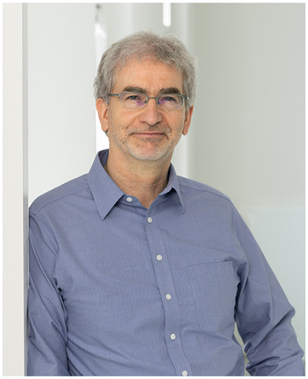
Senthold Asseng is Professor of Digital Agriculture and the Director of the Hans Eisenmann-Forum for Agricultural Sciences at the Technical University of Munich (TUM). He earned his PhD from Humboldt University Berlin before becoming a Principal Research Scientist at CSIRO in Australia. Later, he held the position of Full Professor in Agricultural and Biological Engineering at the University of Florida, where he also served as the Director of the Florida Climate Institute. In 2020, Prof. Asseng joined TUM as a Professor, bringing his expertise to the institution. His research focuses on analyzing atmosphere-crop-soil systems, with interests in the impacts of climate variability and climate change, cropping sustainability, and food security. Additionally, Prof. Asseng explores how systems analysis and crop modeling can support autonomous robot-managed cropping systems in the field and fully environmentally controlled vertical farming setups.

Sebastian Eichelsbacher is a Research Associate and PhD student at the Chair of Digital Agriculture, Technical University of Munich. He completed his Bachelor’s and Master’s degrees in Agricultural Sciences at the same institution. Through numerous internships and study trips, Sebastian gained a comprehensive understanding of agriculture across the United States of America, Brazil, China, Singapore, and Europe. In 2021, he embarked on his PhD journey, focusing on vertical farming. Sebastian’s research centers on the limits of the production of indoor wheat within fully controlled environmental systems. He optimizes climate conditions, including temperature, light, CO2 levels, and hydroponic nutrient solutions, to maximize productivity in vertical farming.
Acknowledgments
We want to thank Werner Siemens-Stiftung for supporting our research in vertical farming.
-
Research ethics: Not applicable.
-
Author contributions: The authors have accepted responsibility for the entire content of this manuscript and approved its submission.
-
Competing interests: The authors state no conflict of interest.
-
Research funding: None declared.
-
Data availability: Not applicable.
References
[1] H. Ritchie, et al.., “Population growth,” Our World in Data, 2023 [Online]. Available at: https://ourworldindata.org/population-growth.Suche in Google Scholar
[2] K. Richardson, et al.., “Earth beyond six of nine planetary boundaries,” Sci. Adv., vol. 9, no. 37, p. eadh2458, 2023. https://doi.org/10.1126/sciadv.adh2458.Suche in Google Scholar PubMed PubMed Central
[3] W. Steffen, et al.., “Trajectories of the earth system in the anthropocene,” Proc. Natl. Acad. Sci. U.S.A., vol. 115, no. 33, pp. 8252–8259, 2018. https://doi.org/10.1073/pnas.1810141115.Suche in Google Scholar PubMed PubMed Central
[4] A. Ippolito, M. Kattwinkel, J. J. Rasmussen, R. B. Schäfer, R. Fornaroli, and M. Liess, “Modeling global distribution of agricultural insecticides in surface waters,” Environ. Pollut., vol. 198, pp. 54–60, 2015, https://doi.org/10.1016/j.envpol.2014.12.016.Suche in Google Scholar PubMed
[5] D. Ferber, “Marine biology. Keeping the stygian waters at bay,” Science, vol. 291, no. 5506, pp. 968–973, 2001. https://doi.org/10.1126/science.291.5506.968.Suche in Google Scholar PubMed
[6] M. D. Smith, et al.., “Seafood prices reveal impacts of a major ecological disturbance,” Proc. Natl. Acad. Sci. U.S.A., vol. 114, no. 7, pp. 1512–1517, 2017. https://doi.org/10.1073/pnas.1617948114.Suche in Google Scholar PubMed PubMed Central
[7] WWF, Living Planet Report 2020: World Wildlife Fund, 2020 [Online]. Available at: https://www.worldwildlife.org/publications/living-planet-report-2020.Suche in Google Scholar
[8] D. Cordell and S. White, “Peak phosphorus: clarifying the key issues of a vigorous debate about long-term phosphorus security,” Sustainability, vol. 3, no. 10, pp. 2027–2049, 2011. https://doi.org/10.3390/su3102027.Suche in Google Scholar
[9] P. Okwan, et al.., “Statistical analysis of nutrient loads from the mississippi-atchafalaya river basin (MARB) to the Gulf of Mexico,” Environments, vol. 7, no. 1, p. 8, 2020. https://doi.org/10.3390/environments7010008.Suche in Google Scholar
[10] D. Gerten, et al.., “Feeding ten billion people is possible within four terrestrial planetary boundaries,” Nat. Sustain., vol. 3, no. 3, pp. 200–208, 2020. https://doi.org/10.1038/s41893-019-0465-1.Suche in Google Scholar
[11] P. C. West, et al.., “Leverage points for improving global food security and the environment,” Science, vol. 345, no. 6194, pp. 325–328, 2014. https://doi.org/10.1126/science.1246067.Suche in Google Scholar PubMed
[12] S. Clemens, M. G. M. Aarts, S. Thomine, and N. Verbruggen, “Plant science: the key to preventing slow cadmium poisoning,” Trends Plant Sci., vol. 18, no. 2, pp. 92–99, 2013. https://doi.org/10.1016/j.tplants.2012.08.003.Suche in Google Scholar PubMed
[13] D. K. Ray, J. S. Gerber, G. K. MacDonald, and P. C. West, “Climate variation explains a third of global crop yield variability,” Nat. Commun., vol. 6, no. 1, p. 5989, 2015. https://doi.org/10.1038/ncomms6989.Suche in Google Scholar PubMed PubMed Central
[14] W. Liu, et al.., “Future climate change significantly alters interannual wheat yield variability over half of harvested areas,” Environ. Res. Lett., vol. 16, no. 9, p. 94045, 2021. https://doi.org/10.1088/1748-9326/ac1fbb.Suche in Google Scholar
[15] J. Berazneva and D. R. Lee, “Explaining the African food riots of 2007–2008: an empirical analysis,” Food Pol., vol. 39, pp. 28–39, 2013, https://doi.org/10.1016/j.foodpol.2012.12.007.Suche in Google Scholar
[16] T. Wheeler and J. von Braun, “Climate change impacts on global food security,” Science, vol. 341, no. 6145, pp. 508–513, 2013. https://doi.org/10.1126/science.1239402.Suche in Google Scholar PubMed
[17] H. C. J. Godfray, et al., “Food security: the challenge of feeding 9 billion people,” Science, vol. 327, no. 5967, pp. 812–818, 2010. https://doi.org/10.1126/science.1185383.Suche in Google Scholar PubMed
[18] H. Wirz, A. F. Sauer-Budge, J. Briggs, A. Sharpe, S. Shu, and A. Sharon, “Automated production of plant-based vaccines and pharmaceuticals,” J. Lab. Autom., vol. 17, no. 6, pp. 449–457, 2012. https://doi.org/10.1177/2211068212460037.Suche in Google Scholar PubMed
[19] Y.-H. F. Yeh, T.-C. Lai, T.-Y. Liu, C.-C. Liu, W.-C. Chung, and T.-T. Lin, “An automated growth measurement system for leafy vegetables,” Biosyst. Eng., vol. 117, pp. 43–50, 2014, https://doi.org/10.1016/j.biosystemseng.2013.08.011.Suche in Google Scholar
[20] T. Kozai, “Towards sustainable plant factories with artificial lighting (PFALs) for achieving SDGs,” Int. J. Agric. Biol. Eng., vol. 12, no. 5, pp. 28–37, 2019. https://doi.org/10.25165/ijabe.v12i5.5177.Suche in Google Scholar
[21] P. Pinstrup-Andersen, “Is it time to take vertical indoor farming seriously?” Global Food Secur., vol. 17, pp. 233–235, 2018, https://doi.org/10.1016/j.gfs.2017.09.002.Suche in Google Scholar
[22] M. Butturini and L. F. M. Marcelis, “Chapter 4 – vertical farming in Europe: present status and outlook,” in Plant Factory, T. Kozai, G. Niu, and M. Takagaki, Eds., 2nd ed. Academic Press, 2020, pp. 77–91. [Online]. Available at: https://www.sciencedirect.com/science/article/pii/B9780128166918000042.10.1016/B978-0-12-816691-8.00004-2Suche in Google Scholar
[23] M. SharathKumar, E. Heuvelink, and L. F. M. Marcelis, “Vertical farming: moving from genetic to environmental modification,” Trends Plant Sci., vol. 25, no. 8, pp. 724–727, 2020. https://doi.org/10.1016/j.tplants.2020.05.012.Suche in Google Scholar PubMed
[24] J. D. Chaux, D. Sanchez-Londono, and G. Barbieri, “A digital twin architecture to optimize productivity within controlled environment agriculture,” Appl. Sci., vol. 11, no. 19, p. 8875, 2021. https://doi.org/10.3390/app11198875.Suche in Google Scholar
[25] Z. Lin, S. Wang, R. Fu, K.-C. Ting, and T. Lin, “Data-driven modeling for crop growth in plant factories,” in Agriculture Automation and Control, Sensing, Data Managing, and Control Technologies for Agricultural Systems, S. Ma, T. Lin, E. Mao, Z. Song, and K.-C. Ting, Eds., Cham, Springer International Publishing, 2022, pp. 101–129.10.1007/978-3-031-03834-1_5Suche in Google Scholar
[26] S. H. van Delden, et al.., “Current status and future challenges in implementing and upscaling vertical farming systems,” Nat. Food, vol. 2, no. 12, pp. 944–956, 2021. https://doi.org/10.1038/s43016-021-00402-w.Suche in Google Scholar PubMed
[27] J. E. Son, H. J. Kim, and T. In Ahn, “Chapter 20 – hydroponic systems,” in Plant Factory, T. Kozai, G. Niu, and M. Takagaki, Eds., 2nd ed. Academic Press, 2020, pp. 273–283. [Online]. Available at: https://www.sciencedirect.com/science/article/pii/B9780128166918000200.10.1016/B978-0-12-816691-8.00020-0Suche in Google Scholar
[28] B. Arad, et al.., “Development of a sweet pepper harvesting robot,” J. Field Robot., vol. 37, no. 6, pp. 1027–1039, 2020. https://doi.org/10.1002/rob.21937.Suche in Google Scholar
[29] S. Yamamoto, S. Hayashi, H. Yoshida, and K. Kobayashi, “Development of a stationary robotic strawberry harvester with a picking mechanism that approaches the target fruit from below,” JARQ, vol. 48, no. 3, pp. 261–269, 2014. https://doi.org/10.6090/jarq.48.261.Suche in Google Scholar
[30] S. Jahnke, et al.., “phenoSeeder – a robot system for automated handling and phenotyping of individual seeds,” Plant Physiol., vol. 172, no. 3, pp. 1358–1370, 2016. https://doi.org/10.1104/pp.16.01122.Suche in Google Scholar PubMed PubMed Central
[31] N. E.-H. Scialabba, C. Baldock, E. Burks, and R. Hardwicke, “Natural capital impacts in agriculture,” 2015 [Online]. Available at: https://www.fao.org/nr/sustainability/natural-capital.Suche in Google Scholar
[32] C. R. Laderchi, et al.., “The economics of the food system transformation: food system economics commission (FSEC), Global Policy Report,” 2024.Suche in Google Scholar
[33] J. N. Pretty, A. S. Ball, T. Lang, and J. I. L. Morison, “Farm costs and food miles: an assessment of the full cost of the UK weekly food basket,” Food Pol., vol. 30, no. 1, pp. 1–19, 2005. https://doi.org/10.1016/j.foodpol.2005.02.001.Suche in Google Scholar
[34] H. M. Summers, E. Sproul, and J. C. Quinn, “The greenhouse gas emissions of indoor cannabis production in the United States,” Nat. Sustain., vol. 4, no. 7, pp. 644–650, 2021. https://doi.org/10.1038/s41893-021-00691-w.Suche in Google Scholar
[35] L. Graamans, E. Baeza, A. den van Dobbelsteen, I. Tsafaras, and C. Stanghellini, “Plant factories versus greenhouses: comparison of resource use efficiency,” Agric. Syst., vol. 160, pp. 31–43, 2018, https://doi.org/10.1016/j.agsy.2017.11.003.Suche in Google Scholar
[36] F. Orsini, G. Pennisi, F. Zulfiqar, and G. Gianquinto, “Sustainable use of resources in plant factories with artificial lighting (PFALs),” Eur. J. Hortic. Sci., vol. 85, no. 5, pp. 297–309, 2020. https://doi.org/10.17660/eJHS.2020/85.5.1.Suche in Google Scholar
[37] S. Asseng, et al.., “Wheat yield potential in controlled-environment vertical farms,” Proc. Natl. Acad. Sci. U.S.A., vol. 117, no. 32, pp. 19131–19135, 2020. https://doi.org/10.1073/pnas.2002655117.Suche in Google Scholar PubMed PubMed Central
[38] D. Coon, L. Lindow, Z. Boz, A. Martin-Ryals, Y. Zhang, and M. Correll, “Reporting and practices of sustainability in controlled environment agriculture: a scoping review,” Environ. Syst. Decis., 2024, https://doi.org/10.1007/s10669-024-09964-z.Suche in Google Scholar
[39] P. G. Curtis, C. M. Slay, N. L. Harris, A. Tyukavina, and M. C. Hansen, “Classifying drivers of global forest loss,” Science, vol. 361, no. 6407, pp. 1108–1111, 2018. https://doi.org/10.1126/science.aau3445.Suche in Google Scholar PubMed
[40] S. Hemming, F. de Zwart, A. Elings, I. Righini, and A. Petropoulou, “Remote control of greenhouse vegetable production with artificial intelligence-greenhouse climate, irrigation, and crop production,” Sensors, vol. 19, no. 8, p. 1807, 2019. https://doi.org/10.3390/s19081807.Suche in Google Scholar PubMed PubMed Central
[41] V. Arabzadeh, et al.., “Urban vertical farming with a large wind power share and optimised electricity costs,” Appl. Energy, vol. 331, p. 120416, 2023, https://doi.org/10.1016/j.apenergy.2022.120416.Suche in Google Scholar
[42] UN, The 17 Goals, Sustainable Development, 2015 [Online]. Available at: https://sdgs.un.org/goals.Suche in Google Scholar
© 2024 Walter de Gruyter GmbH, Berlin/Boston
Artikel in diesem Heft
- Frontmatter
- Survey
- Biological engineering – an engineering discipline crucial to the future of our civilization
- Forum
- New biological solutions to the many problems of our time
- Survey
- Biological engineering as a driver of innovation: implications for the economy
- Advancing vertical farming with automation for sustainable food production
- Harnessing microalgae: from biology to innovation in sustainable solutions
- Generation of molecular hydrogen (H2) by microalgae and their biocatalysts
- Biocatalytic approaches for plastic recycling
- Engineered living materials: pushing the boundaries of materials sciences through biological engineering
- The fabrication-assembly challenge in tissue engineering
- Evolution of biofabrication and 3D-bioprinting technologies – from market pull to technology push
- A bio-engineering approach to generate bioinspired (spider) silk protein-based materials
- RNA aptamers: promising tools in synthetic biology
- Automated handling of biological objects with a flexible gripper for biodiversity research
- Building with renewable materials
- Growing new types of building materials: mycelium-based composite materials
- Façade greening – from science to school
Artikel in diesem Heft
- Frontmatter
- Survey
- Biological engineering – an engineering discipline crucial to the future of our civilization
- Forum
- New biological solutions to the many problems of our time
- Survey
- Biological engineering as a driver of innovation: implications for the economy
- Advancing vertical farming with automation for sustainable food production
- Harnessing microalgae: from biology to innovation in sustainable solutions
- Generation of molecular hydrogen (H2) by microalgae and their biocatalysts
- Biocatalytic approaches for plastic recycling
- Engineered living materials: pushing the boundaries of materials sciences through biological engineering
- The fabrication-assembly challenge in tissue engineering
- Evolution of biofabrication and 3D-bioprinting technologies – from market pull to technology push
- A bio-engineering approach to generate bioinspired (spider) silk protein-based materials
- RNA aptamers: promising tools in synthetic biology
- Automated handling of biological objects with a flexible gripper for biodiversity research
- Building with renewable materials
- Growing new types of building materials: mycelium-based composite materials
- Façade greening – from science to school
