Structural noise tolerance of photonic crystal optical properties
-
Nyam-Erdene Odontsengel
Nyam-Erdene Odontsengel, PhD student in the Department of Computer Science, Graduate School of Systems and Information Engineering, University of Tsukuba. Research interests are in algorithm development, high accuracy nonstandard finite difference time domain (NS-FDTD) algorithms and electromagnetic simulations of various optical devices.
 ,
DongSheng Cai
,
DongSheng Cai
DongSheng Cai is an Associate Professor of the University of Tsukuba. He received his PhD at Stanford University in 1990. He is connected with the Department of Computer Science, University of Tsukuba from 1992 up to the present. Currently, he is working on space plasma physics; numerical analysis; scientific computings and visualizations; and computer graphics using the Artificial life theory.
James B. Cole graduated from the University of Maryland (USA) with a PhD in Particle Physics. He began his career in numerical simulations (cosmic ray antiproton flux) during his post-doctorate research at the NASA Goddard Space Flight Center. Later, he worked on stochastic simulations at the Army Research Laboratory and visited the NTT Basic Research Laboratory (Japan) for 1 year. He developed the earliest nonstandard finite difference (NS-FD) models for acoustic simulations, as a research physicist at the Naval Research Laboratory, working on the Connection Machine. He extended NS-FD models to computational electromagnetics and optics, after joining the faculty of the University of Tsukuba (Japan) as a professor.

Abstract
Using nonstandard (NS) finite difference time domain (FDTD) scheme to perform 2D electromagnetic (EM) simulations, we investigate how the optical properties of 2D photonic crystals (PCs) are affected by various different kinds of structural noises in the PC lattice. While the transmission spectrum is strongly affected by noises, the position and the depth of the band gap in the transmission spectrum are remarkably robust. It is shown that rather coarse numerical grids can be used to evaluate various PC structures in NS-FDTD EM simulations. The combination of noises affects transmission spectrum in the same way as the most influential individual noise. It is shown that reducing the most influential individual noise is a very efficient method to make PC more accurate.
About the authors
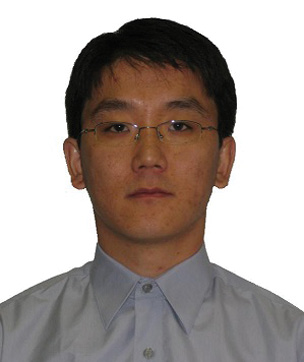
Nyam-Erdene Odontsengel, PhD student in the Department of Computer Science, Graduate School of Systems and Information Engineering, University of Tsukuba. Research interests are in algorithm development, high accuracy nonstandard finite difference time domain (NS-FDTD) algorithms and electromagnetic simulations of various optical devices.

DongSheng Cai is an Associate Professor of the University of Tsukuba. He received his PhD at Stanford University in 1990. He is connected with the Department of Computer Science, University of Tsukuba from 1992 up to the present. Currently, he is working on space plasma physics; numerical analysis; scientific computings and visualizations; and computer graphics using the Artificial life theory.
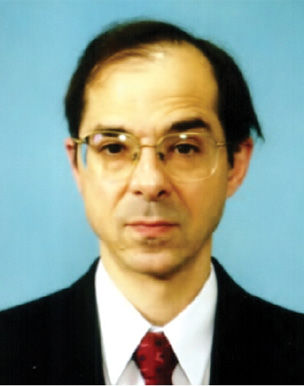
James B. Cole graduated from the University of Maryland (USA) with a PhD in Particle Physics. He began his career in numerical simulations (cosmic ray antiproton flux) during his post-doctorate research at the NASA Goddard Space Flight Center. Later, he worked on stochastic simulations at the Army Research Laboratory and visited the NTT Basic Research Laboratory (Japan) for 1 year. He developed the earliest nonstandard finite difference (NS-FD) models for acoustic simulations, as a research physicist at the Naval Research Laboratory, working on the Connection Machine. He extended NS-FD models to computational electromagnetics and optics, after joining the faculty of the University of Tsukuba (Japan) as a professor.
Appendix – Shape noise
Let the unperturbed PC consist of N uniform dielectric cylinders of radius r and refractive index n on an (Nx ×Ny ) grid. Let the k-th cylinder be centered at (cx (k), cy (k)), where k=1, 2, ···N. The cylinder is formed by looping over all the grid points, (ix , iy ). Each time the noise function is called, it outputs a random number drawn from a Gaussian distribution of mean=0 and standard deviation=σs ; thus, during the looping, the cylinder center shifted. The k-th cylinder is defined by the pseudo-code,
| Subroutine shape noise |
| do ix =1, Nx |
| do iy =1, Ny |
| centx =cx (k)+noise(ix , iy ) |
| centy =cy (k)+noise(ix , iy ) |
| if (ix –centx )2+(iy –centy )2≤(r+0.5)2 |
| gridn (ix , iy )=fuzzy(ix , iy ) |
| end if |
| end do |
| end do |
Here, gridn (ix , iy ) is the refractive index at grid point (ix , iy ), computed according to the fuzzy model, with the property that
Author contributions
Nyam-Erdene Odontsengel: Wrote the simulation program using the NS-FDTD algorithm with PML and analyzed the simulation results.
DongSheng Cai: Analyzed the simulation results and chose the properties of transmission spectrums.
James B. Cole: Developed the NS-FDTD algorithm.
References
[1] J. D. Joannopoulos, P. R. Villeneuve and S. Fan, Nature 386, 6621 (1997).10.1038/386143a0Search in Google Scholar
[2] T. F. Krauss, R. M. de la Rue and S. Brand, Nature 383, 6602 (1996).10.1038/383699a0Search in Google Scholar
[3] S. H. Park, B. Gates and Y. Xia, Adv. Mater. 11, 6 (1999).10.1002/(SICI)1521-4095(199904)11:6<462::AID-ADMA462>3.0.CO;2-USearch in Google Scholar
[4] S. Noda, K. Tomoda, N. Yamamoto and A. Chutinan, Science 289, 5479 (2000).10.1126/science.289.5479.604Search in Google Scholar
[5] Y. A. Vlasov, X. Z. Bo, J. C. Sturm and D. J. Norris, Nature 414, 6861 (2001).10.1038/35104529Search in Google Scholar
[6] H. Y. Ryu, J. K. Hwang and Y. H. Lee, Phys. Rev. B 59, 8 (1999).10.1103/PhysRevB.59.8Search in Google Scholar
[7] R. Meisels and F. Kuchar, J. Opt. A: Pure Appl. Opt. 9, 9 (2007).10.1088/1464-4258/9/9/S19Search in Google Scholar
[8] S. Fan, P. R. Villeneuve and J. D. Joannopoulos, J. Appl. Phys. 78, 3 (1995).10.1063/1.360298Search in Google Scholar
[9] M. A. Kaliteevski, J. M. Martinez, D. Cassagne and J. P. Albert, Phys. Rev. B 66, 11 (2002).10.1103/PhysRevB.66.113101Search in Google Scholar
[10] Z. Y. Li and Z. Q. Zhang, Phys. Rev. B 62, 3 (2000).Search in Google Scholar
[11] D. M. Beggs, M. A. Kaliteevski, R. A. Abram, D. Cassagne and J. P. Albert, J. Phys.: Condens. Matter 17, 12 (2005).10.1088/0953-8984/17/12/002Search in Google Scholar
[12] K. Samokhvalova, C. Chen and B. L. Qian, J. Appl. Phys. 99, 6 (2006).10.1063/1.2186385Search in Google Scholar
[13] W. Fan, Z. Hao, Z. Li, Y. Zhao and Y. Luo, J. Lightwave Technol. 28, 10 (2010).Search in Google Scholar
[14] A. Taflove and S. C. Hagness, in ‘Computational Electrodynamics: The Finite-Difference Time-Domain Method’, (Artech House, Boston, 2000).Search in Google Scholar
[15] J. B. Cole, IEEE Trans. Antennas Propag. 50, 9 (2002).10.1109/TAP.2002.801268Search in Google Scholar
[16] J. B. Cole, in ‘Advances in the Applications of Nonstandard Finite Difference Schemes’, Ed. By R. E. Mickens (World Scientific, Singapore, 2005) pp. 89–189.10.1142/9789812703316_0004Search in Google Scholar
[17] R. E. Mickens, ‘Nonstandard Finite Difference Models of Differential Equations’, (World Scientific, Singapore, 1993).10.1142/2081Search in Google Scholar
[18] J. B. Cole, IEEE Trans. Antennas Propag. 52, 3 (2004).10.1109/TAP.2004.823874Search in Google Scholar
[19] J. P. Berenger, J. Comput. Phys. 114, 2 (1994).10.1006/jcph.1994.1159Search in Google Scholar
[20] N. Okada and J. B. Cole, J. Opt. Soc. Am. B 27, 4 (2010).10.1364/JOSAB.27.000631Search in Google Scholar
©2016 THOSS Media & De Gruyter
Articles in the same Issue
- Cover and Frontmatter
- Community
- Conference Notes
- Conference Calendar
- News from the European Optical Society EOS
- Topical Issue: Optical 3D Sensing
- Review Articles
- High-speed optical 3D sensing and its applications
- Infrared deflectometry for the inspection of diffusely specular surfaces
- Multi-scale referencing and coordinate unification of optical sensors in multi-axis machines
- Research Articles
- 3D shape measurement with thermal pattern projection
- A new form measurement system based on subaperture stitching with a line-scanning interferometer
- Evaluation of pixel-wise geometric constraint-based phase-unwrapping method for low signal-to-noise-ratio (SNR) phase
- Single-shot phase-measuring deflectometry for cornea measurement
- Modeling of imaging fiber bundles and adapted signal processing for fringe projection
- Noncontact three-dimensional quantitative profiling of fast aspheric lenses by optical coherence tomography
- Tutorial
- Aspherics in spectacle lenses
- Research Article
- Structural noise tolerance of photonic crystal optical properties
Articles in the same Issue
- Cover and Frontmatter
- Community
- Conference Notes
- Conference Calendar
- News from the European Optical Society EOS
- Topical Issue: Optical 3D Sensing
- Review Articles
- High-speed optical 3D sensing and its applications
- Infrared deflectometry for the inspection of diffusely specular surfaces
- Multi-scale referencing and coordinate unification of optical sensors in multi-axis machines
- Research Articles
- 3D shape measurement with thermal pattern projection
- A new form measurement system based on subaperture stitching with a line-scanning interferometer
- Evaluation of pixel-wise geometric constraint-based phase-unwrapping method for low signal-to-noise-ratio (SNR) phase
- Single-shot phase-measuring deflectometry for cornea measurement
- Modeling of imaging fiber bundles and adapted signal processing for fringe projection
- Noncontact three-dimensional quantitative profiling of fast aspheric lenses by optical coherence tomography
- Tutorial
- Aspherics in spectacle lenses
- Research Article
- Structural noise tolerance of photonic crystal optical properties
