Energy Transport and Storage using Methanol as a Carrier
-
Karsten Müller
Karsten Müller studied Chemical Engineering at the Technische Universität München (Germany) and the University of Cape Town (South Africa). He received his Diplom in 2009 and his Dr. degree in 2013 from the Friedrich-Alexander-University Erlangen-Nürnberg (Germany). He is currently working as the head of the energy research group at the Institute of Separation Science and Technology (University Erlangen). His research interests include chemical thermodynamics for energy applications and predictive methods for thermophysical substance properties. Focuses of his current work are energy storage, recovery of waste heat and energetic utilization of biomass. ,
Florian Fabisch
,
Florian Fabisch
Florian Fabisch studied Chemical and Biological Engineering at the Friedrich-Alexander-University Erlangen-Nürnberg (Germany) where he joined the energy research at the Institute of Separation Science and Technology. He received his master's degree in 2013. Currently he is working as a PhD student at the Institute of Chemical Reaction Engineering (University Erlangen) under the supervision of Prof. Schwieger. His research focuses on the development and characterization of hierarchical porous materials for the adsorptive separation of hydrogen from gas mixtures.Prof. Wolfgang Arlt studied chemistry and chemical engineering at the University of Dortmund (Germany) and received his Dr. degree at the same university in 1981. The same year he joined Bayer AG as a project engineer. In 1992 he became a full professor at the Technical University of Berlin and in 2004 at the Friedrich-Alexander-University Erlangen-Nürnberg. Prof. Arlt founded the largest Bavarian research institute for energy: Energy Campus Nuremberg and serves as its academic director. He is council to the Bavarian government in questions concerning energy policy. His major research interests include thermodynamics of mixtures and energy efficiency and storage.

Abstract
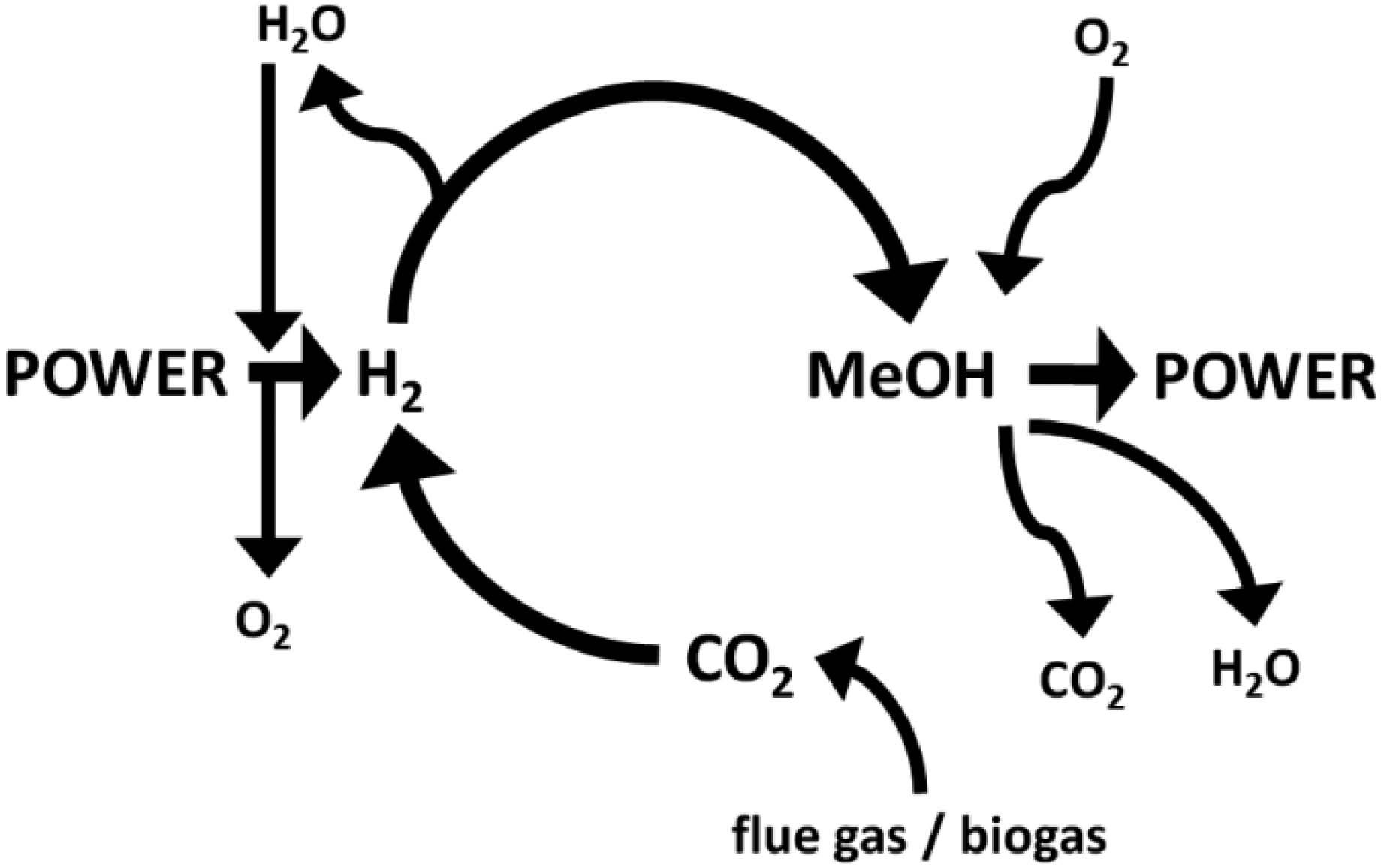
Methanol has been proposed frequently as an energy carrier in recent years. High storage capacity, easy manageability and similarity to existing fuels make it an interesting option for energy storage. However, the usage of methanol is constrained by its low boiling point and its toxicity and the energy balance of a methanol economy is disputable. Net energy ration and renewability factor for different scenarios of a methanol economy have been analyzed, considering hydrogen production, methanol synthesis and transport and repowering. It appears that the overall efficiency of methanol based energy storage is rather low, but still can be sustainable due to a high renewability factors.
About the authors
Karsten Müller studied Chemical Engineering at the Technische Universität München (Germany) and the University of Cape Town (South Africa). He received his Diplom in 2009 and his Dr. degree in 2013 from the Friedrich-Alexander-University Erlangen-Nürnberg (Germany). He is currently working as the head of the energy research group at the Institute of Separation Science and Technology (University Erlangen). His research interests include chemical thermodynamics for energy applications and predictive methods for thermophysical substance properties. Focuses of his current work are energy storage, recovery of waste heat and energetic utilization of biomass.
Florian Fabisch studied Chemical and Biological Engineering at the Friedrich-Alexander-University Erlangen-Nürnberg (Germany) where he joined the energy research at the Institute of Separation Science and Technology. He received his master's degree in 2013. Currently he is working as a PhD student at the Institute of Chemical Reaction Engineering (University Erlangen) under the supervision of Prof. Schwieger. His research focuses on the development and characterization of hierarchical porous materials for the adsorptive separation of hydrogen from gas mixtures.
Prof. Wolfgang Arlt studied chemistry and chemical engineering at the University of Dortmund (Germany) and received his Dr. degree at the same university in 1981. The same year he joined Bayer AG as a project engineer. In 1992 he became a full professor at the Technical University of Berlin and in 2004 at the Friedrich-Alexander-University Erlangen-Nürnberg. Prof. Arlt founded the largest Bavarian research institute for energy: Energy Campus Nuremberg and serves as its academic director. He is council to the Bavarian government in questions concerning energy policy. His major research interests include thermodynamics of mixtures and energy efficiency and storage.
©2014 by Walter de Gruyter Berlin/Munich/Boston
Articles in the same Issue
- Frontmatter
- In this issue
- Publisher's Note
- Short Reports
- Mini-Review
- Electrochemical Double Layer Capacitors and Hybrid Devices for Green Energy Applications
- Original Articles
- Energy Transport and Storage using Methanol as a Carrier
- Self-discharge Reactions in Energy Storage Devices Based on Polypyrrole-cellulose Composite Electrodes
- Expert View from Industry
- A Perspective on Energy Storage and Other Means to Integrate Increasing Shares of Renewable Electricity Generation
Articles in the same Issue
- Frontmatter
- In this issue
- Publisher's Note
- Short Reports
- Mini-Review
- Electrochemical Double Layer Capacitors and Hybrid Devices for Green Energy Applications
- Original Articles
- Energy Transport and Storage using Methanol as a Carrier
- Self-discharge Reactions in Energy Storage Devices Based on Polypyrrole-cellulose Composite Electrodes
- Expert View from Industry
- A Perspective on Energy Storage and Other Means to Integrate Increasing Shares of Renewable Electricity Generation
