Megatrends – megascience? Part 2
-
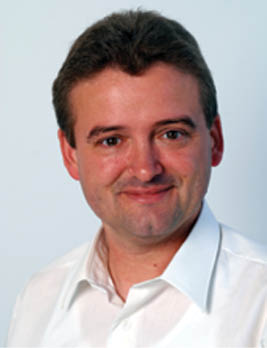
Volker Hessel


In the last Editorial I gave some thoughts on how the megatrends influence science. It was evident that some megatrends are expected to have a major impact, while others are supposed to have a minor impact. Overall, a considerable impact was stated. Six out of the commonly cited 20 megatrends were discussed. This and the next two Editorials will continue the analysis for a set of megatrends.
Digital culture – Computer-based analysis has established as basic tool for many scientific disciplines since long time. It is deeply applied in modeling, process control and automation, high-throughput screening, rational catalyst design, design of experiments, and more. In the “simple” planning of experiments using a flow chemistry apparatus the impact and possibilities of computer-aided science will increase. As part of it, digital culture will exert its impact.
Learning from nature – Biomimetic designs are famous. In the same way, biomimetic chemistry will learn its lessons from successful chemistry pathways in nature. Artificial photosynthesis, solar fuels, etc., are just a few of the keywords which become increasingly popular and eminent as scientific research topics. They compete with other biobased economy approaches and it is yet unclear which one will finally be the dominant one. It has become normal in science to work on something which will have breakthrough in 10 or even in 20 years. Young scientists will experience as “old man” how their “seeds” will grow to “mature plants”. Funding agencies need increasingly visionary skills to sort out the right directions to support.
Ubiquitous intelligence – The comments given for the “digital culture” trend apply here. Yet, the impact of ubiquitous intelligence on science is for me less predictable. This effect is less tangible and – so far – less clearly related to scientific developments.
Technology convergence – This has a very strong impact. Chemical engineering and chemistry merge. Biosciences merge with chemical ones. Even more technologies are involved in such mergers. The result is highly interdisciplinary sciences like microreactor technology, nanotechnology, etc. Most of the modern true scientific breakthroughs are made at the interface of the disciplines and not anymore within them. There is hardly a suited education for the “interdisciplines”. Companies may need to reorganize to accommodate the “interdisciplines”. Yet, finally one might even have to rethink the Noble Prizes, since some of the most impactful scientific achievements are represented by none of the classical disciplines. I guess this is the hardest test if we are really ready for the future, i.e., if we can overcome a more than 100 years of tradition.
Globalization 2.0 – Again, this is a strong impact. Yet, globalization has not only an impact on science as given for the last megatrend, but on almost everything. The precise impact on science is less predictable, but certainly will be massive as a whole. Research teams are already today multinational. This trend will continue – also journals and publishers will be distributed over the whole world and this trend is visible already today.
The analysis will be continued in the next Editorial, including the megatrend “knowledge-based economy” and I will outline how especially this is impactful.
About the author
©2014 by Walter de Gruyter Berlin/Boston
Articles in the same Issue
- Frontmatter
- In this issue
- Editorial
- Megatrends – megascience? Part 2
- Feature
- Novel sustainable industrial processes: from idea to commercial scale implementation
- Original articles
- Application of environmental and economic metrics to guide the development of biocatalytic processes
- Synthesis of nanostructured MgO powders with photoluminescence by plasma-intensified pyrohydrolysis process of bischofite from brine
- A solvent free approach for Knoevenagel condensation: facile synthesis of 3-cyano and 3-carbethoxycoumarins
- Green synthesis and characterisations of antibacterial silver-polyvinyl alcohol nanocomposite films for wound dressing
- Company profiles
- AVA Biochem: commercialising renewable platform chemical 5-HMF
- Invenios: micro process technology – chemical process technology of tomorrow
- Conference announcements
- International Conference on Green Chemistry and Sustainable Engineering International (Barcelona, Spain, July 29–31, 2014)
- 7th Annual European Forum for Industrial Biotechnology and the Biobased Economy (Reims, France, September 30–October 2, 2014)
- 19th International Symposium on Homogeneous Catalysis (ISHC-XIX; Ottawa, ON, Canada, July 6–11, 2014)
- 248th American Chemical Society National Meeting and Exposition: Chemistry and Global Stewardship (San Francisco, CA, USA, August 10–14, 2014)
- Conferences 2014–2017
- Book reviews
- Green materials for sustainable water remediation and treatment
- Engineering catalysis
Articles in the same Issue
- Frontmatter
- In this issue
- Editorial
- Megatrends – megascience? Part 2
- Feature
- Novel sustainable industrial processes: from idea to commercial scale implementation
- Original articles
- Application of environmental and economic metrics to guide the development of biocatalytic processes
- Synthesis of nanostructured MgO powders with photoluminescence by plasma-intensified pyrohydrolysis process of bischofite from brine
- A solvent free approach for Knoevenagel condensation: facile synthesis of 3-cyano and 3-carbethoxycoumarins
- Green synthesis and characterisations of antibacterial silver-polyvinyl alcohol nanocomposite films for wound dressing
- Company profiles
- AVA Biochem: commercialising renewable platform chemical 5-HMF
- Invenios: micro process technology – chemical process technology of tomorrow
- Conference announcements
- International Conference on Green Chemistry and Sustainable Engineering International (Barcelona, Spain, July 29–31, 2014)
- 7th Annual European Forum for Industrial Biotechnology and the Biobased Economy (Reims, France, September 30–October 2, 2014)
- 19th International Symposium on Homogeneous Catalysis (ISHC-XIX; Ottawa, ON, Canada, July 6–11, 2014)
- 248th American Chemical Society National Meeting and Exposition: Chemistry and Global Stewardship (San Francisco, CA, USA, August 10–14, 2014)
- Conferences 2014–2017
- Book reviews
- Green materials for sustainable water remediation and treatment
- Engineering catalysis
