The Presidents’ Forum: Advancing Chemistry through Global Cooperation
-
Javier García-Martínez
Javier García-Martínez <
j.garcia@ua.es > is a Professor of Inorganic Chemistry and Director of the Molecular Nanotechnology Laboratory of the University of Alicante where he leads an international team working on the synthesis and application of nanostructured materials for the production of chemicals and energy. Javier was IUPAC President from January 2022 to Dec 2023. Previously, he served as Vice President and member of the Executive Committee, and as Titular Member and Vice-President of the Inorganic Chemistry Division.https://orcid.org/0000-0002-7089-4973 

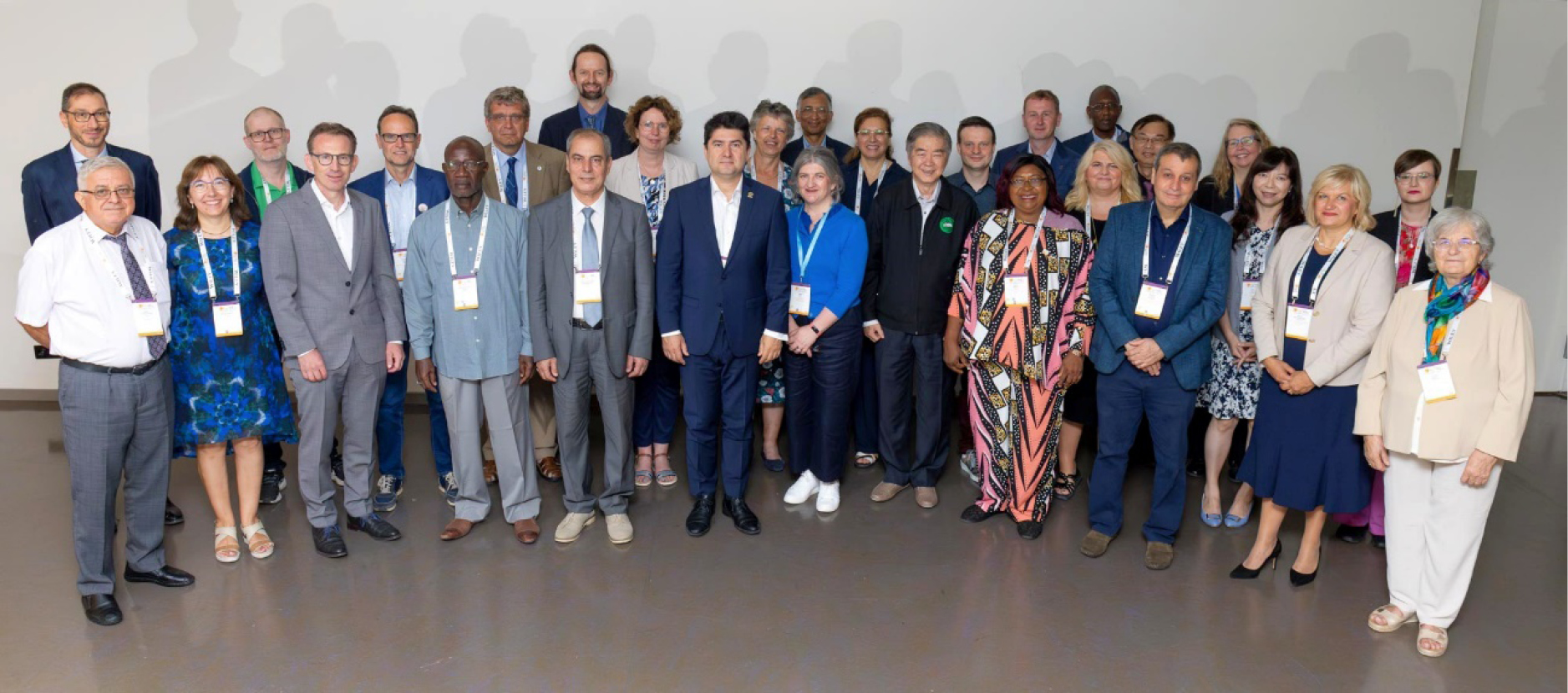
Group picture of the participants in the inaugural Presidents´ Forum during the 52nd IUPAC General Assembly in The Hague on August 22, 2023.
During our past General Assembly in The Hague, IUPAC took a significant step forward in fostering international cooperation among chemical societies by launching the inaugural Presidents’ Forum. This initiative aims to bring together the leaders of chemical societies and federations from around the world to collectively address key issues in chemistry, with the goal of fostering mutual cooperation and increasing the global impact of chemistry for the betterment of humankind and the planet.
The creation of the Presidents´ Forum was one of the ideas included in the final report of the Review Group, which was approved first by IUPAC Executive Committee and then by our Bureau in 2021 [1]. As stated in this document, the Presidents´ Forum is an opportunity for “IUPAC to exercise its convening role in global chemistry to show leadership and coordination of international initiatives”. From a more personal experience, I would say that over the years I have observed that many presidents of chemical societies regularly attend IUPAC General Assemblies but don’t have a dedicated platform to interact, share projects, and explore opportunities for collaboration. Therefore, this global forum is an opportunity to create a space where like-minded leaders can come together across geographical boundaries and institutional affiliations and take advantage of their presence at our General Assembly. The Presidents’ Forum aims to foster a spirit of camaraderie, efficiency, and collaboration among peers who share a common passion for the advancement of chemistry.
The purpose of bringing together the presidents of chemical societies from around the world goes beyond mere formality; it is an avenue for substantive dialogue, knowledge sharing and strategic planning. At the core of this initiative is the desire to enhance the collective impact and effectiveness of the chemical societies in their quest to continue to contribute to improving human well-being while creating a more sustainable future through chemistry. The essence of the Presidents’ Forum encapsulates a shared mission to promote chemistry’s central role in the advancement of society.
It is important to understand that the Presidents’ Forum stands apart from the routine business of the IUPAC Council. While the Council meeting remains an integral part of the IUPAC General Assembly, made up of IUPAC National Adhering Organizations, which in many cases are not the chemical societies of those countries, the Presidents’ Forum is an autonomous meeting, organised under the umbrella of IUPAC, but with an independent focus. This distinctiveness is essential to maintain an atmosphere conducive to open and frank discussion, not constrained by formalities. The Presidents’ Forum is designed to facilitate candid exchanges of information, innovative ideas, and collaborative projects. This inclusive platform seeks to harness the collective wisdom of leaders who recognize the transformative potential of chemistry in shaping our world.
During our last General Assembly in The Hague, I had the privilege of welcoming more than 30 representatives of chemical societies and federations from around the world to the first Presidents’ Forum on 22 August. I opened the meeting by introducing this initiative, outlining its objectives and emphasising the significance of the occasion. Each delegate introduced themselves by name and the organisation they represent, demonstrating the diversity of the chemical societies present. This introductory session laid the foundation for a constructive and inclusive dialogue.
A key issue discussed during the Forum was the adoption of FAIR data principles in chemistry. I took the opportunity to stress the importance of translating data into standardised digital formats, especially in the age of artificial intelligence and data science. The need for interdisciplinary frameworks and interoperability in line with the FAIR principles was underlined. The challenge of creating common standards for digital management across research groups and data science communities worldwide was highlighted [2]. Participants raised concerns about data security and ethical considerations. I clarified that international efforts involving stakeholders such as companies, research organisations and the European Union are already underway to address these concerns. In particular, I mentioned the WorldFAIR project, on which we are working with CODATA (the Committee on Data of the International Science Council) and RDA (the Research Data Alliance) to develop a set of case studies to advance the implementation of the FAIR data principles. This initiative was highlighted as a crucial step forward, not only for chemistry, but also for the wider scientific community.
After some discussion on how to involve the various chemical societies in this initiative, we talked about the establishment of the UN Intergovernmental Panel on Chemicals, Waste, and Pollution Prevention. I took the opportunity to present the purpose and work of the Panel, emphasising its focus on sound chemicals and waste management and pollution prevention. Participants shared their insights on challenges related to definitions of hazardous waste and the need for consensus to reduce pollution. I then invited the Presidents’ Forum participants to remain in contact with their governments to coordinate action at the national level, and outlined IUPAC’s role in proposing panel members and its efforts to contribute to the effective and impactful functioning of this UN initiative. I encouraged participants to learn more about this UN initiative and to read the article I wrote for Chemistry International on this new panel [3].
Delegates also raised concerns about the state of chemistry education, in particular the declining number of students in STEM subjects and the public perception of chemistry in different countries. Participants highlighted initiatives aimed at countering negative stereotypes and promoting chemistry as an essential discipline for societal progress. The need for chemical societies to work together and share resources to address challenges and increase the attractiveness of chemistry education was recognised. In this regard, Uday Maitra from India proposed that IUPAC create and curate a website to serve as a database and repository of the activities of the various chemical societies and federations, a proposal that received unanimous support.
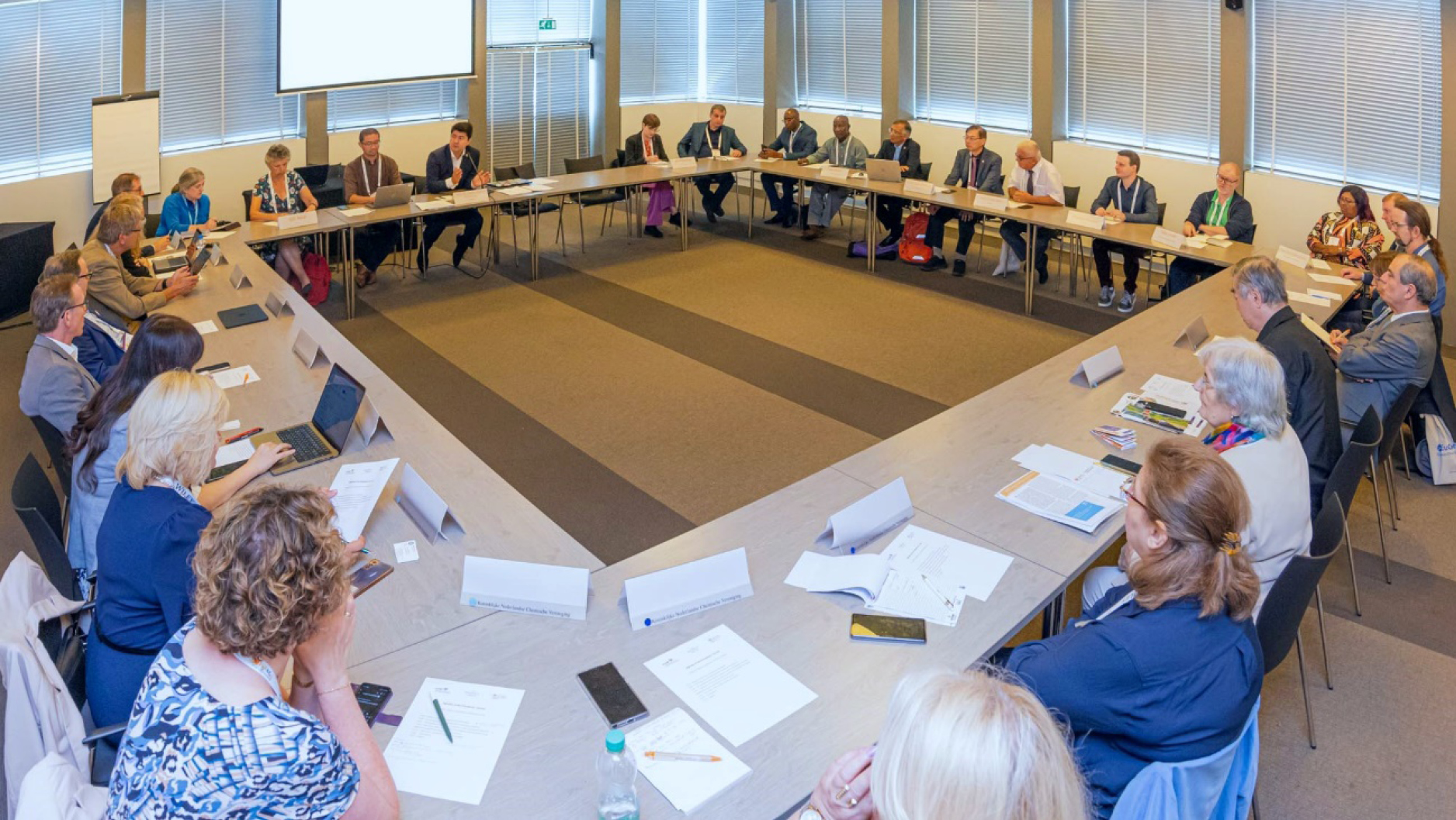
Participants of the inaugural Presidents´ Forum discuss the various issues included in the agenda´s meeting.

A moment of the Presidents´ Forum in which the representative of the Italian Chemical Society, Gianluca Farinola, asked a question to IUPAC President Javier García Martínez.
The meeting, which lasted an hour and a half, was the first step in establishing a more direct and collaborative relationship between IUPAC and the various chemical societies and federations. Its inaugural meeting marked a significant step towards global cooperation among chemical societies and was a momentous event in the history of chemistry.Reminiscent of the meetings of the International Association of Chemical Societies (IACS) in the early 20th century, it is the first time that the presidents of chemical societies have come together to discuss issues of common interest. This landmark event heralds a new chapter of unity and cooperation, paving the way for future interactions that will foster cross-border partnerships, synergistic projects and lasting friendships to facilitate the exchange of ideas, address critical issues and collectively steer the field of chemistry towards a more impactful and harmonious future. As chemistry continues to play an essential role in shaping the world, the Presidents’ Forum stands as a beacon of unity and cooperation to further its progress.
The unprecedented times in which we find ourselves make the Presidents’ Forum even more relevant. As a global community, we face challenges and opportunities that require collective wisdom, collaborative innovation and unity of purpose. The inaugural session of the Presidents´ Forum was indeed an historic meeting, where we not only discussed critical issues, but also planted the seeds for a more collaborative and impactful future for the world of chemistry.
About the author
Javier García-Martínez <j.garcia@ua.es> is a Professor of Inorganic Chemistry and Director of the Molecular Nanotechnology Laboratory of the University of Alicante where he leads an international team working on the synthesis and application of nanostructured materials for the production of chemicals and energy. Javier was IUPAC President from January 2022 to Dec 2023. Previously, he served as Vice President and member of the Executive Committee, and as Titular Member and Vice-President of the Inorganic Chemistry Division. https://orcid.org/0000-0002-7089-4973
References:
1. IUPAC Structure Review https://iupac.org/iupac-structure-review/Suche in Google Scholar
2. McEwen, Leah and Mustafa, Fatima. “WorldFAIR Chemistry: Making IUPAC Assets FAIR” Chemistry International, vol. 45, no. 1, 2023, pp. 14-17. https://doi.org/10.1515/ci-2023-010410.1515/ci-2023-0104Suche in Google Scholar
3. Martínez, Javier García. “IUPAC´s Role in UN Panel on Chemicals, Waste, and Pollution Prevention “ Chemistry International, vol. 45, no. 2, 2023, pp. 4-6. https://doi.org/10.1515/ci-2023-020210.1515/ci-2023-0202Suche in Google Scholar
©2024 by Walter de Gruyter Berlin/Boston
This work is licensed under the Creative Commons Attribution-NonCommercial-NoDerivatives 4.0 International License.
Artikel in diesem Heft
- Masthead - Full issue pdf
- Past President’s column
- Embracing Change: IUPAC’s Opportunities Moving Forward
- Features
- BOLD: Color from Test Tube to Textile
- The renaissance and evolving design of radical polymerization
- Two Young Observers at the WCC in The Hague Share Their Reflections
- IUPAC Wire
- The 2024 IUPAC-Richter Award Goes to Craig M. Crews
- Science as a Global Public Good
- IUPAC Emeritus Fellows 2022-23
- Ty Coplen received a US Presidential Rank Award
- One World Chemistry—IOCD Call for Volunteers
- 2024 Franzosini Prize and Balarew Award—Call for Nominations
- InCHI Changing Pace
- IUPAC Standards Online—Free Access
- PAC Open for Submissions
- Teaching Ethics and Core Values in Chemistry Education—Call for Papers
- Inorganic Chemistry Division—Feb 2024 Newsletter
- Project Place
- InChI Open Education Resource
- The Gender Gap in Chemistry—Building on the ISC Gender Gap Project
- Medicinal Chemistry in Drug Discovery & Development, India
- Advanced Technologies for Carbon Sequestration and Capture
- Terminology and Symbolism for Mechanochemistry
- IUPAC Provisional Recommendations
- Definition of Materials Chemistry
- Up for Discussion
- How Young Are You?
- Bookworm
- The Etymology of Chemical Names
- IUPAC Green Book—New Abridged Version
- IUPAC Blue Book—Updated release
- Conference Call
- The Presidents’ Forum: Advancing Chemistry through Global Cooperation
- IUPAC’s Role in the International Year of Basic Sciences for Sustainable Development and the Closing Ceremony
- Thailand Younger Chemists Network
- Where 2B & Y
- Solubility Phenomena and Related Equilibrium Processes
- Chemistry: a solution for global changes
- Mark Your Calendar
Artikel in diesem Heft
- Masthead - Full issue pdf
- Past President’s column
- Embracing Change: IUPAC’s Opportunities Moving Forward
- Features
- BOLD: Color from Test Tube to Textile
- The renaissance and evolving design of radical polymerization
- Two Young Observers at the WCC in The Hague Share Their Reflections
- IUPAC Wire
- The 2024 IUPAC-Richter Award Goes to Craig M. Crews
- Science as a Global Public Good
- IUPAC Emeritus Fellows 2022-23
- Ty Coplen received a US Presidential Rank Award
- One World Chemistry—IOCD Call for Volunteers
- 2024 Franzosini Prize and Balarew Award—Call for Nominations
- InCHI Changing Pace
- IUPAC Standards Online—Free Access
- PAC Open for Submissions
- Teaching Ethics and Core Values in Chemistry Education—Call for Papers
- Inorganic Chemistry Division—Feb 2024 Newsletter
- Project Place
- InChI Open Education Resource
- The Gender Gap in Chemistry—Building on the ISC Gender Gap Project
- Medicinal Chemistry in Drug Discovery & Development, India
- Advanced Technologies for Carbon Sequestration and Capture
- Terminology and Symbolism for Mechanochemistry
- IUPAC Provisional Recommendations
- Definition of Materials Chemistry
- Up for Discussion
- How Young Are You?
- Bookworm
- The Etymology of Chemical Names
- IUPAC Green Book—New Abridged Version
- IUPAC Blue Book—Updated release
- Conference Call
- The Presidents’ Forum: Advancing Chemistry through Global Cooperation
- IUPAC’s Role in the International Year of Basic Sciences for Sustainable Development and the Closing Ceremony
- Thailand Younger Chemists Network
- Where 2B & Y
- Solubility Phenomena and Related Equilibrium Processes
- Chemistry: a solution for global changes
- Mark Your Calendar
