Comparison of a two-step Tempus600 hub solution single-tube vs. container-based, one-step pneumatic transport system
-
Marc Luginbühl
 ,
Kathrin Frey
,
Joanna Gawinecka
,
Arnold von Eckardstein
und
Lanja Saleh
,
Kathrin Frey
,
Joanna Gawinecka
,
Arnold von Eckardstein
und
Lanja Saleh


Abstract
Objectives
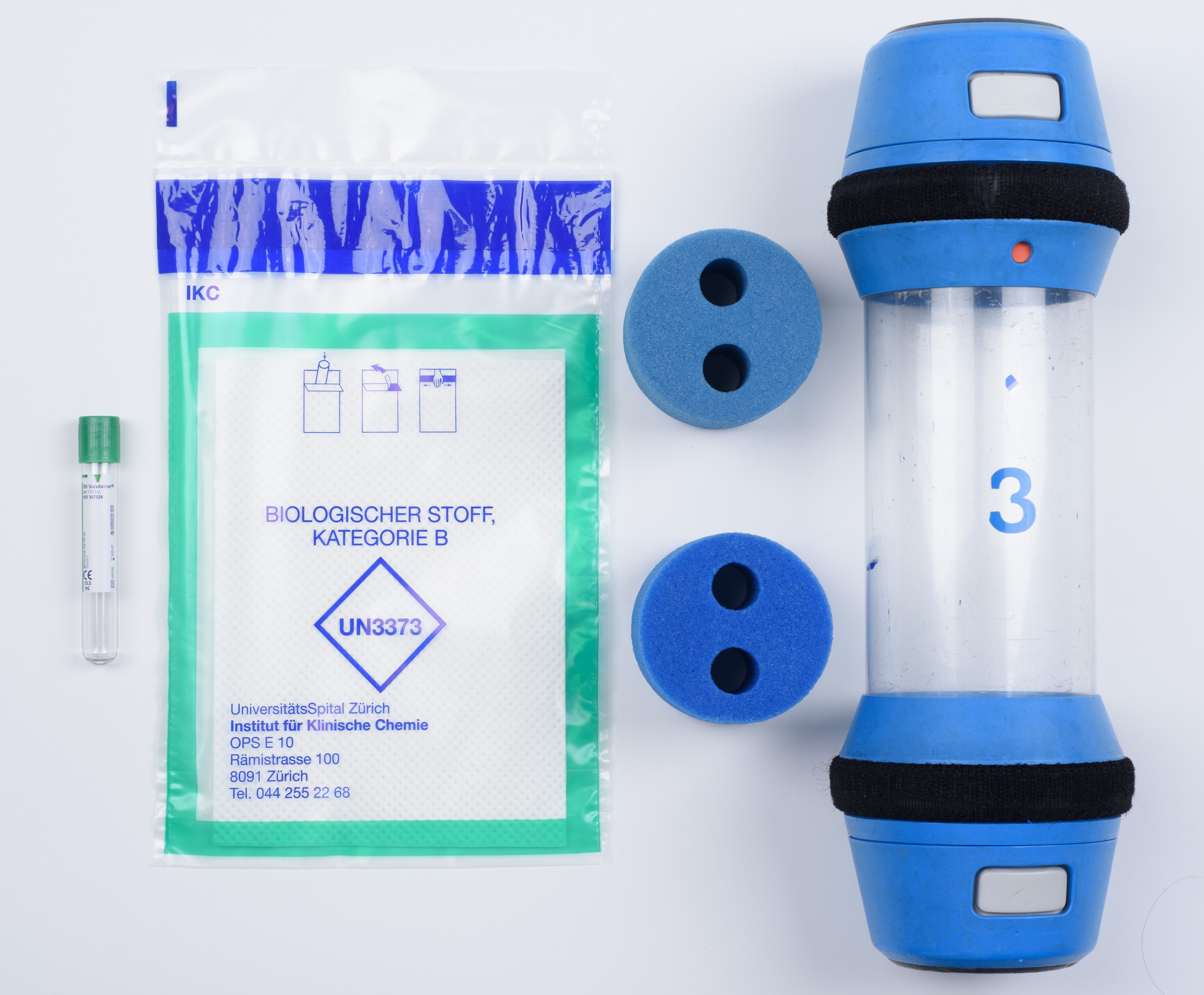
Efficient and timely transportation of clinical samples is pivotal to ensure accurate diagnoses and effective patient care. During the transportation process, preservation of sample integrity is crucial to avoid pre-analytical aberrations on laboratory results. Here, we present a comparative analysis between a two-step Tempus600 hub solution single-tube and a one-step, container-based pneumatic transport system (PTS) from Airco, for the in-house transportation of blood samples.
Methods
Ten blood samples from healthy volunteers were split in 10 mL collection tubes filled at full or half capacity for transportation with the two PTS (about 250 m). To compare the impact of transportation, markers of hemolysis such as lactate dehydrogenase (LDH), potassium (K+), and the hemolysis index (HI), were determined. Additionally, differences in HI in routine samples and repeated transportation was investigated. To assess and compare the mechanistic impact profiles, we recorded the acceleration profiles of the two PTS using a shock data logger.
Results
Transportation using the Tempus600 hub solution resulted in 49 and 46 % higher HI with samples filled to total or half capacity, respectively. Routine samples transported with the Tempus600 hub solution showed a higher median HI by 23 and 33 %. Additionally, shock logger analysis showed an elevated amount of shocks (6.5 fold) and shock intensities (1.8 fold).
Conclusions
The Tempus600 hub solution caused an increased number of unreportable LDH or K+ results based on the hemolysis index. However, it was only statistically significant for LDH (p<0.01 and p<0.08) – while the comparisons for K+ were not statistically significant (p<0.28 and p<0.56).
Acknowledgments
The authors would like to thank the team of the Institute of Clinical Chemistry at the University Hospital of Zurich for their support. Additionally, special thanks are extended to Christoph Stulz for his contributions to photography.
-
Research ethics: This investigation was conducted as a quality assurance project of the Institute of Clinical Chemistry at the University Hospital of Zurich, to qualify the novel PTS system according to ISO 17025. The project was not subject to approval according to the Human Research Act (HRA). The use of the collected data for publication received a waiver from the hospital’s data governance board (DUP-1238).
-
Informed consent: Written consent was obtained before the individual blood collection.
-
Author contributions: The authors have accepted responsibility for the entire content of this manuscript and approved its submission.
-
Competing interests: The authors declare no potential conflicts of interest concerning research, authorship, and/ or publication of this article.
-
Research funding: None declared.
-
Data availability: The raw data can be obtained on request from the corresponding author.
References
1. Fernandes, CM, Worster, A, Eva, K, Hill, S, McCallum, C. Pneumatic tube delivery system for blood samples reduces turnaround times without affecting sample quality. J Emerg Nurs 2006;32:139–43. https://doi.org/10.1016/j.jen.2005.11.013.Suche in Google Scholar PubMed
2. Kumari, S, Kumar, S, Bharti, N, Shekhar, R. Impact of pneumatic transport system on preanalytical phase affecting clinical biochemistry results. J Lab Phys 2023;15:48–55. https://doi.org/10.1055/s-0042-1750077.Suche in Google Scholar PubMed PubMed Central
3. Petit, M, Mine, L, Pascreau, T, Brouzes, C, Majoux, S, Borgel, D, et al.. Preanalytical influence of pneumatic tube delivery system on results of routine biochemistry and haematology analysis. Ann Biol Clin 2017;75:703–12. https://doi.org/10.1684/abc.2017.1287.Suche in Google Scholar PubMed
4. Wan Azman, WN, Omar, J, Koon, TS, Tuan Ismail, TS. Hemolyzed specimens: major challenge for identifying and rejecting specimens in clinical laboratories. Oman Med J 2019;34:94–8. https://doi.org/10.5001/omj.2019.19.Suche in Google Scholar PubMed PubMed Central
5. Streichert, T, Otto, B, Schnabel, C, Nordholt, G, Haddad, M, Maric, M, et al.. Determination of hemolysis thresholds by the use of data loggers in pneumatic tube systems. Clin Chem 2011;57:1390–7. https://doi.org/10.1373/clinchem.2011.167932.Suche in Google Scholar PubMed
6. Gils, C, Broell, F, Vinholt, PJ, Nielsen, C, Nybo, M. Use of clinical data and acceleration profiles to validate pneumatic transportation systems. Clin Chem Lab Med 2020;58:560–8. https://doi.org/10.1515/cclm-2019-0881.Suche in Google Scholar PubMed
7. Ninnemann, J, Zylla, S, Streichert, T, Otto, B, Haenel, M, Nauck, M, et al.. Diagnostic sample transport via pneumatic tube systems: data logger and their algorithms are sensitive to transport effects. Clin Chem Lab Med 2023;62:657–63. https://doi.org/10.1515/cclm-2023-0632.Suche in Google Scholar PubMed
8. Franks, CE, Krekeler, JA, Gronowski, AM, Farnsworth, CW. A comparison of four 3-axis-accelerometers for monitoring hospital pneumatic tube systems. J Appl Lab Med 2020;5:1345–50. https://doi.org/10.1093/jalm/jfaa081.Suche in Google Scholar PubMed
9. Andersen, IB, Mogensen, N, Brandslund, I. Stability of biochemical components in blood samples transported by Tempus600/Sysmex GLP robot reception system. J Appl Lab Med. 2017;1:376–86. https://doi.org/10.1373/jalm.2016.021188.Suche in Google Scholar PubMed
10. Lippi, G, Salvagno, GL, Montagnana, M, Brocco, G, Guidi, GC. Influence of hemolysis on routine clinical chemistry testing. Clin Chem Lab Med 2006;44:311–6. https://doi.org/10.1515/cclm.2006.054.Suche in Google Scholar
11. Calleja, R, Mielke, N, Lee, R, Johnson, S, Bahl, A. Hemolyzed laboratory specimens in the emergency department: an underappreciated, but frequent problem. J Emerg Nurs 2023;49:744–54. https://doi.org/10.1016/j.jen.2023.06.001.Suche in Google Scholar PubMed
12. Phelan, MP, Reineks, EZ, Schold, JD, Hustey, FM, Chamberlin, J, Procop, GW. Preanalytic factors associated with hemolysis in emergency department blood samples. Arch Pathol Lab Med 2017;142:229–35. https://doi.org/10.5858/arpa.2016-0400-oa.Suche in Google Scholar PubMed
13. Stangerup, I, Broell, F, Hoop, JV, Sennels, HP. Pneumatic tube validation: reducing the need for donor samples by integrating a vial-embedded data logger. Ann Clin Biochem 2021;58:280–8. https://doi.org/10.1177/0004563221992822.Suche in Google Scholar PubMed
14. Evliyaoğlu, O, Toprak, G, Tekin, A, Başarali, MK, Kilinç, C, Çolpan, L. Effect of pneumatic tube delivery system rate and distance on hemolysis of blood specimens. J Clin Lab Anal 2012;26:66–9. https://doi.org/10.1002/jcla.21484.Suche in Google Scholar PubMed PubMed Central
Supplementary Material
This article contains supplementary material (https://doi.org/10.1515/cclm-2024-0057).
© 2024 Walter de Gruyter GmbH, Berlin/Boston
Artikel in diesem Heft
- Frontmatter
- Editorial
- Circulating tumor DNA measurement: a new pillar of medical oncology?
- Reviews
- Circulating tumor DNA: current implementation issues and future challenges for clinical utility
- Circulating tumor DNA methylation: a promising clinical tool for cancer diagnosis and management
- Opinion Papers
- The final part of the CRESS trilogy – how to evaluate the quality of stability studies
- The impact of physiological variations on personalized reference intervals and decision limits: an in-depth analysis
- Computational pathology: an evolving concept
- Perspectives
- Dynamic mirroring: unveiling the role of digital twins, artificial intelligence and synthetic data for personalized medicine in laboratory medicine
- General Clinical Chemistry and Laboratory Medicine
- Macroprolactin in mothers and their babies: what is its origin?
- The influence of undetected hemolysis on POCT potassium results in the emergency department
- Quality control in the Netherlands; todays practices and starting points for guidance and future research
- QC Constellation: a cutting-edge solution for risk and patient-based quality control in clinical laboratories
- OILVEQ: an Italian external quality control scheme for cannabinoids analysis in galenic preparations of cannabis oil
- Using Bland-Altman plot-based harmonization algorithm to optimize the harmonization for immunoassays
- Comparison of a two-step Tempus600 hub solution single-tube vs. container-based, one-step pneumatic transport system
- Evaluating the HYDRASHIFT 2/4 Daratumumab assay: a powerful approach to assess treatment response in multiple myeloma
- Insight into the status of plasma renin and aldosterone measurement: findings from 526 clinical laboratories in China
- Reference Values and Biological Variations
- Reference values for plasma and urine trace elements in a Swiss population-based cohort
- Stimulating thyrotropin receptor antibodies in early pregnancy
- Within- and between-subject biological variation estimates for the enumeration of lymphocyte deep immunophenotyping and monocyte subsets
- Diurnal and day-to-day biological variation of salivary cortisol and cortisone
- Web-accessible critical limits and critical values for urgent clinician notification
- Cancer Diagnostics
- Thyroglobulin measurement is the most powerful outcome predictor in differentiated thyroid cancer: a decision tree analysis in a European multicenter series
- Cardiovascular Diseases
- Interaction of heparin with human cardiac troponin complex and its influence on the immunodetection of troponins in human blood samples
- Diagnostic performance of a point of care high-sensitivity cardiac troponin I assay and single measurement evaluation to rule out and rule in acute coronary syndrome
- Corrigendum
- Reference intervals of 24 trace elements in blood, plasma and erythrocytes for the Slovenian adult population
- Letters to the Editor
- Disturbances of calcium, magnesium, and phosphate homeostasis: incidence, probable causes, and outcome
- Validation of the enhanced liver fibrosis (ELF)-test in heparinized and EDTA plasma for use in reflex testing algorithms for metabolic dysfunction-associated steatotic liver disease (MASLD)
- Detection of urinary foam cells diagnosing the XGP with thrombopenia preoperatively: a case report
- Methemoglobinemia after sodium nitrite poisoning: what blood gas analysis tells us (and what it might not)
- Novel thiopurine S-methyltransferase (TPMT) variant identified in Malay individuals
- Congress Abstracts
- 56th National Congress of the Italian Society of Clinical Biochemistry and Clinical Molecular Biology (SIBioC – Laboratory Medicine)
Artikel in diesem Heft
- Frontmatter
- Editorial
- Circulating tumor DNA measurement: a new pillar of medical oncology?
- Reviews
- Circulating tumor DNA: current implementation issues and future challenges for clinical utility
- Circulating tumor DNA methylation: a promising clinical tool for cancer diagnosis and management
- Opinion Papers
- The final part of the CRESS trilogy – how to evaluate the quality of stability studies
- The impact of physiological variations on personalized reference intervals and decision limits: an in-depth analysis
- Computational pathology: an evolving concept
- Perspectives
- Dynamic mirroring: unveiling the role of digital twins, artificial intelligence and synthetic data for personalized medicine in laboratory medicine
- General Clinical Chemistry and Laboratory Medicine
- Macroprolactin in mothers and their babies: what is its origin?
- The influence of undetected hemolysis on POCT potassium results in the emergency department
- Quality control in the Netherlands; todays practices and starting points for guidance and future research
- QC Constellation: a cutting-edge solution for risk and patient-based quality control in clinical laboratories
- OILVEQ: an Italian external quality control scheme for cannabinoids analysis in galenic preparations of cannabis oil
- Using Bland-Altman plot-based harmonization algorithm to optimize the harmonization for immunoassays
- Comparison of a two-step Tempus600 hub solution single-tube vs. container-based, one-step pneumatic transport system
- Evaluating the HYDRASHIFT 2/4 Daratumumab assay: a powerful approach to assess treatment response in multiple myeloma
- Insight into the status of plasma renin and aldosterone measurement: findings from 526 clinical laboratories in China
- Reference Values and Biological Variations
- Reference values for plasma and urine trace elements in a Swiss population-based cohort
- Stimulating thyrotropin receptor antibodies in early pregnancy
- Within- and between-subject biological variation estimates for the enumeration of lymphocyte deep immunophenotyping and monocyte subsets
- Diurnal and day-to-day biological variation of salivary cortisol and cortisone
- Web-accessible critical limits and critical values for urgent clinician notification
- Cancer Diagnostics
- Thyroglobulin measurement is the most powerful outcome predictor in differentiated thyroid cancer: a decision tree analysis in a European multicenter series
- Cardiovascular Diseases
- Interaction of heparin with human cardiac troponin complex and its influence on the immunodetection of troponins in human blood samples
- Diagnostic performance of a point of care high-sensitivity cardiac troponin I assay and single measurement evaluation to rule out and rule in acute coronary syndrome
- Corrigendum
- Reference intervals of 24 trace elements in blood, plasma and erythrocytes for the Slovenian adult population
- Letters to the Editor
- Disturbances of calcium, magnesium, and phosphate homeostasis: incidence, probable causes, and outcome
- Validation of the enhanced liver fibrosis (ELF)-test in heparinized and EDTA plasma for use in reflex testing algorithms for metabolic dysfunction-associated steatotic liver disease (MASLD)
- Detection of urinary foam cells diagnosing the XGP with thrombopenia preoperatively: a case report
- Methemoglobinemia after sodium nitrite poisoning: what blood gas analysis tells us (and what it might not)
- Novel thiopurine S-methyltransferase (TPMT) variant identified in Malay individuals
- Congress Abstracts
- 56th National Congress of the Italian Society of Clinical Biochemistry and Clinical Molecular Biology (SIBioC – Laboratory Medicine)