
Analysis of the degree of correlation of spatial distribution of electricity theft and exogenous variables: case study of Florianopolis, Brazil
-
Natalia B. Sousa
 ,
Leonardo Nogueira F. da Silva
,
Leonardo Nogueira F. da Silva

Abstract
This article presents a geospatial study case on electricity theft. The main objective is to identify the degree of correlation between exogenous variables and areas with a high density of irregular cases. Firstly, the geospatial study is carried out to asses the null hypothesis and check whether the data pattern presents clustering, for this the ANN method is applied, which ruled out the null hypothesis for the data set. Once the clustering pattern is confirmed, the spatial weight matrix is created to study spatial autocorrelation by applying Global Moran’s I and Local Moran’s I. Moran scatterplot is used to evaluate the degree of fitness, identify outliers, and local pockets of stationarity. The Local Moran index is used to determine the location of the clusters and the relationship between the points. In the data pre-processing step, spatial interpolation is implemented to the exogenous variables as a tool to better association of consumer units points and socioeconomic variables, the method utilized is IDW interpolation. The R-squared value of the spatial lag model after model tuning by feature selection was 87 % indicating that the model fit the observed data well.
Zusammenfassung
Dieser Artikel präsentiert eine georäumliche Fallstudie zum Thema Stromdiebstahl. Das Hauptziel besteht darin, den Grad der Korrelation zwischen exogenen Variablen und Gebieten mit einer hohen Dichte an unregelmäßigen Fällen zu ermitteln. Zunächst wird die georäumliche Studie durchgeführt, um die Nullhypothese zu bewerten und zu prüfen, ob das Datenmuster eine Clusterbildung aufweist. Hierzu wird die ANN-Methode angewendet, die die Nullhypothese für den Datensatz ausschließt. Sobald das Clustermuster bestätigt ist, wird die räumliche Gewichtsmatrix erstellt, um die räumliche Autokorrelation durch Anwendung von Global Moran’s I und Local Moran’s I zu untersuchen. Das Moran-Streudiagramm wird verwendet, um den Grad der Fitness zu bewerten und Ausreißer und lokale Stationaritätstaschen zu identifizieren. Der Local Moran-Index wird verwendet, um die Position der Cluster und die Beziehung zwischen den Punkten zu bestimmen. Im Datenvorverarbeitungsschritt wird eine räumliche Interpolation auf die exogenen Variablen angewendet, um eine bessere Verbindung zwischen Verbrauchereinheitenpunkten und sozioökonomischen Variablen herzustellen. Die verwendete Methode ist die IDW-Interpolation. Der R-Quadrat-Wert des räumlichen Lag-Modells nach der Modelloptimierung durch Merkmalsauswahl betrug 87 %, was darauf hinweist, dass das Modell gut zu den beobachteten Daten passte.
Funding source: Centrais Elétricas de Santa Catarina S.A - CELESC
Award Identifier / Grant number: CELESC/UFSM nº 0422/2022
Funding source: National Institute of Science and Technology in Distributed Generation Systems (INCTGD), National Council for Scientific and Technological Development
Award Identifier / Grant number: CNPq - nº 465640/2014-1, process nº150276/2023-0; CAPES - nº 23038.000776/2017-54
Funding source: Fundação de Amparo à Pesquisa do Estado do Rio Grande do Sul
Award Identifier / Grant number: FAPERGS - no. 17/2551-0000517-1
Funding source: Universidade Federal de Santa Maria (UFSM), to the Fundação de Apoio da Universidade Federal de Minas Gerais (FUNDEP), Brazilian institutions, Otto-von-Guericke Universität Magdeburg Fakultät für Elektrotechnik und Informationstechnik.
About the authors
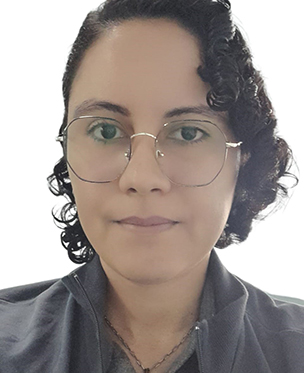
Natalia B. Sousa graduated in Electrical Engineering from Federal University of Santa Maria (2022) and is currently working towards a Ph.D. degree at UFSM with the Energy and Power Systems Excellence Center Group (CEESP). Areas of interest are electric power distribution systems, artificial intelligence, distributed generation and electrical energy losses.

Leonardo Nogueira F. da Silva is currently a fellow of the research group CEESP - Energy and Power Systems Excellence Center, owned by the Federal University of Santa Maria, where develops research focused in Electrical Power Systems, mainly Load Forecasting, Power System Planning, Electric Mobility and Distributed Energy Resources.
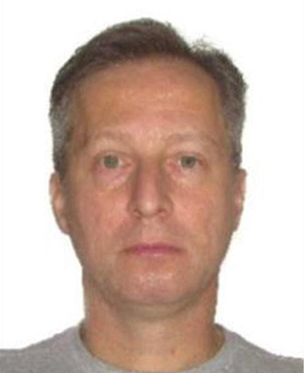
Vinicius J. Garcia graduated in Informatics - Bachelor's degree from the Federal University of Santa Maria (2000), master's degree in electrical engineering from the State University of Campinas (2002) and Ph.D. in Electrical Engineering from the State University of Campinas (2005). With post-doctorate at the State University of Campinas from November 2005 to September 2006. Currently a full professor at the Federal University of Santa Maria.Working mainly on the following topics: heuristics, meta and mat heuristics, multiobjective optimization, mathematical modeling, data analysis, data classification and learning machine.

Kamila Stromm is graduated in Electrical Engineering from Federal University of Santa Maria (2022) and currently is a master student in electrical engineering at Santa Maria Federal University (UFSM). She is a researcher at Center of Excellence in Energy and Power System (CEESP) at UFSM. Areas of interest are electric power distribution systems, artificial intelligence and distributed generation.

Daniel P. Bernardon is Pro-Rector of Innovation and Entrepreneurship (PROINOVA) of the Federal University of Santa Maria (UFSM). Full Professor at UFSM. Coordinator of Institutional Projects for Internationalization and RDI. Coordinator of the Advisory Committee for Innovation, Technology and Entrepreneurship of the Research Support Foundation of the State of Rio Grande do Sul (FAPERGS).

Martin Wolter has been the Head of the Chair of Electrical Networks and Renewable Energy at Otto-von-Guericke University Magdeburg since 2015. He received the Diploma, Ph.D., and venia legendi degrees from Leibniz University Hannover, Hannover, in 2006, 2008, and 2012, respectively. He was the Head of the System Operation Concept Development Team, 50Hertz Transmission GmbH, for four years. His research interests include modeling and simulation of interconnected electric power systems, development of planning and operation strategies, and multiagent systems.

Otacilio O. Carneiro Filho was born in União da Vitória, PR, Brazil, in 1994. He received the B.Sc. degree in Electrical Engineering from the Federal University of Santa Catarina (UFSC) in 2019. He currently works as an electrical engineer at Centrais Elätricas de Santa Catarina S.A (CELESC), in Florianópolis, SC, Brazil. His work focuses primarily on non-technical losses and electrical assets management.
-
Research ethics: Not applicable.
-
Author contributions: The data utilized in the study was provided by the auhtors: Natalia B. Sousa, Leonardo Nogueira, Vinicius Garcia, Kamila Stromm, Otacílio Carneiro. The review of the documents was provided by: Martin Wolter, Leonardo Nogueira, Vinicius Garcia, Daniel Bernardon. The content of the manuscript (topic of research, study of case and all simulations) was made by the author: Natalia B. Sousa. The authors have accepted responsibility for the entire content of this manuscript and approved its submission.
-
Competing interests: All other authors state no conflict of interest.
-
Research funding: The authors thanks the technical and financial support from the utility Centrais Elétricas de Santa Catarina S.A - CELESC (R&D Program ANEEL through the project CELESC/UFSM nº 0422/2022), National Institute of Science and Technology in Distributed Generation Systems (INCTGD), National Council for Scientific and Technological Development (CNPq - nº 465640/2014-1, process nº150276/2023-0), Coordination for the Improvement of Higher Level Personnel (CAPES - nº 23038.000776/2017-54), Fundação de Amparo à Pesquisa do Estado do Rio Grande do Sul (FAPERGS - no. 17/2551-0000517-1) and Universidade Federal de Santa Maria (UFSM), to the Fundação de Apoio da Universidade Federal de Minas Gerais (FUNDEP), Brazilian institutions, Otto-von-Guericke Universität Magdeburg Fakultät für Elektrotechnik und Informationstechnik.
-
Data availability: Raw data of a socioeconomic nature can be obtained upon request to the corresponding author. Further data cannot be requested.
References
[1] P. Carlos Alexandre de Sousa, “Combate, prevenção e otimização das perdas comerciais de energia elétrica,” Doctoral Thesis in Power Systems, Escola Politécnica, Universidade de São Paulo, São Paulo, 2008 [accessed: May 16, 2024].Search in Google Scholar
[2] P. Antmann, Reducing Technical and Non-Technical Losses in the Power Sector, World Bank, 2009, Work paper.Search in Google Scholar
[3] J. L. Viegas, P. R. Esteves, R. Melício, V. M. F. Mendes, and S. M. Vieira, “Solutions for detection of non-technical losses in the electricity grid: a review,” Renew. Sustain. Energy Rev., vol. 80, pp. 1256–1268, 2017, https://doi.org/10.1016/j.rser.2017.05.193.Search in Google Scholar
[4] T. B. Smith, “Electricity theft: a comparative analysis,” Energy Pol., vol. 32, no. 18, pp. 2067–2076, 2004. https://doi.org/10.1016/s0301-4215(03)00182-4.Search in Google Scholar
[5] F. D. S. Savian, J. C. M. Siluk, T. Bisognin Garlet, F. M. do Nascimento, J. R. Pinheiro, and Z. Vale, “Non-technical losses in Brazil: overview, challenges, and directions for identification and mitigation,” IJEEP, vol. 12, no. 3, pp. 93–107, 2022, https://doi.org/10.32479/ijeep.12614.Search in Google Scholar
[6] L. O. Ventura, J. D. Melo, A. Padilha-Feltrin, J. P. Fernández-Gutiérrez, C. C. S. Zuleta, and C. C. P. Escobar, “A new way for comparing solutions to non-technical electricity loses in South America,” Util. Pol., vol. 67, p. 101113, 2020.10.1016/j.jup.2020.101113Search in Google Scholar
[7] PODER360, “Enel Rio registra 150 mil casos de furto de energia em 2023,” 2024. Available at: https://www.poder360.com.br/poder-energia/rj-registra-150-mil-casos-de-furto-de-energia-e2023-diz-enel/.Search in Google Scholar
[8] Equatorial Energia, “Equatorial Piauí realiza mais de 109 mil inspeções por furto de energia em 2023,” 2024. Available at: https://pi.equatorialenergia.com.br/2024/03/27/equatorialpiaui-realiza-mais-de-109-mil-inspecoes-por-furto-de-energia-em-2023/.Search in Google Scholar
[9] T. Ahmad, H. Chen, J. Wang, and Y. Guo, “Review of various modeling techniques for the detection of electricity theft in smart grid environment,” Renew. Sustain. Energy Rev., vol. 82, no. Part 3, pp. 2916–2933, 2018. https://doi.org/10.1016/j.rser.2017.10.040.Search in Google Scholar
[10] L. T. Faria, J. D. Melo, and A. Padilha-Feltrin, “Spatial-temporal estimation for nontechnical losses,” IEEE Trans. Power Deliv., vol. 31, no. 1, pp. 362–369, 2016. https://doi.org/10.1109/TPWRD.2015.2469135.Search in Google Scholar
[11] ANEEL, Electricity Losses in Distribution, 2021. Available at: https://www2.aneel.gov.br/cedoc/aren2015660_Proret_Submod_2_6_V3.pdf.Search in Google Scholar
[12] C. Papadimitriou, G. Messinis, D. Vranis, S. Politopoulou, and N. Hatziargyriou, “Non technical losses: detection methods and regulatory aspects overview,” CIRED Open Access Proc. J., vol. 2017, no. 1, pp. 2830–2832, 2017. https://doi.org/10.1049/oap-cired.2017.0825.Search in Google Scholar
[13] K. M. Ghori, M. Imran, A. Nawaz, R. A. Abbasi, A. Ullah, and L. Szathmary, “Performance analysis of machine learning classifiers for non-technical loss detection,” J. Ambient Intell. Hum. Comput., vol. 14, pp. 15327–15342, 2023, https://doi.org/10.1007/s12652-019-01649-9.Search in Google Scholar
[14] G. M. Messinis and N. D. Hatziargyriou, “Review of non-technical loss detection methods,” Elec. Power Syst. Res., vol. 158, pp. 250–266, 2018. https://doi.org/10.1016/j.epsr.2018.01.005.Search in Google Scholar
[15] L. Ventura, G. E. Felix, R. Vargas, L. T. Faria, and J. D. Melo, “Estimation of non technical loss rates by regions,” Electr. Power Syst. Res., vol. 223, 2023, Art. no. 109685, https://doi.org/10.1016/j.epsr.2023.109685.Search in Google Scholar
[16] Z. Babar, F. Jamil, and W. Haq, “Consumer’s perception towards electricity theft: a case study of Islamabad and Rawalpindi using a path analysis,” Energy Pol., vol. 169, p. 113189, 2022. https://doi.org/10.1016/j.enpol.2022.113189.Search in Google Scholar
[17] IVS, Construction of Human Development Units (HDU), 2024. Available at: http://ivs.ipea.gov.br/index.php/pt/20-udh-leia-mais/25-saiba.Search in Google Scholar
[18] IBGE, “Demographic census,” 2024. Available at: https://www.ibge.gov.br/estatisticas/sociais/trabalho/22827censo-demografico-2022.html.Search in Google Scholar
[19] B. D. Ripley, Spatial Statistics, New York, Wiley, 1981.10.1002/0471725218Search in Google Scholar
[20] N. A. C. Cressie, Statistics for Spatial Data, New York, Wiley, 1993.10.1002/9781119115151Search in Google Scholar
[21] R. S. Bivand, E. J. Pebesba, and V. Gómez-Rubio, Applied Spatial Data Analysis with R, New York, Springer, 2008.Search in Google Scholar
[22] K. C. Clarke, Analytical and Computer Cartography, Englewood Cliffs, NJ, Prentice-Hall, 1990.Search in Google Scholar
[23] L. Jay and D. W. S. Wong, Statistical Analysis with Arcview Gis, New York, John Wiley, 2000.Search in Google Scholar
[24] R. L. Ford, “Nearest-neighbor analysis and karst geomorphology: an introduction to spatial statistics,” Geol. Soc. Am. Abstr. Progr., vol. 35, no. 6, p. 46, 2003.Search in Google Scholar
[25] P. J. Clark and F. C. Evans, “Distance to nearest neighbor as a measure of spatial relationships in populations,” Ecology, vol. 35, no. 4, pp. 445–453, 1954. https://doi.org/10.2307/1931034.Search in Google Scholar
[26] K. Hartmann, J. Krois, and A. Rudolph, Statistics and Geodata Analysis Using R (SOGA-R), Berlin, Department of Earth Sciences, Freie Universitaet Berlin, 2023.Search in Google Scholar
[27] W. Liu, Y. Xue, and C. Shang, “Spatial distribution analysis and driving factors of traditional villages in Henan province: a comprehensive approach via geospatial techniques and statistical models,” Herit. Sci., vol. 11, p. 185, 2023, https://doi.org/10.1186/s40494-023-01038-8.Search in Google Scholar
[28] P. A. P. Moran, “Notes on continuous stochastic phenomena,” Biometrika, vol. 37, pp. 17–23, 1950. https://doi.org/10.2307/2332142.Search in Google Scholar
[29] M. M. Fischer and A. Getis, “Handbook of applied spatial analysis: software tools,” Methods Appl., pp. 1–24, 2010, https://doi.org/10.1007/978-3-642-03647-7_1.Search in Google Scholar
[30] M. Minn, “Point data analysis in Python,” Availabe at: https://michaelminn.net/tutorials [accessed: Jun. 18, 2020].Search in Google Scholar
[31] M. Ghodousi, A. Sadeghi-Niaraki, F. Rabiee, and S. M. Choi, “Spatial-temporal analysis of point distribution pattern of schools using spatial autocorrelation indices in bojnourd city,” Sustainability, vol. 12, no. 18, p. 7755, 2020. https://doi.org/10.3390/su12187755.Search in Google Scholar
[32] L. Anselin, “Local indicators of spatial association—LISA,” Geogr. Anal., vol. 27, no. 2, pp. 93–115, 1995. https://doi.org/10.1111/j.15384632.1995.tb0338.x.Search in Google Scholar
[33] X. Liu, et al.., “Spatiotemporal variation characteristics of sediment nutrient load from the soil erosion of the Yangtze river basin of China from 1901 to 2010,” Ecol. Indicat., vol. 150, 2023, Art. no. 110206. https://doi.org/10.1016/j.ecolind.2023.110206.Search in Google Scholar
[34] P. Ploton, et al.., “Spatial validation reveals poor predictive performance of large-scale ecological mapping models,” Nat. Commun., vol. 11, p. 4540, 2020, https://doi.org/10.1038/s41467-020-18321-y.Search in Google Scholar PubMed PubMed Central
[35] N. M. Tahir, A. Hussain, S. A. Samad, K. A. Ishak, and R. A. Halim, “Feature selection for classification using decision tree,” in 2006 4th Student Conference on Research and Development, Shah Alam, Malaysia, 2006, pp. 99–102.10.1109/SCORED.2006.4339317Search in Google Scholar
[36] J. R. Quinlan, “Decision trees and decision-making,” IEEE Trans. Syst. Man Cybern., vol. 20, no. 2, pp. 339–346, 1990. https://doi.org/10.1109/21.52545.Search in Google Scholar
[37] J. R. Quinlan, “Learning decision tree classifiers,” ACM Comput. Surv., vol. 28, no. 1, pp. 71–72, 1996. https://doi.org/10.1145/234313.234346.Search in Google Scholar
© 2024 Walter de Gruyter GmbH, Berlin/Boston
Articles in the same Issue
- Frontmatter
- Editorial
- Resilient energy supply in times of crises and transition
- Methods
- Batteries for fast frequency containment response: market impacts on outage dynamics
- Synthesis of speed controllers by the polynomial equations method for an unstable electromechanical object
- Optimal power dispatch in microgrids using mixed-integer linear programming
- Review on peak detect and hold circuits and their applicability in partial discharge detection
- Applications
- Analysis of the degree of correlation of spatial distribution of electricity theft and exogenous variables: case study of Florianopolis, Brazil
- Linear transverse flux generator for wave energy conversion: design optimization and analysis
- Improving quality of electricity generated by grid-tied inverters in solar power plants in low generated power mode using frequency adaptive PWM
- Survey
- Regional marketing mechanisms for industrial energy flexibility enabled by service-oriented IT platforms
Articles in the same Issue
- Frontmatter
- Editorial
- Resilient energy supply in times of crises and transition
- Methods
- Batteries for fast frequency containment response: market impacts on outage dynamics
- Synthesis of speed controllers by the polynomial equations method for an unstable electromechanical object
- Optimal power dispatch in microgrids using mixed-integer linear programming
- Review on peak detect and hold circuits and their applicability in partial discharge detection
- Applications
- Analysis of the degree of correlation of spatial distribution of electricity theft and exogenous variables: case study of Florianopolis, Brazil
- Linear transverse flux generator for wave energy conversion: design optimization and analysis
- Improving quality of electricity generated by grid-tied inverters in solar power plants in low generated power mode using frequency adaptive PWM
- Survey
- Regional marketing mechanisms for industrial energy flexibility enabled by service-oriented IT platforms
