Extraction, characterization, quantification, and application of volatile aromatic compounds from Asian rice cultivars
-
 ,
,

Abstract
Rice is the main staple food after wheat for more than half of the world’s population in Asia. Apart from carbohydrate source, rice is gaining significant interest in terms of functional foods owing to the presence of aromatic compounds that impart health benefits by lowering glycemic index and rich availability of dietary fibers. The demand for aromatic rice especially basmati rice is expanding in local and global markets as aroma is considered as the best quality and desirable trait among consumers. There are more than 500 volatile aromatic compounds (VACs) vouched for excellent aroma and flavor in cooked aromatic rice due to the presence of aromatic hydrocarbons, aldehydes, phenols, alcohols, ketones, and esters. The predominant VAC contributing to aroma is 2 acetyl-1-pyrroline, which is commonly found in aerial parts of the crop and deposits during seed maturation. So far, literature has been focused on reporting about aromatic compounds in rice but its extraction, characterization, and quantification using analytical techniques are limited. Hence, in the present review, extraction, characterization, and application of aromatic compound have been elucidated. These VACs can give a new way to food processing and beverage industry as bioflavor and bioaroma compounds that enhance value addition of beverages, food, and fermented products such as gluten-free rice breads. Furthermore, owing to their nutritional values these VACs can be used in biofortification that ultimately addresses the food nutrition security.
1 Introduction
Rice is the main staple food commodity after wheat and maize in many parts of the Asian countries, which is more than 90% global rice consumption rate [1]. Being an important energy and nutrient source in the form of carbohydrate, rice is additionally known for its excellent sweet aroma. Among the various rice types, aromatic rice received wider popularity in Asia and maximum acceptance in the East Asia, European countries, and USA [2,3,4]. Aromatic rice cultivars have secured the prime position in Indian and global market [5]. Its characteristics such as pleasant, sweet aroma and superior grain quality (chemical and physical properties) are the reasons for consumer preference, higher market value, and export revenues [6,7,8]. The standard market price can improve the socioeconomic condition of farmers in developing countries such as India and Pakistan, which are involved in growing quality aromatic rice. There are a number of locally adapted small to medium size quality aromatic rice cultivars in Asian countries with mild to strong flavor and fragrance [9,10,11,12] due to the presence of volatile aromatic compounds (VACs). These VACs were synthesized by different biochemical and metabolic pathways [5,13,14].
In the literature, more than 500 aromatic compounds have been reported and identified till date [15] in Asian aromatic rice such as hydrocarbons, aldehydes, ketones, alcohols, heterocyclic compounds, phenols, esters, and other miscellaneous [5,16]. The principal compound for its sweet fragrance is 2-acetyl-1-pyrroline (2-AP) heterocyclic chemical compound [17,18,19], which has close association with aromatic rice particularly Basmati and Jasmine rice varieties from India and Thailand [20,21,22,23]. The 2-AP produces unique “nutty-popcorn” aroma [5] and has shown the maximum flavor dilution factor among cultivated Asian rice varieties after quantification [24,25]. Previous studies suggested that there is a difference in the occurrence and quantity of VACs contents concerning rice cultivars [12,26].
Different methods are available for extraction, characterization, and quantification of VACs. Traditionally purge and trap [26], steam distillation (SD) using the Likens and Nickerson apparatus, solvent extraction (SE) method, SD coupled with SE, and simultaneous distillation extraction (SDE) method [18,21,26,27,28] were used for the extraction of VACs from aromatic rice. Moreover, the main drawback of these methods is non-automate and time-consuming processes starting from sample preparation to final step for analysis as it depends on various organic solvents that affect the aroma quantity and quality. Liyanaarachchi et al. [12] identified different groups of VACs by performing SD and SE extraction protocol and suggested that SE is a more efficient method for the extraction of aromatic compounds because it requires relatively lesser sample size and time.
To overcome the issues faced by conventional methods, recently, analytical techniques such as solid-phase microextraction (SPME) with the advantage of gas chromatography (GC) coupled with mass spectrometry (GC-MS) [29], flame ionization detector (GC-FID), nitrogen phosphorus detection (GC-NPD) [30,31], olfactory (GC-O), pulsed flame photometric detector (GC-PFPD) [32], headspace solid-phase micro extraction (HS-SPME) coupled with GC-MS [33,34,35], and nuclear magnetic resonance (NMR) [36] were adopted for rapid and efficient identification, extraction, characterization, and quantification of VACs [24]. Turbo Matrix Headspace Trap coupled with GC-NPD and GC-MS analytical techniques is used for the quantification of VACs from aromatic rice with the main focus on 2-AP [27]. A simple extraction protocol for aromatic compound is the GC-MS approach [37]. Investigation on VACs had gained much attention of different groups of researchers [25,38,39], but very few studies have focused on extraction, characterization, quantification [15], and application of aromatic compounds. In the present review, we briefly discuss the aforementioned analytical techniques for better understanding of aromatic compounds.
In the global market, prime role is played by aromatic rice such as basmati and brown rice. This aromatic rice has lesser glycemic index compared to white plain rice, which means slow release of energy that maintains the blood sugar level stable, thereby it can be utilized in diabetic diet [40]. The studies on aromatic rice such as Kalanamak (black rice) and brown rice show nutraceutical effects on human health in the form of richer source of dietary fibers, phenolics, antioxidant property, proteins, vitamins, and minerals such as Fe and Zn [41,42,43]. The ayurvedic medicinal property of aromatic red rice includes higher polyphenols, anthocyanins, and antioxidant property [44]. This aromatic rice can be further improved to develop biofortified rice rich in Fe and Zn to achieve food security and zero hunger [45]. The byproduct of rice can be processed by value addition in terms of rice cake and rice bread (gluten free) are preferred more by northern India, and fermented products such as idli and dosa are preferred more by southern India, and Khanom jeen a type of noodles has gained more attention in Korea [5].
The VACs can be preferentially used by beverage industry to add aroma in the beverages such as rice wine, which is preferred by the major part of China as traditional alcohol drink. In germinated brown rice (GBR), higher quantity of vitamins and gamma aminobutyric acid (GABA) is present [46]. This GABA helps in the reduction of hypertension as well as neurotransmitter inhibitor in the central nervous system [47]. So, the research can dig into more nutraceutical potential to develop GABA aromatic rice [48]. The consumption of GABA rice for a longer period of time can be useful in reduction of hypertension, preventing high blood pressure and cardiovascular diseases [49]. The medicinal and nutrigenomic importance of brown rice is due to the presence of phytochemicals, bioactive compounds, and antioxidants that function as anti-diabetic, anti-cholesterol, and cardio-vascular remission agents [40]. By looking into the importance of GBR in nutritional and health benefits, the quality of GBR has been improved using autoclave facility to maintain taste, aroma, grain texture, and physiological ingredients [50]. There are reports on genetic and molecular markers linked to 2-AP and other volatile compounds related to BADH2 gene. This information can be harnessed to develop biofortified rice. The truthful studies are needed to know the enzymatic biochemical synthesis pathway in the field condition (flowering and grain maturity) [51], post harvesting, and during storage to develop the better quality of biofortified aromatic rice [5,52,53] and utilization of these aromatic compounds to improve the value addition of product in food processing industry.
2 VACs in Asiatic rice cultivars and their aromatic properties
Conventionally, rice varieties are classified into two groups based on aroma as aromatic and non-aromatic [54]. Across the globe, rice consumers are known to have a strong affinity for aromatic varieties with huge demand in the current market for their specific aroma properties, besides their appearance and taste. Both aromatic and non-aromatic rice varieties possess various typical volatile compounds released from the grain, often termed as VACs [55] that impart aroma to the rice. Even though majority of VACs identified in both types of rice are similar, their relative proportion varies significantly between aromatic and non-aromatic cultivars [56]. Although constant efforts were made to investigate the key compounds responsible for aroma in rice, neither a single compound nor a group of compounds were identified so far, to be responsible for the complete rice aroma.
Aroma is a very complex sensation that could be described as typically pleasant smell arising from plant parts (such as leaves, stem, root, fruits, and grains) or cooking of plant’s parts [31]. It is a mixture of volatile compounds with low molecular weight (<300) and high vapor pressure. These compounds can freely cross cellular membranes and can be released into the surrounding environment owing to their peculiar physical properties [57]. The complete group of volatile chemicals generated from plants comprises thousands of inorganic and organic compounds that originate from major pathways of secondary metabolic activities [58]. There are three significant pathways involved in the biosynthesis of main aroma components in plants that include shikimic acid pathway, degradation of lipids for the formation of short-chain alcohols and aldehydes, and terpenoid pathway [59]. These aroma molecules perform a wide range of activities in plants that could act as semio-chemicals (messengers for communication), pheromones; activation of defense responses [60]; and involved in plant–animal interactions [61,62] and plant reproduction [63].
With respect to rice, so far researchers identified more than 500 volatile compounds [15] to potentially contribute to the perception of rice aroma, depending on their concentrations and sensory thresholds. This delineates the fact that diversity in the chemical composition of different VACs could be responsible for imparting varietal differences in rice aroma. Nevertheless, among the identified huge number of volatile chemicals, only a small number have been reported to be responsible for the aroma in cooked rice [64]. Initially, 2AP was identified to be the key constituent of aroma in cooked rice [17], which was supported by the findings of previous studies [65,66]. Although the compound is present in all types of rice cultivars, fragrant cultivars had this particular VAC in significantly higher concentrations [18]. Later many researchers reported that besides 2-AP other volatile compounds may also contribute to varietal differences in aroma [67,68,69]. They include a series of compounds such as aldehydes, alcohols, ketones, phenols, hydrocarbons, organic acids, pyrazines, pyridines, esters, and other compounds [70,71,72,73].
3 VACs in different variants of rice
3.1 Raw and cooked rice
Volatile compounds produced in different types of rice, viz., raw, cooked, scented, specialty types, and the key contributors of aroma, demonstrated tremendous variation between different research groups, due to differences in method of isolation and the type of rice analyzed. Raw rice is considered to have mild or weak aroma in comparison to cooked rice and major contributors for aroma in raw brown rice include hydrocarbons [67]. In raw rice, 73 compounds comprising alcohols, aldehydes, alkyl aromatics, furans, ketones, terpenes, and naphthalenes were identified [74]. Besides these, 2-AP had been found as the major aroma contributor of raw rice [75,76]. There were (>100) volatiles extracted from rice grain samples of aromatic and non-aromatic varieties using a dynamic HS-SPME system coupled to a two-dimensional gas chromatography (GC × GC) [77]. Few compounds such as 1,3-octadiene, 1-octen-3-yl acetate, isomenthol, estragole, and trans-anethole were noticed in rice samples for the first time and the study reported eight key volatile compounds, i.e., pentanal, hexanal, 2-pentyl-furan, 2,4-nonadienal, pyridine, 1-octen-3-ol, and (E)-2-octenal, to be accountable for the dissimilarity between aromatic and non-aromatic rice varieties.
Since aroma of cooked rice is influenced by multitude of factors, VACs of cooked rice necessarily differ from the VACs of raw or uncooked rice [78,79,80]. Raw rice preserved for more than 1 year often produce stale flavor due to the accumulation of VACs such as hexanal, aldehydes, and various alcohols [81,82,83,84,85], whereas during cooking it produces off-flavors due to the free fatty acid (FA) synthesis and oxidation of lipids generating several carbonyl compounds [81]. Aisaka [86] reported C346 carbonyls in stored rice to be tenfold higher than that of fresh rice. Besides this, it was reported that stored rice after cooking generated only 45% of volatiles in comparison to cooked fresh rice that had 3–5-fold higher volatile compounds. Attempts made to regulate the stale flavor of stored rice through addition of amino acids l-lysine hydrochloride and l-cysteine during cooking could effectively inactivate the activity of carbonyl groups resulting in reduction of off-flavor [86,87].
Yajima et al. [127] identified 100 volatile compounds consisting of hydrocarbons and alcohols (13 each), aldehydes (16), ketones and acids (14 each), esters (8), pyrazines (6), phenols (5), pyridines (3) along with eight other compounds, and revealed 92 compounds among them to be responsible for flavor of cooked rice. Buttery et al. [26] identified nine compounds to be the key contributors for aroma in cooked rice viz. 2-AP, (E,E)-2,4-decadienal, (E)-2-decenal, (E)-2-nonenal, decanal, nonanal, octanal, 4-vinylguaiacol, and 4-vinylphenol based on odor threshold values. Besides these compounds a study reported aldehydes, phenols, nitrogen (N2), and sulfur (S)-based VACs to be major contributors for the flavor of brown rice during cooking [25]. Fukuda et al. [68] characterized rice varieties differing for amylose content and identified the functional relationship between amylose and volatile emission in rice. Glutinous varieties (without amylose) exhibited a distinct flavor due to high concentration of unsaturated aldehydes and these volatiles were termed as glutinous-rich volatiles [68]. However, among these glutinous volatiles, indole displayed negative correlation with amylose content. Other volatiles that differed in the cooked rice with varying amylose content comprised ketones, alcohols, heterocyclic volatiles, FAs, fatty esters, and phenolic volatiles. Volatile profile of GBR varieties belonging to different rice ecotypes viz., indica and japonica revealed significant differences not only in the relative abundance of VACs (aldehydes and alkanes) but also some of the volatiles were specific to the ecotypes. Among the identified 35 VACs, 2-pentyl-furan, hexanal, and pentanal were in higher proportion as compared to other volatile chemicals. In addition to this, the study reported slight differences between aroma profile of polished and brown rice [88]. These research findings highlight that aroma of cooked rice relies on pre- and post-harvest conditions that include drying, milling, and storage apart from genetic factors. Concurrent to this, it was reported from many studies that concentration of principal aromatic volatile compound 2-AP is also highly influenced by milling, wherein higher content is observed in cooked rice as compared to brown rice but the compound is reported to notably degrade during storage [75,88]. In the similar manner, Deng et al. [89] reported significant improvement in the key aroma components (aldehydes, alcohols, and ketones) of cooked Japonica rice (Wuchang) and Jasmine rice (Complete Wheel) through high hydrostatic-pressure (HHP) processing and suggested HHP processing as an alternative for improving flavor of cooked rice.
In addition to this, it was reported that VACs released after cooking are different from those released in the field at flowering time implying the synthesis of VACs to be dependent on various developmental stages of plants [79,90]. Rice plant growth consists of different phases comprising vegetative, reproductive, grain filling, and maturity, wherein synthesis and availability of various metabolites including volatile compounds are highly variable. Hinge et al. [79] screened accumulation pattern of 14 volatiles including 2-AP at various developmental stages in scented and non-scented rice varieties and reported accumulation of maximum volatiles during seedling stage that decreased gradually during reproductive and maturity stages. Among the 14 volatiles identified, 10 were accumulated in high concentrations in scented as compared to non-scented varieties. The study also reported accumulation of 2-AP to be highest in mature grains followed by booting stage. This clearly epitomizes the involvement of multitude of factors in accumulation of various volatiles during synthesis, accumulation, and degradation processes [91,92].
Among the several VACs reported, 2-AP is considered as one of the more pronounced odorants in cooked aromatic rice [32,69,93], non-aromatic rice [25,69,80,94], and black rice [95]. 2-AP is known to have popcorn or butter-like odor [39] or pandan-like odor describing the plant that has enormous quantity of this compound [96]. This volatile has lowest odor thresholds and contain 1-pyrroline ring, wherein the hydrogen at position 2 is substituted by an acetyl group containing a methyl ketone group. The pyrroline ring makes the compound highly unstable and volatile [17,19]. Even though the chemical is found in some non-scented cultivars, its concentration is found to be negligible or below threshold level (0.0015 mg/kg) and cannot be perceived easily [18,21,97]. In aromatic rice genotypes, 2-AP can be detected in all plant parts except in the roots [39,94].
Other most commonly reported VACs of cooked rice apart from 2-AP include hexanal, octanal, indole, (E)-2-nonenal, 4-vinyl-2-methoxyphenol, and (E,E)-2,4-nonadienal. Among these, (E)-2-nonenal is considered to produce a fatty, cucumber, beany, tallow, and woody-like aroma [71,98]. (E,E)-2,4-decadienal possess a waxy-like and fatty aroma [6,76,99], while octanal has citrus-like flavor and (E,E)-2,4-nonadienal produces nutty, fatty flavor [95]. On the other side, higher concentration of hexanal is reported to generate rancid and oxidative off-flavor in cooked rice [28,85].
3.2 Scented rice
Rice cultivars that possess potential aroma compared to traditional cultivars are popularly known as aromatic rice with other names such as scented, pecan, and popcorn rice. Many studies conducted on profiling of VACs in several scented rice varieties summarized 2-AP to be a principal aroma constituent contributing to aroma [21,30,39,69,71,100,101,102,103,104,105]. Nevertheless, extensive studies conducted by Yajima et al. [106] and Mahatheeranont et al. [67] on aroma profiling of cooked scented varieties of rice revealed 114 and more than 140 compounds, respectively, to be responsible for the full rice aroma. Furthermore, profiling of aroma components of traditional rice (Koshihikari) and scented rice (Kaorimi) revealed higher concentrations of 1-hexanal, 1-hexanol, 4-vinylphenol, and lower amount of indole groups in the former than in the scented rice [106]. Supporting this, recently a study reported N-heterocyclic class of compounds (2-AP, 2-acetyl-1-pyrrole, and indole) as the major distinguishing volatiles between scented and non-scented rice varieties [79]. Similarly, Bryant and McClung [107] reported huge diversity in the volatile composition of aromatic and non-aromatic rice cultivars besides 2-AP, using SPME fibers in conjunction with gas chromatography/mass spectrometer (GC-MS). Nevertheless, Tsuzuki et al. [108] reported negligible qualitative variation in sulfur-containing volatile compounds between scented (Shiroi-kichi) and ordinary (Koganenishiki) rice varieties after cooking. Similarly, Grimm et al. [109] and Widjaja et al. [21] reported VACs such as (E)-2-decenal, (E,E)-2,4-nonadienal, and (E,E)-2,4-decadienal from both fragrant and non-fragrant rice varieties of cooked glutinous or waxy rice. Supporting this, Yajima et al. [106] identified a compound – pyrrolidine for the first time, to be responsible for aroma of any type of cooked rice. Similarly, Sansenya et al. [110] documented aroma compounds to be more abundant in fragrant than in non-fragrant rice varieties. These studies support the fact that not all, but majority VACs noted so far from cooked aromatic and non-aromatic rice varieties are the same, except for their relative proportion.
3.3 Speciality rice
Red and black rice are speciality types of rice with reddish brown and dark purple pericarp, respectively, due to the accumulation of anthocyanin pigments. They possess high nutritional profile as compared to white rice and contain distinct aroma [111]. In a study conducted to analyze the volatiles of red and black rice, 129 volatile chemicals were extracted from the bran through hydrodistillation. In red rice bran, compounds such as myristic acid, nonanal, (E)-beta-ocimene, and 6,10,14-trimethyl-2-pentadecanone were reported, whereas myristic acid, nonanal, caproic acid, pentadecanal, and pelargonic acid were identified as key compounds of black rice bran. Besides, guaiacol present in higher concentrations was found to be responsible for aroma characteristic of black rice. However, both the rice types reported traces or negligible amounts of 2-AP [112]. Yang et al. [91] identified 35 VACs, wherein higher concentrations of hexanal, 2-pentylfuran, nonanal, and 2-AP were reported in cooked white rice and black rice. Major volatiles contrasting between these rice types comprised 2-AP, p-xylene, indole, and guaiacol. Based on odor thresholds and olfactometry studies, it was reported that 2-AP (popcorn like) and guaiacol (smoky, black rice-like) were the principal odorants for imparting peculiar fragrance to black rice. In a detailed study conducted to analyze the chemistry of six distinct rice flavor groups including both scented (basmati, jasmine, two Korean japonica cultivars, black rice) and non-scented rice variety, 25 volatiles were reported to be major odorants based on odor intensity [95]. Further based on odor threshold and odor active values (OAVs), 13 volatiles viz., 2-AP, hexanal, (E)-2-nonenal, octanal, heptanal, nonanal, 1-octen-3-ol, (E)-2-octenal, (E,E)-2,4-nonadienal, 2-heptanone, (E,E)-2,4-decadienal, decanal, and guaiacol were identified to play a decisive role for imparting aroma differences between different rice flavor groups. The effects of various degrees of milling on the volatile profile of raw and cooked black rice were studied using SPME and GC-MS. Among 101 volatile compounds reported, 44 were absent in raw rice, whereas 20 compounds were specific to cooked black rice, and products of FA oxidation were identified in both raw and cooked black rice. Furthermore, it was identified that partially milled black rice retained 80% guaiacol preserving the characteristic smoky flavor and highly preferred for consumption than completely milled black rice [113].
3.4 Types of aroma in rice
Rice aromas were classified into five distinct groups as green, fruity/floral, roasted, nutty, and bitter based on the chemical composition of different VACs [5]. It has been highlighted from many studies that no single chemical was ought to be completely responsible for aroma in cooked rice, rather a combination of various volatiles in fixed proportions is essential for the generation of specific aroma. Thus, aldehydes, ketones, and certain alcohols were found to be accountable for green or woody-type aroma, whereas volatiles belonging to heptanone, ketone groups, and 6-methyl-5-hepten-2-one were essential for the generation of fruity and floral aroma. Similarly, nutty aroma is produced through benzaldehyde and 2-pentyfuran, while bittery aroma is due to the presence of benzaldehyde and pyridines [16].
3.5 Synthesis of aroma compounds in rice
As envisaged earlier although a large group of compounds have been recognized from different aromatic and non-aromatic varieties of rice, determining the relative role of each volatile compound responsible for the perception of aroma of rice is a difficult task and remains unfulfilled [95]. Many compounds in cooked rice have been estimated and quantified using odor units and aroma extract dilution analysis [25,26]. These compounds can be divided into distinct classes based on their origin as Maillard reaction products, lipid degradation products, and thermally induced products. These gateways of synthesis are often reported to play a critical role in the formation of either pleasant or unpleasant flavors in cooked and processed foods [114].
3.5.1 Acetyl 1-pyrroline
Till date, 2-AP has been considered as the chief volatile responsible for rice aroma, and initially, l-proline was identified to be the precursor of 2-AP in rice [115]. But later contradictions regarding the origin of 2-AP have raised, and polyamine degradation was identified to be the prominent pathway for 2-AP synthesis in rice. In the polyamine degradation pathway, the polyamines are converted to γ-aminobutyraldehyde (GAB-ald) by obstructing the formation of GABA due to the inactive badh2 enzyme (coded by osbadh2) leading to the accumulation of GAB-ald. Subsequently, the accumulated GAB-ald reacts with methylglyoxal in a non-enzymatic manner and produces 2-AP [116]. Since GABA and methylglyoxal are critical for stress tolerance and their biosynthesis is strictly restricted in scented rice cultivars, the accumulation of 2-AP often results in the sacrifice of stress tolerance [117,118]. Conversely, the polyamines are converted into GAB-ald, which instantly gets converted to GABA by the activity of functional BADH2 enzyme, ultimately inhibiting 2-AP biosynthesis in non-aromatic rice [119]. Alternate pathway for biosynthesis of 2-AP includes non-enzymatic reaction between methylglyoxal and P5C, an immediate precursor of proline [120]. The synthesis of 2-AP can take place both through enzymatic (gene dependent) and non-enzymatic (gene independent) pathways. However, enzymatic pathways of 2-AP synthesis also intricate with glycolysis and polyamine degradation, while non-enzymatic pathway produce 2-AP directly.
3.5.2 Maillard reaction products
The Maillard reaction in food produces a wide range of sensory-active compounds (including color, taste, and aroma). It involves a chemical reaction between the primary amino group of an amino acid, peptide, or related compound with the carbonyl group of a reducing sugar. The resulting key aroma compounds although produced in very minute concentrations of 1 µg/kg to 1 mg/kg contribute significantly to the flavor because of their low odor-perception thresholds. The reaction tends to occur during storage, and the rate at which reaction progresses is highly temperature dependent. 2-Phenylethanol and phenylacetic acid are Strecker degradation products of the amino acid l-phenylalanine [121,122] that contribute a rose-like odor [21,25] in scented and non-scented rice. 2-Aminoacetophenone is a degradation product of tryptophan [123] considered to be responsible for producing naphthalene or floor polish odor in brown rice [124]. Strecker degradation is considered a corollary to the Maillard reaction that involves generation of aldehydes or ketones through oxidative decarboxylation of α-amino acids by an oxidation reagent [125,126]. Besides these, a diverse range of products including formation of nitrogen-containing heterocyclic compounds and sulfur-containing heterocyclic compounds are also produced through this reaction [25,127,128].
3.5.3 Lipid degradation products
Degradation of lipids can occur by both oxidation and thermal induction processes. During cooking, oxidation of unsaturated lipid acyl chains acts as a major channel for volatile production. Lipid oxidation products besides producing rancid odors are also involved in promoting various deteriorative reactions by reacting with amino acids, proteins, and other components [129]. In cooked rice, breakdown of principal unsaturated FAs, oleic, linoleic, and linolenic acids often yields volatile compounds [130]. Hexanal, pentanol, pentanal, (E)-2-octenal, (E,E)-2,4-decadienal, and 2-pentylfuran are formed from degradation of linoleic acid [95,131], whereas octanal, heptanal, nonanal, (E)-2-nonenal, decanal, and 2-heptanone are the breakdown products of oleic acid. Vanillin, another volatile compound produced through oxidation of lipids in cooked brown rice cultivars, produces a pleasant flavor and contributes to the aroma enhancing consumer preference [25,132]. In contrast, hexanal contributes to consumer rejection due to its rancid odor generated during cooking [28]. Lam and Proctor [14] reported significant accumulation of this compound in partially milled rice as compared to completely milled, fresh rice. Furthermore, the concentrations of volatiles such as (E)-2-nonenal (rancid), octanal (fatty), and hexanal (green) producing distinct off-flavors have been reported to significantly escalate with duration of storage.
3.5.4 Thermally induced products
Although Maillard reaction is the major pathway for synthesis of majority of the thermally induced volatile compounds, some volatiles such as furanones with pleasant, sweet aroma cannot be synthesized through this chemical reaction [133]. Furanones such as 3-hydroxy-4,5-dimethyl-2(5H)-furanone and bis-(2-methyl-3-furyl)-disulfide, the products of thermally derived flavor compounds, are known to impart seasoning-like and meaty-like aroma, respectively, to cooked rice [25]. Besides furanones, other volatiles produced in cooked rice through a combination of thermal and enzymatic processes by decarboxylation of ferulic acid include 2-methoxy-4-vinylphenol, 4-vinylguaiacol, and 4-vinylphenol that produce undesirable pharmaceutical odor [134]. Among these, 4-vinylguaiacol is a guaiacol derivative in rice that has an unpleasant, spicy, nutty, and clove-like odor [14,91,135], while guaiacol was reported to be a unique odorant in black rice [95,111,112]. The off-flavor imparted by 4-vinylguaiacol could be attributed to the undesirable changes in guaiacol caused by the migratory loss of aroma-active compound and breakdown of volatiles due to lipid oxidation and thermal degradation processes [21].
4 Classification of general aromatic compounds present in Asian aromatic rice cultivars
The VACs of aromatic rice have been explored by many researchers using traditional and modern analytical techniques [25,39,136,137]. It is not a single compound but a complex of more than 500 VACs [16] responsible for pleasant, sweet fragrance in aromatic rice, which is considered a desirable trait by consumers and consequently makes it more preferable than other rice cultivars. The aroma produced by most of the VACs have nutty popcorn-like flavor mainly due to the contribution of 2-AP at a larger concentration as compared to other volatile compounds [16,138]. Studies have been conducted to distinguish aromatic cultivars based on 2-AP concentration via biochemical and molecular test [139] but very limited research has been conducted on differential fragrance pattern of another volatile compound in different aromatic rice. Bryant et al. [71] identified the genetic variability in VACs in different aromatic and non-aromatic rice cultivars in freshly harvested rice, during storage and post-storage using SPME/GC-MS. They also suggested that there are some unique volatile compounds restricted to special aromatic cultivars only. The VACs were used as a key marker to distinguish the aromatic and non-aromatic rice cultivars by following HS-SPME coupled with GC × GC-TOFMS [73]. The differential classification of VACs in Asian aromatic rice cultivars was briefly reported by different group of researchers, which is explained in Table 1.
Classification of general aromatic compounds present in Asian aromatic rice cultivars
| Sl. No. | Rice cultivars | Grain type | Cultivated area and cultivar type | VACs | Solvents used in traditional methods | Extraction and quantification methods | References |
|---|---|---|---|---|---|---|---|
| 1. | Mushk Budji, Pusa Sugandh-3, Ambemohar/Gobindobhog, Basmati 370, Basmati-386, Amritsari Basmati, Haryana Basmati-1 (HB-1), Sabarmati, Improved Sabarmati, Joha, Tulaipanji, Sona Masuri, Kalanamak, Pusa Basmati-1 (PB-1), Dubraj, Sharbati, Bora saul, Samba/Gobindobhog, Vishnubhog, Vishnuparag, Royal, and Kamavatya | Small, medium, and long slender | India temperate Japonica type | Alcohol, aldehyde, ketones, pyridines, heterocyclic organic compound, pyridine, and toluene | Fresh distilled diethyl ether | HS-SPME/GC-FID/GC-O | [10,17,39,70,92,96,136] |
| 2. | Nang Thom Cho Dao, Tam Xoan, Nep Hoa Vang, Tam den, Tam trau, Lua Ngu, Thai Binh, Nam Dinh, Ha Tay, Hai Phong, Lam Thao, Nep Hoa Vang, Nep Rong, Nep Bac, Long An, Tam Canh, and Khao Dawk Mali 105 | Medium bold to long slender type | Vietnam Indica and Japonica type cultivars | Aldehyde, ketones, alcohol, hydrocarbon, esters, phenols, acids, aromatic compounds, and nitrogen-containing compound | KOH, dichloromethane | SPME, GC-MS | [67,175,176,177] |
| 3. | Paw hsan hmwe, Mee Done Taung, Mee Done Hmwe, and Nga kywe Taung Pyan | Medium | Myanmar, Indica and Japonica type cultivar | 2-AP | KOH | GC-MS | [177,178] |
| 4. | Riceberry, KDML 105, RD 6, RD 15 Hawm Supanburi, Hawm Klong Luang, Red Cargo rice, Jasmine, Golden Elephant, Khao jao 15, Khao Bpraa Jeen, and Khao Jao Hom Nin | Small, medium, and long | Thailand, north, and north eastern parts of country/Indica type | Aldehyde, ketone, toluene, esters, carboxylic acids, aromatic hydrocarbons, and furans | — | GC-FID, GC-O, HS-GC-MS | [110,134,179] |
| 5. | Yamada Nishiki, Kabashiko, Jakou, Nioi Mochi, Kamari, Jakou Mochi, Towanishiki, sasanishiki, and Narukosan Koutou | Small | Japan/Indica and Japanese type cultivars | Phenol, alcohol, aldehydes, and heterocyclic compound | — | SPME-GC/REMPI-TOFMS | [135,180–182] |
| 6. | Basmati 370, Basmati Pak, Basmati 185, Basmati 385, Super Basmati, Basmati-2000, and Shaheen Basmati | Long slender | Pakistan/Indica and Japonica type | Aldehyde, alcohols, acids, heterocyclic organic compound, ketones, 2-AP, and vanillin | Dichloromethane | HS-SPME, GC/O, GC-MS | [25,135,183] |
| 7. | Chinigura, Sakkarkhora, Radhuni Pagal, Kalijira, Kataribhog, Modhumala, Tulsi, Mohonbhog, Rajbhog, Badshahbhog, Kataribhog, and Khaskani | Small and medium | Bangladesh/Indica and Japonica type | Aldehyde, alcohol, ketones, acids, heterocyclic organic compound, vanillin, and terpenoids | Dichloromethane | GC/O, GC-MS | [25,184] |
| 8. | Tarom, Sadri, Hassan Saraie, Domsiah, Binam, Hassani, Salari, Mirza Anbar-boo, Domsiah, Mosa Tarom, Mehr, Firoz, Neda, and Nemat | Short, medium and long slender | Iran/Indica and Japonica type | Toluene, aldehyde, aliphatic hydrocarbons, sulfur compound, carboxylic acids, and furans | — | Cold‐fiber SPME–GC–TOF–MS | [55,185] |
| 9. | Pandan wangi, Rojolele, Bengawan Tunggal, Sintanur, Batang Gadis, Pandanwangi, Kurik Kusut, Mentik wangi, Pare Pulu Mandoti, Situ Bagendit, Radah Putih, Mentik Susu, Sintanur, Batang Gadis, AnakDaro, Mandoti, and CicihMerah | Medium | Indonesia/Indica and Japonica type | Aldehyde, furan, pyrroline, toluene, alcohol, acids, heterocyclic organic compound, ketone, and aromatic compounds | Dichloromethane and KOH | HS-SPME | [77,139,186] |
| 10. | Suyunuo Wuxiangjing, Zhengxian 8 (ZX), Nanjing 38 (NJ), and Yannuo 12 (YN) | Long and medium grained | China/Indica, Japonica type | Aldehyde, alcohol, heterocyclic organic compounds, ketones, phenol, acid, and esters | SD | SPME/GC-MS, GC-MS | [151,187] |
5 Extraction of aromatic compounds from Asian aromatic rice cultivars
Extraction of volatile compounds is a challenging task as compared to non-volatile compounds. Extraction of VACs is a prerequisite for their accurate quantification. There are many extraction methods available. Ideal method is one which can minimize the chemical modification of VACs during extraction procedure. A comprehensive review on extraction and quantification method for VACs is available [16]. These methods have been briefly described as follows:
Direct extraction: this procedure separates the compounds on the basis of their relative solubility either in liquid phase or solid phase. SE is the most widely used method for extracting compound of interest from plant products. The extraction of natural products progresses through the following stages: (1) the solvent penetrates into the solid matrix; (2) the solute dissolves in the solvents; (3) the solute is diffused out of the solid matrix; and (4) the extracted solutes are collected [140]. Selection of solvent is a crucial step, and it depends upon solubility of the desired compound in solvent.
Distillation: distillation utilizes boiling point differences for separation of compound which involves purification of compound from liquid mixture. Hydrodistillation and SD are commonly used methods for the extraction of volatile compounds.
Simultaneous SD extraction: it is used for the extraction of aromatic/volatile compounds which merges vapor distillation and SE. This method is quick and gives concentrated substance even with small solvent volumes.
SE: in this process, a compound is transferred from one solvent to another due to differences in solubility between these two solvents.
Headspace (HS) extraction: in this type of extraction, a volatile material is extracted from a heavier raw sample. An HS sample is usually extracted utilizing a vial containing the sample, the solvent, a matrix modifier, and the HS. Volatile components from the complex sample can be extracted and isolated in the HS of a vial. Once the sample is transferred followed by sealing of vial, volatile compounds diffuse into the gas phase until the HS acquires an equilibrium state. The sample is then collected from top of the vial, i.e., an HS.
Dynamic HS extraction: it is comprised of purging the HS with a large volume of inert gas which eventually removes the volatile compounds. Purge and trap is a known method of dynamic HS extraction.
Static HS extraction: it is typically used for the determination of volatile and semi-volatile analytes in liquid mixtures.
Multiple HS extraction: it extracts a sample and calculates the amount of desired compound in relation to a known standard.
SD continuous extraction: in this multilayer distillation system, a steam is directed through the raw plant material. The mixture of steam and volatile compounds is collected followed by condensation to produce a liquid having two separate layers of oil and water.
Simultaneous SD and SE: simultaneous micro SD/SE is an efficient method of extracting semi-volatile, flavor, and fragrance compounds for subsequent separation by GC.
SE followed by direct injection: this approach is based on a simple SE followed by direct injection in GC which may be coupled to tandem mass spectrometry (MS).
Solid-phase extraction: in these techniques, compounds dissolved in a liquid mixture are separated from other compounds on the basis of their physical and chemical properties. SPME is a modern technique that consists in direct extraction of the analytes with the use of a small-diameter fused silica fiber coated with polymeric stationary phase. It is a solventless extraction procedure which is especially suitable for trace analysis. It is used for the analysis of volatile compounds due to low cost, simplicity, solvent-free extraction, and speed.
HS-SPME: it combines the advantage of HS extraction and solid-phase extraction. It is a simple, rapid, solvent-free, and cost-effective extraction mode, which can be easily hyphenated with GC-MS for the analysis of volatile organic compounds (VOCs) [141].
Supercritical fluid extraction (SFE): it is a separation and extraction process of volatile compound by the use of supercritical fluids as the solvent. This solvent is less toxic in comparison to the organic solvents. The carbon dioxide (CO2), alone or in modified form, is an extensively used extraction solvent.
6 Characterization of aromatic compounds from Asian aromatic rice cultivars
Plants undergo diverse stages of growth and development, simultaneously secrete different levels of hormones, metabolites (primary and secondary), and various chemical compounds such as non-volatile organic compounds (nVOCs) and VOCs of lipophilic liquids having low molecular weight and high vapor pressure. Physical properties of VOC compounds permit easy movement across the cellular membranes as well as into the surrounding environment [57]. In the past, more than 1,700 VOCs have been characterized from angiosperm and gymnosperm families covering 90 different plants [142]. Biosynthesis of VOCs relies on the presence of carbon, nitrogen, and sulfur as well as reaction energy governed by primary metabolism.
Broadly based on the biosynthetic origin, VACs are categorized into several chemical classes of alcohols, acids, esters, aldehydes, ketones, lactones, phenols, sulfides, furans, terpenoids, phenylpropanoids (benzenoids), FA derivatives, and amino acid derivatives [143]. The profiling of volatile compounds of rice has been reported by various researchers around the world, some of them have also reported that the corresponding aromatic compounds have pleasure odor through GC, mass spectroscopy (MS), and other advanced instrumentation techniques [16,25,76,143,144]. Consequently, around 500 different VACs have been reported in rice around the world and among them 2-AP, 2-acetyl-pyrrole, a-pyrrolidone, and pyridine have been reported for enhancing consumer acceptability of rice, while hexanal, acetic acid, and pentanoic acid gained from lipid oxidation are responsible for the reduced acceptability of rice [28,75,145]. 2-AP is discovered as the most significant flavoring constituent of cooked rice, and its presence cannot be ignored from detection in the large number of rice varieties [5,146]. Chemically, 2-AP holds N-heterocyclic ring of five-carbon in its structure, which is named as 1-(3,4-dihydro-2H-pyrrol-5-yl) ethenone according to IUPAC. A cyclic imine and a ketone with pyrroline are substituted in the structure of 2AP (Table 2). VOCs from the Indian Basmati rice comprised 13 hydrocarbons, 14 acids, 13 alcohols, 16 aldehydes, 14 ketones, 8 esters, and 5 phenols. Furthermore, 2-AP has been reported as a core aromatic compound, which is found in all aerial plant parts of Indian cultivar of Basmati rice [147,148]. Recently, Hinge et al. [79] have also reported that besides 2-AP several volatile organic compounds such as hexanal, nonanal, octanal, (E)-2-nonenal, (E,E)-2,4-nonadienal, heptanal, pentanal, (E)-2-octenal, 4-vinylphenol, 4-vinylguaiacol, 1-octen-3-ol, decanal, guaiacol, indole, and vanillin are also contributing in the aromaticity of Basmati rice cultivars.
Chemical characterization of VACs of Asiatic aromatic rice
| Sl. No. | Chemical group | VOCs | References |
|---|---|---|---|
| 1. | Alcohols | Pentanol, (Z)-3-hexen-1-ol, 1-hexanol, 1-ccten-3-ol, 1-hexanol, 2-ethyl-hexanol, 1-octanol, linalool, 3, 4-dimethylcyclohexanol, 2 nonen-1-ola, carveol, 3,7-dimethyl-1-octanol, 2-hexyl-1-octanol, 2-hexadecanol, 2-methylpropanol, 2-pentanol, 1-butanol, 3-methylbutanol, 2-hexanol, 1-pentanol, and 1-octen-3-ol | [77,79,95,149] |
| 2. | Esters | Ethyl hexanoate, ethyl heptanoate, ethyl octanoate, methylsalicylate, 5 acetic acid, 1,7,7-trimethyl-bicyclo(2,2,1)hept-2-yl, ester methyl 2-aminobenzoate, ethyl laurate, ethyl benzoate, and geranyl acetate | [25,149] |
| 3. | Aldehyde | Benzaldehyde, 2 phenylacetaldehyde, vanillin, pentanal, hexanal, (E)-2-hexenal, heptanala, (Z)-2-heptenal octanal, (E,E)-2 4-octadienal (E)-2-octenal, nonanal, (E,Z)-2,6-nonadienal, (E)-2-onenal, oecanal, (E,E)-2,4-nonadienal, β-cyclocitral, (2,6,6-trimethyl-1-cyclohexen-1-yl) acetaldehyde, and (E,E)-2,4-decadienal | [26,77,149] |
| 4. | Phenols | Phenola, 2 2-methoxyphenol, 3 2-phenoxyethanol, and 2-methoxy-4-vinylphenol | [149] |
| 5. | Ketones | 2-Heptanone, 6-methyl-2-heptanone, 6-methyl-5-hepten-2-one, (E)-3-octen-2-one, 2,2,6 trimethylcyclohexanone, 2-nonanone, (E)-5-ethyl-6-methyl-3-hepten-2-one, 4-cyclopentylidene-2-butanone, 2,6,6-trimethyl-2-cyclohexene-1,4-dione, 2 undecanone, 6,10-dimethyl-2-undecanone, and β-lonone | [16,79,161] |
| 6. | Terpenes | Pinene, camphene, 3-carene, L-limonene, azulene, β-elemene, isolongifolene, longifolene, β-caryophyllene, aromadendrene, and valencene | [79,149] |
| 7. | Carboxylic acid | Benzoic acid, hexanoic, octanoic, nonanoic, decanoic, myristic, pentadecanoic, stearic, and tridecanoic | |
| 8. | Aliphatic hydrocarbons | Nonane, 4-methyldecane, dodecane, tetradecane, pentadecane, heptadecane, nonadecane, allylcyclohexane, (E)-5-methyl-4-decene, (Z)-3-undecene hydrocarbon, (Z)-3-dodecene, 7-tetradecene, 1-tetradecenea, 1,1-diethoxy-2-methylpropane, 1,1-diethoxy-2-methylbutane, 1,1-diethoxy-3-methylbutane, 1,1-diethoxypropane, 1,1-diethoxyhexane, 1,1-diethoxynonane, and 1,1-diethoxy-2-phenylethane | [16,67,79,149] |
| 9. | Aromatic hydrocarbons | p-Xylene, toluene, 1-isopropyl-2-methylbenzene, 1-isopropyl-4 methylbenzene, acetophenone, guaiacol, p-cresol, 4-vinylguaiacol, 4-vinylphenol, benzyl alcohol, 2-phenylethanol, and furfural | [79,149] |
| 10. | Furans | 1,2-Pentylfurana | [149] |
Comparative characterization of aroma volatiles was performed at vegetative and mature stages in Indian Basmati (Basmati-370, scented), non-Basmati rice (Ambemohar-157, scented), and IR-64 (non-scented) cultivars [149]. The researcher’s group has reported the presence of 26 volatile compounds in three rice cultivars at vegetative and mature stages. The aromatic compound 2-AP was found to be the core contributor for aromaticity at vegetative and mature stages of AM-157 and BA-370 cultivars. Further with inclusion of 2-AP, 1-octanol, 1-octen-3-ol, (E)-3-octen-2-one, and aliphatic aldehydes octanal, (E)-2-nonenal, nonanal, heptanal, hexanal, decanal, and (E)-2-octenal were prime aromatic compounds present in matured seeds of scented rice cultivars, while during vegetative phase 1-octanol, (E)-3-octen-2-one, heptanal, octanal, nonanal, hexanal, 1-octen-3-ol, (E)-2-nonenal, (E)-2-octenal, phenylacetaldehyde, and pentanal aromatic compound were detected.
The VACs presence in Indian Basmati rice and characterized VACs belong to chemical groups as alkane, alkene, ketone, aromatic hydrocarbon, terpenes, alcohols, aliphatic aldehydes, aromatic aldehydes, N heterocyclic, ester, phenol-containing compounds, carboxylic acid, and furan [148,149,150,151] (Figure 1). The characterization of VACs compound (2-AP) from 208 paddy varieties of Indian origin having aromatic property reported varying intensity of 2-AP ranging from 0.05 to 4.49 ppm [145]. The highest level of 2-AP in tested rice genotypes was 4.49 ppm in variety RD 1214 Dubraj. Some of the important aromatic compounds present in Asian paddy are presented in Table 2.

Structural formula of aromatic compounds present in Asian paddy.
Black rice is the most preferable rice in Asian countries in Korea, as it is often blended with non-aromatic white rice prior to cooking for increasing aromaticity, flavor, color, and nutritional value. Thirty-five volatile compounds from Korean black rice (Geumjeong-ssal) among the different classes of chemicals responsible for aromaticity are broadly classified into aromatic, nitrogen-containing, alcohol, aldehyde, ketone, and terpenoid groups [95]. The black rice comparable to white rice has high degree of aromatic and nitrogen-containing compounds than the white non-aromatic rice. In black rice, 2-AP (9.7%) is the least abundant aromatic compound of total volatiles and hexanal (25.3%) is the most abundant with nonanal (14.8%) and 2-pentylfuran (10.4%) [91]. Around 140 volatile compounds of the Khao Dawk Mali 105 brown rice were extracted by capillary GC-MS [67]. Among the extracted compounds, 70 volatiles were identified as aromatic compounds, including 2-AP, a key aroma compound of brown rice. The aromatic compounds are present in Asian brown rice of the three varieties Malagkit Sungsong (IMS), Basmati 370 (B 370), and Khaskhani (KK) [25]. A total of 41 aromatic compounds including 2-AP were identified and of them 11 are reported for the first time as rice-derived compounds such as 2-aminoacetophenone and bis-(2-methyl-3-furyl) disulfide are in prominently higher concentration. Nasi Pandan wangi from Indonesia and Indian Basmati rice hold the highest proportion of aromatic compounds viz. 2-AP; at the same time, hexanal and 2-pentylfuran were found to be the most prominent volatile compounds for Jasmine and Mentik Wangi [77]. The different levels of accumulation of volatile compounds in aromatic rice depend on the environmental factors [152].
7 Quantification of aromatic compounds from Asian aromatic rice cultivars
GC and MS have revolutionized the field of analytical measurements from complex mixture. GC is an analytical technique used for the separation of chemical components from sample mixture followed by detection and quantification. This is especially used for compounds that can be vaporized without decomposition. A vaporized sample is injected into GC column, and components will be resolved due to flow of inert gas utilized as medium. MS measures the mass-to-charge ratio of ions represented as mass spectrum. This technique can be applied to pure samples as well as complex mixtures. Combination of GC and MS for simultaneous separation and quantification of volatile compounds has been widely used to study rice aroma. Modifications of GC-MS are utilized for accurate quantification of volatile compounds from sample mixture. Some are narrated as follows.
GC-flame ionization detector (GC-FID): a flame ionization detector (FID) measures analytes in a gas stream. It is frequently coupled with GC for the detection of analytes.
GC-olfactometry (GC-O): here, compounds resolved from the GC are analyzed by both FID detector and human olfactory system separately. This combination makes it more appropriate technique for analysis of aromatic volatile compound such as 2-AP.
GC-NPD: nitrogen-phosphorus detectors (NPDs) for GC are specific to nitrogen- or phosphorus-containing compounds. NPD is also known as a thermionic-specific detector which uses thermal energy to ionize an analyte.
Tandem GC-MS: GC followed by MS. Tandem MS uses two or more mass analyzers coupled together to increase resolution for analysis of chemical samples.
GC-time-of-flight-MS: the time-of-flight (TOF) analyzer uses an electric field to accelerate the ions and then measures the time they take to reach the detector. TOF MS deals with increase in time taken by analytes to travel during MS, which eventually leads to the higher resolution.
GC-MS with SIM: selected ion monitoring (SIM) allows the mass spectrometer to detect specific compounds with very high sensitivity. The instrument is pre-adjusted to measure the masses of selected compounds.
SHs-GC-FID and SHs-GC-NPD: static HS GC-FID and static HS GC-NPD. In case of static HS gas chromatography, the sample is placed in a sealed container and after an appropriate incubation time the gas in the HS of the container is sampled and analyzed by GC.
Capillary GC-MS: capillary GC is a high-resolution analytical method. A selective stationary phase and an efficient column preparation method are the two main factors for GC column separation with high resolution.
Purge and trap method, SDE, SE followed by direct injection, SPME, HS analysis, and SFE are most commonly utilized for extraction of 2-AP, while GC with nitrogen-phosphorus detector (NPD), flame ionization detector (FID), MS, or olfactometry as a detector are most widely used techniques for quantification of 2-AP [31]. The extraction and quantification of VACs are briefly explained in Figure 2.
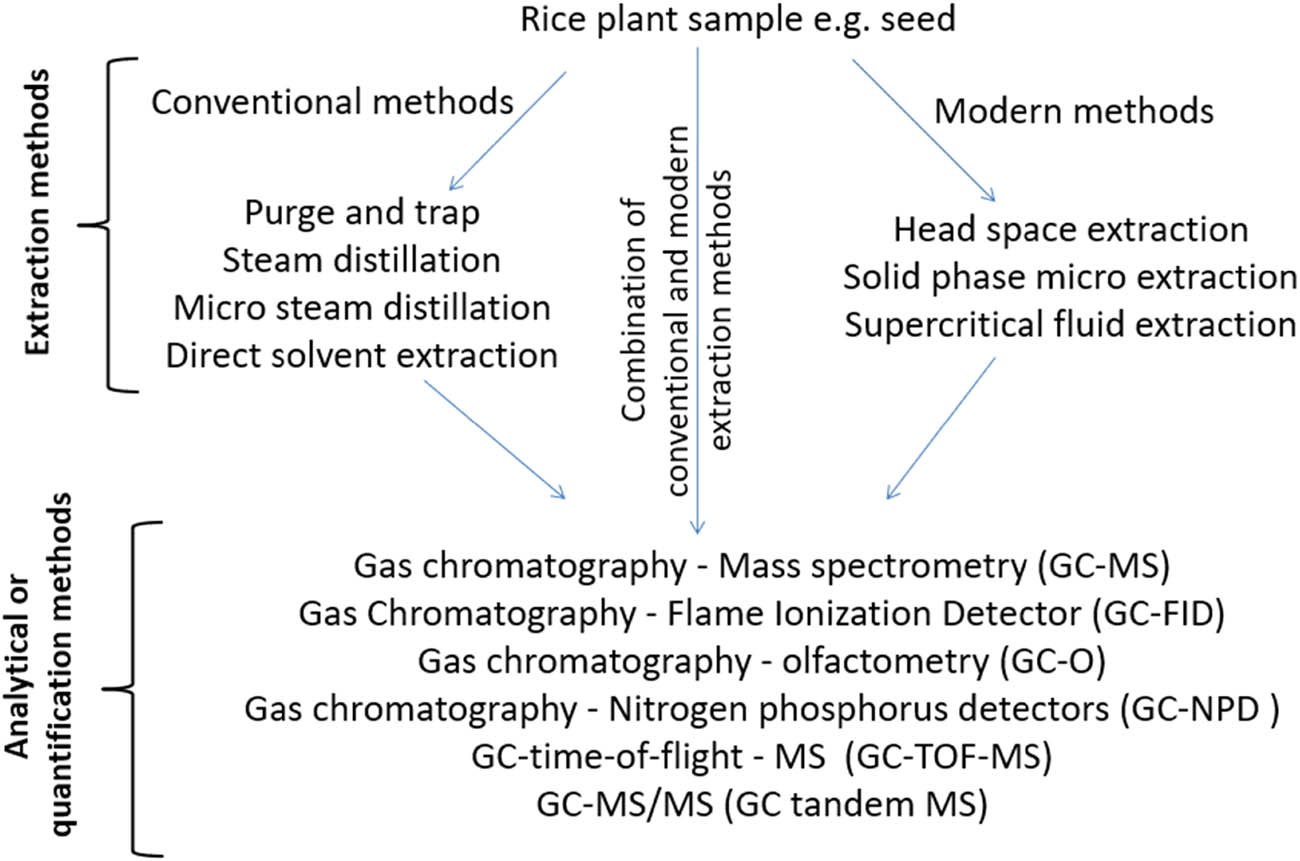
Methods for extraction and quantification of aroma in rice.
8 Applications
8.1 Nutraceuticals
Nutraceuticals can be defined as a part of food that allegedly provide benefit to human health by either decreasing or preventing the incidence of disease [153]. Specialty rice varieties with unique properties such as color, flavor, and aroma are documented to possess nutraceutical values and maintain huge market demand than the traditional white rice varieties. Pigmented along with aromatic rice varieties that are enriched with pleasant taste and odor are also associated with innumerable health benefits [154]. Brown rice is the dehusked whole grain rice containing bran and germ. Due to the presence of bran and germ, brown rice retains a significant amount of dietary fiber, vitamins, and minerals that are present in negligible or trace amounts in the milled white rice. It contains low calories and also serves as a good source of magnesium, phosphorus, selenium, manganese, and vitamins and majority of these minerals are reported to be deposited in the bran itself [155]. Manganese and selenium present in brown rice play an important role against free radicals and act as anti-cancerous agents. Brown aromatic basmati rice contains 20% more fiber than other brown rice varieties, which prevents the formation of cancerous cells in the body [156]. Brown rice contains naturally occurring bran oil, which helps in reducing LDL forms of cholesterol [110].
Similarly, colored rice varieties (black and red) could be either semi-polished or unpolished. They inherit their color from anthocyanin pigments that are known to have antioxidant properties, free radical scavenging activity, along with other health benefits. Besides this, they possess other pigmented compounds such as cyanidin-3-O-β-d-glucopyranoside in enormous quantity [157] that is associated with diverse functional properties including protection against cytotoxicity [158] and anti-neurodegenerative activity [100]. Red-colored varieties of rice are reported to be iron and zinc rich, whereas black rice varieties are high in protein, fat, and crude fiber. Reports suggest intake of black rice to be highly beneficial for the elimination of reactive oxygen species, lowering of cholesterol levels due to the presence of vitamin E, phytic acid, and γ-oryzanol [159,160]. In addition to this, colored rice varieties also possess phytochemical compounds in large amounts including flavonoids and wall-bound phenolics that are necessary for breaking digestive enzymes, promoting digestion [161]. Consumption of red rice rich in proanthocyanidins reduces the risk against type 2 diabetes [162] and anthocyanins present in black rice possess hypoglycemic effect [163]. In Asian countries, white rice is often mixed with black rice to enrich flavor, color, and nutritional content [95]. Asem et al. [164] analyzed the anthocyanin, phenolics, and antioxidant activity of two black scented rice cultivars Chakhao Poireiton and Chakhao Amubi and reported high amounts of all these nutraceutical compounds than white rice.
Although rice contains higher levels of complex carbohydrates and is considered as a food with high glycemic index, several traditional varieties have been identified to have a low glycemic index [165] and basmati rice is one among them [166]. Furthermore, it is widely known that phytate present in cereals severely interfere with dietary iron (Fe) and restrict its absorption into human body. Basmati rice is known to produce a metallothionein-like protein, rich in cystine that helps in iron absorption and the corresponding gene has been used in the biofortification programs for the development of Fe-rich rice varieties [167]. In addition to basmati, several traditional scented varieties of rice have been reported to possess higher levels of Fe and zinc (Zn) and could be used to develop micronutrient-rich cultivars through biofortification programs [167]. These VACs can give a new way for the development of biofortified aromatic rice cultivars, which can return higher exchange in global market.
8.2 Value addition to beverage industry
In the last decade, cereal-based beverages undoubtedly gained popularity with acknowledged beneficial effects on human health and predominant sensory traits. The health and functional properties of these beverages could be mainly attributed to the bioactive phytochemicals present in them that include phenolic compounds, carotenoids, tocols, dietary fibers, phytosterols, γ-oryzanol, and phytic acid [168]. Among various cereal-based beverages, roasted cereal grain tea is a caffeine-free beverage typically prepared by boiling the roasted whole grains or powder or by brewing in hot water. The aroma that arises from volatile compounds is a key feature of roasted cereal grain tea and a principal indicator of the tea quality. The major volatile compounds reported in these beverages comprise alcohols, alkanes, aldehydes, esters, and pyrazines. Of these, alcohols often contribute to sweet, floral, and fruity odors, with positive impact on the aroma of tea [169,170]. Among various cereal-based teas available, rice tea has been a conventional beverage for many people across the globe and prepared using different variants of rice viz., brown rice, white rice, and black rice. Few studies reported a total of 37 volatiles in white rice tea, pre-dominated with aldehydes, alkanes, and furans and 49 volatile compounds in the beverage prepared from black rice including alkanes, aldehydes, alkenes, and pyrazines [171,172]. Typically, rice wine is prepared from various kinds of rice or even rice brans among which, red rice wine made from unpolished aromatic red rice was reported to have premium quality, with a sour taste and wine-like fruit aroma [173]. Since, red rice is characterized by high nutritional value and immense health properties, the wine prepared from red rice through fermentation is documented to possess high biological value with essential sensory properties [174]. Thus, VACs have the potential to be used as bioflavor and bioaroma compounds to enhance value addition of beverages (Figure 3).

Application of different aromatic Asian rice cultivars.
9 Conclusion and future perspective
Aromatic Asian rice cultivars are predominantly judged by superior and standard grain quality, aromaticity, cooking quality, and appearance, which make it worth of revenue generation in global market. The characteristic features of aromatic rice are due to the presence of number of VACs. These aromatic compounds were present in diverse germplasm of rice in Asian countries and classified into different chemical groups. There were several conventional methods used for extraction, characterization, and quantification of VACs, which were cost and time consuming. To overcome this, an advancement has been taken place to develop cost-effective analytical techniques. Till date, more than 500 VACs have been identified in aromatic rice cultivars and derived products. Owing to the presence of number of VACs, aromatic rice has significant nutraceutical values, which is gaining noteworthy interest due to the secretion of scented compounds and also show nutraceutical effects on human health in the form of richer source of dietary fibers, phenolics, antioxidant property, proteins, vitamins, and minerals such as Fe and Zn. Furthermore, these VACs can be specifically used by beverage industry as bio-aroma or bio-flavor to increase the value addition of beverages such as rice wine, rice tea, and other alcohol drinks. Adoption of these health-based crops could ensure nutritional and food security along with growth of food processing sector.
Acknowledgments
The authors show their gratitude to Director of the ICAR – Indian Institute of Seed Science, Mau, Uttar Pradesh for providing all the facilities and support required in this program.
-
Funding information: Authors state no funding involved.
-
Author contributions: Vinita Ramtekey: writing – original draft; Susmita Cherukuri: writing – review and editing, Kaushalkumar Gunvantray Modha and Ashutosh Kumar: writing – review; Udaya Bhaskar Kethineni, Govind Pal, Arvind Nath Singh, and Sanjay Kumar: writing – supervision, editing, and visualization.
-
Conflict of interest: Authors state no conflict of interest.
References
[1] Shahbandeh M. Total global rice consumption; 2020. www.statista.com/statistics/255977/total-global-rice-consumption Search in Google Scholar
[2] Giraud G . The world market of fragrant rice, main issues and perspectives. Int Food Agribus Man. 2013;16(2):1–20. 10.22004/ag.econ.148577.Search in Google Scholar
[3] Hori K , Purboyo RRA , Jo M , Kim S , Akinaga Y , Okita T , et al. Comparison of sensory evaluation of aromatic rice by consumers in East and South-East Asia. J Cons Stud Home Econ. 1994;18(2):135–9. 10.1111/j.1470-6431.1994.tb00682.x.Search in Google Scholar
[4] Suwansri S , Meullenet JF , Hankins JA , Griffin K . Preference mapping of domestic/imported jasmine rice for US‐Asian consumers. J Food Sci. 2002 Aug;67(6):2420–31.10.1111/j.1365-2621.2002.tb09564.xSearch in Google Scholar
[5] Verma DK , Srivastav PP . Introduction to rice aroma, flavor, and fragrance. In: Verma DK , Srivastav PP , editors. Science and technology of aroma, flavour and fragrance in rice. USA: Apple Academic Press; 2018a. p. 3–34.10.1201/b22468-10Search in Google Scholar
[6] Weber DJ , Rohilla R , Singh US . Chemistry and biochemistry of aroma in scented rice. In: Singh RK , Singh US , Khush GS , editors. Aromatic rices. New Delhi, India: Oxford & IBH Publishing Co. Pvt. Ltd; 2000. p. 300. ISBN 8120414209.Search in Google Scholar
[7] Fitzgerald MA , McCouch SR , Hall RD . Not just a grain of rice: the quest for quality. Trends Plant Sci. 2009;14(3):133–9. 10.1016/j.tplants.2008.12.004.Search in Google Scholar PubMed
[8] Bhattacharya KR . Speciality rices. In: Bhattacharya K R , editor. Woodhead publishing series in food science, technology and nutrition, rice quality. Cambridge: Woodhead Publishing; 2011. p. 337–76. 10.1533/9780857092793.337.Search in Google Scholar
[9] Singh RK , Singh US , Khush GS , Rohilla R , Singh JP , Singh G , et al. Small and medium grained aromatic rices of India. In: Singh RK , Singh US , Khush GS , editors. Aromatic rices. New Delhi: Oxford & IBH Publication; 2000a. p. 155–77.Search in Google Scholar
[10] Singh RK , Gautam PL , Saxena S , Singh S . Scented rice germplasm: conservation, evaluation and utilization. In: Singh RK , Singh US , Khush GS , editors. Aromatic rices. New Delhi: Oxford & IBH Publication; 2000b. p. 107–33.Search in Google Scholar
[11] Khush GS . Taxonomy and origin of rice. In: Singh RK , Singh US , Khush GS , editors. Aromatic rices. New Delhi: Oxford & IBH Publication; 2000. p. 5–13.Search in Google Scholar
[12] Liyanaarachchi GD , Kottearachchi N , Samarasekera R . Volatile profiles of traditional aromatic rice varieties in Sri Lanka. J Nat Sci Found Sri Lanka. 2014;42(1):87. 10.4038/jnsfsr.v42i1.6683.Search in Google Scholar
[13] Hofmann T , Schieberle P . Flavor contribution and formation of the intense roast smelling odorants 2-propionyl-1-pyrroline and 2-propionyltetrahydropyridine in Maillard-type Reactions. J Agric Food Chem. 1998;46(7):2721–6. 10.1021/jf971101s.Search in Google Scholar
[14] Lam HS , Proctor A . Milled rice oxidation volatiles and odor development. J Food Sci. 2003;68(9):2676–81. 10.1111/j.1365-2621.2003.tb05788.x.Search in Google Scholar
[15] Verma DK , Srivastav PP . Extraction technology for rice volatile aroma compounds. In: Meghwal M , Goyal MR , editors. Food engineering: emerging issues, modeling, and applications. Vol. 2 . as part of book series on Innovations in Agricultural and Biological Engineering. USA: Apple Academic Press; 2016. p. 246–84.Search in Google Scholar
[16] Verma DK , Srivastav PP . A paradigm of volatile aroma compounds in rice and their product with extraction and identification methods: a comprehensive review. Food Res Int. 2020;130:108924. 10.1016/j.foodres.2019.108924.Search in Google Scholar PubMed
[17] Buttery RG , Ling LC , Juliano BO . 2-Acetyl-1-pyrroline – an important aroma component of cooked rice. Chem Indu. 1982;23:958–9.Search in Google Scholar
[18] Buttery RG , Ling LC , Mon TR . Quantitative analysis of 2-acetyl-1-pyrrroline in rice. J Agr Food Chem. 1986;34:112–4. 10.1021/jf00067a031.Search in Google Scholar
[19] Wakte K , Zanan R , Hinge V , Khandagale K , Nadaf A , Henry R . Thirty-three years of 2-acetyl-1-pyrroline, a principal basmati aroma compound in scented rice (Oryza sativa L.): a status review. J Sci Food Agric. 2017;97(2):384–95. 10.1002/jsfa.7875.Search in Google Scholar
[20] Lorieux M , Petrov M , Huang N , Guiderdoni E , Ghesquiere A . Aroma in rice: genetic analysis of a quantitative trait. Theor Appl Gene. 1996;93:1145–51. 10.1007/BF00230138.Search in Google Scholar
[21] Widjaja R , Craske JD , Wootton M . Comparative studies on volatile components of non-fragrant and fragrant rices. J Sci Food Agri. 1996a;70(2):151–61. 10.1002/(SICI)1097-0010(199602)70:2<151:AID-JSFA478>3.0.CO;2-U.Search in Google Scholar
[22] Widjaja R , Craske JD , Wootton M . Changes in volatile components of paddy, brown and white fragrant rice during storage. J Sci Food Agric. 1996b;71(2):218–24. 10.1002/(SICI)1097-0010(199606)71:2<218:AID-JSFA570>3.0.CO;2-5.Search in Google Scholar
[23] Bradbury LMT , Henry RJ , Jin Q , Reinke F , Waters DLE . A perfect marker for fragrance genotyping in rice. Mol Breed. 2005;16:279–83. 10.1007/s11032-005-0776-y.Search in Google Scholar
[24] Wongpornchai S , Sriseadka T , Choonvisase S . Identification and quantitation of the rice aroma compound, 2-acetyl-1-pyrroline, in bread flowers (Vallaris GlabraKtze). J Agric Food Chem. 2003;51(2):457–62. 10.1021/jf025856x.Search in Google Scholar
[25] Jezussek M , Juliano BO , Schieberle P . Comparison of key aroma compounds in cooked brown rice varieties based on aroma extract dilution analyses. J Agric Food Chem. 2002;50(5):1101–5. 10.1021/jf0108720.Search in Google Scholar
[26] Buttery RG , Turnbaugh JG , Ling LC . Contribution of volatiles to rice aroma. J Agric Food Chem. 1988;36(5):1006–9. 10.1021/jf00083a025.Search in Google Scholar
[27] Pitija K , Srisedkha T , Wiwatsamretkun C . Quantification of rice aroma, 2-acetyl-1-pyrroline (2-AP), using turbomatrix headspace trap coupled with GC/NPD and GC/MS. Bangkok, Thailand: PerkinElmer Inc; 2017.Search in Google Scholar
[28] Bergman CJ , Delgado JT , Bryant R , Grimm C , Cadwallader KR , Webb BD . Rapid gas chromatographic technique for quantifying 2-acetyl-1-pyrroline and hexanal in rice (Oryza sativa, L.). Cereal Chem. 2000;77:454–8. 10.1094/cchem.2000.77.4.454.Search in Google Scholar
[29] Ying X , Xu X , Chen M , Ouyang Y , Zhu Z , Min J . Determination of 2- acetyl-1-pyrroline in aroma rice using gas chromatography–mass spectrometry. Chin J Chromato. 2010;28(8):782–5. 10.3724/sp.j.1123.2010.00782.Search in Google Scholar PubMed
[30] Sriseadka T , Wongpornchai S , Kitsawatpaiboon P . Rapid method for quantitative analysis of the aroma impact compound, 2-acetyl-1-pyrroline, in fragrant rice using automated headspace gas chromatography. J Agri Food Chem. 2006;54(21):8183–9. 10.1021/jf0614490.Search in Google Scholar PubMed
[31] Verma DK , Srivastav PP . Extraction, identification and quantification methods of rice aroma compounds with emphasis on 2-acetyl-1-pyrroline (2-AP) and its relationship with rice quality: a comprehensive review. Food Rev Int. 2020;1–52. 10.1080/87559129.2020.1720231.Search in Google Scholar
[32] Mahattanatawee K , Rouseff RL . Comparison of aroma active and sulphur volatiles in three fragrant rice cultivars using GC–Olfactometry and GC–PFPD. Food Chem. 2014;154:1–6. 10.1016/j.foodchem.2013.12.105.Search in Google Scholar PubMed
[33] Zanan R , Hinge V , Khandagale K , Nadaf A . Headspace-solid phase micro extraction coupled with gas chromatography-mass spectroscopy (HS-SPME-GCMS): an efficient tool for qualitative and quantitative rice aroma analysis. Sci Technol Aroma Flavor Fragr Rice. 2018;1:159–96. 10.1201/b22468-17.Search in Google Scholar
[34] Hopfer H , Jodari F , Negre-Zakharov F , Wylie PL , Ebeler SE . HS-SPME-GC-MS/MS method for the rapid and sensitive quantitation of 2-acetyl-1-pyrroline in single rice kernels. J Agric Food Chem. 2016;64(20):4114–20. 10.1021/acs.jafc.6b00703.Search in Google Scholar PubMed
[35] Lee YS , Oh Y , Kim TH , Cho YH . Quantitation of 2-acetyl-1-pyrroline in aseptic-packaged cooked fragrant rice by HS-SPME/GC-MS. Food Sci Nutr. 2018;7(1):266–72. 10.1002/fsn3.879.Search in Google Scholar PubMed PubMed Central
[36] Laksanalamai V , Ilangantileke S . Comparison of aroma compound (2-acetyl-1-pyrroline) in leaves from pandan (Pandanus amaryllifolius) and Thai fragrant rice (Khao Dawk Mali-105). Cereal Chem. 1993;70(4):381–4.Search in Google Scholar
[37] Shanthinie A , Dilip KR , Raveendran M . Comparative profiling of volatile compounds in the grains of rice varieties differing in their aroma. Elec J PlaBre. 2019;10(2):614–9.10.5958/0975-928X.2019.00077.2Search in Google Scholar
[38] Ravichanthiran K , Ma ZF , Zhang H , Cao Y , Wang CW , Muhammad S , et al. Phytochemical profile of brown rice and its nutrigenomic implications. Antioxidants. 2018 Jun;7(6):71.10.3390/antiox7060071Search in Google Scholar PubMed PubMed Central
[39] Buttery RG , Juliano BO , Ling LC . Identification of rice aroma compound 2-acetyl-1-pyrroline in Pandan leaves. Chem Indu. 1983a;23:478–85.10.1021/jf00118a036Search in Google Scholar
[40] Buttery RG , Ling LC , Juliano BO , Turnbaugh JG . Cooked rice aroma and 2-acetyl-1-pyrroline. J Agric Food Chem. 1983b;31:823–6. 10.1021/jf00118a036.Search in Google Scholar
[41] Qiu LC , Pan J , Duan B . The mineral nutrient component and characteristics of color and white brown rice. Chin J Rice Sci. 1993;7(2):95–100.Search in Google Scholar
[42] Lee JC , Kim JD , Hsieh FH , Eun JB . Production of black rice cake using ground black rice and medium-grain brown rice. Int J Food Sci Tech. 2008;43(6):1078–82. 10.1111/j.1365-2621.2007.01569.x.Search in Google Scholar
[43] Ye L , Zhou S , Liu L , Liu L , Waters DLE , Zhong K , et al. Phenolic compounds and antioxidant capacity of brown rice in China. Int J Food Eng. 2016;12(6):537–46. 10.1515/ijfe-2015-0346.Search in Google Scholar
[44] Jakkeral SA , Patil SU , Hanumantappa M , Shashikala K , Dhanlaxm TN . Medicinal uses of red rice in coastal Karnataka. J Pharma Phyto. 2018;SP3:436–9.Search in Google Scholar
[45] “THE 17 GOALS Sustainable Development.” United Nations, sdgs.un.org/goals.Search in Google Scholar
[46] Wu F , Yang N , Touré A , Jin Z , Xu X . Germinated brown rice and its role in human health. Crit Rev Food Sci Nutr. 2013;53:451–63. 10.1080/10408398.2010.542259.Search in Google Scholar PubMed
[47] Sugiyama S , Kishi M , Fushimi T , Oshima Y , Kajimoto O , Kaga T . Hypotensive effect and safety of brown rice vinegar with high concentration of GABA on mild hypertensive subjects. Jpn Pharmacol Ther. 2008;36(5):429–44.Search in Google Scholar
[48] Mizuno H , Fukumori T , Liu K , Sasaki Y , Ochiai S . Development of GABA enriching equipment for brown rice by heating and humidifying of moist air. J Jpn Soc Agric Mach. 2012b;74:234–43.Search in Google Scholar
[49] Nishimura M , Yoshida S , Haramoto M , Mizuno H , Fukuda T , Katsuyama HK , et al. Effects of white rice containing enriched gamma-aminobutyric acid on blood pressure. J Trad Compl Med. 2015;6(1):66–71. 10.1016/j.jtcme.2014.11.022.Search in Google Scholar PubMed PubMed Central
[50] Ren C , Hong B , Zheng X , Wang L , Zhang Y , Guan L , et al. Improvement of germinated brown rice quality with autoclaving treatment. Food Sci & Nutr. 2020 Mar;8(3):1709–17.10.1002/fsn3.1459Search in Google Scholar PubMed PubMed Central
[51] Nadaf AB , Krishnan S , Wakte KV . Histochemical and biochemical analysis of major aroma compound (2-acetyl-1-pyrroline) in Basmati and other scented rice (Oryza Sativa L.). Curr Sci. 2006;91(11):1533–7.Search in Google Scholar
[52] Ishitani K , Fushimi C . Influence of pre- and post-harvest conditions on 2-acetyl-1 pyrroline concentration in aromatic rice. Koryo. 1994;183:73–80.Search in Google Scholar
[53] Rohilla R , Singh VP , Singh US , Singh RK , Khush GS . Crop husbandry and environmental factors affecting aroma and other quality traits. In: Singh RK , Singh US , Khush GS , editors. Aromatic rices. New Delhi, India: Oxford and IBH Publishing Co. Pvt. Ltd; 2000. p. 201–316.Search in Google Scholar
[54] Singh RK , Singh US , Khush GS , Rohilla R . Genetics and biotechnology of quality traits in aromatic rices. In: Singh RK , Singh US , Khush GS , editor. Aromatic rices. New Delhi: Oxford & IBH Publication; 2000. p. 47–70.Search in Google Scholar
[55] Ghiasvand AR , Setkova L , Pawliszyn J . Determination of flavour profile in Iranian fragrant rice samples using cold-fibre SPME–GC–TOF–MS. Flavour Fragr. 2007;22(5):377–91. 10.1002/ffj.1809.Search in Google Scholar
[56] Petrov M , Danzart M , Giampaoli P , Faure J , Richard H . Rice aroma analysis. Discrimination between a scented and a non- scented rice. Sci Aliment. 1996;16:339–52.Search in Google Scholar
[57] Pichersky E , Noel J , Dudareva N . Biosynthesis of plant volatiles: natures diversity and ingenuity. Science. 2006;311(5762):808–11. 10.1126/science.1118510.Search in Google Scholar PubMed PubMed Central
[58] Frauendorfer F , Schieberle P . Identification of the key aroma compounds in cocoa powder based on molecular sensory correlations. J Agric Food Chem. 2006;54(15):5521–9. 10.1021/jf060728k.Search in Google Scholar PubMed
[59] Kumar Y , Prakash O , Tripathi H , Tandon S , Gupta MM , Rahman LU , et al. AromaDb: a database of medicinal and aromatic plant’s aroma molecules with phytochemistry and therapeutic potentials. Front Plant Sci. 2018;9:1081.10.3389/fpls.2018.01081Search in Google Scholar PubMed PubMed Central
[60] Das A , Lee SH , Hyun TK , Kim SW , Kim JY . Plant volatiles as method of communication. Plant Biotechnol Rep. 2013;7:9–26. 10.1007/s11816-012-0236-1.Search in Google Scholar
[61] Herrera CM , Pellmyr O . Plant-animal interactions: an evolutionary approach. Hoboken: Wiley; 2002. ISBN: 978-0-632-05267-7.Search in Google Scholar
[62] Glaum P , Kessler A . Functional reduction in pollination through herbivore-induced pollinator limitation and its potential in mutualist communities. Nat Commun. 2017;8:2031. 10.1038/s41467-017-02072-4.Search in Google Scholar PubMed PubMed Central
[63] Raguso RA . Wake up and smell the roses: the ecology and evolution of floral scent. Annu Rev Ecol Evol S. 2008;39:549–69. 10.1146/annurev.ecolsys.38.091206.095601.Search in Google Scholar
[64] Yang TS . Rice flavour chemistry (Ph.D). Athens. Georgia: University of Georgia; 2007.Search in Google Scholar
[65] Lin CF , Hsieh TCY , Hoff BJ . Identification and quantification ofthe ‘popcorn’-like aroma in Louisiana aromatic Della rice (Oryza sativa L.). J Food Sci. 1990;55(5):1466–9. 10.1111/j.1365-2621.1990.tb03961.x.Search in Google Scholar
[66] Tanchotikul U , Hsieh TCY . An improved method for quantification of 2-acetyl-l-pyrroline, a ‘popcom’-like aroma, in aromatic rice by high-resolution gas chromatography/mass spectrometry/selected ion monitoring. J Agric Food Chem. 1991;39(5):944–7. 10.1021/jf00005a029.Search in Google Scholar
[67] Mahatheeranont S , Keawsard S , Dumri K . Quantification of the rice aroma compound. 2-acetyl-1-pyrroline, in uncooked Khao Dawk Mali 105 brown rice. J Agri Food Chem. 2001;49(2):773–77. 10.1021/jf000885y.Search in Google Scholar PubMed
[68] Fukuda T , Takeda T , Yoshida S . Comparison of volatiles in cooked rice with various amylose contents. Food Sci Tech Res. 2014;20(6):1251–9. 10.3136/fstr.20.1251.Search in Google Scholar
[69] Li M , Li R , Liu S , Zhang J , Luo H , Qiu S . Rice-duck co-culture benefits grain 2-acetyl-1- pyrroline accumulation and quality and yield enhancement of fragrant rice. Crop J. 2019;7(4):419–30. 10.1016/j.cj.2019.02.002.Search in Google Scholar
[70] Grimm CC , Champagne ET , Lloyd SW , Easson M , Condon B , McClung A . Analysis of 2‐acetyl‐1‐pyrroline in rice by HSSE/GC/MS. Cereal Chem. 2011;88(3):271–7. 10.1094/cchem-09-10-0136.Search in Google Scholar
[71] Bryant RJ , McClung AM , Grimm C . Development of a single kernel analysis method for detection of 2-acetyl-1-pyrroline in aromatic rice germplasm. Sens Instrum Food Qual Saf. 2011;5:147–54. 10.1007/s11694-012-9121-4.Search in Google Scholar
[72] Calingacion M , Mumm R , Tan K , Quiatchon-Baeza L , Concepcion JCT , Hageman JA , et al. A multidisciplinary phenotyping and genotyping analysis of a mapping population enables quality to be combined with yield in rice. Front Mol Bio. 2017;4:32. 10.3389/fmolb.2017.000321.Search in Google Scholar
[73] Setyaningsih W , Saputro IE , Palma M , Barroso CG . Optimisation and validation of the microwave-assisted extraction of phenolic compounds from rice grains. Food Chem. 2015;169:141–9.10.1016/j.foodchem.2014.07.128Search in Google Scholar PubMed
[74] Bullard RW , Holguin G . Volatile components of unprocessed rice (Oryza sativa L.). J Agr Food Chem. 1977;25(1):99–103. 10.1021/jf60209a050.Search in Google Scholar PubMed
[75] Champagne ET . Rice aroma and flavor: a literature review. Cereal Chem. 2008;85:445–54. 10.1094/cchem-85-4-0445.Search in Google Scholar
[76] Zeng Z , Zhang H , Zhang T , Chen JY . Flavor volatiles in three rice cultivars with low levels of digestible protein during cooking. Cereal Chem. 2008;85(5):689–95. 10.1094/cchem-85-5-0689.Search in Google Scholar
[77] Setyaningsih W , Majchrzak T , Dymerski T , Namieśnik J , Palma M . Key-marker volatile compounds in aromatic rice (Oryza sativa) grains: an HS-SPME extraction method combined with GC × GC-TOFMS. Molecules. 2019;24(22):4180. 10.3390/molecules24224180.Search in Google Scholar PubMed PubMed Central
[78] Concepcion JCT , Ouk S , Riedel A , Calingacion M , Zhao D , Ouk M , et al. Quality evaluation, fatty acid analysis and untargeted profiling of volatiles in Cambodian rice. Food Chem. 2018;240:1014–21. 10.1016/j.foodchem.2017.08.019.Search in Google Scholar PubMed
[79] Hinge VR , Patil HB , Nadaf AB . Aroma volatile analyses and 2AP characterization at various developmental stages in basmati and non-basmati scented rice (Oryza sativa L.) cultivars. Rice. 2016a;9(38):1–22. 10.1186/s12284-016-0113-6.Search in Google Scholar PubMed PubMed Central
[80] Park JS , Kim K , Baek HH . Potent aroma-active compounds of cooked Korean non aromatic rice. Food Sci Biotech. 2010;19(5):1403–7. 10.1007/s10068-010-0200-1.Search in Google Scholar
[81] Chikubu S . Stale flavor of stored rice. JARQ-Japan Agric Res Q. 1970;5(3):63–8.Search in Google Scholar
[82] Legendre MG , Dupuy HP , Ory RL , McIlrath WO . Instrumental analysis of volatiles from rice and corn products. J Agri Food Chem. 1978;26(5):1035–8. 10.1021/jf60219a033.Search in Google Scholar
[83] Shin MG , Yoon SH , Rhee JH , Kwon TW . Correlation between oxidative deterioration of unsaturated lipid and n-hexanal during storage of brown rice. J Food Sci. 1986;51(2):460–3. 10.1111/j.1365-2621.1986.tb11155.x.Search in Google Scholar
[84] Tsugita T , Ohta T , Kato H . Cooking flavor and texture of rice stored under different conditions. Agric Biol Chem. 1983;47(3):543–9. 10.1080/00021369.1983.10865684.Search in Google Scholar
[85] Wongpornchai S , Dumri K , Jongkaewwattana S , Siri B . Effects of drying methods and storage time on the aroma and milling quality of rice (Oryza sativa L.) cv. Khao Dawk Mali 105. Food Chem. 2004;87(3):407–14. 10.1016/j.foodchem.2003.12.014.Search in Google Scholar
[86] Aisaka H . Flavor of cooked rice. Eiyo Shokuryo. 1997;30:421–4. 10.4327/jsnfs1949.30.421.Search in Google Scholar
[87] Furuhashi T , Ayano Y . Effect of various amino acids on elimination of stale flavor of rice. Nippon Shokuhin Kogyo Gakkaishi. 1971;18(3):119–12. 10.3136/nskkk1962.18.119.Search in Google Scholar
[88] Xia Q , Wang L , Huang P , Li Y . Characterization of volatile compound profiling of germinated brown rice revealed by headspace solid-phase micro extraction coupled to gas chromatography mass spectrometry. Int Proc Chem, Biol Environ Eng. 2016;95:62–7. 10.7763/ipcbef.2016.V95.11.Search in Google Scholar
[89] Deng Y , Zhong Y , Yu W , Yue J , Liu Z , Zheng Y , et al. Effect of hydrostatic high-pressure pretreatment on flavor volatile profile of cooked rice. J Cereal Sci. 2013;58(3):479–87. 10.1016/j.jcs.2013.09.010.Search in Google Scholar
[90] Griglione A , Liberto E , Cordero C , Bressanello D , Cagliero C , Rubiolo P , et al. High-quality Italian rice cultivars: chemical indices of ageing and aroma quality. Food Chem. 2015;172:305–13. 10.1016/j.foodchem.2014.09.082.Search in Google Scholar PubMed
[91] Yang DS , Lee KS , Kays SJ . Characterization and discrimination of premium quality, waxy, and black-pigmented rice based on odor-active compounds. J Sci Food Agric. 2010;90:2595–601. 10.1002/jsfa.4126.Search in Google Scholar PubMed
[92] Mathure SV , Jawali N , Thengane RJ , Nadaf AB . Comparative quantitative analysis of headspace volatiles and their association with BADH2 marker in non-basmati scented, basmati and non-scented rice (Oryza sativa L.) cultivars of India. Food Chem. 2014;142:383–91. 10.1016/j.foodchem.2013.07.066.Search in Google Scholar PubMed
[93] Liu J , Zheng K , Li Z , Zhao S , Xiong SB . Effect of cooking methods on volatile compounds of cooked rice. J China Cer Oils Asso. 2007;22:12–5.Search in Google Scholar
[94] Maraval I , Mestres C , Pernin K , Ribeyre F , Boulanger R , Guichard E , et al. Odor-active compounds in cooked rice cultivars from Camargue (France) analyzed by GC-O and GC-MS. J Agri Food Chem. 2008;56(13):5291–8. 10.1021/jf7037373.Search in Google Scholar PubMed
[95] Yang DS , Lee KS , Jeong OY , Kim KJ , Kays SJ . Characterization of volatile aroma compounds in cooked black rice. J Agric Food Chem. 2008a;56(1):235–40. 10.1021/jf072360c.Search in Google Scholar PubMed
[96] Paule CM , Powers JJ . Sensory and chemical examination of aromatic and nonaromatic rices. J Food Sci. 1989;54(2):343–6. 10.1111/j.1365-2621.1989.tb03076.x.Search in Google Scholar
[97] Grosch W , Schieberle P . Flavor of cereal products – a review. Cereal Chem. 1997;74(2):91–7. 10.1094/cchem.1997.74.2.91.Search in Google Scholar
[98] Yang DS , Shewfelt RL , Lee KS , Keys SJ . Comparison of odor-active compounds from six distinctly different rice flavor types. J Agric Food Chem. 2008b;56(8):2780–7. 10.1021/jf072685t.Search in Google Scholar PubMed
[99] Zeng Z , Zhang H , Zhang T , Tamogami S , Chen JY . Analysis of flavor volatiles of glutinous rice during cooking by combined gas chromatography–mass spectrometry with modified headspace solid-phase microextraction method. J Food Compos Anal. 2009;22:347–53. 10.1016/j.jfca.2008.11.020.Search in Google Scholar
[100] Kim MK , Kim H , Koh K , Kim HS , Lee YS , Kim YH . Identification of anthocyanin pigments in colored rice. Nutr Res Pract. 2008b;2(1):46–9.10.4162/nrp.2008.2.1.46Search in Google Scholar PubMed PubMed Central
[101] Ying X , Xu X , Chen M , Ouyang Y , Zhu Z , Min J . Determination of 2-acetyl-1-pyrroline in aroma rice using gas chromatography–mass spectrometry. Chin J Chromato. 2010;28(8):782–5. 10.3724/sp.j.1123.2010.00782.Search in Google Scholar PubMed
[102] Deng QQ , Ashraf U , Cheng SR , Sabir SR , Mo ZW , Pan SG , et al. Mild drought in interaction with additional nitrogen dose at grain filling stage modulates 2-acetyl-1-pyrroline biosynthesis and grain yield in fragrant rice. Appl Ecol Env Res. 2016;16(6):7741–58. 10.15666/aeer/1606_77417758.Search in Google Scholar
[103] Peddamma SK , Ragichedu PK , Maddala S , Rao DS , Lella VSR , Konne V , et al. Insight of aroma in brown rice through chemical assessment of 2-acetyl-1-pyrroline (2-AP) in aromatic germplasm of India. Cereal Chem. 2018;95(5):679–88. 10.1002/cche.10081.Search in Google Scholar
[104] Mo Z , Ashraf U , Tang Y , Li W , Pan S , Duan M , et al. Nitrogen application at the booting stage affects 2-acetyl-1-pyrroline, proline, and total nitrogen contents in aromatic rice. Chil J Agri Res. 2018;78(2):165–72. 10.4067/S0718-58392018000200165.Search in Google Scholar
[105] Boontakham P , Sookwong P , Jongkaewwattana S , Wangtueai S , Mahatheeranont S . Comparison of grain yield and 2-acetyl-1-pyrroline (2AP) content in leaves and grain of two Thai fragrant rice cultivars cultivated at greenhouse and open-air conditions. Aust J Crop Sci. 2019;13(01):159–69. 10.21475/ajcs.19.13.01.p1431.Search in Google Scholar
[106] Yajima I , Yani T , Nakmura M , Sakakibara H , Hayashi K . Volatile flavour components of cooked Kaorimai (scented rice, O. sativa japonica). Agric Biol Chem. 1979;43(12):2425–9. 10.1080/00021369.1979.10863850.Search in Google Scholar
[107] Bryant J , McClung AM . Volatile profiles of aromatic and non-aromatic rice cultivars using SPME/GC-MS. Food Chem. 2011;124(2):501–13.10.1016/j.foodchem.2010.06.061Search in Google Scholar
[108] Tsuzuki E , Matsuki C , Morinaga K , Shida S . Studies on the characteristics of scented rice: IV. Volatile sulfur compounds evolved from cooked rice. Jap J Crop Sci. 1978;47(3):375–80.10.1626/jcs.47.375Search in Google Scholar
[109] Grimm C , Champagne E , Bett-Garber K , Ohtsubo K . The volatile composition of waxy rice. Proceedings of the United States-Japan Cooperative Program in Natural Resources (UJNR) 29th Protein Resources Panel Meeting. Honolulu, Hawaii; 2000 Nov 19–25. Washington, USA: ARS. Search in Google Scholar
[110] Sansenya S , Hua Y , Chumanee S . The correlation between 2-acetyl-1pyrroline content, biological compounds and molecular characterization to the aroma intensities of Thai local rice. J Oleo Sci. 2018;67(7):893–904. 10.5650/jos.ess17238.Search in Google Scholar PubMed
[111] Priya TSR , Nelson ARLE , Ravichandran K , Antony U . Nutritional and functional properties of coloured rice varieties of South India: a review. J Ethn Food. 2019;6:11. 10.1186/s42779-019-0017-3.Search in Google Scholar
[112] Sukhonthara S , Theerakulkait C , Miyazawa M . Characterization of volatile aroma compounds from red and black rice bran. J Oleo Sci. 2009;58(3):155–61. 10.5650/jos.58.155.Search in Google Scholar PubMed
[113] Choi S , Seo HS , Lee KR , Lee S , Lee J , Lee J . Effect of milling and longterm storage on volatiles of black rice (Oryza sativa L.) determined by headspace solid-phase microextraction with gas chromatography–mass spectrometry. Food Chem. 2019;276:572–82. 10.1016/j.foodchem.2018.10.052.Search in Google Scholar PubMed
[114] Whitfield FB , Mottram DS . Volatiles from interactions of Maillard reactions and lipids. Crit Rev Food Sci Nutr. 2009;31:1–58. 10.1080/10408399209527560.Search in Google Scholar PubMed
[115] Yoshihashi T , Huong NTT , Inatomi H . Precursors of 2-acetyl-1-pyrroline, a potent flavor compound of an aromatic rice variety. J Agric Food Chem. 2002;50(7):2001–4. 10.1021/jf011268s.Search in Google Scholar PubMed
[116] Bradbury LMT , Gillies SA , Brushett DJ , Waters DLE , Henry RJ . Inactivation of an aminoaldehyde dehydrogenase is responsible for fragrance in rice. Plant Mol Biol. 2008;68(4–5):439–49. 10.1007/s11103-008-9381-x.Search in Google Scholar PubMed
[117] Nadaf AB , Wakte KV , Zanan RL . 2-Acetyl-1-pyrroline biosynthesis: from fragrance to a rare metabolic disease. J Plant Sci Res. 2014;1(1):102.Search in Google Scholar
[118] Mahajan G , Matloob A , Singh R , Singh VP , Chauhan BS . Basmati rice in the Indian subcontinent: strategies to boost production and quality traits. Adv Agron. 2018;151:159–213. 10.1016/bs.agron.2018.04.002.Search in Google Scholar
[119] Chen SH , Yang Y , Shi WW , Ji Q , He F , Zhang ZD , et al. Badh2, encoding betaine aldehyde dehydrogenase, inhibits the biosynthesis of 2-acetyl-1-pyrroline, a major component in rice fragrance. Plant Cell. 2008;20(7):1850–61. 10.1105/tpc.108.058917.Search in Google Scholar PubMed PubMed Central
[120] Huang TC , Teng CS , Chang JL , Chuang HS , Ho CT , Wu ML . Biosynthetic mechanism of 2-acetyl-1-pyrroline and its relationship with Ϫ1-pyrroline-5-carboxylic acid and methylglyoxal in aromatic rice (Oryza sativa L.) callus. J Agric Food Chem. 2008;56(16):7399–404. 10.1021/jf8011739.Search in Google Scholar PubMed
[121] Hofmann T , Schieberle P . Formation of aroma-active Strecker-aldehydes by a direct oxidative degradation of Amadori compounds. J Agric Food Chem. 2000;48(9):4301–5. 10.1021/jf000076e.Search in Google Scholar PubMed
[122] Etschmann MMW , Sell D , Schrader J . Production of 2-phenylethanol and 2- phenylethylacetate from L-phenylalanine by coupling whole-cell biocatalysis with organophilic pervaporation. Biotech Bioeng. 2005;92:624–34. 10.1002/bit.20655.Search in Google Scholar PubMed
[123] Christoph N , Gessner M , Simat TJ , Hoenicke K . Off-flavor compounds in wine and other food products formed by enzymatical, physical, and chemical degradation of tryptophan and its metabolites. Adv Exp Med Biol. 1999;467:659–69. 10.1007/978-1-4615-4709-9_85.Search in Google Scholar PubMed
[124] Rapp A , Versini G , Ullemeyer H . 2-Aminoacetophenone- acusal component of untypical aging flavor (naphthalene note, hybrid note) of wine. VITIS. 1993;32(1):61–2.Search in Google Scholar
[125] Schonberg A , Moubacher R . The strecker degradation of α-aminoacids. Chem Rev. 1952;50:261–77. 10.1021/cr60156a002.Search in Google Scholar
[126] BeMiller JN , Whistler RL . Carbohydrates. In: Fennema OR , editor. Food chemistry. New York: Marcel Dekker, Inc; 1996.Search in Google Scholar
[127] Yajima I , Yanai T , Nakamura M , Sakakibara H , Habu T . Volatile flavour components of cooked rice. Agric Biol Chem. 1978;42(6):1229–33. 10.1080/00021369.1978.10863138.Search in Google Scholar
[128] Reineccius D . Flavor chemistry and technology. New York: Taylor and Francis Group; 2006.10.1201/9780203485347Search in Google Scholar
[129] Nawar WW . Lipids. In: Fennema OR , editor. Food chemistry. New York: Marcel Dekker, Inc; 1996. p. 225–319.Search in Google Scholar
[130] Zhou Z , Robards K , Helliwell S , Blanchard C . Composition and functional properties of rice. Intern J Food Sci Tech. 2002;37:849–68. 10.1046/j.1365-2621.2002.00625.x.Search in Google Scholar
[131] Monsoor MA , Proctor A . Volatile component analysis of commercially milled head and broken rice. J Food Sci. 2004;69(8):C632–6. 10.1111/j.1365-2621.2004.tb09911.x.Search in Google Scholar
[132] Schwab W . Biosynthesis of plants flavors: analysis and biotechnological approach. In: Risch SJ , Ho CT , editors. Flavor chemistry: industrial and academic research. Washington D.C.: Oxford University Press; 2000. p. 72–86. 10.1021/bk-2000-0756.ch005.Search in Google Scholar
[133] Sanz C , Olias JM , Perez AG . Aroma biochemistry of fruits and vegetables. In: Tomas-Barberan FA , Robins RJ , editors. Phytochemistry of Fruit and Vegetables. Oxford: Clarendon Press; 1997. p. 125–55.10.1093/oso/9780198577904.003.0007Search in Google Scholar
[134] Coghe S , Adriaenssens B , Leonard S , Delvaux FR . Fractionation of colored maillard reaction products from dark specialty malts. J Am Soc Brew Chem. 2004;62(2):79–86.10.1094/ASBCJ-62-0079Search in Google Scholar
[135] Tananuwong K , Lertsiri S . Changes in volatile aroma compounds of organic fragrant rice during storage underdifferent conditions. J Sci Food Agri. 2010;90(10):1590–6. 10.1002/jsfa.3976.Search in Google Scholar PubMed
[136] Dias LG , Duarte GHB , Mariutti LRB , Bragagnolo N . Aroma profile of rice varieties by a novel SPME method able to maximize 2-acetyl-1-pyrroline and minimize hexanal extraction. Food Res Int. 2019;123:550–8. 10.1016/j.foodres.2019.05.025.Search in Google Scholar PubMed
[137] Hu X , Lu L , Guo Z , Zhu Z . Volatile compounds, affecting factors and evaluation methods for rice aroma: a review. Trends Food Sci Tech. 2020;97:136–46. 10.1016/j.tifs.2020.01.003.Search in Google Scholar
[138] Routray W , Rayaguru K . 2-Acetyl-1-pyrroline: a key aroma component of aromatic rice and other food products. Food Rev Int. 2017;34(6):539–65. 10.1080/87559129.2017.1347672.Search in Google Scholar
[139] Sholehah IM , Restanto DP , Kim KM , Handoyo T . Diversity, physicochemical, and structural properties of indonesian aromatic rice cultivars. J Crop Sci Biotech. 2020;23:171–80. 10.1007/s12892-019-0370-0.Search in Google Scholar
[140] Zhang QW , Lin LG , Ye WC . Techniques for extraction and isolation of natural products: a comprehensive review. Chin Med. 2018;13(1):1–26. 10.1186/s13020-018-0177-x.Search in Google Scholar
[141] Catola S , Ganesha SDK , Calamai L , Loreto F , Ranieri A , Centritto M . Headspace-solid phase microextraction approach for dimethyl sulfoniopropionate quantification in Solanum lycopersicum plants subjected to water stress. Front Plant Sci. 2019;7:1257. 10.3389/fpls.2016.01257.Search in Google Scholar
[142] Knudsen JT , Eriksson R , Gershenzon J , Stahl B . Diversity and distribution of floral scent. Bot Rev. 2006;72:1–120.10.1663/0006-8101(2006)72[1:DADOFS]2.0.CO;2Search in Google Scholar
[143] Dudareva N , Klempien A , Muhlemann JK , Kaplan I . Biosynthesis, function and metabolic engineering of plant volatile organic compounds. N Phytol. 2013;198:16–32. 10.1111/nph.12145.Search in Google Scholar
[144] Kim NH , Kwak J , Yeon JB , Yoon MR , Lee JS , Yoon SW , et al. Changes in lipid substances in rice during grain development. Phytochem. 2015;116:170–9. 10.1016/j.phytochem.2015.05.004.Search in Google Scholar
[145] Prasad GSV , Padmavathi G , Suneetha K , Madhav MS , Muralidharan K . Assessment of diversity of Indian aromatic rice germplasm collections for morphological, agronomical, quality traits and molecular characters to identify a core set for crop improvement. CABI Agri Biosci. 2020;1(1):1–24. 10.1186/s43170-020-00013-8.Search in Google Scholar
[146] Vlachos A , Arvanitoyannis IS . A review of rice authenticity/adulteration methods and results. Crit Rev Food Sci Nutr. 2008;48(6):553–98. 10.1080/10408390701558175.Search in Google Scholar
[147] Yoshihashi T , Huong NTT , Surojanametakul V , Tungtrakul P , Varanyanond W . Effect of storage conditions on 2-acetyl-1 pyrroline content in aromatic rice variety, Khao Dawk Mali 105. J Food Sci. 2005;70(1):S34–7. 10.1111/j.1365-2621.2005.tb09061.x.Search in Google Scholar
[148] Maraval I , Sen K , Agrebi A , Menut C , Morere A , Boulanger R , et al. Quantification of 2-acetyl-1-pyrroline in rice by stable isotope dilution assay through headspace solid-phase microextraction coupled to gas chromatography- tandem mass spectrometry. Anal Chim Acta. 2010;675(2):148–55. 10.1016/j.aca.2010.07.024.Search in Google Scholar
[149] Hinge V , Patil H , Nadaf A . Comparative characterization of aroma volatiles and related gene expression analysis at vegetative and mature stages in basmati and non-basmati rice (Oryza sativa L.) cultivars. Appl Biochem biotech. 2016b;178(4):619–39. 10.1007/s12010-015-1898-2.Search in Google Scholar
[150] Mathure SV , Wakte KV , Jawali N , Nadaf AB . Quantification of 2-acetyl-1-pyrroline and other rice aroma volatiles among indian scented rice cultivars by HS-SPME/GC-FID. Food Anal Methods. 2011;4:326–33. 10.1007/s12161-010-9171-3.Search in Google Scholar
[151] Liu TT , Yang TS . Effects of an industrial milling process on change of headspace volatiles in Yihchuan aromatic rice. Cereal chem. 2011;88(2):137–41. 10.1094/CCHEM-07-10-0101.Search in Google Scholar
[152] Funsueb S , Krongchai C , Mahatheeranont S , Kittiwachana S . Prediction of 2-acetyl-1-pyrroline content in grains of Thai Jasmine rice based on planting condition, plant growth and yield component data using chemometrics. Chemom Intell Lab Syst. 2016;156:203–10. 10.1016/j.chemolab.2016.06.008.Search in Google Scholar
[153] Brower V . Nutraceuticals: poised for a healthy slice of the healthcare market? Nat Biotechnol. 1998;16:728–31. 10.1038/nbt0898-728.Search in Google Scholar PubMed
[154] Hanhineva K , Torronen R , Bondia-Pons I , Pekkinen J , Kolehmainen M , Mykkänen H , et al. Impact of dietary polyphenols on carbohydrate metabolism. Int J Mol Sci. 2010;11(4):1365–402. 10.3390/ijms11041365.Search in Google Scholar PubMed PubMed Central
[155] Champagne ET , Wood DF , Juliano BO , Bechtel DB . The rice grain and its gross composition. Rice Chemistry and Technology. 3rd ed. Minneapolis, MN: American Association of Cereal Chemists Press; 2004. p. 77–107. Chapter 4.10.1094/1891127349.004Search in Google Scholar
[156] Bhat FM , Riar CS . Health benefits of traditional rice varieties of temperate regions. Med Aromat Plants. 2015;4:3. 10.4172/2167-0412.1000198.Search in Google Scholar
[157] Ryu SN , Park SZ , Ho CT . High performance liquid chromatographic determination of anthocyanin pigments in some varieties of black rice. J Food Drug Anal. 1998;6(4):729–36.10.38212/2224-6614.2893Search in Google Scholar
[158] Chen PN , Chu SC , Chiou HL , Chiang CL , Yang SF , Hsieh YS . Cyanidin 3-glucoside and peonidin 3-glucoside inhibit tumor cell growth and induce apoptosis in vitro and suppress tumor growth in vivo. Nutr Cancer. 2005;53:232–43. 10.1207/s15327914nc5302_12.Search in Google Scholar PubMed
[159] Ichikawa H , Ichiyanagi T , Xu B , Yoshii Y , Nakajima M , Konishi T . Antioxidant activity of anthocyanin extract from purple black rice. J Med Food. 2001;4(4):211–8. 10.1089/10966200152744481.Search in Google Scholar PubMed
[160] Nam YJ , Nam SH , Kang MY . Cholesterol – lowering efficacy of unrefined bran oil from the pigmented black rice (Oryza sativa L cv. Suwon 415) in hypercholesterolemic rats. Food Sci Biotechnol. 2008;17:457–63.Search in Google Scholar
[161] Chen CH , Yang JC , Uang YS , Lin CJ . Improved dissolution rate and oral bioavailability of lovastatin in red yeast rice products. Int J Pharm. 2013;444(1–2):18–24. 10.1016/j.ijpharm.2013.01.028.Search in Google Scholar
[162] Chen MH , McClung AM , Bergman CJ . Concentrations of ligomers and polymers of proanthocyanidins in red and purple rice bran and their relationships to total phenolics, flavonoids, antioxidant capacity and whole grain color. Food Chem. 2016;208:279–87. 10.1016/j.foodchem.2016.04.004.Search in Google Scholar
[163] Tsuda T , Horio F , Uchids K , Aoki H , Osawa T . Dietary cyanidin 3-O-beta-d-glucoside-rice purple corn color prevents obesity and ameliorates hyperglycemia in mice. J Nutr. 2003;133(7):2125–30. 10.1093/jn/133.7.2125.Search in Google Scholar
[164] Asem ID , Imotomba RK , Mazumder PB , Laishram JM . Anthocyanin content in the black scented rice (Chakhao): its impact on human health and plant defense. Symbiosis. 2015;66:47–54. 10.1007/s13199-015-0329-z.Search in Google Scholar
[165] Rhoades A. Basmati rice – the quality grain; 2003. www.allcreatures.org Search in Google Scholar
[166] Chaudhary RC , Tran DV . Specialty rices of the world – a prologue. In: Chaudhary RC , Tran DV , editors. Specialty rices of the world: breeding, production, and marketing. Italy: FAO; 2001.Search in Google Scholar
[167] Bedigian D . Specialty rices of the world. Breeding, production and marketing. Econ Bot. 2003;57(1):160. 10.1663/0013-0001(2003)057[0160:BR]2.0.CO;2.Search in Google Scholar
[168] Xiong Y , Zhang P , Warner RD , Shen S , Fang Z . Cereal grain-based functional beverages: from cereal grain bioactive phytochemicals to beverage processing technologies, health benefits and product features. Cri Rev Food Sci Nutr. 2020;1–25. 10.1080/10408398.2020.1853037.Search in Google Scholar
[169] Xiong Y , Zhang P , Johnson S , Luo J , Fang ZA . Comparison of the phenolic contents, antioxidant activity and volatile compounds of different sorghum varieties during tea processing. J Sci Food Agri. 2020;100(3):978–85. 10.1002/jsfa.10090.Search in Google Scholar
[170] Xiong Y , Zhang P , Luo J , Johnson S , Fang Z . Effect of processing on the phenolic contents, antioxidant activity and volatile compounds of sorghum grain tea. J Cereal Sci. 2019;85:6–14. 10.1016/j.jcs.2018.10.012.Search in Google Scholar
[171] Wu L , Zhai M , Yao Y , Dong C , Shuang S , Ren G . Changes in nutritional constituents, anthocyanins, and volatile compounds during the processing of black rice tea. Food Sci Biotech. 2013;22(4):917–23. 10.1007/s10068-013-0164-z.Search in Google Scholar
[172] Zhao A , Hu Z , Liu Y , Zhao S , Xiong S . The formation and characteristics of volatile odor in roasted rice tea. J Chin Cereals Oils Asso. 2016;31:1–6.Search in Google Scholar
[173] Ueki T , Teramoto Y , Ohba R , Ueda S , Yoshizawa S . Application of aromatic red rice bran to rice wine brewing: Studies on red rice wine brewing (Part 2). J Fer Bioeng. 1991;72(1):31–5. 10.1016/0922-338X(91)90142-4.Search in Google Scholar
[174] Cardinali F , Osimani A , Milanovic V , Garofalo C , Aquilanti L . Innovative fermented beverages made with red rice, barley, and buckwheat. Foods. 2021;10:613. 10.3390/foods100306.Search in Google Scholar
[175] Hien NL , Sarhadi WA , Oikawa Y , Hirata Y . Genetic diversity of morphological responses and the relationships among Asia aromatic rice (Oryza sativa L.) cultivars. Tropics. 2007;16(4):343–55. 10.3759/tropics.16.343.Search in Google Scholar
[176] Hien NL , Yoshihashi T , Sarhadi WA , Thanh VC , Oikawa Y , Hirata AY . Evaluation of aroma in rice (Oryza sativa L.) using KOH method, molecular markers and measurement of 2-acetyl-1-pyrroline concentration. Japanese J Trop Agri. 2006;50(4):190–8. 10.11248/jsta1957.50.190.Search in Google Scholar
[177] Buu BC . Aromatic rices of Vietnam. Aromatic rice. New Delhi: Oxford & IBH Publishing; 2000. p. 188–90.Search in Google Scholar
[178] Myint KM , Courtois B , Risterucci AM , Frouin J , Soe K , Thet KM , et al. Specific patterns of genetic diversity among aromatic rice varieties in Myanmar. Rice. 2012;5(1):1–13. 10.1186/1939-8433-5-20.Search in Google Scholar PubMed PubMed Central
[179] Sarkarung S , Somrith B , Chitrakorn S . Aromatic rices of Thailand. Aromatic rices. New Delhi, Calcutta, India: Oxford and IBH publishing; 2000. p. 180–3.Search in Google Scholar
[180] Itani T , Tamaki M , Hayata Y , Fushimi T , Hashizume K . Variation of 2-acetyl-1-pyrroline concentration in aromatic rice grains collected in the same region in Japan and factors affecting its concentration. Plant Prod Sci. 2004;7(2):178–83. 10.1626/pps.7.178.Search in Google Scholar
[181] Okoshi M , Matsuno K , Okuno K , OgawaM , Itani T , Fujimura T . Genetic diversity in Japanese aromatic rice (Oryza sativa L.) as revealed by nuclear and organelle DNA markers. Genet Resour Crop Evol. 2016;63:199–208. 10.1007/s10722-015-0239-1.Search in Google Scholar
[182] Shinoda R , Takahashi K , Ichikawa S , Wakayama M , Kobayashi A , Miyagawa S , et al. Using SPME-GC/REMPI-TOFMS to measure the volatile odor-active compounds in freshly cooked rice. ACS Omega. 2020;5(32):20638–42. 10.1021/acsomega.0c03037.Search in Google Scholar PubMed PubMed Central
[183] Muhammad A . Aromatic rices of Pakistan-a review. Pak J Agric Res. 2009;22(3/4):154–60.Search in Google Scholar
[184] Das T , Baqui MA . Aromatic rice of Bangladesh. Aromatic rices. New Delhi, Calcutta, India: Oxford and IBH Publishing; 2000. p. 184–7.Search in Google Scholar
[185] Nematzadeh GA , Karbalaie MT , Farrokhzad F , Ghareyazie B . Aromatic rices of Iran. Aromatic rices, IRRI. New Delhi, Calcutta, India: Oxford and IBH Publishing; 2000. p. 191–3.Search in Google Scholar
[186] Carsono N , Purdianty A , Sari S , Bakti C . Sensory test and molecular marker based-selection for aromatic rice in the F3 progenies. Agrikultura. 2020;31(2):109–15. 10.24198/agrikultura.v31i2.27085.Search in Google Scholar
[187] Wu F , Yang N , Chen H , Jin Z , Xu X . Effect of germination on flavor volatiles of cooked brown rice. Cereal Chem. 2011;88(5):497–503. 10.1094/CCHEM-04-11-0057.Search in Google Scholar
© 2021 Vinita Ramtekey et al., published by De Gruyter
This work is licensed under the Creative Commons Attribution 4.0 International License.
Articles in the same Issue
- Research Articles
- Synthesis of a new organic probe 4-(4 acetamidophenylazo) pyrogallol for spectrophotometric determination of Bi(III) and Al(III) in pharmaceutical samples
- Novel potentiometric methods for the estimation of bisoprolol and alverine in pharmaceutical forms and human serum
- Fluorescence quenching detection of UO2 2+ in aqueous solution based on an organic molecule probe of 6-chloro-2H-1,2,4-benzothiadiazine-7-sulfonamide 1,1-dioxide
- Determination of four parabens in cosmetics by high-performance liquid chromatography with magnetic solid-phase and ionic dispersive liquid–liquid extraction
- An isothermal, non-enzymatic, and dual-amplified fluorescent sensor for highly sensitive DNA detection
- Rapid sensitive bioscreening of remdesivir in COVID-19 medication: Selective drug determination in the presence of six co-administered therapeutics
- Review Articles
- Detection of volatile organic compounds: From chemical gas sensors to terahertz spectroscopy
- An analytical review on the quantitative techniques for estimation of cilostazol in pharmaceutical preparations and biological samples
- Supramolecular solvent-based microextraction techniques for sampling and preconcentration of heavy metals: A review
- Critical review of the analytical methods for determining the mycotoxin patulin in food matrices
- Application of SERS quantitative analysis method in food safety detection
- A review of extraction, analytical, and advanced methods for the determination of neonicotinoid insecticides in environmental water matrices
- Overview of ion chromatographic applications for the analysis of nuclear materials: Case studies
- Chiral separation and analysis of antifungal drugs by chromatographic and electromigration techniques: Results achieved in 2010–2020
- TOTAD interface: A review of its application for LVI and LC-GC
- Extraction, characterization, quantification, and application of volatile aromatic compounds from Asian rice cultivars
- Synthesis and extraction routes of allelochemicals from plants and microbes: A review
- Special Issue: Bioanalytical Methods and Their Applications
- Metal nanoparticles-based nanoplatforms for colorimetric sensing: A review
- A review of current bioanalytical approaches in sample pretreatment techniques for the determination of antidepressants in biological specimens
- Surface enhanced Raman scattering analysis with filter-based enhancement substrates: A mini review
Articles in the same Issue
- Research Articles
- Synthesis of a new organic probe 4-(4 acetamidophenylazo) pyrogallol for spectrophotometric determination of Bi(III) and Al(III) in pharmaceutical samples
- Novel potentiometric methods for the estimation of bisoprolol and alverine in pharmaceutical forms and human serum
- Fluorescence quenching detection of UO2 2+ in aqueous solution based on an organic molecule probe of 6-chloro-2H-1,2,4-benzothiadiazine-7-sulfonamide 1,1-dioxide
- Determination of four parabens in cosmetics by high-performance liquid chromatography with magnetic solid-phase and ionic dispersive liquid–liquid extraction
- An isothermal, non-enzymatic, and dual-amplified fluorescent sensor for highly sensitive DNA detection
- Rapid sensitive bioscreening of remdesivir in COVID-19 medication: Selective drug determination in the presence of six co-administered therapeutics
- Review Articles
- Detection of volatile organic compounds: From chemical gas sensors to terahertz spectroscopy
- An analytical review on the quantitative techniques for estimation of cilostazol in pharmaceutical preparations and biological samples
- Supramolecular solvent-based microextraction techniques for sampling and preconcentration of heavy metals: A review
- Critical review of the analytical methods for determining the mycotoxin patulin in food matrices
- Application of SERS quantitative analysis method in food safety detection
- A review of extraction, analytical, and advanced methods for the determination of neonicotinoid insecticides in environmental water matrices
- Overview of ion chromatographic applications for the analysis of nuclear materials: Case studies
- Chiral separation and analysis of antifungal drugs by chromatographic and electromigration techniques: Results achieved in 2010–2020
- TOTAD interface: A review of its application for LVI and LC-GC
- Extraction, characterization, quantification, and application of volatile aromatic compounds from Asian rice cultivars
- Synthesis and extraction routes of allelochemicals from plants and microbes: A review
- Special Issue: Bioanalytical Methods and Their Applications
- Metal nanoparticles-based nanoplatforms for colorimetric sensing: A review
- A review of current bioanalytical approaches in sample pretreatment techniques for the determination of antidepressants in biological specimens
- Surface enhanced Raman scattering analysis with filter-based enhancement substrates: A mini review
