Do cracked jaws of the four-jaw chuck of a large lathe pose a danger?
-
Julia Rockel completed a training as State Certified Technical Assistant for Metallography and Physical Material Analysis at Lette-Verein in Berlin. After a few years at Siemens AG in the high voltage department, she is now an employee in the laboratory of the Siemens Gas Turbine Plant in Berlin. Her main areas of work are various preparation methods of metallic components, damage analysis, structure characterization, especially with regard to heat treatment, as well as assessments of welded joints and various coatings.
Boromir Fischer completed a training as State Certified Technical Assistant for Metallography and Physical Material Analysis at Lette-Verein in Berlin. He has worked in the metallographic laboratory of the Siemens Gas Turbine Plant (Siemens- Gasturbinenwerk) Berlin for more than a decade. The key areas of his work are failure analysis and microstructural examinations using the field emission scanning electron microscope


Abstract
All the jaws of a four-jaw chuck mounted on the faceplate of a large lathe were received by the material testing laboratory to undergo metallurgical failure analysis. Each of the four jaws exhibited cracks in the fillet radius between one of the gripping surfaces and the long horizontal part. The cracks were just visible to the unaided eye und had been discovered by an alert mechanic. One of the jaws was selected for further material analysis for which the crack was opened to undergo fractographic evaluation. The analysis also involved the evaluation of the material using optical emission spectrometry, the preparation of a metallographic sample, and hardness testing. The cracks occurred as a result of repeated overload at the crack initiation sites located in the fillet radius. This was not a single overload event which would not have caused the jaws to crack, but a series of overload events. The situation did not pose a safety hazard to the staff since the soft and tough core of the case-hardened jaws would have retarded, if not stopped, crack growth. A sudden disastrous failure of the jaws by breaking off, for example, and extremely heavy components crashing down as a result were not an imminent threat. This dangerous failure scenario would have been enabled if the jaws had been through-hardened. Instead, casehardening heat treatment had been applied which is the correct choice for this type of component.
Kurzfassung
Alle Spannbacken des Vierbackenfutters der Planscheibe einer Großdrehmaschine wurden dem untersuchenden Werkstoffprüflabor für eine werkstofftechnische Schadensuntersuchung angeliefert. Alle vier Spannbacken hatten im Übergangsradius zwischen einer der Spannflächen und dem langen Backenteil Risse. Die Risse waren mit unbewaffnetem Auge gerade eben zu erkennen und wurden von einem aufmerksamen Mechaniker entdeckt. Eine der Spannbacken wurde für eine weiterführende werkstofftechnische Untersuchung ausgewählt. Letztere umfasste das Öffnen des Risses für eine fraktographische Bewertung, eine funkenspektrometrische Einordnung des Werkstoffes, die Anfertigung einer Schliffprobe und eine Härteprüfung. Die Risse sind durch wiederholte Überbeanspruchungen der Anrissstellen an den Übergangsradien entstanden. Es handelt sich also nicht um eine einmalige Überlastung, sondern um eine folge mehrerer Überlastungen, von denen eine allein nicht zum Anriss der Spannbacken geführt hätte. Eine Gefährdung des Personals bestand zu keiner Zeit, da der weiche, zähe Kern der einsatzgehärteten Spannbacken den Rissfortschritt verlangsamt, wenn nicht sogar die Risse aufgefangen hat. Ein plötzliches katastrophales Versagen der Spannbacken durch Abbrechen, ggf. verbunden mit dem Abstürzen tonnenschwerer Bauteile, war deshalb zu jedem Zeitpunkt ausgeschlossen. Das Härteverfahren Einsatzhärten war deshalb richtig gewählt worden, weil ein Durchhärten der Spannbacken den beschriebenen gefährlichen Schadenshergang ermöglicht hätte.
About the authors
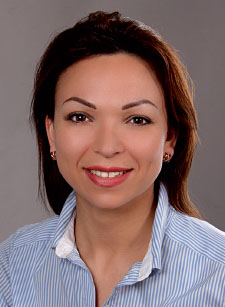
Julia Rockel completed a training as State Certified Technical Assistant for Metallography and Physical Material Analysis at Lette-Verein in Berlin. After a few years at Siemens AG in the high voltage department, she is now an employee in the laboratory of the Siemens Gas Turbine Plant in Berlin. Her main areas of work are various preparation methods of metallic components, damage analysis, structure characterization, especially with regard to heat treatment, as well as assessments of welded joints and various coatings.
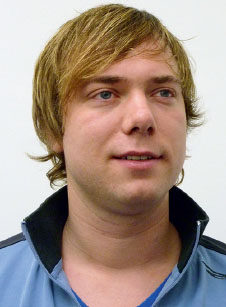
Boromir Fischer completed a training as State Certified Technical Assistant for Metallography and Physical Material Analysis at Lette-Verein in Berlin. He has worked in the metallographic laboratory of the Siemens Gas Turbine Plant (Siemens- Gasturbinenwerk) Berlin for more than a decade. The key areas of his work are failure analysis and microstructural examinations using the field emission scanning electron microscope
References / Literatur
[1] Neidel, A.; Giller, M.; Gädicke, T.: Unfallgefahr durch defekte Spannbacken an Maschine 01/143. Interner Bericht BLN MT/2023/0036. Berlin, 30.01.2023.Search in Google Scholar
[2] ASM Handbook, Vol. 11: Failure Analysis and Prevention, Sixth printing, American Society for Metals, Handbook Committee, 1998.Search in Google Scholar
[3] Wendl, F.: Glühen von Stählen. Vortrag AWT-Härtereikreis Berlin-Brandenburg, 10.11.2011.Search in Google Scholar
[4] Lange, G.: Systematische Beurteilung technischer Schadensfälle. 3. Auflage, DGM, 1992.Search in Google Scholar
[5] Grosch, J.: Schadenskunde im Maschinenbau. 4. Auflage, Expert Verlag, 2004.Search in Google Scholar
[6] Engel, L.; Klingele, H.: Rasterelektronenmikroskopische Untersuchungen von Metallschäden, Gerling Institut für Schadensforschung und Schadensverhütung, 1974.Search in Google Scholar
© 2024 Walter de Gruyter GmbH, Berlin/Boston, Germany
Articles in the same Issue
- Contents
- Editorial
- Editorial
- 10.1515/pm-2024-0045
- Failure Analysis
- Metallurgical failure investigation of small bore piping (SBP) in a diesel hydrotreating unit (DHT) of an oil refinery
- What if fractography does not tell us anything? – Failure of a side seal retainer
- Do cracked jaws of the four-jaw chuck of a large lathe pose a danger?
- Attracting a new generation to materials science
- Picture of the Month
- Picture of the Month
- People
- Interview with Dr. Volker Hinrichs
- News
- News
- Meeting Diary
- Meeting Diary
Articles in the same Issue
- Contents
- Editorial
- Editorial
- 10.1515/pm-2024-0045
- Failure Analysis
- Metallurgical failure investigation of small bore piping (SBP) in a diesel hydrotreating unit (DHT) of an oil refinery
- What if fractography does not tell us anything? – Failure of a side seal retainer
- Do cracked jaws of the four-jaw chuck of a large lathe pose a danger?
- Attracting a new generation to materials science
- Picture of the Month
- Picture of the Month
- People
- Interview with Dr. Volker Hinrichs
- News
- News
- Meeting Diary
- Meeting Diary
