
Smartphone use and stroop performance in a university workforce: A survey-experiment
-
Konstantinos Ntelezos

 ,
Aspasia Maria Tsamourgeli
,
Aspasia Maria Tsamourgeli

Abstract
Introduction
Smartphones are now an integral part of everyday life, and their wide use by employees has raised concerns regarding workplace safety and productivity. Issues like ‘nomophobia’ and ‘digital amnesia’ have been marked as challenges, especially during the peak of COVID-19 pandemic, which accelerated reliance on smartphones.
Aim
This study aims to assess the cognitive effects of smartphone use on employees, particularly regarding attention, error rates, and potential occupational implications.
Methodology
Survey-based research was conducted among employees (n = 71) of a Greek University. An experimental design of Stroop tests was done to measure cognitive performance and error rates. Respondents answered questions such as work-related smartphone activities and productivity implications. This survey was analyzed through non-parametric statistical tests.
Outcomes
Results show that most of the participants use their smartphones on a regular basis while they are at work. Participants who used a smartphone immediately before the test required longer completion times (median 2.68 min [IQR 2.30–3.10] vs 1.81 min [1.60–2.20]; difference +0.87 min, 95% CI 0.52–1.23; p < 0.001) and committed more errors (median 6.45 [5–8] vs 4.25 [3–6]; difference +2.2 errors, 95% CI 1.1–3.2; p = 0.002) compared to non-users. Daily smartphone use was positively correlated with errors (Spearman’s ρ = 0.34, 95% CI 0.12–0.52, p = 0.01). No stratified or interaction analyses by age or gender reached statistical significance.
Conclusion
Immediate smartphone use is associated with slower cognitive performance and increased errors. These findings highlight the importance of promoting moderate smartphone use and raising awareness to support employee well-being and productivity.
1 Introduction
Over the last years, with the rapid introduction of smartphones into daily life, especially in academic and work contexts, the scientific interest in the occupational health perspective has increased significantly. Smartphones, originally conceived as communication devices, have become multiservice tools – crucial for working at a distance, for immediate communications, data management, and coordinating tasks. However, with the increased frequency of their use, there are concerns about their implications for workplace safety, productivity, and mental health. The COVID-19 pandemic hastened mobile and flexible working tools; hence, a significant uptick in smartphone dependency has been observed across professional sectors, including academia. But a result of this reliance is complex problems: “nomophobia” (no mobile phone phobia) or fear of being without a smartphone and “digital amnesia,” wherein people become so dependent on smartphones to recall information. Although nomophobia and digital amnesia are relevant constructs in the literature on smartphone use, these variables were not directly measured in the present study. There is also a case, according to studies such as EU-OSHA and National Safety Council, where constant connectivity and demands enabled by smartphones have been associated with stress, anxiety, and other symptoms of burnout [1,2].
Recent research also identified a few adverse physical health effects from excessive smartphone use, including musculoskeletal problems, eye strain, and even the possibility of “text neck” syndrome, since users often adopt poor posture when using these small keyboard devices. The National Safety Council reports that there is growing concern about how new forms of digital technology are affecting workplace safety, with a growing number of workplace injuries related to smartphone distraction. Furthermore, the blurring of work-life boundaries that came with the post-pandemic trend to move towards hybrid and remote models of work has affected general well-being and increased the risk of workplace accidents in non-traditional settings [3,4,5].
This research focuses specifically on the academic environment, where smartphones are ubiquitous and serve as tools for both learning and teaching [6]. The goal is to evaluate how the academic community utilizes smartphones and to understand the occupational risks they may pose to both staff and students. Findings from this study will offer insights into balancing the benefits of smartphone technology with measures to mitigate potential occupational hazards.
2 Materials and methodology
A cross-sectional survey with a two-condition Stroop experiment was conducted in this research. This study uses an experimental research strategy, the Stroop Color-Word Interference test, which is one of the most recognized tools for assessing cognitive interference and reaction times, to investigate the impact of smartphone use on workplace errors and productivity. The participants from the University of West Attica were subjected to two experimental conditions: one involving no prior smartphone use (at least 30 min of abstention), and another following smartphone engagement. In the present research, two standardized Stroop tests were employed: the Stroop Color-Word Interference Test adapted into Greek and a custom-made Color-Words Stimuli Page designed for introducing conflict into the cognitive tasks of interest. The main measured variables were time to complete each test and the number of errors made, differentiated between corrected and uncorrected ones. Structured questionnaires were administered to capture the pattern of usage and benefits derived by staff within the institution concerning smartphones.
The survey also collected data on the frequency of smartphone use, the type of applications most accessed for academic/work purposes, and symptoms of physical discomfort or mental strain attributed to smartphone use. Respondents were also asked to provide feedback on workplace or institutional policies they believe would help in regulating the use of smartphones and minimizing distractions at work.
The order of conditions was randomized and counterbalanced across participants to minimize order and diurnal effects. Adherence to the exposure protocol was monitored and confirmed before testing. The study population consisted of university employees from administrative and technical services at the University of West Attica. A total of 120 employees were invited via institutional email and noticeboard announcements. Of these, 71 consented and completed the study, yielding a response rate of 59%. Inclusion criteria were age ≥18 years and current employment at the university. Data were assessed for normality using the Shapiro–Wilk test. As distributions were non-normal, non-parametric analyses were applied. Between-condition comparisons were conducted using Mann–Whitney U-tests and paired analyses using Wilcoxon signed-rank tests. Associations between daily smartphone use and Stroop outcomes were examined with Spearman’s rank correlation (ρ). Effect sizes were reported as median differences with 95% confidence intervals. No a priori sample size calculation was performed due to the exploratory nature of the study. The modest sample size is acknowledged as a limitation, and effect estimates should be interpreted with caution.
This research design was chosen for its appropriateness in expanding our understanding and providing specific insights into the occupational hazards of smartphones in an academic environment. The approach also allowed us to find patterns of risks in various demographics within the academic setting that would lead to tailored recommendations on how to safely use smartphones. Written informed consent was obtained from the participants. Data collection followed the strictest principles of confidentiality and anonymity; participants were randomly selected to ensure a representative sample and minimize selection bias. The results were analyzed with the help of IBM SPSS Statistics 20 and Microsoft Excel to determine whether the differences in performance between the two conditions are statistically significant.
-
Informed consent: Informed consent was obtained from all participants.
-
Ethical approval: The study involved anonymous surveys and cognitive tasks of minimal risk. According to institutional and national guidelines, such research is exempt from formal IRB review.
3 Results
The study highlights how smartphone usage affects employees’ productivity and focus at the University of West Attica. Smartphone users demonstrated longer completion times and increased errors in concentration tasks, indicating reduced efficiency. These findings emphasize the occupational risks associated with smartphone dependency, especially in relation to job performance and well-being.
The survey sample consists of 71 employees of the University of West Attica, of whom 54.9% were women and 45.1% were men (Figure 1). Among the participants, 66.2% belonged to the age group of 38–58 years, while 25.33% were aged 18–38 years. Only 8.45% of the respondents are over 58 years old (Figure 2).
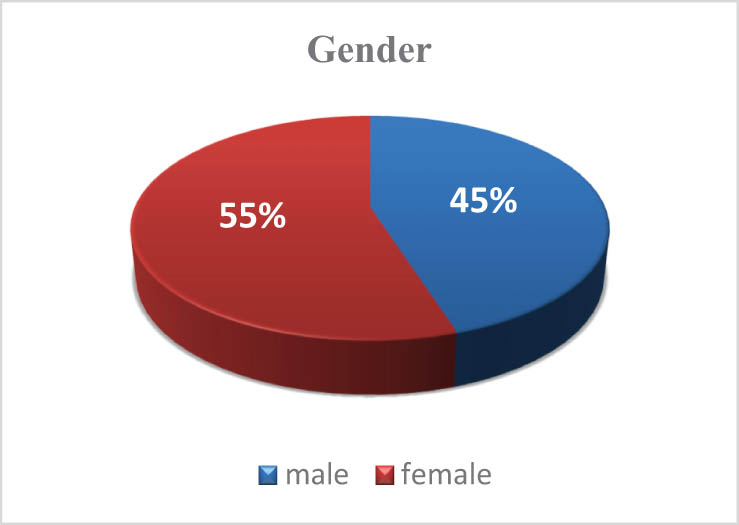
Gender distribution of university staff participants.
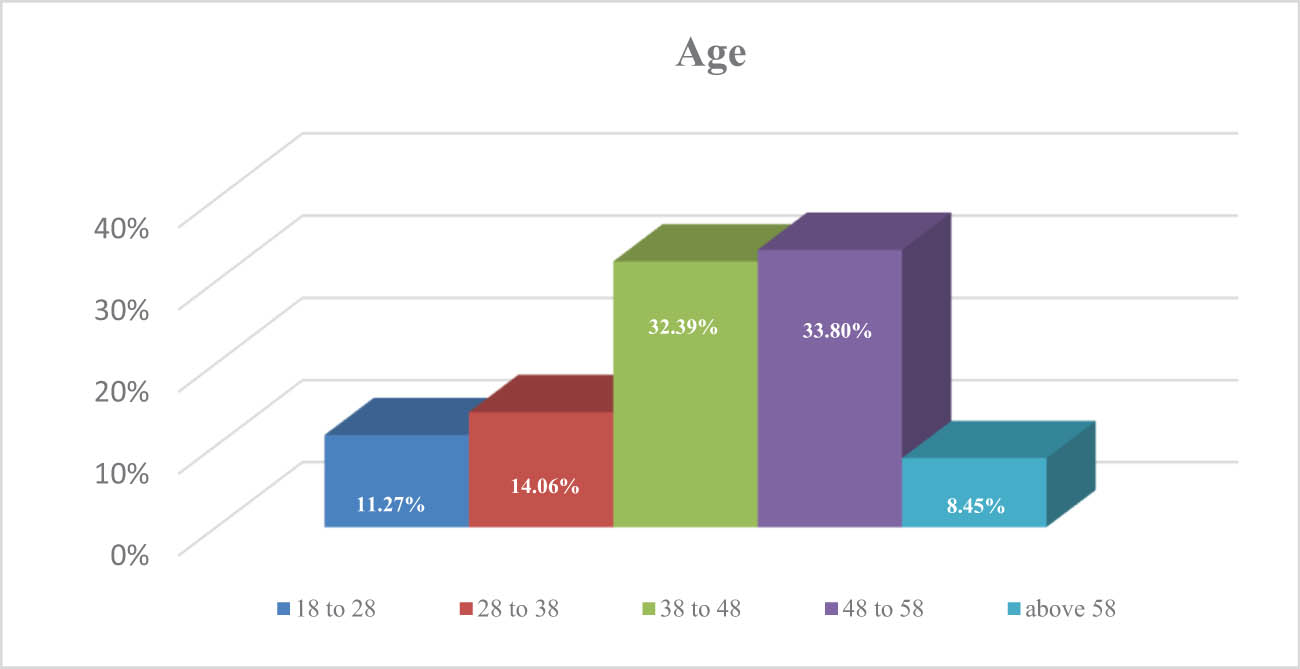
Age distribution of university staff participants.
The majority of interviewees (66.2%) held secretarial and technical staff positions at the University. In contrast, 21.13% reported working in the accounting department, and a small proportion (12.68%) were employed in the legal department (Figure 3).
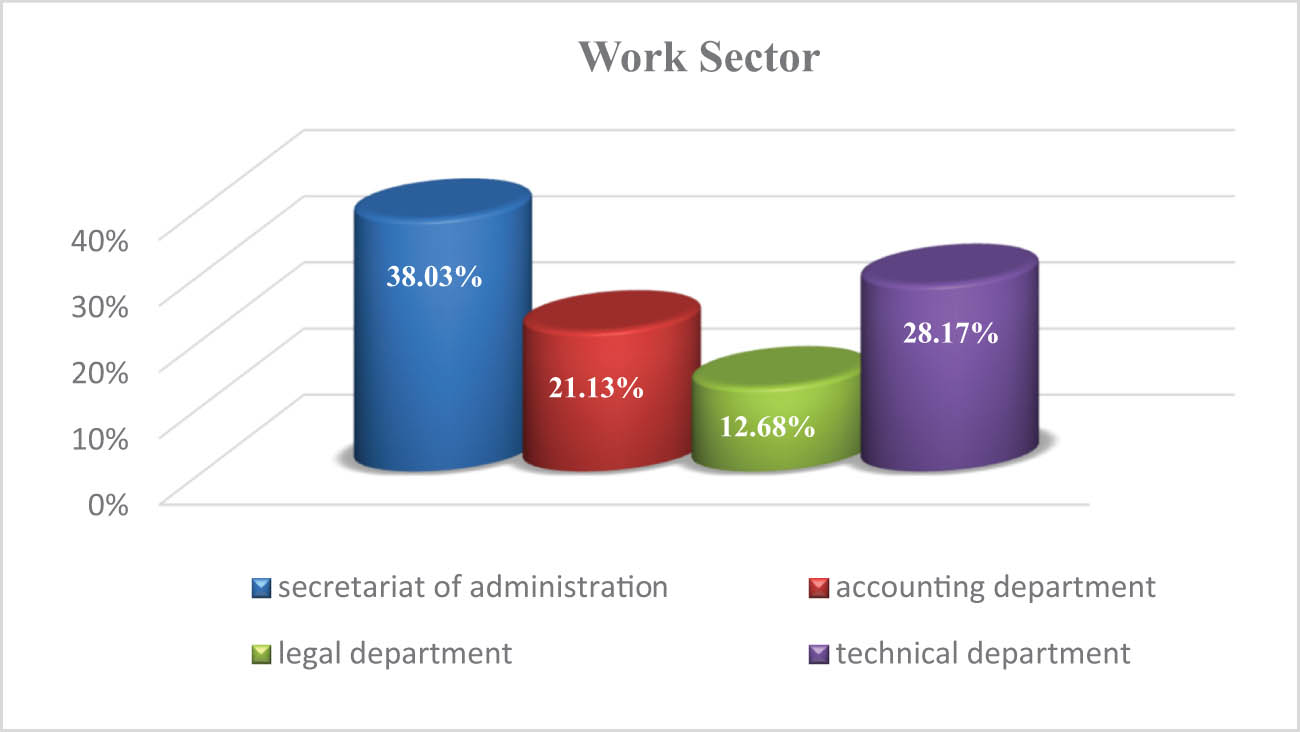
Work sector distribution of university staff participants.
3.1 Main part
Demographic data were recorded from participants, who subsequently undertook two observational tests: one involving color stimuli and another combining color and word stimuli. Additionally, information was collected on whether the participants had used a smartphone before the tests, in order to examine the potential impact of smartphone usage on their concentration.
In the first Stroop test, employees who did not use their smartphone completed the task in a median of 1.81 min (1.60–2.20) and made 4.25 errors [3,4,5,6]. In contrast, employees who used their smartphones required 2.68 min [2.30–3.10] and made 6.45 errors [5,6,7,8]. Smartphone users took on average +0.87 min (95% CI: 0.52–1.23) longer (p < 0.001) and made +2.2 more errors (95% CI: 1.1–3.2) compared with non-users (p = 0.002).
In the second Stroop test, employees who did not use their smartphone again performed better, completing the task in 1.81 min (1.60–2.20) with 4.25 errors [3,4,5,6], compared to smartphone users who required 2.68 min (2.30–3.10) with 6.45 errors [5,6,7,8]. Smartphone use was associated with significantly poorer performance, with users requiring +0.96 min (95% CI: 0.60–1.31) longer (p < 0.001) and committing +2.5 more errors (95% CI: 1.4–3.6) (p = 0.002).
Across both tasks, a positive association was observed between daily smartphone use and Stroop errors. The correlation was Spearman’s ρ = 0.34 (95% CI: 0.12–0.52), p = 0.01, indicating that greater self-reported daily smartphone use was associated with higher error counts (Table 1).
Errors between smartphones and non-smartphones during the Stroop test
| Condition | N | Completion time (min), Median [IQR] | Errors, Median [IQR] | Median difference (95% CI) | p-Value |
|---|---|---|---|---|---|
| Smartphone use | 35 | 2.68 [2.30–3.10] | 6.45 [5,6,7,8] | +0.87 min (0.52–1.23) | <0.001 |
| No smartphone use | 36 | 1.81 [1.60–2.20] | 4.25 [3,4,5,6] | +2.2 errors (1.1–3.2) | 0.002 |
Among employees who completed the tests within 2 to 3 min, 60.6% had not used a smartphone before the test, compared to 39.4% who had. Moreover, 84.6% of those who required 3–4 min to complete one of the tests had used a smartphone, while all employees (100%) who took more than 4 min had also used their smartphone.
None of the employees who did not use a smartphone made 9 or more errors, whereas 27.5% of those who used a smartphone made 9 or more errors.
This study examines whether smartphone usage during work is distracting to employees, focusing on both errors and test completion time. A normality test revealed that the sample did not follow a normal distribution (p-value = 0.00 < 0.05). Consequently, non-parametric methods were used for analysis.
A positive correlation was identified between the two primary variables, time and errors, with a statistically significant p-value (0.000 < 0.05).
The study examined two research questions to determine whether smartphone use affects test completion time. The questions were as follows:
Is there a difference in completion time for the first test between employees who used a smartphone and those who did not?
Is there a difference in completion time for the second test between employees who used a smartphone and those who did not?
Non-parametric methods were employed to compare mean completion times.
The results indicate a statistically significant difference (α = 0.05) in completion time between smartphone users and non-users. The null hypothesis was rejected through non-parametric tests, confirming that smartphone usage before the test significantly impacts completion time.
First Question: The null hypothesis was rejected (p = 0.021 < 0.05). Employees who used a smartphone required 0.86 additional minutes to complete the first test.
Second Question: The null hypothesis was also rejected (p = 0.014 < 0.05). Smartphone users required 0.96 additional minutes to complete the second test compared to those who did not use a smartphone.
The study further examined the impact of smartphone usage on errors. For the first question regarding errors, the p-value (0.021 < 0.05) indicated that smartphone users made 2.2 more errors. Similarly, for the second question, the p-value (0.014 < 0.05) revealed that smartphone users made 2.5 more errors.
Statistical analysis confirms that employees who did not use a smartphone during the first test had a lower mean error rate (4.25) compared to those who used one (6.45). A similar pattern was observed in the second test. These findings highlight that smartphone usage detracts from concentration and productivity, with potential negative implications for both efficiency and worker well-being.
4 Discussion
Smartphones are an integral part of daily life. In this study, smartphone use immediately before cognitive testing was associated with decreased Stroop performance, evidenced by longer completion times and more errors, indicating a huge impact on attention and cognitive efficiency. Also, mental distress is particularly significant, especially in younger individuals [7]. The integration of mobile phones into daily routines has also given rise to the phenomenon of “nomophobia,” defined as the fear of not having access to one’s mobile phone or being unable to use it, according to broader literature. This condition is linked to psychological implications such as anxiety, higher levels of stress, low self-esteem, loneliness, and depression [8,9,10]. Research shows that symptoms of depression and anxiety are correlated with frequent smartphone use, such as checking the device every 10 min. This overuse extends beyond communication and social media to include gaming, progressively leading to psychological and cognitive degeneration. These effects are particularly pronounced among students, whose health and well-being are at risk, thereby impairing their academic performance and efficiency. Interestingly, this phenomenon works in both directions. Young adults with pre-existing mental health issues are more likely to overuse or misuse smartphones, creating a vicious cycle that perpetuates the problem [8,9,10]. In addition to its psychological effects, nomophobia is associated with physical symptoms such as musculoskeletal problems caused by prolonged and intensive mobile phone use [7]. However, these outcomes were not measured in this study. Therefore, statements regarding these effects are included as contextual background rather than direct findings.
Problematic smartphone use often begins at an early age, even during elementary education, hindering learning capacity and academic achievement. Psychometric screenings could help evaluate the risk of smartphone addiction in students. At the same time, encouraging the use of smartphone applications focused on health-promoting activities can provide constructive alternatives. Additional measures to reduce device overuse include disabling notifications, activating silent mode during rest or downtime, and minimizing connectivity when unnecessary [11]. Various studies suggest that excessive smartphone use may impact reproductive health: such as in couples undergoing IVF, nutraceutical supplementations and a gender-tailored, psychologically informed approach may be beneficial [12].
Another critical issue related to smartphone overuse is the prevalence of sleeping disorders, which are closely tied to “digital amnesia.” This condition refers to the reduced ability to retain and recall information due to poor sleep quality. Sleep disorders often involve going to bed late, reduced sleep duration, or difficulties in initiating sleep. These disruptions affect both physical and mental health by disturbing circadian rhythms, which can leave individuals more vulnerable to everyday challenges and increase their likelihood of workplace accidents [13,14]. A study conducted in North Korea in 2017 explored the link between smartphone addiction and accidents among 608 university students. Using the Smartphone Addiction Performance Scale (National Foundation of Korea), researchers found that higher levels of addiction or improper smartphone use made students more susceptible to injuries or accidents, whether on or off university premises [15].
The COVID-19 pandemic has amplified these issues, with adults spending an average of four hours daily on their smartphones [16]. During the prolonged lockdowns, reliance on digital devices, especially smartphones, surged dramatically. This period underscored the importance of responsible smartphone use. However, the pandemic also introduced new challenges, including physical inactivity, sleep disorders, and FOMO (Fear Of Missing Out). These implications persist, reshaping societal behaviors and highlighting the need for balance in future technology use [9,10,11].
Despite the benefits of this study, several constraints must be acknowledged. Smartphone usage was not randomized, allowing for possible confounding from elements like workload, fatigue, burnout, and job position. The research took place at one institution with a small sample of personnel, which restricts generalizability. Only immediate cognitive performance was evaluated, without any direct assessment of other (e.g., psychological) results, which were mentioned in the discussion only as contextual references. Future studies should explore randomized crossover designs and multisite replication to overcome these constraints.
5 Conclusion
Utilizing digital devices in the modern world is an inevitable activity and has proven to be a great tool in managing daily life challenges. In this study, immediate pre-test smartphone use was associated with longer Stroop completion time and higher error rates, indicating a measurable cognitive impact. So, as a major public health issue, implementing preventive measures should be a priority of the public health agenda. Understanding how to leverage mobile phones instead of misusing them against one’s own good is the key to keeping the right balance between two different worlds.
Empowering youth to adopt a healthier and more balanced lifestyle through regular mobile “breaks” and engagement in social activities is a fundamental pillar of meaningful health promotion practices and public health interventions, with the aim of reducing the mental health disorders deriving from the addiction to mobile phone use. Future research could evaluate the possible benefits of structured policies, educational programs, and guidelines regarding the proper use of smartphones in academic and professional environments, with the aim of achieving well-being and best productivity.
-
Funding information: Authors state no funding involved.
-
Author contributions: All authors have accepted responsibility for the entire content of this manuscript and consented to its submission to the journal, reviewed all the results and approved the final version of the manuscript. Konstantinos Ntelezos: conceptualization, supervision, and project administration; Georgia Kyriakopoulou: methodology, data curation, and project administration; Marianna-Foteini Dafni: methodology, supervision, and project administration; Aspasia Maria Tsamourgeli: methodology, writing, and data curation; Georgia Lalou: data curation, formal analysis, and writing; Romina Sampanai: data curation, formal analysis, and writing; Anthoula Bistola: data curation, formal analysis, and writing; Dimitrios Delitzakis: conceptualization, supervision, and project administration.
-
Conflict of interest: Authors state no conflict of interest.
-
Data availability statement: The data supporting the findings of this study are available from the corresponding author upon reasonable request.
References
[1] National Safety Council. Safety Technology 202: Examining trends in technology solutions used to reduce serious injuries and fatalities in the workplace; 2024. [cited 31 July 2025] https://www.nsc.org.Search in Google Scholar
[2] European Agency for Safety and Health at Work. Hybrid work: New opportunities and challenges for occupational safety and health; 2023. [cited 31 July 2025] https://osha.europa.eu.Search in Google Scholar
[3] Canadian Occupational Safety. Health and safety trends for 2023; 2023. [cited 2 August 2025] https://www.thesafetymag.com.Search in Google Scholar
[4] Eitivipart AC, Viriyarojanakul S, Redhead L. Musculoskeletal disorder and pain associated with smartphone use: A systematic review of biomechanical evidence. Hong Kong Physiother J. 2018;38(2):77–90. 10.1142/S1013702518300010.Search in Google Scholar PubMed PubMed Central
[5] Hakami I, Sherwani A, Hadadi M, Alzahrani R, Albukhari A, Omar Y, et al. Assessing the impact of smartphone use on neck pain and related symptoms among residents in Jeddah, Saudi Arabia: A cross-sectional study. Cureus. 2024;16(7):e64299. 10.7759/cureus.64299.Search in Google Scholar PubMed PubMed Central
[6] Hartley K, Hoffman B, Andújar A. Smartphones and learning: Evaluating the focus of recent research. Eur J Invest Health Psychol Educ. 2023;13(4):748–58. 10.3390/ejihpe13040056.Search in Google Scholar PubMed PubMed Central
[7] Notara V, Vagka E, Gnardellis C, Lagiou A. The emerging phenomenon of nomophobia in young adults: A systematic review study. Addict Health. 2021;13(2):120–36. 10.22122/ahj.v13i2.309.Search in Google Scholar PubMed PubMed Central
[8] Gnardellis C, Vagka E, Lagiou A, Notara V. Nomophobia and its association with depression, anxiety and stress (DASS scale), among young adults in Greece. Eur J Invest Health Psychol Educ. 2023;13(12):2765–78. 10.3390/ejihpe13120191.Search in Google Scholar PubMed PubMed Central
[9] Lee PH. Editorial: Adverse health consequences of excessive smartphone usage. Front Public Health. 2021;9:689968. 10.3389/fpubh.2021.689968.Search in Google Scholar PubMed PubMed Central
[10] Lee U, Lee PH. Editorial: Adverse health consequences of excessive smartphone usage, volume II. Front Public Health. 2022;10:984398. 10.3389/fpubh.2022.984398.Search in Google Scholar PubMed PubMed Central
[11] Paterna A, Alcaraz-Ibáñez M, Aguilar-Parra JM, Salavera C, Demetrovics Z, Griffiths MD. Problematic smartphone use and academic achievement: A systematic review and meta-analysis. J Behav Addict. 2024;13(2):313–26. 10.1556/2006.2024.00014.Search in Google Scholar PubMed PubMed Central
[12] Hart RJ. Nutritional supplements and IVF: An evidence-based approach. Reprod Biomed Online. 2024 Mar;48(3):103770. 10.1016/j.rbmo.2023.103770. Epub 2023 Dec 20. PMID: 38184959.Search in Google Scholar PubMed
[13] Goel A, Moinuddin A, Tiwari R, Sethi Y, Suhail MK, Mohan A, et al. Effect of smartphone use on sleep in undergraduate medical students: A cross-sectional study. Healthcare (Basel). 2023;11(21):2891. 10.3390/healthcare11212891.Search in Google Scholar PubMed PubMed Central
[14] Robert SJ, Kadhiravan S. Prevalence of digital amnesia, somatic symptoms, and sleep disorders among youth during COVID-19 pandemic. Heliyon. 2022;8(8):e10026. 10.1016/j.heliyon.2022.e10026.Search in Google Scholar PubMed PubMed Central
[15] Kim HJ, Min JY, Kim HJ, Min KB. Accident risk associated with smartphone addiction: A study on university students in Korea. J Behav Addict. 2017;6(4):699–707. 10.1556/2006.6.2017.070.Search in Google Scholar PubMed PubMed Central
[16] Yang SY, Wang YC, Lee YC, Lin YL, Hsieh PL, Lin PH. Does smartphone addiction, social media addiction, and/or internet game addiction affect adolescents’ interpersonal interactions? Healthcare (Basel). 2022;10(5):963. 10.3390/healthcare10050963.Search in Google Scholar PubMed PubMed Central
© 2025 the author(s), published by De Gruyter
This work is licensed under the Creative Commons Attribution 4.0 International License.
Articles in the same Issue
- Research Articles
- Relationship between body mass index and quality of life, use of dietary and physical activity self-management strategies, and mental health in individuals with polycystic ovary syndrome
- Evaluating the challenges and opportunities for diabetes care policy in Nigeria
- Body mass index is associated with subjective workload and REM sleep timing in young healthy adults
- Prediction of hypoglycaemia in subjects with type 1 diabetes during physical activity
- Investigation by the Epworth Sleepiness Scale of daytime sleepiness in professional drivers during work hours
- Understanding public awareness of fall epidemiology in the United States: A national cross-sectional study
- Impact of Covid-19 stress on urban poor in Sylhet Division, Bangladesh: A perception-based assessment
- Impact of the COVID-19 pandemic on mental health, relationship satisfaction, and socioeconomic status: United States
- Psychological factors influencing oocyte donation: A study of Indian donors
- Cervical cancer in eastern Kenya (2018–2020): Impact of awareness and risk perception on screening practices
- Older LGBTQ+ and blockchain in healthcare: A value sensitive design perspective
- Trends and disparities in HPV vaccination among U.S. adolescents, 2018–2023
- Do cell towers help increase vaccine uptake? Evidence from Côte d’Ivoire
- In search of the world’s most popular painkiller: An infodemiological analysis of Google Trend statistics from 2004 to 2023
- Brain fog in chronic pain: A concept analysis of social media postings
- Association between multidimensional poverty intensity and maternal mortality ratio in Madagascar: Analysis of regional disparities
- A “disorder that exacerbates all other crises” or “a word we use to shut you up”? A critical policy analysis of NGOs’ discourses on COVID-19 misinformation
- Smartphone use and stroop performance in a university workforce: A survey-experiment
- Review Articles
- The management of body dysmorphic disorder in adolescents: A systematic literature review
- Navigating challenges and maximizing potential: Handling complications and constraints in minimally invasive surgery
- Examining the scarcity of oncology healthcare providers in cancer management: A case study of the Eastern Cape Province, South Africa
- Dietary strategies for irritable bowel syndrome: A narrative review of effectiveness, emerging dietary trends, and global variability
- The impact of intimate partner violence on victims’ work, health, and wellbeing in OECD countries (2014–2025): A descriptive systematic review
- Nutrition literacy in pregnant women: a systematic review
- Short Communications
- Experience of patients in Germany with the post-COVID-19 vaccination syndrome
- Five linguistic misrepresentations of Huntington’s disease
- Letter to the Editor
- PCOS self-management challenges transcend BMI: A call for equitable support strategies
Articles in the same Issue
- Research Articles
- Relationship between body mass index and quality of life, use of dietary and physical activity self-management strategies, and mental health in individuals with polycystic ovary syndrome
- Evaluating the challenges and opportunities for diabetes care policy in Nigeria
- Body mass index is associated with subjective workload and REM sleep timing in young healthy adults
- Prediction of hypoglycaemia in subjects with type 1 diabetes during physical activity
- Investigation by the Epworth Sleepiness Scale of daytime sleepiness in professional drivers during work hours
- Understanding public awareness of fall epidemiology in the United States: A national cross-sectional study
- Impact of Covid-19 stress on urban poor in Sylhet Division, Bangladesh: A perception-based assessment
- Impact of the COVID-19 pandemic on mental health, relationship satisfaction, and socioeconomic status: United States
- Psychological factors influencing oocyte donation: A study of Indian donors
- Cervical cancer in eastern Kenya (2018–2020): Impact of awareness and risk perception on screening practices
- Older LGBTQ+ and blockchain in healthcare: A value sensitive design perspective
- Trends and disparities in HPV vaccination among U.S. adolescents, 2018–2023
- Do cell towers help increase vaccine uptake? Evidence from Côte d’Ivoire
- In search of the world’s most popular painkiller: An infodemiological analysis of Google Trend statistics from 2004 to 2023
- Brain fog in chronic pain: A concept analysis of social media postings
- Association between multidimensional poverty intensity and maternal mortality ratio in Madagascar: Analysis of regional disparities
- A “disorder that exacerbates all other crises” or “a word we use to shut you up”? A critical policy analysis of NGOs’ discourses on COVID-19 misinformation
- Smartphone use and stroop performance in a university workforce: A survey-experiment
- Review Articles
- The management of body dysmorphic disorder in adolescents: A systematic literature review
- Navigating challenges and maximizing potential: Handling complications and constraints in minimally invasive surgery
- Examining the scarcity of oncology healthcare providers in cancer management: A case study of the Eastern Cape Province, South Africa
- Dietary strategies for irritable bowel syndrome: A narrative review of effectiveness, emerging dietary trends, and global variability
- The impact of intimate partner violence on victims’ work, health, and wellbeing in OECD countries (2014–2025): A descriptive systematic review
- Nutrition literacy in pregnant women: a systematic review
- Short Communications
- Experience of patients in Germany with the post-COVID-19 vaccination syndrome
- Five linguistic misrepresentations of Huntington’s disease
- Letter to the Editor
- PCOS self-management challenges transcend BMI: A call for equitable support strategies
