
Postcolonial Analysis of Transcultural News Frames: A Case Study of Facebook Rebranding
-
Gopolang Ditlhokwa

 und
Victoria Elizabeth Cann
und
Victoria Elizabeth Cann

Abstract
This study investigates the portrayal of international technology companies in the media, with a specific focus on Facebook rebranding. Utilizing content analysis and correlational observation, we conducted a comparative analysis of search interests and news frames between Western and African-based news websites following the announcement of Facebook’s rebranding to Meta. Two datasets were examined to assess search interest and sentiment scores based on the positivity, negativity, and neutrality of published stories from selected African and Western countries. The findings reveal the persistence of colonial influences in news coverage, with Western websites demonstrating sympathy and African websites emphasizing conflict-driven narratives. These observations underscore the significance of media diversity and representation in shaping public discourse, particularly in postcolonial contexts characterized by ethnocentrism, poverty, violence, and political instability.
1 Introduction
In the post-colonial era, news discourses have assumed a significant role in shaping the economic dynamics of digital platforms. As societies transitioned from colonial rule to independent nation-states, the media landscape underwent profound transformations, with news outlets becoming influential actors in shaping public opinion and driving economic agendas. According to Thussu (2018), the expansion of emerging technology companies and their business models have tremendously attracted academic interest at various levels, faced with geopolitical spirals, monopoly, and new dimensions. News discourses, through their coverage and representation of innovation, science, and technology, have become instrumental in simplifying communication and fostering mutual understanding between various stakeholders, including big tech companies, scientists, and the audience. The media plays a crucial role in disseminating information about technological advancements, highlighting their potential benefits, and contributing to the public’s perception of innovation and big tech. Previous studies such as Asseraf (2022), Zhang et al. (2021), and Jungherr et al. (2019), have explored the impact of news reporting on the economic politics of digital platforms in both cohesive and warring contexts. These studies have shed light on how news discourses influence the public’s perception of technological advancements, which, in turn, can shape consumer behavior, market dynamics, and the success or failure of technological acceptance.
Furthermore, Norris et al. (2003) have argued that the techniques of news writing deeply influence audience perceptions of innovation and big tech. The language, framing, and narrative choices made by journalists can significantly impact how technology-related topics are understood and interpreted by the public. It is important to note that the influence of news discourses on the economic dynamics of digital platforms is not solely derived from the impact of the technology itself on media reporting. Rather, it is shaped by social influence, cognitive processes, and human-computer interaction behavior (Fulk et al., 1990). These factors encompass the social, cultural, and psychological dimensions through which news discourses interact with audiences, shaping their perceptions, attitudes, and behaviors toward innovation and big tech. Amidst uneven geopolitical landscapes, academic inquiries, as conducted by Teer-Tomaselli et al. (2019), Nordenstreng and Thussu (2015), Hallin and Mancini (2011), and Best et al. (2014), have explored the relevance and survival of the media in various facets. These studies contextualize developments in news reports, uncovering journalistic practices, codes, and attitudes that shape the representation of technology-related issues. By examining how the development and feature improvements of digital platforms fit within the context of transcultural news frames and the colonial connotations reflected in post-colonial communication and media representation, it is possible to determine the role of influencing factors and public reactions triggered by media attention (Penney et al., 2003). This research inquiry aims to unravel the intricate relationship between news discourses, digital platforms, and the economic dynamics that arise within the post-colonial context. Therefore, in this study, we aim to answer the following research questions:
RQ1.
What was the level of interest in news searches since the announcement of the Meta rebrand?
RQ2.
How did African and Western news websites differ in their framing of the issue? Did the framing of African news websites reflect any instances of post-colonial narratives?
RQ3.
Was there any correlation between search trends between the three keywords (Meta, Facebook, Mark Zuckerberg)? If so, how has it influenced news reporting from both Western and African-based news websites?
1.1 The Research Context
On 28 October 2021, the founder of Facebook, Mark Zuckerberg, declared the rebranding of Facebook Inc. to Meta, which is an abbreviation of “metaverse”. The name of the Facebook app, however, remained the same. Zuckerberg presented this transition through a live video presentation that included virtual reality (VR) stunts, and immediate avatar creation in space. This presentation blended gaming with social communication through text, videos, pictures, and emojis. Zuckerberg asserted that Meta provides the most thrilling features and introduces a new direction for social interaction, with unprecedented opportunities for intimate connections. The revamped social connection into VR includes features such as fitness, gaming, partying, and workspace, among others. Meta Facebook page announced in a series of promotional materials, that the metaverse would be an open platform covering all dimensions of life. According to Meta, the metaverse is the next evolution of social connection, a collective project that will be created by people worldwide and open to everyone. The transition of Facebook Inc. into Meta, with a focus on perspectives and spatial features, is a topical issue that surfaced nearly three weeks after a blackout of all Facebook Inc. apps worldwide, which lasted for at least 6 h. The blackout triggered confusion and extensive media speculations on possible hacking, network failure, and the possibility of a system upgrade to assess the world’s reliance on Meta services online, in preparation for the Metaverse takeover (Martin, 2021; The Indian Express, 2021; Akhtar, 2021; Duffy & Lyngaas, 2021). Researching news frames that reported about the rebranding of Facebook to Meta is important in the context of postcolonial transcultural communication as it helps to shed light on how the transition is perceived and represented by different media outlets, and how it impacts diverse cultural groups worldwide.
Therefore, the significance of using Meta as a case study stems from several key factors. Firstly, Meta’s rebranding from Facebook Inc. signifies a strategic shift and a vision for the future of social interaction and digital platforms. This transition introduces innovative features like virtual reality (VR) integration, expanded social functionalities, and the concept of the metaverse as an inclusive platform covering different aspects of life. Secondly, Meta’s rebranding follows a notable event: the global blackout of all Facebook Inc. apps. This blackout generated significant media speculation and public interest regarding its causes and implications. The subsequent rebranding to Meta raises questions about the connection between the blackout, the transition, and Meta’s strategic goals. Lastly, studying Meta as a case allows us to examine how this transition is perceived and portrayed by various media outlets and its impact on diverse cultural groups worldwide. Analyzing the framing and discussion of Meta’s rebranding in different news narratives helps us understand the underlying dynamics of postcolonial transcultural communication and its effects on public perception and cultural interpretation. Focusing on Meta as a case study also provides valuable insights into the interaction between technology, media representation, and cultural dynamics. This specific case offers a rich context to explore the complexities of postcolonial transcultural communication and the broader implications of technological transitions and their portrayal in the news.
1.2 Understanding the Metaverse
The term “metaverse” has been present in academic literature for some time, with a focus on its association with the understanding of human behavior and cognition rather than the technology itself, especially social media, (Jaynes et al., 2003). However, the rise of 21st-century lifestyles and globalization led to the emergence of new inventions and technological advancements, which increased interest in embedding communication technology with the concept of the metaverse. Innovators have moved from a two-dimensional to three-dimensional space in their pursuit of integrating all networks into imaginary spaces and creating a virtual world that transcends physical boundaries, allowing for people-to-people and people-environment interactions (Dionisio et al., 2013; Park & Kim, 2022). The metaverse is a virtual world that allows for the versatility of available options to create and assign commands to human replication in the form of avatars. This over-30-year phenomenon has brought the world to what is known today as VR, and to some extent, science fiction in movies (Duan, et al., 2021). Facebook was not the first company to conceptualize the term “metaverse.” Its origins can be traced back to Neal Stephenson’s 1992 novel called Snow Crash (Joshua, 2017). However, Mark Zuckerberg’s vision of the metaverse introduces a novel concept – an integrated and immersive ecosystem where the boundaries between the physical and virtual realms blur seamlessly for users (Dwivedi et al., 2022). Within this ecosystem, individuals can utilize avatars and holograms to collaborate, engage, and socialize, partaking in simulated shared experiences. Meta, through Facebook gaming, has improved its Application Programming Interface (API) features and proposed several updates that include five key future predictions for new inventions and virtual experiences in 2022 and beyond, such as the new era, home office technology, putting frontline workers at the C-suite level, shifting from the phone and email support to messaging channels, and the promotion of multi-functionalism in the workplace (Meta, 2021).
2 Literature Review: News Frames
News frames have been widely explored throughout communication research. According to Johnston et al. (2015), framing is rooted in the understanding that the way information is presented and framed can significantly influence people’s perceptions, interpretations, and responses. By considering the significance of framing as a product of cognitive psychology, scholars have recognized the role of mental processes, such as attention, memory, and interpretation, in shaping individuals’ understanding of mediated messages. Goffman’s influential work on framing has provided a theoretical foundation for studying the cognitive aspects of framing. Goffman (1974) explored how individuals construct meaning and make sense of social interactions through various framing processes. This framework highlights the role of individual and collective interpretations, as well as the contextual and situational factors that shape framing effects. Building upon Goffman’s ideas, contemporary researchers have expanded the understanding of framing as a cognitive phenomenon by investigating how framing cues, linguistic devices, visual elements, and narrative structures contribute to the construction and interpretation of messages. This approach acknowledges that framing is not merely a mechanical process of message delivery but rather a complex interplay between communicators, audiences, and the broader socio-cultural context. Thus, news production is viewed as one of the biggest contributors to this debate, in what is termed as ‘news frames’ (Matthes, 2009). When arguing the basis of framing application by the news media, Entman (2007) noted that in some cases, journalists are susceptible to using framing as a tool for biased reporting, drawing from three distinct perspectives – distortion, content, and decision-making bias. For that reason, it is essential to expand academic literature debates on how the media differently apply news framing. Given that the renaming of Facebook to Meta is a global topical issue, there is a need to observe how it has been reported both locally and internationally, especially between African and Western media. Previous research has broadly deliberated on how different aspects of Africa have been reported by the Western media using framing as their basis machinery (Nothias, 2018; Majavu, 2020; Brown et al., 2019; Ogunyemi, 2014; Kraut-Adler, 2018; Matshikiza, 2001).
2.1 News Frames on Technology and Innovation
In previous studies such as Scheufele and Lewenstein (2005); Pidgeon et al. (2008), it is argued that the emergence of technological inventions is conceivably subjected to media scrutiny, either by examining how they (inventions) affect the human race, environment, etc. or by influencing the audience to either accept or reject a certain technological invention. In some instances, news frames could also be influenced by public opinion (MacDonald et al., 2020). To this day, academic research rapidly pursues technological reporting, paying more attention to issues of climate change, agriculture, and green technologies and how they are accepted and perceived. Within this scope, there is less attention on the framing of social media usage. The only available literature discusses the relationship between technology and the systems, without expanding to the media practices.
In their study, Guzman and Jones (2014), explored the framing of the Napster file-sharing application, a novel music-sharing invention. With the help of textual analysis, it was revealed that during the introduction of the app, the audience was not so fully accustomed to the Internet. However, their comparison of the mainstream media and music journalists helped explain the existing gap between the two, where the former became steadfast to notice and explore the technological changes, implications, and acceptance, while the latter became too economic with such information. This would either be exacerbated by the lack of in-depth knowledge about the app, or a calculated move to snub reportage about the app or otherwise. That further brought to the surface, the intercultural connotations vis-à-vis the economic power of innovation. As far as the theme of technology adoption and its framing in the news, Vishwanath (2009) argues that preadoption beliefs could either leave a positive or negative stain on the new technology or the development of its features. These also extend to the degree to which users of such technology have interacted with it, thus reinforced by what is reported in the news. Vishwanath further argues that the effect created by the media is that of persuasion to believe some message contents and ultimately influencing behavior. To better establish how technology has been framed by both the African and Western media, concerning Facebook (now Meta), it is perhaps important to relate to how Facebook had established itself in Africa.
2.2 Reception of Meta in Africa
Since its establishment in 2004 (Sturgeon & Walker, 2009), known as Facebook then, Meta has received a great reception across Africa. With the first office established in Johannesburg, South Africa around 2015, the Facebook app already had millions of users by then (BBC, 2015), and the office is currently serving as the headquarters of Meta in Africa. In 2020, it was officially announced through the Meta official website that the tech giant would establish its second office in Nigeria as an expansion project to develop business innovation, technological ecosystem, and skills training (Meta, 2020). According to media reports, the decision to establish the Nigerian office superseded the initial plan to have it in Kenya, as earlier been earmarked as the anticipated next stop after South Africa (Kolawole, 2020; Mulunda, 2020). In 2017, it was also reported that 95 million people across sub-Saharan Africa accessed Facebook, with the majority accessing it through their mobile phones, where the three countries mentioned above were the largest contributors to its usage (Meta, 2017). Despite the positive impact that the company had in Africa by improving social connections, and boosting interconnectedness among Africans and outside Africa, scholars maintain that the social networking giant has in some instances been used by some, who capitalized on these numbers to worsen political instability across the African continent, especially with cases of insufficient initiatives to counter misinformation and fake news (Madowo, 2019). With Meta having spread into Africa as discussed above, we aim to uncover the existing knowledge gap(s) by first framing the basis of our inquiry on the prevalent news frames by Western media towards Africa as a guide to the transcultural connections that exist within the media and literature.
2.3 Perceived Framing of Africa by the Western Media
News values and framing types on varied aspects is still a topical issue that cannot go unnoticed, as it is still a phenomenon under exploration, with their motifs viewed and judged differently by various scholars (Molla, 2021; Wozniak et al., 2015; Saeed, 2007). Using a case study, Ogunyemi (2014)’s examination of news values on how Africa has previously been framed in the Western news media reveals that there are more stereotypes associated with Africa, especially those media outlets that adopted to peddle ethnocentrism in their reports. The study further argues that some evident news media outlets in Africa counter-report on specific issues and offer clarity on certain subjects. Kothari (2010)’s perspective of how the New York Times reported events of violence and killings in the Darfur conflict posits the qualitative logic that the direction of the reports was greatly influenced by the positions taken by individual journalists, informed by their subjective view of Africa, leading to more bias than objective reporting. Furthermore, their framing approaches weighed more on escalating audiences’ feelings and negative perspectives, with less positive images formed in their minds, as Kothari (2010) further questions the link between the prevailing news frames and their purported functions, citing inconsistencies in the manner in which the information is later presented. From a differing perspective, Nothias (2018) found that lexical approaches applied to media frames about Africa by Western media were extremely dominated by social and political instability news which were repeatedly reported alongside corruption and poverty. This extends to both the intended and united failure to represent the African story well in the media by Western reporters, where alleged racism and colonialism often dominate.
Recently, using the COVID-19 pandemic as a case study, Gabore (2020) drew a comparative study on how Chinese and Western media represented Africa in their stories. Indeed, the Western media was found to have reported more negatively about Africa than the Chinese media. However, the researcher argues that even if that is the case, no evidence points toward the Western media constantly reporting negative stories about Africa, hinting at a relatively balanced front. This then suggests that there is still open room for comparative studies on certain areas to be conducted to unearth the prevailing commonalities of literature on the subject. Other varied framing paradigms on Africa by Western media include three prominent studies, for example, Chari (2010) holds significance as it examines the framing of the 1994 Rwanda Genocide by The New York Times. It explores whether the coverage accurately represented the events or if it resulted in misrepresentation. The study sheds light on the media’s role in shaping public perception and understanding of the genocide, particularly through the framing choices made by a prominent Western media outlet. Pieri (2019) gains prominence by investigating how the UK media framed the Ebola crisis and the subsequent policy response. It examines the media’s portrayal of the outbreak and its implications for public understanding and policy formulation. By focusing on the framing of a global pandemic, the study provides insights into the media’s influence on public perception and government actions related to health emergencies in Africa. The significance of a study by Wanta and Kalyango (2007) lies in its examination of how the United States media agenda builds around terrorism in Africa. It explores the extent to which terrorism incidents in Africa receive attention in the US media and how this coverage influences public discourse and policy decisions. Contingent on that, deriving from a more developed communication infrastructure popularized by online media, still prevalent is that individual African countries receive less coverage of positive stories from the Western media, save for stories that would have a negative impact on the continent (Adegbola et al., 2018). With the increasing interest in research on how the Western media report on African matters, there is still an imbalance in academic literature, with a low turnout of how the African media report on Western issues. This study, therefore, seeks to fill that gap, taking a unique path of examining the events using technology and innovation reporting beat, which is also under research.
3 Theoretical Framework: News Framing
The analysis of media discourses and their underlying messages is often pivoted within the framing approach and theorizing news frames from newspapers is nonetheless not new to the theoretical literature. Academic inquiry into this theory derives from a wide range of issues, with significant attention to the framing of topical issues such as climate change, for example, Weathers and Kendall (2016) studied the framing of climate change as a public health issue in US Newspapers, while Djerf-Pierre et al. (2016) studied the framing of renewable energy by comparing newspaper reports in Australia and Sweden. In a similar vein, several previous studies have examined the framing of significant events and topics in different contexts. For instance, Ojala and Pantti (2017) investigated the framing of the Ukrainian conflict in four European newspapers, and Maslog et al., (2006), studied the framing of the Iraq War by selected newspapers in five Asian countries, while Hamdy and Gomaa (2012), studied the framing of the Egyptian uprising, focusing on Social Media platforms and newspapers in the Arabic language. Additionally, Mendes (2011) studied the framing of feminism in British and American newspapers, shedding light on the portrayal and representation of this social movement across different media landscapes. Furthermore, Luther and Zhou (2005) examined the news framing of the severe acute respiratory syndrome (SARS) outbreak in China and the United States, highlighting the distinctive ways in which health-related issues can be framed within different cultural and national contexts. Although it is a widely accepted method for analyzing media frames, Matthes and Kohring (2008) had since argued inconsistencies in the way researchers tend to analyze news frames, citing the lack of reliability in the methods used, and the lack of mutual exclusiveness thereof, relating to the five framing approaches (hermeneutic, linguistic, manual holistic, computer-assisted and deductive). First, by acknowledging that media frames are abstract units, Matthes and Kohring position their argument on the commonness in the abstract explanation of how frames are usually extracted from news items. Given the concentration of certain topical issues being media frames as discussed above, the gap exists in how technology and innovation in communication have been framed by newspapers. Among the few studies deriving from the framing theory on this subject, a recent investigation by Chuan et al. (2019), explored news framing of Artificial Intelligence, academically shedding some light on how innovation and big data reflect media attention, which is more relevant to the current study. Their study drew a similar approach to Boukes (2022) by basing their analysis of framing on episodic and thematic framing, which could certainly be central to the influence of public perceptions through the amount of coverage an issue received from the news media.
Framing theory is a crucial concept in media studies that has been widely used to analyze news coverage. The strength of framing helps to define the scope of its application, and this depends on the main frame strengths, which are episodic and thematic (Aarøe, 2011). Episodic framing focuses on specific events that are reported by framing the characteristics that define their existence and prominence. On the other hand, thematic framing draws from a particular event and how it fits into the context of being newsworthy (Lee & Riffe, 2019). Identifying and understanding the strength of the frame for analysis is essential because frames have a massive potential to shape and influence the emotions of the audience. Therefore, researchers should carefully select the frame strength that best suits their research questions and hypotheses. In this study, the authors explore the two framing strengths of episodic and thematic framing at different setups to appeal to the systematic approach of the study. They also examine the tones derived from the frames identified on the selected news websites. Scholars have categorized news coverage trajectories into three perspectives: positive, negative, and neutral tones. For example, Dunaway (2013) explores the relationship between media ownership and the tone of campaign news, emphasizing that the tones observed are influenced by their alignment with slant or bias, and can be analyzed within this framework.
Previous research has primarily focused on discourses surrounding war crimes and corruption when examining media framing between Africa and the West (Kothari, 2010). However, there remains a significant knowledge gap regarding how African media frame Western countries, as the majority of studies have predominantly investigated how Western media frame Africa. This study aims to address this gap by exploring the reportage and framing of technological development and search interest within both African and Western media. While framing theory has been a valuable tool in media studies, it has not been without criticism. One critique suggests that framing theory lacks a clear and concise definition, posing challenges for its application across different contexts (Reese, 2001). Another criticism highlights that framing theory may overemphasize the media’s role in shaping public opinion while neglecting other factors such as personal beliefs and experiences (Gamson & Modigliani, 1989). Despite these criticisms, framing theory still remains a useful framework for analyzing news media coverage. Researchers should carefully select the frame strength that aligns best with their research questions and hypotheses, as the strength of framing helps define its scope of application. By investigating the reportage and framing of technological development and search interest between Africa and the Western media, this study aims to contribute to bridging the existing knowledge gap in the literature.
4 Methods
The study utilized content analysis to explore search interests and interpret the themes of news frames on selected websites. The researchers identified suitable samples using Google Trends, which is gaining usage popularity among researchers (Nuti et al., 2014; Mavragani et al., 2018; Cervellin et al., 2017) to determine countries with a high search interest on their news websites regarding the Facebook name change to Meta between October 28, 2021, and January 31, 2022, comparing the search rate using three keywords (Facebook, Meta, and Mark Zuckerberg) to monitor trends in the news. This timeline was chosen because, on October 28, 2021, Mark Zuckerberg announced that Facebook Inc was being rebranded to Meta, and that was the same date when the name was announced. The search was categorized into three descriptive groups, namely worldwide, news, and web search, to restrict searches to news websites relevant to the study. The study applied a correlational observation to the three keywords to establish the impact of the name change on searches and usage across news reports. The researchers purposively selected nine news websites that had published stories about the rebranding, comprising 107 stories from Western-based news websites (USA, UK, Russia, and France) and 59 stories from African-based news websites (Mali, Kenya, Ghana, and Nigeria). The choice of resources was based on the search interest rates identified through Google Trends within both the Western and African regions. By utilizing Google Trends, the researchers were able to identify the news websites that had significant coverage and engagement related to the Facebook rebranding. The number of stories included from each cluster was not arbitrarily determined but rather reflected the actual distribution of available news articles from the identified websites during the specified time period. To identify news frames, the researchers drew from five guiding questions contextualized to fit the scope of news reports about the rebranding exercise. Table 1 presents an overview of the data collection process, showing the sampled news websites arranged in descending order based on the number of stories collected from each source.
Sampled news websites and their geographic location(s).
| Website name | Number of stories | Location |
|---|---|---|
| Business Insider Africa | 51 | Nigeria |
| CNBC | 47 | USA |
| Vesti.Ru online | 25 | Russia |
| BBC | 16 | UK |
| Euronews | 12 | France |
| DW | 7 | Germany |
| Business Daily Africa | 4 | Kenya |
| Maliweb | 2 | Mali |
| Ghanaian times | 2 | Ghana |
| Total | 166 |
4.1 Coding Procedure
In this study, three coders were trained to assign frames to the news articles. The frames, namely conflict, innovation, trends, sympathy, and context, were chosen based on their relevance and suitability, drawing from prior research on media framing and the academic attention given to Facebook. The coding scheme developed for this study categorized the frames present in the news articles as follows:
Conflict: Articles highlighting conflicts and controversies associated with the Facebook rebrand into Meta, including disagreements, opposition, and negative aspects.
Innovation: Articles emphasizing the innovative aspects of rebranding, such as new features, technological advancements, and potential benefits for users.
Trends: Articles covering popular events and trends related to the Facebook rebrand into Meta, including public opinion, social media discussions, and emerging patterns.
Sympathy: Articles evoking sympathy or empathy toward individuals or groups affected by the rebranding process, featuring personal stories, struggles, and human-interest angles.
Context: Articles providing contextual information and background related to the Facebook rebrand into Meta, encompassing historical, social, or cultural factors influencing the rebranding process.
The coders underwent training on the coding scheme and guidelines. Independently, they analyzed the selected articles, identifying the dominant frame(s) present in each. In cases where multiple frames were identified within an article, the coders assigned the most prominent frame based on their judgment. All 166 articles were coded using this established scheme, ensuring comprehensive coverage of the data.
5 Data Analysis
This research study employed two distinct sets of data gathered from the same sample. The first data set was analyzed by utilizing Google Trends to determine the search interest during the period when the name “Meta” was unveiled together with its new features (Choi & Varian, 2012). This analysis was conducted to monitor the trends for the selected keywords, including “Mark Zuckerberg,” “Facebook,” and “Meta,” which were subsequently captured using Google Sheets for graphical analysis (Kunicki et al., 2019). The second data set, which comprised text from all published stories, was analyzed using an online Azure Machine Learning program as a sentiment analysis tool to assign tones, with positive sentiment being defined as scores ≥ 0.6, neutral as a score of 0.5, and negative as scores ≤ 0.4 (Harfoushi et al., 2018). The sentiment analysis tool employed algorithms that allocated in-built sentiments to the text, and informed the tones utilized by news reporters in the stories. Moreover, the same text was analyzed for media frames by drawing from prior literature on the allocation of frames from similar analyses. Finally, an Excel-based correlational and regression analysis was performed to examine the relationship between the three keywords mentioned earlier.
6 Findings
The first research question (RQ1) aimed to assess the level of interest in news searches following the announcement of Meta using Google Trends. We focused on three keywords: “Mark Zuckerberg,” “Facebook,” and “Meta.” The results revealed different levels of search interest rates during the study period. Among the three keywords, “Facebook” generated the highest search interest rates throughout the period. It steadily increased from a 99 % rate on October 29, 2021, reaching a peak of a 100 % rate on November 4, 2021. It then slightly dropped to 98 % rate on December 1, 2021. On average, the search interest rates for “Facebook” remained at 88 % rate until December 21, 2021, with the lowest value never falling below 1 % rate. On the other hand, the search interest rates for “Mark Zuckerberg” and “Meta” were comparatively lower. “Meta” reached its highest search interest rate of 14 % rate on October 29, 2021, and maintained an average of 5 % rate between October 28 and December 21, 2021. The minimum search interest rate for “Meta” throughout the entire period was 2 %. For “Mark Zuckerberg,” the peak search interest rate was 3 % between October 28 and October 30, 2021. On average, it had a search interest rate of 1 % between October 28 and December 21, 2021. Notably, there were 13 consecutive days with a minimum search interest rate of 0 %, and the maximum value of a 3 % rate was observed concurrently between October 28 and October 30, 2021. These findings, presented in Figure 1, provide insights into the varying levels of search interest rates for the selected keywords during the study period. It is essential to clarify that the percentages represent the relative search interest rate for each keyword within the context of the study and are not indicative of the overall search volume worldwide.

Search interest since the first day when Meta announced a rebranding. The figure shows keyword searches for a period of three months from October 28th to January 31st.
Research Question 2 (RQ2) aimed to investigate the differences in the framing of the Facebook rebrand into Meta between African and Western-based news websites. A total of 107 stories were selected from Western news websites, out of which 42.7 % (44 stories) centered on the conflicts that emerged before and during the rebranding process. Meanwhile, 15.5 % (16 stories) focused on innovation, highlighting the new features and their potential benefits for users. Additionally, 20.4 % (21 stories) of the selected articles centered on trends, covering the much-discussed events surrounding the rebrand. Sympathy was the focus of 11.7 % (12 stories), while 9.7 % (10 stories) addressed the context, yielding a mean of 20.6 % (see Figure 2 below).
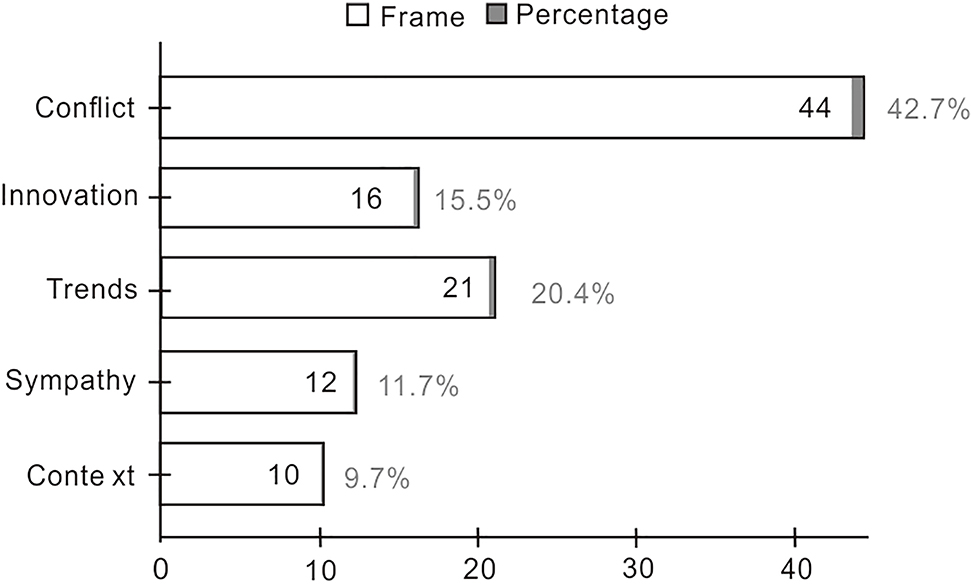
Dominant frames (Western news websites).
The present study investigated how African-based news websites framed the Facebook rebrand into Meta, utilizing a sample of 59 selected stories. The findings indicated that a majority of the stories, amounting to 29 in total, employed the conflict frame, thus accounting for 49.2 % of the selected articles. A much smaller proportion of the articles, specifically seven stories (11.9 %), focused on innovation, while 10 stories (16.9 %) focused on trends. A limited number of articles, five in total (8.5 %), highlighted sympathy towards the rebrand, while eight stories (13.6 %) were dedicated to context. The overall mean percentage of context frames was 11.8 (see Figure 3 below).

Dominant frames (African news websites).
Using a machine learning-based sentiment score allocation to the news reports, the selected Western news websites from five countries (U.S., UK, Russia, France, and Germany), cumulatively had an average tone of reporting at 0.2 (negative), which was two scores away from the extreme negative score of 0.0. African news websites selected from four countries (Nigeria, Kenya, Ghana, and Mali) scored an average tone of 0.5, translating to a neutral tone. Machine learning-based sentiment score allocation is a process that utilizes machine learning algorithms to assign sentiment scores to textual data (Nigam et al., 2018). This process involves several key steps. First, a labeled dataset is collected, consisting of text samples paired with sentiment labels. The text samples are then preprocessed to extract relevant features, such as tokenization and removing stop words, to capture sentiment. A machine learning model is trained using this labeled dataset, enabling it to recognize patterns and associate them with sentiment labels. The model’s performance is evaluated using a separate dataset to ensure its reliability. Finally, the trained and validated model is used to assign sentiment scores to new text data, indicating the level of positivity, negativity, or neutrality expressed (Godsay, 2015; Xiong et al., 2022). Table 2 above shows tone distribution according to the selected news websites.
Sentiment score allocation to news reports by region.
| Region | Countries | Average sentiment score |
|---|---|---|
| Western | USA, UK, Russia, France, Germany | 0.2 (negative) |
| Africa | Nigeria, Kenya, Ghana, Mali | 0.5 (neutral) |
-
The sentiment score ranges from 0.0 (extremely negative) to 1.0 (extremely positive).
6.1 Correlation of Search Interests for the Keywords
The third research question (RQ3) focused on the correlation between search interests in the keywords Facebook, Mark Zuckerberg, and Meta. Descriptive statistics were generated for each variable. The results indicate that the values for Facebook are consistent, with a mean, median, and mode that is close to each other. In contrast, the values for Mark Zuckerberg show higher variability, with a larger standard deviation and kurtosis. The values for Meta show moderate variability, with a larger standard deviation and skewness. Furthermore, the study found that an increase of 10 % in Facebook searches was associated with a 2 % decrease in Mark Zuckerberg searches and a 9 % decrease in Meta searches. An increase of 10 % in Mark Zuckerberg searches was associated with a 7 % increase in Meta searches. The mean values for each keyword were 90.0 for Facebook, 1.1 for Mark Zuckerberg, and 5.0 for Meta. The Pearson Coefficient between Facebook and Mark Zuckerberg searches was significant at 0.27, while Facebook and Meta’s searches had a significance of 0.37. Mark Zuckerberg and Meta searches had the highest significance at 0.47. These results suggest that there is a relationship between the search interests in these keywords. See Table 3 below for more details.
Descriptive statistics on the three keywords.
| Mark Zuckerberg | Meta | ||||
|---|---|---|---|---|---|
| Mean | 90.0104167 | Mean | 1.10416667 | Mean | 5.0625 |
| Standard error | 0.42185233 | Standard error | 0.04049899 | Standard error | 0.17321299 |
| Median | 89 | Median | 1 | Median | 5 |
| Mode | 88 | Mode | 1 | Mode | 5 |
| Standard deviation | 4.13329177 | Standard deviation | 0.39680743 | Standard deviation | 1.69713381 |
| Sample variance | 17.0841009 | Sample variance | 0.15745614 | Sample variance | 2.88026316 |
| Kurtosis | −0.6484028 | Kurtosis | 15.5998554 | Kurtosis | 4.5216708 |
| Skewness | 0.45920166 | Skewness | 3.99472358 | Skewness | 1.32541672 |
| Range | 17 | Range | 2 | Range | 10 |
| Minimum | 83 | Minimum | 1 | Minimum | 2 |
| Maximum | 100 | Maximum | 3 | Maximum | 12 |
| Sum | 8641 | Sum | 106 | Sum | 486 |
| Count | 96 | Count | 96 | Count | 96 |
-
The table presents descriptive statistics for three variables: Facebook, Mark Zuckerberg, and Meta. The variables’ measures include mean, standard error, median, mode, standard deviation, sample variance, kurtosis, skewness, range, minimum, maximum, sum, and count. These measures provide insight into the central tendency, variability, and shape of the distribution of each variable.
7 Discussion
The present study aimed to analyze the search interests and news frames of Western and African-based news websites with regard to the rebranding of Facebook Inc. to Meta. This was achieved through a framing approach that evaluated the framing tones (positive, negative, and neutral) and a correlational and regression analysis of the three keywords (Meta, Facebook, Mark Zuckerberg). The study revealed that the search interest for news related to the Facebook rebranding was high across both Western and African regions. However, the keyword “Facebook” dominated the search interest in both regions, as opposed to “Meta” or “Mark Zuckerberg.” This trend was observed in almost all African countries, with only a few exceptions such as Mali, which showed a higher search interest for the keyword “Meta.” Interestingly, despite the high search interest in Mali, news websites in the country did not cover the Facebook rebranding extensively, indicating a need for more information on the topic. Similarly, the news websites in other analyzed African countries, such as Kenya, Nigeria, and Ghana, provided limited coverage on the topic compared to their Western counterparts.
Moreover, the study found a high search interest diversity in Africa when the three keywords were combined, with some searchers associating their inquiries with “Meta” and “Mark Zuckerberg” in addition to “Facebook.” The search interest reached its peak on the 29th of October, just a day after the announcement of the Facebook rebranding, with “Facebook” being the only keyword that reached a 100 % search interest rate on that day. These findings shed light on the audience’s interest and behavior toward the Facebook rebranding, suggesting the need for more comprehensive news coverage on the topic on African news websites. However, the news coverage regarding the rebranding only dominated for a month after the announcement, indicating a short-lived interest. It is noteworthy that the keyword “Facebook” consistently had higher search interest than “Mark Zuckerberg” and “Meta” during the study period, and this was observed in various U.S. states such as Iowa and California, with Nevada contributing at least 8 % of searches for “Mark Zuckerberg”. This finding underscores the continued dominance of the Facebook name in the keyword searches over its rebranded version, Meta during the period of study. Similarly, some countries that fall within the European region such as Russia (Bassin, 1991; Trenin, 2013), the United Kingdom, France, and Germany, which highly reported the rebranding, showed a higher interest in the keyword “Facebook” than “Meta”. Meanwhile, Africa, which came second after the U.S. in search trends, had significantly lower news coverage about the rebranding, especially in countries where Meta has established offices, such as South Africa and Nigeria. While Nigeria had at least 51 reports that met the selection criteria for this study, the news websites that reported consistently, such as Business Insider Africa, were aligned more with the West than Africa.
The study suggests that homegrown news websites in Africa should capture and provide frequent updates on new developments related to the Meta rebrand, especially since Meta has strategic expansion plans in Africa. This study also highlights the disparity between news coverage in the West and Africa regarding events in Africa, with the former having consistent reporting compared to the latter. It raises the question of the salience of events in Africa to be reported consistently on African news websites, while Western news websites tend to give continuous updates on breaking news about Africa, especially within the frames of conflict, corruption, disease outbreaks, and other sensational events. This finding supports previous research by Ogunyemi (2014) that suggests a skewed portrayal of Africa by Western media. Therefore, this study provides insights into the global interest and news coverage of the Meta rebranding and highlights the need for a more balanced and nuanced portrayal of events in Africa. The present study reveals that the search term “Facebook” dominates in both African and European regions. However, Western news websites have provided more coverage than African news websites. In addition, the results indicate that the generic frames of news coverage remain the same with a focus on privacy concerns and scandals involving the platform and its founder, Mark Zuckerberg. Notably, the study shows a significant positive correlation between search interests on Mark Zuckerberg and Facebook, while the correlation between Facebook and Meta is moderately positive. These findings suggest the need for further investigation into the driving factors behind these search interests and their implications for the global discourse on social media and privacy. To gain a deeper understanding of these issues, future studies should explore the sociopolitical and economic factors that contribute to these search interests and how they affect the public discourse on social media and privacy concerns. Based on the earlier findings presented, this study conducted an analysis of frames using generic frames extracted from all collected news reports, as outlined by Matthes (2009).
The study also found that out of the 107 news stories selected from Western news websites, 44 (42.7 %) were dominated by reports on the conflict surrounding Facebook’s rebranding to Meta. This conflict frame has been a prominent feature in Meta’s previous scandals and was also featured in the most recent scandal, where a whistleblower allegedly uncovered privacy breaches. This finding is consistent with Yioutas and Segvic’s (2003) argument that previous high-profile scandals can influence media framing and agenda setting. The study also found that innovation was the second most used frame, drawn from 16 stories (15.5 %). These stories highlighted the potential of technology that the rebrand into Meta would offer, including new features presented by the metaverse. This finding is consistent with the trend of corporations adopting technology use in their reporting (Zayani, 2021) and journalism presenting a perspective of user-generated news (Xiang, 2019). This relates to the finding that the least used frame in Western news websites was the contextual frame, while the least used in African news websites was the sympathy frame. This suggests a divided front between the West and Africa in terms of framing and newsworthiness. The former focused more on sympathy, while the latter focused more on context. According to the findings, African-based news websites had a more positive sentiment score compared to Western news websites. Ghanaian-based news website, Ghanaian Times, had the highest average sentiment score of 0.6 (positive sentiment), which was close to the neutral tone. This finding is surprising, given that both reports could be seen as negative. Business Insider Africa, a Nigerian-based news website, provided constant coverage and had the highest number of stories within the selected study period, which could signal Nigeria as one of the strategic business locations for Meta in the African continent. Finally, this study’s analysis of frames and sentiment scores highlights the different perspectives and priorities of Western and African news websites when reporting on Meta’s rebranding. These findings can help media analysts and industry experts understand the impact of media framing and sentiment on audience perceptions and attitudes toward Meta’s rebranding. The rebranding of Facebook Inc. to Meta in October 2021 received global attention and sparked a discourse on the future of social media and privacy. This study aimed to evaluate the search interests and news frames of Western and African-based news websites regarding the Meta rebranding.
8 Conclusion
In conclusion, this study analyzed transcultural news frames surrounding Facebook’s rebranding from a postcolonial perspective. By examining search interest using Google trends and comparing the framing approaches of African and Western news websites, it was evident that diverse reporting styles were employed. The findings highlight the persistence of colonial influences in news coverage, evidently, with Western websites displaying biased sympathy and African websites emphasizing conflict-driven narratives. These observations underscore the need for a more balanced portrayal of events in Africa and emphasize the importance of transparency and diversity in the tech industry and media landscape. The study also provides valuable insights into the global interest surrounding the Meta rebranding and sheds light on the complexities of news coverage. It contributes to a deeper understanding of social media discourse and prompts the call for an informed public sphere.
9 Limitations and Future Research
The study has several limitations that should be acknowledged. Firstly, it focused only on English news sources, potentially overlooking diverse cultural perspectives, and limiting the generalizability of the study to non-English-speaking regions. Additionally, relying solely on Google Trends may not fully capture the motivations behind search behavior. Furthermore, the study’s timeframe was limited to the Facebook rebranding, potentially missing evolving news frames. Future research should include multilingual analysis, qualitative approaches, longitudinal investigations, and explore transcultural news frames globally to address these limitations and gain a comprehensive understanding of news coverage and cultural influences.
References
Aarøe, L. (2011). Investigating frame strength: The case of episodic and thematic frames. Political Communication, 28(2), 207–226. https://doi.org/10.1080/10584609.2011.568041 Suche in Google Scholar
Adegbola, O., Skarda-Mitchell, J., & Gearhart, S. (2018). Everything’s negative about Nigeria: A study of US media reporting on Nigeria. Global Media and Communication, 14(1), 47–63. https://doi.org/10.1177/1742766518760086 Suche in Google Scholar
Akhtar, A. (2021). Facebook, Instagram, and WhatsApp experienced a second outage in less than a week. https://www.businessinsider.com/facebook-instagram-whatsapp-apps-down-second-time-in-week-outage-2021-10?r=US&IR=T Suche in Google Scholar
Asseraf, A. (2022). Mass media and the colonial informant: Messaoud Djebari and the French Empire, 1880–1901. Past & Present, 254(1), 161–192. https://doi.org/10.1093/pastj/gtab008 Suche in Google Scholar
Bassin, M. (1991). Russia between Europe and Asia: The ideological construction of geographical space. Slavic Review, 50(1), 1–17. https://doi.org/10.2307/2500595 Suche in Google Scholar
BBC. (2015). Facebook opens its first Africa office in Johannesburg. https://www.bbc.com/news/world-africa-33310739 Suche in Google Scholar
Best, P., Manktelow, R., & Taylor, B. (2014). Online communication, social media and adolescent wellbeing: A systematic narrative review. Children and Youth Services Review, 41, 27–36. https://doi.org/10.1016/j.childyouth.2014.03.001 Suche in Google Scholar
Boukes, M. (2022). Episodic and thematic framing effects on the attribution of responsibility: The effects of personalized and contextualized news on perceptions of individual and political responsibility for causing the economic crisis. The International Journal of Press/Politics, 27(2), 374–395. https://doi.org/10.1177/1940161220985241 Suche in Google Scholar
Brown, D. K., Yoo, J., & Johnson, T. J. (2019). Spreading Ebola panic: Newspaper and social media coverage of the 2014 Ebola health crisis. Health Communication, 34(8), 811–817. https://doi.org/10.1080/10410236.2018.1437524 Suche in Google Scholar
Cervellin, G., Comelli, I., & Lippi, G. (2017). Is Google trends a reliable tool for digital epidemiology? Insights from different clinical settings. Journal of epidemiology and global health, 7(3), 185–189. https://doi.org/10.1016/j.jegh.2017.06.001 Suche in Google Scholar
Chari, T. (2010). Representation or misrepresentation? The New York Times ’s framing of the 1994 Rwanda genocide. African Identities, 8(4), 333–349. https://doi.org/10.1080/14725843.2010.513242 Suche in Google Scholar
Choi, H., & Varian, H. (2012). Predicting the present with Google trends: Predicting the present with google trends. The Economic Record, 88, 2–9. https://doi.org/10.1111/j.1475-4932.2012.00809.x Suche in Google Scholar
Chuan, C.-H., Tsai, W.-H. S., & Cho, S. Y. (2019). Framing artificial intelligence in American newspapers. In Proceedings of the 2019 AAAI/ACM Conference on AI, Ethics, and society (pp. 339–344). Association for Computing Machinery.10.1145/3306618.3314285Suche in Google Scholar
Dionisio, J. D. N., Iii, W. G. B., & Gilbert, R. (2013). 3D Virtual worlds and the metaverse: Current status and future possibilities. ACM Computing Surveys, 45(3), 1–38. https://doi.org/10.1145/2480741.2480751 Suche in Google Scholar
Djerf-Pierre, M., Cokley, J., & Kuchel, L. J. (2016). Framing renewable energy: A comparative study of newspapers in Australia and Sweden. Environmental Communication, 10(5), 634–655. https://doi.org/10.1080/17524032.2015.1056542 Suche in Google Scholar
Duan, H., Li, J., Fan, S., Lin, Z., Wu, X., & Cai, W. (2021). Metaverse for social good: A university campus prototype. In Proceedings of the 29th ACM international Conference on Multimedia (MM’21), October 20–4, 2021, Virtual Event, China, New York, USA: ACM.10.1145/3474085.3479238Suche in Google Scholar
Duffy, C., & Lyngaas, S. (2021). After a bad day, Facebook suffers major outage. https://edition.cnn.com/2021/10/04/tech/facebook-instagram-whatsapp-outage/index.html Suche in Google Scholar
Dunaway, J. (2013). Media ownership and story tone in campaign news. American Politics Research, 41(1), 24–53. https://doi.org/10.1177/1532673X12454564 Suche in Google Scholar
Dwivedi, Y. K., Hughes, L., Baabdullah, A. M., Ribeiro-Navarrete, S., Giannakis, M., Al-Debei, M. M., Dennehy, D., Metri, B., Buhalis, D., Cheung, C. M. K., Conboy, K., Doyle, R., Dubey, R., Dutot, V., Felix, R., Goyal, D. P., Gustafsson, A., Hinsch, C., Jebabli, I., et al.. (2022). Metaverse beyond the hype: Multidisciplinary perspectives on emerging challenges, opportunities, and agenda for research, practice and policy. International Journal of Information Management, 66, 102542. https://doi.org/10.1016/j.ijinfomgt.2022.102542 Suche in Google Scholar
Entman, R. M. (2007). Framing bias: Media in the distribution of power. Journal of Communication, 57(1), 163–173. https://doi.org/10.1111/j.1460-2466.2006.00336.x Suche in Google Scholar
Fulk, J., Schmitz, J., & Steinfield, C. W. (1990). A social influence model of technology use. Organizations and communication technology, 117, 140.10.4135/9781483325385.n6Suche in Google Scholar
Gabore, S. M. (2020). Western and Chinese media representation of Africa in COVID-19 news coverage. Asian Journal of Communication, 30(5), 299–316. https://doi.org/10.1080/01292986.2020.1801781 Suche in Google Scholar
Gamson, W. A., & Modigliani, A. (1989). Media discourse and public opinion on nuclear power: A constructionist approach. American Journal of Sociology, 95(1), 1–37. https://doi.org/10.1086/229213.Suche in Google Scholar
Godsay, M. (2015). The process of sentiment analysis: A study. International Journal of Computer Applications, 126(7), https://doi.org/10.5120/ijca2015906091 Suche in Google Scholar
Goffman, E. (1974). Frame analysis: An Essay on the Organization of experience. Harvard University Press.Suche in Google Scholar
Guzman, A. L., & Jones, S. (2014). Napster and the press: Framing music technology. First Monday.10.5210/fm.v19i10.5545Suche in Google Scholar
Hallin, D., & Mancini, P. (2011). Comparing media systems Beyond the Western world. Cambridge University Press.10.1017/CBO9781139005098Suche in Google Scholar
Hamdy, N., & Gomaa, E. H. (2012). Framing the Egyptian uprising in Arabic language newspapers and social media. Journal of Communication, 62(2), 195–211. https://doi.org/10.1111/j.1460-2466.2012.01637.x Suche in Google Scholar
Harfoushi, O., Hasan, D., & Obiedat, R. (2018). Sentiment analysis algorithms through azure machine learning: Analysis and comparison. Modern Applied Science, 12(7), 49. https://doi.org/10.5539/mas.v12n7p49 Suche in Google Scholar
Jaynes, C., Seales, W. B., Calvert, K., Fei, Z., & Griffioen, J. (2003). The metaverse: A networked collection of inexpensive, self-configuring, immersive environments. In Proceedings of the Workshop on Virtual Environments 2003 - EGVE ’03 (pp. 115–124). Association for Computing Machinery.10.1145/769953.769967Suche in Google Scholar
Johnston, A., Friedman, B., & Sobel, M. (2015). Framing an emerging issue: How US print and broadcast news media covered sex trafficking, 2008–2012. Journal of Human Trafficking, 1(3), 235–254. https://doi.org/10.1080/22041451.2018.1432988.Suche in Google Scholar
Joshua, J. (2017). Information bodies: Computational anxiety in neal Stephenson’s Snow Crash. Interdisciplinary Literary Studies, 19(1), 17–47. https://doi.org/10.5325/intelitestud.19.1.0017 Suche in Google Scholar
Jungherr, A., Posegga, O., & An, J. (2019). Discursive power in contemporary media systems: A comparative framework. The International Journal of Press/Politics, 24(4), 404–425. https://doi.org/10.1177/1940161219841543 Suche in Google Scholar
Kolawole, O. (2020). Facebook is opening its second African office in Lagos, Nigeria. https://techpoint.africa/2020/09/18/facebook-lagos-office/#:∼:text=Global%20tech%20giant%2C%20Facebook%20has,commercial%20and%20tech%20hub%2C%20Lagos Suche in Google Scholar
Kothari, A. (2010). The framing of the Darfur conflict in the New York times: 2003–2006. Journalism Studies, 11(2), 209–224. https://doi.org/10.1080/14616700903481978 Suche in Google Scholar
Kraut-Adler, A. (2018). Sino-Africa relations through the lenses of Western. African and Chinese Media.Suche in Google Scholar
Kunicki, Z. J., Zambrotta, N. S., Tate, M. C., Surrusco, A. R., Risi, M. M., & Harlow, L. L. (2019). Keep your stats in the cloud! Evaluating the use of Google Sheets to teach quantitative methods. Journal of Statistics Education, 27(3), 188–197. https://doi.org/10.1080/10691898.2019.1665485 Suche in Google Scholar
Lee, T. H., & Riffe, D. (2019). Business news framing of corporate social responsibility in the United States and the United Kingdom: Insights from the implicit and explicit CSR framework. Business & Society, 58(4), 683–711. https://doi.org/10.1177/0007650317696314 Suche in Google Scholar
Luther, C. A., & Zhou, X. (2005). Within the boundaries of politics: News framing of sars in China and the United States. Journalism & Mass Communication Quarterly, 82(4), 857–872. https://doi.org/10.1177/107769900508200407 Suche in Google Scholar
MacDonald, E. A., Balanovic, J., Edwards, E. D., Abrahamse, W., Frame, B., Greenaway, A., Kannemeyer, R., Kirk, N., Medvecky, F., Milfont, T. L., Russell, J. C., & Tompkins, D. M. (2020). Public opinion towards gene drive as a pest control approach for biodiversity conservation and the association of underlying worldviews. Environmental Communication, 14(7), 904–918. https://doi.org/10.1080/17524032.2019.1702568 Suche in Google Scholar
Madowo, L. (2019). Is Facebook undermining Democracy in Africa? BBC Africa, 23. https://www.bbc.com/news/world-africa-48349671.Suche in Google Scholar
Majavu, M. (2020). The ‘African gangs’ narrative: Associating Blackness with criminality and other anti-Black racist tropes in Australia. African and Black Diaspora: An International Journal, 13(1), 27–39. https://doi.org/10.1080/17528631.2018.1541958 Suche in Google Scholar
Martin, A. (2021). Facebook outage: What actually caused WhatsApp and Instagram to go down?. https://news.sky.com/story/facebook-outage-what-actually-caused-whatsapp-and-instagram-to-go-down-12426383 Suche in Google Scholar
Maslog, C. C., Lee, S. T., & Kim, H. S. (2006). Framing analysis of a conflict: How newspapers in five Asian countries covered the Iraq war. Asian Journal of Communication, 16(1), 19–39. https://doi.org/10.1080/01292980500118516 Suche in Google Scholar
Matshikiza, J. (2001). Framing Africa-how the Western media maintains ancient prejudices: Global narratives of race. Rhodes Journalism Review, 2001(20), 12–13.Suche in Google Scholar
Matthes, J. (2009). What’s in a frame? A content analysis of media framing studies in the world’s leading communication journals, 1990–2005. Journalism & Mass Communication Quarterly, 86(2), 349–367. https://doi.org/10.1177/107769900908600206 Suche in Google Scholar
Matthes, J., & Kohring, M. (2008). The content analysis of media frames: Toward improving reliability and validity. Journal of Communication, 58(2), 258–279. https://doi.org/10.1111/j.1460-2466.2008.00384.x Suche in Google Scholar
Mavragani, A., Ochoa, G., & Tsagarakis, K. P. (2018). Assessing the methods, tools, and statistical approaches in Google trends research: Systematic review. Journal of Medical Internet Research, 20(11), e270. https://doi.org/10.2196/jmir.9366 Suche in Google Scholar
Mendes, K. (2011). Framing feminism: News coverage of the women’s movement in British and American newspapers, 1968–1982. Social Movement Studies, 10(1), 81–98. https://doi.org/10.1080/14742837.2011.545228 Suche in Google Scholar
Meta. (2017). Journeys of connectivity: How people in sub-Saharan Africa come online. https://www.facebook.com/business/news/insights/journeys-of-connectivity-how-people-in-sub-saharan-africa-come-online.Suche in Google Scholar
Meta. (2020). Opening an office in Lagos, Nigeria. Meta. https://about.fb.com/news/2020/09/opening-an-office-in-lagos-nigeria/.Suche in Google Scholar
Meta. (2021). 5 things that will change how we work in 2022 and beyond. Meta. https://tech.facebook.com/ideas/2021/12/2022-predictions/.Suche in Google Scholar
Molla, T. (2021). Racial moral panic and African youth in Australia. International Journal of Intercultural Relations, 84, 95–106. https://doi.org/10.1016/j.ijintrel.2021.07.005 Suche in Google Scholar
Mulunda, L. (2020). Facebook new Lagos office leaves Kenya With a Frown. https://businesstoday.co.ke/facebook-africa-offices-facebook-opens-new-office-in-lagos/ Suche in Google Scholar
Nigam, S., Das, A. K., & Chandra, R. (2018). Machine learning based approach to sentiment analysis. In 2018 International Conference on advances in computing, communication Control and networking (ICACCCN) (pp. 157–161). IEEE.10.1109/ICACCCN.2018.8748848Suche in Google Scholar
Nordenstreng, K., & Thussu, D. K. (2015). Contextualizing the BRICS media. In K. Nordenstreng & D. K. Thussu (Eds.), Mapping BRICS media. London: Routledge.10.4324/9781315726212Suche in Google Scholar
Norris, S. P., Phillips, L. M., & Korpan, C. A. (2003). University students’ interpretation of media reports of science and its relationship to background knowledge, interest, and reading difficulty. Public Understanding of Science, 12(2), 123–145. https://doi.org/10.1177/09636625030122001 Suche in Google Scholar
Nothias, T. (2018). How Western journalists actually write about Africa: Re-Assessing the myth of representations of Africa. Journalism Studies, 19(8), 1138–1159. https://doi.org/10.1080/1461670X.2016.1262748 Suche in Google Scholar
Nuti, S. V., Wayda, B., Ranasinghe, I., Wang, S., Dreyer, R. P., Chen, S. I., , Murugiah, K. (2014). The use of Google trends in health care research: A systematic review. PLoS One, 9(10), e109583. https://doi.org/10.1371/journal.pone.0109583 Suche in Google Scholar
Ogunyemi, O. (2014). The impact of ethnocentric news values on the framing of Africa: A case study of African diasporic press in the United Kingdom. Ecquid Novi: African Journalism Studies, 35(1), 9–24. https://doi.org/10.1080/02560054.2014.886658 Suche in Google Scholar
Ojala, M., & Pantti, M. (2017). Naturalising the new cold war: The geopolitics of framing the Ukrainian conflict in four European newspapers. Global Media and Communication, 13(1), 41–56. https://doi.org/10.1177/1742766517694472 Suche in Google Scholar
Park, S.-M., & Kim, Y.-G. (2022). A metaverse: Taxonomy, components, applications, and open challenges. IEEE Access, 10, 4209–4251. https://doi.org/10.1109/ACCESS.2021.3140175 Suche in Google Scholar
Penney, K., Norris, S. P., Phillips, L. M., & Clark, G. (2003). The anatomy of junior high school science textbooks: An analysis of textual characteristics and a comparison to media reports of science. Canadian Journal of Science, Mathematics, and Technology Education, 3(4), 415–436. https://doi.org/10.1080/14926150309556580 Suche in Google Scholar
Pidgeon, N. F., Lorenzoni, I., & Poortinga, W. (2008). Climate change or nuclear power—No thanks! A quantitative study of public perceptions and risk framing in Britain. Global Environmental Change, 18(1), 69–85. https://doi.org/10.1016/j.gloenvcha.2007.09.005 Suche in Google Scholar
Pieri, E. (2019). Media framing and the threat of global pandemics: The Ebola crisis in UK media and policy response. Sociological Research Online, 24(1), 73–92. https://doi.org/10.1177/1360780418811966 Suche in Google Scholar
Reese, S. D. (2001). Framing public life: A bridging model for media research. In S. D Reese, O. H Gandyjr, & A. E Grant (Eds.), Framing Public Life: Perspectives on Media and Our Understanding of the Social World (pp. 7–31). Lawrence Erlbaum Associates.10.4324/9781410605689Suche in Google Scholar
Saeed, A. (2007). Media, racism and islamophobia: The representation of islam and muslims in the media: The representation of islam and muslims in the media. Sociology Compass, 1(2), 443–462. https://doi.org/10.1111/j.1751-9020.2007.00039.x Suche in Google Scholar
Scheufele, D. A., & Lewenstein, B. V. (2005). The public and nanotechnology: How citizens make sense of emerging technologies. Journal of Nanoparticle Research, 7(6), 659–667. https://doi.org/10.1007/s11051-005-7526-2 Suche in Google Scholar
Sturgeon, C. M., & Walker, C. (2009). Faculty on Facebook: Confirm or Deny? In 14th annual instructional Technology Conference, March 29th – 31st 2009. Tennessee: Murfreesboro.Suche in Google Scholar
Teer-Tomaselli, R., Tomaselli, K., & Dludla, M. (2019). Peripheral capital goes global: Naspers, globalisation and global media contraflow. Media, Culture & Society, 41(8), 1142–1159. https://doi.org/10.1177/0163443719842072 Suche in Google Scholar
The Indian Express. (2021). Here’s why Facebook, WhatsApp and Instagram went down for hours on Monday. https://indianexpress.com/article/technology/social/heres-why-facebook-whatsapp-and-instagram-went-down-for-hours-2021-7552827/ Suche in Google Scholar
Thussu, D. (2018). A new global communication order for a multipolar world. Communication Research and Practice, 4(1), 52–66.10.1080/22041451.2018.1432988Suche in Google Scholar
Trenin, D. (2013). Russia and the Rise of Asia. Carnegie Endowment for International Peace.Suche in Google Scholar
Vishwanath, A. (2009). From belief-importance to intention: The impact of framing on technology adoption. Communication Monographs, 76(2), 177–206. https://doi.org/10.1080/03637750902828438 Suche in Google Scholar
Wanta, W., & Kalyango, Y. (2007). Terrorism and Africa: A study of agenda building in the United States. International Journal of Public Opinion Research, 19(4), 434–450. https://doi.org/10.1093/ijpor/edm028 Suche in Google Scholar
Weathers, M. R., & Kendall, B. E. (2016). Developments in the framing of climate change as a public health issue in US newspapers. Environmental Communication, 10(5), 593–611. https://doi.org/10.1080/17524032.2015.1050436 Suche in Google Scholar
Wozniak, A., Lück, J., & Wessler, H. (2015). Frames, stories, and images: The advantages of a multimodal approach in comparative media content research on climate change. Environmental Communication, 9(4), 469–490. https://doi.org/10.1080/17524032.2014.981559 Suche in Google Scholar
Xiang, Y. (2019). User-generated news: Netizen journalism in China in the age of short video. Global Media and China, 4(1), 52–71. https://doi.org/10.1177/2059436419836064 Suche in Google Scholar
Xiong, G., Yan, K., & Zhou, X. (2022). A distributed learning based sentiment analysis methods with Web applications. World Wide Web, 25, 1905–1922.https://doi.org/10.1007/s11280-021-00994-0 Suche in Google Scholar
Yioutas, J., & Segvic, I. (2003). Revisiting the clinton/Lewinsky scandal: The convergence of agenda setting and framing. Journalism & Mass Communication Quarterly, 80(3), 567–582. https://doi.org/10.1177/107769900308000306 Suche in Google Scholar
Zayani, M. (2021). Digital journalism, social media platforms, and audience engagement: The case of AJ+. Digital Journalism, 9(1), 24–41. https://doi.org/10.1080/21670811.2020.1816140 Suche in Google Scholar
Zhang, H., Song, Y., Wei, Y., & Liu, J. (2021). Discursive communication strategies for introducing innovative products: The content, cohesion, and coherence of product launch presentations. Journal of Business and Technical Communication, 35(3), 369–400. https://doi.org/10.1177/10506519211001123 Suche in Google Scholar
© 2023 the author(s), published by De Gruyter and FLTRP on behalf of BFSU
This work is licensed under the Creative Commons Attribution 4.0 International License.
Artikel in diesem Heft
- Frontmatter
- Interview
- Roundtable Discussion of Emerging Technology Companies and Transcultural Challenges
- Research Articles
- Regulating Dominant Platforms: Challenges and Opportunities of Content Moderation on Jio Platforms
- A Transcultural Interpretation of Key Concepts in China-US Relations: Hegemony, Democracy, Individualism and Collectivism
- Postcolonial Analysis of Transcultural News Frames: A Case Study of Facebook Rebranding
- Win-Loss-Win in the US–China Game: A Cross-cultural Analysis of a TV Anchor Debate Between Trish Regan and Liu Xin
- I am in the Homeless Home or I Am Always on the Way Home: Formatting Identity and Transcultural Adaptation Through Ethnic and Host Communication
- The Multi-discourse Fight of COVID-19 Vaccine in the World of Digital Platforms: Rethinking Popularity of Anti-intellectualism
- A Virtual Transcultural Understanding Pedagogy: Online Exchanges of Emic Asian Cultural Concepts
Artikel in diesem Heft
- Frontmatter
- Interview
- Roundtable Discussion of Emerging Technology Companies and Transcultural Challenges
- Research Articles
- Regulating Dominant Platforms: Challenges and Opportunities of Content Moderation on Jio Platforms
- A Transcultural Interpretation of Key Concepts in China-US Relations: Hegemony, Democracy, Individualism and Collectivism
- Postcolonial Analysis of Transcultural News Frames: A Case Study of Facebook Rebranding
- Win-Loss-Win in the US–China Game: A Cross-cultural Analysis of a TV Anchor Debate Between Trish Regan and Liu Xin
- I am in the Homeless Home or I Am Always on the Way Home: Formatting Identity and Transcultural Adaptation Through Ethnic and Host Communication
- The Multi-discourse Fight of COVID-19 Vaccine in the World of Digital Platforms: Rethinking Popularity of Anti-intellectualism
- A Virtual Transcultural Understanding Pedagogy: Online Exchanges of Emic Asian Cultural Concepts
