Kleine Fächer Digital
-
Digital Scholarly Editions Beyond Text was awarded with the Offermann-Hergarten-Prize in 2024 for its interdisciplinary approach to modelling theory in the humanities. Tessa Gengnagel’s main research interests are multimedia cultural heritage, multimodality, digital scholarly editing, and the epistemology and philosophy of the digital humanities, rooted in a historical perspective of different traditions, from cybernetics to neostructuralism. ,
,


It has been nearly 10 years since Manfred Thaller wrote his editorial for a special issue about Computer science in humanities, where he mused about the “popularity – we would never use the concept hype” that was “currently attached to the term ‘Digital Humanities’”. He emphasized the “profit from information technology” for the Humanities at large, that could be furthered “if solutions in information technology would exist, which do not do so right now”, some of them “worthy of a computer scientist” [1], p. 61]. This assessment still holds today, independent of the label you attach to the method. So, for this special issue we did not call for submissions out of the ‘Digital Humanities’, the ‘eHumanities’, ‘Computational Humanities’ or just one ‘digital’ discipline (a “Bindestrich-Fach” in German); rather we drew a different line: We asked for case studies about computer use in the humanities but limited this to the so-called ‘small disciplines’ (“Kleine Fächer”). This concept, albeit typical for German-speaking countries and especially Germany, needs a little bit of explanation in an international publication. German universities are traditionally not built around departments but professorships (that form a faculty). Some of these professorships – often those with a long history – specialize in a very niche topic or a special basic skill or group of materials that is important for research and teaching in a broader field. Here you can find for example an academic chair for an old language, a very specified archaeology or for the curation and handling of a special type of writing material with historic script. Historically, these highly specialised fields of study and praxis were regarded as mere ‘helping hands’ (“Hilfswissenschaften”, i.e. ‘auxiliary sciences’), mainly of History, Theology or German Philology, but emancipated themselves often by focusing on innovative methods in direct interaction with and application to their materials and developing their own sets of scientific questions. These ‘small disciplines’ are today only small in the number of designated chairs and total number of enrolled students but ‘big’ in innovation. And they multiplied by adding new and emerging fields of study to the humanities in the last decades – the Portal Kleine Fächer lists 164 disciplines in March 2025.[1] By focusing on international cooperation and the early adoption of digital and computational methods, those related to humanities balance the strength in numbers of other disciplines with a technological agility that is grounded in tradition. This special issue showcases some recent results, giving room for early career researchers as well. The focus on archaeology and classics emerged on its own due to several factors, some beyond the control of the editorial board, and the issue, in its final form, can therefore not claim to be representative of the diversity of subjects across all ‘small disciplines’, as seen in the aforementioned Portal Kleine Fächer. Nonetheless, we hope that this issue demonstrates the levels of specialisation even within broader fields of study and that it may serve as a first attempt to bring those into focus in a shared collection in a digital humanities context.
Starting with Bullenkamp et al., the fruitfulness of the interdisciplinary application of mathematical methods is becoming visible. Starting his work at the Interdisciplinary Center for Scientific Computing in Heidelberg and currently being at the chair for eHumanities in Halle, Jan Philipp Bullenkamp applies his expert knowledge of 3D-Meshes to question-driven modelling of paleolithic artefacts. In Discrete Morse Theory Segmentation on High-Resolution 3D Lithic Artifacts, it is shown how questions concerning the “roots of tool making by anatomically modern humans and coexisting Neanderthals in the Paleolithic” can be solved by using Discrete Morse theory. As a scholar who sees mathematics as a cross-cutting discipline, he also currently applies his methods to cuneiform tablets.
In the second contribution, Signed, sealed, delivered – digital approaches to Byzantine sigillography, researchers from the University of Cologne present their digital work with Byzantine seals. Claes Neuefeind and colleagues from the Cologne Center for eHumanities (CCeH) have a longstanding, ongoing collaboration with the Institute of Classics and, in particular, the Department of Byzantine and Modern Greek Studies, chaired by Claudia Sode. By detailing two projects – one the digital scholarly edition and publication of four major hitherto unpublished collections of seals (DigiByzSeal), the other focused on the consolidation and integration of digital tools and methods into teaching (DiBS) – Neuefeind et al. describe the state of the art in the field with a range covering Reflectance Transformation Imaging (RTI) as well as the encoding standard SigiDoc and how the authors are engaged in developing and establishing it further. They discuss infrastructure, workflows, dissemination, sustainability, and close with the argument that digital approaches are especially well-suited for small disciplines since they improve accessibility of materials, sharing research outcomes, training new generations, and creating synergies, all while reflecting on the challenges to achieving these goals.
3D Modelling – in this case using 3D acquisition technology – is not only a method applicable to very old and comparably small-sized classes of artefacts, but very useful for recent and very big edifices, too, as shown in our third contribution by Ersek et al. She started her work at the Department of History at the Karlsruhe Institute for Technology KIT and finished it at the Historische Museen Reutlingen. Monuments of Industry are also part of our cultural heritage, and so machinery, factory buildings or infrastructure have to be preserved, too. In Matschoss 2.0. Virtual machine collections as the missing link between museums and historic monuments – in reference to prominent historian of technology Conrad Matschoß – a case is made “why digital collections should be established (1), how the digital models should be produced (2) and how the virtual models could be used by historians of technology as well as trainers of machine builders (3).” The given example is the digitization of the Lower Waterworks of Schloss Schwetzingen near Heidelberg, following the necessary steps using different technologies and methods.
In our fourth contribution, Daniel M. Stelzer from the University of Illinois at Urbana-Champaign applies his ongoing research in computational analysis of ancient languages to Hittite cuneiform. A Recursive Encoding for Cuneiform Signs describes a method for “the process of identifying unknown signs, which often involves a tedious page-by-page search through a sign list” based on using a unique coding for cuneiform signs following Norman Gottstein. A preliminary version of this paper was published in the Cuneiform Digital Library Journal, a significantly extended and revised version is presented here.
Sarah M. Klasse, a very early career researcher from Egyptology, tackles the important problem of transferring computational methods that use strong logical modelling for operational inference to cases with little data in our fifth contribution. This paper is a shot at computation for small worlds and very restricted case studies. Klasse and the mathematician Weber apply “mathematical logical data analysis to Egyptology, particularly examining food production”, with the aim of predicting the distribution of tools in yet not excavated arrears of the ancient village site. When you read A Case Study of the Use of Logical Data Analysis in the Workmen’s Village in Tell el-Amarna, Egypt, please have its experimental character in mind, but there is a strong case that this is not ‘shooting with cannons on sparrows’.
Finally, Sophie C. Schmidt and Sebastian Hageneuer from the Universities of Berlin (FU) and Cologne, respectively, share an overview of the field Digital and Computational Archaeology in Germany. They contextualise DCA and its history in the German tradition, where it may also be referred to as “Archäoinformatik” or “Digitale Archäologie”. By looking at it empirically – at the numbers and specialisations of chairs, courses, and curricula that may fall under this umbrella – they provide an in-depth analysis of the state of the field and lay the foundation for sketching pathways for practitioners and professionals, as the discipline continues to develop and evolve. One of the conclusions of the survey is the observation that DCA, traditionally seen as an ‘auxiliary science’, has emerged as a discipline in its own right that requires its own funding, teaching, and cooperation with others in the overarching field of archaeology, in order for all ‘small disciplines’ of the field to grow more robust in the future.
To close with, this issue also signals the end of the general editorship of Hubert Mara due to him changing faculties from natural science to the humanities. With a special issue on Digital Archaeology – then still guest editor – and a double issue with the proceedings of the first DANES Conference (Digital Ancient Near Eastern Studies network), there was solid groundwork we could build on thinking about the issue at hand. He wrote in 2022 about digital archaeology – the “Bindestrich-Wissenschaft” he identifies with – that there is a more subtle change in the curriculum and less hype concerning digital methods there than in the digital humanities [2], p. 193]. He proposes a worthwhile explanation for this difference as being rooted in disciplinary character: In archaeology, he sees “organic growth” instead of planned or persuaded change, maybe as an evolution of ‘slow science’ instead of the disruption of ‘scientific culture clash’. The digital revolution – seen this way – is a slow one, taken step by step. In his discipline, specialised subfields were and are forming, each with their own academic standards, questions, tools, organisation, and infrastructure – may they be named “Archäoinformatik”, computational or digital archaeology. In his words, these subfields “have been rather coined than defined”, and that is the key to success.
It is this adaptability and penchant for evolution that may protect these fields – with their long histories and longer perspectives – from the disruption by ‘AI’ discourses, which surely have a role to play in years to come. At the same time, digital disciplines have already established an expertise that they can contribute to the conversations surrounding technological, societal, ecological, and political change. The humanities – and all disciplines concerned with cultural heritage – especially will be tasked with preserving and communicating human history and past. As fields that critically engage in issues of data modelling, and testing the limits of our knowledge with evermore specialised and heterogenous objects of study, they can showcase both the potential and the pitfalls of our digital futures. As digitality is based on data they are more often than not case studies for a kind of method dispute (“Methodenstreit”) between qualitative research that aims to understand and quantitative methods of analysis that focus on correlations [3], p. 84]. The ‘small disciplines’ draw our attention to the complexities of materials and objectives, as well as interactions beyond academia. In this, the relationship with libraries, archives, and museums [4] is one pivotal axis of epistemic empowerment. This is important since digital methods of every kind – organically evolved or carefully coined, democratizing or hierarchizing – will be crucial for most, if not all research agendas to come.
About the authors
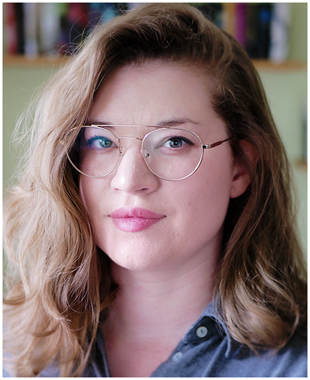
Dr. Tessa Gengnagel is a managing director and research coordinator at the Cologne Center for eHumanities (CCeH), University of Cologne, which also functions as the central coordination office for the Digital Humanities at the North Rhine-Westphalian Academy of Sciences, Humanities and the Arts. After studying History and Medieval Latin Philology in Freiburg between 2009 and 2012, she completed her Master’s degree in Cologne and Graz in European Multimedia Arts & Cultural Heritage Studies in 2015 and her doctorate in (Historical and Cultural) Information Processing under the supervision of Prof. Manfred Thaller in 2021. Her dissertation on Digital Scholarly Editions Beyond Text was awarded with the Offermann-Hergarten-Prize in 2024 for its interdisciplinary approach to modelling theory in the humanities. Tessa Gengnagel’s main research interests are multimedia cultural heritage, multimodality, digital scholarly editing, and the epistemology and philosophy of the digital humanities, rooted in a historical perspective of different traditions, from cybernetics to neostructuralism.
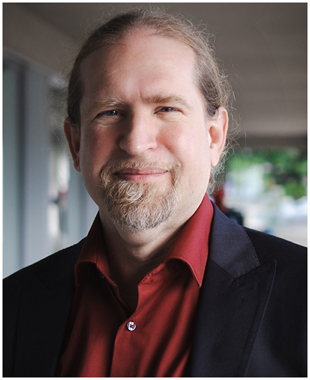
Prof. Dr. Hubert Mara studied Computer Science at the Vienna University of Technology followed by a Marie-Curie fellowship in the Cultural Heritage Informatics Research Oriented Network (CHIRON) at the University of Florence in 2007 and 2008. In 2009 he joined the Interdisciplinary Center for Scientific Computing (IWR) at Heidelberg University where he finished his PhD thesis in 2012. In 2014 he founded the Forensic Computational Geometry Laboratory (FCGL) at IWR funded by the DFG’s German Universities Excellence Initiative. In 2020 and 2021 he was the administrative director of the Mainz Centre for Digitality in the Humanities and Cultural Studies (mainzed). He was a junior professor for eHumanities at the Institute for Computer Science at Martin Luther University Halle-Wittenberg from 2021 to 2024. He is now Professor for Archaeoinformatics and founding member of the Institute of Computational Ancient Studies (CompAS) at Freie Universität Berlin. Since 2016 Hubert Mara has been a member of the board of advisers for the German chapter of the Computer Applications and Quantitative Methods in Archaeology (CAA) association. His interests lie in 3D computer vision and machine learning for cultural heritage. His work is often focused on text-bearing and decorated archaeological findings. Parts of his work on analyzing high resolution 3D-measurement data are available in the Free and Open Source GigaMesh Software Framework.
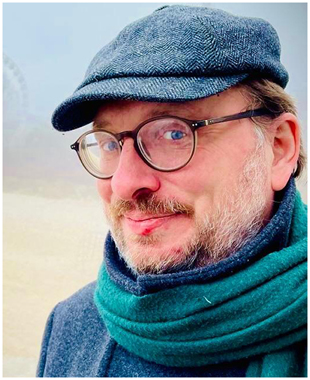
Dr. Christian Schröter, geb. Vater graduated in Philosophy and German Philology at Kassel with a thesis about the Philosophy of Artificial Intelligence in 2011. After nearly three years in the AI startups, he became member of the CRC 933 “Material Text Cultures” at Heidelberg from 2014 to 2019, researching digital transformation of media and science communication. His dissertation about Alan Turing and his machines was submitted at the Chair for Philosophy and History of Science at Heidelberg. In 2020 he held a full researcher position at the Chair for the History of Technological-Scientific Civilisation at KIT in Karlsruhe, doing research on early history of AI in Germany focussing on Karl Steinbuch with an excellency grant (HEiKA). Since 2021 he is senior researcher at the Digital Academy of the Academy of Science and Literature | Mainz and Coordination Lead of the national consortium for scientific data infrastructure for material and immaterial culture (NFDI4Culture). He is member of the DFG funded research network “Philosophy of Digitality” and of mainzed, participating actively in the German Society for Philosophy (DGPhil) and the German Association of Digital Humanities (DHd). As a historian and philosopher of science, his main interests lie in digitality, artificial intelligence and the long history of writing and calculation considering the practices and artefacts involved. He is an active Wikipedian and – still – listens to the Grateful Dead.
References
[1] M. Thaller, “Computer science in humanities. Editorial,” IT – Inf. Technol., vol. 58, no. 2, pp. 61–62, 2016. https://doi.org/10.1515/itit-2016-0004.Search in Google Scholar
[2] H. Mara, “Digital archaeology editorial,” IT – Inf. Technol., vol. 64, no. 6, pp. 193–194, 2022. https://doi.org/10.1515/itit-2022-0061.Search in Google Scholar
[3] S. Krämer, Digitale Geisteswissenschaften. Digitalität von A bis Z, F. Arnold, J. C. Bernhard, and D. M. Feige, Eds., Bielefeld, Christian Schröter, 2024, pp. 80–91.10.1515/9783839467657-009Search in Google Scholar
[4] M. Hilgert, “Es ist höchste Zeit. Der Schutz von Kultur im Krisenfall und vor Katastrophen,” Städtetag Aktuell, vol. 2025, no. 2, pp. 8–9, 2025.Search in Google Scholar
© 2025 the author(s), published by De Gruyter, Berlin/Boston
This work is licensed under the Creative Commons Attribution 4.0 International License.
Articles in the same Issue
- Frontmatter
- Editorial
- Kleine Fächer Digital
- Research Articles
- Discrete Morse theory segmentation on high-resolution 3D lithic artifacts
- Signed, sealed, delivered – digital approaches to Byzantine sigillography
- Matschoss 2.0 - Virtual machine collections as the missing link between museums and historic monuments
- A recursive encoding for cuneiform signs
- A case study of the use of logical data analysis in the Workmen’s Village in Tell el-Amarna, Egypt
- Digital and computational archaeology in Germany
Articles in the same Issue
- Frontmatter
- Editorial
- Kleine Fächer Digital
- Research Articles
- Discrete Morse theory segmentation on high-resolution 3D lithic artifacts
- Signed, sealed, delivered – digital approaches to Byzantine sigillography
- Matschoss 2.0 - Virtual machine collections as the missing link between museums and historic monuments
- A recursive encoding for cuneiform signs
- A case study of the use of logical data analysis in the Workmen’s Village in Tell el-Amarna, Egypt
- Digital and computational archaeology in Germany
