Biomimetic nanostructures for the silicone-biosystem interface: tuning oxygen-plasma treatments of polydimethylsiloxane
-
Bekim Osmani
Bekim Osmani is a PhD student at the Biomaterials Science Center at the University of Basel. He did his BSc in Mechanical Engineering and his MSc in Biomedical Engineering and Robotics at the Swiss Federal Institute of Technology in Zurich (ETHZ) in 2002. After several years of experience in academia and industry, he is currently working toward his PhD degree in nanosciences. His research interests include molecular beam deposition and electrospraying of nanometer thin elastomer films, atomic force microscopy, nanoindentation techniques and mechanical properties of nanometer thin film, polymeric implants and biomedical applications for low-voltage dielectric elastomer actuators.
 ,
Gabriela Gerganova
,
Gabriela Gerganova
Gabriela Gerganova, 22 years old, is an integrated master’s student of pharmacology at University of Glasgow. She performs her placement year at the Biomaterials Science Centre under the direction of Prof. Bert Müller. Her research focus is on the formulation, characterization and safety of liposome-based nanocontainers for targeted drug delivery. During her internship, she has expanded her practical skills in biomedical engineering with the help of on-site laboratory facilities.
Bert Müller received a diploma in mechanical engineering, Berlin 1982, followed by MSc degrees in Physics and English both from the Dresden University of Technology in 1989. In 1994, he obtained a PhD in experimental physics from the University of Hannover, Germany. For his achievements, he was granted with the Morton M. Traum Award of the American Vacuum Society in 1994. From 1994 to 2001, he worked as a researcher at the Paderborn University, Germany, as Feodor Lynen Fellow and research associate at the EPF Lausanne, Switzerland and as team leader at the Physics Department, Materials Department and Department of Information Technology and Electrical Engineering at ETH Zurich, Switzerland. He became a faculty member of the Physics Department at ETH Zurich in April 2001. After his election as Thomas Straumann-Chair for Materials Science in Medicine at the University of Basel, Switzerland and his appointment at the Surgery Department of the University Hospital Basel in September 2006, he founded the Biomaterials Science Center in March 2007. Currently, this center hosts more than 20 researchers dealing with nanotechnology-based artificial muscles for incontinence treatment, smart nanocontainers to treat cardiovascular diseases, high-resolution X-ray imaging to visualize the human body down to the molecular level, computational sciences of tissues in health and disease and other applications of nanosciences in medicine. The mission of the research team can be summarized by using physical principles for human health. Professor Müller teaches physics and materials science at the ETH Zurich and the University of Basel and currently supervises doctoral students from medicine, dentistry, physics, nanosciences and biomedical engineering. He was elected as Fellow of SPIE in 2014 and as an active member of the European Academy of Sciences and Arts in 2015.

Abstract
Polydimethylsiloxanes (PDMS) have drawn attention because of their applicability in medical implants, soft robotics and microfluidic devices. This article examines the formation of dedicated nanostructures on liquid submicrometer PDMS films when exposed to oxygen-plasma treatment. We show that by using a vinyl-terminated PDMS prepolymer with a molecular weight of 800 g/mol, one can bypass the need of solvent, copolymer, or catalyst to fabricate wrinkled films. The amplitude and periodicity of the wrinkles is tuned varying the thickness of the PDMS film between 150 and 600 nm. The duration of the plasma treatment and the oxygen pressure determine the surface morphology. The amplitude was found between 30 and 300 nm with periodicities ranging from 500 to 2800 nm. Atomic force microscopy was used to measure film thickness, amplitude and wrinkle periodicity. The hydrophobic recovery of the nanostructured PDMS surface, as assessed by dynamic contact angle measurements, scales with nanostructure’s fineness, associated with an improved biocompatibility. The mechanical properties were extracted out of 10,000 nanoindentations on 50×50-μm2 spots. The mechanical mapping with sub-micrometer resolution reveals elastic properties according to the film morphology. Finally, we tailored the mechanical properties of a 590±120-nm-thin silicone film to the elastic modulus of several MPa, as required for dielectric elastomer actuators, to be used as artificial muscles for incontinence treatments.
About the authors
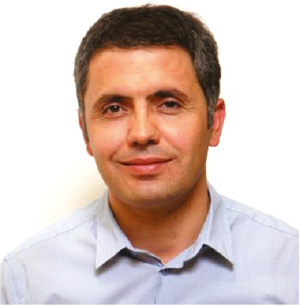
Bekim Osmani is a PhD student at the Biomaterials Science Center at the University of Basel. He did his BSc in Mechanical Engineering and his MSc in Biomedical Engineering and Robotics at the Swiss Federal Institute of Technology in Zurich (ETHZ) in 2002. After several years of experience in academia and industry, he is currently working toward his PhD degree in nanosciences. His research interests include molecular beam deposition and electrospraying of nanometer thin elastomer films, atomic force microscopy, nanoindentation techniques and mechanical properties of nanometer thin film, polymeric implants and biomedical applications for low-voltage dielectric elastomer actuators.

Gabriela Gerganova, 22 years old, is an integrated master’s student of pharmacology at University of Glasgow. She performs her placement year at the Biomaterials Science Centre under the direction of Prof. Bert Müller. Her research focus is on the formulation, characterization and safety of liposome-based nanocontainers for targeted drug delivery. During her internship, she has expanded her practical skills in biomedical engineering with the help of on-site laboratory facilities.

Bert Müller received a diploma in mechanical engineering, Berlin 1982, followed by MSc degrees in Physics and English both from the Dresden University of Technology in 1989. In 1994, he obtained a PhD in experimental physics from the University of Hannover, Germany. For his achievements, he was granted with the Morton M. Traum Award of the American Vacuum Society in 1994. From 1994 to 2001, he worked as a researcher at the Paderborn University, Germany, as Feodor Lynen Fellow and research associate at the EPF Lausanne, Switzerland and as team leader at the Physics Department, Materials Department and Department of Information Technology and Electrical Engineering at ETH Zurich, Switzerland. He became a faculty member of the Physics Department at ETH Zurich in April 2001. After his election as Thomas Straumann-Chair for Materials Science in Medicine at the University of Basel, Switzerland and his appointment at the Surgery Department of the University Hospital Basel in September 2006, he founded the Biomaterials Science Center in March 2007. Currently, this center hosts more than 20 researchers dealing with nanotechnology-based artificial muscles for incontinence treatment, smart nanocontainers to treat cardiovascular diseases, high-resolution X-ray imaging to visualize the human body down to the molecular level, computational sciences of tissues in health and disease and other applications of nanosciences in medicine. The mission of the research team can be summarized by using physical principles for human health. Professor Müller teaches physics and materials science at the ETH Zurich and the University of Basel and currently supervises doctoral students from medicine, dentistry, physics, nanosciences and biomedical engineering. He was elected as Fellow of SPIE in 2014 and as an active member of the European Academy of Sciences and Arts in 2015.
Acknowledgments
The financial support of the nano-tera.ch initiative (grant/award no. “SmartSphincter RTD2013”), project SmartSphincter, as well as the Swiss Nanoscience Institute (SNI) for the financial contribution to the AFM is gratefully acknowledged. The authors also thank Dr. Thomas Pfohl and Dr. Tino Töpper for the discussion of the results presented.
Conflict of interest statement: Authors state no conflict of interest. All authors have read the journal’s publication ethics and publication malpractice statement available at the journal’s website and hereby confirm that they comply with all its parts applicable to the present scientific work.
References
1. Poulin A, Rosset S, Shea HR. Printing low-voltage dielectric elastomer actuators. Appl Phys Lett 2015;107:244104.10.1063/1.4937735Suche in Google Scholar
2. Hinton TJ, Hudson A, Pusch K, Lee A, Feinberg AW. 3D printing PDMS elastomer in a hydrophilic support bath via freeform reversible embedding. ACS Biomater Sci Eng 2016;2:1781–6.10.1021/acsbiomaterials.6b00170Suche in Google Scholar PubMed PubMed Central
3. Rosset S, Shea HR. Small, fast, and tough: Shrinking down integrated elastomer transducers. Appl Phys Rev 2016;3:031105.10.1063/1.4963164Suche in Google Scholar
4. Weiss FM, Madsen FB, Töpper T, Osmani B, Leung V, Müller B. Molecular beam deposition of high-permittivity polydimethylsiloxane for nanometer-thin elastomer films in dielectric actuators. Mater Des 2016;105:106–13.10.1016/j.matdes.2016.05.049Suche in Google Scholar
5. Weiss FM, Töpper T, Osmani B, Deyhle H, Kovacs G, Müller B. Thin film formation and morphology of electrosprayed polydimethylsiloxane. Langmuir 2016;32:3276–83.10.1021/acs.langmuir.6b00476Suche in Google Scholar PubMed
6. Weiss FM, Töpper T, Osmani B, Peters S, Kovacs G, Müller B. Electrospraying nanometer‐thin elastomer films for low‐voltage dielectric actuators. Adv Electron Mater 2016;2:1500476.10.1002/aelm.201500476Suche in Google Scholar
7. Sia SK, Whitesides GM. Microfluidic devices fabricated in poly(dimethylsiloxane) for biological studies. Electrophoresis 2003;24:3563–76.10.1002/elps.200305584Suche in Google Scholar PubMed
8. Lee JN, Jiang X, Ryan D, Whitesides GM. Compatibility of mammalian cells on surfaces of poly(dimethylsiloxane). Langmuir 2004;20:11684–91.10.1021/la048562+Suche in Google Scholar PubMed
9. O’Halloran A, O’Malley F, McHugh P. A review on dielectric elastomer actuators, technology, applications, and challenges. J Appl Phys 2008;104:071101.10.1063/1.2981642Suche in Google Scholar
10. Brochu P, Pei Q. Advances in dielectric elastomers for actuators and artificial muscles. Macromol Rapid Commun 2010;31:10–36.10.1002/marc.200900425Suche in Google Scholar PubMed
11. Shepherd RF, Ilievski F, Choi W, Morin SA, Stokes AA, Mazzeo AD, et al. Multigait soft robot. Proc Natl Acad Sci USA 2011;108:20400–3.10.1073/pnas.1116564108Suche in Google Scholar
12. Anderson IA, Gisby TA, McKay TG, O’Brien BM, Calius EP. Multi-functional dielectric elastomer artificial muscles for soft and smart machines. J Appl Phys 2012;112:041101.10.1063/1.4740023Suche in Google Scholar
13. Osmani B, Töpper T, Deschenaux C, Nohava J, Weiss FM, Leung V, et al. Micro- and nanostructured electro-active polymer actuators as smart muscles for incontinence treatment. AIP Conf Proc 2015;1646:91–100.10.1063/1.4908588Suche in Google Scholar
14. Fattorini E, Brusa T, Gingert C, Hieber S, Leung V, Osmani B, et al. Artificial muscle devices: innovations and prospects for fecal incontinence treatment. Ann Biomed Eng 2016;44:1–15.10.1007/s10439-016-1572-zSuche in Google Scholar
15. Hillborg H, Ankner JF, Gedde UW, Smith GD, Yasuda HK, Wikström K. Crosslinked polydimethylsiloxane exposed to oxygen plasma studied by neutron reflectometry and other surface specific techniques. Polymer 2000;41:6851–63.10.1016/S0032-3861(00)00039-2Suche in Google Scholar
16. Efimenko K, Wallace WE, Genzer J. Surface modification of sylgard-184 poly(dimethyl siloxane) networks by ultraviolet and ultraviolet/ozone treatment. J Colloid Interface Sci 2002;254:306–15.10.1006/jcis.2002.8594Suche in Google Scholar PubMed
17. Lawton A, Price CR, Runge AF, Doherty WJ, Saavedra SS. Air plasma treatment of submicron thick PDMS polymer films: effect of oxidation time and storage conditions. Colloids Surf A 2005;253:213–5.10.1016/j.colsurfa.2004.11.010Suche in Google Scholar
18. Bodas D, Khan-Malek C. Hydrophilization and hydrophobic recovery of PDMS by oxygen plasma and chemical treatment – an SEM investigation. Sens Actuators B 2007;123:368–73.10.1016/j.snb.2006.08.037Suche in Google Scholar
19. Béfahy S, Lipnik P, Pardoen T, Nascimento C, Patris B, Bertrand P, et al. Thickness and elastic modulus of plasma treated PDMS silica-like surface layer. Langmuir 2010;26:3372–5.10.1021/la903154ySuche in Google Scholar PubMed
20. Bowden N, Brittain S, Evans AG, Hutchinson JW, Whitesides GM. Spontaneous formation of ordered structures in thin films of metals supported on an elastomeric polymer. Nature 1998;393:146–9.10.1038/30193Suche in Google Scholar
21. Bowden N, Huck WT, Paul KE, Whitesides GM. The controlled formation of ordered, sinusoidal structures by plasma oxidation of an elastomeric polymer. Appl Phys Lett 1999;75:2557–9.10.1063/1.125076Suche in Google Scholar
22. Chua DB, Ng HT, Li SF. Spontaneous formation of complex and ordered structures on oxygen-plasma-treated elastomeric polydimethylsiloxane. Appl Phys Lett 2000;76:721–3.10.1063/1.125873Suche in Google Scholar
23. Tserepi A, Gogolides E, Tsougeni K, Constantoudis V, Valamontes ES. Tailoring the surface topography and wetting properties of oxygen-plasma treated polydimethylsiloxane. J Appl Phys 2005;98:113502.10.1063/1.2136421Suche in Google Scholar
24. Evensen HT, Jiang H, Gotrik KW, Denes F, Carpick RW. Transformations in wrinkle patterns: cooperation between nanoscale cross-linked surface layers and the submicrometer bulk in wafer-spun, plasma-treated polydimethylsiloxane. Nano Lett 2009;9:2884–90.10.1021/nl901136uSuche in Google Scholar
25. Müller B. Natural formation of nanostructures: from fundamentals in metal heteroepitaxy to applications in optics and biomaterials science. Surf Rev Lett 2001;08:169–228.10.1142/S0218625X01000859Suche in Google Scholar
26. Müller B, Riedel M, Michel R, De Paul SM, Hofer R, Heger D, et al. Impact of nanometer-scale roughness on contact-angle hysteresis and globulin adsorption. J Vac Sci Technol B 2001;19:1715–20.10.1116/1.1392402Suche in Google Scholar
27. Riedel M, Müller B, Wintermantel E. Protein adsorption and monocyte activation on germanium nanopyramids. Biomaterials 2001;22:2307–16.10.1016/S0142-9612(01)00011-4Suche in Google Scholar
28. Dalby MJ, Gadegaard N, Tare R, Andar A, Riehle MO, Herzyk P, et al. The control of human mesenchymal cell differentiation using nanoscale symmetry and disorder. Nat Mater 2007;6:997–1003.10.1038/nmat2013Suche in Google Scholar PubMed
29. Kolind K, Leong KW, Besenbacher F, Foss M. Guidance of stem cell fate on 2D patterned surfaces. Biomaterials 2012;33:6626–33.10.1016/j.biomaterials.2012.05.070Suche in Google Scholar PubMed
30. Waser-Althaus J, Padeste C, Köser J, Pieles U, Peters K, Müller B. Nanostructuring polyetheretherketone for medical implants. Eur J Nanomed 2012;4:7–15.Suche in Google Scholar
31. Waser-Althaus J, Salamon A, Waser M, Padeste C, Kreutzer M, Pieles U, et al. Differentiation of human mesenchymal stem cells on plasma-treated polyetheretherketone. J Mater Sci Mater Med 2014;25:515–25.10.1007/s10856-013-5072-5Suche in Google Scholar PubMed
32. Engler AJ, Sen S, Sweeney HL, Discher DE. Matrix elasticity directs stem cell lineage specification. Cell 2006;126:677–89.10.1016/j.cell.2006.06.044Suche in Google Scholar PubMed
33. Töpper T, Weiss FM, Osmani B, Bippes C, Leung V, Müller B. Siloxane-based thin films for biomimetic low-voltage dielectric actuators. Sens Actuators A 2015;233:32–41.10.1016/j.sna.2015.06.014Suche in Google Scholar
34. John ES, James WM, Paul M. Calibration of rectangular atomic force microscope cantilevers. Rev Sci Instrum 1999;70:3967–9.10.1063/1.1150021Suche in Google Scholar
35. Vasilets VN, Kovalchuk AV, Ponomarev AN. Photooxidation of siloxane polymers under vacuum ultraviolet irradiation. J Photopolym Sci Technol 1994;7:165–74.10.2494/photopolymer.7.165Suche in Google Scholar
36. Schweikart A, Fery A. Controlled wrinkling as a novel method for the fabrication of patterned surfaces. Microchim Acta 2009;165:249–63.10.1007/12_2009_22Suche in Google Scholar
37. Müller B, Deyhle H, Mushkolaj S, Wieland M. The challenges in artificial muscle research to treat incontinence. Swiss Med. Wkly 2009;139:591–5.Suche in Google Scholar
©2017 Walter de Gruyter GmbH, Berlin/Boston
Artikel in diesem Heft
- Frontmatter
- In this issue
- News
- CLINAM summit May 7–10, 2017
- Review
- Multifunctional graphene oxide for bioimaging: emphasis on biological research
- Mini Review
- The role of thromboxane A2 in complement activation-related pseudoallergy
- Original Articles
- Biomimetic nanostructures for the silicone-biosystem interface: tuning oxygen-plasma treatments of polydimethylsiloxane
- A physiologically based pharmacokinetic model to predict the superparamagnetic iron oxide nanoparticles (SPIONs) accumulation in vivo
Artikel in diesem Heft
- Frontmatter
- In this issue
- News
- CLINAM summit May 7–10, 2017
- Review
- Multifunctional graphene oxide for bioimaging: emphasis on biological research
- Mini Review
- The role of thromboxane A2 in complement activation-related pseudoallergy
- Original Articles
- Biomimetic nanostructures for the silicone-biosystem interface: tuning oxygen-plasma treatments of polydimethylsiloxane
- A physiologically based pharmacokinetic model to predict the superparamagnetic iron oxide nanoparticles (SPIONs) accumulation in vivo
