Photobiology
-

The 16th International Congress of Photobiology was held 8-12 September 2014 in the “Argentina Pavillion” located within the National University of Córdoba, Argentina. This conference was the 16th in a series sponsored by the International Union of Photobiology (IUPB, www.iuphotobiology.com). This was the first time that the IUPB Congress was held in the Southern Hemisphere and also the first time held south of the Rio Grande. The University of Córdoba is the oldest in Argentina (founded 401 years ago) and the City of Córdoba offered a wonderful setting (and great weather) for the Congress.
The International Organizing Committee (www.photobiology2014.com.ar) addressed nearly all areas of photobiology and were from many countries. All areas of the interaction of light with the biosphere were covered, sincluding photosynthesis, photomorphogenesis, photomovement of plants and bacteria, the interaction of UV light with ecosystems (including bacteria, phytoplankton, zooplankton, algae, plants, mammalian cells, and humans), circadian rhythms in plants and animals, vision and light-induced damage to the retina, UV induction of skin cancer, as well as the use of light for the treatment of various illnesses and the photochemistry of xenobiotics and biological molecules. The use of light-based technologies for the study of biological processes was also the subject of various symposia.
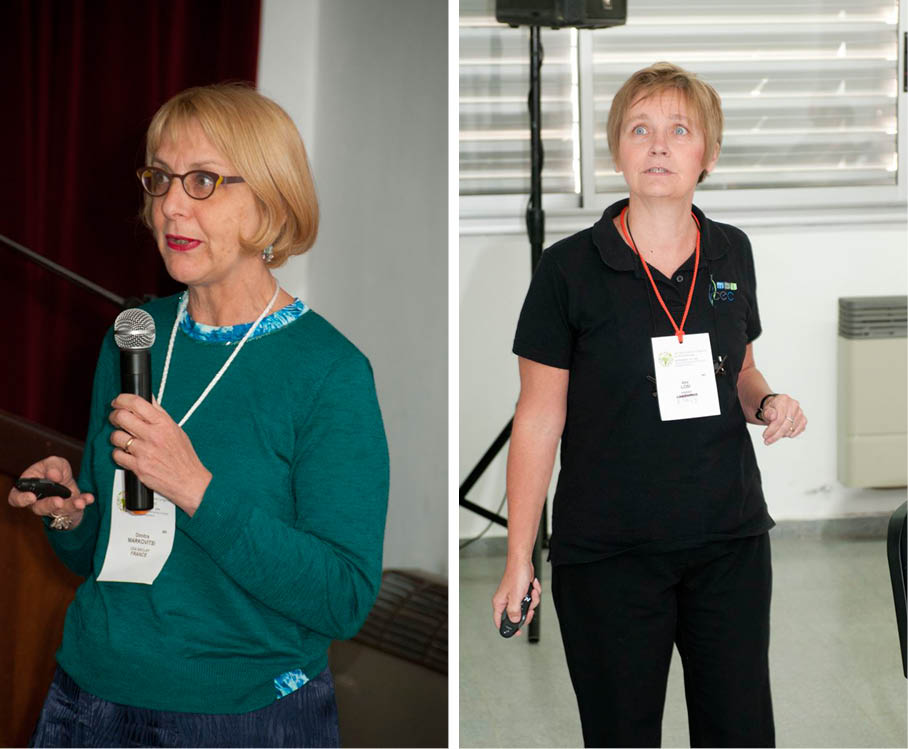
IUPAC-supported lecturers Dimitra Markovitsi (Left) and Aba Losi (Right)
The Congress registered 507 participants from 38 Countries. 160 participants were from Argentina, 44 from Brazil, 17 from Chile, 60 from the USA, 50 from Germany, and 20 from Japan. 280 of the registered participants were young fellows (graduate students and young researchers). The Scientific Programme (www.photobiology2014.com.ar/programme) included three plenary lectures: Nathan Nelson (Israel) on the “Evolution of the Photosynthetic Apparatus”, Thomas Schwarz (Germany) on “Photoimmunology”, and Ernst Bamberg (Germany) on “Channel Rhodopsins and Optogenetics”. Nine keynote speakers highlighted the frontiers of research in various areas: Carlos Ballaré (Argentina), Rosalie Crouch (USA), Anderson Garbuglio (Brazil), Mario Guido (Brazil), Hideki Kandori (Japan), Alberto Kornblihtt (Argentina), Dimitra Markovitsi (France), Frank Vollmer (Germany), Horacio Zagarese (Argentina), while 51 Symposia (each comprising 130 minutes and between 4 and 6 participants) were organized by one or two contributors to the symposium. There were also two marvelous special (historical) lectures: Winslow Briggs (USA) on his “Scientific and Life Experience”, and Phil Hanawalt (USA) on the “History of Research on the DNA Repair Mechanism”. A symposium on photomovement was held in memoriam of Masamitsu Watanabe (deceased in 2013), who played a major role in the discovery of photoreceptors implied in photomovement.
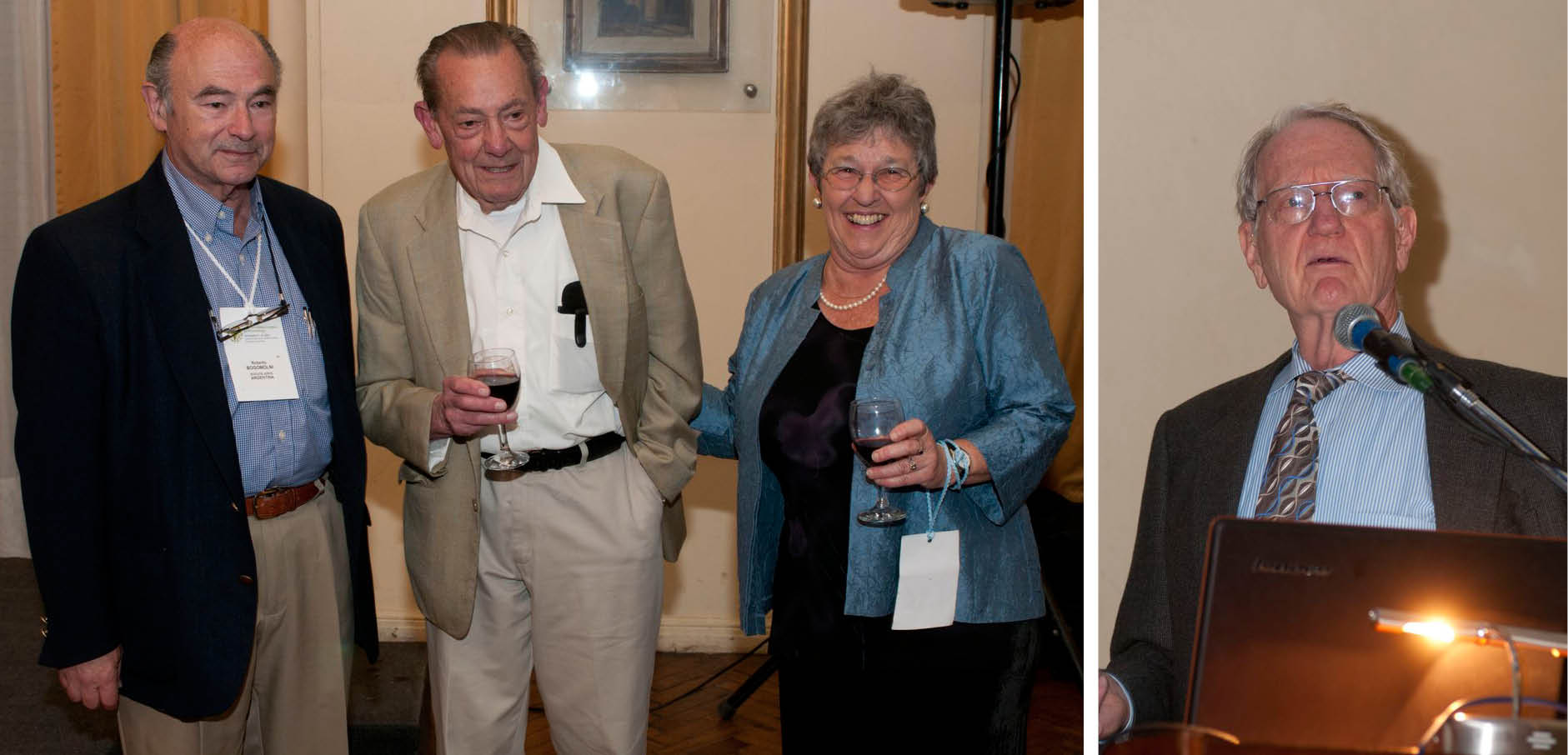
Special Historical Lectures were given by Winslow Briggs (Left: between Roberto Bogomolni and Silvia Braslavsky) and Phil Hannawalt (Right)
IUPB awarded three Finsen Medals with Lecture: Masamitsu Wada (Japan), Herbert Hönigsmann (Austria), and Douglas Brash (USA); one Finsen Lecture: Roman Ulm (Switzerland); as well as one Edna Roe Lecture: Chikako Nishigori (Japan). Graduate students and young researchers presented 200 posters on all areas of photobiological research. Six poster prizes in the form of book vouchers were awarded on Friday during the closing ceremony: two from Springer Verlag, two from the Royal Society of Chemistry and two from IUPAC.
Most symposia were organized with the strong collaboration of colleagues from Latin-America. Some research areas are strong in Argentina (e.g., plant photomorphogenesis, blue-light-induction of microorganism behaviour, vision and UV damage to retina, circadian rhythms, photoecology, UV influence on the environment) and in Brazil (PDT, DNA photodamage, bioluminescence, biodiesel photoproduction), whereas some others are weaker (e.g., molecular aspects of photomedicine, optogenetics, and areas of research that require complex instrumentation: e.g., ultra fast reactions). All symposia were well attended, especially by younger colleagues.
Many of the subjects treated were directly related to the problems and or peculiarities encountered in Latin America, such as the photobiology of extremophile bacteria at high altitude in the Puna (North of Argentina and Chile, Bolivia and Perú) as well as in Antarctica, the effect of the ozone hole in the ecosystems in Argentina and Chile, the special properties of alga in Chile, and the increase in UV-induced skin diseases in Brazil and others.
The participation of Argentinian Scientists working abroad, including Víctor Batista, Roberto Bogomolni, Gonzalo Cosa, Raquel Galián, Thomas Jovin, Diana Kirilovsky, Maria Andrea Mroginski, Ana Moore, Juan C. (Tito) Scaiano, Graciela Spivak, Cristian Strassert, María Vernet, Matias Zurbriggen, and Silvia Braslavsky was very important for the consolidation of the research ties between Argentinian research groups and groups abroad. This was especially valuable in view of the dramatic “brain drain” Argentina suffered between 1966 and 2001, which has been reverted in the last few years, in particular since the creation of the Ministry of Science, Technology and Innovative Production, MINCyT, in 2011.
The science administration agencies from Argentina strongly supported the Congress with grants from the National Research Council, CONICET, (ca. 10000 USD) and from MINCyT (ca. 12000 USD). This allowed the registration fee of all Argentinian graduate students and several young scientists to be waived. In addition, the MINCYT program Red de Argentinos Investigadores y Científicos en el Exterior (RAICES) financed Congress travel for several Argentinian colleagues working abroad.
There was also important support (both financial and logistic) by German institutions including DAAD, DFG, Fraunhofer, and the Humboldt Foundation, as well as the Max Planck Society. Further financial support came from IUBS (International Union of Biological Societies), IUPAC, TWAS (The World Academy of Sciences) as well as ESP, ASP and the French Society of Photobiology, who helped finance the participation of young graduate students. These grants permitted the fees of Latin-American graduate students and young researchers to be waived.
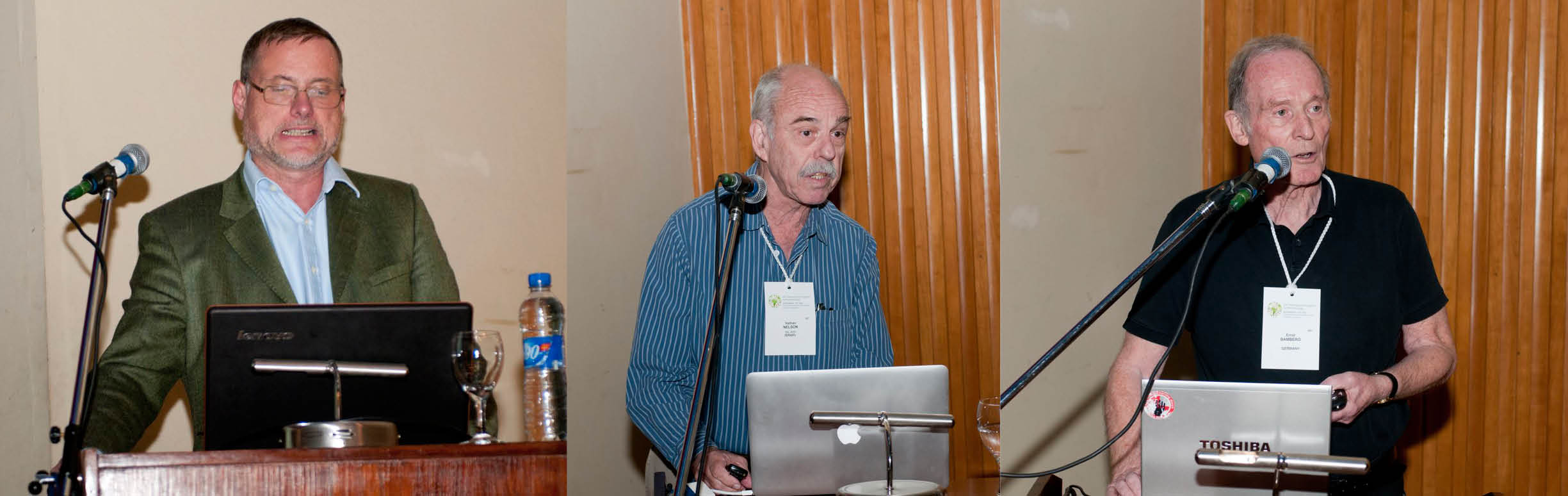
Plenary Lecturers Thomas Schwarz (Left), Nathan Nelson (Center), and Ernst Bamberg (Right)
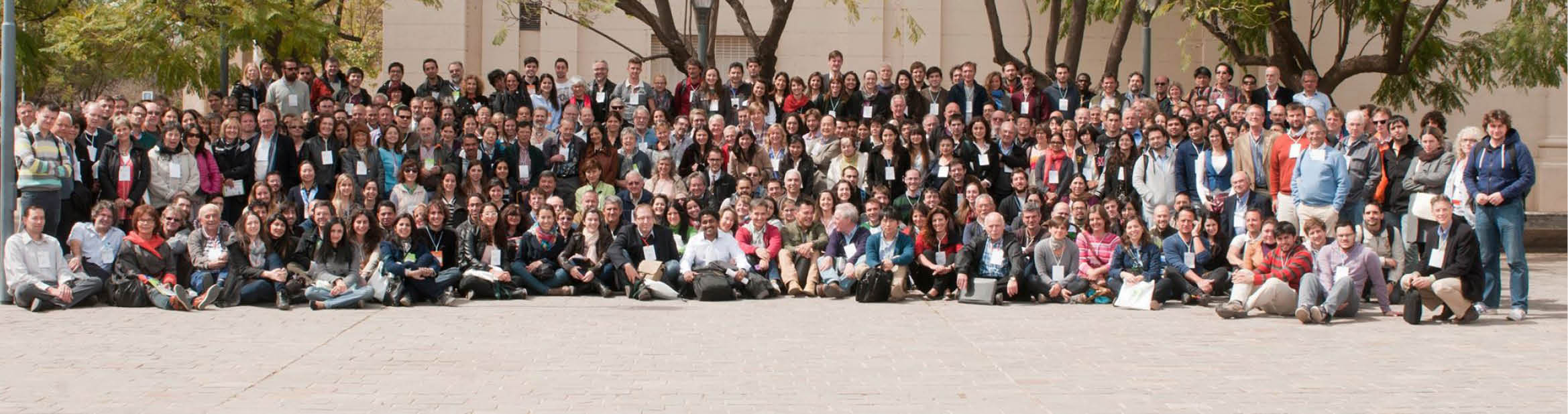
A panoramic photo of the conference attendees
Several International companies and representatives of instrumentation in Argentina supported the Congress. Their logos appear in the Programme Booklet and the web page. Major contributors included L’Oreal in particular for sponsoring the contributors of the symposium on photoprotection, BASF and Johnson&Johnson. Exhibition booths for some sponsoring companies were located in the foyer of the Pavillion.
The abstracts of all plenary, special, and keynote lectures, contributions to the symposia and the posters presented were published online and can be found on the Congress website.
The editors of the journals Photochemical and Photobiological Sciences ((PPS), the Journal of the European Society of Photobiology, (ESP) and the European Photochemical Association (EPA)), Photochemistry and Photobiology (P&P, the journal of the American Society of Photobiology (ASP)), and Pure and Applied Chemistry (PAC, the scientific journal of IUPAC) have agreed to publish, in each journal, some of the lectures and symposia presented during the Congress. All submitted papers will undergo the normal evaluation procedure. The submission deadline for all three Journals will be 31 March 2015, with each of the papers publishing immediately after acceptance. A virtual issue will collect all contributions belonging to the Congress.
A major spin-off of the Congress is the creation of the Argentinian Group of Molecular Photobiologists (GRAFOB in Spanish, http://grupoargentinodefotobiologia.info). This group has held two meetings in preparation for the 16th ICP: first in 2011 in La Plata and the second in 2013 in Córdoba, the same city that hosted the 16th ICP in 2014. Both meetings included approximately 90 participants. Several contacts were established between Latin American research groups, including some that could not participate of the Congress. The Argentinian photobiology group met during the Congress and agreed to organize a third GRAFOB meeting in Tucumán in 2016.
The Executive Board of IUPB had a regular meeting during the Congress and also held a general assembly. The newly elected Executive Board is: President: John Spudich (USA); Secretary: Evelyn Sage (France); Treasurer: Franz Trautinger (Austria); Vice-Presidents: Roberto Bassi (Italy), Carlos Ballaré (Argentina), Gary Halliday (Australia), and Yoshitaka Fukada (Japan); Liason member as organizer of the 16th ICP: Silvia Braslavsky (Germany).
Congress participants had the opportunity to enjoy a tango show during the opening reception on Sunday evening, as well as folk dancing on Thursday evening. They could also witness how several students drank their mate during the lectures.
The 17th ICP will most likely be held in 2018 in the UK.
©2015 by Walter de Gruyter Berlin/Boston
Articles in the same Issue
- Masthead - Full issue pdf
- Oficer’s Column
- The First IUPAC Congress in Korea
- Features
- Books of Secrets: Writing & Reading Alchemy
- What's in a Name? Quite a Lot, as it Happens!
- Systematic Flexibility and the History of the IUPAC Nomenclature of Organic Chemistry
- IUPAC Wire
- Election of IUPAC Officers and Bureau Members – Call for Nominations
- Measurements and Light
- ICSU announces Dr. Heide Hackmann to be Executive Director and Dr. Lucilla Spini to be Head of Science Programmes
- The 2014 AAAS Award for Science Diplomacy goes to Zafra M. Lerman
- OPCW-The Hague Award Presented at 19th Conference of States Parties
- IUPAC Physical Chemistry Cartoon Competition 2015
- IUPAC Office move
- IUPAC Provisional Recommendations
- Glossary of Terms Used in Neurotoxicology
- Stamps International
- Otto Wichterle: An Eye for Hydrogels
- Making an ImPACt
- Immunochemical Recognition and its Diagnostic and Therapeutic Applications
- NOTeS
- On the Use of Quantity Calculus
- Conference Call
- Pesticide Chemistry
- Photobiology
- Solubility Phenomena and Related Equilibrium Processes
- Data Sharing for Sustainability
- Where 2B & Y
- Mark Your Calendar
Articles in the same Issue
- Masthead - Full issue pdf
- Oficer’s Column
- The First IUPAC Congress in Korea
- Features
- Books of Secrets: Writing & Reading Alchemy
- What's in a Name? Quite a Lot, as it Happens!
- Systematic Flexibility and the History of the IUPAC Nomenclature of Organic Chemistry
- IUPAC Wire
- Election of IUPAC Officers and Bureau Members – Call for Nominations
- Measurements and Light
- ICSU announces Dr. Heide Hackmann to be Executive Director and Dr. Lucilla Spini to be Head of Science Programmes
- The 2014 AAAS Award for Science Diplomacy goes to Zafra M. Lerman
- OPCW-The Hague Award Presented at 19th Conference of States Parties
- IUPAC Physical Chemistry Cartoon Competition 2015
- IUPAC Office move
- IUPAC Provisional Recommendations
- Glossary of Terms Used in Neurotoxicology
- Stamps International
- Otto Wichterle: An Eye for Hydrogels
- Making an ImPACt
- Immunochemical Recognition and its Diagnostic and Therapeutic Applications
- NOTeS
- On the Use of Quantity Calculus
- Conference Call
- Pesticide Chemistry
- Photobiology
- Solubility Phenomena and Related Equilibrium Processes
- Data Sharing for Sustainability
- Where 2B & Y
- Mark Your Calendar
